

Different definitions of feeding intolerance and their associations with outcomes of critically ill adults receiving enteral nutrition: a systematic review and meta-analysis
Open accessThe DOI matches its Crossref record; 51 of the 51 references it cites were found in a registry or an index.
Abstract
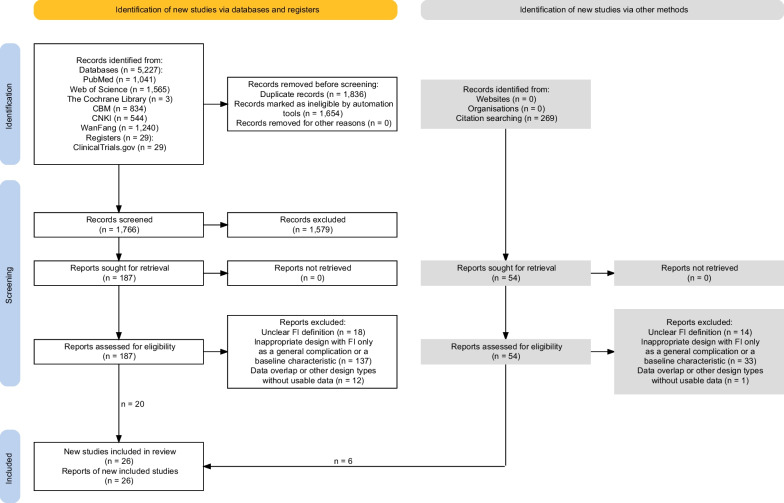
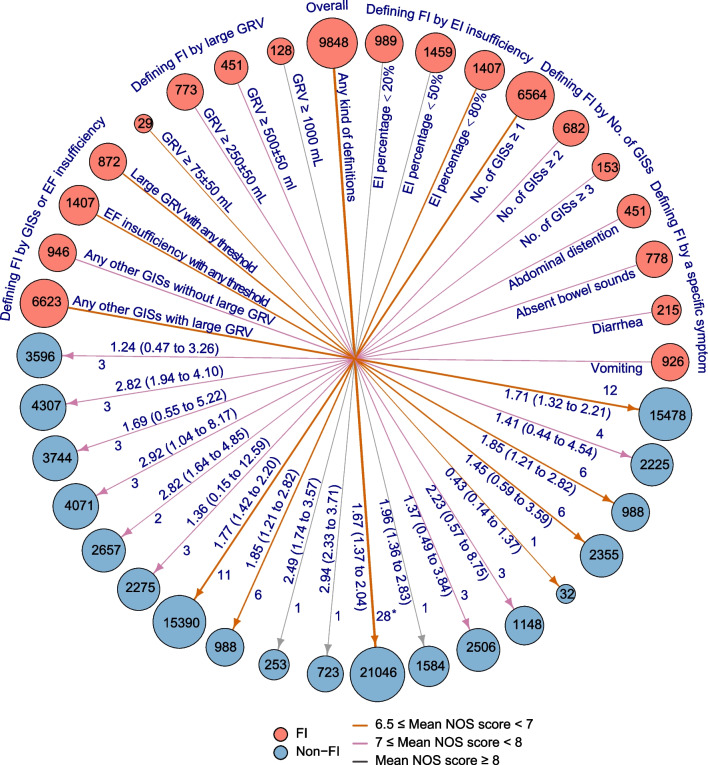
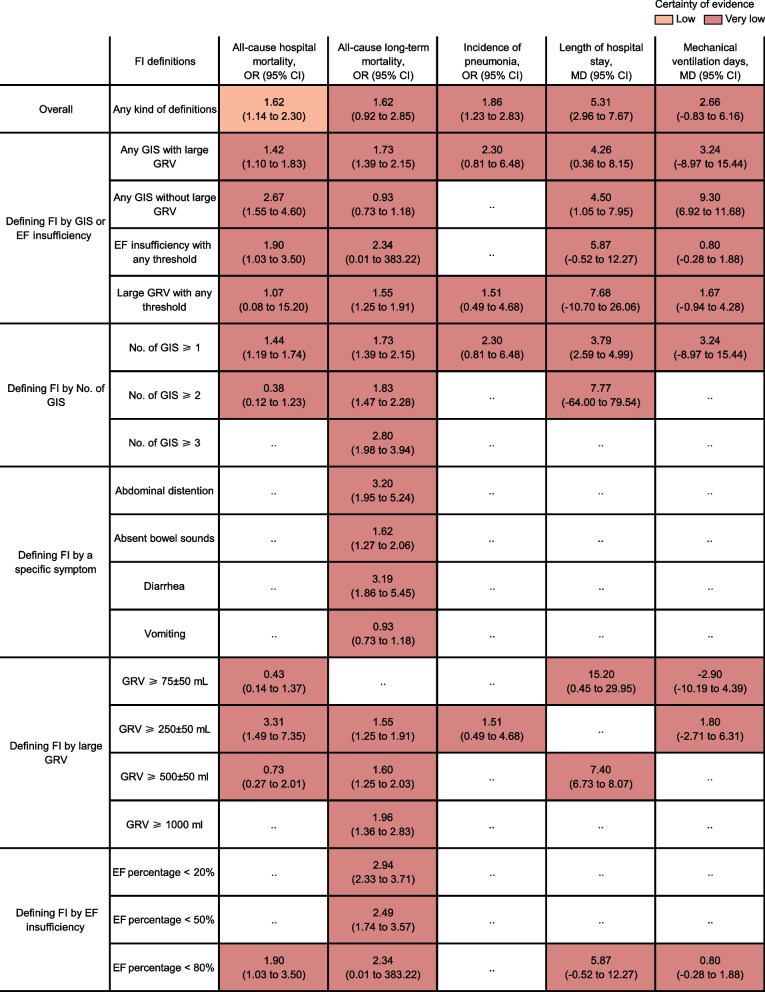
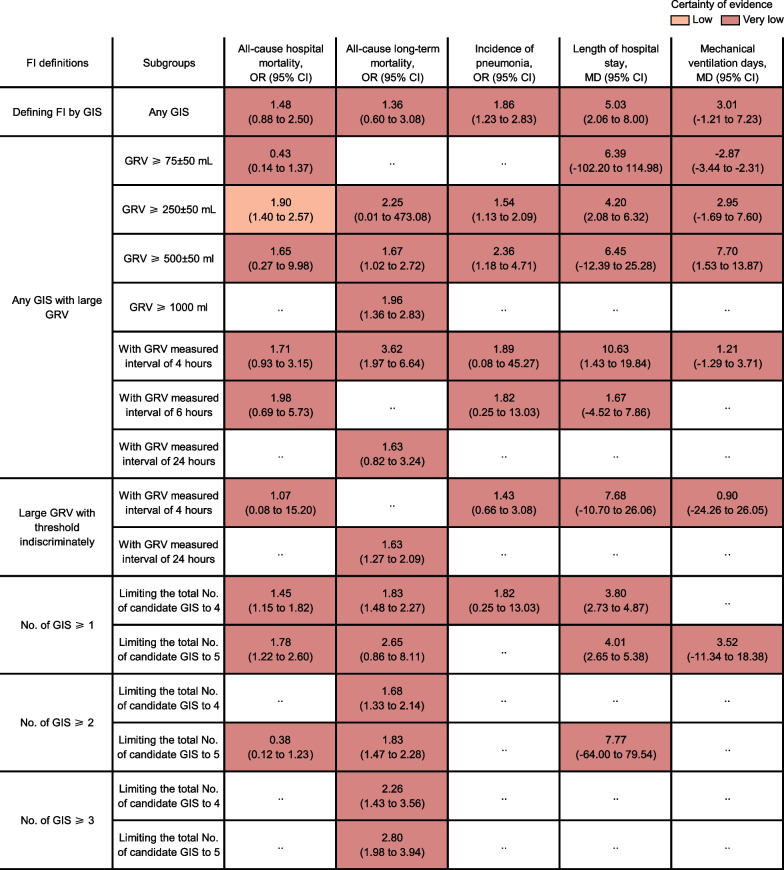
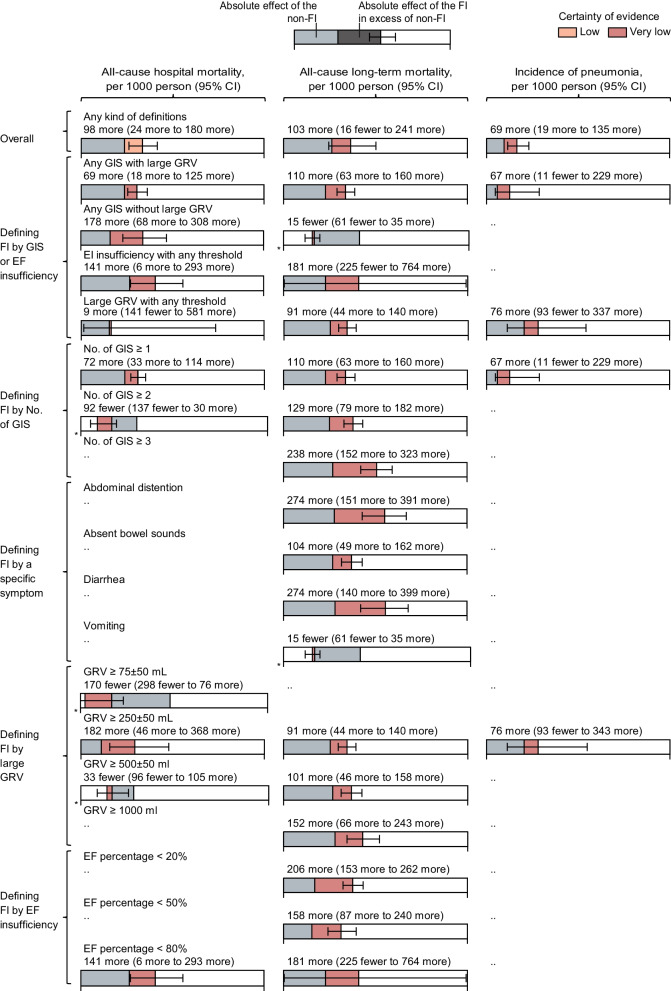
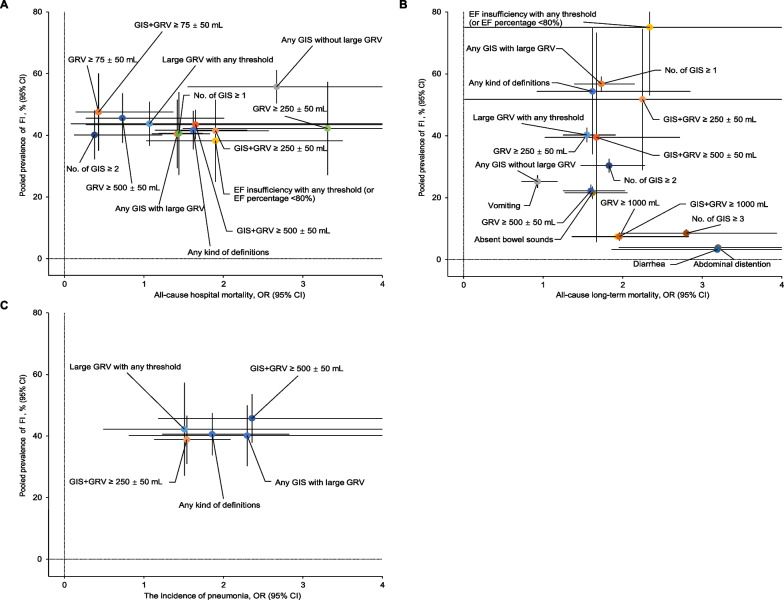
Background: A unified clinical definition of feeding intolerance (FI) is urged for better management of enteral nutrition (EN) in critically ill patients. We aimed to identify optimum clinical FI definitions based on reported evidence. Methods: We searched clinical studies comparing FI with non-FI with a clear definition, summarized the evidence by random-effect meta-analyses, and rated the certainty of evidence by the Grading of Recommendations Assessment, Development and Evaluation frameworks. Results: Five thousand five hundred twenty-five records were identified, of which 26 eligible studies enrolled 25,189 adult patients. Most patient-centered outcomes were associated with FI overall. Low to very low certainty evidence established FI defined as large gastric residual volume (GRV) ≥ 250 ± 50 mL combined with any other gastrointestinal symptoms (GIS) had a significant association with high mortalities in particular all-cause hospital mortality (odds ratio [OR] 1.90, 95% confidence interval [CI] 1.40–2.57), the incidence of pneumonia (OR 1.54, 95% CI 1.13–2.09) and prolonged length of hospital stay (mean difference 4.20, 95% CI 2.08–6.32), with a moderate hospital prevalence (41.49%, 95% CI 31.61–51.38%). 3-day enteral feeding (EF) delivered percentage < 80% had a moderate hospital prevalence (38.23%, 95% CI 24.88–51.58) but a marginally significant association with all-cause hospital mortality (OR 1.90, 95% CI 1.03–3.50). Conclusions: In critically ill adult patients receiving EN, the large-GRV-centered GIS to define FI seemed to be superior to 3-day EF-insufficiency in terms of both close associations with all-cause hospital mortality and acceptable hospital prevalence (Registered PROSPERO: CRD42022326273). Trial registration : The protocol for this review and meta-analysis was registered with PROSPERO: CRD42022326273. Registered 10 May 2022.
Overview
The claims and statistics of this paper haven’t been checked yet.
Free: it reads the open-access text and checks the first 5 claims that cite a source we can check. Create a free account to check every claim.
Integrity signals
Registry
Cites
Statistics
Figures
Verification
Claims the paper makes
The claims and statistics of this paper haven’t been checked yet.
Free: it reads the open-access text and checks the first 5 claims that cite a source we can check. Create a free account to check every claim.
Claims other papers make about this one
Each is checked against this paper’s own text: does it say what the citing paper says it does?
The source backs part of the claim, not all of it — or backs it for a different population, condition or comparison.
In the citing paper
“Previous studies have shown that EFI is closely associated with worse clinical outcomes, such as inadequate nutrition, fewer ventilator-free days, longer ICU and hospital stays, and higher mortality, emphasizing the importance of carefully monitoring EFI during EN feeding in critically ill patients [9-11].”
From The impact of enteral feeding intolerance on the prognosis of patients with septic shock in South Korea (2025) · cites this paper as [11]
Experimental — accuracy not yet measured
Self-check
Percentages, sums and reported differences re-computed from the paper’s own numbers.
The self-check needs the paper’s full text.
Citations
Cites
The PRISMA 2020 statement: An updated guideline for reporting systematic reviews
Page, M. J., McKenzie, J. E., Bossuyt, P. M., Boutron, I., Hoffmann, T. C., Mulrow, C. D., Shamseer, L., Tetzlaff, J. M., Akl, E. A., Brennan, S. E., et al. (2021) · BMJ · doi:10.1136/bmj.n71 · Cited by 108,283
Quantifying heterogeneity in a meta‐analysis
Higgins, J. P. T., & Thompson, S. G. (2002) · Statistics in Medicine · doi:10.1002/sim.1186 · Cited by 36,763 · cited 1×
“The percentage of variability in the effect sizes was evaluated by Higgin’s and Thompson’s I2, according to which heterogeneity was divided into low (less than 25%), moderate (25–75%), and substantial (more than 75%) [18].”
MethodDermyshi, E., Wang, Y., Yan, C., Hong, W., Qiu, G., Gong, X., & Zhang, T. (2017) · Neonatology · doi:10.1159/000454668 · Cited by 24,451
von Elm, E., Altman, D. G., Egger, M., Pocock, S. J., Gøtzsche, P. C., & Vandenbroucke, J. P. (2007) · The Lancet · doi:10.1016/s0140-6736(07)61602-x · Cited by 21,320
Meta-analysis of Observational Studies in Epidemiology<SUBTITLE>A Proposal for Reporting</SUBTITLE>
Stroup, D. F. (2000) · JAMA · doi:10.1001/jama.283.15.2008 · Cited by 20,623
CONSORT 2010 Statement: updated guidelines for reporting parallel group randomised trials
the CONSORT Group, Schulz, K. F., Altman, D. G., & Moher, D. (2010) · BMC Medicine · doi:10.1186/1741-7015-8-18 · Cited by 13,371
CONSORT 2010 Statement: updated guidelines for reporting parallel group randomised trials
Schulz, K. F., Altman, D. G., Moher, D., & for the CONSORT Group (2010) · BMJ · doi:10.1136/bmj.c332 · Cited by 9,329
GRADE guidelines: 3. Rating the quality of evidence
Balshem, H., Helfand, M., Schünemann, H. J., Oxman, A. D., Kunz, R., Brozek, J., Vist, G. E., Falck-Ytter, Y., Meerpohl, J., & Norris, S. (2011) · Journal of Clinical Epidemiology · doi:10.1016/j.jclinepi.2010.07.015 · Cited by 8,285 · cited 10×
“According to the Grading of Recommendations Assessment, Development, and Evaluation (GRADE) [22], the certainty of the evidence of each comparison across FI definitions was rated as high, moderate, low, or very low.”
MethodInfluentialMcClave, S. A., Taylor, B. E., Martindale, R. G., Warren, M. M., Johnson, D. R., Braunschweig, C., McCarthy, M. S., Davanos, E., Rice, T. W., Cresci, G. A., et al. (2016) · Journal of Parenteral and Enteral Nutrition · doi:10.1177/0148607115621863 · Cited by 3,982
Haddaway, N. R., Page, M. J., Pritchard, C. C., & McGuinness, L. A. (2022) · Campbell Systematic Reviews · doi:10.1002/cl2.1230 · Cited by 3,486 · cited 2×
“Haddaway NR, Page MJ, Pritchard CC, McGuinness LA. PRISMA2020: an R package and Shiny app for producing PRISMA 2020-compliant flow diagrams, with interactivity for optimised digital transparency and Open Synthesis.”
MethodESPEN guidelines on definitions and terminology of clinical nutrition
Cederholm, T., Barazzoni, R., Austin, P., Ballmer, P., Biolo, G., Bischoff, S. C., Compher, C., Correia, I., Higashiguchi, T., Holst, M., et al. (2017) · Clinical Nutrition · doi:10.1016/j.clnu.2016.09.004 · Cited by 2,560 · cited 1×
“Monitoring FI during EN to revise the feeding plan timely is crucial to ensure successful feeding [2, 3].”
BackgroundEstimating the sample mean and standard deviation from commonly reported quantiles in meta-analysis
McGrath, S., Zhao, X., Steele, R., Thombs, B. D., Benedetti, A., the DEPRESsion Screening Data (DEPRESSD) Collaboration, Levis, B., Riehm, K. E., Saadat, N., Levis, A. W., et al. (2020) · Statistical Methods in Medical Research · doi:10.1177/0962280219889080 · Cited by 856 · cited 1×
“When studies did not report the sample mean and standard deviation but instead provided quantiles, we converted these data using a Box–Cox method [17] with the R package “estmeansd”.”
MethodThe GRADE Working Group clarifies the construct of certainty of evidence
Hultcrantz, M., Rind, D., Akl, E. A., Treweek, S., Mustafa, R. A., Iorio, A., Alper, B. S., Meerpohl, J. J., Murad, M. H., Ansari, M. T., et al. (2017) · Journal of Clinical Epidemiology · doi:10.1016/j.jclinepi.2017.05.006 · Cited by 853 · cited 4×
“Abbreviations FI Feeding intolerance EN Enteral nutrition ESICM European Society of Intensive Care Medicine GRV Gastric residual volume GIS Gastrointestinal symptoms RCT Randomized controlled trial ICU Intensive care unit MOOSE Meta-analysis Of Observational Studies in Epidemiology PRISMA Preferred Reporting Items for…”
MethodInfluentialReintam Blaser, A., Malbrain, M. L. N. G., Starkopf, J., Fruhwald, S., Jakob, S. M., De Waele, J., Braun, J.-P., Poeze, M., & Spies, C. (2012) · Intensive Care Medicine · doi:10.1007/s00134-011-2459-y · Cited by 644
Mentec, H., Dupont, H., Bocchetti, M., Cani, P., Ponche, F., & Bleichner, G. (2001) · Critical Care Medicine · doi:10.1097/00003246-200110000-00018 · Cited by 581
A comparison of heterogeneity variance estimators in combining results of studies
Sidik, K., & Jonkman, J. N. (2007) · Statistics in Medicine · doi:10.1002/sim.2688 · Cited by 380 · cited 1×
“Heterogeneity from the between-study variance was measured with tau-squared based on the restricted maximum-likelihood method [19].”
MethodPoor validity of residual volumes as a marker for risk of aspiration in critically ill patients*
McClave, S. A., Lukan, J. K., Stefater, J. A., Lowen, C. C., Looney, S. W., Matheson, P. J., Gleeson, K., & Spain, D. A. (2005) · Critical Care Medicine · doi:10.1097/01.ccm.0000153413.46627.3a · Cited by 368 · cited 1×
“Although several studies [49, 50] have shown that GRV was unable to accurately predict the risk of reflux and aspiration in critical care patients, large GRV (≥ 250 ± 50 mL) combined with any other GIS instead of GRV ≥ 250 ± 50 mL alone was associated with a high incidence of pneumonia in our findings.”
ResultZeng, L., Brignardello-Petersen, R., Hultcrantz, M., Siemieniuk, R. A. C., Santesso, N., Traversy, G., Izcovich, A., Sadeghirad, B., Alexander, P. E., Devji, T., et al. (2021) · Journal of Clinical Epidemiology · doi:10.1016/j.jclinepi.2021.03.026 · Cited by 294 · cited 4×
“Abbreviations FI Feeding intolerance EN Enteral nutrition ESICM European Society of Intensive Care Medicine GRV Gastric residual volume GIS Gastrointestinal symptoms RCT Randomized controlled trial ICU Intensive care unit MOOSE Meta-analysis Of Observational Studies in Epidemiology PRISMA Preferred Reporting Items for…”
MethodInfluentialGungabissoon, U., Hacquoil, K., Bains, C., Irizarry, M., Dukes, G., Williamson, R., Deane, A. M., & Heyland, D. K. (2015) · Journal of Parenteral and Enteral Nutrition · doi:10.1177/0148607114526450 · Cited by 282
BLASER, A. R., STARKOPF, J., KIRSIMÄGI, Ü., & DEANE, A. M. (2014) · Acta Anaesthesiologica Scandinavica · doi:10.1111/aas.12302 · Cited by 231 · cited 3×
“The FI classification in our review is consistent with and more refined compared with two previous systematic reviews separately in 2014 and 2022 as well as an invited review in 2021 summarizing from the literature the existing FI types [1, 4, 11].”
BackgroundResultHeyland, D. K., Ortiz, A., Stoppe, C., Patel, J. J., Yeh, D. D., Dukes, G., Chen, Y. J., Almansa, C., & Day, A. G. (2021) · Critical Care Medicine · doi:10.1097/ccm.0000000000004712 · Cited by 201
Enteral Feeding Intolerance: Updates in Definitions and Pathophysiology
Reintam Blaser, A., Deane, A. M., Preiser, J., Arabi, Y. M., & Jakob, S. M. (2021) · Nutrition in Clinical Practice · doi:10.1002/ncp.10599 · Cited by 156
Gastric Residual Volume in Critically Ill Patients: A Dead Marker or Still Alive?
Elke, G., Felbinger, T. W., & Heyland, D. K. (2015) · Nutrition in Clinical Practice · doi:10.1177/0884533614562841 · Cited by 150
Comparison of different definitions of feeding intolerance: A retrospective observational study
Blaser, A. R., Starkopf, L., Deane, A. M., Poeze, M., & Starkopf, J. (2014) · Clinical Nutrition · doi:10.1016/j.clnu.2014.10.006 · Cited by 117
Wang, K., McIlroy, K., Plank, L. D., Petrov, M. S., & Windsor, J. A. (2017) · Journal of Parenteral and Enteral Nutrition · doi:10.1177/0148607115627142 · Cited by 94
Merchan, C., Altshuler, D., Aberle, C., Papadopoulos, J., & Schwartz, D. (2017) · Journal of Intensive Care Medicine · doi:10.1177/0885066616656799 · Cited by 79
Gastric Residual Volumes in Critical Illness: What Do They Really Mean?
Hurt, R. T., & McClave, S. A. (2010) · Critical Care Clinics · doi:10.1016/j.ccc.2010.04.010 · Cited by 70 · cited 2×
“As one of the GIS, however, GRV is difficult to measure in standard using the aspiration method which is widely used now [9, 47].”
BackgroundMethodJenkins, B., Calder, P. C., & Marino, L. V. (2022) · Clinical Nutrition ESPEN · doi:10.1016/j.clnesp.2022.04.014 · Cited by 69 · cited 4×
“A recent comprehensive systematic review encompassing 89 empirical studies concluded that the GRV threshold had no significant correlation with the prevalence of FI due to poor relationships with gastric emptying [11].”
BackgroundResultInfluentialThe myth of the gastric residual volume*
Zaloga, G. P. (2005) · Critical Care Medicine · doi:10.1097/01.ccm.0000148086.12949.2f · Cited by 67 · cited 1×
“However, studies showed concerns about the reliability of GRV monitoring: unreliable prediction for regurgitation and aspiration, undefined normal value, no validated single cutoff value, and no standard techniques for measuring [9, 10].”
BackgroundNguyen, N. Q., Ching, K. J., Fraser, R. J., Chapman, M. J., & Holloway, R. H. (2007) · Intensive Care Medicine · doi:10.1007/s00134-007-0869-7 · Cited by 66
Enteral Nutrition Intolerance in Critically Ill Septic Burn Patients
Lavrentieva, A., Kontakiotis, T., & Bitzani, M. (2014) · Journal of Burn Care & Research · doi:10.1097/bcr.0b013e3182a22403 · Cited by 56
Li, J., Liao, X., Zhou, Y., Wang, L., Yang, H., Zhang, W., Zhang, Z., & Kang, Y. (2021) · Shock · doi:10.1097/shk.0000000000001738 · Cited by 55 · cited 1×
“As described in our previous report [21], a total score of 8 or 9 was assessed as low risk of bias, 6 or 7 as some concerns, and ≤ 5 as high risk (Additional file 7: Table S5).”
BackgroundSelf-citationFeeding intolerance in critically ill patients with COVID-19
Liu, R., Paz, M., Siraj, L., Boyd, T., Salamone, S., Lite, T.-L. V., Leung, K. M., Chirinos, J. D., Shang, H. H., Townsend, M. J., et al. (2022) · Clinical Nutrition · doi:10.1016/j.clnu.2021.03.033 · Cited by 54
Hu, K., Deng, X. L., Lin, H., Xiang, S., Xiong, B., & Pinhu, L. (2021) · Saudi Journal of Gastroenterology · doi:10.4103/sjg.sjg_286_21 · Cited by 49
Bejarano, N., Navarro, S., Rebasa, P., García-Esquirol, Ó., & Hermoso, J. (2012) · Journal of Parenteral and Enteral Nutrition · doi:10.1177/0148607112464238 · Cited by 46
Incidence and Effects of Feeding Intolerance in Trauma Patients
Virani, F. R., Peery, T., Rivas, O., Tomasek, J. S., Huerta, R., Wade, C. E., Lee, J., Holcomb, J. B., & Uray, K. (2018) · Journal of Parenteral and Enteral Nutrition · doi:10.1002/jpen.1469 · Cited by 45
Yahyapoor, F., Dehnavi, Z., Askari, G., Ranjbar, G., Zarifi, S. H., Bagherniya, M., Rezaian, M. K., Bagherimoghaddam, A., Fazeli, F., & Sedaghat, A. (2021) · Journal of Research in Medical Sciences · doi:10.4103/jrms.jrms_689_20 · Cited by 44
Hu, B., Sun, R., Wu, A., Ni, Y., Liu, J., Guo, F., Ying, L., Ge, G., Ding, A., Shi, Y., et al. (2020) · Journal of Parenteral and Enteral Nutrition · doi:10.1002/jpen.1693 · Cited by 43
Sierp, E. L., Kurmis, R., Lange, K. M., Yandell, R., Chapman, M. J., Greenwood, J. E., & Chapple, L. S. (2020) · Journal of Parenteral and Enteral Nutrition · doi:10.1002/jpen.1979 · Cited by 42
Tian, F., Li, H., & Yang, Z. (2019) · Saudi Journal of Gastroenterology · doi:10.4103/sjg.sjg_550_18 · Cited by 39
Gastric feed intolerance is not increased in critically ill patients with type II diabetes mellitus
Nguyen, N. Q., Lam, S. W., Ching, K. J., Chapman, M. J., Fraser, R. J., & Holloway, R. H. (2007) · Intensive Care Medicine · doi:10.1007/s00134-007-0712-1 · Cited by 36
Lin, J., Liu, Y., Ke, L., Li, G., Lv, C., Zhou, J., Ye, B., Li, B., Yang, Q., Tong, Z., et al. (2021) · Nutrition in Clinical Practice · doi:10.1002/ncp.10788 · Cited by 35
Self-citationMao, Z., Liu, G., Yu, Q., Qi, S., Lou, Y., Liu, C., Li, Q., Xue, C., Kang, H., Hong, Q., et al. (2020) · Annals of Translational Medicine · doi:10.21037/atm-20-6317 · Cited by 34
Drakos, P., Volteas, P., Cleri, N. A., Alkadaa, L. N., Asencio, A. A., Oganov, A., Pryor, A., Talamini, M., Rubano, J., Bannazadeh, M., et al. (2022) · Journal of Gastrointestinal Surgery · doi:10.1007/s11605-021-05015-z · Cited by 33
Ultrasonographic measurement of antral area for estimating gastric fluid volume in pregnant women
Chen, X., Chen, F., Zhao, Q., Zhang, L., & Liu, Z. (2018) · Journal of Clinical Anesthesia · doi:10.1016/j.jclinane.2018.06.040 · Cited by 31 · cited 1×
“Although several studies [49, 50] have shown that GRV was unable to accurately predict the risk of reflux and aspiration in critical care patients, large GRV (≥ 250 ± 50 mL) combined with any other GIS instead of GRV ≥ 250 ± 50 mL alone was associated with a high incidence of pneumonia in our findings.”
ResultFeeding intolerance and risk of poor outcome in patients undergoing cardiopulmonary bypass surgery
Lin, Y., Chen, M., Peng, Y., Chen, Q., Li, S., & Chen, L. (2021) · British Journal Of Nutrition · doi:10.1017/s0007114521000167 · Cited by 30
Wang, L., Yang, H., Lv, G., Fu, X., Cheng, Y., Zhong, X. Z., Yang, J., Wang, B., Zhang, Z., Jin, X., et al. (2022) · Nutrients · doi:10.3390/nu14030566 · Cited by 30
Self-citationFaramarzi, E., Mahmoodpoor, A., Hamishehkar, H., Shadvar, K., Iranpour, A., Sabzevari, T., & Sanaie, S. (2019) · Pakistan Journal of Medical Sciences · doi:10.12669/pjms.36.2.1321 · Cited by 28
Evaluation of Feeding Intolerance in Patients with Pentobarbital-Induced Coma
Stevens, A., Then, J., Frock, K., Crookes, B., Commichau, C. S., Marden, B. T., Beynnon, B. J., & Rebuck, J. A. (2008) · Annals of Pharmacotherapy · doi:10.1345/aph.1k555 · Cited by 24
Procalcitonin and enteral nutrition tolerance in critically ill patients
Brown, R. O., Alexander, E., Hanes, S., Wood, G. C., Kudsk, K., & Dickerson, R. N. (2003) · Journal of Parenteral and Enteral Nutrition · doi:10.1177/014860710302700184 · Cited by 20 · cited 1×
“48%), vomiting (defined as any visible regurgitation of gastric contents in most studies or emesis ˃100 mL × 2 episodes [26]; 18.”
Background
Research works printed but not linked: 1
- 32. Bangchuan Hu, Sun Renhua Wu, Aiping NY, Jingquan L, Lijun Y, et al. The association between feeding intolerance and clinical outcome in critically ill patients admitted to ICU:a multi-center prospective, observational study. Chin J Emerg Med. 2017;26:434-40.
Cited by
Reignier, J., Roux, B. G., Dequin, P. F., Maluf, V. A. B., Bohé, J., Casaer, M. P., Delbove, A., Dupuis, C., Fontaine, E. M., Gamon, P., et al. (2025) · Annals of Intensive Care · doi:10.1186/s13613-025-01509-0 · Cited by 64
Peng, F., Wang, H., Li, J., Ma, M., Jiang, X., Run, H., Qingting, L., Leng, J., Xiao, L., & Tang, L. (2023) · Journal of Clinical Nursing · doi:10.1111/jocn.16934 · Cited by 46
Self-citationZhou, Z., Zhang, J., Fan, C., Wei, Z., Wang, Q., & Liu, C. (2025) · Frontiers in Nutrition · doi:10.3389/fnut.2025.1662409 · Cited by 34
Guan, X., Chen, D., & Xu, Y. (2024) · Journal of Intensive Medicine · doi:10.1016/j.jointm.2023.12.002 · Cited by 28
Self-citationChen, H., Han, J. H., Li, J., Xiong, J., Wang, D., Han, M., Shen, Y., & Lu, W. (2025) · Frontiers in Nutrition · doi:10.3389/fnut.2024.1522911 · Cited by 18
Self-citation
Metadata
- Authors
- Li, J., Wang, L., Zhang, H., Zou, T., Kang, Y., He, W., Xu, Y., & Yin, W.
- Affiliations
- West China Hospital of Sichuan University (CN)
- Beijing Tongren Hospital (CN)
- Beijing Tsinghua Chang Gung Hospital (CN)
- Corresponding author
- Xu, Yuan
- Yin, Wanhong
- Venue
- Journal of Intensive Care
- Published
- 2023-07-05
- Volume
- 11
- Issue
- 1
- Pages
- 29-29
- ISSN
- 2052-0492 (ISSN-L)
- PMC
- PMC10320932
- OpenAlex
- W4383224314
- Semantic Scholar
- e1df69ac83a0fd3c822e9d25ec701723d60aa40a
- Cited by
- 49
- References
- 51
- Citations by year
- 2026: 24 · 2025: 14 · 2024: 10 · 2023: 1
- FWCI
- 1.77
- Type
- journal article
- Language
- en
- Open access
- gold
- doi.org
- Licence
- cc-by
- creativecommons.org/licenses/by/4.0 (tdm)
- creativecommons.org/licenses/by/4.0 (vor)
- Locations
- Journal of Intensive Care (publishedVersion, cc-by)
- PubMed Central (publishedVersion, cc-by)
- PubMed (publishedVersion)
- DOAJ (DOAJ: Directory of Open Access Journals) (submittedVersion, cc-by-sa)
- Funders
- Sichuan Province Science and Technology Department Project (2021YJ0448)
- Post Doctoral Research Fund, West China Hospital, Sichuan University (2020HXBH181)
- Chinese Foundation for Hepatitis Prevention and Control-TianQing Liver Disease Research Fund Subject (TQGB20210186)
- Topics
- Health Sciences › Nursing › Nutrition and Dietetics › Clinical Nutrition and Gastroenterology
- Health Sciences › Medicine › Surgery › Enhanced Recovery After Surgery
- Health Sciences › Medicine › Critical Care and Intensive Care Medicine › Nosocomial Infections in ICU
- Keywords
- feeding intolerance, enteral nutrition, critically ill adults, gastric residual volume, gastrointestinal symptoms, all-cause mortality, pneumonia, length of hospital stay, clinical definition
About these checks
Registry, retraction, Cites and statistics results are computed, not judged, with one exception: a printed reference that no index lists is read once by a model before it counts as a citation error. Claims are extracted by a model and kept only when their quote appears verbatim in the text; each cited source is then checked, with a model’s help, for whether it says what the claim relies on. Those verdicts can be wrong — read the claim’s quote and the cited source before relying on one.
Statistics and arithmetic are recomputed, not judged.
Confidence bands are shown only for fields calibrated on our annotated test set. None is calibrated yet, so no band is shown.
What counts as a claim ›How we measure confidence ›How we check this ›
Are you an author, or do you see a problem with this page? Request a review
Data sources
Bibliographic data: Semantic Scholar, OpenAlex, Crossref.
Contains information from the Semantic Scholar Academic Graph Datasets, made available under the ODC Attribution License (ODC-BY 1.0).
Semantic Scholar’s data is described in: Kinney, R., et al. (2023). The Semantic Scholar Open Data Platform. arXiv:2301.10140.
