

Novel application and industrial exploitation of winery by-products
Open accessThe DOI matches its Crossref record; 156 of the 159 references it cites were found in a registry or an index.
Abstract
Grape is the largest fruit crop worldwide and the grape pomace is an important solid waste generated from pressing and fermentation processes in wine industries. Wine industry residues are rich in bioactive compounds and, in this case, the utilization of grape by-products for alternative uses has been a focus of research. The aim of the present project is to present the primary benefits of winemaking by-products to new products focusing on grape pomace, as well as to discover novel applications in food industry, cosmetics, pharmaceutical, agricultural, livestock fields and in energy recovery systems. Moreover, new green technologies for valuable components recovery will be summarized. Recognizing emerging technologies, researchers would have the opportunity to promote development of value-added products and high-quality applications in different markets and sectors recycling of winery by-products or even side streams. This study presents the main bioactive components of grape pomace, along with new current extraction pathways, targeting the decrease of negative environmental impact in parallel to functional added value applications.
Overview
The claims and statistics of this paper haven’t been checked yet.
Free: it reads the open-access text and checks the first 5 claims that cite a source we can check. Create a free account to check every claim.
Integrity signals
Registry
Cites
Statistics
Figures
Verification
Claims the paper makes
The claims and statistics of this paper haven’t been checked yet.
Free: it reads the open-access text and checks the first 5 claims that cite a source we can check. Create a free account to check every claim.
Claims other papers make about this one
Each is checked against this paper’s own text: does it say what the citing paper says it does?
The source backs part of the claim, not all of it — or backs it for a different population, condition or comparison.
In the citing paper
“While 80% of global production is used in wine production-generating substantial amounts of organic residues, wastewater, and greenhouse gases-about the remaining 20% yields grape pomace (GP), a nutrient-rich material with remarkable cosmetic potential [61].”
From Advancing Cosmetic Sustainability: Upcycling for a Circular Product Life Cycle (2025) · cites this paper as [61]
Experimental — accuracy not yet measured
Self-check
Percentages, sums and reported differences re-computed from the paper’s own numbers.
The self-check needs the paper’s full text.
Citations
Cites
Use of a Free Radical Method to Evaluate Antioxidant Activity
Brand-Williams, W., Cuvelier, M. E., & Berset, C. (1995) · LWT - Food Science and Technology · doi:10.1016/s0023-6438(95)80008-5 · Cited by 25,994
The Ferric Reducing Ability of Plasma (FRAP) as a Measure of “Antioxidant Power”: The FRAP Assay
Benzie, I. F. F., & Strain, J. J. (1996) · Analytical Biochemistry · doi:10.1006/abio.1996.0292 · Cited by 22,951
Techniques for extraction of bioactive compounds from plant materials: A review
Azmir, J., Zaidul, I. S. M., Rahman, M. M., Sharif, K. M., Mohamed, A., Sahena, F., Jahurul, M. H. A., Ghafoor, K., Norulaini, N. A. N., & Omar, A. K. M. (2013) · Journal of Food Engineering · doi:10.1016/j.jfoodeng.2013.01.014 · Cited by 2,870 · cited 1×
“UAE is attributed to the acoustic cavitation phenomenon, assisting the solubilization of the compounds of interest into the solvent, enhancing their removal from the bulk raw material (Azmir et al. 2013).”
BackgroundRecent advances in extraction of nutraceuticals from plants
Wang, L., & Weller, C. L. (2006) · Trends in Food Science & Technology · doi:10.1016/j.tifs.2005.12.004 · Cited by 2,046
Prior, R. L., Hoang, H., Gu, L., Wu, X., Bacchiocca, M., Howard, L., Hampsch-Woodill, M., Huang, D., Ou, B., & Jacob, R. (2003) · Journal of Agricultural and Food Chemistry · doi:10.1021/jf0262256 · Cited by 1,455
HERRERO, M., CIFUENTES, A., & IBANEZ, E. (2006) · Food Chemistry · doi:10.1016/j.foodchem.2005.05.058 · Cited by 1,212
Bagchi, D., Bagchi, M., Stohs, S. J., Das, D. K., Ray, S. D., Kuszynski, C. A., Joshi, S. S., & Pruess, H. G. (2000) · Toxicology · doi:10.1016/s0300-483x(00)00210-9 · Cited by 1,067
Supercritical fluid extraction of bioactive compounds
da Silva, R. P. F. F., Rocha-Santos, T. A. P., & Duarte, A. C. (2016) · TrAC Trends in Analytical Chemistry · doi:10.1016/j.trac.2015.11.013 · Cited by 704
Towards integral utilization of grape pomace from winemaking process: A review
Beres, C., Costa, G. N. S., Cabezudo, I., da Silva-James, N. K., Teles, A. S. C., Cruz, A. P. G., Mellinger-Silva, C., Tonon, R. V., Cabral, L. M. C., & Freitas, S. P. (2017) · Waste Management · doi:10.1016/j.wasman.2017.07.017 · Cited by 588
Da Porto, C., Porretto, E., & Decorti, D. (2013) · Ultrasonics Sonochemistry · doi:10.1016/j.ultsonch.2012.12.002 · Cited by 510
Research works printed but not linked: 9
- 9. Arapoglou D, Israilides CJ, Bocari M, Scanlon B, Smith A (2002) A novel approach to grape waste treatment. In: Proceedings of the international confer- ence protection and restoration of the environment VI, p 469
- 47. Environmental Protection Agency (EPA) (2015) International decontamination research and development conference. U.S. Environmental Protection Agency, Washington, DC, EPA/600/R-15/283 FAO-Food and Agriculture Organization of the United Nations (2014) http:// faost at.fao.org/site3 39/defau lt.aspx. Accessed 26 Sept 2016
- 64. González-SanJosé ML, García-Lomillo J, Del Pino-García R, Dolores-Rivero M, Muñiz-Rodríguez P (2015) Sazonador de origen vegetal con propie- dades conservantes, sustitutivo de la sal, y procedimiento de obtención del mismo. Spain Patent ES2524870 B:2
- 83. Li C, Zheng Y, Wang W, Wang N, Yang R (2010b) Optimization of sub-critical water extraction of proanthocyanidins from grape seeds by response surface methodology. Food Sci 31:6-10
- 104. Oliveira DM, Marques DR, Kwiatkowski A, Monteiro ARG, Clemente E (2013) Sensory analysis and chemical characterization of cereal enriched with grape peel and seed flour. Acta Scientarium Technol 35:427-431
- 112. Prado JM, Dalmolin I, Carareto NDD, Basso RC, Meirelles AJA, Oliveira JV, Batista EAC, Meireles MAM (2012b) Supercritical fluid extraction of grape seed: process scale-up, extract chemical composition and economic evalua- tion. J Food Eng 109:249-257 · DOI · Paper page
- 142. Tseng A, Zhao YY (2013b) Wine grape pomace as antioxidant dietary fibre for enhancing nutritional value and improving storability of yogurt and salad dressing. Food Chem 138:356-365 · DOI · Paper page
- WHO (2002) Nitrosodimethylamine (Concise International Chemical Assessment Document 38). International Programme on Chemical Safety, World Health Organization, Geneva
- 159. Zhang L, Sun X, Wang S, Tan T (2007a) Microwave-assisted extraction of antho- cyanins from grape skins. Chinese Traditional and Herbal Medicines 38:1808-1811
Cited by
Items 101–181 of 181
From waste to value: Upcycling white grape pomace through a multiproduct biorefinery approach
Manso, M., Agnihotri, S., Lennartsson, P. R., de Marañón, Í. M., Cebrían, M., & Ibarruri, J. (2025) · Journal of environmental chemical engineering · doi:10.1016/j.jece.2025.117249 · Cited by 9
Nakarada, Đ. J., Marković, S., Popović, M., Dimitrijević, M., Rakić, A. A., & Mojović, M. (2021) · Hospital Pharmacology - International Multidisciplinary Journal · doi:10.5937/hpimj2101004n · Cited by 11
“As mankind has acquired knowledge and experience, every constituent part of the grape plant has been expanded to its application in various areas of human activities: ecology [1], energetics [24], medicine [5-7], cosmetics [5,8], pharmacy [5,9], food industry [5,10,11], agriculture [5,12], etc.”
Valorization of fruit and vegetable waste for bioactive pigments: extraction and utilization
Choo, W. S., & Saik, A. Y. H. (2021) · Elsevier eBooks · doi:10.1016/b978-0-12-824044-1.00048-9 · Cited by 13
He, X., Wu, C. J., Meng, C., Sun, L., Mao, H., & Cai, L. (2022) · Journal of Applied Polymer Science · doi:10.1002/app.52253 · Cited by 9
He, Z., Yang, C., Yuan, Y., He, W., Wang, H., & Li, H. (2023) · Critical Reviews in Food Science and Nutrition · doi:10.1080/10408398.2023.2195495 · Cited by 9
“…such as the removal of heavy metals from industrial wastewater as adsorbents, the energy recovery from winery waste via anaerobic digestion and pyrolysis processes, the production of composite materials, and the cultivation of mushrooms (Chowdhary et al. 2021; Ilyas et al. 2021; Kalli et al. 2018).”
InfluentialSilva, A., Martins, R., SILVA, V. Y. N. E. D., Fernandes, F., Carvalho, R., Aires, A., Igrejas, G., Falco, V., Valentão, P., & Poeta, P. A. C. Q. D. (2024) · Molecules · doi:10.3390/molecules29194708 · Cited by 9
“However, the inclusion of high amounts of grape by-products in livestock feed can affect growth and reduce the effect of spoilage caused by the multiplication of microorganisms or chemical reactions during the storage period [36,38].”
BackgroundEvaluation of Grape Pomace Supplementation in Lamb Diets to Mitigate Haemonchus contortus Infection
Mena, M. O., Trevise, G. G. O., Silva, T. A. E., Moellmann, V. M., Bassetto, C. C., Gatti, B. S., Louvandini, H., de Soutello, R. V. G., de Albuquerque, A. C. A., & do Amarante, A. F. T. (2025) · Agriculture · doi:10.3390/agriculture15030341 · Cited by 8
Ribeiro, J., SILVA, V. Y. N. E. D., Igrejas, G., Barros, L., Heleno, S. A., Reis, F. S., & Poeta, P. A. C. Q. D. (2025) · Antibiotics · doi:10.3390/antibiotics14030280 · Cited by 17
“However, the extraction of phenolic compounds from agricultural waste can significantly reduce this impact and provide natural ingredients for the food and pharmaceutical industries to replace synthetic preservatives such as butylated hydroxytoluene (BHT) and parabens [9,10].”
Overview of polyphenolic composition and related biological activities of grape stems
Costa, R. D., Coelho, M. C., Domínguez‐Perles, R., Gouvinhas, I., & Barros, A. (2025) · European Food Research and Technology · doi:10.1007/s00217-025-04841-8 · Cited by 11
“Despite the benefits it is crucial to acknowledge that grape stems may contain heavy metals and pesticide residues [107].”
Squillaci, G., Vitiello, F., Mosca, L., Cara, F. L., Cacciapuoti, G., Porcelli, M., & Morana, A. (2022) · Molecules · doi:10.3390/molecules27082576 · Cited by 8
“The grape industry generates large amounts of by-products (peels, seeds, stems, and canes) and some have already been considered for various applications in cosmetics, food, pharmaceuticals, and bioenergy [10].”
BackgroundHordyjewicz‐Baran, Z., Wasilewski, T., Zarębska, M., Stanek, N., Zajszły‐Turko, E., Tomaka, M., & Zagórska-Dziok, M. (2024) · Applied Sciences · doi:10.3390/app14041420 · Cited by 9
Krstonošić, M. A., Sazdanić, D., Mikulić, M., Ćirin, D. M., Milutinov, J., & Krstonosic, V. S. (2025) · International Journal of Molecular Sciences · doi:10.3390/ijms26052072 · Cited by 11
Manianga, A., Bose, C., & Sreeraj, S. (2024) · Acta Scientiarum Polonorum Technologia Alimentaria · doi:10.17306/j.afs.001204 · Cited by 12
Xu, Y., Sismour, E. N., Abraha-Eyob, Z., McKinney, A., & Jackson, S. (2021) · Journal of Food Measurement & Characterization · doi:10.1007/s11694-021-01126-y · Cited by 6
Valorization of Wood-Based Waste from Grapevine
Čabalová, I., Krilek, J., Kačík, F., Lagaňa, R., & Jurczyková, T. (2023) · Forests · doi:10.3390/f14030442 · Cited by 7
Effect of wine pomace extract on dechlorination of chloroethenes in soil suspension
Ohashi, T., Sugimoto, K., Sasaki, Y., & Hisamoto, M. (2023) · Bioresources and Bioprocessing · doi:10.1186/s40643-023-00643-6 · Cited by 7
“Research on the use of wine pomace for environmental remediation has been pursued in earnest (Kalli et al. 2018).”
BackgroundGanci, D., Bellistrì, F., Mauro, M., Chiarelli, R., Longo, F., Indelicato, S., Indelicato, S., Laudicina, V. A., Arizza, V., Vazzana, M., et al. (2025) · Molecules · doi:10.3390/molecules30091933 · Cited by 7
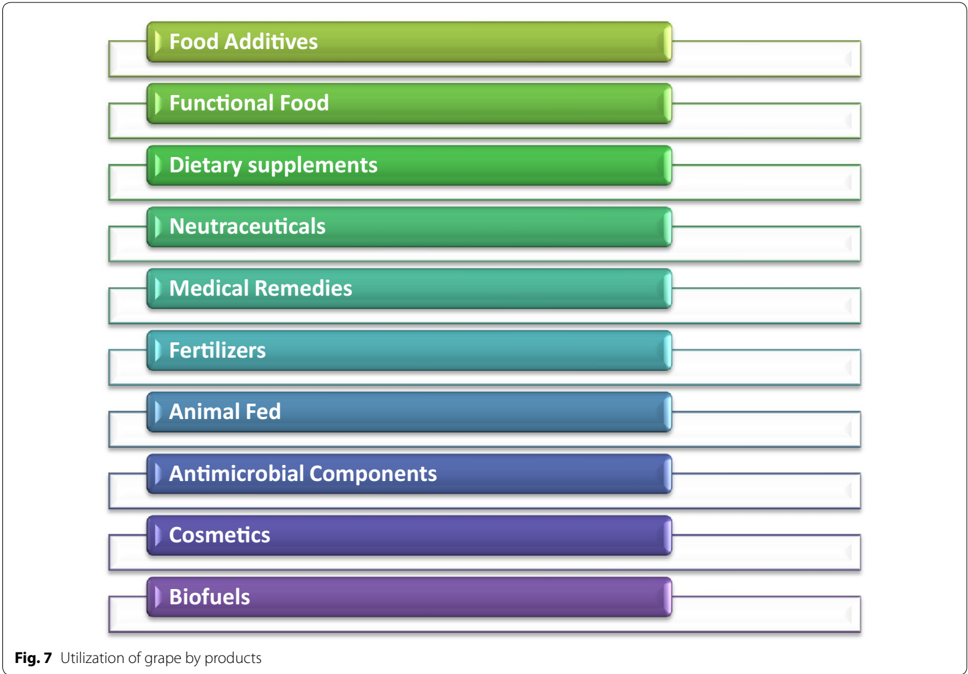
“The by-products of winemaking hold substantial promise for application as ingredients in the biomedical and food industry [43,44].”
Loaiza, S. S., Kornpointner, C., Pazzaglia, A., Jordan, C., Halbwirth, H., & Friedl, A. (2022) · Food and Bioproducts Processing · doi:10.1016/j.fbp.2022.10.001 · Cited by 6
Gomes, C. P., Duarte, C. N., Martins, C. D., Amaral, J. S., Igrejas, G., Pereira, M. J. V., Costa, M. R. P. F. N., & Dias, R. C. S. (2024) · Cleaner and Circular Bioeconomy · doi:10.1016/j.clcb.2024.100093 · Cited by 5
Magalhães, R., & Oliveira, M. S. R. D. (2026) · Sustainability · doi:10.3390/su18115663 · Cited by 5
Bahrampour, J., Piray, A. H., Mousaie, A., & Ghaffari, M. H. (2025) · animal · doi:10.1016/j.animal.2025.101449 · Cited by 4
Radeka, S., Orbanić, F., Rossi, S., Bestulić, E., Horvat, I., Peršurić, A. S. I., Lukić, I., Plavša, T., Bubola, M., & Jeromel, A. (2024) · Foods · doi:10.3390/foods13213493 · Cited by 5
“Due to the notable content of minerals, wine lees are useful in recovering salts and are used as fertilizers [10,54,56].”
BackgroundMottola, S., Viscusi, G., Marco, I. D., & Gorrasi, G. (2025) · Journal of Polymers and the Environment · doi:10.1007/s10924-025-03583-8 · Cited by 4
“Several strategies were developed for the utilization of grape by-products [11] such as the extraction of polyphenols for producing smart polymeric systems [12] or the exploitation of natural extract as reducing agents for the synthesis of green nanoparticles.”
Co-precipitation of anthocyanin in PHBV by the SEDS technique
Aguiar, G. P. S., Magro, C. D., Carvalho, G. O., dos Santos, A. E., Lanza, M., & de Oliveira, J. V. (2020) · Journal of Food Science and Technology · doi:10.1007/s13197-020-04895-4 · Cited by 4
Zanetti, M., Haas, I. C. D. S., Pereira-Coelho, M., Maran, B. M., Canella, M. H. M., Madureira, L. A. D. S., Prudêncio, E. S., Amboni, R. D. D. M. C., Kazama, D. C. D. S., & Feltes, M. M. C. (2022) · Journal of Food Science and Technology · doi:10.1007/s13197-022-05547-5 · Cited by 4
“Grape pomace, containing skins and seeds, has high contents of fibers, along with protein, phenolic compounds, among other substances (Haas et al. 2021; Kalli et al. 2018).”
BackgroundPolyphenols applications in food industry sector
Nazzaro, F., Fratianni, F., Feo, V. D., Pimentel, T. C., Coppola, R., & da Cruz, A. G. (2022) · Elsevier eBooks · doi:10.1016/b978-0-323-85273-9.00002-8 · Cited by 8
Properties of Winemaking By-products of Feteasca Neagra Grape Seeds
Gurev, A., Dragancea, V., Baerle, A., Nеtrеbа, N., Bоеstеаn, О., Haritonov, S. V., & Boris, G. (2022) · Chemistry Journal of Moldova · doi:10.19261/cjm.2022.946 · Cited by 6
Mena, M. O., Trevise, G. G. O., Bassetto, C. C., Pinchao, W. H. P., Louvandini, H., de Soutello, R. V. G., de Albuquerque, A. C. A., & do Amarante, A. F. T. (2025) · Pathogens · doi:10.3390/pathogens14060560 · Cited by 3
“Its application is promising not only for reducing feeding costs but also for promoting sustainability by repurposing materials that would otherwise be discarded [21,22].”
Adutwum, A.-D. E., Yu, J., & Ibrahim, S. A. (2025) · Microorganisms · doi:10.3390/microorganisms13091972 · Cited by 3
“Approximately 13 million tons of grape pomace are produced annually worldwide, predominantly in wine-producing countries like Italy, France, Spain, and the United States, and typically discarded as waste or limited to fertilizer and biofuel uses [1,2].”
BIOGENIC AND RISK ELEMENTS IN GRAPE POMACE OF DIFFERENT CULTIVARS
Lidiková, J., Čeryová, N., Musilová, J., Bobko, M., Bobková, A., Demianová, A., Poláková, K., & Grygorieva, O. (2024) · Journal of Microbiology Biotechnology and Food Sciences · doi:10.55251/jmbfs.11096 · Cited by 3
“The high polyphenol content may lower its pH and increase its resistance to biodegradation (Kalli et al ., 2018) .”
BackgroundPinton, S., Dias, F. F. G., Lerno, L., & Bell, J. M. L. N. D. M. (2024) · Food and Bioproducts Processing · doi:10.1016/j.fbp.2024.07.010 · Cited by 3
Wasilewski, T., Hordyjewicz‐Baran, Z., Malorna, K., Dresler, E., Sabura, E., Zegarski, M., & Stanek, N. (2025) · Molecules · doi:10.3390/molecules30183709 · Cited by 6
“The increasing scientific and industrial focus on valorizing winemaking waste and efficiently recovering polyphenols is driven by the substantial generation of grape pomace, the potential economic benefits, and the resulting reduction in environmental impact [22,77].”
A Perspective of Applications of Wine Pomace in Flour-Containing Foods: A Mini-Review
Grevtseva, N., & Gubsky, S. (2023) · International Electronic Conference on Foods (Foods) · doi:10.3390/foods2023-15154 · Cited by 3
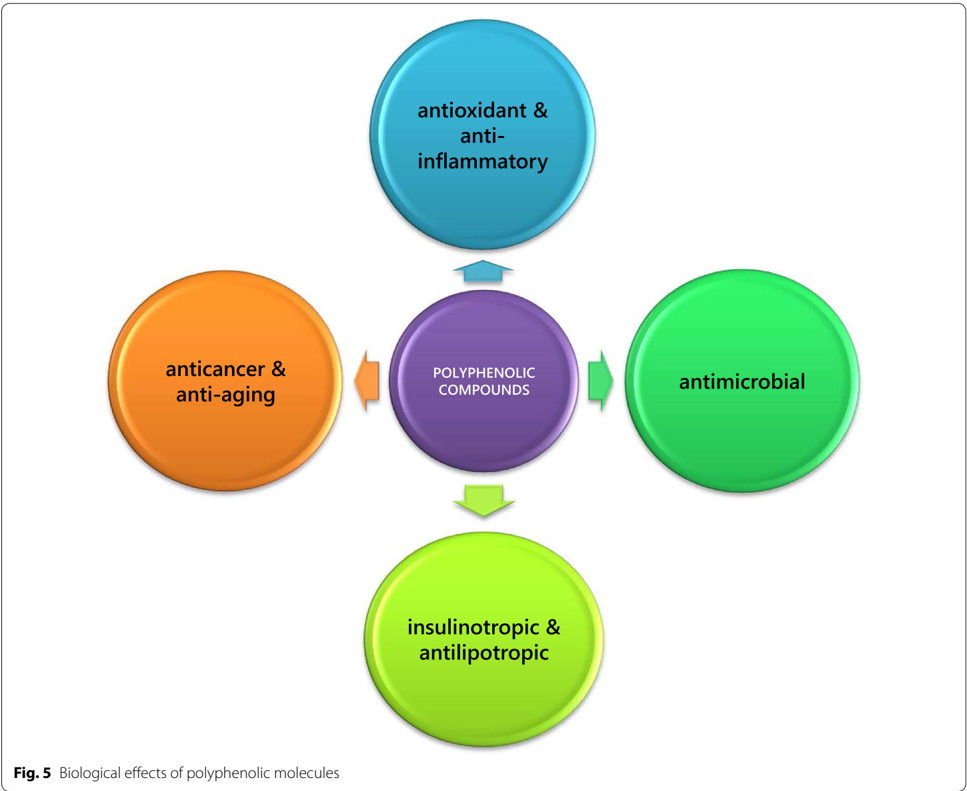
“These compounds have the potential to exert antioxidant, anti-inflammatory, antimicrobial, anticancer and antithrombotic effects, and antidepressant activity [2].”
BackgroundBIOCONVERSION OF WINE POMACE BY LENTINUS EDODES IN A SOLID-STATE SYSTEM
Yı̇ldırım, H. K., & Sözmen, E. Y. (2021) · Journal of Microbiology Biotechnology and Food Sciences · doi:10.15414/jmbfs.3006 · Cited by 3
Potential value-added products from wineries residues
Mandade, P., & Gnansounou, E. (2021) · Elsevier eBooks · doi:10.1016/b978-0-12-819242-9.00008-7 · Cited by 8
Food Processing Industries, Food Waste Classification and Handling, Target Compounds
Cecchi, T. (2021) · Springer eBooks · doi:10.1007/978-3-030-63436-0_2 · Cited by 3
Separation of secondary metabolites and bioactive substances from agricultural residues
Palencia, M., Lerma, T. A., Garcés, V., Mora, M. A., Martínez, J. M., & Palencia, S. L. (2021) · Elsevier eBooks · doi:10.1016/b978-0-12-821842-6.00017-8 · Cited by 3
del Río, P. G., Romaní, A., & Gullón, B. (2025) · Journal of Chemical Education · doi:10.1021/acs.jchemed.4c01477 · Cited by 2
Jia, R., Lu, S., Li, T. J., Li, M., Zhang, G., Wang, L., & Huang, S. (2025) · Fermentation · doi:10.3390/fermentation11090492 · Cited by 2
Chestnut and Grapevine By-Products: Bioactivity, Biotransformation, and Nutraceutical Applications
Pinto, T. C., Gonçalves, B. C., Aires, A., Cosme, F., & Vilela, A. (2026) · Applied Sciences · doi:10.3390/app16042052 · Cited by 6
Grape pomace in equine nutrition: effect on antioxidant status
Kolláthová, R. (2021) · Acta fytotechnica et zootechnica/Acta fytotechnica et zootechnica · doi:10.15414/afz.2021.24.04.340-344 · Cited by 2
Fruit Pomaces as Valuable By-Products of Wine and Cider Industries
Geană, E., Coldea, T. E., Avîrvarei, A.-C., Mudura, E., Pop, C. R., Pop, O. L., Ciont, C., Salanță, L. C., Călugăr, A., Mihai, M., et al. (2023) · Sustainable development and biodiversity · doi:10.1007/978-981-19-8774-8_14 · Cited by 3
KWIATKOWSKI, M. J., Cozzolino, D., & Taylor, D. K. (2020) · Food Analytical Methods · doi:10.1007/s12161-020-01702-w · Cited by 2
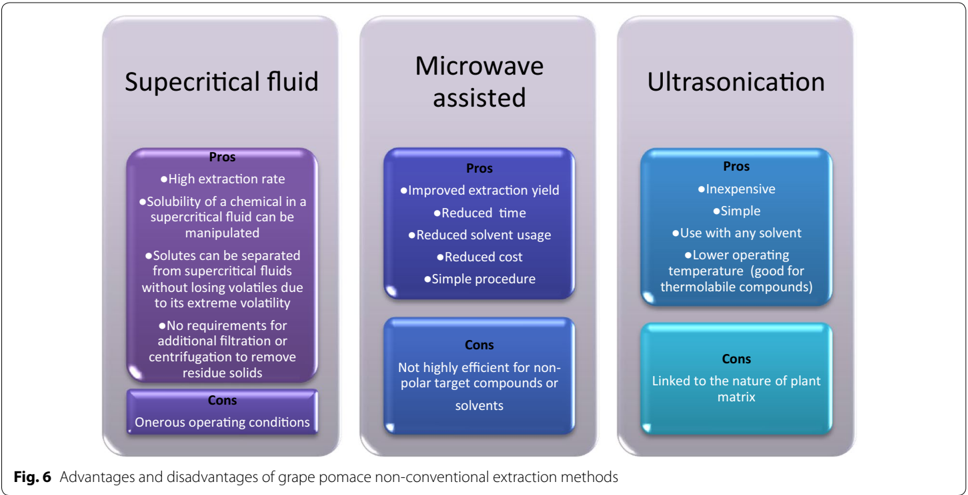
“Recently there has been growing interest in developing alternative extraction methods more environmentally friendly in terms of chemical and energy usage in comparison with the conventional thermal extraction (CTE) methods, which can be used in valorisation of winery bi-products (Kalli et al. 2018).”
BackgroundDesign and Science for the Valorisation of Residues and By-products of the Wine Industry
Cioffi, E., Capece, S., Pacifico, S., & Buono, M. (2021) · Lecture notes in networks and systems · doi:10.1007/978-3-030-80415-2_5 · Cited by 3
Valorizacija nusproizvoda proizvodnje vina
Skračić, Ž., Ljubenkov, I., Mimica, N., & Mekinić, I. G. (2023) · Kemija u industriji · doi:10.15255/kui.2022.051 · Cited by 3
Pistol, G. C., Marin, D. E., Bulgaru, C. V., & Țăranu, I. (2023) · Archiva zootechnica · doi:10.2478/azibna-2023-0004 · Cited by 2
Sittek, L.-M., Schmidts, T., & Schlupp, P. (2023) · Journal of Cosmetics Dermatological Sciences and Applications · doi:10.4236/jcdsa.2023.132013 · Cited by 4
“Since Polyphenols are considered to have health-promoting, anti-inflammatory, antimicrobial, and antioxidant properties, the by-products of wine production have great potential for use in skin care due to their high polyphenol content [21].”
BackgroundMachado, A. M. R., Galdeano, M. C., de Sá, D. D. G. C. F., de Souza, E. F., de Alcântara, M., de Freitas, S. C., & Tonon, R. V. (2023) · Food Science and Technology International · doi:10.1177/10820132231186442 · Cited by 2
“In Mediterranean countries, the annual production of grape pomace can reach 1200 tons per year (Kalli et al., 2018).”
Vedova, L. D., Baron, G., Morazzoni, P., Santinello, S., Haddad, S. M. E., Valdés-González, J. A., Piazza, S., Dell’Agli, M., Aldini, G., & Gado, F. (2025) · Pharmaceuticals · doi:10.3390/ph18091373 · Cited by 1
Kumar, M., Paritosh, K., Kumari, R., Vivekanand, V., Chawade, A., & Pareek, N. (2025) · Industrial Crops and Products · doi:10.1016/j.indcrop.2025.122151 · Cited by 3
Berli, F., Píccoli, P., & Bottini, R. (2021) · Plant in challenging environments · doi:10.1007/978-3-030-77477-6_8 · Cited by 1
Microbial-assisted remediation of food processing industry waste
Sharma, R. N. (2022) · Elsevier eBooks · doi:10.1016/b978-0-323-90452-0.00027-x · Cited by 2
D’Eusanio, V., Morelli, L., Marchetti, A., & Tassi, L. (2023) · Molecules · doi:10.3390/molecules28227676 · Cited by 1
“Various waste streams are generated from grape processing to bottling, including grape skins, stems, lees, and canes [6,7].”
BackgroundOspina-Romero, M. A., González‐Ríos, H., Barrera-Silva, M. Á., Valenzuela‐Melendres, M., Martínez‐Téllez, M. Á., & Saavedra, A. P. (2024) · Revista Mexicana de Ciencias Pecuarias · doi:10.22319/rmcp.v15i3.6479 · Cited by 1
Extraction of 4-HBA utilizing renewable and conventional solvents
Yadav, V. P., & Chandrakar, A. K. (2024) · Transactions on Energy Systems and Engineering Applications · doi:10.32397/tesea.vol5.n2.652 · Cited by 1
“4-HBA 4-HBA is present in the wastewater of the wine industry [8,9] and olive oil mills [10–13] since it is a component of the raw materials needed to make wine and olive fruits.”
BackgroundMembrane technologies for recovery of bioactive compounds
Giacobbo, A., Cassano, A., Conidi, C., & de Pinho, M. N. (2024) · Elsevier eBooks · doi:10.1016/b978-0-443-18975-3.00008-5 · Cited by 2
TECHNOLOGY OF PRODUCTION OF GRAPE SPIRITS FROM SWEET GRAPE POMACE
Бахметов, Р. Н., Shelud'ko, O. N., & Yakuba, Y. F. (2021) · Fruit growing and viticulture of South Russia · doi:10.30679/2219-5335-2021-4-70-346-358 · Cited by 1
Microbiological quality of silage made from by-products of cassava starch extraction and viticulture
Schneider, C. R., Zambom, M. A., Galhardo, D., Faccenda, A., de Ávila, A. S., Tinini, R. C. D. R., & Valle, T. A. D. (2021) · South African Journal of Animal Science · doi:10.4314/sajas.v51i3.15 · Cited by 1
“Viticulture by-product, which is obtained from pressing grapes in wineries, is composed of bagasse and seeds (Kalli et al ., 2018).”
Maleeva, A. Z., Щербакова, Е. В., & Olkhovatov, E. A. (2021) · Fruit growing and viticulture of South Russia · doi:10.30679/2219-5335-2021-3-69-303-315
Chiseliţa, N., Chiselița, O., Beşliu, A., Efremova, N., Tofan, E., Lozan, A., & Danilis, M. (2022) · Bulletin of the Academy of Sciences of Moldova Life Sciences · doi:10.52388/1857-064x.2022.1.11
Sadeghi, K., Parnian-Khajehdizaj, F., Ganjkhanlou, M., Faraji, R., & Abdollahi, Z. (2023) · IntechOpen eBooks · doi:10.5772/intechopen.111539 · Cited by 2
ATALAY, A., YILDIZ-AKGÜL, F., & Kınık, Ö. (2023) · Adnan Menderes Üniversitesi Ziraat Fakültesi Dergisi · doi:10.25308/aduziraat.1406041
Avaliação do potencial de utilização de casca de uva no desenvolvimento de kombucha
Silva, M. E. T., Martins, J., Benevides, C. V., Bach, F., Mano, M. C. R., & Morato, P. N. (2024) · Nutrivisa Revista de Nutrição e Vigilância em Saúde · doi:10.59171/nutrivisa-2024v11e12132
RPG ELETRÔNICO E O ENSINO DE QUÍMICA: UMA POSSIBILIDADE PEDAGÓGICA PARA O ENSINO DE PILHAS
de Jesus, C. F. A., Bueno, A. M. F., dos Anjos, G. R., & Trajano, E. D. S. (2024) · doi:10.22533/at.ed.9872421061
POTENCIAL TERAPÊUTICO DE LIPOPEPTÍDEOS MICROBIANOS CONTRA INFECÇÕES BACTERIANAS MULTIRRESISTENTES
Jinga, E. S. A., Bertoncini, G. E. S., Sartori, D., Celligoi, M. A. P. C., & da Rocha, C. B. (2024) · doi:10.22533/at.ed.9872421063
DINÂMICAS EVOLUTIVAS E APLICAÇÕES TERAPÊUTICAS DOS ÓLEOS ESSENCIAIS DO GÊNERO PIPER L.
Felisberto, J. S., Machado, D. D. B., Massau, S. A. S., Jorge, C. F., Ramos, Y. J., & Moreira, D. D. L. (2024) · doi:10.22533/at.ed.9872421064
Baptista, F., Paié-Ribeiro, J., Branco, M. Z. O. A. J., & Barros, A. (2024) · doi:10.22533/at.ed.9872421062
Química e bioquímica: fundamentos e aplicações 3
Paniagua, C. E. D. S. (2024) · doi:10.22533/at.ed.987242106
Wine Pomace as Feed in Native Chicken Farming: A Revenue-Cost Analysis
Putri, B. R. T., Siti, N. W., Villano, R. A., Ambarawati, I. G. A. A., & Dewi, N. M. A. K. (2024) · Revista de Gestão Social e Ambiental · doi:10.24857/rgsa.v18n12-017
Polyphenols from Winery by-products: Conventional versus Unconventional Extraction Methodologies
Costa, R. D., Coelho, M. C., Domínguez‐Perles, R., Gouvinhas, I., & Barros, A. (2025) · Biochemistry · doi:10.5772/intechopen.1011060 · Cited by 1
Чернобровина, А. Г., Kulikova, N., & Роева, Н. Н. (2025) · Вестник Красноярского государственного аграрного университета · doi:10.36718/1819-4036-2025-7-287-298
Teixeira, S., Sousa, M., Massano, F., & Borges, A. (2024) · Portuguese National Funding Agency for Science, Research and Technology (RCAAP Project by FCT)
Tsukada, M., Odanaka, Y., Koike, Y., Fujishiro, M., Sambe, T., & Fukuhara, K. (2026) · ACS Omega · doi:10.1021/acsomega.5c10089
Raj, V., Karn, S. K., Kumari, M., Kumar, R., Prakash, A., & Das, A. P. (2026) · Springer eBooks · doi:10.1007/978-3-032-11377-1_5
Wojewódka, D. (2026) · Ochrona Środowiska i Zasobów Naturalnych · doi:10.2478/oszn-2026-0003
“…[Skendi et al. 2020], waste from the Brewing Industry [Fillaudeau et al. 2006; Karlovic et al. 2020; Miller et al. 2021], waste from Wine Industry [Kalli et al. 2018; DaRos et al. 2014; Rodríguez et al. 2007; Montalvo et al. 2020] and Catering Waste [Tayyab et al. 2019; Elwakeel et al. 2023;…”
Pardo‐Castaño, C., Vélez, A. Q., & Vallejo-Revelo, W. F. (2026) · Molecules · doi:10.3390/molecules31132272
“It is estimated that approximately 1 kg of grape marc is generated for every 5 L of wine produced, corresponding to about 20–30% of the total grape weight [6,8].”
ATALAY, A., YILDIZ-AKGÜL, F., & Kınık, Ö. (2026) · International Journal of Agriculture Environment and Food Sciences · doi:10.31015/jaefs.2026.3.7
Cánovas, B. M., de la Guía, M., Domínguez‐Perles, R., Periago, P. M., García‐Viguera, C., & Medina, S. (2026) · Acta Horticulturae · doi:10.17660/actahortic.2026.1466.38
Saleem, H., & Al-Himdany, H. Q. (2026) · IRAQI JOURNAL OF AGRICULTURAL SCIENCES · doi:10.36103/5z6xhd24
Metadata
- Authors
- Kalli, E., Lappa, I., Bouchagier, P., Tarantilis, P. A., & Skotti, E.
- Affiliations
- Technological Educational Institute of the Ionian Islands (GR)
- Agricultural University of Athens (GR)
- Corresponding author
- Skotti, Efstathia
- Venue
- Bioresources and Bioprocessing
- Published
- 2018-11-26
- Volume
- 5
- Issue
- 1
- ISSN
- 2197-4365 (ISSN-L)
- OpenAlex
- W2902609196
- Cited by
- 181
- References
- 159
- Citations by year
- 2026: 9 · 2025: 29 · 2024: 32 · 2023: 28 · 2022: 34 · 2021: 36 · 2020: 13
- FWCI
- 8.43
- Type
- journal article
- Language
- en
- Open access
- gold
- doi.org
- Licence
- cc-by
- creativecommons.org/licenses/by/4.0 (tdm)
- Locations
- Bioresources and Bioprocessing (publishedVersion, cc-by)
- DOAJ (DOAJ: Directory of Open Access Journals) (submittedVersion, cc-by-sa)
- Funders
- Association of Canadian Universities for Northern Studies
- Topics
- Health Sciences › Medicine › Biochemistry (medical) › Phytochemicals and Antioxidant Activities
- Life Sciences › Agricultural and Biological Sciences › Food Science › Agricultural and Biological Research
- Life Sciences › Agricultural and Biological Sciences › Food Science › Fermentation and Sensory Analysis
- Keywords
- winemaking by-products, grape pomace, bioactive compounds, agricultural waste valorization, extraction methods, value-added products, food industry applications, cosmetics, pharmaceutical applications, animal feed, energy recovery, waste recycling, environmental impact reduction
About these checks
Registry, retraction, Cites and statistics results are computed, not judged, with one exception: a printed reference that no index lists is read once by a model before it counts as a citation error. Claims are extracted by a model and kept only when their quote appears verbatim in the text; each cited source is then checked, with a model’s help, for whether it says what the claim relies on. Those verdicts can be wrong — read the claim’s quote and the cited source before relying on one.
Statistics and arithmetic are recomputed, not judged.
Confidence bands are shown only for fields calibrated on our annotated test set. None is calibrated yet, so no band is shown.
What counts as a claim ›How we measure confidence ›How we check this ›
Are you an author, or do you see a problem with this page? Request a review
Data sources
Bibliographic data: Semantic Scholar, OpenAlex, Crossref.
Contains information from the Semantic Scholar Academic Graph Datasets, made available under the ODC Attribution License (ODC-BY 1.0).
Semantic Scholar’s data is described in: Kinney, R., et al. (2023). The Semantic Scholar Open Data Platform. arXiv:2301.10140.
