

Biodegradation of plastic polymers by fungi: a brief review
Open accessThe DOI matches its Crossref record; 93 of the 93 references it cites were found in a registry or an index.
Abstract
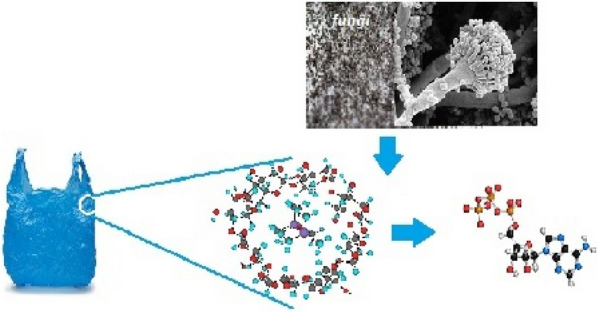
Plastic polymers are non-degradable solid wastes that have become a great threat to the whole world and degradation of these plastics would take a few decades. Compared with other degradation processes, the biodegradation process is the most effective and best way for plastic degradation due to its non-polluting mechanism, eco-friendly nature, and cost-effectiveness. Biodegradation of synthetic plastics is a very slow process that also involves environmental factors and the action of wild microbial species. In this plastic biodegradation, fungi play a pivotal role, it acts on plastics by secreting some degrading enzymes, i.e., cutinase`, lipase, and proteases, lignocellulolytic enzymes, and also the presence of some pro-oxidant ions can cause effective degradation. The oxidation or hydrolysis by the enzyme creates functional groups that improve the hydrophilicity of polymers, and consequently degrade the high molecular weight polymer into low molecular weight. This leads to the degradation of plastics within a few days. Some well-known species which show effective degradation on plastics are Aspergillus nidulans, Aspergillus flavus, Aspergillus glaucus, Aspergillus oryzae, Aspergillus nomius, Penicillium griseofulvum, Bjerkandera adusta, Phanerochaete chrysosporium, Cladosporium cladosporioides, etc., and some other saprotrophic fungi, such as Pleurotus abalones, Pleurotus ostreatus, Agaricus bisporus and Pleurotus eryngii which also helps in degradation of plastics by growing on them. Some studies say that the degradation of plastics was more effective when photodegradation and thermo-oxidative mechanisms involved with the biodegradation simultaneously can make the degradation faster and easier. This present review gives current knowledge regarding different species of fungi that are involved in the degradation of plastics by their different enzymatic mechanisms to degrade different forms of plastic polymers.
Overview
The claims and statistics of this paper haven’t been checked yet.
Free: it reads the open-access text and checks the first 5 claims that cite a source we can check. Create a free account to check every claim.
Integrity signals
Registry
Cites
Statistics
Figures
Verification
Claims the paper makes
The claims and statistics of this paper haven’t been checked yet.
Free: it reads the open-access text and checks the first 5 claims that cite a source we can check. Create a free account to check every claim.
Self-check
Percentages, sums and reported differences re-computed from the paper’s own numbers.
The self-check needs the paper’s full text.
Citations
Cites
Biological degradation of plastics: A comprehensive review
Shah, A. A., Hasan, F., Hameed, A., & Ahmed, S. (2008) · Biotechnology Advances · doi:10.1016/j.biotechadv.2007.12.005 · Cited by 2,765 · cited 1×
“As high molecular weight is a large compound that cannot be transported across the cellular membrane of the fungi thus it primarily depolymerizes it into small monomers before they cross the cell membrane (Shah et al. 2008).”
BackgroundPathways for degradation of plastic polymers floating in the marine environment
Gewert, B., Plassmann, M. M., & MacLeod, M. (2015) · Environmental Science: Processes & Impacts · doi:10.1039/c5em00207a · Cited by 2,168
Tokiwa, Y., Calabia, B. P., Ugwu, C. U., & Aiba, S. (2009) · International Journal of Molecular Sciences · doi:10.3390/ijms10093722 · Cited by 1,782
Lignocellulosic residues: Biodegradation and bioconversion by fungi
Sánchez, C. (2009) · Biotechnology Advances · doi:10.1016/j.biotechadv.2008.11.001 · Cited by 1,685 · cited 2×
“The extracellular enzymatic system consists of a hydrolytic system that produces hydrolases that are involved in polysaccharide degradation and the unspecific oxidative system involved in breaking down complex structures, such as lignin degradation (Sánchez 2009).”
BackgroundPlastics: Environmental and Biotechnological Perspectives on Microbial Degradation
Danso, D., Chow, J., & Streit, W. R. (2019) · Applied and Environmental Microbiology · doi:10.1128/aem.01095-19 · Cited by 918
Polyurethane Foams: Past, Present, and Future
Gama, N. V., Ferreira, A., & Barros-Timmons, A. (2018) · Materials · doi:10.3390/ma11101841 · Cited by 902
Microbial degradation and deterioration of polyethylene - a review
Restrepo-Flórez, J.-M., Bassi, A., & Thompson, M. R. (2014) · International Biodeterioration & Biodegradation · doi:10.1016/j.ibiod.2013.12.014 · Cited by 778
Cutinase-Catalyzed Hydrolysis of Poly(ethylene terephthalate)
Ronkvist, Å. M., Xie, W., Lu, W., & Gross, R. A. (2009) · Macromolecules · doi:10.1021/ma9005318 · Cited by 708
New perspectives in plastic biodegradation
Sivan, A. (2011) · Current Opinion in Biotechnology · doi:10.1016/j.copbio.2011.01.013 · Cited by 621 · cited 1×
“Laccase can also involve in the oxidation of the hydrocarbon backbone of polyethylene (Sivan 2011).”
BackgroundShimao, M. (2001) · Current Opinion in Biotechnology · doi:10.1016/s0958-1669(00)00206-8 · Cited by 611 · cited 4×
“Phanerochaete chrysosporium is fungal species that degrade high molecular weight polyethylene under nitrogen-limited and carbon-limited conditions (Shimao 2001).”
BackgroundInfluential
Research works printed but not linked: 20
- Alshehrei F Biodegradation of synthetic and natural plastic by microorganisms J Appl Environ Microbiol 2017 5 8 19
- Arutchelvi J Sudhakar M Arkatkar AD Mukesh B Sumit U Parasu V Biodegradation of polyethylene and polypropylene IJBT 2021 7 1 9 22
- Awaja F Pavel D Recycling of PET Eur Polym J 2005 41 1453–1477 39
- Bhardwaj H Gupta R Tiwari A Microbial population associated with plastic degradation Open Access Sci Rep 2012 1 1 4
- Bholay AD Borkhataria V Jadhav U Palekar S Dhalkari V Nalawade PM Bacterial lignin peroxidase: a tool for biolecching and biodegradation of industrial effluents Univ J Environ Res Technol 2012 2 58 64
- Frazer AC Drake HL O-methylation and other transformations of aromatic compounds by acetogenic bacteria Acetogenes 1994 New York Chapman & Hall 1994
- Ganesh P Dineshraj D Yoganathan K Production and screening of depolymerising enzymes by potential bacteria and fungi isolated from plastic waste dump yard sites Int J Appl Res 2017 3 3 693 695
- John Scheirs, Duane P (2003) Modern styrenic copolymers. Wiley, pp. 3. ISBN 978-0-471-49752-3
- Kolattukudy PE Purdy RE Maiti IB Lowenstein JM Cutinases from fungi and pollen Methods in enzymology 1981 New York Academic Press 652
- Kumar S Das ML Rebecca J Sharmila S Isolation and identification of LDPE degrading fungi from municipal solid waste J Chem Pharm Res 2013 5 3 78 81
- Lee B Pometto AL Fratzke A Bailey TB Biodegradation of degradable plastic polyethylene by Phanerochaete and Streptomyces species Appl Environ Microbiol 1991 57 678 685 10.1128/aem.57.3.678-685.1991 16348434 PMC182779 · DOI · Paper page
- Ozsagiroglu E Iyisan B Guvenilir YA Biodegradation and Characterization studies of different kinds of polyurethenes with several enzyme solutions Pol J Environ Studies 2012 6 1777 1782
- Patel C Yadav S Rahi S Dave A Studies on biodiversity of fungal endophytes of indigenous monocotaceous and dicotaceous plants and evaluation of their enzymatic potentialities Int J Sci Res Publ 2013 3 1 5
- Pramila R Vijaya Ramesh K Biodegradation of low density polyethylene (LDPE) by fungi isolated from municipal landfill area J Microbiol Biotech Res 2011 1 4 131 136
- Raaman N Rajitha N Jayshree A Jegadeesh R Biodegradation of plastic by Aspergillus spp. isolated from polythene polluted sites around Chennai J Acad Ind Res 2012 1 313 316
- Russell JR Biodegradation of polyester polyurethane by endophytic fungi Appl Environ Microbiol 2011 77 6076 6084 10.1128/AEM.00521-11 21764951 PMC3165411 · DOI · Paper page
- Tokiwa Y Calabia BP Ugwu CU Aiba S Biodegradability of plastics Int J Mol Sci 2009 10 9 3722 3742 10.3390/ijms10093722 19865515 PMC2769161 · DOI · Paper page
- Umamaheswari S Murali M FTIR spectroscopic study of fungal degradation of poly(ethylene terephthalate) and polystyrene foam Elixir Chem Engg 2013 64 19159 19164
- Usha R Sangeetha T Palaniswamy M Screening of polyethylene degrading microorganisms from garbage soil Libyan Agric Res Center J Int 2011 2 4 200 204
- Webb JS, Nixon M, Eastwood IM, Greenhalgh M, Robson GD, Handley PS (2020) Fungal colonization and biodeterioration of plasticized polyvinyl chloride. ASM J Appl Environ Microbiol 66(8) PMC92133 10919769 · DOI · Paper page
Cited by
Items 301–320 of 320
Deterioration of polylactic acid films by the filamentous fungus Fusarium vanettenii
Tang, Y., Okal, E. J., Gui, H., & Hu, Y. (2026) · Studies in Fungi · doi:10.48130/sif-0026-0026
Shin, Y., Lee, J.-S., Choi, S.-J., Park, J., Kim, H., Lim, K. S., Jung, J., & Ha, S. (2026) · Journal of Polymers and the Environment · doi:10.1007/s10924-026-03959-4
Bio-Based Degradation of Plastics and Microplastic for Sustainable Environment
Devi, M., & Bhatia, N. (2026) · doi:10.1021/bk-2026-1531.ch008
Nyarko, H. D., Danquah, M. A., Mensah, E., Amoah, J., & Boateng, S. N. (2026) · SSRN Electronic Journal · doi:10.2139/ssrn.7493532
Saeed, M. B., Economou, C. Ν., Girotto, S., & Athanassiou, A. (2026) · Journal of environmental chemical engineering · doi:10.1016/j.jece.2026.125210
Lipases and Cutinases from Phytopathogenic and Saprobic Fungi in Plastic
Peña-Montes, C., Oliart‐Ros, R. M., Castro-Ochoa, D., & Narciso-Ortiz, L. (2026) · Methods in molecular biology · doi:10.1007/978-1-0716-5472-9_12
Enzymatic Degradation and Advanced Methods for Microplastic Removal
Murugesan, N., Jacob, S. E., Srivastava, S., Sunilraj, J., & Ganesan, S. (2026) · Frontiers in Bioscience-Elite · doi:10.31083/fbe38975
Jakštienė, G., Koida, A., Kavoliūnas, J., Pleskytė, S., Lukošienė, I. P., & Lastauskienė, E. (2026) · Environmental Pollution · doi:10.1016/j.envpol.2026.129265
Poyrazoğlu, E., Bıyık, H. H., Yılmaz, H. Ç., Bozdağ, A., & Köse, S. Ö. (2026) · Biodegradation · doi:10.1007/s10532-026-10382-y
“Various studies have shown that polymers such as PE and PET can be biodegraded through enzymatic mechanisms (Srikanth et al. 2022; Ojha et al. 2017; Raaman et al. 2012).”
Harnessing white rot fungi for plastic remediation
Singhal, K., & Shourie, A. (2026) · Bioresource Technology Reports · doi:10.1016/j.biteb.2026.103118
Peñafiel-Alvarado, J. I., Martínez, J. I., Gomez-Caturla, J., Carrillo, L. Q., & Balart, R. (2026) · Food Packaging and Shelf Life · doi:10.1016/j.fpsl.2026.101856
Fossil-based and biodegradable bioplastics for food packaging
Ghasemlou, M. (2026) · Elsevier eBooks · doi:10.1016/b978-0-443-41654-5.00007-x
Šunta, U., Torkar, K. G., Škapin, A. S., Soderžnik, K. Ž., Ugrinovič, K., & Kralj, M. B. (2026) · Agriculture · doi:10.3390/agriculture16192155
Wen, Y., Huang, X., Zhang, L., Zhang, S., Li, M., & Zou, K. (2026) · Marine Pollution Bulletin · doi:10.1016/j.marpolbul.2026.120421
Next-generation biodegradable polymer composites for sustainable engineering
Faizan, M., Younis, M. N., Zahid, M., Pasha, M., Qayyum, J. A., Ahmed, N., & Arshad, T. (2026) · Advances in catalysis · doi:10.1016/bs.acat.2026.09.003
Mycoremediation a promising strategy to challenge chemical food hazards
Bell, V., Ferrao, J., Guina, J. A., & Fernandes, T. H. (2026) · Food Safety and Risk · doi:10.1186/s40550-026-00167-9
“…mushroom components, specifically their powerful key enzymes, contain hydrolases (e.g. cutinases, esterases, and lipases) and oxidoreductases (e.g. laccases, peroxidases, and peroxygenases), which can break down the long polymer chains found in plastics (Chigwada et al. 2025; Srikanth et al. 2022).”
Stange, M., Andreassen, M., Peters, T., Lauw, B., Thim, C., Dziurowitz, N., Meyer-Plath, A., Klar, S., Snapkow, I., Ervik, T. K., et al. (2026) · Research Square · doi:10.21203/rs.3.rs-11040166/v1
Ahmed, N., Nurhayati, N., Suhendar, D., Setyahadi, S., Raharjo, T. J., & Helianti, I. (2026) · Journal of Multidisciplinary Applied Natural Science · doi:10.47352/jmans.2774-3047.511
Chen, X., Yang, G., Jiang, S., Xue, H., Zhang, Y., 庞方雨, Li, X., Jie, Z., Dong, W., 崔中利, et al. (2026) · Journal of Hazardous Materials · doi:10.1016/j.jhazmat.2026.144035
Mehmood, N., Rajput, V. D., Banerjee, S., Rajput, P., Манджиева, С. С., & MINKINA, T. (2026) · Journal of Environmental Quality · doi:10.1002/jeq2.70308
Metadata
- Authors
- Srikanth, M., Sandeep, T. S. R. S., Sucharitha, K., & Godi, S.
- Affiliations
- Andhra University (IN)
- Corresponding author
- Sandeep, T. S. R. S.
- Venue
- Bioresources and Bioprocessing
- Published
- 2022-04-08
- Volume
- 9
- Issue
- 1
- Pages
- 42-42
- ISSN
- 2197-4365 (ISSN-L)
- PMC
- PMC10991219
- OpenAlex
- W4225894878
- Cited by
- 319
- References
- 93
- Citations by year
- 2026: 80 · 2025: 96 · 2024: 78 · 2023: 48 · 2022: 17
- FWCI
- 3.42
- Type
- journal article
- Language
- en
- Open access
- gold
- doi.org
- Licence
- cc-by
- creativecommons.org/licenses/by/4.0 (tdm)
- creativecommons.org/licenses/by/4.0 (vor)
- Locations
- Bioresources and Bioprocessing (publishedVersion, cc-by)
- PubMed Central (publishedVersion, cc-by)
- PubMed (publishedVersion)
- DOAJ (DOAJ: Directory of Open Access Journals) (submittedVersion, cc-by-sa)
- Topics
- Physical Sciences › Environmental Science › Pollution › Microplastics and Plastic Pollution
- Life Sciences › Immunology and Microbiology › Applied Microbiology and Biotechnology › Enzyme-mediated dye degradation
- Physical Sciences › Environmental Science › Pollution › Microbial bioremediation and biosurfactants
- Keywords
- plastic biodegradation, plastic polymers, cutinase, lipase, proteolytic enzymes, lignocellulolytic enzymes, Aspergillus, Penicillium, Bjerkandera adusta, Phanerochaete chrysosporium, Pleurotus, saprotrophic fungi, photodegradation, thermo-oxidative degradation, plastic waste
About these checks
Registry, retraction, Cites and statistics results are computed, not judged, with one exception: a printed reference that no index lists is read once by a model before it counts as a citation error. Claims are extracted by a model and kept only when their quote appears verbatim in the text; each cited source is then checked, with a model’s help, for whether it says what the claim relies on. Those verdicts can be wrong — read the claim’s quote and the cited source before relying on one.
Statistics and arithmetic are recomputed, not judged.
Confidence bands are shown only for fields calibrated on our annotated test set. None is calibrated yet, so no band is shown.
What counts as a claim ›How we measure confidence ›How we check this ›
Are you an author, or do you see a problem with this page? Request a review
Data sources
Bibliographic data: Semantic Scholar, OpenAlex, Crossref.
Contains information from the Semantic Scholar Academic Graph Datasets, made available under the ODC Attribution License (ODC-BY 1.0).
Semantic Scholar’s data is described in: Kinney, R., et al. (2023). The Semantic Scholar Open Data Platform. arXiv:2301.10140.
