

Biodegradation of plastic polymers by fungi: a brief review
Open accessThe DOI matches its Crossref record; 93 of the 93 references it cites were found in a registry or an index.
Abstract
Plastic polymers are non-degradable solid wastes that have become a great threat to the whole world and degradation of these plastics would take a few decades. Compared with other degradation processes, the biodegradation process is the most effective and best way for plastic degradation due to its non-polluting mechanism, eco-friendly nature, and cost-effectiveness. Biodegradation of synthetic plastics is a very slow process that also involves environmental factors and the action of wild microbial species. In this plastic biodegradation, fungi play a pivotal role, it acts on plastics by secreting some degrading enzymes, i.e., cutinase`, lipase, and proteases, lignocellulolytic enzymes, and also the presence of some pro-oxidant ions can cause effective degradation. The oxidation or hydrolysis by the enzyme creates functional groups that improve the hydrophilicity of polymers, and consequently degrade the high molecular weight polymer into low molecular weight. This leads to the degradation of plastics within a few days. Some well-known species which show effective degradation on plastics are Aspergillus nidulans, Aspergillus flavus, Aspergillus glaucus, Aspergillus oryzae, Aspergillus nomius, Penicillium griseofulvum, Bjerkandera adusta, Phanerochaete chrysosporium, Cladosporium cladosporioides, etc., and some other saprotrophic fungi, such as Pleurotus abalones, Pleurotus ostreatus, Agaricus bisporus and Pleurotus eryngii which also helps in degradation of plastics by growing on them. Some studies say that the degradation of plastics was more effective when photodegradation and thermo-oxidative mechanisms involved with the biodegradation simultaneously can make the degradation faster and easier. This present review gives current knowledge regarding different species of fungi that are involved in the degradation of plastics by their different enzymatic mechanisms to degrade different forms of plastic polymers.
Overview
The claims and statistics of this paper haven’t been checked yet.
Free: it reads the open-access text and checks the first 5 claims that cite a source we can check. Create a free account to check every claim.
Integrity signals
Registry
Cites
Statistics
Figures
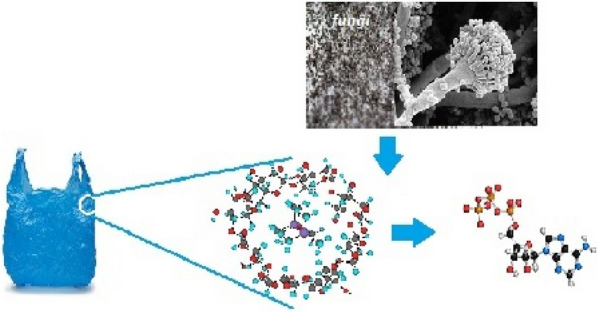
Verification
Claims the paper makes
The claims and statistics of this paper haven’t been checked yet.
Free: it reads the open-access text and checks the first 5 claims that cite a source we can check. Create a free account to check every claim.
Self-check
Percentages, sums and reported differences re-computed from the paper’s own numbers.
The self-check needs the paper’s full text.
Citations
Cites
Biological degradation of plastics: A comprehensive review
Shah, A. A., Hasan, F., Hameed, A., & Ahmed, S. (2008) · Biotechnology Advances · doi:10.1016/j.biotechadv.2007.12.005 · Cited by 2,765 · cited 1×
“As high molecular weight is a large compound that cannot be transported across the cellular membrane of the fungi thus it primarily depolymerizes it into small monomers before they cross the cell membrane (Shah et al. 2008).”
BackgroundPathways for degradation of plastic polymers floating in the marine environment
Gewert, B., Plassmann, M. M., & MacLeod, M. (2015) · Environmental Science: Processes & Impacts · doi:10.1039/c5em00207a · Cited by 2,168
Tokiwa, Y., Calabia, B. P., Ugwu, C. U., & Aiba, S. (2009) · International Journal of Molecular Sciences · doi:10.3390/ijms10093722 · Cited by 1,782
Lignocellulosic residues: Biodegradation and bioconversion by fungi
Sánchez, C. (2009) · Biotechnology Advances · doi:10.1016/j.biotechadv.2008.11.001 · Cited by 1,685 · cited 2×
“The extracellular enzymatic system consists of a hydrolytic system that produces hydrolases that are involved in polysaccharide degradation and the unspecific oxidative system involved in breaking down complex structures, such as lignin degradation (Sánchez 2009).”
BackgroundPlastics: Environmental and Biotechnological Perspectives on Microbial Degradation
Danso, D., Chow, J., & Streit, W. R. (2019) · Applied and Environmental Microbiology · doi:10.1128/aem.01095-19 · Cited by 918
Polyurethane Foams: Past, Present, and Future
Gama, N. V., Ferreira, A., & Barros-Timmons, A. (2018) · Materials · doi:10.3390/ma11101841 · Cited by 902
Microbial degradation and deterioration of polyethylene - a review
Restrepo-Flórez, J.-M., Bassi, A., & Thompson, M. R. (2014) · International Biodeterioration & Biodegradation · doi:10.1016/j.ibiod.2013.12.014 · Cited by 778
Cutinase-Catalyzed Hydrolysis of Poly(ethylene terephthalate)
Ronkvist, Å. M., Xie, W., Lu, W., & Gross, R. A. (2009) · Macromolecules · doi:10.1021/ma9005318 · Cited by 708
New perspectives in plastic biodegradation
Sivan, A. (2011) · Current Opinion in Biotechnology · doi:10.1016/j.copbio.2011.01.013 · Cited by 621 · cited 1×
“Laccase can also involve in the oxidation of the hydrocarbon backbone of polyethylene (Sivan 2011).”
BackgroundShimao, M. (2001) · Current Opinion in Biotechnology · doi:10.1016/s0958-1669(00)00206-8 · Cited by 611 · cited 4×
“Phanerochaete chrysosporium is fungal species that degrade high molecular weight polyethylene under nitrogen-limited and carbon-limited conditions (Shimao 2001).”
BackgroundInfluential
Research works printed but not linked: 20
- Alshehrei F Biodegradation of synthetic and natural plastic by microorganisms J Appl Environ Microbiol 2017 5 8 19
- Arutchelvi J Sudhakar M Arkatkar AD Mukesh B Sumit U Parasu V Biodegradation of polyethylene and polypropylene IJBT 2021 7 1 9 22
- Awaja F Pavel D Recycling of PET Eur Polym J 2005 41 1453–1477 39
- Bhardwaj H Gupta R Tiwari A Microbial population associated with plastic degradation Open Access Sci Rep 2012 1 1 4
- Bholay AD Borkhataria V Jadhav U Palekar S Dhalkari V Nalawade PM Bacterial lignin peroxidase: a tool for biolecching and biodegradation of industrial effluents Univ J Environ Res Technol 2012 2 58 64
- Frazer AC Drake HL O-methylation and other transformations of aromatic compounds by acetogenic bacteria Acetogenes 1994 New York Chapman & Hall 1994
- Ganesh P Dineshraj D Yoganathan K Production and screening of depolymerising enzymes by potential bacteria and fungi isolated from plastic waste dump yard sites Int J Appl Res 2017 3 3 693 695
- John Scheirs, Duane P (2003) Modern styrenic copolymers. Wiley, pp. 3. ISBN 978-0-471-49752-3
- Kolattukudy PE Purdy RE Maiti IB Lowenstein JM Cutinases from fungi and pollen Methods in enzymology 1981 New York Academic Press 652
- Kumar S Das ML Rebecca J Sharmila S Isolation and identification of LDPE degrading fungi from municipal solid waste J Chem Pharm Res 2013 5 3 78 81
- Lee B Pometto AL Fratzke A Bailey TB Biodegradation of degradable plastic polyethylene by Phanerochaete and Streptomyces species Appl Environ Microbiol 1991 57 678 685 10.1128/aem.57.3.678-685.1991 16348434 PMC182779 · DOI · Paper page
- Ozsagiroglu E Iyisan B Guvenilir YA Biodegradation and Characterization studies of different kinds of polyurethenes with several enzyme solutions Pol J Environ Studies 2012 6 1777 1782
- Patel C Yadav S Rahi S Dave A Studies on biodiversity of fungal endophytes of indigenous monocotaceous and dicotaceous plants and evaluation of their enzymatic potentialities Int J Sci Res Publ 2013 3 1 5
- Pramila R Vijaya Ramesh K Biodegradation of low density polyethylene (LDPE) by fungi isolated from municipal landfill area J Microbiol Biotech Res 2011 1 4 131 136
- Raaman N Rajitha N Jayshree A Jegadeesh R Biodegradation of plastic by Aspergillus spp. isolated from polythene polluted sites around Chennai J Acad Ind Res 2012 1 313 316
- Russell JR Biodegradation of polyester polyurethane by endophytic fungi Appl Environ Microbiol 2011 77 6076 6084 10.1128/AEM.00521-11 21764951 PMC3165411 · DOI · Paper page
- Tokiwa Y Calabia BP Ugwu CU Aiba S Biodegradability of plastics Int J Mol Sci 2009 10 9 3722 3742 10.3390/ijms10093722 19865515 PMC2769161 · DOI · Paper page
- Umamaheswari S Murali M FTIR spectroscopic study of fungal degradation of poly(ethylene terephthalate) and polystyrene foam Elixir Chem Engg 2013 64 19159 19164
- Usha R Sangeetha T Palaniswamy M Screening of polyethylene degrading microorganisms from garbage soil Libyan Agric Res Center J Int 2011 2 4 200 204
- Webb JS, Nixon M, Eastwood IM, Greenhalgh M, Robson GD, Handley PS (2020) Fungal colonization and biodeterioration of plasticized polyvinyl chloride. ASM J Appl Environ Microbiol 66(8) PMC92133 10919769 · DOI · Paper page
Cited by
Items 101–200 of 320
Arshad, I., Sajid, S., Qin, Y., Li, J., Zveushe, O. K., Rehman, S., Lal, M. M., Atakpa, E. O., Chen, X., Zhang, W., et al. (2025) · Journal of Hazardous Materials · doi:10.1016/j.jhazmat.2025.139217 · Cited by 14
Valle, L., Maddalena, L., Damonte, G., Carosio, F., Pellis, A., & Monticelli, O. (2024) · Colloids and Surfaces B Biointerfaces · doi:10.1016/j.colsurfb.2024.113806 · Cited by 12
Getino, L., Revilla-Gómez, J. A., Ariza-Carmona, L. M., Thijs, S., Didierjean, C., & Chamizo‐Ampudia, A. (2025) · Bacteria · doi:10.3390/bacteria4030044 · Cited by 12
Advances in microplastic mitigation: current progress and future directions
Gaur, V. K., Raheja, Y., Gaur, P., Kumar, N., Sharma, P., Kumar, A., & Srivastava, J. K. (2025) · Archives of Microbiology · doi:10.1007/s00203-025-04530-w · Cited by 14
Bule, K., Miloloža, M., Martinjak, V., Bošnjak, M. U., Markić, M., Bolanča, T., Cvetnić, M., Grgić, D. K., & Ukić, Š. (2024) · Water · doi:10.3390/w16101389 · Cited by 12
Liu, B., Liu, H., Liu, D., Zhou, M., Jiang, Q., Ma, X., Wang, J., Tan, B., & Zhang, C. (2024) · Agriculture · doi:10.3390/agriculture14091463 · Cited by 14
“According to previous research, Rhodotorula mucilaginosa PY18 can produce extracellular pectinase enzymes, and Fungi harbor powerful enzymatic machinery comprising, for example, manganese peroxidases, lignin peroxidases, and laccases [49,50].”
Bioprospecting of Mangrove Filamentous Fungi for the Biodegradation of Polyethylene Microplastics
Aguiar, A. P., Gama, L. F. S. A. M., Fornari, M., Neto, A. O., Souza, R. F. B. D., Perna, R. F., Castro, L., Kovacs, S. D., Simões, M. F., Ferreira, N. R., et al. (2024) · Journal of Marine Science and Engineering · doi:10.3390/jmse12091629 · Cited by 14
Befenzi, H., Ezzariai, A., Baghor, J., Arrach, H., Armengaud, J., Kielbasa, M., Turbé-Doan, A., Lambert, J., Lomascolo, A., Albert, Q., et al. (2025) · Ecotoxicology and Environmental Safety · doi:10.1016/j.ecoenv.2025.117898 · Cited by 11
Fungal Degradation of Microplastics—An Environmental Need
West, R. R., MacDonald, M. T., & Emenike, C. U. (2026) · Toxics · doi:10.3390/toxics14010070 · Cited by 12
“Esterases are hydrolase enzymes that split esters into alcohols and acids by the addition of water [28], while cutinases are a subclass of esterases that are categorized by their ability to degrade polymers with a high molecular weight [29].”
InfluentialPleurotus ostreatus and a novel fungal composite: Development and bioremediation of plastic wastes
Ratuchne, A., Lonardoni, E. A., Bueno, C. E., Reis, G. F., Rezende, M. I., Urbano, A., Biz, G., Almeida, R. S., & Panagio, L. A. (2023) · Resources Conservation & Recycling Advances · doi:10.1016/j.rcradv.2023.200167 · Cited by 18
Malematja, K. C., Melato, F. A., & Mokgalaka, N. S. (2023) · Sustainability · doi:10.3390/su152416865 · Cited by 13
“During the degradation of plastics, the following characteristics of plastics are considered: molecular weight, functional groups, additives, crystallinity, and mobility [64,65].”
BackgroundSeparation and degradation techniques for microplastics in soil environments
Xu, Y., Zhang, P., Zhang, R., Qu, C., Yuan, Y., Hui, K., Sun, J., & Tan, W. (2025) · Journal of Water Process Engineering · doi:10.1016/j.jwpe.2025.107302 · Cited by 10
Zeraatpishe, M., & Hassanajili, S. (2023) · Polymer Engineering and Science · doi:10.1002/pen.26432 · Cited by 10
Molecular mechanisms of plastic biodegradation by the fungus Clonostachys rosea
(2025) · doi:10.1101/2025.01.28.635403 · Cited by 10
ATR-FTIR characterisation of daily-use plastics mycodegradation
Fernández-Sanmartín, P., Robledo-Mahón, T., Requena-Menéndez, A., Cortizas, A. M., & Aranda, E. (2024) · Ecotoxicology and Environmental Safety · doi:10.1016/j.ecoenv.2024.117232 · Cited by 11
Hao, X., Yang, K., Zhang, D., & Lu, L. (2023) · Polymers · doi:10.3390/polym15020328 · Cited by 9
Molecular mechanisms of plastic biodegradation by the fungus Clonostachys rosea
Gambarini, V., Pavlov, N., Young, P., Dawes, S., Auffret, A., Kingsbury, J. M., Donaldson, L. A., Smith, D. A., Weaver, L., Pantos, O., et al. (2025) · mBio · doi:10.1128/mbio.00335-25 · Cited by 10
Marine fungi degrade plastic and can be conditioned to do it faster
Steinbach, R. M., Whitner, S., & Amend, A. S. (2024) · Mycologia · doi:10.1080/00275514.2024.2422598 · Cited by 8
“…previous results showing that terrestrial isolates of Aspergillus Tranfser 4 (T4) refers to the conditioned fungi that were transferred from 1%, to 5%, to 10%, and finally to 12% liquid PU medium. spp., Fusarium spp., and Penicillium spp. ( Magnin et al. 2018; Srikanth et al. 2022) can degrade PU.”
Obi, L. U., Roopnarain, A., Tekere, M., Jun Liang, Z. H. O. U., Li, H., Wang, Y., Zhang, Y., & Adeleke, R. A. (2025) · Journal of Fungi · doi:10.3390/jof11010056 · Cited by 8
“Saprophytes contribute to the stability of the AD process by promoting a balanced microbial community as they work in synergistic interaction with prokaryotic communities in anaerobic digesters [55].”
Airborne microplastic contamination and health risks in Greater Cairo, Egypt
Mohamed, E. F., El-Mekawy, A., & Abdel‐Latif, N. M. (2025) · Environmental Science and Pollution Research · doi:10.1007/s11356-025-36204-x · Cited by 11
“Biodegradation of MP involves extreme and specialized environmental microorganisms, fungi such as Aspergillus nidulans and Penicillium griseofulvum (Srikanth et al. 2022), and bacteria like Lutibacterium anuloederans and Cycloclasticus spirillensus (Khandare et al. 2021).”
Role of Microbial Enzymes and Their Modification for Plastic Biodegradation–A Review
Swain, R. K., Nayak, S. K., Dubey, R., Bera, T., & Mohanty, S. (2025) · Environmental Quality Management · doi:10.1002/tqem.70088 · Cited by 10
Chigwada, A. D., Tekere, M., & Ogola, H. J. O. (2025) · Ecological Genetics and Genomics · doi:10.1016/j.egg.2025.100378 · Cited by 17
Raby, H. S., Rahman, M. M., Mohammed, M. G., & Siddiquee, M. N. (2025) · Polymer Degradation and Stability · doi:10.1016/j.polymdegradstab.2025.111709 · Cited by 10
Biorecycling of polyethylene (PE): an integrated effort in pretreatment, degradation, and upcycling
Abid, U., Gibbons, J., Qin, J., & Xie, D. (2025) · Frontiers in Bioengineering and Biotechnology · doi:10.3389/fbioe.2025.1692651 · Cited by 10
Biodegradation of low-density polyethylene by novel halophilic bacteria from mangrove ecosystem
Singh, P., Nagarajan, A., Chua, K.-O., & Ting, A. S. Y. (2023) · Bioremediation Journal · doi:10.1080/10889868.2023.2297181 · Cited by 9
“Laccase acts as a ligninolytic enzyme and is involved in the oxidation of the hydrocarbon backbone of LDPE (Nunes et al. 2018; Srikanth et al. 2022; Sharma and Neelam 2023).”
Kumar, M., Chaudhary, V., Kumar, R., Yadav, M. K., Chauhan, C., Prakash, S., Shukla, D., Motla, R., Kaushik, K., Pal, V., et al. (2025) · Discover Sustainability · doi:10.1007/s43621-025-01080-5 · Cited by 10
“Several fungal species, including Aspergillus , Phanerochaete chrysosporium , and Pleurotus ostreatus , have demonstrated the capacity to degrade plastics like polyethylene, polystyrene, and polyurethane, offering promising potential for bioremediation and sustainable plastic waste management [204].”
Elias, C., Ranque, S., & Malleret, L. (2025) · Environmental Technology & Innovation · doi:10.1016/j.eti.2025.104247 · Cited by 10
Ujuagu, G. I., Ejeromedoghene, O., Oladoye, P. O., Okoye, C. O., Alli, Y. A., Oladipo, M. E., & Gu, J. (2025) · Environmental Pollution and Management · doi:10.1016/j.epm.2025.07.006 · Cited by 11
Bai, L., Chang, N., Li, W., Qu, Z., Hao, T., Арвола, Л., Graco‐Roza, C., & Wang, Z. (2025) · Journal of environmental chemical engineering · doi:10.1016/j.jece.2025.119545 · Cited by 7
Advances in fungal-mediated plastic biodegradation: Mechanisms, challenges, and future directions
Harrat, R., Philippe, A., Coton, E., Bourzama, G., & Burgaud, G. (2025) · The Science of The Total Environment · doi:10.1016/j.scitotenv.2025.181251 · Cited by 7
Removal of Microplastic Pollution through Waste Water Treatment: A Review
Singh, V. K. (2022) · Journal for Research in Applied Sciences and Biotechnology · doi:10.55544/jrasb.1.4.2 · Cited by 6
“According to several studies, the degradation of plastics was more efficient when photodegradation and thermo-oxidative mechanisms were linked with biodegradation at the same time (Srikanth et al., 2022).”
BackgroundLee, L., Chen, Y., Zheng, S., Chang, M., & Chen, J. (2023) · ACS Applied Nano Materials · doi:10.1021/acsanm.3c04051 · Cited by 7
Harrat, R., Bourzama, G., Sadrati, N., Zerroug, A., Burgaud, G., Ouled-Haddar, H., & Soumati, B. (2024) · Brazilian Journal of Microbiology · doi:10.1007/s42770-024-01487-8 · Cited by 10
An insight into pollutants and their degradation by microbial enzymes
Boro, M., Chettri, D., Bhadra, S., & Verma, A. K. (2025) · Biocatalysis and Biotransformation · doi:10.1080/10242422.2025.2499004 · Cited by 12
“…for fungi activation, a suitable pH environment required for enzymes to act on the plastic polymer, and an ideal temperature range, which plays an important role in this biodegradation process (Srikanth et al. 2022). the textile industry has a high percentage of dye discharges into water resources.”
The Use of Mycelial Fungi to Test the Fungal Resistance of Polymeric Materials
Ivanushkina, N. E., Aleksanyan, K. V., Rogovina, S. Z., & Kochkina, G. A. (2023) · Microorganisms · doi:10.3390/microorganisms11020251 · Cited by 7
Microbial Degradation of Plastics
Sebastian, A., Paul, A. M., Dominic, D., Shaji, M., Jose, P., Sasi, S., & Prasad, M. N. V. (2023) · Wiley eBooks · doi:10.1002/9781119879534.ch18 · Cited by 11
Arifin, H. R., Angelica, Y. C., Nurhadi, B., Marta, H., & Nissa, R. C. (2025) · JOURNAL OF RENEWABLE MATERIALS · doi:10.32604/jrm.2025.057812 · Cited by 6
Finayeva, N., Kristanti, R. A., Rachana, K., & Batubara, U. M. (2025) · Tropical Aquatic and Soil Pollution · doi:10.53623/tasp.v5i1.671 · Cited by 6
“Among these, biodegradation was considered the most favorable due to its pollution-free mechanism and eco-friendly nature [6].”
Prasath, A. R., & Ragavendran, C. (2025) · Nanotechnology for Environmental Engineering · doi:10.1007/s41204-025-00458-0 · Cited by 7
“…indicated that certain environmental conditions, including wetness levels and temperature, can substantially affect the efficiency of these biodegradation processes, suggesting that optimizing these factors may enhance the overall effectiveness of fungal-mediated plastic degradation [146, 211].”
Ting, A. S. Y., & Sallahudin, A. Y. (2025) · Water Air & Soil Pollution · doi:10.1007/s11270-025-08369-1 · Cited by 7
“Esterase hydrolyses the ester bonds to form alcohol and acids in the presence of water (Srikanth et al., 2022), and this enzyme have also been shown to cleave short-chain fatty acids ( C 6 ) (Lopes et al., 2011).”
InfluentialBiodeterioration of a polyurethane topcoat by Aspergillus niger
Maestri, C., Duthoit, A., Hébert, R., Bredif, L., & Martino, P. D. (2025) · International Biodeterioration & Biodegradation · doi:10.1016/j.ibiod.2025.106257 · Cited by 6
The dark matter in water, air and land: from microplastic to invisible nanoplastics
Stenzel, M. H. (2026) · Materials Horizons · doi:10.1039/d5mh01544h · Cited by 8
Carvalho, L., Lopes, I., Magalhães, S., Cardoso, P., & Venâncio, C. (2025) · Journal of Cleaner Production · doi:10.1016/j.jclepro.2025.146892 · Cited by 6
Asemoloye, M. D. (2026) · Biotechnology Advances · doi:10.1016/j.biotechadv.2026.108834 · Cited by 10
A Critical Evaluation of Nano‐ and Microplastics: Sources, Health Risks, and Mitigation Strategies
Njema, G. G., Agoro, M. A., & Kibet, J. K. (2026) · Advances in Materials Science and Engineering · doi:10.1155/amse/1357400 · Cited by 7
Liu, C., Feng, J., Wang, S., Cao, Y., & Shen, Y. (2022) · Agronomy · doi:10.3390/agronomy12102413 · Cited by 9
Biodegradation of plastics—An overview
Habib, T., Muhammad, M., Liu, Y., Fang, B., & Li, W.-J. (2024) · Elsevier eBooks · doi:10.1016/b978-0-443-21911-5.00011-8 · Cited by 6
Photo/Hydro/Thermal Degradation of Macro-plastics into Micro- and Nano-forms
Lakshmipraba, J. (2024) · Springer eBooks · doi:10.1007/978-3-031-54565-8_3 · Cited by 10
Trends in Antarctic soil fungal research in the context of environmental changes
Zucconi, L., Cavallini, G., & Canini, F. (2024) · Brazilian Journal of Microbiology · doi:10.1007/s42770-024-01333-x · Cited by 8
Challenges and Safety Regulations for Employing Fungi in Environmental Applications
Mehra, M. K., & Althuri, A. (2024) · Springer eBooks · doi:10.1007/978-981-97-4113-7_14 · Cited by 8
Zaborowska, M., Bernat, K., Pszczółkowski, B., Cydzik‐Kwiatkowska, A., Kulikowska, D., & Wojnowska‐Baryła, I. (2024) · Journal of Environmental Management · doi:10.1016/j.jenvman.2024.122399 · Cited by 10
Zhurina, M. V., Bogdanov, K., Mendeleev, D. I., Тихомиров, В. А., Pleshko, E., Gannesen, A. V., Kurenkov, V., Герасин, В. А., & Plakunov, V. K. (2023) · Coatings · doi:10.3390/coatings13060987 · Cited by 6
Fungal Biodegradation of a Hybrid Adhesive Polymer Containing High-Biomass Content
Castaño, J. D., Hauge, D. A., Haag, A., Severtson, S. J., & Zhang, J. (2023) · Journal of Polymers and the Environment · doi:10.1007/s10924-023-02938-3 · Cited by 6
Fungi-based Biomimetic Approach to Address Plastic Pollution: A Developing Nation's PerspectivePreprint
Kundanati, L. (2022) · Preprints.org · doi:10.20944/preprints202209.0255.v1 · Cited by 6
A consortium of Aspergillus species biodegrades polypropylene plastic
Alshammari, A., Virk, P., Elsayim, R., Al-Otaibi, N. R., Sudairi, A. T. A., Awad, M. A., Al-Odayni, A.-B. M., & Fouad, D. (2025) · Environmental Pollution · doi:10.1016/j.envpol.2025.127179 · Cited by 6
Gao, J., Dong, A., Li, J., Xu, J., Liang, Z., & Logrieco, A. F. (2025) · Journal of Fungi · doi:10.3390/jof11100726 · Cited by 5
Alami, N. H., Puteri, Z. R., Esaki, T., Sugai, Y., Pratama, F., Purwasena, I. A., & Aditiawati, P. (2025) · Scientific Reports · doi:10.1038/s41598-025-22911-5 · Cited by 7
“It involves several enzymes produced by microorganisms that can degrade PE until it is completely mineralized 15,16 .”
Treatment of Cigarette Butts: Biodegradation of Cellulose Acetate by Rot Fungi and Bacteria
Morales-Vera, R., Cantillana, J., Arto-Paz, F., Hernández, C., Echeverría-Vega, A., & Valdés, C. (2024) · Microorganisms · doi:10.3390/microorganisms12112285 · Cited by 7
Ujuagu, G. I., Ejeromedoghene, O., Enwemiwe, V. N., Mgbechidinma, C. L., Omoniyi, A. O., Oladipo, A., & Gu, J. (2024) · Toxicology Reports · doi:10.1016/j.toxrep.2024.101873 · Cited by 7
Microorganisms usage in enhanced oil recovery: Mechanisms, applications, benefits, and limitations
Nikravesh, H., Kazemzadeh, Y., Hasan‐Zadeh, A., & Safaei, A. (2024) · The Canadian Journal of Chemical Engineering · doi:10.1002/cjce.25476 · Cited by 5
Taxeidis, G., Σιαπέρας, Ρ., Foka, K., Ponjavić, M., Nikodinović‐Runić, J., Zerva, A., & Topakas, E. (2025) · Environmental Pollution · doi:10.1016/j.envpol.2025.126214 · Cited by 6
Chong, G.-G., Ding, L., Qiu, Y., Qian, X., Li, C., Pan, J., & Xu, J. (2022) · ACS Sustainable Chemistry & Engineering · doi:10.1021/acssuschemeng.2c03795 · Cited by 5
Das, B., Bisht, V., Saleha, W. F. G., Sinha, S., Mohanty, S., & Navani, N. K. (2025) · ACS ES&T Engineering · doi:10.1021/acsestengg.4c00972 · Cited by 4
Edirisingha, I. P., Undugoda, L. J. S., Manage, P. M., Lankasena, N., Patabendige, C., Nugara, R. N., Macreadie, P. I., & Bhadury, P. (2025) · Food Bioscience · doi:10.1016/j.fbio.2025.107929 · Cited by 4
Burd, B. S., Trombotto, B., da Cunha, G. E. R., Floriano, J. F., Garcia, M. T., Brasil, G. S. P., dos Santos, L. S., Guerra, N. B., Polanczyk, R. A., Persinoti, G. F., et al. (2026) · Journal of environmental chemical engineering · doi:10.1016/j.jece.2026.122471 · Cited by 7
Aliphatic Polyester Recognition and Reactivity at the Active Cleft of a Fungal Cutinase
Vidossich, P., Manathunga, M., Götz, A. W., Merz, K. M., & Vivo, M. D. (2025) · Journal of Chemical Information and Modeling · doi:10.1021/acs.jcim.5c00739 · Cited by 6
Lebepe, J., Buthelezi, N. M. D., & Manganyi, M. C. (2025) · Microplastics · doi:10.3390/microplastics4040070 · Cited by 5
“Fungi such as Aspergillus and Penicillium have exhibited similar capacities, particularly for polyethylene and polyurethane degradation [109].”
Bhanot, V., Shobham, Mamta, M., & Panwar, J. (2022) · Journal of Environmental Management · doi:10.1016/j.jenvman.2022.116579 · Cited by 4
Screening and Isolation of Polypropylene Degrading Fungi from Waste Dumping Site, Kolhapur, India
Parit, A. A., Jadhav, A. S., & Raut, P. D. (2023) · Nature Environment and Pollution Technology · doi:10.46488/nept.2023.v22i03.046 · Cited by 6
“For the degradation of polyethylene, findings of Cladosporium, Fusarium, Aspergillus, Penicillium, and Phanerochaete have been highlighted (Munuru et al. 2022).”
BackgroundMyco-enzymes as a Potent Tool for the Degradation of Xenobiotics
Khatua, S. (2025) · Springer eBooks · doi:10.1007/978-981-96-8260-7_21 · Cited by 6
Breaking down microplastics: insights into the role of actinomycetes in biotic degradation pathways
Mukhopadhyay, R., Biswas, K., Roy, S., & De, P. (2025) · Archives of Microbiology · doi:10.1007/s00203-025-04528-4 · Cited by 3
Sharma, P. K., Dagariya, S., Sharma, S. K., & Singh, M. P. (2025) · Journal of Environmental Science and Health Part C · doi:10.1080/26896583.2025.2578871 · Cited by 6
Jin, X., Xing, M., Huang, M., Zhang, Y., Jin, X., Fang, Y., Xu, H., Liang, J., Yu, Y., Xu, X., et al. (2025) · Journal of Hazardous Materials · doi:10.1016/j.jhazmat.2025.140591 · Cited by 3
A comprehensive review on white-rot fungi for their pivotal role in degradation of pollutants
Singh, S., Singh, N. P., Agrawal, S., & Kumar, A. (2026) · Discover Water · doi:10.1007/s43832-026-00343-0 · Cited by 4
“This enzymatic activity causes notable changes in the chemical composition of PET flakes, as observed through significant shifts in FTIR spectra, particularly in the carbonyl, carboxyl, and hydroperoxide regions, highlighting the degradation of the polymer chains [115, 116].”
Biodegradation of Microplastics by Filamentous Fungi: A Novel Approach for Polymer Remediation
Contato, A. G., & Conte-Junior, C. A. (2026) · Microplastics · doi:10.3390/microplastics5020109 · Cited by 5
“For instance, studies have shown that fungal strains exhibit different degradation capabilities depending on the surface hydrophobicity and charge of the plastic substrate [25,129,194].”
Tourova, T. P., Sokolova, D. S., Semenova, E. M., Kireev, D. M., Лаптев, А. Б., & Nazina, T. N. (2022) · Microbiology · doi:10.1134/s0026261722601919 · Cited by 2
Nonthijun, P., Tanunchai, B., Schroeter, S. A., Wahdan, S. F. M., Alves, E. G., Hilke, I., Buscot, F., Schulze, E., Disayathanoowat, T., Purahong, W., et al. (2024) · Microbial Ecology · doi:10.1007/s00248-024-02466-0 · Cited by 4
Characterization of Polystyrene-Degrading Bacteria Isolated From Plastic Processing Plants
Šunta, U., Modic, M., Fink, R., & Torkar, K. G. (2024) · International Journal of Environmental Research · doi:10.1007/s41742-024-00713-3 · Cited by 6
“The ability of these fungi to survive and degrade plastic has been demonstrated in many studies (Srikanth et al. 2022).”
Biodegradation and Bioremediation Efficacy of Mangrove-Associated Fungi
Alagarsamy, P., Kumarasamy, S., Sylvester, S. M. S., & Muthusamy, S. (2025) · Springer eBooks · doi:10.1007/978-981-96-2602-1_10 · Cited by 3
Potential for microbial plastic degradation via assimilation of non-carbon moieties in additives
Wijaya, D., Lalung, J., Muhammad, S. A., Convey, P., Merican, F., Hamid, F. S., & Allafi, F. (2025) · Biotechnology Advances · doi:10.1016/j.biotechadv.2025.108620 · Cited by 4
Microbial Degradation of E-plastics in Diverse Ecosystems
Ambika, Kainthola, C., Singh, S., Kumar, M., Pandey, A., Bhandari, M. S., & Pandey, S. (2023) · Springer eBooks · doi:10.1007/978-3-031-25678-3_11 · Cited by 3
Understanding the Structure and Function of Landfill Microbiome Through Genomics
Merchant, M., Kahali, T., Kumawat, D. K., Mande, S. S., & Sar, P. (2024) · Elsevier eBooks · doi:10.1016/b978-0-443-13320-6.00023-8 · Cited by 3
Plastic Waste and Its Eco-Friendly Management
González-Fernández, L. A., & Medellín-Castillo, N. A. (2024) · Springer eBooks · doi:10.1007/978-3-031-55661-6_9 · Cited by 5
Oprea, Ș., Potolinca, V. O., & Grădinaru, L. M. (2024) · Journal of Polymers and the Environment · doi:10.1007/s10924-024-03288-4 · Cited by 3
Plastic contaminants in water and recent advances in bioremediation
Ali, S. S., Elsamahy, T., Al-Tohamy, R., Abdelkarim, E. A., & Sun, J. (2024) · Elsevier eBooks · doi:10.1016/b978-0-443-14170-6.00003-2 · Cited by 3
Investigating Degradation in Extrusion-Processed Bio-Based Composites Enhanced with Clay Nanofillers
Tara, A., Bencharki, M., Gainvors-Claisse, A., Berzin, F., Jbara, O., & Rondot, S. (2024) · Biomass · doi:10.3390/biomass4030036 · Cited by 3
Rojas-Flores, S., Cruz-Noriega, M. D. L., Otiniano, N. M., Cabanillas-Chirinos, L., & Silva, L. M. A. (2024) · Sustainability · doi:10.3390/su162411137 · Cited by 3
Ong, G. H., Liew, L. M., Wong, K. K., Wong, R. R., Barasarathi, J., Loh, K. E., & Tanee, T. (2024) · Malaysian Applied Biology · doi:10.55230/mabjournal.v53i6.12 · Cited by 3
“Recent research demonstrated that fungi possess a wide range of enzymes that effectively interact with the chemical bonds in HDPE polymers, leading to polyethylene plastic degradation (Srikanth et al ., 2022).”
Chung, S., Park, S. B., Hào, L. T., Kim, H., Park, S., Jeon, H., Hwang, D. S., Oh, D. X., Koo, J. M., & Park, J. (2025) · Polymer Degradation and Stability · doi:10.1016/j.polymdegradstab.2025.111185 · Cited by 3
Stefanović, S., Dimitrijević, M., Mutavdžić, D. R., Atlagić, K., Krnjajić, S., & Marjanović, Ž. S. (2025) · Polymers · doi:10.3390/polym17131772 · Cited by 4
“Plastic polymers are a major problem worldwide because they accumulate as hardly degradable solid waste on the Earth’s surface [1].”
InfluentialOtálora, A., Lerma, T. A., & Palencia, M. (2022) · Journal of Polymer Research · doi:10.1007/s10965-022-03331-9 · Cited by 3
Singh, A. K., Upadhyay, S. K., & Singh, S. P. (2023) · Wiley eBooks · doi:10.1002/9781119874096.ch1 · Cited by 4
In silico engineering of Aspergillus tubingensis cutinase to enhance PET biodegradation potential
Azarudeen, A., Richard, S. P., Periyasamy, T. S., Sekar, N., & Lakshmanan, H. (2025) · Environmental Science and Pollution Research · doi:10.1007/s11356-025-37179-5 · Cited by 2
“Many techniques, including photo-oxidation, thermal degradation, chemical degradation, and PET biodeg-radation, are employed for this purpose (Hiraga et al. 2019; Srikanth et al. 2022).”
Nguyen, T. H. P., Thompson, L., Jahromi, F. T., Sümer, H., Alam, M., & Nikzad, M. (2025) · Scientific Reports · doi:10.1038/s41598-025-30954-x · Cited by 2
Microbial Degradation of Polystyrene: Mechanisms, Enzymes and Environmental Significance
Kaviarasi, V., Parthasarathi, R., Akash, K., Senthilkumar, M., Raja, K., & Rajammal, T. S. J. (2026) · Microbiology · doi:10.1134/s0026261725602398 · Cited by 2
Nguyen, T. M. N., Pham, M.-N., Nguyen, H.-T., & Nguyen, P.-T. (2026) · Environmental Engineering Research · doi:10.4491/eer.2025.691 · Cited by 3
“Penicillium spp., such as P. chrysogenum and P. simplicissimum , secrete laccases and esterases active against PET and PLA, with enzyme expression stimulated by metabolizable carbon sources [89, 90].”
Kim, J. S., Cho, Y., Seo, C. W., Park, K. H., Yoo, S., Lee, J. W., Kim, S. H., Lee, W., & Lim, Y. W. (2023) · The Journal of Microbiology · doi:10.1007/s12275-023-00017-9 · Cited by 2
“They can also decompose artificially synthesized polymer materials, such as plastic (Muhonja et al., 2018; Srikanth et al., 2022) and synthetic dye (Wesenberg et al.”
BackgroundAccumulation of Bisphenol A® by Pleurotus spp.—Flow Injection Analysis
Krakowska, A., Suchanek, M., Piech, R., Paczosa‐Bator, B., Skalski, T., & Muszyńska, B. (2024) · Molecules · doi:10.3390/molecules29112520 · Cited by 2
“These also include saprotrophic mushrooms, e.g., Agaricus bisporus and Pleurotus spp., in particular, Pleurotus ostreatus , which was the subject of the above work [43].”
BackgroundCastaño, J. D., Hauge, D. A., Severtson, S. J., & Zhang, J.-W. (2024) · Journal of Polymers and the Environment · doi:10.1007/s10924-024-03329-y · Cited by 2
Moreno, D. G., Fonseca, D. M. M., & Galeano, G. A. N. (2024) · Universitas Scientiarum · doi:10.11144/javeriana.sc292.doab · Cited by 2
“A pH of 5.60 has been reported as optimal for both the culture of Aspergillus brasiliensis and the colonization of the material because at this value, there is an increase in the activity of depolymerizing enzymes [22, 23].”
BackgroundInfluential
Metadata
- Authors
- Srikanth, M., Sandeep, T. S. R. S., Sucharitha, K., & Godi, S.
- Affiliations
- Andhra University (IN)
- Corresponding author
- Sandeep, T. S. R. S.
- Venue
- Bioresources and Bioprocessing
- Published
- 2022-04-08
- Volume
- 9
- Issue
- 1
- Pages
- 42-42
- ISSN
- 2197-4365 (ISSN-L)
- PMC
- PMC10991219
- OpenAlex
- W4225894878
- Cited by
- 319
- References
- 93
- Citations by year
- 2026: 80 · 2025: 96 · 2024: 78 · 2023: 48 · 2022: 17
- FWCI
- 3.42
- Type
- journal article
- Language
- en
- Open access
- gold
- doi.org
- Licence
- cc-by
- creativecommons.org/licenses/by/4.0 (tdm)
- creativecommons.org/licenses/by/4.0 (vor)
- Locations
- Bioresources and Bioprocessing (publishedVersion, cc-by)
- PubMed Central (publishedVersion, cc-by)
- PubMed (publishedVersion)
- DOAJ (DOAJ: Directory of Open Access Journals) (submittedVersion, cc-by-sa)
- Topics
- Physical Sciences › Environmental Science › Pollution › Microplastics and Plastic Pollution
- Life Sciences › Immunology and Microbiology › Applied Microbiology and Biotechnology › Enzyme-mediated dye degradation
- Physical Sciences › Environmental Science › Pollution › Microbial bioremediation and biosurfactants
- Keywords
- plastic biodegradation, plastic polymers, cutinase, lipase, proteolytic enzymes, lignocellulolytic enzymes, Aspergillus, Penicillium, Bjerkandera adusta, Phanerochaete chrysosporium, Pleurotus, saprotrophic fungi, photodegradation, thermo-oxidative degradation, plastic waste
About these checks
Registry, retraction, Cites and statistics results are computed, not judged, with one exception: a printed reference that no index lists is read once by a model before it counts as a citation error. Claims are extracted by a model and kept only when their quote appears verbatim in the text; each cited source is then checked, with a model’s help, for whether it says what the claim relies on. Those verdicts can be wrong — read the claim’s quote and the cited source before relying on one.
Statistics and arithmetic are recomputed, not judged.
Confidence bands are shown only for fields calibrated on our annotated test set. None is calibrated yet, so no band is shown.
What counts as a claim ›How we measure confidence ›How we check this ›
Are you an author, or do you see a problem with this page? Request a review
Data sources
Bibliographic data: Semantic Scholar, OpenAlex, Crossref.
Contains information from the Semantic Scholar Academic Graph Datasets, made available under the ODC Attribution License (ODC-BY 1.0).
Semantic Scholar’s data is described in: Kinney, R., et al. (2023). The Semantic Scholar Open Data Platform. arXiv:2301.10140.
