

The DOI matches its Crossref record; 125 of the 155 references it cites were found in a registry or an index.
Growing a circular economy with fungal biotechnology: a white paper
Open accessAbstract
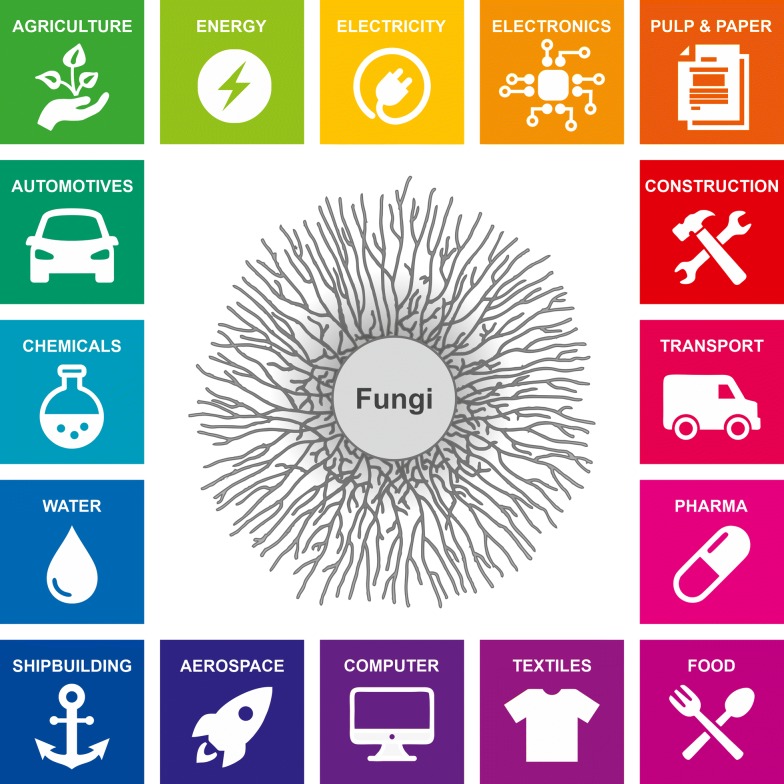
Fungi have the ability to transform organic materials into a rich and diverse set of useful products and provide distinct opportunities for tackling the urgent challenges before all humans. Fungal biotechnology can advance the transition from our petroleum-based economy into a bio-based circular economy and has the ability to sustainably produce resilient sources of food, feed, chemicals, fuels, textiles, and materials for construction, automotive and transportation industries, for furniture and beyond. Fungal biotechnology offers solutions for securing, stabilizing and enhancing the food supply for a growing human population, while simultaneously lowering greenhouse gas emissions. Fungal biotechnology has, thus, the potential to make a significant contribution to climate change mitigation and meeting the United Nation’s sustainable development goals through the rational improvement of new and established fungal cell factories. The White Paper presented here is the result of the 2nd Think Tank meeting held by the EUROFUNG consortium in Berlin in October 2019. This paper highlights discussions on current opportunities and research challenges in fungal biotechnology and aims to inform scientists, educators, the general public, industrial stakeholders and policymakers about the current fungal biotech revolution.
Overview
The claims and statistics of this paper haven’t been checked yet.
Run the check — free, no account needed. It reads the open-access text and checks the sources it cites.
Integrity signals
Registry
Cites
Statistics
Figures
Verification
Claims the paper makes
The claims and statistics of this paper haven’t been checked yet.
Run the check — free, no account needed. It reads the open-access text and checks the sources it cites.
Claims other papers make about this one
Each is checked against this paper’s own text: does it say what the citing paper says it does?
The source backs part of the claim, not all of it — or backs it for a different population, condition or comparison.
In the citing paper
“It also introduces new, bio-based products that offer similar or superior characteristics to their petroleum-derived substitutes while maintaining a lower carbon footprint and full biodegradability (Meyer et al., 2020).”
From Circular Bioeconomy Concepts—A Perspective (2021) · cites this paper as Meyer et al., 2020
Experimental — accuracy not yet measured
Self-check
Percentages, sums and reported differences re-computed from the paper’s own numbers.
The self-check needs the paper’s full text.
Citations
Cites
(2018) · Anaesthesia · doi:10.1111/anae.14117 · Cited by 24,670
Plastic waste inputs from land into the ocean
Jambeck, J. R., Geyer, R., Wilcox, C., Siegler, T. R., Perryman, M., Andrady, A., Narayan, R., & Law, K. L. (2015) · Science · doi:10.1126/science.1260352 · Cited by 13,163 · cited 1×
“Approximately 5 to 13 million tons of plastic waste enters the Earth’s oceans every year, as the intentional or unintentional final destination [74].”
BackgroundThe Complete Genome Sequence of Escherichia coli K-12
Blattner, F. R., Plunkett, G., Bloch, C. A., Perna, N. T., Burland, V., Riley, M., Collado‐Vides, J., Glasner, J. D., Rode, C. K., Mayhew, G. F., et al. (1997) · Science · doi:10.1126/science.277.5331.1453 · Cited by 7,609
Manual of Clinical Microbiology
Klainer, A. (1970) · Postgraduate Medical Journal · doi:10.1136/pgmj.46.542.733-c · Cited by 5,344
The Top 10 fungal pathogens in molecular plant pathology
Dean, R. A., van Kan, J. A. L., Pretorius, Z. A., Hammond-Kosack, K. E., Pietro, A. D., Spanu, P. D., Rudd, J. J., Dickman, M., Kahmann, R., Ellis, J. G., et al. (2012) · Molecular Plant Pathology · doi:10.1111/j.1364-3703.2011.00783.x · Cited by 5,011 · cited 1×
“A list of the ten most important fungal pathogens of plants published in 2012 [91] is outdated.”
BackgroundGoffeau, A., Barrell, B. G., Bussey, H., Davis, R. W., Dujon, B., Feldmann, H., Galibert, F., Hoheisel, J. D., Jacq, C., Johnston, M., et al. (1996) · Science · doi:10.1126/science.274.5287.546 · Cited by 4,423
The global burden of pathogens and pests on major food crops
Savary, S., Willocquet, L., Pethybridge, S. J., Esker, P., McRoberts, N., & Nelson, A. (2019) · Nature Ecology & Evolution · doi:10.1038/s41559-018-0793-y · Cited by 4,309 · cited 1×
“However, even with the solutions available from the agricultural industry, crop losses remain high in soybean and a wide range of other crops [93].”
BackgroundLignin Valorization: Improving Lignin Processing in the Biorefinery
Ragauskas, A. J., Beckham, G. T., Biddy, M. J., Chandra, R. P., Chen, F., Davis, M. F., Davison, B. H., Dixon, R. A., Gilna, P., Keller, M., et al. (2014) · Science · doi:10.1126/science.1246843 · Cited by 4,250 · cited 1×
“bioethanol from Borregaard); wood being much more recalcitrant, due to generally higher lignin contents among other things [63].”
BackgroundThe biomass distribution on Earth
Bar-On, Y. M., Phillips, R., & Milo, R. (2018) · Proceedings of the National Academy of Sciences · doi:10.1073/pnas.1711842115 · Cited by 3,723 · cited 1×
“Polysaccharides from plant biomass make up most of the biomass on Earth (450 out of a total of 550 gigatons of carbon; [10]) and represent the major carbon sources that drives fungal growth.”
BackgroundTransport and release of chemicals from plastics to the environment and to wildlife
Teuten, E. L., Saquing, J. M., Knappe, D. R. U., Barlaz, M. A., Jonsson, S., Björn, A., Rowland, S. J., Thompson, R. C., Galloway, T. S., Yamashita, R., et al. (2009) · Philosophical Transactions of the Royal Society B: Biological Sciences · doi:10.1098/rstb.2008.0284 · Cited by 2,938 · cited 1×
“When this waste is ingested by marine animals, it accumulates in the food chain [72].”
Background
Research works printed but not linked: 9
- Ereky K. Biotechnologie der Fleisch-, Fett-, und Milcherzeugung im landwirtschaftlichen Grossbetriebe: für naturwissenschaftlich gebildete Landwirte verfasst. Berlin: Paul Parey; 1919.
- Moore D, Chiu SW. Fungal products as food. In: Pointing SB, Hyde KD, editors. Bio-exploitation of filamentous fungi., Fungal Diversity Research Series 6London: Fungal Diversity Press; 2001. p. 223–51.
- WBAE/WBW: Scientific Advisory Board on Agricultural Policy, Food and Consumer Health Protection (WBAE) and on Forest Policy (WBW) at the Federal Ministry of Food and Agriculture (BMEL). In: (2016) Climate change mitigation in agriculture and forestry and in the downstream sectors of food and timber use. Executive Summary. Berlin; 2016. https://doi.org/10.12767/buel.v1i1.175.g323. · DOI
- Forest Europe. State of Europe’s Forests 2015. Ministerial Conference on the Protection of Forests in Europe. Forest Europe Liaison Unit Madrid. 2015. https://foresteurope.org/state-europes-forests-2015-report/. Accessed 21 Feb 2020.
- Hetemäki L, editor. Future of the European forest-based sector: structural changes towards bioeconomy. European Forest Institute: Joensuu; 2014.
- Gupta A, Xu W, Jaiswal P, Taylor C, Regala J. Domain informational vocabulary extraction experiences with publication pipeline integration and ontology curation. In: Proceedings of the 9th international conference on biological ontology (ICBO 2018), Corvallis, Oregon, USA. http://ceur-ws.org/Vol-2285/ICBO_2018_paper_43.pdf.
- Schmideder S, Barthel L, Müller H, Meyer V, Briesen H. From three-dimensional morphology to effective diffusivity in filamentous fungal pellets. Biotechnol Bioeng. 2019;116:3360–71. https://doi.org/10.1002/bit.27166. · DOI
- Weiss, B. The SEMI international standards program—history, successes and lessons learned to address compound semiconductor manufacturing challenges. In: 2006 International Conference on Compound Semiconductor Manufacturing Technology (CS MANTECH, 2006). p. 55–58. https://csmantech.org/OldSite/Digests/2006/2006%20Digests/4A.pdf. Accessed 5 Dec 2019.
- Prestemon JP, Wear DN, Foster MO. The global position of the U.S. forest products industry. US Dep Agric For Serv South Res Stn e-General Tech Rep. SRS-204, 2015:1–24. · DOI
Cited by
Sorted by citations
Items 301–376 of 376
A programmable fungal platform for engineered living textiles
Li, K., An, B., Zhang, J.-C., Xun, D.-M., Yuan, X., Song, Y., Wang, X.-Y., & Zhong, C. (2026) · Science Advances · doi:10.1126/sciadv.aed6937 · Cited by 1
“In contrast, filamentous fungi have innate traits conducive to macroscale ELM construction: Their mycelial networks are entirely living, grow directionally from localized nutrient sources, and self-assemble into continuous, three-dimensional architectures without exogenous scaffolding ( 33 – 39 ).”
Shamnas, M., V, Chaudhary, N., Hasan, M., Kumar, A., & Tripathi, M. K. (2026) · International Journal of Biological Macromolecules · doi:10.1016/j.ijbiomac.2026.153415 · Cited by 1
Free-living fungi in the Anthropocene and impacts on public health, food security, and biodiversity
Jayasundara, E. J. M. I. K., & Romero‐Olivares, A. (2026) · Mycologia · doi:10.1080/00275514.2026.2660613 · Cited by 1
“…have symbiotic and antagonistic relationships with plants and animals (Allen et al. 2003; Fisher et al. 2012), are essential in the food industry (Meyer et al. 2020), and are an important cultural heritage of many countries and indigenous communities (Yamin-Pasternak 2008; Osarenkhoe et al.…”
Adeyeye, B. R., & Adeyeye, S. (2026) · World Mycotoxin Journal · doi:10.1163/18750796-bja10040 · Cited by 1
Engelbert, K., Kheirkhah, T., Deffur, C., Zhang, F., Winter, H., Cairns, T., Jung, S., Briesen, H., Neubauer, P., Junne, S., et al. (2026) · Applied Microbiology and Biotechnology · doi:10.1007/s00253-026-13822-0 · Cited by 1
“Submerged cultivation of Aspergillus niger is widely employed in biotechnological applications, ranging from waste treatment to production of pharmaceutical compounds, enzymes and organic acids (Meyer et al. 2020; El Enshasy 2022).”
Self-citationNummela, L., Lyra, C., Pitkänen, L., Maina, H. N., & Mäkelä, M. (2026) · Applied Microbiology and Biotechnology · doi:10.1007/s00253-026-13854-6 · Cited by 1
“The filamentous fungus Aspergillus niger has a long history of use as an industrial workhorse for the production of organic acids, especially citric acid, as well as various enzymes, such as amylases and pectinases (Cairns et al. 2018; Meyer et al. 2020).”
Fan, K., Kang, D.-R., Kang, S., Hu, G.-Y., Lei, L., Li, M., Zhang, W., Kamruzzaman, M., Barbin, D., & Su, W.-H. (2026) · Microchemical journal (Print) · doi:10.1016/j.microc.2026.117761 · Cited by 1
Nygård, Y., Geijer, C., Bettiga, M., Franzén, C. J., Olsson, L., & Larsbrink, J. (2026) · New Biotechnology · doi:10.1016/j.nbt.2026.05.007 · Cited by 1
Hardy, G. (2026) · Journal of Biological Education · doi:10.1080/00219266.2026.2628802 · Cited by 1
Yazdani, H., Hadi-Vencheh, A., Jamshidi, A., & Jalali, M. (2026) · Process Integration and Optimization for Sustainability · doi:10.1007/s41660-025-00645-1 · Cited by 1
“Utilizing recycled materials and components minimizes the need for resource extraction and processing, which leads to lower environmental pollution and better preservation of natural resources (Merli et al. 2018; Meyer et al. 2020; Yu-hang 2010 ).”
Zafar, A., Rahman, Z., Kiran, S., Aftab, M., Maqsood, N., & Shafique, E. (2026) · Preparative Biochemistry & Biotechnology · doi:10.1080/10826068.2026.2631148 · Cited by 1
How to get the most out of fungal biotechnology?
Nygård, Y., & Meyer, V. (2026) · Fungal Biology and Biotechnology · doi:10.1186/s40694-025-00207-7 · Cited by 1
“For more than a hundred years, filamentous fungi have been important production hosts for proteins, enzymes, certain drugs and platform chemicals such as citric acid [1, 2].”
Self-citationKlemm, S., Abali, B., Zaslansky, P., Völlmecke, C., & Fleck, C. (2025) · Materials & Design · doi:10.1016/j.matdes.2025.115280 · Cited by 1
Peng, M., Li, J., Xu, L., Chroumpi, T., Garrigues, S., Kun, R., Meng, J., Aguilar-Pontes, M. V., Lipzen, A., Ng, V., et al. (2025) · MicrobiologyOpen · doi:10.1002/mbo3.70201 · Cited by 1
Buratti, S., Girometta, C., Goppa, L., Picozzi, C., Rossi, P., Savino, E., Gargano, M., Venturella, G., Gugliotta, A. D. M., Vitali, V., et al. (2025) · Conservation · doi:10.3390/conservation5040070 · Cited by 1
“They are also good candidates for process scalability, as they can be cultivated in lignocellulosic substrates, possibly including wastes and residues to be valorized according to the principles of circular economy [2,18,89,90].”
Waste fungal biomass from biotech industry as a source of chitosan
Struszczyk-Świta, K. (2025) · Progress on Chemistry and application of Chitin and its Derivatives · doi:10.15259/pcacd.30.021 · Cited by 1
“In Europe, this biomass is used by many companies, including AB Enzymes, BASF, Bayer, DSM, DuPont, Novozymes and Roal Oy [2].”
Duong, H. L., & Schlosser, D. (2025) · Current Applied Science and Technology · doi:10.55003/cast.2025.265614 · Cited by 1
“…biotechnological processes such as lignocellulose pretreatment for biorefinery applications, composting, mushroom production, or bioremediation purposes (Hölker et al., 2004; Lizardi-Jiménez & Hernández-Martínez, 2017; Gong et al., 2018; Kumla et al., 2020; Meyer et al., 2020; Tišma et al., 2021).”
Geng, L.-R., Cui, J., Xiao, C., Xu, L., Yue, F.-J., Zhang, T., Zhan, M., Lu, Z., Ren, Y., Wang, C., et al. (2025) · Microbial Cell Factories · doi:10.1186/s12934-025-02733-w · Cited by 1
Up to date evidence about the suitability of filamentous fungi as a feed source for broilers
Ringseis, R., & Eder, K. (2025) · Archives of Animal Nutrition · doi:10.1080/1745039x.2025.2495619 · Cited by 1
“…fungi, to which commercially cultivated edible mushrooms of the genera Agaricus (A.) , Auricularia , Flammulina (F.) , Ganoderma (G.) , Hericium (H.) , Lentinus (L.) , Pleurotus (P.) , and Tremella (T.) belong, can be perfectly integrated into circular feed production systems (Meyer et al. 2020).”
Baalsrud, H. T., Byrtusová, D., To, T.-H., Larsen, I. E., Bøe, V. A., Grønvold, L., Fu, J., Árnyasi, M., Shapaval, V., & Sandve, S. (2025) · bioRxiv · doi:10.1101/2025.02.20.639118 · Cited by 1
“…play a pivotal part of transitioning from a petroleum-based to a bio-based, circular economy due to their ability to transform organic material to a variety of useful products such as food, beverages, organic acids, enzymes, antibiotics and drugs (Meyer et al. 2016, 2020; Dzurendova et al. 2022).”
Self-citationGeneralizable Metamaterials Design Techniques Inspire Efficient Mycelial Materials Inverse Design
Zavorskas, J., Edwards, H., Marten, M. R., Harris, S. D., & Srivastava, R. (2025) · ACS Biomaterials Science & Engineering · doi:10.1021/acsbiomaterials.4c01986 · Cited by 2
Benito, E. G., Martínez, M. P., & Rodríguez, M. B. (2025) · The Design Journal · doi:10.1080/14606925.2025.2455893 · Cited by 1
“The emerging design practice ‘Growing Design’ (Ivanova 2022) falls under the escalating sectors of bio-economy (Butu et al. 2020) and circular economy (Meyer et al. 2020).”
Fungal wonders: a perspective on various fungal benefits to mankind
Bellere, A. D., Oh, S., Zheng, S., Fang, M., Zuela, E., & Yi, T.-H. (2023) · Food Research · doi:10.26656/fr.2017.7(s4).9 · Cited by 1
“Furthermore, Meyer et al. (2020), reported that fungi have the ability to transform organic materials into a rich and diverse set of useful products and provide distinct opportunities for tackling urgent challenges before all humans.”
BackgroundAgirrezabala, Z., Guruceaga, X., Martin-Vicente, A., Otamendi, A., Fagoaga, A., Fortwendel, J., Espeso, E., & Etxebeste, O. (2023) · mBio · doi:10.1128/mbio.02452-23 · Cited by 1
Irfani, M. (2023) · IOP Conference Series: Earth and Environment · doi:10.1088/1755-1315/1263/1/012056 · Cited by 1
Barashkova, A. S., Ryazantsev, D., Zhuravleva, A., Sharoyko, V., & Rogozhin, E. (2023) · Foods · doi:10.3390/foods12163002 · Cited by 1
“niger was considered a convenient test subject as it is a well-studied fungus of significant importance to the industry (food spoilage, allergens, and the production of organic acids) [19].”
BackgroundDevelopment of Novel Forms of Fungal Art Using Aspergillus nidulans
Grunwald, O., Harish, E., & Osherov, N. (2021) · Journal of Fungi · doi:10.3390/jof7121018 · Cited by 1
“Others have taken advantage of the role of fungi as decomposers to develop bio-refining and bioremediation applications [4,5].”
BackgroundFirincă, C., Constantin, M., Răut, I., Zamfir, L.-G., Jecu, M.-L., Doni, M., & Gurban, A.-M. (2026) · Sustainable Food Technology · doi:10.1039/d5fb00914f · Cited by 1
Yadav, A. N., Kaur, T., Devi, R., Kour, D., Yadav, A., Yadav, P., Zameer, F., Dikilitas, M., Abdel-Azeem, A. M., & Ahluwalia, A. (2021) · doi:10.1007/978-3-030-68260-6_18 · Cited by 1
Wang, J., Wan, J., Mao, X., Xie, H., & Sun, P.-L. (2026) · Food Hydrocolloids · doi:10.1016/j.foodhyd.2026.113073 · Cited by 1
Ji, S.-L., Mei, Y.-X., Li, X., Su, E.-Z., & Wang, F. (2027) · Renewable & Sustainable Energy Reviews · doi:10.1016/j.rser.2026.117580
Varis, J., Lehto, E., Saalo, H.-M., Svartström, J., Vainio, A., Sandell, M., Mikkonen, K., & Seppä, L. (2026) · Future Foods · doi:10.1016/j.fufo.2026.101191
Regner, C., Zillessen, J., Hoberg, F., Elsner, S., Cairns, T., Freidank-Pohl, C., & Meyer, V. (2026) · Fungal Biology and Biotechnology · doi:10.1186/s40694-026-00228-w
“Innovation in materials science is vital to meet UN sustainability goals [12, 37].”
Self-citationUllah, I., Zhang, Z.-H., Geng, D., Zhou, Q.-Y., Zou, Y.-H., Xu, B., Zhang, C., & Xing, X.-H. (2026) · Advanced Biotechnology · doi:10.1007/s44307-026-00140-9
“For more than five decades, classical strain improvement has served as the primary strategy for industrial strain development and established the foundation for many of the commercial enzyme producing strains used today (Meyer et al. 2020; Salazar-Cerezo et al. 2023).”
Chetapalli, C., Karuppaiah, N. D., Garlapati, D., Veeraragavan, S., Sreeharsha, R. V., Valsalan, V. N., Gopal, D., & Ramakrishnan, B. (2026) · 3 Biotech · doi:10.1007/s13205-026-05113-2
Engineering Biohybrid Mycelium Fibers through Hierarchical Structuring and Biomineralization
Pear, O., Stanislaw, J., Luce, A., Donen, T., Balch, K., & Bay, R. (2026) · Advanced Functional Materials · doi:10.1002/adfm.78985
Han, Z., Kong, Q., Xu, J., & Liu, S. (2026) · Food Research International · doi:10.1016/j.foodres.2026.119841
Li, Y., Zhao, X., Yang, X., Jiaxin, W., Liu, D., Yu, Q., Liu, Q., & Tian田朝光, C. (2026) · Microbiological Research · doi:10.1016/j.micres.2026.128747
Platform-specific fouling control strategies for membrane bioreactors in biomanufacturing
Karki, R., Jankowska, K., Ohlin, C. A., Skiadas, I. V., Woodley, J. M., & Pinelo, M. (2026) · Chemical Engineering Journal Advances · doi:10.1016/j.ceja.2026.101541
Joksić, T., Vítězová, M., Vítěz, T., Dordević, D., & Kushkevych, I. V. (2026) · International Journal of Environmental Science and Technology · doi:10.1007/s13762-026-07480-y
“…have gained increasing attention as alternatives to conventional plastics owing to their biodegradability, renewability, low-density structure, and broad range of potential applications, including packaging and insulation materials (Sydor et al. 2022; Meyer et al. 2020; Madusanka et al. 2024).”
Tamayo, E., Bachmann, F., Cheng, T., Felle, T. K., Nussbaumer, M., & Benz, J. P. (2026) · Applied Microbiology and Biotechnology · doi:10.1007/s00253-026-14043-1
“…adjustment of growth conditions and post-processing, the variety of different fungus-substrate combinations leads to versatile products for applications such as packaging, sound absorption, thermal insulation, or architectural design (Appels et al. 2019; Meyer et al. 2020; Aiduang et al. 2022a).”
Self-citationScalabrino, G., Walsh, J. J., & Sheridan, H. (2026) · Sustainability · doi:10.3390/su18199911
Jia, Z., Luo, Y.-Q., He, Y., Duan, Y., Huang, X.-F., Li, X.-Y., Bu, Q., Zhang, X., Hu, T., & Zhou, S.-M. (2026) · SynBio · doi:10.3390/synbio4030018
“Filamentous fungi possess eukaryotic cellular compartments, eukaryotic post-translational protein-processing capacity, and diverse metabolic capabilities, making them important hosts for industrial biotechnology and synthetic biology [1–4].”
Jasim, S. (2026) · Journal of Science Research and Reviews · doi:10.70882/josrar.2026.v3i5.301
Li, Y.-L., Liu, Q., Deng, Y.-M., Liu, J., Zhang, C., Huang, Z.-W., Zhou, B., Liang, Y., Lin, Q.-L., & Gong, Z. (2026) · International Journal of Biological Macromolecules · doi:10.1016/j.ijbiomac.2026.154500
A superfamily of bioactive proteins from fungi - are these secondary metabolites?
Feurstein, C., Bachmann, L., Heber, L., Dobbert, B., & Jung, S. (2026) · Fungal Biology and Biotechnology · doi:10.1186/s40694-026-00219-x
“Interestingly, BPF members are present in several genera of fungi with economic relevance, e.g., Penicillium, Aspergillus, Trichoderma, Thermothelomyces, Lentinula, Trametes, Schizophyllum , [77, 78].”
Coordinated action of RAB11, Sec4, myosin V, and the exocyst governs Aspergillus nidulans tip growth
Fernández-Carrillo, J., Pinar, M., Pantazopoulou, A., Paolillo, V., Taheri-Talesh, N., Oakley, B., Espeso, E., & Peñalva, M. (2026) · iScience · doi:10.1016/j.isci.2026.117333
Figueiredo, I., Figueira, J., Cortesão, M., & Palomeque, H. (2026) · Frontiers in Astronomy and Space Sciences · doi:10.3389/fspas.2026.1846412
Chen, L.-L., Guo, D.-D., Mu, W., Liu, C., Zhu, H.-K., Cheng, Y.-L., Guo, Y.-H., & Qian, H. (2026) · Biomass Conversion and Biorefinery · doi:10.1007/s13399-026-07229-0
“Consequently, navigating the strict regu - latory frameworks regarding in vivo biocompatibility, mechanical durability in wet physiological environments, and absolute sterility demands significant technological refinement [ 91].”
Fungal Bioactives in Modern Cosmetic Formulations—A Review
Kolisz, M., Sułkowska-Ziaja, K., Trepa, M., Cicha-Jeleń, M., Kała, K., & Muszyńska, B. (2026) · Applied Sciences · doi:10.3390/app16147059
Verma, P., Tiwari, M., Mishra, J., Chandrakar, V., & Sahu, P. (2026) · Industrial Biotechnology · doi:10.1177/15509087261451131
“10 Their ability to transform organic materials into useful products highlights their potential to address climate change and contribute to SDGs. 72 Fungi exhibit a remarkable capacity to degrade a diverse range of organic pollutants, including petroleum hydrocarbons, pesticides, polycyclic…”
Toward synthetic biology in mushroom-forming Agaricomycete fungi: from tools to applications
Allen, P., Sinar, D., Schwartz, S., & Hill-Maini, V. (2026) · Microbiology and Molecular Biology Reviews · doi:10.1128/mmbr.00178-25
Sevillano-Caño, J., Márquez-Pérez, M. I., & Ruiz-Castilla, F. J. (2026) · European Food Research and Technology · doi:10.1007/s00217-026-05176-8
“This growing demand is consistent with the current push towards sustainable and circular economy practices, in which FF play a strategic role by converting low-value substrates into high-value bioproducts [ 22, 23 ].”
Analysis of Short-Term Responses to Hypoxia During Stirred-Tank Fermentation in Aspergillus oryzae
Araki, S., Susukida, S., Miyazawa, K., Kumagai, T., Tokashiki, J., & Abe, K. (2026) · Journal of Fungi · doi:10.3390/jof12050347
“Filamentous fungi are widely used for production of diverse bioactive and industrially relevant organic molecules [1,2].”
Rodrigues, J. C., Grisolia, M. E., Queiroz, A. D. S., Lima, A. L. R., Goiabeira, C. V. S., Lima, L. D. M., Fernandes, O. C. C., & Brandão, A. A. (2026) · Memórias do Instituto Oswaldo Cruz · doi:10.1590/0074-02760250075
Jana, U. K., Bawankar, P., Gupta, P., & Kango, N. (2026) · Archives of Microbiology · doi:10.1007/s00203-026-04771-3
Stini, E., Diamantis, I., Kallithraka, S., Papanikolaou, S., & Diamantopoulou, P. (2026) · Processes · doi:10.3390/pr14010168
Engineering Biohybrid Mycelium Fibers through Hierarchical Structuring and Biomineralization
Pear, O., Balch, K., Stanislaw, J., & Bay, R. (2025) · bioRxiv · doi:10.64898/2025.12.17.694948
“7 However, current mycelium materials lack strength compared to traditional polymer materials, necessitating exploration of mycelium in an aligned fiber morphology, which has, to the best of our knowledge, not been previously studied.”
de Oliveira, J. D. (2025) · Journal of Microbial Ecology and Function · doi:10.54963/jmef.v1i1.2346
“Many strains exhibit unstable growth and metabolite production out‑ side their native environments, complicating strain domestication and process standardization [8,22].”
InfluentialSchäfer, L., Grundmann, S. M., Hepp, V., Herrero-Encinas, J., Rühl, M., Most, E., Ringseis, R., & Eder, K. (2025) · Poultry Science · doi:10.1016/j.psj.2025.105517
Chen, C., Tan, L., Blackmore, L., Tweedale, H. B., Nygaard, C. A., & Burry, M. (2025) · Technology|Architecture + Design · doi:10.1080/24751448.2025.2534782
“Unlike traditional materials that extract finite resources and generate waste, MBC uses local agricultural waste (Meyer et al. 2020), with research also exploring household waste such as coffee grounds and banana peels (Globa et al. 2024).”
Tree bark as a substrate for mycelium-bound composites with two Ganoderma species
Felle, T. K., Estenfelder, J., Wenig, C., Berendt, F., Eder, M., Cheng, T., & Benz, J. P. (2025) · Discover Materials · doi:10.1007/s43939-025-00507-0 · Cited by 1
“Fungi can convert organic materials into a diverse range of valuable products [26], making them an essential tool in sustainable biotechnology.”
Self-citationS, J., Gopalsamy, S., B, N., Sundarapandian, M., & Balasubramanian, S. (2025) · Frontiers in Advanced Materials Research · doi:10.34256/famr2511
Microorganismos extremófilos na exploração espacial
Cortesão, M., Figueiredo, I., & Mota, A. (2025) · Revista de Ciência Elementar · doi:10.24927/rce2025.006
Development of Mycelium-based Vegan Leather: Enhancing Sustainability through Papermaking Process
Choi, Y.-H., Han, S.-M., Lee, S., Hong, M., & Im, W. (2025) · Journal of Korea Technical Association of The Pulp and Paper Industry · doi:10.7584/jktappi.2025.2.57.1.5
Slovenski gozdarski sektor v času podnebnih sprememb
Kržišnik, D. (2024) · Alternator · doi:10.3986/alternator.2024.24
Omowanle, O., Osu, C., & Stanley, H. (2024) · Journal of Applied Sciences and Environmental Management · doi:10.4314/jasem.v28i9.19
“…organic waste from landfills helps mitigate greenhouse gas emissions, minimizes pollution risks, and reduces reliance on conventional feed sources, which often necessitate intensive use of fertilizers and pesticides (Nordahl et al., 2023; Adewole, 2022; Meyer et al., 2020; Sharma et al., 2019).”
BackgroundGómez-Vázquez, E. G., Roque, Y. S., Ibáñez-Duharte, G., Canseco-Pérez, M., Zenteno-Carballo, A. G., Berrones-Hernández, R., & Pérez-Luna, Y. (2024) · Biodiversity Data Journal · doi:10.3897/bdj.12.e113698
Editorial for Special Issue: Fungal Biology and Interactions
Silva, R. N., & de Paula, R. G. (2024) · Microorganisms · doi:10.3390/microorganisms12020282
Segura-Valverde, A., Solano-González, S., & Sancho-Blanco, C. (2023) · IEEE International Conference on BioInspired Processing (BIP) · doi:10.1109/bip60195.2023.10379369
Agirrezabala, Z., Guruceaga, X., Martin-Vicente, A., Otamendi, A., Fagoaga, A., Fortwendel, J., Espeso, E., & Etxebeste, O. (2023) · bioRxiv · doi:10.1101/2023.06.08.544166
“Other aspergilli are used in industry as 52 a source of valuable products [3,4].”
BackgroundIdentificación de hongos filamentosos asociados al suelo del bosque protegido de Prosperina
Carreño-Bulgarin, G. P., Quijije-Franco, G., Diaz, B., Maridueña-Zavala, M., & Cevallos-Cevallos, J. (2023) · Bionatura · doi:10.21931/rb/2023.08.01.22
Non-targeted screening and multivariate analysis of waste stream biomass conversion products
Troiano, D., Orsat, V., & Dumont, M. (2022) · Biomass Conversion and Biorefinery · doi:10.1007/s13399-022-03537-3
“While many commonly used organisms in biotechnology (e.g., yeasts and E. coli ) cannot break down complex polymeric material or utilize all of the monomeric sugars that are thus generated (e.g., pentose sugars), filamentous fungi are unparalleled in their capacity for both [2, 28].”
Pilzbiotechnologie als Innovationsmotor
Meyer, V. (2020) · BIOspektrum · doi:10.1007/s12268-020-1362-x
Self-citationFungal frontiers for sustainability: unlocking the hidden kingdom
Alho, S., Thornton, P., Jaramillo-Botero, A., Billerbeck, S., Borodina, I., Druzhinina, I. S., Glass, N. L., Harrison, M., Hill-Maini, V., Koziol, L., et al. (2027) · Fungal Biology Reviews · doi:10.1016/j.fbr.2026.100518
Sağlam, S. S., Özgünler, S. A., & Köse, C. (2025) · Journal of Green Building, College Publishing, USA · doi:10.3992/jgb.20.3.69
Metadata
- Authors
- Meyer, V., Basenko, E. Y., Benz, J. P., Braus, G. H., Caddick, M. X., Csukai, M., de Vries, R. P., Endy, D., Frisvad, J. C., Gunde-Cimerman, N., Haarmann, T., Hadar, Y., Hansen, K., Johnson, R. I., Keller, N. P., Kraševec, N., Mortensen, U. H., Perez, R., Ram, A. F. J., Record, E., Ross, P., Shapaval, V., Steiniger, C., van den Brink, H., van Munster, J., Yarden, O., & Wösten, H. A. B.
- Affiliations
- Technische Universität Berlin (DE)
- University of Liverpool (GB)
- Technical University of Munich (DE)
- University of Göttingen (DE)
- Syngenta (United Kingdom) (GB)
- Utrecht University (NL)
- Stanford University (US)
- Technical University of Denmark (DK)
- ABEnzymes (Germany) (DE)
- Hebrew University of Jerusalem (IL)
- Novozymes (Denmark) (DK)
- University of Wisconsin–Madison (US)
- National Institute of Chemistry (SI)
- Leiden University (NL)
- Norwegian University of Life Sciences (NO)
- Chr. Hansen (Denmark) (DK)
- University of Manchester (GB)
- Corresponding author
- Meyer, Vera
- ORCID
- Meyer, Vera
- Basenko, Evelina Y.
- Benz, J. Philipp
- Braus, Gerhard H.
- Caddick, Mark X.
- Csukai, Michael
- de Vries, Ronald P.
- Endy, Drew
- Frisvad, Jens C.
- Gunde-Cimerman, Nina
- Haarmann, Thomas
- Hadar, Yitzhak
- Hansen, Kim
- Keller, Nancy P.
- Kraševec, Nada
- Mortensen, Uffe H.
- Perez, Rolando
- Ram, Arthur F. J.
- Record, Eric
- Shapaval, Volha
- Steiniger, Charlotte
- van Munster, Jolanda
- Yarden, Oded
- Wösten, Han A. B.
- Venue
- Fungal Biology and Biotechnology
- Published
- 2020-04-02
- Volume
- 7
- Issue
- 1
- Pages
- 5-5
- ISSN
- 2054-3085 (ISSN-L)
- PMC
- PMC7140391
- OpenAlex
- W3015382627
- Cited by
- 515
- References
- 155
- Citations by year
- 2026: 61 · 2025: 90 · 2024: 97 · 2023: 107 · 2022: 74 · 2021: 65 · 2020: 19
- FWCI
- 11.53
- Type
- journal article
- Language
- en
- Open access
- gold
- doi.org
- Locations
- Fungal Biology and Biotechnology (publishedVersion, cc-by)
- Europe PMC (PubMed Central) (publishedVersion, cc-by)
- PubMed Central (publishedVersion, cc-by)
- PubMed (publishedVersion)
- KNAW research portal (Royal Academy of Art and Sciences (KNAW)) (publishedVersion, other-oa)
- Data Archiving and Networked Services (DANS) (submittedVersion, other-oa)
- HAL (submittedVersion)
- Leiden Repository (Leiden University) (submittedVersion, cc-by)
- DOAJ (DOAJ: Directory of Open Access Journals) (submittedVersion, cc-by-sa)
- Utrecht University Repository (Utrecht University) (submittedVersion, other-oa)
- GoeScholar The Publication Server of the Georg-August-Universität Göttingen (Georg-August-Universität Göttingen) (submittedVersion, cc-by)
- mediaTUM – the media and publications repository of the Technical University Munich (Technical University Munich) (submittedVersion)
- NORA - Norwegian Open Research Archives (submittedVersion, other-oa)
- Research Explorer (The University of Manchester) (submittedVersion, other-oa)
- Technical University of Denmark, DTU Orbit (Technical University of Denmark, DTU) (submittedVersion, cc-by)
- Data Archiving and Networked Services (DANS) (submittedVersion, cc-by)
- Funders
- Biotechnology and Biological Sciences Research Council (BB/P011462/1)
- Topics
- Life Sciences › Agricultural and Biological Sciences › General Agricultural and Biological Sciences › Bioeconomy and Sustainability Development
- Life Sciences › Biochemistry, Genetics and Molecular Biology › Molecular Biology › Microbial Metabolic Engineering and Bioproduction
- Life Sciences › Biochemistry, Genetics and Molecular Biology › Molecular Biology › Fungal and yeast genetics research
- Keywords
- fungal biotechnology, circular economy, bioeconomy, fungal cell factories, biofuels, bio-based chemicals, bio-based materials, food security, climate change mitigation, greenhouse gas emissions reduction, Sustainable Development Goals
About these checks
Registry, retraction, Cites and statistics results are computed, not judged, with one exception: a printed reference that no index lists is read once by a model before it counts as a citation error. Claims are extracted by a model and kept only when their quote appears verbatim in the text; each cited source is then checked, with a model’s help, for whether it says what the claim relies on. Those verdicts can be wrong — read the claim’s quote and the cited source before relying on one.
Statistics and arithmetic are recomputed, not judged.
Confidence bands are shown only for fields calibrated on our annotated test set. None is calibrated yet, so no band is shown.
What counts as a claim ›How we measure confidence ›How we check this ›
Are you an author, or do you see a problem with this page? Request a review
