

Acceptance and Commitment Therapy to support medication decision-making and quality of life in women with breast cancer: protocol for a pilot randomised controlled trial
Open accessPublished version of a preprint
The DOI matches its Crossref record; 63 of the 63 references it cites were found in a registry or an index; 46 of the 81 sources its claims cite were checked for support.
Abstract
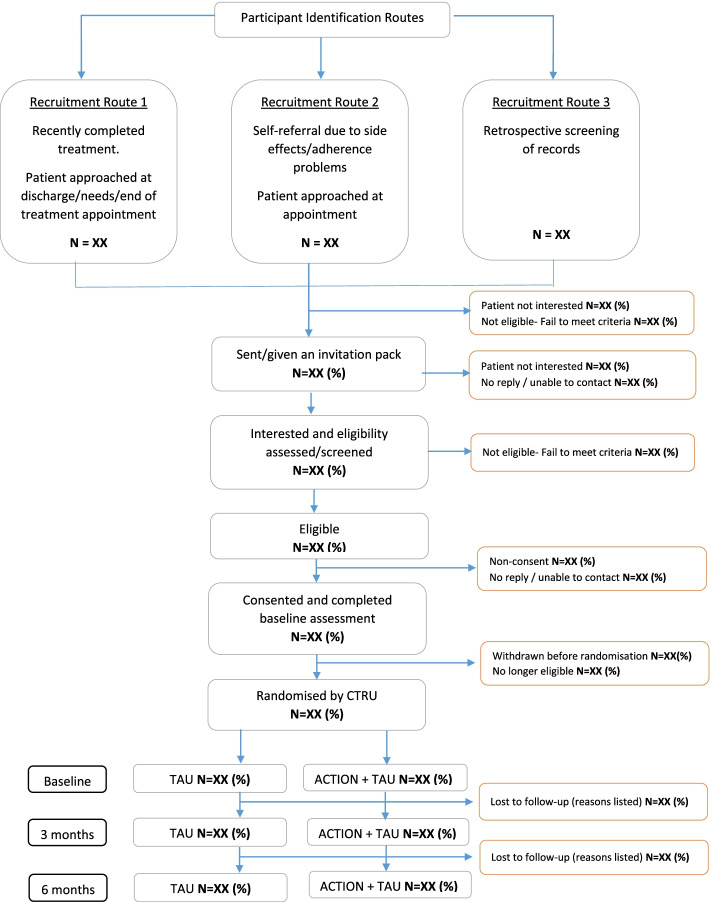
Background: Adherence to adjuvant endocrine therapy is affected by medication side-effects and associated distress. Previous interventions focused on educating women to enhance adherence have proved minimally effective. We co-designed an Acceptance and Commitment Therapy (ACT) intervention to enhance medication decision-making and quality of life by targeting a broader range of factors, including side-effect management and psychological flexibility. This study aims to establish key trial parameters, assess the acceptability of the intervention and the extent to which it can be delivered with fidelity, and to demonstrate “proof of principle” regarding its efficacy on primary and process outcomes. Methods: The ACTION intervention includes an individual 1:1 ACT session followed by three group sessions involving 8–10 women and two practitioner psychologists. Participants are also provided with access to a website containing evidence-based methods for self-managing side-effects. The ACT sessions were adapted during the COVID-19 pandemic to be remotely delivered via video conferencing software. To evaluate the feasibility and acceptability of this intervention, a multi-site, exploratory, two-arm, individually randomised external pilot trial with a nested qualitative study will be undertaken. Eighty women with early stage breast cancer prescribed adjuvant endocrine therapy will be randomised (1:1) to receive treatment as usual or treatment as usual plus the ACTION intervention. The planned future primary outcome is medication adherence assessed by the ASK-12 measure. Progression to a phase III RCT will be based on criteria related to recruitment and follow-up rates, acceptability to patients, competency and fidelity of delivery, and proof of principle for change in medication adherence. Discussion: This external pilot trial will be used to ascertain the feasibility of undertaking a future phase III RCT to definitively evaluate an ACT-based intervention to support medication taking behaviour and quality of life in women with early stage breast cancer on adjuvant endocrine therapy. Trial registration: ISRCTN: 12027752. Registered 24 December 2020, https://doi.org/10.1186/ISRCTN12027752 © 2022, The Author(s).
Overview
CoChat Summary
TL;DR
This is a protocol for a multi-site, two-arm external pilot RCT of a remotely delivered Acceptance and Commitment Therapy (ACT) intervention (“ACTION”) plus treatment as usual versus treatment as usual alone for women with early-stage breast cancer on adjuvant endocrine therapy. The study is designed to test feasibility, acceptability, therapist fidelity, and preliminary “proof of principle” for medication adherence and quality of life, not to provide definitive efficacy results.
Key findings
- The planned sample is 80 women with early-stage breast cancer prescribed adjuvant endocrine therapy, randomized 1:1 to treatment as usual or treatment as usual plus ACTION.
- ACTION consists of one 1-hour individual ACT session followed by three 90-minute group sessions with 8–10 women and two practitioner psychologists, plus a website and participant manual.
- The pilot will use ASK-12 as the planned future primary outcome; proof-of-principle will be assessed by the mean change from baseline in 3- and 6-month ASK-12 scores with confidence intervals.
- The sample-size section states that, allowing for 25% loss to follow-up, a sample of 80 patients would allow detection of an effect size of 0.432 with 65% power using a 1-sided t test at 20% significance.
Methods
- Design: Multi-site, exploratory, individually randomized external pilot RCT with a nested qualitative study; progression to phase III depends on recruitment/follow-up, acceptability, fidelity, and proof-of-principle criteria.
- Data/sample: Women over 18 with early-stage (1 to 3a) breast cancer taking tamoxifen, raloxifene, anastrozole, letrozole, or exemestane; recruited from oncology services at NHS hospitals in Yorkshire, UK.
- Analysis: Primarily descriptive statistics and confidence intervals, with analyses on the intention-to-treat population; interviews will be analyzed using thematic analysis.
Limitations
- The paper explicitly states this is a pilot and is not powered for a precise estimate of clustering by therapist effects; it is also not attempting to evaluate efficacy definitively.
- The discussion notes that remote delivery may create problems such as harder therapeutic relationships, technical challenges, and exclusion of women without internet access or a private space; this is an interpretation from the text.
- As a protocol, the paper provides no outcome results yet, so any effectiveness findings are not stated in the paper.
Model-written summary. Check it against the paper before relying on it.
Integrity signals
Registry
Cites
Statistics
Figures
Verification
Claims the paper makes
26 Valid · 0 Not valid · 4 Not checked · 23 Own results and interpretations
Every source the paper cites for this claim was checked and supports it.
In the paper
“Previous interventions focused on educating women to enhance adherence have proved minimally effective.”
- Also stated in: § Background · plain
“Adherence interventions evaluated so far have largely been ineffective [23–25].”
§ Acceptance and Commitment Therapy to support medication decision-making and quality of life in women with breast cancer: protocol for a pilot randomised controlled trial > Abstract > Background
What the sources say
- Supportedcites [23] Hurtado-de-Mendoza A Cabling ML Lobo T Dash C Sheppard VB Behavioral interventions to enhance adherence to hormone therapy in breast cancer survivors: a systematic literature review Clin Breast Cancer 2016 16 4 247 255.e3 10.1016/j.clbc.2016.03.006 27133733 PMC4969158 source
The Discussion reports that all five reviewed interventions included educational materials and that none significantly improved adherence in its primary analysis. The Conclusion likewise describes the limited success of these interventions for adjuvant hormonal therapy in breast cancer survivors. (LLM, conf=0.93)
- Supportedcites [24] Finitsis DJ Vose BA Mahalak JG Salner AL Interventions to promote adherence to endocrine therapy among breast cancer survivors: a meta-analysis Psychooncology 2019 28 2 255 263 10.1002/pon.4959 30511789 source
The Abstract reports that interventions relying only on one-way information provision did not significantly improve adherence (k = 4; d = -0.03, 95% CI -0.27 to 0.20). Section 4.1 likewise says educational materials are not effective as a stand-alone means of engaging patients. The supplied passages do not give page numbers. (LLM, conf=0.93)
- Supportedcites [25] Heiney SP Parker PD Felder TM Adams SA Omofuma OO Hulett JM A systematic review of interventions to improve adherence to endocrine therapy Breast Cancer Res Treat 2019 173 3 499 510 10.1007/s10549-018-5012-7 30387003 PMC7093203 source
The Results section (‘Impact of Interventions to Improve ET Adherence’) reports that education was the most frequent intervention strategy and that educational interventions generally had no significant effect on adherence, with an exception in Sweden and Finland. The Discussion likewise says educational-only interventions in randomized trials did not significantly improve adherence, apart from a country-specific finding. (LLM, conf=0.92)
plain- Asserted: passes — The authors put it forward as true.
- Checkable: passes — It can be checked against evidence.
- Load-bearing: passes — The paper’s conclusions depend on it.
- Based: passes — The paper gives a reason why it holds.
- Also stated in: § Background · plain
The cited sources support only part of this claim — read each source’s verdict below.
In the paper
“However, non-adherence is common with up to three-quarters of women prescribed adjuvant endocrine therapy (HT) taking < 80% of prescribed therapy and similar proportions discontinuing prematurely [4].”
§ Acceptance and Commitment Therapy to support medication decision-making and quality of life in women with breast cancer: protocol for a pilot randomised controlled trial > Background
What the sources say
- Partly supportedcites [4] Murphy CC Bartholomew LK Carpentier MY Bluethmann SM Vernon SW Adherence to adjuvant hormonal therapy among breast cancer survivors in clinical practice: a systematic review Breast Cancer Res Treat 2012 134 2 459 478 10.1007/s10549-012-2114-5 22689091 PMC3607286 sourceExperimental — accuracy not yet measured
The Results section defines adherence most often as a medication possession ratio of at least 80%. Its Prevalence of Adherence and Discontinuation subsection reports adherence as low as 41%, implying nonadherence of up to 59%—not three-quarters. The same subsection reports discontinuation of up to 73%, which supports the citing sentence’s separate point about premature discontinuation. Page numbers are not available in our copy. (LLM, conf=0.88)
plain- Asserted: passes — The authors put it forward as true.
- Checkable: passes — It can be checked against evidence.
- Load-bearing: passes — The paper’s conclusions depend on it.
- Based: passes — The paper gives a reason why it holds.
- Partly supported
The cited sources support only part of this claim — read each source’s verdict below.
In the paper
“Low adherence and early cessation of AET are associated with an increased risk of breast cancer recurrence and all-cause mortality [5–12].”
§ Acceptance and Commitment Therapy to support medication decision-making and quality of life in women with breast cancer: protocol for a pilot randomised controlled trial > Background
What the sources say
- Partly supportedcites [5] Makubate B Donnan PT Dewar JA Thompson AM McCowan C Cohort study of adherence to adjuvant endocrine therapy, breast cancer recurrence and mortality Br J Cancer 2013 108 7 1515 1524 10.1038/bjc.2013.116 23519057 PMC3629427 sourceExperimental — accuracy not yet measured
The Results report that low adherence was associated with higher all-cause mortality, while the Conclusion associates fewer years of high adherence with recurrence. The Abstract Results explicitly say low adherence over the treatment period was not significantly associated with recurrence; the paper reports early cessation but does not establish its separate association with both outcomes. No page numbers are available in our copy. (LLM, conf=0.88)
- Supportedcites [6] McCowan C Wang S Thompson AM Makubate B Petrie DJ The value of high adherence to tamoxifen in women with breast cancer: a community-based cohort study Br J Cancer 2013 109 5 1172 1180 10.1038/bjc.2013.464 23949153 PMC3778308 source
The Results report that low tamoxifen adherence was associated with a significantly shorter time to recurrence. The introduction reports that not completing the recommended five-year treatment was associated with increased mortality risk, and that adherence below 80% was associated with increased all-cause mortality. The paper’s own finding for other-cause mortality was not statistically significant; the mortality support comes from studies it reports. (LLM, conf=0.87)
- Not checked — no full text of the sourcecites [7] Dezentjé VO van Blijderveen NJC Gelderblom H Putter H van Herk-Sukel MPP Casparie MK Effect of concomitant CYP2D6 inhibitor use and tamoxifen adherence on breast cancer recurrence in early-stage breast cancer J Clin Oncol 2010 28 14 2423 2429 10.1200/JCO.2009.25.0894 20385997 source
- Not checked — no full text of the sourcecites [8] Ma AMT Barone J Wallis AE Wu NJ Garcia LB Estabrook A Noncompliance with adjuvant radiation, chemotherapy, or hormonal therapy in breast cancer patients Am J Surg 2008 196 4 500 504 10.1016/j.amjsurg.2008.06.027 18809051 source
- Not checked — no full text of the sourcecites [9] Ulcickas Yood M Owusu C Buist DSM Geiger AM Field TS Thwin SS Mortality impact of less-than-standard therapy in older breast cancer patients J Am Coll Surg 2008 206 1 66 75 10.1016/j.jamcollsurg.2007.07.015 18155570 source
- Not checked — no full text of the sourcecites [10] Winn AN Dusetzina SB The association between trajectories of endocrine therapy adherence and mortality among women with breast cancer Pharmacoepidemiol Drug Saf 2016 25 8 953 959 10.1002/pds.4012 27125337 source
- Partly supportedcites [11] Chirgwin JH Giobbie-Hurder A Coates AS Price KN Ejlertsen B Debled M Treatment adherence and its impact on disease-free survival in the Breast International Group 1-98 Trial of tamoxifen and letrozole, alone and in sequence J Clin Oncol 2016 34 21 2452 2459 10.1200/JCO.2015.63.8619 27217455 PMC4962733 sourceExperimental — accuracy not yet measured
The Results and Discussion report that low compliance and early treatment cessation were associated with worse disease-free survival. Statistical Methods defines that composite outcome to include recurrence and death from any cause, but the paper does not report separate associations with breast cancer recurrence and all-cause mortality as the claim implies. (LLM, conf=0.88)
- Partly supportedcites [12] McCowan C Shearer J Donnan PT Dewar JA Crilly M Thompson AM Cohort study examining tamoxifen adherence and its relationship to mortality in women with breast cancer Br J Cancer 2008 99 11 1763 1768 10.1038/sj.bjc.6604758 18985046 PMC2600703 sourceExperimental — accuracy not yet measured
The Discussion links low adherence to tamoxifen with increased all-cause mortality, and the Conclusion says longer use is associated with a lower risk of death. But the study examined tamoxifen rather than AET generally, and the Discussion explicitly says breast cancer recurrence was omitted as an outcome. (LLM, conf=0.88)
plainstates an association- Asserted: passes — The authors put it forward as true.
- Checkable: passes — It can be checked against evidence.
- Load-bearing: passes — The paper’s conclusions depend on it.
- Based: passes — The paper gives a reason why it holds.
- Partly supported
The cited sources support only part of this claim — read each source’s verdict below.
In the paper
“The interventions largely focussed on educating patients regarding AET and did not consistently address the range psychological factors that contribute to non-adherence.”
§ Acceptance and Commitment Therapy to support medication decision-making and quality of life in women with breast cancer: protocol for a pilot randomised controlled trial > Background
What the sources say
- Partly supportedcites [23] Hurtado-de-Mendoza A Cabling ML Lobo T Dash C Sheppard VB Behavioral interventions to enhance adherence to hormone therapy in breast cancer survivors: a systematic literature review Clin Breast Cancer 2016 16 4 247 255.e3 10.1016/j.clbc.2016.03.006 27133733 PMC4969158 sourceExperimental — accuracy not yet measured
The Discussion (page unavailable) says all five interventions included educational materials and that their strategies combined education with reminders. The Conclusion (page unavailable) calls for interventions targeting other adherence-related components, including doctor–patient communication and social support. This supports the broad point that the interventions had a narrow focus, but the paper does not specifically characterize the omitted range as psychological factors. (LLM, conf=0.84)
- Supportedcites [24] Finitsis DJ Vose BA Mahalak JG Salner AL Interventions to promote adherence to endocrine therapy among breast cancer survivors: a meta-analysis Psychooncology 2019 28 2 255 263 10.1002/pon.4959 30511789 source
The intervention-characteristics passage reports that half the reviewed interventions used one-way informational or educational approaches. The Study limitations section says most did not cite a behavior-change theory, while the Background identifies several psychological factors relevant to AET adherence. Together, these support the claim that education was a substantial focus and psychological factors were not consistently addressed. (LLM, conf=0.86)
- Partly supportedcites [25] Heiney SP Parker PD Felder TM Adams SA Omofuma OO Hulett JM A systematic review of interventions to improve adherence to endocrine therapy Breast Cancer Res Treat 2019 173 3 499 510 10.1007/s10549-018-5012-7 30387003 PMC7093203 sourceExperimental — accuracy not yet measured
The Results (Impact of Interventions to Improve ET Adherence; page unavailable) identify patient education as the most frequent single strategy, and the Discussion reports that the randomized trials used education-only interventions. But education accounted for five of sixteen studies, alongside communication, navigation, and financial strategies. The paper notes limited evidence on psychosocial and behavioral factors (Introduction), but does not assess whether the interventions addressed the full range of psychological factors contributing to non-adherence. (LLM, conf=0.82)
plain- Asserted: passes — The authors put it forward as true.
- Checkable: passes — It can be checked against evidence.
- Load-bearing: passes — The paper’s conclusions depend on it.
- Based: passes — The paper gives a reason why it holds.
- Partly supported
Every source the paper cites for this claim was checked and supports it.
In the paper
“However, non-adherence is common with up to three-quarters of women prescribed adjuvant endocrine therapy (HT) taking < 80% of prescribed therapy and similar proportions discontinuing prematurely [4].”
§ Acceptance and Commitment Therapy to support medication decision-making and quality of life in women with breast cancer: protocol for a pilot randomised controlled trial > Background
What the sources say
- Supportedcites [4] Murphy CC Bartholomew LK Carpentier MY Bluethmann SM Vernon SW Adherence to adjuvant hormonal therapy among breast cancer survivors in clinical practice: a systematic review Breast Cancer Res Treat 2012 134 2 459 478 10.1007/s10549-012-2114-5 22689091 PMC3607286 source
The Discussion reports that discontinuation in clinical practice ranged from 31–73%, supporting the claim that a proportion approaching three-quarters discontinued prematurely. The Results section likewise reports discontinuation rates of 32–73% by the end of five years in studies examining both tamoxifen and aromatase inhibitors. (LLM, conf=0.92)
plain- Asserted: passes — The authors put it forward as true.
- Checkable: passes — It can be checked against evidence.
- Load-bearing: passes — The paper’s conclusions depend on it.
- Based: passes — The paper gives a reason why it holds.
- Supported
20 more claims · 15 with their cited sources checked
Create a free account to see all 53 claims and to verify the 1 reference still open.
- Probably not a substantial claim. 25
- It may state two separate claims as one. 8
Claims other papers make about this one
Each is checked against this paper’s own text: does it say what the citing paper says it does?
The source backs part of the claim, not all of it — or backs it for a different population, condition or comparison.
In the citing paper
“Targeting a broader range of factors associated with adherence, including mood and QoL could more effectively support AET decision -making. 14,15”
From A pilot randomised controlled trial of acceptance and commitment therapy for medication decision-making and quality of life in women with breast cancer: The ACTION trial (2024) · cites this paper as [15]
Experimental — accuracy not yet measured
Citations
Cites
Using thematic analysis in psychology
Braun, V., & Clarke, V. (2006) · Qualitative Research in Psychology · doi:10.1191/1478088706qp063oa · Cited by 194,414
A Brief Measure for Assessing Generalized Anxiety Disorder: The GAD-7
Spitzer, R. L., Kroenke, K., Williams, J. B. W., & Löwe, B. (2006) · Archives of Internal Medicine · doi:10.1001/archinte.166.10.1092 · Cited by 31,765 · cited 1×
“Generalised Anxiety Disorder questionnaire (GAD‐7) [52] The GAD-7 is a 7-item self-report anxiety”
BackgroundHoffmann, T. C., Glasziou, P. P., Boutron, I., Milne, R., Perera, R., Moher, D., Altman, D. G., Barbour, V., Macdonald, H., Johnston, M., et al. (2014) · BMJ · doi:10.1136/bmj.g1687 · Cited by 10,548 · cited 1×
“The intervention being evaluated is described using the TIDieR checklist [42] (Appendix 1).”
MethodSpitzer, R. L. (1999) · JAMA · doi:10.1001/jama.282.18.1737 · Cited by 9,802
SPIRIT 2013 Statement: Defining Standard Protocol Items for Clinical Trials
Chan, A.-W., Tetzlaff, J. M., Altman, D. G., Laupacis, A., Gøtzsche, P. C., Krleža-Jerić, K., Hróbjartsson, A., Mann, H., Dickersin, K., Berlin, J. A., et al. (2013) · Annals of Internal Medicine · doi:10.7326/0003-4819-158-3-201302050-00583 · Cited by 7,363 · cited 3×
“Chan A-W, Tetzlaff JM, Altman DG, Laupacis A, Gøtzsche PC, Krleža-Jerić K, et al. SPIRIT 2013 statement: defining standard protocol items for clinical trials.”
MethodCONSORT 2010 statement: extension to randomised pilot and feasibility trials.
Eldridge, S. M., Chan, C. L., Campbell, M. J., Bond, C. M., Hopewell, S., Thabane, L., & Lancaster, G. A. (2016) · BMJ · doi:10.1136/bmj.i5239 · Cited by 3,404
CONSORT 2010 statement: extension to randomised pilot and feasibility trials
on behalf of the PAFS consensus group, Eldridge, S. M., Chan, C. L., Campbell, M. J., Bond, C. M., Hopewell, S., Thabane, L., & Lancaster, G. A. (2016) · Pilot and Feasibility Studies · doi:10.1186/s40814-016-0105-8 · Cited by 2,843 · cited 1×
“The study is presented according to recommendations of the SPIRIT [40] and CONSORT extension for pilot and feasibility trials [41] (Appendix 1).”
MethodDesign and analysis of pilot studies: recommendations for good practice
Lancaster, G. A., Dodd, S., & Williamson, P. R. (2004) · Journal of Evaluation in Clinical Practice · doi:10.1111/j..2002.384.doc.x · Cited by 2,572
The Work and Social Adjustment Scale: a simple measure of impairment in functioning
Mundt, J. C., Marks, I. M., Shear, M. K., & Greist, J. M. (2002) · British Journal of Psychiatry · doi:10.1192/bjp.180.5.461 · Cited by 2,515 · cited 4×
“The Work and Social Adjustment Scale: a simple measure of impairment in functioning.”
BackgroundInfluentialWhitehead, A. L., Julious, S. A., Cooper, C. L., & Campbell, M. J. (2016) · Statistical Methods in Medical Research · doi:10.1177/0962280215588241 · Cited by 1,936
Credibility of analogue therapy rationales
Borkovec, T. D., & Nau, S. D. (1972) · Journal of Behavior Therapy and Experimental Psychiatry · doi:10.1016/0005-7916(72)90045-6 · Cited by 1,553 · cited 1×
“Borkovec and Nau Acceptability Questionnaire (B&N) [56] Three items adapted from the B&N will be collected, based on the wording used in the OBI study [57].”
MethodDevelopment of a PROMIS item bank to measure pain interference
Amtmann, D., Cook, K. F., Jensen, M. P., Chen, W.-H., Choi, S., Revicki, D., Cella, D., Rothrock, N., Keefe, F., Callahan, L., et al. (2010) · Pain · doi:10.1016/j.pain.2010.04.025 · Cited by 1,199
Breast and cervical cancer in 187 countries between 1980 and 2010: a systematic analysis
Forouzanfar, M. H., Foreman, K. J., Delossantos, A. M., Lozano, R., Lopez, A. D., Murray, C. J. L., & Naghavi, M. (2011) · The Lancet · doi:10.1016/s0140-6736(11)61351-2 · Cited by 1,009 · cited 1×
“Background Breast cancer is the most commonly diagnosed cancer in women worldwide [1].”
BackgroundBillingham, S. A., Whitehead, A. L., & Julious, S. A. (2013) · BMC Medical Research Methodology · doi:10.1186/1471-2288-13-104 · Cited by 962
Determinants of patient adherence: a review of systematic reviews
Kardas, P., Lewek, P., & Matyjaszczyk, M. (2013) · Frontiers in Pharmacology · doi:10.3389/fphar.2013.00091 · Cited by 809
Murphy, C. C., Bartholomew, L. K., Carpentier, M. Y., Bluethmann, S. M., & Vernon, S. W. (2012) · Breast Cancer Research and Treatment · doi:10.1007/s10549-012-2114-5 · Cited by 708 · cited 8×
“The training will outline the psychological challenges of living with breast cancer and HTs, general ACT principles and the practice of ACTION intervention-specific therapy methods.”
BackgroundInfluentialCancer incidence and mortality projections in the UK until 2035.
Smittenaar, C. R., Petersen, K. A., Stewart, K., & Moitt, N. (2016) · British Journal of Cancer · doi:10.1038/bjc.2016.304 · Cited by 495 · cited 1×
“In the UK, there are approximately 55,000 cases occurring per annum, with 11,000 cancer-related deaths [2].”
BackgroundGraham, C. D., Gouick, J., Krahé, C., & Gillanders, D. (2016) · Clinical Psychology Review · doi:10.1016/j.cpr.2016.04.009 · Cited by 476 · cited 2×
“Instead, ACT encourages finding ways to live well alongside these difficult experiences to enable engagement in meaningful everyday activities [28, 31].”
BackgroundSelf-citationMcCracken, L. M., & Morley, S. (2014) · The Journal of Pain · doi:10.1016/j.jpain.2013.10.014 · Cited by 464 · cited 1×
“the capacity to persist or to change behaviour in a way that includes conscious and open contact with thoughts and feelings, appreciates what the situation affords, and serves one’s goals and values” [26].”
BackgroundCorrelates of Fatigue in Older Adults with Rheumatoid Arthritis
BELZA, B. L., HENKE, C. J., YELIN, E. H., EPSTEIN, W. V., & GILLISS, C. L. (1993) · Nursing Research · doi:10.1097/00006199-199303000-00006 · Cited by 434 · cited 3×
“Abbreviations ACT : Acceptance and Commitment Therapy; AET: Adjuvant endocrine therapy; ACT-FM: ACT Fidelity Measure; ACTKQ: ACT Knowledge Questionnaire; ACTION: Acceptance and Commitment Therapy Intervention; ASK: Adherence Starts with Knowledge; AIs: Aromatase inhibitors; B&N: Borkovec and Nau; CTRU : Clinical Trial…”
BackgroundDesign Issues of Randomized Phase II Trials and a Proposal for Phase II Screening Trials
Rubinstein, L. V., Korn, E. L., Freidlin, B., Hunsberger, S., Ivy, S. P., & Smith, M. A. (2005) · Journal of Clinical Oncology · doi:10.1200/jco.2005.01.149 · Cited by 408 · cited 1×
“Sample size As the study is randomised and we wish to obtain a preliminary estimate of effectiveness in relation to demonstrating how the intervention affects medication adherence, we have used methods developed for phase II screening trials in oncology [59] in which preliminary Table 5 Primary and secondary endpoints…”
MethodFallowfield, L. J., Leaity, S. K., Howell, A., Benson, S., & Cella, D. (1999) · Breast Cancer Research and Treatment · doi:10.1023/a:1006263818115 · Cited by 354 · cited 1×
“Functional Assessment of Cancer Therapy–Endocrine Symptoms [54] The FACT-ES is a self-report quality of life questionnaire for people with cancer, consisting of 4 subscales which examine physical well-being with 7 items, social/family wellbeing with 7 items, emotional wellbeing with 6 items and functional wellbeing wi…”
MethodDevelopment of the Valuing Questionnaire (VQ)
Smout, M., Davies, M., Burns, N., & Christie, A. (2014) · Journal of Contextual Behavioral Science · doi:10.1016/j.jcbs.2014.06.001 · Cited by 350 · cited 1×
“Valuing Questionnaire (VQ) [55] A 10-item self-report questionnaire to measure aspects of psychological flexibility—mainly how consistently an individual has been living commensurate with their self-determined values.”
MethodMcCowan, C., Shearer, J., Donnan, P. T., Dewar, J. A., Crilly, M., Thompson, A. M., & Fahey, T. P. (2008) · British Journal of Cancer · doi:10.1038/sj.bjc.6604758 · Cited by 343
Intentional and non-intentional non-adherence to medication amongst breast cancer patients
Atkins, L., & Fallowfield, L. (2006) · European Journal of Cancer · doi:10.1016/j.ejca.2006.03.004 · Cited by 300 · cited 1×
“Common side-effects include hot flushes and night sweats, which affect up to 85% of women treated for breast cancer [16], and can compromise quality of life [17, 18].”
BackgroundCohort study of adherence to adjuvant endocrine therapy, breast cancer recurrence and mortality
Makubate, B., Donnan, P. T., Dewar, J. A., Thompson, A. M., & McCowan, C. (2013) · British Journal of Cancer · doi:10.1038/bjc.2013.116 · Cited by 298
The Hot Flash Related Daily Interference Scale
Carpenter, J. S. (2001) · Journal of Pain and Symptom Management · doi:10.1016/s0885-3924(01)00353-0 · Cited by 292 · cited 3×
“Abbreviations ACT : Acceptance and Commitment Therapy; AET: Adjuvant endocrine therapy; ACT-FM: ACT Fidelity Measure; ACTKQ: ACT Knowledge Questionnaire; ACTION: Acceptance and Commitment Therapy Intervention; ASK: Adherence Starts with Knowledge; AIs: Aromatase inhibitors; B&N: Borkovec and Nau; CTRU : Clinical Trial…”
BackgroundCella, D., & Fallowfield, L. J. (2008) · Breast Cancer Research and Treatment · doi:10.1007/s10549-007-9548-1 · Cited by 286 · cited 1×
“Common side-effects include hot ushes and night sweats, which affect up to 85% of women treated for breast cancer (16), and can compromise quality of life (17, 18).”
BackgroundHann, K. E. J., & McCracken, L. M. (2014) · Journal of Contextual Behavioral Science · doi:10.1016/j.jcbs.2014.10.001 · Cited by 259 · cited 1×
“There is a growing evidence base supporting ACT as a means to improve functioning, quality of life, and mood in chronic disease and pain [28, 32].”
BackgroundChirgwin, J. H., Giobbie-Hurder, A., Coates, A. S., Price, K. N., Ejlertsen, B., Debled, M., Gelber, R. D., Goldhirsch, A., Smith, I., Rabaglio, M., et al. (2016) · Journal of Clinical Oncology · doi:10.1200/jco.2015.63.8619 · Cited by 244
Feros, D. L., Lane, L., Ciarrochi, J., & Blackledge, J. T. (2013) · Psycho-Oncology · doi:10.1002/pon.2083 · Cited by 216
Huang, A. J., Gregorich, S. E., Kuppermann, M., Nakagawa, S., Eeden, S. K. V. D., Brown, J. S., Richter, H. E., Walter, L. C., Thom, D. H., & Stewart, A. L. (2014) · Menopause The Journal of The North American Menopause Society · doi:10.1097/gme.0000000000000281 · Cited by 164 · cited 1×
“Day‐to‐Day Impact of Vaginal Aging Questionnaire: DIVA (part C) [51] Part C (scale focusing on sexual functioning) of the DIVA questionnaire contains 8 selfreport items relating to the impact of vaginal symptoms on functioning and well-being.”
BackgroundDezentjé, V. O., van Blijderveen, N. J. C., Gelderblom, H., Putter, H., van Herk-Sukel, M. P. P., Casparie, M. K., Egberts, A. C. G., Nortier, J. W. R., & Guchelaar, H.-J. (2010) · Journal of Clinical Oncology · doi:10.1200/jco.2009.25.0894 · Cited by 163
Mortality Impact of Less-than-Standard Therapy in Older Breast Cancer Patients
Yood, M. U., Owusu, C., Buist, D. S. M., Geiger, A. M., Field, T. S., Thwin, S. S., Lash, T. L., Prout, M. N., Wei, F., Quinn, V. P., et al. (2008) · Journal of the American College of Surgeons · doi:10.1016/j.jamcollsurg.2007.07.015 · Cited by 155
Rost, A. D., Wilson, K., Buchanan, E., Hildebrandt, M. J., & Mutch, D. (2012) · Cognitive and Behavioral Practice · doi:10.1016/j.cbpra.2012.01.003 · Cited by 146
Liberati, E. G., Richards, N., Parker, J., Willars, J., Scott, D. A. H., Boydell, N., Pinfold, V., Martin, G. P., Dixon‐Woods, M., & Jones, P. B. (2021) · BMJ Open · doi:10.1136/bmjopen-2021-049210 · Cited by 145 · cited 1×
“A remotely delivered approach may also have limitations, some of which are beginning to emerge following evaluations of clinical care during the COVID-19 pandemic [64].”
BackgroundJohns, S. A., Stutz, P. V., Talib, T. L., Cohee, A. A., Beck‐Coon, K. A., Brown, L. F., Wilhelm, L. R., Monahan, P. O., LaPradd, M. L., Champion, V. L., et al. (2020) · Cancer · doi:10.1002/cncr.32518 · Cited by 141
The value of high adherence to tamoxifen in women with breast cancer: a community-based cohort study
McCowan, C., Wang, S., Thompson, A. M., Makubate, B., & Petrie, D. J. (2013) · British Journal of Cancer · doi:10.1038/bjc.2013.464 · Cited by 137
Cohen, S. R., Sawatzky, R., Russell, L. B., Shahidi, J., Heyland, D. K., & Gadermann, A. M. (2017) · Palliative Medicine · doi:10.1177/0269216316659603 · Cited by 129 · cited 3×
“McGill Quality of Life‑Revised [46] A 14-item, patientreport tool designed to measure physical well-being, physical symptoms, psychological symptoms, existential well-being and support, as well as overall quality of life of people with life-threatening illness.”
MethodDerivation and validation of the ASK-12 adherence barrier survey
Matza, L. S., Park, J., Coyne, K. S., Skinner, E. P., Malley, K. G., & Wolever, R. Q. (2009) · Annals of Pharmacotherapy · doi:10.1345/aph.1m174 · Cited by 117 · cited 1×
“Adherence Starts with Knowledge (ASK)‐12 [45] A 12-item, patient-report measure of barriers to medication adherence and adherence-related behavior.”
BackgroundNoncompliance with adjuvant radiation, chemotherapy, or hormonal therapy in breast cancer patients
Ma, A. M. T., Barone, J., Wallis, A. E., Wu, N. J., Garcia, L. B., Estabrook, A., Rosenbaum-Smith, S. M., & Tartter, P. I. (2008) · The American Journal of Surgery · doi:10.1016/j.amjsurg.2008.06.027 · Cited by 115
Menopausal symptoms in women with breast cancer: Prevalence and treatment preferences
Hunter, M. S., Grunfeld, E. A., Mittal, S., Sikka, P., Ramirez, A., Fentiman, I., & Hamed, H. (2004) · Psycho-Oncology · doi:10.1002/pon.793 · Cited by 105
Zhao, C., Lai, L., Zhang, L., Cai, Z., Ren, Z., Shi, C., Luo, W., & Yan, Y. (2021) · Journal of Psychosomatic Research · doi:10.1016/j.jpsychores.2020.110304 · Cited by 104
Nestoriuc, Y., von Blanckenburg, P., Schuricht, F., Barsky, A. J., Hadji, P., Albert, U.-S., & Rief, W. (2016) · Annals of Oncology · doi:10.1093/annonc/mdw266 · Cited by 103 · cited 1×
“Several other frequently reported medication side-effects may also affect adherence to HTs, including joint pain, vulvovaginal symptoms and sleep disturbance [19].”
BackgroundO'Neill, L., Latchford, G., McCracken, L. M., & Graham, C. D. (2019) · Journal of Contextual Behavioral Science · doi:10.1016/j.jcbs.2019.08.008 · Cited by 87 · cited 11×
“Competency To support the establishment of competency CG will analyse the audio recording of the first individual session of all clinicians delivering the intervention, rate their performance against the ACT Fidelity Measure (ACT-FM) [44] and review the therapist checklist.”
MethodInfluentialSelf-citationCahir, C., Guinan, E., Dombrowski, S. U., Sharp, L., & Bennett, K. (2015) · Patient Education and Counseling · doi:10.1016/j.pec.2015.05.013 · Cited by 84 · cited 1×
“A number of barriers to medication use have been reported in this setting, including medication side-effects, psychological distress and a lack of social support [4, 15].”
BackgroundHurtado-de-Mendoza, A., Cabling, M. L., Lobo, T., Dash, C., & Sheppard, V. B. (2016) · Clinical Breast Cancer · doi:10.1016/j.clbc.2016.03.006 · Cited by 79
A systematic review of interventions to improve adherence to endocrine therapy
Heiney, S. P., Parker, P. D., Felder, T. M., Adams, S. A., Omofuma, O. O., & Hulett, J. M. (2019) · Breast Cancer Research and Treatment · doi:10.1007/s10549-018-5012-7 · Cited by 69
Finitsis, D. J., Vose, B. A., Mahalak, J. G., & Salner, A. L. (2019) · Psycho-Oncology · doi:10.1002/pon.4959 · Cited by 68 · cited 1×
“A meta-analysis of 8 such interventions yielded a small to moderate heterogenous effect in favour of the interventions [24].”
ResultHadlandsmyth, K., White, K. S., Nesin, A. E., & Greco, L. A. (2013) · International Journal of Behavioral Consultation and Therapy · doi:10.1037/h0100960 · Cited by 65 · cited 5×
“There are no definitive trials of ACT for improving adherence to medication, with evidence limited to case series among people with diabetes and HIV [29, 37, 38].”
BackgroundInfluentialWinn, A. N., & Dusetzina, S. B. (2016) · Pharmacoepidemiology and Drug Safety · doi:10.1002/pds.4012 · Cited by 57
Hulbert-Williams, N. J., & Storey, L. (2016) · Supportive Care in Cancer · doi:10.1007/s00520-015-3050-9 · Cited by 56 · cited 1×
“Instead, ACT encourages finding ways to live well alongside these difficult experiences to enable engagement in meaningful everyday activities [28, 31].”
BackgroundAcceptance-based behavior therapy to promote HIV medication adherence
Moitra, E., Herbert, J. D., & Forman, E. M. (2011) · AIDS Care · doi:10.1080/09540121.2011.579945 · Cited by 51 · cited 5×
“There are no definitive trials of ACT for improving adherence to medication, with evidence limited to case series among people with diabetes and HIV [29, 37, 38].”
BackgroundInfluentialSmith, S. G., Sestak, I., Howell, A., Forbes, J., & Cuzick, J. (2017) · Journal of Clinical Oncology · doi:10.1200/jco.2016.71.7439 · Cited by 51
Self-citationon behalf of the OBI Trial Management Team, Pincus, T., Anwar, S., McCracken, L. M., McGregor, A., Graham, L., Collinson, M., McBeth, J., Watson, P., Morley, S., et al. (2015) · BMC Musculoskeletal Disorders · doi:10.1186/s12891-015-0594-2 · Cited by 49 · cited 1×
“Borkovec and Nau Acceptability Questionnaire (B&N) [56] Three items adapted from the B&N will be collected, based on the wording used in the OBI study [57].”
MethodSelf-citationCastel, L. D., Hartmann, K. E., Mayer, I. A., Saville, B. R., Alvarez, J., Boomershine, C. S., Abramson, V. G., Chakravarthy, A. B., Friedman, D. L., & Cella, D. F. (2013) · Cancer · doi:10.1002/cncr.28016 · Cited by 43
Sestak, I., Smith, S. G., Howell, A., Forbes, J. F., & Cuzick, J. (2018) · Annals of Oncology · doi:10.1093/annonc/mdx713 · Cited by 27
Self-citationA feasibility study on two tailored interventions to improve adherence in adults with haemophilia
Hoefnagels, J. W., Fischer, K., Bos, R. A. T., Driessens, M. H. E., Meijer, S. L. A., Schutgens, R. E. G., & Schrijvers, L. H. (2020) · Pilot and Feasibility Studies · doi:10.1186/s40814-020-00723-w · Cited by 24 · cited 5×
“There are no definitive trials of ACT for improving adherence to medication, with evidence limited to case series among people with diabetes and HIV [29, 37, 38].”
BackgroundInfluentialFernandes-James, C., Graham, C. D., Batterham, A. M., & Harrison, S. L. (2019) · Chronic Respiratory Disease · doi:10.1177/1479973119880893 · Cited by 19
Self-citationAcceptance and Commitment Therapy training for clinicians: an evaluation
Richards, R., Oliver, J. E., Morris, E., Aherne, K., Iervolino, A. C., & Wingrove, J. (2011) · The Cognitive Behaviour Therapist · doi:10.1017/s1754470x11000043 · Cited by 18 · cited 4×
“ACTKQ is an assessment of therapist knowledge of the principles of ACT.”
BackgroundMethodInfluentialHarrison, A., Scott, W., Timmins, L., Graham, C. D., & Harrison, A. M. (2021) · AIDS Care · doi:10.1080/09540121.2020.1771263 · Cited by 12
Self-citationHall, L. H., Clark, J., Smith, S. G., Graham, C. D., & for the ACTION investigators (2022) · Journal of Psychosocial Oncology · doi:10.1080/07347332.2021.1955318 · Cited by 10
Self-citationTreatment Adherence in Chronic Pain
Harrison, A. M., Graham, C., & McCracken, L. M. (2017) · Oxford Medicine Online · doi:10.1093/med/9780190600075.003.0002
Self-citation
Cited by
Green, S. M. C., French, D., Graham, C. D., Hall, L., Rousseau, N. S., Foy, R., Clark, J., Parbutt, C., Raine, E., Gardner, B., et al. (2022) · BMC Health Services Research · doi:10.1186/s12913-022-08243-4 · Cited by 39
“This decision will also be guided by the results of a separate pilot trial testing a group-based ACT intervention currently being undertaken by the authors (LH, SS, CG, JC) [155], alongside qualitative feedback within our planned process evaluation.”
MethodSelf-citationAnagnostopoulos, F., Paraponiari, A., & Kafetsios, K. G. (2022) · Journal of Clinical Psychology in Medical Settings · doi:10.1007/s10880-022-09921-5 · Cited by 32
Nikrah, N., Bahari, F., & Shiri, A. (2023) · Applied Nursing Research · doi:10.1016/j.apnr.2023.151723 · Cited by 24
Motivational Interviewing Counseling to Increase Endocrine Therapy Adherence in Diverse Patients
Wheeler, S. B., Spencer, J. C., Drier, S., Fray, N., & Reeder-Hayes, K. E. (2023) · Cancers · doi:10.3390/cancers15071973 · Cited by 14
Graham, C. D., Ellison, R., Hall, L. H., Clark, J., McNaught, E., Green, S. M. C., Wilkes, H., Robson, G., Lorentz, I., Holmes, L., et al. (2024) · Psycho-Oncology · doi:10.1002/pon.6349 · Cited by 8
“14,15 The intervention was co - designed prior to the COVID - 19 pandemic.”
BackgroundMethodInfluentialSelf-citation
Metadata
- Authors
- Smith, S. G., Ellison, R., Hall, L., Clark, J., Hartley, S., Mason, E., Metherell, J., Olivier, C., Napp, V., Naik, J., Buckley, S., Hirst, C., Hartup, S., Neal, R. D., Velikova, G., Farrin, A., Collinson, M., & Graham, C. D.
- Affiliations
- University of Leeds (GB)
- St James's University Hospital (GB)
- Harrogate and District NHS Foundation Trust (GB)
- Mid Yorkshire Hospitals NHS Trust (GB)
- Queen's University Belfast (GB)
- Corresponding author
- Smith, Samuel G.
- ORCID
- Venue
- Pilot and Feasibility Studies
- Published
- 2022-02-08
- Volume
- 8
- Issue
- 1
- Pages
- 33-33
- ISSN
- 2055-5784 (ISSN-L)
- PMC
- PMC8822728
- OpenAlex
- W4225985130
- Cited by
- 17
- References
- 62
- Citations by year
- 2026: 1 · 2025: 2 · 2024: 2 · 2023: 8 · 2022: 4
- FWCI
- 1.67
- Type
- journal article
- Language
- en
- Open access
- gold
- doi.org
- Licence
- cc-by
- creativecommons.org/licenses/by/4.0 (tdm)
- creativecommons.org/licenses/by/4.0 (vor)
- Locations
- Pilot and Feasibility Studies (publishedVersion, cc-by)
- Research Square (acceptedVersion, cc-by)
- PubMed Central (publishedVersion, cc-by)
- PubMed (publishedVersion)
- White Rose Research Online (University of Leeds, The University of Sheffield, University of York) (acceptedVersion)
- Strathprints: The University of Strathclyde institutional repository (University of Strathclyde) (acceptedVersion)
- DOAJ (DOAJ: Directory of Open Access Journals) (submittedVersion, cc-by-sa)
- White Rose Research Online (University of Leeds, The University of Sheffield, University of York) (submittedVersion)
- Research Portal (Queen's University Belfast) (submittedVersion, cc-by)
- Funders
- yorkshire cancer research (L417)
- Topics
- Health Sciences › Medicine › Oncology › Cancer survivorship and care
- Social Sciences › Psychology › Clinical Psychology › Mindfulness and Compassion Interventions
- Health Sciences › Medicine › Family Practice › Medication Adherence and Compliance
- Keywords
- acceptance and commitment therapy, adjuvant endocrine therapy, breast cancer, medication adherence, medication decision-making, quality of life, psychological flexibility, treatment acceptability, feasibility, early breast cancer
About these checks
Registry, retraction, Cites and statistics results are computed, not judged, with one exception: a printed reference that no index lists is read once by a model before it counts as a citation error. Claims are extracted by a model and kept only when their quote appears verbatim in the text; each cited source is then checked, with a model’s help, for whether it says what the claim relies on. Those verdicts can be wrong — read the claim’s quote and the cited source before relying on one.
The claim verdicts this report counts are experimental: their accuracy is not yet measured.
A language model drew the claims from the paper on 2026-10-11, under version 3 of the claim definition (model deepseek-v4.1-flash, prompt extract-v3).
A second model labelled each claim on 2026-10-11 (model jev-1.13-20260917, definition revision gold-guideline-v0.2).
Cited sources are checked with a language model’s help (gpt-6-sol).
Statistics and arithmetic are recomputed, not judged.
Confidence bands are shown only for fields calibrated on our annotated test set. None is calibrated yet, so no band is shown.
What counts as a claim ›How we measure confidence ›How we check this ›
Are you an author, or do you see a problem with this page? Request a review
Data sources
Bibliographic data: Semantic Scholar, OpenAlex, Crossref.
Contains information from the Semantic Scholar Academic Graph Datasets, made available under the ODC Attribution License (ODC-BY 1.0).
Semantic Scholar’s data is described in: Kinney, R., et al. (2023). The Semantic Scholar Open Data Platform. arXiv:2301.10140.
