

Possible anti-diabetic potentials of Annona muricata (soursop): inhibition of α-amylase and α-glucosidase activities
Open accessThe DOI matches its Crossref record; 29 of the 30 references it cites were found in a registry or an index.
Abstract
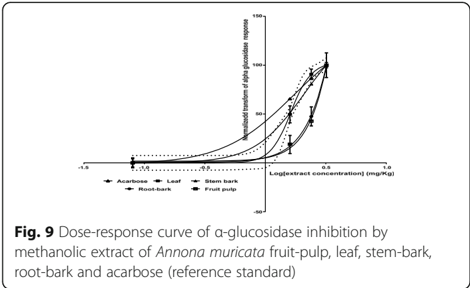
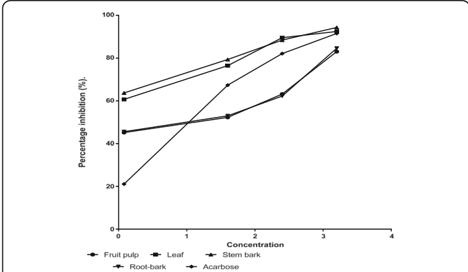
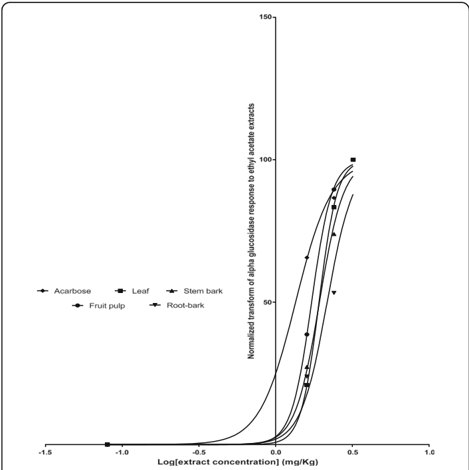
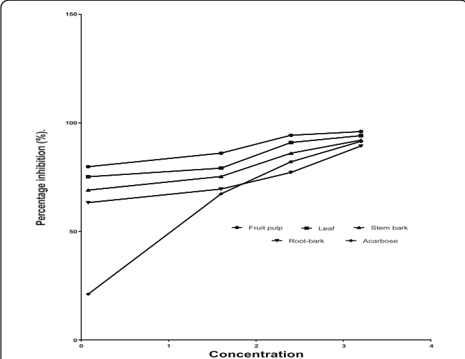
Annona muricata has been used in folklore in the management of diabetes. A major strategy in decreasing postprandial hyperglycemia in diabetes involves the inhibition of carbohydrate-hydrolyzing enzymes - α-amylase and α-glucosidase. Thus, this study evaluated the in vivo and in vitro inhibitory potentials of the different parts (fruit-pulp, leaf, stem-bark and root-bark) of Annona muricata . A total of 120 Wistar rats were treated with methanol extracts for 28 days after which blood and tissue samples were collected for α-amylase assay. In vitro inhibitory properties of methanol, ethyl acetate and dichloromethane extracts of the various parts of the plant on α-amylase and α-glucosidase activities were performed using standard procedures. The mode and mechanism of interactions between the enzymes and extracts (and isolated acetogenin) were determined using various kinetic interpolations and in silico experiments. The fruit-pulp and root-bark methanolic extracts better -inhibited plasma and tissue amylase in vivo. The in vitro studies revealed that the stem-bark methanolic, fruit-pulp ethyl acetate, and leaf dichloromethane extracts, better inhibited α-amylase activity compared with the standard acarbose. Also, the leaf methanol, fruit-pulp ethyl acetate, and root-bark dichloromethane extract better inhibited α-glucosidase activity. These observations were corroborated with their higher Bmax and Vmax and lower Kd values. All the extracts exhibited an “uncompetitive” type of inhibition pattern. Also, the isolated acetogenin (15-acetyl guanacone) from the fruit-pulp showed a better binding affinity compared to the standard drug, Metformin. Better natural remedy for diabetics can be obtained from Annona muricata with minimal or no adverse side effects.
Overview
The claims and statistics of this paper haven’t been checked yet.
Free: it reads the open-access text and checks the first 5 claims that cite a source we can check. Create a free account to check every claim.
Integrity signals
Registry
Cites
Statistics
Figures
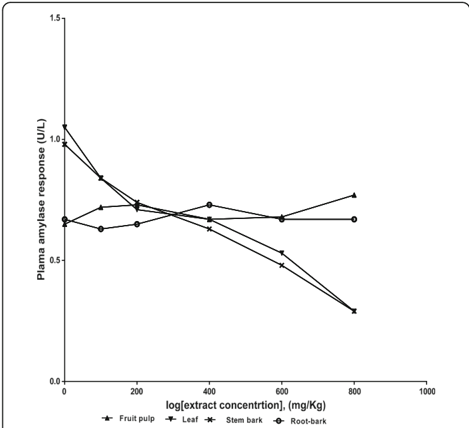
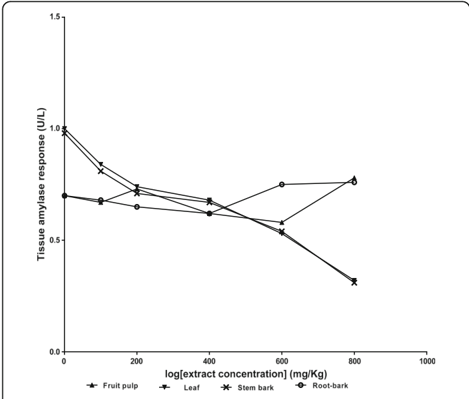
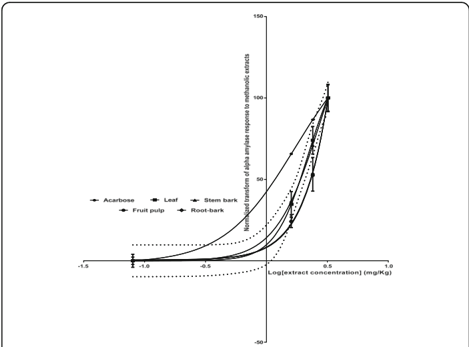
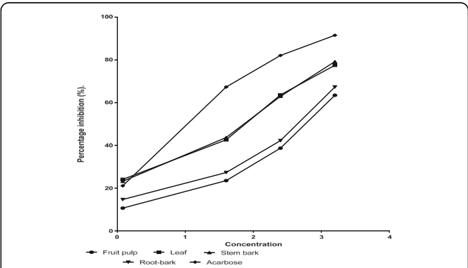
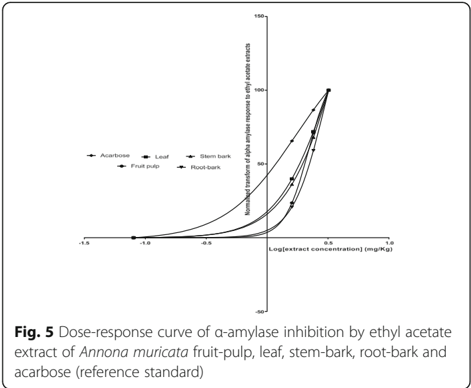
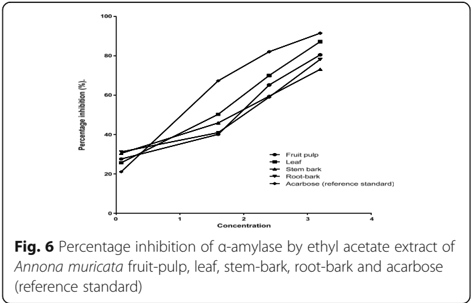
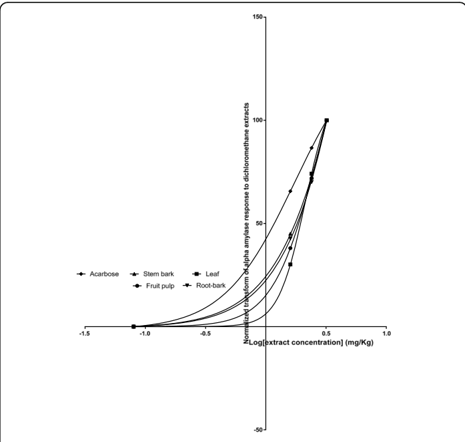
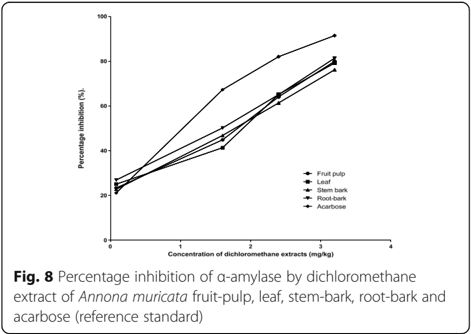
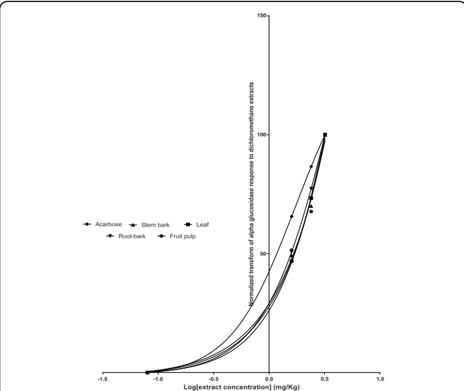
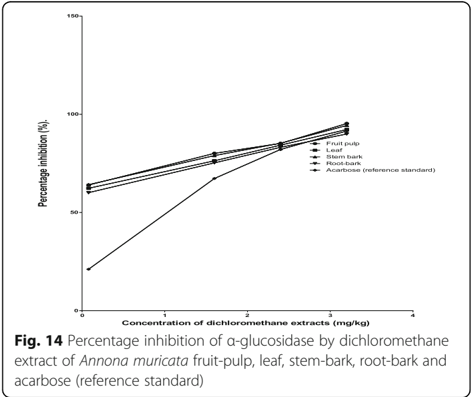
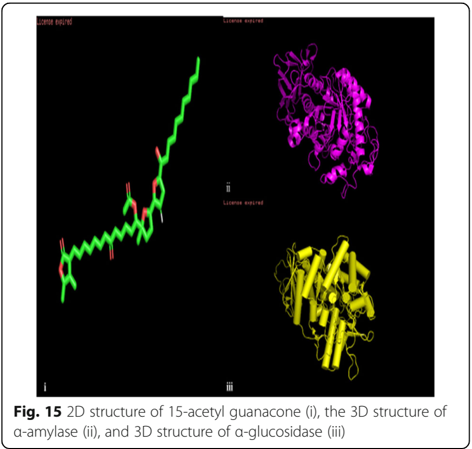
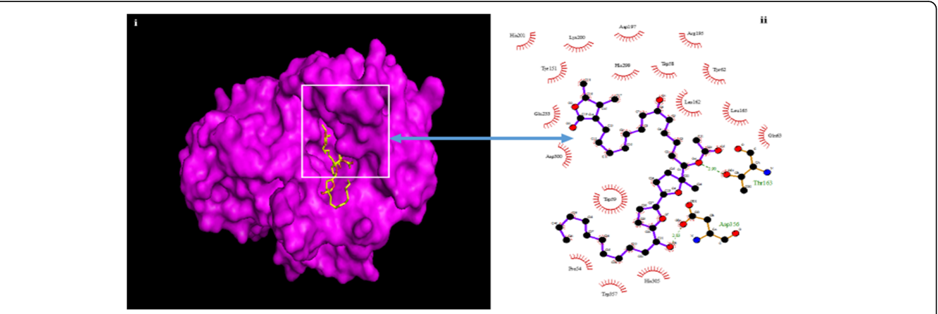
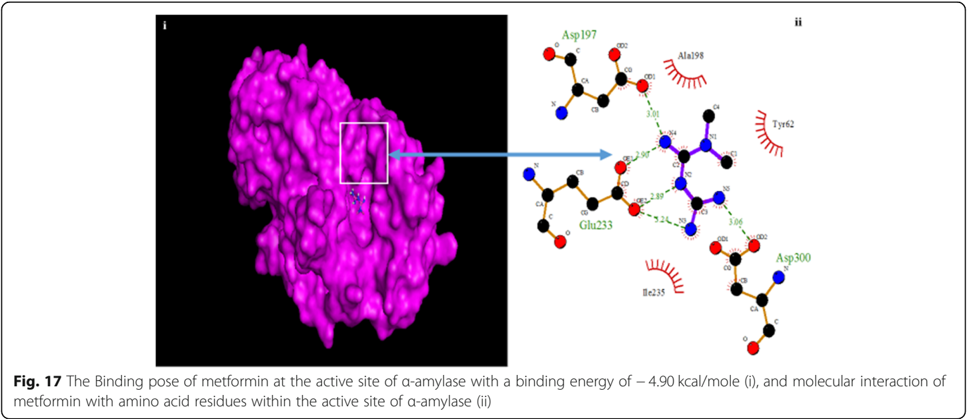
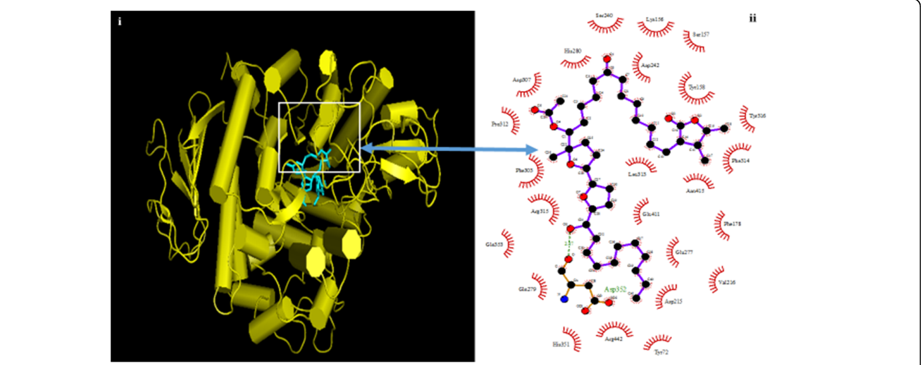
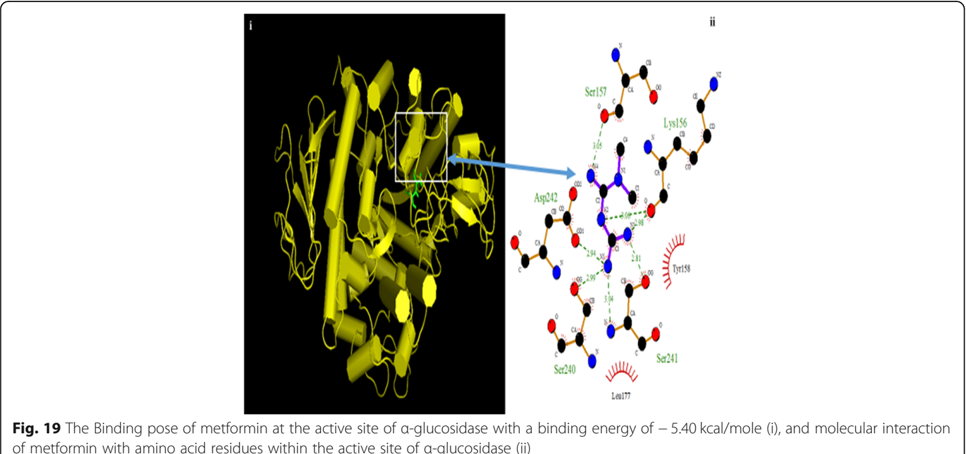
Verification
Claims the paper makes
The claims and statistics of this paper haven’t been checked yet.
Free: it reads the open-access text and checks the first 5 claims that cite a source we can check. Create a free account to check every claim.
Claims other papers make about this one
Each is checked against this paper’s own text: does it say what the citing paper says it does?
The source backs part of the claim, not all of it — or backs it for a different population, condition or comparison.
In the citing paper
“Due to its medicinal and pharmacological effects, this plant is considered a potential alternative treatment for diabetes mellitus (DM), hypertension, cancer, and bacterial infections [9,10].”
From Annona muricata: Comprehensive Review on the Ethnomedicinal, Phytochemistry, and Pharmacological Aspects Focusing on Antidiabetic Properties (2023) · cites this paper as [9]
Experimental — accuracy not yet measuredThe source backs part of the claim, not all of it — or backs it for a different population, condition or comparison.
In the citing paper
“This plant is commonly used to treat diabetes traditionally and research demonstrated that the leaves and fruit pulp are the most efficient as alternative diabetes treatment.”
From Annona muricata: Comprehensive Review on the Ethnomedicinal, Phytochemistry, and Pharmacological Aspects Focusing on Antidiabetic Properties (2023) · cites this paper as [9]
Experimental — accuracy not yet measuredThe cited source says what the claim attributes to it.
In the citing paper
“mechanisms of inhibiting glucose absorption via α-glucosidase and α-amylase activity inhibition”
From Annona muricata: Comprehensive Review on the Ethnomedicinal, Phytochemistry, and Pharmacological Aspects Focusing on Antidiabetic Properties (2023) · cites this paper as [9]
Self-check
Percentages, sums and reported differences re-computed from the paper’s own numbers.
The self-check needs the paper’s full text.
Citations
Cites
European Journal of Experimental Biology
(2019) · European Journal of Experimental Biology · doi:10.21767/2248-9215 · Cited by 608
Shobana, S., Sreerama, Y. N., & Malleshi, N. G. (2009) · Food Chemistry · doi:10.1016/j.foodchem.2009.01.042 · Cited by 525 · cited 1×
“In addition, it is thought that some of these drugs may increase the incidence of renal tumors, hepatic injuries, acute hepatitis and pancreatitis [19].”
BackgroundNair, S. S., Kavrekar, V., & Mishra, A. (2013) · European Journal of Experimental Biology · Cited by 289
HUANG, T., PENG, G., KOTA, B., LI, G., YAMAHARA, J., ROUFOGALIS, B., & LI, Y. (2005) · Toxicology and Applied Pharmacology · doi:10.1016/j.taap.2004.12.009 · Cited by 272
Antidiabetic herbal drugs officially approved in China
Jia, W., Gao, W., & Tang, L. (2003) · Phytotherapy Research · doi:10.1002/ptr.1398 · Cited by 251
Oboh, G., Ademiluyi, A. O., Akinyemi, A. J., Henle, T., Saliu, J. A., & Schwarzenbolz, U. (2012) · Journal of Functional Foods · doi:10.1016/j.jff.2012.02.003 · Cited by 250
European Journal of Experimental Biology
(2019) · doi:10.36648/2248-9215 · Cited by 247
α-Amylase Inhibitors from Roselle (Hibiscus sabdariffa Linn.) Tea
HANSAWASDI, C., KAWABATA, J., & KASAI, T. (2000) · Bioscience, Biotechnology, and Biochemistry · doi:10.1271/bbb.64.1041 · Cited by 235
Abirami, A., Nagarani, G., & Siddhuraju, P. (2014) · Food Science and Human Wellness · doi:10.1016/j.fshw.2014.02.001 · Cited by 175
EVALUATION OF PEPPER (CAPSICUM ANNUUM) FOR MANAGEMENT OF DIABETES AND HYPERTENSION
KWON, Y.-I., APOSTOLIDIS, E., & SHETTY, K. (2007) · Journal of Food Biochemistry · doi:10.1111/j.1745-4514.2007.00120.x · Cited by 158
Research works printed but not linked: 7
- Aguiree F, Brown A, Cho NH et al.,.IDF Diabetes Atlas, 2013.
- Mitra A. Some salient points in dietary and lifestyle survey of rural Bengal particularly tribal populace in relation to rural diabetes prevalence. Studies on Ethnomedicine. 2008;2(1):51-6.
- Bischoff H, Puls W, Krause HP, Schutt H, Thomas G. Pharmacological properties of the novel glucosidase inhibitors BAY m 1099 (miglitol) and BAY o 1248. Diabetes Res Clin Pract. 1985;1:53-62.
- Valiathan MS. Healing plants. Curr Sci. 1998;75(11):1122-7.
- Worthington V., 1993. Αlpha-amylase. In Worthington Enzyme Manual: Worthington Biochemical Corp. Freehold, NJ., pp. 36-41.
- Worthington V., 1993. Maltose-α-glucosidase. In Worthington Enzyme Manual: Worthington Biochemical Corp. Freehold, NJ., pp. 261.
- McConkey BJ, Sobolev V, Edelman M. The performance of current methods in ligand-protein docking. Curr Sci. 2002;83:845-56.
Cited by
Alam, S., Sarker, M. M. R., Sultana, T. N., Chowdhury, M. N. R., Rashid, M. A., Chaity, N. I., Zhao, C., Xiao, J., Hafez, E. E., Khan, S. A., et al. (2022) · Frontiers in Endocrinology · doi:10.3389/fendo.2022.800714 · Cited by 349
Pharmacological Activities of Soursop (Annona muricata Lin.)
Mutakin, M., Fauziati, R., Fadhilah, F. N., Zuhrotun, A., Amalia, R., & Hadisaputri, Y. E. (2022) · Molecules · doi:10.3390/molecules27041201 · Cited by 147
Benzimidazoles in Drug Discovery: A Patent Review
Law, C. S. W., & Yeong, K. Y. (2021) · ChemMedChem · doi:10.1002/cmdc.202100004 · Cited by 96
Soursop (Annona muricata) Properties and Perspectives for Integral Valorization
Santos, I. L., Rodrigues, A. M. D. C., Amante, E. R., & da Silva, L. H. M. (2023) · Foods · doi:10.3390/foods12071448 · Cited by 76
Zubaidi, S. N., Mohd Nani, H., Ahmad Kamal, M. S., Abdul Qayyum, T., Maarof, S., Afzan, A., Mohmad Misnan, N., Hamezah, H. S., Baharum, S. N., & Mediani, A. (2023) · Life · doi:10.3390/life13020353 · Cited by 72
Saleem, H., Yaqub, A., Rafique, R., Chohan, T. A., Malik, D.-E.-S., Tousif, M. I., Khurshid, U., Ahemad, N., Ramasubburayan, R., & Rengasamy, K. R. R. (2023) · Critical Reviews in Food Science and Nutrition · doi:10.1080/10408398.2023.2217264 · Cited by 59
“This demonstrates the discovery of safer antidiabetic drugs from plant sources can improve the management of diabetes (Agu et al. 2019).”
Chukwuma, I. F., Nworah, F. N., Apeh, V. O., Omeje, K. O., Nweze, E. J., Asogwa, C. D., & Ezeorba, T. P. C. (2022) · Bioinformatics and Biology Insights · doi:10.1177/11779322221115436 · Cited by 55
Alam, S., Dhar, A., Hasan, M., Richi, F. T., Emon, N. U., Aziz, M. A., Mamun, A. A., Chowdhury, M. N. R., Hossain, M. J., Kim, J. K., et al. (2022) · Molecules · doi:10.3390/molecules27248709 · Cited by 51
Gang, R., Matsabisa, M. G., Okello, D., & Kang, Y. (2023) · Applied Biological Chemistry · doi:10.1186/s13765-023-00797-z · Cited by 44
Shrivastava, A., Tripathi, A. D., Paul, V., & Rai, D. C. (2021) · LWT · doi:10.1016/j.lwt.2021.112091 · Cited by 42
AbuBakr, N., Haggag, T., Sabry, D., & Salem, Z. A. (2020) · Heliyon · doi:10.1016/j.heliyon.2020.e03789 · Cited by 39
“When managing DM, many studies proved that downregulation of enzymes such as α-glucosidase and α-amylase which are involved in the breakdown of carbohydrates resulted in reducing starch hydrolysis, thus, regulating postprandial glycemic level [43].”
BackgroundNutritional and Therapeutic Potential of Soursop
Afzaal, M., Saeed, F., Asghar, A., Shah, Y. A., Ikram, A., Ateeq, H., Hussain, M., Ofoedu, C. E., & Chacha, J. S. (2022) · Journal of Food Quality · doi:10.1155/2022/8828358 · Cited by 37
“Figure 1: *e antidiabetic activity of soursop [39].”
BackgroundDayma, V., Chopra, J., Sharma, P., Dwivedi, A., Tripathi, I. P., Bhargava, A., Vanangamudi, M., Goswami, A. K., & Baroliya, P. K. (2020) · Heliyon · doi:10.1016/j.heliyon.2020.e04787 · Cited by 33
“However, this drug has some unwanted effects such as abdominal or stomach pain, diarrhea and flatulence (Agu et al., 2019).”
BackgroundOlasehinde, O. R., Afolabi, O. B., Owolabi, O. V., Akawa, A. B., & Omiyale, B. O. (2022) · Scientific African · doi:10.1016/j.sciaf.2022.e01178 · Cited by 31
Lee, C. H., Lee, T. H., Ong, P. Y., Wong, S. L., Hamdan, N., Elgharbawy, A. A. M., & Azmi, N. A. (2021) · Process Biochemistry · doi:10.1016/j.procbio.2021.07.006 · Cited by 29
A Review on Marvel Fruit: Annona muricata
Patil, H. V., Dhankani, M. A., & Dhankani, A. R. (2023) · International Electronic Conference on Biomedicines (IECBM) · doi:10.3390/ecb2023-14355 · Cited by 23
“Acetogenins with good inhibitory activity against SARSCoV-2 spike proteins include annomuricin a, annomuricin b, annomuricin c, muricatocin c, Suricata in, cis-annonacin, annonacin-10-one, cis-goniothalamicin, Ariana can, and javoricin (in silico) [29].”
BackgroundD., D. A. P., Plashintania, D. R., Putri, R. M., Wibowo, I., Ramli, Y., Herdianto, S., & Indarto, A. (2023) · PLoS ONE · doi:10.1371/journal.pone.0289125 · Cited by 24
“Fundamentally, acetogenins are recognized as an excellent inhibitory activity against α-amylase and α-glucosidase enzymes [36].”
BackgroundUnravelling the role of natural herbs for the management of diabetes mellitus
Firdous, S. M., Irfan, Z., Giri, S., & Asaba, N. S. (2025) · Diabetology & Metabolic Syndrome · doi:10.1186/s13098-025-01904-4 · Cited by 18
“This process might be helpful in treating diabetes mellitus that is not insulin-dependent (NIDDM) [143, 144].”
Qi, N., Gong, X., Luo, Y., Zhang, C., Chen, J., & Chen, T. (2025) · Foods · doi:10.3390/foods14193413 · Cited by 14
“It was confirmed that both CAP and CAL extracts exhibit significantly stronger inhibition of α -glucosidase and α -amylase activities compared to the standard drug acarbose [53].”
Handayani, S. I., Sari, M. I. P., Sardjana, M. S., Kusmardi, K., Nurbaya, S., Rosmalena, R., Sinaga, E., & Prasasty, V. D. (2022) · Applied Sciences · doi:10.3390/app12189141 · Cited by 11
Sivalingam, A. M., Pandian, A., Sivanesan, S., Yuvaraj, M. F., Rajendiran, N., Manivel, R., & Sivamani, G. (2024) · Journal of Inorganic and Organometallic Polymers and Materials · doi:10.1007/s10904-024-03233-x · Cited by 11
“The presence of these alkaloids in the T. foliolosum extract resulted in enhanced hepatoprotective activity [ 91 ].”
Onumah, J., Afoakwah, N. A., Boamah, P. O., Osei, E. D., & Amotoe‐Bondzie, A. (2025) · Carbohydrate Research · doi:10.1016/j.carres.2025.109475 · Cited by 10
Caycho, E. R. C., Cotos, M. R. C., & Lozano, M. M. S. (2020) · Revista de la Sociedad Química del Perú · doi:10.37761/rsqp.v86i2.279 · Cited by 9
Horticultural crops as natural therapeutic plants for the therapy of diabetes mellitus
Mustapha, B. O., Ademoyegun, O. T., & Ahmed, R. S. (2023) · Egyptian Journal of Basic and Applied Sciences · doi:10.1080/2314808x.2023.2217387 · Cited by 8
“[70] conducted an investigation using different extracts on the parts of A. muricata such as the root bark, stem-bark, fruit-pulp and leaf for their potential to impede the activity of pancreatic tissue and plasma amylase in albino Wistar male rats.”
BackgroundAmankwaah, F., Addotey, J. N., Orman, E., Adosraku, R. K., & Amponsah, I. K. (2023) · Scientific African · doi:10.1016/j.sciaf.2023.e01956 · Cited by 7
Mishra, A. P., Nigam, M., Nambooze, J., Salau, V. F., Olofinsan, K. A., Iriti, M., & Matsabisa, M. G. (2023) · Current Organic Chemistry · doi:10.2174/0113852728254495231002100354 · Cited by 6
Annona muricata as Possible Alternative in the Treatment of Hyperglycemia: A Systematic Review
del Campo-Rayas, P. M., Miramontes, E. H. V., & Reyes-Castillo, Z. (2022) · Journal of Medicinal Food · doi:10.1089/jmf.2021.0058 · Cited by 6
Lee, C. H., Hamdan, N., Ling, L. I., Wong, S. L., Nyakuma, B. B., Khoo, S. C., Ramachandran, H., Jamaluddin, H., Wong, K. Y., & Lee, T. H. (2023) · Biomass Conversion and Biorefinery · doi:10.1007/s13399-023-03993-5 · Cited by 6
“This result supported previous studies that reported soursop leaf biomass could potentially suppress the carbohydrate-hydrolyzing enzyme, which could be attributed to their bioactive components such as protein [18, 19].”
Jaichand, V., Lanrewaju, A. A., Baijnath, H., Sabiu, S., & Mohanlall, V. (2025) · Journal of Enzyme Inhibition and Medicinal Chemistry · doi:10.1080/14756366.2025.2492706 · Cited by 5
“…or arid region), solvent polarity and the method of extraction, which may altogether influence the chemical constituents of each extract. agu et al. 39 , reported a higher ic 50 value for Annona muri-cata methanolic (1.85–2.18 mg/dl), dichloromethane (2.13–8.53 mg/ dl) and ethyl acetate (2.20–4.41…”
InfluentialAnnoglabrin A-C, three new ent-kaurane diterpenoids from the Annona glabra fruit pulp
Duong, T.-K.-Y., Nguyen, V., Dao, N.-V.-T., Bui, X. T., Thảo, V. T. M., Nguyen, M.-K., Dong, P.-S.-N., Phan, H.-V.-T., Tran, T.-N., Ngo, H.-N.-T., et al. (2024) · Natural Product Research · doi:10.1080/14786419.2024.2414397 · Cited by 5
“…our knowledge, there have been no reports of the anti-diabetic activity of A. glabra fruit pulp’s phytochemicals while similar investigations on the fruit pulp of other Annona species such as A. muricata (Agu et al. 2019, Akinlolu et al. 2023) and A. squamosa (Gupta et al. 2005) have been studied.”
Alharbi, Y., Aljalis, R. A., & Barakat, H. (2025) · Veterinary World · doi:10.14202/vetworld.2025.461-474 · Cited by 5
“Medicinal plants prevent diabetes by inhibiting the small intestine’s α -glucosidase [6], suppressing salivary gland α -amylase [7], enhancing insulin secretion [8], reducing HbA1c and glycated plasma protein [9], increasing glucagon-like peptide-1, and regulating GLUT4 levels [10].”
Decoding the phytochemical and antimicrobial properties of Annona spp. against pathogens: A review
Krishnan, K., Ayyandurai, M., Sagarika, M., Ayyar, P., Subbiah, R., & Rajangam, J. (2024) · Annals of Phytomedicine An International Journal · doi:10.54085/ap.2024.13.2.9 · Cited by 5
Sanou, Y., Somda, M. B., Ouattara, L., DRABO, F. A. C., Ouédraogo, R. J., Meda, R. N.-T., & Ouédraogo, G. A. (2021) · Journal of Drug Delivery and Therapeutics · doi:10.22270/jddt.v11i6.5121 · Cited by 5
Soursop botany, chemical composition and medicinal prospects: a concise review
Omere, E. A., Osaigbovo, A. U., & Adekunle, A. T. (2023) · Ghana Journal of Science · doi:10.4314/gjs.v64i1.7 · Cited by 5
Guevara-Vásquez, A. M., Florián, J. C., & Dávila-Castillo, J. H. (2021) · Journal of Herbmed Pharmacology · doi:10.34172/jhp.2021.42 · Cited by 4
“absorption (SGLT1 and GLUT2 inhibitors) in the intestine (9).”
BackgroundOlowookere, D. A., & Malomo, S. A. (2024) · European Journal of Nutrition & Food Safety · doi:10.9734/ejnfs/2024/v16i51420 · Cited by 4
Nguyen, N. Q., Nguyen, V. T., Nguyen, M. T., Pham, T. N., Dao, T. P., & Tran, T. Y. N. (2023) · IOP Conference Series Earth and Environmental Science · doi:10.1088/1755-1315/1142/1/012060 · Cited by 4
“Specifically, the methanol extract from the leaves, the ethyl acetate extract from the fruit pulp, and the dichloromethane extract from the root bark showed good inhibitory activity on α-glucosidase activity [5].”
BackgroundSanou, Y., Ouattara, L., Kabré, P., Ouédraogo, R. J., Ouôba, P., Zanté, A.-A., Zoungo, D., Somda, M. B., & Ouédraogo, G. A. (2023) · Journal of Drug Delivery and Therapeutics · doi:10.22270/jddt.v13i6.6103 · Cited by 4
THE ETHNOBOTANICAL AND PHARMACOLOGICAL EFFICACY OF ANNONA MURICATA EXTRACTS, DECOCTIONS
Gour, J. K., Singh, S., Pratap, V., Mahapatra, P., Sinha, B. K., Singh, M. K., & Nigam, A. K. (2025) · International Journal of Fundamental and Applied Sciences (IJFAS) · doi:10.59415/ijfas.v14i2.274 · Cited by 3
Babaiwa, U., Okonkwo, T., Erharuyi, O., Eraga, S. O., & Akerele, J. (2022) · Journal of Phytomedicine and Therapeutics · doi:10.4314/jopat.v21i2.4 · Cited by 3
“seeds of Annona muricata have been extensively reported [16-20].”
Background(2021) · Letters in Applied NanoBioScience · doi:10.33263/lianbs112.34703479 · Cited by 3
Akinlolu, O. S., Fatoki, T. H., & Momodu, D. U. (2023) · Journal of Complementary and Alternative Medical Research · doi:10.9734/jocamr/2023/v21i2434 · Cited by 3
Sosa-Crespo, I. F., Moguel, A. J. M., Chel‐Guerrero, L., Rodríguez‐Canto, W., & Betancur‐Ancona, D. (2025) · International Food Research Journal · doi:10.47836/ifrj.32.1.14 · Cited by 2
Mangalik, E. S., & Susandarini, R. (2025) · International Journal of Environmental Sciences · doi:10.64252/8hmne830 · Cited by 2
TINJAUAN LITERATUR: POTENSI ANTIDIABETIK EKSTRAK DAUN SIRSAK UNTUK KONTROL GLIKEMIK DIABETES MELITUS
Dewi, K. F. R., Landra, I. K. G., Setiawan, K. H., & Mahiswari, K. W. I. (2015) · Jurnal Kesehatan Ilmiah Indonesia (Indonesian Health Scientific Journal) · doi:10.51933/health.v10i2.2263 · Cited by 2
Agu, K. C. (2022) · Phytomedicine Plus · doi:10.1016/j.phyplu.2022.100272 · Cited by 2
Self-citationTedjo, A. (2024) · Jurnal Tumbuhan Obat Indonesia · doi:10.31002/jtoi.v17i1.1156 · Cited by 2
“Methanol extract of A. muricata leaves is known to inhibit α-glucosidase activity, while dichloromethane extract is more effective at inhibiting α-amylase activity (Agu et al., 2019).”
BackgroundOgbonna, C. C., Iwuji, S. C., Azeez, T. O., Okoronkwo, R. M., Ugorji, T. N., & Asadu, C. O. (2025) · Clinical Phytoscience · doi:10.1186/s40816-025-00395-0 · Cited by 1
Froldi, G., Simo, M. K., Tomasi, L., Tadiotto, G., Djeujo, F. M., Fopokam, X. G., Souana, E., Sameza, M. L., Jazet, P. M. D., & Boyom, F. F. (2025) · Molecules · doi:10.3390/molecules30214264 · Cited by 1
PURIFICATION, THERMOSTABILITY AND INHIBITORS OF α-GLUCOSIDASE FROM Penicllium chrysogenum
El-Shora, H. M., Metwally, S. M., Metwally, M. A., FADDA, E. A., & El-Zawawy, N. A. (2022) · PLANT CELL BIOTECHNOLOGY AND MOLECULAR BIOLOGY · doi:10.56557/pcbmb/2022/v23i13-147814 · Cited by 1
Venkatappa, A. H., & Bhat, R. (2022) · CABI eBooks · doi:10.1079/9781789248067.0029 · Cited by 1
Iheagwam, F., Avwaghwaruvwe, O. E., Jack, L., Odedeyi, D. A., & Chinedu, S. (2024) · Letters in Applied NanoBioScience · doi:10.33263/lianbs131.046 · Cited by 1
“This inhibition cannot be reversed by substrate concentration increase, benefiting diabetics in postprandial glucose mobilization truncation irrespective of the amount of carbohydrate ingested during the fed state and controlling feedback regulation [34,35].”
Njume, C. (2020) · Victoria University Research Repository (Victoria University) · Cited by 1
Hui, X. (2020) · Lincoln University Research Archive (Lincoln University)
Jirna, I. N., Sudarmanto, I. G., Purna, I. N., Mastra, N., Sundari, C. D. W. H., Suyasa, I. N., Damayanto, I. P. G. P., & Ritonga, M. A. (2024) · Plant Science Today · doi:10.14719/pst.3035
赵, 雯. (2025) · Hans Journal of Food and Nutrition Science · doi:10.12677/hjfns.2025.141010
Rashmi, J., & Kavitha, S. K. (2025) · International Journal of Zoological Investigations · doi:10.33745/ijzi.2025.v11i02.065
“This is achieved by targeting the hydrolysis of carbohydrates and the subsequent mobilization of glucose into the bloodstream at the intestinal interface (Agu et al. , 2019).”
Aguilar-López, J. V., Arras-Gardea, A. V., Martinez‐Gonzalez, A. I., ́Álvarez-Parrilla, E., & la Rosa, L. A. D. (2025) · Applied Biosciences · doi:10.3390/applbiosci4040049
“Excessive inhibition can induce abdominal pain, bloating, or cramps due to the blockage of starch digestion and abnormal bacterial fermentation —side effects related to currently used drugs, such as acarbose [49].”
Kumarihami, M., Kekulandara, D. N., Gunathilake, K. D. P. P., & Jeevathayaparan, S. (2025) · Journal of Science of the University of Kelaniya · doi:10.4038/josuk.v18i2.8172
Santos, I. L. (2023) · LA Referencia (Red Federada de Repositorios Institucionales de Publicaciones Científicas)
Ugbogu, E. A., Esiaba, R. I., Ekweogu, C. N., Ugbogu, O. C., Okoro, B. C., Uche, M. E., Nwaru, E. C., & Israel, C. L. (2026) · Tropical Journal of Natural Product Research · doi:10.26538/tjnpr/v10i1.1
Gowda, S., Shivakumar, L., & Shivashankarappa, A. (2026) · European Journal of Biology · doi:10.26650/eurjbiol.2026.1778600
Enhancement of Soursop Juice Nutritional Value via Biotin Fortification and Preservatives Analysis
Kalanidhi, K., Masi, C., & Jennita Jacqueline, P. (2026) · Recent Research Reviews Journal · doi:10.36548/rrrj.2025.2.010
“The colony-forming units per millilitre (cfu mL -1 ) were used to express the total microbial count [20].”
Alonge, S. A., Olaleye, T. M., Akinmoladun, A. C., Crown, O. O., Damilare, A., & Josiah, S. S. (2026) · Next research. · doi:10.1016/j.nexres.2026.101959
Handirana, Z. P., Lestari, T., Mardianingrum, R., & Ruswanto, R. (2026) · Jurnal Kimia VALENSI · doi:10.15408/jkv.v12i1.46091
“In diabetes management, soursop leaves are known to inhibit α - amylase and α -glucosidase, thereby reducing postprandial glucose levels 13 .”
al., A. M. E., Khalaf, Y. H., & Mohammed, A. M. (2026) · Materials Chemistry and Physics · doi:10.1016/j.matchemphys.2026.132926
Morales-Arzate, L. R., Hernández-Fonseca, A., Pizano-Andrade, J. C., Domínguez-Rosales, J. A., Nazará, Z., Montalvo‐González, E., Gurrola‐Díaz, C. M., Ruiz‐Madrigal, B., Maldonado‐González, M., & Vargas‐Guerrero, B. (2026) · Life · doi:10.3390/life16081219
“AM, commonly known as soursop, has attracted significant interest due to its numerous biological effects, especially its antioxidant, anti-inflammatory, and hypoglycemic properties [7,16].”
Putri, V. Y. K., Gunawan, T., & Kusumawati, Y. (2026) · EPJ Web of Conferences · doi:10.1051/epjconf/202638704001
Salsabila, N. D., Saragih, Y. F. A., Sinaga, S. R., Simanjuntak, M. T., Siahaan, M. C., & Riris, I. D. (2026) · Didaktik Jurnal Ilmiah PGSD STKIP Subang · doi:10.36989/didaktik.v12i02.15024
A Comprehensive Review on Plant-Derived Inhibitors of Key Enzymes in Diabetes Mellitus
Lata, K., Kumari, B., & Kumar, D. S. (2024) · African Journal of Biomedical Research · doi:10.53555/ajbr.v27i6s.7381
Kautsar, F. D., Sianipar, J. E., Haiba, U. W., Fathinabila, N. Z., Wulandari, R. P., Nurdin, H. A., & Nuwarda, R. F. (2026) · Indonesian Journal of Pharmaceutical Science and Technology · doi:10.24198/ijpst.v12i3.70710
Metadata
- Authors
- Agu, K. C., Eluehike, N., Ofeimun, R. O., Abile, D., Ideho, G., Ogedengbe, M. O., Onose, P. O., & Elekofehinti, O. O.
- Affiliations
- University of Benin (NG)
- Adekunle Ajasin University (NG)
- Corresponding author
- Eluehike, Nkeiruka
- Venue
- Clinical Phytoscience
- Published
- 2019-06-13
- Volume
- 5
- Issue
- 1
- ISSN
- 2199-1197 (ISSN-L)
- OpenAlex
- W2952831681
- Cited by
- 53
- References
- 30
- Citations by year
- 2026: 6 · 2025: 11 · 2024: 4 · 2023: 13 · 2022: 11 · 2021: 6 · 2020: 2
- FWCI
- 3.87
- Type
- journal article
- Language
- en
- Open access
- diamond
- doi.org
- Licence
- cc-by
- creativecommons.org/licenses/by/4.0 (tdm)
- creativecommons.org/licenses/by/4.0 (vor)
- Locations
- Clinical Phytoscience (publishedVersion, cc-by)
- DOAJ (DOAJ: Directory of Open Access Journals) (submittedVersion)
- Topics
- Health Sciences › Medicine › Endocrinology, Diabetes and Metabolism › Natural Antidiabetic Agents Studies
- Life Sciences › Biochemistry, Genetics and Molecular Biology › Biochemistry › Traditional and Medicinal Uses of Annonaceae
- Health Sciences › Medicine › Endocrinology, Diabetes and Metabolism › Pancreatic function and diabetes
- Keywords
- Annona muricata, antidiabetic activity, α-amylase inhibition, α-glucosidase inhibition, acetogenins, postprandial hyperglycemia, enzyme kinetics, uncompetitive inhibition, plant extracts, fruit pulp, root bark
About these checks
Registry, retraction, Cites and statistics results are computed, not judged, with one exception: a printed reference that no index lists is read once by a model before it counts as a citation error. Claims are extracted by a model and kept only when their quote appears verbatim in the text; each cited source is then checked, with a model’s help, for whether it says what the claim relies on. Those verdicts can be wrong — read the claim’s quote and the cited source before relying on one.
Statistics and arithmetic are recomputed, not judged.
Confidence bands are shown only for fields calibrated on our annotated test set. None is calibrated yet, so no band is shown.
What counts as a claim ›How we measure confidence ›How we check this ›
Are you an author, or do you see a problem with this page? Request a review
Data sources
Bibliographic data: Semantic Scholar, OpenAlex, Crossref.
Contains information from the Semantic Scholar Academic Graph Datasets, made available under the ODC Attribution License (ODC-BY 1.0).
Semantic Scholar’s data is described in: Kinney, R., et al. (2023). The Semantic Scholar Open Data Platform. arXiv:2301.10140.
