

Possible anti-diabetic potentials of Annona muricata (soursop): inhibition of α-amylase and α-glucosidase activities
Open accessThe DOI matches its Crossref record; 29 of the 30 references it cites were found in a registry or an index.
Abstract
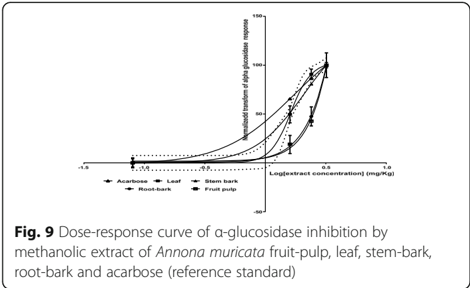
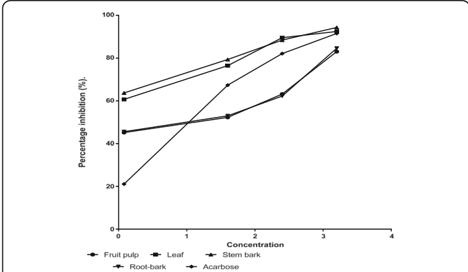
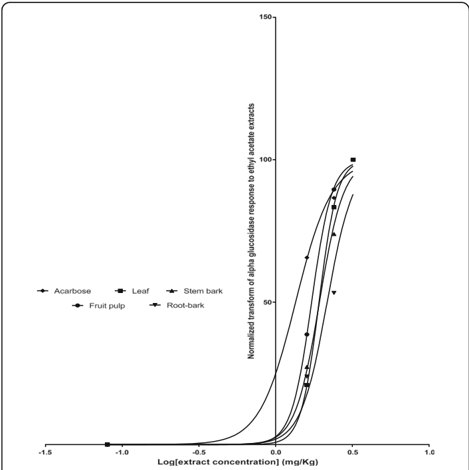
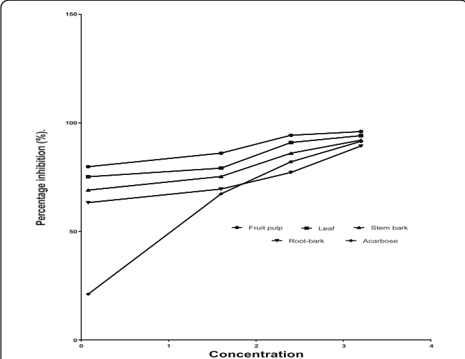
Annona muricata has been used in folklore in the management of diabetes. A major strategy in decreasing postprandial hyperglycemia in diabetes involves the inhibition of carbohydrate-hydrolyzing enzymes - α-amylase and α-glucosidase. Thus, this study evaluated the in vivo and in vitro inhibitory potentials of the different parts (fruit-pulp, leaf, stem-bark and root-bark) of Annona muricata . A total of 120 Wistar rats were treated with methanol extracts for 28 days after which blood and tissue samples were collected for α-amylase assay. In vitro inhibitory properties of methanol, ethyl acetate and dichloromethane extracts of the various parts of the plant on α-amylase and α-glucosidase activities were performed using standard procedures. The mode and mechanism of interactions between the enzymes and extracts (and isolated acetogenin) were determined using various kinetic interpolations and in silico experiments. The fruit-pulp and root-bark methanolic extracts better -inhibited plasma and tissue amylase in vivo. The in vitro studies revealed that the stem-bark methanolic, fruit-pulp ethyl acetate, and leaf dichloromethane extracts, better inhibited α-amylase activity compared with the standard acarbose. Also, the leaf methanol, fruit-pulp ethyl acetate, and root-bark dichloromethane extract better inhibited α-glucosidase activity. These observations were corroborated with their higher Bmax and Vmax and lower Kd values. All the extracts exhibited an “uncompetitive” type of inhibition pattern. Also, the isolated acetogenin (15-acetyl guanacone) from the fruit-pulp showed a better binding affinity compared to the standard drug, Metformin. Better natural remedy for diabetics can be obtained from Annona muricata with minimal or no adverse side effects.
Overview
The claims and statistics of this paper haven’t been checked yet.
Free: it reads the open-access text and checks the first 5 claims that cite a source we can check. Create a free account to check every claim.
Integrity signals
Registry
Cites
Statistics
Figures
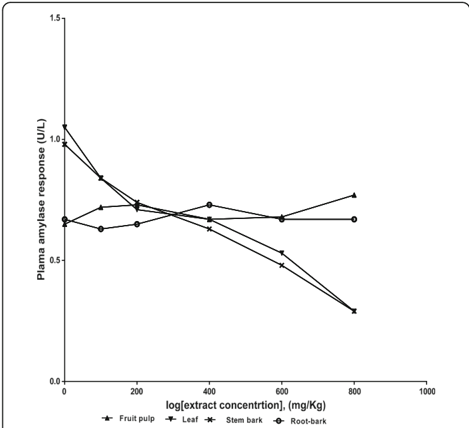
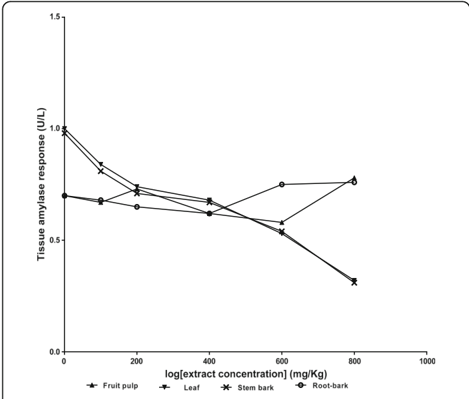
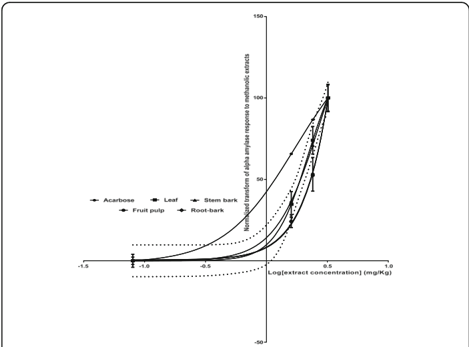
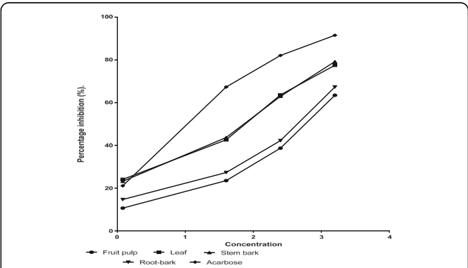
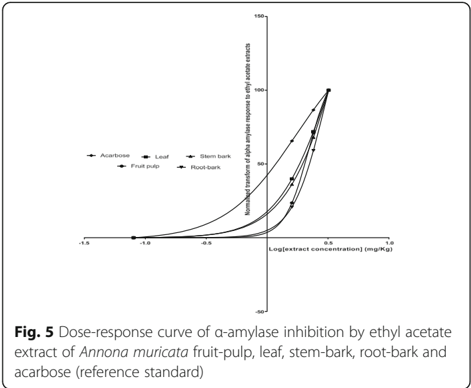
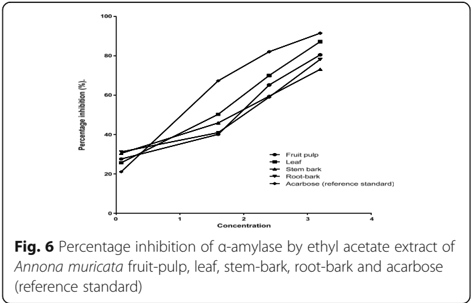
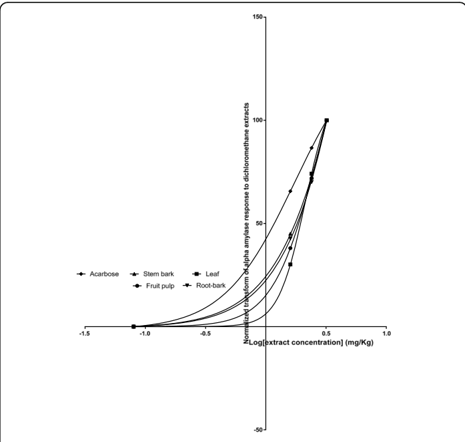
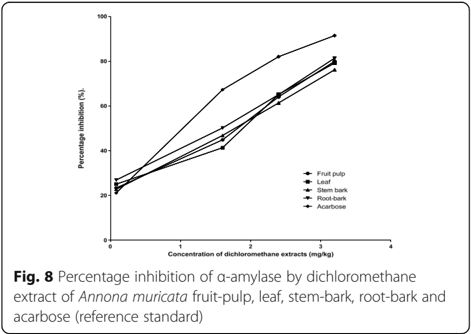
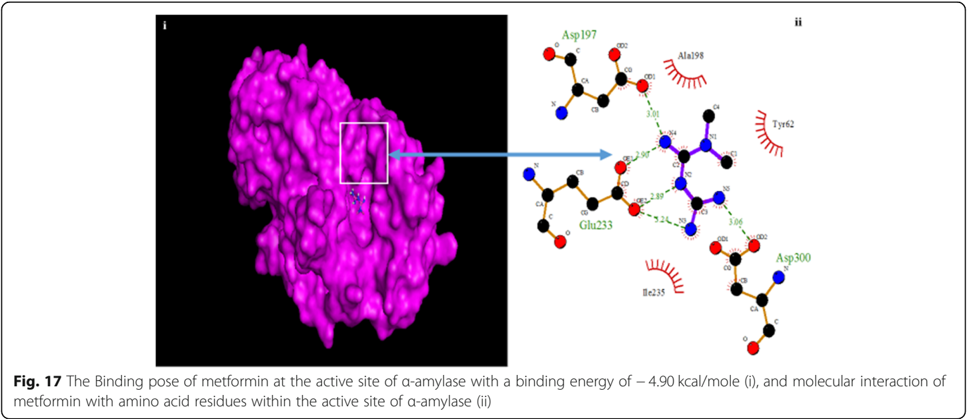
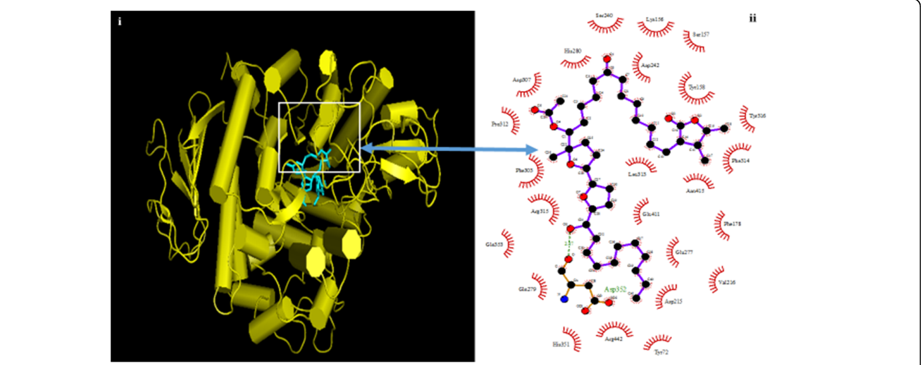
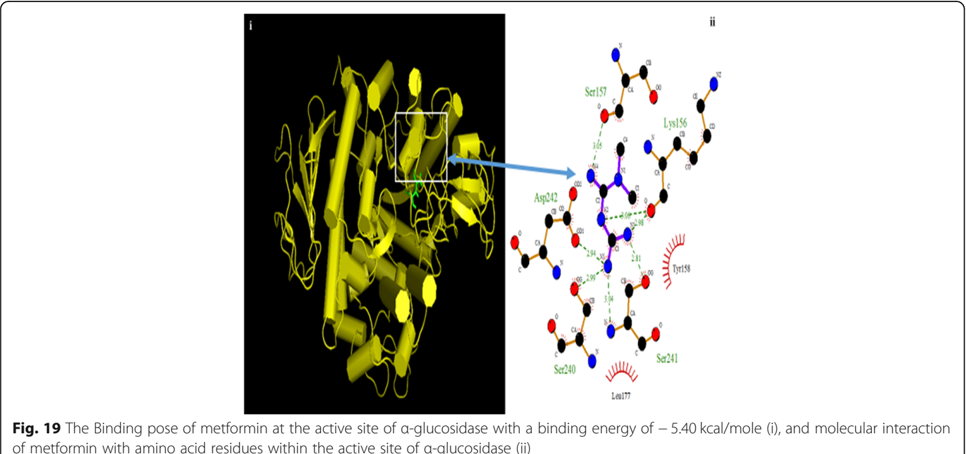
Verification
Claims the paper makes
The claims and statistics of this paper haven’t been checked yet.
Free: it reads the open-access text and checks the first 5 claims that cite a source we can check. Create a free account to check every claim.
Claims other papers make about this one
Each is checked against this paper’s own text: does it say what the citing paper says it does?
The source backs part of the claim, not all of it — or backs it for a different population, condition or comparison.
In the citing paper
“Due to its medicinal and pharmacological effects, this plant is considered a potential alternative treatment for diabetes mellitus (DM), hypertension, cancer, and bacterial infections [9,10].”
From Annona muricata: Comprehensive Review on the Ethnomedicinal, Phytochemistry, and Pharmacological Aspects Focusing on Antidiabetic Properties (2023) · cites this paper as [9]
Experimental — accuracy not yet measuredThe source backs part of the claim, not all of it — or backs it for a different population, condition or comparison.
In the citing paper
“This plant is commonly used to treat diabetes traditionally and research demonstrated that the leaves and fruit pulp are the most efficient as alternative diabetes treatment.”
From Annona muricata: Comprehensive Review on the Ethnomedicinal, Phytochemistry, and Pharmacological Aspects Focusing on Antidiabetic Properties (2023) · cites this paper as [9]
Experimental — accuracy not yet measuredThe cited source says what the claim attributes to it.
In the citing paper
“mechanisms of inhibiting glucose absorption via α-glucosidase and α-amylase activity inhibition”
From Annona muricata: Comprehensive Review on the Ethnomedicinal, Phytochemistry, and Pharmacological Aspects Focusing on Antidiabetic Properties (2023) · cites this paper as [9]
Self-check
Percentages, sums and reported differences re-computed from the paper’s own numbers.
The self-check needs the paper’s full text.
Citations
Cites
European Journal of Experimental Biology
(2019) · European Journal of Experimental Biology · doi:10.21767/2248-9215 · Cited by 608
Shobana, S., Sreerama, Y. N., & Malleshi, N. G. (2009) · Food Chemistry · doi:10.1016/j.foodchem.2009.01.042 · Cited by 525 · cited 1×
“In addition, it is thought that some of these drugs may increase the incidence of renal tumors, hepatic injuries, acute hepatitis and pancreatitis [19].”
BackgroundNair, S. S., Kavrekar, V., & Mishra, A. (2013) · European Journal of Experimental Biology · Cited by 289
HUANG, T., PENG, G., KOTA, B., LI, G., YAMAHARA, J., ROUFOGALIS, B., & LI, Y. (2005) · Toxicology and Applied Pharmacology · doi:10.1016/j.taap.2004.12.009 · Cited by 272
Antidiabetic herbal drugs officially approved in China
Jia, W., Gao, W., & Tang, L. (2003) · Phytotherapy Research · doi:10.1002/ptr.1398 · Cited by 251
Oboh, G., Ademiluyi, A. O., Akinyemi, A. J., Henle, T., Saliu, J. A., & Schwarzenbolz, U. (2012) · Journal of Functional Foods · doi:10.1016/j.jff.2012.02.003 · Cited by 250
European Journal of Experimental Biology
(2019) · doi:10.36648/2248-9215 · Cited by 247
α-Amylase Inhibitors from Roselle (Hibiscus sabdariffa Linn.) Tea
HANSAWASDI, C., KAWABATA, J., & KASAI, T. (2000) · Bioscience, Biotechnology, and Biochemistry · doi:10.1271/bbb.64.1041 · Cited by 235
Abirami, A., Nagarani, G., & Siddhuraju, P. (2014) · Food Science and Human Wellness · doi:10.1016/j.fshw.2014.02.001 · Cited by 175
EVALUATION OF PEPPER (CAPSICUM ANNUUM) FOR MANAGEMENT OF DIABETES AND HYPERTENSION
KWON, Y.-I., APOSTOLIDIS, E., & SHETTY, K. (2007) · Journal of Food Biochemistry · doi:10.1111/j.1745-4514.2007.00120.x · Cited by 158
Saravanan, S., & Parimelazhagan, T. (2014) · Food Science and Human Wellness · doi:10.1016/j.fshw.2014.05.001 · Cited by 150
Anti-hyperglycemic Potential of Natural Products
Matsui, T., Ogunwande, I. A., Abesundara, K. J. M., & Matsumoto, K. (2006) · Mini-Reviews in Medicinal Chemistry · doi:10.2174/138955706776073484 · Cited by 141 · cited 1×
“Several inhibitors of α-amylase and α-glucosidase have been isolated from medicinal plants to serve as an alternative drug with increased potency and lesser adverse effects than existing synthetic drugs [21, 22].”
BackgroundKotowaroo, M. I., Mahomoodally, M. F., Gurib‐Fakim, A., & Subratty, A. H. (2006) · Phytotherapy Research · doi:10.1002/ptr.1839 · Cited by 140
Antidiabetogenic constituents from several natural medicines
Matsuda, H., Morikawa, T., & Yoshikawa, M. (2002) · Pure and Applied Chemistry · doi:10.1351/pac200274071301 · Cited by 134
Adefegha, S. A., & Oboh, G. (2012) · Pharmaceutical Biology · doi:10.3109/13880209.2011.641022 · Cited by 122
Wallenfels, K., Földi, P., Niermann, H., Bender, H., & Linder, D. (1978) · Carbohydrate Research · doi:10.1016/s0008-6215(00)84495-x · Cited by 101
Ademiluyi, A. O., Oboh, G., Aragbaiye, F. P., Oyeleye, S. I., & Ogunsuyi, O. B. (2015) · Journal of Taibah University Medical Sciences · doi:10.1016/j.jtumed.2014.11.005 · Cited by 99
Adefegha, S. A., Oyeleye, S. I., & Oboh, G. (2015) · Biochemistry Research International · doi:10.1155/2015/347673 · Cited by 86 · cited 1×
“[30] on the distribution of phenolic contents, anti-diabetic potentials, anti-hypertensive properties, and anti-oxidative effects of Soursop (Annona muricata L.”
BackgroundOkwu, D., & Omodamiro, O. (2006) · Bio Research Journal/Bio- Research · doi:10.4314/br.v3i2.28589 · Cited by 83
Effect of certain plant extracts on α-amylase activity
Prashanth, D., Padmaja, R. J., & Samiulla, D. S. (2001) · Fitoterapia · doi:10.1016/s0367-326x(00)00281-1 · Cited by 65 · cited 2×
“Several medicinal plants have a high potential in inhibiting α-amylase enzyme activity [6].”
BackgroundPhytochemical analysis, toxicity profile, and hemomodulatory properties of Annona muricata (Soursop)
Agu, K. C., Okolie, N. P., Ikechi, E. G., ANIONYE, J. C., & Falodun, A. (2017) · The Egyptian Journal of Haematology · doi:10.4103/1110-1067.206431 · Cited by 45 · cited 1×
“muricata [7] may be responsible for this high inhibitory effect.”
BackgroundSelf-citationSolution structure of the main α‐amylase inhibitor from amaranth seeds
Martins, J. C., Enassar, M., Willem, R., Wieruzeski, J., Lippens, G. M., & Wodak, S. J. (2001) · European Journal of Biochemistry · doi:10.1046/j.1432-1327.2001.02118.x · Cited by 30
Okolie, N. P., Agu, K., & Eze, G. I. (2013) · Journal of Pharmaceutical and Scientific Innovation · doi:10.7897/2277-4572.02444 · Cited by 20
Self-citationSome Salient Points in Dietary and Life- Style Survey
Mitra, A. (2008) · Studies on Ethno-Medicine · doi:10.1080/09735070.2008.11886315 · Cited by 19 · cited 1×
“In type 2 diabetes mellitus (DM2), postprandial hyperglycemia is important in the development of the disease; Current treatment for Type 2 diabetes remains inadequate so prevention is preferable [3].”
BackgroundInhibitory effects of crude drugs on α-glucosidase
Choi, H.-J., Kim, N. J., & Kim, D.-H. (2000) · Archives of Pharmacal Research · doi:10.1007/bf02976457 · Cited by 17
(2018) · Studies on Ethno-Medicine · doi:10.31901/24566772.2018 · Cited by 14
Agu, K. C., Okolie, N. P., Falodun, A., Erharuyi, O., Igbe, I., Elekofehinti, O. O., Edosa, R. O., & Oghagbon, S. E. (2017) · Journal of applied science and environmental management · doi:10.4314/jasem.v21i2.3 · Cited by 11
Self-citationPreparation and Effects of Cheap Salad Oil in the Management of Type 2 Rural Indian Diabetics
Mitra, A. (2008) · Journal of Human Ecology · doi:10.1080/09709274.2008.11906051 · Cited by 7
Gavanji, S., Larki, B., & Mortazaeinezhad, F. (2014) · International Journal of Scientific Research in Environmental Sciences · doi:10.12983/ijsres-2014-p0085-0093 · Cited by 5
Research works printed but not linked: 7
- Aguiree F, Brown A, Cho NH et al.,.IDF Diabetes Atlas, 2013.
- Mitra A. Some salient points in dietary and lifestyle survey of rural Bengal particularly tribal populace in relation to rural diabetes prevalence. Studies on Ethnomedicine. 2008;2(1):51-6.
- Bischoff H, Puls W, Krause HP, Schutt H, Thomas G. Pharmacological properties of the novel glucosidase inhibitors BAY m 1099 (miglitol) and BAY o 1248. Diabetes Res Clin Pract. 1985;1:53-62.
- Valiathan MS. Healing plants. Curr Sci. 1998;75(11):1122-7.
- Worthington V., 1993. Αlpha-amylase. In Worthington Enzyme Manual: Worthington Biochemical Corp. Freehold, NJ., pp. 36-41.
- Worthington V., 1993. Maltose-α-glucosidase. In Worthington Enzyme Manual: Worthington Biochemical Corp. Freehold, NJ., pp. 261.
- McConkey BJ, Sobolev V, Edelman M. The performance of current methods in ligand-protein docking. Curr Sci. 2002;83:845-56.
Cited by
Alam, S., Sarker, M. M. R., Sultana, T. N., Chowdhury, M. N. R., Rashid, M. A., Chaity, N. I., Zhao, C., Xiao, J., Hafez, E. E., Khan, S. A., et al. (2022) · Frontiers in Endocrinology · doi:10.3389/fendo.2022.800714 · Cited by 349
Pharmacological Activities of Soursop (Annona muricata Lin.)
Mutakin, M., Fauziati, R., Fadhilah, F. N., Zuhrotun, A., Amalia, R., & Hadisaputri, Y. E. (2022) · Molecules · doi:10.3390/molecules27041201 · Cited by 147
Benzimidazoles in Drug Discovery: A Patent Review
Law, C. S. W., & Yeong, K. Y. (2021) · ChemMedChem · doi:10.1002/cmdc.202100004 · Cited by 96
Soursop (Annona muricata) Properties and Perspectives for Integral Valorization
Santos, I. L., Rodrigues, A. M. D. C., Amante, E. R., & da Silva, L. H. M. (2023) · Foods · doi:10.3390/foods12071448 · Cited by 76
Zubaidi, S. N., Mohd Nani, H., Ahmad Kamal, M. S., Abdul Qayyum, T., Maarof, S., Afzan, A., Mohmad Misnan, N., Hamezah, H. S., Baharum, S. N., & Mediani, A. (2023) · Life · doi:10.3390/life13020353 · Cited by 72
Metadata
- Authors
- Agu, K. C., Eluehike, N., Ofeimun, R. O., Abile, D., Ideho, G., Ogedengbe, M. O., Onose, P. O., & Elekofehinti, O. O.
- Affiliations
- University of Benin (NG)
- Adekunle Ajasin University (NG)
- Corresponding author
- Eluehike, Nkeiruka
- Venue
- Clinical Phytoscience
- Published
- 2019-06-13
- Volume
- 5
- Issue
- 1
- ISSN
- 2199-1197 (ISSN-L)
- OpenAlex
- W2952831681
- Cited by
- 53
- References
- 30
- Citations by year
- 2026: 6 · 2025: 11 · 2024: 4 · 2023: 13 · 2022: 11 · 2021: 6 · 2020: 2
- FWCI
- 3.87
- Type
- journal article
- Language
- en
- Open access
- diamond
- doi.org
- Licence
- cc-by
- creativecommons.org/licenses/by/4.0 (tdm)
- creativecommons.org/licenses/by/4.0 (vor)
- Locations
- Clinical Phytoscience (publishedVersion, cc-by)
- DOAJ (DOAJ: Directory of Open Access Journals) (submittedVersion)
- Topics
- Health Sciences › Medicine › Endocrinology, Diabetes and Metabolism › Natural Antidiabetic Agents Studies
- Life Sciences › Biochemistry, Genetics and Molecular Biology › Biochemistry › Traditional and Medicinal Uses of Annonaceae
- Health Sciences › Medicine › Endocrinology, Diabetes and Metabolism › Pancreatic function and diabetes
- Keywords
- Annona muricata, antidiabetic activity, α-amylase inhibition, α-glucosidase inhibition, acetogenins, postprandial hyperglycemia, enzyme kinetics, uncompetitive inhibition, plant extracts, fruit pulp, root bark
About these checks
Registry, retraction, Cites and statistics results are computed, not judged, with one exception: a printed reference that no index lists is read once by a model before it counts as a citation error. Claims are extracted by a model and kept only when their quote appears verbatim in the text; each cited source is then checked, with a model’s help, for whether it says what the claim relies on. Those verdicts can be wrong — read the claim’s quote and the cited source before relying on one.
Statistics and arithmetic are recomputed, not judged.
Confidence bands are shown only for fields calibrated on our annotated test set. None is calibrated yet, so no band is shown.
What counts as a claim ›How we measure confidence ›How we check this ›
Are you an author, or do you see a problem with this page? Request a review
Data sources
Bibliographic data: Semantic Scholar, OpenAlex, Crossref.
Contains information from the Semantic Scholar Academic Graph Datasets, made available under the ODC Attribution License (ODC-BY 1.0).
Semantic Scholar’s data is described in: Kinney, R., et al. (2023). The Semantic Scholar Open Data Platform. arXiv:2301.10140.
