

Immunogenicity of decellularized extracellular matrix scaffolds: a bottleneck in tissue engineering and regenerative medicine
Open accessThe DOI matches its Crossref record; 230 of the 234 references it cites were found in a registry or an index; 198 of the 369 sources its claims cite were checked for support.
Abstract
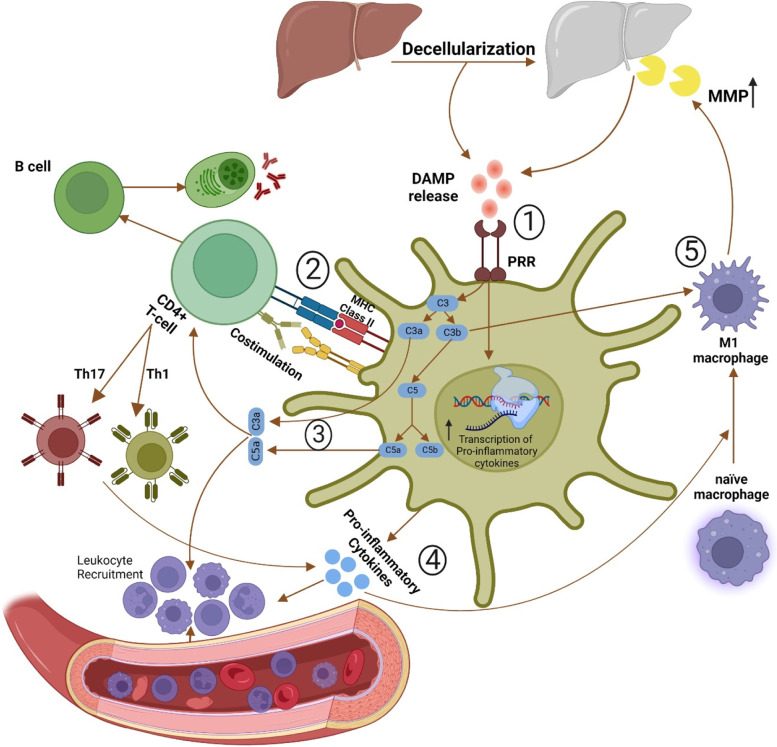
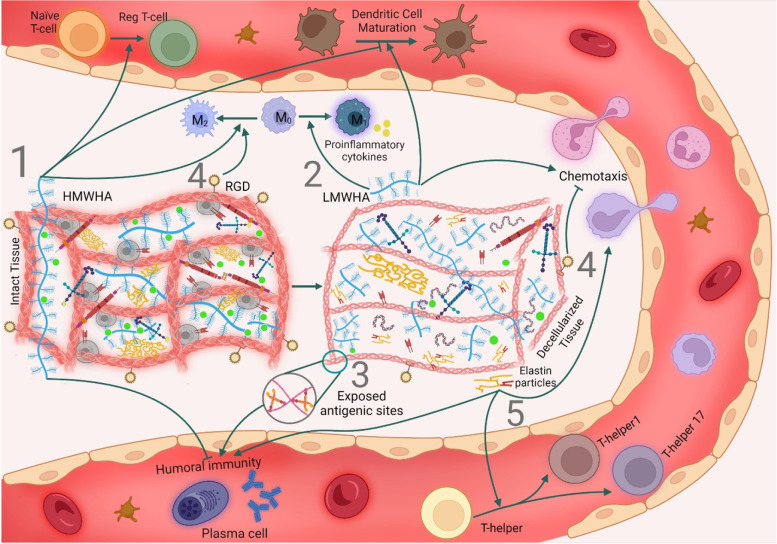
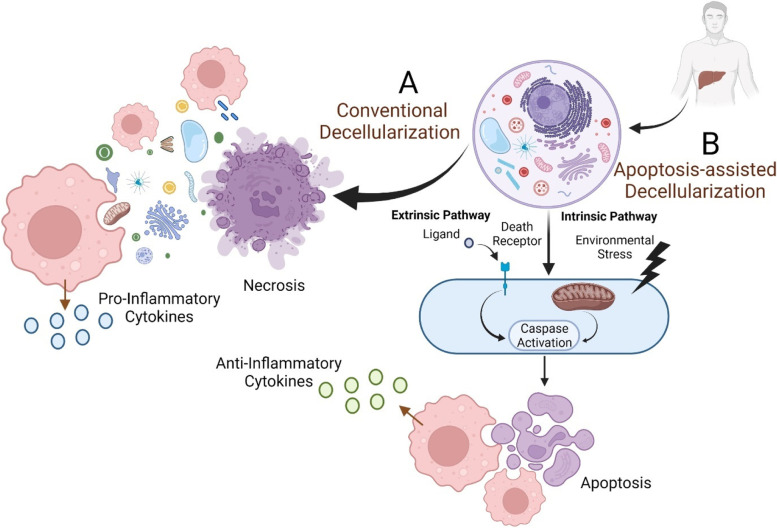
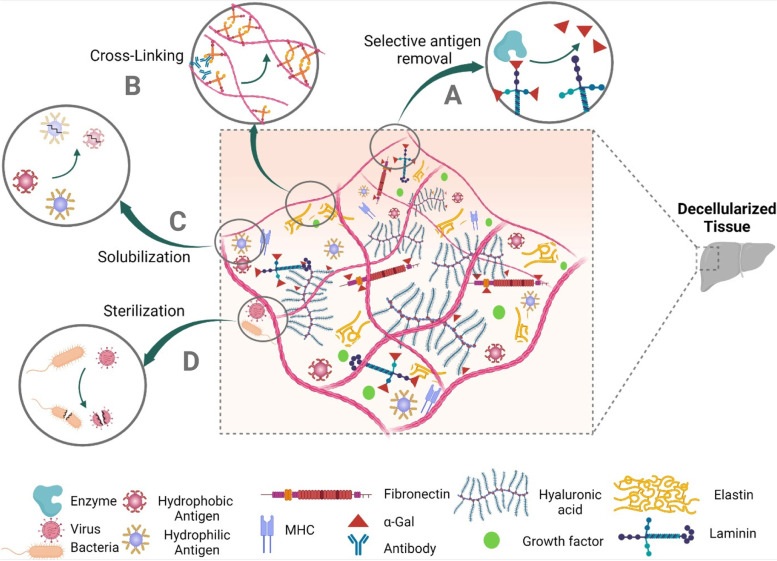
Tissue-engineered decellularized extracellular matrix (ECM) scaffolds hold great potential to address the donor shortage as well as immunologic rejection attributed to cells in conventional tissue/organ transplantation. Decellularization, as the key process in manufacturing ECM scaffolds, removes immunogen cell materials and significantly alleviates the immunogenicity and biocompatibility of derived scaffolds. However, the application of these bioscaffolds still confronts major immunologic challenges. This review discusses the interplay between damage-associated molecular patterns (DAMPs) and antigens as the main inducers of innate and adaptive immunity to aid in manufacturing biocompatible grafts with desirable immunogenicity. It also appraises the impact of various decellularization methodologies (i.e., apoptosis-assisted techniques) on provoking immune responses that participate in rejecting allogenic and xenogeneic decellularized scaffolds. In addition, the key research findings regarding the contribution of ECM alterations, cytotoxicity issues, graft sourcing, and implantation site to the immunogenicity of decellularized tissues/organs are comprehensively considered. Finally, it discusses practical solutions to overcome immunogenicity, including antigen masking by crosslinking, sterilization optimization, and antigen removal techniques such as selective antigen removal and sequential antigen solubilization.
Overview
CoChat Summary
## TL;DR
This review argues that the main barrier to clinical use of decellularized ECM scaffolds is not decellularization itself, but the residual immunogenicity created by leftover antigens, DAMPs, ECM damage, source tissue differences, implantation site, and processing residues. It surveys decellularization, antigen-removal, crosslinking, and sterilization strategies to reduce immune rejection and improve recellularization.
## Key findings
- Decellularization is defined here as removing DNA and other cellular materials while preserving ECM; competent decellularization should show no visible nuclei on H&E/DAPI and keep residual dsDNA below 50 ng per dry weight and 200 bp length.
- Incomplete or harsh decellularization can increase immunogenicity by leaving cell remnants and by damaging ECM, exposing cryptic epitopes, reducing GAGs/growth factors, and impairing recellularization.
- The paper identifies major contributors to dECM immunogenicity as decellularization efficiency/method, ECM alteration, tissue or organ source, implantation site, and recipient features.
- It reports several example thresholds and outcomes: residual SDS > 50 mg/L in washing solution or >10 µg/mg dry weight in ECM is described as cytotoxic; 15 mM remaining TX100 is cited as tolerated by human cell lines; 25 kGy is presented as the optimal gamma dose for sterilization with minimal immune response.
## Methods
- Narrative review of the literature on decellularized extracellular matrix scaffold immunogenicity, with sections organized around immune mechanisms, sources of immunogenicity, and mitigation strategies.
- Synthesizes published studies across tissues/organs and processing methods, including physical, chemical, and biological decellularization approaches, plus post-processing interventions such as antigen removal, crosslinking, and sterilization.
- Main analysis is conceptual and comparative: it contrasts how specific processing choices and tissue sources affect antigen retention, ECM integrity, DAMP release, and downstream innate/adaptive immune responses.
## Limitations
- The paper is a review and does not present a single new experimental dataset or meta-analysis with pooled effect sizes; this is evident from the text.
- It explicitly notes that there is “no consensus” on accepting the cited decellularization criteria as a standard to predict scaffold immunogenicity.
- Several areas are stated as unresolved or needing future work, including how decellularization affects hyaluronic acid/GAG structure, which sterilization method is best for each tissue, and how to define a standard for acceptable immunogenicity.
Model-written summary. Check it against the paper before relying on it.
Integrity signals
Registry
Cites
Statistics
Figures
Verification
Claims the paper makes
157 Valid · 3 Not valid · 87 Not checked · 23 Own results and interpretations
At least one cited source doesn’t support this claim or points to a different paper, and none confirmed it — see the verdicts below.
In the paper
“Desirable biocompatibility of natural scaffolds is primarily ascribed to the inter- and intra-species conservation of ECM [27] and its MHC-free nature that makes the host immune system recognize them as self-components [28].”
§ Immunogenicity of decellularized extracellular matrix scaffolds: a bottleneck in tissue engineering and regenerative medicine > Introduction
What the sources say
- Disputedcites [28] Dhatchinamoorthy K Colbert JD Rock KL Cancer Immune Evasion Through Loss of MHC Class I Antigen Presentation Front Immunol 2021 12 636568 33767702 PMC7986854 sourceExperimental — accuracy not yet measured
In “Recognition and Control of MHC I Low Cancers by NK Cells” (page unavailable), the paper says NK cells ignore normal MHC I-sufficient cells but can detect abnormal cells with low MHC I; it does not say that MHC absence makes the immune system recognize something as self. The paper does not discuss natural scaffolds or their biocompatibility, so the contrary evidence concerns the claim’s proposed immune-recognition mechanism, not scaffold outcomes. (LLM, conf=0.76)
Checked by a reasoning model — may be wrong.
plainstates a cause- Asserted: passes — The authors put it forward as true.
- Checkable: passes — It can be checked against evidence.
- Load-bearing: passes — The paper’s conclusions depend on it.
- Based: passes — The paper gives a reason why it holds.
- Disputed
Every source the paper cites for this claim was checked and supports it.
In the paper
“However, incomplete removal of cell components during the decellularization process may provoke severe post-implantation immune responses [51, 52].”
§ Immunogenicity of decellularized extracellular matrix scaffolds: a bottleneck in tissue engineering and regenerative medicine > Contributing factors in the immunogenicity of ECM-based biomaterials > The role of decellularization efficiency in the immunogenicity of dECM scaffolds
What the sources say
- Supportedcites [51] White LJ The impact of detergents on the tissue decellularization process: A ToF-SIMS study Acta Biomater 2017 50 207 219 27993639 PMC5592694 source
The Introduction (page unavailable) says decellularization removes cellular antigens capable of inducing an adverse immune response. The Discussion (page unavailable) states that ineffective decellularization can induce a strong inflammatory response and discusses the host response to implanted scaffolds, supporting the claim's post-implantation context. (LLM, conf=0.90)
- Supportedcites [52] Aamodt JM Grainger DW Extracellular matrix-based biomaterial scaffolds and the host response Biomaterials 2016 86 68 82 26890039 PMC4785021 source
The “Tissue decellularization and characterization” section identifies residual cellular components as sources of antigens and host reactivity, including proteins associated with inflammation and implant rejection. It also says the clinical consequences of incomplete decellularization can be dire, citing incompletely decellularized heart valves in pediatric patients. (LLM, conf=0.92)
states a possible cause- Asserted: passes — The authors put it forward as true.
- Checkable: passes — It can be checked against evidence.
- Load-bearing: passes — The paper’s conclusions depend on it.
- Based: passes — The paper gives a reason why it holds.
- Supported
The cited sources support only part of this claim — read each source’s verdict below.
In the paper
“Regarding vast inter/intraspecies genetic polymorphisms, these minor antigens augment the rate of rejection in xeno- or allotransplantation [6, 7].”
§ Immunogenicity of decellularized extracellular matrix scaffolds: a bottleneck in tissue engineering and regenerative medicine > Introduction
What the sources say
- Partly supportedcites [6] Summers C Sheth VS Bleakley M Minor Histocompatibility Antigen-Specific T Cells Front Pediatr 2020 8 284 32582592 PMC7283489 sourceExperimental — accuracy not yet measured
The Minor Histocompatibility Antigens section says these antigens arise from genetic differences between donors and recipients, and the Abstract says donor T-cell recognition can cause graft-versus-host disease after allogeneic hematopoietic transplantation (page numbers unavailable). The paper does not establish an increased rate of graft rejection or address xenotransplantation; graft-versus-host disease is not graft rejection. (LLM, conf=0.86)
- Partly supportedcites [7] Eisenson DL Hisadome Y Yamada K Progress in Xenotransplantation: Immunologic Barriers, Advances in Gene Editing, and Successful Tolerance Induction Strategies in Pig-To-Primate Transplantation Front Immunol 2022 13 899657 35663933 PMC9157571 sourceExperimental — accuracy not yet measured
In “Adaptive Immune Barriers to Xenotransplantation” (page not provided), the paper says that slightly different pig proteins may act as xenoantigens and that antibodies against pig antigens can cause rejection. It also says adaptive responses drive allograft rejection, but does not specifically link minor antigens from intraspecies polymorphisms to an increased rate of allograft rejection or quantify a rejection-rate increase. (LLM, conf=0.84)
plainstates a cause- Asserted: passes — The authors put it forward as true.
- Checkable: passes — It can be checked against evidence.
- Load-bearing: unclear — It is unclear whether the paper’s conclusions depend on it.
- Based: passes — The paper gives a reason why it holds.
- Partly supported
Every source the paper cites for this claim was checked and supports it.
In the paper
“Moreover, CD4 T cells have a substantial role in regulating both humoral and cytotoxic T cell responses as the main elements of chronic rejection.”
§ Immunogenicity of decellularized extracellular matrix scaffolds: a bottleneck in tissue engineering and regenerative medicine > Introduction
What the sources say
- Supportedcites [10] Siu JHY T cell Allorecognition Pathways in Solid Organ Transplantation Front Immunol 2018 9 2548 30455697 PMC6230624 source
The Late rejection section says chronic rejection is more plausibly mediated by indirect-pathway CD4 T cell responses and that these cells’ principal role is likely to be helping humoral and cytotoxic CD8 T cell alloimmunity. This supports the paraphrase, with the paper’s stated uncertainty. (LLM, conf=0.91)
plainstates a cause- Asserted: passes — The authors put it forward as true.
- Checkable: passes — It can be checked against evidence.
- Load-bearing: unclear — It is unclear whether the paper’s conclusions depend on it.
- Based: passes — The paper gives a reason why it holds.
- Supported
The cited sources support only part of this claim — read each source’s verdict below.
In the paper
“The complications are mainly attributed to the major histocompatibility complex molecules 1 (MHC I) and 2 (MHC II) (polymorphic antigens expressed on the membrane of all nucleated cells and specialized antigen-presenting cells (APCs), respectively), which trigger a cellular immune response against both allografts and xenografts.”
§ Immunogenicity of decellularized extracellular matrix scaffolds: a bottleneck in tissue engineering and regenerative medicine > Introduction
What the sources say
- Partly supportedcites [2] Massaro MS Decellularized xenogeneic scaffolds in transplantation and tissue engineering: Immunogenicity versus positive cell stimulation Mater Sci Eng C Mater Biol Appl 2021 127 112203 34225855 sourceExperimental — accuracy not yet measured
Section 2 (Xenotransplantations; page unavailable) attributes xenograft rejection to MHC and links HLA classes I and II to CD8+ and CD4+ T cells. Section 4.1 (Immunogenicity and biocompatibility; page unavailable) links MHC antigens to transplant rejection generally, but the copy does not specifically say that both classes trigger a cellular immune response against allografts. (LLM, conf=0.83)
plainstates a cause- Asserted: passes — The authors put it forward as true.
- Checkable: passes — It can be checked against evidence.
- Load-bearing: passes — The paper’s conclusions depend on it.
- Based: passes — The paper gives a reason why it holds.
- Partly supported
136 more claims · 79 with their cited sources checked
Create a free account to see all 270 claims and to verify the 43 references still open.
- Probably not a substantial claim. 22
- It may state two separate claims as one. 115
Claims other papers make about this one
Each is checked against this paper’s own text: does it say what the citing paper says it does?
The cited source says what the claim attributes to it.
In the citing paper
“Excessive DAMP signaling can polarize macrophages toward a pro-inflammatory M1-like phenotype [27], resulting in sustained inflammation, impaired resolution, and suboptimal remodeling.”
From Immune Response to Extracellular Matrix Bioscaffolds: A Comprehensive Review (2025) · cites this paper as [27]
The cited source says what the claim attributes to it.
In the citing paper
“Moreover, high molecular weight hyaluronic acids, recognized GAGs within the decellularized ECM, exhibit anti-inflammatory effects by hindering the interaction between antigens and antibodies. They also activate toll-like receptors (TLRs), a specific subset of pattern recognition receptors (PRRs), as well as CD44 receptors found on innate and adaptive immune cells [80].”
From Liver tissue engineering using decellularized scaffolds: Current progress, challenges, and opportunities (2024) · cites this paper as [80]
Citations
Cites
Items 201–230 of 230
Bao-shan, L., Zhang, X., Man, Y., Xie, J.-D., Hu, W., Huang, H., Wang, Y., & Ma, H. (2021) · Regenerative Biomaterials · doi:10.1093/rb/rbaa055 · Cited by 16
Luo, Y., & Ma, L. (2020) · Biomedical Materials · doi:10.1088/1748-605x/abaabf · Cited by 16
Gasek, N., Dearborn, J., Enes, S. R., Pouliot, R., Louie, J., Phillips, Z., Wrenn, S., Uhl, F. E., Riveron, A., Bianchi, J., et al. (2021) · Biomaterials · doi:10.1016/j.biomaterials.2021.121029 · Cited by 16
Repair of post-infarction left ventricular free wall rupture using an extracellular matrix patch
Holubec, T., Caliskan, E., Béttex, D., et al. (2015) · European Journal of Cardio-Thoracic Surgery · doi:10.1093/ejcts/ezu521 · Cited by 16
In Vitro Detection System to Evaluate the Immunogenic Potential of Xenografts
Daugs, A., Lehmann, N., Eroglu, D., Meinke, M. C., Markhoff, A., & Bloch, O. (2018) · Tissue Engineering Part C: Methods · doi:10.1089/ten.tec.2017.0532 · Cited by 16
Lack of immunogenicity of xenogeneic DNA from porcine biomaterials
Record Ritchie, R. D., Salmon, S. L., Hiles, M. C., & Metzger, D. W. (2022) · Surgery Open Science · doi:10.1016/j.sopen.2022.07.005 · Cited by 16
Preliminary Study on the Antigen-Removal from Extracellular Matrix via Different Decellularization
Wu, H. C., Yin, G., Pu, X., Wang, J., Liao, X., & Huang, Z. (2022) · Tissue Engineering Part C Methods · doi:10.1089/ten.tec.2022.0025 · Cited by 15
Hashimoto, Y., Tsuchiya, T., Doi, R., Matsumoto, K., Higami, Y., Kobayashi, E., & Nagayasu, T. (2019) · Journal of Tissue Engineering and Regenerative Medicine · doi:10.1002/term.2923 · Cited by 15
Pigeot, S., Bourgine, P. E., Claude, J., Scotti, C., Papadimitropoulos, A., Todorov, A., Epple, C., Peretti, G. M., & Martin, I. (2020) · International Journal of Molecular Sciences · doi:10.3390/ijms21197233 · Cited by 15
Chen, J. (2021) · Journal of Medical Virology · doi:10.1002/jmv.26312 · Cited by 14
Human Anti-Gal and Anti-Non-Gal Immune Response to Porcine Tissue Implants
Galili, U. (2015) · Host Response to Biomaterials · doi:10.1016/b978-0-12-800196-7.00010-4 · Cited by 12
Decellularized Splenic Matrix as a Scaffold for Spleen Bioengineering
Zanardo, T. É. C., Amorim, F. G., Taufner, G. H., Pereira, R. H. A., Baiense, I. M., Destefani, A. C., Iwai, L. K., Maranhão, R. C., & Nogueira, B. V. (2020) · Frontiers in Bioengineering and Biotechnology · doi:10.3389/fbioe.2020.573461 · Cited by 12
Holl, J., Pawlukianiec, C., Corton Ruiz, J., Groth, D., Grubczak, K., Hady, H. R., Dadan, J., Reszec, J., Czaban, S., Kowalewski, C., et al. (2021) · Pharmaceutics · doi:10.3390/pharmaceutics13122164 · Cited by 12
Walker, S., Dittfeld, C., Jakob, A., Schönfelder, J., König, U., & Tugtekin, S.-M. (2022) · The Thoracic and Cardiovascular Surgeon · doi:10.1055/s-0040-1705100 · Cited by 11
Zhang, J.-S., Wang, Z.-B., Lai, Z.-Z., Yang, J.-W., Song, W.-J., Wei, Y.-B., Mei, J., & Wang, J.-G. (2023) · Hepatobiliary & Pancreatic Diseases International · doi:10.1016/j.hbpd.2022.10.007 · Cited by 11
Extracellular Matrix Patches for Endarterectomy Repair
Allen, K. B., Adams, J. D., Badylak, S. F., Garrett, H. E., Mouawad, N. J., Oweida, S. W., Parikshak, M., & Sultan, P. K. (2021) · Frontiers in Cardiovascular Medicine · doi:10.3389/fcvm.2021.631750 · Cited by 10
Payne, G. A., Sharma, N. S., Lal, C. V., Song, C., Guo, L., Margaroli, C., Viera, L., Kumar, S., Li, J., Xing, D., et al. (2021) · JCI Insight · doi:10.1172/jci.insight.139687 · Cited by 10
Galili, U., & Stone, K. R. (2021) · Bioengineering · doi:10.3390/bioengineering8010010 · Cited by 10
Establishment of an experimental model for MHC homo-to-hetero transplantation
Murata, T., Wada, H., Otsuka, R., Sasaki, A., Tsuji, H., Itoh, M., Eguchi, N., Kawai, T., & Seino, K.-I. (2020) · Scientific Reports · doi:10.1038/s41598-020-69784-4 · Cited by 10 · cited 1×
“Minor antigen-mismatched grafts could be potent enough to cause rejection in MHC-matched grafts [5].”
BackgroundAhmadi, A., Ebadi, S. S., Tayebi, T., Ebadi, S. A., Sarzaeem, M. M., & Niknejad, H. (2022) · Iranian Biomedical Journal · doi:10.52547/ibj.3748 · Cited by 9
Self-citationAzizian, S., Khatami, F., Modaresifar, K., et al. (2018) · Artificial Cells Nanomedicine and Biotechnology · doi:10.1080/21691401.2018.1438452 · Cited by 9
Self-citationRegulated differentiation of stem cells into an artificial 3D liver as a transplantable source
Chen, F., Wang, H., & Xiao, J. (2020) · Clinical and Molecular Hepatology · doi:10.3350/cmh.2019.0022n · Cited by 8
A decellularized porcine pulmonary valved conduit embedded with gelatin
Wan, J., Zhong, X., Xu, Z., Gong, D., Li, D., Xin, Z., Ma, X., & Li, W. (2021) · Artificial Organs · doi:10.1111/aor.13955 · Cited by 7
Dalgliesh, A. J., Liu, Z. Z., & Griffiths, L. G. (2017) · Tissue Engineering Part A · doi:10.1089/ten.tea.2016.0405 · Cited by 7
Morticelli, L., Magdei, M., Tschalaki, N., Petersen, B., Haverich, A., & Hilfiker, A. (2021) · Xenotransplantation · doi:10.1111/xen.12705 · Cited by 7
Acceleration of Apoptosis by Extracellular Basic pH in a 3D Human Skin Equivalent System
Park, G., Oh, D., Kim, Y., & Park, M. K. (2017) · Pharmacology · doi:10.1159/000475884 · Cited by 5
Bonvini, S. J. (2020) · American Journal of Respiratory Cell and Molecular Biology · doi:10.1165/rcmb.2020-0348ed · Cited by 5
Towards the development of osteochondral allografts with reduced immunogenicity
Neunaber, C., Dalinghaus, C., Bundkirchen, K., Toumpaniari, S., Gladitz, L. M., Joda, A., Morticelli, L., Krettek, C., & Korossis, S. (2022) · Journal of the mechanical behavior of biomedical materials/Journal of mechanical behavior of biomedical materials · doi:10.1016/j.jmbbm.2022.105359 · Cited by 5
On minor histocompatibility antigens, mixed chimerism, and transplantation tolerance
Sánchez-Fueyo, A., & Dazzi, F. (2021) · American Journal of Transplantation · doi:10.1111/ajt.16276 · Cited by 3 · cited 1×
“Any heterogeneous antigen that could be processed and expressed through MHC molecules is a potential immunogen [4].”
BackgroundCross‐dressed cDC1s instruct T cells in allorecognition
Segura, E. (2020) · Immunology & Cell Biology · doi:10.1111/imcb.12361 · Cited by 3 · cited 1×
“The process of foreign antigen presentation to T cells, called allorecognition, initiates cellular immune response via three pathways: direct, indirect, and semidirect [9].”
Background
Cited by
Therapeutic Hydrogels: Properties and Biomedical Applications
Dong, S., An, S., Saiding, Q., Chen, Q., Liu, B., Kong, N., Chen, W., & Tao, W. (2025) · Chemical Reviews · doi:10.1021/acs.chemrev.5c00182 · Cited by 197
Vilaça-Faria, H., Noro, J., Reis, R. L., & Pirraco, R. P. (2024) · Bioactive Materials · doi:10.1016/j.bioactmat.2024.01.004 · Cited by 170
“Immunogenicity issues will for sure be among those challenges [299].”
BackgroundMin, S., Kim, S., Sim, W., Choi, Y. S., Joo, H., Park, J.-H., Lee, S.-J., Kim, H., Lee, M. J., Jeong, I., et al. (2024) · Nature Communications · doi:10.1038/s41467-024-46928-y · Cited by 125
Monascus pigment-protected bone marrow-derived stem cells for heart failure treatment
Yue, T., Zhang, W., Pei, H., Danzeng, D., He, J., Yang, J., Luo, Y. M., Zhang, Z., Xiong, S., Yang, X., et al. (2024) · Bioactive Materials · doi:10.1016/j.bioactmat.2024.08.038 · Cited by 125
“However, these biomaterials have shown limited effectiveness in combating inflammation [18,32 – 34].”
BackgroundBiomimetic Nanoparticles for Basic Drug Delivery
Tikhonov, A., Kachanov, A., Yudaeva, A., Danilik, O., Ponomareva, N. I., Karandashov, I. V., Kostyusheva, A. P., Zamyatnin, A. A., Parodi, A., Chulanov, V., et al. (2024) · Pharmaceutics · doi:10.3390/pharmaceutics16101306 · Cited by 73
“Additionally, employing stable cell lines from which the major histocompatibility complex and other heterogeneous antigens have been removed can further reduce immunogenicity and enhance biocompatibility [167].”
BackgroundMethod
Metadata
- Authors
- Kasravi, M., Ahmadi, A., Babajani, A., Mazloomnejad, R., Hatamnejad, M. R., Shariatzadeh, S., Bahrami, S., & Niknejad, H.
- Affiliations
- Research Institute for Gastroenterology and Liver Diseases (IR)
- Shahid Beheshti University (IR)
- University of California, Los Angeles (US)
- Ludwig Boltzmann Institute for Traumatology, The Research Center in Cooperation with AUVA (AT)
- Corresponding author
- Niknejad, Hassan
- ORCID
- Venue
- Biomaterials Research
- Published
- 2023-02-09
- Volume
- 27
- Issue
- 1
- Pages
- 10-10
- ISSN
- 1226-4601 (ISSN-L)
- 2055-7124
- PMC
- PMC9912640
- OpenAlex
- W4319722881
- Semantic Scholar
- 53306cff4c7fd2795ce51b0f982ed79fa4900d9c
- Cited by
- 316
- References
- 234
- Citations by year
- 2026: 85 · 2025: 125 · 2024: 69 · 2023: 37
- FWCI
- 20.38
- Type
- journal article
- Language
- en
- Open access
- gold
- doi.org
- Licence
- cc-by
- creativecommons.org/licenses/by/4.0 (tdm)
- creativecommons.org/licenses/by/4.0 (vor)
- Locations
- Biomaterials Research (publishedVersion, cc-by)
- PubMed Central (publishedVersion, cc-by)
- PubMed (publishedVersion)
- DOAJ (DOAJ: Directory of Open Access Journals) (submittedVersion, cc-by-sa)
- Funders
- National Institute for Medical Research Development (963951)
- Topics
- Health Sciences › Medicine › Surgery › Tissue Engineering and Regenerative Medicine
- Physical Sciences › Engineering › Biomedical Engineering › 3D Printing in Biomedical Research
- Physical Sciences › Engineering › Biomedical Engineering › Bone Tissue Engineering Materials
- Keywords
- immunogenicity, damage-associated molecular patterns, innate immunity, adaptive immunity, decellularization methods, allograft rejection, xenograft rejection, antigen masking, crosslinking, sterilization, implantation site, cytotoxicity, biocompatibility
About these checks
Registry, retraction, Cites and statistics results are computed, not judged, with one exception: a printed reference that no index lists is read once by a model before it counts as a citation error. Claims are extracted by a model and kept only when their quote appears verbatim in the text; each cited source is then checked, with a model’s help, for whether it says what the claim relies on. Those verdicts can be wrong — read the claim’s quote and the cited source before relying on one.
The claim verdicts this report counts are experimental: their accuracy is not yet measured.
A language model drew the claims from the paper on 2026-10-10, under version 3 of the claim definition (model deepseek-v4.1-flash, prompt extract-v3).
A second model labelled each claim on 2026-10-10 (model jev-1.13-20260917, definition revision gold-guideline-v0.2).
Cited sources are checked with a language model’s help (gpt-6-sol).
Statistics and arithmetic are recomputed, not judged.
Confidence bands are shown only for fields calibrated on our annotated test set. None is calibrated yet, so no band is shown.
What counts as a claim ›How we measure confidence ›How we check this ›
Are you an author, or do you see a problem with this page? Request a review
Data sources
Bibliographic data: Semantic Scholar, OpenAlex, Crossref.
Contains information from the Semantic Scholar Academic Graph Datasets, made available under the ODC Attribution License (ODC-BY 1.0).
Semantic Scholar’s data is described in: Kinney, R., et al. (2023). The Semantic Scholar Open Data Platform. arXiv:2301.10140.
