

Diabetes and its drivers: the largest epidemic in human history?
Open accessThe DOI matches its Crossref record; 46 of the 46 references it cites were found in a registry or an index.
Abstract
The "Diabesity" epidemic (obesity and type 2 diabetes) is likely to be the biggest epidemic in human history. Diabetes has been seriously underrated as a global public health issue and the world can no longer ignore "the rise and rise" of type 2 diabetes. Currently, most of the national and global diabetes estimates come from the IDF Atlas. These estimates have significant limitations from a public health perspective. It is apparent that the IDF have consistently underestimated the global burden. More reliable estimates of the future burden of diabetes are urgently needed. To prevent type 2 diabetes, a better understanding of the drivers of the epidemic is needed. While for years, there has been comprehensive attention to the "traditional" risk factors for type 2 diabetes i.e., genes, lifestyle and behavioral change, the spotlight is turning to the impact of the intra-uterine environment and epigenetics on future risk in adult life. It highlights the urgency for discovering novel approaches to prevention focusing on maternal and child health. Diabetes risk through epigenetic changes can be transmitted inter-generationally thus creating a vicious cycle that will continue to feed the diabetes epidemic. History provides important lessons and there are lessons to learn from major catastrophic events such as the Dutch Winter Hunger and Chinese famines. The Chinese famine may have been the trigger for what may be viewed as a diabetes "avalanche" many decades later. The drivers of the epidemic are indeed genes and environment but they are now joined by deleterious early life events. Looking to the future there is the potential scenario of future new "hot spots" for type 2 diabetes in regions e.g., the Horn of Africa, now experiencing droughts and famine. This is likely to occur should improved economic and living conditions occur over the next few decades. Type 2 diabetes will remain one of the greatest challenges to human health for many years to come.
Overview
The claims and statistics of this paper haven’t been checked yet.
Free: it reads the open-access text and checks the first 5 claims that cite a source we can check. Create a free account to check every claim.
Integrity signals
Registry
Cites
Statistics
Figures
Verification
Claims the paper makes
The claims and statistics of this paper haven’t been checked yet.
Free: it reads the open-access text and checks the first 5 claims that cite a source we can check. Create a free account to check every claim.
Claims other papers make about this one
Each is checked against this paper’s own text: does it say what the citing paper says it does?
In the citing paper
“Heterozygous carriers of these same gene mutations commonly express moderate elevations of serum TG levels that expose them to increased CVD risk [378].”
From 2019 ESC/EAS guidelines for the management of dyslipidaemias: lipid modification to reduce cardiovascular risk (2019) · cites this paper as [378]
Self-check
Percentages, sums and reported differences re-computed from the paper’s own numbers.
The self-check needs the paper’s full text.
Citations
Cites
Wild, S., Roglic, G., Green, A., Sicree, R., & King, H. (2004) · Diabetes Care · doi:10.2337/diacare.27.5.1047 · Cited by 15,297 · cited 1×
“prevalence of diabetes in 2000 and 2030–171 million people with diabetes in 2000 and 366 million by 2030 [4].”
BackgroundInternational Diabetes Federation 2017
Carracher, A. M., Marathe, P. H., & Close, K. L. (2018) · Journal of Diabetes · doi:10.1111/1753-0407.12644 · Cited by 13,418
Tuomilehto, J., Lindström, J., Eriksson, J. G., Valle, T. T., Hämäläinen, H., Ilanne-Parikka, P., Keinänen-Kiukaanniemi, S., Laakso, M., Louheranta, A., Rastas, M., et al. (2001) · New England Journal of Medicine · doi:10.1056/nejm200105033441801 · Cited by 10,873 · cited 1×
“These results were extended by others including the classic study of Jaakko Tuomilehto, the Finnish Diabetes Prevention Study [34].”
ResultPrevalence of Diabetes among Men and Women in China
Yang, W., Lu, J., Weng, J., Jia, W., Ji, L., Xiao, J., Shan, Z., Liu, J., Tian, H., Ji, Q., et al. (2010) · New England Journal of Medicine · doi:10.1056/nejmoa0908292 · Cited by 3,031 · cited 1×
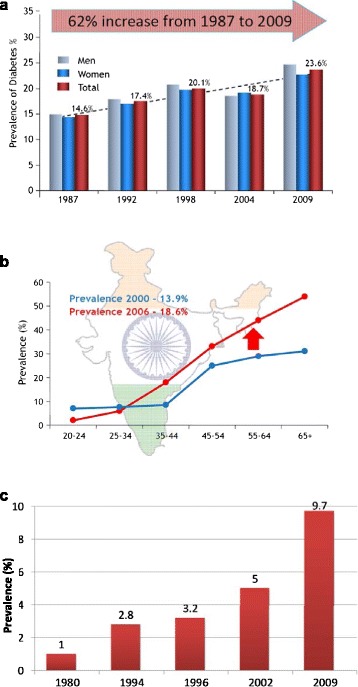
“[18, 19], b India Adapted from [20], and c China Adapted from [21] Zimmet Clinical Diabetes and Endocrinology (2017) 3:1 Page 3 of 8”
BackgroundPrevalence and Control of Diabetes in Chinese Adults
Xu, Y. (2013) · JAMA · doi:10.1001/jama.2013.168118 · Cited by 2,703
Glucose tolerance in adults after prenatal exposure to famine
Ravelli, A., van der Meulen, J., Michels, R., Osmond, C., Barker, D., Hales, C., & Bleker, O. (1998) · The Lancet · doi:10.1016/s0140-6736(97)07244-9 · Cited by 1,606
Global healthcare expenditure on diabetes for 2010 and 2030
Zhang, P., Zhang, X., Brown, J., Vistisen, D., Sicree, R., Shaw, J., & Nichols, G. (2010) · Diabetes Research and Clinical Practice · doi:10.1016/j.diabres.2010.01.026 · Cited by 1,145
Diabetes: a 21st century challenge
Zimmet, P. Z., Magliano, D. J., Herman, W. H., & Shaw, J. E. (2014) · The Lancet Diabetes & Endocrinology · doi:10.1016/s2213-8587(13)70112-8 · Cited by 1,062 · cited 1×
“Ukraine (1932–1933) [43] and in Cambodia (1975–79) [44, 45].”
Self-citationThe Rising Prevalence of Diabetes and Impaired Glucose Tolerance
Dunstan, D. W., Zimmet, P. Z., Welborn, T. A., de Courten, M. P., Cameron, A. J., Sicree, R. A., Dwyer, T., Colagiuri, S., Jolley, D., Knuiman, M., et al. (2002) · Diabetes Care · doi:10.2337/diacare.25.5.829 · Cited by 907 · cited 1×
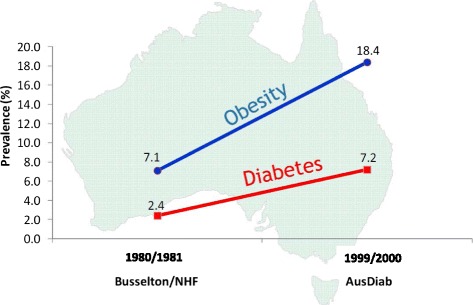
“3 Prevalence of Diabetes and Obesity in Australia 1980/81 and 1999/2000 Adapted from [27, 28]”
BackgroundSelf-citationMaternal nutrition, fetal nutrition, and disease in later life
Barker, D. J. P. (1997) · Nutrition · doi:10.1016/s0899-9007(97)00193-7 · Cited by 849 · cited 1×
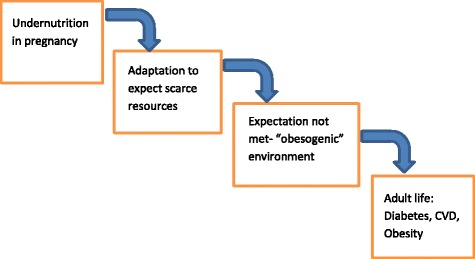
“Barker first proposed that in utero metabolic adaptation defines a trajectory of growth that prepares the fetus for its likely adult environment [36].”
BackgroundDiabetes mellitus statistics on prevalence and mortality: facts and fallacies
Zimmet, P., Alberti, K. G., Magliano, D. J., & Bennett, P. H. (2016) · Nature Reviews Endocrinology · doi:10.1038/nrendo.2016.105 · Cited by 785 · cited 3×
“We should not be using the data put out by WHO or the IDF or even the Global Burden of Disease Research Group [6, 11] uncritically when it comes to public health planning in any country, even the United States.”
BackgroundMethodSelf-citationCameron, A. J., Zimmet, P. Z., Dunstan, D. W., Dalton, M., Shaw, J. E., Welborn, T. A., Owen, N., Salmon, J., & Jolley, D. (2003) · Medical Journal of Australia · doi:10.5694/j.1326-5377.2003.tb05283.x · Cited by 596 · cited 2×
“3 Prevalence of Diabetes and Obesity in Australia 1980/81 and 1999/2000 Adapted from [27, 28]”
BackgroundSelf-citationMao's great famine: the history of China's most devastating catastrophe, 1958-1962
(2011) · Choice Reviews Online · doi:10.5860/choice.48-4585 · Cited by 574
Population-Based Study of Diabetes and Risk Characteristics in Turkey
Satman, I., Yilmaz, T., Sengül, A., Salman, S., Salman, F., Uygur, S., Bastar, I., Tütüncü, Y., Sargin, M., Dinççag, N., et al. (2002) · Diabetes Care · doi:10.2337/diacare.25.9.1551 · Cited by 542 · cited 1×
“A study from Turkey has also documented an incredible 90% increase in diabetes prevalence over 11 years from 2002 to 2013 [22].”
BackgroundCameron, A. J., Zimmet, P. Z., Dunstan, D. W., Dalton, M., Shaw, J. E., Welborn, T. A., Owen, N., Salmon, J., & Jolley, D. (2004) · Medical Journal of Australia · doi:10.5694/j.1326-5377.2004.tb05998.x · Cited by 534
Self-citationCohort Profile: Growing Up in Singapore Towards healthy Outcomes (GUSTO) birth cohort study
Soh, S.-E., Tint, M. T., Gluckman, P. D., Godfrey, K. M., Rifkin-Graboi, A., Chan, Y. H., Stunkel, W., Holbrook, J. D., Kwek, K., Chong, Y.-S., et al. (2014) · International Journal of Epidemiology · doi:10.1093/ije/dyt125 · Cited by 515 · cited 1×
“All of the data so far in humans is retrospective, but there is now a prospective study in Singapore led by Professor Sir Peter Gluckman, to assess the impact of epigenetics at a human level [41].”
BackgroundThe Black Death, 1346-1353: the complete history
(2005) · Choice Reviews Online · doi:10.5860/choice.42-4781 · Cited by 503 · cited 2×
“Abbreviations IDF: International Diabetes Federation; STEPS: STEPwise approach to Surveillance; UN: United Nations; US: United States; WHO: World Health Organization Acknowledgements I want to acknowledge collaborators who we have worked with on these projects: [1] Baker IDI and key collaborators include Jonathan Shaw…”
BackgroundProjecting the Future Diabetes Population Size and Related Costs for the U.S.
Huang, E. S., Basu, A., O'Grady, M., & Capretta, J. C. (2009) · Diabetes Care · doi:10.2337/dc09-0459 · Cited by 414 · cited 1×
“The question is, are there any studies that show that the prevalence of diabetes is actually falling? Some recent data from the United States now suggest there might be a leveling off of obesity and diabetes [29].”
BackgroundO'dea, K. (1984) · Diabetes · doi:10.2337/diab.33.6.596 · Cited by 412
Li, Y., He, Y., Qi, L., Jaddoe, V. W., Feskens, E. J. M., Yang, X., Ma, G., & Hu, F. B. (2010) · Diabetes · doi:10.2337/db10-0385 · Cited by 384 · cited 1×
“There was virtually minimal diabetes in China before 1980 [39].”
BackgroundHigh Prevalence of Diabetes and Cardiovascular Risk Factors Associated With Urbanization in India
Ramachandran, A., Mary, S., Yamuna, A., Murugesan, N., & Snehalatha, C. (2008) · Diabetes Care · doi:10.2337/dc07-1207 · Cited by 362
DIABETES MELLITUS IN AMERICAN (PIMA) INDIANS
Bennett, P., Burch, T., & Miller, M. (1971) · The Lancet · doi:10.1016/s0140-6736(71)92303-8 · Cited by 338 · cited 2×
“Peter Bennett had reported that >50% of the adult Pima Indian population over the age of 35 years had diabetes [15].”
BackgroundTHE EARLY RECOGNITION OF DIABETES MELLITUS*
Fajans, S. S., & Conn, J. W. (1959) · Annals of the New York Academy of Sciences · doi:10.1111/j.1749-6632.1959.tb44901.x · Cited by 244 · cited 1×
“Notably, Stefan Fajans and Jerome Conn did not even include the fasting glucose in their criteria for the oral glucose tolerance test [8].”
BackgroundLumey, L. H., Khalangot, M. D., & Vaiserman, A. M. (2015) · The Lancet Diabetes & Endocrinology · doi:10.1016/s2213-8587(15)00279-x · Cited by 216 · cited 1×
“Ukraine (1932–1933) [43] and in Cambodia (1975–79) [44, 45].”
Mismatch: Why Our World No Longer Fits Our Bodies
Gluckman, P. D., & Hanson, M. A. (2006) · Cited by 210
High Prevalence of NIDDM and Impaired Glucose Tolerance in Indian, Creole, and Chinese Mauritians
Dowse, G. K., Gareeboo, H., Zimmet, P. Z., Alberti, K. G. M. M., Tuomilehto, J., Fareed, D., Brissonnette, L. G., Finch, C. F., & For the Mauritius Noncommunicable Disease Study Group (1990) · Diabetes · doi:10.2337/diab.39.3.390 · Cited by 200 · cited 10×
“After our group showed very high rates of diabetes in the Pacific, the WHO asked me to go to Mauritius to have a look at the diabetes problem there as there were some indications that diabetes was becoming a problem on that beautiful and idyllic Indian Ocean Island.”
BackgroundInfluentialSelf-citationFranco, M., Bilal, U., Ordunez, P., Benet, M., Morejon, A., Caballero, B., Kennelly, J. F., & Cooper, R. S. (2013) · BMJ · doi:10.1136/bmj.f1515 · Cited by 176 · cited 1×
“Another study reported in the British Medical Journal found that during an economic crisis in Cuba, there was a decrease in obesity and a decrease in diabetes incidence and deaths from diabetes [31].”
BackgroundThe high prevalence of diabetes mellitus on a Central Pacific island
Zimmet, P., Taft, P., Guinea, A., Guthrie, W., & Thoma, K. (1977) · Diabetologia · doi:10.1007/bf00745137 · Cited by 175
Self-citationZimmet, P. (1979) · Diabetes Care · doi:10.2337/diacare.2.2.144 · Cited by 114 · cited 7×
“After our group showed very high rates of diabetes in the Pacific, the WHO asked me to go to Mauritius to have a look at the diabetes problem there as there were some indications that diabetes was becoming a problem on that beautiful and idyllic Indian Ocean Island.”
BackgroundInfluentialSelf-citationIncreasing prevalence of Type 2 diabetes mellitus in all ethnic groups in Mauritius
Söderberg, S., Zimmet, P., Tuomilehto, J., De Courten, M., Dowse, G. K., Chitson, P., Gareeboo, H., Alberti, K. G. M. M., & Shaw, J. E. (2005) · Diabetic Medicine · doi:10.1111/j.1464-5491.2005.01366.x · Cited by 108 · cited 2×
“Figure 1 shows data from Mauritius from the first study in 1987 to the most recent published study from 2009 [18, 19].”
BackgroundSelf-citationDiabetes and associated disorders in Cambodia: two epidemiological surveys
King, H. O. M., Keuky, L., Seng, S., Khun, T., Roglić, G., & Pinget, M. (2005) · The Lancet · doi:10.1016/s0140-6736(05)67662-3 · Cited by 104 · cited 1×
“Ukraine (1932–1933) [43] and in Cambodia (1975–79) [44, 45].”
Christensen, J. O., Sandb�k, A., Lauritzen, T., & Borch‐Johnsen, K. (2004) · Diabetologia · doi:10.1007/s00125-004-1496-2 · Cited by 101
Metabolic Maladies in New Zealand Maoris
Prior, I. A. M., Rose, B. S., & DAVIDSON, F. (1964) · BMJ · doi:10.1136/bmj.1.5390.1065 · Cited by 60 · cited 1×
“The inspiration for me to get into diabetes research came from the early studies of Ian Prior, a famous cardiovascular epidemiologist who, in the mid-1960s, published information about high rates of diabetes in Polynesians living in New Zealand and the Pacific islands [14].”
BackgroundPrevalence and risk factors of diabetes and impaired fasting glucose in Nauru
Khambalia, A., Phongsavan, P., Smith, B. J., Keke, K., Dan, L., Fitzhardinge, A., & Bauman, A. E. (2011) · BMC Public Health · doi:10.1186/1471-2458-11-719 · Cited by 55 · cited 1×
“In a subsequent study about 10 years later, the rate had fallen [30].”
BackgroundHYPERGLYCAEMIA IN THE URBANIZED ABORIGINAL THE DAVENPORT SURVEY
Wise, P. H., Edwards, F. M., Thomas, D. W., Elliot, R. B., Hatcher, L., & Craig, R. (1970) · The Medical Journal of Australia · doi:10.5694/j.1326-5377.1970.tb63318.x · Cited by 54
Houéhanou, C., Lacroix, P., Mizehoun, G. C., Preux, P., Marin, B., & Houinato, D. S. (2015) · PLoS ONE · doi:10.1371/journal.pone.0126441 · Cited by 48 · cited 1×
“The WHO is at least, in part, at fault in this, as they support the STEPS program which diagnoses diabetes based on the fasting glucose level alone [7].”
BackgroundKidney disease in Aboriginal Australians: a perspective from the Northern Territory
Hoy, W. E. (2014) · Clinical Kidney Journal · doi:10.1093/ckj/sfu109 · Cited by 46 · cited 1×
“They also have the one of the highest rates of endstage renal disease in the world [24].”
BackgroundExplaining the Increase of Diabetes Prevalence and Plasma Glucose in Mauritius
Magliano, D. J., Söderberg, S., Zimmet, P. Z., Chen, L., Joonas, N., Kowlessur, S., Larhubarbe, J., Gaoneadry, D., Pauvaday, V., Tuomilehto, J., et al. (2012) · Diabetes Care · doi:10.2337/dc11-0886 · Cited by 45 · cited 2×
“Figure 1 shows data from Mauritius from the first study in 1987 to the most recent published study from 2009 [18, 19].”
BackgroundSelf-citationKing, H., Finch, C., Collins, A., King, L. F., Zimmet, P., Koki, G., & Heywood, P. (1989) · Medical Journal of Australia · doi:10.5694/j.1326-5377.1989.tb115991.x · Cited by 45 · cited 3×
“This was quite high for Papua New Guinea.”
BackgroundInfluentialSelf-citationDiabetes in Aborigines and other Australian populations
Guest, C. S., & O’Dea, K. (1992) · Australian Journal of Public Health · doi:10.1111/j.1753-6405.1992.tb00079.x · Cited by 38 · cited 1×
“In Australia, Indigenous populations residing in the Northern Territory have one of the highest rates of diabetes in the world and certainly among Indigenous communities [23].”
BackgroundKoestler, A., & Stallings, W. (1972) · Cited by 30
Liberating data: the crucial weapon in the fight against NCDs
Davies, J. I., Yudkin, J. S., & Atun, R. A. (2016) · The Lancet Diabetes & Endocrinology · doi:10.1016/s2213-8587(16)00037-1 · Cited by 30 · cited 12×
“This raises very important issues as to how the United Nations (UN), the WHO, and the UN Development Program and other NGOs handle food relief during and after a famine.”
BackgroundInfluentialWest, K. M. (1979) · Diabetes Care · doi:10.2337/diacare.2.2.65 · Cited by 28 · cited 1×
“I was also there, though as a “budding” epidemiologist! The Santa Ynez Valley meeting produced a classification of diabetes, diagnostic criteria, and proper protocols for diabetes epidemiology studies [5], so if a study was done in Japan, it would be comparable to one performed in the United States.”
BackgroundTissue Iron Distribution Assessed by MRI in Patients with Iron Loading Anemias
Gutiérrez, L., House, M. J., Vasavda, N., Drašar, E., González-Gascón-y-Marín, I., Kulasekararaj, A. G., Pierre, T. G. S., & Thein, S. L. (2015) · PLoS ONE · doi:10.1371/journal.pone.0139220 · Cited by 18
Diabetes in Australian aboriginal and Torres Strait Islander peoples.
Rowley, K., & O’Dea, K. (2001) · PubMed · Cited by 13
Research works printed but not linked: 3
- International Diabetes Federation IDF Diabetes 2015 7 Brussels International Diabetes Federation
- International Diabetes Federation IDF Diabetes 2000 1 Brussels International Diabetes Federation
- Mathers M Dialysis in Central Australia. Current Issues in Indigenous Affairs U3A Hawthorn 2012 1 7
Cited by
Mach, F., Baigent, C., Catapano, A. L., Koskinas, K. C., Casula, M., Badimon, L., Chapman, M. J., De Backer, G. G., Delgado, V., Ference, B. A., et al. (2020) · European Heart Journal · doi:10.1093/eurheartj/ehz455 · Cited by 8,961
Global aetiology and epidemiology of type 2 diabetes mellitus and its complications
Zheng, Y., Ley, S. H., & Hu, F. B. (2018) · Nature Reviews Endocrinology · doi:10.1038/nrendo.2017.151 · Cited by 5,697
Mach, F., Baigent, C., Catapano, A. L., Koskinas, K. C., Casula, M., Badimon, L., Chapman, M. J., De Backer, G. G., Delgado, V., Ference, B. A., et al. (2019) · Atherosclerosis · doi:10.1016/j.atherosclerosis.2019.08.014 · Cited by 4,854
“The number of people with DM will increase from 415 million today up to 550 million by 2030, but the situation may get even worse.(399) Despite significant advantages in the management strategies that lessen atherosclerotic CVD risk factors, CVD has remained the leading cause of morbidity and mortality in patients wit…”
Gupta, S., Dominguez, M., & Golestaneh, L. (2023) · Medical Clinics of North America · doi:10.1016/j.mcna.2023.03.004 · Cited by 337
Update on the pathogenesis and treatment of skeletal fragility in type 2 diabetes mellitus
Khosla, S., Samakkarnthai, P., Monroe, D. G., & Farr, J. N. (2021) · Nature Reviews Endocrinology · doi:10.1038/s41574-021-00555-5 · Cited by 260
Metadata
- Authors
- Zimmet, P. Z.
- Affiliations
- Baker Heart and Diabetes Institute (AU)
- Corresponding author
- Zimmet, Paul Z.
- ORCID
- Zimmet, Paul Z.
- Venue
- Clinical Diabetes and Endocrinology
- Published
- 2017-01-18
- Volume
- 3
- Issue
- 1
- Pages
- 1-1
- ISSN
- 2055-8260 (ISSN-L)
- PMC
- PMC5471716
- OpenAlex
- W2578241329
- Cited by
- 338
- References
- 46
- Citations by year
- 2026: 7 · 2025: 30 · 2024: 35 · 2023: 48 · 2022: 38 · 2021: 56 · 2020: 54 · 2019: 37 · 2018: 26 · 2017: 7
- FWCI
- 37.00
- Type
- journal article
- Language
- en
- Open access
- gold
- doi.org
- Licence
- cc-by
- Locations
- Clinical Diabetes and Endocrinology (publishedVersion, cc-by)
- PubMed Central (publishedVersion, cc-by)
- PubMed (publishedVersion)
- Topics
- Health Sciences › Medicine › Pediatrics, Perinatology and Child Health › Birth, Development, and Health
- Health Sciences › Medicine › Endocrinology, Diabetes and Metabolism › Diabetes, Cardiovascular Risks, and Lipoproteins
- Life Sciences › Biochemistry, Genetics and Molecular Biology › Genetics › Diabetes and associated disorders
- Keywords
- type 2 diabetes, obesity, diabetes prevention, epigenetics, intrauterine environment, intergenerational transmission, famine, Chinese famine, early life events, maternal and child health, drought, Horn of Africa
About these checks
Registry, retraction, Cites and statistics results are computed, not judged, with one exception: a printed reference that no index lists is read once by a model before it counts as a citation error. Claims are extracted by a model and kept only when their quote appears verbatim in the text; each cited source is then checked, with a model’s help, for whether it says what the claim relies on. Those verdicts can be wrong — read the claim’s quote and the cited source before relying on one.
Statistics and arithmetic are recomputed, not judged.
Confidence bands are shown only for fields calibrated on our annotated test set. None is calibrated yet, so no band is shown.
What counts as a claim ›How we measure confidence ›How we check this ›
Are you an author, or do you see a problem with this page? Request a review
Data sources
Bibliographic data: Semantic Scholar, OpenAlex, Crossref.
Contains information from the Semantic Scholar Academic Graph Datasets, made available under the ODC Attribution License (ODC-BY 1.0).
Semantic Scholar’s data is described in: Kinney, R., et al. (2023). The Semantic Scholar Open Data Platform. arXiv:2301.10140.
