

Diabetes and its drivers: the largest epidemic in human history?
Open accessThe DOI matches its Crossref record; 46 of the 46 references it cites were found in a registry or an index.
Abstract
The "Diabesity" epidemic (obesity and type 2 diabetes) is likely to be the biggest epidemic in human history. Diabetes has been seriously underrated as a global public health issue and the world can no longer ignore "the rise and rise" of type 2 diabetes. Currently, most of the national and global diabetes estimates come from the IDF Atlas. These estimates have significant limitations from a public health perspective. It is apparent that the IDF have consistently underestimated the global burden. More reliable estimates of the future burden of diabetes are urgently needed. To prevent type 2 diabetes, a better understanding of the drivers of the epidemic is needed. While for years, there has been comprehensive attention to the "traditional" risk factors for type 2 diabetes i.e., genes, lifestyle and behavioral change, the spotlight is turning to the impact of the intra-uterine environment and epigenetics on future risk in adult life. It highlights the urgency for discovering novel approaches to prevention focusing on maternal and child health. Diabetes risk through epigenetic changes can be transmitted inter-generationally thus creating a vicious cycle that will continue to feed the diabetes epidemic. History provides important lessons and there are lessons to learn from major catastrophic events such as the Dutch Winter Hunger and Chinese famines. The Chinese famine may have been the trigger for what may be viewed as a diabetes "avalanche" many decades later. The drivers of the epidemic are indeed genes and environment but they are now joined by deleterious early life events. Looking to the future there is the potential scenario of future new "hot spots" for type 2 diabetes in regions e.g., the Horn of Africa, now experiencing droughts and famine. This is likely to occur should improved economic and living conditions occur over the next few decades. Type 2 diabetes will remain one of the greatest challenges to human health for many years to come.
Overview
The claims and statistics of this paper haven’t been checked yet.
Free: it reads the open-access text and checks the first 5 claims that cite a source we can check. Create a free account to check every claim.
Integrity signals
Registry
Cites
Statistics
Figures
Verification
Claims the paper makes
The claims and statistics of this paper haven’t been checked yet.
Free: it reads the open-access text and checks the first 5 claims that cite a source we can check. Create a free account to check every claim.
Claims other papers make about this one
Each is checked against this paper’s own text: does it say what the citing paper says it does?
In the citing paper
“Heterozygous carriers of these same gene mutations commonly express moderate elevations of serum TG levels that expose them to increased CVD risk [378].”
From 2019 ESC/EAS guidelines for the management of dyslipidaemias: lipid modification to reduce cardiovascular risk (2019) · cites this paper as [378]
Self-check
Percentages, sums and reported differences re-computed from the paper’s own numbers.
The self-check needs the paper’s full text.
Citations
Cites
Wild, S., Roglic, G., Green, A., Sicree, R., & King, H. (2004) · Diabetes Care · doi:10.2337/diacare.27.5.1047 · Cited by 15,297 · cited 1×
“prevalence of diabetes in 2000 and 2030–171 million people with diabetes in 2000 and 366 million by 2030 [4].”
BackgroundInternational Diabetes Federation 2017
Carracher, A. M., Marathe, P. H., & Close, K. L. (2018) · Journal of Diabetes · doi:10.1111/1753-0407.12644 · Cited by 13,418
Tuomilehto, J., Lindström, J., Eriksson, J. G., Valle, T. T., Hämäläinen, H., Ilanne-Parikka, P., Keinänen-Kiukaanniemi, S., Laakso, M., Louheranta, A., Rastas, M., et al. (2001) · New England Journal of Medicine · doi:10.1056/nejm200105033441801 · Cited by 10,873 · cited 1×
“These results were extended by others including the classic study of Jaakko Tuomilehto, the Finnish Diabetes Prevention Study [34].”
ResultPrevalence of Diabetes among Men and Women in China
Yang, W., Lu, J., Weng, J., Jia, W., Ji, L., Xiao, J., Shan, Z., Liu, J., Tian, H., Ji, Q., et al. (2010) · New England Journal of Medicine · doi:10.1056/nejmoa0908292 · Cited by 3,031 · cited 1×
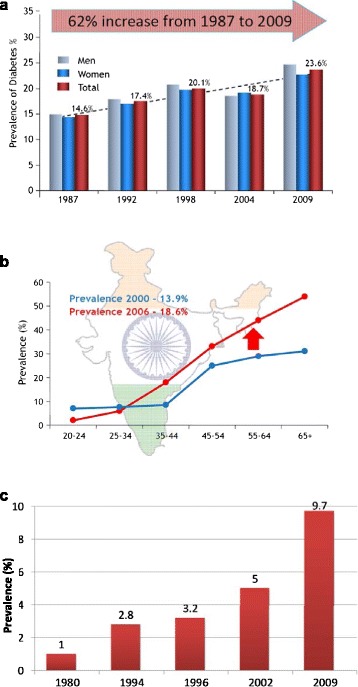
“[18, 19], b India Adapted from [20], and c China Adapted from [21] Zimmet Clinical Diabetes and Endocrinology (2017) 3:1 Page 3 of 8”
BackgroundPrevalence and Control of Diabetes in Chinese Adults
Xu, Y. (2013) · JAMA · doi:10.1001/jama.2013.168118 · Cited by 2,703
Glucose tolerance in adults after prenatal exposure to famine
Ravelli, A., van der Meulen, J., Michels, R., Osmond, C., Barker, D., Hales, C., & Bleker, O. (1998) · The Lancet · doi:10.1016/s0140-6736(97)07244-9 · Cited by 1,606
Global healthcare expenditure on diabetes for 2010 and 2030
Zhang, P., Zhang, X., Brown, J., Vistisen, D., Sicree, R., Shaw, J., & Nichols, G. (2010) · Diabetes Research and Clinical Practice · doi:10.1016/j.diabres.2010.01.026 · Cited by 1,145
Diabetes: a 21st century challenge
Zimmet, P. Z., Magliano, D. J., Herman, W. H., & Shaw, J. E. (2014) · The Lancet Diabetes & Endocrinology · doi:10.1016/s2213-8587(13)70112-8 · Cited by 1,062 · cited 1×
“Ukraine (1932–1933) [43] and in Cambodia (1975–79) [44, 45].”
Self-citationThe Rising Prevalence of Diabetes and Impaired Glucose Tolerance
Dunstan, D. W., Zimmet, P. Z., Welborn, T. A., de Courten, M. P., Cameron, A. J., Sicree, R. A., Dwyer, T., Colagiuri, S., Jolley, D., Knuiman, M., et al. (2002) · Diabetes Care · doi:10.2337/diacare.25.5.829 · Cited by 907 · cited 1×
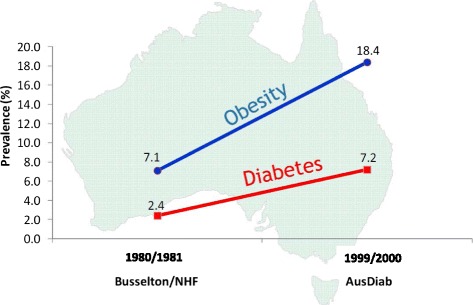
“3 Prevalence of Diabetes and Obesity in Australia 1980/81 and 1999/2000 Adapted from [27, 28]”
BackgroundSelf-citation
Research works printed but not linked: 3
- International Diabetes Federation IDF Diabetes 2015 7 Brussels International Diabetes Federation
- International Diabetes Federation IDF Diabetes 2000 1 Brussels International Diabetes Federation
- Mathers M Dialysis in Central Australia. Current Issues in Indigenous Affairs U3A Hawthorn 2012 1 7
Cited by
Mach, F., Baigent, C., Catapano, A. L., Koskinas, K. C., Casula, M., Badimon, L., Chapman, M. J., De Backer, G. G., Delgado, V., Ference, B. A., et al. (2020) · European Heart Journal · doi:10.1093/eurheartj/ehz455 · Cited by 8,961
Global aetiology and epidemiology of type 2 diabetes mellitus and its complications
Zheng, Y., Ley, S. H., & Hu, F. B. (2018) · Nature Reviews Endocrinology · doi:10.1038/nrendo.2017.151 · Cited by 5,697
Mach, F., Baigent, C., Catapano, A. L., Koskinas, K. C., Casula, M., Badimon, L., Chapman, M. J., De Backer, G. G., Delgado, V., Ference, B. A., et al. (2019) · Atherosclerosis · doi:10.1016/j.atherosclerosis.2019.08.014 · Cited by 4,854
“The number of people with DM will increase from 415 million today up to 550 million by 2030, but the situation may get even worse.(399) Despite significant advantages in the management strategies that lessen atherosclerotic CVD risk factors, CVD has remained the leading cause of morbidity and mortality in patients wit…”
Gupta, S., Dominguez, M., & Golestaneh, L. (2023) · Medical Clinics of North America · doi:10.1016/j.mcna.2023.03.004 · Cited by 337
Update on the pathogenesis and treatment of skeletal fragility in type 2 diabetes mellitus
Khosla, S., Samakkarnthai, P., Monroe, D. G., & Farr, J. N. (2021) · Nature Reviews Endocrinology · doi:10.1038/s41574-021-00555-5 · Cited by 260
Streptozotocin as a tool for induction of rat models of diabetes: a practical guide
Ghasemi, A., & Jeddi, S. (2022) · EXCLI journal · doi:10.17179/excli2022-5720 · Cited by 208
“Diabetes, as the largest epidemic in human history (Zimmet, 2017), is among the top 10 causes of adult death (Zimmet, 2017; Zheng et al., 2018), with a worldwide prevalence of ~10 % (IDF, 2019).”
BackgroundTönnies, T., Brinks, R., Isom, S., Dabelea, D., Divers, J., Mayer-Davis, E. J., Lawrence, J. M., Pihoker, C., Dolan, L., Liese, A. D., et al. (2023) · Diabetes Care · doi:10.2337/dc22-0945 · Cited by 153
Parr, E. B., Devlin, B. L., Radford, B. E., & Hawley, J. A. (2020) · Nutrients · doi:10.3390/nu12020505 · Cited by 162
“Indeed, ‘Diabesity’ (the co-existence of obesity and T2DM) has been predicted to become the biggest epidemic in human history [1].”
BackgroundMalongane, F., McGaw, L. J., & Mudau, F. N. (2017) · Journal of the Science of Food and Agriculture · doi:10.1002/jsfa.8472 · Cited by 161
Obesity and cardiovascular risk
Kotsis, V., Jordan, J., Micić, D., Finer, N., Leitner, D. R., Toplak, H., Tokgözoğlu, L. S., Athyros, V. G., Elisaf, M., Filippatos, T. D., et al. (2018) · Journal of Hypertension · doi:10.1097/hjh.0000000000001730 · Cited by 162
Pordzik, J., Jakubik, D., Jarosz-Popek, J., Wicik, Z., Eyileten, C., De Rosa, S., Indolfi, C., Siller-Matula, J. M., Czajka, P., & Postula, M. (2019) · Cardiovascular Diabetology · doi:10.1186/s12933-019-0918-x · Cited by 158
Bariatric Surgery in the Treatment of Type 2 Diabetes
Affinati, A. H., Esfandiari, N. H., Oral, E. A., & Kraftson, A. T. (2019) · Current Diabetes Reports · doi:10.1007/s11892-019-1269-4 · Cited by 164
Kwan, Y. H., Cheng, T. Y., Yoon, S., Ho, L. Y. C., Huang, C. W., Chew, E., Thumboo, J., Østbye, T., & Low, L. L. (2020) · Diabetes & Metabolism · doi:10.1016/j.diabet.2020.04.002 · Cited by 140
Tönnies, T., Rathmann, W., Hoyer, A., Brinks, R., & Kuß, O. (2021) · BMJ Open Diabetes Research & Care · doi:10.1136/bmjdrc-2021-002122 · Cited by 133
Xie, Y., Gou, L., Peng, M., Zheng, J., & Chen, L. (2020) · Clinical Nutrition · doi:10.1016/j.clnu.2020.10.032 · Cited by 135
Madhavi, Y. V., Gaikwad, N. B., Yerra, V. G., Kalvala, A. K., Nanduri, S., & Kumar, A. (2018) · Current Medicinal Chemistry · doi:10.2174/0929867325666180406120051 · Cited by 119
Maternal Lifestyle Interventions: Targeting Preconception Health
Moholdt, T. T., & Hawley, J. A. (2020) · Trends in Endocrinology and Metabolism · doi:10.1016/j.tem.2020.03.002 · Cited by 122
“The Size of the Problem Obesity and type 2 diabetes mellitus (T2D) are the biggest epidemics in human history [1] and the major challenge to health-care systems worldwide in the 21st century.”
BackgroundThe Role of Bone Morphogenetic Protein 7 (BMP-7) in Inflammation in Heart Diseases
Narasimhulu, C. A., & Singla, D. K. (2020) · Cells · doi:10.3390/cells9020280 · Cited by 111
“It is considered as the seventh leading cause of death [214].”
BackgroundThe type 2 diabetes ‘modern preventable pandemic’ and replicable lessons from the COVID-19 crisis
Singer, M. E., Dorrance, K. A., Oxenreiter, M. M., Yan, K. R., & Close, K. L. (2021) · Preventive Medicine Reports · doi:10.1016/j.pmedr.2021.101636 · Cited by 102
“Diabetes has been seriously underrated as a global public health issue and the world can no longer ignore ‘the rise and rise’ of type 2 diabetes (Zimmet, 2017).”
Sirdah, M. M., & Reading, N. S. (2020) · Clinical Genetics · doi:10.1111/cge.13772 · Cited by 90
“This phenomenon usually occurs late in the sec- ond trimester (20-24 weeks of pregnancy) and is called contra-insulin effect.65,66 Gestational diabetes is reported in almost 7% of all preg- nancies, however the prevalence is ranging from 1% to 14% depending on the population and the diagnostic criteria.67-69 In the Un…”
BackgroundInfluentialSamakkarnthai, P., Sfeir, J. G., Atkinson, E. J., Achenbach, S. J., Wennberg, P. W., Dyck, P. J., Tweed, A. J., Volkman, T. L., Amin, S., Farr, J. N., et al. (2020) · The Journal of Clinical Endocrinology & Metabolism · doi:10.1210/clinem/dgaa388 · Cited by 81
Metabolic Syndrome, Cognitive Impairment and the Role of Diet: A Narrative Review
Kouvari, M., D'Cunha, N. M., Travica, N., Sergi, D., Zec, M. M., Marx, W., & Naumovski, N. (2022) · Nutrients · doi:10.3390/nu14020333 · Cited by 88
“The developed, and increasingly developing countries, are facing a diabetes epidemic, with 90% of diabetic individuals experiencing T2DM in parallel with obesity [39].”
BackgroundOyama, K., Raz, I., Cahn, A., Kuder, J., Murphy, S. A., Bhatt, D. L., Leiter, L. A., McGuire, D. K., Wilding, J. P. H., Park, K. S., et al. (2021) · European Heart Journal · doi:10.1093/eurheartj/ehab530 · Cited by 80
“Black 31 (2) 171 (3) 179 (3) 122 (4) 98 (6)”
Cai, M., Dou, B., Pugh, J. E., Lett, A. M., & Frost, G. S. (2021) · The American Journal of Clinical Nutrition · doi:10.1093/ajcn/nqab098 · Cited by 72
The biological and pharmacological roles of polyphenol flavonoid tilianin
Akanda, M. R., Uddin, M. N., Kim, I., Ahn, D., Tae, H., & Park, B. (2018) · European Journal of Pharmacology · doi:10.1016/j.ejphar.2018.10.044 · Cited by 70
Wang, J., & Zhao, S. (2020) · Life Sciences · doi:10.1016/j.lfs.2020.118728 · Cited by 69
Kalra, S., Das, A. K., Sahay, R. K., Baruah, M. P., TIWASKAR, M. H., Das, S., Chatterjee, S., Saboo, B., Bantwal, G., Bhattacharya, S., et al. (2019) · Diabetes Therapy · doi:10.1007/s13300-019-0669-4 · Cited by 74
β-Cell Failure or β-Cell Abuse?
Erion, K., & Corkey, B. E. (2018) · Frontiers in Endocrinology · doi:10.3389/fendo.2018.00532 · Cited by 67
Ali, A., Saroj, S., Saha, S., Gupta, S., Rakshit, T., & Pal, S. (2023) · ACS Applied Materials & Interfaces · doi:10.1021/acsami.3c05031 · Cited by 66
Beta-Cell Dedifferentiation in Type 2 Diabetes: Concise Review
Efrat, S. (2019) · Stem Cells · doi:10.1002/stem.3059 · Cited by 66
Aga, F., Dunbar, S. B., Kebede, T., & Gary, R. (2019) · Diabetes, Metabolic Syndrome and Obesity: Targets and Therapy · doi:10.2147/dmso.s186758 · Cited by 49
Molinaro, A., Becattini, B., & Solinas, G. (2020) · Scientific Reports · doi:10.1038/s41598-020-68721-9 · Cited by 57
A Compendium of Perspectives on Diabetes: A Challenge for Sustainable Health in the Modern Era
Verma, A. K., Goyal, Y., Bhatt, D., Dev, K., Alsahli, M. A., Rahmani, A. H., & Almatroudi, A. (2021) · Diabetes Metabolic Syndrome and Obesity · doi:10.2147/dmso.s304751 · Cited by 55
Kohrt, B. A., & Carruth, L. (2022) · Social Science & Medicine · doi:10.1016/j.socscimed.2020.113378 · Cited by 44
“In the medical literature, type 2 diabetes is described as partially hereditary and triggered by combinations of obesity, individual behaviors like poor diet and smoking tobacco, and increasingly, exposure to environmental toxins such as air pollution (Zimmet, 2017).”
Walke, P. B., Bansode, S. B., More, N. P., Chaurasiya, A. H., Joshi, R. S., & Kulkarni, M. J. (2020) · Biochimica et Biophysica Acta (BBA) - Molecular Basis of Disease · doi:10.1016/j.bbadis.2020.166029 · Cited by 55
Comparative assessment of blood glucose monitoring techniques: a review
Ahmadian, N., Manickavasagan, A., & Ali, A. (2022) · Journal of Medical Engineering & Technology · doi:10.1080/03091902.2022.2100496 · Cited by 51
European ‘NAFLD Preparedness Index’ — Is Europe ready to meet the challenge of fatty liver disease?
Lazarus, J. V., Palayew, A., Carrieri, P., Ekstedt, M., Marchesini, G., Novak, K., Ratziu, V., Romero‐Gómez, M., Tacke, F., Zelber‐Sagi, S., et al. (2021) · JHEP Reports · doi:10.1016/j.jhepr.2021.100234 · Cited by 51
“with the increasing prevalence of obesity, metabolic syndrome, and type 2 diabetes mellitus (T2DM).(6,7) By 2025, obesity in Europe is forecasted to increase in 44 countries, with 33 of the 53 World Health Organization (WHO) European Region countries estimated to have a prevalence of over 20%.”
BackgroundDigital Health Coaching for Type 2 Diabetes: Randomized Controlled Trial of Healthy at Home
Azelton, K. R., Crowley, A. P., Vence, N., Underwood, K., Morris, G., Kelly, J., & Landry, M. J. (2021) · Frontiers in Digital Health · doi:10.3389/fdgth.2021.764735 · Cited by 49
Insight into miRNAs related with glucometabolic disorder
Zhang, B., Shen, C., Zhu, B.-W., An, H., Zheng, B. J., Xu, S., Sun, J., Sun, P.-C., Zhang, W., Wang, J., et al. (2019) · Biomedicine & Pharmacotherapy · doi:10.1016/j.biopha.2018.12.123 · Cited by 49
Bamgboye, A. O., Oni, I. O., & Collier, A. (2021) · European Journal of Clinical Pharmacology · doi:10.1007/s00228-020-03051-3 · Cited by 48
“Between 2010 and 2030, it has been predicted that there will be a 20% increase in the number of adults with diabetes mellitus in developed countries and a 69% increase in developing countries [6].”
BackgroundKhalaf, F. K., Dube, P. R., Mohamed, A., Tian, J., Malhotra, D. K., Haller, S. T., & Kennedy, D. J. (2018) · International Journal of Molecular Sciences · doi:10.3390/ijms19092576 · Cited by 46
Predicting and preventing acute care re-utilization by patients with diabetes
Rubin, D. J., & Shah, A. A. (2021) · Current Diabetes Reports · doi:10.1007/s11892-021-01402-7 · Cited by 44
Shah, N. Z., Abdalla, M. A., Deshmukh, H., & Sathyapalan, T. (2021) · Therapeutic Advances in Endocrinology and Metabolism · doi:10.1177/20420188211042145 · Cited by 44
Jiang, Y., Wang, J., Li, H., & Xia, L. (2019) · Journal of Inflammation · doi:10.1186/s12950-019-0217-z · Cited by 43
de Alba, I. G.-F., Orlando, V., Monetti, V. M., Mucherino, S., Miguel, A. G., Vaccaro, O., Forjaz, M. J., Poblador‐Plou, B., Prados‐Torres, A., Riccardi, G., et al. (2020) · Frontiers in Pharmacology · doi:10.3389/fphar.2020.586187 · Cited by 42
“In the past three decades, the prevalence of type-2 diabetes mellitus (T2DM) has increased dramatically worldwide to become an important healthcare concern (World Health Organization, 2016; Zimmet, 2017).”
BackgroundNamkhah, Z., Ashtary‐Larky, D., Naeini, F., Clark, C. C. T., & Asbaghi, O. (2021) · Pharmacological Research · doi:10.1016/j.phrs.2021.105665 · Cited by 43
Global risk factors, epidemiology, and disease burden of type 2 diabetes
Chen, K., Zhang, H., Wu, N., Li, B., Li, S., & Mu, Y. (2025) · Science China Life Sciences · doi:10.1007/s11427-024-3036-4 · Cited by 42
Zafar, S., Walder, A. M., Virani, S. S., Biggerstaff, K., Orengo-Nania, S. D., Chang, J. S., & Channa, R. (2023) · JAMA Ophthalmology · doi:10.1001/jamaophthalmol.2023.2098 · Cited by 42
Rohilla, M., Rishabh, R., Bansal, S., Garg, A., Dhiman, S., Dhankhar, S., Saini, M., Chauhan, S., Alsubaie, N., Batiha, G. E., et al. (2023) · Biomedicine & Pharmacotherapy · doi:10.1016/j.biopha.2023.115881 · Cited by 41
Cost Analyses of Prosthetic Devices: A Systematic Review
Donnelley, C. A., Shirley, C., von Kaeppler, E. P., Hetherington, A. M., Albright, P., Morshed, S., & Shearer, D. (2021) · Archives of Physical Medicine and Rehabilitation · doi:10.1016/j.apmr.2021.02.010 · Cited by 40
Application of CRISPR‐Cas9 technology in diabetes research
Lotfi, M., Butler, A. E., Sukhorukov, V. N., & Sahebkar, A. (2023) · Diabetic Medicine · doi:10.1111/dme.15240 · Cited by 38
“Wasting away”: Diabetes, food insecurity, and medical insecurity in the Somali Region of Ethiopia
Carruth, L., & Mendenhall, E. (2019) · Social Science & Medicine · doi:10.1016/j.socscimed.2019.03.026 · Cited by 39
“…diabetes is characterized predominantly as a consequence of individuals' poor dietary and lifestyle choices in combination with hereditary factors (Zimmet, 2017), while type 1 diabetes is characterized as a consequence of heredity and additional environmental exposures or triggers beyond the…”
BackgroundThe Latest Insights into Adipokines in Diabetes
Kim, W. K., Bae, K., Lee, S. C., & Oh, K. (2019) · Journal of Clinical Medicine · doi:10.3390/jcm8111874 · Cited by 37
Sirichaiwetchakoon, K., Lowe, G. M., Kupittayanant, S., Churproong, S., & Eumkeb, G. (2020) · Evidence-based Complementary and Alternative Medicine · doi:10.1155/2020/8746137 · Cited by 37
“In 2015, an estimated 415 million people had type 2 diabetes worldwide, which is an equal rate compared among more than 90% of women andmen [1].”
BackgroundReview of diabetes among Aboriginal and Torres Strait Islander people
Ride, K., & Burrow, S. (2022) · Journal of the Australian Indigenous HealthInfoNet · doi:10.14221/aihjournal.v3n2.1 · Cited by 37
Biomarkers of insulin sensitivity/resistance
Kosmas, C. E., Sourlas, A., Oikonomakis, K., Zoumi, E.-A., Papadimitriou, A., & Kostara, C. E. (2024) · Journal of International Medical Research · doi:10.1177/03000605241285550 · Cited by 38
Kandeel, M. K. (2022) · Frontiers in Pharmacology · doi:10.3389/fphar.2022.926717 · Cited by 35
“These factorsmay explain the lack of statistical significance observed in determining the efficacy of SGLT2I in improving DPN manifestations (Tesfaye et al., 2005; Zoungas et al., 2017; van der Velde et al., 2020).”
BackgroundAncestry effects on type 2 diabetes genetic risk inference in Hispanic/Latino populations
Chande, A. T., Rishishwar, L., Conley, A. B., Valderrama-Aguirre, A., Medina-Rivas, M. A., & Jordan, I. K. (2020) · BMC Medical Genetics · doi:10.1186/s12881-020-01068-0 · Cited by 34
Balakrishnan, R., Cho, D.-Y., Kim, I., & Choi, D. (2020) · Antioxidants · doi:10.3390/antiox9100962 · Cited by 33
Dmour, A., Khreisat, E. F. H., Khreisat, A., Hasan, S., Atoom, O., & Alkhatib, A. J. (2020) · Medical Archives · doi:10.5455/medarh.2020.74.384-386 · Cited by 33
Hartogh, D. J. D., Vlavcheski, F., Giacca, A., MacPherson, R. E. K., & Tsiani, E. (2022) · Cells · doi:10.3390/cells11010167 · Cited by 33
Qi, Z., Si, Y., Feng, F., Zhu, J., Yang, X., Wang, W., Zhang, Y., & Cui, Y. (2023) · Frontiers in Endocrinology · doi:10.3389/fendo.2023.1184717 · Cited by 33
“Diabetes mellitus (DM), a metabolic disease characterized by chronic elevated blood glucose levels, can cause progressive damage to microvasculature, large vessels and nerves throughout the body (1, 2).”
BackgroundPitsillou, E., Liang, J. J., Hung, A., & Karagiannis, T. C. (2020) · Life Sciences · doi:10.1016/j.lfs.2020.118809 · Cited by 32
Burgio, E., Piscitelli, P., & Colao, A. A. L. (2018) · International Journal of Environmental Research and Public Health · doi:10.3390/ijerph15081791 · Cited by 31
“Furthermore, the increase and anticipation in the age of diagnosis is underway for many other chronic diseases—endocrine and metabolic (the increase of obesity and type-2 diabetes is likely to be the biggest pandemic in human history) [77], immuno-inflammatory (allergies, autoimmune diseases), neurodevelopmental disor…”
BackgroundCui, Z., Holmes, A. J., Zhang, W., Hu, D., Qi, S. H. A. O., Wang, Z., Lu, J., & Raubenheimer, D. (2021) · Integrative Zoology · doi:10.1111/1749-4877.12601 · Cited by 30
Pawar, A. T., Russo, M., Rani, I., Goswami, K., Russo, G. L., & Pal, A. (2022) · Phytotherapy Research · doi:10.1002/ptr.7461 · Cited by 30
“The global prevalence of diabetes is very high as there were nearly 415 million people were affected with diabetes in 2015 (Zimmet, 2017).”
BackgroundLiarakos, A. L., Tentolouris, A., Kokkinos, A. D., Eleftheriadou, I., & Tentolouris, N. (2022) · Journal of Diabetes and its Complications · doi:10.1016/j.jdiacomp.2022.108390 · Cited by 30
Mathrani, A., Yip, W. C. Y., Sequeira, I. R., Barnett, D., Stevenson, O. G., Taylor, M. W., & Poppitt, S. D. (2023) · Nutrients · doi:10.3390/nu15153360 · Cited by 31
Ghomi, M. K., Noori, M., Mirahmad, M., Iraji, A., Sadr, A. S., Dastyafteh, N., Asili, P., Gholami, M., Javanshir, S., Lotfi, M., et al. (2024) · European Journal of Medicinal Chemistry · doi:10.1016/j.ejmech.2024.116332 · Cited by 30
Liu, L., Xu, X., Zeng, H., Zhang, Y., Shi, Z., Zhang, F., Cao, X., Xie, Y. J., Reis, C., & Zhao, Y. (2017) · Environmental Health and Preventive Medicine · doi:10.1186/s12199-017-0671-2 · Cited by 29
The Role of Vegan Diets in Lipotoxicity-Induced Beta-Cell Dysfunction in Type-2-Diabetes
Storz, M. A. (2020) · Journal of Population Therapeutics and Clinical Pharmacology · doi:10.15586/jptcp.v27isp2.744 · Cited by 30
Gene Bookmarking by the Heat-Shock Transcription Factor Programs the Insulin-Like Signaling Pathway
Das, S., Min, S., & Prahlad, V. (2021) · Molecular Cell · doi:10.1016/j.molcel.2021.09.022 · Cited by 28
Zhao, X. O., Ming, J., Qu, S., Li, H. J., Wu, J. H., Ji, L., & Chen, Y. (2021) · Diabetes Therapy · doi:10.1007/s13300-021-01166-z · Cited by 28
“Diabetes is a major public health concern worldwide [1].”
BackgroundCatanzaro, G., Conte, F., Trocchianesi, S., Splendiani, E., Bimonte, V. M., Mocini, E., Filardi, T., Pò, A., Besharat, Z. M., Gentile, M. C., et al. (2023) · Scientific Reports · doi:10.1038/s41598-023-46516-y · Cited by 27
Yang, Z., Chen, S., Sun, W., Yang, Y., Xu, Y., Tang, Y., Jiang, W., Li, J., & Zhang, Y. (2024) · International Journal of Biological Macromolecules · doi:10.1016/j.ijbiomac.2024.132249 · Cited by 27
Muscle Strength and Glycaemic Control among Patients with Type 2 Diabetes
Bawadi, H. A., Alkhatib, D. H., Abuhijleh, H., Alalwani, J., Majed, L., & Shi, Z. (2020) · Nutrients · doi:10.3390/nu12030771 · Cited by 27
“The number of diagnosed individuals with diabetes around the world is rapidly growing every year, increasing by 314 million cases within the 34 years from 1980 to 2014 and reaching 415 million in 2014, and the situation is getting worse [4].”
BackgroundRole of human plasma metabolites in prediabetes and type 2 diabetes from the IMI-DIRECT study
Sharma, S., Dong, Q., Haid, M., Adam, J., Bizzotto, R., Fernandez-Tajes, J. J., Jones, A. G., Tura, A., Artati, A., Prehn, C. P., et al. (2024) · Diabetologia · doi:10.1007/s00125-024-06282-6 · Cited by 27
Coleman, R. L., Scott, C. A. B., Lang, Z., Bethel, M. A., Tuomilehto, J. O., & Holman, R. R. (2019) · Cardiovascular Diabetology · doi:10.1186/s12933-019-0933-y · Cited by 26
Identification of an allosteric hotspot for additive activation of PPARγ in antidiabetic effects
Li, F., Lu, S., Zheng, Z., Chen, Y., Zhao, Y., Song, K., Xue, H., Jin, L., Li, Y., Huang, C., et al. (2021) · Science Bulletin · doi:10.1016/j.scib.2021.01.023 · Cited by 26
The Role of Mineral Deficiencies in Insulin Resistance and Obesity
Sagor, M. A. T., Mehjabeen, R., Shuvo, A. P. R., Raihan, S., Jahan, R., Simin, F. A., Rahman, A., Biswas, S., & Salem, L. (2021) · Current Diabetes Reviews · doi:10.2174/1573399818666211117104626 · Cited by 26
Potential Methods to Improve Self-management in Those with Type 2 Diabetes: A Narrative Review
Sukartini, T., Nursalam, N., Pradipta, R. O., & Ubudiyah, M. (2023) · Intern J Endocrinol Metab · doi:10.5812/ijem-119698 · Cited by 26
“tients’ knowledge (20, 21, 24, 30, 34, 37, 38), self-efficacy (21, 22, 24, 34, 36, 39-41), habits (20, 42, 43), physical activity (22, 24, 34, 40, 41), ability to follow the diet (20, 22, 34, 44, 45), smoking (21, 45), changes in medical treatment (31, 35, 42,”
Kaur, K. K., Allahbadia, G. N., & Singh, M. (2019) · Obesity Research - Open Journal · doi:10.17140/oroj-6-136 · Cited by 26
In Vitro Alpha-Amylase Inhibitory Activity of Microencapsulated Cosmos caudatus Kunth Extracts
Safitri, A., Roosdiana, A., Hitdatania, E., & Damayanti, S. A. (2021) · Indonesian Journal of Chemistry · doi:10.22146/ijc.68844 · Cited by 25
“Diabetes mellitus (DM) is a metabolism disorder caused by increased blood sugar levels due to a lack of insulin or insulin resistance [1].”
BackgroundIsakova, J. T., Talaibekova, E., Vinnikov, D. V., Saadanov, I., & Aldasheva, N. (2018) · Journal of Cellular and Molecular Medicine · doi:10.1111/jcmm.14061 · Cited by 25
“027 ADIPOQ (G276T)+KCNJ11 (Glu23Lys)+TCF7L2 (IVS3C>T) G276T/Glu23Lys /CT 6 (5) 1 (1) 14.”
BackgroundJermendy, G., Kiss, Z., Rokszin, G., Abonyi‐Tóth, Z., Wittmann, I., & Kempler, P. (2019) · Diabetes Research and Clinical Practice · doi:10.1016/j.diabres.2019.107788 · Cited by 24
Campos, B. M., Kieffer, E. C., Sinco, B. R., Palmisano, G., Spencer, M. S., & Piatt, G. (2018) · Geriatrics · doi:10.3390/geriatrics3030047 · Cited by 25
Corrao, S., Nobili, A., Natoli, G., Mannucci, P. M., Perticone, F., Pietrangelo, A., Argano, C., on behalf of the REPOSI Investigators, Mannucci, P. M., Nobili, A., et al. (2021) · Acta Diabetologica · doi:10.1007/s00592-021-01716-8 · Cited by 24
“This dramatic rise is largely due to the development of the “Diabesity” epidemic (type 2 diabetes and obesity) that represents the largest global epidemic in human history [2].”
BackgroundCountering the Modern Metabolic Disease Rampage With Ancestral Endocannabinoid System Alignment
Pepper, I., Vinik, A. I., Lattanzio, F. A., McPheat, W. L., & Dobrian, A. D. (2019) · Frontiers in Endocrinology · doi:10.3389/fendo.2019.00311 · Cited by 23
Mandal, S. S., Choudhury, A. M., Gupta, A., & Maiti, P. (2025) · Carbohydrate Polymers · doi:10.1016/j.carbpol.2025.123396 · Cited by 23
Impact of body fat percentage change on future diabetes in subjects with normal glucose tolerance
Zhao, T., Lin, Z., Zhu, H., Wang, C., & Jia, W. (2017) · IUBMB Life · doi:10.1002/iub.1693 · Cited by 23
“It has been accepted that the interaction of environment risk factors, including high intake of sugar-sweetened beverages, fried food, saturated fatty acids, a sedentary lifestyle, sleep characteristics, physically inactive (4,5), and genetic factor (6) contribute to the development of overweight/obesity (7).”
BackgroundPorta, M., Amione, C., Barutta, F., Fornengo, P., Merlo, S., Gruden, G., Albano, L., Ciccarelli, M., Ungaro, P., Durazzo, M., et al. (2018) · Endocrine · doi:10.1007/s12020-018-1740-z · Cited by 23
Diabetes in Latin America: Prevalence, Complications, and Socio-Economic Impact
Sinisterra-Loaiza, L., Cardelle‐Cobas, A., Abraham, A. G., Calderon, M. N., Espinoza, M. A., González-Olivares, L. G., Gotteland, M., Pazos-Sierra, A., San, M. S., Cepeda, A., et al. (2019) · International Journal of Diabetes and Clinical Research · doi:10.23937/2377-3634/1410112 · Cited by 23
“Diabetes mellitus (DM), one of the largest epidemics of the 21st century [1,2], is a chronic condition due to lack or insufficient production of insulin to cope with increased demand from peripheral tissues with a resulting constant increase in blood glucose [3].”
BackgroundLi, H., Beg, O. U., Rafie, A. R., Kanwal, S., Ovalle-Cisneros, A., Faison, M. O., & Siddiqui, R. A. (2023) · Nutrients · doi:10.3390/nu15081929 · Cited by 22
“The concept of “Diabesity” is associated with obesity and diabetes [62,63].”
BackgroundIntranasal glucagon for hypoglycaemia in diabetic patients. An old dream is becoming reality?
Pontiroli, A. E., & Ceriani, V. (2018) · Diabetes Obesity and Metabolism · doi:10.1111/dom.13317 · Cited by 22
“tus, and millions are treated with insulin to control blood glucose levels and to prevent diabetic complications.(1) Insulin can cause”
BackgroundAl-Hindi, B., Mohammed, M. A., Mangantig, E., & Martini, N. D. (2023) · Journal of the American Pharmacists Association · doi:10.1016/j.japh.2023.10.010 · Cited by 22
Impact of Education as a Social Determinant on the Risk of Type 2 Diabetes Mellitus in Korean Adults
Lee, M. J., Seo, B.-J., & Kim, Y. S. (2024) · Healthcare · doi:10.3390/healthcare12141446 · Cited by 22
Cardel, M. I., Ross, K. M., Butryn, M. L., Donahoo, W. T., Eastman, A., Dillard, J. R., Grummon, A. H., Hopkins, P., Whigham, L. D., & Janicke, D. M. (2020) · Nutrition and Diabetes · doi:10.1038/s41387-020-0106-9 · Cited by 22
Arias, J. D., Arango, F. J., Parra, M. M., Sanchez-Avila, R. M., Parra-Serrano, G. A., Hoyos, A. T., Granados, S. J., Viteri, E. J., Gaibor-Santos, I., & Jimenez, Y. P. (2021) · Therapeutic Advances in Ophthalmology · doi:10.1177/25158414211047020 · Cited by 21
The Diabetes Textbook: Clinical Principles, Patient Management and Public Health Issues
(2019) · Springer eBooks · doi:10.1007/978-3-030-11815-0 · Cited by 21
González-Viveros, N., Castro-Ramos, J., Gómez‐Gil, P., Cerecedo-Núñez, H. H., Gutiérrez-Delgado, F., Torres‐Rasgado, E., Pérez-Fuentes, R., & Flores-Guerrero, J. L. (2022) · Lasers in Medical Science · doi:10.1007/s10103-022-03633-w · Cited by 21
Metadata
- Authors
- Zimmet, P. Z.
- Affiliations
- Baker Heart and Diabetes Institute (AU)
- Corresponding author
- Zimmet, Paul Z.
- ORCID
- Zimmet, Paul Z.
- Venue
- Clinical Diabetes and Endocrinology
- Published
- 2017-01-18
- Volume
- 3
- Issue
- 1
- Pages
- 1-1
- ISSN
- 2055-8260 (ISSN-L)
- PMC
- PMC5471716
- OpenAlex
- W2578241329
- Cited by
- 338
- References
- 46
- Citations by year
- 2026: 7 · 2025: 30 · 2024: 35 · 2023: 48 · 2022: 38 · 2021: 56 · 2020: 54 · 2019: 37 · 2018: 26 · 2017: 7
- FWCI
- 37.00
- Type
- journal article
- Language
- en
- Open access
- gold
- doi.org
- Licence
- cc-by
- Locations
- Clinical Diabetes and Endocrinology (publishedVersion, cc-by)
- PubMed Central (publishedVersion, cc-by)
- PubMed (publishedVersion)
- Topics
- Health Sciences › Medicine › Pediatrics, Perinatology and Child Health › Birth, Development, and Health
- Health Sciences › Medicine › Endocrinology, Diabetes and Metabolism › Diabetes, Cardiovascular Risks, and Lipoproteins
- Life Sciences › Biochemistry, Genetics and Molecular Biology › Genetics › Diabetes and associated disorders
- Keywords
- type 2 diabetes, obesity, diabetes prevention, epigenetics, intrauterine environment, intergenerational transmission, famine, Chinese famine, early life events, maternal and child health, drought, Horn of Africa
About these checks
Registry, retraction, Cites and statistics results are computed, not judged, with one exception: a printed reference that no index lists is read once by a model before it counts as a citation error. Claims are extracted by a model and kept only when their quote appears verbatim in the text; each cited source is then checked, with a model’s help, for whether it says what the claim relies on. Those verdicts can be wrong — read the claim’s quote and the cited source before relying on one.
Statistics and arithmetic are recomputed, not judged.
Confidence bands are shown only for fields calibrated on our annotated test set. None is calibrated yet, so no band is shown.
What counts as a claim ›How we measure confidence ›How we check this ›
Are you an author, or do you see a problem with this page? Request a review
Data sources
Bibliographic data: Semantic Scholar, OpenAlex, Crossref.
Contains information from the Semantic Scholar Academic Graph Datasets, made available under the ODC Attribution License (ODC-BY 1.0).
Semantic Scholar’s data is described in: Kinney, R., et al. (2023). The Semantic Scholar Open Data Platform. arXiv:2301.10140.
