

Financial technology and the future of banking
Open accessThe DOI matches its Crossref record; 33 of the 34 references it cites were found in a registry or an index.
Abstract
This paper presents an analytical framework that describes the business model of banks. It draws on the classical theory of banking and the literature on digital transformation. It provides an explanation for existing trends and, by extending the theory of the banking firm, it illustrates how financial intermediation will be impacted by innovative financial technology applications. It further reviews the options that established banks will have to consider in order to mitigate the threat to their profitability. Deposit taking and lending are considered in the context of the challenge made from shadow banking and the all-digital banks. The paper contributes to an understanding of the future of banking, providing a framework for scholarly empirical investigation. In the discussion, four possible strategies are proposed for market participants, (1) customer retention, (2) customer acquisition, (3) banking as a service and (4) social media payment platforms. It is concluded that, in an increasingly digital world, trust will remain at the core of banking. That said, liquidity transformation will still have an important role to play. The nature of banking and financial services, however, will change dramatically.
Overview
The claims and statistics of this paper haven’t been checked yet.
Free: it reads the open-access text and checks the first 5 claims that cite a source we can check. Create a free account to check every claim.
Integrity signals
Registry
Cites
Statistics
Figures
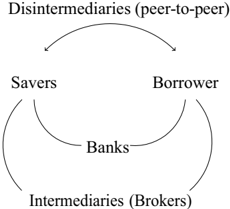
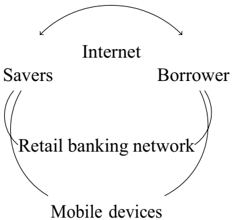
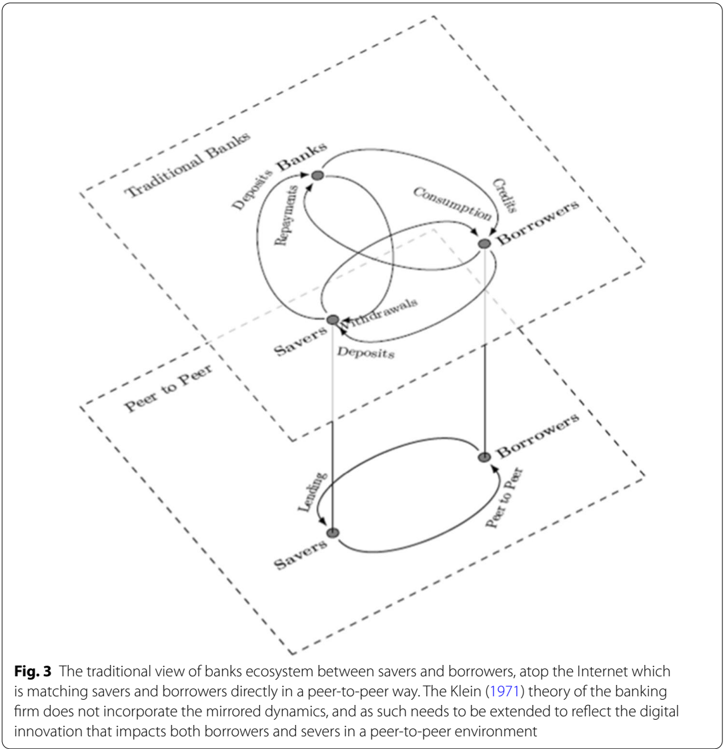
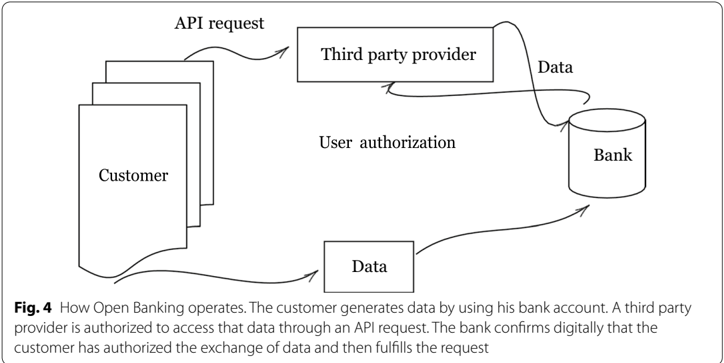
Verification
Claims the paper makes
The claims and statistics of this paper haven’t been checked yet.
Free: it reads the open-access text and checks the first 5 claims that cite a source we can check. Create a free account to check every claim.
Claims other papers make about this one
Each is checked against this paper’s own text: does it say what the citing paper says it does?
The source backs part of the claim, not all of it — or backs it for a different population, condition or comparison.
In the citing paper
“According to previous studies, trust positively affects Fintech adoption [43,44].”
From Fintech Adoption Drivers for Innovation for SMEs in Indonesia (2022) · cites this paper as [44]
Experimental — accuracy not yet measured
Self-check
Percentages, sums and reported differences re-computed from the paper’s own numbers.
The self-check needs the paper’s full text.
Citations
Cites
The Theory of Economic Development
Schumpeter, J., & Backhaus, U. (2006) · The European Heritage in Economics and the Social Sciences · doi:10.1007/0-306-48082-4_3 · Cited by 22,506
The Cost of Capital, Corporation Finance and the Theory of Investment
Miller, M. H. (1958) · American Economic Review · Cited by 14,574
Bank Runs, Deposit Insurance, and Liquidity
Diamond, D. W., & Dybvig, P. H. (1983) · Journal of Political Economy · doi:10.1086/261155 · Cited by 9,369
Financial intermediation and delegated monitoring
Diamond, D. W. (1984) · The Review of Economic Studies · doi:10.2307/2297430 · Cited by 8,476 · cited 1×
“Diamond (1984) and Ramakrishnan and Thakor (1984) suggested the answer was due to diversification and its impact on reducing monitoring costs.”
BackgroundThe financial accelerator, and the flight to quality
Bernanke, B., Gertler, M., & Gilchrist, S. (1996) · The Review of Economics and Statistics · doi:10.2307/2109844 · Cited by 2,351
Berger, A. N., Miller, N. H., Petersen, M. A., Rajan, R. G., & Stein, J. C. (2005) · Journal of Financial Economics · doi:10.1016/j.jfineco.2004.06.003 · Cited by 1,888
Fintech, regulatory arbitrage, and the rise of shadow banks
Buchak, G., Matvos, G., Piskorski, T., & Seru, A. (2018) · Journal of Financial Economics · doi:10.1016/j.jfineco.2018.03.011 · Cited by 1,784
FinTech and banking: What do we know?
Thakor, A. V. (2020) · Journal of Financial Intermediation · doi:10.1016/j.jfi.2019.100833 · Cited by 1,378 · cited 2×
“A review of financial technology and banking literature is provided by Thakor (2020).”
BackgroundMethodDoes deposit insurance increase banking system stability? An empirical investigation
Demirgüç-Kunt, A., & Detragiache, E. (2002) · Journal of Monetary Economics · doi:10.1016/s0304-3932(02)00171-x · Cited by 1,371
Diamond, D. W., & Rajan, R. G. (2000) · The Journal of Finance · doi:10.1111/0022-1082.00296 · Cited by 1,334
Research works printed but not linked: 1
- 7. Bord V, Santos JC (2012) The rise of the originate-to-distribute model and the role of banks in financial intermediation. Federal Reserve Bank N Y Econ Policy Rev 18(2):21-34
Cited by
Items 301–327 of 327
Designing a Digital Marketing Model for Banking Services and Products
Nia, H. R. (2026) · Digital Transformation and Administration Innovation · doi:10.61838/dtai.246
Dasepalli, D. P. (2026) · SSRN Electronic Journal · doi:10.2139/ssrn.7340480
Prabowo, M. S. (2025) · Law and Democracy Insight · doi:10.63208/21015-497
Zheng, C., Pu, L., Chen, Y., & Liu, C. (2026) · Papers of the Regional Science Association · doi:10.1016/j.pirs.2026.100169
Astuti, S., Gamayuni, R. R., & Komalasari, A. (2026) · Indonesian Journal of Taxation and Accounting · doi:10.66053/ijota.v4i3.883
From Reactive Monitoring to Predictive Resilience: AI-Assisted Observability in Financial Platforms
Meiappan, K. (2026) · Multidimensional Research Insights · doi:10.64220/mri.v2i2.006
Anh, K. T., Nguyen, D. M., Nguyễn, Đ. M., Phạm, H. M., & Lê, V. L. (2026) · TẠP CHÍ KHOA HỌC ĐẠI HỌC MỞ THÀNH PHỐ HỒ CHÍ MINH - KINH TẾ VÀ QUẢN TRỊ KINH DOANH · doi:10.46223/hcmcoujs.econ.vi.21.7.5074.2026
FACTORS AFFECTING THE ADOPTION OF FINTECH AND ITS IMPACT ON SUSTAINABILITY PERFORMANCE
Astuti, S., Gamayuni, R. R., & Komalasari, A. (2026) · Acta Innovations · doi:10.62441/actainnovations.v62i.660
Khreis, M., Harb, H., & Dia, S. (2026) · Journal of risk and financial management · doi:10.3390/jrfm19090723
Population ageing and digital finance: New evidence from China
Cao, S., Qiu, Z., Xu, X., & Zeng, C. (2026) · Economic and Political Studies · doi:10.1080/20954816.2026.2712043
Kollie, C. Z. (2026) · SSRN Electronic Journal · doi:10.2139/ssrn.7458887
The strategy of digital wholesale banking transformation: navigating the banking ecosystem
Mahadewi, L. (2026) · Manajemen dan Bisnis · doi:10.24123/mabis.v25i2.1098
“…shift in core business changes, prompting a re-evaluation of banking strategies through resource and capability adaptation, process and structural reconfiguration, and leadership patterns (Broby, 2021; Krasonikolakis et al., 2020; Yeow et al., 2018; Singh & Hess, 2017; Karimi & Walter, 2015).”
Rukiah, Sinaga, R. V. I., & Siregar, E. (2026) · Sharia Economic and Management Business Journal (SEMBJ) · doi:10.62159/sembj.v7i2.1951
“However, developments in digital technology over the past few decades have brought significant changes to how the global financial system operates (Broby, 2021).”
Hasanah, E. R., & Emiarti, E. (2026) · Journal of Indonesian Islamic Studies. · doi:10.24256/jiis.v6i1.12438
“The development of financial technology (fintech) has not only produced new service channels but has also changed the processes of intermediation, information processing, and decision-making in the financial industry (Thakor, 2020; Broby, 2021).”
Thach, N. H., Thanh, P. T. K., & Na, N. L. H. T. (2026) · Banks and Bank Systems · doi:10.21511/bbs.21(3).2026.13
“In financial services, digital technologies have restructured the value chain and turned service innovation into a core competitive lever rather than a peripheral activity (Broby, 2021; Naimi-Sadigh et al., 2022).”
Hutauruk, F. V., Kasali, R., & Rachmawati, R. (2026) · Journal of Organizational Effectiveness People and Performance · doi:10.1108/joepp-04-2026-0384 · Cited by 1
Financial Technology and Sustainable Banking: A Systemic Literature Review
Ojha, D., & Ghimire, R. (2026) · BIC Journal of Management · doi:10.3126/bicjom.v3i1.100422
“This is followed by Luo 2022 with 143 citations and Broby 2021 with 130 citations.”
Fintech Frontiers: Transforming Financial Services and Future Finance Talent
Priscila, A., Pandian, R. D., & Jefni, S. (2026) · IGI Global eBooks · doi:10.4018/979-8-3373-8536-5.ch009
BANKA GİDER YÖNETİMİNDE FİNANSAL TEKNOLOJİLER VE YAPAY ZEKÂ
Tağtekin, T. (2026) · Akademi Sosyal Bilimler Dergisi · doi:10.65083/asbider.1957210
FACTORS AFFECTING THE ADOPTION OF FINTECH AND ITS IMPACT ON SUSTAINABILITY PERFORMANCE
Astuti, S., Gamayuni, R. R., & Komalasar, A. (2026) · Acta Innovations · doi:10.62441/actainnovations.v63i.1103
Nikou, S., Calabretta, G., & Benini, G. (2026) · Journal of Knowledge Management · doi:10.1108/jkm-03-2026-0549
Digital Banking: Drivers, Benefits, Risks, and the Transformation of Financial Services
Mushi, B. (2025) · International Journal of Financial Research · doi:10.5430/ijfr.v16n2p67
The dark side of impact fintech ecosystems: unstraining the “tug of war” among stakeholders
Freischlag, B. L. A., & Bittencourt, B. A. (2026) · Qualitative Research in Financial Markets · doi:10.1108/qrfm-04-2026-0185
Namuwoza, W., Semwanga, A. R., & Bagarukayo, E. (2026) · World Journal of Information Systems · doi:10.17013/wjis.v3i4.69
Su, H., & Zhang, D. (2024) · Journal of Business and Data Analytics · doi:10.63646/eucd6494
Ozili, P. K. (2026) · Journal of Banking and Financial Technology · doi:10.1007/s42786-026-00068-7
BIBLIOMETRIC ANALYSIS ON BANK PERFORMANCE
Radunia, N. N., & Malim, N. A. K. (2026) · iBAF e-Proceedings · doi:10.33102/gs9vpq77
Metadata
- Authors
- Broby, D.
- Affiliations
- University of Strathclyde (GB)
- Corresponding author
- Broby, Daniel
- ORCID
- Broby, Daniel
- Venue
- Financial Innovation
- Published
- 2021-06-18
- Volume
- 7
- Issue
- 1
- ISSN
- 2199-4730 (ISSN-L)
- OpenAlex
- W3171594084
- Semantic Scholar
- 4476dcafc7b0e19af8d07ce26d2a1bd12f80f835
- Cited by
- 259
- References
- 34
- Citations by year
- 2026: 48 · 2025: 80 · 2024: 52 · 2023: 45 · 2022: 30 · 2021: 4
- FWCI
- 49.53
- Type
- journal article
- Language
- en
- Open access
- diamond
- doi.org
- Licence
- cc-by
- creativecommons.org/licenses/by/4.0 (tdm)
- creativecommons.org/licenses/by/4.0 (vor)
- Locations
- Financial Innovation (publishedVersion, cc-by)
- Ulster University Research Portal (Ulster University) (acceptedVersion, cc-by)
- Strathprints: The University of Strathclyde institutional repository (University of Strathclyde) (acceptedVersion)
- RePEc: Research Papers in Economics (submittedVersion)
- DOAJ (DOAJ: Directory of Open Access Journals) (submittedVersion, cc-by-sa)
- Econstor (Econstor) (submittedVersion, cc-by)
- Topics
- Social Sciences › Economics, Econometrics and Finance › General Economics, Econometrics and Finance › Digital Transformation in Financial Services
- Social Sciences › Business, Management and Accounting › Management Information Systems › FinTech, Crowdfunding, Digital Finance
- Social Sciences › Economics, Econometrics and Finance › Finance › Banking stability, regulation, efficiency
- Keywords
- fintech, future of banking, bank business models, digital transformation, financial intermediation, shadow banking, deposit taking, lending, bank profitability, customer retention, customer acquisition, banking-as-a-service, trust in banks, liquidity transformation
About these checks
Registry, retraction, Cites and statistics results are computed, not judged, with one exception: a printed reference that no index lists is read once by a model before it counts as a citation error. Claims are extracted by a model and kept only when their quote appears verbatim in the text; each cited source is then checked, with a model’s help, for whether it says what the claim relies on. Those verdicts can be wrong — read the claim’s quote and the cited source before relying on one.
Statistics and arithmetic are recomputed, not judged.
Confidence bands are shown only for fields calibrated on our annotated test set. None is calibrated yet, so no band is shown.
What counts as a claim ›How we measure confidence ›How we check this ›
Are you an author, or do you see a problem with this page? Request a review
Data sources
Bibliographic data: Semantic Scholar, OpenAlex, Crossref.
Contains information from the Semantic Scholar Academic Graph Datasets, made available under the ODC Attribution License (ODC-BY 1.0).
Semantic Scholar’s data is described in: Kinney, R., et al. (2023). The Semantic Scholar Open Data Platform. arXiv:2301.10140.
