

Face morphing attacks: Investigating detection with humans and computers
Open accessThe DOI matches its Crossref record; 40 of the 42 references it cites were found in a registry or an index.
Abstract
BACKGROUND: In recent years, fraudsters have begun to use readily accessible digital manipulation techniques in order to carry out face morphing attacks. By submitting a morph image (a 50/50 average of two people's faces) for inclusion in an official document such as a passport, it might be possible that both people sufficiently resemble the morph that they are each able to use the resulting genuine ID document. Limited research with low-quality morphs has shown that human detection rates were poor but that training methods can improve performance. Here, we investigate human and computer performance with high-quality morphs, comparable with those expected to be used by criminals. RESULTS: Over four experiments, we found that people were highly error-prone when detecting morphs and that training did not produce improvements. In a live matching task, morphs were accepted at levels suggesting they represent a significant concern for security agencies and detection was again error-prone. Finally, we found that a simple computer model outperformed our human participants. CONCLUSIONS: Taken together, these results reinforce the idea that advanced computational techniques could prove more reliable than training people when fighting these types of morphing attacks. Our findings have important implications for security authorities worldwide.
Overview
The claims and statistics of this paper haven’t been checked yet.
Free: it reads the open-access text and checks the first 5 claims that cite a source we can check. Create a free account to check every claim.
Integrity signals
Registry
Cites
Statistics
Figures
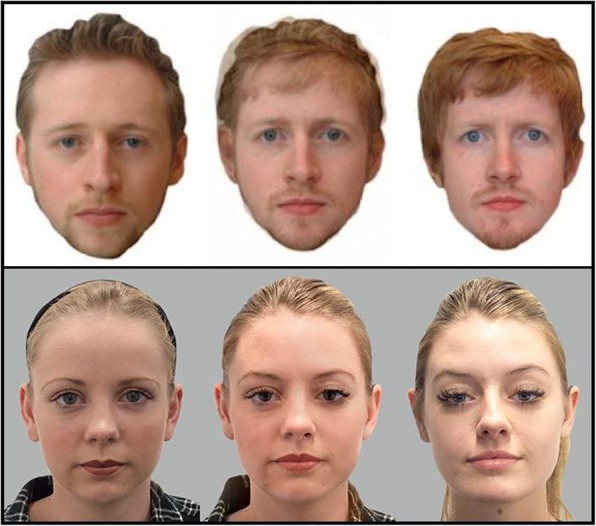
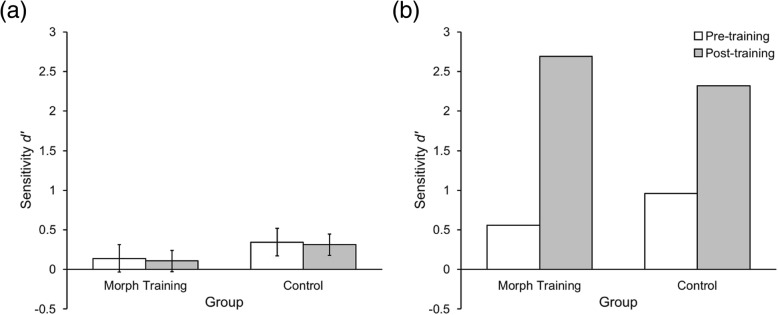
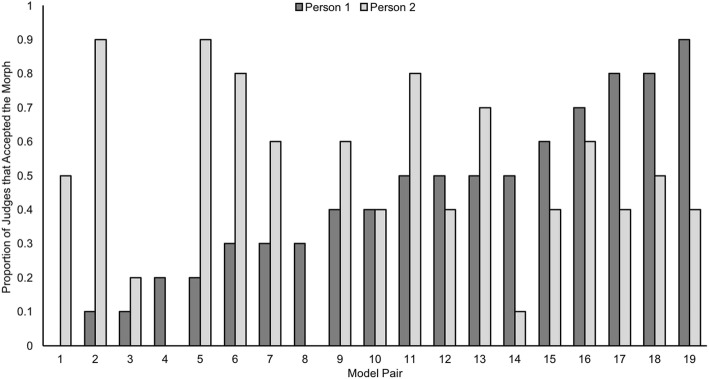
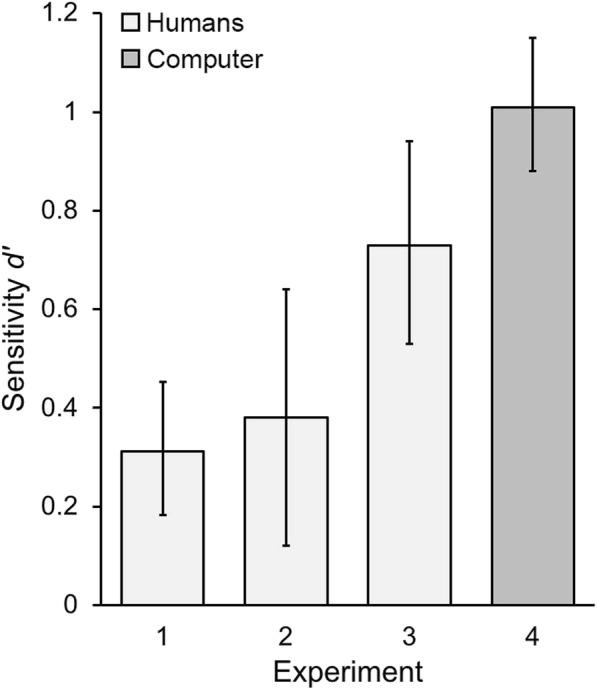
Verification
Claims the paper makes
The claims and statistics of this paper haven’t been checked yet.
Free: it reads the open-access text and checks the first 5 claims that cite a source we can check. Create a free account to check every claim.
Claims other papers make about this one
Each is checked against this paper’s own text: does it say what the citing paper says it does?
The source backs part of the claim, not all of it — or backs it for a different population, condition or comparison.
In the citing paper
“In Kramer et al. ' s [6] study of facial morphs, the automated detection model performed better than the best-performing human (68.4% vs. 64%, respectively), revealing a signi fi cant advantage for the automated detection model.”
From Human Performance in Deepfake Detection: A Systematic Review (2025) · cites this paper as [6]
Experimental — accuracy not yet measuredThe source backs part of the claim, not all of it — or backs it for a different population, condition or comparison.
In the citing paper
“Providing this kind of basic detection guidance yielded no improvement on detection accuracy [4, 6].”
From Human Performance in Deepfake Detection: A Systematic Review (2025) · cites this paper as [6]
Experimental — accuracy not yet measuredThe cited source says what the claim attributes to it.
In the citing paper
“However, none of the experimental studies had any followup, and only two studies had pre -post measurements of the outcome [6, 18].”
From Human Performance in Deepfake Detection: A Systematic Review (2025) · cites this paper as [6]
The cited source says what the claim attributes to it.
In the citing paper
“Almost all video/image stimuli used face swapping or lip-sync technique, except for three studies that used morphing techniques [6, 7, 18].”
From Human Performance in Deepfake Detection: A Systematic Review (2025) · cites this paper as [6]
The cited source says what the claim attributes to it.
In the citing paper
“Furthermore, explicitly teaching detection skills by providing written detection tips does not appear to improve detection compared to control [4, 6].”
From Human Performance in Deepfake Detection: A Systematic Review (2025) · cites this paper as [6]
Self-check
Percentages, sums and reported differences re-computed from the paper’s own numbers.
The self-check needs the paper’s full text.
Citations
Cites
Variability in photos of the same face
Jenkins, R., White, D., Van Montfort, X., & Mike Burton, A. (2011) · Cognition · doi:10.1016/j.cognition.2011.08.001 · Cited by 612
The Glasgow Face Matching Test
Burton, A. M., White, D., & McNeill, A. (2010) · Behavior Research Methods · doi:10.3758/brm.42.1.286 · Cited by 472
Categorical effects in the perception of faces
Beale, J. M., & Keil, F. C. (1995) · Cognition · doi:10.1016/0010-0277(95)00669-x · Cited by 338
Ferrara, M., Franco, A., & Maltoni, D. (2014) · IEEE International Joint Conference on Biometrics · doi:10.1109/btas.2014.6996240 · Cited by 278
Identity From Variation: Representations of Faces Derived From Multiple Instances
Burton, A. M., Kramer, R. S. S., Ritchie, K. L., & Jenkins, R. (2016) · Cognitive Science · doi:10.1111/cogs.12231 · Cited by 247
Self-citationPassport officers’ errors in face matching
White, D., Kemp, R. I., Jenkins, R., Matheson, M., & Burton, A. M. (2014) · PLoS ONE · doi:10.1371/journal.pone.0103510 · Cited by 241
IEEE International Joint Conference on Biometrics
(2014) · doi:10.1109/ijcb32250.2014 · Cited by 239
Young, A. W., & Burton, A. M. (2018) · Trends in Cognitive Sciences · doi:10.1016/j.tics.2017.11.007 · Cited by 235
Matching identities of familiar and unfamiliar faces caught on CCTV images
Bruce, V., Henderson, Z., Newman, C., & Burton, A. M. (2001) · Journal of Experimental Psychology: Applied · doi:10.1037/1076-898x.7.3.207 · Cited by 233
Matching faces to photographs: Poor performance in eyewitness memory (without the memory).
Megreya, A. M., & Burton, A. M. (2008) · Journal of Experimental Psychology: Applied · doi:10.1037/a0013464 · Cited by 212
Transferable Deep-CNN Features for Detecting Digital and Print-Scanned Morphed Face Images
Raghavendra, R., Raja, K. B., Venkatesh, S., & Busch, C. (2017) · 2017 IEEE Conference on Computer Vision and Pattern Recognition Workshops (CVPRW) · doi:10.1109/cvprw.2017.228 · Cited by 204
Revisiting Linear Discriminant Techniques in Gender Recognition
Bekios-Calfa, J., Buenaposada, J. M., & Baumela, L. (2011) · IEEE Transactions on Pattern Analysis and Machine Intelligence · doi:10.1109/tpami.2010.208 · Cited by 174
Extracting Prototypical Facial Images from Exemplars
Benson, P. J., & Perrett, D. I. (1993) · Perception · doi:10.1068/p220257 · Cited by 167
Understanding face familiarity
Kramer, R. S. S., Young, A. W., & Burton, A. M. (2018) · Cognition · doi:10.1016/j.cognition.2017.12.005 · Cited by 151
Self-citationError Rates in Users of Automatic Face Recognition Software
White, D., Dunn, J. D., Schmid, A. C., & Kemp, R. I. (2015) · PLOS ONE · doi:10.1371/journal.pone.0139827 · Cited by 141
Detection of Face Morphing Attacks by Deep Learning
Seibold, C., Samek, W., Hilsmann, A., & Eisert, P. (2017) · Lecture notes in computer science · doi:10.1007/978-3-319-64185-0_9 · Cited by 140
Scherhag, U., Nautsch, A., Rathgeb, C., Gomez‐Barrero, M., Veldhuis, R. N. J., Spreeuwers, L., Schils, M., Maltoni, D., Grother, P. J., Marcel, S., et al. (2017) · International Conference of the Biometrics Special Interest Group (BIOSIG) · doi:10.23919/biosig.2017.8053499 · Cited by 138
Automatic Generation and Detection of Visually Faultless Facial Morphs
Makrushin, A., Neubert, T., & Dittmann, J. (2017) · Proceedings of the 12th International Joint Conference on Computer Vision, Imaging and Computer Graphics Theory and Applications · doi:10.5220/0006131100390050 · Cited by 131
On the Effects of Image Alterations on Face Recognition Accuracy
Ferrara, M., Franco, A., & Maltoni, D. (2016) · Springer eBooks · doi:10.1007/978-3-319-28501-6_9 · Cited by 129
On the vulnerability of face recognition systems towards morphed face attacks
Scherhag, U., Ramachandra, R., Raja, K. B., Gomez‐Barrero, M., Rathgeb, C., & Busch, C. (2017) · International Workshop on Biometrics and Forensics (IWBF) · doi:10.1109/iwbf.2017.7935088 · Cited by 127
Fraudulent ID using face morphs: Experiments on human and automatic recognition
Robertson, D. J., Kramer, R. S. S., & Burton, A. M. (2017) · PLOS ONE · doi:10.1371/journal.pone.0173319 · Cited by 119
Self-citationFace morphing versus face averaging: Vulnerability and detection
Ramachandra, R., Raja, K. B., Venkatesh, S. K., & Busch, C. (2017) · IEEE International Joint Conference on Biometrics (IJCB) · doi:10.1109/btas.2017.8272742 · Cited by 118
Mapping attractor fields in face space: the atypicality bias in face recognition
Tanaka, J., Giles, M., Kremen, S., & Simon, V. (1998) · Cognition · doi:10.1016/s0010-0277(98)00048-1 · Cited by 100
Kramer, R. S. S., Jones, A. L., & Ward, R. (2012) · PLoS ONE · doi:10.1371/journal.pone.0042705 · Cited by 81
Self-citationCognitive and Computational Aspects of Face Recognition
(2002) · Routledge eBooks · doi:10.4324/9780203428979 · Cited by 74
InterFace: A software package for face image warping, averaging, and principal components analysis
Kramer, R. S. S., Jenkins, R., & Burton, A. M. (2016) · Behavior Research Methods · doi:10.3758/s13428-016-0837-7 · Cited by 70
Self-citationHuman and automatic face recognition: a comparison across image formats
Burton, A. M., Miller, P. C., Bruce, V., Hancock, P., & Henderson, Z. (2001) · Vision Research · doi:10.1016/s0042-6989(01)00186-9 · Cited by 61
Robust social categorization emerges from learning the identities of very few faces.
Kramer, R. S. S., Young, A. W., Day, M. G., & Burton, A. M. (2017) · Psychological Review · doi:10.1037/rev0000048 · Cited by 54
Self-citationReflection Analysis for Face Morphing Attack Detection
Seibold, C., Hilsmann, A., & Eisert, P. (2018) · European Signal Processing Conference (EUSIPCO) · doi:10.23919/eusipco.2018.8553116 · Cited by 51
Face Morphing Detection: An Approach Based on Image Degradation Analysis
Neubert, T. (2017) · International Workshop on Digital Watermarking · doi:10.1007/978-3-319-64185-0_8 · Cited by 50
Detecting morphed passport photos: a training and individual differences approach
Robertson, D. J., Mungall, A., Watson, D. G., Wade, K. A., Nightingale, S. J., & Butler, S. (2018) · Cognitive Research: Principles and Implications · doi:10.1186/s41235-018-0113-8 · Cited by 49 · cited 16×
“In the second article, the researchers investigated whether people were able to detect morph images and whether training could help with this task (Robertson et al., 2018).”
BackgroundMethodResultInfluentialHyper-realistic face masks: a new challenge in person identification
Sanders, J. G., Ueda, Y., Minemoto, K., Noyes, E., Yoshikawa, S., & Jenkins, R. (2017) · Cognitive Research Principles and Implications · doi:10.1186/s41235-017-0079-y · Cited by 47
Face averages and multiple images in a live matching task
Ritchie, K. L., Mireku, M. O., & Kramer, R. S. S. (2019) · British Journal of Psychology · doi:10.1111/bjop.12388 · Cited by 44
Self-citationFacial cues to depressive symptoms and their associated personality attributions
Scott, N. J., Kramer, R. S. S., Jones, A. L., & Ward, R. D. (2013) · Psychiatry Research · doi:10.1016/j.psychres.2013.02.027 · Cited by 35
Self-citationSeibold, C., Samek, W., Hilsmann, A., & Eisert, P. (2018) · arXiv (Cornell University) · doi:10.48550/arxiv.1806.04265 · Cited by 30
Categorical Perception for Unfamiliar Faces: The Effect of Covert and Overt Face Learning
Kikutani, M., Roberson, D. D., & Hanley, J. R. (2010) · Psychological Science · doi:10.1177/0956797610371964 · Cited by 23
A manifold model of face and object recognition
Craw, I. (2002) · Routledge eBooks · doi:10.4324/9780203428979-16 · Cited by 17
Facial Dimorphism in Autistic Quotient Scores
Scott, N. J., Jones, A. L., Kramer, R. S. S., & Ward, R. (2014) · Clinical Psychological Science · doi:10.1177/2167702614534238 · Cited by 10
Self-citationKemp, R. (1997) · doi:10.1002/(sici)1099-0720(199706)11:3<211::aid-acp430>3.0.co;2-o
Cited by
Face Morphing Attack Generation and Detection: A Comprehensive Survey
Venkatesh, S. K., Ramachandra, R., Raja, K. B., & Busch, C. (2021) · IEEE Transactions on Technology and Society · doi:10.1109/tts.2021.3066254 · Cited by 204
Deepfakes as a threat to a speaker and facial recognition: An overview of tools and attack vectors
Firc, A., Malinka, K., & Hanáček, P. (2023) · Heliyon · doi:10.1016/j.heliyon.2023.e15090 · Cited by 81
Face Recognition Vendor Test (FRVT) part 4: MORPH - performance of automated face morph detection
Ngan, M. L., Grother, P. J., Hanaoka, K., & Kuo, J. (2020) · doi:10.6028/nist.ir.8292 · Cited by 76
Venkatesh, S. K., Ramachandra, R., Raja, K. B., Spreeuwers, L., Veldhuis, R. N. J., & Busch, C. (2020) · IEEE Winter Conference on Applications of Computer Vision · doi:10.1109/wacv45572.2020.9093488 · Cited by 68
Differential Morph Face Detection using Discriminative Wavelet Sub-bands
Chaudhary, B., Aghdaie, P., Soleymani, S., Dawson, J. M., & Nasrabadi, N. M. (2021) · IEEE/CVF Conference on Computer Vision and Pattern Recognition Workshops (CVPRW) · doi:10.1109/cvprw53098.2021.00158 · Cited by 47
Metadata
- Authors
- Kramer, R. S. S., Mireku, M. O., Flack, T. R., & Ritchie, K. L.
- Affiliations
- University of Lincoln (GB)
- Corresponding author
- Kramer, Robin S. S.
- Venue
- Cognitive Research: Principles and Implications
- Published
- 2019-07-29
- Volume
- 4
- Issue
- 1
- Pages
- 28-28
- ISSN
- 2365-7464 (ISSN-L)
- PMC
- PMC6663958
- OpenAlex
- W2965283758
- Cited by
- 48
- References
- 42
- Citations by year
- 2026: 2 · 2025: 5 · 2024: 6 · 2023: 7 · 2022: 10 · 2021: 9 · 2020: 6 · 2019: 2
- FWCI
- 3.92
- Type
- journal article
- Language
- en
- Open access
- gold
- doi.org
- Licence
- cc-by
- creativecommons.org/licenses/by/4.0 (tdm)
- creativecommons.org/licenses/by/4.0 (vor)
- Locations
- Cognitive Research Principles and Implications (publishedVersion, cc-by)
- Europe PMC (PubMed Central) (publishedVersion, cc-by)
- PubMed Central (publishedVersion, cc-by)
- PubMed (publishedVersion)
- Lincoln Repository (University of Lincoln) (acceptedVersion)
- DOAJ (DOAJ: Directory of Open Access Journals) (submittedVersion, cc-by-sa)
- Figshare (submittedVersion, cc-by)
- Topics
- Life Sciences › Neuroscience › Cognitive Neuroscience › Face Recognition and Perception
- Physical Sciences › Computer Science › Computer Vision and Pattern Recognition › Digital Media Forensic Detection
- Physical Sciences › Computer Science › Signal Processing › Biometric Identification and Security
- Keywords
- face morphing attacks, identity fraud, document forgery, passport fraud, face recognition
About these checks
Registry, retraction, Cites and statistics results are computed, not judged, with one exception: a printed reference that no index lists is read once by a model before it counts as a citation error. Claims are extracted by a model and kept only when their quote appears verbatim in the text; each cited source is then checked, with a model’s help, for whether it says what the claim relies on. Those verdicts can be wrong — read the claim’s quote and the cited source before relying on one.
Statistics and arithmetic are recomputed, not judged.
Confidence bands are shown only for fields calibrated on our annotated test set. None is calibrated yet, so no band is shown.
What counts as a claim ›How we measure confidence ›How we check this ›
Are you an author, or do you see a problem with this page? Request a review
Data sources
Bibliographic data: Semantic Scholar, OpenAlex, Crossref.
Contains information from the Semantic Scholar Academic Graph Datasets, made available under the ODC Attribution License (ODC-BY 1.0).
Semantic Scholar’s data is described in: Kinney, R., et al. (2023). The Semantic Scholar Open Data Platform. arXiv:2301.10140.
