

Multiple myeloma: signaling pathways and targeted therapy
Open accessThe DOI matches its Crossref record; 274 of the 281 references it cites were found in a registry or an index; 135 of the 315 sources its claims cite were checked for support.
Abstract
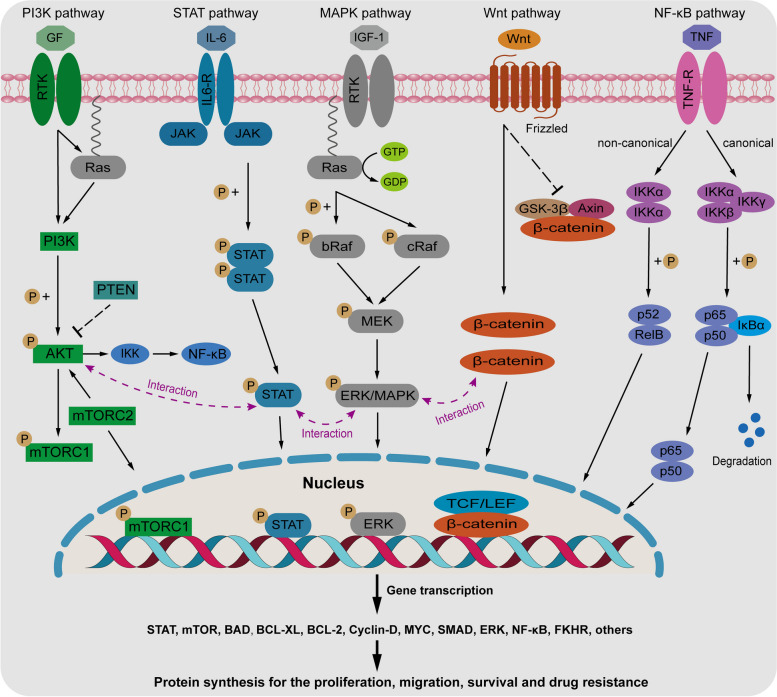
Multiple myeloma (MM) is the second most common hematological malignancy of plasma cells, characterized by osteolytic bone lesions, anemia, hypercalcemia, renal failure, and the accumulation of malignant plasma cells. The pathogenesis of MM involves the interaction between MM cells and the bone marrow microenvironment through soluble cytokines and cell adhesion molecules, which activate various signaling pathways such as PI3K/AKT/mTOR, RAS/MAPK, JAK/STAT, Wnt/β-catenin, and NF-κB pathways. Aberrant activation of these pathways contributes to the proliferation, survival, migration, and drug resistance of myeloma cells, making them attractive targets for therapeutic intervention. Currently, approved drugs targeting these signaling pathways in MM are limited, with many inhibitors and inducers still in preclinical or clinical research stages. Therapeutic options for MM include non-targeted drugs like alkylating agents, corticosteroids, immunomodulatory drugs, proteasome inhibitors, and histone deacetylase inhibitors. Additionally, targeted drugs such as monoclonal antibodies, chimeric antigen receptor T cells, bispecific T-cell engagers, and bispecific antibodies are being used in MM treatment. Despite significant advancements in MM treatment, the disease remains incurable, emphasizing the need for the development of novel or combined targeted therapies based on emerging theoretical knowledge, technologies, and platforms. In this review, we highlight the key role of signaling pathways in the malignant progression and treatment of MM, exploring advances in targeted therapy and potential treatments to offer further insights for improving MM management and outcomes.
Overview
CoChat Summary
## TL;DR
This review summarizes how dysregulated signaling pathways in multiple myeloma—especially PI3K/AKT/mTOR, RAS/MAPK, JAK/STAT, Wnt/β-catenin, and NF-κB—drive proliferation, survival, migration, and drug resistance. It also surveys targeted therapies, highlighting approved and investigational monoclonal antibodies, ADCs, bispecific antibodies/BiTEs, CAR-T, CAR-NK, and TCR-T approaches, while emphasizing that MM remains incurable.
## Key findings
- The paper states that MM is the second most common hematologic malignancy, accounting for about 10% of all hematological cancers, with an annual incidence of 4.5–6 per 100,000 and about 100,000 deaths worldwide each year.
- It identifies five major signaling pathways implicated in MM pathogenesis: PI3K/AKT/mTOR, RAS/MAPK, JAK/STAT, Wnt/β-catenin, and NF-κB; these pathways are described as promoting proliferation, survival, migration, and drug resistance.
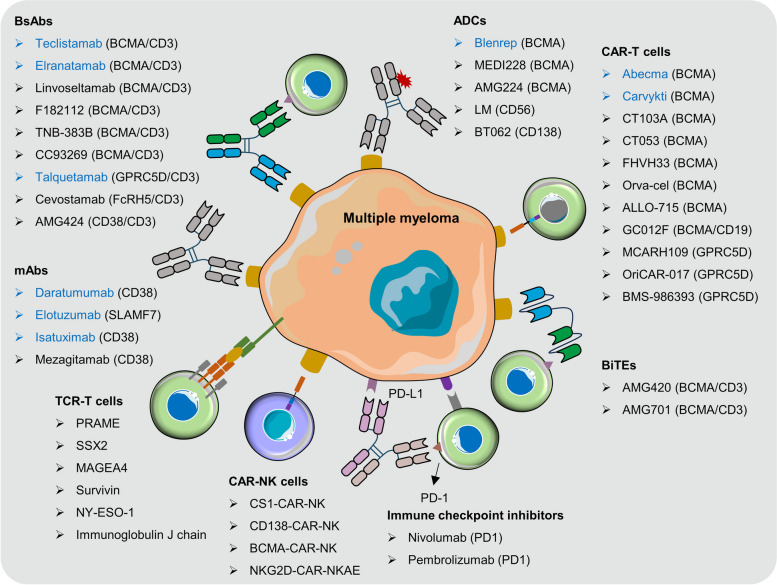
- For targeted immunotherapy, the review notes FDA/EMA-approved or FDA-approved agents including daratumumab, elotuzumab, isatuximab, teclistamab, elranatamab, talquetamab, Abecma, Carvykti, and others, with example efficacy figures such as teclistamab ORR 63.0% in 165 RRMM patients, elranatamab ORR 61.0% (75/123), and Abecma ORR 73% in 128 RRMM patients.
- The review highlights the limitations of current targeted therapy: even with advances, overall survival curves have not reached a plateau, and resistance, relapse, adverse events, and access/cost remain major issues.
## Methods
- This is a narrative review of MM biology and therapy, not an original clinical study.
- It synthesizes published evidence on MM signaling pathways and targeted treatments, including clinical trial results, approved drugs, and preclinical studies drawn from the cited literature.
- The main analysis is descriptive and comparative, organizing findings by pathway and therapy class rather than performing a new statistical meta-analysis.
## Limitations
- The paper explicitly notes that approved drugs targeting these signaling pathways are limited, and many inhibitors/inducers remain in preclinical or clinical research stages.
- The review states that targeted therapies still face high treatment costs, suboptimal PFS, relapse from resistance, and side effects such as CRS and neurotoxicity.
- Evident from the text: because this is a review article, conclusions depend on the quality and heterogeneity of the cited studies; however, the paper does not state that it performed a systematic review or meta-analysis.
Model-written summary. Check it against the paper before relying on it.
Integrity signals
Registry
Cites
Statistics
Figures
Verification
Claims the paper makes
91 Valid · 4 Not valid · 97 Not checked · 19 Own results and interpretations
The cited sources support only part of this claim — read each source’s verdict below.
In the paper
“Non-targeted drugs, while effective, can also harm normal healthy cells, leading to adverse effects such as gastrointestinal problems (nausea, vomiting, diarrhea, and constipation) [57], myelosuppression (reduction in white blood cells and platelets), alopecia, anemia, liver and kidney impairment, and an increased risk of infections [58, 59].”
§ Multiple myeloma: signaling pathways and targeted therapy > Introduction
What the sources say
- Partly supportedcites [57] Gordillo CA Parmar S Blanco M Delille EM Assal A Mapara M Gastrointestinal toxicity of high-dose melphalan in autologous hematopoietic stem cell transplantation: identification of risk factors and a benchmark for experimental therapies Ann Hematol 2021 100 7 1863 1870 10.1007/s00277-020-04378-8 33388856 PMC11531332 sourceExperimental — accuracy not yet measured
The Introduction and Results > GI toxicities report nausea, vomiting, and diarrhea as toxicities of high-dose melphalan. The paper does not identify constipation as a toxicity. This citation is attached to the gastrointestinal-effects clause, not the later list of adverse effects cited to other sources. (LLM, conf=0.88)
- Not checked — no full text of the sourcecites [58] Colson K Treatment-related symptom management in patients with multiple myeloma: a review Support Care Cancer 2015 23 5 1431 1445 10.1007/s00520-014-2552-1 25646616 source
- Not checked — no full text of the sourcecites [59] Bertolotti P Pierre A Rome S Faiman B Evidence-based guidelines for preventing and managing side effects of multiple myeloma Semin Oncol Nurs 2017 33 3 332 347 10.1016/j.soncn.2017.05.008 28729122 source
plainstates a cause- Asserted: passes — The authors put it forward as true.
- Checkable: passes — It can be checked against evidence.
- Load-bearing: passes — The paper’s conclusions depend on it.
- Based: passes — The paper gives a reason why it holds.
- Partly supported
The cited sources support only part of this claim — read each source’s verdict below.
In the paper
“The pathogenesis of MM involves the interaction between MM cells and the bone marrow microenvironment through soluble cytokines and cell adhesion molecules, which activate various signaling pathways such as PI3K/AKT/mTOR, RAS/MAPK, JAK/STAT, Wnt/β-catenin, and NF-κB pathways.”
- Also stated in: § Introduction · plain
“The interaction between MM cells and the bone marrow microenvironment leads to the activation of intracellular signaling pathways such as PI3K/AKT/mTOR, RAS/MAPK, JAK/STAT, Wnt/β-catenin, and NF-κB pathways.”
§ Multiple myeloma: signaling pathways and targeted therapy > Abstract Multiple myeloma (MM) is the second most common hematological malignancy of plasma cells, characterized by osteolytic bone lesions, anemia, hypercalcemia, renal failure, and the accumulation of malignant plasma cells. The pathogenesis of MM involves the interaction between MM cells and the bone marrow microenvironment through soluble cytokines and cell adhesion molecules, which activate various signaling pathways such as PI3K/AKT/mTOR, RAS/MAPK, JAK/STAT, Wnt/β-catenin, and NF-κB pathways. Aberrant activation of these pathways contributes to the proliferation, survival, migration, and drug resistance of myeloma cells, making them attractive targets for therapeutic intervention. Currently, approved drugs targeting these signaling pathways in MM are limited, with many inhibitors and inducers still in preclinical or clinical research stages. Therapeutic options for MM include non-targeted drugs like alkylating agents, corticosteroids, immunomodulatory drugs, proteasome inhibitors, and histone deacetylase inhibitors. Additionally, targeted drugs such as monoclonal antibodies, chimeric antigen receptor T cells, bispecific T-cell engagers, and bispecific antibodies are being used in MM treatment. Despite significant advancements in MM treatment, the disease remains incurable, emphasizing the need for the development of novel or combined targeted therapies based on emerging theoretical knowledge, technologies, and platforms. In this review, we highlight the key role of signaling pathways in the malignant progression and treatment of MM, exploring advances in targeted therapy and potential treatments to offer further insights for improving MM management and outcomes.
What the sources say
- Supportedcites [23] Akhtar S, Ali TA, Faiyaz A, Khan OS, Raza SS, Kulinski M, et al. Cytokine-mediated dysregulation of signaling pathways in the pathogenesis of multiple myeloma. Int J Mol Sci. 2020;21(14). 10.3390/ijms21145002. PMC7403981 32679860 source
Split into 2 atoms — 2 confirmed, 0 partially supported, 0 disputed, 0 misattributed, 0 unverifiable. Expand the claim to see per-atom verdicts.
- Not checked — no full text of the sourcecites [31] Hu J Hu WX Targeting signaling pathways in multiple myeloma: pathogenesis and implication for treatments Cancer Lett 2018 414 214 21 10.1016/j.canlet.2017.11.020 29174802 source
- Not checked — no full text of the sourcecites [32] Jung YY Um JY Nasif O Alharbi SA Sethi G Ahn KS Blockage of the JAK/STAT3 signaling pathway in multiple myeloma by leelamine Phytomedicine 2021 87 153574 10.1016/j.phymed.2021.153574 34006448 source
- Partly supportedcites [33] Heo SK Noh EK Seo HJ Lee YJ Koh S Min YJ Radotinib inhibits multiple myeloma cell proliferation via suppression of STAT3 signaling PLoS One 2022 17 5 e0265958 10.1371/journal.pone.0265958 35503759 PMC9064077 sourceExperimental — accuracy not yet measured
Split into 2 atoms — 0 confirmed, 2 partially supported, 0 disputed, 0 misattributed, 0 unverifiable. Expand the claim to see per-atom verdicts.
- Not checked — no full text of the sourcecites [34] Yin Z Lv Y Deng L Li G Ou R Chen L Targeting ABCB6 with nitidine chloride inhibits PI3K/AKT signaling pathway to promote ferroptosis in multiple myeloma Free Radic Biol Med 2023 203 86 101 10.1016/j.freeradbiomed.2023.04.003 37044150 source
plainstates a cause- Asserted: passes — The authors put it forward as true.
- Checkable: passes — It can be checked against evidence.
- Load-bearing: passes — The paper’s conclusions depend on it.
- Based: passes — The paper gives a reason why it holds.
- Also stated in: § Introduction · plain
The sources with a verdict support this claim; the rest weren’t checked yet, have no full text we could read, or their verdicts aren’t rated yet.
In the paper
“Over the past few decades, several non-targeted drugs have been approved for the treatment of multiple myeloma, including alkylating agents [40], corticosteroids [41–43], immunomodulatory imide drugs (IMiDs) [44–47], proteasome inhibitors (PIs) [42, 48–51], histone deacetylases (iHDACs) inhibitors [37, 52, 53], and XPO1 inhibitor [54–56] (Table 1).”
§ Multiple myeloma: signaling pathways and targeted therapy > Introduction
What the sources say
- Not checked — no full text of the sourcecites [40] Costa BA Mouhieddine TH Ortiz RJ Richter J Revisiting the role of alkylating agents in multiple myeloma: up-to-date evidence and future perspectives Crit Rev Oncol Hematol 2023 187 104040 10.1016/j.critrevonc.2023.104040 37244325 source
- Supportedcites [41] Facon T Venner CP Bahlis NJ Offner F White DJ Karlin L Oral ixazomib, lenalidomide, and dexamethasone for transplant-ineligible patients with newly diagnosed multiple myeloma Blood 2021 137 26 3616 3628 10.1182/blood.2020008787 33763699 PMC8462404 source
This source is cited in the proteasome-inhibitor portion of the sentence, not for every drug class listed. The Introduction identifies ixazomib as an oral proteasome inhibitor and states that it is approved in the United States and European Union, in combination with lenalidomide and dexamethasone, for patients with multiple myeloma who have received at least one prior therapy. (LLM, conf=0.93)
- Not checked — no full text of the sourcecites [42] Huang SX Luo PH Wang HL Mo DC Huang JF Daratumumab, bortezomib, and dexamethasone for previously treated multiple myeloma J Clin Oncol 2023 41 14 2667 8 10.1200/jco.22.02665 36940404 source
- Supportedcites [43] Richardson PG Durie BG Rosiñol L Mateos MV Dispenzieri A Moreau P Clinical perspectives on the optimal use of lenalidomide plus bortezomib and dexamethasone for the treatment of newly diagnosed multiple myeloma Haematologica 2023 108 11 2894 2912 10.3324/haematol.2022.282624 37608773 PMC10620581 source
The sentence assigns separate citations to its drug classes. For the classes addressed by this source, the Introduction (page unavailable) states that lenalidomide and bortezomib are approved for newly diagnosed multiple myeloma, and the ‘RVd: rationale and background’ section identifies them as an immunomodulatory agent and a proteasome inhibitor while discussing their use with dexamethasone. The other listed classes have their own citations in the citing sentence. (LLM, conf=0.87)
- Not checked — no full text of the sourcecites [44] Hoy SM Pomalidomide: a review in relapsed and refractory multiple myeloma Drugs 2017 77 17 1897 908 10.1007/s40265-017-0833-y 29110190 source
- Supportedcites [45] Bjorklund CC Kang J Amatangelo M Polonskaia A Katz M Chiu H Iberdomide (CC-220) is a potent cereblon E3 ligase modulator with antitumor and immunostimulatory activities in lenalidomide- and pomalidomide-resistant multiple myeloma cells with dysregulated CRBN Leukemia 2020 34 4 1197 1201 10.1038/s41375-019-0620-8 31719682 PMC7214241 source
The citation is attached to the IMiDs entry, not the other drug classes. In “To the Editor” (page unavailable), the paper identifies lenalidomide and pomalidomide as anti-myeloma IMiDs and describes the current clinical application of IMiD combinations. (LLM, conf=0.87)
- Not checked — no full text of the sourcecites [46] Lonial S Popat R Hulin C Jagannath S Oriol A Richardson PG Iberdomide plus dexamethasone in heavily pretreated late-line relapsed or refractory multiple myeloma (CC-220-MM-001): a multicentre, multicohort, open-label, phase 1/2 trial Lancet Haematol 2022 9 11 e822 832 10.1016/s2352-3026(22)00290-3 36209764 source
- Supportedcites [47] Yamanaka S Furihata H Yanagihara Y Taya A Nagasaka T Usui M Lenalidomide derivatives and proteolysis-targeting chimeras for controlling neosubstrate degradation Nat Commun 2023 14 1 4683 10.1038/s41467-023-40385-9 37596276 PMC10439208 source
The citation is attached to the IMiD category, not to the other drug classes in the sentence. The Introduction (page unavailable) identifies lenalidomide as an IMiD widely used to treat multiple myeloma, and the Results section calls it a first-line treatment for MM. That supports the cited point that IMiDs are established MM treatments. (LLM, conf=0.88)
plain- Asserted: passes — The authors put it forward as true.
- Checkable: passes — It can be checked against evidence.
- Load-bearing: unclear — It is unclear whether the paper’s conclusions depend on it.
- Based: passes — The paper gives a reason why it holds.
The sources with a verdict support this claim; the rest weren’t checked yet, have no full text we could read, or their verdicts aren’t rated yet.
In the paper
“Targeting proteins that mediate these signaling pathways holds promise as a potential therapeutic approach for MM treatment [32, 35–39].”
§ Multiple myeloma: signaling pathways and targeted therapy > Introduction
What the sources say
- Not checked — no full text of the sourcecites [32] Jung YY Um JY Nasif O Alharbi SA Sethi G Ahn KS Blockage of the JAK/STAT3 signaling pathway in multiple myeloma by leelamine Phytomedicine 2021 87 153574 10.1016/j.phymed.2021.153574 34006448 source
- Supportedcites [35] van Andel H Kocemba KA Spaargaren M Pals ST Aberrant Wnt signaling in multiple myeloma: molecular mechanisms and targeting options Leukemia 2019 33 5 1063 1075 10.1038/s41375-019-0404-1 30770859 PMC6756057 source
The Conclusions and therapeutic perspectives section describes several proteins and interactions in Wnt signaling as potential therapeutic targets in multiple myeloma, including Wnt receptors, LGR4/R-spondin, and the BCL9/β-catenin complex. It concludes that targeting the Wnt pathway could benefit a large group of MM patients. (LLM, conf=0.91)
- Not checked — no full text of the sourcecites [36] Peng Y Li F Zhang P Wang X Shen Y Feng Y IGF-1 promotes multiple myeloma progression through PI3K/Akt-mediated epithelial-mesenchymal transition Life Sci 2020 249 117503 10.1016/j.lfs.2020.117503 32142767 source
- Supportedcites [37] Hirano M Imai Y Kaito Y Murayama T Sato K Ishida T Small-molecule HDAC and Akt inhibitors suppress tumor growth and enhance immunotherapy in multiple myeloma J Exp Clin Cancer Res 2021 40 1 110 10.1186/s13046-021-01909-7 33757580 PMC7989023 source
The Background identifies aberrant PI3K/Akt signaling in MM and explains why the authors focused on Akt inhibition. The Discussion reports that Akt inhibition reduced downstream p-GSK-3 and c-Myc and suggests that combined HDAC and Akt inhibition could suppress proliferation in lenalidomide-resistant MM cell lines. This supports the claim's hedged description of pathway-targeting proteins as potential therapeutic targets. (LLM, conf=0.88)
- Not checked — no full text of the sourcecites [38] Yuan Y Guo M Gu C Yang Y The role of Wnt/β-catenin signaling pathway in the pathogenesis and treatment of multiple myeloma (review) Am J Transl Res 2021 13 9 9932 9949 34650674 PMC8507016
- Supportedcites [39] Rah B, Rather RA, Bhat GR, Baba AB, Mushtaq I, Farooq M, et al. JAK/STAT signaling: molecular targets, therapeutic opportunities, and limitations of targeted inhibitions in Solid malignancies. Front Pharmacol. 2022;13. 10.3389/fphar.2022.821344. PMC8987160 35401182 source
The “JAK/STAT Signaling in Melanoma” section (page not provided) describes inhibiting STAT3 as a therapeutic approach for malignant melanoma and reports promising antitumor effects from STAT3-targeting compounds. This supports the claim’s qualified statement that targeting signaling proteins holds promise for MM treatment. (LLM, conf=0.87)
hedgedstates a possible cause- Asserted: passes — The authors put it forward as true.
- Checkable: passes — It can be checked against evidence.
- Load-bearing: passes — The paper’s conclusions depend on it.
- Based: passes — The paper gives a reason why it holds.
- Rests on an assumption not shown here.
The cited sources support only part of this claim — read each source’s verdict below.
In the paper
“Aberrant activation of these pathways contributes to the proliferation, survival, migration, and drug resistance of myeloma cells, making them attractive targets for therapeutic intervention.”
- Also stated in: § Introduction · plain
“These pathways play crucial roles in promoting the proliferation, migration, expansion, survival, and drug resistance of malignant clones in MM.”
§ Multiple myeloma: signaling pathways and targeted therapy > Abstract Multiple myeloma (MM) is the second most common hematological malignancy of plasma cells, characterized by osteolytic bone lesions, anemia, hypercalcemia, renal failure, and the accumulation of malignant plasma cells. The pathogenesis of MM involves the interaction between MM cells and the bone marrow microenvironment through soluble cytokines and cell adhesion molecules, which activate various signaling pathways such as PI3K/AKT/mTOR, RAS/MAPK, JAK/STAT, Wnt/β-catenin, and NF-κB pathways. Aberrant activation of these pathways contributes to the proliferation, survival, migration, and drug resistance of myeloma cells, making them attractive targets for therapeutic intervention. Currently, approved drugs targeting these signaling pathways in MM are limited, with many inhibitors and inducers still in preclinical or clinical research stages. Therapeutic options for MM include non-targeted drugs like alkylating agents, corticosteroids, immunomodulatory drugs, proteasome inhibitors, and histone deacetylase inhibitors. Additionally, targeted drugs such as monoclonal antibodies, chimeric antigen receptor T cells, bispecific T-cell engagers, and bispecific antibodies are being used in MM treatment. Despite significant advancements in MM treatment, the disease remains incurable, emphasizing the need for the development of novel or combined targeted therapies based on emerging theoretical knowledge, technologies, and platforms. In this review, we highlight the key role of signaling pathways in the malignant progression and treatment of MM, exploring advances in targeted therapy and potential treatments to offer further insights for improving MM management and outcomes.
What the sources say
- Not checked — no full text of the sourcecites [32] Jung YY Um JY Nasif O Alharbi SA Sethi G Ahn KS Blockage of the JAK/STAT3 signaling pathway in multiple myeloma by leelamine Phytomedicine 2021 87 153574 10.1016/j.phymed.2021.153574 34006448 source
- Supportedcites [35] van Andel H Kocemba KA Spaargaren M Pals ST Aberrant Wnt signaling in multiple myeloma: molecular mechanisms and targeting options Leukemia 2019 33 5 1063 1075 10.1038/s41375-019-0404-1 30770859 PMC6756057 source
The 'Aberrant canonical Wnt signaling in MM cells' section reports that inhibiting Wnt signaling suppresses proliferation, increases apoptosis, and sensitizes myeloma cells to drugs, supporting the proliferation, survival, and drug-resistance points. The 'Non-canonical Wnt signaling in MM cells' section reports enhanced migration and adhesion-mediated drug resistance. The Conclusions also identify Wnt signaling as a therapeutic target; no page numbers are available in our copy. (LLM, conf=0.88)
- Not checked — no full text of the sourcecites [36] Peng Y Li F Zhang P Wang X Shen Y Feng Y IGF-1 promotes multiple myeloma progression through PI3K/Akt-mediated epithelial-mesenchymal transition Life Sci 2020 249 117503 10.1016/j.lfs.2020.117503 32142767 source
- Partly supportedcites [37] Hirano M Imai Y Kaito Y Murayama T Sato K Ishida T Small-molecule HDAC and Akt inhibitors suppress tumor growth and enhance immunotherapy in multiple myeloma J Exp Clin Cancer Res 2021 40 1 110 10.1186/s13046-021-01909-7 33757580 PMC7989023 sourceExperimental — accuracy not yet measured
The Background (page unavailable) says the PI3K/Akt pathway is aberrantly activated in multiple myeloma and links its downstream signaling to cell survival and lenalidomide resistance. It also links aberrant epigenetic changes to tumor proliferation, and the Conclusions describe HDAC and Akt inhibitors as promising treatments. Our copy does not link these pathways to myeloma-cell migration, so it does not support the full list of effects. (LLM, conf=0.87)
- Not checked — no full text of the sourcecites [38] Yuan Y Guo M Gu C Yang Y The role of Wnt/β-catenin signaling pathway in the pathogenesis and treatment of multiple myeloma (review) Am J Transl Res 2021 13 9 9932 9949 34650674 PMC8507016
- Partly supportedcites [39] Rah B, Rather RA, Bhat GR, Baba AB, Mushtaq I, Farooq M, et al. JAK/STAT signaling: molecular targets, therapeutic opportunities, and limitations of targeted inhibitions in Solid malignancies. Front Pharmacol. 2022;13. 10.3389/fphar.2022.821344. PMC8987160 35401182 sourceExperimental — accuracy not yet measured
The Introduction sections on melanoma and ovarian cancer link aberrant JAK/STAT activity to proliferation, migration, survival, and treatment resistance in those cancers. The cited paper does not establish these effects specifically in myeloma cells; its discussion of myeloproliferative diseases concerns a different condition. (LLM, conf=0.86)
plainstates a cause- Asserted: passes — The authors put it forward as true.
- Checkable: passes — It can be checked against evidence.
- Load-bearing: passes — The paper’s conclusions depend on it.
- Based: passes — The paper gives a reason why it holds.
- Also stated in: § Introduction · plain
101 more claims · 46 with their cited sources checked
Create a free account to see all 211 claims and to verify the 42 references still open.
- It may state two separate claims as one. 104
- Probably not a substantial claim. 6
- The quote only partly states this claim. 1
Self-check
Percentages, sums and reported differences re-computed from the paper’s own numbers.
Self-check results appear here once an independent check has confirmed them.
Cited works that were retracted
Works this paper cites that were later retracted, from the retraction notices publishers deposit. Major when the notice came out before this paper was published.
A note, not an issue: for example, a cited work that was retracted only after this paper was published, which its authors could not have known.
In the paper
“Jiang H, Acharya C, An G, Zhong M, Feng X, Wang L, et al. SAR650984 directly induces multiple myeloma cell death via lysosomal-associated and apoptotic pathways, which is further enhanced by pomalidomide. Leukemia. 2016;30(2):399–408. https://doi.org/10.1038/leu.2015.240.”
Cited work 10.1038/leu.2015.240 · retracted 2024-10-22 · notice 10.1038/s41375-024-02443-z · this paper published 2024-07-04
A note, not an issue: for example, a cited work that was retracted only after this paper was published, which its authors could not have known.
In the paper
“Tai YT, Fulciniti M, Hideshima T, Song W, Leiba M, Li XF, et al. Targeting MEK induces myeloma-cell cytotoxicity and inhibits osteoclastogenesis. Blood. 2007;110(5):1656–63. https://doi.org/10.1182/blood-2007-03-081240.”
Cited work 10.1182/blood-2007-03-081240 · retraction date not known · this paper published 2024-07-04
Citations
Cites
2 retracted
Items 201–274 of 274
Yang, Y., Bolomsky, A., Oellerich, T., Chen, P., Ceribelli, M., Häupl, B., Wright, G. W., Phelan, J. D., Huang, D. W., Lord, J. W., et al. (2022) · Nature Communications · doi:10.1038/s41467-022-33142-x · Cited by 29
The Possible Role of the JAK/STAT Pathway in Lymphocytes at the Fetomaternal Interface
Poehlmann, T. G., Busch, S., Mussil, B., Winzer, H., Weinert, J., Mebes, I., Schaumann, A., Fitzgerald, J. S., & Markert, U. R. (2005) · Chemical Immunology and Allergy · doi:10.1159/000087907 · Cited by 28
Li, C., Wang, D., Song, Y., Huang, H., Li, J., Chen, B., Liu, J., Dong, Y., Hu, K., Liu, P., et al. (2023) · Journal of Clinical Oncology · doi:10.1200/jco.2023.41.16_suppl.8025 · Cited by 28
Jung, S.-H., Ahn, S.-Y., Choi, H.-W., Shin, M.-G., Lee, S.-S., Yang, D.-H., Ahn, J.-S., Kim, Y.-K., Kim, H.-J., & Lee, J.-J. (2017) · Blood Research · doi:10.5045/br.2017.52.4.293 · Cited by 27
Self-citationMultiple Myeloma-Derived Extracellular Vesicles Modulate the Bone Marrow Immune Microenvironment
Lopes, R., Caetano, J., Barahona, F., Pestana, C., Ferreira, B. V., Lourenço, D., Queirós, A. C., Bilreiro, C., Shemesh, N., Beck, H. C., et al. (2022) · Frontiers in Immunology · doi:10.3389/fimmu.2022.909880 · Cited by 27
GPRC5D as a novel immunotherapeutic target in multiple myeloma
Nath, K., Costa, B. A., & Mailankody, S. (2023) · Nature Reviews Clinical Oncology · doi:10.1038/s41571-023-00735-4 · Cited by 27
Anthelmintic pyrvinium pamoate blocks Wnt/β-catenin and induces apoptosis in multiple myeloma cells
Xu, F., Zhu, Y., Lu, Y., Yu, Z., Zhong, J., Li, Y., & Pan, J. (2018) · Oncology Letters · doi:10.3892/ol.2018.8006 · Cited by 26
Zhou, M., Chen, J., Zhang, H., Liu, H., Yao, H., Wang, X., Zhang, W., Zhao, Y., & Yang, N. (2020) · International Journal of Biological Sciences · doi:10.7150/ijbs.45999 · Cited by 26
Role of NF-κB Signaling in the Interplay between Multiple Myeloma and Mesenchymal Stromal Cells
Cippitelli, M., Stabile, H., Kosta, A., Petillo, S., Lucantonio, L., Gismondi, A., Santoni, A., & Fionda, C. (2023) · International Journal of Molecular Sciences · doi:10.3390/ijms24031823 · Cited by 26
Yang, Y., Blair, H. C., Shapiro, I. M., & Wang, B. (2015) · Journal of Biological Chemistry · doi:10.1074/jbc.m115.663963 · Cited by 25
Pomalidomide: A Review in Relapsed and Refractory Multiple Myeloma
Hoy, S. M. (2017) · Drugs · doi:10.1007/s40265-017-0833-y · Cited by 25
Hirano, M., Imai, Y., Kaito, Y., Murayama, T., Sato, K., Ishida, T., Yamamoto, J., Ito, T., Futami, M., Ri, M., et al. (2021) · Journal of Experimental & Clinical Cancer Research · doi:10.1186/s13046-021-01909-7 · Cited by 25
Combination therapy targeting Erk1/2 and CDK4/6i in relapsed refractory multiple myeloma
Adamia, S., Bhatt, S., Wen, K., Chyra, Z., Fell, G. G., Tai, Y.-T., Pioso, M. S., Abiatari, I., Letai, A., Dorfman, D. M., et al. (2022) · Leukemia · doi:10.1038/s41375-021-01475-z · Cited by 24
Perroud, C., Thurian, D., Andres, M., Künzi, A., Wiedemann, G., Zeerleder, S., Bacher, U., Pabst, T., Banz, Y., Porret, N., et al. (2023) · Hematological Oncology · doi:10.1002/hon.3208 · Cited by 24
Natural products as IL‐6 inhibitors for inflammatory diseases: Synthetic and SAR perspective
Harmalkar, D. S., Sivaraman, A., Nada, H., Lee, J., Kang, H., Choi, Y., & Lee, K. (2024) · Medicinal Research Reviews · doi:10.1002/med.22022 · Cited by 23
Biological Hallmarks and Emerging Strategies to Target STAT3 Signaling in Multiple Myeloma
Zhou, J., & Chng, W.-J. (2022) · Cells · doi:10.3390/cells11060941 · Cited by 22
Yang, M., Zhang, W., Yu, K., Wang, P., Jiang, H., Chen, L., Meng, H., Weng, Y., Tao, R., Huang, X., et al. (2022) · Haematologica · doi:10.3324/haematol.2022.280629 · Cited by 22
The Role of Epigenetics in the Development and Progression of Multiple Myeloma
Ismail, N. H., Mussa, A., Zakaria, N. A., Al-Khreisat, M. J., Zahidin, M. A., Ramli, N. N., Mohammad, S. N. N. A., Hassan, R., Mohd Noor, N. H., Iberahim, S., et al. (2022) · Biomedicines · doi:10.3390/biomedicines10112767 · Cited by 22
Cho, H. J., Costa, L. J., Davies, F. E., Neparidze, N., Vij, R., Feng, Y., Teterina, A., Wassner Fritsch, E., Wenger, M., & Kaufman, J. L. (2018) · Blood · doi:10.1182/blood-2018-99-114960 · Cited by 21
Guo, B., Xiao, C., Liu, Y., Zhang, N., Bai, H., Yang, T., Xiang, Y., Nan, Y., Li, Q., Zhang, W., et al. (2021) · OncoTargets and Therapy · doi:10.2147/ott.s270636 · Cited by 21
Du, J., Qiang, W., Lu, J., Jia, Y., He, H., Liu, J., Guo, P., Yang, Y., Feng, Z., Jin, L., et al. (2023) · Blood · doi:10.1182/blood-2023-174841 · Cited by 21
Sacco, A., Federico, C., Todoerti, K., Ziccheddu, B., Palermo, V., Giacomini, A., Ravelli, C., Maccarinelli, F., Bianchi, G., Belotti, A., et al. (2021) · Blood · doi:10.1182/blood.2020010572 · Cited by 20
Blockage of the JAK/STAT3 signaling pathway in multiple myeloma by leelamine
Jung, Y. Y., Um, J.-Y., Nasif, O., Alharbi, S. A., Sethi, G., & Ahn, K. S. (2021) · Phytomedicine · doi:10.1016/j.phymed.2021.153574 · Cited by 19
Li, N., Lin, P., Zuo, Z., You, M. J., Shuai, W., Orlowski, R., Manasanch, E. E., Li, S., Xu, J., Garces, S., et al. (2023) · Cancer Medicine · doi:10.1002/cam4.6103 · Cited by 19
Costa, B. A., Mouhieddine, T. H., Ortiz, R. J., & Richter, J. (2023) · Critical Reviews in Oncology/Hematology · doi:10.1016/j.critrevonc.2023.104040 · Cited by 18
Martino, E. A., Vigna, E., Bruzzese, A., Labanca, C., Mendicino, F., Lucia, E., Olivito, V., Zimbo, A. M., Torricelli, F., Neri, A., et al. (2024) · Expert Opinion on Pharmacotherapy · doi:10.1080/14656566.2024.2333376 · Cited by 18
Bruzzese, A., Derudas, D., Galli, M., Martino, E. A., Rocco, S., Conticello, C., Califano, C., Giuliani, N., Mangiacavalli, S., Farina, G., et al. (2022) · Hematological Oncology · doi:10.1002/hon.3031 · Cited by 17
Ren, L., Xu, J., Li, J., Xu, T., Yang, Y., Wang, W., Ren, Y., Gu, S., Chen, C., Wei, Z., et al. (2023) · Clinical and Experimental Medicine · doi:10.1007/s10238-023-00992-8 · Cited by 17
van der Schans, J. J., Wang, Z., van Arkel, J., van Schaik, T., Katsarou, A., Ruiter, R., Baardemans, T., Yuan, H., de Bruijn, J., Zweegman, S., et al. (2023) · Clinical Cancer Research · doi:10.1158/1078-0432.ccr-23-0132 · Cited by 17
The role of the bone microenvironment in regulating myeloma residual disease and treatment
Dadzie, T. G., & Green, A. C. (2022) · Frontiers in Oncology · doi:10.3389/fonc.2022.999939 · Cited by 16
Mikkilineni, L., Natrakul, D. A., Lam, N., Manasanch, E. E., Mann, J., Weissler, K. A., Wong, N., Brudno, J. N., Goff, S. L., Yang, J. C., et al. (2024) · Molecular Therapy · doi:10.1016/j.ymthe.2023.12.018 · Cited by 16
Everolimus Shows Synergistic Antimyeloma Effects with Bortezomib via the AKT/mTOR Pathway
Li, J., Liu, Z., Li, Y., Jing, Q., Wang, H., Liu, H., Chen, J., Feng, J., Shao, Q., & Fu, R. (2019) · Journal of Investigative Medicine · doi:10.1136/jim-2018-000780 · Cited by 15
First CAR-T therapy to target BCMA gets FDA nod
(2021) · Nature Biotechnology · doi:10.1038/s41587-021-00929-0 · Cited by 15
Luo, S., Su, T., Zhou, X., Hu, W., & Hu, J. (2022) · The FASEB Journal · doi:10.1096/fj.202200354 · Cited by 15
Lu, Q., Yang, D., Li, H., Zhu, Z., Zhang, Z., Chen, Y., Yang, N., Li, J., Wang, Z., Niu, T., et al. (2024) · Cancer Letters · doi:10.1016/j.canlet.2024.216660 · Cited by 15
Self-citationBruins, W. S. C., Zheng, W., Higgins, J. P., et al. (2020) · Blood · doi:10.1182/blood-2020-136928 · Cited by 14
Gene Augmentation and Editing to Improve TCR Engineered T Cell Therapy against Solid Tumors
Lo Presti, V., Buitenwerf, F., van Til, N. P., & Nierkens, S. (2020) · Vaccines · doi:10.3390/vaccines8040733 · Cited by 14
Mohan, S. R., Chase, C. C., Berdeja, J. G., et al. (2022) · Blood · doi:10.1182/blood-2022-157525 · Cited by 14
Xia, J., Li, Z., & Xu, K. (2023) · Journal of Hematology & Oncology · doi:10.1186/s13045-023-01461-1 · Cited by 13
Dynamics of Bone Disease Biomarkers Dickkopf-1 and Sclerostin in Patients with Multiple Myeloma
Gerov, V., Gerova, D., Micheva, I., Nikolova, M., Mihaylova, G., & Galunska, B. (2023) · Journal of Clinical Medicine · doi:10.3390/jcm12134440 · Cited by 13
Ang, D. A., Carter, J.-M., Deka, K., Tan, J. H. L., Zhou, J., Chen, Q., Chng, W. J., Harmston, N., & Li, Y. (2024) · Nature Communications · doi:10.1038/s41467-024-46728-4 · Cited by 13
Broadly applicable TCR-based therapy for multiple myeloma targeting the immunoglobulin J chain
Meeuwsen, M. H., Wouters, A. K., Wachsmann, T. L. A., Hagedoorn, R. S., Kester, M. G. D., Remst, D. F. G., van der Steen, D. M., de Ru, A. H., van Hees, E. P., Kremer, M., et al. (2023) · Journal of Hematology & Oncology · doi:10.1186/s13045-023-01408-6 · Cited by 12
Chen, H., Zhao, Y., Zhang, J., Xie, Y., & Jin, M. (2021) · Cytokine · doi:10.1016/j.cyto.2021.155495 · Cited by 11
The Rationale for the Dual-Targeting Therapy for RSK2 and AKT in Multiple Myeloma
Isa, R., Horinaka, M., Tsukamoto, T., Mizuhara, K., Fujibayashi, Y., Taminishi-Katsuragawa, Y., Okamoto, H., Yasuda, S., Kawaji-Kanayama, Y., Matsumura-Kimoto, Y., et al. (2022) · International Journal of Molecular Sciences · doi:10.3390/ijms23062919 · Cited by 11
Jiang, H., Dong, B., Gao, L., Liu, L., Ge, J., He, A., Li, L., Lü, J., Chen, X., Sersch, M. A., et al. (2021) · Journal of Clinical Oncology · doi:10.1200/jco.2021.39.15_suppl.8014 · Cited by 11
(2021) · PubMed Central · Cited by 11
P-225: A first-in-human study of FOR46 in patients with triple refractory Multiple Myeloma
Wong, S. W. K., Imus, P. H., Mark, T. M., et al. (2021) · Clinical Lymphoma Myeloma & Leukemia · doi:10.1016/s2152-2650(21)02352-1 · Cited by 11
Radotinib inhibits multiple myeloma cell proliferation via suppression of STAT3 signaling
Heo, S.-K., Noh, E.-K., Seo, H. J., Lee, Y. J., Koh, S., Min, Y. J., Choi, Y., & Jo, J.-C. (2022) · PLOS ONE · doi:10.1371/journal.pone.0265958 · Cited by 11
The Role of DNA Repair in Genomic Instability of Multiple Myeloma
Ali, J. Y. H., Fitieh, A. M., & Ismail, I. H. (2022) · International Journal of Molecular Sciences · doi:10.3390/ijms23105688 · Cited by 11
CD46–ADC Reduces the Engraftment of Multiple Myeloma Patient-Derived Xenografts
VanWyngarden, M. J., Walker, Z. J., Yang, S., de Acha, O. P., Stevens, B. M., Forsberg, P. A., Mark, T. M., Matsui, W. H., Liu, B., & Sherbenou, D. W. (2023) · Cancers · doi:10.3390/cancers15225335 · Cited by 11
Phenotype-structured model of intra-clonal heterogeneity and drug resistance in multiple myeloma
Bouchnita, A., & Volpert, V. A. (2023) · Journal of Theoretical Biology · doi:10.1016/j.jtbi.2023.111652 · Cited by 11
JMJD2C triggers the growth of multiple myeloma cells via activation of β‑catenin
Lv, M., & Liu, Q. (2021) · Oncology Reports · doi:10.3892/or.2021.7934 · Cited by 10
Choi, W. S., & Sung, C. K. (2004) · Journal of Receptors and Signal Transduction · doi:10.1081/rrs-120034229 · Cited by 9
Sakisaka, Y., Kanaya, S., Nakamura, T., Tamura, M., Shimauchi, H., & Nemoto, E. (2016) · Biochemical and Biophysical Research Communications · doi:10.1016/j.bbrc.2016.07.076 · Cited by 9
Evidence-Based Guidelines for Preventing and Managing Side Effects of Multiple Myeloma
Bertolotti, P., Pierre, A., Rome, S., & Faiman, B. (2017) · Seminars in Oncology Nursing · doi:10.1016/j.soncn.2017.05.008 · Cited by 9
Nivolumab for Treatment of Advanced, Refractory, High-Risk Multiple Myeloma
(2017) · Blood · doi:10.1182/blood.v130.suppl_1.1858.1858 · Cited by 9
Mikkilineni, L., Manasanch, E. E., Natrakul, D., Brudno, J. N., Mann, J., Goff, S. L., Yang, J. C., Lam, N., Maric, I., Stetler-Stevenson, M., et al. (2021) · Blood · doi:10.1182/blood-2021-152688 · Cited by 9
Berenson, J. R., Kim, C., Bujarski, S., To, J., Spektor, T. M., Martinez, D., Turner, C., Ghermezi, M., Eades, B. M., Swift, R. A., et al. (2022) · Hematological Oncology · doi:10.1002/hon.3066 · Cited by 9
Daratumumab, Bortezomib, and Dexamethasone for Previously Treated Multiple Myeloma
Huang, S.-X., Luo, P.-H., Wang, H.-L., Mo, D.-C., & Huang, J.-F. (2023) · Journal of Clinical Oncology · doi:10.1200/jco.22.02665 · Cited by 9
Combination Treatment Targeting mTOR and MAPK Pathways Has Synergistic Activity in Multiple Myeloma
Sun, K., Jin, L., Karolová, J., Vorwerk, J., Hailfinger, S., Opalka, B., Zapukhlyak, M., Lenz, G., & Khandanpour, C. (2023) · Cancers · doi:10.3390/cancers15082373 · Cited by 9
Richardson, P. G., Durie, B. G., Rosiñol, L., Mateos, M.-V., Dispenzieri, A., Moreau, P., Kumar, S., Raje, N., Munshi, N., Laubach, J. P., et al. (2023) · Haematologica · doi:10.3324/haematol.2022.282624 · Cited by 9
Dai, Y., Guo, X., & Yang, C. (2020) · Oncology Letters · doi:10.3892/ol.2020.11678 · Cited by 8
Hypercalcaemia, Renal Dysfunction, Anaemia, Bone Disease (CRAB Criteria): A Case of Lymphoma
Singh, B., Gogia, P., Kaur, P., Guragai, N., & Maroules, M. (2020) · European Journal of Case Reports in Internal Medicine · doi:10.12890/2020_002140 · Cited by 7
Approvals Expand Multiple Myeloma Treatment Options
(2021) · Cancer Discovery · doi:10.1158/2159-8290.cd-nb2021-0338 · Cited by 7
A second‐generation CD38‐CAR‐T cell for the treatment of multiple myeloma
Li, H., Li, J., Wu, J., Shi, Z., Gao, Y., Song, W., Li, J., Li, Z., & Zhang, M. (2023) · Cancer Medicine · doi:10.1002/cam4.5818 · Cited by 7
Self-citationJagannath, S., Richter, J., Dhodapkar, M. V., Hoffman, J. E., Lee, H. C., Suvannasankha, A., Shah, M. R., Lentzsch, S., Zonder, J. A., Baz, R., et al. (2024) · Cancer Research · doi:10.1158/1538-7445.am2024-ct001 · Cited by 6
Teoh, P. J., An, Ö., Chung, T., Vaiyapuri, T. S., Raju, A., Hoppe, M. M., Toh, S. H. M., Wang, W., Chan, M. C., Fullwood, M. J., et al. (2022) · Oncogene · doi:10.1038/s41388-022-02227-8 · Cited by 5
Role of cytokines in multiple myeloma: IL-1RN and IL-4 VNTR polymorphisms
Serin, İ., Oyacı, Y., Pehlıvan, M., & Pehlıvan, S. (2022) · Cytokine · doi:10.1016/j.cyto.2022.155851 · Cited by 5
Bruins, W. S. C., Rentenaar, R., Collins, S. C., et al. (2022) · Blood · doi:10.1182/blood-2022-156387 · Cited by 5
Sun, M., Qi, J., Qiu, L., Jin, J., Li, X., Wei, Y., Zhang, G., Liu, X., & Yin, S. (2023) · Blood · doi:10.1182/blood-2023-178948 · Cited by 5
Rodríguez‐Otero, P., Mateos, M., Aina, O., et al. (2023) · Blood · doi:10.1182/blood-2023-179356 · Cited by 4
Th9/ IL ‐9 may participate in the pathogenesis of multiple myeloma
Liu, Y., Xie, Y.-H., Han, X., Li, P., Zhou, J., Hu, X., & Wang, Q. (2023) · International Journal of Laboratory Hematology · doi:10.1111/ijlh.14210 · Cited by 3
PPFIBP1 activates NF-κB signaling to enhance chemoresistance of multiple myeloma
Deng, Y., Chen, L., Zhang, Q., & Xu, Y. (2023) · Translational Oncology · doi:10.1016/j.tranon.2023.101765 · Cited by 3
CRAVER, L. F., & Miller, D. G. (1966) · CA A Cancer Journal for Clinicians · doi:10.3322/canjclin.16.4.142 · Cited by 2
Research works printed but not linked: 1
- GSK announces positive results from DREAMM-7 head-to-head phase III trial for Blenrep in relapsed/refractory multiple myeloma. 2023. https://www.gsk.com/en-gb/media/press-releases/gsk-announces-positive-results-from-dreamm-7-head-to-head-phase-iii-trial-for-blenrep/.
Cited by
Thuya, W. L., Cao, Y., Ho, P. C., Wong, A. L., Wang, L., Zhou, J., Nicot, C., & Goh, B. C. (2025) · Cytokine & Growth Factor Reviews · doi:10.1016/j.cytogfr.2025.01.003 · Cited by 168
Chen, S.-M., Guo, B.-J., Feng, A.-Q., Wang, X., Zhang, S.-L., & Miao, C. (2024) · Molecular Biomedicine · doi:10.1186/s43556-024-00211-0 · Cited by 35
Talquetamab in Multiple Myeloma: Efficacy, Safety, and Future Directions
Labanca, C., Martino, E. A., Vigna, E., Bruzzese, A., Mendicino, F., Lucia, E., Olivito, V., Puccio, N., Neri, A., Morabito, F., et al. (2024) · European Journal Of Haematology · doi:10.1111/ejh.14353 · Cited by 36
Bispecific antibodies for the treatment of hematologic malignancies: The magic is T-cell redirection
Shouse, G. (2024) · Blood Reviews · doi:10.1016/j.blre.2024.101251 · Cited by 24
Breaking Barriers: The Role of the Bone Marrow Microenvironment in Multiple Myeloma Progression
Agafonova, A., Prinzi, C., Salinaro, A. T., Ledda, C., Cosentino, A., Cambria, M. T., Anfuso, C. D., & Lupo, G. (2025) · International Journal of Molecular Sciences · doi:10.3390/ijms26157301 · Cited by 14
Metadata
- Authors
- Lu, Q., Yang, D., Li, H., Niu, T., & Tong, A.
- Affiliations
- Chinese Academy of Medical Sciences & Peking Union Medical College (CN)
- Northwest A&F University (CN)
- Sichuan University (CN)
- Corresponding author
- Niu, Ting
- Tong, Aiping
- Venue
- Molecular biomedicine
- Published
- 2024-07-04
- Volume
- 5
- Issue
- 1
- Pages
- 25-25
- ISSN
- 2662-8651 (ISSN-L)
- PMC
- PMC11222366
- OpenAlex
- W4400307776
- Cited by
- 90
- References
- 281
- Citations by year
- 2026: 44 · 2025: 40 · 2024: 6
- FWCI
- 7.14
- Type
- journal article
- Language
- en
- Open access
- gold
- doi.org
- Licence
- cc-by
- creativecommons.org/licenses/by/4.0 (tdm)
- creativecommons.org/licenses/by/4.0 (vor)
- Locations
- Molecular Biomedicine (publishedVersion, cc-by)
- PubMed Central (publishedVersion, cc-by)
- PubMed (publishedVersion)
- DOAJ (DOAJ: Directory of Open Access Journals) (submittedVersion)
- Funders
- National Natural Science Foundation of China (82073404)
- the 1·3·5 project for disciplines of excellence, West China Hospital, Sichuan University (ZYJC21003)
- the Achievement Transformation Project (CGZH21001)
- the Frontiers Medical Center, Tianfu Jincheng Laboratory Foundation (TFJC2023010006)
- Topics
- Health Sciences › Medicine › Hematology › Multiple Myeloma Research and Treatments
- Health Sciences › Medicine › Hematology › Chronic Lymphocytic Leukemia Research
- Health Sciences › Medicine › Oncology › Bone health and treatments
- Keywords
- multiple myeloma, signaling pathways, targeted therapy, PI3K/AKT/mTOR pathway, RAS/MAPK pathway, JAK/STAT signaling, Wnt/β-catenin signaling, NF-κB signaling, bone marrow microenvironment, drug resistance, proteasome inhibitors, histone deacetylase inhibitors, immunomodulators, monoclonal antibodies, chimeric antigen receptor T cells, bispecific T-cell engagers, bispecific antibodies, malignant plasma cells
- MeSH terms
- Animals, Antineoplastic Agents, Humans, Multiple Myeloma, Signal Transduction, Molecular Targeted Therapy, Tumor Microenvironment
About these checks
Registry, retraction, Cites and statistics results are computed, not judged, with one exception: a printed reference that no index lists is read once by a model before it counts as a citation error. Claims are extracted by a model and kept only when their quote appears verbatim in the text; each cited source is then checked, with a model’s help, for whether it says what the claim relies on. Those verdicts can be wrong — read the claim’s quote and the cited source before relying on one.
The claim verdicts this report counts are experimental: their accuracy is not yet measured.
A language model drew the claims from the paper on 2026-10-10, under version 3 of the claim definition (model deepseek-v4.1-flash, prompt extract-v3).
A second model labelled each claim on 2026-10-10 (model jev-1.13-20260917, definition revision gold-guideline-v0.2).
Cited sources are checked with a language model’s help (gpt-6-sol).
Statistics and arithmetic are recomputed, not judged.
Confidence bands are shown only for fields calibrated on our annotated test set. None is calibrated yet, so no band is shown.
What counts as a claim ›How we measure confidence ›How we check this ›
Are you an author, or do you see a problem with this page? Request a review
Data sources
Bibliographic data: Semantic Scholar, OpenAlex, Crossref.
Contains information from the Semantic Scholar Academic Graph Datasets, made available under the ODC Attribution License (ODC-BY 1.0).
Semantic Scholar’s data is described in: Kinney, R., et al. (2023). The Semantic Scholar Open Data Platform. arXiv:2301.10140.
