

The lipase gene family
Open accessThe DOI matches its Crossref record; 63 of the 65 references it cites were found in a registry or an index.
Abstract
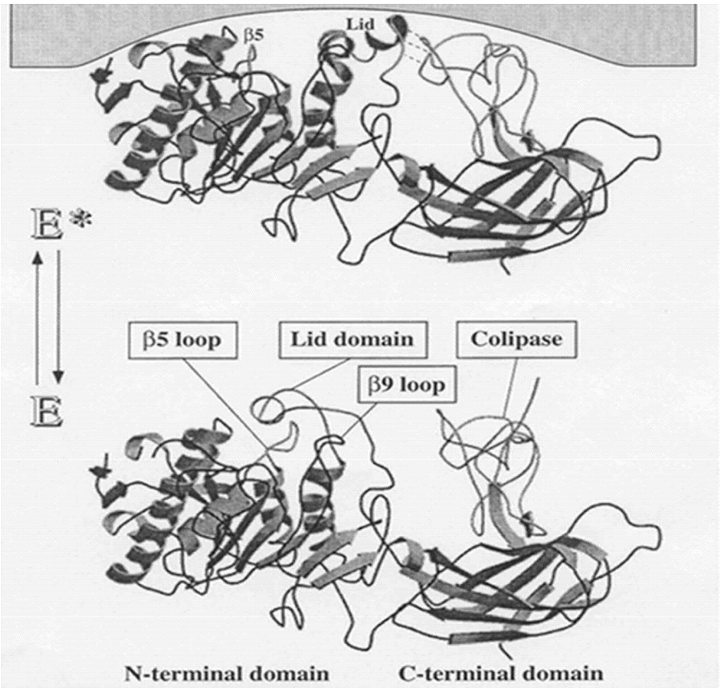
Development of the lipase gene family spans the change in science that witnessed the birth of contemporary techniques of molecular biology. Amino acid sequencing of enzymes gave way to cDNA cloning and gene organization, augmented by in vitro expression systems and crystallization. This review traces the origins and highlights the functional significance of the lipase gene family, overlaid on the background of this technical revolution. The gene family initially consisted of three mammalian lipases [pancreatic lipase (PL), lipoprotein lipase, and hepatic lipase] based on amino acid sequence similarity and gene organization. Family size increased when several proteins were subsequently added based on amino acid homology, including PL-related proteins 1 and 2, phosphatidylserine phospholipase A1, and endothelial lipase. The physiological function of each of the members is discussed as well as the region responsible for lipase properties such as enzymatic activity, substrate binding, heparin binding, and cofactor interaction. Crystallization of several lipase gene family members established that the family belongs to a superfamily of enzymes, which includes esterases and thioesterases. This superfamily is related by tertiary structure, rather than amino acid sequence, and represents one of the most populous families found in nature.
Overview
The claims and statistics of this paper haven’t been checked yet.
Free: it reads the open-access text and checks the first 5 claims that cite a source we can check. Create a free account to check every claim.
Integrity signals
Registry
Cites
Statistics
Figures
Verification
Claims the paper makes
The claims and statistics of this paper haven’t been checked yet.
Free: it reads the open-access text and checks the first 5 claims that cite a source we can check. Create a free account to check every claim.
Claims other papers make about this one
Each is checked against this paper’s own text: does it say what the citing paper says it does?
The check wasn’t confident either way, so it gives no verdict — never disputed.
In the citing paper
“Adapting the body to high fat diets allows the body to increase IMTG storage as well as increase FAox [21, 35].”
From Understanding the factors that effect maximal fat oxidation. (2018) · cites this paper as [21]
Experimental — accuracy not yet measured
Self-check
Percentages, sums and reported differences re-computed from the paper’s own numbers.
The self-check needs the paper’s full text.
Citations
Cites
Ollis, D. L., Cheah, E., Cygler, M., Dijkstra, B., Frolow, F., Franken, S. M., Harel, M., Remington, S. J., Silman, I., Schrag, J., et al. (1992) · "Protein Engineering, Design and Selection" · doi:10.1093/protein/5.3.197 · Cited by 2,120
Structure of human pancreatic lipase
Winkler, F. K., D'Arcy, A., & Hunziker, W. (1990) · Nature · doi:10.1038/343771a0 · Cited by 1,224 · cited 2×
“1), may also be required to move to allow full substrate entry (42), but a primary function of the PL carboxyl-terminal domain is to modulate substrate availability to the enzyme.”
BackgroundA serine protease triad forms the catalytic centre of a triacylglycerol lipase
Brady, L., Brzozowski, A. M., Derewenda, Z. S., Dodson, E., Dodson, G., Tolley, S., Turkenburg, J. P., Christiansen, L., Huge-Jensen, B., Norskov, L., et al. (1990) · Nature · doi:10.1038/343767a0 · Cited by 1,218 · cited 1×
“The amino-terminal domain of PL had striking similarities to that found in bacterial and fungal lipases, which are single-domain enzymes (38).”
Backgroundvan Tilbeurgh, H., Egloff, M.-P., Martinez, C., Rugani, N., Verger, R., & Cambillau, C. (1993) · Nature · doi:10.1038/362814a0 · Cited by 686 · cited 3×
“Co-crystallization of colipase with PL has shown that this domain is the primary cofactor interaction site (39).”
BackgroundInfluentialThe molecular evolution of genes and proteins: a tale of two serines
Brenner, S. (1988) · Nature · doi:10.1038/334528a0 · Cited by 547
Human Lipoprotein Lipase Complementary DNA Sequence
Wion, K. L., Kirchgessner, T. G., Lusis, A. J., Schotz, M. C., & Lawn, R. M. (1987) · Science · doi:10.1126/science.3823907 · Cited by 479 · cited 1×
“However, shortly thereafter, the complete LPL cDNA was made available and found not to contain a GGS sequence, thereby invalidating the labeling studies (34).”
BackgroundSelf-citationA novel endothelial-derived lipase that modulates HDL metabolism
Jaye, M., Lynch, K. J., Krawiec, J., Marchadier, D., Maugeais, C., Doan, K., South, V., Amin, D., Perrone, M., & Rader, D. J. (1999) · Nature Genetics · doi:10.1038/7766 · Cited by 427
Structure of the pancreatic lipase–procolipase complex
van Tilbeurgh, H., Sarda, L., Verger, R., & Cambillau, C. (1992) · Nature · doi:10.1038/359159a0 · Cited by 378
Cloning of a Unique Lipase from Endothelial Cells Extends the Lipase Gene Family
Hirata, K.-I., Dichek, H. L., Cioffi, J. A., Choi, S. Y., Leeper, N. J., Quintana, L., Kronmal, G. S., Cooper, A. D., & Quertermous, T. (1999) · Journal of Biological Chemistry · doi:10.1074/jbc.274.20.14170 · Cited by 304
Structure and evolution of the lipase superfamily.
Hide, W., Chan, L., & Li, W. (1992) · Journal of Lipid Research · doi:10.1016/s0022-2275(20)41537-8 · Cited by 266
Research works printed but not linked: 3
- Bernard, C. 1849. Rechérches sur les usages du sac pancréatique dans la digestion. Acad. Sci. 28: 249-285.
- Verger, R. 1984. Pancreatic lipases. In Lipases. B. Borgström and H.L. Brockman, editors. Elsevier, New York. 83-150.
- Borgström, B., and C. Erlanson-Albertsson. 1984. Pancreatic coli- pase. In Lipases. B. Borgström and H. L. Brockman, editors. Elsevier, Amsterdam. 152-178.
Cited by
Items 101–200 of 299
Inositol hexakisphosphate kinase-1 interacts with perilipin1 to modulate lipolysis
Ghoshal, S., Tyagi, R., Zhu, Q., & Chakraborty, A. (2016) · The International Journal of Biochemistry & Cell Biology · doi:10.1016/j.biocel.2016.06.018 · Cited by 39
Belal, S. A., Sivakumar, A. S., Kang, D., Cho, S., Choe, H. S., & Shim, K. S. (2018) · Animal Cells and Systems · doi:10.1080/19768354.2018.1517824 · Cited by 41
Mathé‐Hubert, H., Colinet, D., Deleury, E., Belghazi, M., Ravallec, M., Poulain, J., Dossat, C., Poirié, M., & Gatti, J. (2016) · Scientific Reports · doi:10.1038/srep35873 · Cited by 37
A.J. Board, Crowther, J. M., Acevedo-Fani, A., Meisrimler, C., Jameson, G. B., & Dobson, R. C. J. (2022) · Biophysical Reviews · doi:10.1007/s12551-021-00923-5 · Cited by 43
“Lipases catalyse the stepwise hydrolysis of triacylglycerides to diacylglycerides, which is the first step in the gluconeogenic pathway (Lin et al. 1983; Wong and Schotz 2002) and the glyoxysome is a peroxisome and holds many of the enzymes that are involved in breaking down fatty acids to carbohydrates (Beevers 1979,…”
BackgroundYuyama, I., Watanabe, T., & Takei, Y. (2010) · Marine Biotechnology · doi:10.1007/s10126-010-9265-3 · Cited by 41
“Lipases are water-soluble enzymes that hydrolyze ester bonds of water-insoluble substrates such as triglycerides,phospholipids,and cholesteryl esters( Wong and Schotz 2002 ).”
BackgroundAdipogenic potential of skeletal muscle satellite cells
Sanna, M., Franzin, C., Pozzobon, M., Favaretto, F., Rossi, C. A., Calcagno, A., Scarda, A., Prà, C. D., Pilon, C., Milan, G., et al. (2009) · Clinical Lipidology · doi:10.2217/clp.09.8 · Cited by 37
Lim, S. Y., Xenoulis, P. G., Stavroulaki, E. M., Lidbury, J. A., Suchodolski, J. S., Carrière, F., & Steiner, J. M. (2020) · Veterinary Clinical Pathology · doi:10.1111/vcp.12906 · Cited by 35
Phospholipase A1: structure, distribution and function
Inoue, A., & Aoki, J. (2006) · Future Lipidology · doi:10.2217/17460875.1.6.687 · Cited by 35
Li, X., Jiang, G., Qian, Y., Xu, W., & Liu, W. (2013) · Aquaculture · doi:10.1016/j.aquaculture.2013.08.020 · Cited by 38
Effect of fasting on digestive gland lipase transcripts expression in Penaeus vannamei
Rivera-Pérez, C., & García-Carreño, F. L. (2011) · Marine Genomics · doi:10.1016/j.margen.2011.07.002 · Cited by 36
“Lipases are a group of enzymes responsible of the hydrolysis of TAGs (Wong and Schotz, 2002), among lipases, intracellular lipases are liable enzymes that facilitate the hydrolysis of TAGs stored as lipid droplets (Zechner et al., 2009).”
BackgroundCarboxylesterases: structure, function and polymorphism in mammals
Satoh, T., & Hosokawa, M. (2010) · Journal of Pesticide Science · doi:10.1584/jpestics.r10-02 · Cited by 34
Sex-related Differences in Gene Expression in Salivary Glands of BALB/c Mice
Treister, N. S., Richards, S. M., Lombardi, M. J., Rowley, P., Jensen, R. V., & Sullivan, D. A. (2005) · Journal of Dental Research · doi:10.1177/154405910508400210 · Cited by 34
Hu, H., Li, A., Shi, C., Chen, L., Zhao, Z., Yin, X., Zhang, Q., Huang, Y., & Pan, H. (2024) · Microbiome · doi:10.1186/s40168-024-01788-y · Cited by 42
Yuan, D., Lan, D., Xin, R., Yang, B., & Wang, Y. (2014) · International Journal of Molecular Sciences · doi:10.3390/ijms150610554 · Cited by 33
Lipoprotein Lipase as a Candidate Target for Cancer Prevention/Therapy
Takasu, S., Mutoh, M., Takahashi, M., & Nakagama, H. (2011) · Biochemistry Research International · doi:10.1155/2012/398697 · Cited by 33
Wang, Q., Wu, H., Wang, A., Du, P., Pei, X., Li, H., Yin, X., Huang, L., & Xiong, X. (2010) · Journal of Biological Chemistry · doi:10.1074/jbc.m110.139659 · Cited by 31
Bacchetta, C., Rossi, A., Cian, R. E., Drago, S. R., & Cazenave, J. (2019) · Aquaculture Nutrition · doi:10.1111/anu.12893 · Cited by 33
Sato, K., Seol, H. S., & Kamada, T. (2009) · Comparative Biochemistry and Physiology Part B Biochemistry and Molecular Biology · doi:10.1016/j.cbpb.2009.10.001 · Cited by 31
Acute Elevation of Plasma PLTP Activity Strongly Increases Pre-existing Atherosclerosis
Moerland, M., Samyn, H., van Gent, T., van Haperen, R., Dallinga‐Thie, G. M., Grosveld, F. G., van Tol, A., & de Crom, R. (2008) · Arteriosclerosis Thrombosis and Vascular Biology · doi:10.1161/atvbaha.108.165084 · Cited by 33
McIlhargey, T. L., Yang, Y., Wong, H., & Hill, J. S. (2003) · Journal of Biological Chemistry · doi:10.1074/jbc.m300315200 · Cited by 31
Self-citationRole of N-linked glycosylation in the secretion and activity of endothelial lipase
Miller, G. C., Long, C., Bojilova, E., Marchadier, D. H. L., Badellino, K. O., Blanchard, N., Fuki, I. V., Glick, J. M., & Rader, D. J. (2004) · Journal of Lipid Research · doi:10.1194/jlr.m400162-jlr200 · Cited by 30
Doolittle, M. H., Neher, S. B., Ben-Zeev, O., Ling-liao, J., Gallagher, C. M., Hosseini, M., Yin, F., Wong, H., Walter, P., & Péterfy, M. (2009) · Journal of Biological Chemistry · doi:10.1074/jbc.m109.049395 · Cited by 29
Self-citationRetractedHou, T. Y., Ward, S. M., Murad, J., Watson, N. P., Israel, M. A., & Duffield, G. E. (2009) · Journal of Biological Chemistry · doi:10.1074/jbc.m109.013961 · Cited by 28
Expression of fat mobilizing genes in human epicardial adipose tissue
Jaffer, I., Riederer, M., Shah, P., Peters, P., Quehenberger, F., Wood, A., Scharnagl, H., März, W., Kostner, K., & Kostner, G. M. (2011) · Atherosclerosis · doi:10.1016/j.atherosclerosis.2011.10.026 · Cited by 31
Lee, M., Oh, K., Kang, C.-H., Kim, J., Oh, T.-K., Ryu, C., & Yoon, J. (2012) · Applied and Environmental Microbiology · doi:10.1128/aem.00260-12 · Cited by 28
Cheng, H., Wang, X., Peng, Y.-X., Meng, X., Sun, S., & Shi, X.-Y. (2009) · Comparative Biochemistry and Physiology Part B Biochemistry and Molecular Biology · doi:10.1016/j.cbpb.2009.02.006 · Cited by 27
Carboxylesterases: Structure, Function and Polymorphism
Satoh, T., & Hosokawa, M. (2009) · Biomolecules & Therapeutics · doi:10.4062/biomolther.2009.17.4.335 · Cited by 27
Oh, D., La, B., Lee, Y., Byun, Y., Lee, J., Yeo, G., & Yeo, J.-S. (2012) · Molecular Biology Reports · doi:10.1007/s11033-012-2389-y · Cited by 26
Gin, P., Goulbourne, C. N., Adeyo, O., Beigneux, A. P., Davies, B. S. J., Tat, S., Voss, C. V., Bensadoun, A., Fong, L. G., & Young, S. G. (2012) · Human Molecular Genetics · doi:10.1093/hmg/dds127 · Cited by 26
Lipase maturation factor 1 is required for endothelial lipase activity
Ben-Zeev, O., Hosseini, M., Lai, C.-M., Ehrhardt, N., Wong, H., Cefalu, A. B., Noto, D., Averna, M. R., Doolittle, M. H., & Péterfy, M. (2011) · Journal of Lipid Research · doi:10.1194/jlr.m011155 · Cited by 28
Self-citationRetractedMechanisms of lipase maturation
Doolittle, M. H., & Péterfy, M. (2010) · Clinical Lipidology · doi:10.2217/clp.09.84 · Cited by 29
Hepatic lipase maturation: a partial proteome of interacting factors
Doolittle, M. H., Ben-Zeev, O., Bassilian, S., Whitelegge, J. P., Péterfy, M., & Wong, H. (2009) · Journal of Lipid Research · doi:10.1194/jlr.m800603-jlr200 · Cited by 30
Self-citationDesign and synthesis of boronic acid inhibitors of endothelial lipase
O’Connell, D. P., LeBlanc, D. F., Cromley, D. A., Billheimer, J. T., Rader, D. J., & Bachovchin, W. W. (2011) · Bioorganic & Medicinal Chemistry Letters · doi:10.1016/j.bmcl.2011.12.043 · Cited by 24
Characterisation of lipase fatty acid selectivity using novel omega-3 pNP-acyl esters
Nalder, T. D., Marshall, S. N., Pfeffer, F. M., & Barrow, C. J. (2013) · Journal of Functional Foods · doi:10.1016/j.jff.2013.10.015 · Cited by 26
Identification of a phospholipase B encoded by the LPL1 gene in Saccharomyces cerevisiae
Kandasamy, S., Rajakumar, S., & Nachiappan, V. (2014) · Biochimica et Biophysica Acta (BBA) - Molecular and Cell Biology of Lipids · doi:10.1016/j.bbalip.2014.06.013 · Cited by 24
“The serine residues of the GXSXG motif are important for lipase/ esterase activity [38].”
BackgroundKim, K. S., Kim, B. K., Kim, H. J., Yoo, M. S., Mykles, D. L., & Kim, H. (2008) · Comparative Biochemistry and Physiology Part B Biochemistry and Molecular Biology · doi:10.1016/j.cbpb.2008.05.009 · Cited by 24
“Pancreatic lipases family members are capable of releasing free fatty acids from either triglycerides or phospholipids for cellular uptake (Wong and Schotz, 2002).”
BackgroundHeparin-binding peptide as a novel affinity tag for purification of recombinant proteins.
Morris, J., Jayanthi, S., Langston, R., Daily, A., Kight, A. D., McNabb, D. S., Henry, R., & Kumar, T. K. S. (2016) · Protein Expression and Purification · doi:10.1016/j.pep.2016.05.013 · Cited by 20
Endoplasmic reticulum quality control in lipoprotein metabolism
Koerner, C. M., Roberts, B. S., & Neher, S. B. (2019) · Molecular and Cellular Endocrinology · doi:10.1016/j.mce.2019.110547 · Cited by 26
Tjørnelund, H. D., Vind, J., Brask, J., Woodley, J. M., & Peters, G. H. J. (2023) · Computational and Structural Biotechnology Journal · doi:10.1016/j.csbj.2023.10.049 · Cited by 26
Soh, J., Kwon, D. Y., & Cha, Y. (2011) · Journal of Nutrition and Metabolism · doi:10.1155/2011/260214 · Cited by 23
“, triacylglycerols) and signaling molecules (2arachidonoylglycerol) [28, 29].”
Sadeghi, M., Panah, M. J. N., Bakhtiarizadeh, M. R., & Emami, A. (2015) · Journal of Trace Elements in Medicine and Biology · doi:10.1016/j.jtemb.2015.05.004 · Cited by 25
Alam, M., Gilham, D., Vance, D. E., & Lehner, R. S. (2005) · Journal of Lipid Research · doi:10.1194/jlr.m500344-jlr200 · Cited by 23
Ryu, Y., Tanaka, R., Kasahara, A., Ito, Y., Hiramatsu, N., Todo, T., Sullivan, C. V., & Hara, A. (2013) · ZOOLOGICAL SCIENCE · doi:10.2108/zsj.30.224 · Cited by 22
Cheng, H., Sun, S., Peng, Y.-X., Shi, X.-Y., Shen, X., Meng, X., & Dong, Z. (2009) · Molecular Biology Reports · doi:10.1007/s11033-009-9797-7 · Cited by 21
“LPL is a noncovalent dimer of two identical subunits that are held together in a head-to-tail arrangement [ 3 ].”
BackgroundInfluentialRichmond, G. S., & Smith, T. K. (2007) · Biochemical Journal · doi:10.1042/bj20070193 · Cited by 22
Feng, D., Huang, Q.-Y., Liu, K., Zhang, S.-C., & Liu, Z.-H. (2014) · Journal of Fish Biology · doi:10.1111/jfb.12423 · Cited by 23
y Sánchez, J. I., Cusack, K. D., Verheecke‐Vaessen, C., Kahla, A., Bekele, W. A., Doohan, F. M., Magan, N., & Medina, Á. (2020) · The Plant Genome · doi:10.1002/tpg2.20023 · Cited by 22
“It has been shown that a specific requirement or interaction between fungi and host is needed to have seed infestation, and significant advances have been made to understand the role of several factors controlling mycotoxin biosynthesis (Gao & Kolomiets, 2009; Wong & Schotz, 2002).”
BackgroundMutational Analysis of the “Regulatory Module” of Hormone-Sensitive Lipase
Wang, J., Shen, W., Patel, S., Harada, K., & Kraemer, F. B. (2005) · Biochemistry · doi:10.1021/bi049206t · Cited by 22
Badawi, M., Moumen, B., Giraud, I., Grève, P., & Cordaux, R. (2018) · Genes · doi:10.3390/genes9060290 · Cited by 23
“Hydrolase function: Lipase class 3 in wVul_0873 that hydrolyses ester linkages of triglycerides [73,74]; Peptidases/proteases that hydrolysepeptidic bounds [75,76] in wVul_1408, wVul_1454 and wVul_1775;”
BackgroundUnderstanding lipase assays in the diagnosis of pancreatitis in veterinary medicine
Lim, S. Y., Steiner, J. M., & Cridge, H. (2022) · Journal of the American Veterinary Medical Association · doi:10.2460/javma.22.03.0144 · Cited by 19
Pownall, H. J., Rosales, C., Gillard, B. K., & Ferrari, M. (2016) · Methodist DeBakey Cardiovascular Journal · doi:10.14797/mdcj-12-3-146 · Cited by 21
Suo, X., Yan, X., Tan, B., Pan, S., Li, T., Liu, H., Huang, W., Zhang, S., Yang, Y., & Dong, X. (2022) · Frontiers in Marine Science · doi:10.3389/fmars.2022.990193 · Cited by 24
Cheng, H., Meng, X., Sun, S., Shi, X.-Y., Peng, Y.-X., Dong, Z., & Shen, X. (2009) · Aquaculture Research · doi:10.1111/j.1365-2109.2009.02289.x · Cited by 18
Genome mining of fungal lipid-degrading enzymes for industrial applications
Vorapreeda, T., Thammarongtham, C., Cheevadhanarak, S., & Laoteng, K. (2015) · Microbiology · doi:10.1099/mic.0.000127 · Cited by 19
Tandon, G., Jaiswal, S., Iquebal, M. A., Kumar, S., Kaur, S., Rai, A. K., & Kumar, D. (2014) · Journal of Biomolecular Structure and Dynamics · doi:10.1080/07391102.2014.996187 · Cited by 20
Biodegradable arginine based steroid-surfactants: Cationic green agents for hydrophobic ion-pairing
Jörgensen, A. M., Knoll, P., Haddadzadegan, S., Fabian, H. C., Hupfauf, A., Gust, R., Jörgensen, R. G., & Bernkop‐Schnürch, A. (2022) · International Journal of Pharmaceutics · doi:10.1016/j.ijpharm.2022.122438 · Cited by 17
Insight Into the Dynamics of the Ixodes ricinus Nymphal Midgut Proteome
Kozelková, T., Dyčka, F., Lu, S. M., Urbanová, V., Frantová, H., Sojka, D., Šíma, R., Horn, M., Perner, J., & Kopáček, P. (2023) · Molecular & Cellular Proteomics · doi:10.1016/j.mcpro.2023.100663 · Cited by 19
“According to the BLAST CD search, the protein contains an alpha/beta hydrolase fold as well as a catalytic triad and nucleophilic elbow, which are the main features of the lipases (49, 50).”
MethodPorpaczy, E. A., Tauber, S., Bilban, M., Kostner, G. M., Gruber, M., Eder, S., Heintel, D., Le, T., Fleiß, K., Skrabs, C., et al. (2013) · Leukemia Research · doi:10.1016/j.leukres.2013.02.008 · Cited by 17
Genetic screening of the LPL gene in hypertriglyceridaemic patients
Wright, W. T., Young, I. S., Nicholls, D., & Graham, C. A. (2008) · Atherosclerosis · doi:10.1016/j.atherosclerosis.2007.10.029 · Cited by 17
“Lipoprotein lipase (LPL) is a key enzyme in TG atabolism which supplies the body with fatty acids by ydrolysing TG (reviewed in [3]).”
BackgroundNg, Y. L., Olivos‐García, A., Lim, T. K., Noordin, R., Lin, Q., & Othman, N. (2018) · American Journal of Tropical Medicine and Hygiene · doi:10.4269/ajtmh.18-0415 · Cited by 18
“This enzyme is involved in lipid metabolism such as hydrolysis of triglycerides, phospholipids, and cholesterol esters.(44) At the geneexpression level, the gene encoding E.”
BackgroundMa, F., Yang, Y., Jiang, M., Yin, D., & Liu, K. (2019) · Journal of Fish Biology · doi:10.1111/jfb.14136 · Cited by 17
Bouchaâla, E., Bouali, M., Ali, Y. B., Miled, N., Gargouri, Y., & Fendri, A. (2015) · Applied Biochemistry and Biotechnology · doi:10.1007/s12010-015-1564-8 · Cited by 17
Cai, Z., Xie, F., Mai, K., & Ai, Q. (2015) · Aquaculture Research · doi:10.1111/are.12960 · Cited by 18
Ren, Y., Wen, H., Li, Y., Li, J., He, F., & Ni, M. (2017) · Fish Physiology and Biochemistry · doi:10.1007/s10695-017-0403-y · Cited by 21
Kasrayan, A., Bocola, M., Sandström, A. G., Lavén, G., & Bäckvall, J. (2007) · ChemBioChem · doi:10.1002/cbic.200700179 · Cited by 17
Nguyen, J., Arthur, T. D., Fujita, K., Salgado, B. M., Donovan, M. K. R., Aguiar, L. R., Arias, A. D., Benaglio, P., Berggren, W. T., Belmonte, J. C. I., et al. (2023) · Nature Communications · doi:10.1038/s41467-023-42560-4 · Cited by 17
A Cell-Free Kinetic Analysis of Ionizable Lipid Hydrolysis
Couture‐Senécal, J., Natraj, J., & Khan, O. F. (2024) · Analytical Chemistry · doi:10.1021/acs.analchem.4c02399 · Cited by 18
Lipolytic and esterolytic activity‐based profiling of murine liver
Birner‐Gruenberger, R., Susani‐Etzerodt, H., Kollroser, M., Rechberger, G. N., & Hermetter, A. (2008) · PROTEOMICS · doi:10.1002/pmic.200800191 · Cited by 17
Rajan, S., de Guzman, H. C., Palaia, T. A., Goldberg, I. J., & Hussain, M. M. (2021) · Journal of Lipid Research · doi:10.1016/j.jlr.2021.100115 · Cited by 19
Characterisation and Expression Analysis of MrLip1, a Class 3 Family Lipase of Malassezia restricta
Park, M., Jung, W. H., Han, S. H., Lee, Y. H., & Lee, Y. W. (2015) · Mycoses · doi:10.1111/myc.12412 · Cited by 18
Luo, Z., Tan, X.-Y., Liu, C., Li, X., Liu, X., & Xi, W.-Q. (2011) · Aquaculture Research · doi:10.1111/j.1365-2109.2011.02942.x · Cited by 18
Mouse Embryonic Fibroblast Adipogenic Potential: A Comprehensive Transcriptome Analysis
Al‐Sayegh, M., Ali, H., Jamal, M. H., ElGindi, M., Chanyong, T., Al-Awadi, K., & Abu‐Farha, M. (2020) · Adipocyte · doi:10.1080/21623945.2020.1859789 · Cited by 16
Shaik, A., & Rosenson, R. S. (2021) · Cardiovascular Drugs and Therapy · doi:10.1007/s10557-021-07168-0 · Cited by 16
Mapping the heparin-binding domain of human hepatic lipase
Yu, W., & Hill, J. S. (2006) · Biochemical and Biophysical Research Communications · doi:10.1016/j.bbrc.2006.02.175 · Cited by 15
“HL is a member of a lipase gene superfamily that also includes lipoprotein lipase (LPL), pancreatic lipase, and endothelial lipase (EL) as members [8].”
BackgroundChen, Y., Wu, X., Lai, J., Liu, Y., Song, M., Li, F., & Gong, Q. (2021) · Aquaculture Reports · doi:10.1016/j.aqrep.2021.100780 · Cited by 14
Pari, L., Majeed, M. A., Ayyasamy, R., & Ramasamy, C. (2017) · Journal of Dietary Supplements · doi:10.1080/19390211.2017.1356416 · Cited by 13
“LPL is an insulin -sensitive enzyme related to the hydrolysis of triglycerides and the lipolytic activity in tissues (Wong and Schotz, 2002).”
BackgroundZhou, M., Balaban, M. Ö., Gupta, S., & Fletcher, G. C. (2014) · Journal of Shellfish Research · doi:10.2983/035.033.0216 · Cited by 13
QIU, G., & HILL, J. (2007) · Cardiovascular Research · doi:10.1016/j.cardiores.2007.08.002 · Cited by 14
Molecular insights into ochratoxin A biodegradation
Ábrahám, R., Baka, E., Al-Nussairawi, M., Táncsics, A., Farkas, M., Nagy, I., Kriszt, B., & Cserháti, M. (2025) · Biologia Futura · doi:10.1007/s42977-025-00258-2 · Cited by 13
Yan, Y., Lin, Y., Zhang, L., Gao, G., Chen, S., Chi, C., Hu, S., Sang, Y., Chu, X., Zhou, Q., et al. (2023) · Aquaculture Reports · doi:10.1016/j.aqrep.2023.101587 · Cited by 16
Li, Y.-X., Yan, Q., Liu, T., Wang, J., & Zhao, X. (2024) · BMC Biology · doi:10.1186/s12915-024-01973-3 · Cited by 14
González‐Félix, M. L., Gatlin, D. M., Pérez-Velázquez, M., Webb, K. A., García‐Ortega, A., & Hume, M. E. (2018) · Fish Physiology and Biochemistry · doi:10.1007/s10695-018-0523-z · Cited by 13
Tobin, A. J., Noel, N. P., Christian, S. L., & Brown, R. (2021) · BMC Research Notes · doi:10.1186/s13104-021-05728-z · Cited by 15
Brinkley, T. E., Halverstadt, A., Phares, D. A., Ferrell, R. E., Prigeon, R. L., Hagberg, J. M., & Goldberg, A. P. (2011) · Journal of Applied Physiology · doi:10.1152/japplphysiol.00567.2011 · Cited by 12
Arima, N., Inoue, A., Makide, K., Nonaka, T., & Aoki, J. (2011) · Journal of Lipid Research · doi:10.1194/jlr.m022400 · Cited by 12
Qiang, J., Bao, J., He, J., Tao, Y., Habte‐Tsion, H., & Xu, P. (2017) · Journal of Applied Ichthyology · doi:10.1111/jai.13330 · Cited by 14
Mir, I. N., Srivastava, P. P., Bhat, I. A., Dar, S. A., Sushila, N., Varghese, T., Muralidhar, A. P., & Jain, K. K. (2019) · Journal of Experimental Zoology Part B Molecular and Developmental Evolution · doi:10.1002/jez.b.22861 · Cited by 12
Yan, H., Li, L., Hu, F., Chen, W., Lei, H., Chen, X., Cai, W., & Tang, X. (2016) · Emerging Microbes & Infections · doi:10.1038/emi.2016.119 · Cited by 14
Tanaka, T., Yoneda, K., & Maeda, Y. (2022) · Springer eBooks · doi:10.1007/978-3-030-92499-7_18 · Cited by 15
Mir, I. N., Srivastava, P. P., Bhat, I. A., Jaffer, Y. D., & Agarwal, D. (2020) · Frontiers in Marine Science · doi:10.3389/fmars.2020.561402 · Cited by 12
“LPL, PL, and BAL have a significant level of structural resemblance and perform distinct functions in lipid metabolism (Wong and Schotz, 2002).”
BackgroundRamani, K., & SEKARAN, G. (2012) · Bioprocess and Biosystems Engineering · doi:10.1007/s00449-011-0673-1 · Cited by 11
“Lipases are water-soluble enzymes that hydrolyze the ester bonds of water-insoluble substrates such as triglycerides, phospholipids and cholesteryl esters [3].”
BackgroundMolecular cloning and expression analysis on LPL of Coilia nasus
Wang, M., Xu, D., Liu, K., Yang, J., & Xu, P. (2016) · Gene · doi:10.1016/j.gene.2016.02.017 · Cited by 11
Belardinelli, M. C., Fausto, A. M., Guerra, L., Buonocore, F., Bongiorno, G., Maroli, M., & Mazzini, M. (2005) · Annals of Tropical Medicine and Parasitology · doi:10.1179/136485905x51472 · Cited by 11
“His catalytic triad (Brady et al., 1990; Winkler et al., 1990; Wong and Schotz, 2002).”
BackgroundLiu, W. M., Shi, F., Lu, L., Zhang, C., Liu, Y., Zhang, J., Tao, Z. R., Shen, J., Li, G. Q., Wang, D. Q., et al. (2011) · Molecular and Cellular Biochemistry · doi:10.1007/s11010-011-0735-3 · Cited by 11
Expression of lipoprotein lipase associated with lung adenocarcinoma tissues
Lu, J., Li, J., Ji, C., Yu, W.-Y., Xu, Z., & Huang, S. (2007) · Molecular Biology Reports · doi:10.1007/s11033-006-9053-3 · Cited by 11
“The human LPL gene is mapped to chromosome 8p22, containing 10 exons, and has substantial sequence homology among most of the species that have been examined [3, 4].”
BackgroundLõokene, A., Zhang, L., Tõugu, V., & Olivecrona, G. (2003) · Journal of Biological Chemistry · doi:10.1074/jbc.m303894200 · Cited by 11
Kaiza, V. E., Yıldız, M., Eldem, V., Adabi, S. G., & Ofori‐Mensah, S. (2023) · Journal of Animal Physiology and Animal Nutrition · doi:10.1111/jpn.13858 · Cited by 13
The cld mutation: narrowing the critical chromosomal region and selecting candidate genes
Péterfy, M., Mao, H. Z., & Doolittle, M. H. (2006) · Mammalian Genome · doi:10.1007/s00335-006-0045-3 · Cited by 10
Simple and Efficient Purification of Recombinant Proteins Using the Heparin‐Binding Affinity Tag
Jayanthi, S., Gundampati, R. K., & Kumar, T. K. S. (2017) · Current Protocols in Protein Science · doi:10.1002/cpps.41 · Cited by 13
Estrogen receptor α activation modulates the gut microbiome and type 2 diabetes risk factors
Shiffler, J., Goerger, K., & Gorres, B. K. (2022) · Physiological Reports · doi:10.14814/phy2.15344 · Cited by 10
Metadata
- Authors
- Wong, H., & Schotz, M. C.
- Affiliations
- University of California, Los Angeles (US)
- Corresponding author
- Wong, Howard
- Venue
- Journal of Lipid Research
- Publisher
- Elsevier BV
- Published
- 2002-07
- Volume
- 43
- Issue
- 7
- Pages
- 993-999
- ISSN
- 0022-2275 (ISSN-L)
- OpenAlex
- W2072129661
- Cited by
- 298
- References
- 63
- Citations by year
- 2026: 5 · 2025: 7 · 2024: 10 · 2023: 9 · 2022: 11 · 2021: 13 · 2020: 11 · 2019: 12 · 2018: 16 · 2017: 9 · 2016: 16 · 2015: 18 · 2014: 14 · 2013: 19 · 2012: 11
- FWCI
- 1.81
- Type
- journal article
- Language
- en
- Open access
- hybrid
- doi.org
- Licence
- cc-by
- www.elsevier.com/tdm/userlicense/1.0/ (tdm)
- creativecommons.org/licenses/by/4.0/ (vor, 6644 d)
- Locations
- Journal of Lipid Research (publishedVersion, cc-by)
- PubMed (publishedVersion)
- DOAJ (DOAJ: Directory of Open Access Journals) (submittedVersion, cc-by-sa)
- Funders
- National Heart, Lung, and Blood Institute (HL28481, P01HL028481)
- Topics
- Health Sciences › Medicine › Cardiology and Cardiovascular Medicine › Lipid metabolism and disorders
- Life Sciences › Biochemistry, Genetics and Molecular Biology › Biochemistry › Lipid metabolism and biosynthesis
- Life Sciences › Biochemistry, Genetics and Molecular Biology › Molecular Biology › Enzyme Catalysis and Immobilization
- Keywords
- pancreatic lipase, lipoprotein lipase, hepatic lipase, endothelial lipase, esterase, thioesterase, enzyme structure, substrate binding, heparin binding, cofactor interactions, cDNA cloning, history of molecular biology
- MeSH terms
- Animals, Crystallization, Multigene Family, Lipase, Protein Conformation, Structure-Activity Relationship, Sequence Homology, Amino Acid, Evolution, Molecular
About these checks
Registry, retraction, Cites and statistics results are computed, not judged, with one exception: a printed reference that no index lists is read once by a model before it counts as a citation error. Claims are extracted by a model and kept only when their quote appears verbatim in the text; each cited source is then checked, with a model’s help, for whether it says what the claim relies on. Those verdicts can be wrong — read the claim’s quote and the cited source before relying on one.
Statistics and arithmetic are recomputed, not judged.
Confidence bands are shown only for fields calibrated on our annotated test set. None is calibrated yet, so no band is shown.
What counts as a claim ›How we measure confidence ›How we check this ›
Are you an author, or do you see a problem with this page? Request a review
Data sources
Bibliographic data: Semantic Scholar, OpenAlex, Crossref.
Contains information from the Semantic Scholar Academic Graph Datasets, made available under the ODC Attribution License (ODC-BY 1.0).
Semantic Scholar’s data is described in: Kinney, R., et al. (2023). The Semantic Scholar Open Data Platform. arXiv:2301.10140.
