

The lipase gene family
Open accessThe DOI matches its Crossref record; 63 of the 65 references it cites were found in a registry or an index.
Abstract
Development of the lipase gene family spans the change in science that witnessed the birth of contemporary techniques of molecular biology. Amino acid sequencing of enzymes gave way to cDNA cloning and gene organization, augmented by in vitro expression systems and crystallization. This review traces the origins and highlights the functional significance of the lipase gene family, overlaid on the background of this technical revolution. The gene family initially consisted of three mammalian lipases [pancreatic lipase (PL), lipoprotein lipase, and hepatic lipase] based on amino acid sequence similarity and gene organization. Family size increased when several proteins were subsequently added based on amino acid homology, including PL-related proteins 1 and 2, phosphatidylserine phospholipase A1, and endothelial lipase. The physiological function of each of the members is discussed as well as the region responsible for lipase properties such as enzymatic activity, substrate binding, heparin binding, and cofactor interaction. Crystallization of several lipase gene family members established that the family belongs to a superfamily of enzymes, which includes esterases and thioesterases. This superfamily is related by tertiary structure, rather than amino acid sequence, and represents one of the most populous families found in nature.
Overview
The claims and statistics of this paper haven’t been checked yet.
Free: it reads the open-access text and checks the first 5 claims that cite a source we can check. Create a free account to check every claim.
Integrity signals
Registry
Cites
Statistics
Figures
Verification
Claims the paper makes
The claims and statistics of this paper haven’t been checked yet.
Free: it reads the open-access text and checks the first 5 claims that cite a source we can check. Create a free account to check every claim.
Claims other papers make about this one
Each is checked against this paper’s own text: does it say what the citing paper says it does?
The check wasn’t confident either way, so it gives no verdict — never disputed.
In the citing paper
“Adapting the body to high fat diets allows the body to increase IMTG storage as well as increase FAox [21, 35].”
From Understanding the factors that effect maximal fat oxidation. (2018) · cites this paper as [21]
Experimental — accuracy not yet measured
Self-check
Percentages, sums and reported differences re-computed from the paper’s own numbers.
The self-check needs the paper’s full text.
Citations
Cites
Ollis, D. L., Cheah, E., Cygler, M., Dijkstra, B., Frolow, F., Franken, S. M., Harel, M., Remington, S. J., Silman, I., Schrag, J., et al. (1992) · "Protein Engineering, Design and Selection" · doi:10.1093/protein/5.3.197 · Cited by 2,120
Structure of human pancreatic lipase
Winkler, F. K., D'Arcy, A., & Hunziker, W. (1990) · Nature · doi:10.1038/343771a0 · Cited by 1,224 · cited 2×
“1), may also be required to move to allow full substrate entry (42), but a primary function of the PL carboxyl-terminal domain is to modulate substrate availability to the enzyme.”
BackgroundA serine protease triad forms the catalytic centre of a triacylglycerol lipase
Brady, L., Brzozowski, A. M., Derewenda, Z. S., Dodson, E., Dodson, G., Tolley, S., Turkenburg, J. P., Christiansen, L., Huge-Jensen, B., Norskov, L., et al. (1990) · Nature · doi:10.1038/343767a0 · Cited by 1,218 · cited 1×
“The amino-terminal domain of PL had striking similarities to that found in bacterial and fungal lipases, which are single-domain enzymes (38).”
Backgroundvan Tilbeurgh, H., Egloff, M.-P., Martinez, C., Rugani, N., Verger, R., & Cambillau, C. (1993) · Nature · doi:10.1038/362814a0 · Cited by 686 · cited 3×
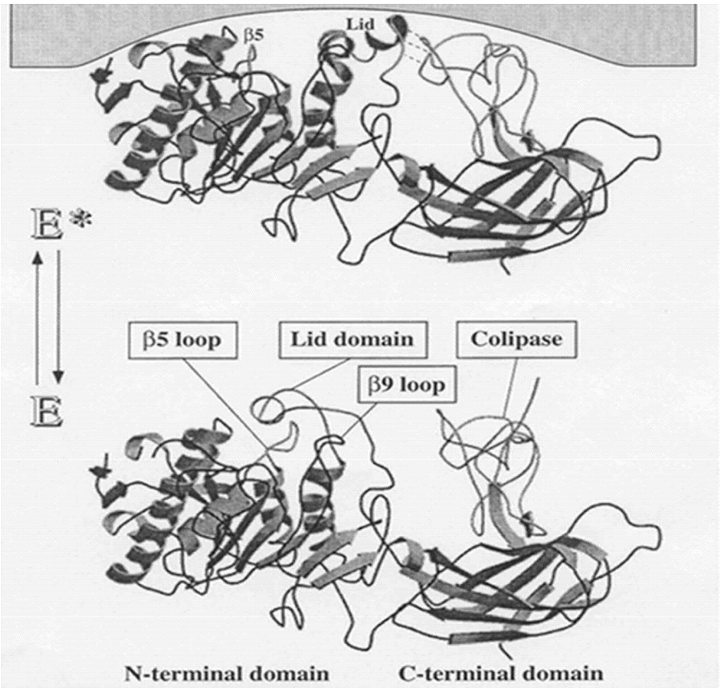
“Co-crystallization of colipase with PL has shown that this domain is the primary cofactor interaction site (39).”
BackgroundInfluentialThe molecular evolution of genes and proteins: a tale of two serines
Brenner, S. (1988) · Nature · doi:10.1038/334528a0 · Cited by 547
Human Lipoprotein Lipase Complementary DNA Sequence
Wion, K. L., Kirchgessner, T. G., Lusis, A. J., Schotz, M. C., & Lawn, R. M. (1987) · Science · doi:10.1126/science.3823907 · Cited by 479 · cited 1×
“However, shortly thereafter, the complete LPL cDNA was made available and found not to contain a GGS sequence, thereby invalidating the labeling studies (34).”
BackgroundSelf-citationA novel endothelial-derived lipase that modulates HDL metabolism
Jaye, M., Lynch, K. J., Krawiec, J., Marchadier, D., Maugeais, C., Doan, K., South, V., Amin, D., Perrone, M., & Rader, D. J. (1999) · Nature Genetics · doi:10.1038/7766 · Cited by 427
Structure of the pancreatic lipase–procolipase complex
van Tilbeurgh, H., Sarda, L., Verger, R., & Cambillau, C. (1992) · Nature · doi:10.1038/359159a0 · Cited by 378
Cloning of a Unique Lipase from Endothelial Cells Extends the Lipase Gene Family
Hirata, K.-I., Dichek, H. L., Cioffi, J. A., Choi, S. Y., Leeper, N. J., Quintana, L., Kronmal, G. S., Cooper, A. D., & Quertermous, T. (1999) · Journal of Biological Chemistry · doi:10.1074/jbc.274.20.14170 · Cited by 304
Structure and evolution of the lipase superfamily.
Hide, W., Chan, L., & Li, W. (1992) · Journal of Lipid Research · doi:10.1016/s0022-2275(20)41537-8 · Cited by 266
[4] Lipases and hydrolase fold
Schrag, J. D., & Cygler, M. (1997) · Methods in Enzymology · doi:10.1016/s0076-6879(97)84006-2 · Cited by 250
Lipase Activation by Nonionic Detergents
Hermoso, J., Pignol, D., Kerfelec, B., Crenon, I., Chapus, C., & Fontecilla-Camps, J. C. (1996) · Journal of Biological Chemistry · doi:10.1074/jbc.271.30.18007 · Cited by 233 · cited 1×
“a small micelle in the absence of any interface (40, 41).”
BackgroundOrganization of the human lipoprotein lipase gene and evolution of the lipase gene family.
Kirchgessner, T. G., Chuat, J. C., Heinzmann, C., Etienne, J., Guilhot, S., Svenson, K., Ameis, D., Pilon, C., d'Auriol, L., & Andalibi, A. (1989) · Proceedings of the National Academy of Sciences · doi:10.1073/pnas.86.24.9647 · Cited by 229 · cited 1×
“It was also found that LPL and hepatic lipase were more closely related to each other than to PL (5, 6).”
BackgroundLipoprotein Lipase and Hepatic Lipase
Olivecrona, T., & Olivecrona, G. (1994) · Handbook of Experimental Pharmacology · doi:10.1007/978-3-642-78426-2_6 · Cited by 217
Nykjaer, A., Bengtsson-Olivecrona, G., Lookene, A., Moestrup, S. K., Petersen, C. M., Weber, W., Beisiegel, U., & Gliemann, J. (1993) · Journal of Biological Chemistry · doi:10.1016/s0021-9258(18)82436-x · Cited by 196 · cited 1×
“It should be noted that several groups have proposed that both LPL and hepatic lipase also have a non-enzymatic role as a ligand in the metabolism of plasma lipoproteins (23, 24).”
Backgroundvan Tilbeurgh, H., Roussel, A., Lalouel, J. M., & Cambillau, C. (1994) · Journal of Biological Chemistry · doi:10.1016/s0021-9258(17)41822-9 · Cited by 188 · cited 2×
“Although structures for the other members have not yet been solved, computer modeling studies based on the PL backbone (43, 44) predict that hepatic lipase and LPL are also two-domain enzymes.”
BackgroundGiller, T., Buchwald, P., Blum-Kaelin, D., & Hunziker, W. (1992) · Journal of Biological Chemistry · doi:10.1016/s0021-9258(18)42032-7 · Cited by 165 · cited 3×
“, PL-related proteins 1 and 2, have been identified and found to form a subfamily of PLs (12, 13).”
BackgroundPorcine pancreatic lipase. Completion of the primary structure
De Caro, J., Boudouard, M., Bonicel, J., Guidoni, A., Desnuelle, P., & Rovery, M. (1981) · Biochimica et Biophysica Acta (BBA) - Protein Structure · doi:10.1016/0005-2795(81)90126-4 · Cited by 165
Serine Phospholipid-specific Phospholipase A That Is Secreted from Activated Platelets
Sato, T., Aoki, J., Nagai, Y., Dohmae, N., Takio, K., Doi, T., Arai, H., & Inoue, K. (1997) · Journal of Biological Chemistry · doi:10.1074/jbc.272.4.2192 · Cited by 147
Derewenda, Z. S., & Derewenda, U. (1991) · Biochemistry and Cell Biology · doi:10.1139/o91-125 · Cited by 138 · cited 1×
“servation, these two motifs most likely result from convergent, rather than divergent, evolution (30).”
BackgroundSynthesis of hepatic lipase in liver and extrahepatic tissues
Doolittle, M. H., Wong, H., Davis, R. C., & Schotz, M. C. (1987) · Journal of Lipid Research · doi:10.1016/s0022-2275(20)38591-6 · Cited by 129
Self-citationKounnas, M. Z., Chappell, D. A., Wong, H., Argraves, W. S., & Strickland, D. K. (1995) · Journal of Biological Chemistry · doi:10.1074/jbc.270.16.9307 · Cited by 123
Self-citationDugi, K. A., Dichek, H. L., & Santamarina-Fojo, S. (1995) · Journal of Biological Chemistry · doi:10.1074/jbc.270.43.25396 · Cited by 121 · cited 1×
“which is part of the amino-terminal domain, has been shown to influence substrate specificity (49), a parameter that other studies have shown to be affected by elements at P E N N S T A T E U N IV E R S IT Y , on F ebuary (2)1, 2013 w w w .”
BackgroundLipoprotein lipase and hepatic lipase
Olivecrona, T., & Bengtsson-Olivecrona, G. (1993) · Current Opinion in Lipidology · doi:10.1097/00041433-199306000-00003 · Cited by 112
Emmerich, J., Beg, O. U., Peterson, J., Previato, L., Brunzell, J. D., Brewer, H. B., & Santamarina-Fojo, S. (1992) · Journal of Biological Chemistry · doi:10.1016/s0021-9258(19)50642-1 · Cited by 107 · cited 1×
“hepatic lipase (35), then LPL (36), and finally PL (37)] conclusively identified the serine residue within the GXSXG sequence as the acylated center of the lipase gene”
BackgroundDavis, R. C., Wong, H., Nikazy, J., Wang, K., Han, Q., & Schotz, M. C. (1992) · Journal of Biological Chemistry · doi:10.1016/s0021-9258(19)36637-2 · Cited by 107 · cited 4×
“uted to reside in the carboxyl-terminal domain by chimera and site-directed mutagenesis studies (45, 46).”
BackgroundInfluentialSelf-citationEndothelial lipase colon; a new member of the triglyceride lipase gene family
Rader, D. J., & Jaye, M. (2000) · Current Opinion in Lipidology · doi:10.1097/00041433-200004000-00006 · Cited by 107 · cited 2×
“in that it has a relatively high phospholipase activity compared with neutral lipid hydrolysis (7).”
BackgroundKrapp, A., Ahle, S., Kersting, S., Hua, Y., Kneser, K., Nielsen, M., Gliemann, J., & Beisiegel, U. (1996) · Journal of Lipid Research · doi:10.1016/s0022-2275(20)42004-8 · Cited by 106
The catalytic site residues and interfacial binding of human pancreatic lipase.
Lowe, M. E. (1992) · Journal of Biological Chemistry · doi:10.1016/s0021-9258(18)41893-5 · Cited by 100 · cited 1×
“hepatic lipase (35), then LPL (36), and finally PL (37)] conclusively identified the serine residue within the GXSXG sequence as the acylated center of the lipase gene”
BackgroundGrusby, M. J., Nabavi, N., Wong, H., Dick, R. F., Bluestone, J. A., Schotz, M. C., & Glimcher, L. H. (1990) · Cell · doi:10.1016/0092-8674(90)90596-7 · Cited by 92 · cited 2×
“, PL-related proteins 1 and 2, have been identified and found to form a subfamily of PLs (12, 13).”
BackgroundSelf-citationGuidoni, A., Benkouka, F., CARO, J. D. D., & ROVERY, M. (1981) · Biochimica et Biophysica Acta (BBA) - Enzymology · doi:10.1016/0005-2744(81)90120-0 · Cited by 88 · cited 1×
“Early studies using emulsified diethyl p -nitrophenylphosphate to label PL identified a serine in a GXSXG pentapeptide sequence (where X any amino acid) as a residue involved in interfacial binding, but not the putative active site of the enzyme (31, 32).”
BackgroundStructure and Activity of Rat Pancreatic Lipase-related Protein 2
Roussel, A., Yang, Y., Ferrato, F., Verger, R., Cambillau, C., & Lowe, M. E. (1998) · Journal of Biological Chemistry · doi:10.1074/jbc.273.48.32121 · Cited by 87
Payne, R. M., Sims, H. F., Jennens, M. L., & Lowe, M. E. (1994) · American Journal of Physiology-Gastrointestinal and Liver Physiology · doi:10.1152/ajpgi.1994.266.5.g914 · Cited by 85 · cited 1×
“els that decrease in the adult pancreas (18).”
BackgroundDerewenda, Z. S., & Cambillau, C. (1991) · Journal of Biological Chemistry · doi:10.1016/s0021-9258(18)54470-7 · Cited by 81 · cited 1×
“Although structures for the other members have not yet been solved, computer modeling studies based on the PL backbone (43, 44) predict that hepatic lipase and LPL are also two-domain enzymes.”
BackgroundHosono, H., Aoki, J., Nagai, Y., Bandoh, K., Ishida, M., Taguchi, R., Arai, H., & Inoue, K. (2001) · Journal of Biological Chemistry · doi:10.1074/jbc.m104597200 · Cited by 79
Garner, C. W., & Smith, L. C. (1972) · Journal of Biological Chemistry · doi:10.1016/s0021-9258(19)45739-6 · Cited by 78
Action of organophosphates and sulfonyl halides on porcine pancreatic lipase
Maylié, M. F., Charles, M., & Desnuelle, P. (1972) · Biochimica et Biophysica Acta (BBA) - Enzymology · doi:10.1016/0005-2744(72)90017-4 · Cited by 78 · cited 1×
“Early studies using emulsified diethyl p -nitrophenylphosphate to label PL identified a serine in a GXSXG pentapeptide sequence (where X any amino acid) as a residue involved in interfacial binding, but not the putative active site of the enzyme (31, 32).”
BackgroundMutation of Tryptophan Residues in Lipoprotein Lipase
Lookene, A., Groot, N. B., Kastelein, J. J. P., Olivecrona, G., & Bruin, T. (1997) · Journal of Biological Chemistry · doi:10.1074/jbc.272.2.766 · Cited by 77
Molecular Mechanisms of Rat and Human Pancreatic Triglyceride Lipases ,
Lowe, M. E. (1997) · Journal of Nutrition · doi:10.1093/jn/127.4.549 · Cited by 75
Domain exchange: characterization of a chimeric lipase of hepatic lipase and lipoprotein lipase.
Wong, H., Davis, R. C., Nikazy, J., Seebart, K. E., & Schotz, M. C. (1991) · Proceedings of the National Academy of Sciences · doi:10.1073/pnas.88.24.11290 · Cited by 75 · cited 4×
“understanding of lipase structure-function relationships by development of the domain-exchange strategy (45).”
BackgroundInfluentialSelf-citationA molecular biology-based approach to resolve the subunit orientation of lipoprotein lipase
Wong, H., Yang, D., Hill, J. S., Davis, R. C., Nikazy, J., & Schotz, M. C. (1997) · Proceedings of the National Academy of Sciences · doi:10.1073/pnas.94.11.5594 · Cited by 73 · cited 1×
“interaction between the carboxyl-terminal lipid-binding elements of one subunit and the catalytic residues of the amino-terminal domain in the other subunit (59).”
BackgroundSelf-citationLipoprotein lipase domain function.
Wong, H., Davis, R. C., Thuren, T., Goers, J. W., Nikazy, J., Waite, M., & Schotz, M. C. (1994) · Journal of Biological Chemistry · doi:10.1016/s0021-9258(17)34063-2 · Cited by 71
Self-citationNykjaer, A., Nielsen, M., Lookene, A., Meyer, N., Røigaard, H., Etzerodt, M., Beisiegel, U., Olivecrona, G., & Gliemann, J. (1994) · Journal of Biological Chemistry · doi:10.1016/s0021-9258(18)31759-9 · Cited by 68
Sendak, R. A., & Bensadoun, A. (1998) · Journal of Lipid Research · doi:10.1016/s0022-2275(20)32557-8 · Cited by 67
Nagai, Y., Aoki, J., Sato, T., Amano, K., Matsuda, Y., Arai, H., & Inoue, K. (1999) · Journal of Biological Chemistry · doi:10.1074/jbc.274.16.11053 · Cited by 65
Hepatic lipase: site-directed mutagenesis of a serine residue important for catalytic activity.
Davis, R. C., Stahnke, G., Wong, H., Doolittle, M. H., Ameis, D., Will, H., & Schotz, M. C. (1990) · Journal of Biological Chemistry · doi:10.1016/s0021-9258(19)39324-x · Cited by 63 · cited 1×
“hepatic lipase (35), then LPL (36), and finally PL (37)] conclusively identified the serine residue within the GXSXG sequence as the acylated center of the lipase gene”
BackgroundSelf-citationDichek, H., Parrott, C. L., Ronan, R., Brunzell, J., Brewer, H. B., & Santamarina-Fojo, S. (1993) · Journal of Lipid Research · doi:10.1016/s0022-2275(20)36968-6 · Cited by 61
Reactivation of the totally inactive pancreatic lipase RP1 by structure-predicted point mutations
Roussel, A., CARO, J. D. D., Bezzine, S., Gastinel, L. N., Caro, A. M. D., Carrière, F., Leydier, S., Verger, R., & Cambillau, C. (1998) · Proteins Structure Function and Bioinformatics · doi:10.1002/(sici)1097-0134(19980901)32:4<523::aid-prot10>3.0.co;2-e · Cited by 56
A Single Heparin Binding Region within the Fibrinogen-like Domain Is Functional in Chick Tenascin-C
Fischer, D., Chiquet‐Ehrismann, R., Bernasconi, C., & Chiquet, M. (1995) · Journal of Biological Chemistry · doi:10.1074/jbc.270.7.3378 · Cited by 54
Subdomain Chimeras of Hepatic Lipase and Lipoprotein Lipase
Hill, J. S., Yang, D., Nikazy, J., Curtiss, L. K., Sparrow, J. T., & Wong, H. (1998) · Journal of Biological Chemistry · doi:10.1074/jbc.273.47.30979 · Cited by 53 · cited 1×
“LPL may also require interaction with both domains to elicit full activation of lipase activity (48).”
BackgroundSelf-citationHepatic Lipase in the Rat Ovary
Hixenbaugh, E. A., Sullivan, T., Strauss, J. F., Laposata, E. A., Komaromy, M. C., & Paavola, L. G. (1989) · Journal of Biological Chemistry · doi:10.1016/s0021-9258(19)84986-4 · Cited by 49
Lutz, E. P., Merkel, M., Kako, Y., Melford, K., Radner, H., Breslow, J. L., Bensadoun, A., & Goldberg, I. J. (2001) · Journal of Clinical Investigation · doi:10.1172/jci11774 · Cited by 48 · cited 1×
“These studies determined the in vivo effect of the changes and served to confirm in vitro observations (50, 51).”
ResultReddy, M. N., Maraganore, J. M., Meredith, S. C., Heinrikson, R. L., & Kézdy, F. J. (1986) · Journal of Biological Chemistry · doi:10.1016/s0021-9258(18)67568-4 · Cited by 46 · cited 1×
“Similar experiments of LPL treated with diisopropylfluorophosphate (DFP) yielded the conclusion that a labeled serine residue, in a GGS sequence, was the catalytic center of that enzyme (33).”
ResultHepatic lipase: a member of a family of structurally related lipases
Ben-Zeev, O., Ben-Avram, C. M., Wong, H., Nikazy, J., Shively, J. E., & Schotz, M. C. (1987) · Biochimica et Biophysica Acta (BBA) - Lipids and Lipid Metabolism · doi:10.1016/0005-2760(87)90212-8 · Cited by 46 · cited 1×
“A tryptic peptide from rat hepatic lipase was shown to be almost identical to a portion of bovine LPL (4).”
BackgroundSelf-citationHomology of lipoprotein lipase to pancreatic lipase.
Ben-Avram, C. M., Ben-Zeev, O., Lee, T. D., Haaga, K., Shively, J. E., Goers, J. W. F., Pedersen, M. E., Reeve, J. R., & Schotz, M. C. (1986) · Proceedings of the National Academy of Sciences · doi:10.1073/pnas.83.12.4185 · Cited by 38 · cited 2×
“Perhaps these enzymes arose from a common ancestral gene and diverged into distinct evolutionary pathways” (3).”
BackgroundSelf-citationAnalysis of Protein Structure-Function in Vivo
Kobayashi, J., Applebaum-Bowden, D. M., Dugi, K. A., Brown, D. R., Kashyap, V. S., Parrott, C. L., Duarte, C., Maeda, N., & Santamarina-Fojo, S. (1996) · Journal of Biological Chemistry · doi:10.1074/jbc.271.42.26296 · Cited by 38
Parrott, C. L., Kashyap, V. S., Santamarina-Fojo, S., Dugi, K. A., Duarte, C. J., Brown, D. R., Kobayashi, J., Maeda, N., & Applebaum-Bowden, D. M. (2021) · PubMed · doi:10.17615/pn8t-2536 · Cited by 35
Pancreatic Lipase-Related Protein Type 1: A Double Mutation Restores a Significant Lipase Activity
Crenon, I., Jayne, S., Kerfélec, B., Hermoso, J. A., Pignol, D., & Chapus, C. (1998) · Biochemical and Biophysical Research Communications · doi:10.1006/bbrc.1998.8651 · Cited by 31
Keiper, T., Schneider, J. G., & Dugi, K. A. (2001) · Journal of Lipid Research · doi:10.1016/s0022-2275(20)31567-4 · Cited by 27
The lipase/colipase complex is activated by a micelle: neutron crystallographic evidence
Pignol, D., Hermoso, J. A., Kerfélec, B., Crenon, I., Chapus, C., & Fontecilla-Camps, J. C. (1998) · Chemistry and Physics of Lipids · doi:10.1016/s0009-3084(98)00036-x · Cited by 25
van Groningen, J. J. M., Egmond, M. R., Bloemers, H. P. J., & Swart, G. W. M. (1997) · FEBS Letters · doi:10.1016/s0014-5793(97)00098-7 · Cited by 25 · cited 1×
“Recent studies have implicated two other lipolytic enzymes to be closely related members of this lipase gene family, namely endothelial lipase (7–9) and phosphatidylserine phospholipase A1 (10, 11).”
BackgroundSendak, R. A., Berryman, D. E., Gellman, G., Melford, K., & Bensadoun, A. (2000) · Journal of Lipid Research · doi:10.1016/s0022-2275(20)32060-5 · Cited by 24 · cited 1×
“For hepatic lipase and LPL, two crucial enzyme functions, lipid binding (54–56) and heparin binding (45, 46, 57, 58), are influenced by residues in this domain.”
BackgroundMiled, N., Caro, A. M. D., CARO, J. D. D., & Verger, R. (2000) · Biochimica et Biophysica Acta (BBA) - Protein Structure and Molecular Enzymology · doi:10.1016/s0167-4838(99)00288-5 · Cited by 23 · cited 1×
“(63), copyright © 2000, with permission from Elsevier Science, and was adapted from van Tilbeurgh et al.”
MethodWang, L., Veenstra, D. L., Radmer, R. J., & Kollman, P. A. (1998) · Proteins: Structure, Function, and Bioinformatics · doi:10.1002/(sici)1097-0134(19980901)32:4<438::aid-prot4>3.0.co;2-c · Cited by 23
Shirai, K., Fitzharris, T. J., Shinomiya, M., Muntz, H. G., Harmony, J. A. K., Jackson, R. L., & Quinn, D. M. (1983) · Journal of Lipid Research · doi:10.1016/s0022-2275(20)37947-5 · Cited by 19
Research works printed but not linked: 3
- Bernard, C. 1849. Rechérches sur les usages du sac pancréatique dans la digestion. Acad. Sci. 28: 249-285.
- Verger, R. 1984. Pancreatic lipases. In Lipases. B. Borgström and H.L. Brockman, editors. Elsevier, New York. 83-150.
- Borgström, B., and C. Erlanson-Albertsson. 1984. Pancreatic coli- pase. In Lipases. B. Borgström and H. L. Brockman, editors. Elsevier, Amsterdam. 152-178.
Cited by
Lipoprotein lipase: from gene to obesity
Wang, H., & Eckel, R. H. (2009) · American Journal of Physiology-Endocrinology and Metabolism · doi:10.1152/ajpendo.90920.2008 · Cited by 741
Maier, M. A., Jayaraman, M., Matsuda, S., Liu, J., Barros, S., Querbes, W., Tam, Y. K., Ansell, S. M., Kumar, V., Qin, J., et al. (2013) · Molecular Therapy · doi:10.1038/mt.2013.124 · Cited by 625
Fish Waste: From Problem to Valuable Resource
Coppola, D., Lauritano, C., Palma Esposito, F., Riccio, G., Rizzo, C., & de Pascale, D. (2021) · Marine Drugs · doi:10.3390/md19020116 · Cited by 592
Merkel, M., Eckel, R. H., & Goldberg, I. J. (2002) · Journal of Lipid Research · doi:10.1194/jlr.r200015-jlr200 · Cited by 522
“The LPL gene is located on chromosome 8p22, spans � 30 kb and is divided into 10 exons, and has substantial sequence homology among most of the species that have been examined ( 17 ).”
Biochemistry and Physiology of Mammalian Secreted Phospholipases A2
Lambeau, G., & Gelb, M. H. (2008) · Annual Review of Biochemistry · doi:10.1146/annurev.biochem.76.062405.154007 · Cited by 513
Metadata
- Authors
- Wong, H., & Schotz, M. C.
- Affiliations
- University of California, Los Angeles (US)
- Corresponding author
- Wong, Howard
- Venue
- Journal of Lipid Research
- Publisher
- Elsevier BV
- Published
- 2002-07
- Volume
- 43
- Issue
- 7
- Pages
- 993-999
- ISSN
- 0022-2275 (ISSN-L)
- OpenAlex
- W2072129661
- Cited by
- 298
- References
- 63
- Citations by year
- 2026: 5 · 2025: 7 · 2024: 10 · 2023: 9 · 2022: 11 · 2021: 13 · 2020: 11 · 2019: 12 · 2018: 16 · 2017: 9 · 2016: 16 · 2015: 18 · 2014: 14 · 2013: 19 · 2012: 11
- FWCI
- 1.81
- Type
- journal article
- Language
- en
- Open access
- hybrid
- doi.org
- Licence
- cc-by
- www.elsevier.com/tdm/userlicense/1.0/ (tdm)
- creativecommons.org/licenses/by/4.0/ (vor, 6644 d)
- Locations
- Journal of Lipid Research (publishedVersion, cc-by)
- PubMed (publishedVersion)
- DOAJ (DOAJ: Directory of Open Access Journals) (submittedVersion, cc-by-sa)
- Funders
- National Heart, Lung, and Blood Institute (HL28481, P01HL028481)
- Topics
- Health Sciences › Medicine › Cardiology and Cardiovascular Medicine › Lipid metabolism and disorders
- Life Sciences › Biochemistry, Genetics and Molecular Biology › Biochemistry › Lipid metabolism and biosynthesis
- Life Sciences › Biochemistry, Genetics and Molecular Biology › Molecular Biology › Enzyme Catalysis and Immobilization
- Keywords
- pancreatic lipase, lipoprotein lipase, hepatic lipase, endothelial lipase, esterase, thioesterase, enzyme structure, substrate binding, heparin binding, cofactor interactions, cDNA cloning, history of molecular biology
- MeSH terms
- Animals, Crystallization, Multigene Family, Lipase, Protein Conformation, Structure-Activity Relationship, Sequence Homology, Amino Acid, Evolution, Molecular
About these checks
Registry, retraction, Cites and statistics results are computed, not judged, with one exception: a printed reference that no index lists is read once by a model before it counts as a citation error. Claims are extracted by a model and kept only when their quote appears verbatim in the text; each cited source is then checked, with a model’s help, for whether it says what the claim relies on. Those verdicts can be wrong — read the claim’s quote and the cited source before relying on one.
Statistics and arithmetic are recomputed, not judged.
Confidence bands are shown only for fields calibrated on our annotated test set. None is calibrated yet, so no band is shown.
What counts as a claim ›How we measure confidence ›How we check this ›
Are you an author, or do you see a problem with this page? Request a review
Data sources
Bibliographic data: Semantic Scholar, OpenAlex, Crossref.
Contains information from the Semantic Scholar Academic Graph Datasets, made available under the ODC Attribution License (ODC-BY 1.0).
Semantic Scholar’s data is described in: Kinney, R., et al. (2023). The Semantic Scholar Open Data Platform. arXiv:2301.10140.
