

The lipase gene family
Open accessThe DOI matches its Crossref record; 63 of the 65 references it cites were found in a registry or an index.
Abstract
Development of the lipase gene family spans the change in science that witnessed the birth of contemporary techniques of molecular biology. Amino acid sequencing of enzymes gave way to cDNA cloning and gene organization, augmented by in vitro expression systems and crystallization. This review traces the origins and highlights the functional significance of the lipase gene family, overlaid on the background of this technical revolution. The gene family initially consisted of three mammalian lipases [pancreatic lipase (PL), lipoprotein lipase, and hepatic lipase] based on amino acid sequence similarity and gene organization. Family size increased when several proteins were subsequently added based on amino acid homology, including PL-related proteins 1 and 2, phosphatidylserine phospholipase A1, and endothelial lipase. The physiological function of each of the members is discussed as well as the region responsible for lipase properties such as enzymatic activity, substrate binding, heparin binding, and cofactor interaction. Crystallization of several lipase gene family members established that the family belongs to a superfamily of enzymes, which includes esterases and thioesterases. This superfamily is related by tertiary structure, rather than amino acid sequence, and represents one of the most populous families found in nature.
Overview
The claims and statistics of this paper haven’t been checked yet.
Free: it reads the open-access text and checks the first 5 claims that cite a source we can check. Create a free account to check every claim.
Integrity signals
Registry
Cites
Statistics
Figures
Verification
Claims the paper makes
The claims and statistics of this paper haven’t been checked yet.
Free: it reads the open-access text and checks the first 5 claims that cite a source we can check. Create a free account to check every claim.
Claims other papers make about this one
Each is checked against this paper’s own text: does it say what the citing paper says it does?
The check wasn’t confident either way, so it gives no verdict — never disputed.
In the citing paper
“Adapting the body to high fat diets allows the body to increase IMTG storage as well as increase FAox [21, 35].”
From Understanding the factors that effect maximal fat oxidation. (2018) · cites this paper as [21]
Experimental — accuracy not yet measured
Self-check
Percentages, sums and reported differences re-computed from the paper’s own numbers.
The self-check needs the paper’s full text.
Citations
Cites
Ollis, D. L., Cheah, E., Cygler, M., Dijkstra, B., Frolow, F., Franken, S. M., Harel, M., Remington, S. J., Silman, I., Schrag, J., et al. (1992) · "Protein Engineering, Design and Selection" · doi:10.1093/protein/5.3.197 · Cited by 2,120
Structure of human pancreatic lipase
Winkler, F. K., D'Arcy, A., & Hunziker, W. (1990) · Nature · doi:10.1038/343771a0 · Cited by 1,224 · cited 2×
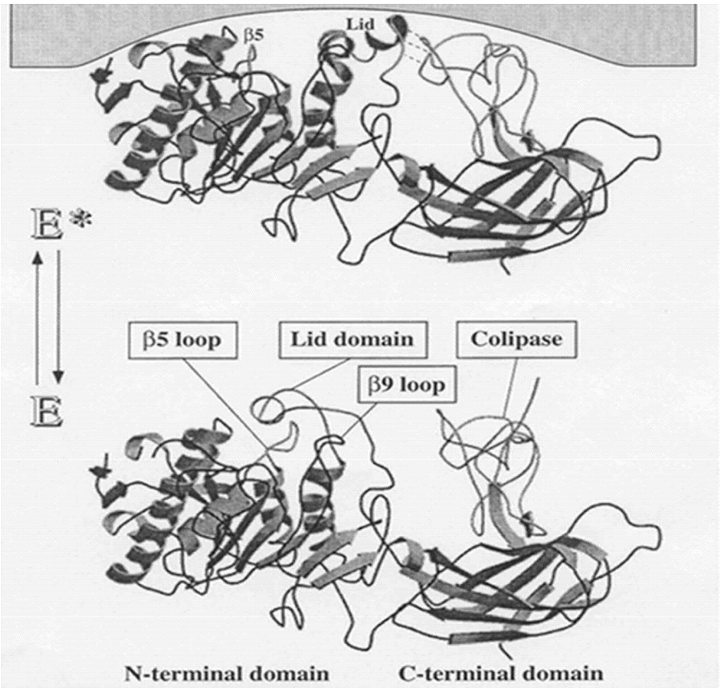
“1), may also be required to move to allow full substrate entry (42), but a primary function of the PL carboxyl-terminal domain is to modulate substrate availability to the enzyme.”
BackgroundA serine protease triad forms the catalytic centre of a triacylglycerol lipase
Brady, L., Brzozowski, A. M., Derewenda, Z. S., Dodson, E., Dodson, G., Tolley, S., Turkenburg, J. P., Christiansen, L., Huge-Jensen, B., Norskov, L., et al. (1990) · Nature · doi:10.1038/343767a0 · Cited by 1,218 · cited 1×
“The amino-terminal domain of PL had striking similarities to that found in bacterial and fungal lipases, which are single-domain enzymes (38).”
Backgroundvan Tilbeurgh, H., Egloff, M.-P., Martinez, C., Rugani, N., Verger, R., & Cambillau, C. (1993) · Nature · doi:10.1038/362814a0 · Cited by 686 · cited 3×
“Co-crystallization of colipase with PL has shown that this domain is the primary cofactor interaction site (39).”
BackgroundInfluentialThe molecular evolution of genes and proteins: a tale of two serines
Brenner, S. (1988) · Nature · doi:10.1038/334528a0 · Cited by 547
Human Lipoprotein Lipase Complementary DNA Sequence
Wion, K. L., Kirchgessner, T. G., Lusis, A. J., Schotz, M. C., & Lawn, R. M. (1987) · Science · doi:10.1126/science.3823907 · Cited by 479 · cited 1×
“However, shortly thereafter, the complete LPL cDNA was made available and found not to contain a GGS sequence, thereby invalidating the labeling studies (34).”
BackgroundSelf-citationA novel endothelial-derived lipase that modulates HDL metabolism
Jaye, M., Lynch, K. J., Krawiec, J., Marchadier, D., Maugeais, C., Doan, K., South, V., Amin, D., Perrone, M., & Rader, D. J. (1999) · Nature Genetics · doi:10.1038/7766 · Cited by 427
Structure of the pancreatic lipase–procolipase complex
van Tilbeurgh, H., Sarda, L., Verger, R., & Cambillau, C. (1992) · Nature · doi:10.1038/359159a0 · Cited by 378
Cloning of a Unique Lipase from Endothelial Cells Extends the Lipase Gene Family
Hirata, K.-I., Dichek, H. L., Cioffi, J. A., Choi, S. Y., Leeper, N. J., Quintana, L., Kronmal, G. S., Cooper, A. D., & Quertermous, T. (1999) · Journal of Biological Chemistry · doi:10.1074/jbc.274.20.14170 · Cited by 304
Structure and evolution of the lipase superfamily.
Hide, W., Chan, L., & Li, W. (1992) · Journal of Lipid Research · doi:10.1016/s0022-2275(20)41537-8 · Cited by 266
Research works printed but not linked: 3
- Bernard, C. 1849. Rechérches sur les usages du sac pancréatique dans la digestion. Acad. Sci. 28: 249-285.
- Verger, R. 1984. Pancreatic lipases. In Lipases. B. Borgström and H.L. Brockman, editors. Elsevier, New York. 83-150.
- Borgström, B., and C. Erlanson-Albertsson. 1984. Pancreatic coli- pase. In Lipases. B. Borgström and H. L. Brockman, editors. Elsevier, Amsterdam. 152-178.
Cited by
Lipoprotein lipase: from gene to obesity
Wang, H., & Eckel, R. H. (2009) · American Journal of Physiology-Endocrinology and Metabolism · doi:10.1152/ajpendo.90920.2008 · Cited by 741
Maier, M. A., Jayaraman, M., Matsuda, S., Liu, J., Barros, S., Querbes, W., Tam, Y. K., Ansell, S. M., Kumar, V., Qin, J., et al. (2013) · Molecular Therapy · doi:10.1038/mt.2013.124 · Cited by 625
Fish Waste: From Problem to Valuable Resource
Coppola, D., Lauritano, C., Palma Esposito, F., Riccio, G., Rizzo, C., & de Pascale, D. (2021) · Marine Drugs · doi:10.3390/md19020116 · Cited by 592
Merkel, M., Eckel, R. H., & Goldberg, I. J. (2002) · Journal of Lipid Research · doi:10.1194/jlr.r200015-jlr200 · Cited by 522
“The LPL gene is located on chromosome 8p22, spans � 30 kb and is divided into 10 exons, and has substantial sequence homology among most of the species that have been examined ( 17 ).”
Biochemistry and Physiology of Mammalian Secreted Phospholipases A2
Lambeau, G., & Gelb, M. H. (2008) · Annual Review of Biochemistry · doi:10.1146/annurev.biochem.76.062405.154007 · Cited by 513
Kim, J., Eygeris, Y., Gupta, M., & Sahay, G. (2021) · Advanced Drug Delivery Reviews · doi:10.1016/j.addr.2020.12.014 · Cited by 514
Kraemer, F. B., & Shen, W.-J. (2002) · Journal of Lipid Research · doi:10.1194/jlr.r200009-jlr200 · Cited by 511
“Limited proteolysis and denaturation studies (16) suggested that HSL, like other lipases ( 17 ) contains two major domains ( Fig. 1 ). The N-terminal 320 amino acid domain is encoded by exons 1‐4 and has no primary or secondary structural similarity with known proteins; however, the N-terminal domain has been shown to…”
BackgroundStructure, function and regulation of carboxylesterases
Satoh, T., & Hosokawa, M. (2006) · Chemico-Biological Interactions · doi:10.1016/j.cbi.2006.07.001 · Cited by 488
Hosokawa, M. (2008) · Molecules · doi:10.3390/molecules13020412 · Cited by 382
Structure, Function, and Regulation of Carboxylesterases
Hosokawa, M., & Satoh, T. (2006) · Toxicology of Organophosphate & Carbamate Compounds · doi:10.1016/b978-012088523-7/50017-x · Cited by 374
Recombinant Lipases and Phospholipases and Their Use as Biocatalysts for Industrial Applications
Borrelli, G., & Trono, D. (2015) · International Journal of Molecular Sciences · doi:10.3390/ijms160920774 · Cited by 352
Obese Yeast: Triglyceride Lipolysis Is Functionally Conserved from Mammals to Yeast
Kurat, C. F., Natter, K., Petschnigg, J., Wolinski, H., Scheuringer, K., Scholz, H., Zimmermann, R., Leber, R., Zechner, R., & Kohlwein, S. D. (2006) · Journal of Biological Chemistry · doi:10.1074/jbc.m508414200 · Cited by 322
Inhibitory effects of grape seed extract on lipases
Moreno, D. A., Ilic, N., Poulev, A., Brasaemle, D. L., Fried, S. K., & Raskin, I. (2003) · Nutrition · doi:10.1016/s0899-9007(03)00167-9 · Cited by 267
High Density Lipoprotein Structure–Function and Role in Reverse Cholesterol Transport
Lund-Katz, S., & Phillips, M. C. (2010) · Subcellular Biochemistry · doi:10.1007/978-90-481-8622-8_7 · Cited by 262
Genetics and causality of triglyceride-rich lipoproteins in atherosclerotic cardiovascular disease
Rosenson, R. S., Davidson, M. H., Hirsh, B. J., Kathiresan, S., & Gaudet, D. (2014) · Journal of the American College of Cardiology · doi:10.1016/j.jacc.2014.09.042 · Cited by 260
Understanding the factors that effect maximal fat oxidation.
Purdom, T., Kravitz, L., Dokladny, K., & Mermier, C. (2018) · Journal of the International Society of Sports Nutrition · doi:10.1186/s12970-018-0207-1 · Cited by 247
“Therefore, ATGL disassociates the first FA from the glycerol molecule forming diacylglycerol + FA or (DAG), whereas HSL is responsible for the second FA chain disassociation [8].”
BackgroundInfluentialTechniques to measure lipase and esterase activity in vitro
Gilham, D., & Lehner, R. (2005) · Methods · doi:10.1016/j.ymeth.2004.11.003 · Cited by 212
Lipoproteins, cholesterol homeostasis and cardiac health
Daniels, T. F., Killinger, K. M., Michal, J. J., Wright Jr., R. W., & Jiang, Z. (2009) · International Journal of Biological Sciences · doi:10.7150/ijbs.5.474 · Cited by 204
“Lipases are water-soluble enzymes that hydrolyze ester bonds of water-insoluble substrates such as triglycerides, phospholipids, and cholesteryl esters (32).”
BackgroundStauch, B., Fisher, S. J., & Cianci, M. (2015) · Journal of Lipid Research · doi:10.1194/jlr.m063388 · Cited by 196
“For these reasons lipases are enzymes of considerable physiological significance (1) with high interest also for their industrial applications (2).”
BackgroundHepatic lipase and dyslipidemia: interactions among genetic variants, obesity, gender and diet.
Deeb, S. S., Zambon, A., Carr, M. C., Ayyobi, A. F., & Brunzell, J. D. (2003) · Journal of Lipid Research · doi:10.1194/jlr.r200017-jlr200 · Cited by 193
Chiodelli, P., Bugatti, A., Urbinati, C., & Rusnati, M. (2015) · Molecules · doi:10.3390/molecules20046342 · Cited by 159
Cloning and Characterization of the Acid Lipase from Castor Beans
Eastmond, P. J. (2004) · Journal of Biological Chemistry · doi:10.1074/jbc.m408686200 · Cited by 141
Köffel, R., Tiwari, R., Falquet, L., & Schneiter, R. (2005) · Molecular and Cellular Biology · doi:10.1128/mcb.25.5.1655-1668.2005 · Cited by 138
Ding, Q., Chang, C.-J., Xie, X., Xia, W., Yang, J.-Y., Wang, S.-C., Wang, Y., Xia, J., Chen, L., Cai, C., et al. (2011) · Journal of Clinical Investigation · doi:10.1172/jci45008 · Cited by 132
Lipases from Mammals and Fishes
Kurtovic, I., Marshall, S. N., Zhao, X., & Simpson, B. K. (2009) · Reviews in Fisheries Science · doi:10.1080/10641260802031322 · Cited by 149
Lipoprotein lipase: From gene to atherosclerosis
Li, Y., He, P.-P., Zhang, D.-W., Zheng, X.-L., Cayabyab, F. S., Yin, W.-D., & Tang, C.-K. (2014) · Atherosclerosis · doi:10.1016/j.atherosclerosis.2014.10.016 · Cited by 109
Role of adipocyte-derived lipoprotein lipase in adipocyte hypertrophy
Gonzales, A. M., & Orlando, R. A. (2007) · Nutrition & Metabolism · doi:10.1186/1743-7075-4-22 · Cited by 124
Saravanan, S., & Pari, L. (2015) · European Journal of Pharmacology · doi:10.1016/j.ejphar.2015.05.034 · Cited by 137
“LPL is a key enzyme in TG catabolism which supplies the body with fatty acids by hydrolyzing triglyceride (Wong and Schotz, 2002).”
BackgroundTriacylglycerol hydrolase: role in intracellular lipid metabolism
Dolinsky, V. W., Gilham, D., Alam, M., Vance, D. E., & Lehner, R. S. (2004) · Cellular and Molecular Life Sciences · doi:10.1007/s00018-004-3426-3 · Cited by 136
Hepatic Proprotein Convertases Modulate HDL Metabolism
Jin, W., Wang, X., Millar, J. S., Quertermous, T., Rothblat, G. H., Glick, J. M., & Rader, D. J. (2007) · Cell Metabolism · doi:10.1016/j.cmet.2007.07.009 · Cited by 120
Fujita, M., Umemura, M., Yoko‐o, T., & Jigami, Y. (2006) · Molecular Biology of the Cell · doi:10.1091/mbc.e06-08-0715 · Cited by 131
Tseng, C. C., Bruner, S. D., Kohli, R. M., Marahiel, M. A., Walsh, C. T., & Sieber, S. A. (2002) · Biochemistry · doi:10.1021/bi026592a · Cited by 116
Fuki, I. V., Blanchard, N., Jin, W., Marchadier, D. H. L., Millar, J. S., Glick, J. M., & Rader, D. J. (2003) · Journal of Biological Chemistry · doi:10.1074/jbc.m302181200 · Cited by 115
Advances in adipose tissue metabolism
Lafontan, M. (2008) · International Journal of Obesity · doi:10.1038/ijo.2008.237 · Cited by 177
Biundo, A., Hromić‐Jahjefendić, A., Pavkov‐Keller, T., Gruber, K. F., Quartinello, F., Haernvall, K., Perz, V., Arrell, M. S., Zinn, M., Ribitsch, D., et al. (2015) · Applied Microbiology and Biotechnology · doi:10.1007/s00253-015-7031-1 · Cited by 114
Obesity and Cancer Progression: Is There a Role of Fatty Acid Metabolism?
Balaban, S., Lee, L. S., Schreuder, M., & Hoy, A. J. (2015) · BioMed Research International · doi:10.1155/2015/274585 · Cited by 107
Effects of Arachis hypogaea nutshell extract on lipid metabolic enzymes and obesity parameters
Moreno, D. A., Ilić, N., Poulev, A., & Raskin, I. (2005) · Life Sciences · doi:10.1016/j.lfs.2005.11.012 · Cited by 117
Boekhorst, J., Siezen, R. J., Zwahlen, M.-C., Vilanova, D., Pridmore, R. D., Mercenier, A., Kleerebezem, M., de Vos, W. M., Brüssow, H., & Desiere, F. (2004) · Microbiology · doi:10.1099/mic.0.27392-0 · Cited by 105
“Two families of putative cell-surface hydrolases (CSH-1 and CSH-2) are detected which have sequence characteristics of lipases or esterases (Anthonsen et al., 1995; Wong & Schotz, 2002 ).”
BackgroundZheng, K., Zhu, X., Han, D. H., Yang, Y., Wu, L., & Xie, S. (2009) · Aquaculture · doi:10.1016/j.aquaculture.2009.11.028 · Cited by 104
“Lipoprotein lipase (LPL), hepatic lipase (HL) andpancreatic lipase (PL) are threemembers of the lipase gene family, as determinedbyaminoacid sequence similarity and gene organization (Wong and Schotz, 2002).”
BackgroundAsadbegi, M., Yaghmaei, P., Salehi, I., Komaki, A., & Ebrahim‐Habibi, A. (2017) · Metabolic Brain Disease · doi:10.1007/s11011-017-9960-0 · Cited by 109
Saera-Vila, A., Calduch-Giner, J. À., Gómez‐Requeni, P., Médale, F., Kaushik, S., & Pérez‐Sánchez, J. (2005) · Comparative Biochemistry and Physiology Part B Biochemistry and Molecular Biology · doi:10.1016/j.cbpb.2005.07.009 · Cited by 111
Proprotein Covertases Are Responsible for Proteolysis and Inactivation of Endothelial Lipase
Jin, W., Fuki, I. V., Seidah, N. G., Benjannet, S., Glick, J. M., & Rader, D. J. (2005) · Journal of Biological Chemistry · doi:10.1074/jbc.m502264200 · Cited by 98
von Eckardstein, A., & Rohrer, L. (2009) · Current Opinion in Lipidology · doi:10.1097/mol.0b013e32832afd63 · Cited by 101
O’Mahony, J. A., Fox, P. F., & Kelly, A. L. (2012) · Springer eBooks · doi:10.1007/978-1-4614-4714-6_12 · Cited by 98
New Tools for Exploring “Old Friends—Microbial Lipases”
Nagarajan, S. (2012) · Applied Biochemistry and Biotechnology · doi:10.1007/s12010-012-9849-7 · Cited by 97
Genomic Structure and Transcriptional Regulation of the Rat, Mouse, and Human Carboxylesterase Genes
Hosokawa, M., Furihata, T., Yaginuma, Y., Yamamoto, N., Koyano, N., Fujii, A., 佑子, 永., Satoh, T., & Chiba, K. (2007) · Drug Metabolism Reviews · doi:10.1080/03602530600952164 · Cited by 90
Angiopoietin-like Protein 4 Inhibition of Lipoprotein Lipase
Lafferty, M. J., Bradford, K. C., Erie, D. A., & Neher, S. B. (2013) · Journal of Biological Chemistry · doi:10.1074/jbc.m113.497602 · Cited by 88
Angptl4 serves as an endogenous inhibitor of intestinal lipid digestion
Mattijssen, F., Alex, S., Swarts, H. J., Groen, A. K., van Schothorst, E. M., & Kersten, S. (2014) · Molecular Metabolism · doi:10.1016/j.molmet.2013.11.004 · Cited by 88
Wang, H., Gilham, D., & Lehner, R. (2007) · Journal of Biological Chemistry · doi:10.1074/jbc.m706841200 · Cited by 88
Lipoprotein lipase and its role in regulation of plasma lipoproteins and cardiac risk
Otarod, J. K., & Goldberg, I. J. (2004) · Current Atherosclerosis Reports · doi:10.1007/s11883-004-0043-4 · Cited by 99
“This family includes LPL, hepatic lipase (HL), pancreatic lipase, and the recently discovered endothelial lipase (EL) [ 4 ].”
BackgroundGPIHBP1: an endothelial cell molecule important for the lipolytic processing of chylomicrons
Young, S. G., Davies, B. S., Fong, L. G., Gin, P., Weinstein, M. M., Bensadoun, A., & Beigneux, A. P. (2007) · Current Opinion in Lipidology · doi:10.1097/mol.0b013e3281527914 · Cited by 87
siRNA Functionalized Lipid Nanoparticles (LNPs) in Management of Diseases
Kalita, T., Dezfouli, S. A., Pandey, L. M., & Uludağ, H. (2022) · Pharmaceutics · doi:10.3390/pharmaceutics14112520 · Cited by 99
Heestand, B. N., Shen, Y., Liu, W., Magner, D. B., Storm, N., Meharg, C., Habermann, B., & Antebi, A. (2013) · PLoS Genetics · doi:10.1371/journal.pgen.1003651 · Cited by 84
A novel lysophosphatidylcholine acyl transferase activity is expressed by peroxiredoxin 6
Fisher, A. B., Dodia, C., Sorokina, E. M., Li, H., Zhou, S., Raabe, T. D., & Feinstein, S. I. (2016) · Journal of Lipid Research · doi:10.1194/jlr.m064758 · Cited by 85
Vinayagam, R., Saravanan, R., & Senthilraja, P. (2013) · Phytomedicine · doi:10.1016/j.phymed.2013.08.027 · Cited by 84
Utilization of marine by-products for the recovery of value-added products
Shahidi, F., Varatharajan, V., Peng, H., & Senadheera, R. (2019) · Journal of Food Bioactives · doi:10.31665/jfb.2019.6184 · Cited by 136
Quadro, L., Hamberger, L., Gottesman, M. E., Colantuoni, V., Ramakrishnan, R., & Blaner, W. S. (2004) · American Journal of Physiology-Endocrinology and Metabolism · doi:10.1152/ajpendo.00556.2003 · Cited by 82
“We are currently undertaking experiments to establish whether well-studied lipoprotein-related proteins such as the LDL receptor (28, 38), lipoprotein lipase (19), or endothelial lipase (24, 43, 70), are involved in placental uptake of retinoid from lipoprotein particles.”
MethodGenes, transcription factors and enzymes involved in lipid metabolism in fin fish
Ayisi, C. L., Yamei, C., & Zhao, J.-L. (2017) · Agri Gene · doi:10.1016/j.aggene.2017.09.006 · Cited by 84
Quiroga, A. D., & Lehner, R. S. (2011) · Biochimica et Biophysica Acta (BBA) - Molecular and Cell Biology of Lipids · doi:10.1016/j.bbalip.2011.09.007 · Cited by 86
Vascular lipases, inflammation and atherosclerosis
Hasham, S. N., & Pillarisetti, S. (2006) · Clinica Chimica Acta · doi:10.1016/j.cca.2006.04.020 · Cited by 76
Oku, H., Koizumi, N., Okumura, T., Kobayashi, T., & Umino, T. (2006) · Comparative Biochemistry and Physiology Part B Biochemistry and Molecular Biology · doi:10.1016/j.cbpb.2006.06.008 · Cited by 75
“Lipoprotein lipase (LPL), hepatic lipase (HL), pancreatic lipase (PL) and endothelial lipase (EL) belong to the lipase gene family (Hide et al., 1992; Wong and Schotz, 2002).”
BackgroundMartins, A. M., Pham, Q. P., Malafaya, P. B., Sousa, R. A., Gomes, M. E., Raphael, R. M., Kasper, F. K., Reis, R. L., & Mikos, A. G. (2008) · Tissue Engineering Part A · doi:10.1089/ten.tea.2008.0025 · Cited by 81
Lipase maturation factor 1: structure and role in lipase folding and assembly
Doolittle, M. H., Ehrhardt, N., & Péterfy, M. (2010) · Current Opinion in Lipidology · doi:10.1097/mol.0b013e32833854c0 · Cited by 75
Halverstadt, A., Phares, D. A., Ferrell, R. E., Wilund, K. R., Goldberg, A. P., & Hagberg, J. M. (2003) · Metabolism · doi:10.1016/s0026-0495(03)00284-1 · Cited by 84
Rahman, H. A., Saari, N., Abas, F., Ismail, A., Mumtaz, M. W., & Hamid, A. A. (2017) · International Journal of Food Properties · doi:10.1080/10942912.2016.1247098 · Cited by 83
Mebarek, S., Abousalham, A., Magne, D., Do, L.-D., Bandorowicz‐Pikuła, J., Pikuła, S., & Buchet, R. (2013) · International Journal of Molecular Sciences · doi:10.3390/ijms14035036 · Cited by 80
Weigt, C., Hertrampf, T., Kluxen, F. M., Flenker, U., Hülsemann, F., Fritzemeier, K. H., & Diel, P. R. (2013) · Molecular and Cellular Endocrinology · doi:10.1016/j.mce.2013.07.007 · Cited by 74
Zhang, L., Wu, G., Tate, C. G., Lookene, A., & Olivecrona, G. (2003) · Journal of Biological Chemistry · doi:10.1074/jbc.m300455200 · Cited by 68
Biosensors and Bioassays Based on Lipases, Principles and Applications, a Review
Pohanka, M. (2019) · Molecules · doi:10.3390/molecules24030616 · Cited by 68
“In mammals, pancreatic lipase, lipoprotein lipase and hepatic lipase are distinguished [14].”
BackgroundRapid Subunit Exchange in Dimeric Lipoprotein Lipase and Properties of the Inactive Monomer
Lookene, A., Zhang, L., Hultin, M., & Olivecrona, G. (2004) · Journal of Biological Chemistry · doi:10.1074/jbc.m407419200 · Cited by 64
The conserved NAD(H)-dependent corepressor CTBP-1 regulates Caenorhabditis elegans life span
Chen, S., Whetstine, J. R., Ghosh, S., Hanover, J. A., Gali, R. R., Grosu, P., & Shi, Y. (2009) · Proceedings of the National Academy of Sciences · doi:10.1073/pnas.0802674106 · Cited by 65
Emerging strategies of targeting lipoprotein lipase for metabolic and cardiovascular diseases
Geldenhuys, W. J., Lin, L., Darvesh, A. S., & Sadana, P. (2017) · Drug Discovery Today · doi:10.1016/j.drudis.2016.10.007 · Cited by 64
Combinatorial Approach to Nanoarchitectonics for Nonviral Delivery of Nucleic Acids
Molla, M. R., & Levkin, P. A. (2015) · Advanced Materials · doi:10.1002/adma.201502888 · Cited by 62
Sae‐leaw, T., & Benjakul, S. (2017) · Food Chemistry · doi:10.1016/j.foodchem.2017.07.089 · Cited by 62
Srinivasan, S., & Pari, L. (2013) · Journal of Functional Foods · doi:10.1016/j.jff.2012.12.004 · Cited by 63
Lipases: it's not just pancreatic lipase!
Lim, S. Y., Steiner, J. M., & Cridge, H. (2022) · American Journal of Veterinary Research · doi:10.2460/ajvr.22.03.0048 · Cited by 58
Yamakawa‐Kobayashi, K., Yanagi, H., Endo, K., Arinami, T., & Hamaguchi, H. (2003) · Human Genetics · doi:10.1007/s00439-003-0985-6 · Cited by 59
“The triglyceride lipase gene family plays a central role in dietary fat absorption, energy homeostasis, and plasma lipoprotein metabolism (Goldberg 1996; Santamarina-Fojo et al. 1998; Wong and Schotz 2002 ).”
Each Lipase Has a Unique Sensitivity Profile for Organophosphorus Inhibitors
Quistad, G. B., Liang, S. N., Fisher, K. J., Nomura, D. K., & Casida, J. E. (2006) · Toxicological Sciences · doi:10.1093/toxsci/kfj124 · Cited by 57
Simpson, B. K., Rui, X., & Klomklao, S. (2012) · Wiley eBooks · doi:10.1002/9781118308035.ch9 · Cited by 62
Fang, H., Xie, J., Liao, S., Guo, T., Xie, S., Liu, Y., Tian, L., & Niu, J. (2019) · Frontiers in Physiology · doi:10.3389/fphys.2019.01027 · Cited by 55
“Lipases are the enzymes which catalyze the hydrolysis of ester bonds in substrates, such as triacylglycerol, thereby releasing free fatty acid and glycerol and providing energy (Wong and Schotz, 2002).”
BackgroundBenedito‐Palos, L., Ballester-Lozano, G. F., & Pérez‐Sánchez, J. (2014) · Gene · doi:10.1016/j.gene.2014.05.073 · Cited by 68
Triggering Loops and Enzyme Function: Identification of Loops that Trigger and Modulate Movements
Gunasekaran, K., Ma, B., & Nussinov, R. (2003) · Journal of Molecular Biology · doi:10.1016/s0022-2836(03)00893-3 · Cited by 61
Estrogen’s and Progesterone’s Impact on Gene Expression in the Mouse Lacrimal Gland
Suzuki, T., Schirra, F., Richards, S. M., Treister, N. S., Lombardi, M. J., Rowley, P., Jensen, R. V., & Sullivan, D. A. (2005) · Investigative Ophthalmology & Visual Science · doi:10.1167/iovs.05-1003 · Cited by 53
Influence of sex on gene expression in the mouse lacrimal gland
Richards, S. M., Jensen, R. V., Liu, M., Sullivan, B. D., Lombardi, M. J., Rowley, P., Schirra, F., Treister, N. S., Suzuki, T., Steagall, R. J., et al. (2005) · Experimental Eye Research · doi:10.1016/j.exer.2005.04.014 · Cited by 52
Zebrafish lipid droplets regulate embryonic ATP homeostasis to power early development
Dutta, A., & Sinha, D. K. (2017) · Open Biology · doi:10.1098/rsob.170063 · Cited by 68
Evolution of Digestive Enzymes and RNASE1 Provides Insights into Dietary Switch of Cetaceans
Wang, Z., Xu, S., Du, K., Huang, F., Chen, Z., Zhou, K., Ren, W., & Yang, G. (2016) · Molecular Biology and Evolution · doi:10.1093/molbev/msw191 · Cited by 64
Molecular targets and pathways involved in liver metastasis of colorectal cancer
Weidle, U. H., Birzele, F., & Krüger, A. (2015) · Clinical & Experimental Metastasis · doi:10.1007/s10585-015-9732-3 · Cited by 53
Crumrine, D. A., Khnykin, D., Krieg, P., Man, M., Celli, A., Mauro, T. M., Wakefield, J. S., Menon, G. K., Mauldin, E. A., Miner, J. H., et al. (2018) · Journal of Investigative Dermatology · doi:10.1016/j.jid.2018.11.005 · Cited by 50
Zhang, Y., Jiang, Z., Han, S., Li, L., Qiao, F., Zhang, M., & Du, Z. (2019) · Fish Physiology and Biochemistry · doi:10.1007/s10695-019-00701-x · Cited by 49
Benedito‐Palos, L., Calduch-Giner, J. À., Ballester-Lozano, G. F., & Pérez‐Sánchez, J. (2012) · British Journal Of Nutrition · doi:10.1017/s000711451200311x · Cited by 54
Martín‐Pozuelo, G., NAVARRO-GONZÁLEZ, I., González‐Barrio, R., Santaella, M., García‐Alonso, J., Hidalgo, N., Gómez-Gallego, C., Ros, G., & Periago, M. J. (2014) · European Journal of Nutrition · doi:10.1007/s00394-014-0770-4 · Cited by 54
Biodiversity and secretion of enzymes with potential utility in wastewater treatment
Facchin, S., Alves, P. D. D., Siqueira, F. D. F., Barroca, T. M., Victória, J. M. N., & Kalapothakis, E. (2013) · Open Journal of Ecology · doi:10.4236/oje.2013.31005 · Cited by 58
“3) and can be considered lipolytic and esterolytic enzymes [16].”
BackgroundA Proteomic and Cellular Analysis of Uropods in the Pathogen Entamoeba histolytica
Markiewicz, J. M., Syan, S., Hon, C.-C., Weber, C., Faust, D. M., & Guillén, N. (2011) · PLoS neglected tropical diseases · doi:10.1371/journal.pntd.0001002 · Cited by 40
“and two dipeptidyl-peptidases from the lipase family which hydrolyze tryglycerides, phospholipids and cholesterol esters”
BackgroundSilvestrini, L., & Cianci, M. (2020) · International Journal of Biological Macromolecules · doi:10.1016/j.ijbiomac.2020.04.061 · Cited by 41
Pingitore, P., Lepore, S. M., Pirazzi, C., Mancina, R. M., Motta, B. M., Valenti, L. V. C., Berge, K. E., Retterstøl, K., Leren, T. P., Wiklund, O., et al. (2016) · Journal of clinical lipidology · doi:10.1016/j.jacl.2016.02.015 · Cited by 42
ANGPTL3 Inhibitors ― Their Role in Cardiovascular Disease Through Regulation of Lipid Metabolism ―
Geladari, E. V., Tsamadia, P., & Vallianou, N. G. (2018) · Circulation Journal · doi:10.1253/circj.cj-18-0442 · Cited by 44
Kittilson, J. D., Reindl, K. M., & Sheridan, M. A. (2010) · Comparative Biochemistry and Physiology Part A Molecular & Integrative Physiology · doi:10.1016/j.cbpa.2010.09.010 · Cited by 41
Hiraoka, M., Abe, A., & Shayman, J. A. (2005) · Journal of Lipid Research · doi:10.1194/jlr.m500248-jlr200 · Cited by 41
“As proposed in LCAT and shown in other lipases of the �� -hydrolase superfamily, the loop in LPLA2 may act as a lid to regulate the access of substrate to the active site (6, 18, 19 ).”
BackgroundWang, Z., Li, S., Sun, L., Fan, J., & Liu, Z. (2013) · PLoS ONE · doi:10.1371/journal.pone.0072146 · Cited by 40
“peutic targets for the treatment of metabolic diseases [11].”
BackgroundRegulation of egg quality and lipids metabolism by Zinc Oxide Nanoparticles
Zhao, Y. M., Li, L., Zhang, P., Liu, X.-Q., Zhang, W., Ding, Z., Wang, S., Shen, W., Min, L., & Hao, Z.-H. (2016) · Poultry Science · doi:10.3382/ps/pev436 · Cited by 40
Metadata
- Authors
- Wong, H., & Schotz, M. C.
- Affiliations
- University of California, Los Angeles (US)
- Corresponding author
- Wong, Howard
- Venue
- Journal of Lipid Research
- Publisher
- Elsevier BV
- Published
- 2002-07
- Volume
- 43
- Issue
- 7
- Pages
- 993-999
- ISSN
- 0022-2275 (ISSN-L)
- OpenAlex
- W2072129661
- Cited by
- 298
- References
- 63
- Citations by year
- 2026: 5 · 2025: 7 · 2024: 10 · 2023: 9 · 2022: 11 · 2021: 13 · 2020: 11 · 2019: 12 · 2018: 16 · 2017: 9 · 2016: 16 · 2015: 18 · 2014: 14 · 2013: 19 · 2012: 11
- FWCI
- 1.81
- Type
- journal article
- Language
- en
- Open access
- hybrid
- doi.org
- Licence
- cc-by
- www.elsevier.com/tdm/userlicense/1.0/ (tdm)
- creativecommons.org/licenses/by/4.0/ (vor, 6644 d)
- Locations
- Journal of Lipid Research (publishedVersion, cc-by)
- PubMed (publishedVersion)
- DOAJ (DOAJ: Directory of Open Access Journals) (submittedVersion, cc-by-sa)
- Funders
- National Heart, Lung, and Blood Institute (HL28481, P01HL028481)
- Topics
- Health Sciences › Medicine › Cardiology and Cardiovascular Medicine › Lipid metabolism and disorders
- Life Sciences › Biochemistry, Genetics and Molecular Biology › Biochemistry › Lipid metabolism and biosynthesis
- Life Sciences › Biochemistry, Genetics and Molecular Biology › Molecular Biology › Enzyme Catalysis and Immobilization
- Keywords
- pancreatic lipase, lipoprotein lipase, hepatic lipase, endothelial lipase, esterase, thioesterase, enzyme structure, substrate binding, heparin binding, cofactor interactions, cDNA cloning, history of molecular biology
- MeSH terms
- Animals, Crystallization, Multigene Family, Lipase, Protein Conformation, Structure-Activity Relationship, Sequence Homology, Amino Acid, Evolution, Molecular
About these checks
Registry, retraction, Cites and statistics results are computed, not judged, with one exception: a printed reference that no index lists is read once by a model before it counts as a citation error. Claims are extracted by a model and kept only when their quote appears verbatim in the text; each cited source is then checked, with a model’s help, for whether it says what the claim relies on. Those verdicts can be wrong — read the claim’s quote and the cited source before relying on one.
Statistics and arithmetic are recomputed, not judged.
Confidence bands are shown only for fields calibrated on our annotated test set. None is calibrated yet, so no band is shown.
What counts as a claim ›How we measure confidence ›How we check this ›
Are you an author, or do you see a problem with this page? Request a review
Data sources
Bibliographic data: Semantic Scholar, OpenAlex, Crossref.
Contains information from the Semantic Scholar Academic Graph Datasets, made available under the ODC Attribution License (ODC-BY 1.0).
Semantic Scholar’s data is described in: Kinney, R., et al. (2023). The Semantic Scholar Open Data Platform. arXiv:2301.10140.
