

Diagnosis and management of dementia with Lewy bodies: Fourth consensus report of the DLB Consortium
Open accessThe DOI matches its Crossref record; 150 of the 150 references it cites were found in a registry or an index.
Abstract
The Dementia with Lewy Bodies (DLB) Consortium has refined its recommendations about the clinical and pathologic diagnosis of DLB, updating the previous report, which has been in widespread use for the last decade. The revised DLB consensus criteria now distinguish clearly between clinical features and diagnostic biomarkers, and give guidance about optimal methods to establish and interpret these. Substantial new information has been incorporated about previously reported aspects of DLB, with increased diagnostic weighting given to REM sleep behavior disorder and 123iodine-metaiodobenzylguanidine (MIBG) myocardial scintigraphy. The diagnostic role of other neuroimaging, electrophysiologic, and laboratory investigations is also described. Minor modifications to pathologic methods and criteria are recommended to take account of Alzheimer disease neuropathologic change, to add previously omitted Lewy-related pathology categories, and to include assessments for substantia nigra neuronal loss. Recommendations about clinical management are largely based upon expert opinion since randomized controlled trials in DLB are few. Substantial progress has been made since the previous report in the detection and recognition of DLB as a common and important clinical disorder. During that period it has been incorporated into DSM-5, as major neurocognitive disorder with Lewy bodies. There remains a pressing need to understand the underlying neurobiology and pathophysiology of DLB, to develop and deliver clinical trials with both symptomatic and disease-modifying agents, and to help patients and carers worldwide to inform themselves about the disease, its prognosis, best available treatments, ongoing research, and how to get adequate support.
Overview
The claims and statistics of this paper haven’t been checked yet.
Free: it reads the open-access text and checks the first 5 claims that cite a source we can check. Create a free account to check every claim.
Integrity signals
Registry
Cites
Statistics
Figures
Verification
Claims the paper makes
The claims and statistics of this paper haven’t been checked yet.
Free: it reads the open-access text and checks the first 5 claims that cite a source we can check. Create a free account to check every claim.
Claims other papers make about this one
Each is checked against this paper’s own text: does it say what the citing paper says it does?
The cited source doesn’t support the claim as written.
In the citing paper
“Larger studies however have shown that FDG-PET has sensitivity of 74% and specificity of 70% for DLB and therefore cannot be used as an indicative biomarker [21, 110].”
From The use of neuroimaging techniques in the early and differential diagnosis of dementia (2023) · cites this paper as [21]
Checked by a reasoning model — may be wrong.
Experimental — accuracy not yet measuredThe source backs part of the claim, not all of it — or backs it for a different population, condition or comparison.
In the citing paper
“Alternatively, lesions of the Alzheimer type are frequently observed as copathology in post-mortem examination of people who had other neurodegenerative diseases.40,41,94,96”
From Clinical diagnosis of Alzheimer’s disease: Recommendations of the International Working Group (2021) · cites this paper as [41]
Experimental — accuracy not yet measuredThe source backs part of the claim, not all of it — or backs it for a different population, condition or comparison.
In the citing paper
“The positivity of both amyloid and tau biomarkers is required because an amnestic phenotype with only amyloid positivity is not specific to Alzheimer’s disease and is seen in other neurodegenerative diseases with amyloid copathology (including LATE and dementia with Lewy bodies1,40,41,100) or in patients with cerebral amyloid angiopathy and amnestic vascular cognitive impairment101 (appendix p 2).”
From Clinical diagnosis of Alzheimer’s disease: Recommendations of the International Working Group (2021) · cites this paper as [41]
Experimental — accuracy not yet measuredThe source backs part of the claim, not all of it — or backs it for a different population, condition or comparison.
In the citing paper
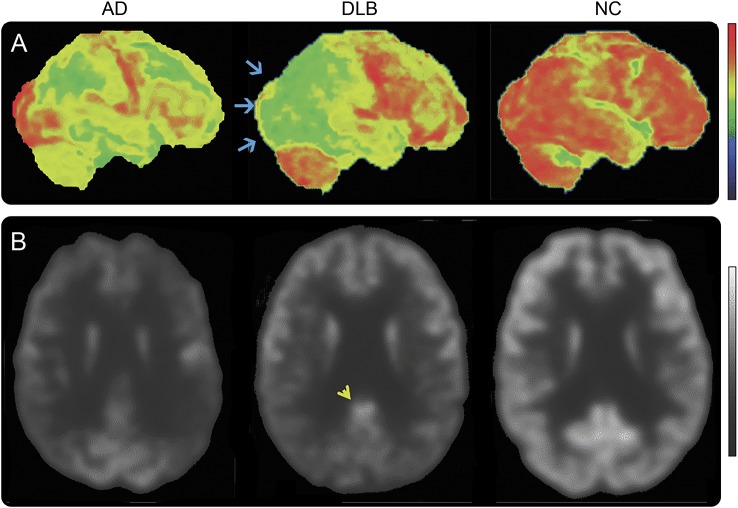
“FDG-PET changes are a supportive feature in the AD and DLB diagnostic criteria and FDG-PET is widely used clinically for the diagnosis of AD and the differential diagnosis of different subtypes of dementia [21, 102, 103].”
From The use of neuroimaging techniques in the early and differential diagnosis of dementia (2023) · cites this paper as [21]
Experimental — accuracy not yet measuredThe source backs part of the claim, not all of it — or backs it for a different population, condition or comparison.
In the citing paper
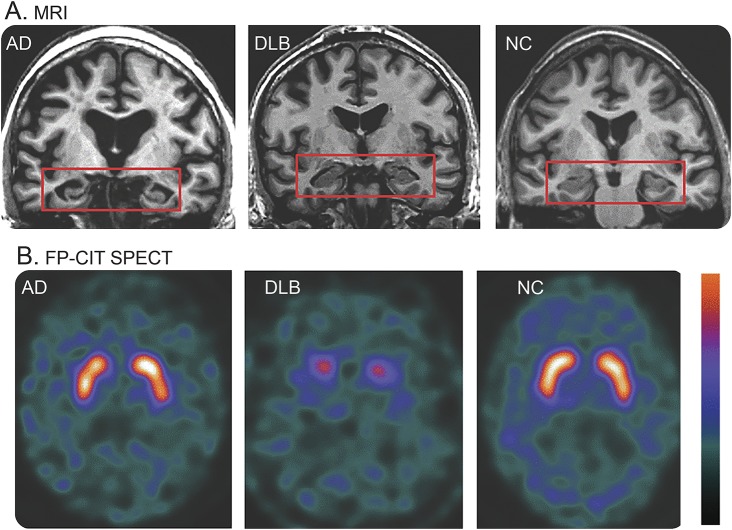
“In terms of structural changes in LBD, brain atrophy is seen but the relative preservation (compared to the marked atrophy in AD) of cortical structures and the medial temporal lobe is well established (Fig. 1) and is a supportive feature in the diagnostic criteria for DLB [19–21].”
From The use of neuroimaging techniques in the early and differential diagnosis of dementia (2023) · cites this paper as [21]
Experimental — accuracy not yet measured
8 more claims about this paper
Create a free account to see every claim other papers make about this one.
Self-check
Percentages, sums and reported differences re-computed from the paper’s own numbers.
The self-check needs the paper’s full text.
Citations
Cites
Staging of brain pathology related to sporadic Parkinson’s disease
Braak, H., Tredici, K. D., Rüb, U., de Vos, R. A. I., Jansen Steur, E. N. H., & Braak, E. (2003) · Neurobiology of Aging · doi:10.1016/s0197-4580(02)00065-9 · Cited by 10,777
MDS clinical diagnostic criteria for Parkinson’s disease
Postuma, R. B., Berg, D., Stern, M., Poewe, W., Olanow, C. W., Oertel, W., Obeso, J., Marek, K., Litvan, I., Lang, A. E., et al. (2015) · Movement Disorders · doi:10.1002/mds.26424 · Cited by 7,653 · cited 1×
“Parkinsonism in Parkinson disease (PD) is defined as bradykinesia in combination with rest tremor, rigidity, or both.(18) Many DLB patients’ parkinsonism falls short of this, so documentation of only one of these cardinal features is required.”
BackgroundSelf-citationThe Neuropsychiatric Inventory: Comprehensive assessment of psychopathology in dementia
Cummings, J. L., Mega, M., Gray, K., Rosenberg-Thompson, S., Carusi, D. A., & Gornbein, J. (1994) · Neurology · doi:10.1212/wnl.44.12.2308 · Cited by 7,568
Diagnosis and management of dementia with Lewy bodies: Third report of the DLB consortium
McKeith, I. G., Dickson, D. W., Lowe, J., Emre, M., O'Brien, J. T., Feldman, H., Cummings, J., Duda, J. E., Lippa, C., Perry, E. K., et al. (2005) · Neurology · doi:10.1212/01.wnl.0000187889.17253.b1 · Cited by 5,069
Self-citationMirra, S. S., Heyman, A., McKeel, D., Sumi, S. M., Crain, B. J., Brownlee, L. M., Vogel, F. S., Hughes, J. P., Belle, G. V., Berg, L., et al. (1991) · Neurology · doi:10.1212/wnl.41.4.479 · Cited by 4,961
McKeith, I. G., Galasko, D., Kosaka, K., Perry, E. K., Dickson, D. W., Hansen, L. A., Salmon, D. P., Lowe, J., Mirra, S. S., Byrne, E. J., et al. (1996) · Neurology · doi:10.1212/wnl.47.5.1113 · Cited by 3,960 · cited 1×
“The Dementia with Lewy Bodies (DLB) Consortium last reported on diagnosis and management in December 2005, and its recommendations have been widely cited for both clinical and research use.(1,2) Changes made to the diagnostic criteria at that time increased diagnostic sensitivity for DLB, but detection rates in clinic…”
Self-citationUnified Parkinson's Disease Rating Scale
(2012) · SpringerReference · doi:10.1007/springerreference_184495 · Cited by 3,066
Montine, T. J., Phelps, C. H., Beach, T. G., Bigio, E. H., Cairns, N. J., Dickson, D. W., Duyckaerts, C., Frosch, M. P., Masliah, E., Mirra, S. S., et al. (2012) · Acta Neuropathologica · doi:10.1007/s00401-011-0910-3 · Cited by 2,894
Self-citationPrevalence and Characteristics of Dementia in Parkinson Disease: An 8-Year Prospective Study
Aarsland, D., Andersen, K., Larsen, J. P., & Lolk, A. (2003) · Archives of Neurology · doi:10.1001/archneur.60.3.387 · Cited by 1,401
Self-citationRivastigmine for Dementia Associated with Parkinson's Disease
Emre, M., Aarsland, D., Albanese, A., Byrne, E. J., Deuschl, G., De Deyn, P. P., Durif, F., Kulisevsky, J., van Laar, T., Lees, A., et al. (2004) · New England Journal of Medicine · doi:10.1056/nejmoa041470 · Cited by 1,223
Self-citation
Cited by
Items 1,001–1,022 of 1,022
18F-fluorodeoxyglucose positron emission tomography in dementia with Lewy bodies
Graff-Radford, J., Lesnick, T. G., Savica, R., Chen, Q., Ferman, T. J., Przybelski, S. A., Jones, D. T., Senjem, M. L., Gunter, J. L., Kremers, W. K., et al. (2020) · Brain Communications · doi:10.1093/braincomms/fcaa040 · Cited by 28
“A monoclonal antibody to a-synuclein (LB509) was used to assess distribution of Lewy body pathology, and LBD cases were classified as brainstem, transitional or diffuse, according to criteria of Fourth Consensus Report of the DLB Consortium (McKeith et al., 2017).”
InfluentialSelf-citationComparison of CSF and plasma NfL and pNfH for Alzheimer's disease diagnosis: a memory clinic study
Vrillon, A., Ashton, N. J., Karikari, T. K., Götze, K., Cognat, E., Dumurgier, J., Lilamand, M., Zetterberg, H., Blennow, K., & Paquet, C. (2024) · Journal of Neurology · doi:10.1007/s00415-023-12066-6 · Cited by 28
“DLB patients fulfilled McKeith criteria for probable DLB, and 3/13 patients displayed Alz-heimer copathology, defined as an A + N−T− CSF profile [42].”
Clinical imaging in dementia with Lewy bodies
Surendranathan, A., & O’Brien, J. T. (2018) · Evidence Based Mental Health · doi:10.1136/eb-2017-102848 · Cited by 27
Self-citationRisk of dementia in APOE ε4 carriers is mitigated by a polygenic risk score
Ebenau, J. L., van der Lee, S. J., Hulsman, M., Tesi, N., Jansen, I. E., Verberk, I. M. W., van Leeuwenstijn, M., Teunissen, C. E., Barkhof, F., Prins, N. D., et al. (2021) · Alzheimer's & Dementia: Diagnosis, Assessment & Disease Monitoring · doi:10.1002/dad2.12229 · Cited by 26
Exploring the link between GBA1 mutations and Dementia with Lewy bodies, A mini-review
Gaubert, S., Hourregue, C., Mouton-Liger, F., Millot, P., Franco, M., Amar-Bouaziz, E., Aarsland, D., Hugon, J., & Paquet, C. (2022) · Neuroscience & Biobehavioral Reviews · doi:10.1016/j.neubiorev.2022.104856 · Cited by 26
“LB are intraneuronal proteinaceous inclusions composed of abnormal aggregates of phosphorylated α -synuclein (SNCA) in the nervous system (McKeith et al., 2017).”
BackgroundSelf-citationLewy body dementia: overcoming barriers and identifying solutions
Agarwal, K., Backler, W., Bayram, E., Bloom, L., Boeve, B. F., Cha, J., Denslow, M., Ferman, T. J., Galasko, D., Galvin, J. E., et al. (2024) · Alzheimer's & Dementia · doi:10.1002/alz.13674 · Cited by 25
Self-citationCSF Biomarkers of Alzheimer Disease in Patients With Concomitant α-Synuclein Pathology
Cousins, K. A. Q., Arezoumandan, S., Shellikeri, S., Ohm, D., Shaw, L. M., Grossman, M., Wolk, D., McMillan, C. T., Chen-Plotkin, A., Lee, E., et al. (2022) · Neurology · doi:10.1212/wnl.0000000000201202 · Cited by 25
Self-citationBlood Biomarkers for the Diagnosis of Neurodegenerative Dementia: A Systematic Review
Santos, F., Cabreira, V., Rocha, S., & Massano, J. (2023) · Journal of Geriatric Psychiatry and Neurology · doi:10.1177/08919887221141651 · Cited by 24
The Effect of Baseline Patient and Caregiver Mindfulness on Dementia Outcomes
Innis, A. D., Tolea, M. I., & Galvin, J. E. (2021) · Journal of Alzheimer’s Disease · doi:10.3233/jad-201292 · Cited by 18
Self-citationMindfulness and Care Experience in Family Caregivers of Persons Living with Dementia
Tolea, M. I., Camacho, S., Cohen, I. R., & Galvin, J. E. (2023) · Journal of Alzheimer's Disease Reports · doi:10.3233/adr-220069 · Cited by 17
Self-citationStrickland, S. L., Morel, H., Prusinski, C., Allen, M., Patel, T. A., Carrasquillo, M. M., Conway, O. J., Lincoln, S. J., Reddy, J. S., Nguyen, T., et al. (2020) · Acta Neuropathologica Communications · doi:10.1186/s40478-020-01050-0 · Cited by 15
Self-citationChia, S.-Y., Li, M., Li, Z., Tu, H., Lee, J. W. L., Qiu, L., Ling, J., Reynolds, R., Albani, S., Tan, E.-K., et al. (2025) · Genome Medicine · doi:10.1186/s13073-025-01519-4 · Cited by 15
The Depistage Cognitif de Quebec: a new clinician’s tool for early recognition of atypical dementia
Sellami, L., Meilleur-Durand, S., Chouinard, A.-M., Bergeron, D., Verret, L., Poulin, S., Jean, L., Fortin, M.-P., Nadeau, Y., Molin, P., et al. (2018) · Dementia and Geriatric Cognitive Disorders · doi:10.1159/000494348 · Cited by 14
Natural speech markers of Alzheimer's disease co-pathology in Lewy body dementias
Shellikeri, S., Cho, S., Cousins, K. A. Q., Liberman, M., Howard, E., Balganorth, Y., Weintraub, D., Spindler, M., Deik, A., Lee, E. B., et al. (2022) · Parkinsonism & Related Disorders · doi:10.1016/j.parkreldis.2022.07.023 · Cited by 12
Self-citationGalvin, J. E., Tolea, M. I., & Chrisphonte, S. (2020) · Alzheimer's & Dementia: Translational Research & Clinical Interventions · doi:10.1002/trc2.12104 · Cited by 11
Self-citationLloyd, G. M., Long, B., Quintin, S., Sorrentino, Z. A., Gorion, K.-M. M., Bell, B. M., Carrillo, D., Sullivan, P., Borchelt, D., & Giasson, B. I. (2023) · Acta Neuropathologica Communications · doi:10.1186/s40478-023-01623-9 · Cited by 11
“Common symptoms of synucleinopathies include progressive motor dysfunction, however, cognitive features can be a major component, especially for dementia with Lewy bodies [31, 36].”
BackgroundSuzuki, Y., Suzuki, M., Shigenobu, K., Shinosaki, K., Aoki, Y., Kikuchi, H., Baba, T., Hashimoto, M., Araki, T., Johnsen, K., et al. (2022) · PLOS ONE · doi:10.1371/journal.pone.0265484 · Cited by 10
Self-citationIngram, M., Colloby, S. J., Firbank, M. J., Lloyd, J. J., O'Brien, J. T., & Taylor, J.-P. (2022) · Psychiatry Research: Neuroimaging · doi:10.1016/j.pscychresns.2022.111460 · Cited by 9
Self-citationFluid markers of synapse degeneration in synucleinopathies
Cervantes González, A., & Belbin, O. (2022) · Journal of Neural Transmission · doi:10.1007/s00702-022-02467-8 · Cited by 7
Ohm, D. T., Rhodes, E., Bahena, A., Capp, N., Lowe, M., Sabatini, P., Trotman, W., Olm, C. A., Phillips, J., Prabhakaran, K., et al. (2023) · Frontiers in Neurology · doi:10.3389/fneur.2023.1245886 · Cited by 6
Care for Social Isolation and Loneliness in a Case With Late-Onset Delusional Disorder
Kanemoto, H., & Kawasaki, T. (2024) · Cureus · doi:10.7759/cureus.56697 · Cited by 3
“Since Lewy body disease is characterized by hypersensitivity to antipsychotic medications [8], it may contribute to the high risk of antipsychotic adverse effects in patients with late-onset psychosis.”
BackgroundPlasma ApoE proteotyping for ApoE ε4 stratification in the anti-amyloid therapies era
Coraglia, F., Cecchetti, G., Rugarli, G., Spinelli, E. G., Ghirelli, A., Pisano, S., Canu, E., Filippi, M., & Agosta, F. (2026) · Alzheimer's Research & Therapy · doi:10.1186/s13195-026-02089-2 · Cited by 1
Metadata
- Authors
- McKeith, I. G., Boeve, B. F., Dickson, D. W., Halliday, G., Taylor, J.-P., Weintraub, D., Aarsland, D., Galvin, J., Attems, J., Ballard, C. G., Bayston, A., Beach, T. G., Blanc, F., Bohnen, N., Bonanni, L., Bras, J., Brundin, P., Burn, D., Chen-Plotkin, A., Duda, J. E., El-Agnaf, O., Feldman, H., Ferman, T. J., ffytche, D., Fujishiro, H., Galasko, D., Goldman, J. G., Gomperts, S. N., Graff-Radford, N. R., Honig, L. S., Iranzo, A., Kantarci, K., Kaufer, D., Kukull, W., Lee, V. M. Y., Leverenz, J. B., Lewis, S., Lippa, C., Lunde, A., Masellis, M., Masliah, E., McLean, P., Mollenhauer, B., Montine, T. J., Moreno, E., Mori, E., Murray, M., O'Brien, J. T., Orimo, S., Postuma, R. B., Ramaswamy, S., Ross, O. A., Salmon, D. P., Singleton, A., Taylor, A., Thomas, A., Tiraboschi, P., Toledo, J. B., Trojanowski, J. Q., Tsuang, D., Walker, Z., Yamada, M., & Kosaka, K.
- Affiliations
- Author affiliations are provided at the end of the article.
- Corresponding author
- McKeith, Ian G.
- ORCID
- McKeith, Ian G.
- Boeve, Bradley F.
- Dickson, Dennis W.
- Halliday, Glenda
- Taylor, John-Paul
- Weintraub, Daniel
- Aarsland, Dag
- Galvin, James
- Attems, Johannes
- Ballard, Clive G.
- Beach, Thomas G.
- Blanc, Frédéric
- Bohnen, Nicolaas
- Bonanni, Laura
- Brundin, Patrik
- Burn, David
- Duda, John E.
- Feldman, Howard
- Ferman, Tanis J.
- ffytche, Dominic
- Fujishiro, Hiroshige
- Galasko, Douglas
- Goldman, Jennifer G.
- Gomperts, Stephen N.
- Honig, Lawrence S.
- Kantarci, Kejal
- Kaufer, Daniel
- Kukull, Walter
- Lee, Virginia M.Y.
- Leverenz, James B.
- Lewis, Simon
- Lippa, Carol
- Lunde, Angela
- Masellis, Mario
- Masliah, Eliezer
- McLean, Pamela
- Mollenhauer, Brit
- Montine, Thomas J.
- Mori, Etsuro
- Murray, Melissa
- O'Brien, John T.
- Postuma, Ronald B.
- Ramaswamy, Shankar
- Ross, Owen A.
- Salmon, David P.
- Singleton, Andrew
- Taylor, Angela
- Thomas, Alan
- Tiraboschi, Pietro
- Toledo, Jon B.
- Trojanowski, John Q.
- Tsuang, Debby
- Walker, Zuzana
- Yamada, Masahito
- Venue
- Neurology
- Published
- 2017-07-04
- Volume
- 89
- Issue
- 1
- Pages
- 88-100
- ISSN
- 0028-3878 (ISSN-L)
- 1526-632X
- PMC
- PMC5496518
- OpenAlex
- W2623521763
- Semantic Scholar
- bf09b8b7b436f0623374afe18d037751599ad186
- Cited by
- 4,476
- References
- 146
- Citations by year
- 2026: 453 · 2025: 619 · 2024: 546 · 2023: 469 · 2022: 558 · 2021: 500 · 2020: 491 · 2019: 371 · 2018: 244 · 2017: 43
- FWCI
- 218.92
- Type
- journal article
- Language
- en
- Open access
- hybrid
- doi.org
- Licence
- cc-by
- Locations
- Neurology (publishedVersion, cc-by)
- Europe PMC (PubMed Central) (publishedVersion, cc-by)
- PubMed Central (publishedVersion, cc-by)
- PubMed (publishedVersion)
- HAL (submittedVersion, other-oa)
- eScholarship@McGill (McGill) (submittedVersion)
- eScholarship (California Digital Library) (submittedVersion)
- Figshare (submittedVersion, cc-by)
- Research Portal (King's College London) (submittedVersion, cc-by)
- GRO (submittedVersion)
- Newcastle University ePrints (Newcastle Univesity) (cc-by)
- Funders
- U.S. Department of Health and Human Services
- U.S. Department of Veterans Affairs
- California Institute for Regenerative Medicine
- Bristol-Myers Squibb
- Alzheimer's Drug Discovery Foundation
- Eli Lilly and Company
- Pfizer
- GlaxoSmithKline
- Sanofi
- Heart and Stroke Foundation of Canada
- Massachusetts General Hospital
- Van Andel Research Institute
- Biogen
- CHDI Foundation
- Teva Pharmaceutical Industries
- Florida Department of Health
- University of Pennsylvania
- Cleveland Clinic
- University of Washington
- International Parkinson and Movement Disorder Society
- Thomas Jefferson University
- CurePSP
- Rush University
- Florida Atlantic University
- Fondation Brain Canada
- Little Family Foundation
- Demensförbundet
- Weston Brain Institute
- ACADIA Pharmaceuticals
- Houston Methodist Hospital
- Universidad del Atlántico
- Kanazawa University
- Sunnybrook Foundation
- TauRx Pharmaceuticals
- National Institute for Health and Care Research (RP-PG-0610-10100, NF-SI-0611-10048)
- University of Exeter
- King's College London
- University College London
- University of Oxford
- Newcastle University
- Bundesministerium für Bildung und Forschung
- Ministero della Salute
- University of Toronto
- Université de Strasbourg
- Eisai
- Newcastle upon Tyne Hospitals NHS Foundation Trust
- Centre National de la Recherche Scientifique
- Ministero dello Sviluppo Economico
- Stifterverband
- H. Lundbeck A/S
- Deutsche Parkinson Vereinigung
- National Institutes of Health
- Genentech
- University of North Carolina at Chapel Hill
- University of California, San Diego
- Perelman School of Medicine, University of Pennsylvania
- Avid Radiopharmaceuticals
- Houston Methodist Research Institute
- Qatar Biomedical Research Institute, Hamad Bin Khalifa University
- Canadian Institutes of Health Research
- Medical Research Council (MR/L016451/1)
- National Health and Medical Research Council
- Programme Grants for Applied Research
- NIHR Newcastle Biomedical Research Centre
- National Institute on Aging (U01AG016976, P50AG005131, P01AG003949, P30AG010124, P50AG005136, P50AG016574)
- National Institute of Neurological Disorders and Stroke (R01NS078086, P50NS053488, P50NS091856, U01NS082134, R13NS095618, R01NS082265, P50NS072187, U01NS097056)
- National Institute for Dementia Research
- Topics
- Health Sciences › Medicine › Clinical Neurology › Parkinson's Disease Mechanisms and Treatments
- Health Sciences › Medicine › Psychiatry and Mental health › Dementia and Cognitive Impairment Research
- Life Sciences › Neuroscience › Neurology › Neurological diseases and metabolism
- Keywords
- dementia with Lewy bodies, diagnosis, diagnostic biomarkers, REM sleep behavior disorder, MIBG myocardial scintigraphy, Lewy bodies, disease management, caregiver support
- MeSH terms
- Humans, Biomarkers, Practice Guidelines as Topic, Lewy Body Disease
About these checks
Registry, retraction, Cites and statistics results are computed, not judged, with one exception: a printed reference that no index lists is read once by a model before it counts as a citation error. Claims are extracted by a model and kept only when their quote appears verbatim in the text; each cited source is then checked, with a model’s help, for whether it says what the claim relies on. Those verdicts can be wrong — read the claim’s quote and the cited source before relying on one.
Statistics and arithmetic are recomputed, not judged.
Confidence bands are shown only for fields calibrated on our annotated test set. None is calibrated yet, so no band is shown.
What counts as a claim ›How we measure confidence ›How we check this ›
Are you an author, or do you see a problem with this page? Request a review
Data sources
Bibliographic data: Semantic Scholar, OpenAlex, Crossref.
Contains information from the Semantic Scholar Academic Graph Datasets, made available under the ODC Attribution License (ODC-BY 1.0).
Semantic Scholar’s data is described in: Kinney, R., et al. (2023). The Semantic Scholar Open Data Platform. arXiv:2301.10140.
