

The DOI matches its Crossref record; 42 of the 42 references it cites were found in a registry or an index.
Double-blind, randomized, placebo-controlled study of trofinetide in pediatric Rett syndrome
Open accessAbstract
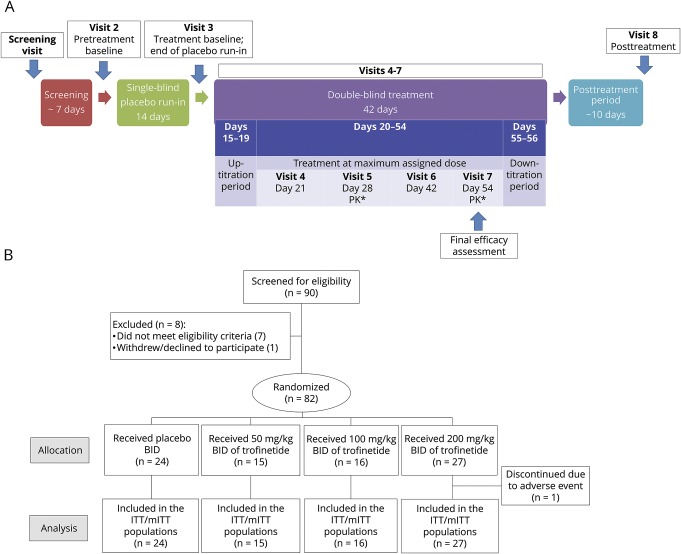
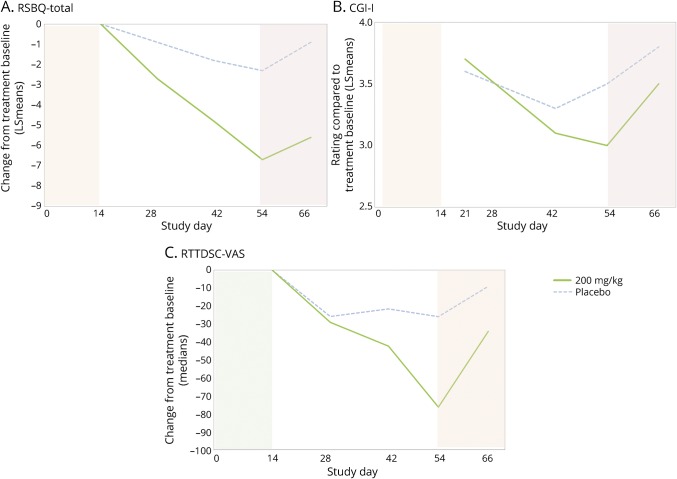
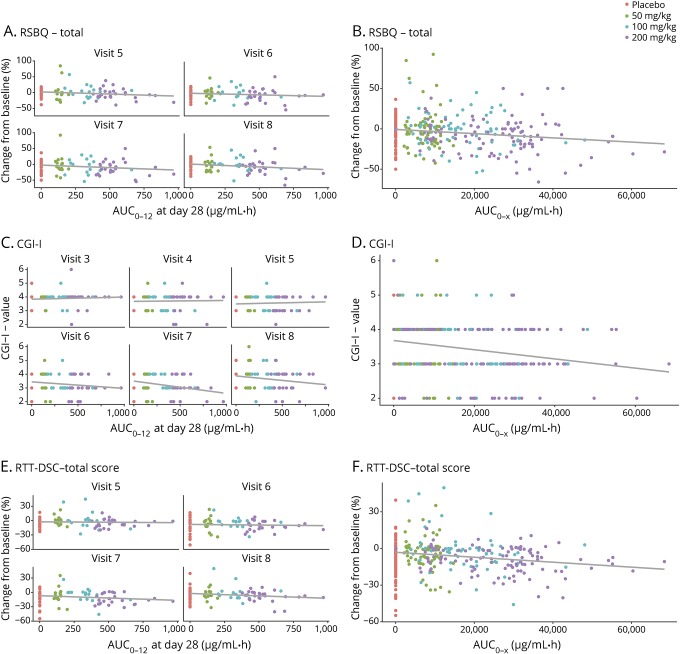
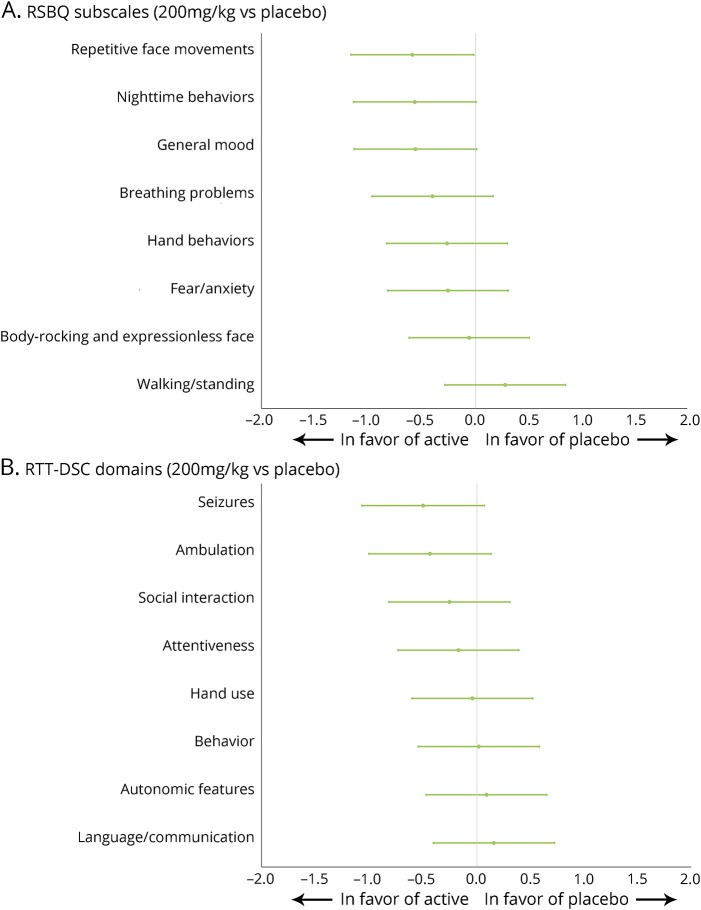
OBJECTIVE: To determine safety, tolerability, and pharmacokinetics of trofinetide and evaluate its efficacy in female children/adolescents with Rett syndrome (RTT), a debilitating neurodevelopmental condition for which no pharmacotherapies directed at core features are available. METHODS: This was a phase 2, multicenter, double-blind, placebo-controlled, parallel-group study, in which safety/tolerability, pharmacokinetics, and clinical response to trofinetide were characterized in 82 children/adolescents with RTT, aged 5 to 15 years. Sixty-two participants were randomized 1:1:1:1 to receive placebo twice a day (bid) for 14 days, followed by placebo, 50, 100, or 200 mg/kg bid of trofinetide for 42 days. Following blinded safety data review, 20 additional participants were randomized 1:1 to the 200 mg/kg or placebo bid groups. Safety assessments included adverse events, clinical laboratory tests, physical examinations, and concomitant medications. Clinician- and caregiver-based efficacy measurements assessed clinically relevant, phenotypic dimensions of impairment of RTT. RESULTS: All dose levels were well tolerated and generally safe. Trofinetide at 200 mg/kg bid showed statistically significant and clinically relevant improvements relative to placebo on the Rett Syndrome Behaviour Questionnaire, RTT-Clinician Domain Specific Concerns-Visual Analog Scale, and Clinical Global Impression Scale-Improvement. Exploratory analyses suggested that observed changes correlated with trofinetide exposure. CONCLUSION: These results, together with those from a previous adolescent/adult trial, indicate trofinetide's potential for treating core RTT symptoms and support further trials. CLASSIFICATION OF EVIDENCE: This study provides Class I evidence that for children/adolescents with RTT, trofinetide was safe, well-tolerated, and demonstrated improvement over placebo at 200 mg/kg bid in functionally important dimensions of RTT.
Overview
The claims and statistics of this paper haven’t been checked yet.
Run the check — free, no account needed. It reads the open-access text and checks the sources it cites.
Integrity signals
Registry
Cites
Statistics
Figures
Verification
Claims the paper makes
The claims and statistics of this paper haven’t been checked yet.
Run the check — free, no account needed. It reads the open-access text and checks the sources it cites.
Claims other papers make about this one
Each is checked against this paper’s own text: does it say what the citing paper says it does?
In the citing paper
“Significant benefits were seen in several measures including the Rett Syndrome Behavior Scale, the Rett Syndrome Clinician Rating Scale, and a visual analogue scale.”
From An Update on Psychopharmacological Treatment of Autism Spectrum Disorder (2022) · cites this paper as [137]
In the citing paper
“Trofinetide is glycyl-L-2-methylprolyl-L-glutamic acid, and it was studied in a controlled phase 2 trial in 82 children with Rett syndrome ages 5 to 15 years, and significant benefit was found in the high-dose group (200 mg/kg/day) compared to placebo [137].”
From An Update on Psychopharmacological Treatment of Autism Spectrum Disorder (2022) · cites this paper as [137]
Self-check
Percentages, sums and reported differences re-computed from the paper’s own numbers.
The self-check needs the paper’s full text.
Citations
Cites
Selective publication of antidepressant trials and its influence on apparent efficacy
Turner, E. H., Matthews, A. M., Linardatos, E., Tell, R. A., & Rosenthal, R. (2008) · New England Journal of Medicine · doi:10.1056/nejmsa065779 · Cited by 2,435
Hagberg, B. A., Aicardi, J. F., Dias, K., & Ramos, O. (1983) · Annals of Neurology · doi:10.1002/ana.410140412 · Cited by 1,515
Rett syndrome: Revised diagnostic criteria and nomenclature
Neul, J. L., Kaufmann, W. E., Glaze, D. G., Christodoulou, J., Clarke, A. J., Bahi‐Buisson, N., Leonard, H., Bailey, M. E. S., Schanen, N. C., Zappella, M., et al. (2010) · Annals of Neurology · doi:10.1002/ana.22124 · Cited by 1,437
Wild-type microglia arrest pathology in a mouse model of Rett syndrome
Derecki, N. C., Cronk, J. C., Lu, Z., Xu, E., Abbott, S. B. G., Guyenet, P. G., & Kipnis, J. (2012) · Nature · doi:10.1038/nature10907 · Cited by 607
Partial reversal of Rett Syndrome-like symptoms in MeCP2 mutant mice
Tropea, D., Giacometti, E., Wilson, N. R., Beard, C., McCurry, C., Fu, D. D., Flannery, R., Jaenisch, R., & Sur, M. (2009) · Proceedings of the National Academy of Sciences · doi:10.1073/pnas.0812394106 · Cited by 593
Specific mutations in Methyl-CpG-Binding Protein 2 confer different severity in Rett syndrome
Neul, J. L., Fang, P., Barrish, J., Lane, J., Caeg, E. B., Smith, E. O., Zoghbi, H., Percy, A., & Glaze, D. G. (2008) · Neurology · doi:10.1212/01.wnl.0000291011.54508.aa · Cited by 498
Self-citationRett syndrome in Australia: A review of the epidemiology
Laurvick, C. L., de Klerk, N. H., Bower, C. I., Christodoulou, J., Ravine, D., Ellaway, C., Williamson, S. L., & Leonard, H. (2006) · The Journal of Pediatrics · doi:10.1016/j.jpeds.2005.10.037 · Cited by 345
Cuddapah, V. A., Pillai, R. B., Shekar, K. V., Lane, J. B., Motil, K. J., Skinner, S. A., Tarquinio, D. C., Glaze, D. G., McGwin, G., Kaufmann, W. E., et al. (2014) · Journal of Medical Genetics · doi:10.1136/jmedgenet-2013-102113 · Cited by 311
ARNOLD, L. E., VITIELLO, B., MCDOUGLE, C., SCAHILL, L., SHAH, B., GONZALEZ, N. M., CHUANG, S., DAVIES, M., HOLLWAY, J., AMAN, M. G., et al. (2003) · Journal of the American Academy of Child & Adolescent Psychiatry · doi:10.1097/00004583-200312000-00011 · Cited by 218
Khwaja, O., Ho, E., Barnes, K. V., O’Leary, H. M., Pereira, L. M., Finkelstein, Y., Nelson, C. A., Vogel‐Farley, V. K., DeGregorio, G., Holm, I. A., et al. (2014) · Proceedings of the National Academy of Sciences · doi:10.1073/pnas.1311141111 · Cited by 212
Cited by
Sorted by citations
An Update on Psychopharmacological Treatment of Autism Spectrum Disorder
Aishworiya, R., Valica, T., Hagerman, R., & Restrepo, B. (2022) · Neurotherapeutics · doi:10.1007/s13311-022-01183-1 · Cited by 233
“Trofinetide is glycyl-L-2-methylprolylL-glutamic acid, and it was studied in a controlled phase 2 trial in 82 children with Rett syndrome ages 5 to 15 years, and significant benefit was found in the high-dose group (200 mg/kg/day) compared to placebo [137].”
BackgroundThe role of GABAergic signalling in neurodevelopmental disorders
Tang, X., Jaenisch, R., & Sur, M. (2021) · Nature reviews. Neuroscience · doi:10.1038/s41583-021-00443-x · Cited by 221
Trofinetide for the treatment of Rett syndrome: a randomized phase 3 study
Neul, J. L., Percy, A. K., Benke, T. A., Berry‐Kravis, E., Glaze, D. G., Marsh, E. D., Lin, T., Stankovic, S., Bishop, K. M., & Youakim, J. M. (2023) · Nature Medicine · doi:10.1038/s41591-023-02398-1 · Cited by 211
Sandweiss, A. J., Brandt, V. L., & Zoghbi, H. Y. (2020) · The Lancet Neurology · doi:10.1016/s1474-4422(20)30217-9 · Cited by 179
Global prevalence of Rett syndrome: systematic review and meta-analysis
Petriti, U., Dudman, D. C., Scosyrev, E., & López‐León, S. (2023) · Systematic Reviews · doi:10.1186/s13643-023-02169-6 · Cited by 128
Protective role of IGF-1 and GLP-1 signaling activation in neurological dysfunctions
Bhalla, S., Mehan, S., Khan, A., & Rehman, M. U. (2022) · Neuroscience & Biobehavioral Reviews · doi:10.1016/j.neubiorev.2022.104896 · Cited by 108
Luo, W., Liu, Y., Qin, H., Zhao, Z., Wang, S., He, W., Tang, S., & Peng, J. (2024) · European Journal of Medicinal Chemistry · doi:10.1016/j.ejmech.2024.116838 · Cited by 112
Berry-Kravis, E., Horrigan, J. P., Tartaglia, N., Hagerman, R., Kolevzon, A., Erickson, C. A., Hatti, S., Snape, M., Yaroshinsky, A., Stoms, G., et al. (2020) · Pediatric Neurology · doi:10.1016/j.pediatrneurol.2020.04.019 · Cited by 102
Self-citationDrug development for Autism Spectrum Disorder (ASD): Progress, challenges, and future directions
McCracken, J. T., Anagnostou, E. A., Arango, C., Dawson, G., Farchione, T. R., Mantua, V., McPartland, J. C., Murphy, D., Pandina, G., & Veenstra-VanderWeele, J. M. (2021) · European Neuropsychopharmacology · doi:10.1016/j.euroneuro.2021.05.010 · Cited by 89
Rett Syndrome and MECP2 Duplication Syndrome: Disorders of MeCP2 Dosage
Collins, B. E., & Neul, J. L. (2022) · Neuropsychiatric Disease and Treatment · doi:10.2147/ndt.s371483 · Cited by 87
“Promisingly, trofinetide at 200 mg/kg twice daily in children/ adolescents with RTT improves core features across multiple disease domains as assessed by clinicians and caregivers (NCT02715115).(197) A recently completed Phase III trial of trofinetide in children and adolescents with RTT (NCT04181723) reported success…”
Gold, W. A., Percy, A. K., Neul, J. L., Cobb, S., Pozzo‐Miller, L. D., Issar, J. K., Ben‐Zeev, B., Vignoli, A., & Kaufmann, W. E. (2024) · Nature Reviews Disease Primers · doi:10.1038/s41572-024-00568-0 · Cited by 88
“…trials that demonstrated improvement in a wide range of signs and symptoms including hand movements or stereo-typies, repetitive behaviours, vocalizations, facial expressions, eye gaze and atypical behaviours (that is, mood abnormalities and disruptive behaviour) in cohorts aged 2–20 years 28,149 .”
Design and outcome measures of LAVENDER, a phase 3 study of trofinetide for Rett syndrome
Neul, J. L., Percy, A. K., Benke, T. A., Berry‐Kravis, E., Glaze, D. G., Peters, S. U., Jones, N. E., & Youakim, J. M. (2022) · Contemporary Clinical Trials · doi:10.1016/j.cct.2022.106704 · Cited by 66
Neul, J. L., Benke, T. A., Marsh, E. D., Suter, B., Silveira, L. J., Fu, C., Peters, S. U., Percy, A. K., for the Rett syndrome Natural History Study Group, Skinner, S. A., et al. (2023) · Journal of Neurodevelopmental Disorders · doi:10.1186/s11689-023-09502-z · Cited by 68
The Pathophysiology of Rett Syndrome With a Focus on Breathing Dysfunctions
Ramirez, J., Karlen‐Amarante, M., Wang, J.-D. J., Bush, N. E., Carroll, M. S., Weese‐Mayer, D. E., & Huff, A. D. (2020) · Physiology · doi:10.1152/physiol.00008.2020 · Cited by 53
Kaufmann, W. E., Sprouse, J., Rebowe, N., Hanania, T., Klamer, D., & Missling, C. U. (2019) · Pharmacology Biochemistry and Behavior · doi:10.1016/j.pbb.2019.172796 · Cited by 54
Rett Syndrome and CDKL5 Deficiency Disorder: From Bench to Clinic
Kadam, S. D., Sullivan, B. J., Goyal, A., Blue, M. E., & Smith‐Hicks, C. L. (2019) · International Journal of Molecular Sciences · doi:10.3390/ijms20205098 · Cited by 56
“A follow-up study of 82 patients confirmed initial findings of clinically relevant improvements on the Rett syndrome behavior questionnaire and other behaviorally relevant scales [121].”
BackgroundComparison of Core Features in Four Developmental Encephalopathies in the Rett Natural History Study
Cutri‐French, C., Armstrong, D., Saby, J., Gorman, C., Lane, J., Fu, C., Peters, S. U., Percy, A., Neul, J. L., & Marsh, E. D. (2020) · Annals of Neurology · doi:10.1002/ana.25797 · Cited by 45
“The CSS used was previously published by Schanen et al(14) and has been applied in both clinical studies(3,15) and a clinical trial.(16,17) Details of the CSS can be found in Schanen et al, and the scale is presented in Supplementary Table S4.”
MethodKeam, S. J. (2023) · Drugs · doi:10.1007/s40265-023-01883-8 · Cited by 46
“The safety and tolerability and potential efficacy of oral trofinetide in Rett syndrome was evaluated in two phase 2 double-blind, placebo-controlled, dose-escalation trials: RETT-001 (NCT01703533) in adolescent and adult females [12] and RETT-002 (NCT02715115) in pediatric and adolescents females [13].”
MethodStallworth, J. L., Dy-Hollins, M., Buchanan, C. B., Chen, C.-F., Scott, A. E., Glaze, D. G., Lane, J. B., Lieberman, D. N., Oberman, L. M., Skinner, S. A., et al. (2019) · Neurology · doi:10.1212/wnl.0000000000007560 · Cited by 46
Raspa, M., Bann, C., Gwaltney, A. Y., Benke, T. A., Fu, C., Glaze, D. G., Haas, R., Heydemann, P. T., Jones, M. D., Kaufmann, W. E., et al. (2020) · American Journal on Intellectual and Developmental Disabilities · doi:10.1352/1944-7558-125.6.493 · Cited by 44
“…preclinical and clinical evaluations of several new therapeutics in the last decade have shown promise to potentially modify the course of RTT (Djukic et al., 2016; Galdalla et al., 2011; Glaze et al., 2017; Glaze et al., 2019; Leonard et al., 2017; Moretti & Zoghbi, 2006; Wang et al., 2015).”
BackgroundMetabolic Signatures Differentiate Rett Syndrome From Unaffected Siblings
Neul, J. L., Skinner, S. A., Annese, F., Lane, J. B., Heydemann, P. T., Jones, M. D., Kaufmann, W. E., Glaze, D. G., & Percy, A. K. (2020) · Frontiers in Integrative Neuroscience · doi:10.3389/fnint.2020.00007 · Cited by 41
Emerging Gene and Small Molecule Therapies for the Neurodevelopmental Disorder Angelman Syndrome
Copping, N. A., McTighe, S. M., Fink, K. D., & Silverman, J. L. (2021) · Neurotherapeutics · doi:10.1007/s13311-021-01082-x · Cited by 42
Trofinetide for the treatment of Rett syndrome: Results from the open-label extension LILAC study
Percy, A. K., Neul, J. L., Benke, T. A., Berry‐Kravis, E., Glaze, D. G., Marsh, E. D., An, D., Bishop, K. M., & Youakim, J. M. (2024) · Med · doi:10.1016/j.medj.2024.05.018 · Cited by 43
Sheth, F. J., Shah, J., Jain, D. K., Shah, S. N., Patel, H., Patel, K., Solanki, D., Iyer, A. S., Menghani, B., Mhatre, P., et al. (2023) · BMC Neurology · doi:10.1186/s12883-023-03341-0 · Cited by 38
“In addition, with the advent of development and deployment of new treatments such as trofinetide for Rett syndrome, there is likely to be increase in uptake for genetic testing [64].”
BackgroundRett Syndrome: The Emerging Landscape of Treatment Strategies
Percy, A. K., Ananth, A., & Neul, J. L. (2024) · CNS Drugs · doi:10.1007/s40263-024-01106-y · Cited by 43
“The second phase 2 trial was conducted in girls or adolescents from 5 to 15 years of age and involved a double-blind, placebo-controlled study of safety, tolerability, and efficacy [69].”
BDNF, proBDNF and IGF-1 serum levels in naïve and medicated subjects with autism
Robinson‐Agramonte, M. D. L. Á., Michalski, B., Vidal-Martínez, B., Hernández, L. R., Whilby-Santiesteban, M., & Fahnestock, M. L. (2022) · Scientific Reports · doi:10.1038/s41598-022-17503-6 · Cited by 42
Breathing disturbances in Rett syndrome
Ramirez, J., Karlen‐Amarante, M., Wang, J.-D. J., Huff, A. D., & Burgraff, N. J. (2022) · Handbook of clinical neurology · doi:10.1016/b978-0-323-91532-8.00018-5 · Cited by 35
Multidisciplinary Management of Rett Syndrome: Twenty Years’ Experience
Vilvarajan, S., McDonald, M., Douglas, L., Newham, J., Kirkland, R., Tzannes, G., Tay, D., Christodoulou, J., Thompson, S., & Ellaway, C. (2023) · Genes · doi:10.3390/genes14081607 · Cited by 32
“Currently, there is only one drug treatment, Trofinetide, which is the analog of the terminal unit of insulin growth factor 1 (IGF1) recently approved by the FDA for RTT and only available in the USA, which has shown safety in large pediatric cohorts and clinical improvement in the neurobehavioral symptoms of RTT [12,…”
BackgroundDosage-sensitive genes in autism spectrum disorders: From neurobiology to therapy
Javed, S., Selliah, T., Lee, Y., & Huang, W. (2020) · Neuroscience & Biobehavioral Reviews · doi:10.1016/j.neubiorev.2020.08.009 · Cited by 32
Hou, W., Bhattacharya, U., Pradana, W. A., & Tarquinio, D. C. (2020) · Pediatric Neurology · doi:10.1016/j.pediatrneurol.2020.01.009 · Cited by 33
Hudu, S. A., El-Migdadi, F., Al-Qtaitat, A., Almehmadi, M. M., Alsaiari, A. A., Allahyani, M. A., Aljuaid, A., Salih, M. M., Alghamdi, A., Alrofaidi, M. A., et al. (2023) · Journal of Clinical Medicine · doi:10.3390/jcm12155114 · Cited by 34
“RTT is a female-oriented genetic disorder (X-chromosome-linked disorder) that affects mainly girls and young women at a rate of about 1 in 10,000 to 15,000 births, wherein about 10% of females with significant intellectual disabilities have RTT [1,7,8].”
BackgroundInfluentialPercy, A. K., Neul, J. L., Benke, T. A., Marsh, E. D., & Glaze, D. G. (2023) · Frontiers in Pediatrics · doi:10.3389/fped.2023.1229553 · Cited by 31
Pharmacological read-through of R294X Mecp2 in a novel mouse model of Rett syndrome
Merritt, J. K., Collins, B. E., Erickson, K. R., Dong, H., & Neul, J. L. (2020) · Human Molecular Genetics · doi:10.1093/hmg/ddaa102 · Cited by 29
Clinical trials for Lennox–Gastaut syndrome: Challenges and priorities
Knowles, J. K., Warren, A. E. L., Mohamed, I., Stafstrom, C. E., Koh, H. Y., Samanta, D., Shellhaas, R. A., Gupta, G., Dixon‐Salazar, T., Tran, L., et al. (2024) · Annals of Clinical and Translational Neurology · doi:10.1002/acn3.52211 · Cited by 28
Bhalla, S., & Mehan, S. (2022) · Neuropeptides · doi:10.1016/j.npep.2022.102296 · Cited by 29
Neurophysiological Signatures of Motor Impairment in Patients with Rett Syndrome
Bernardo, P., Cobb, S., Coppola, A., Tomasevic, L., Lazzaro, V. D., Bravaccio, C., Manganelli, F., & Dubbioso, R. (2020) · Annals of Neurology · doi:10.1002/ana.25712 · Cited by 27
“In humans, the first clinical studies on the therapeutic use of IGF-1 reported promising effects; however, recent placebocontrolled trials provided conflicting results.(22,23)”
ResultCriss‐crossing autism spectrum disorder and adult neurogenesis
Bicker, F., Nardi, L., Maier, J., Vasić, V., & Schmeißer, M. J. (2021) · Journal of Neurochemistry · doi:10.1111/jnc.15501 · Cited by 26
Biochemical mechanisms in pathogenesis of infantile epileptic spasm syndrome
Riikonen, R. (2023) · Seizure · doi:10.1016/j.seizure.2023.01.004 · Cited by 26
“[61-63] ACTH, glucocorticoids and ketogenic diet can be effective therapies for IS, all of which affect IGF1 levels.”
BackgroundSafety and efficacy of genetic MECP2 supplementation in the R294X mouse model of Rett syndrome
Collins, B. E., Merritt, J. K., Erickson, K. R., & Neul, J. L. (2021) · Genes Brain & Behavior · doi:10.1111/gbb.12739 · Cited by 24
“While early clinical trials have shown some therapeutic promise, no disease-modifying therapies are currently available.(14,15) One proposed therapeutic approach for RTT is supplementing the”
BackgroundNeul, J. L., Percy, A. K., Benke, T. A., Berry‐Kravis, E., Glaze, D. G., Peters, S. U., Marsh, E. D., An, D., Bishop, K. M., & Youakim, J. M. (2023) · Pediatric Neurology · doi:10.1016/j.pediatrneurol.2023.11.005 · Cited by 25
Unterman, I., Bloch, I., Cazacu, S., Kazimirsky, G., Berman, B. P., Ben‐Zeev, B., Brodie, C., & Tabach, Y. (2021) · eLife · doi:10.7554/elife.67085 · Cited by 21
Rett Syndrome and Fragile X Syndrome: Different Etiology With Common Molecular Dysfunctions
Bach, S., Shovlin, S., Moriarty, M. J., Bardoni, B., & Tropea, D. (2021) · Frontiers in Cellular Neuroscience · doi:10.3389/fncel.2021.764761 · Cited by 25
“…slices Low frequency stimulation ↑ LTD Koekkoek et al., 2005 Fmr1−/Y Hippocampal slices High frequency stimulation No difference in LTP Godfraind et al., 1996 Fmr1−/Y Hippocampal slices (P35–P56) Paired-pulse facilitation, theta-burst stimulation No difference in LTP Paradee et…”
BackgroundDarwish, M., Youakim, J. M., Harlick, J., DeKarske, D., & Stankovic, S. (2022) · Clinical Drug Investigation · doi:10.1007/s40261-022-01156-4 · Cited by 21
Silva-Reis, S. C., Sampaio‐Dias, I. E., Costa, V. M., Correia, X. C., Costa-Almeida, H. F., Xerardo Garcia-mera, B., & Rodríguez-Borges, J. E. (2023) · ACS Chemical Neuroscience · doi:10.1021/acschemneuro.2c00675 · Cited by 21
Improving clinical trial readiness to accelerate development of new therapeutics for Rett syndrome
Leonard, H., Gold, W. A., Samaco, R. C., Şahin, M., Benke, T. A., & Downs, J. A. (2022) · Orphanet Journal of Rare Diseases · doi:10.1186/s13023-022-02240-w · Cited by 21
“Scores for the fear and anxiety subscales slightly worsened in the rhIGF-1 trial (NCT01777542) [60], while improvement in the total RSBQ was found in the paediatric trofinetide trial (NCT02715115) [62].”
BackgroundMethodInfluentialGuerreiro, S. R., & Maciel, P. (2023) · Cells · doi:10.3390/cells12040538 · Cited by 20
“Of note, a new and more powerful analog of IGF1 was developed and revealed safety, tolerability and efficacy in RTT females in a phase II clinical trial (NCT02715115), ameliorating the breathing problems, the motor dysfunction, the mood abnormalities and disruptive behavior as well as the frequency of seizures [435].”
BackgroundThe Rare Diseases Clinical Research Network: a model for clinical trial readiness
Lumsden, J. M., & Urv, T. K. (2023) · Therapeutic Advances in Rare Disease · doi:10.1177/26330040231219272 · Cited by 22
Development of trofinetide for the treatment of Rett syndrome: from bench to bedside
Kennedy, M., Glass, L., Glaze, D. G., Kaminsky, S., Percy, A. K., Neul, J. L., Jones, N. E., Tropea, D., Horrigan, J. P., Nues, P., et al. (2024) · Frontiers in Pharmacology · doi:10.3389/fphar.2023.1341746 · Cited by 20
Rett Syndrome and the Role of MECP2: Signaling to Clinical Trials
Lopes, A. M. A. D. P., Loganathan, S. K., & Caliaperumal, J. (2024) · Brain Sciences · doi:10.3390/brainsci14020120 · Cited by 19
“In a double-blind, randomized, placebo-controlled clinical trial named LAVENDER, a phase 3 study of trofinetide [21] evaluated 187 females with RTT and showed improvements for patients treated with 50, 100 or 200 mg/kg received twice a day [113,114].”
MethodAshwlayan, V. D., Ratnesh, R. K., Sharma, D., Sharma, A. K., Sangal, A., Saifi, A., & Singh, J. (2024) · Indian Journal of Microbiology · doi:10.1007/s12088-024-01265-y · Cited by 19
“Sulforaphane has been studied in animal models & people with neurological & neurodevelopmental disorder as an anti-oxidant, anti-inflammatory, and mitochondrial protective compound [98].”
Recommendations for the management of diarrhea with trofinetide use in Rett syndrome
Marsh, E. D., Beisang, A., Buie, T. M., Benke, T. A., Gaucher, B., & Motil, K. J. (2023) · Expert Opinion on Orphan Drugs · doi:10.1080/21678707.2023.2217328 · Cited by 18
“…though diarrhea rates in the phase 2 RTT studies were still higher than those in the fragile X syndrome trial, with rates of 39% and 11% in those who respectively received trofinetide 35 or 70 mg/kg twice daily [41] and 27% and 13% in those who received trofinetide 50 or 100 mg/kg twice daily [42].”
BackgroundCioana, M., Michalski, B., & Fahnestock, M. L. (2020) · Autism Research · doi:10.1002/aur.2291 · Cited by 16
“…showed significant and clinically relevant improvements relative to placebo, which correlated with trofinetide exposure, across a range of symptoms including repetitive behaviors, breathing problems, mood abnormalities/disruptive behavior, ambulation impairment, and seizures [Glaze et al., 2019].”
BackgroundResults from the phase 2/3 DAFFODIL study of trofinetide in girls aged 2–4 years with Rett syndrome
Percy, A. K., Ryther, R. C. C., Marsh, E. D., Neul, J. L., Benke, T. A., Berry‐Kravis, E., Feyma, T. J., Lieberman, D. N., Ananth, A., Fu, C., et al. (2025) · Med · doi:10.1016/j.medj.2025.100608 · Cited by 16
Gastrointestinal Health Questionnaire for Rett Syndrome
Motil, K. J., Khan, N., Coon, J. L., Barrish, J. O., Suter, B., Pehlivan, D., Schultz, R., & Glaze, D. G. (2020) · Journal of Pediatric Gastroenterology and Nutrition · doi:10.1097/mpg.0000000000002951 · Cited by 17
“We recently completed the Phase I/II trial of Trofinetide, an insulin-like growth factor 1 neuropeptide analogue that has favorable outcomes in RTT (7,8).”
MethodHardan, A. Y., Jo, B., Frazier, T. W., Klaas, P., Busch, R. M., Dies, K. A., Filip‐Dhima, R., Snow, A. V., Eng, C., Hanna, R., et al. (2021) · Contemporary Clinical Trials Communications · doi:10.1016/j.conctc.2021.100733 · Cited by 16
Ivy, A. S., & Standridge, S. (2021) · Seminars in Pediatric Neurology · doi:10.1016/j.spen.2021.100881 · Cited by 16
Guan, J., Li, F., Kang, D., Anderson, T., Pitcher, T. L., Dalrymple‐Alford, J. C., Shorten, P. R., & Singh‐Mallah, G. (2023) · Molecules · doi:10.3390/molecules28031021 · Cited by 16
“Several clinical trials that have evaluated the efficacy of cGP-related compounds also report the benefits in mood [49,54].”
BackgroundOberman, L. M., Leonard, H., Downs, J. A., Cianfaglione, R., Stahlhut, M., Larsen, J. L., Madden, K. V., & Kaufmann, W. E. (2023) · American Journal on Intellectual and Developmental Disabilities · doi:10.1352/1944-7558-128.3.237 · Cited by 16
“However, use of the RSBQ has been expanded far beyond its initial purpose to include observational studies in adults with RTT and assessment of efficacy in FDA-regulated clinical trials (Glaze et al., 2019; Khwaja et al., 2014; O’Leary et al., 2018).”
MethodHypermetabolism on Pediatric PET Scans of Brain Glucose Metabolism: What Does It Signify?
Chugani, H. T. (2021) · Journal of Nuclear Medicine · doi:10.2967/jnumed.120.256081 · Cited by 16
Gomes, A. R., Fernandes, T. G., Cabral, J. M. S., & Diogo, M. M. (2021) · International Journal of Molecular Sciences · doi:10.3390/ijms22073751 · Cited by 15
“A phase 2 clinical trial for trofinetide (NCT02715115) in RTT females revealed safety, tolerability and promoted significant improvements in several symptoms, like breathing problems, mood abnormalities/disruptive behavior, neuromotor impairment, and frequency of seizures [102].”
BackgroundAkgüller, Ö., Balcı, M. A., & Cioca, G. (2025) · International Journal of Molecular Sciences · doi:10.3390/ijms262010003 · Cited by 13
Farmer, C., Kaat, A. J., Berry‐Kravis, E., & Thurm, A. E. (2022) · International review of research in developmental disabilities · doi:10.1016/bs.irrdd.2022.05.001 · Cited by 12
Saldaris, J. M., Leonard, H., Wong, K., Jacoby, P. A., Spence, M., Marsh, E. D., Benke, T. A., Demarest, S., & Downs, J. A. (2023) · Journal of Autism and Developmental Disorders · doi:10.1007/s10803-023-06002-w · Cited by 13
Trofinetide in Rett syndrome: A brief review of safety and efficacy
Singh, A., Balasundaram, M. K., & Gupta, D. (2023) · Intractable & Rare Diseases Research · doi:10.5582/irdr.2023.01060 · Cited by 13
Robinson‐Agramonte, M. D. L. Á., Michalski, B., Fernández, L. G., Vidal-Martínez, B., Cuesta, H. V., Rizo, C. M., & Fahnestock, M. L. (2021) · Drug Development Research · doi:10.1002/ddr.21808 · Cited by 16
“Trofinetide, an analog of the amino-terminal tripeptide of IGF-1, has also shown clinically relevant improvements in RTT (Glaze et al., 2019).”
BackgroundTrofinetide receives FDA approval as first drug for Rett syndrome
Mughal, Z. U. N., Ahmed, B., Rangwala, B. S., Rangwala, H. S., Fatima, H., Ali, M., & Farah, A. A. (2024) · Annals of Medicine and Surgery · doi:10.1097/ms9.0000000000001896 · Cited by 13
“The 200 mg/kg dose signi fi cantly improved ef fi cacy measures as determined by care takers and medical professionals [20] .”
BackgroundPsychometric Assessment of the Rett Syndrome Caregiver Assessment of Symptom Severity (RCASS)
Raspa, M., Gwaltney, A. Y., Bann, C., von Hehn, J., Benke, T. A., Marsh, E. D., Peters, S. U., Ananth, A., Percy, A. K., & Neul, J. L. (2024) · Journal of Autism and Developmental Disorders · doi:10.1007/s10803-024-06238-0 · Cited by 12
“Subsequently. several Phase 1, 2, and 3 clinical trials have been initiated (Glaze et al., 2017, 2019; Hurley et al., 2022; National Library of Medicine, 2023a, 2023b; Neul et al., 2022; Neul et al., 2023a).”
An Update on Psychopharmacological Treatment of Autism Spectrum Disorder
Aishworiya, R., Valica, T., Hagerman, R. J., & Restrepo, B. (2024) · FOCUS The Journal of Lifelong Learning in Psychiatry · doi:10.1176/appi.focus.24022006 · Cited by 16
Biochemical and molecular determinants of the subclinical inflammatory mechanisms in Rett syndrome
Cordone, V. (2024) · Archives of Biochemistry and Biophysics · doi:10.1016/j.abb.2024.110046 · Cited by 12
Camillo, L., Pozzi, M., Bernardo, P., Pisano, S., & Nobile, M. (2024) · Drug Design Development and Therapy · doi:10.2147/dddt.s383133 · Cited by 12
Singh, J., Lanzarini, E., & Santosh, P. (2020) · Neuroscience & Biobehavioral Reviews · doi:10.1016/j.neubiorev.2020.08.012 · Cited by 12
“In addition, trofinetide, an insulin like growth factor analogue is being evaluated in Rett patients (Glaze et al., 2019, 2017) and in those with traumatic brain injury (https://clinicaltrials.gov/ct2/ show/NCT00805818).”
BackgroundElectrophysiological Biomarkers in Genetic Epilepsies
Armstrong, C., & Marsh, E. D. (2021) · Neurotherapeutics · doi:10.1007/s13311-021-01132-4 · Cited by 12
Fragile X Syndrome: Lessons Learned and What New Treatment Avenues Are on the Horizon
Hagerman, R. J., & Hagerman, P. J. (2021) · The Annual Review of Pharmacology and Toxicology · doi:10.1146/annurev-pharmtox-052120-090147 · Cited by 12
Meaningful Improvements in Rett Syndrome: A Qualitative Study of Caregivers
McGraw, S. A., Smith‐Hicks, C. L., Nutter, J., Henne, J. C., & Abler, V. (2023) · Journal of Child Neurology · doi:10.1177/08830738231172066 · Cited by 12
Systematic and quantitative analysis of stop codon readthrough in Rett syndrome nonsense mutations
Lebeda, D., Fierenz, A., Werfel, L., Rosin‐Arbesfeld, R., Hofhuis, J., & Thoms, S. (2024) · Journal of Molecular Medicine · doi:10.1007/s00109-024-02436-6 · Cited by 10
Hu, L., Lin, J., Qin, F., Xu, L., & Luo, L. (2024) · Marine Drugs · doi:10.3390/md22060271 · Cited by 10
“Additionally, a phase II study targeting Prader–Willi syndrome received FDA accelerated approval in 2023 [104].”
BackgroundShen, J., Liu, L., Yang, Y., Zhou, M., Xu, S., Zhang, W., & Zhang, C. (2024) · Cureus · doi:10.7759/cureus.65393 · Cited by 13
“Trofinetide therapy resulted in clinically relevant improvements in a phase 2 randomized investigation of 82 patients with RTT aged 5 to 15 [114].”
BackgroundFragile X Syndrome and Targeted Treatments
Tassanakijpanich, N., Cabal-Herrera, A. M., Salcedo‐Arellano, M. J., & Hagerman, R. J. (2020) · Journal of Biomedicine and Translational Research · doi:10.14710/jbtr.v6i1.7321 · Cited by 10
“been proven to have potential for treating core symptoms in patients with Rett syndrome, such as anxiety-like behaviors, disruptive behavior and mood dysregulation.(88) Deacon et al.”
BackgroundFunctional Network Mapping Reveals State-Dependent Response to IGF1 Treatment in Rett Syndrome
Keogh, C., Pini, G., Gemo, I., Kaufmann, W. E., & Tropea, D. (2020) · Brain Sciences · doi:10.3390/brainsci10080515 · Cited by 9
“These results have led to multiple clinical trials involving IGF1 and analogues, such as trofinetide [36] and recombinant IGF1.”
BackgroundDarwish, M., Núñez, R., Youakim, J. M., & Robertson, P. (2023) · Clinical Drug Investigation · doi:10.1007/s40261-023-01322-2 · Cited by 9
“Two Phase 2 studies have demonstrated a clinical benefit with trofinetide (70 and 200 mg/kg twice daily) in pediatric, adolescent, and adult females with RTT [7, 8].”
BackgroundMethodInhibitory Synaptic Influences on Developmental Motor Disorders
Fogarty, M. J. (2023) · International Journal of Molecular Sciences · doi:10.3390/ijms24086962 · Cited by 9
Abbas, A., Fayoud, A. M., Moawad, M. H. E. D., Hamad, A. A., Hamouda, H., & Fouad, E. A. (2024) · BMC Pediatrics · doi:10.1186/s12887-024-04526-3 · Cited by 10
“At the 50 mg dosage, one study assessed CGI-I scores [13].”
BackgroundMethodInfluentialMotil, K. J., Beisang, A., Smith‐Hicks, C. L., Lembo, A. J., Standridge, S. M., & Liu, E. (2024) · Expert Review of Gastroenterology & Hepatology · doi:10.1080/17474124.2024.2368014 · Cited by 9
“Diarrhea was less common in the phase 2 trials of trofinetide for RTT (11–56%), but lower doses of trofinetide were used [42,43].”
Drug Treatments for Neurodevelopmental Disorders: Targeting Signaling Pathways and Homeostasis
Kaufmann, W. E., Luu, S., & Budimirovic, D. B. (2024) · Current Neurology and Neuroscience Reports · doi:10.1007/s11910-024-01394-3 · Cited by 8
“…by preclinical (i.e., mouse models) studies demonstrating efficacy of the drug or related compounds on FXS-or RTT-relevant phenotypes [104–109] and, in the case of the phase 3 trials, by early phase open label [110] or randomized controlled trials of the drug or related compounds [111–114].”
Exposure–Response Efficacy Modeling to Support Trofinetide Dosing in Individuals with Rett Syndrome
Darwish, M., Passarell, J. A., Youakim, J. M., Bradley, H., & Bishop, K. M. (2024) · Advances in Therapy · doi:10.1007/s12325-024-02796-y · Cited by 8
“…participants (including a food effect study [15] and mass balance study [16]), two phase 2 studies in participants with RTT (Neu-2566-Rett-001 [4] and Rett-002 [5]), one phase 2 study in fragile X syndrome [17], one phase 2 study in traumatic brain injury, and the phase 3 LAVENDER study [7].”
InfluentialCikowski, J., Holt, C., Arthur, B., Smith, M., Gonzalez, S., Lindsley, C. W., Niswender, C. M., & Gogliotti, R. G. (2022) · ACS Chemical Neuroscience · doi:10.1021/acschemneuro.2c00113 · Cited by 7
“6,7 Historically, therapeutic development for RTT has followed the same path as other neurodevelopmental disorders, where targets are identi fi ed and optimized in mouse models.”
Rett Syndrome: A Tale of Altered Genetics, Synaptic Plasticity, and Neurodevelopmental Dynamics
Oluigbo, D. (2023) · Cureus · doi:10.7759/cureus.41555 · Cited by 8
“The highest trofinetide dosage administered (200 mg/kg twice daily) corresponded to statistically significant improvements in efficacy compared to a placebo and core RTT symptoms as measured by the Rett Syndrome Behavior Questionnaire (RSBQ), RTT-Clinician Domain Specific Concerns-Visual analog Scale (RTT-DSCVAS), and…”
InfluentialCryptic Host Defense Peptides: Multifaceted Activity and Prospects for Medicinal Chemistry
Costa, B. O., & Franco, O. L. (2020) · Current Topics in Medicinal Chemistry · doi:10.2174/1568026620666200325112425 · Cited by 7
Moore, R., Poulsen, J., Reardon, L., Samples-Morris, C., Simmons, H., Ramsey, K. M., Whatley, M. L., & Lane, J. B. (2024) · Advances in Therapy · doi:10.1007/s12325-024-02782-4 · Cited by 6
“…trofinetide for RTT than in LAVENDER, with rates of 0%, 11%, and 0% with twice-daily trofinetide 35 mg/kg, trofinetide 70 mg/kg, and placebo, respectively [12] and 7%, 13%, 22%, and 13% with twice-daily trofinetide 50 mg/kg, trofinetide 100 mg/ kg, trofinetide 200 mg/kg, and placebo, respectively [13].”
BackgroundNeurology’s vital role in preventing unnecessary and potentially harmful pediatric studies
Rose, K., Ettienne, E. B., Grant-Kels, J. M., Striano, P., Neubauer, D., & Tanjinatus, O. (2022) · Expert Review of Neurotherapeutics · doi:10.1080/14737175.2022.2045953 · Cited by 5
“children and adolescents with Rett syndrome was reported [18].”
BackgroundMolecular Signatures of Response to Mecasermin in Children With Rett Syndrome
Shovlin, S., Delepine, C., Swanson, L. C., Bach, S., Şahin, M., Sur, M., Kaufmann, W. E., & Tropea, D. (2022) · Frontiers in Neuroscience · doi:10.3389/fnins.2022.868008 · Cited by 6
Darwish, M., Marbury, T. C., Núñez, R., Youakim, J. M., An, D., Darling, I. M., Lukáčová, V., & Bishop, K. M. (2024) · European Journal of Drug Metabolism and Pharmacokinetics · doi:10.1007/s13318-024-00924-1 · Cited by 5
Thom, R. P., Warren, T. L., Khan, S., Muhle, R., Wang, P. P., Brennand, K., Zürcher, N. R., Veenstra-VanderWeele, J. M., & Hoffman, E. J. (2025) · Journal of Child and Adolescent Psychopharmacology · doi:10.1089/cap.2025.0023 · Cited by 5
A meta-analysis of the efficacy and safety of trofinetide in patients with rett syndrome
Zeid, M. A., Elrosasy, A., Mohamed, R. G., Ghazou, A., Goufa, E., Hassan, N., & Abuzaid, Y. (2024) · Neurological Sciences · doi:10.1007/s10072-024-07584-8 · Cited by 5
“One study [18] showed a high risk of bias mainly in the randomization process and the missing outcome data domains, another one [19] showed a low risk of bias, while the third one [20] showed some concerns mainly in the fifth domain (Selection of the reported result) (Fig.”
BackgroundYu, X., Zhong, J., Lin, Z., Fu, H., & Zhang, Y. (2026) · Frontiers in Pharmacology · doi:10.3389/fphar.2026.1643906 · Cited by 4
The Ketogenic Diet: An Underrecognized Therapy for Rett Syndrome
Haridas, B., Bessone, S. K., Turner, Z., & Kossoff, E. H. (2025) · Journal of Child Neurology · doi:10.1177/08830738251329139 · Cited by 4
Rett Syndrome: Thinking Beyond Brain Borders
Liu, Y., Guo, R., & Jaenisch, R. (2025) · Advances in experimental medicine and biology · doi:10.1007/978-3-031-89525-8_9 · Cited by 5
Ihekweazu, F. D., & Motil, K. J. (2024) · Journal of Pediatric Gastroenterology and Nutrition · doi:10.1002/jpn3.12394 · Cited by 6
Darwish, M., Youakim, J. M., Darling, I. M., Lukáčová, V., Owen, J. S., & Bradley, H. (2024) · Clinical Therapeutics · doi:10.1016/j.clinthera.2023.12.007 · Cited by 4
Pharmacological Treatments for Fragile X Syndrome Based on Synaptic Dysfunction
Telias, M. (2019) · Current Pharmaceutical Design · doi:10.2174/1381612825666191102165206 · Cited by 4
Metadata
- Authors
- Glaze, D. G., Neul, J. L., Kaufmann, W. E., Berry-Kravis, E., Condon, S., Stoms, G., Oosterholt, S., Della Pasqua, O., Glass, L., Jones, N. E., Percy, A. K., Rett 002 Study Group, Glaze, D. G., Neul, J. L., Kaufmann, W. E., Berry-Kravis, E., Condon, S., Stoms, G., Oosterholt, S., Pasqua, O. D., Glass, L., Jones, N. E., & Percy, A.
- Affiliations
- From the Department of Pediatrics and Neurology (D.G.G.), Baylor College of Medicine, Houston, TX; Department of Neurosciences (J.L.N.), University of California, San Diego; Greenwood Genetic Center (W.E.K.), Center for Translational Research, Greenwood, SC; Pediatrics, Neurological Sciences, and Biochemistry (E.B.K.), Rush University Medical Center, Chicago, IL;Vital Systems, Inc. (S.C., G.S.), Rolling Meadows, IL; Clinical Pharmacology & Therapeutics Group (S.O., O.D.P.), University College...
- Rush University Medical Center (US)
- ORCID
- Della Pasqua, Oscar
- Venue
- Neurology
- Published
- 2019-04-16
- Volume
- 92
- Issue
- 16
- Pages
- e1912-e1925
- ISSN
- 0028-3878 (ISSN-L)
- 1526-632X
- PMC
- PMC6550498
- OpenAlex
- W2922881551
- Cited by
- 160
- References
- 42
- Citations by year
- 2026: 8 · 2025: 14 · 2024: 46 · 2023: 33 · 2022: 14 · 2021: 15 · 2020: 22 · 2019: 6
- FWCI
- 8.59
- Type
- journal article
- Language
- en
- Open access
- hybrid
- doi.org
- Licence
- cc-by-nc-nd
- Locations
- Neurology (publishedVersion, cc-by-nc-nd)
- Europe PMC (PubMed Central) (publishedVersion, cc-by-nc-nd)
- PubMed Central (publishedVersion, cc-by-nc-nd)
- PubMed (publishedVersion)
- UCL Discovery (University College London) (submittedVersion)
- Funders
- Eunice Kennedy Shriver National Institute of Child Health and Human Development (U54HD083211)
- Topics
- Life Sciences › Biochemistry, Genetics and Molecular Biology › Genetics › Genetics and Neurodevelopmental Disorders
- Health Sciences › Medicine › Pediatrics, Perinatology and Child Health › Pharmacological Effects and Toxicity Studies
- Life Sciences › Neuroscience › Cellular and Molecular Neuroscience › Alzheimer's disease research and treatments
- Keywords
- trofinetide, Rett syndrome, pediatric patients, safety and tolerability, pharmacokinetics, neurodevelopmental disorders, symptom improvement, Clinical Global Impression Scale, dose-response relationship
- MeSH terms
- Adolescent, Anti-Inflammatory Agents, Non-Steroidal, Child, Child, Preschool, Double-Blind Method, Female, Glutamates, Humans, Rett Syndrome, Treatment Outcome, Glutamic Acid
About these checks
Registry, retraction, Cites and statistics results are computed, not judged, with one exception: a printed reference that no index lists is read once by a model before it counts as a citation error. Claims are extracted by a model and kept only when their quote appears verbatim in the text; each cited source is then checked, with a model’s help, for whether it says what the claim relies on. Those verdicts can be wrong — read the claim’s quote and the cited source before relying on one.
Statistics and arithmetic are recomputed, not judged.
Confidence bands are shown only for fields calibrated on our annotated test set. None is calibrated yet, so no band is shown.
What counts as a claim ›How we measure confidence ›How we check this ›
Are you an author, or do you see a problem with this page? Request a review
