

Association of Loneliness With 10-Year Dementia Risk and Early Markers of Vulnerability for Neurocognitive Decline
Open accessThe DOI matches its Crossref record; 47 of the 47 references it cites were found in a registry or an index.
Abstract
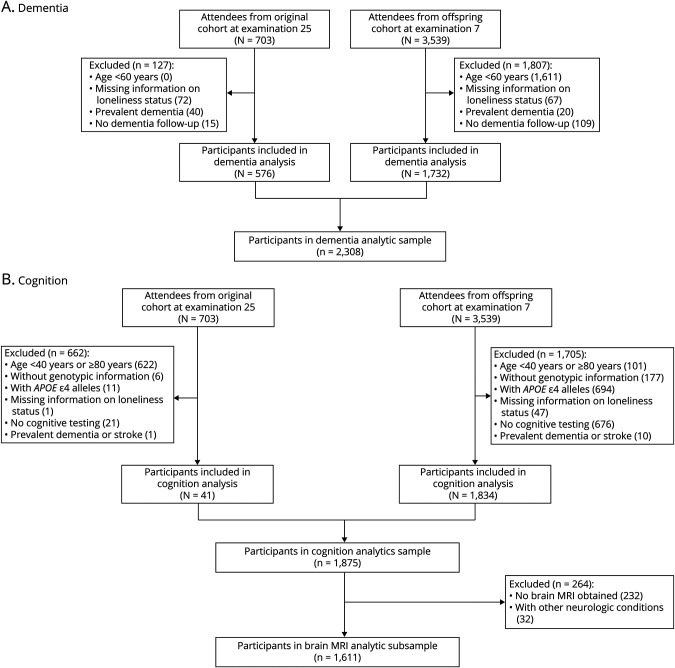
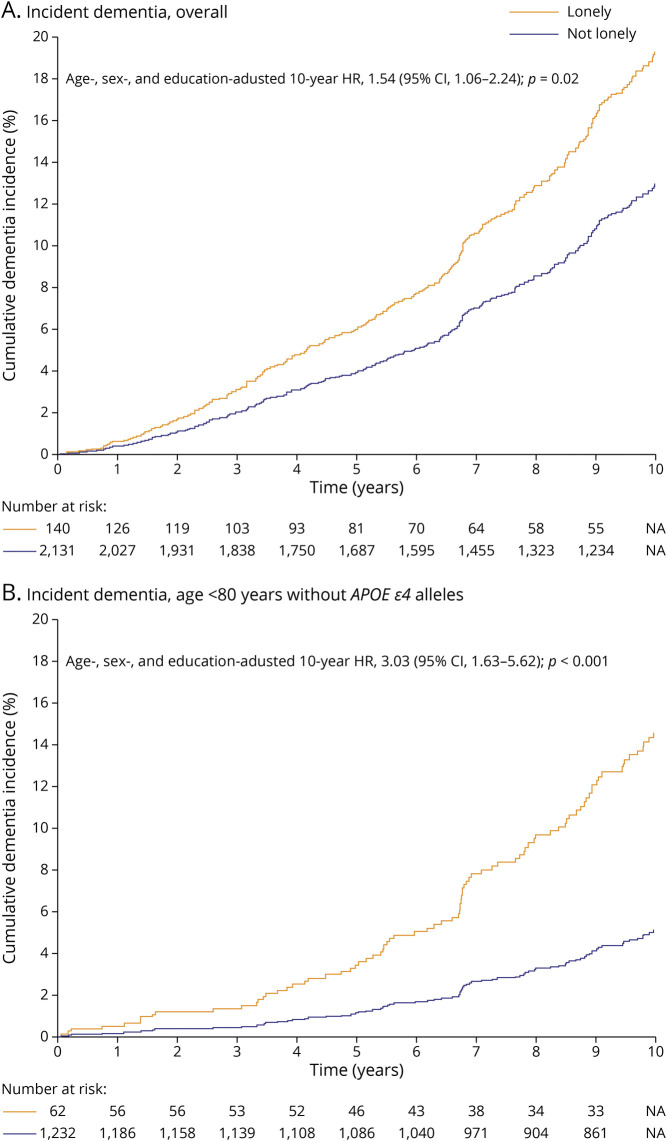
BACKGROUND AND OBJECTIVES: Loneliness is common, and its prevalence is rising. The relationship of loneliness with subsequent dementia and the early preclinical course of Alzheimer disease and related dementia (ADRD) remains unclear. Thus, the primary objective of this study was to determine the association of loneliness with 10-year all-cause dementia risk and early cognitive and neuroanatomic imaging markers of ADRD vulnerability. METHODS: This was a retrospective analysis of prospectively collected data from the population-based Framingham Study cohorts (September 9, 1948-December 31, 2018). Eligible participants had loneliness assessed and were dementia-free at baseline. Loneliness was recorded with the Center for Epidemiologic Studies Depression Scale, defined conservatively as feeling lonely ≥3 days in the past week. The main outcomes were incident dementia over a 10-year period, cognition, and MRI brain volumes and white matter injury. RESULTS: ε4 alleles had a 3-fold greater risk (adjusted hazard ratio 3.03, 95% CI, 1.63-5.62). Among 1,875 persons without dementia who met eligibility in the cognition sample (mean age 62 [SD 9] years, 54% women), loneliness associated with poorer executive function, lower total cerebral volume, and greater white matter injury. DISCUSSION: Over 10 years of close clinical dementia surveillance in this cohort study, loneliness was associated with increased dementia risk; this tripled in adults whose baseline risk would otherwise be relatively low on the basis of age and genetic risk, representing a majority of the US population. Loneliness was also associated with worse neurocognitive markers of ADRD vulnerability, suggesting an early pathogenic role. These findings may have important clinical and public health implications given observed loneliness trends. CLASSIFICATION OF EVIDENCE: This study provides Class I evidence that loneliness increases the 10-year risk of developing dementia.
Overview
The claims and statistics of this paper haven’t been checked yet.
Free: it reads the open-access text and checks the first 5 claims that cite a source we can check. Create a free account to check every claim.
Integrity signals
Registry
Cites
Statistics
Figures
Verification
Claims the paper makes
The claims and statistics of this paper haven’t been checked yet.
Free: it reads the open-access text and checks the first 5 claims that cite a source we can check. Create a free account to check every claim.
Claims other papers make about this one
Each is checked against this paper’s own text: does it say what the citing paper says it does?
The source backs part of the claim, not all of it — or backs it for a different population, condition or comparison.
In the citing paper
“In cross-sectional studies, social isolation or perceived isolation is associated with brain structure abnormalities (volumes and thickness), including lower total brain volumes, gray matter volumes, and greater white matter lesion volumes (Lewis et al., 2011; Salinas et al., 2022; Shen et al., 2022; van der Velpen et al., 2022; Kanai et al., 2012).”
From Internet-Based Conversational Engagement Randomized Controlled Clinical Trial (I-CONECT) Among Socially Isolated Adults 75+ Years Old With Normal Cognition or Mild Cognitive Impairment: Topline Results (2024) · cites this paper as Salinas et al., 2022
Experimental — accuracy not yet measured
Self-check
Percentages, sums and reported differences re-computed from the paper’s own numbers.
The self-check needs the paper’s full text.
Citations
Cites
Folstein, M. F., Folstein, S. E., & McHugh, P. R. (1975) · Journal of Psychiatric Research · doi:10.1016/0022-3956(75)90026-6 · Cited by 88,282 · cited 3×
“Some college 605 (27) 111 (20) 494 (29) 574 (30)”
The CES-D Scale: A Self-Report Depression Scale for Research in the General Population
Radloff, L. S. (1977) · Applied Psychological Measurement · doi:10.1177/014662167700100306 · Cited by 53,267
A Meta-Analysis of Interventions to Reduce Loneliness
Masi, C. M., Chen, H.-Y., Hawkley, L. C., & Cacioppo, J. T. (2011) · Personality and Social Psychology Review · doi:10.1177/1088868310377394 · Cited by 1,995 · cited 4×
“and decision-making), (2) lower total cerebral volume (a global neuroanatomic measure that is often more sensitive to the broad range of neuropathologies underlying cognitive decline in population-based samples than only cortical subregions),(33) and (3) a greater volume of white matter hyperintensities (indicating gr…”
BackgroundInfluentialValtorta, N. K., Kanaan, M., Gilbody, S., Ronzi, S., & Hanratty, B. (2016) · Heart · doi:10.1136/heartjnl-2015-308790 · Cited by 1,971
Loneliness and Risk of Alzheimer Disease
Wilson, R. S., Krueger, K. R., Arnold, S. E., Schneider, J. A., Kelly, J. F., Barnes, L. L., Tang, Y., & Bennett, D. A. (2007) · Archives of General Psychiatry · doi:10.1001/archpsyc.64.2.234 · Cited by 1,363 · cited 5×
“9,11,12 Regardless of whether loneliness is an early ADRD contributor, symptom, or both, uncertainty about its association with incident dementia risk could underestimate the impact of increasing loneliness and limit understanding of ADRD development and underlying mechanisms.”
BackgroundResultInfluentialLoneliness in Older Persons: A Predictor of Functional Decline and Death
Perissinotto, C. M., Stijacic Cenzer, I., & Covinsky, K. E. (2012) · Archives of Internal Medicine · doi:10.1001/archinternmed.2012.1993 · Cited by 1,269
Incidence of dementia over three decades in the Framingham heart study
Satizabal, C. L., Beiser, A. S., Chouraki, V., Chêne, G., Dufouil, C., & Seshadri, S. (2016) · New England Journal of Medicine · doi:10.1056/nejmoa1504327 · Cited by 1,051
Self-citationVilagut, G., Forero, C. G., Barbaglia, G., & Alonso, J. (2016) · PLOS ONE · doi:10.1371/journal.pone.0155431 · Cited by 982 · cited 1×
“College degree or more 594 (26) 76 (14) 518 (30) 691 (37)”
Psychological distress and loneliness reported by US adults in 2018 and April 2020
McGinty, E. E., Presskreischer, R., Han, H., & Barry, C. L. (2020) · JAMA · doi:10.1001/jama.2020.9740 · Cited by 978
The Alzheimer's Disease Centers' Uniform Data Set (UDS): The Neuropsychologic Test Battery
Weintraub, S., Salmon, D., Mercaldo, N., Ferris, S., Graff-Radford, N. R., Chui, H., Cummings, J., DeCarli, C., Foster, N. L., Galasko, D., et al. (2009) · Alzheimer Disease & Associated Disorders · doi:10.1097/wad.0b013e318191c7dd · Cited by 888 · cited 2×
“Some college 605 (27) 111 (20) 494 (29) 574 (30)”
Self-citation
Research works printed but not linked: 2
- American Psychiatric Association. Diagnostic and Statistical Manual of Mental Disorders: DSM-IV. American Psychiatric Association; 1994.
- Wechsler D. WAIS-R: Wechsler Adult Intelligence Scale-Revised. Psychological Corp; 1981: 1981.
Cited by
Dementia prevention, intervention, and care: 2024 report of the Lancet standing Commission
Livingston, G., Huntley, J., Liu, K. Y., Costafreda, S. G., Selbæk, G., Alladi, S., Ames, D., Banerjee, S., Burns, A., Brayne, C., et al. (2024) · The Lancet · doi:10.1016/s0140-6736(24)01296-0 · Cited by 3,860
Social participation and risk of developing dementia
Sommerlad, A., Kivimäki, M., Larson, E. B., Röhr, S., Shirai, K., Singh-Manoux, A., & Livingston, G. (2023) · Nature Aging · doi:10.1038/s43587-023-00387-0 · Cited by 207
The Impact of Loneliness and Social Isolation on Cognitive Aging: A Narrative Review
Guarnera, J., Yuen, E., & Macpherson, H. (2023) · Journal of Alzheimer's Disease Reports · doi:10.3233/adr-230011 · Cited by 161
Wang, X., Ma, H., Li, X., Heianza, Y., Fonseca, V. A., & Qi, L. (2023) · European Heart Journal · doi:10.1093/eurheartj/ehad306 · Cited by 165
Ren, Y. L., Savadlou, A., Park, S., Siska, P., Epp, J. R., & Sargin, D. (2023) · Frontiers in Neuroendocrinology · doi:10.1016/j.yfrne.2023.101061 · Cited by 149
A meta-analysis of loneliness and risk of dementia using longitudinal data from >600,000 individuals
Luchetti, M., Aschwanden, D., Sesker, A. A., Zhu, X., O’Súilleabháin, P. S., Stéphan, Y., Terracciano, A., & Sutin, A. R. (2024) · Nature Mental Health · doi:10.1038/s44220-024-00328-9 · Cited by 117
“Three significant effects were found ( 9 (Extended Data Table 5), while the other studies found no association 7,10 .”
Characterizing the mechanisms of social connection
Delgado, M. R., Fareri, D. S., & Chang, L. J. (2023) · Neuron · doi:10.1016/j.neuron.2023.09.012 · Cited by 98
Improvement of Social Isolation and Loneliness and Excess Mortality Risk in People With Obesity
Zhou, J., Tang, R., Wang, X., Li, X., Heianza, Y., & Qi, L. (2024) · JAMA Network Open · doi:10.1001/jamanetworkopen.2023.52824 · Cited by 68
Finley, A. J., & Schaefer, S. M. (2022) · Journal of Psychiatry and Brain Science · doi:10.20900/jpbs.20220011 · Cited by 100
Rashid, N. L. A., Leow, Y., Klainin‐Yobas, P., Itoh, S., & Wu, X. V. (2023) · International Journal of Nursing Studies · doi:10.1016/j.ijnurstu.2023.104530 · Cited by 99
Dodge, H. H., Yu, K., Wu, C.-Y., Pruitt, P. J., Asgari, M., Kaye, J. A., Hampstead, B. M., Struble, L., Potempa, K., Lichtenberg, P., et al. (2024) · The Gerontologist · doi:10.1093/geront/gnad147 · Cited by 56
“…isolation is associated with brain structure abnormalities (volumes and thickness), including lower total brain volumes, gray matter volumes, and greater white matter lesion volumes (Lewis et al., 2011; Salinas et al., 2022; Shen et al., 2022; van der Velpen et al., 2022; Kanai et al., 2012).”
BackgroundSutin, A. R., Luchetti, M., Aschwanden, D., Zhu, X., Stéphan, Y., & Terracciano, A. (2022) · International Psychogeriatrics · doi:10.1017/s1041610222001028 · Cited by 59
Qiao, L., Wang, G., Tang, Z., Zhou, S., Min, J., Yin, M., & Li, M. (2022) · Frontiers in Human Neuroscience · doi:10.3389/fnhum.2022.899814 · Cited by 56
“, 2019); however, several newly published articles were not included in the study (Luchetti et al., 2020; Rafnsson et al., 2020; Sundström et al., 2020; Sutin et al., 2020; Shibata et al., 2021; Freak-Poli et al., 2022; Salinas et al., 2022).”
BackgroundInfluentialFittipaldi, S., Legaz, A., Maito, M., Hernandez, H., Altschuler, F., Canziani, V., Moguilner, S., Gillan, C. M., Castillo, J., Lillo, P., et al. (2024) · Nature Mental Health · doi:10.1038/s44220-023-00164-3 · Cited by 36
“Demographic and cognitive information of these subsamples are provided in Supplementary Tables 6 and 7.”
Influencing factors of loneliness among older adults in China: a systematic review and meta-analysis
Zuo, S., Lin, L., Chen, S., Wang, Z., Tian, L., Li, H., & Xu, Y. (2023) · Psychogeriatrics · doi:10.1111/psyg.12897 · Cited by 36
Li, Y., Wang, X., Guo, L., Zhu, L., Shi, J., Wang, W., & Lu, C. (2022) · American Journal of Geriatric Psychiatry · doi:10.1016/j.jagp.2022.12.002 · Cited by 37
Oken, B., Kaplan, J., Klee, D., & Gallegos, A. M. (2024) · Frontiers in Human Neuroscience · doi:10.3389/fnhum.2024.1380002 · Cited by 40
“In another study, the HR for 10-year dementia incidence was 1.54 (Salinas et al., 2022).”
BackgroundMethodInfluentialDuffner, L. A., DeJong, N. R., Jansen, J. F. A., Backes, W. H., de Vugt, M. E., Deckers, K., & Köhler, S. (2023) · Ageing Research Reviews · doi:10.1016/j.arr.2023.101986 · Cited by 39
Lwi, S. J., Ford, B. Q., & LEVENSON, R. W. (2022) · Clinical Gerontologist · doi:10.1080/07317115.2022.2137448 · Cited by 42
“…extant literature suggests that loneliness in both caregiving and non-caregiving populations has been associated with worse brain health, such as an increased risk of dementia and poor cognitive functioning (Corrêa et al., 2019; Fonareva & Oken, 2014; Richardson et al., 2013; Salinas et al., 2022).”
BackgroundHirabayashi, N., Honda, T., Hata, J., Furuta, Y., Shibata, M., Ohara, T., Tatewaki, Y., Taki, Y., Nakaji, S., Maeda, T., et al. (2023) · Neurology · doi:10.1212/wnl.0000000000207602 · Cited by 60
Williams-Farrelly, M. M., Schroeder, M. W., Li, C., Perkins, A. J., Bakas, T., Head, K. J., Boustani, M. A., & Fowler, N. R. (2024) · Journal of the American Geriatrics Society · doi:10.1111/jgs.18762 · Cited by 33
“4,5 9 Given the profound consequences and prevalence of loneliness, the 2023 United States Surgeon General Advisory declared loneliness an urgent public health issue worthy of the “ same investments ” researchers and policy makers have made in addressing tobacco use, obesity, and the addiction…”
BackgroundBarton, S., Zovko, A., Müller, C., Krabichler, Q., Schulze, J., Wagner, S., Grinevich, V., Shamay‐Tsoory, S., & Hurlemann, R. (2024) · Neuroscience & Biobehavioral Reviews · doi:10.1016/j.neubiorev.2024.105734 · Cited by 33
Long-term effect of the absence of a companion robot on older adults: A preliminary pilot study
Yamazaki, R., Nishio, S., Nagata, Y., Satake, Y., Suzuki, M., Kanemoto, H., Yamakawa, M., Figueroa, D., Ishiguro, H., & Ikeda, M. (2023) · Frontiers in Computer Science · doi:10.3389/fcomp.2023.1129506 · Cited by 26
“Although effectively tackling subjective experiences of loneliness is a complex task, a key point lies in improving the quality of relationships and increasing companionships, meaningful connections, belongingness, and empathic understanding (Victor et al., 2020; Lee et al., 2021; Salinas et al., 2022).”
BackgroundLee, H., Yong, S. Y., Choi, H., Yoon, G. Y., & Koh, S. B. (2024) · Frontiers in Aging Neuroscience · doi:10.3389/fnagi.2024.1389476 · Cited by 23
Borelli, W. V., Zimmer, E. R., Bieger, A., Coelho, B. B., Pascoal, T. A., Chaves, M. L. F., Amariglio, R. E., & Castilhos, R. M. (2022) · Alzheimer s & Dementia Diagnosis Assessment & Disease Monitoring · doi:10.1002/dad2.12368 · Cited by 21
Loneliness, cerebrovascular and Alzheimer's disease pathology, and cognition
Lao, P. J., Young, C. B., Ezeh, C., Lacayo, B. E., Šeblová, D., Andrews, R. M., Gibbons, L. E., Kraal, A. Z., Turney, I. C., Deters, K., et al. (2024) · Alzheimer s & Dementia · doi:10.1002/alz.14196 · Cited by 18
The Neurologist's Role in Promoting Brain Health: Emerging Issues in Neurology
Selwa, L. M., Banwell, B., Choe, M. C., McCullough, L. D., Merchant, S., Ovbiagele, B. I., Salinas, J., Tilton, A. H., & Day, G. S. (2024) · Neurology · doi:10.1212/wnl.0000000000210226 · Cited by 21
Self-citationNg, T. K. S., Beck, T. L., Dennis, K. R., Desai, P., Krueger, K. R., Dhana, K., Wilson, R. S., Evans, D. A., & Rajan, K. B. (2025) · The Journal of Prevention of Alzheimer s Disease · doi:10.1016/j.tjpad.2024.100046 · Cited by 19
Matsuoka, T., Ismail, Z., Imai, A., Shibata, K., Nakamura, K., Nishimura, Y., Rubinstein, E. B., Uchida, H., Mimura, M., & Narumoto, J. (2024) · Journal of Alzheimer s Disease · doi:10.3233/jad-230923 · Cited by 17
Herold, F., Theobald, P., Gronwald, T., Kaushal, N., Zou, L., de Bruin, E. D., Bherer, L., & Müller, N. G. (2024) · JMIR Aging · doi:10.2196/56433 · Cited by 17
Prolonged loneliness and risk of incident cognitive decline and dementia: A two-cohort study
Ren, Z., Luo, Y., Liu, Y., Gao, J., Liu, J., & Zheng, X. (2025) · Journal of Affective Disorders · doi:10.1016/j.jad.2025.03.001 · Cited by 13
Childhood Loneliness and Cognitive Decline and Dementia Risk in Middle-Aged and Older Adults
Wang, J., Jiao, D., Zhao, X., Tian, Y., Li, H., Li, X., Sheng, C., Tao, L., Chen, H., Wu, Z., et al. (2025) · JAMA Network Open · doi:10.1001/jamanetworkopen.2025.31493 · Cited by 13
Terracciano, A., Walker, K. A., An, Y., Bilgel, M., Sutin, A. R., Luchetti, M., Karaköse, S., Stéphan, Y., Blennow, K., Zetterberg, H., et al. (2025) · The Journals of Gerontology Series B · doi:10.1093/geronb/gbaf006 · Cited by 12
Nwofe, E. S., Akhtar, A., Parveen, S., & Windle, K. (2024) · PLoS ONE · doi:10.1371/journal.pone.0309565 · Cited by 15
Beneficial Effect of Societal Factors on APOE-ε2 and ε4 Carriers’ Brain Health: A Systematic Review
Aravena, J. M., Lee, J., Schwartz, A. E., Nyhan, K., Wang, S., & Levy, B. R. (2023) · The Journals of Gerontology Series A · doi:10.1093/gerona/glad237 · Cited by 11
Zhao, A. J., Balcer, L. J., Himali, J. J., O’Donnell, A., Rahimpour, Y., DeCarli, C. S., Gonzales, M. M., Aparicio, H. J., Ramos‐Cejudo, J., Kenney, R., et al. (2024) · Journal of Alzheimer s Disease · doi:10.3233/jad-231425 · Cited by 13
Self-citationDo middle-aged and older people underreport loneliness? experimental evidence from the Netherlands
van den Broek, T., Lam, J., & Potente, C. (2024) · European Journal of Ageing · doi:10.1007/s10433-024-00826-w · Cited by 12
Loneliness in schizophrenia: Just loneliness
Holt, D. J. (2025) · Annals of the New York Academy of Sciences · doi:10.1111/nyas.70022 · Cited by 10
“A few studies have found preliminary evidence for associations between measures of cognition and loneliness or social isolation, 13,55 consistent with findings in older adults; 29,56,57 however, this question requires further investigation.”
Simons, R. L., Ong, M. L., Lei, M., Beach, S. R. H., Zhang, Y., Philibert, R. A., & Mielke, M. M. (2023) · Genes · doi:10.3390/genes14040842 · Cited by 10
“Further, evidence suggests that they have distinctive brain circuitry [10,11,37] and that they exercise independent effects as risk factors for cognitive decline and dementia [28,36,38].”
BackgroundDemand Coupling Drives Neurodegeneration: A Model of Age-Related Cognitive Decline and Dementia
Turknett, J., & Wood, T. R. (2022) · Cells · doi:10.3390/cells11182789 · Cited by 9
The plight of loneliness in Parkinson's disease: New opportunities
González, D. A., Tosin, M. H. D. S., & Goetz, C. G. (2022) · Parkinsonism & Related Disorders · doi:10.1016/j.parkreldis.2022.10.029 · Cited by 8
Depression and Anxiety in Older Adults with Dementia During the COVID-19 Pandemic
Nakanishi, M., Ogawa, A., Sakai, M., Yoshii, H., Miyashita, M., Yamasaki, S., & Nishida, A. (2023) · Journal of Alzheimer s Disease Reports · doi:10.3233/adr-230019 · Cited by 9
“People with dementia may be more vulnerable to reduced contact than those without dementia since loneliness and social isolation are linked to an increased risk of dementia [31].”
BackgroundLima, C. A., Alsunaidi, S., Lowe, S. A. J., Hogan, D. B., Dennett, L., Jones, C. A., & Yamamoto, S. S. (2024) · PLoS ONE · doi:10.1371/journal.pone.0304181 · Cited by 9
Moretti, M. C., Bonfitto, I., Nieddu, L., Leccisotti, I., Dimalta, S., Moniello, G., Lozupone, M., Bellomo, A., Panza, F., Avolio, C., et al. (2024) · Life · doi:10.3390/life14101216 · Cited by 9
Mavrych, V., Mansour, G. K., Hajjar, A. W., & Bolgova, O. (2025) · International Journal of Molecular Sciences · doi:10.3390/ijms27010084 · Cited by 12
“Longitudinal investigations demonstrate that loneliness predicts cognitive decline independent of objective social isolation, suggesting subjective perception drives neural and cognitive changes [15,16].”
InfluentialA Call for Consistent Measurement Across the Social Determinants of Health Industry Landscape
Rudy, E. T., McNamara, K. C., Goldberg, Z. N., Parker, A., & Nash, D. B. (2022) · Population Health Management · doi:10.1089/pop.2022.0079 · Cited by 7
Nath, B., Patel, P., & Oremus, M. (2023) · PLoS ONE · doi:10.1371/journal.pone.0290279 · Cited by 9
Loneliness, social isolation and incident chronic kidney disease among patients with diabetes
Tang, R., Zhou, J. S., Wang, X., Ma, H., Li, X., Heianza, Y., & Qi, L. (2024) · General Psychiatry · doi:10.1136/gpsych-2023-101298 · Cited by 8
Predictors of loneliness onset and maintenance in European older adults during the COVID-19 pandemic
Lundmark, V. P., Josefsson, M., & Rieckmann, A. (2023) · Frontiers in Psychology · doi:10.3389/fpsyg.2023.1172552 · Cited by 7
“While loneliness is a known risk factor for, or prodrome of, cognitive impairment (Rawtaer et al., 2017; Lara et al., 2019; Lee et al., 2022; Salinas et al., 2022), cognitive decline may simultaneously increase the risk of social isolation and loneliness over time (Hackett et al.”
BackgroundMečkovský, F., Fürstová, J., Košárková, A., Meier, Z., Tavel, P., & Maliňáková, K. (2023) · International Journal of Public Health · doi:10.3389/ijph.2023.1606537 · Cited by 7
“Regarding physical health, lonely people are more likely to develop coronary heart disease and stroke [16], Alzheimer ’ s disease [17] and have a higher risk of premature mortality, hospitalization and an emergency department visit [18].”
Fittipaldi, S., Legaz, A., Maito, M. A., Hernandez, H., Altschuler, F., Canziani, V., Moguilner, S., Gillan, C. M., Castillo, J., Lillo, P., et al. (2023) · Research Square · doi:10.21203/rs.3.rs-3007086/v1 · Cited by 7
The Importance of Social Contact on Brain Atrophy Among Older Individuals
Walter, A., & Sandsmark, D. (2023) · Neurology · doi:10.1212/wnl.0000000000207720 · Cited by 5
Cognitive function in Vietnam: the effects of war exposure and social engagement
Poff, J. M., Korinek, K., & Toàn, T. K. (2024) · Aging & Mental Health · doi:10.1080/13607863.2024.2379404 · Cited by 9
“…certain variables that have been found to be associated with ADRD in other research, such as hypertension (Turana et al., 2019), comorbidities (Khalid et al., 2022), weight and nutrition (Navrátilová et al., 2007; Stewart et al., 2005), and depression (Salinas et al., 2022; Yaffe et al., 2010).”
Neighbourhood Urban Environments and Cognitive Health in Ageing Populations
Soloveva, M. V., Poudel, G. R., Barnett, A. H., & Cerin, E. (2024) · Springer eBooks · doi:10.1007/978-3-031-64699-7_13 · Cited by 6
Sousa, I. A. E., Grotzinger, A. D., Lawrence, J. M., Breunig, S., Marshall, C. R., Korszun, A., & Foote, I. F. (2025) · Brain Communications · doi:10.1093/braincomms/fcaf112 · Cited by 6
Social Isolation, Loneliness, and Cognitive Health
Umoh, M. E. (2025) · Clinics in Geriatric Medicine · doi:10.1016/j.cger.2025.04.007 · Cited by 8
Park, H., Kim, H., Kwak, S., Youm, Y., & Chey, J. (2023) · Behavioral Sciences · doi:10.3390/bs13100869 · Cited by 6
“These results are consistent with a previous study that showed loneliness to be associated with the progression of WMHs [6,8].”
BackgroundResultQi, X., Mo, Z., Sui, J., Jiang, Y., & Wu, B. (2025) · Innovation in Aging · doi:10.1093/geroni/igaf087 · Cited by 5
Castro, M., Alves, H., Moreira, C., Astell-burt, T., Cancela, M., Guilherme, F., & Ribeiro, A. (2026) · Health and Place · doi:10.1016/j.healthplace.2026.103610 · Cited by 3
Aßmann, E. S., Ose, J., Hathaway, C. A., Oswald, L. B., Hardikar, S. S., Himbert, C., Chellam, V., Lin, T., Daniels, B., Kirchhoff, A. C., et al. (2024) · Journal of Behavioral Medicine · doi:10.1007/s10865-023-00465-z · Cited by 5
“It also has good face and predictive validity, as well as well-suited for large-scale, population-based studies (Salinas et al., 2022).”
Desai, P., Krueger, K. R., de Leon, C. F. M., Wilson, R. S., Evans, D. A., & Rajan, K. B. (2023) · Psychosomatic Medicine · doi:10.1097/psy.0000000000001168 · Cited by 4
Puit, J. K. D., & Challinor, K. L. (2025) · Journal of Aging Research · doi:10.1155/jare/9924448 · Cited by 4
“Another study using MRI was also able to associate lone-liness (also measured by yes/no item) negatively with executive function and total brain volume and positively with white matter injury [60], which was suggested to mimic early AD pathology.”
Loneliness, social isolation and stroke risk in men and women with and without diabetes
Xiu, W., Zu, Y., Wang, X., & Yoshida, Y. (2025) · BMC Public Health · doi:10.1186/s12889-025-24458-6 · Cited by 5
“In the general population, men have a higher burden of stroke compared to women [17], whereas in populations with diabetes, women appear to have a higher risk of stroke [18].”
Wnuk, H. K., Orden, K. A. V., & Wang, K. H. (2025) · Neuroscience & Biobehavioral Reviews · doi:10.1016/j.neubiorev.2025.106451 · Cited by 7
Rodrigues, J. F. R., Rodrigues, L. P., Teshima, T., Yang, S., Wu, Y., Hu, X., Abarca, G. I. F., da Cruz, K. C. T., Serna-Rodríguez, M. F., Rubatino, F. V. M., et al. (2026) · Psychogeriatrics · doi:10.1111/psyg.70165 · Cited by 3
“Another nine were excluded due to insufficient data for comparison [47, 56–61, 63, 64, 68].”
Investigating relationships between loneliness, social isolation and health
Hilliard, D. D., Wootton, R. E., Sallis, H., van de Weijer, M. P., Treur, J. L., Qualter, P., Dixon, P., Sanderson, E. C. M., Carslake, D., Richmond, R. C., et al. (2026) · Nature Communications · doi:10.1038/s41467-026-74758-7 · Cited by 9
“…2SMR analyses genome-wide association study sample size 573,604 for loneliness; 1,347,212 for CAD; 977,323 for heart failure; 1,308,460 for stroke, 1,114,458 for T2D; 757,601 for SBP. asthma and osteoarthritis, amongst others 4,56,57 , and these merit examination in future triangulation studies.”
González, D. A., Tosin, M. H. D. S., Warner‐Rosen, T., & Goetz, C. G. (2024) · Movement Disorders Clinical Practice · doi:10.1002/mdc3.14298 · Cited by 4
“2 3 – 8 Although loneliness is a near-universal human phenomenon, its severity and chronicity have shown a concerning uptrend, particularly exacerbated by the COVID-19 pandemic, prompting the US Surgeon General and World Health Organization to declare it a public health priority.”
Variation in Group Composition Alters an Early-Stage Social Phenotype in hAPP-Transgenic J20 Mice
Lanooij, S. D., Eisel, U. L. M., van der Zee, E. A., & Kas, M. J. (2023) · Journal of Alzheimer s Disease · doi:10.3233/jad-221126 · Cited by 3
“No effective treatment is available yet, but several environmental and lifestyle [5–7].”
Navigating Sex-Specific Disease Dynamics in Incident Dementia
Garg, M., Liu, X., Vassilaki, M. E., Petersen, R. C., Sauver, J. L. S., & Sohn, S. (2023) · IEEE International Conference on Bioinformatics and Biomedicine (BIBM) · doi:10.1109/bibm58861.2023.10385324 · Cited by 3
“Clinical informaticists have used electronic health records (EHRs) to identify risk factors associated with post-dementia diagnosis, such as kidney functionality [2], vascular indicators [3], and psychosocial isolation scores [4] over 10-year follow-up after dementia diagnosis.”
BackgroundSocial Isolation and Loneliness Among Older Adults
Kumar, A., Petriceks, A. H., & Schwartz, A. W. (2025) · Clinics in Geriatric Medicine · doi:10.1016/j.cger.2025.05.002 · Cited by 3
Figueiredo, C. A., Nunes, D. P., Fusco, S. D. F. B., & Saidel, M. G. B. (2023) · International Journal of Environmental Research and Public Health · doi:10.3390/ijerph20126185 · Cited by 8
“In addition, studies derived from the Framingham Heart Study already demonstrate an association between loneliness and an increased risk of dementia and cognitive decline [8].”
BackgroundYoo‐Jeong, M., Dastgheyb, R. M., Shorer, E. F., Demsky, C., Fox, O., Inaganti, D., Kanner, S., Neijna, A. G., Buchholz, A. S., Wilson, T. E., et al. (2024) · Journal of the Association of Nurses in AIDS Care · doi:10.1097/jnc.0000000000000491 · Cited by 3
The 5D indicators of suicide risk in older adults who are lonely
Orden, K. A. V., Buttaccio, A., & Conwell, Y. (2025) · Annals of the New York Academy of Sciences · doi:10.1111/nyas.15354 · Cited by 4
Choi, E. Y., Cho, G., & Chang, V. W. (2025) · Journal of the American Geriatrics Society · doi:10.1111/jgs.70086 · Cited by 2
“This aligns with other research showing that psychosocial stressors, such as depression-evoking environments [44], loneliness [45], and midlife occupational exposures to chemicals [46] increase memory impairment or dementia risk exclusively for individuals without the ε4 allele.”
Dixon, J. S., Amariglio, R. E., Howard, M. J., Cella, K., Farias, S. T., Jackson, M. J., Krueger, K. R., Sachs, B. C., Snyder, H. M., Tangney, C., et al. (2025) · The Journals of Gerontology Series B · doi:10.1093/geronb/gbaf195 · Cited by 5
Kudar, K., Gopinath, G., Ross, A., Balshaw, R. F., Chau, E., Christianson, I., Koven, L., Mackenzie, C. S., Miller, S. A., Newall, N. E. G., et al. (2025) · PLoS ONE · doi:10.1371/journal.pone.0336031 · Cited by 2
Pugh, E., Lee, G., Stokes, J. E., Briggs, E., López-Anuarbe, M., & Leggett, A. N. (2025) · Social Science & Medicine · doi:10.1016/j.socscimed.2025.118788 · Cited by 2
Musich, M. L., Shenker, J. I., & Beversdorf, D. Q. (2026) · Journal of dementia and Alzheimer's disease · doi:10.3390/jdad3010004 · Cited by 2
Zhang, Y., Wang, L., Bai, J., Ren, R. C., Wang, W., Liu, J., Ma, Y., & Wang, D. (2026) · Journal of Affective Disorders · doi:10.1016/j.jad.2026.121760 · Cited by 2
Suroyo, S., Entas, D., Sulistyadi, K., Trisnawati, I. A., & Putra, B. M. (2026) · Journal of Psychology and AI · doi:10.1080/29974100.2026.2657118 · Cited by 2
Clinical and lifestyle predictors of loneliness: A two-year longitudinal study
Salgado, T. A., Montezano, B. B., Roza, T. H., Bouvier, V. D. A., Zimerman, A., Noronha, L. T., Marcon, G., Hoffmann, M. S., Brunoni, A. R., & Passos, I. C. (2024) · Journal of Psychiatric Research · doi:10.1016/j.jpsychires.2024.11.025 · Cited by 7
The deprivation cascade hypothesis of dementia
Daly, T. P. (2025) · Aging and Health Research · doi:10.1016/j.ahr.2024.100219 · Cited by 4
Daly, T. P. (2022) · Neurology · doi:10.1212/wnl.0000000000201183 · Cited by 2
“In their otherwise excellent article, Guasp et al.(1) studied the role of neurofilament light chain (NfL) inNMDA receptors (NMDAR) encephalitis and primary psychiatric psychosis.”
InfluentialLoneliness trajectories and dementia risk: Insights from the HUNT cohort study
Aunsmo, R. H., Strand, B. H., Bergh, S., Hansen, T., Kivimäki, M., Köhler, S., Krokstad, S., Langballe, E. M., Livingston, G., Matthews, F. E., et al. (2025) · Alzheimer s & Dementia Diagnosis Assessment & Disease Monitoring · doi:10.1002/dad2.70154 · Cited by 3
Correlates of Loneliness in Parkinson Disease During the COVID-19 Pandemic: A Longitudinal Study
de Figueiredo, J. M., Kohn, R., Patel, A., Parsons, E., Louis, E. D., & Koo, B. B. (2025) · Behavioral Sciences · doi:10.3390/bs15091233 · Cited by 1
“This is partly because loneliness has been linked to the onset of neurodegenerative diseases (Salinas et al., 2022), and partly because PD patients are typically over the age of 60, a group often experiencing loneliness due to reduced social interaction and declining health (Gerlach et al., 2024).”
McClure, C., Mattek, N., Beattie, Z., Sharma, N., Riley, T., Steele, J. S., & Kaye, J. A. (2025) · Journal of Alzheimer s Disease · doi:10.1177/13872877251376524 · Cited by 2
Wang, R., Yin, X., Chen, Y., Wang, X., Shi, M., & Zhang, Y. (2026) · Journal of Affective Disorders · doi:10.1016/j.jad.2026.121690 · Cited by 3
Stéphan, Y., Sutin, A. R., Luchetti, M., Karaköse, S., O’Súilleabháin, P. S., & Terracciano, A. (2026) · Journal of Psychosomatic Research · doi:10.1016/j.jpsychores.2026.112651 · Cited by 1
The association between loneliness, cognition, and dementia among US older adults
Chek, C. J. W., Sultana, S., Knauft, K. M., & Tarraf, W. (2026) · Journal of Alzheimer s Disease · doi:10.1177/13872877261432202 · Cited by 1
“5,16,43,44 Accounting for demographic factors did not alter these associations.”
Pinto, J. O., Peixoto, B., Dores, A. R., & Barbosa, F. (2026) · Journal of Personalized Medicine · doi:10.3390/jpm16070363 · Cited by 1
“Loneliness constitutes a modifiable factor and has also been demonstrated to increase the susceptibility to ND [156].”
Can AI-powered Chatbots and Robots Lower the Risk of Loneliness in People With Neurologic Diseases?
Hurley, D. (2024) · Neurology Today · doi:10.1097/01.nt.0001027372.04763.70 · Cited by 1
Loneliness Modulates Inflammation to Affect the Neurocognitive Function of Older Adults
Jin, R. R., Chan, A. K. Y., & Lee, T. M. C. (2024) · Integrated science · doi:10.1007/978-3-031-73061-0_14 · Cited by 4
Alone in the Mind: Review of Research Examining the Link Between Loneliness and Dementia
Al‐Samiry, A. H., Mohammed, S. I., Hammed, A. M., & Maryoosh, T. M. (2025) · Medicine Advances · doi:10.1002/med4.70005 · Cited by 1
McKinley, J., Brumley, A. W., Williams, C. L., Tognoli, E., & Beetle, C. (2025) · Alzheimer s & Dementia · doi:10.1002/alz.70131 · Cited by 1
“7 Reduced cognitive stimulation, insufficient emotional support, and subsequent depression accompanying social isolation may explain the relationships among social disengagement, loneliness, and cognitive decline.”
A Bipartisan Lifeline for Alzheimer’s: Relationships that are Good for the Heart
Khasawinah, S. (2022) · Public Policy & Aging Report · doi:10.1093/ppar/prac007 · Cited by 1
Loneliness and Dementia in Context
Bhardwaj, T., & Donovan, N. J. (2023) · American Journal of Geriatric Psychiatry · doi:10.1016/j.jagp.2023.03.004 · Cited by 1
Paretsky, M. S. (2022) · Neurology · doi:10.1212/wnl.0000000000200234
Salinas, J. (2022) · Neurology · doi:10.1212/wnl.0000000000201184
“In their otherwise excellent article, Guasp et al.(1) studied the role of neurofilament light chain (NfL) inNMDA receptors (NMDAR) encephalitis and primary psychiatric psychosis.”
InfluentialSelf-citationBrewer‐Smyth, K. (2022) · Springer eBooks · doi:10.1007/978-3-031-08801-8_9 · Cited by 4
Lima, C. A., Alsunaidi, S., Lowe, S. A. J., Hogan, D. B., Dennett, L., Jones, C. A., & Yamamoto, S. S. (2023) · Research Square · doi:10.21203/rs.3.rs-3182893/v1
Metadata
- Authors
- Salinas, J., Beiser, A. S., Samra, J. K., O'Donnell, A., DeCarli, C. S., Gonzales, M. M., Aparicio, H. J., & Seshadri, S.
- Affiliations
- Boston University (US)
- From the Department of Neurology (J.S.), Center for Cognitive Neurology, New York University Grossman School of Medicine, New York; The Framingham Study (J.S., A.S.B., J.K.S., A.O., H.J.A., S.S.); Department of Biostatistics (A.S.B., J.K.S., A.O.), Boston University School of Public Health; Department of Neurology (A.S.B., H.J.A., S.S.), Boston University School of Medicine, MA; Department of Neurology (C.S.D.), University of California Davis; and Glenn Biggs Institute for Alzheimer's and...
- Corresponding author
- Salinas, Joel
- Beiser, Alexa S.
- Venue
- Neurology
- Published
- 2022-03-29
- Volume
- 98
- Issue
- 13
- Pages
- e1337-e1348
- ISSN
- 0028-3878 (ISSN-L)
- 1526-632X
- PMC
- PMC8967424
- OpenAlex
- W4210859428
- Semantic Scholar
- b440e5ee3ecc72473b54f758fbe7478ef2823364
- Cited by
- 127
- References
- 47
- Citations by year
- 2026: 27 · 2025: 29 · 2024: 31 · 2023: 25 · 2022: 15
- FWCI
- 16.29
- Type
- journal article
- Language
- en
- Open access
- hybrid
- doi.org
- Licence
- cc-by-nc-nd
- Locations
- Neurology (publishedVersion, cc-by-nc-nd)
- PubMed Central (publishedVersion, cc-by-nc-nd)
- PubMed (publishedVersion)
- eScholarship (California Digital Library) (submittedVersion, cc-by-nc-nd)
- Funders
- National Institutes of Health (n01hc25195-41-0-1)
- National Institute on Aging (U01AG049505, U01AG052409, R01AG054076, R01AG049607, K23AG057760, RF1AG059421, P30AG044271, P30AG066546)
- National Heart, Lung, and Blood Institute (N01‐HC25195, HHSN268201500001I, 75N92019D00031)
- National Institute of Neurological Disorders and Stroke (UH2NS100605, L30 NS093525, T32NS048005, R01NS017950)
- Topics
- Health Sciences › Medicine › Psychiatry and Mental health › Dementia and Cognitive Impairment Research
- Social Sciences › Health › Health disparities and outcomes
- Life Sciences › Neuroscience › Cellular and Molecular Neuroscience › Alzheimer's disease research and treatments
- Keywords
- loneliness, dementia risk, Alzheimer's disease and related dementias, neurocognitive decline, executive function, brain volume, white matter injury, APOE ε4, preclinical dementia, Framingham Heart Study
- MeSH terms
- Aged, Aged, 80 and over, Alzheimer Disease, Female, Humans, Loneliness, Longitudinal Studies, Male, Middle Aged, Retrospective Studies, Risk Factors, Cohort Studies
About these checks
Registry, retraction, Cites and statistics results are computed, not judged, with one exception: a printed reference that no index lists is read once by a model before it counts as a citation error. Claims are extracted by a model and kept only when their quote appears verbatim in the text; each cited source is then checked, with a model’s help, for whether it says what the claim relies on. Those verdicts can be wrong — read the claim’s quote and the cited source before relying on one.
Statistics and arithmetic are recomputed, not judged.
Confidence bands are shown only for fields calibrated on our annotated test set. None is calibrated yet, so no band is shown.
What counts as a claim ›How we measure confidence ›How we check this ›
Are you an author, or do you see a problem with this page? Request a review
Data sources
Bibliographic data: Semantic Scholar, OpenAlex, Crossref.
Contains information from the Semantic Scholar Academic Graph Datasets, made available under the ODC Attribution License (ODC-BY 1.0).
Semantic Scholar’s data is described in: Kinney, R., et al. (2023). The Semantic Scholar Open Data Platform. arXiv:2301.10140.
