

An Evidence-Based Narrative Review of Mechanisms of Resistance Exercise–Induced Human Skeletal Muscle Hypertrophy
Open accessThe DOI matches its Crossref record; 144 of the 147 references it cites were found in a registry or an index.
Abstract
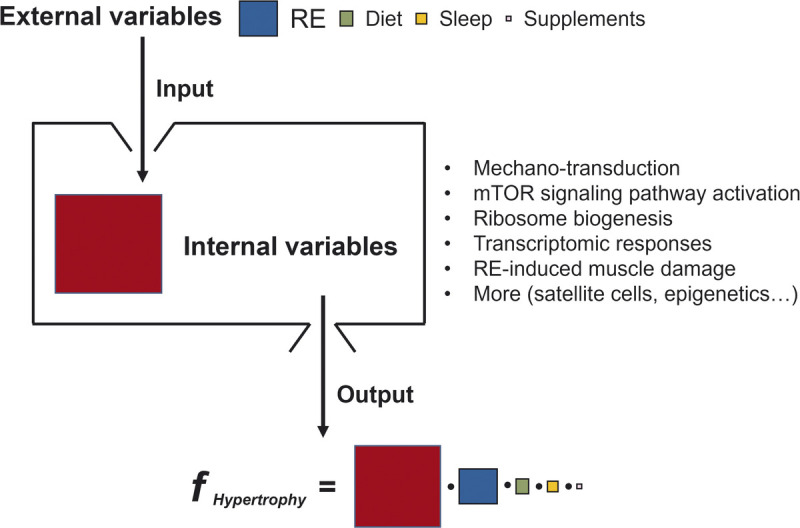
Skeletal muscle plays a critical role in physical function and metabolic health. Muscle is a highly adaptable tissue that responds to resistance exercise (RE; loading) by hypertrophying, or during muscle disuse, RE mitigates muscle loss. Resistance exercise training (RET)–induced skeletal muscle hypertrophy is a product of external (e.g., RE programming, diet, some supplements) and internal variables (e.g., mechanotransduction, ribosomes, gene expression, satellite cells activity). RE is undeniably the most potent nonpharmacological external variable to stimulate the activation/suppression of internal variables linked to muscular hypertrophy or countering disuse-induced muscle loss. Here, we posit that despite considerable research on the impact of external variables on RET and hypertrophy, internal variables (i.e., inherent skeletal muscle biology) are dominant in regulating the extent of hypertrophy in response to external stimuli. Thus, identifying the key internal skeletal muscle–derived variables that mediate the translation of external RE variables will be pivotal to determining the most effective strategies for skeletal muscle hypertrophy in healthy persons. Such work will aid in enhancing function in clinical populations, slowing functional decline, and promoting physical mobility. We provide up-to-date, evidence-based perspectives of the mechanisms regulating RET-induced skeletal muscle hypertrophy.
Overview
The claims and statistics of this paper haven’t been checked yet.
Free: it reads the open-access text and checks the first 5 claims that cite a source we can check. Create a free account to check every claim.
Integrity signals
Registry
Cites
Statistics
Figures
Verification
Claims the paper makes
The claims and statistics of this paper haven’t been checked yet.
Free: it reads the open-access text and checks the first 5 claims that cite a source we can check. Create a free account to check every claim.
Claims other papers make about this one
Each is checked against this paper’s own text: does it say what the citing paper says it does?
The cited source says what the claim attributes to it.
In the citing paper
“As resistance training is considered the most potent nonpharmacological stimulus for attenuating muscle loss and inducing skeletal muscle growth, it may be worthy of particular focus in these trials.7,22”
From Preservation of lean soft tissue during weight loss induced by GLP-1 and GLP-1/GIP receptor agonists: A case series (2025) · cites this paper as [22]
The cited source says what the claim attributes to it.
In the citing paper
“resistance training is considered the most effective nonpharmacological method of stimulating skeletal muscle growth or combatting muscle loss [43]”
From Fundamental Body Composition Principles Provide Context for Fat-Free and Skeletal Muscle Loss With GLP-1 RA Treatments (2024) · cites this paper as [43]
In the citing paper
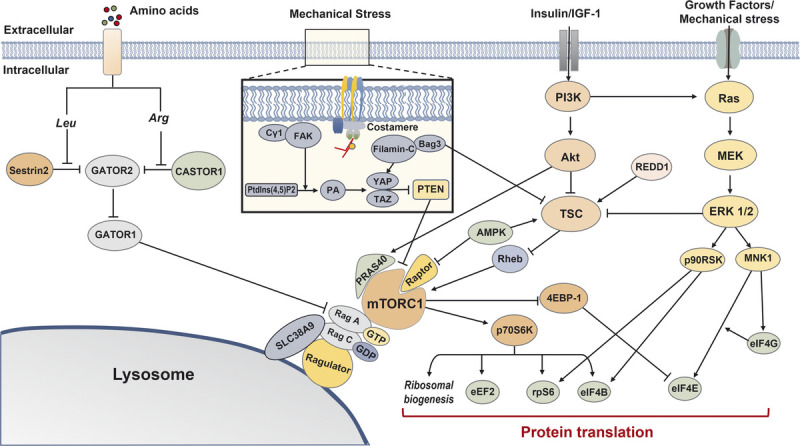
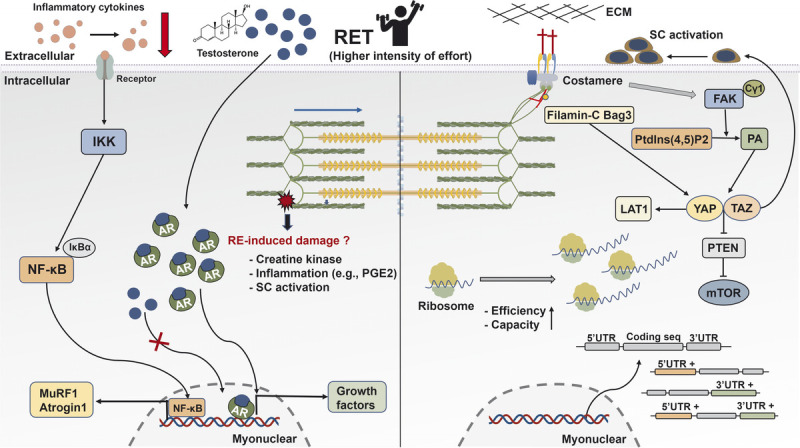
“And resistance training may activate the PI3K-Akt-TSC signaling cascade to regulate mTORC1 signaling through Ras homolog enriched in brain (Rheb), which subsequently translocates to lysosomes, thereby playing a role in promoting protein synthesis by activating several translational and ribosomal components in skeletal muscle hypertrophy [20]”
From Exerkines and Sarcopenia: Unveiling the Mechanism Behind Exercise-Induced Mitochondrial Homeostasis (2025) · cites this paper as [20]
Self-check
Percentages, sums and reported differences re-computed from the paper’s own numbers.
The self-check needs the paper’s full text.
Citations
Cites
mTOR at the nexus of nutrition, growth, ageing and disease
Liu, G. Y., & Sabatini, D. M. (2020) · Nature Reviews Molecular Cell Biology · doi:10.1038/s41580-019-0199-y · Cited by 2,737 · cited 5×
“, RE), are converted to intracellular signals and subsequently detected by mTORC1 subunits, such as Raptor (25).”
BackgroundInfluentialSancak, Y., Bar-Peled, L., Zoncu, R., Markhard, A. L., Nada, S., & Sabatini, D. M. (2010) · Cell · doi:10.1016/j.cell.2010.02.024 · Cited by 2,464 · cited 1×
“Translocation to the lysosome is critical for mTORC1 activation (31), and the intracellular positioning of mTORC1 after anabolic stimuli has been increasingly studied (32).”
BackgroundThe effects of supraphysiologic doses of testosterone on muscle size and strength in normal men
Bhasin, S., Storer, T. W., Berman, N., Callegari, C., Clevenger, B., Phillips, J., Bunnell, T. J., Tricker, R., Shirazi, A., & Casaburi, R. (1996) · New England Journal of Medicine · doi:10.1056/nejm199607043350101 · Cited by 1,659
Muscle wasting in disease: molecular mechanisms and promising therapies
Cohen, S., Nathan, J. A., & Goldberg, A. L. (2015) · Nature Reviews Drug Discovery · doi:10.1038/nrd4467 · Cited by 1,089
Inflammatory markers and loss of muscle mass (sarcopenia) and strength
Schaap, L. A., Pluijm, S. M. F., Deeg, D. J. H., & Visser, M. (2006) · The American Journal of Medicine · doi:10.1016/j.amjmed.2005.10.049 · Cited by 1,047
Regulation and metabolic functions of mTORC1 and mTORC2
Szwed, A., Kim, E., & Jacinto, E. (2021) · Physiological Reviews · doi:10.1152/physrev.00026.2020 · Cited by 813
Katznelson, L., Finkelstein, J. S., Schoenfeld, D. A., Rosenthal, D. I., Anderson, E. J., & Klibanski, A. (1996) · The Journal of Clinical Endocrinology & Metabolism · doi:10.1210/jcem.81.12.8954042 · Cited by 791 · cited 1×
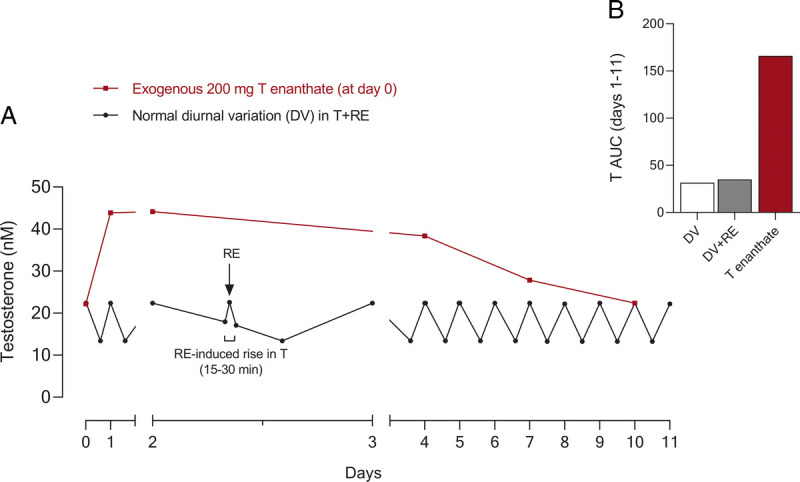
“Testosterone is an androgenic hormone, and previous studies have been shown that exogenous administrations of testosterone in supraphysiological doses to healthy eugonadal men (81,82) and replacement doses to hypogonadal men (83,84) significantly increase muscle mass and lean body mass.”
BackgroundMuscle damage and inflammation during recovery from exercise
Peake, J. M., Neubauer, O., Della Gatta, P. A., & Nosaka, K. (2017) · Journal of Applied Physiology · doi:10.1152/japplphysiol.00971.2016 · Cited by 764
Lecker, S. H., Solomon, V., Mitch, W. E., & Goldberg, A. L. (1999) · The Journal of Nutrition · doi:10.1093/jn/129.1.227s · Cited by 732
Synthetic spike-in standards for RNA-seq experiments
Jiang, L., Schlesinger, F., Davis, C. A., Zhang, Y., Li, R., Salit, M., Gingeras, T. R., & Oliver, B. (2011) · Genome Research · doi:10.1101/gr.121095.111 · Cited by 653
Research works printed but not linked: 1
- 111. Morrison DK. MAP kinase pathways. Cold Spring Harb Perspect Biol. 2012;4(11):a011254.
Cited by
Items 101–200 of 210
Elimination of senescent cells fails to attenuate disease progression in an ALS mouse model
Fang, L., Bai, Z., Yang, D., Sun, B., Zhao, X., & Deng, J. (2026) · Neurological Sciences · doi:10.1007/s10072-026-09023-2 · Cited by 1
Brenmoehl, J., Walz, C., & Hoeflich, A. (2026) · Best Practice & Research Clinical Endocrinology & Metabolism · doi:10.1016/j.beem.2026.102110 · Cited by 1
The Role of p53 in Skeletal Muscle Adaptation During Exercise: A Literature Review
Lu, A. (2023) · Undergraduate Research in Natural and Clinical Science and Technology (URNCST) Journal · doi:10.26685/urncst.520 · Cited by 1
Iacono, A. D., Jukić, I., & Swinton, P. A. (2026) · Research Square · doi:10.21203/rs.3.rs-9970394/v1 · Cited by 1
High-Intensity Exercise Performance as a Complex Adaptive System: An Integrative Review
Alkasasbeh, W. J., Amawi, A. T., & Grivas, G. V. (2026) · Muscles · doi:10.3390/muscles5030053 · Cited by 1
Attarieh, P., Nunes, J. P., Negahdar, S., Khani, S., Goli, A., Fallah, M. H., Nazarirad, H., Nazarirad, S., Mojtahedi, S., & Soori, R. (2026) · Sport Sciences for Health · doi:10.1007/s11332-025-01605-5 · Cited by 1
McColl, T. J., Zhang, R., Dugourd, A. J. F., Sáez-Rodríguez, J., & Clarke, D. C. (2025) · bioRxiv (Cold Spring Harbor Laboratory) · doi:10.1101/2025.10.11.681841 · Cited by 1
Detopoulou, P., Magni, O., Pylarinou, I., Levidi, D., Dedes, V., Tzoutzou, M., Argyri, K., Fappa, E., Gioxari, A., & Panoutsopoulos, G. (2024) · Diseases · doi:10.3390/diseases13010003 · Cited by 1
Xie, X., Li, M., Zhang, Y., Bao, Z., & Yi, X. (2025) · Frontiers in Cell and Developmental Biology · doi:10.3389/fcell.2025.1709515 · Cited by 1
Calzavara, J., & Barroso, R. (2026) · The Journal of Strength and Conditioning Research · doi:10.1519/jsc.0000000000005665 · Cited by 1
Musculoskeletal and physiological responses to vortex wave stimulation in older adults
Waddell, A., Korzepa, M., Belfield, A., Fry, B., Mesquita, R. C., Smith, D. R., Quinlan, J. I., & Breen, L. (2026) · The Journal of Physiology · doi:10.1113/jp291437 · Cited by 1
dos Santos, M. V. N., Pires, A. C. D. S., Duarte, A. L. H., & de Souza, M. L. R. (2025) · REVISTA CIENTÍFICA DA FAMINAS · doi:10.54397/rcfaminas.v20i2.998 · Cited by 1
Losciale, J. M. (2025) · cIRcle (University of British Columbia) · doi:10.14288/1.0447249 · Cited by 1
Henderson, Z. J., Wang, S., & Scribbans, T. D. (2025) · doi:10.51224/srxiv.508 · Cited by 1
The correlation of iodine concentration in urine with muscle mass and reaction speed of young adults
Ištvanić, S., Dusper, I., Ištvanić, T., Farkaš, V., Banjari, I., & Bačun, T. (2025) · Medicinski Glasnik · doi:10.17392/1951-22-02 · Cited by 1
The Effects of Oral Contraceptives on Muscle Hypertrophy
Phillips, M., Misra, M., & Raiser, S. N. (2026) · International Journal of Sports Medicine · doi:10.1055/a-2933-1360
Gimeno, J. D. M., Nebot, J. M., Jerez, A. R., Casal, A. I., Serna, J. R., & Sorribes, L. M. (2026) · Sport Sciences for Health · doi:10.1007/s11332-026-01760-3
Bochdansky, T. (2026) · Springer eBooks · doi:10.1007/978-3-662-71737-0_1
Wu, Y., Zhang, Y., Li, Y. C., Tin, H., Li, Y., & Yan, X. (2026) · Obesity Reviews · doi:10.1111/obr.70130
McGovern, K. A., Wright, T. J., Marchant, E. D., Kilroe, S. P., Durham, W. J., Dillon, E. L., Baum, M. M., Kinsky, M. P., Russell, W. K., Fry, C. S., et al. (2026) · Physiological Reports · doi:10.14814/phy2.71104
Lu, Z., Guo, J., Bao, Y., Zhao, C., Zhang, H., Chen, W., Chang, J., Wang, S., Guan, H., Ni, Y., et al. (2025) · International Journal of Obesity · doi:10.1038/s41366-025-01939-7
Loss of muscle function as the main indicator of age-related alterations in muscle tissue
Urunova, G. R., Demenok, D. V., Шарашкина, Н. В., Naumov, A. V., & Khovasova, N. O. (2026) · Russian Journal of Geriatric Medicine · doi:10.37586/2686-8636-2-2026-157-163
Li, Z., Li, J., Zhu, X., Qin, G., Zheng, Y., Chen, L., Duan, R., & Shi, H. (2026) · Ageing Research Reviews · doi:10.1016/j.arr.2026.103316
Bergsport und Stütz- und Bewegungsapparat
Burtscher, M. (2025) · Springer eBooks · doi:10.1007/978-3-662-70316-8_7
Dan, H., Hao, J., Zhang, T., Ying, S., Cai, R., & Pang, W. (2026) · International Journal of Biological Macromolecules · doi:10.1016/j.ijbiomac.2026.151984
Fovet, T., Issertine, M., Jacob, P., Ghislin, S., Laroche, N., Roffino, S., Camy, C., Theuil, J., Bertrand‐Gaday, C., Delobel, P., et al. (2025) · The FASEB Journal · doi:10.1096/fj.202501128r
Komm, Y., Zeiler, L., Held, S., Comfort, P., Faigenbaum, A. D., Geisler, S., & Augste, C. (2026) · Sports Medicine · doi:10.1007/s40279-026-02499-0
Hsu, Y.-J., Kuo, C.-Y., & Lo, Y.-C. (2026) · Life Sciences · doi:10.1016/j.lfs.2026.124646
Effects of prolonged physical training on skeletal muscle mass accrual throughout the life span
Ledergerber, R., Kotikangas, J., Cadore, E. L., Feuerbacher, J. F., & Schumann, M. (2026) · Best Practice & Research Clinical Endocrinology & Metabolism · doi:10.1016/j.beem.2026.102132
Yang, Y.-J., Goh, C.-M., Lin, C.-Y., Chen, C., Pan, C.-H., & Cheng, C.-F. (2026) · Journal of Exercise Science & Fitness · doi:10.1016/j.jesf.2026.200525
Isenmann, E., Kaluza, D., Havers, T., Elbeshausen, A., Geisler, S., Hofmann, K., Flenker, U., Diel, P. R., & Gavanda, S. (2023) · Figshare · doi:10.6084/m9.figshare.24264713
The relationship between perceived effort, muscle hypertrophy, and strength gains: a pilot study
Antunes, P. D. O., Diniz, R. C. R., de Lacerda, L. T., Rigo, M. E. C., Alves, A. E. D. S., Evangelho, P. R., Simões, M. G., Pereira, M. R., Lima, F. V., Chagas, M. H., et al. (2026) · Muscles Ligaments and Tendons Journal · doi:10.32098/mltj_2026_6433
Quintiero, V., Diotti, D., Crisafulli, O., & D’Antona, G. (2026) · Nutraceuticals · doi:10.3390/nutraceuticals6010008
Nieto, Á. A. V., Díaz, A. H., Millán, M. H., & Sagredo, D. (2026) · Sports Health A Multidisciplinary Approach · doi:10.1177/19417381261438760
Prokopidis, K., Stubbs, B., Veronese, N., Cacciatore, S., Piaggi, P., Prado, C. M. M., Batsis, J. A., & Schlögl, M. (2026) · Journal of Nutritional Science · doi:10.1017/jns.2026.10124
Valero‐Breton, M., Portal-Rodríguez, M., Tacchi, F., Salgado-Valdovinos, J., Miranda‐Pilar, M. C., Cifuentes-Silva, E., Martínez-Pérez, M. I., Godoy, M., Bonicioli, J., Olguín, H. C., et al. (2026) · Acta Physiologica · doi:10.1111/apha.70274
Stavinski, N. G. D. L., Rosa, G. B., Kassiano, W., Santos-Melo, V., Prado, A., Francsuel, J., LISBOA, F., CAVALCANTI, A. M., Cyrino, L. T., Kunevaliki, G., et al. (2025) · Medicine & Science in Sports & Exercise · doi:10.1249/mss.0000000000003884
Zhu, S., She, A., & Tao, H. (2026) · Frontiers in Physiology · doi:10.3389/fphys.2026.1826652
Inter-day ranking of biceps brachii sEMG amplitude during four arm curl exercises
Croskery, M., Chan, V., & Graham, R. B. (2026) · Journal of Electromyography and Kinesiology · doi:10.1016/j.jelekin.2026.103220
Moreno, E. N., Hammert, W. B., Yamada, Y., Sallberg, R. W., Metcalf, E. E., Young, E. W., & Loenneke, J. P. (2026) · Medical Hypotheses · doi:10.1016/j.mehy.2026.111972
Sadeghi, A., Alizade, S., Faramarzi, M., Rahimi, M., & Thapa, R. K. (2026) · Aging Medicine · doi:10.1002/agm2.70071
Özcan, N. T., Taşkın, F., & Mehdizada, F. (2026) · Özgür Yayınları eBooks · doi:10.58830/ozgur.pub1402.c5634
Tornero-Aguilera, J. F., Lozano-Meca, J. A., López‐Moreno, M., Sancho-Haro, E. S., Muñoz-López, M., Baz-Valle, E., López-Gil, J. F., Yáñez-Sepúlveda, R., & Clemente‐Suárez, V. J. (2026) · Experimental Physiology · doi:10.1113/ep094042
Mokhtari, P., Azarbayjani, M. A., Peeri, M., & Rahmati-Ahmadabad, S. (2023) · Gene Cell and Tissue · doi:10.5812/gct-138494
Versari, I., Bavelloni, A., Sbrighi, C., Traversari, M., Faenza, I., & Salucci, S. (2026) · Nutrients · doi:10.3390/nu18152494
Impact of resistance exercise variants on sarcopenia: a scoping review
Sharma, S., Sharma, M., Tripathi, D., & Khanna, G. L. (2025) · Discover Public Health · doi:10.1186/s12982-025-00866-2
Progressive Overload and Muscle Hypertrophy: Its Relation to Muscle Use in Training Session
Kassiano, W., Manske, I., Miguel, A., Dias, R. N. S., de Siqueira, J. P. P. B., Dantas, L. C., Prado, A., Costa, B. D. D. V., & Cyrino, E. S. (2026) · The Journal of Strength and Conditioning Research · doi:10.1519/jsc.0000000000005659
Lim, C., Lees, M. J., Janssen, T., McKendry, J., Smith, C., Ho, M., Sutoski, A., Wu, Y., Greaves, E., da Costa, F. P., et al. (2026) · Journal of Nutrition · doi:10.1016/j.tjnut.2026.101895
Self-citationBertin, R. L., Maruiama, N. D. A., Chaves, M. D. A., Braz, L. F. C. D. S., Volpe-Fix, A. R., Retondario, A., & Ulbrich, A. Z. (2026) · Retos · doi:10.47197/retos.v81.117266
Inácio, P. A., Lopes-Martins, R. Á. B., Machado, S. E. D. C., Aprigliano, V., Chiappa, G. R., Vieira, R. P., Fajemiroye, J. O., Aguiar, G. R., Rezende, A. C. A. A., Martins-Lima, Y., et al. (2026) · Human Movement · doi:10.5114/hm/217865
Højfeldt, G. W., Helge, B. W., van Hall, G., Schjerling, P., Kjær, M., Mackey, A. L., Burniston, J. G., & Agergaard, J. (2026) · Physiological Reports · doi:10.14814/phy2.71013
Shahabpoor, E., & Delavari, M. A. (2023) · Research in Sport Medicine and Technology · doi:10.61186/jsmt.21.26.77
Shin, J. (2026) · Mechanobiology · doi:10.1177/29780241261479992
Ylijärvi, S. (2023) · Jyväskylä University Digital Archive (University of Jyväskylä)
Tabata strength workout increases upper- and lower-body strength and speed in Wushu Taolu athletes
Subagio, I., Raharjo, S., Azidin, R. M. F. R., Yunus, M., & Pelana, R. (2026) · SPORT TK-Revista EuroAmericana de Ciencias del Deporte · doi:10.68574/sportk.228
Vpliv hormonske kontracepcije na hipertrofijo skeletne mišice
Čepon, M., & Arčon, M. (2025) · Šport revija za teoretična in praktična vprašanja športa · doi:10.52165/sport.73.3-4.147-159
Food and Nutrition for Athletics: Redefining the Role and Application
(2025) · Frontiers research topics · doi:10.3389/978-2-8325-6264-2
Chen, K., Yeh, T., Lin, S.-C., Liu, P., Bai, D., & Chen, I. (2026) · International Journal of Medical Sciences · doi:10.7150/ijms.130435
The Effects of Different Performance Enhancing Methods on Muscle Metabolism Post ExercisePreprint
Albert, H. (2026) · Preprints.org · doi:10.20944/preprints202601.0295.v1
effects of different performance enhancing methods on muscle metabolism post exercisePreprint
Albert, H. (2026) · doi:10.58445/rars.3586
Sensorimotor restriction during development impairs rat skeletal muscle maturationPreprint
Girardie, J., Gaever, M. V., Dupuis, O., Gabut, S., JARMOUNI, Y., Bongiovanni, A., Tardivel, M., Canu, M., & Dupont, E. (2026) · Research Square · doi:10.21203/rs.3.rs-11037573/v1
Rissanen, E. (2025) · Jyväskylä University Digital Archive (University of Jyväskylä)
Voimaharjoitusvolyymin ja yksilöllisen harjoitusvasteen välinen suhde lihashypertrofiassa
Isotalo, N. (2026) · Jyväskylä University Digital Archive (University of Jyväskylä)
Characterizing FDA-Approved Drugs Targeting Staufen1 as Therapeutics Against Skeletal Muscle Atrophy
Patel, D. (2026) · uO Research (University of Ottawa) · doi:10.20381/ruor-32187
Soares, I. C. (2024) · LA Referencia (Red Federada de Repositorios Institucionales de Publicaciones Científicas)
Current Approaches in Physiotherapy and Rehabilitation
Sarı, M., Yılmaz, A., Taşkın, F., Aksu, N. T., Ozturk, C. P., Özcan, N. T., & Mehdizada, F. (2026) · Özgür Yayınları eBooks · doi:10.58830/ozgur.pub1402
Dexheimer, G. M., de Borba, F. F., Gnoatto, J. P. C., & Ostolin, T. L. V. D. P. (2024) · LA Referencia (Red Federada de Repositorios Institucionales de Publicaciones Científicas)
Berndt, P. (2024) · Publication Server of Kaiserslautern University of Technology (Kaiserslautern University of Technology) · doi:10.26204/kluedo/7845
Efeitos de anti-inflamatórios na recuperação pós-exercício físico
da Silva, W. S., & Júnior, C. L. F. (2026) · Editora Científica Digital eBooks · doi:10.37885/260421686
Educação Física, Esporte e Motricidade: Teoria e Prática na Formação Corporal - Vol.2
Rodrigues, G. S. (2026) · Editora Científica Digital eBooks · doi:10.37885/978-65-6155-208-0
Kinnunen, K. (2026) · Jyväskylä University Digital Archive (University of Jyväskylä)
Kirmse, M. (2025) · Dokumentenrepositorium der RUB (Ruhr University Bochum) · doi:10.13154/294-13899
Dolatabadi, Z. K., Zar, A., Karizak, S. Z., & Ranjbar, R. (2025) · مجله دانشگاه علوم پزشکی اردبیل · doi:10.61186/jarums.24.4.475
Modulating redox homeostasis to counteract frailty and sarcopenia: role of exercise
Tamayo-Torres, E., Millán-Domingo, F., Comes‐Fayos, J., & Gomez-Cabrera, M. C. (2026) · Redox Experimental Medicine · doi:10.1530/rem-25-0020
Lass, A. D., & Pinho, R. S. [. (2024) · LA Referencia (Red Federada de Repositorios Institucionales de Publicaciones Científicas)
Alves, M. A. F. (2024) · LA Referencia (Red Federada de Repositorios Institucionales de Publicaciones Científicas)
González Siurana, H., & Dieste, S. A. (2024) · Zaguan (Universidad de Zaragoza)
Henderson, Z. J. (2024) · Mspace (University of Manitoba)
Impact of an exercise program on people with bipolar disorder: FINEXT-BD study
Etxaniz‐Oses, J. (2026) · Communities in ADDI (University of the Basque Country)
Jumel, V. R., & Bettembos, A. M. (2023) · TITULA
FACTORS INFLUENCING SKELETAL MUSCLE REMODELLING WITH LOADING
Mcleod, J. (2023) · MacSphere (McMaster University) · doi:10.71548/11558
Self-citationResistance Training - Bridging Theory and Practice
Branquinho, L., dos Santos, R. V. T., Teixeira, J. E., de França, E., Forte, P. M., & Ferraz, R. M. P. (2024) · IntechOpen eBooks · doi:10.5772/intechopen.1003479
マウスにおけるマイオカインとオステオカインを介した運動誘発性の骨格筋と骨の相互作用:FNDC5/irisin、IGF-1、osteocalcinの役割
畠山, 隼., ハタケヤマ, ジ., & Hatakeyama, J. (2025) · Institutional Repositories DataBase (IRDB)
Oliwko, E., Babuśka–Roczniak, M., Brodziak-Dopierała, B., & Roczniak, W. (2026) · Pomeranian Journal of Life Sciences · doi:10.21164/pomjlifesci.1253
Efectos del rango de movimiento y el torque sobre la hipertrofia muscular. Revisión sistemática
Sotillo, A. A. (2024) · Archivo Digital UPM (Universidad Politécnica de Madrid)
Kas Hipertrofisinde Antrenman Değişkenlerinin Rolü
Ilhan, M.-J. (2025) · Özgür Yayınları eBooks · doi:10.58830/ozgur.pub1075
Head, P. (2024) · St Mary's University Repository (ULCC)
The role of cardiac rehabilitation in heart failure: A review from an evidence-based approach
Irmansyah, Y. A., Widi, V. S. N., & Martiana, A. K. (2026) · Heart Science Journal · doi:10.21776/ub.hsj.2026.007.01.6
PROTEOMIC INVESTIGATIONS OF ADAPTATIONS TO EXERCISE IN HUMANS
Thomas, A. (2025) · Liverpool John Moores University · doi:10.24377/ljmu.t.00024677
Self-citationThomas, A. (2024) · MacSphere (McMaster University) · doi:10.71548/16312
Self-citationOptimizing muscle health: The role of resistance training and frequency in muscle hypertrophy
Pranata, M. J., Irwadi, I., Tinduh, D., & Setiawan, H. K. (2024) · World Journal of Advanced Research and Reviews · doi:10.30574/wjarr.2024.24.3.3835
Marchetti, P. H., Landeros, F., & Flanagan, S. P. (2026) · Journal of Applied Sports Sciences · doi:10.37393/jass.2026.10.02.1
Chouhan, S. (2025) · The Global Journal of Contextual Thought · doi:10.70798/tgjct/01020001
EFEITOS DE XENOBIÓTICOS SOBRE A HIPERTROFIA MUSCULAR
de França, M. M. S., Pereira, A. D. M., Aguiar, A. B. B., da Silva, A. A., Melo, B. G. D. C., Alves, É. R., Silva, M. L. S., de Lima, M. E. R., Teixeira, Á. A. C., & Teixeira, V. W. (2026) · Editora Científica Digital eBooks · doi:10.37885/260421588
Treinamento Resistido e Funcional: Efeitos no Condicionamento Físico e na Saúde
dos Santos, M. A. A., & Júnior, J. R. G. (2025) · Revista FSA · doi:10.12819/2025.22.12.4
PERCEPÇÃO DOS RESULTADOS COM A PRÁTICA DE MUSCULAÇÃO
de Paula, J. G. S., Júnior, F. M. D. S., Rosa, G. L. D. S., Ávila, W. R. D. M. E., Amaral, G. M., Lafetá, J. C., & Marinho, H. V. R. (2024) · RENEF · doi:10.46551/rn2024152300083
Efectos del entrenamiento con restricción de flujo sanguíneo en mujeres adultas y posmenopáusicas
Aliste, S. (2026) · Institutional Repository of the University of Granada (University of Granada)
Wang, J., Li, J., Li, C., & Zou, X. (2026) · Journal of Ovarian Research · doi:10.1186/s13048-026-02240-5
Metadata
- Authors
- LIM, C., NUNES, E. A., CURRIER, B. S., MCLEOD, J. C., THOMAS, A. C. Q., & PHILLIPS, S. M.
- Affiliations
- McMaster University (CA)
- Universidade Federal de Santa Catarina (BR)
- ORCID
- Venue
- Medicine & Science in Sports & Exercise
- Published
- 2022-04-06
- Volume
- 54
- Issue
- 9
- Pages
- 1546-1559
- ISSN
- 0195-9131 (ISSN-L)
- 1530-0315
- PMC
- PMC9390238
- OpenAlex
- W4225490770
- Semantic Scholar
- 6aef212b6299b7e297031cf60f0e81b913eebd3c
- Cited by
- 142
- References
- 147
- Citations by year
- 2026: 52 · 2025: 38 · 2024: 29 · 2023: 22 · 2022: 1
- FWCI
- 2.35
- Type
- journal article
- Language
- en
- Open access
- hybrid
- doi.org
- Licence
- Locations
- Medicine & Science in Sports & Exercise (publishedVersion, cc-by-nc-nd)
- PubMed Central (publishedVersion, cc-by-nc-nd)
- PubMed (publishedVersion)
- Funders
- Canadian Institutes of Health Research
- Topics
- Life Sciences › Biochemistry, Genetics and Molecular Biology › Molecular Biology › Muscle Physiology and Disorders
- Health Sciences › Nursing › Nutrition and Dietetics › Muscle metabolism and nutrition
- Health Sciences › Medicine › Orthopedics and Sports Medicine › Sports Performance and Training
- Keywords
- resistance training, skeletal muscle hypertrophy, mechanotransduction, satellite cells, gene expression, ribosome, disuse atrophy, muscle protein synthesis
- MeSH terms
- Humans, Hypertrophy, Exercise, Muscle, Skeletal, Mechanotransduction, Cellular, Resistance Training
About these checks
Registry, retraction, Cites and statistics results are computed, not judged, with one exception: a printed reference that no index lists is read once by a model before it counts as a citation error. Claims are extracted by a model and kept only when their quote appears verbatim in the text; each cited source is then checked, with a model’s help, for whether it says what the claim relies on. Those verdicts can be wrong — read the claim’s quote and the cited source before relying on one.
Statistics and arithmetic are recomputed, not judged.
Confidence bands are shown only for fields calibrated on our annotated test set. None is calibrated yet, so no band is shown.
What counts as a claim ›How we measure confidence ›How we check this ›
Are you an author, or do you see a problem with this page? Request a review
Data sources
Bibliographic data: Semantic Scholar, OpenAlex, Crossref.
Contains information from the Semantic Scholar Academic Graph Datasets, made available under the ODC Attribution License (ODC-BY 1.0).
Semantic Scholar’s data is described in: Kinney, R., et al. (2023). The Semantic Scholar Open Data Platform. arXiv:2301.10140.
