

An Evidence-Based Narrative Review of Mechanisms of Resistance Exercise–Induced Human Skeletal Muscle Hypertrophy
Open accessThe DOI matches its Crossref record; 144 of the 147 references it cites were found in a registry or an index.
Abstract
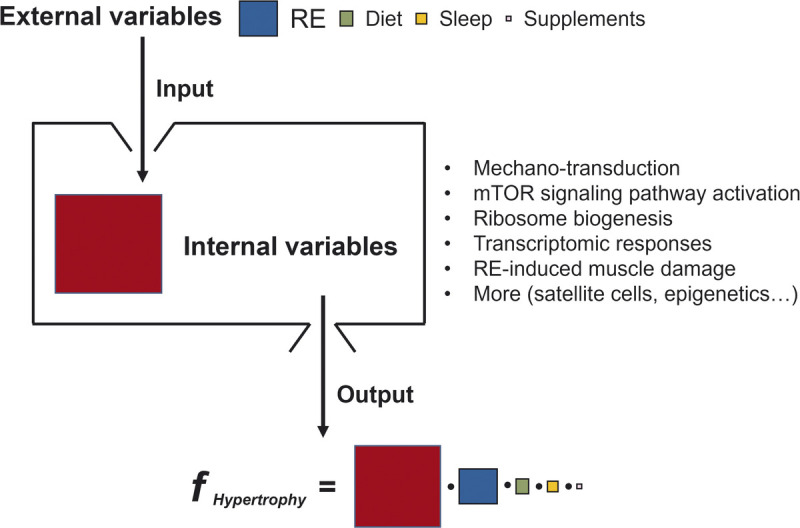
Skeletal muscle plays a critical role in physical function and metabolic health. Muscle is a highly adaptable tissue that responds to resistance exercise (RE; loading) by hypertrophying, or during muscle disuse, RE mitigates muscle loss. Resistance exercise training (RET)–induced skeletal muscle hypertrophy is a product of external (e.g., RE programming, diet, some supplements) and internal variables (e.g., mechanotransduction, ribosomes, gene expression, satellite cells activity). RE is undeniably the most potent nonpharmacological external variable to stimulate the activation/suppression of internal variables linked to muscular hypertrophy or countering disuse-induced muscle loss. Here, we posit that despite considerable research on the impact of external variables on RET and hypertrophy, internal variables (i.e., inherent skeletal muscle biology) are dominant in regulating the extent of hypertrophy in response to external stimuli. Thus, identifying the key internal skeletal muscle–derived variables that mediate the translation of external RE variables will be pivotal to determining the most effective strategies for skeletal muscle hypertrophy in healthy persons. Such work will aid in enhancing function in clinical populations, slowing functional decline, and promoting physical mobility. We provide up-to-date, evidence-based perspectives of the mechanisms regulating RET-induced skeletal muscle hypertrophy.
Overview
The claims and statistics of this paper haven’t been checked yet.
Free: it reads the open-access text and checks the first 5 claims that cite a source we can check. Create a free account to check every claim.
Integrity signals
Registry
Cites
Statistics
Figures
Verification
Claims the paper makes
The claims and statistics of this paper haven’t been checked yet.
Free: it reads the open-access text and checks the first 5 claims that cite a source we can check. Create a free account to check every claim.
Claims other papers make about this one
Each is checked against this paper’s own text: does it say what the citing paper says it does?
The cited source says what the claim attributes to it.
In the citing paper
“As resistance training is considered the most potent nonpharmacological stimulus for attenuating muscle loss and inducing skeletal muscle growth, it may be worthy of particular focus in these trials.7,22”
From Preservation of lean soft tissue during weight loss induced by GLP-1 and GLP-1/GIP receptor agonists: A case series (2025) · cites this paper as [22]
The cited source says what the claim attributes to it.
In the citing paper
“resistance training is considered the most effective nonpharmacological method of stimulating skeletal muscle growth or combatting muscle loss [43]”
From Fundamental Body Composition Principles Provide Context for Fat-Free and Skeletal Muscle Loss With GLP-1 RA Treatments (2024) · cites this paper as [43]
In the citing paper
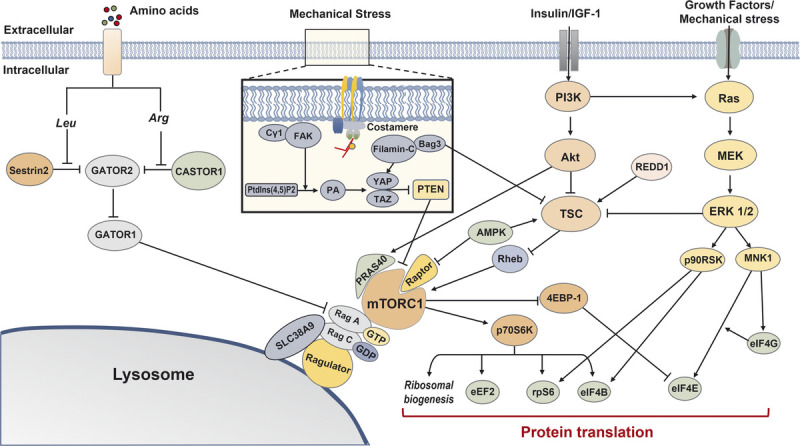
“And resistance training may activate the PI3K-Akt-TSC signaling cascade to regulate mTORC1 signaling through Ras homolog enriched in brain (Rheb), which subsequently translocates to lysosomes, thereby playing a role in promoting protein synthesis by activating several translational and ribosomal components in skeletal muscle hypertrophy [20]”
From Exerkines and Sarcopenia: Unveiling the Mechanism Behind Exercise-Induced Mitochondrial Homeostasis (2025) · cites this paper as [20]
Self-check
Percentages, sums and reported differences re-computed from the paper’s own numbers.
The self-check needs the paper’s full text.
Citations
Cites
mTOR at the nexus of nutrition, growth, ageing and disease
Liu, G. Y., & Sabatini, D. M. (2020) · Nature Reviews Molecular Cell Biology · doi:10.1038/s41580-019-0199-y · Cited by 2,737 · cited 5×
“, RE), are converted to intracellular signals and subsequently detected by mTORC1 subunits, such as Raptor (25).”
BackgroundInfluentialSancak, Y., Bar-Peled, L., Zoncu, R., Markhard, A. L., Nada, S., & Sabatini, D. M. (2010) · Cell · doi:10.1016/j.cell.2010.02.024 · Cited by 2,464 · cited 1×
“Translocation to the lysosome is critical for mTORC1 activation (31), and the intracellular positioning of mTORC1 after anabolic stimuli has been increasingly studied (32).”
BackgroundThe effects of supraphysiologic doses of testosterone on muscle size and strength in normal men
Bhasin, S., Storer, T. W., Berman, N., Callegari, C., Clevenger, B., Phillips, J., Bunnell, T. J., Tricker, R., Shirazi, A., & Casaburi, R. (1996) · New England Journal of Medicine · doi:10.1056/nejm199607043350101 · Cited by 1,659
Muscle wasting in disease: molecular mechanisms and promising therapies
Cohen, S., Nathan, J. A., & Goldberg, A. L. (2015) · Nature Reviews Drug Discovery · doi:10.1038/nrd4467 · Cited by 1,089
Inflammatory markers and loss of muscle mass (sarcopenia) and strength
Schaap, L. A., Pluijm, S. M. F., Deeg, D. J. H., & Visser, M. (2006) · The American Journal of Medicine · doi:10.1016/j.amjmed.2005.10.049 · Cited by 1,047
Regulation and metabolic functions of mTORC1 and mTORC2
Szwed, A., Kim, E., & Jacinto, E. (2021) · Physiological Reviews · doi:10.1152/physrev.00026.2020 · Cited by 813
Katznelson, L., Finkelstein, J. S., Schoenfeld, D. A., Rosenthal, D. I., Anderson, E. J., & Klibanski, A. (1996) · The Journal of Clinical Endocrinology & Metabolism · doi:10.1210/jcem.81.12.8954042 · Cited by 791 · cited 1×
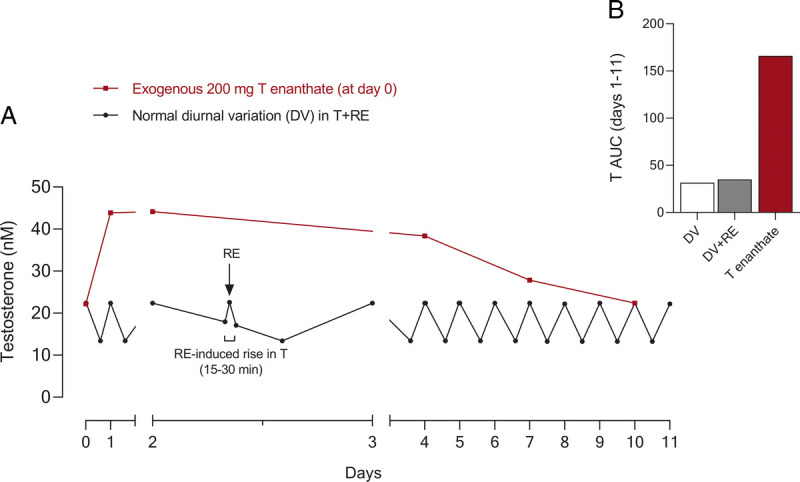
“Testosterone is an androgenic hormone, and previous studies have been shown that exogenous administrations of testosterone in supraphysiological doses to healthy eugonadal men (81,82) and replacement doses to hypogonadal men (83,84) significantly increase muscle mass and lean body mass.”
BackgroundMuscle damage and inflammation during recovery from exercise
Peake, J. M., Neubauer, O., Della Gatta, P. A., & Nosaka, K. (2017) · Journal of Applied Physiology · doi:10.1152/japplphysiol.00971.2016 · Cited by 764
Lecker, S. H., Solomon, V., Mitch, W. E., & Goldberg, A. L. (1999) · The Journal of Nutrition · doi:10.1093/jn/129.1.227s · Cited by 732
Synthetic spike-in standards for RNA-seq experiments
Jiang, L., Schlesinger, F., Davis, C. A., Zhang, Y., Li, R., Salit, M., Gingeras, T. R., & Oliver, B. (2011) · Genome Research · doi:10.1101/gr.121095.111 · Cited by 653
Research works printed but not linked: 1
- 111. Morrison DK. MAP kinase pathways. Cold Spring Harb Perspect Biol. 2012;4(11):a011254.
Cited by
The molecular athlete: exercise physiology from mechanisms to medals
Furrer, R., Hawley, J. A., & Handschin, C. (2023) · Physiological Reviews · doi:10.1152/physrev.00017.2022 · Cited by 217
Currier, B. S., Mcleod, J. C., Banfield, L., Beyene, J., Welton, N. J., D'Souza, A. C., Keogh, J. A. J., Lin, L., Coletta, G., Yang, A., et al. (2023) · British Journal of Sports Medicine · doi:10.1136/bjsports-2023-106807 · Cited by 179
Self-citationColenso-Semple, L. M., D'Souza, A. C., Elliott-Sale, K. J., & Phillips, S. M. (2023) · Frontiers in Sports and Active Living · doi:10.3389/fspor.2023.1054542 · Cited by 163
“Muscular adaptations to exercise involve numerous interrelated cellular and physiological mechanisms (1), some of which are influenced by biological sex.”
BackgroundSelf-citationD’Souza, A. C., Wageh, M., Williams, J. S., Colenso-Semple, L. M., McCarthy, D. G., McKay, A. K. A., Elliott-Sale, K. J., Burke, L. M., Parise, G., MacDonald, M. J., et al. (2023) · Journal of Applied Physiology · doi:10.1152/japplphysiol.00346.2023 · Cited by 144
Self-citationTinsley, G. M., & Heymsfield, S. B. (2024) · Journal of the Endocrine Society · doi:10.1210/jendso/bvae164 · Cited by 81
“…may offer health or body composition benefits [42], resistance training is considered the most effective nonpharmacological method of stimulating skeletal muscle growth or combatting muscle loss [43], with benefits observed not only for muscle mass, but also strength and physical function [44].”
BackgroundBiomarkers of aging: from molecules and surrogates to physiology and function
Furrer, R., & Handschin, C. (2025) · Physiological Reviews · doi:10.1152/physrev.00045.2024 · Cited by 74
Thomas, A. C. Q., Stead, C. A., Burniston, J. G., & Phillips, S. M. (2024) · Free Radical Biology and Medicine · doi:10.1016/j.freeradbiomed.2024.08.010 · Cited by 62
Self-citationIsenmann, E., Kaluza, D., Havers, T., Elbeshausen, A., Geisler, S., Hofmann, K., Flenker, U., Diel, P. R., & Gavanda, S. (2023) · BMC Women s Health · doi:10.1186/s12905-023-02671-y · Cited by 58
McKendry, J., Coletta, G., Nunes, E. A., Lim, C., & Phillips, S. M. (2024) · Experimental Physiology · doi:10.1113/ep091937 · Cited by 52
Self-citationEvery, D. W. V., D’Souza, A. C., & Phillips, S. M. (2024) · Exercise and Sport Sciences Reviews · doi:10.1249/jes.0000000000000346 · Cited by 47
Self-citationGluteal Muscle Forces during Hip-Focused Injury Prevention and Rehabilitation Exercises
Collings, T., Bourne, M. N., Barrett, R., Meinders, E., GONÇALVES, B. A. M., SHIELD, A. J., & Diamond, L. E. (2023) · Medicine & Science in Sports & Exercise · doi:10.1249/mss.0000000000003091 · Cited by 44
The effect of periodic resistance training on obese patients with type 2 diabetic nephropathy
Li, S., Yuan, S., Zhang, J., Xu, F., & Zhu, F. (2024) · Scientific Reports · doi:10.1038/s41598-024-53333-4 · Cited by 37
Janssen, T. A. H., Van Every, D. W., & Phillips, S. M. (2023) · Current Opinion in Clinical Nutrition & Metabolic Care · doi:10.1097/mco.0000000000000980 · Cited by 33
Self-citationPaoli, A., Cerullo, G., Bianco, A., Neri, M., Gennaro, F., Charrier, D., & Moro, T. (2024) · Journal of Human Kinetics · doi:10.5114/jhk/186660 · Cited by 31
Hatakeyama, J., Inoue, S., Jiang, H., Yokoi, R., & Moriyama, H. (2024) · Bone · doi:10.1016/j.bone.2024.117314 · Cited by 31
Load-induced human skeletal muscle hypertrophy: Mechanisms, myths, and misconceptions
Every, D. W. V., Lees, M. J., Wilson, B., Nippard, J., & Phillips, S. M. (2025) · Journal of sport and health science/Journal of Sport and Health Science · doi:10.1016/j.jshs.2025.101104 · Cited by 30
Self-citationCorrêa, H. D. L., Rosa, T. D. S., dos Santos, R. L., Mestrinho, V. M. D. M. V., Aquino, T. S., Santos, W. O., Neves, R. P., Deus, L. A., Reis, A. L., Barbosa, J. M. D. S., et al. (2025) · Frontiers in Physiology · doi:10.3389/fphys.2024.1444976 · Cited by 26
Zhang, Y., Luo, C., Huang, P., Cheng, Y., Ma, Y., Gao, J., & Ding, H. (2024) · The Journal of Nutritional Biochemistry · doi:10.1016/j.jnutbio.2024.109780 · Cited by 24
Exerkines and Sarcopenia: Unveiling the Mechanism Behind Exercise-Induced Mitochondrial Homeostasis
Wang, J., Jia, D., Zhang, Z., & Wang, D. (2025) · Metabolites · doi:10.3390/metabo15010059 · Cited by 23
Physical activity, cathepsin B, and cognitive health
Yu, Q., Zhang, Z., Herold, F., Ludyga, S., Kuang, J., Chen, Y., Liu, Z., Erickson, K. I., Goodpaster, B. H., Cheval, B., et al. (2025) · Trends in Molecular Medicine · doi:10.1016/j.molmed.2024.12.010 · Cited by 24
Duan, Z., Yang, Y., Qin, M., & Yi, X. (2024) · Journal of Cellular and Molecular Medicine · doi:10.1111/jcmm.70136 · Cited by 22
Havers, T., Masur, L., Isenmann, E., Geisler, S., Zinner, C., Sperlich, B., & Düking, P. (2025) · Biology of Sport · doi:10.5114/biolsport.2025.145911 · Cited by 20
Anabolic signals and muscle hypertrophy – Significance for strength training in sports medicine
Behringer, M., Heinrich, C., & Franz, A. (2025) · Sports Orthopaedics and Traumatology · doi:10.1016/j.orthtr.2025.01.002 · Cited by 19
Conkright, W. R., Kargl, C. K., Hubal, M. J., Tiede, D., Beckner, M. E., Sterczala, A. J., Krajewski, K. T., Martin, B. J., Flanagan, S. D., Greeves, J. P., et al. (2024) · Medicine & Science in Sports & Exercise · doi:10.1249/mss.0000000000003408 · Cited by 19
Godwin, J. S., Sexton, C. L., Kontos, N. J., Ruple, B. A., Willoughby, D. S., Young, K. C., Mobley, C. B., & Roberts, M. D. (2023) · Journal of Applied Physiology · doi:10.1152/japplphysiol.00596.2022 · Cited by 18
The Plateau in Muscle Growth with Resistance Training: An Exploration of Possible Mechanisms
Kataoka, R., Hammert, W. B., Yamada, Y., Song, J. S., Seffrin, A., Kang, A., Spitz, R. W., Wong, V. H. Y., & Loenneke, J. P. (2023) · Sports Medicine · doi:10.1007/s40279-023-01932-y · Cited by 18
Pulsed Electromagnetic Field (PEMF) stimulation as an adjunct to exercise: a brief review
Ghoshchi, S. G., Petroni, M. L., Piras, A., Marcora, S., & Raffi, M. (2024) · Frontiers in Sports and Active Living · doi:10.3389/fspor.2024.1471087 · Cited by 18
Post-natal muscle growth and protein turnover: a narrative review of current understanding
Millward, D. J. (2023) · Nutrition Research Reviews · doi:10.1017/s0954422423000124 · Cited by 17
Tinsley, G. M., & Nadolsky, S. (2025) · SAGE Open Medical Case Reports · doi:10.1177/2050313x251388724 · Cited by 15
“7,22 In the present case series, all three patients reported an emphasis on dietary protein intake.”
Smith, M., Hoffman, N. J., Jose, A. T. S., Burke, L. M., & Opar, D. A. (2025) · Sports Medicine · doi:10.1007/s40279-025-02174-w · Cited by 14
Lim, C., McKendry, J., Lees, M. J., Atherton, P. J., Burd, N. A., Holwerda, A. M., van Loon, L. J. C., McGlory, C., Mitchell, C. J., Smith, K., et al. (2025) · Experimental Physiology · doi:10.1113/ep092353 · Cited by 14
Self-citationWang, W., Pang, Z., Zhang, S., Yang, P., Pan, Y., Qiao, L., Yang, K., Liu, J., Wang, R., & Liu, W. (2025) · BMC Genomics · doi:10.1186/s12864-025-11658-y · Cited by 13
Fabero‐Garrido, R., Gragera-Vela, M., del Corral, T., Hernández-Martín, M. M., Plaza‐Manzano, G., & López‐de‐Uralde‐Villanueva, I. (2024) · Life · doi:10.3390/life14030411 · Cited by 13
Wang, O., Zhang, N., Han, C. Q., & Huang, J. H. (2022) · Frontiers in Nutrition · doi:10.3389/fnut.2022.957321 · Cited by 13
Henderson, Z. J., Wang, S., Cornish, S. M., & Scribbans, T. D. (2023) · Sports Biomechanics · doi:10.1080/14763141.2023.2269543 · Cited by 12
Hammert, W. B., Kataoka, R., Yamada, Y., Song, J. S., Kang, A., Spitz, R. W., & Loenneke, J. P. (2024) · Physiological Measurement · doi:10.1088/1361-6579/ad7348 · Cited by 12
Jing, Y., Tan, H., Yu, H., Li, J., Cui, Y., Lu, Y., Liu, X., Chen, Q., & Zhou, D. (2024) · Frontiers in Endocrinology · doi:10.3389/fendo.2024.1407408 · Cited by 11
Moreno, E. N., Ayers-Creech, W. A., Gonzalez, S. L., Baxter, H. T., & Buckner, S. L. (2024) · Journal of Science in Sport and Exercise · doi:10.1007/s42978-024-00301-z · Cited by 11
Zhu, H., Tan, Z., Zhang, N., Li, Y., & Qi, H. (2025) · Frontiers in Physiology · doi:10.3389/fphys.2025.1620294 · Cited by 11
Effect of Ginseng Intake on Muscle Damage Induced by Exercise in Healthy Adults
Muñoz-Castellanos, B., Martínez-López, P., Bailón‐Moreno, R., & Esquius, L. (2023) · Nutrients · doi:10.3390/nu16010090 · Cited by 11
Lees, M. J., Mcleod, J. C., Morton, R. W., Currier, B. S., Fliss, M. D., McKellar, S. R., Sidhu, R., Stansfield, B. N., Webb, E. K., McGlory, C., et al. (2025) · The Journal of Physiology · doi:10.1113/jp289684 · Cited by 10
Self-citationJessen, S., Credico, A. D., Moreno‐Justicia, R., Moesgaard, L., Lemminger, A. K., Stocks, B., Baldassarre, A. D., Bangsbo, J., Deshmukh, A. S., & Hostrup, M. (2026) · Journal of Cachexia Sarcopenia and Muscle · doi:10.1002/jcsm.70175 · Cited by 10
Bagheri, R., Karimi, Z., CAMERA, D. M., Scott, D. S., Bashirzad, M. Z., Sadeghi, R., Kargarfard, M., & Dutheil, F. (2024) · Frontiers in Nutrition · doi:10.3389/fnut.2024.1439037 · Cited by 9
de Sousa, M. V., Soares, D. B. D. S., Zouhal, H., Hackney, A. C., Coso, J. D., & Shinjo, S. K. (2026) · Sports Medicine · doi:10.1007/s40279-025-02383-3 · Cited by 9
Effect of Oral Contraceptive Use on Muscle Hypertrophy Following Strength Training
Engstad, M. K., Seynnes, O., Vesterhus, I., Hesseberg, E., Fjeldberg, K., Carlsen, M. H., Ottestad, I. O., Hansen, M., Nordez, A., Lacourpaille, L., et al. (2025) · Scandinavian Journal of Medicine and Science in Sports · doi:10.1111/sms.70052 · Cited by 9
Tension to Translation: External to Internal Processes in Muscle Hypertrophy
Greyvenstein, D., Newbold, J. P., & Phillips, S. M. (2025) · Physiology · doi:10.1152/physiol.00034.2025 · Cited by 9
Self-citationSamali, S. A., Hosseini, S. F., Mohammadi, Y., Sadri, F., & Rezaei, Z. (2025) · Molecular Biology Reports · doi:10.1007/s11033-025-11390-6 · Cited by 9
Yachsie, B. T. P. W. B., Nasrulloh, A., Prasetyo, Y., Suhasto, S., & Skaliy, A. (2024) · Health sport rehabilitation · doi:10.58962/hsr.2024.10.3.28-38 · Cited by 9
Barazzoni, R., Ballesteros-Pomar, M. D., Bischoff, S. C., Blaauw, R., Boirie, Y., Carey, S., Cederholm, T., Cortés, Y., Cuerda, C. G., Deutz, N. E. P., et al. (2026) · Clinical Nutrition · doi:10.1016/j.clnu.2026.106645 · Cited by 8
Tian, H., Qiao, W., & Wen, X. (2025) · Journal of Nutrition · doi:10.1016/j.tjnut.2025.01.017 · Cited by 8
Kim, H., & Park, J. (2024) · Medicine · doi:10.1097/md.0000000000038344 · Cited by 8
Paquin, J., Tremblay, R., Islam, H., Riesco, E., Marcotte-Chénard, A., & Dionne, I. J. (2024) · Applied Physiology, Nutrition, and Metabolism · doi:10.1139/apnm-2024-0128 · Cited by 7
T -score discordance between hip and lumbar spine: risk factors and clinical implications
Chiang, M.-H., Jang, Y.-C., Chen, Y., Chan, W. P., Lin, Y., Huang, S.-W., & Kuo, Y. (2023) · Therapeutic Advances in Musculoskeletal Disease · doi:10.1177/1759720x231177147 · Cited by 7
Roberts, B. M., Geddis, A. V., Sczuroski, C. E., Reynoso, M., Hughes, J. M., Gwin, J. A., & Staab, J. S. (2024) · European Journal of Applied Physiology · doi:10.1007/s00421-024-05565-5 · Cited by 7
Xu, M., & Liu, X. (2026) · Biomolecules · doi:10.3390/biom16030406 · Cited by 6
“This critical distinction between ribosome capacity and efficiency helps account for the heterogeneous responses observed in muscle to exercise interventions [14].”
Marmett, B., da Silva, I., Lira, F. S., & Dorneles, G. P. (2025) · Translational Exercise Biomedicine · doi:10.1515/teb-2024-0039 · Cited by 6
Huang, Y.-M., Liu, Z., Fu, J., Shan, P., Wang, J. Z., & Xu, W. (2025) · Diabetes Research and Clinical Practice · doi:10.1016/j.diabres.2025.112031 · Cited by 6
Lim, C., McKendry, J., Giacomin, T., Mcleod, J. C., Ng, S. Y., Currier, B. S., Coletta, G., & Phillips, S. M. (2023) · PLoS ONE · doi:10.1371/journal.pone.0286222 · Cited by 6
Self-citationShen, Y., Mao, Z., Chen, H., Zhu, W., Guan, Q., Yang, Y., Liu, J., & Li, L. (2026) · Frontiers in Sports and Active Living · doi:10.3389/fspor.2026.1765170 · Cited by 6
Radiopharmaceuticals for Skeletal Muscle PET Imaging
Park, J. Y., Park, S. M., Lee, T. S., Kang, S. Y., Kim, J. H., Yoon, H., Kim, B. S., & Moon, B. S. (2024) · International Journal of Molecular Sciences · doi:10.3390/ijms25094860 · Cited by 6
Zhang, Z., Zhou, J., Ma, A., Chen, H., Wang, B., & Zhao, G. (2025) · BMC Musculoskeletal Disorders · doi:10.1186/s12891-025-08408-2 · Cited by 6
Fu, S., Hu, J., Wang, G., Qian, Z., & Wang, X. (2024) · International Journal of Biological Macromolecules · doi:10.1016/j.ijbiomac.2024.136257 · Cited by 5
Sullivan, K., Ferreira, P. R. C., Martinez, V. G. F., & Marchetti, P. H. (2023) · International journal of exercise science · doi:10.70252/bcsy3591 · Cited by 5
Straub, D., Englert, T., Beller, A., Stadelmaier, J., Stahl, M., Kilian, J., Borzym, J., Rotermund, C., Akbuğa-Schön, T., Krakau, S., et al. (2026) · Sports Medicine - Open · doi:10.1186/s40798-026-00990-6 · Cited by 5
D’Souza, A. C., Every, D. W. V., Bhinder, A., Elango, S., Lamont, G. A. C., Lees, M. J., Lim, C., McKendry, J., Newbold, J. P., Naphin, C., et al. (2026) · Medicine & Science in Sports & Exercise · doi:10.1249/mss.0000000000004031 · Cited by 5
Self-citationShahidi, B., Anderson, B. J., Ordaz, A., Berry, D. B., Ruoss, S., Zlomislic, V., Allen, R. T., Garfin, S. R., Farshad, M., Schenk, S., et al. (2023) · JOR Spine · doi:10.1002/jsp2.1291 · Cited by 5
Zhang, J., Zhu, Z., Niu, Y., & Cao, Z. (2024) · British Journal Of Nutrition · doi:10.1017/s0007114524002320 · Cited by 5
Lin, C.-L., Huang, S.-W., Chen, H., Huang, M.-H., Liou, T., & Liao, C. (2026) · Nutrients · doi:10.3390/nu18091409 · Cited by 4
Mang, Z. A., Beam, J. R., & Kravitz, L. R. (2025) · The Journal of Strength and Conditioning Research · doi:10.1519/jsc.0000000000005246 · Cited by 4
Lim, C., Lixandrão, M. E., Trivedi, D., Xu, Y., Prokopidis, K., Roschel, H., Phillips, S. M., Muhamadali, H., & Isanejad, M. (2026) · GeroScience · doi:10.1007/s11357-025-02074-x · Cited by 4
Self-citationZhou, J., Ding, L., Chen, W., Tan, Y., Xie, D., & Wang, Y. (2024) · Food Frontiers · doi:10.1002/fft2.465 · Cited by 4
Sawada, S., Nishino, A., Honda, S., Tominaga, Y., Makio, S., Ozaki, H., & Machida, S. (2024) · Functional Foods in Health and Disease · doi:10.31989/ffhd.v14i12.1472 · Cited by 4
The isolated effects of local cold application on proteolytic and myogenic signaling
McGlynn, M. L., Rosales, A. M., Collins, C. W., & Slivka, D. R. (2023) · Cryobiology · doi:10.1016/j.cryobiol.2023.104553 · Cited by 4
Havers, T., Jelonnek, C., Masur, L., Isenmann, E., Sperlich, B., Geisler, S., & Düking, P. (2025) · Biology of Sport · doi:10.5114/biolsport.2026.152350 · Cited by 4
Zhao, L., Li, H., Li, D., Luo, L., & Hu, S. (2026) · PLoS ONE · doi:10.1371/journal.pone.0340309 · Cited by 3
Kuśmierska, M., & Kuśmierski, J. (2024) · Quality in Sport · doi:10.12775/qs.2024.15.51852 · Cited by 3
Fitness is Function—A Synopsis of Functional Fitness Training and Traditional Strength Training
Mang, Z. A. (2025) · ACSMʼs Health & Fitness Journal · doi:10.1249/fit.0000000000001105 · Cited by 3
Tsartsapakis, I., Zafeiroudi, A., & Kouthouris, C. (2026) · Journal of Functional Morphology and Kinesiology · doi:10.3390/jfmk11010080 · Cited by 3
Wubuli, A., Su, Y., Yao, X., Meng, J., Wang, J., Zeng, Y., Li, L., & Ren, W. (2025) · Biology · doi:10.3390/biology14091216 · Cited by 3
The effect of myofibril and sarcoplasmic hypertrophy training on muscle hypertrophy and strength
Gezer, H. T., Sözen, H., Aslan, A., Altaş, H., & KÜÇAN, O. (2025) · Sport Sciences for Health · doi:10.1007/s11332-025-01565-w · Cited by 3
Marchetti, P. H., Samaniego, A., Talamantez, R., Lopes, C. R., & Martinez, V. (2023) · Journal of Kinesiology & Wellness · doi:10.56980/jkw.v12i1.121 · Cited by 3
Progressive Overload Affects the Magnitude of Muscle Hypertrophy
Kassiano, W., Santos-Melo, V., Manske, I., LISBOA, F., Miguel, A., Gomes, F., Prado, A., Stavinski, N. G. D. L., Costa, B., & Cyrino, E. S. (2026) · Medicine & Science in Sports & Exercise · doi:10.1249/mss.0000000000003968 · Cited by 3
Stronger hearts, weaker leaps? The cardiac power paradox in elite soccer
Papadakis, Z., Κουτλιάνος, Ν., Panoutsakopoulos, V., & Kouidi, E. J. (2025) · European Journal of Applied Physiology · doi:10.1007/s00421-025-06026-3 · Cited by 3
Exercise and Epigenetic Regulation in COPD: Current Evidence and Potential Mechanistic Pathways
Zhong, Y., Xu, J., Chen, X., Lv, Y., & Zheng, X. (2025) · International Journal of Molecular Sciences · doi:10.3390/ijms262311392 · Cited by 3
Fialho, T. C., Abrantes, L. C. S., Martins, K., Carvalho, R. P. R., Ramírez-López, C. J., de Sousa, A. F. R., Guimarães‐Ervilha, L. O., Oliveira, L. A., Lacerda, G. F., Moreira, A., et al. (2025) · Nutrients · doi:10.3390/nu17223587 · Cited by 3
da Costa, P. C. T., Magnani, M., Martins, V. J. B., de Moraes, R. C. S., Silva-Luis, C. C., Rodrigues, J. M. D. A., Cabral, L., Noronha, M. F., Vitalis, O., Chikh, K., et al. (2026) · American Journal of Physiology-Heart and Circulatory Physiology · doi:10.1152/ajpheart.00769.2025 · Cited by 3
Poon, E. T., Iu, J. C.-K., Franklin, B. A., Phillips, S. M., Lubans, D. R., Schoenfeld, B. J., Smith, J. J., Kennedy, S. G., Wong, P.-S., & Batrakoulis, A. (2026) · Obesity Reviews · doi:10.1111/obr.70171 · Cited by 3
Self-citationChang, Y., Tai, H.-L., Yang, C.-L., & Su, C.-H. (2026) · Life · doi:10.3390/life16030381 · Cited by 2
Peinado, P. J. B., & Sotillo, A. A. (2024) · IntechOpen eBooks · doi:10.5772/intechopen.1007051 · Cited by 2
Vollrath, S., Bitterlich, N., Lüdin, D., Rothenbühler, A., Hackney, A. C., Lorenzetti, S., Drewek, A., Achermann, B. B., du Toit, T., & Stute, P. (2025) · Sports · doi:10.3390/sports13120426 · Cited by 2
Schönnagel, L., Pfeiffer, N., Khakzad, T., Muellner, M., Schmidt, H., Pumberger, M., & Schömig, F. (2026) · Spine Deformity · doi:10.1007/s43390-026-01463-2 · Cited by 2
Training Adaptation and Maladaptation in Athletes
Weakley, J. J. S., Halson, S. L., & Mujika, I. (2025) · Springer eBooks · doi:10.1007/978-3-031-44270-4_11 · Cited by 2
Hammert, W. B., Moreno, E. N., Sallberg, R. W., Yamada, Y., Metcalf, E. E., Young, E. W., Kataoka, R., & Loenneke, J. P. (2026) · European Journal of Applied Physiology · doi:10.1007/s00421-026-06129-5 · Cited by 2
Digital Technology in the Management and Prevention of Diabetes
(2024) · Frontiers research topics · doi:10.3389/978-2-8325-5649-8 · Cited by 2
Physical activity, sedentary behaviour, and healthy ageing in older adults
Koemel, N. A., Valenzuela, P. L., D’Amore, C., Jáuregui, A., Ku, P., Beauchamp, M., Stamatakis, E., & Ahmadi, M. N. (2026) · The Lancet Healthy Longevity · doi:10.1016/j.lanhl.2026.100913 · Cited by 2
Muscle hypertrophy in athlete training from a medical point of view - what do we know
Biłogras, J., Kostelecka, K., Bryliński, Ł., Wais, M., Gruca, D., & Warchoł, K. (2023) · Journal of Education Health and Sport · doi:10.12775/jehs.2023.50.01.007 · Cited by 2
Corrêa, H. D. L., Rosa, T. D. S., Marques, R. S., Nascimento, E. F., SAMPAIO, W. C. M., GOMES, A. M. A., COTTA, R. F., SILVA, T. F. D., de Oliveira, M. G. S., dos Santos, R. L., et al. (2025) · Medicine & Science in Sports & Exercise · doi:10.1249/mss.0000000000003739 · Cited by 1
Do skeletal muscles compete with each other for growth?
Kataoka, R., Yamada, Y., Hammert, W. B., Kang, A., & Loenneke, J. P. (2024) · Medical Hypotheses · doi:10.1016/j.mehy.2024.111525 · Cited by 1
Nutritional Management of Sarcopenia in Oncology
Vaz-Gonçalves, L., de Souza, J. S., Reitz, L. K., & Godinho-Mota, J. C. M. (2024) · Interdisciplinary cancer research · doi:10.1007/16833_2024_336 · Cited by 1
Lempke, A. F. D., Smulligan, K. L., Desai, G. A., Hagan, K. E., Oldham, J. R., Islam, L. Z., & Whitney, K. E. (2025) · British Journal of Sports Medicine · doi:10.1136/bjsports-2025-110096 · Cited by 1
Metadata
- Authors
- LIM, C., NUNES, E. A., CURRIER, B. S., MCLEOD, J. C., THOMAS, A. C. Q., & PHILLIPS, S. M.
- Affiliations
- McMaster University (CA)
- Universidade Federal de Santa Catarina (BR)
- ORCID
- Venue
- Medicine & Science in Sports & Exercise
- Published
- 2022-04-06
- Volume
- 54
- Issue
- 9
- Pages
- 1546-1559
- ISSN
- 0195-9131 (ISSN-L)
- 1530-0315
- PMC
- PMC9390238
- OpenAlex
- W4225490770
- Semantic Scholar
- 6aef212b6299b7e297031cf60f0e81b913eebd3c
- Cited by
- 142
- References
- 147
- Citations by year
- 2026: 52 · 2025: 38 · 2024: 29 · 2023: 22 · 2022: 1
- FWCI
- 2.35
- Type
- journal article
- Language
- en
- Open access
- hybrid
- doi.org
- Licence
- Locations
- Medicine & Science in Sports & Exercise (publishedVersion, cc-by-nc-nd)
- PubMed Central (publishedVersion, cc-by-nc-nd)
- PubMed (publishedVersion)
- Funders
- Canadian Institutes of Health Research
- Topics
- Life Sciences › Biochemistry, Genetics and Molecular Biology › Molecular Biology › Muscle Physiology and Disorders
- Health Sciences › Nursing › Nutrition and Dietetics › Muscle metabolism and nutrition
- Health Sciences › Medicine › Orthopedics and Sports Medicine › Sports Performance and Training
- Keywords
- resistance training, skeletal muscle hypertrophy, mechanotransduction, satellite cells, gene expression, ribosome, disuse atrophy, muscle protein synthesis
- MeSH terms
- Humans, Hypertrophy, Exercise, Muscle, Skeletal, Mechanotransduction, Cellular, Resistance Training
About these checks
Registry, retraction, Cites and statistics results are computed, not judged, with one exception: a printed reference that no index lists is read once by a model before it counts as a citation error. Claims are extracted by a model and kept only when their quote appears verbatim in the text; each cited source is then checked, with a model’s help, for whether it says what the claim relies on. Those verdicts can be wrong — read the claim’s quote and the cited source before relying on one.
Statistics and arithmetic are recomputed, not judged.
Confidence bands are shown only for fields calibrated on our annotated test set. None is calibrated yet, so no band is shown.
What counts as a claim ›How we measure confidence ›How we check this ›
Are you an author, or do you see a problem with this page? Request a review
Data sources
Bibliographic data: Semantic Scholar, OpenAlex, Crossref.
Contains information from the Semantic Scholar Academic Graph Datasets, made available under the ODC Attribution License (ODC-BY 1.0).
Semantic Scholar’s data is described in: Kinney, R., et al. (2023). The Semantic Scholar Open Data Platform. arXiv:2301.10140.
