

The DOI matches its Crossref record; 111 of the 131 references it cites were found in a registry or an index.
The Navigation Guide—Evidence-Based Medicine Meets Environmental Health: Systematic Review of Human Evidence for PFOA Effects on Fetal Growth
Open accessAbstract
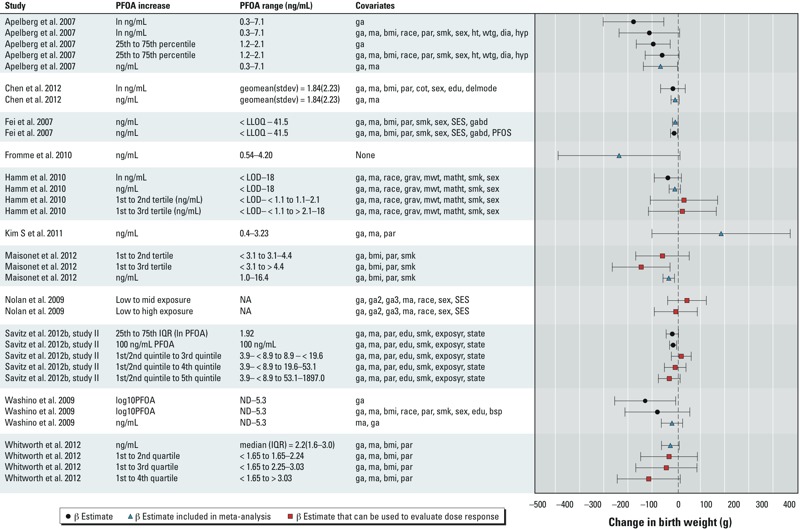
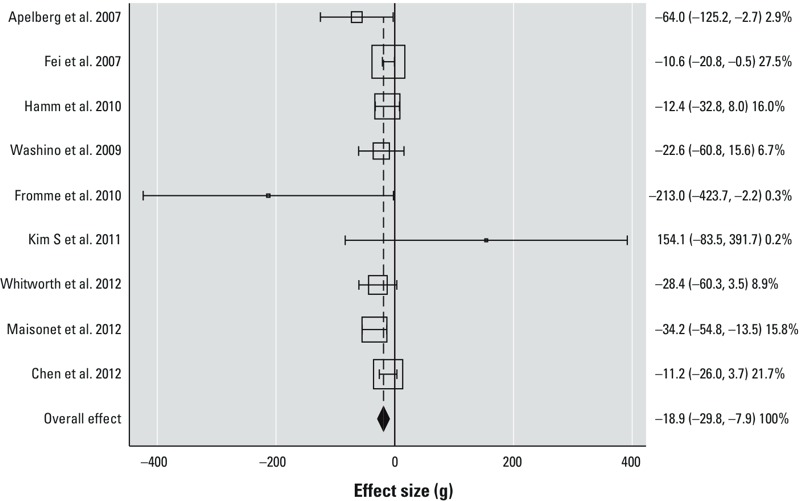
Background: The Navigation Guide methodology was developed to meet the need for a robust method of systematic and transparent research synthesis in environmental health science. We conducted a case study systematic review to support proof of concept of the method. Objective: We applied the Navigation Guide systematic review methodology to determine whether developmental exposure to perfluorooctanoic acid (PFOA) affects fetal growth in humans. Methods: We applied the first 3 steps of the Navigation Guide methodology to human epidemiological data: 1) specify the study question, 2) select the evidence, and 3) rate the quality and strength of the evidence. We developed a protocol, conducted a comprehensive search of the literature, and identified relevant studies using prespecified criteria. We evaluated each study for risk of bias and conducted meta-analyses on a subset of studies. We rated quality and strength of the entire body of human evidence. Results: We identified 18 human studies that met our inclusion criteria, and 9 of these were combined through meta-analysis. Through meta-analysis, we estimated that a 1-ng/mL increase in serum or plasma PFOA was associated with a –18.9 g (95% CI: –29.8, –7.9) difference in birth weight. We concluded that the risk of bias across studies was low, and we assigned a “moderate” quality rating to the overall body of human evidence. Conclusion: On the basis of this first application of the Navigation Guide systematic review methodology, we concluded that there is “sufficient” human evidence that developmental exposure to PFOA reduces fetal growth. Citation: Johnson PI, Sutton P, Atchley DS, Koustas E, Lam J, Sen S, Robinson KA, Axelrad DA, Woodruff TJ. 2014. The Navigation Guide—evidence-based medicine meets environmental health: systematic review of human evidence for PFOA effects on fetal growth. Environ Health Perspect 122:1028–1039; http://dx.doi.org/10.1289/ehp.1307893
Overview
The claims and statistics of this paper haven’t been checked yet.
Run the check — free, no account needed. It reads the open-access text and checks the sources it cites.
Integrity signals
Registry
Cites
Statistics
Figures
Verification
Claims the paper makes
The claims and statistics of this paper haven’t been checked yet.
Run the check — free, no account needed. It reads the open-access text and checks the sources it cites.
Claims other papers make about this one
Each is checked against this paper’s own text: does it say what the citing paper says it does?
The cited source says what the claim attributes to it.
In the citing paper
“such methods have only recently been developed and utilized in environmental health sciences [23–30].”
From A Systematic Review and Meta-Analysis of Multiple Airborne Pollutants and Autism Spectrum Disorder (2016) · cites this paper as [30]
In the citing paper
“This observation is consistent with our previous systematic reviews, [24, 27, 28, 30]”
From A Systematic Review and Meta-Analysis of Multiple Airborne Pollutants and Autism Spectrum Disorder (2016) · cites this paper as [30]
Self-check
Percentages, sums and reported differences re-computed from the paper’s own numbers.
The self-check needs the paper’s full text.
Citations
Cites
Measuring inconsistency in meta-analyses
Higgins, J. P. T., Thompson, S. G., Deeks, J. J., & Altman, D. G. (2003) · BMJ · doi:10.1136/bmj.327.7414.557 · Cited by 63,139
Meta-analysis in clinical trials
DerSimonian, R., & Laird, N. (1986) · Controlled Clinical Trials · doi:10.1016/0197-2456(86)90046-2 · Cited by 39,552 · cited 2×
“Environmental Health Perspectives • volume 122 | number 10 | October 2014 1031 across studies (DerSimonian and Laird 1986).”
BackgroundCochrane Handbook for Systematic Reviews of Interventions: Cochrane Book Series
(2008) · doi:10.1002/9780470712184 · Cited by 25,048 · cited 5×
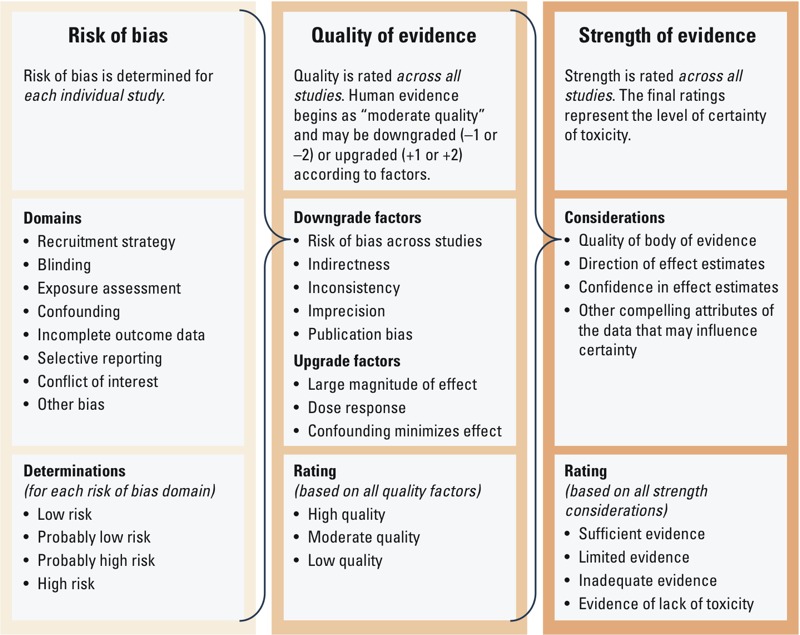
“Such methods already exist to evaluate clinical evidence (GRADE Working Group 2012; Higgins and Green 2011) and include steps such as developing an a priori protocol, a comprehensive search, and rating the quality of the evidence.”
BackgroundMethodInfluentialvon Elm, E., Altman, D. G., Egger, M., Pocock, S. J., Gøtzsche, P. C., Vandenbroucke, J. P., & Initiative, F. T. S. (2007) · PLoS Medicine · doi:10.1371/journal.pmed.0040296 · Cited by 23,020 · cited 2×
“Future reviews could be strengthened if more investigators followed standardized reporting criteria such as the Strengthening the Reporting of Observational Studies in Epidemiology (STROBE) guidelines (von Elm et al. 2008), enabling improved quality assessment.”
Conducting Meta-Analyses in R with the metafor Package
Viechtbauer, W. (2010) · Journal of Statistical Software · doi:10.18637/jss.v036.i03 · Cited by 20,464
Elm, E. V., Altman, D. G., Egger, M., Pocock, S. J., Gøtzsche, P. C., & Vandenbroucke, J. P. (2007) · BMJ · doi:10.1136/bmj.39335.541782.ad · Cited by 10,766 · cited 2×
“Future reviews could be strengthened if more investigators followed standardized reporting criteria such as the Strengthening the Reporting of Observational Studies in Epidemiology (STROBE) guidelines (von Elm et al. 2008), enabling improved quality assessment.”
BackgroundMethodGRADE guidelines: 3. Rating the quality of evidence
Balshem, H., Helfand, M., Schünemann, H. J., Oxman, A. D., Kunz, R., Brozek, J., Vist, G. E., Falck-Ytter, Y., Meerpohl, J., & Norris, S. (2011) · Journal of Clinical Epidemiology · doi:10.1016/j.jclinepi.2010.07.015 · Cited by 8,285 · cited 4×
“In assessing quality and strength according to factors and considera tions that had not been pre specified, we conducted further analysis and abided by GRADE’s principle to be conservative in changing the rating of the body of evidence up or down (Balshem et al. 2011).”
MethodInfluentialSterne, J. A. C., Sutton, A. J., Ioannidis, J. P. A., Terrin, N., Jones, D. R., Lau, J., Carpenter, J., Rucker, G., Harbord, R. M., Schmid, C. H., et al. (2011) · BMJ · doi:10.1136/bmj.d4002 · Cited by 7,709
GRADE guidelines: 4. Rating the quality of evidence—study limitations (risk of bias)
Guyatt, G. H., Oxman, A. D., Vist, G., Kunz, R., Brozek, J., Alonso-Coello, P., Montori, V., Akl, E. A., Djulbegovic, B., & Falck-Ytter, Y. (2011) · Journal of Clinical Epidemiology · doi:10.1016/j.jclinepi.2010.07.017 · Cited by 2,798 · cited 3×
“Evaluation factors Summary of criteria Downgrading factors Risk of bias Study limitations include a substantial risk of bias across the body of evidence.”
BackgroundMethodPerfluoroalkyl Acids: A Review of Monitoring and Toxicological Findings
Lau, C., Anitole, K., Hodes, C., Lai, D., Pfahles-Hutchens, A., & Seed, J. (2007) · Toxicological Sciences · doi:10.1093/toxsci/kfm128 · Cited by 2,620 · cited 2×
“…the evidence of an association between PFOA and fetal growth (DeWitt et al. 2009; Hekster et al. 2003; Jensen and Leffers 2008; Kennedy et al. 2004; Kudo and Kawashima 2003; Lau et al. 2004, 2007; Lindstrom et al. 2011; Olsen et al. 2009; Post et al. 2012; Steenland et al. 2010; White et al. 2011).”
Background
Research works printed but not linked: 2
- Higgins JPT, Deeks JJ. 2011. Chapter 7: Selecting studies and collecting data. In: Cochrane Handbook for Systematic Reviews of Interventions, Version 5.1.0 (Higgins JPT, Green S, eds).Available: http://handbook.cochrane.org/chapter_7/7_selecting_studies_and_collecting_data.htm [accessed 29 August 2014].
- Stein, 2009, Serum levels of perfluorooctanoic acid and perfluorooctane sulfonate and pregnancy outcome., Am J Epidemiol, 170, 837, 10.1093/aje/kwp212 · DOI
Cited by
Sorted by citations
Items 401–411 of 411
Marinello, W. P., & Zylka, M. J. (2026) · Frontiers in Toxicology · doi:10.3389/ftox.2026.1814052
“Long-chain PFAS like perfluorooctanoic acid (PFOA) pose significant health risks, including hepatotoxicity, lipid dysregulation, immunosuppression, developmental issues, and cancer (Barry et al., 2013; Consonni et al., 2013; Johnson et al., 2014; Li et al., 2021; Zhang et al., 2023)).”
Sparrow, J. R. D., Gray, G. M., & Fischbach, J. (2026) · International Journal of Environmental Research and Public Health · doi:10.3390/ijerph23050665
“…the systematic review using the Navigation guide, a systematic review methodology for evaluating environmental evidence based on methods used in the clinical sciences, including the Cochrane Collaboration and Grading Recommendation Assessment, Development and Evaluation (GRADE) framework [15,16].”
Brennan, M., O'Dowd, T., Brink, N. B., Travill, D., Dumbura, C., Pleiss, C. D.-D., Gazeley, U., Radebe, L., de Bont, J., Parnell, A., et al. (2026) · HRB Open Research · doi:10.12688/hrbopenres.14304.2
“17,26 Ethics and dissemination This review will bebased onpublished data and does not require ethical approval.”
Nachman, R., Byrley, P., Neal-Walthall, N., & Shaffer, R. M. (2025) · Environment International · doi:10.1016/j.envint.2025.109574
“…equipment in occupational settings, interlaboratory comparison programs to ensure the quality of the laboratory analysis methods and consideration of spatial and temporal variability for exposures modeled using air concentration data (Johnson et al., 2014; Lam et al., 2021, Mandrioli et al., 2018).”
Chatpar, E. A., Semba, R., Habib, I., Kim, B. F., Sharp, E. E., Love, D. C., Lupolt, S. N., Thorne-Lyman, A. L., Rosman, L., Casey, J., et al. (2025) · Evidence-Based Toxicology · doi:10.1080/2833373x.2025.2492039
Self-citationRapoport, H. (2022) · medRxiv · doi:10.1101/2022.09.27.22280384
Rathjens, J., Kolbe, A., Holzer, J., Ickstadt, K., & Klein, N. (2021) · arXiv (Cornell University) · doi:10.48550/arxiv.2104.14243
“PFOA is suspected to have adverse health affects with regard to fetal development, among others (Johnson et al. 2014; Lam et al. 2014).”
BackgroundDavis, A., & Kraft, A. (2017) · Environmental Research · doi:10.1016/j.envres.2017.07.017
“In both the Korsak and Rydzyński (1996) and Douglas et al. (1993) studies, latency to paw lick was still increased relative to control after termination of exposure in the high dose animals (~ 12–37%).”
BackgroundMethodElliott, K. C. (2016) · Environmental Toxicology and Chemistry · doi:10.1002/etc.3359
The challenge of reporting scientific excellence.
Turk, M. A., & McDermott, S. (2015) · Disability and Health Journal · doi:10.1016/j.dhjo.2015.02.001
Vesterinen, H., Morello-Frosch, R., Sen, Ś., Zeise, L., Safdir, H., & Woodruff, T. (2014) · ISEE Conference Abstracts · doi:10.1289/isee.2014.p2-361
“We used the Navigation Guide risk of bias tool for human and animal studies which has been previously described [38, 39].”
MethodSelf-citation
Metadata
- Authors
- Johnson, P. I., Sutton, P., Atchley, D. S., Koustas, E., Lam, J., Sen, S., Robinson, K. A., Axelrad, D. A., & Woodruff, T. J.
- Affiliations
- University of California, San Francisco (US)
- Environmental Protection Agency (US)
- Department of Epidemiology and Biostatistics, University of California, San Francisco, San Francisco, California, USA
- Johns Hopkins University (US)
- Corresponding author
- Johnson, Paula I.
- Venue
- Environmental Health Perspectives
- Publisher
- American Chemical Society (ACS)
- Published
- 2014-06-25
- Volume
- 122
- Issue
- 10
- Pages
- 1028-1039
- ISSN
- 0091-6765 (ISSN-L)
- 1552-9924
- PMC
- PMC4181929
- OpenAlex
- W4243002209
- Cited by
- 449
- References
- 131
- Citations by year
- 2026: 29 · 2025: 31 · 2024: 36 · 2023: 43 · 2022: 32 · 2021: 50 · 2020: 68 · 2019: 34 · 2018: 31 · 2017: 42 · 2016: 25 · 2015: 20 · 2014: 8
- FWCI
- 2.88
- Type
- journal article
- Language
- en
- Open access
- gold
- doi.org
- Licence
- public-domain
- creativecommons.org/licenses/by/4.0/ (vor, 1283 d)
- Locations
- Environmental Health Perspectives (publishedVersion, public-domain)
- PubMed Central (publishedVersion, public-domain)
- eScholarship (California Digital Library) (submittedVersion)
- Funders
- U.S. Department of Energy
- U.S. Environmental Protection Agency (RD-83543301)
- New York Community Trust
- Heinz Endowments
- Johnson Family Foundation
- Rose Foundation for Communities and the Environment
- Kaiser Permanente
- Office of Research and Development
- Oak Ridge Institute for Science and Education
- University of California, San Francisco
- National Center For Environmental Assessment
- National Institute of Environmental Health Sciences (ES018135, P01ES022841, ES022841, P20ES018135)
- Topics
- Physical Sciences › Environmental Science › Environmental Chemistry › Per- and polyfluoroalkyl substances research
- Social Sciences › Decision Sciences › Statistics, Probability and Uncertainty › Meta-analysis and systematic reviews
- Physical Sciences › Environmental Science › Health, Toxicology and Mutagenesis › Health, Environment, Cognitive Aging
- Keywords
- perfluorooctanoic acid, fetal growth, birth weight, early life exposure, environmental health, risk of bias, perfluorinated compounds
About these checks
Registry, retraction, Cites and statistics results are computed, not judged, with one exception: a printed reference that no index lists is read once by a model before it counts as a citation error. Claims are extracted by a model and kept only when their quote appears verbatim in the text; each cited source is then checked, with a model’s help, for whether it says what the claim relies on. Those verdicts can be wrong — read the claim’s quote and the cited source before relying on one.
Statistics and arithmetic are recomputed, not judged.
Confidence bands are shown only for fields calibrated on our annotated test set. None is calibrated yet, so no band is shown.
What counts as a claim ›How we measure confidence ›How we check this ›
Are you an author, or do you see a problem with this page? Request a review
