

Mapping the Structural Core of Human Cerebral Cortex
Open accessThe DOI matches its Crossref record; 57 of the 57 references it cites were found in a registry or an index.
Abstract
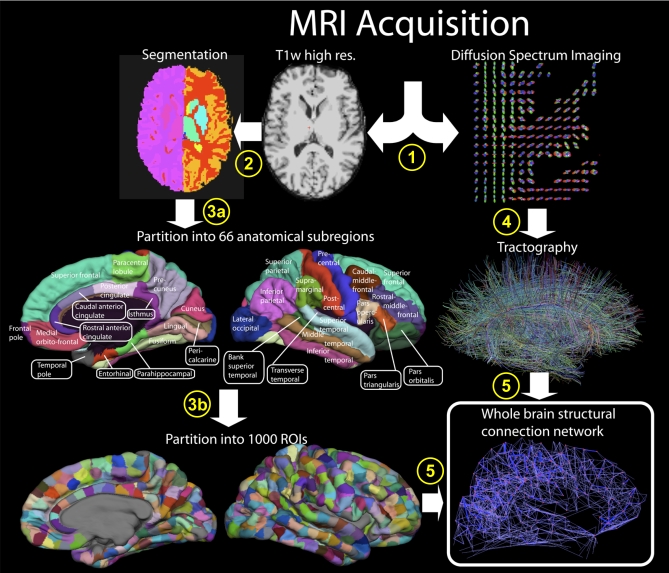
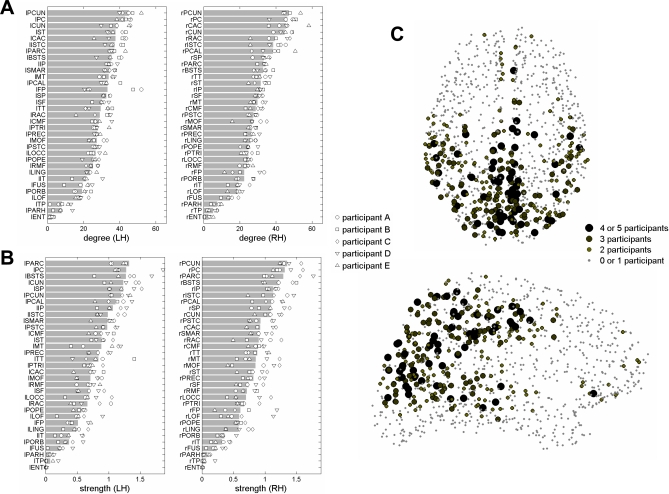
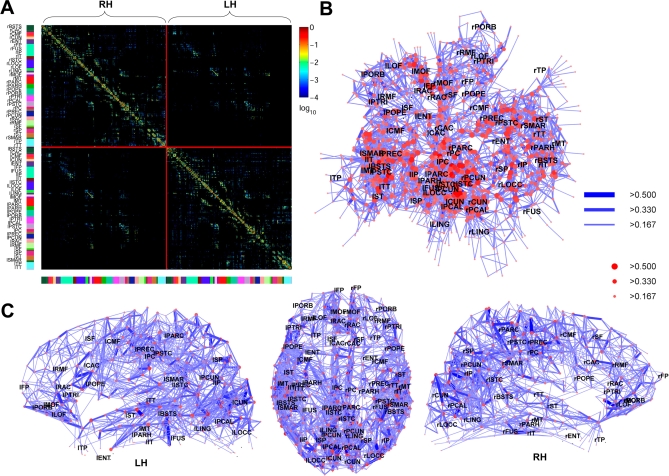
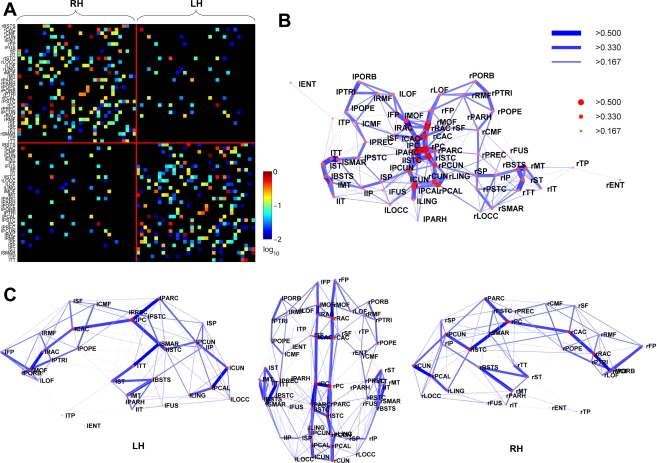
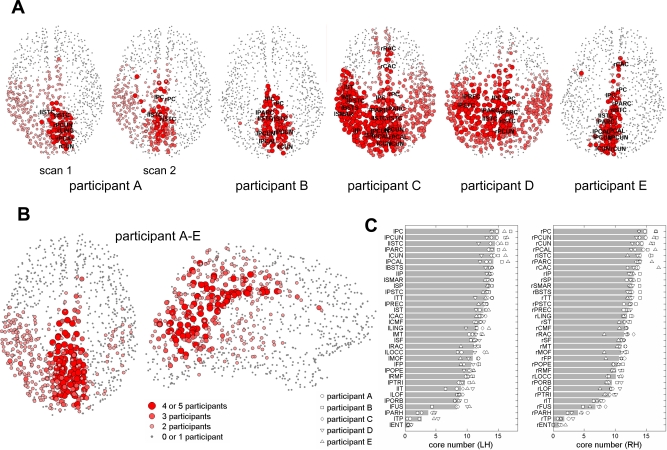
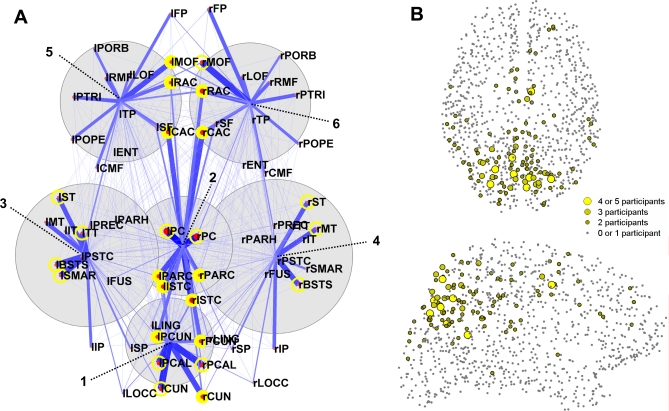
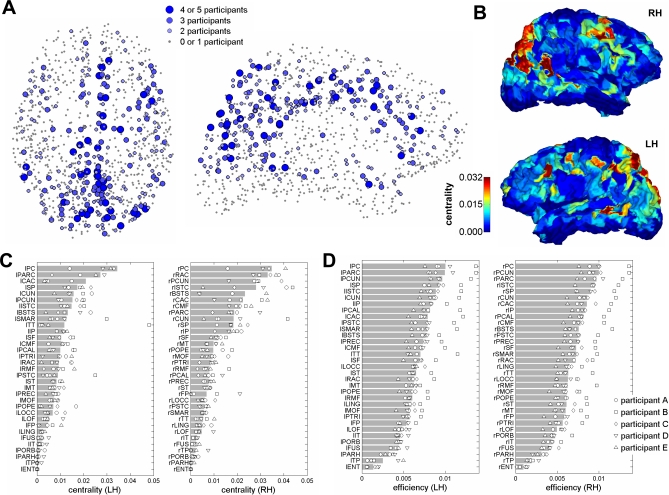
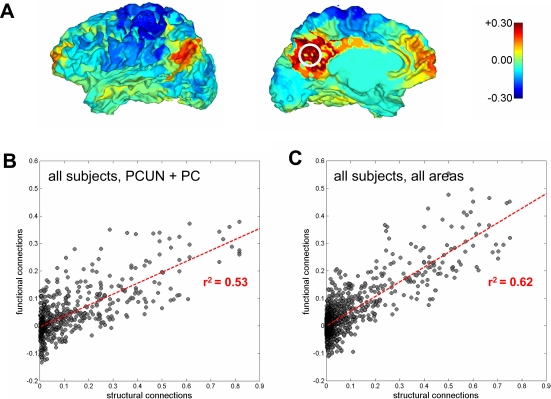
Structurally segregated and functionally specialized regions of the human cerebral cortex are interconnected by a dense network of cortico-cortical axonal pathways. By using diffusion spectrum imaging, we noninvasively mapped these pathways within and across cortical hemispheres in individual human participants. An analysis of the resulting large-scale structural brain networks reveals a structural core within posterior medial and parietal cerebral cortex, as well as several distinct temporal and frontal modules. Brain regions within the structural core share high degree, strength, and betweenness centrality, and they constitute connector hubs that link all major structural modules. The structural core contains brain regions that form the posterior components of the human default network. Looking both within and outside of core regions, we observed a substantial correspondence between structural connectivity and resting-state functional connectivity measured in the same participants. The spatial and topological centrality of the core within cortex suggests an important role in functional integration.
Overview
The claims and statistics of this paper haven’t been checked yet.
Free: it reads the open-access text and checks the first 5 claims that cite a source we can check. Create a free account to check every claim.
Integrity signals
Registry
Cites
Statistics
Figures
Verification
Claims the paper makes
The claims and statistics of this paper haven’t been checked yet.
Free: it reads the open-access text and checks the first 5 claims that cite a source we can check. Create a free account to check every claim.
Claims other papers make about this one
Each is checked against this paper’s own text: does it say what the citing paper says it does?
The source backs part of the claim, not all of it — or backs it for a different population, condition or comparison.
In the citing paper
“Numerous noninvasive brain imaging studies carried out in primates using brain parcellations ranging from 45 to 90 areas report wide ranging densities, from 7% to over 50% (He et al. 2007; Chen et al. 2008; Hagmann et al. 2008; Iturria-Medina et al. 2008; Gong et al. 2009; Li et al. 2009).”
From A Weighted and Directed Interareal Connectivity Matrix for Macaque Cerebral Cortex (2014) · cites this paper as Hagmann et al. 2008
Experimental — accuracy not yet measuredThe source backs part of the claim, not all of it — or backs it for a different population, condition or comparison.
In the citing paper
“The hub-like organization, characterized by a short path length and local and global hubs in the PCC, 85,86 may enable the DMN to connect and influence other networks, thereby facilitating global state changes.”
From 20 years of the default mode network: A review and synthesis. (2023) · cites this paper as [86]
Experimental — accuracy not yet measuredThe cited source says what the claim attributes to it.
In the citing paper
“There is an abundance of research demonstrating a correlation between DWI-tractography connection weights and FC in adults (Hagmann et al., 2008; Hagmann et al., 2010; Honey et al., 2009).”
From Development of large-scale functional networks from birth to adulthood: A guide to the neuroimaging literature (2017) · cites this paper as Hagmann et al., 2008
The cited source says what the claim attributes to it.
In the citing paper
“Sparse small-world attributes are robust in that they are reproducible across imaging modalities (diffusion MRI, 45,46 resting fMRI, 2,78,102 structural MRI, 48 EEG, 82 MEG, 90 and PET 30,79 ), disease states, and species (such as the cat, macaque, and nematode Caenorhabditis elegans).20”
From Graph theory analysis of complex brain networks: new concepts in brain mapping applied to neurosurgery (2016) · cites this paper as [45]
The cited source says what the claim attributes to it.
In the citing paper
“DTI suggested that macroscopic structural connectivity could be charted in vivo, even if only approximately (Assaf et al., 2019; Hagmann et al., 2008).”
From 40 Years of diffusion MRI in the brain: From history to emerging frontiers (2026) · cites this paper as Hagmann et al., 2008
2 more claims about this paper
Create a free account to see every claim other papers make about this one.
Self-check
Percentages, sums and reported differences re-computed from the paper’s own numbers.
The self-check needs the paper’s full text.
Citations
Cites
Modularity and community structure in networks
Newman, M. E. J. (2006) · Proceedings of the National Academy of Sciences · doi:10.1073/pnas.0601602103 · Cited by 12,256
A default mode of brain function
Raichle, M. E., MacLeod, A. M., Snyder, A. Z., Powers, W. J., Gusnard, D. A., & Shulman, G. L. (2001) · Proceedings of the National Academy of Sciences · doi:10.1073/pnas.98.2.676 · Cited by 12,190 · cited 4×
“Centrality data was computed as the average centrality of the five ROIs located closest to the Talairach coordinate provided in Table 1 of [14].”
BackgroundMethodInfluentialCortical Surface-Based Analysis
Dale, A. M., Fischl, B., & Sereno, M. I. (1999) · NeuroImage · doi:10.1006/nimg.1998.0395 · Cited by 10,910
A Set of Measures of Centrality Based on Betweenness
Freeman, L. C. (1977) · Sociometry · doi:10.2307/3033543 · Cited by 10,295
The Brain's Default Network: Anatomy, Function, and Relevance to Disease
Buckner, R. L., Andrews‐Hanna, J. R., & Schacter, D. L. (2008) · Annals of the New York Academy of Sciences · doi:10.1196/annals.1440.011 · Cited by 9,761
The human brain is intrinsically organized into dynamic, anticorrelated functional networks
Fox, M. D., Snyder, A. Z., Vincent, J. L., Corbetta, M., Van Essen, D. C., & Raichle, M. E. (2005) · Proceedings of the National Academy of Sciences · doi:10.1073/pnas.0504136102 · Cited by 8,553 · cited 2×
“, [15,17,18]), we find that this seed region maintains positive functional connections with portions of posterior medial cortex, medial orbitofrontal cortex, and lateral parietal cortex.”
Distributed hierarchical processing in the primate cerebral cortex
Felleman, D. J., & Van Essen, D. C. (1991) · Cerebral Cortex · doi:10.1093/cercor/1.1.1 · Cited by 7,783
Spontaneous fluctuations in brain activity observed with functional magnetic resonance imaging
Fox, M. D., & Raichle, M. E. (2007) · Nature Reviews Neuroscience · doi:10.1038/nrn2201 · Cited by 6,700 · cited 1×
“], and key attributes of these patterns have been characterized across different conditions of rest or cognitive load. A major feature of cortical functional connectivity is the default network [”
BackgroundFunctional connectivity in the resting brain: a network analysis of the default mode hypothesis
Greicius, M. D., Krasnow, B., Reiss, A. L., & Menon, V. (2003) · Proceedings of the National Academy of Sciences · doi:10.1073/pnas.0135058100 · Cited by 6,358 · cited 1×
“, [15,17,18]), we find that this seed region maintains positive functional connections with portions of posterior medial cortex, medial orbitofrontal cortex, and lateral parietal cortex.”
BackgroundCortical Surface-Based Analysis
Fischl, B., Sereno, M. I., & Dale, A. M. (1999) · NeuroImage · doi:10.1006/nimg.1998.0396 · Cited by 6,147 · cited 1×
“edu) [52,53].”
Cited by
Items 601–700 of 1,060
Strengthening Connections: Functional Connectivity and Brain Plasticity
Kelly, C., & Castellanos, F. X. (2014) · Neuropsychology Review · doi:10.1007/s11065-014-9252-y · Cited by 130
Disrupted cortical hubs in functional brain networks in social anxiety disorder
Liu, F., Zhu, C., Wang, Y., Guo, W., Li, M., Wang, W., Long, Z., Meng, Y., Cui, Q., Zeng, L., et al. (2014) · Clinical Neurophysiology · doi:10.1016/j.clinph.2014.11.014 · Cited by 140
Echoes of the Brain within Default Mode, Association, and Heteromodal Cortices
Braga, R. M., Sharp, D. J., Leeson, C., Wise, R. J. S., & Leech, R. (2013) · Journal of Neuroscience · doi:10.1523/jneurosci.0570-13.2013 · Cited by 130
Garcia, J. O., Ashourvan, A., Muldoon, S. F., Vettel, J. M., & Bassett, D. S. (2018) · Proceedings of the IEEE · doi:10.1109/jproc.2017.2786710 · Cited by 147
Network inference with confidence from multivariate time series
Kramer, M., Eden, U. T., Cash, S. S., & Kolaczyk, E. D. (2009) · Physical Review E · doi:10.1103/physreve.79.061916 · Cited by 146
Prefrontal connectomics: From anatomy to human imaging
Haber, S. N., Liu, H., Seidlitz, J., & Bullmore, E. (2022) · Neuropsychopharmacology · doi:10.1038/s41386-021-01156-6 · Cited by 129
“There is clear evidence for the existence of hubs, defined by degree criteria, in binary graphs of nervous systems ranging from the Caenorhabditis elegans synaptic–neuronal connectome [154] to the human dMRI tractography connectome [155].”
BackgroundGlobally Altered Structural Brain Network Topology in Grapheme-Color Synesthesia
Hänggi, J., Wotruba, D., & Jäncke, L. (2011) · The Journal of Neuroscience · doi:10.1523/jneurosci.0964-10.2011 · Cited by 128
Bridging Cytoarchitectonics and Connectomics in Human Cerebral Cortex
van den Heuvel, M. P., Scholtens, L. H., Feldman Barrett, L., Hilgetag, C. C., & de Reus, M. A. (2015) · The Journal of Neuroscience · doi:10.1523/jneurosci.2630-15.2015 · Cited by 129
Mapping brain anatomical connectivity using white matter tractography
Lazar, M. (2010) · NMR in Biomedicine · doi:10.1002/nbm.1579 · Cited by 128
Resting-State Multi-Spectrum Functional Connectivity Networks for Identification of MCI Patients
Wee, C.-Y., Yap, P., Denny, K., Browndyke, J. N., Potter, G. G., Welsh-Bohmer, K. A., Wang, L., & Shen, D. G. (2012) · PLoS ONE · doi:10.1371/journal.pone.0037828 · Cited by 135
Jung, M., Kosaka, H., Saito, D. N., Ishitobi, M., Morita, T., Inohara, K., Asano, M., Arai, S., Munesue, T., Tomoda, A., et al. (2014) · Molecular Autism · doi:10.1186/2040-2392-5-35 · Cited by 128
Generative models for network neuroscience: prospects and promise
Betzel, R. F., & Bassett, D. S. (2017) · Journal of The Royal Society Interface · doi:10.1098/rsif.2017.0623 · Cited by 128
Vaessen, M. J., Hofman, P. A. M., Tijssen, H. N., Aldenkamp, A. P., Jansen, J. F. A., & Backes, W. H. (2010) · NeuroImage · doi:10.1016/j.neuroimage.2010.03.011 · Cited by 134
Mapping the Alzheimer’s Brain with Connectomics
Xie, T., & He, Y. (2012) · Frontiers in Psychiatry · doi:10.3389/fpsyt.2011.00077 · Cited by 127
Corticocortical Evoked Potentials Reveal Projectors and Integrators in Human Brain Networks
Keller, C. J., Honey, C. J., Entz, L., Bickel, S., Groppe, D. M., Toth, E., Ulbert, I., Lado, F. A., & Mehta, A. D. (2014) · Journal of Neuroscience · doi:10.1523/jneurosci.4289-13.2014 · Cited by 141
Self-citationPresurgical connectome and postsurgical seizure control in temporal lobe epilepsy
Bonilha, L., Helpern, J. A., Sainju, R., Nesland, T., Edwards, J. C., Glazier, S. S., & Tabesh, A. (2013) · Neurology · doi:10.1212/01.wnl.0000435306.95271.5f · Cited by 127
Delayed feedback control of bursting synchronization in a scale-free neuronal network
Batista, C. A. S., Lopes, S. R., Viana, R. L., & Batista, A. M. (2009) · Neural Networks · doi:10.1016/j.neunet.2009.08.005 · Cited by 137
Hierarchical Alteration of Brain Structural and Functional Networks in Female Migraine Sufferers
Liu, J., Zhao, L., Li, G., Xiong, S., Nan, J., Li, J., Yuan, K., von Deneen, K. M., Liang, F., Qin, W., et al. (2012) · PLoS ONE · doi:10.1371/journal.pone.0051250 · Cited by 137
Eigenmodes of brain activity: Neural field theory predictions and comparison with experiment
Robinson, P. A., Zhao, X., Aquino, K. M., Griffiths, J. D., Sarkar, S., & Mehta-Pandejee, G. (2016) · NeuroImage · doi:10.1016/j.neuroimage.2016.04.050 · Cited by 146
Physical Exercise Alleviates ADHD Symptoms: Regional Deficits and Development Trajectory
Archer, T., & Kostrzewa, R. M. (2011) · Neurotoxicity Research · doi:10.1007/s12640-011-9260-0 · Cited by 157
Brain Network Adaptability across Task States
Davison, E. N., Schlesinger, K. J., Bassett, D. S., Lynall, M.-E., Miller, M. B., Grafton, S. T., & Carlson, J. M. (2015) · PLoS Computational Biology · doi:10.1371/journal.pcbi.1004029 · Cited by 126
Rosenthal, G., Váša, F., Griffa, A., Hagmann, P., Amico, E., Goñi, J., Avidan, G., & Sporns, O. (2018) · Nature Communications · doi:10.1038/s41467-018-04614-w · Cited by 141
Self-citationThe effect of network thresholding and weighting on structural brain networks in the uk biobank
Buchanan, C. R., Bastin, M. E., Ritchie, S. J., Liewald, D. C., Madole, J. W., Tucker-Drob, E. M., Deary, I. J., & Cox, S. R. (2020) · NeuroImage · doi:10.1016/j.neuroimage.2019.116443 · Cited by 126
Biological development of reading circuits
Wandell, B. A., & Yeatman, J. D. (2013) · Current Opinion in Neurobiology · doi:10.1016/j.conb.2012.12.005 · Cited by 124
Temporal lobe epilepsy: Hippocampal pathology modulates connectome topology and controllability
Bernhardt, B. C., Fadaie, F., Liu, M., Caldairou, B., Gu, S., Jefferies, E., Smallwood, J., Bassett, D. S., Bernasconi, A., & Bernasconi, N. (2019) · Neurology · doi:10.1212/wnl.0000000000007447 · Cited by 130
Betzel, R. F., Medaglia, J. D., Kahn, A. E., Soffer, J., Schonhaut, D. R., & Bassett, D. S. (2019) · Nature Biomedical Engineering · doi:10.1038/s41551-019-0404-5 · Cited by 138
Higher-order simplicial synchronization of coupled topological signals
Ghorbanchian, R., Restrepo, J. G., Torres, J. J., & Bianconi, G. (2021) · Communications Physics · doi:10.1038/s42005-021-00605-4 · Cited by 136
How to Conduct a Functional Magnetic Resonance (fMRI) Study in Social Science Research1
Dimoka, A. (2012) · MIS Quarterly · doi:10.2307/41703482 · Cited by 145
Integrated Information Increases with Fitness in the Evolution of Animats
Edlund, J. A., Chaumont, N., Hintze, A., Koch, C., Tononi, G., & Adami, C. (2011) · PLoS Computational Biology · doi:10.1371/journal.pcbi.1002236 · Cited by 124
To wake or not to wake? The two-sided nature of the human K-complex
Jahnke, K., von Wegner, F., Morzelewski, A., Borisov, S. V., Maischein, M., Steinmetz, H., & Laufs, H. (2011) · NeuroImage · doi:10.1016/j.neuroimage.2011.09.013 · Cited by 134
Anatomical connectivity changes in the bilingual brain
García‐Pentón, L., Pérez, A., Iturria‐Medina, Y., Dowens, M. G., & Carreiras, M. (2013) · NeuroImage · doi:10.1016/j.neuroimage.2013.08.064 · Cited by 153
Jiang, L., Xu, T., He, Y., Hou, X., Wang, J., Cao, X., Wei, G., Yang, Z., He, Y., & Zuo, X. (2014) · Brain Structure and Function · doi:10.1007/s00429-014-0795-8 · Cited by 130
A novel brain partition highlights the modular skeleton shared by structure and function
Diez, I. P., Bonifazi, P., Escudero, I., Goñi, B. M., Muñoz, M. A., Stramaglia, S., & Cortés, J. M. (2015) · Scientific Reports · doi:10.1038/srep10532 · Cited by 153
Tang, W., Jbabdi, S., Zhu, Z., Cottaar, M., Grisot, G., Lehman, J. F., Yendiki, A., & Haber, S. N. (2019) · eLife · doi:10.7554/elife.43761 · Cited by 123
Han, K., Mac Donald, C. L., Johnson, A. M., Barnes, Y., Wierzechowski, L., Zonies, D., Oh, J., Flaherty, S., Fang, R., Raichle, M. E., et al. (2014) · NeuroImage · doi:10.1016/j.neuroimage.2013.08.017 · Cited by 123
Tracking brain dynamics via time-dependent network analysis
Dimitriadis, S. I., Laskaris, N., Tsirka, V., Vourkas, M., Micheloyannis, S., & Fotopoulos, S. (2010) · Journal of Neuroscience Methods · doi:10.1016/j.jneumeth.2010.08.027 · Cited by 131
Probabilistic functional tractography of the human cortex revisited
Trébaul, L., Deman, P., Tuyisenge, V., Jedynak, M., Hugues, E., Rudrauf, D., Bhattacharjee, M., Tadel, F., Chanteloup-Forêt, B., Saubat, C., et al. (2018) · NeuroImage · doi:10.1016/j.neuroimage.2018.07.039 · Cited by 136
Characteristics and variability of structural networks derived from diffusion tensor imaging
Cheng, H., Wang, Y., Sheng, J., Kronenberger, W. G., Mathews, V. P., Hummer, T. A., & Saykin, A. J. (2012) · NeuroImage · doi:10.1016/j.neuroimage.2012.03.036 · Cited by 122
Sui, J., He, H., Yu, Q., Chen, J., Rogers, J., Pearlson, G. D., Mayer, A., Bustillo, J., Canive, J., & Calhoun, V. D. (2013) · Frontiers in Human Neuroscience · doi:10.3389/fnhum.2013.00235 · Cited by 122
A Predictive Structural Model of the Primate Connectome
Beul, S. F., Barbas, H., & Hilgetag, C. C. (2017) · Scientific Reports · doi:10.1038/srep43176 · Cited by 123
An integrative memory model of recollection and familiarity to understand memory deficits
Bastin, C., Besson, G., Simon, J., Delhaye, E., Geurten, M., Willems, S. J., & Salmon, É. (2019) · Behavioral and Brain Sciences · doi:10.1017/s0140525x19000621 · Cited by 144
Shu, N., Liang, Y., Li, H., Zhang, J., Li, X., Wang, L., He, Y., Wang, Y., & Zhang, Z. (2012) · Radiology · doi:10.1148/radiol.12112361 · Cited by 122
Kringelbach, M. L., Perl, Y. S., Tagliazucchi, E., & Deco, G. (2023) · Science Advances · doi:10.1126/sciadv.ade6049 · Cited by 105
Dark control: The default mode network as a reinforcement learning agent
Dohmatob, E., Dumas, G., & Bzdok, D. (2020) · Human Brain Mapping · doi:10.1002/hbm.25019 · Cited by 121
“These metabolic characteristics go hand-in-hand with brain-imaging findings that suggested the PMC and mPFC to potentially represent the functional core of the DMN (Andrews-Hanna et al., 2010; Hagmann et al., 2008).”
BackgroundNetwork topology and functional connectivity disturbances precede the onset of Huntington’s disease
Harrington, D. L., Rubinov, M., Durgerian, S., Mourany, L., Reece, C., Koenig, K., Bullmore, E., Long, J. D., Paulsen, J. S., for the PREDICT-HD investigators of the Huntington Study Group, et al. (2015) · Brain · doi:10.1093/brain/awv145 · Cited by 120
Connectivity pattern changes in default-mode network with deep non-REM and REM sleep
Koike, T., Kan, S., Misaki, M., & Miyauchi, S. (2011) · Neuroscience Research · doi:10.1016/j.neures.2010.12.018 · Cited by 136
Social cognitive neuroscience and leadership
Waldman, D. A., Balthazard, P. A., & Peterson, S. J. (2011) · The Leadership Quarterly · doi:10.1016/j.leaqua.2011.09.005 · Cited by 153
Exploring Brain Function from Anatomical Connectivity
Zamora-López, G., Zhou, C., & Kurths, J. (2011) · Frontiers in Neuroscience · doi:10.3389/fnins.2011.00083 · Cited by 119
Boraxbekk, C.-J., Salami, A., Wåhlin, A., & Nyberg, L. (2016) · NeuroImage · doi:10.1016/j.neuroimage.2015.12.010 · Cited by 120
Jiang, X., Shen, Y., Yao, J., Zhang, L., Xu, L., Feng, R., Cai, L., Liu, J., Chen, W., & Wang, J. (2019) · Translational Psychiatry · doi:10.1038/s41398-019-0467-9 · Cited by 120
Lo, Y., Soong, W., Gau, S. S., Wu, Y.-Y., Lai, M., Yeh, F.-C. F., Chiang, W.-Y., Kuo, L., Jaw, F.-S., & Tseng, W. I. (2011) · Psychiatry Research Neuroimaging · doi:10.1016/j.pscychresns.2010.09.008 · Cited by 127
White Matter Integrity Disruptions Associated With Cognitive Impairments in Type 2 Diabetic Patients
Zhang, J., Wang, Y., Wang, J., Zhou, X., Shu, N., Wang, Y., & Zhang, Z. (2014) · Diabetes · doi:10.2337/db14-0342 · Cited by 129
Brain Signal Variability is Parametrically Modifiable
Garrett, D. D., McIntosh, A. R., & Grady, C. L. (2014) · Cerebral Cortex · doi:10.1093/cercor/bht150 · Cited by 120
Choosing Wavelet Methods, Filters, and Lengths for Functional Brain Network Construction
Zhang, Z., Telesford, Q. K., Giusti, C., Lim, K. O., & Bassett, D. S. (2016) · PLoS ONE · doi:10.1371/journal.pone.0157243 · Cited by 134
Angular default mode network connectivity across working memory load
Vatansever, D., Manktelow, A. E., Sahakian, B. J., Menon, D. K., & Stamatakis, E. A. (2016) · Human Brain Mapping · doi:10.1002/hbm.23341 · Cited by 132
Mapping the functional connectome in traumatic brain injury: What can graph metrics tell us?
Caeyenberghs, K., Verhelst, H., Clemente, A., & Wilson, P. H. (2017) · NeuroImage · doi:10.1016/j.neuroimage.2016.12.003 · Cited by 120
Driving the brain towards creativity and intelligence: A network control theory analysis
Kenett, Y. N., Medaglia, J. D., Beaty, R. E., Chen, Q., Betzel, R. F., Thompson-Schill, S. L., & Qiu, J. (2018) · Neuropsychologia · doi:10.1016/j.neuropsychologia.2018.01.001 · Cited by 119
Effects of lesions on synchrony and metastability in cortical networks
Váša, F., Shanahan, M., Hellyer, P. J., Scott, G., Cabral, J., & Leech, R. (2015) · NeuroImage · doi:10.1016/j.neuroimage.2015.05.042 · Cited by 119
Task-positive Functional Connectivity of the Default Mode Network Transcends Task Domain
Elton, A., & Gao, W. (2015) · Journal of Cognitive Neuroscience · doi:10.1162/jocn_a_00859 · Cited by 119
From connectome to cognition: The search for mechanism in human functional brain networks
Mill, R. D., Ito, T., & Cole, M. W. (2017) · NeuroImage · doi:10.1016/j.neuroimage.2017.01.060 · Cited by 119
The thalamus in drug addiction: from rodents to humans
Huang, A. S., Mitchell, J. A., Haber, S. N., Alia-Klein, N., & Goldstein, R. Z. (2018) · Philosophical Transactions of the Royal Society B: Biological Sciences · doi:10.1098/rstb.2017.0028 · Cited by 119
The Energy Landscape of Neurophysiological Activity Implicit in Brain Network Structure
Gu, S., Cieslak, M., Baird, B., Muldoon, S. F., Grafton, S. T., Pasqualetti, F., & Bassett, D. S. (2018) · Scientific Reports · doi:10.1038/s41598-018-20123-8 · Cited by 116
Connectomic Intermediate Phenotypes for Psychiatric Disorders
Fornito, A., & Bullmore, E. T. (2012) · Frontiers in Psychiatry · doi:10.3389/fpsyt.2012.00032 · Cited by 118
Di, X., Kim, E. H., Huang, C., Tsai, S., Lin, C., & Biswal, B. B. (2013) · Frontiers in Human Neuroscience · doi:10.3389/fnhum.2013.00118 · Cited by 129
Chen, Y., Wang, S., Hilgetag, C. C., & Zhou, C. (2013) · PLoS Computational Biology · doi:10.1371/journal.pcbi.1002937 · Cited by 115
Age-related functional reorganization, structural changes, and preserved cognition
Meunier, D., Stamatakis, E. A., & Tyler, L. K. (2014) · Neurobiology of Aging · doi:10.1016/j.neurobiolaging.2013.07.003 · Cited by 117
Increased fMRI connectivity upon chemogenetic inhibition of the mouse prefrontal cortex
Rocchi, F., Canella, C., Noei, S., Gutierrez‐Barragan, D., Coletta, L., Galbusera, A., Stuefer, A., Vassanelli, S., Pasqualetti, M., Iurilli, G., et al. (2022) · Nature Communications · doi:10.1038/s41467-022-28591-3 · Cited by 126
Test-Retest Reliability of Graph Metrics in Functional Brain Networks: A Resting-State fNIRS Study
Niu, H., Li, Z., Liao, X., Wang, J., Zhao, T., Shu, N., Zhao, X., & He, Y. (2013) · PLoS ONE · doi:10.1371/journal.pone.0072425 · Cited by 129
Emergence of Persistent Networks in Long-Term Intracranial EEG Recordings
Kramer, M. A., Eden, U. T., Lepage, K. Q., Kolaczyk, E. D., Bianchi, M. T., & Cash, S. S. (2011) · The Journal of Neuroscience · doi:10.1523/jneurosci.2287-11.2011 · Cited by 118
Dynamic changes of ICA‐derived EEG functional connectivity in the resting state
Chen, J., Ros, T., & Gruzelier, J. H. (2012) · Human Brain Mapping · doi:10.1002/hbm.21475 · Cited by 134
Meta-analysis of functional network alterations in Alzheimer's disease: Toward a network biomarker
Jacobs, H. I. L., Raduà, J., Lückmann, H. C., & Sack, A. T. (2013) · Neuroscience & Biobehavioral Reviews · doi:10.1016/j.neubiorev.2013.03.009 · Cited by 129
Anatomical Connectivity Influences both Intra- and Inter-Brain Synchronizations
Dumas, G., Chavez, M., Nadel, J., & Martinerie, J. (2012) · PLoS ONE · doi:10.1371/journal.pone.0036414 · Cited by 117
Mears, D., & Pollard, H. B. (2016) · Journal of Neuroscience Research · doi:10.1002/jnr.23705 · Cited by 116
Wandell, B. A. (2016) · Annual Review of Neuroscience · doi:10.1146/annurev-neuro-070815-013815 · Cited by 126
Brain and Social Networks: Fundamental Building Blocks of Human Experience
Falk, E. B., & Bassett, D. S. (2017) · Trends in Cognitive Sciences · doi:10.1016/j.tics.2017.06.009 · Cited by 116
Patient-Tailored, Connectivity-Based Forecasts of Spreading Brain Atrophy
Brown, J. A., Deng, J., Neuhaus, J., Sible, I. J., Sias, A. C., Lee, S. E., Kornak, J., Marx, G. A., Karydas, A. M., Spina, S., et al. (2019) · Neuron · doi:10.1016/j.neuron.2019.08.037 · Cited by 117
Seguin, C., Tian, Y., & Zalesky, A. (2020) · Network Neuroscience · doi:10.1162/netn_a_00161 · Cited by 116
Fledgling pathoconnectomics of psychiatric disorders
Rubinov, M., & Bullmore, E. T. (2013) · Trends in Cognitive Sciences · doi:10.1016/j.tics.2013.10.007 · Cited by 126
Short-range connections in the developmental connectome during typical and atypical brain maturation
Ouyang, M., Kang, H., Detre, J. A., Roberts, T. P. L., & Huang, H. (2017) · Neuroscience & Biobehavioral Reviews · doi:10.1016/j.neubiorev.2017.10.007 · Cited by 116
Metastability and chimera states in modular delay and pulse-coupled oscillator networks
Wildie, M., & Shanahan, M. (2012) · Chaos: An Interdisciplinary Journal of Nonlinear Science · doi:10.1063/1.4766592 · Cited by 115
Sleep and the functional connectome
Picchioni, D., Duyn, J. H., & Horovitz, S. G. (2013) · NeuroImage · doi:10.1016/j.neuroimage.2013.05.067 · Cited by 115
“Its nodes are among the most connected brain areas, both anatomically (Hagmann et al., 2008) and functionally (Buckner et al.”
The brain's connective core and its role in animal cognition
Shanahan, M. (2012) · Philosophical Transactions of the Royal Society B: Biological Sciences · doi:10.1098/rstb.2012.0128 · Cited by 115
Communication Efficiency and Congestion of Signal Traffic in Large-Scale Brain Networks
Mišić, B., Sporns, O., & McIntosh, A. R. (2014) · PLoS Computational Biology · doi:10.1371/journal.pcbi.1003427 · Cited by 115
Self-citationAraujo, H. F., Kaplan, J., & Damasio, A. (2013) · Frontiers in Human Neuroscience · doi:10.3389/fnhum.2013.00548 · Cited by 115
Impaired cerebellar functional connectivity in schizophrenia patients and their healthy siblings
Collin, G. (2011) · Frontiers in Psychiatry · doi:10.3389/fpsyt.2011.00073 · Cited by 115
A spectrum of routing strategies for brain networks
Avena-Koenigsberger, A., Yan, X., Kolchinsky, A., van den Heuvel, M. P., Hagmann, P., & Sporns, O. (2019) · PLOS Computational Biology · doi:10.1371/journal.pcbi.1006833 · Cited by 115
“For each individual subject, connection weights between pairs of ROI are quantified as a fiber density [55].”
BackgroundSelf-citationTewarie, P. K. B., Hillebrand, A., van Dellen, E., Schoonheim, M. M., Barkhof, F., Polman, C. H., Beaulieu, C., Gong, G., van Dijk, B. W., & Stam, C. J. (2014) · NeuroImage · doi:10.1016/j.neuroimage.2014.04.038 · Cited by 121
Crone, J. S., Schurz, M., Höller, Y., Bergmann, J., Monti, M., Schmid, E., Trinka, E., & Kronbichler, M. (2015) · NeuroImage · doi:10.1016/j.neuroimage.2015.01.037 · Cited by 114
Najafi, M., McMenamin, B. W., Simon, J. Z., & Pessoa, L. (2016) · NeuroImage · doi:10.1016/j.neuroimage.2016.04.054 · Cited by 113
Remapping the cognitive and neural profiles of children who struggle at school
Astle, D. E., Bathelt, J., The CALM Team, & Holmes, J. (2019) · Developmental Science · doi:10.1111/desc.12747 · Cited by 114
Bartoloméi, F., Bettus, G., Stam, C. J., & Guye, M. (2013) · Clinical Neurophysiology · doi:10.1016/j.clinph.2013.06.003 · Cited by 128
Turbulent-like Dynamics in the Human Brain
Deco, G., & Kringelbach, M. L. (2020) · Cell Reports · doi:10.1016/j.celrep.2020.108471 · Cited by 113
BETZEL, R. F., GRIFFA, A., AVENA-KOENIGSBERGER, A., GOÑI, J., THIRAN, J.-P., HAGMANN, P., & SPORNS, O. (2013) · Network Science · doi:10.1017/nws.2013.19 · Cited by 113
Self-citationNumerosity, Abstraction, and the Emergence of Symbolic Thinking
Coolidge, F. L., & Overmann, K. A. (2012) · Current Anthropology · doi:10.1086/664818 · Cited by 113
Dynamical intrinsic functional architecture of the brain during absence seizures
Liao, W., Zhang, Z., Mantini, D., Xu, Q., Ji, G., Zhang, H., Wang, J., Wang, Z., Chen, G., Tian, L., et al. (2013) · Brain Structure and Function · doi:10.1007/s00429-013-0619-2 · Cited by 122
Bohr, I. J., Kenny, E., Blamire, A., O’Brien, J. T., Thomas, A. J., Richardson, J., & Kaiser, M. (2013) · Frontiers in Psychiatry · doi:10.3389/fpsyt.2012.00116 · Cited by 112
Transition of the functional brain network related to increasing cognitive demands
Finc, K., Bonna, K., Lewandowska, M., Wolak, T. P., Nikadon, J., Dreszer, J., Duch, W., & Kühn, S. (2017) · Human Brain Mapping · doi:10.1002/hbm.23621 · Cited by 125
A generative model of whole-brain effective connectivity
Frässle, S., Lomakina, E. I., Kasper, L., Manjaly, Z. M., Leff, A. P., Pruessmann, K. P., Buhmann, J. M., & Stephan, K. E. (2018) · NeuroImage · doi:10.1016/j.neuroimage.2018.05.058 · Cited by 113
Ensemble learning with 3D convolutional neural networks for functional connectome-based prediction
Khosla, M., Jamison, K., Kuceyeski, A., & Sabuncu, M. R. (2019) · NeuroImage · doi:10.1016/j.neuroimage.2019.06.012 · Cited by 113
Controversies and progress on standardization of large-scale brain network nomenclature
Uddin, L. Q., Betzel, R. F., Cohen, J. R., Damoiseaux, J. S., Brigard, F. D., Eickhoff, S. B., Fornito, A., Gratton, C., Gordon, E. M., Laird, A. R., et al. (2023) · Network Neuroscience · doi:10.1162/netn_a_00323 · Cited by 132
Metadata
- Authors
- Hagmann, P., Cammoun, L., Gigandet, X., Meuli, R., Honey, C. J., Wedeen, V. J., & Sporns, O.
- Affiliations
- Centre Hospitalier Universitaire Vaudois (CH)
- École Polytechnique Fédérale de Lausanne (CH)
- Indiana University Bloomington (US)
- Harvard University (US)
- Corresponding author
- Sporns, Olaf
- Venue
- PLoS Biology
- Publisher
- Public Library of Science (PLoS)
- Published
- 2008-07-01
- Volume
- 6
- Issue
- 7
- Pages
- e159
- ISSN
- 1544-9173 (ISSN-L)
- 1545-7885
- PMC
- PMC2443193
- OpenAlex
- W2159929956
- Cited by
- 4,173
- References
- 56
- Citations by year
- 2026: 111 · 2025: 187 · 2024: 182 · 2023: 192 · 2022: 243 · 2021: 245 · 2020: 246 · 2019: 270 · 2018: 284 · 2017: 271 · 2016: 265 · 2015: 304 · 2014: 302 · 2013: 308 · 2012: 245
- FWCI
- 89.34
- Type
- journal article
- Language
- en
- Open access
- gold
- doi.org
- Locations
- PLoS Biology (publishedVersion, cc-by)
- Europe PMC (PubMed Central) (publishedVersion, cc-by)
- PubMed Central (publishedVersion, cc-by)
- PubMed (publishedVersion)
- Digital Access to Scholarship at Harvard (DASH) (Harvard University) (submittedVersion, cc-by)
- DOAJ (DOAJ: Directory of Open Access Journals) (submittedVersion, cc-by-sa)
- Figshare (submittedVersion, cc-by)
- Infoscience (Ecole Polytechnique Fédérale de Lausanne) (submittedVersion)
- Infoscience (Ecole Polytechnique Fédérale de Lausanne) (submittedVersion, cc-by-nc-nd)
- IRIS (submittedVersion)
- SERVAL (Université de Lausanne) (submittedVersion, other-oa)
- Funders
- James S. McDonnell Foundation
- École Polytechnique Fédérale de Lausanne
- Université de Lausanne
- Centre d'Imagerie BioMédicale
- Centre Hospitalier Universitaire Vaudois
- National Institutes of Health
- National Institute of Mental Health (1R01-MH64-44)
- Topics
- Life Sciences › Neuroscience › Cognitive Neuroscience › Functional Brain Connectivity Studies
- Health Sciences › Medicine › Radiology, Nuclear Medicine and Imaging › Advanced Neuroimaging Techniques and Applications
- Physical Sciences › Physics and Astronomy › Statistical and Nonlinear Physics › Complex Network Analysis Techniques
- Keywords
- human cerebral cortex, structural connectivity, cortico-cortical pathways, structural core, default mode network, resting-state functional connectivity, network centrality, connector hubs, posterior medial cortex, parietal cortex, functional integration, diffusion spectrum imaging
- MeSH terms
- Adult, Brain Mapping, Cerebral Cortex, Humans, Male, Models, Neurological, Nerve Net, Imaging, Three-Dimensional, Diffusion Magnetic Resonance Imaging
About these checks
Registry, retraction, Cites and statistics results are computed, not judged, with one exception: a printed reference that no index lists is read once by a model before it counts as a citation error. Claims are extracted by a model and kept only when their quote appears verbatim in the text; each cited source is then checked, with a model’s help, for whether it says what the claim relies on. Those verdicts can be wrong — read the claim’s quote and the cited source before relying on one.
Statistics and arithmetic are recomputed, not judged.
Confidence bands are shown only for fields calibrated on our annotated test set. None is calibrated yet, so no band is shown.
What counts as a claim ›How we measure confidence ›How we check this ›
Are you an author, or do you see a problem with this page? Request a review
Data sources
Bibliographic data: Semantic Scholar, OpenAlex, Crossref.
Contains information from the Semantic Scholar Academic Graph Datasets, made available under the ODC Attribution License (ODC-BY 1.0).
Semantic Scholar’s data is described in: Kinney, R., et al. (2023). The Semantic Scholar Open Data Platform. arXiv:2301.10140.
