

Mapping the Structural Core of Human Cerebral Cortex
Open accessThe DOI matches its Crossref record; 57 of the 57 references it cites were found in a registry or an index.
Abstract
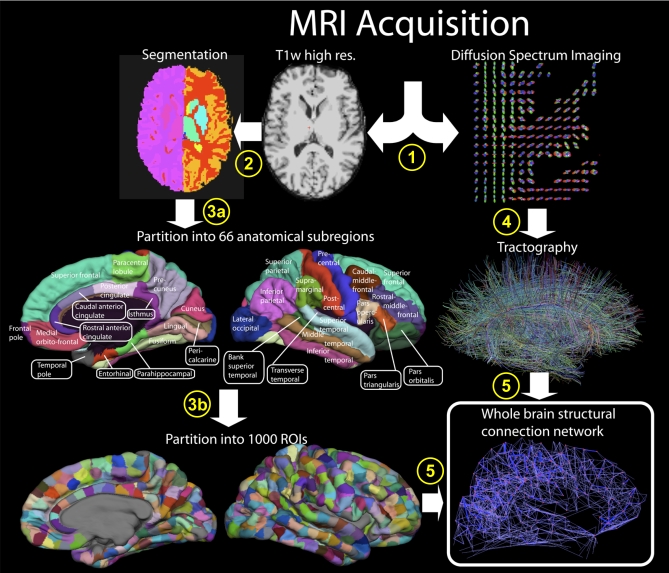
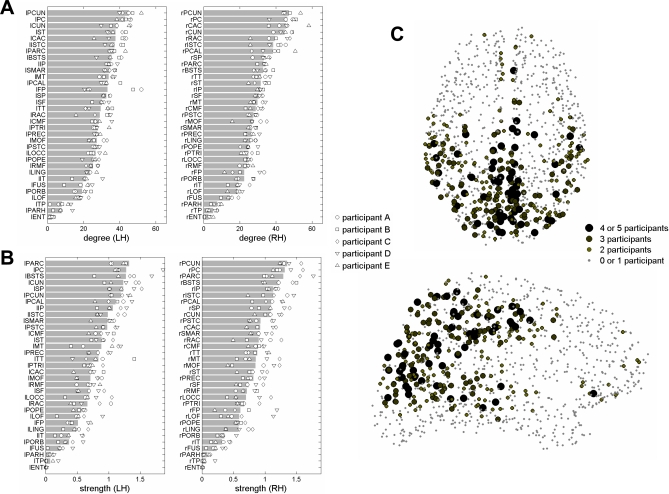
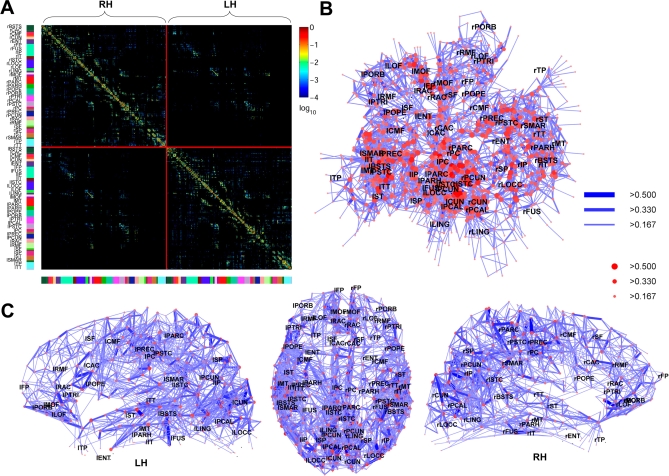
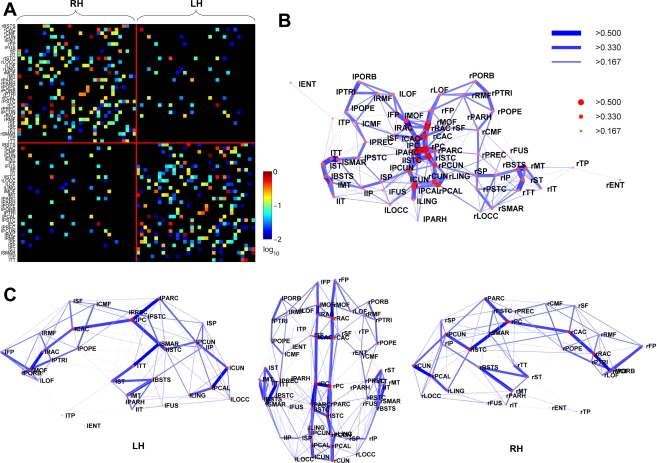
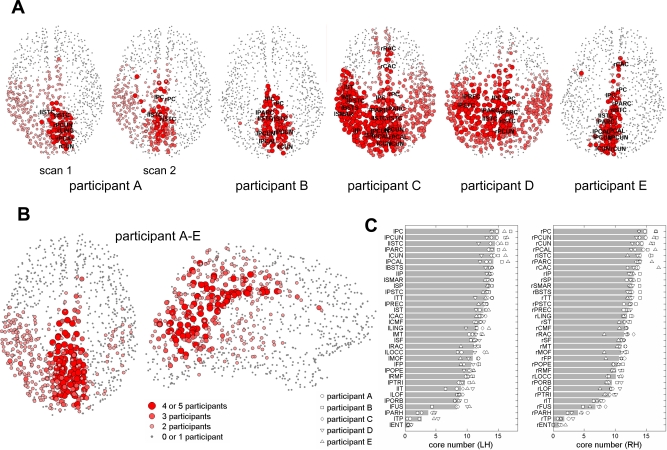
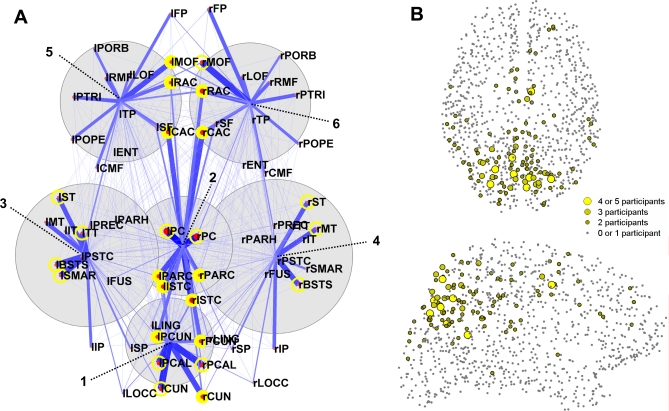
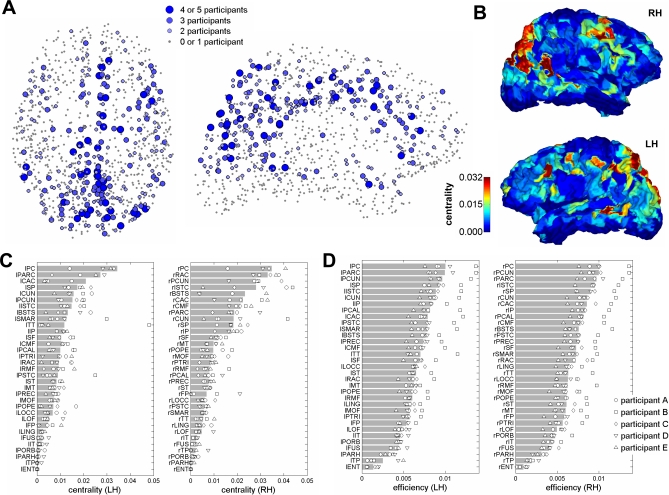
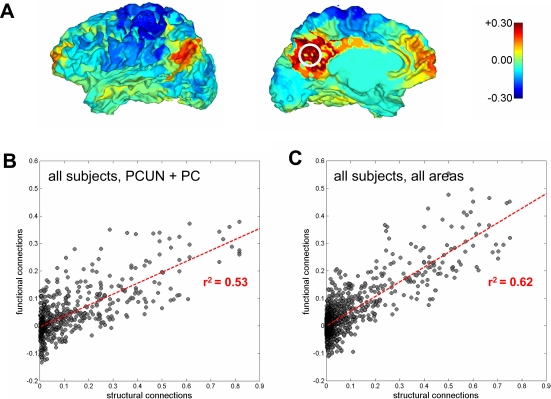
Structurally segregated and functionally specialized regions of the human cerebral cortex are interconnected by a dense network of cortico-cortical axonal pathways. By using diffusion spectrum imaging, we noninvasively mapped these pathways within and across cortical hemispheres in individual human participants. An analysis of the resulting large-scale structural brain networks reveals a structural core within posterior medial and parietal cerebral cortex, as well as several distinct temporal and frontal modules. Brain regions within the structural core share high degree, strength, and betweenness centrality, and they constitute connector hubs that link all major structural modules. The structural core contains brain regions that form the posterior components of the human default network. Looking both within and outside of core regions, we observed a substantial correspondence between structural connectivity and resting-state functional connectivity measured in the same participants. The spatial and topological centrality of the core within cortex suggests an important role in functional integration.
Overview
The claims and statistics of this paper haven’t been checked yet.
Free: it reads the open-access text and checks the first 5 claims that cite a source we can check. Create a free account to check every claim.
Integrity signals
Registry
Cites
Statistics
Figures
Verification
Claims the paper makes
The claims and statistics of this paper haven’t been checked yet.
Free: it reads the open-access text and checks the first 5 claims that cite a source we can check. Create a free account to check every claim.
Claims other papers make about this one
Each is checked against this paper’s own text: does it say what the citing paper says it does?
The source backs part of the claim, not all of it — or backs it for a different population, condition or comparison.
In the citing paper
“Numerous noninvasive brain imaging studies carried out in primates using brain parcellations ranging from 45 to 90 areas report wide ranging densities, from 7% to over 50% (He et al. 2007; Chen et al. 2008; Hagmann et al. 2008; Iturria-Medina et al. 2008; Gong et al. 2009; Li et al. 2009).”
From A Weighted and Directed Interareal Connectivity Matrix for Macaque Cerebral Cortex (2014) · cites this paper as Hagmann et al. 2008
Experimental — accuracy not yet measuredThe source backs part of the claim, not all of it — or backs it for a different population, condition or comparison.
In the citing paper
“The hub-like organization, characterized by a short path length and local and global hubs in the PCC, 85,86 may enable the DMN to connect and influence other networks, thereby facilitating global state changes.”
From 20 years of the default mode network: A review and synthesis. (2023) · cites this paper as [86]
Experimental — accuracy not yet measuredThe cited source says what the claim attributes to it.
In the citing paper
“There is an abundance of research demonstrating a correlation between DWI-tractography connection weights and FC in adults (Hagmann et al., 2008; Hagmann et al., 2010; Honey et al., 2009).”
From Development of large-scale functional networks from birth to adulthood: A guide to the neuroimaging literature (2017) · cites this paper as Hagmann et al., 2008
The cited source says what the claim attributes to it.
In the citing paper
“Sparse small-world attributes are robust in that they are reproducible across imaging modalities (diffusion MRI, 45,46 resting fMRI, 2,78,102 structural MRI, 48 EEG, 82 MEG, 90 and PET 30,79 ), disease states, and species (such as the cat, macaque, and nematode Caenorhabditis elegans).20”
From Graph theory analysis of complex brain networks: new concepts in brain mapping applied to neurosurgery (2016) · cites this paper as [45]
The cited source says what the claim attributes to it.
In the citing paper
“DTI suggested that macroscopic structural connectivity could be charted in vivo, even if only approximately (Assaf et al., 2019; Hagmann et al., 2008).”
From 40 Years of diffusion MRI in the brain: From history to emerging frontiers (2026) · cites this paper as Hagmann et al., 2008
2 more claims about this paper
Create a free account to see every claim other papers make about this one.
Self-check
Percentages, sums and reported differences re-computed from the paper’s own numbers.
The self-check needs the paper’s full text.
Citations
Cites
Modularity and community structure in networks
Newman, M. E. J. (2006) · Proceedings of the National Academy of Sciences · doi:10.1073/pnas.0601602103 · Cited by 12,256
A default mode of brain function
Raichle, M. E., MacLeod, A. M., Snyder, A. Z., Powers, W. J., Gusnard, D. A., & Shulman, G. L. (2001) · Proceedings of the National Academy of Sciences · doi:10.1073/pnas.98.2.676 · Cited by 12,190 · cited 4×
“Centrality data was computed as the average centrality of the five ROIs located closest to the Talairach coordinate provided in Table 1 of [14].”
BackgroundMethodInfluentialCortical Surface-Based Analysis
Dale, A. M., Fischl, B., & Sereno, M. I. (1999) · NeuroImage · doi:10.1006/nimg.1998.0395 · Cited by 10,910
A Set of Measures of Centrality Based on Betweenness
Freeman, L. C. (1977) · Sociometry · doi:10.2307/3033543 · Cited by 10,295
The Brain's Default Network: Anatomy, Function, and Relevance to Disease
Buckner, R. L., Andrews‐Hanna, J. R., & Schacter, D. L. (2008) · Annals of the New York Academy of Sciences · doi:10.1196/annals.1440.011 · Cited by 9,761
The human brain is intrinsically organized into dynamic, anticorrelated functional networks
Fox, M. D., Snyder, A. Z., Vincent, J. L., Corbetta, M., Van Essen, D. C., & Raichle, M. E. (2005) · Proceedings of the National Academy of Sciences · doi:10.1073/pnas.0504136102 · Cited by 8,553 · cited 2×
“, [15,17,18]), we find that this seed region maintains positive functional connections with portions of posterior medial cortex, medial orbitofrontal cortex, and lateral parietal cortex.”
Distributed hierarchical processing in the primate cerebral cortex
Felleman, D. J., & Van Essen, D. C. (1991) · Cerebral Cortex · doi:10.1093/cercor/1.1.1 · Cited by 7,783
Spontaneous fluctuations in brain activity observed with functional magnetic resonance imaging
Fox, M. D., & Raichle, M. E. (2007) · Nature Reviews Neuroscience · doi:10.1038/nrn2201 · Cited by 6,700 · cited 1×
“], and key attributes of these patterns have been characterized across different conditions of rest or cognitive load. A major feature of cortical functional connectivity is the default network [”
BackgroundFunctional connectivity in the resting brain: a network analysis of the default mode hypothesis
Greicius, M. D., Krasnow, B., Reiss, A. L., & Menon, V. (2003) · Proceedings of the National Academy of Sciences · doi:10.1073/pnas.0135058100 · Cited by 6,358 · cited 1×
“, [15,17,18]), we find that this seed region maintains positive functional connections with portions of posterior medial cortex, medial orbitofrontal cortex, and lateral parietal cortex.”
BackgroundCortical Surface-Based Analysis
Fischl, B., Sereno, M. I., & Dale, A. M. (1999) · NeuroImage · doi:10.1006/nimg.1998.0396 · Cited by 6,147 · cited 1×
“edu) [52,53].”
Cited by
Complex brain networks: graph theoretical analysis of structural and functional systems
Bullmore, E., & Sporns, O. (2009) · Nature Reviews Neuroscience · doi:10.1038/nrn2575 · Cited by 11,820
Self-citationComplex network measures of brain connectivity: Uses and interpretations
Rubinov, M., & Sporns, O. (2010) · NeuroImage · doi:10.1016/j.neuroimage.2009.10.003 · Cited by 11,522
Self-citationThe organization of the human cerebral cortex estimated by intrinsic functional connectivity
Thomas Yeo, B. T., Krienen, F. M., Sepulcre, J., Sabuncu, M. R., Lashkari, D., Hollinshead, M., Roffman, J. L., Smoller, J. W., Zöllei, L., Polimeni, J. R., et al. (2011) · Journal of Neurophysiology · doi:10.1152/jn.00338.2011 · Cited by 9,182
The organization of the human cerebellum estimated by intrinsic functional connectivity
Buckner, R. L., Krienen, F. M., Castellanos, A., Diaz, J. C., & Yeo, B. T. T. (2011) · Journal of Neurophysiology · doi:10.1152/jn.00339.2011 · Cited by 7,304
Shuman, D. I., Narang, S. K., Frossard, P., Ortega, A., & Vandergheynst, P. (2013) · IEEE Signal Processing Magazine · doi:10.1109/msp.2012.2235192 · Cited by 4,421
Large-scale brain networks and psychopathology: a unifying triple network model
Menon, V. (2011) · Trends in Cognitive Sciences · doi:10.1016/j.tics.2011.08.003 · Cited by 4,168
BrainNet Viewer: A Network Visualization Tool for Human Brain Connectomics
Xia, M., Wang, J., & He, Y. (2013) · PLoS ONE · doi:10.1371/journal.pone.0068910 · Cited by 4,106
“modularity [14,15], highly connected hubs [8,16] and ‘rich-club’ configurations [17,18].”
BackgroundThe brain's default mode network
Raichle, M. E. (2015) · Annual Review of Neuroscience · doi:10.1146/annurev-neuro-071013-014030 · Cited by 3,904
Exploring the brain network: A review on resting-state fMRI functional connectivity
van den Heuvel, M. P., & Hulshoff Pol, H. E. (2010) · European Neuropsychopharmacology · doi:10.1016/j.euroneuro.2010.03.008 · Cited by 3,326
“Furthermore, also on a global whole-brain scale, regions with a higher level of structural connectivity have been reported to show a higher level of functional connectivity (Hagmann et al., 2008; Honey et al., 2007; Honey et al., 2009).”
BackgroundPredicting human resting-state functional connectivity from structural connectivity
Honey, C. J., Sporns, O., Cammoun, L., Gigandet, X., Thiran, J. P., Meuli, R., & Hagmann, P. (2009) · Proceedings of the National Academy of Sciences · doi:10.1073/pnas.0811168106 · Cited by 3,307
Self-citationThe economy of brain network organization
Bullmore, E., & Sporns, O. (2012) · Nature Reviews Neuroscience · doi:10.1038/nrn3214 · Cited by 3,284
Self-citationTracking whole-brain connectivity dynamics in the resting state
Allen, E. A., Damaraju, E., Plis, S. M., Erhardt, E. B., Eichele, T., & Calhoun, V. D. (2014) · Cerebral Cortex · doi:10.1093/cercor/bhs352 · Cited by 2,992
Toward discovery science of human brain function
Biswal, B. B., Mennes, M., Zuo, X.-N., Gohel, S., Kelly, C., Smith, S. M., Beckmann, C. F., Adelstein, J. S., Buckner, R. L., Colcombe, S., et al. (2010) · Proceedings of the National Academy of Sciences · doi:10.1073/pnas.0911855107 · Cited by 2,970
“Recent R-fMRI studies have identified putative biomarkers of neuropsychiatric illness (12, 15–18), provided insight into the development of functional networks in the maturing and aging brain (19–22), demonstrated a shared intrinsic functional architecture (23) between humans and nonhuman primates (24, 25), and deline…”
BackgroundBuckner, R. L., Sepulcre, J., Talukdar, T., Krienen, F. M., Liu, H., Hedden, T., Andrews-Hanna, J. R., Sperling, R. A., & Johnson, K. A. (2009) · The Journal of Neuroscience · doi:10.1523/jneurosci.5062-08.2009 · Cited by 2,862
“The posterior midline, in particular the posterior cingulate, is a nexus of cortical connectivity and has among the highest levels of both degree and betweenness centrality (Achard et al., 2006; Buckner et al., 2008; Fransson and Marrelec, 2008; Hagmann et al., 2008; Greicius et al., 2009).”
BackgroundResultInfluentialFunctional-anatomic fractionation of the brain’s default network
Andrews-Hanna, J. R., Reidler, J. S., Sepulcre, J., Poulin, R., & Buckner, R. L. (2010) · Neuron · doi:10.1016/j.neuron.2010.02.005 · Cited by 2,767
“Consistent with prior reports (Buckner et al., 2009; see also Hagmann et al., 2008), PCC and aMPFC exhibited the highest betweenness centrality.”
Network-based statistic: identifying differences in brain networks
Zalesky, A., Fornito, A., & Bullmore, E. T. (2010) · NeuroImage · doi:10.1016/j.neuroimage.2010.06.041 · Cited by 2,750
“…test the structure-function hypothesis (Honey et al., 2009, 2010; Ramani et al., 2004; Skudlarski et al., 2008; Sporns et al., 2000) and as a methodological tool to examine brain network organization, topology and complex dynamics (Bullmore et al., 2009; Hagmann et al., 2008; Sporns et al., 2004).”
BackgroundMethodExperimental and theoretical approaches to conscious processing
Dehaene, S., & Changeux, J.-P. (2011) · Neuron · doi:10.1016/j.neuron.2011.03.018 · Cited by 2,573
White matter integrity, fiber count, and other fallacies: The do's and don'ts of diffusion MRI
Jones, D. K., Knösche, T. R., & Turner, R. (2013) · NeuroImage · doi:10.1016/j.neuroimage.2012.06.081 · Cited by 2,402
The role of the posterior cingulate cortex in cognition and disease
Leech, R., & Sharp, D. J. (2014) · Brain · doi:10.1093/brain/awt162 · Cited by 2,247
“The structural connectivity of the PCC is closely related to its functional connectivity with other brain regions, which can be measured with functional MRI (Hagmann et al., 2008; Margulies et al., 2009; Leech et al., 2011).”
BackgroundMethodInfluentialRich-club organization of the human connectome
van den Heuvel, M. P., & Sporns, O. (2011) · The Journal of Neuroscience · doi:10.1523/jneurosci.3539-11.2011 · Cited by 2,354
“…or functional criteria (Wig et al., 2011), some studies have advocated the use of higher-resolution networks, going up to 1000 smaller parcels, instead of using a coarse and to some extent arbitrary parcellation scheme of 82 brain regions (Hagmann et al., 2008; van den Heuvel et al., 2008b).”
BackgroundMethodResultInfluentialSelf-citationLarge-scale brain networks in cognition: emerging methods and principles
Bressler, S. L., & Menon, V. (2010) · Trends in Cognitive Sciences · doi:10.1016/j.tics.2010.04.004 · Cited by 2,348
Network hubs in the human brain
van den Heuvel, M. P., & Sporns, O. (2013) · Trends in Cognitive Sciences · doi:10.1016/j.tics.2013.09.012 · Cited by 2,123
Self-citationWavelets on graphs via spectral graph theory
Hammond, D. K., Vandergheynst, P., & Gribonval, R. (2011) · Applied and Computational Harmonic Analysis · doi:10.1016/j.acha.2010.04.005 · Cited by 2,171
Prediction of individual brain maturity using fMRI
Dosenbach, N. U. F., Nardos, B., Cohen, A. L., Fair, D. A., Power, J. D., Church, J. A., Nelson, S. M., Wig, G. S., Vogel, A. C., Lessov-Schlaggar, C. N., et al. (2010) · Science · doi:10.1126/science.1194144 · Cited by 2,183
Neurophysiological and Computational Principles of Cortical Rhythms in Cognition
Wang, X.-J. (2010) · Physiological Reviews · doi:10.1152/physrev.00035.2008 · Cited by 1,939
The global signal and observed anticorrelated resting state brain networks
Fox, M. D., Zhang, D., Snyder, A. Z., & Raichle, M. E. (2009) · Journal of Neurophysiology · doi:10.1152/jn.90777.2008 · Cited by 1,877
Evidence for a Frontoparietal Control System Revealed by Intrinsic Functional Connectivity
Vincent, J. L., Kahn, I., Snyder, A. Z., Raichle, M. E., & Buckner, R. L. (2008) · Journal of Neurophysiology · doi:10.1152/jn.90355.2008 · Cited by 1,869
Van Dijk, K. R. A., Hedden, T., Venkataraman, A., Evans, K. C., Lazar, S. W., & Buckner, R. L. (2010) · Journal of Neurophysiology · doi:10.1152/jn.00783.2009 · Cited by 1,844
Decoding subject-driven cognitive states with whole-brain connectivity patterns
Shirer, W. R., Ryali, S., Rykhlevskaia, E., Menon, V., & Greicius, M. D. (2012) · Cerebral Cortex · doi:10.1093/cercor/bhr099 · Cited by 1,843
“A number of recent studies have used structurally defined ROIs to gain insights into the basic properties of both structural and functional brain networks (Hagmann et al. 2008; Supekar et al. 2008; Honey et al. 2009) and to classify brain states (Richiardi et al. 2010).”
BackgroundEmerging concepts for the dynamical organization of resting-state activity in the brain
Deco, G., Jirsa, V. K., & McIntosh, A. R. (2011) · Nature reviews. Neuroscience · doi:10.1038/nrn2961 · Cited by 1,798
“Anatomical studies using diffusion spectrum imaging and principles of graph theory have revealed important details of such structural connectivity 30 .”
The connectomics of brain disorders
Fornito, A., Zalesky, A., & Breakspear, M. (2015) · Nature Reviews Neuroscience · doi:10.1038/nrn3901 · Cited by 1,734
A whole brain fMRI atlas generated via spatially constrained spectral clustering
Craddock, R. C., James, G. A., Holtzheimer, P. E., Hu, X. P., & Mayberg, H. S. (2012) · Human Brain Mapping · doi:10.1002/hbm.21333 · Cited by 1,636
“, 2002a] or random parcellation [Hagmann et al., 2008; Zalesky et al., 2010] can be achieved by setting the similarity between neighboring GM voxels to one.”
BackgroundMethodInfluentialThe Angular Gyrus: Multiple Functions and Multiple Subdivisions
Seghier, M. L. (2013) · The Neuroscientist · doi:10.1177/1073858412440596 · Cited by 1,585
“…London, UK Corresponding Author: Dr. Mohamed L. Seghier, Wellcome Department of Imaging Neuroscience, Institute of Neurology, 12 Queen Square, London WC1N 3BG, UK Email: m.seghier@fil.ion.ucl.ac.uk There is considerable interest in the structural and functional properties of the angular gyrus (AG).”
BackgroundConsciousness as integrated information: a provisional manifesto
Tononi, G. (2008) · The Biological Bulletin · doi:10.2307/25470707 · Cited by 1,529
Default Mode Network Activity and Connectivity in Psychopathology
Whitfield-Gabrieli, S., & Ford, J. M. (2012) · Annual Review of Clinical Psychology · doi:10.1146/annurev-clinpsy-032511-143049 · Cited by 1,465
The oscillating brain: Complex and reliable
Zuo, X.-N., Di Martino, A., Kelly, C., Shehzad, Z. E., Gee, D. G., Klein, D. F., Castellanos, F. X., Biswal, B. B., & Milham, M. P. (2010) · NeuroImage · doi:10.1016/j.neuroimage.2009.09.037 · Cited by 1,449
GRETNA: a graph theoretical network analysis toolbox for imaging connectomics
Wang, J., Wang, X., Xia, M., Liao, X., Evans, A., & He, Y. (2015) · Frontiers in Human Neuroscience · doi:10.3389/fnhum.2015.00386 · Cited by 1,672
The human connectome: a complex network
Sporns, O. (2011) · Annals of the New York Academy of Sciences · doi:10.1111/j.1749-6632.2010.05888.x · Cited by 1,394
Self-citationFurber, S. B., Galluppi, F., Temple, S., & Plana, L. A. (2014) · Proceedings of the IEEE · doi:10.1109/jproc.2014.2304638 · Cited by 1,350
Michel, C. M., & Koenig, T. (2018) · NeuroImage · doi:10.1016/j.neuroimage.2017.11.062 · Cited by 1,329
Sporns, O., & Betzel, R. F. (2016) · Annual Review of Psychology · doi:10.1146/annurev-psych-122414-033634 · Cited by 1,334
“The study by Hagmann et al. (2008), one of the first to note this, used spectral decomposition to maximize Q , which yielded six spatially contiguous communities: two positioned medially over the posterior cingulate cortex and precuneus and two pairs of bilaterally symmetric communities centered on…”
MethodSelf-citationA Baseline for the Multivariate Comparison of Resting-State Networks
Allen, E. A., Erhardt, E. B., Damaraju, E., Gruner, W., Segall, J. M., Silva, R. F., Havlicek, M., Rachakonda, S., Fries, J., Kalyanam, R., et al. (2011) · Frontiers in Systems Neuroscience · doi:10.3389/fnsys.2011.00002 · Cited by 1,293
The cognitive neuroscience of ageing
Grady, C. (2012) · Nature Reviews Neuroscience · doi:10.1038/nrn3256 · Cited by 1,286
Carhart-Harris, R. L., Leech, R., Hellyer, P. J., Shanahan, M., Feilding, A., Tagliazucchi, E., Chialvo, D. R., & Nutt, D. (2014) · Frontiers in Human Neuroscience · doi:10.3389/fnhum.2014.00020 · Cited by 1,252
Alkire, M. T., Hudetz, A. G., & Tononi, G. (2008) · Science · doi:10.1126/science.1149213 · Cited by 1,245
Sex differences in the structural connectome of the human brain
Ingalhalikar, M., Smith, A., Parker, D., Satterthwaite, T. D., Elliott, M. A., Ruparel, K., Hakonarson, H., Gur, R. E., Gur, R. C., & Verma, R. (2014) · Proceedings of the National Academy of Sciences · doi:10.1073/pnas.1316909110 · Cited by 1,223
Neural reuse: A fundamental organizational principle of the brain
Anderson, M. L. (2010) · Behavioral and Brain Sciences · doi:10.1017/s0140525x10000853 · Cited by 1,212
REBUS and the anarchic brain: Toward a unified model of the brain action of psychedelics
Carhart-Harris, R. L., & Friston, K. J. (2019) · Pharmacological Reviews · doi:10.1124/pr.118.017160 · Cited by 1,180
Sheline, Y. I., Price, J. L., Yan, Z., & Mintun, M. A. (2010) · Proceedings of the National Academy of Sciences · doi:10.1073/pnas.1000446107 · Cited by 1,196
Network Centrality in the Human Functional Connectome
Zuo, X.-N., Ehmke, R., Mennes, M., Imperati, D., Castellanos, F. X., Sporns, O., & Milham, M. P. (2012) · Cerebral Cortex · doi:10.1093/cercor/bhr269 · Cited by 1,175
Self-citationNeural correlates of the psychedelic state as determined by fMRI studies with psilocybin
Carhart-Harris, R. L., Erritzoe, D., Williams, T., Stone, J. M., Reed, L. J., Colasanti, A., Tyacke, R. J., Leech, R., Malizia, A. L., Murphy, K., et al. (2012) · Proceedings of the National Academy of Sciences · doi:10.1073/pnas.1119598109 · Cited by 1,172
The brain's default network and its adaptive role in internal mentation
Andrews-Hanna, J. R. (2012) · The Neuroscientist · doi:10.1177/1073858411403316 · Cited by 1,114
Whole-brain anatomical networks: does the choice of nodes matter?
Zalesky, A., Fornito, A., Harding, I. H., Cocchi, L., Yücel, M., Pantelis, C., & Bullmore, E. T. (2010) · NeuroImage · doi:10.1016/j.neuroimage.2009.12.027 · Cited by 1,169
“Hagmann et al., 2008 998 Gry/Wht. Surf.”
BackgroundThe hubs of the human connectome are generally implicated in the anatomy of brain disorders
Crossley, N. A., Mechelli, A., Scott, J., Carletti, F., Fox, P. T., McGuire, P., & Bullmore, E. T. (2014) · Brain · doi:10.1093/brain/awu132 · Cited by 1,166
“All of these results replicate previously published data on independent samples (Hagmann et al., 2008; Gong et al., 2009; van den Heuvel and Sporns, 2011) indicating the replicability of DTI connectomics and establishing the concurrent validity of this connectome as a basis for further analysis.”
MethodResultInfluentialNetwork attributes for segregation and integration in the human brain
Sporns, O. (2013) · Current Opinion in Neurobiology · doi:10.1016/j.conb.2012.11.015 · Cited by 1,067
Self-citationComparing Brain Networks of Different Size and Connectivity Density Using Graph Theory
van Wijk, B. C. M., Stam, C. J., & Daffertshofer, A. (2010) · PLoS ONE · doi:10.1371/journal.pone.0013701 · Cited by 1,161
“We show these difficulties by investigating examples of anatomical networks in the human brain reported by Hagmann and colleagues [10].”
BackgroundInfluentialModular and hierarchically modular organization of brain networks
Meunier, D., Lambiotte, R., & Bullmore, E. T. (2010) · Frontiers in Neuroscience · doi:10.3389/fnins.2010.00200 · Cited by 1,156
“Hagmann et al. (2008) used DTI to uncover a structural core of human anatomical networks.”
MethodRaichle, M. E. (2010) · Trends in Cognitive Sciences · doi:10.1016/j.tics.2010.01.008 · Cited by 1,111
Brain Graphs: Graphical Models of the Human Brain Connectome
Bullmore, E. T., & Bassett, D. S. (2011) · Annual Review of Clinical Psychology · doi:10.1146/annurev-clinpsy-040510-143934 · Cited by 1,140
Efficiency of Functional Brain Networks and Intellectual Performance
van den Heuvel, M. P., Stam, C. J., Kahn, R. S., & Hulshoff Pol, H. E. (2009) · Journal of Neuroscience · doi:10.1523/jneurosci.1443-09.2009 · Cited by 1,078
BOLD correlates of EEG topography reveal rapid resting-state network dynamics
Britz, J., Van De Ville, D., & Michel, C. M. (2010) · NeuroImage · doi:10.1016/j.neuroimage.2010.02.052 · Cited by 1,070
Deterministic diffusion fiber tracking improved by quantitative anisotropy
Yeh, F.-C., Verstynen, T. D., Wang, Y., Fernández-Miranda, J. C., & Tseng, W.-Y. I. (2013) · PLoS ONE · doi:10.1371/journal.pone.0080713 · Cited by 1,121
The structural basis of inter-individual differences in human behaviour and cognition
Kanai, R., & Rees, G. (2011) · Nature reviews. Neuroscience · doi:10.1038/nrn3000 · Cited by 1,055
“However, there have been attempts to reveal network structures in the brain by examining the structural covariation of brain region”
BackgroundSperling, R. A., LaViolette, P. S., O'Keefe, K., O'Brien, J., Rentz, D. M., Pihlajamaki, M., Marshall, G., Hyman, B. T., Selkoe, D. J., Hedden, T., et al. (2009) · Neuron · doi:10.1016/j.neuron.2009.07.003 · Cited by 1,027
“…connectivity that converges on the posterior cingulate extending into the precuneus (Buckner et al., 2008; Fransson and Marrelec, 2008; Greicius et al., 2009; Hagmann et al., 2008), which is strongly interconnected with the hippocampal formation (Greicius et al., 2004; Vincent et al., 2006).”
Groupwise whole-brain parcellation from resting-state fMRI data for network node identification
Shen, X., Tokoglu, F., Papademetris, X., & Constable, R. T. (2013) · NeuroImage · doi:10.1016/j.neuroimage.2013.05.081 · Cited by 1,015
Turken, A. U., & Dronkers, N. F. (2011) · Frontiers in System Neuroscience · doi:10.3389/fnsys.2011.00001 · Cited by 1,012
“Future investigations using high-angular resolution diffusion imaging protocols (Hagmann et al., 2008) and probabilistic tractography algorithms (Frey et al.”
MethodPrecuneus shares intrinsic functional architecture in humans and monkeys
Margulies, D. S., Vincent, J. L., Kelly, C., Lohmann, G., Uddin, L. Q., Biswal, B. B., Villringer, A., Castellanos, F. X., Milham, M. P., & Petrides, M. (2009) · Proceedings of the National Academy of Sciences · doi:10.1073/pnas.0905314106 · Cited by 965
van den Heuvel, M. P., Mandl, R. C. W., Kahn, R. S., & Hulshoff Pol, H. E. (2009) · Human Brain Mapping · doi:10.1002/hbm.20737 · Cited by 987
Depressive rumination, the default-mode network, and the dark matter of clinical neuroscience
Hamilton, J. P., Farmer, M., Fogelman, P., & Gotlib, I. H. (2015) · Biological Psychiatry · doi:10.1016/j.biopsych.2015.02.020 · Cited by 952
“Finally, in a graph theoretic study incorporating both structural and functional connectivity analyses, Hagmann and colleagues (22) found that PCC was among a small number of regions with hub-like properties that integrated information across the cerebral cortex.”
BackgroundThe Neural Bases of Social Cognition and Story Comprehension
Mar, R. A. (2011) · Annual Review of Psychology · doi:10.1146/annurev-psych-120709-145406 · Cited by 950
20 years of the default mode network: A review and synthesis.
Menon, V. (2023) · Neuron · doi:10.1016/j.neuron.2023.04.023 · Cited by 934
“The hub-like organization, characterized by a short path length and local and global hubs in the PCC, 85,86 may enable the DMN to connect and influence other networks, thereby facilitating global state changes.”
BackgroundNeural basis of global resting-state fMRI activity
Schölvinck, M. L., Maier, A., Ye, F. Q., Duyn, J. H., & Leopold, D. A. (2010) · Proceedings of the National Academy of Sciences · doi:10.1073/pnas.0913110107 · Cited by 939
“Although fMRI activity covariation can be attributed to many factors, it is generally ascribed to neural activity stemming from known anatomical connections (33, 34) and, as such, appears to be fundamental to the brain’s functional organization.”
BackgroundStructure and function of complex brain networks
Sporns, O. (2013) · Dialogues in Clinical Neuroscience · doi:10.31887/dcns.2013.15.3/osporns · Cited by 932
Self-citationVanhaudenhuyse, A., Noirhomme, Q., Tshibanda, L. J.-F., Bruno, M.-A., Boveroux, P., Schnakers, C., Soddu, A., Perlbarg, V., Ledoux, D., Brichant, J.-F., et al. (2010) · Brain · doi:10.1093/brain/awp313 · Cited by 911
Controllability of structural brain networks
Gu, S., Pasqualetti, F., Cieslak, M., Telesford, Q. K., Yu, A. B., Kahn, A. E., Medaglia, J. D., Vettel, J. M., Miller, M. B., Grafton, S. T., et al. (2015) · Nature Communications · doi:10.1038/ncomms9414 · Cited by 912
“R ii = ∑ s 6=t corr(c i s, c i t) K(K − 1) (5)”
Regional Slow Waves and Spindles in Human Sleep
Nir, Y., Staba, R. J., Andrillon, T., Vyazovskiy, V. V., Cirelli, C., Fried, I., & Tononi, G. (2011) · Neuron · doi:10.1016/j.neuron.2011.02.043 · Cited by 924
The Resting Brain: Unconstrained yet Reliable
Shehzad, Z., Kelly, A. M. C., Reiss, P. T., Gee, D. G., Gotimer, K., Uddin, L. Q., Lee, S. H., Margulies, D. S., Roy, A. K., Biswal, B. B., et al. (2009) · Cerebral Cortex · doi:10.1093/cercor/bhn256 · Cited by 908
Disease and the brain's dark energy
Zhang, D., & Raichle, M. E. (2010) · Nature Reviews Neurology · doi:10.1038/nrneurol.2009.198 · Cited by 912
Human brain networks in health and disease
Bassett, D. S., & Bullmore, E. T. (2009) · Current Opinion in Neurology · doi:10.1097/wco.0b013e32832d93dd · Cited by 896
Damoiseaux, J. S., & Greicius, M. D. (2009) · Brain Structure and Function · doi:10.1007/s00429-009-0208-6 · Cited by 897
“While Greicius and van den Heuvel focused on the relation between structural and functional connectivity within a specific network and Skudlarski measured the structural/functional relations of 5,000 voxels, Hagmann et al. (2008) and Honey et al. (2009) employed an intermediate approach.”
BackgroundMethodA Weighted and Directed Interareal Connectivity Matrix for Macaque Cerebral Cortex
Markov, N. T., Ercsey-Ravasz, M. M., Ribeiro Gomes, A. R., Lamy, C., Magrou, L., Vezoli, J., Misery, P., Falchier, A., Quilodran, R., Gariel, M. A., et al. (2014) · Cerebral Cortex · doi:10.1093/cercor/bhs270 · Cited by 857
Time-resolved resting-state brain networks
Zalesky, A., Fornito, A., Cocchi, L., Gollo, L. L., & Breakspear, M. (2014) · Proceedings of the National Academy of Sciences · doi:10.1073/pnas.1400181111 · Cited by 753
“We found that the most dynamic connections were intermodular and localized to known hubs of default mode and fronto-parietal systems (36), suggesting that these hubs were connectors linking multiple modules with one another (53).”
BackgroundDiaschisis: past, present, future
Carrera, E., & Tononi, G. (2014) · Brain · doi:10.1093/brain/awu101 · Cited by 832
On the relationship between the “default mode network” and the “social brain
Mars, R. B., Neubert, F.-X., Noonan, M. P., Sallet, J., Toni, I., & Rushworth, M. F. S. (2012) · Frontiers in Human Neuroscience · doi:10.3389/fnhum.2012.00189 · Cited by 766
“, areas that form long-range connections to other brain regions (Hagmann et al., 2008).”
InfluentialLeech, R., Kamourieh, S., Beckmann, C. F., & Sharp, D. J. (2011) · The Journal of Neuroscience · doi:10.1523/jneurosci.5626-10.2011 · Cited by 759
“The PCC is a hub within the brain, connecting networks that function together to support complex behavior (Hagmann et al., 2008).”
BackgroundUğurbil, K., Xu, J., Auerbach, E. J., Moeller, S., Vu, A. T., Duarte-Carvajalino, J. M., Lenglet, C., Wu, X., Schmitter, S., Van de Moortele, P. F., et al. (2013) · NeuroImage · doi:10.1016/j.neuroimage.2013.05.012 · Cited by 812
Development of large-scale functional brain networks in children
Supekar, K., Musen, M., & Menon, V. (2009) · PLoS Biology · doi:10.1371/journal.pbio.1000157 · Cited by 807
“Recent studies do, however, suggest that intrinsic resting-state functional connectivity in the human brain reflects anatomical connectivity at both short and long spatial scales [87,88].”
BackgroundBetzel, R. F., Byrge, L., He, Y., Goñi, J., Zuo, X.-N., & Sporns, O. (2014) · NeuroImage · doi:10.1016/j.neuroimage.2014.07.067 · Cited by 807
Self-citationAnalyzing and modeling real-world phenomena with complex networks: a survey of applications
Costa, L. D. F., Oliveira, O. N., Travieso, G., Rodrigues, F. A., Villas Boas, P. R., Antiqueira, L., Viana, M. P., & Correa Rocha, L. E. (2011) · Advances in Physics · doi:10.1080/00018732.2011.572452 · Cited by 800
Functional connectivity of the insula in the resting brain
Cauda, F., D'Agata, F., Sacco, K., Duca, S., Geminiani, G., & Vercelli, A. (2011) · NeuroImage · doi:10.1016/j.neuroimage.2010.11.049 · Cited by 793
High-cost, high-capacity backbone for global brain communication
van den Heuvel, M. P., Kahn, R. S., Goñi, J., & Sporns, O. (2012) · Proceedings of the National Academy of Sciences · doi:10.1073/pnas.1203593109 · Cited by 781
“In addition to being individually highly connected (“rich”), brain hubs exhibit a strong tendency to link to each other, forming a structural core (6) or “rich club” (7).”
BackgroundSelf-citationLearning sculpts the spontaneous activity of the resting human brain
Lewis, C. M., Baldassarre, A., Committeri, G., Romani, G. L., & Corbetta, M. (2009) · Proceedings of the National Academy of Sciences · doi:10.1073/pnas.0902455106 · Cited by 777
“We conclude that spontaneous BOLD connectivity does not simply reflect the structure of the underlying anatomical circuitry, as has been well documented (16, 48, 49), but underlies functional links acting as a form of ‘‘system memory’’ that recapitulates the history of experience-driven coactivation on cortical circui…”
BackgroundOn testing for spatial correspondence between maps of human brain structure and function
Alexander-Bloch, A. F., Shou, H., Liu, S., Satterthwaite, T. D., Glahn, D. C., Shinohara, R. T., Vandekar, S. N., & Raznahan, A. (2018) · NeuroImage · doi:10.1016/j.neuroimage.2018.05.070 · Cited by 947
Linking Structure and Function in Macroscale Brain Networks
Suárez, L. E., Markello, R. D., Betzel, R. F., & Misic, B. (2020) · Trends in Cognitive Sciences · doi:10.1016/j.tics.2020.01.008 · Cited by 764
PANDA: a pipeline toolbox for analyzing brain diffusion images
Cui, Z., Zhong, S., Xu, P., He, Y., & Gong, G. (2013) · Frontiers in Human Neuroscience · doi:10.3389/fnhum.2013.00042 · Cited by 762
Contributions and challenges for network models in cognitive neuroscience
Sporns, O. (2014) · Nature Neuroscience · doi:10.1038/nn.3690 · Cited by 759
Self-citationAge-related changes in modular organization of human brain functional networks
Meunier, D., Achard, S., Morcom, A., & Bullmore, E. (2009) · NeuroImage · doi:10.1016/j.neuroimage.2008.09.062 · Cited by 756
The development of human functional brain networks
Power, J. D., Fair, D. A., Schlaggar, B. L., & Petersen, S. E. (2010) · Neuron · doi:10.1016/j.neuron.2010.08.017 · Cited by 751
Zuo, X.-N., Kelly, C., Di Martino, A., Mennes, M., Margulies, D. S., Bangaru, S., Grzadzinski, R., Evans, A. C., Zang, Y.-F., Castellanos, F. X., et al. (2010) · The Journal of Neuroscience · doi:10.1523/jneurosci.2612-10.2010 · Cited by 750
Functional connectivity of the human amygdala using resting state fMRI
Roy, A. K., Shehzad, Z., Margulies, D. S., Kelly, A. M. C., Uddin, L. Q., Gotimer, K., Biswal, B. B., Castellanos, F. X., & Milham, M. P. (2009) · NeuroImage · doi:10.1016/j.neuroimage.2008.11.030 · Cited by 749
Metadata
- Authors
- Hagmann, P., Cammoun, L., Gigandet, X., Meuli, R., Honey, C. J., Wedeen, V. J., & Sporns, O.
- Affiliations
- Centre Hospitalier Universitaire Vaudois (CH)
- École Polytechnique Fédérale de Lausanne (CH)
- Indiana University Bloomington (US)
- Harvard University (US)
- Corresponding author
- Sporns, Olaf
- Venue
- PLoS Biology
- Publisher
- Public Library of Science (PLoS)
- Published
- 2008-07-01
- Volume
- 6
- Issue
- 7
- Pages
- e159
- ISSN
- 1544-9173 (ISSN-L)
- 1545-7885
- PMC
- PMC2443193
- OpenAlex
- W2159929956
- Cited by
- 4,173
- References
- 56
- Citations by year
- 2026: 111 · 2025: 187 · 2024: 182 · 2023: 192 · 2022: 243 · 2021: 245 · 2020: 246 · 2019: 270 · 2018: 284 · 2017: 271 · 2016: 265 · 2015: 304 · 2014: 302 · 2013: 308 · 2012: 245
- FWCI
- 89.34
- Type
- journal article
- Language
- en
- Open access
- gold
- doi.org
- Locations
- PLoS Biology (publishedVersion, cc-by)
- Europe PMC (PubMed Central) (publishedVersion, cc-by)
- PubMed Central (publishedVersion, cc-by)
- PubMed (publishedVersion)
- Digital Access to Scholarship at Harvard (DASH) (Harvard University) (submittedVersion, cc-by)
- DOAJ (DOAJ: Directory of Open Access Journals) (submittedVersion, cc-by-sa)
- Figshare (submittedVersion, cc-by)
- Infoscience (Ecole Polytechnique Fédérale de Lausanne) (submittedVersion)
- Infoscience (Ecole Polytechnique Fédérale de Lausanne) (submittedVersion, cc-by-nc-nd)
- IRIS (submittedVersion)
- SERVAL (Université de Lausanne) (submittedVersion, other-oa)
- Funders
- James S. McDonnell Foundation
- École Polytechnique Fédérale de Lausanne
- Université de Lausanne
- Centre d'Imagerie BioMédicale
- Centre Hospitalier Universitaire Vaudois
- National Institutes of Health
- National Institute of Mental Health (1R01-MH64-44)
- Topics
- Life Sciences › Neuroscience › Cognitive Neuroscience › Functional Brain Connectivity Studies
- Health Sciences › Medicine › Radiology, Nuclear Medicine and Imaging › Advanced Neuroimaging Techniques and Applications
- Physical Sciences › Physics and Astronomy › Statistical and Nonlinear Physics › Complex Network Analysis Techniques
- Keywords
- human cerebral cortex, structural connectivity, cortico-cortical pathways, structural core, default mode network, resting-state functional connectivity, network centrality, connector hubs, posterior medial cortex, parietal cortex, functional integration, diffusion spectrum imaging
- MeSH terms
- Adult, Brain Mapping, Cerebral Cortex, Humans, Male, Models, Neurological, Nerve Net, Imaging, Three-Dimensional, Diffusion Magnetic Resonance Imaging
About these checks
Registry, retraction, Cites and statistics results are computed, not judged, with one exception: a printed reference that no index lists is read once by a model before it counts as a citation error. Claims are extracted by a model and kept only when their quote appears verbatim in the text; each cited source is then checked, with a model’s help, for whether it says what the claim relies on. Those verdicts can be wrong — read the claim’s quote and the cited source before relying on one.
Statistics and arithmetic are recomputed, not judged.
Confidence bands are shown only for fields calibrated on our annotated test set. None is calibrated yet, so no band is shown.
What counts as a claim ›How we measure confidence ›How we check this ›
Are you an author, or do you see a problem with this page? Request a review
Data sources
Bibliographic data: Semantic Scholar, OpenAlex, Crossref.
Contains information from the Semantic Scholar Academic Graph Datasets, made available under the ODC Attribution License (ODC-BY 1.0).
Semantic Scholar’s data is described in: Kinney, R., et al. (2023). The Semantic Scholar Open Data Platform. arXiv:2301.10140.
