

Disruption of an Evolutionarily Novel Synaptic Expression Pattern in Autism
Open accessThe DOI matches its Crossref record; 77 of the 77 references it cites were found in a registry or an index.
Abstract
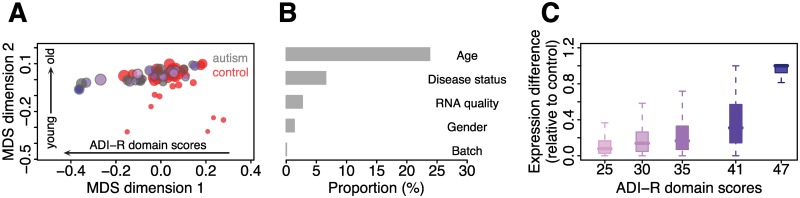
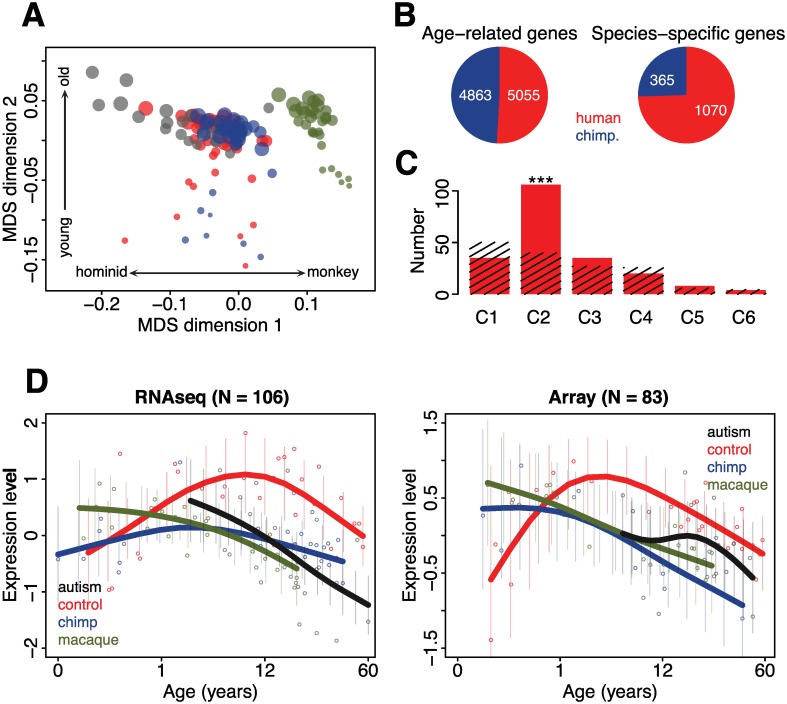
Cognitive defects in autism spectrum disorder (ASD) include socialization and communication: key behavioral capacities that separate humans from other species. Here, we analyze gene expression in the prefrontal cortex of 63 autism patients and control individuals, as well as 62 chimpanzees and macaques, from natal to adult age. We show that among all aberrant expression changes seen in ASD brains, a single aberrant expression pattern overrepresented in genes involved synaptic-related pathways is enriched in nucleotide variants linked to autism. Furthermore, only this pattern contains an excess of developmental expression features unique to humans, thus resulting in the disruption of human-specific developmental programs in autism. Several members of the early growth response (EGR) transcription factor family can be implicated in regulation of this aberrant developmental change. Our study draws a connection between the genetic risk architecture of autism and molecular features of cortical development unique to humans.
Overview
The claims and statistics of this paper haven’t been checked yet.
Free: it reads the open-access text and checks the first 5 claims that cite a source we can check. Create a free account to check every claim.
Integrity signals
Registry
Cites
Statistics
Figures


Verification
Claims the paper makes
The claims and statistics of this paper haven’t been checked yet.
Free: it reads the open-access text and checks the first 5 claims that cite a source we can check. Create a free account to check every claim.
Claims other papers make about this one
Each is checked against this paper’s own text: does it say what the citing paper says it does?
The source backs part of the claim, not all of it — or backs it for a different population, condition or comparison.
In the citing paper
“Conversely, some neurodevelopmental diseases (NDDs) that impair higher cognitive functions, such as intellectual disability (ID) and autism spectrum disorder (ASD), may involve accelerated brain development.10,11,12,13”
From Synaptic neoteny of human cortical neurons requires species-specific balancing of SRGAP2-SYNGAP1 cross-inhibition (2024) · cites this paper as [13]
Experimental — accuracy not yet measured
Self-check
Percentages, sums and reported differences re-computed from the paper’s own numbers.
The self-check needs the paper’s full text.
Citations
Cites
1 retracted
Christensen, D. L., Baio, J., Braun, K. V. N., Bilder, D., Charles, J., Constantino, J. N., Daniels, J., Durkin, M. S., Fitzgerald, R. T., Kurzius-Spencer, M., et al. (2016) · MMWR. Surveillance Summaries · doi:10.15585/mmwr.ss6503a1 · Cited by 1,964
RetractedUltrafast and memory-efficient alignment of short DNA sequences to the human genome.
Langmead, B., Trapnell, C., Pop, M., & Salzberg, S. L. (2009) · Genome Biology · doi:10.1186/gb-2009-10-3-r25 · Cited by 21,849
Shrestha, S., & Offer, S. M. (2016) · Medical Epigenetics · doi:10.1159/000444713 · Cited by 8,914
(1943) · The Nervous child · Cited by 8,870
Baio, J., Wiggins, L., Christensen, D. L., Maenner, M. J., Daniels, J., Warren, Z., Kurzius-Spencer, M., Zahorodny, W., Robinson, C., Rosenberg, et al. (2018) · MMWR. Surveillance Summaries · doi:10.15585/mmwr.ss6706a1 · Cited by 6,078
Rett syndrome is caused by mutations in X-linked MECP2, encoding methyl-CpG-binding protein 2
Amir, R. E., Van den Veyver, I. B., Wan, M., Tran, C. Q., Francke, U., & Zoghbi, H. Y. (1999) · Nature Genetics · doi:10.1038/13810 · Cited by 4,990
Understanding and sharing intentions: The origins of cultural cognition
Tomasello, M., Carpenter, M., Call, J., Behne, T., & Moll, H. (2005) · Behavioral and Brain Sciences · doi:10.1017/s0140525x05000129 · Cited by 4,882
Evolutionarily conserved elements in vertebrate, insect, worm, and yeast genomes
Siepel, A., Bejerano, G., Pedersen, J. S., Hinrichs, A. S., Hou, M., Rosenbloom, K., Clawson, H., Spieth, J., Hillier, L. W., Richards, S., et al. (2005) · Genome Research · doi:10.1101/gr.3715005 · Cited by 3,971
Autistic disturbances of affective contact.
Kanner, L. (1968) · PubMed · Cited by 3,130
Cahoy, J. D., Emery, B., Kaushal, A., Foo, L. C., Zamanian, J. L., Christopherson, K. S., Xing, Y., Lubischer, J. L., Krieg, P. A., Krupenko, S. A., et al. (2008) · The Journal of Neuroscience · doi:10.1523/jneurosci.4178-07.2008 · Cited by 3,129 · cited 2×
“These observations were generally consistent with results based on mouse neuronal marker genes reported in [40] (S12 Fig).”
BackgroundResult
Cited by
Widespread RNA editing dysregulation in brains from autistic individuals
Tran, S. S., Jun, H.-I., Bahn, J. H., Azghadi, A., Ramaswami, G., Van Nostrand, E. L., Nguyen, T. B., Hsiao, Y.-H. E., Lee, C., Pratt, G. A., et al. (2019) · Nature Neuroscience · doi:10.1038/s41593-018-0287-x · Cited by 218
Linaro, D., Vermaercke, B., Iwata, R., Ramaswamy, A., Davis, B. A., Boubakar, L., Libé-Philippot, B., Bilheu, A., Bruyne, L. D., Gall, D., et al. (2019) · doi:10.1101/626218 · Cited by 219
“Beyond evolution, human neoteny has important implications for brain diseases (Liu et al., 2016), as alterations of neuronal maturation are associated with neurodevelopmental disorders (Hutsler and Zhang, 2010; Pfeiffer et al.”
BackgroundBrain Plasticity and Human Evolution
Sherwood, C. C., & Gómez-Robles, A. (2017) · Annual Review of Anthropology · doi:10.1146/annurev-anthro-102215-100009 · Cited by 170
Self-citationPre/post-natal exposure to microplastic as a potential risk factor for autism spectrum disorder
Zaheer, J., Kim, H., Ko, I. O., Jo, E.-K., Choi, E., Lee, H., Shim, I., Woo, H., Choi, J. H., Kim, G.-H., et al. (2022) · Environment International · doi:10.1016/j.envint.2022.107121 · Cited by 151
Species-specific maturation profiles of human, chimpanzee and bonobo neural cells
Marchetto, M. C., Hrvoj-Mihic, B., Kerman, B. E., Yu, D. X., Vadodaria, K. C., Linker, S. B., Narvaiza, I., Santos, R., Denli, A. M., Mendes, A. P., et al. (2019) · eLife · doi:10.7554/elife.37527 · Cited by 132
Lipidome alterations in human prefrontal cortex during development, aging, and cognitive disorders
Yu, Q., He, Z., Zubkov, D., Huang, S., Kurochkin, I., Yang, X., Halene, T., Willmitzer, L., Giavalisco, P., Akbarian, S., et al. (2020) · Molecular Psychiatry · doi:10.1038/s41380-018-0200-8 · Cited by 131
Self-citationComprehensive evaluation of deconvolution methods for human brain gene expression
Sutton, G. J., Poppe, D., Simmons, R. K., Walsh, K., Nawaz, U., Lister, R., Gagnon-Bartsch, J. A., & Voineagu, I. (2022) · Nature Communications · doi:10.1038/s41467-022-28655-4 · Cited by 151
Lombardo, M. V., Pramparo, T., Gazestani, V., Warrier, V., Bethlehem, R. A. I., Barnes, C. C., Lopez, L., Lewis, N. E., Eyler, L. T., Pierce, K., et al. (2018) · Nature Neuroscience · doi:10.1038/s41593-018-0281-3 · Cited by 102
Transcriptomic Perspectives on Neocortical Structure, Development, Evolution, and Disease
Lein, E. S., Belgard, T. G., Hawrylycz, M., & Molnár, Z. (2017) · Annual Review of Neuroscience · doi:10.1146/annurev-neuro-070815-013858 · Cited by 92
Kim, S.-H., & Chang, M.-Y. (2023) · International Journal of Molecular Sciences · doi:10.3390/ijms241512528 · Cited by 82
A lncRNA survey finds increases in neuroprotective LINC‐PINT in Parkinson’s disease substantia nigra
Simchovitz, A., Hanan, M., Yayon, N., Lee, S., Bennett, E. R., Greenberg, D., Kadener, S., & Soreq, H. (2020) · Aging Cell · doi:10.1111/acel.13115 · Cited by 90
Dachet, F., Brown, J. B., Valyi-Nagy, T., Narayan, K. D., Serafini, A., Boley, N., Gingeras, T. R., Celniker, S. E., Mohapatra, G., & Loeb, J. A. (2021) · Scientific Reports · doi:10.1038/s41598-021-85801-6 · Cited by 81
Invariant Synapse Density and Neuronal Connectivity Scaling in Primate Neocortical Evolution
Sherwood, C. C., Miller, S. B., Karl, M., Stimpson, C. D., Phillips, K. A., Jacobs, B., Hof, P. R., Raghanti, M. A., & Smaers, J. B. (2020) · Cerebral Cortex · doi:10.1093/cercor/bhaa149 · Cited by 57
Self-citationİzgi, H., Han, D., Isildak, U., Huang, S., Kocabiyik, E., Khaitovich, P., Somel, M., & Dönertaş, H. M. (2022) · eLife · doi:10.7554/elife.68048 · Cited by 68
Self-citationEnriched expression of genes associated with autism spectrum disorders in human inhibitory neurons
Wang, P., Zhao, D., Lachman, H. M., & Zheng, D. (2018) · Translational Psychiatry · doi:10.1038/s41398-017-0058-6 · Cited by 58
Metabolome signature of autism in the human prefrontal cortex
Kurochkin, I., Khrameeva, E., Tkachev, A., Stepanova, V., Vanyushkina, A., Stekolshchikova, E., Li, Q., Zubkov, D., Shichkova, P., Halene, T., et al. (2019) · Communications Biology · doi:10.1038/s42003-019-0485-4 · Cited by 57
Self-citationJang, W. E., Park, J. H., Park, G., Bang, G., Na, C. H., Kim, J. Y., Kim, K.-Y., Kim, K. P., Shin, C. Y., An, J., et al. (2022) · Molecular Psychiatry · doi:10.1038/s41380-022-01822-1 · Cited by 61
Lineage divergence of activity-driven transcription and evolution of cognitive ability
Hardingham, G. E., Pruunsild, P., Greenberg, M. E., & Bading, H. (2017) · Nature reviews. Neuroscience · doi:10.1038/nrn.2017.138 · Cited by 53
Novel Prefrontal Synthesis Intervention Improves Language in Children with Autism
Vyshedskiy, A., Khokhlovich, E., Dunn, R., Faisman, A., Elgart, J., Lokshina, L., Gankin, Y. V., Ostrovsky, S., deTorres, L., Edelson, S. M., et al. (2020) · Healthcare · doi:10.3390/healthcare8040566 · Cited by 49
Regulatory genes and pathways disrupted in autism spectrum disorders
Ayhan, F., & Konopka, G. (2018) · Progress in Neuro-Psychopharmacology and Biological Psychiatry · doi:10.1016/j.pnpbp.2018.08.017 · Cited by 49
A single-cell multi-omic atlas spanning the adult rhesus macaque brain
Chiou, K. L., Huang, X., Bohlen, M. O., Tremblay, S., DeCasien, A. R., O’Day, D. R., Spurrell, C. H., Gogate, A. A., Zintel, T. M., Andrews, M. G., et al. (2023) · Science Advances · doi:10.1126/sciadv.adh1914 · Cited by 50
Arpi, M. N. T., & Simpson, T. I. (2022) · Scientific Reports · doi:10.1038/s41598-022-14077-1 · Cited by 58
Sun, J., Peng, S., Yang, Q., Yang, J., Dai, Y., & Xing, L. (2024) · Toxicology · doi:10.1016/j.tox.2024.154030 · Cited by 49
Molecular windows into the human brain for psychiatric disorders
Egervári, G., Kozlenkov, A., Dracheva, S. M., & Hurd, Y. L. (2018) · Molecular Psychiatry · doi:10.1038/s41380-018-0125-2 · Cited by 45
Sadeghi, I., Gispert, J. D., Palumbo, E., Muñoz-Aguirre, M., Wucher, V., D’Argenio, V., Santpere, G., Navarro, A., Guigó, R., & Vilor‐Tejedor, N. (2022) · Computational and Structural Biotechnology Journal · doi:10.1016/j.csbj.2022.08.037 · Cited by 43
The Evolution-Driven Signature of Parkinson’s Disease
Diederich, N. J., Uchihara, T., Grillner, S. E., & Goetz, C. G. (2020) · Trends in Neurosciences · doi:10.1016/j.tins.2020.05.001 · Cited by 42
Yu, Q., & He, Z. (2017) · Scientific Reports · doi:10.1038/s41598-017-04356-7 · Cited by 39
Long genes linked to autism spectrum disorders harbor broad enhancer-like chromatin domains
Zhao, Y.-T., Kwon, D. Y., Johnson, B. S., Fasolino, M., Lamonica, J. M., Kim, Y. J., Zhao, B. S., He, C., Vahedi, G., Kim, T. H., et al. (2018) · Genome Research · doi:10.1101/gr.233775.117 · Cited by 38
From Human Pluripotent Stem Cells to Cortical Circuits
Astick, M., & Vanderhaeghen, P. (2018) · Current Topics in Developmental Biology · doi:10.1016/bs.ctdb.2018.02.011 · Cited by 34
CTNND2 moderates the pace of synaptic maturation and links human evolution to synaptic neoteny
Assendorp, N., Fossati, M., Libé-Philippot, B., Christopoulou, E., Depp, M., Rapone, R., Dingli, F., Loew, D., Vanderhaeghen, P., & Charrier, C. (2024) · Cell Reports · doi:10.1016/j.celrep.2024.114797 · Cited by 32
Metabolic mechanisms of species-specific developmental tempo
Iwata, R., & Vanderhaeghen, P. (2024) · Developmental Cell · doi:10.1016/j.devcel.2024.05.027 · Cited by 32
García-Cabezas, M. Á., Barbas, H., & Zikopoulos, B. (2018) · Frontiers in Neuroanatomy · doi:10.3389/fnana.2018.00070 · Cited by 30
Evolutionary shifts dramatically reorganized the human hippocampal complex
Schilder, B. M., Petry, H. M., & Hof, P. R. (2019) · The Journal of Comparative Neurology · doi:10.1002/cne.24822 · Cited by 32
Self-citationAfridi, R., Seol, S., Kang, H. J., & Suk, K. (2021) · Biochemical Pharmacology · doi:10.1016/j.bcp.2021.114532 · Cited by 29
SYNGAP1 deficiency disrupts synaptic neoteny in xenotransplanted human cortical neurons in vivo
Vermaercke, B., Iwata, R., Wierda, K., Boubakar, L., Rodriguez, P., Ditkowska, M., Bonin, V., & Vanderhaeghen, P. (2024) · Neuron · doi:10.1016/j.neuron.2024.07.007 · Cited by 27
Egr1 Is Necessary for Forebrain Dopaminergic Signaling during Social Behavior
Tallafuß, A., Stednitz, S. J., Voeun, M., Levichev, A., Larsch, J., Eisen, J. S., & Washbourne, P. (2022) · eNeuro · doi:10.1523/eneuro.0035-22.2022 · Cited by 30
Non-coding de novo mutations in chromatin interactions are implicated in autism spectrum disorder
Kim, I. B., Lee, T., Lee, J., Kim, J., Lee, S., Koh, I. G., Kim, J. H., An, J., Lee, H., Kim, W. K., et al. (2022) · Molecular Psychiatry · doi:10.1038/s41380-022-01697-2 · Cited by 27
Self-citationFang, K., Liu, D., Pathak, S. S., Yang, B., Li, J., Ramanujam, K., Chao, O. Y.-H., Yang, Y., Jin, V. X., & Cao, R. (2021) · Cells · doi:10.3390/cells10123314 · Cited by 27
Fridberg, E., Khokhlovich, E., & Vyshedskiy, A. (2021) · Healthcare · doi:10.3390/healthcare9040423 · Cited by 23
Saeliw, T., Kanlayaprasit, S., Thongkorn, S., Songsritaya, K., Sanannam, B., Sae‐Lee, C., Jindatip, D., Hu, V. W., & Sarachana, T. (2023) · International Journal of Molecular Sciences · doi:10.3390/ijms24087518 · Cited by 23
Libé-Philippot, B., Iwata, R., Recupero, A. J., Wierda, K., Bernal Garcia, S., Hammond, L., van Benthem, A., Limame, R., Ditkowska, M., Beckers, S., et al. (2024) · Neuron · doi:10.1016/j.neuron.2024.08.021 · Cited by 38
“13 Consistent with this hypothesis, synaptic neoteny was recently shown to be disrupted in human cortical neurons displaying SYNGAP1 haploinsufficiency, 14 a prevalent cause of ID/ASD.”
BackgroundTranslating precision medicine for autism spectrum disorder: A pressing need
Pérez‐Cano, L., Azidane, S., Sabido-Vera, R., Sirci, F., Durham, L., & Güney, E. (2023) · Drug Discovery Today · doi:10.1016/j.drudis.2023.103486 · Cited by 22
Synaptopathology in autism spectrum disorders: Complex effects of synaptic genes on neural circuits
Wang, X., Kéry, R., & Xiong, Q. (2017) · Progress in Neuro-Psychopharmacology and Biological Psychiatry · doi:10.1016/j.pnpbp.2017.09.026 · Cited by 24
Rai‐Bhogal, R., Ahmad, E., Li, H., & Crawford, D. A. (2017) · European Journal of Neuroscience · doi:10.1111/ejn.13781 · Cited by 26
Transcription, structure, and organoids translate time across the lifespan of humans and great apes
Charvet, C. J., Ofori, K., Falcone, C., & Dames, B. A. R. (2023) · PNAS Nexus · doi:10.1093/pnasnexus/pgad230 · Cited by 23
Mazin, P., Jiang, X., Fu, N., Han, D., Guo, M., Gelfand, M. S., & Khaitovich, P. (2018) · RNA · doi:10.1261/rna.064931.117 · Cited by 24
Self-citationSingle-cell-resolution transcriptome map of human, chimpanzee, bonobo, and macaque brainsPreprint
Khrameeva, E. E., Kurochkin, I., Han, D., Guijarro, P., Kanton, S., Santel, M., Qian, Z., Rong, S., Mazin, P., Bulat, M., et al. (2019) · bioRxiv (Cold Spring Harbor Laboratory) · doi:10.1101/764936 · Cited by 19
Self-citationStarr, A. L., & Fraser, H. B. (2025) · Molecular Biology and Evolution · doi:10.1093/molbev/msaf189 · Cited by 17
Jiang, M., Wang, Z., Lu, T., Li, X., Yang, K., Zhao, L., Zhang, D., Li, J., & Wang, L. (2023) · Translational Psychiatry · doi:10.1038/s41398-023-02662-5 · Cited by 19
Ultrastructural analysis of parvalbumin synapses in human dorsolateral prefrontal cortex
Glausier, J. R., Roberts, R. C., & Lewis, D. A. (2017) · The Journal of Comparative Neurology · doi:10.1002/cne.24171 · Cited by 17
Charvet, C. J., Ofori, K., Baucum, C., Sun, J., Modrell, M. S., Hekmatyar, K., Edlow, B. L., & van der Kouwe, A. J. W. (2022) · Journal of Neuroscience · doi:10.1523/jneurosci.1506-21.2022 · Cited by 18
Persistent homology analysis of brain transcriptome data in autism
Shnier, D., Voineagu, M., & Voineagu, I. (2019) · Journal of The Royal Society Interface · doi:10.1098/rsif.2019.0531 · Cited by 20
Temporal differences of neurodevelopment processes between species
Iwata, R. (2021) · Neuroscience Research · doi:10.1016/j.neures.2021.08.004 · Cited by 14
Imagination in Autism: A Chance to Improve Early Language Therapy
Vyshedskiy, A. (2021) · Healthcare · doi:10.3390/healthcare9010063 · Cited by 14
Gao, H., Ni, Y., Mo, X., Li, D., Teng, S., Huang, Q., Huang, S., Liu, G., Zhang, S., Tang, Y., et al. (2021) · Computational and Structural Biotechnology Journal · doi:10.1016/j.csbj.2021.06.046 · Cited by 14
Maussion, G., Rocha, C., Bernard, G., Beitel, L. K., & Durcan, T. M. (2019) · Frontiers in Pediatrics · doi:10.3389/fped.2019.00225 · Cited by 12
Epigenetic regulation of human-specific gene expression in the prefrontal cortex
Sun, W., Xie, G., Jiang, X., Khaitovich, P., Han, D., & Liu, X. (2023) · BMC Biology · doi:10.1186/s12915-023-01612-3 · Cited by 12
Self-citationDeciphering autism heterogeneity: a molecular stratification approach in four mouse models
Gora, C., Dudas, A., Vaugrente, O., Drobecq, L., Pecnard, E., Lefort, G., & Pellissier, L. P. (2024) · Translational Psychiatry · doi:10.1038/s41398-024-03113-5 · Cited by 13
Glausier, J. R., Maier, M. J., Bouchet‐Marquis, C., Wu, K., Banks‐Tibbs, T., Melchitzky, D. S., Ning, J., Lewis, D. A., & Freyberg, Z. (2025) · iScience · doi:10.1016/j.isci.2025.112747 · Cited by 10
An Effective Model Of Autism Spectrum Disorder Using Machine Learning
Asgarnezhad, R., Alhameedawi, K. A. M., & Mahfoud, H. A. (2023) · Indonesian Journal of Electrical Engineering and Informatics (IJEEI) · doi:10.52549/ijeei.v11i2.4060 · Cited by 5
Next Generation Sequencing in Autism Spectrum Disorder
Yin, J., Oleson, D. S., & Schaaf, C. P. (2018) · OBM Genetics · doi:10.21926/obm.genet.1801014 · Cited by 5
The RNA editome of Macaca mulatta and functional characterization of RNA editing in mitochondria
Ye, L., Zhao, H., Zhou, H., Ren, X.-D., Liu, L., Otecko, N. O., Wang, Z., Yang, M., Zeng, L., Hu, X., et al. (2017) · 中国科学通报:英文版 · doi:10.1016/j.scib.2017.05.021 · Cited by 6
Kanupriya, K., Verma, S., Sharma, V., Mishra, I., & Mishra, R. (2025) · Current Drug Research Reviews · doi:10.2174/0125899775369286250206050006 · Cited by 5
Primate gut microbiota induce evolutionarily salient changes in mouse neurodevelopment
DeCasien, A. R., Aronoff, J. E., Mallott, E. K., Kuthyar, S., Chitta, S., Layden, B. T., Sardaro, M. L. S., Gray, S. B., Williams, L. E., Liechty, E. R., et al. (2026) · Proceedings of the National Academy of Sciences · doi:10.1073/pnas.2426232122 · Cited by 6
Progovac, L., & Benítez‐Burraco, A. (2025) · Autism & Developmental Language Impairments · doi:10.1177/23969415251379995 · Cited by 6
Evolutionary game model of migraine based on the human brain hypersensitivity
Han, D.-G. (2023) · Frontiers in Neurology · doi:10.3389/fneur.2023.1123978 · Cited by 4
Self-citationAtypical genomic patterning of the cerebral cortex in autism with poor early language outcomePreprint
Lombardo, M. V., Eyler, L., Pramparo, T., Gazestani, V. H., Hagler, D. J., Chen, C., Dale, A. M., Seidlitz, J., Bethlehem, R. A. I., Bertelsen, N., et al. (2020) · bioRxiv (Cold Spring Harbor Laboratory) · doi:10.1101/2020.08.18.253443 · Cited by 3
Lai, C.-Y., Arzavala, J., Pinto‐Duarte, A., Wang, S., Li, J., Liu, H., Osteen, J. K., Castanon, R., Nery, J. R., Powell, S. B., et al. (2026) · Molecular Psychiatry · doi:10.1038/s41380-026-03856-1 · Cited by 2
Babiec, L., Wilkaniec, A., Gawinek, E., Hilgier, W., & Adamczyk, A. (2024) · Research in Autism · doi:10.1016/j.rasd.2024.102353 · Cited by 2
Age-Dependent Process Governs Executive Function Disability in Autistic Children
Vyshedskiy, A., Marsiglio, A., Batham, S., Tagliavia, A., Venkatesh, R., Tarakbay, A., Mundhia, S., Urs, S., Khokhlovich, E., & Pinsky, E. (2025) · Journal of Autism and Developmental Disorders · doi:10.1007/s10803-025-07132-z · Cited by 2
Neural plasticity, heterochrony, and the onto-phylogeny of consciousness
Iurato, G. (2025) · Biosystems · doi:10.1016/j.biosystems.2025.105661 · Cited by 3
Navarro, M., & Simpson, T. I. (2021) · bioRxiv (Cold Spring Harbor Laboratory) · doi:10.1101/2021.01.29.428754 · Cited by 2
Vyshedskiy, A., Venkatesh, R., & Khokhlovich, E. (2022) · Research Square · doi:10.21203/rs.3.rs-2277224/v1 · Cited by 2
Vyshedskiy, A., Marsiglio, A., Batham, S., Tagliavia, A., Venkatesh, R., Tarakbay, A., Mundhia, S., Urs, S., Khokhlovich, E., & Pinsky, E. (2024) · Research Square · doi:10.21203/rs.3.rs-3878856/v1 · Cited by 2
Molecular mechanisms of the specialization of human synapses in the neocortex
Christopoulou, E., & Charrier, C. (2024) · Current Opinion in Genetics & Development · doi:10.1016/j.gde.2024.102258 · Cited by 3
Sciaraffa, N., Santoni, D., Greci, A. L., Genovese, S. I., Coronnello, C., & Arancio, W. (2025) · Frontiers in Bioinformatics · doi:10.3389/fbinf.2025.1532981 · Cited by 1
Gross, L. (2016) · PLoS Biology · doi:10.1371/journal.pbio.2000958
Gene Expression Asymmetry in the Human Prefrontal Cortex
Efimova, O., Ka, P., Kachanovskiy, M., Ayupova, A. F., Zorkina, Y., Morozova, A. Y., Andreyuk, D., & Kostyuk, G. P. (2021) · Advances in intelligent systems and computing · doi:10.1007/978-3-030-71637-0_53 · Cited by 1
Maussion, G., Rocha, C., Pimentel, L. S. B., Beitel, L. K., & Durcan, T. M. (2021) · Elsevier eBooks · doi:10.1016/b978-0-323-85764-2.00007-7 · Cited by 1
Maussion, G., Rocha, C., Pimentel, L. S. B., & Durcan, T. M. (2022) · Elsevier eBooks · doi:10.1016/b978-0-12-822277-5.00001-8 · Cited by 1
Vyshedskiy, A., Marsiglio, A., Batham, S., Tagliavia, A., Venkatesh, R., Tarakbay, A., Mundhia, S., Urs, S., Khokhlovich, E., & Pinsky, E. (2024) · Research Square · doi:10.21203/rs.3.rs-5312615/v1
Computational Attitudes to Drug Discovery in Autism Spectrum Disorder
Nautiyal, H., Dwivedi, S., Chanda, S., & Tiwari, R. K. (2025) · Wiley eBooks · doi:10.1002/9781394242474.ch13
Alberca, C. D., Park, K., Papale, L. A., Madrid, A., Bergmann, P. E., Keleş, S., & Alisch, R. S. (2026) · Molecular Psychiatry · doi:10.1038/s41380-026-03772-4
Dai, S., Zou, K., Lv, G., Deng, C., Su, Y., Yang, R., & Pan, B. (2026) · Brain Research · doi:10.1016/j.brainres.2026.150485
Disease-associated variants alter a novel physiological role of hnRNP H2 in neuronal developmentPreprint
Lourinho, A., Silva, M. S., Tahiri, E., D'Ambrosio, M., Pinto, A. D., Calvo-Parra, S., Pietro, G. D., Galvao, G., Caniceiro, A. B., de Almeida, L. P., et al. (2026) · bioRxiv (Cold Spring Harbor Laboratory) · doi:10.64898/2026.10.02.756225
Metadata
- Authors
- Liu, X., Han, D., Somel, M., Jiang, X., Hu, H., Guijarro, P., Zhang, N., Mitchell, A., Halene, T., Ely, J. J., Sherwood, C. C., Hof, P. R., Qiu, Z., Pääbo, S., Akbarian, S., & Khaitovich, P.
- Affiliations
- Jinan University (CN)
- Chinese Academy of Sciences (CN)
- Icahn School of Medicine at Mount Sinai (US)
- New Mexico State University Alamogordo (US)
- George Washington University (US)
- Max Planck Institute for Evolutionary Anthropology (DE)
- Skolkovo Institute of Science and Technology (RU)
- Corresponding author
- Pääbo, Svante
- Akbarian, Schahram
- Khaitovich, Philipp
- ORCID
- Venue
- PLOS Biology
- Publisher
- Public Library of Science (PLoS)
- Published
- 2016-09-29
- Volume
- 14
- Issue
- 9
- Pages
- e1002558
- ISSN
- 1544-9173 (ISSN-L)
- 1545-7885
- PMC
- PMC5042529
- OpenAlex
- W2524626331
- Cited by
- 87
- References
- 76
- Citations by year
- 2026: 5 · 2025: 8 · 2024: 10 · 2023: 10 · 2022: 10 · 2021: 11 · 2020: 5 · 2019: 8 · 2018: 11 · 2017: 8 · 2016: 1
- FWCI
- 5.94
- Type
- journal article
- Language
- en
- Open access
- gold
- doi.org
- Licence
- public-domain
- creativecommons.org/publicdomain/zero/1.0/ (vor)
- Locations
- PLoS Biology (publishedVersion, public-domain)
- PubMed Central (publishedVersion, public-domain)
- PubMed (publishedVersion)
- DOAJ (DOAJ: Directory of Open Access Journals) (submittedVersion, cc-by-sa)
- Max Planck Digital Library (submittedVersion, other-oa)
- Figshare (submittedVersion, cc-by)
- OpenMETU (Middle East Technical University) (submittedVersion, cc-by-nc-nd)
- MPG.PuRe (Max Planck Society) (submittedVersion, other-oa)
- Funders
- Chinese Academy of Sciences Leading Program (XDB13010200)
- National Natural Science Foundation of China (CN) (91331203, 31420103920, 31171232, 31501012, 31501047)
- National One Thousand Foreign Experts Plan (WQ20123100078)
- Bureau of International Cooperation, Chinese Academy of Sciences (CN) (GJHZ201313)
- Max Planck-Society
- Bundesministerium für Bildung und Forschung (DE)
- Russian Science Foundation (RU) (14-28-00234, 16-14-00220)
- Brain and Behavior Research Foundation (BBRF)
- Science and Technology Commission of Shanghai Municipality (13ZR1464200)
- SA-SIBS Scholarship program
- Youth Innovation Promotion Association of the Chinese Academy of Sciences
- China Postdoctoral Science Foundation (2015M571610)
- METU internal grant (BAP-08-11-2014-023, BAP-07-02-2015-009)
- the Young Scientist Award from Science Academy Society in Turkey
- the Simons Foundation
- Ministry of Education and Science of the Russian Federation (14.615.21.0002)
- Topics
- Life Sciences › Neuroscience › Cognitive Neuroscience › Autism Spectrum Disorder Research
- Life Sciences › Biochemistry, Genetics and Molecular Biology › Genetics › Genetics and Neurodevelopmental Disorders
- Life Sciences › Neuroscience › Developmental Neuroscience › Williams Syndrome Research
- Keywords
- autism spectrum disorder, prefrontal cortex, gene expression, synaptic pathways, nucleotide variants, chimpanzees, macaque, comparative genomics
About these checks
Registry, retraction, Cites and statistics results are computed, not judged, with one exception: a printed reference that no index lists is read once by a model before it counts as a citation error. Claims are extracted by a model and kept only when their quote appears verbatim in the text; each cited source is then checked, with a model’s help, for whether it says what the claim relies on. Those verdicts can be wrong — read the claim’s quote and the cited source before relying on one.
Statistics and arithmetic are recomputed, not judged.
Confidence bands are shown only for fields calibrated on our annotated test set. None is calibrated yet, so no band is shown.
What counts as a claim ›How we measure confidence ›How we check this ›
Are you an author, or do you see a problem with this page? Request a review
Data sources
Bibliographic data: Semantic Scholar, OpenAlex, Crossref.
Contains information from the Semantic Scholar Academic Graph Datasets, made available under the ODC Attribution License (ODC-BY 1.0).
Semantic Scholar’s data is described in: Kinney, R., et al. (2023). The Semantic Scholar Open Data Platform. arXiv:2301.10140.
