

An evolutionarily diverged mitochondrial protein controls biofilm growth and virulence in Candida albicans
Open accessPublished version of a preprint
The DOI matches its Crossref record; 63 of the 63 references it cites were found in a registry or an index.
Abstract
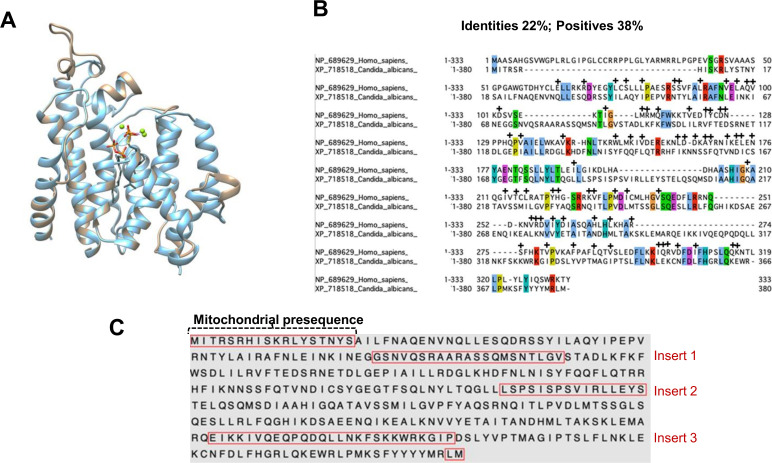
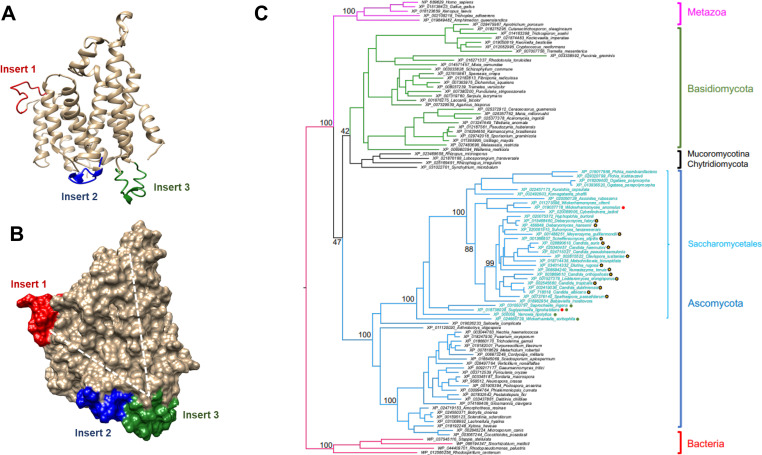
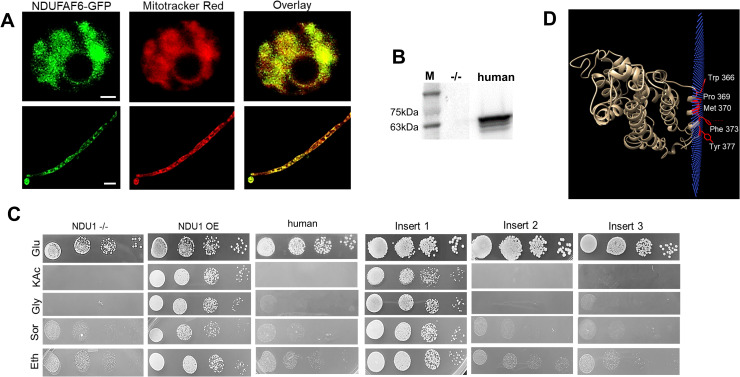
A forward genetic screening approach identified orf19.2500 as a gene controlling Candida albicans biofilm dispersal and biofilm detachment. Three-dimensional (3D) protein modeling and bioinformatics revealed that orf19.2500 is a conserved mitochondrial protein, structurally similar to, but functionally diverged from, the squalene/phytoene synthases family. The C . albicans orf19.2500 is distinguished by 3 evolutionarily acquired stretches of amino acid inserts, absent from all other eukaryotes except a small number of ascomycete fungi. Biochemical assays showed that orf19.2500 is required for the assembly and activity of the N A D H u biquinone oxidoreductase Complex I (CI) of the respiratory electron transport chain (ETC) and was thereby named NDU1 . NDU1 is essential for respiration and growth on alternative carbon sources, important for immune evasion, required for virulence in a mouse model of hematogenously disseminated candidiasis, and for potentiating resistance to antifungal drugs. Our study is the first report on a protein that sets the Candida -like fungi phylogenetically apart from all other eukaryotes, based solely on evolutionary “gain” of new amino acid inserts that are also the functional hub of the protein.
Overview
The claims and statistics of this paper haven’t been checked yet.
Free: it reads the open-access text and checks the first 5 claims that cite a source we can check. Create a free account to check every claim.
Integrity signals
Registry
Cites
Statistics
Figures
Verification
Claims the paper makes
The claims and statistics of this paper haven’t been checked yet.
Free: it reads the open-access text and checks the first 5 claims that cite a source we can check. Create a free account to check every claim.
Self-check
Percentages, sums and reported differences re-computed from the paper’s own numbers.
The self-check needs the paper’s full text.
Citations
Cites
MAFFT Multiple Sequence Alignment Software Version 7: Improvements in Performance and Usability
Katoh, K., & Standley, D. M. (2013) · Molecular Biology and Evolution · doi:10.1093/molbev/mst010 · Cited by 46,209 · cited 2×
“Putative bacterial and eukaryotic orthologs of NDU1 with 296 evalues < 1e-30 were aligned with MAFFT (19), a multiple sequence alignment software, and a 297 phylogenetic tree was generated using IQ-TREE (20).”
MethodIQ-TREE: A Fast and Effective Stochastic Algorithm for Estimating Maximum-Likelihood Phylogenies
Nguyen, L.-T., Schmidt, H. A., von Haeseler, A., & Minh, B. Q. (2015) · Molecular Biology and Evolution · doi:10.1093/molbev/msu300 · Cited by 26,046 · cited 2×
“Putative bacterial and eukaryotic orthologs of NDU1 with 296 evalues < 1e-30 were aligned with MAFFT (19), a multiple sequence alignment software, and a 297 phylogenetic tree was generated using IQ-TREE (20).”
MethodThe Phyre2 web portal for protein modeling, prediction and analysis
Kelley, L. A., Mezulis, S., Yates, C. M., Wass, M. N., & Sternberg, M. J. E. (2015) · Nature Protocols · doi:10.1038/nprot.2015.053 · Cited by 9,652 · cited 1×
“0), a protein homology 255 recognition engine that uses profile-profile matching algorithms (16).”
BackgroundThe I-TASSER Suite: protein structure and function prediction
Yang, J., Yan, R., Roy, A., Xu, D., Poisson, J., & Zhang, Y. (2015) · Nature Methods · doi:10.1038/nmeth.3213 · Cited by 5,596 · cited 1×
“The mNDU1 sequence was submitted for modeling to iTASSER, which employs 286 threading template identification and iterative modeling to model the entire sequence (18).”
MethodCeri, H., Olson, M. E., Stremick, C., Read, R. R., Morck, D., & Buret, A. (1999) · Journal of Clinical Microbiology · doi:10.1128/jcm.37.6.1771-1776.1999 · Cited by 2,155 · cited 1×
“Biofilms were developed from stationary phase cultures of each mutant on the 83 MBEC Assay® plates (Innovotech, Edmonton, Canada) which enables for high throughput 84 screening of biofilm formation and dispersal (8).”
MethodOPM database and PPM web server: resources for positioning of proteins in membranes
Lomize, M. A., Pogozheva, I. D., Joo, H., Mosberg, H. I., & Lomize, A. L. (2012) · Nucleic Acids Research · doi:10.1093/nar/gkr703 · Cited by 2,151
Dundas, J., Ouyang, Z., Tseng, J., Binkowski, A., Turpaz, Y., & Liang, J. (2006) · Nucleic Acids Research · doi:10.1093/nar/gkl282 · Cited by 1,725
Computational Method to Predict Mitochondrially Imported Proteins and their Targeting Sequences
Claros, M. G., & Vincens, P. (1996) · European Journal of Biochemistry · doi:10.1111/j.1432-1033.1996.00779.x · Cited by 1,643 · cited 1×
“251 The NDU1 sequence was submitted to MitoProt II for analysis (15); a mitochondrial targeting 252 sequence of 15 amino acids was predicted to be removed with high probability (0.”
MethodMitochondrial electron transport chain, ROS generation and uncoupling (Review)
Zhao, R., Jiang, S., Zhang, L., & Yu, Z. (2019) · International Journal of Molecular Medicine · doi:10.3892/ijmm.2019.4188 · Cited by 1,386 · cited 2×
“Since CI is the major donor to the proton gradient (13), we posited that a reduction in its 193”
BackgroundEvolution of pathogenicity and sexual reproduction in eight Candida genomes
Butler, G., Rasmussen, M. D., Lin, M. F., Santos, M. A. S., Sakthikumar, S., Munro, C. A., Rheinbay, E., Grabherr, M., Forche, A., Reedy, J. L., et al. (2009) · Nature · doi:10.1038/nature08064 · Cited by 1,065 · cited 1×
“albicans, and genomic diversity continues to 494 increase during exposure to stress (43-45), thereby facilitating functional diversification and 495 providing greater phenotypic flexibility (46-48).”
BackgroundCandida albicans Biofilms and Human Disease
Nobile, C. J., & Johnson, A. D. (2015) · Annual Review of Microbiology · doi:10.1146/annurev-micro-091014-104330 · Cited by 1,057 · cited 1×
“Cells that disperse from this nidus into the systemic environment cause biofilm-associated disseminated infections [1,2].”
BackgroundPierce, C. G., Uppuluri, P., Tristan, A. R., Wormley, F. L., Mowat, E., Ramage, G., & Lopez-Ribot, J. L. (2008) · Nature Protocols · doi:10.1038/nprot.2008.141 · Cited by 1,041 · cited 1×
“albicans cells (1 x 10(6) cells/ml) was added to the wells of a 24-well 565 microtiter plate and incubated overnight in RPMI, and the biofilms were gently washed two times 566 (57).”
MethodSelf-citationSivandzade, F., Bhalerao, A., & Cucullo, L. (2019) · BIO-PROTOCOL · doi:10.21769/bioprotoc.3128 · Cited by 881 · cited 1×
“washed and resuspended in 1 ml PBS and fluorescence dye accumulation measured using a flow 705 cytometer equipped with a 488 nm argon excitation laser and 525 nm emission, and bandpass 706 filters designed to detect green FITC dye (62).”
MethodRapid Hypothesis Testing with Candida albicans through Gene Disruption with Short Homology Regions
Wilson, R. B., Davis, D., & Mitchell, A. P. (1999) · Journal of Bacteriology · doi:10.1128/jb.181.6.1868-1874.1999 · Cited by 762 · cited 1×
“(55) followed by spreading the cells on uracil dropout medium.”
BackgroundThe glyoxylate cycle is required for fungal virulence
Lorenz, M. C., & Fink, G. R. (2001) · Nature · doi:10.1038/35083594 · Cited by 745 · cited 2×
“Indeed, innate immune cells are nutrient starved, and only those cells capable of growing 413 under respiratory stress can combat these host cells (14).”
BackgroundA Recently Evolved Transcriptional Network Controls Biofilm Development in Candida albicans
Nobile, C. J., Fox, E. P., Nett, J. E., Sorrells, T. R., Mitrovich, Q. M., Hernday, A. D., Tuch, B. B., Andes, D. R., & Johnson, A. D. (2012) · Cell · doi:10.1016/j.cell.2011.10.048 · Cited by 711 · cited 1×
“(5), hardly anything is known about the genes/proteins controlling biofilm dispersal.”
BackgroundDispersion as an Important Step in the Candida albicans Biofilm Developmental Cycle
Uppuluri, P., Chaturvedi, A. K., Srinivasan, A., Banerjee, M., Ramasubramaniam, A. K., Köhler, J. R., Kadosh, D., & Lopez-Ribot, J. L. (2010) · PLoS Pathogens · doi:10.1371/journal.ppat.1000828 · Cited by 432 · cited 6×
“Phenotypically, biofilm-dispersed yeast cells have considerably better adherence to, and invasion of human tissues when compared to planktonic cells, and thereby are significantly more virulent than their free-living counterparts [3,4].”
BackgroundMethodInfluentialSelf-citationForche, A., Alby, K., Schaefer, D., Johnson, A. D., Berman, J., & Bennett, R. J. (2008) · PLoS Biology · doi:10.1371/journal.pbio.0060110 · Cited by 338 · cited 1×
“albicans, and genomic diversity continues to 494 increase during exposure to stress (43-45), thereby facilitating functional diversification and 495 providing greater phenotypic flexibility (46-48).”
BackgroundThe Multifunctional Fungal Ergosterol
Rodrigues, M. L. (2018) · mBio · doi:10.1128/mbio.01755-18 · Cited by 275 · cited 1×
“albicans cell membrane [11], we questioned if ergosterol production was impaired in the mutant.”
BackgroundTranscriptional regulation of carbohydrate metabolism in the human pathogen Candida albicans
Askew, C., Sellam, A., Epp, E., Hogues, H., Mullick, A., Nantel, A., & Whiteway, M. (2009) · PLoS Pathogens · doi:10.1371/journal.ppat.1000612 · Cited by 260 · cited 1×
“albicans rely upon oxidation of substrates via the mitochondrial TCA cycle to generate ATP even in the presence of glucose [30,31].”
BackgroundControl of Candida albicans Metabolism and Biofilm Formation by Pseudomonas aeruginosa Phenazines
Morales, D. K., Grahl, N., Okegbe, C., Dietrich, L. E. P., Jacobs, N. J., & Hogan, D. A. (2013) · mBio · doi:10.1128/mbio.00526-12 · Cited by 242
Crystal Structure of Human Squalene Synthase
Pandit, J., Danley, D. E., Schulte, G. K., Mazzalupo, S., Pauly, T. A., Hayward, C. M., Hamanaka, E. S., Thompson, J. F., & Harwood, H. J. (2000) · Journal of Biological Chemistry · doi:10.1074/jbc.m004132200 · Cited by 238 · cited 1×
“Within this superfamily, NDU1 belongs to the family of Trans-Isoprenyl Diphosphate (Pyrophosphate) Synthases (Trans_IPPS; CDD: cd00867) and specifically the head-to-head family (Trans_IPPS_HH; CDD: cd00683) of synthases that catalyze the condensation of farnesyl or geranylgeranyl diphosphates to form squalene of chole…”
BackgroundStress Alters Rates and Types of Loss of Heterozygosity in Candida albicans
Forche, A., Abbey, D., Pisithkul, T., Weinzierl, M. A., Ringstrom, T., Bruck, D., Petersen, K., & Berman, J. (2011) · mBio · doi:10.1128/mbio.00129-11 · Cited by 234 · cited 1×
“albicans, and genomic diversity continues to 494 increase during exposure to stress (43-45), thereby facilitating functional diversification and 495 providing greater phenotypic flexibility (46-48).”
BackgroundGabaldón, T., Rainey, D., & Huynen, M. A. (2005) · Journal of Molecular Biology · doi:10.1016/j.jmb.2005.02.067 · Cited by 224 · cited 1×
“cerevisiae is devoid of complex I (NADH: ubiquinone oxidoreductase) 500 (51-53).”
BackgroundFox, E. P., Cowley, E. S., Nobile, C. J., Hartooni, N., Newman, D. K., & Johnson, A. D. (2014) · Current Biology · doi:10.1016/j.cub.2014.08.057 · Cited by 207 · cited 1×
“Inner layers of a 385 mature biofilm are nutrient starved and hypoxic (28), and respiration is important for survival of 386 these cells (29).”
BackgroundGlucose Promotes Stress Resistance in the Fungal Pathogen Candida albicans
Rodaki, A., Bohovych, I. M., Enjalbert, B., Young, T., Odds, F. C., Gow, N. A. R., & Brown, A. J. P. (2009) · Molecular Biology of the Cell · doi:10.1091/mbc.e09-01-0002 · Cited by 190 · cited 1×
“albicans rely upon oxidation of substrates via the mitochondrial tricarboxylic acid (TCA) 399 cycle to generate ATP even in the presence of glucose (30, 31).”
BackgroundRamírez, M. A., & Lorenz, M. C. (2007) · Eukaryotic Cell · doi:10.1128/ec.00372-06 · Cited by 174 · cited 1×
“albicans, respiration-deficient mitochondrial mutants are unable to grow on 372 non-fermentable carbon sources (22), and form petite colonies because their cell division rates 373 are lower than that of the normal cells (23).”
BackgroundDagley, M. J., Gentle, I. E., Beilharz, T. H., Pettolino, F. A., Djordjevic, J. T., Lo, T. L., Uwamahoro, N., Rupasinghe, T., Tull, D. L., McConville, M., et al. (2011) · Molecular Microbiology · doi:10.1111/j.1365-2958.2010.07503.x · Cited by 128 · cited 1×
“Specifically, 497 mitochondrial protein synthesis and import is diverged in these fungi (12, 49, 50).”
BackgroundThe genetic code of the fungal CTG clade
Santos, M. A. S., Gomes, A. C., Santos, M. C., Carreto, L. C., & Moura, G. R. (2011) · Comptes Rendus. Biologies · doi:10.1016/j.crvi.2011.05.008 · Cited by 110 · cited 1×
“Interestingly, orthologues of GOA1 are restricted to members of the “CTG clade” of fungi, whose members decode CTG codons as serine rather than leucine [35,37], suggesting that it represents a lineage-specific mitochondrial adaptation.”
BackgroundCandida albicans Dispersed Cells Are Developmentally Distinct from Biofilm and Planktonic Cells
Uppuluri, P., Acosta Zaldívar, M., Anderson, M. Z., Dunn, M. J., Berman, J., Lopez Ribot, J. L., & Köhler, J. R. (2018) · mBio · doi:10.1128/mbio.01338-18 · Cited by 107
Self-citationPierce, C. G., Uppuluri, P., Tummala, S., & Lopez-Ribot, J. L. (2010) · Journal of Visualized Experiments · doi:10.3791/2287 · Cited by 103 · cited 1×
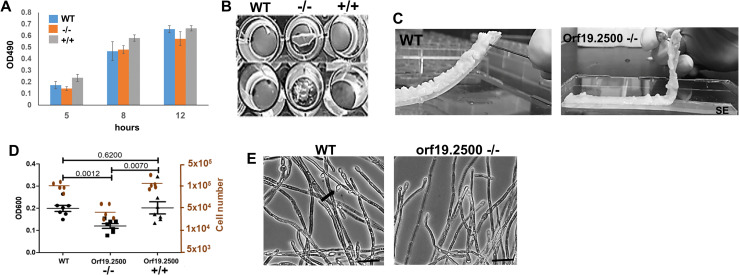
“At various points during the biofilm growth (5 h, 8 h, and 12 h), biofilms (7 replicates each) were quantified using the XTT assay, as previously described [57, 63] (A).”
MethodSelf-citationSystem-level impact of mitochondria on fungal virulence: to metabolism and beyond
Calderone, R., Li, D., & Traven, A. (2015) · FEMS Yeast Research · doi:10.1093/femsyr/fov027 · Cited by 101 · cited 1×
“17 through oxidative phosphorylation by the mitochondrial electron transport chain (24-27).”
BackgroundSelf-citationBambach, A., Fernandes, M. P., Ghosh, A., Kruppa, M., Alex, D., Li, D., Fonzi, W. A., Chauhan, N., Sun, N., Agrellos, O. A., et al. (2009) · Eukaryotic Cell · doi:10.1128/ec.00066-09 · Cited by 95 · cited 3×
“GOA1 mutants 430 cannot make hyphae or develop a biofilm (35), while NDU1 is adept at both fronts.”
BackgroundSelf-citationLi, D., Chen, H., Florentino, A., Alex, D., Sikorski, P., Fonzi, W. A., & Calderone, R. (2011) · Eukaryotic Cell · doi:10.1128/ec.00303-10 · Cited by 91 · cited 5×
“This creates a membrane potential (ΔψΜ) which is used by the ATP synthase to synthesize ATP [32].”
BackgroundMethodInfluentialSelf-citationBahn, Y., Staab, J., & Sundstrom, P. (2003) · Molecular Microbiology · doi:10.1046/j.1365-2958.2003.03692.x · Cited by 87 · cited 1×
“mediated control of lateral yeast production from hyphae has been previously published, and 88 hence reduced dispersal from biofilms was expected (9).”
BackgroundAneuploid Chromosomes Are Highly Unstable during DNA Transformation of Candida albicans
Bouchonville, K., Forche, A., Tang, K. E. S., Selmecki, A., & Berman, J. (2009) · Eukaryotic Cell · doi:10.1128/ec.00209-09 · Cited by 85 · cited 1×
“albicans, and genomic diversity continues to 494 increase during exposure to stress (43-45), thereby facilitating functional diversification and 495 providing greater phenotypic flexibility (46-48).”
BackgroundCaSPA2 is important for polarity establishment and maintenance in Candida albicans
Zheng, X., Wang, Y., & Wang, Y. (2003) · Molecular Microbiology · doi:10.1046/j.1365-2958.2003.03646.x · Cited by 77 · cited 3×
“To do 544 so, first the selective marker URA3 was replaced with ARG4 in pGS1245 (Tetoff-GFP-TetR545 URA3) (56), then the full-length sequence of orf19.”
BackgroundInfluentialMcKenzie, M., Tucker, E. J., Compton, A. G., Lazarou, M., George, C., Thorburn, D. R., & Ryan, M. T. (2011) · Journal of Molecular Biology · doi:10.1016/j.jmb.2011.10.012 · Cited by 75 · cited 2×
“The eukaryotic cluster 1 proteins from humans and drosophila have been experimentally localized to the mitochondrial inner membrane [39].”
BackgroundMarcet-Houben, M., Marceddu, G., & Gabaldón, T. (2009) · BMC Evolutionary Biology · doi:10.1186/1471-2148-9-295 · Cited by 75 · cited 1×
“cerevisiae is devoid of complex I (NADH: ubiquinone oxidoreductase) 500 (51-53).”
BackgroundShen, J., Cowen, L. E., Griffin, A. M., Chan, L., & Köhler, J. R. (2008) · Proceedings of the National Academy of Sciences · doi:10.1073/pnas.0809147105 · Cited by 71 · cited 2×
“the nourseothricin resistance gene was looped out from the cells as described previously (6).”
BackgroundMethodVincent, B. M., Langlois, J.-B., Srinivas, R., Lancaster, A. K., Scherz-Shouval, R., Whitesell, L., Tidor, B., Buchwald, S. L., & Lindquist, S. (2016) · Cell Chemical Biology · doi:10.1016/j.chembiol.2016.06.016 · Cited by 58
Qu, Y., Jelicic, B., Pettolino, F., Perry, A., Lo, T. L., Hewitt, V. L., Bantun, F., Beilharz, T. H., Peleg, A. Y., Lithgow, T., et al. (2012) · Eukaryotic Cell · doi:10.1128/ec.05292-11 · Cited by 57 · cited 1×
“17 through oxidative phosphorylation by the mitochondrial electron transport chain (24-27).”
BackgroundGo Forth and Colonize: Dispersal from Clinically Important Microbial Biofilms
Uppuluri, P., & Lopez-Ribot, J. L. (2016) · PLoS Pathogens · doi:10.1371/journal.ppat.1005397 · Cited by 57 · cited 1×
“Cells that disperse from this nidus into the systemic environment cause 42 biofilm-associated disseminated infections (1, 2).”
BackgroundSelf-citationUppuluri, P., Singh, S., Alqarihi, A., Schmidt, C. S., Hennessey, J. P., Yeaman, M. R., Filler, S. G., Edwards, J. E., & Ibrahim, A. S. (2018) · Frontiers in Immunology · doi:10.3389/fimmu.2018.01349 · Cited by 56 · cited 1×
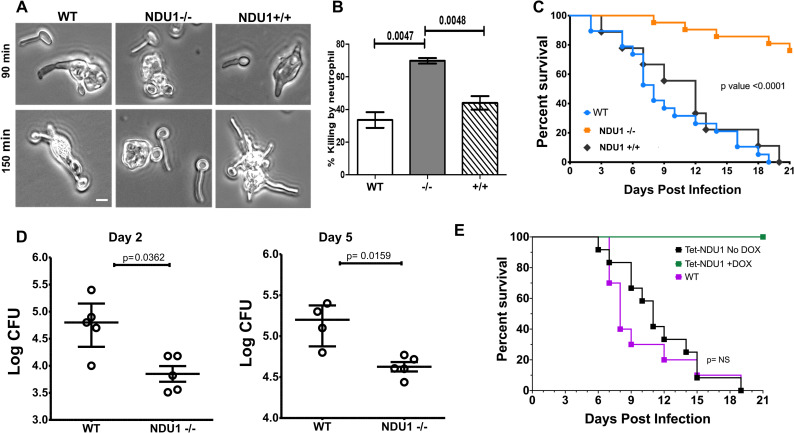
“The killing assay was carried out as described previously [59].”
MethodSelf-citationDepletion of the Squalene Synthase ( ERG9 ) Gene Does Not Impair Growth of Candida glabrata in Mice
Nakayama, H., Izuta, M., Nakayama, N., Arisawa, M., & Aoki, Y. (2000) · Antimicrobial Agents and Chemotherapy · doi:10.1128/aac.44.9.2411-2418.2000 · Cited by 53 · cited 2×
“Besides, humans and other eukaryotes like Candida have a different and highly conserved functional squalene/phytoene synthase (ERG9) (41).”
BackgroundUnique, Diverged, and Conserved Mitochondrial Functions Influencing Candida albicans Respiration
Sun, N., Parrish, R. S., Calderone, R. A., & Fonzi, W. A. (2019) · mBio · doi:10.1128/mbio.00300-19 · Cited by 51
Structural insights into the catalytic mechanism of human squalene synthase
Liu, C.-I., Jeng, W. Y., Chang, W.-J., Shih, M.-F., Ko, T., & Wang, A. H. ‐. (2014) · Acta Crystallographica Section D Biological Crystallography · doi:10.1107/s1399004713026230 · Cited by 50 · cited 1×
“The Trans_IPPS_HH proteins typically have two DxxxD motifs involved 459 in substrate binding and the coordination of catalytically important Mg++ ions (40).”
BackgroundYeast Petites and Small Colony Variants
Day, M. (2013) · Advances in applied microbiology · doi:10.1016/b978-0-12-407672-3.00001-0 · Cited by 49 · cited 1×
“It is well known that growth of petite sized colony of mutants is limited to fermentable carbon sources [10].”
BackgroundMamouei, Z., Zeng, G., Wang, Y., & Wang, Y. (2017) · Molecular Microbiology · doi:10.1111/mmi.13864 · Cited by 49 · cited 1×
“was replaced with the deletion cassette containing URA3 gene (54) as a selectable marker gene 524 flanked with fragments corresponding to 500 bp upstream and downstream flanking sequences 525 of the orf19.”
MethodSelf-citationShe, X., Zhang, L., Chen, H., Calderone, R., & Li, D. (2013) · Cellular Microbiology · doi:10.1111/cmi.12135 · Cited by 43 · cited 1×
“17 through oxidative phosphorylation by the mitochondrial electron transport chain (24-27).”
BackgroundSelf-citationComparative genomics of the oxidative phosphorylation system in fungi
Lavín, J. L., Oguiza, J. A., Ramírez, L., & Pisabarro, A. G. (2008) · Fungal Genetics and Biology · doi:10.1016/j.fgb.2008.06.005 · Cited by 38 · cited 1×
“cerevisiae is devoid of complex I (NADH: ubiquinone oxidoreductase) 500 (51-53).”
BackgroundAnderson, M. Z., Baller, J. A., Dulmage, K., Wigen, L., & Berman, J. (2012) · Eukaryotic Cell · doi:10.1128/ec.00230-12 · Cited by 38
Lemire, B. D. (2017) · Mitochondrion · doi:10.1016/j.mito.2017.04.005 · Cited by 34 · cited 3×
“Importantly, NDU1 71 protein has diverged significantly from other eukaryotic orthologues including the human 72 orthologue NDUFAF6 (7); NDU1 protein harbors stretches of amino acid sequences acquired 73 over evolution, that are uniquely specific only to Candida-like fungi, and can be the target for 74 development of…”
BackgroundMethodInfluentialSelf-citationFunctional diversification accompanies gene family expansion of MED2 homologs in Candida albicans
Dunn, M. J., Kinney, G. M., Washington, P. M., Berman, J., & Anderson, M. Z. (2018) · PLOS Genetics · doi:10.1371/journal.pgen.1007326 · Cited by 33 · cited 1×
“albicans, and genomic diversity continues to 494 increase during exposure to stress (43-45), thereby facilitating functional diversification and 495 providing greater phenotypic flexibility (46-48).”
BackgroundRozpȩdowska, E., Galafassi, S., Johansson, L., Hagman, A., Piškur, J., & Compagno, C. (2011) · FEMS Yeast Research · doi:10.1111/j.1567-1364.2010.00715.x · Cited by 30 · cited 1×
“However, the Candida clade of species that are closely related to 492 other Saccharomycotina did not undergo a whole genome duplication event (42).”
BackgroundAndersen, J. V., Jakobsen, E., Waagepetersen, H. S., & Aldana, B. I. (2019) · Journal of Neuroscience Research · doi:10.1002/jnr.24371 · Cited by 29 · cited 1×
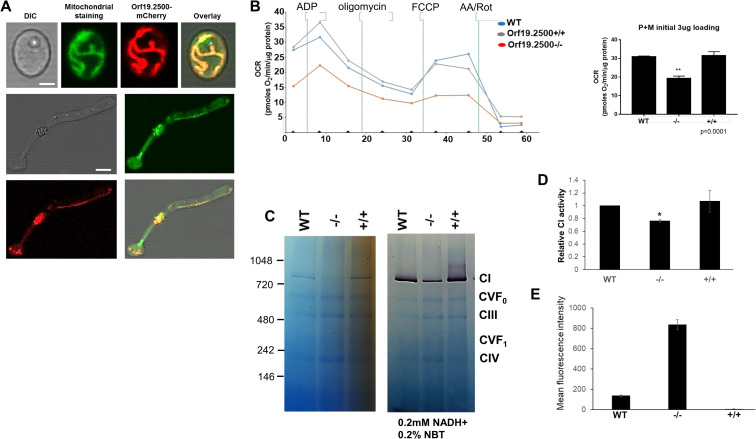
“Percentage inhibition 698 was determined by dividing the post-treatment OCR with the basal mitochondrial OCR (antimycin 699 A and Rotenone corrected) (61).”
MethodUppuluri, P., & Lopez-Ribot, J. L. (2010) · Virulence · doi:10.4161/viru.1.6.13186 · Cited by 28
Self-citationHewitt, V. L., Heinz, E., Shingu-Vazquez, M., Qu, Y., Jelicic, B., Lo, T. L., Beilharz, T. H., Dumsday, G., Gabriel, K., Traven, A., et al. (2012) · Proceedings of the National Academy of Sciences · doi:10.1073/pnas.1206345109 · Cited by 27 · cited 1×
“Specifically, mitochondrial protein synthesis and import is diverged in these fungi [12,49,50].”
BackgroundFunctional diversity of complex I subunits in Candida albicans mitochondria
Li, D., She, X., & Calderone, R. (2016) · Current Genetics · doi:10.1007/s00294-015-0518-6 · Cited by 27 · cited 2×
“GOA1 deletion mutants fail to make complex I, 426 resulting in reduced respiration, and multiple deficits on alternative carbon sources, cell wall 427 alterations, enhanced sensitivity to killing by neutrophils, and reduced virulence in a murine model 428 of disseminated disease (25, 32, 35, 36).”
BackgroundSelf-citationShe, X., Calderone, R., Kruppa, M., Lowman, D., Williams, D., Zhang, L., Gao, Y., Khamooshi, K., Liu, W., & Li, D. (2016) · PLOS ONE · doi:10.1371/journal.pone.0147175 · Cited by 27 · cited 2×
“17 through oxidative phosphorylation by the mitochondrial electron transport chain (24-27).”
BackgroundSelf-citationLi, S.-X., Song, Y.-J., Zhang, Y.-S., Wu, H.-T., Guo, H., Zhu, K.-J., Li, D.-M., & Zhang, H. (2017) · Frontiers in Microbiology · doi:10.3389/fmicb.2017.00285 · Cited by 25
Self-citationHatab, M. A., & Whittaker, P. A. (1992) · Antonie van Leeuwenhoek · doi:10.1007/bf00584227 · Cited by 12 · cited 1×
“albicans, respiration-deficient mitochondrial mutants are unable to grow on non-fermentable carbon sources [22] and form petite colonies because their cell division rates are lower than that of the normal cells [23].”
BackgroundChaturvedi, A. K., Lazzell, A. L., Saville, S. P., Wormley, F. L., Monteagudo, C. C., & Lopez-Ribot, J. L. (2011) · PLoS ONE · doi:10.1371/journal.pone.0020449 · Cited by 6 · cited 6×
“The third set of mice were fed continuously with water without DOX (for overexpression of NDU1).”
BackgroundInfluential
Cited by
Beyond resistance: antifungal heteroresistance and antifungal tolerance in fungal pathogens
Yang, F., & Berman, J. (2024) · Current Opinion in Microbiology · doi:10.1016/j.mib.2024.102439 · Cited by 42
Niclosamide-loaded nanoparticles disrupt Candida biofilms and protect mice from mucosal candidiasis
Sutar, Y. B., Nabeela, S., Singh, S., Alqarihi, A., Solis, N. V., Ghebremariam, T., Filler, S. G., Ibrahim, A. S., Date, A. A., & Uppuluri, P. (2022) · PLoS Biology · doi:10.1371/journal.pbio.3001762 · Cited by 32
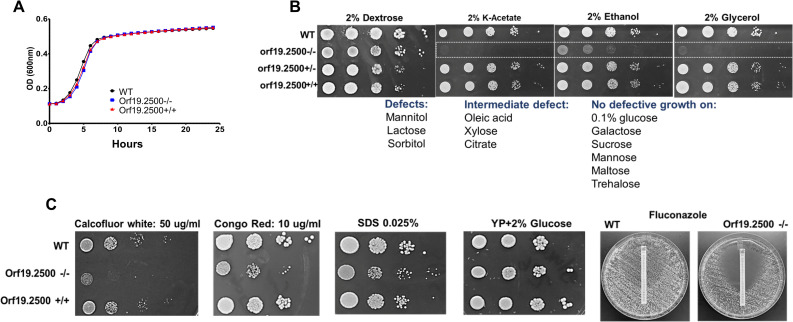
“albicans lacking NDU1 are inviable in media containing acetate (or any other nonfermentative carbon sources) but grow as robustly as the wild type (WT) in media with glucose [23].”
BackgroundInfluentialSelf-citationThe Antifungal Potential of Niclosamide and Structurally Related Salicylanilides
Biersack, B. (2024) · International Journal of Molecular Sciences · doi:10.3390/ijms25115977 · Cited by 19
Zhou, M., Peng, J., Ren, K., Yu, Y., Li, D., She, X., & Liu, W. (2024) · Microbiology Spectrum · doi:10.1128/spectrum.04042-23 · Cited by 13
“…have demonstrated that the mitochondrial oxidative phosphorylation (OXPHOS) in Candida albicans is crucial for virulence and hyphal formation (10, 11), biofilm development (12), cell wall biosynthesis (13), and the stress adaptation via regulating different signal transduction pathways (14–16).”
BackgroundSelf-citationLv, Q., Yan, L., Wang, J., Feng, J., Gao, L., Qiu, L., Chao, W., Qin, Y.-L., & Jiang, Y. (2023) · Microbiology Spectrum · doi:10.1128/spectrum.03209-22 · Cited by 12
Metadata
- Authors
- Mamouei, Z., Singh, S., Lemire, B., Gu, Y., Alqarihi, A., Nabeela, S., Li, D., Ibrahim, A., & Uppuluri, P.
- Affiliations
- University of California, Los Angeles (US)
- University of Alberta (CA)
- Georgetown University Medical Center (US)
- Corresponding author
- Uppuluri, Priya
- ORCID
- Venue
- PLOS Biology
- Publisher
- Public Library of Science (PLoS)
- Published
- 2021-03-15
- Volume
- 19
- Issue
- 3
- Pages
- e3000957
- ISSN
- 1544-9173 (ISSN-L)
- 1545-7885
- PMC
- PMC8007014
- OpenAlex
- W3136384471
- Cited by
- 19
- References
- 63
- Citations by year
- 2026: 3 · 2025: 4 · 2024: 5 · 2023: 2 · 2022: 4 · 2021: 1
- FWCI
- 0.95
- Type
- journal article
- Language
- en
- Update notices
- new_version (2021-03-29)
- Open access
- gold
- doi.org
- Licence
- Locations
- PLoS Biology (publishedVersion, cc-by)
- bioRxiv (Cold Spring Harbor Laboratory) (acceptedVersion, cc-by)
- PubMed Central (publishedVersion, cc-by)
- PubMed (publishedVersion)
- DOAJ (DOAJ: Directory of Open Access Journals) (submittedVersion, cc-by-sa)
- eScholarship (California Digital Library) (submittedVersion)
- eScholarship (California Digital Library) (submittedVersion, cc-by)
- Funders
- National Institute of Allergy and Infectious Diseases (R01AI141794-01A1, 1R01AI141202-01)
- Topics
- Health Sciences › Medicine › Infectious Diseases › Antifungal resistance and susceptibility
- Life Sciences › Biochemistry, Genetics and Molecular Biology › Molecular Biology › Fungal and yeast genetics research
- Life Sciences › Biochemistry, Genetics and Molecular Biology › Molecular Biology › Mitochondrial Function and Pathology
- Keywords
- Candida albicans, mitochondrial proteins, biofilm dispersal, biofilm detachment, virulence, immune evasion, antifungal resistance, protein evolution, alternative carbon sources, respiratory electron transport chain
- MeSH terms
- Candida albicans, Fungal Proteins, Models, Biological, Phylogeny, Virulence, Gene Expression Regulation, Fungal, Biofilms, Computational Biology, Mitochondrial Proteins, Genes, Mitochondrial
About these checks
Registry, retraction, Cites and statistics results are computed, not judged, with one exception: a printed reference that no index lists is read once by a model before it counts as a citation error. Claims are extracted by a model and kept only when their quote appears verbatim in the text; each cited source is then checked, with a model’s help, for whether it says what the claim relies on. Those verdicts can be wrong — read the claim’s quote and the cited source before relying on one.
Statistics and arithmetic are recomputed, not judged.
Confidence bands are shown only for fields calibrated on our annotated test set. None is calibrated yet, so no band is shown.
What counts as a claim ›How we measure confidence ›How we check this ›
Are you an author, or do you see a problem with this page? Request a review
Data sources
Bibliographic data: Semantic Scholar, OpenAlex, Crossref.
Contains information from the Semantic Scholar Academic Graph Datasets, made available under the ODC Attribution License (ODC-BY 1.0).
Semantic Scholar’s data is described in: Kinney, R., et al. (2023). The Semantic Scholar Open Data Platform. arXiv:2301.10140.
