

The DOI matches its Crossref record; 27 of the 28 references it cites were found in a registry or an index.
Identifying a High Fraction of the Human Genome to be under Selective Constraint Using GERP++
Open accessAbstract
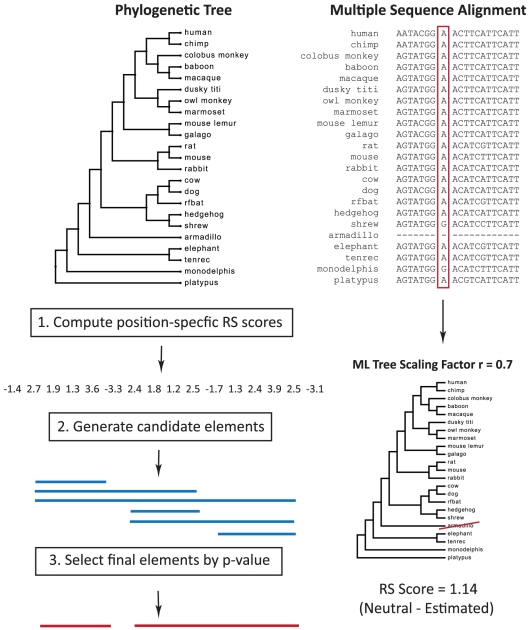
Computational efforts to identify functional elements within genomes leverage comparative sequence information by looking for regions that exhibit evidence of selective constraint. One way of detecting constrained elements is to follow a bottom-up approach by computing constraint scores for individual positions of a multiple alignment and then defining constrained elements as segments of contiguous, highly scoring nucleotide positions. Here we present GERP++, a new tool that uses maximum likelihood evolutionary rate estimation for position-specific scoring and, in contrast to previous bottom-up methods, a novel dynamic programming approach to subsequently define constrained elements. GERP++ evaluates a richer set of candidate element breakpoints and ranks them based on statistical significance, eliminating the need for biased heuristic extension techniques. Using GERP++ we identify over 1.3 million constrained elements spanning over 7% of the human genome. We predict a higher fraction than earlier estimates largely due to the annotation of longer constrained elements, which improves one to one correspondence between predicted elements with known functional sequences. GERP++ is an efficient and effective tool to provide both nucleotide- and element-level constraint scores within deep multiple sequence alignments.
Overview
The claims and statistics of this paper haven’t been checked yet.
Run the check — free, no account needed. It reads the open-access text and checks the sources it cites.
Integrity signals
Registry
Cites
Statistics
Figures
Verification
Claims the paper makes
The claims and statistics of this paper haven’t been checked yet.
Run the check — free, no account needed. It reads the open-access text and checks the sources it cites.
Claims other papers make about this one
Each is checked against this paper’s own text: does it say what the citing paper says it does?
In the citing paper
“Various comparative genomics resources, including PhyloP (Pollard et al., 2010), PhastCons (Siepel et al., 2005), and GERP++ (Davydov et al., 2010), showed our top loci to have similar properties regardless of the extent of pleiotropy.”
From Genomic Relationships, Novel Loci, and Pleiotropic Mechanisms across Eight Psychiatric Disorders (2019) · cites this paper as Davydov et al., 2010
Self-check
Percentages, sums and reported differences re-computed from the paper’s own numbers.
The self-check needs the paper’s full text.
Citations
Cites
Basic local alignment search tool
Altschul, S. F., Gish, W., Miller, W., Myers, E. W., & Lipman, D. J. (1990) · Journal of Molecular Biology · doi:10.1006/jmbi.1990.9999 · Cited by 98,669
Maximum Likelihood from Incomplete Data Via the EM Algorithm
Dempster, A. P., Laird, N. M., & Rubin, D. B. (1977) · Journal of the Royal Statistical Society Series B: Statistical Methodology · doi:10.1111/j.2517-6161.1977.tb01600.x · Cited by 50,444
Kimura, M. (1980) · Journal of Molecular Evolution · doi:10.1007/bf01731581 · Cited by 29,778
Numerical recipes in C: the art of scientific computing
(1993) · Choice Reviews Online · doi:10.5860/choice.30-5638 · Cited by 17,933
Evolutionary trees from DNA sequences: A maximum likelihood approach.
Felsenstein, J. (1981) · Journal of Molecular Evolution · doi:10.1007/bf01734359 · Cited by 14,571
Numerical recipes in Pascal: the art of scientific computing
(1990) · Choice Reviews Online · doi:10.5860/choice.27-5158 · Cited by 12,040
Evolution of Protein Molecules
JUKES, T. H., & CANTOR, C. R. (1969) · Mammalian Protein Metabolism · doi:10.1016/b978-1-4832-3211-9.50009-7 · Cited by 11,032
The Human Genome Browser at UCSC
Kent, W. J., Sugnet, C. W., Furey, T. S., Roskin, K. M., Pringle, T. H., Zahler, A. M., & Haussler, A. D. (2002) · Genome Research · doi:10.1101/gr.229102 · Cited by 10,400
Dating of the human–ape splitting by a molecular clock of mitochondrial DNA.
Hasegawa, M., Kishino, H., & Yano, T.-A. (1985) · Journal of Molecular Evolution · doi:10.1007/bf02101694 · Cited by 8,687
The ENCODE Project Consortium (2007) · Nature · doi:10.1038/nature05874 · Cited by 5,223
Cited by
Sorted by citations
Items 901–1,000 of 1,000
Pol-Fuster, J., Cañellas, F., Ruiz-Guerra, L., Medina-Dols, A., Bisbal-Carrió, B., Asensio, V. J., Ortega-Vila, B., Marzese, D. M., Vidal, C., Santos, C., et al. (2021) · Frontiers in Genetics · doi:10.3389/fgene.2021.622886 · Cited by 12
Assessment of 13 in silico pathogenicity methods on cancer-related variants
Yazar, M., & Özbek, P. (2022) · Computers in Biology and Medicine · doi:10.1016/j.compbiomed.2022.105434 · Cited by 12
Bastico, M., García, A. F., Belmonte-Hernández, A., & Uribe, S. (2023) · IEEE Access · doi:10.1109/access.2023.3266983 · Cited by 12
Cheng, J., Zhou, X., Lu, Y., Chen, J., Han, B., Zhu, Y., Liu, L., Choy, K. W., Han, D., Sham, P. C., et al. (2014) · Annals of Human Genetics · doi:10.1111/ahg.12084 · Cited by 12
Filtering genetic variants and placing informative priors based on putative biological function
Friedrichs, S., Malzahn, D., Pugh, E., Almeida, M., Liu, X., & Bailey, J. N. (2016) · BMC Genetics · doi:10.1186/s12863-015-0313-x · Cited by 12
Novel variant p.E269K confirms causative role of PLS1 mutations in autosomal dominant hearing loss
Diaz‐Horta, O., Bademci, G., Tokgöz-Yılmaz, S., Guo, S., Zafeer, M. F., Sineni, C. J., Duman, D., Farooq, A., & Tekin, M. (2019) · Clinical Genetics · doi:10.1111/cge.13626 · Cited by 12
Liu, S., Wang, Z., Jiang, J., Luo, X., Hong, Q.-S., Zhang, Y., OuYang, H., Wei, S., Liang, J., Chen, N., et al. (2020) · Pancreatology · doi:10.1016/j.pan.2020.01.007 · Cited by 13
Topyıldız, E., Karaca, N. E., Baş, İ., Aykut, A., Durmaz, A., Bilgin, R. B. G., Aksu, G., Karapınar, D. Y., & Kütükçüler, N. (2021) · Journal of Pediatric Hematology/Oncology · doi:10.1097/mph.0000000000002101 · Cited by 12
An enhanced variant effect predictor based on a deep generative model and the Born-Again Networks
Kim, H. Y., Jeon, W., & Kim, D. (2021) · Scientific Reports · doi:10.1038/s41598-021-98693-3 · Cited by 12
Lucas-Sánchez, M., Font‐Porterias, N., Calafell, F., Fadhlaoui‐Zid, K., & Comas, D. (2021) · Scientific Reports · doi:10.1038/s41598-021-00576-0 · Cited by 12
Xie, Z., Tang, L., Xie, Z., Sun, C., Shuai, H., Zhou, C., Liu, Y., Yu, M., Zheng, Y., Meng, L., et al. (2020) · Genes · doi:10.3390/genes11101180 · Cited by 12
Identification and Computational Analysis of Gene Regulatory ElementsPreprint
Taher, L., Narlikar, L., & Ovcharenko, I. (2015) · Cold Spring Harbor Protocols · doi:10.1101/pdb.top083642 · Cited by 14
Evans, D. R., Qiao, Y., Trost, B., Calli, K., Martell, S., Jones, S. J. M., Scherer, S. W., & Lewis, M. E. S. (2022) · Genes · doi:10.3390/genes13030470 · Cited by 11
Will a plant germplasm accession conserved in a genebank change genetically over time?
Fu, Y. (2024) · Frontiers in Plant Science · doi:10.3389/fpls.2024.1437541 · Cited by 11
Defects in meiosis I contribute to the genesis of androgenetic hydatidiform moles
Rezaei, M., Liang, M., Yalcin, Z., Martin, J. H., Kazemi, P., Bareke, E., Ge, Z., Fardaei, M., Benadiva, C. A., Hemida, R., et al. (2024) · Journal of Clinical Investigation · doi:10.1172/jci170669 · Cited by 11
In silico prediction of variant effects: promises and limitations for precision plant breeding
Sendrowski, J., Bataillon, T. M., & Ramstein, G. P. (2025) · Theoretical and Applied Genetics · doi:10.1007/s00122-025-04973-1 · Cited by 12
Isakov, O., Rinella, E. S., Olchovsky, D., Shimon, I., D, H. O. M., Shomron, N., & Friedman, E. (2013) · Genetics Research · doi:10.1017/s0016672313000141 · Cited by 11
Crawford, B. D., Gillies, C. E., Robertson, C. C., Kretzler, M., Otto, E. A., Vega-Warner, V., Kang, H. M., & Sampson, M. G. (2016) · Pediatric Nephrology · doi:10.1007/s00467-016-3513-3 · Cited by 11
Ritelli, M., Palagano, E., Cinquina, V., Beccagutti, F., Chiarelli, N., Strina, D., Hall, I. F., VILLA, A. M., Sobacchi, C., & Colombi, M. (2020) · Bone · doi:10.1016/j.bone.2020.115571 · Cited by 11
Yu, J., Jiang, W., Cao, L. H., Na, X., & Yang, J. (2020) · Hereditas · doi:10.1186/s41065-020-00157-7 · Cited by 11
A rare cause of syndromic short stature: 3M syndrome in three families
Işık, E., Arıcan, D., Atık, T., Ooi, J. E., Darcan, Ş., Özen, S., Şimşek‐Kiper, P. Ö., Ütine, E., Çoğulu, Ö., & Özkınay, F. (2020) · American Journal of Medical Genetics Part A · doi:10.1002/ajmg.a.61989 · Cited by 11
Eghbali, M., Fatemi, K. S., Salehpour, S., Abiri, M., Saei, H., Talebi, S., Olyaei, N. A., Yassaee, V. R., & Modarressi, M. H. (2021) · Frontiers in Genetics · doi:10.3389/fgene.2020.601566 · Cited by 11
Admixture Has Shaped Romani Genetic Diversity in Clinically Relevant Variants
Font‐Porterias, N., Giménez, A., Carballo-Mesa, A., Calafell, F., & Comas, D. (2021) · Frontiers in Genetics · doi:10.3389/fgene.2021.683880 · Cited by 11
Borges, P., Pasqualim, G., & Matte, Ú. D. S. (2021) · Frontiers in Molecular Biosciences · doi:10.3389/fmolb.2021.752797 · Cited by 11
López‐Rodríguez, R., Pozo‐Valero, M. D., Cortón, M., Mínguez, P., Ruiz‐Hornillos, J., Pérez-Tomás, M. E., Barreda‐Sánchez, M., Mancebo, E., Villaverde, C., Núñez‐Moreno, G., et al. (2022) · Scientific Reports · doi:10.1038/s41598-022-14035-x · Cited by 11
Barbosa, P., Ribeiro, M., Carmo‐Fonseca, M., & Fonseca, A. (2022) · Frontiers in Cardiovascular Medicine · doi:10.3389/fcvm.2022.975478 · Cited by 11
Alenezi, W. M., Fierheller, C. T., Serruya, C., Revil, T., Oros, K. K., Subramanian, D., Bruce, J. P., Spiegelman, D., Pugh, T. J., Campbell, I., et al. (2023) · Frontiers in Oncology · doi:10.3389/fonc.2023.1111191 · Cited by 11
Larrea, A., Jebari‐Benslaiman, S., García, U. G., Urteaga, A. S. J., Uribe, K. B., Benito‐Vicente, A., & Martı́n, C. (2023) · Current Atherosclerosis Reports · doi:10.1007/s11883-023-01154-7 · Cited by 12
Integrating regulatory features data for prediction of functional disease-associated SNPs
Dong, S., Guo, Y., Yao, S., Chen, Y., He, M.-N., Zhang, Y., Chen, X., Chen, J., & Yang, T. (2017) · Briefings in Bioinformatics · doi:10.1093/bib/bbx094 · Cited by 11
Chen, C., Chen, D., Xue, H., Liu, X., Zhang, T., Tang, S., Li, W., & Xu, X. (2018) · Neuroscience Letters · doi:10.1016/j.neulet.2018.08.027 · Cited by 11
O’Gorman, L., Cree, A. J., Ward, D., Griffiths, H., Sood, R. K., Denniston, A. K., Self, J., Ennis, S., Lotery, A. J., & Gibson, J. (2019) · Scientific Reports · doi:10.1038/s41598-019-38760-y · Cited by 11
Wang, Z., Huang, C., Sun, Y.-X., Lv, H., Zhang, M., & Li, X. (2019) · Experimental and Therapeutic Medicine · doi:10.3892/etm.2019.7865 · Cited by 11
A novel autosomal recessive lipodystrophy syndrome due to homozygous LMNA variant
Patni, N., Hatab, S., Xing, C., Zhou, Z., Quittner, C., & Garg, A. (2019) · Journal of Medical Genetics · doi:10.1136/jmedgenet-2019-106395 · Cited by 11
Jiao, J., Zhang, M., Yang, P., Huang, Y., Hu, X., Cai, J. C., Yang, C., Situ, M., Zhang, H., Fu, L., et al. (2019) · Journal of Molecular Neuroscience · doi:10.1007/s12031-019-01456-z · Cited by 13
An Ensemble Approach to Predict the Pathogenicity of Synonymous Variants
Ganakammal, S. R., & Alexov, E. (2020) · Genes · doi:10.3390/genes11091102 · Cited by 12
Bogari, N. M., Amin, A. A., Rayes, H. H., Abdelmotelb, A., Taher, M. M., Al-Allaf, F. A., Bouazzaoui, A., O’Gorman, L., & Holloway, J. W. (2021) · Disease Markers · doi:10.1155/2021/8884229 · Cited by 11
Castellana, S., Fusilli, C., & Mazza, T. (2016) · Methods in molecular biology · doi:10.1007/978-1-4939-3572-7_22 · Cited by 11
Bierhals, T., Korenke, G. C., Baethmann, M., Marín, L. L., Staudt, M., & Kutsche, K. (2018) · European Journal of Medical Genetics · doi:10.1016/j.ejmg.2018.01.010 · Cited by 11
Association between ADAMTS7 polymorphism and carotid artery plaque vulnerability
Li, H., Shen, M., Gao, P., Li, Z.-R., Cao, J., Zhang, W., Sui, B., Wang, Y.-X., & Wang, Y. (2019) · Medicine · doi:10.1097/md.0000000000017438 · Cited by 11
Whole Exome Sequencing Uncovered the Genetic Architecture of Growth Hormone Deficiency Patients
Yu, C., Xie, B., Zhao, Z., Zhao, S., Liu, L., Cheng, X., Li, X., Cao, B., Shao, J., Chen, J., et al. (2021) · Frontiers in Endocrinology · doi:10.3389/fendo.2021.711991 · Cited by 11
Relaxed selection during a recent human expansionPreprint
Peischl, S., Dupanloup, I., Foucal, A., Jomphe, M., Bruat, V., Grenier, J., Gouy, A., Gbeha, E., Bosshard, L., Hip-Ki, E., et al. (2016) · bioRxiv (Cold Spring Harbor Laboratory) · doi:10.1101/064691 · Cited by 11
authors:, L., Cheng, J., Taylor, K. R., Nicolaisen, L., Pan, J., Bycroft, C., Perino, M., Ward, T., Hawkes, G., Covill, L., et al. (2026) · medRxiv · doi:10.64898/2026.09.16.26363192 · Cited by 12
Wu, Y., Johnson, L., Song, B., Romay, C., Stitzer, M., Siepel, A., Buckler, E., & Scheben, A. (2022) · The Plant Genome · doi:10.1002/tpg2.20204 · Cited by 10
Jorge, S. D., Chi, Y., Mazaba, J. L., Haque, N., Wagenknecht, J. B., Smith, B. C., Volkman, B. F., Mathison, A., Lomberk, G. A., Zimmermann, M. T., et al. (2023) · Frontiers in Genetics · doi:10.3389/fgene.2023.1291307 · Cited by 10
Genetic modifiers of cognitive decline in PSEN1 E280A Alzheimer's disease
Falla, D. S., Velez, J. I., Acosta‐Baena, N., Baena, A. Y., Moreno, S., Krasemann, S., Lopera, F. J., Mastronardi, C. A., & Arcos‐Burgos, M. (2024) · Alzheimer s & Dementia · doi:10.1002/alz.13754 · Cited by 10
Lu, X., Ni, P., Suárez-Meade, P., Ma, Y., Forrest, E., Wang, G., Wang, Y., Quiñones‐Hinojosa, A., Gerstein, M., & Jiang, Y.-H. (2024) · Cell Reports · doi:10.1016/j.celrep.2024.114376 · Cited by 10
The genetic cause of neurodevelopmental disorders in 30 consanguineous families
Paracha, S. A., Nawaz, S., Sarwar, M. T., Shaheen, A., Zaman, G., Ahmed, J., Shah, F., Khawaja, S., Jan, A., Khan, N., et al. (2024) · Frontiers in Medicine · doi:10.3389/fmed.2024.1424753 · Cited by 10
Orton, R. W., Hamilton, P. K., & Frasier, T. R. (2024) · Evolutionary Applications · doi:10.1111/eva.70055 · Cited by 10
Pakpahan, I., Sihombing, M., Liu, H., Wang, M., Su, Z., & Fang, M. (2026) · GigaScience · doi:10.1093/gigascience/giag004 · Cited by 10
Wang, P., Liu, X., Zhu, B., Ma, Y., Lei, Y. H., Teng, Z., Wang, Y., Chen, L., He, G., & Liu, X. (2017) · Molecular Medicine Reports · doi:10.3892/mmr.2017.8171 · Cited by 10
Chen, M., Liu, R., Wu, C., Li, X., & Wang, Y. (2019) · Molecular Biology Reports · doi:10.1007/s11033-019-04936-y · Cited by 10
Eghbali, M., Abiri, M., Talebi, S., Noroozi, Z., Shakiba, M., Rostami, P., Alimadadi, H., Najafi, M., Yazarlou, F., Rabbani, A., et al. (2020) · Orphanet Journal of Rare Diseases · doi:10.1186/s13023-019-1266-3 · Cited by 10
Szalai, R., Melegh, B., Till, Á., Ripszám, R., Csábí, G., Acharya, A., Schrauwen, I., Leal, S. M., Komoly, S., Kosztolányi, G., et al. (2020) · Experimental and Molecular Pathology · doi:10.1016/j.yexmp.2020.104471 · Cited by 10
Selective Loss of Diversity in Doubled-Haploid Lines from European Maize Landraces
Zeitler, L., Ross‐Ibarra, J., & Stetter, M. G. (2020) · G3 Genes Genomes Genetics · doi:10.1534/g3.120.401196 · Cited by 12
Novel FGFR1 Variants Are Associated with Congenital Scoliosis
Wang, S., Chai, X., Yan, Z., Zhao, S., Yang, Y., Li, X., Niu, Y., Lin, G., Su, Z., Wu, Z., et al. (2021) · Genes · doi:10.3390/genes12081126 · Cited by 10
Somatic and Germline Variant Calling from Next-Generation Sequencing Data
Chang, T., Xu, K., Cheng, Z., & Wu, G. (2022) · Advances in experimental medicine and biology · doi:10.1007/978-3-030-91836-1_3 · Cited by 10
Identification of Rare Variants Involved in High Myopia Unraveled by Whole Genome Sequencing
Haarman, A. E. G., Klaver, C. C. W., Tedja, M. S., Roosing, S., Astuti, G., Gilissen, C., Hoefsloot, L. H., van Tienhoven, M., Brands, T., Magielsen, F. J., et al. (2023) · Ophthalmology Science · doi:10.1016/j.xops.2023.100303 · Cited by 10
Ali, A., Unar, A., Zubair, M., Dil, S., Zhang, B., Sadaf, H., Khan, M., Ali, M., Khan, R., Shah, K. M. B., et al. (2023) · Journal of Assisted Reproduction and Genetics · doi:10.1007/s10815-023-02966-x · Cited by 11
Yao, S., Guo, Y., Dong, S., Hao, R.-H., Chen, X., Chen, Y., Chen, J., Tian, Q., Deng, H., & Yang, T. (2017) · Human Genetics · doi:10.1007/s00439-017-1825-4 · Cited by 10
Alyousfi, D., Baralle, D., & Collins, A. R. (2018) · Briefings in Functional Genomics · doi:10.1093/bfgp/ely033 · Cited by 10
Understanding Sequence Conservation With Deep Learning
Li, Y., Quang, D. X., & Xie, X. S. (2017) · ACM International Conference on Bioinformatics, Computational Biology, and Health Informatics (ACM-BCB) · doi:10.1145/3107411.3107425 · Cited by 10
Xu, J., Wang, L., Liu, X., & Dai, Q. (2019) · Molecular Genetics & Genomic Medicine · doi:10.1002/mgg3.941 · Cited by 10
Genetic intolerance analysis as a tool for protein science
Li, G., Forster-Benson, E. T. C., & Sanders, C. R. (2019) · Biochimica et Biophysica Acta (BBA) - Biomembranes · doi:10.1016/j.bbamem.2019.183058 · Cited by 10
Xu, J., Wu, Q., Wang, L., Han, J., Pei, Y., Zhi, W., Liu, Y., Yin, C., & Jiang, Y. (2018) · Europe PMC (PubMed Central) · Cited by 10
driveR: a novel method for prioritizing cancer driver genes using somatic genomics data
Ülgen, E., & Sezerman, O. U. (2021) · BMC Bioinformatics · doi:10.1186/s12859-021-04203-7 · Cited by 10
Empirical Bayes Scan Statistics for Detecting Clusters of Disease Risk Variants in Genetic Studies
McCallum, K. J., & Ionita‐Laza, I. (2015) · Biometrics · doi:10.1111/biom.12331 · Cited by 10
Erzurumluoglu, A. M., Rodrı́guez, S., Shihab, H. A., Baird, D. A., Richardson, T. G., Day, I. N. M., & Gaunt, T. R. (2015) · BioMed Research International · doi:10.1155/2015/923491 · Cited by 11
Incorporating ENCODE information into association analysis of whole genome sequencing data
Kim, T., & Wei, P. (2016) · BMC Proceedings · doi:10.1186/s12919-016-0040-y · Cited by 10
Lin, X., Liu, X., Wang, L., Jiang, J., Ying-hao, S. U. N., Zhu, Q., Chen, Z., He, Y., Hu, P., Xu, Q., et al. (2017) · International Journal of Cardiology · doi:10.1016/j.ijcard.2017.11.033 · Cited by 10
Multifactorial Inheritance and Complex Diseases
Fialkowski, A., Beasley, T. M., & Tiwari, H. K. (2019) · Elsevier eBooks · doi:10.1016/b978-0-12-812537-3.00011-1 · Cited by 10
Liu, L., Megens, H., Crooijmans, R. P. M. A., Bosse, M., Huang, Q., Sonsbeek, L. G. R. B.-V., Groenen, M. A. M., & Madsen, O. (2022) · Molecular Biology and Evolution · doi:10.1093/molbev/msac110 · Cited by 10
Gerasimavicius, L., Livesey, B., & Marsh, J. A. (2021) · bioRxiv (Cold Spring Harbor Laboratory) · doi:10.1101/2021.10.23.465554 · Cited by 10
Alawbathani, S., Kawalia, A., Karakaya, M., Altmueller, J., Nürnberg, P., & Cirak, S. (2017) · Molecular Case Studies · doi:10.1101/mcs.a002139 · Cited by 10
GeMSTONE: orchestrated prioritization of human germline mutations in the cloud
Chen, S., Beltrán, J. F., Esteban-Jurado, C., Franch‐Expósito, S., Castellvı́-Bel, S., Lipkin, S. M., Wei, X., & Yu, H. (2017) · Nucleic Acids Research · doi:10.1093/nar/gkx398 · Cited by 9
dbCNV: deleteriousness-based model to predict pathogenicity of copy number variations
Lv, K., Chen, D., Xiong, D., Tang, H., Ou, T., Kan, L., & Zhang, X. (2023) · BMC Genomics · doi:10.1186/s12864-023-09225-4 · Cited by 9
FUSE: Improving the estimation and imputation of variant impacts in functional screening
Tian, Y., Fife, J. D., Bhat, V., Adzhubei, I. A., Sherwood, R. I., & Cassa, C. A. (2024) · Cell Genomics · doi:10.1016/j.xgen.2024.100667 · Cited by 9
A bioinformatics toolbox to prioritize causal genetic variants in candidate regions
Šimon, M., Čater, M., Kunej, T., Morton, N. M., & Horvat, S. (2024) · Trends in Genetics · doi:10.1016/j.tig.2024.09.007 · Cited by 10
Functional impact of splicing variants in the elaboration of complex traits in cattle
Charles, M., Gaïani, N., Sanchez, M.-P., Boussaha, M., Hozé, C., Boichard, D., Rocha, D., & Boulling, A. (2025) · Nature Communications · doi:10.1038/s41467-025-58970-5 · Cited by 9
A map of integrated cis-regulatory elements enhances gene-regulatory analysis in maize
Staut, J., Pérez, N. M., Ferrando, A. M., Dissanayake, I. M., & Vandepoele, K. (2025) · Plant Communications · doi:10.1016/j.xplc.2025.101376 · Cited by 11
Advancing precision diagnosis in autism: Insights from large-scale genomic studies
Kim, S.-W., & An, J. (2025) · Molecules and Cells · doi:10.1016/j.mocell.2025.100248 · Cited by 10
Montalvo, N., Requena, F., Capriotti, E., & Rausell, A. (2025) · Bioinformatics · doi:10.1093/bioinformatics/btaf523 · Cited by 11
Escaping bottlenecks: The demographic path to genetic recovery in koalas ( Phascolarctos cinereus )
Ahrens, C. W., Miller, A. D., Silver, L. W., McLennan, E. A., Hogg, C. J., & Weeks, A. R. (2026) · Science · doi:10.1126/science.adz1430 · Cited by 9
Lauria, A., Peirone, S., Giudice, M. D., Priante, F., Rajan, P., Caselle, M., Oliviero, S., & Cereda, M. (2019) · Nucleic Acids Research · doi:10.1093/nar/gkz1208 · Cited by 9
Population Genomics in the Great Apes
Castellano, D., & Munch, K. (2020) · Methods in molecular biology · doi:10.1007/978-1-0716-0199-0_19 · Cited by 9
Roscito, J. G., Subramanian, K., Naumann, R., Sarov, M., Shevchenko, A., Bogdanova, A. I., Kurth, T., Foerster, L. C., Kreysing, M., & Hiller, M. (2020) · Molecular Biology and Evolution · doi:10.1093/molbev/msaa212 · Cited by 9
An intronic variant in the CELF4 gene is associated with risk for colorectal cancer
Teerlink, C. C., Stevens, J., Trapero, R. H., Facelli, J. C., & Cannon‐Albright, L. (2021) · Cancer Epidemiology · doi:10.1016/j.canep.2021.101941 · Cited by 9
Eghbali, M., Cheraghi, S., Samanian, S., Rad, I., Meghdadi, J., Akbari, H., & Honardoost, M. (2022) · Diagnostics · doi:10.3390/diagnostics12123028 · Cited by 9
Molecular Genetic Characteristics of FANCI, a Proposed New Ovarian Cancer Predisposing Gene
Fierheller, C. T., Alenezi, W. M., Serruya, C., Revil, T., Amuzu, S., Bédard, K., Subramanian, D., Fewings, E., Bruce, J. P., Prokopec, S. D., et al. (2023) · Genes · doi:10.3390/genes14020277 · Cited by 9
Dattani, S., Sham, P. C., Jermy, B. S., Coleman, J. R. I., Howard, D. M., & Lewis, C. M. (2023) · Translational Psychiatry · doi:10.1038/s41398-023-02324-6 · Cited by 9
Whole genome sequencing in ROHHAD trios proved inconclusive: what’s beyond?
Grossi, A., Rusmini, M., Cusano, R., Massidda, M., Santamaria, G., Napoli, F., Angelelli, A., Fava, D., Uva, P., Ceccherini, I., et al. (2023) · Frontiers in Genetics · doi:10.3389/fgene.2023.1031074 · Cited by 9
Li, M., Shi, Y., Zhao, J., Wang, Q., Li, M., & Zhao, X. (2023) · Arthritis Research & Therapy · doi:10.1186/s13075-023-03171-y · Cited by 9
Deleterious and Adaptive Mutations in Plant Germplasm Conserved Ex Situ
Fu, Y., Peterson, G. W., & Horbach, C. (2023) · Molecular Biology and Evolution · doi:10.1093/molbev/msad238 · Cited by 9
Zhou, Y., Song, R., Nevo, E., Fu, X., Wang, X., Wang, Y., Wang, C., Chen, J., Sun, G., Sun, D., et al. (2023) · The Science of The Total Environment · doi:10.1016/j.scitotenv.2023.169679 · Cited by 9
Genetic variant classification by predicted protein structure: A case study on IRF6
Murali, H., Wang, P., Liao, E. C.-W., & Wang, K. (2024) · Computational and Structural Biotechnology Journal · doi:10.1016/j.csbj.2024.01.019 · Cited by 10
Song, C., Qin, Y., Li, Y., Yang, B., Guo, T., Ma, W., Xu, D., Xu, K., Fu, F., Li, J., et al. (2024) · Science China Life Sciences · doi:10.1007/s11427-024-2606-6 · Cited by 9
Norman, B. P., Lubbe, S. J., Tan, M. M. X., Warren, N., & Morris, H. R. (2017) · BMC Neurology · doi:10.1186/s12883-017-0933-z · Cited by 9
Sanchis‐Juan, A., Hasenahuer, M. A., Baker, J. A., McTague, A., Barwick, K. E., Kurian, M. A., Duarte, S. T., BioResource, N., Carss, K., Thornton, J. M., et al. (2020) · Molecular Genetics & Genomic Medicine · doi:10.1002/mgg3.1106 · Cited by 9
Bi-allelic TTC5 variants cause delayed developmental milestones and intellectual disability
Rasheed, A., Gümüş, E., Zaki, M. S., Johnson, K., Manzoor, H., LaForce, G. R., Ross, D., McEvoy‐Venneri, J., Stanley, V., Lee, S., et al. (2020) · Journal of Medical Genetics · doi:10.1136/jmedgenet-2020-106849 · Cited by 9
Assouvie, A., Rotival, M., Hamroune, J., Busso, D., Roméo, P., Quintana‐Murci, L., & Rousselet, G. (2020) · PLoS Genetics · doi:10.1371/journal.pgen.1009090 · Cited by 10
Interpreting noncoding genetic variation in complex traits and human disease
Ward, L. D., & Kellis, M. (2012) · Nature Biotechnology · doi:10.1038/nbt.2422 · Cited by 6
Metadata
- Authors
- Davydov, E. V., Goode, D. L., Sirota, M., Cooper, G. M., Sidow, A., & Batzoglou, S.
- Affiliations
- Stanford University (US)
- Stanford Medicine (US)
- Howard Hughes Medical Institute (US)
- Corresponding author
- Sidow, Arend
- Venue
- PLoS Computational Biology
- Publisher
- Public Library of Science (PLoS)
- Published
- 2010-12-02
- Volume
- 6
- Issue
- 12
- Pages
- e1001025
- ISSN
- 1553-734X (ISSN-L)
- 1553-7358
- PMC
- PMC2996323
- OpenAlex
- W2038473742
- Cited by
- 1,757
- References
- 28
- Citations by year
- 2026: 105 · 2025: 116 · 2024: 128 · 2023: 134 · 2022: 142 · 2021: 174 · 2020: 156 · 2019: 164 · 2018: 134 · 2017: 107 · 2016: 118 · 2015: 100 · 2014: 69 · 2013: 71 · 2012: 25
- FWCI
- 14.08
- Type
- journal article
- Language
- en
- Open access
- gold
- doi.org
- Locations
- PLoS Computational Biology (publishedVersion, cc-by)
- PubMed Central (publishedVersion, cc-by)
- PubMed (publishedVersion)
- DOAJ (DOAJ: Directory of Open Access Journals) (submittedVersion, cc-by-sa)
- Figshare (submittedVersion, cc-by)
- Minerva Access (University of Melbourne) (submittedVersion, cc-by)
- Funders
- National Science Foundation (0347952)
- National Institutes of Health (LM007033)
- National Human Genome Research Institute
- U.S. National Library of Medicine (K22LM008261, LM007033, T15LM007033)
- Topics
- Life Sciences › Biochemistry, Genetics and Molecular Biology › Molecular Biology › Genomics and Phylogenetic Studies
- Life Sciences › Biochemistry, Genetics and Molecular Biology › Molecular Biology › Genomics and Chromatin Dynamics
- Life Sciences › Biochemistry, Genetics and Molecular Biology › Genetics › Chromosomal and Genetic Variations
- Keywords
- GERP, selective constraint, functional elements, human genome, sequence comparison, multiple sequence alignment, dynamic programming
- MeSH terms
- Algorithms, Animals, Humans, Mammals, Models, Genetic, Phylogeny, Software, User-Computer Interface, Genome, Human, Sequence Alignment, Sequence Analysis, DNA, Genomics
About these checks
Registry, retraction, Cites and statistics results are computed, not judged, with one exception: a printed reference that no index lists is read once by a model before it counts as a citation error. Claims are extracted by a model and kept only when their quote appears verbatim in the text; each cited source is then checked, with a model’s help, for whether it says what the claim relies on. Those verdicts can be wrong — read the claim’s quote and the cited source before relying on one.
Statistics and arithmetic are recomputed, not judged.
Confidence bands are shown only for fields calibrated on our annotated test set. None is calibrated yet, so no band is shown.
What counts as a claim ›How we measure confidence ›How we check this ›
Are you an author, or do you see a problem with this page? Request a review
