

The DOI matches its Crossref record; 47 of the 48 references it cites were found in a registry or an index.
Measuring Integrated Information from the Decoding Perspective
Open accessAbstract
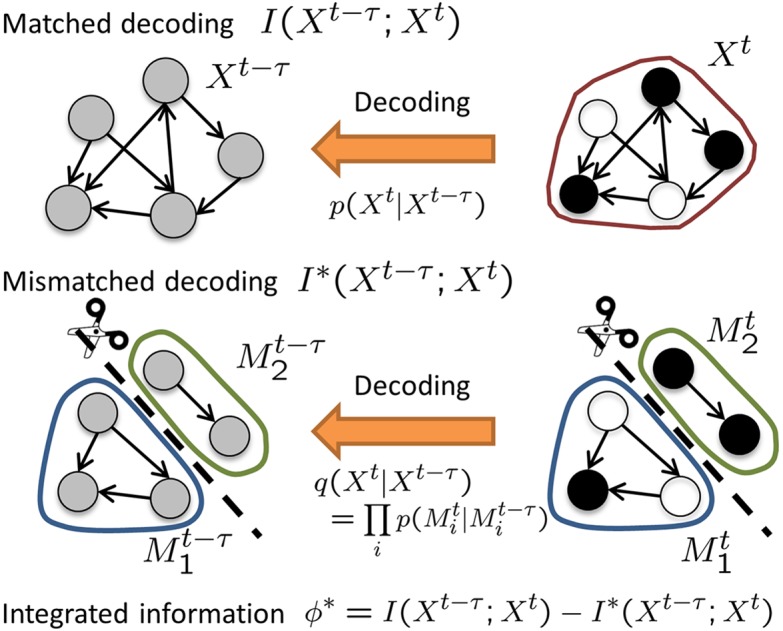
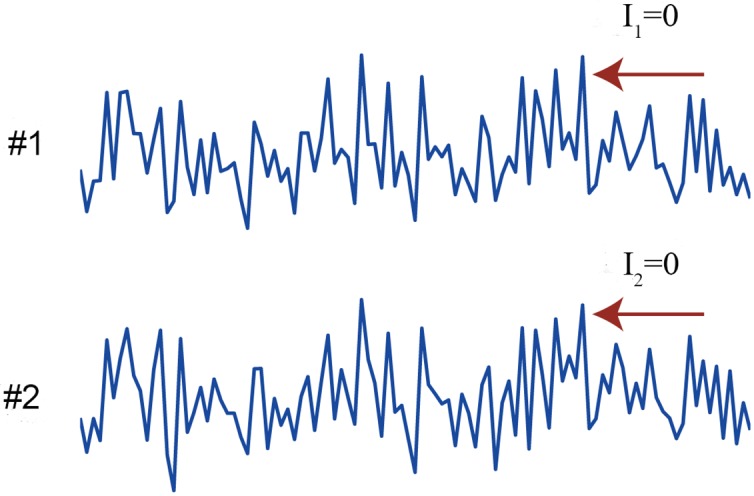
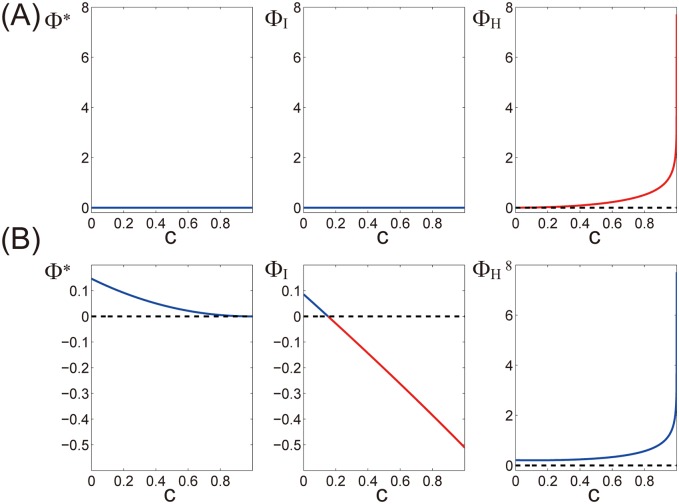
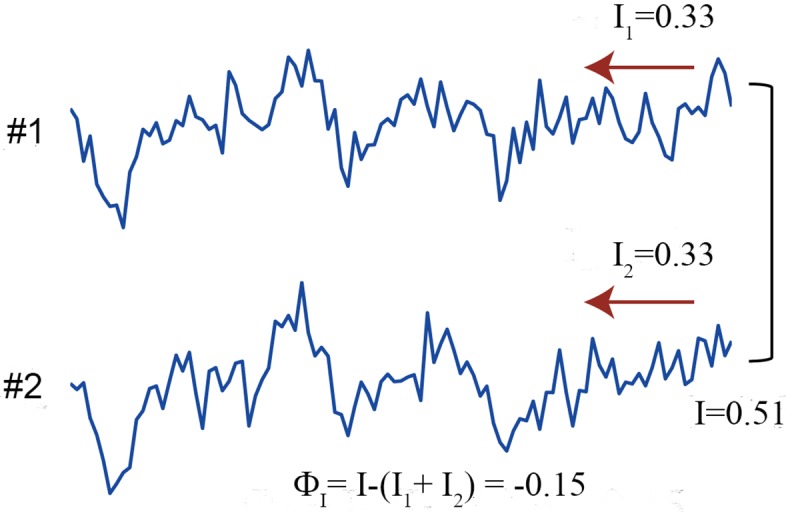
Accumulating evidence indicates that the capacity to integrate information in the brain is a prerequisite for consciousness. Integrated Information Theory (IIT) of consciousness provides a mathematical approach to quantifying the information integrated in a system, called integrated information, Φ. Integrated information is defined theoretically as the amount of information a system generates as a whole, above and beyond the amount of information its parts independently generate. IIT predicts that the amount of integrated information in the brain should reflect levels of consciousness. Empirical evaluation of this theory requires computing integrated information from neural data acquired from experiments, although difficulties with using the original measure Φ precludes such computations. Although some practical measures have been previously proposed, we found that these measures fail to satisfy the theoretical requirements as a measure of integrated information. Measures of integrated information should satisfy the lower and upper bounds as follows: The lower bound of integrated information should be 0 and is equal to 0 when the system does not generate information (no information) or when the system comprises independent parts (no integration). The upper bound of integrated information is the amount of information generated by the whole system. Here we derive the novel practical measure Φ* by introducing a concept of mismatched decoding developed from information theory. We show that Φ* is properly bounded from below and above, as required, as a measure of integrated information. We derive the analytical expression of Φ* under the Gaussian assumption, which makes it readily applicable to experimental data. Our novel measure Φ* can generally be used as a measure of integrated information in research on consciousness, and also as a tool for network analysis on diverse areas of biology.
Overview
The claims and statistics of this paper haven’t been checked yet.
Free: it reads the open-access text and checks the first 5 claims that cite a source we can check. Create a free account to check every claim.
Integrity signals
Registry
Cites
Statistics
Figures
Verification
Claims the paper makes
The claims and statistics of this paper haven’t been checked yet.
Free: it reads the open-access text and checks the first 5 claims that cite a source we can check. Create a free account to check every claim.
Claims other papers make about this one
Each is checked against this paper’s own text: does it say what the citing paper says it does?
The cited source says what the claim attributes to it.
In the citing paper
“IIT’s Φ cannot be easily computed from large-scale data, making it difficult to test the theory (for attempts, see Oizumi et al., 2016 and Tajima et al., 2015).”
From Conscious Processing and the Global Neuronal Workspace Hypothesis (2020) · cites this paper as Oizumi et al., 2016
Self-check
Percentages, sums and reported differences re-computed from the paper’s own numbers.
The self-check needs the paper’s full text.
Citations
Cites
Elements of Information Theory
Cover, T. M., & Thomas, J. A. (2001) · Wiley eBooks · doi:10.1002/0471200611 · Cited by 36,808
Information theory and statistical mechanics
Jaynes, E. T. (1957) · Physical Review · doi:10.1103/physrev.106.620 · Cited by 12,931
Theoretical Neuroscience: Computational and Mathematical Modeling of Neural Systems
Dayan, P., & Abbott, L. F. (2001) · Cited by 4,099
Elements of Information Theory
Jacobs, K. (1992) · Discrete Stochastics · doi:10.1007/978-3-0348-8645-1_7 · Cited by 2,918
Spikes: Exploring the Neural Code
Rieke, F. M., Warland, D., van Steveninck, R. R. D. R., & Bialek, W. (1996) · Medical Entomology and Zoology · Cited by 2,844
Methods of Information Geometry
Amari, S.-I., & Nagaoka, H. (2007) · Translations of Mathematical Monographs · doi:10.1090/mmono/191 · Cited by 2,204
Facing up to the problem of consciousness
Chalmers, D. J. (1996) · Toward a Science of Consciousness · doi:10.7551/mitpress/6860.003.0003 · Cited by 1,966
An information integration theory of consciousness
Tononi, G. (2004) · BMC Neuroscience · doi:10.1186/1471-2202-5-42 · Cited by 1,958 · cited 2×
“Although its neurobiological basis remains unclear, consciousness may be related to certain aspects of information processing [1, 2].”
BackgroundNeural correlations, population coding and computation
Averbeck, B. B., Latham, P. E., & Pouget, A. (2006) · Nature reviews. Neuroscience · doi:10.1038/nrn1888 · Cited by 1,743
Breakdown of cortical effective connectivity during sleep
Massimini, M., Ferrarelli, F., Huber, R., Esser, S. K., Singh, H., & Tononi, G. (2005) · Science · doi:10.1126/science.1117256 · Cited by 1,534
Research works printed but not linked: 1
- Ay N. Information geometry on complexity and stochastic interaction. 2001. MPI MIS Preprint 95. Available: http://www.mis.mpg.de/publications/preprints/2001/prepr2001-95.html.
Cited by
Integrated information theory: from consciousness to its physical substrate
Tononi, G., Boly, M., Massimini, M., & Koch, C. (2016) · Nature Reviews Neuroscience · doi:10.1038/nrn.2016.44 · Cited by 1,727
Conscious Processing and the Global Neuronal Workspace Hypothesis
Mashour, G. A., Roelfsema, P., Changeux, J.-P., & Dehaene, S. (2020) · Neuron · doi:10.1016/j.neuron.2020.01.026 · Cited by 1,164
“making it difficult to test the theory (for attempts, see (Oizumi et al., 2016; Tajima et al., 2015).”
BackgroundNo-Report Paradigms: Extracting the True Neural Correlates of Consciousness
Tsuchiya, N., Wilke, M., Frässle, S., & Lamme, V. A. F. (2015) · Trends in Cognitive Sciences · doi:10.1016/j.tics.2015.10.002 · Cited by 551
Self-citationDeep neural networks in computational neuroscience
Kietzmann, T. C., McClure, P., & Kriegeskorte, N. (2019) · Oxford Research Encyclopedia of Neuroscience · doi:10.1093/acrefore/9780190264086.013.46 · Cited by 186
Unified framework for information integration based on information geometry
Oizumi, M., Tsuchiya, N., & Amari, S. (2016) · Proceedings of the National Academy of Sciences · doi:10.1073/pnas.1603583113 · Cited by 155
Self-citation
Metadata
- Authors
- Oizumi, M., Amari, S.-I., Yanagawa, T., Fujii, N., & Tsuchiya, N.
- Affiliations
- RIKEN Center for Brain Science (JP)
- Japan Science and Technology Agency (JP)
- Corresponding author
- Oizumi, Masafumi
- Tsuchiya, Naotsugu
- Venue
- PLOS Computational Biology
- Publisher
- Public Library of Science (PLoS)
- Published
- 2016-01-21
- Volume
- 12
- Issue
- 1
- Pages
- e1004654
- ISSN
- 1553-734X (ISSN-L)
- 1553-7358
- PMC
- PMC4721632
- OpenAlex
- W2242515881
- Cited by
- 184
- References
- 48
- Citations by year
- 2026: 4 · 2025: 8 · 2024: 11 · 2023: 15 · 2022: 22 · 2021: 18 · 2020: 27 · 2019: 29 · 2018: 21 · 2017: 12 · 2016: 15
- FWCI
- 36.18
- Type
- journal article
- Language
- en
- Open access
- gold
- doi.org
- Licence
- Locations
- PLoS Computational Biology (publishedVersion, cc-by)
- PubMed Central (publishedVersion, cc-by)
- PubMed (publishedVersion)
- arXiv (Cornell University) (submittedVersion)
- Monash University Research Portal (Monash University) (submittedVersion, cc-by)
- RePEc: Research Papers in Economics (submittedVersion)
- DOAJ (DOAJ: Directory of Open Access Journals) (submittedVersion)
- Figshare (submittedVersion, cc-by)
- Institutional Repositories DataBase (IRDB) (submittedVersion)
- arXiv (Cornell University)
- Funders
- Australian Research Council (DP130100194)
- Japan Society for the Promotion of Science (26870860)
- Japan Science and Technology Agency
- Precursory Research for Embryonic Science and Technology
- Topics
- Social Sciences › Arts and Humanities › Philosophy › Philosophy and Theoretical Science
- Life Sciences › Neuroscience › Cognitive Neuroscience › Neural dynamics and brain function
- Life Sciences › Neuroscience › Cognitive Neuroscience › Functional Brain Connectivity Studies
- Keywords
- integrated information, integrated information theory, consciousness, information decoding, mismatched decoding, neural network analysis, information integration
- MeSH terms
- Electrocorticography, Animals, Cerebral Cortex, Consciousness, Information Theory, Macaca, Models, Neurological, Normal Distribution, Computational Biology
About these checks
Registry, retraction, Cites and statistics results are computed, not judged, with one exception: a printed reference that no index lists is read once by a model before it counts as a citation error. Claims are extracted by a model and kept only when their quote appears verbatim in the text; each cited source is then checked, with a model’s help, for whether it says what the claim relies on. Those verdicts can be wrong — read the claim’s quote and the cited source before relying on one.
Statistics and arithmetic are recomputed, not judged.
Confidence bands are shown only for fields calibrated on our annotated test set. None is calibrated yet, so no band is shown.
What counts as a claim ›How we measure confidence ›How we check this ›
Are you an author, or do you see a problem with this page? Request a review
How to cite
Cite CoChat for the checks on this page, and the paper for its own findings.
- This page
- CoChat. (2026). Citation check: Measuring Integrated Information from the Decoding Perspective. https://app.cochat.ai/papers/10.1371/journal.pcbi.1004654
- The paper
- Oizumi, M., Amari, S.-I., Yanagawa, T., Fujii, N., & Tsuchiya, N. (2016). Measuring Integrated Information from the Decoding Perspective. PLOS Computational Biology. https://doi.org/10.1371/journal.pcbi.1004654
Data sources
Bibliographic data: Semantic Scholar, OpenAlex, Crossref.
Contains information from the Semantic Scholar Academic Graph Datasets, made available under the ODC Attribution License (ODC-BY 1.0).
Semantic Scholar’s data is described in: Kinney, R., et al. (2023). The Semantic Scholar Open Data Platform. arXiv:2301.10140.
