

OpenMM 7: Rapid development of high performance algorithms for molecular dynamics
Open accessPublished version of a preprint
The DOI matches its Crossref record; 37 of the 37 references it cites were found in a registry or an index.
Abstract
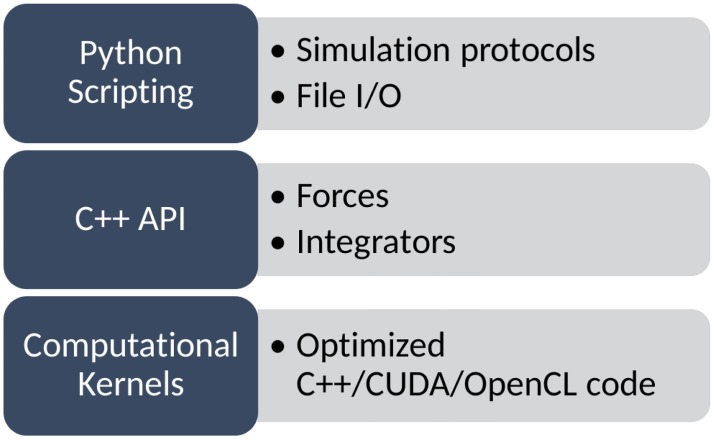
OpenMM is a molecular dynamics simulation toolkit with a unique focus on extensibility. It allows users to easily add new features, including forces with novel functional forms, new integration algorithms, and new simulation protocols. Those features automatically work on all supported hardware types (including both CPUs and GPUs) and perform well on all of them. In many cases they require minimal coding, just a mathematical description of the desired function. They also require no modification to OpenMM itself and can be distributed independently of OpenMM. This makes it an ideal tool for researchers developing new simulation methods, and also allows those new methods to be immediately available to the larger community.
Overview
The claims and statistics of this paper haven’t been checked yet.
Free: it reads the open-access text and checks the first 5 claims that cite a source we can check. Create a free account to check every claim.
Integrity signals
Registry
Cites
Statistics
Figures
Verification
Claims the paper makes
The claims and statistics of this paper haven’t been checked yet.
Free: it reads the open-access text and checks the first 5 claims that cite a source we can check. Create a free account to check every claim.
Claims other papers make about this one
Each is checked against this paper’s own text: does it say what the citing paper says it does?
The source backs part of the claim, not all of it — or backs it for a different population, condition or comparison.
In the citing paper
“Possible other software engines to consider are ddcMD (Zhang et al., 2020) and openMM (Eastman et al., 2017), both of which are supporting Martini and offer simulation speeds comparable to those of Gromacs.”
From Molecular dynamics simulation of an entire cell (2023) · cites this paper as Eastman et al., 2017
Experimental — accuracy not yet measuredThe source backs part of the claim, not all of it — or backs it for a different population, condition or comparison.
In the citing paper
“The Boresch angles and dihedrals play the same role as the Euler and polar angles used in the geometrical route, but are easier to implement in other MD software, such as OpenMM.78”
From Assessment of the Topology and Oligomerisation States of Coiled Coils Using Metadynamics with Conformational Restraints (2025) · cites this paper as [78]
Experimental — accuracy not yet measured
Self-check
Percentages, sums and reported differences re-computed from the paper’s own numbers.
The self-check needs the paper’s full text.
Citations
Cites
Comparison of simple potential functions for simulating liquid water
Jorgensen, W. L., Chandrasekhar, J., Madura, J. D., Impey, R. W., & Klein, M. L. (1983) · The Journal of Chemical Physics · doi:10.1063/1.445869 · Cited by 41,298 · cited 1×
“It loads a PDB file, models the forces with the AMBER99SB-ILDN force field [20] and TIP-3P water model [21], performs a local energy minimization to eliminate clashes, and then simulates 1 million steps of Verlet dynamics.”
MethodEquation of State Calculations by Fast Computing Machines
Metropolis, N., Rosenbluth, A. W., Rosenbluth, M. N., Teller, A. H., & Teller, E. (1953) · The Journal of Chemical Physics · doi:10.1063/1.1699114 · Cited by 37,192
Abraham, M. J., Murtola, T., Schulz, R., Páll, S., Smith, J. C., Hess, B., & Lindahl, E. (2015) · SoftwareX · doi:10.1016/j.softx.2015.06.001 · Cited by 27,190 · cited 12×
“For Gromacs and CHARMM, we compared only explicit solvent.”
MethodInfluentialCHARMM: The biomolecular simulation program
Brooks, B. R., Brooks, C. L., Mackerell, A. D., Nilsson, L., Petrella, R. J., Roux, B., Won, Y., Archontis, G., Bartels, C., Boresch, S., et al. (2009) · Journal of Computational Chemistry · doi:10.1002/jcc.21287 · Cited by 8,939 · cited 10×
“This includes the SWM4-NDP water model [34], and the CHARMM polarizable force field for proteins [4].”
MethodInfluentialSelf-citationImproved side‐chain torsion potentials for the Amber ff99SB protein force field
Lindorff‐Larsen, K., Piana, S., Palmo, K., Maragakis, P., Klepeis, J. L., Dror, R. O., & Shaw, D. E. (2010) · Proteins: Structure, Function, and Bioinformatics · doi:10.1002/prot.22711 · Cited by 6,134
Best, R. B., Zhu, X., Shim, J., Lopes, P. E. M., Mittal, J., Feig, M., & MacKerell, A. D. (2012) · Journal of Chemical Theory and Computation · doi:10.1021/ct300400x · Cited by 4,532 · cited 1×
“Some of the more important examples include the development of new force fields [1,2], sometimes involving novel functional forms for the interactions [3,4]; new integration algorithms [5–7]; new sampling methods [8–10]; and support for new types of hardware [11–13].”
BackgroundLee, J., Cheng, X., Swails, J. M., Yeom, M. S., Eastman, P. K., Lemkul, J. A., Wei, S., Buckner, J., Jeong, J. C., Qi, Y., et al. (2016) · Journal of Chemical Theory and Computation · doi:10.1021/acs.jctc.5b00935 · Cited by 4,171
Self-citationReversible multiple time scale molecular dynamics
Tuckerman, M., Berne, B. J., & Martyna, G. J. (1992) · The Journal of Chemical Physics · doi:10.1063/1.463137 · Cited by 3,592
Convergence acceleration of iterative sequences. the case of scf iteration
Pulay, P. (1980) · Chemical Physics Letters · doi:10.1016/0009-2614(80)80396-4 · Cited by 2,612 · cited 1×
“The iterative solver for induced dipoles uses the Direct Inversion in the Iterative Subspace (DIIS) algorithm [32] (added in OpenMM 6.”
MethodMolecular dynamics---Scalable algorithms for molecular dynamics simulations on commodity clusters
Bowers, K. J., Sacerdoti, F. D., Salmon, J. K., Shan, Y., Shaw, D. E., Chow, E., Xu, H., Dror, R. O., Eastwood, M. P., Gregersen, B. A., et al. (2006) · Proceedings of the 2006 ACM/IEEE conference on Supercomputing - SC '06 · doi:10.1145/1188455.1188544 · Cited by 2,580 · cited 3×
“OpenMM does include modelling tools, but it also can directly read the file formats used by Amber [16], CHARMM [17], Gromacs [18], and Desmond [19].”
MethodInfluential
Research works printed but not linked: 1
- Bekker H. Unification of box shapes in molecular simulations. J Comput Chem. 1997; 18: 1930– 1942. doi: 10.1002/(SICI)1096-987X(19971130)18:15<1930::AID-JCC8>3.0.CO;2-P · DOI
Cited by
Items 201–300 of 1,058
The Ca2+ permeation mechanism of the ryanodine receptor revealed by a multi-site ion model
Zhang, A., Yu, H., Liu, C., & Song, C. (2020) · Nature Communications · doi:10.1038/s41467-020-14573-w · Cited by 92
Free Energy Methods in Drug Discovery—Introduction
Cournia, Z., Chipot, C., Roux, B., York, D. M., & Sherman, W. (2021) · ACS Symposium Series · doi:10.1021/bk-2021-1397.ch001 · Cited by 71
Takahashi, Y., Bosmans, K. C., Hsu, P., Paul, K., Seitz, C., Yeh, C., Wang, Y., Yarmolinsky, D., Sierla, M., Vahisalu, T., et al. (2022) · Science Advances · doi:10.1126/sciadv.abq6161 · Cited by 81
Yu, Y., Krämer, A., Venable, R. M., Simmonett, A. C., MacKerell, A. D., Klauda, J. B., Pastor, R. W., & Brooks, B. R. (2021) · Journal of Chemical Theory and Computation · doi:10.1021/acs.jctc.0c01326 · Cited by 76
Self-citationMolecular basis of polyspecific drug and xenobiotic recognition by OCT1 and OCT2
Suo, Y., Wright, N. A., Guterres, H., Fedor, J. G., Butay, K. J., Borgnia, M. J., Im, W., & Lee, S. (2023) · Nature Structural & Molecular Biology · doi:10.1038/s41594-023-01017-4 · Cited by 81
De novo design of drug-binding proteins with predictable binding energy and specificity
Lü, L., Gou, X., Tan, S. K., Mann, S. I., Yang, H., Zhong, X., Gazgalis, D., Valdiviezo, J., Jo, H., Wu, Y., et al. (2024) · Science · doi:10.1126/science.adl5364 · Cited by 86
Image-charge effects on ion adsorption near aqueous interfaces
Son, C. Y., & Wang, Z. (2021) · Proceedings of the National Academy of Sciences · doi:10.1073/pnas.2020615118 · Cited by 74
“P. Eastman et al., OpenMM 7: Rapid development of high performance algorithms for molecular dynamics.”
MethodIn situ optical spectroscopy of crystallization: One crystal nucleation at a time
Urquidi, O., Brazard, J., LeMessurier, N., Simine, L., & Adachi, T. (2022) · Proceedings of the National Academy of Sciences · doi:10.1073/pnas.2122990119 · Cited by 78
Free Energy Methods for the Description of Molecular Processes
Chipot, C. J. (2023) · Annual Review of Biophysics · doi:10.1146/annurev-biophys-062722-093258 · Cited by 89
Işık, M., Bergazin, T. D., Fox, T., Rizzi, A., Chodera, J. D., & Mobley, D. L. (2020) · Journal of Computer-Aided Molecular Design · doi:10.1007/s10822-020-00295-0 · Cited by 81
Self-citationStructural basis for the ligand-dependent activation of heterodimeric AHR-ARNT complex
Diao, X., Shang, Q., Guo, M., Huang, Y., Zhang, M., Chen, X., Liang, Y., Sun, X., Zhou, F., Zhuang, J., et al. (2025) · Nature communications · doi:10.1038/s41467-025-56574-7 · Cited by 72
“All simulations were performed using OpenMM 72 (version 7.7).”
InfluentialCa2+-dependent mechanism of membrane insertion and destabilization by the SARS-CoV-2 fusion peptide
Khelashvili, G., Plante, A., Doktorova, M., & Weinstein, H. (2021) · Biophysical Journal · doi:10.1016/j.bpj.2021.02.023 · Cited by 73
“4 (40) during which the system was simulated in 18 independent replicates, each for 640 ns (i.”
Graph neural networks accelerated molecular dynamics
Li, Z., Meidani, K., Yadav, P., & Farimani, A. B. (2022) · The Journal of Chemical Physics · doi:10.1063/5.0083060 · Cited by 89
Polymer folding through active processes recreates features of genome organization
Goychuk, A., Kannan, D., Chakraborty, A. K., & Kardar, M. (2023) · Proceedings of the National Academy of Sciences · doi:10.1073/pnas.2221726120 · Cited by 80
Improved Alchemical Free Energy Calculations with Optimized Smoothstep Softcore Potentials
Lee, T., Lin, Z., Allen, B. K., Lin, C. H., Radak, B. K., Tao, Y., Tsai, H., Sherman, W., & York, D. M. (2020) · Journal of Chemical Theory and Computation · doi:10.1021/acs.jctc.0c00237 · Cited by 77
Implementation of Geometry-Dependent Charge Flux into the Polarizable AMOEBA+ Potential
Liu, C., Piquemal, J., & Ren, P. Y. (2019) · The Journal of Physical Chemistry Letters · doi:10.1021/acs.jpclett.9b03489 · Cited by 71
Boosting Free-Energy Perturbation Calculations with GPU-Accelerated NAMD
Chen, H., Maia, J. D. C., Radak, B. K., Hardy, D. J., Cai, W., Chipot, C. J., & Tajkhorshid, E. (2020) · Journal of Chemical Information and Modeling · doi:10.1021/acs.jcim.0c00745 · Cited by 76
Deep structural insights into RNA‐binding disordered protein regions
Zeke, A., Schád, É., Horváth, T., Abukhairan, R., Szabó, B., & Tantos, A. (2022) · WIREs RNA · doi:10.1002/wrna.1714 · Cited by 69
One bead per residue can describe all-atom protein structures
Heo, L., & Feig, M. (2024) · Structure · doi:10.1016/j.str.2023.10.013 · Cited by 62
Architecture and activation mechanism of the bacterial PARIS defence system
Deep, A., Liang, Q., Enustun, E., Pogliano, J., & Corbett, K. D. (2024) · Nature · doi:10.1038/s41586-024-07772-8 · Cited by 58
Membrane permeability of small molecules from unbiased molecular dynamics simulations
Krämer, A., Ghysels, A., Wang, E. J. D., Venable, R. M., Klauda, J. B., Brooks, B. R., & Pastor, R. W. (2020) · The Journal of Chemical Physics · doi:10.1063/5.0013429 · Cited by 72
Self-citationMartinize2 and Vermouth: Unified Framework for Topology Generation
Kroon, P. C., Grunewald, F., Barnoud, J., van Tilburg, M., Souza, P. C. T., Wassenaar, T. A., & Marrink, S. J. (2023) · eLife · doi:10.7554/elife.90627.1 · Cited by 68
Multifaceted Computational Modeling in Glycoscience
Pérez, S., & Makshakova, O. (2022) · Chemical Reviews · doi:10.1021/acs.chemrev.2c00060 · Cited by 78
Beyond static structures: protein dynamic conformations modeling in the post-AlphaFold era
Cui, X., Ge, L., Chen, X., Lv, Z., Wang, S., Zhou, X., & Zhang, G. (2025) · Briefings in Bioinformatics · doi:10.1093/bib/bbaf340 · Cited by 84
“Advancements in simulation technologies like GROMACS [39], AMBER [40], OpenMM [41], and CHARMM [42] have significantly enhancedtheanalysisofMDsimulationdata.”
Her, C., Phan, T. M., Jovic, N., Kapoor, U., Ackermann, B. E., Rizuan, A., Kim, Y. C., Mittal, J., & Debelouchina, G. T. (2022) · Nucleic Acids Research · doi:10.1093/nar/gkac1194 · Cited by 71
“6 (41) in the NVT ensemble at 300 K using the Langevin middle integrator (42) with a friction coefficient of 1 ps−1.”
MethodGüleç, Ö., Duran, H. E., Arslan, M., Yıldıztekin, G., Ece, A., & Türkeş, C. (2025) · Bioorganic Chemistry · doi:10.1016/j.bioorg.2025.108861 · Cited by 69
Analyzing and Biasing Simulations with PLUMED
Bussi, G., & Tribello, G. A. (2019) · Methods in Molecular Biology · doi:10.1007/978-1-4939-9608-7_21 · Cited by 68
Dutagaci, B., Nawrocki, G., Goodluck, J., Ashkarran, A. A., Hoogstraten, C. G., Lapidus, L. J., & Feig, M. (2021) · eLife · doi:10.7554/elife.64004 · Cited by 74
Structural insights into the gating mechanism of human SLC26A9 mediated by its C-terminal sequence
Chi, X., Jin, X., Chen, Y., Lu, X., Tu, X., Li, X., Zhang, Y., Lei, J., Huang, J., Huang, Z., et al. (2020) · Cell Discovery · doi:10.1038/s41421-020-00193-7 · Cited by 75
Lyczek, A., Berger, B.-T., Rangwala, A. M., Paung, Y., Tom, J., Philipose, H., Guo, J., Albanese, S. K., Robers, M. B., Knapp, S., et al. (2021) · Proceedings of the National Academy of Sciences · doi:10.1073/pnas.2111451118 · Cited by 68
Self-citationUnderstanding the molecular mechanisms of odorant binding and activation of the human OR52 family
Choi, C., Bae, J., Kim, S., Lee, S., Kang, H., Kim, J., Bang, I., Kim, K., Huh, W., Seok, C., et al. (2023) · Nature Communications · doi:10.1038/s41467-023-43983-9 · Cited by 70
“Simulations were performed at least 1 μ s for fi ve replicas using OpenMM simulation package 81 .”
A GPU-Accelerated Parameter Interpolation Thermodynamic Integration Free Energy Method
Giese, T. J., & York, D. M. (2018) · Journal of Chemical Theory and Computation · doi:10.1021/acs.jctc.7b01175 · Cited by 72
Q-Force: Quantum Mechanically Augmented Molecular Force Fields
Sami, S., Menger, M. F. S. J., Faraji, S., Broer, R., & Havenith, R. W. A. (2021) · Journal of Chemical Theory and Computation · doi:10.1021/acs.jctc.1c00195 · Cited by 67
Modelling peptide–protein complexes: docking, simulations and machine learning
Mondal, A., Chang, L., & Pérez, A. (2022) · QRB Discovery · doi:10.1017/qrd.2022.14 · Cited by 73
“Many MD packages such as AMBER (Case et al. , 2005), CHARMM (Brooks et al. , 2009), NAMD (Phillips et al. , 2005), Gromacs (Abraham et al. , 2015), Tinker (Lagardère et al. , 2017) or OpenMM (Eastman et al. , 2017) provide user a wide selection of force fields, even originating from different force field families (e.g…”
BackgroundChen, L.-F., Long, H. K., Park, M., Swigut, T., Boettiger, A. N., & Wysocka, J. (2023) · Molecular Cell · doi:10.1016/j.molcel.2023.03.009 · Cited by 66
Suárez, E., Wiewiora, R. P., Wehmeyer, C., Noé, F., Chodera, J. D., & Zuckerman, D. M. (2021) · Journal of Chemical Theory and Computation · doi:10.1021/acs.jctc.0c01154 · Cited by 65
Self-citationA review on the immobilization of pepsin: A Lys-poor enzyme that is unstable at alkaline pH values
Morellon‐Sterling, R., Tavano, O. L., Bolivar, J. M., Berenguer‐Murcia, Á., Vela‐Gutiérrez, G., Sabir, J. S. M., Tacias-Pascacio, V. G., & Fernández‐Lafuente, R. (2022) · International Journal of Biological Macromolecules · doi:10.1016/j.ijbiomac.2022.04.224 · Cited by 65
Mis-splicing of a neuronal microexon promotes CPEB4 aggregation in ASD
Garcia‐Cabau, C., Bartomeu, A., Tesei, G., Cheung, K. C., Pose‐Utrilla, J., Picó, S., Balaceanu, A., Duran-Arqué, B., Fernández‐Alfara, M., Martín, J., et al. (2024) · Nature · doi:10.1038/s41586-024-08289-w · Cited by 68
Expanding the molecular grammar of polar residues and arginine in FUS phase separation
Wake, N., Weng, S.-L., Zheng, T., Wang, S., Kirilenko, V., Mittal, J., & Fawzi, N. L. (2025) · Nature Chemical Biology · doi:10.1038/s41589-024-01828-6 · Cited by 75
“6 Python package 75 and Amber99sb-ildn force field 76 and the corresponding implicit solvent model 77 .”
Toward Accurate Simulation of Coupling between Protein Secondary Structure and Phase Separation
Zhang, Y., Li, S., Gong, X., & Chen, J. (2024) · Journal of the American Chemical Society · doi:10.1021/jacs.3c09195 · Cited by 62
Hung, T.-C., Kingsley, D. M., & Boettiger, A. N. (2024) · Nature Genetics · doi:10.1038/s41588-023-01641-2 · Cited by 64
“The simulations use the freely distributed openMM framework 86 to provide GPU-accelerated computation.”
McDaniel, J. G., & Yethiraj, A. (2019) · The Journal of Physical Chemistry B · doi:10.1021/acs.jpcb.9b00963 · Cited by 64
Accelerated CDOCKER with GPUs, Parallel Simulated Annealing, and Fast Fourier Transforms
Ding, X., Wu, Y., Wang, Y., Vilseck, J. Z., & Brooks, C. L. (2020) · Journal of Chemical Theory and Computation · doi:10.1021/acs.jctc.0c00145 · Cited by 64
Raiteri, P., Schuitemaker, A., & Gale, J. D. (2020) · The Journal of Physical Chemistry B · doi:10.1021/acs.jpcb.0c01582 · Cited by 63
Turcani, L., Tarzia, A., Szczypiński, F., & Jelfs, K. E. (2021) · The Journal of Chemical Physics · doi:10.1063/5.0049708 · Cited by 69
Open-Source Machine Learning in Computational Chemistry
Hagg, A., & Kirschner, K. N. (2023) · Journal of Chemical Information and Modeling · doi:10.1021/acs.jcim.3c00643 · Cited by 71
Structural insights into tecovirimat antiviral activity and poxvirus resistance
Vernuccio, R., León, A. M., Poojari, C., Buchrieser, J., Selverian, C. N., Jaleta, Y., Meola, A., Guivel‐Benhassine, F., Porrot, F., Haouz, A., et al. (2025) · Nature Microbiology · doi:10.1038/s41564-025-01936-6 · Cited by 68
“The AMBER-ff14sb 64 parameters for F13 dimer were acquired through the use of OpenMM (version 8.0) 65 and ParmEd (version 4.1.0) 66 software, while the OpenFF-2.”
InfluentialMDCrow: automating molecular dynamics workflows with large language models
Campbell, Q., Cox, S., Medina, J., Watterson, B., & White, A. (2026) · Machine Learning Science and Technology · doi:10.1088/2632-2153/ae4b07 · Cited by 86
“…significant community-driven improvement in automating and creating MD toolkits (EasyAmber [18], PACKMOL [19], MDAnalysis [20], MDTraj [21], OpenMM [22], GROMACS [23], LAMMPS [24]) and user-friendly interfaces and visualizations (MDANSE [25], QwikMD [26], MDWiZ [27], METAGUI [28], VMD [29],…”
InfluentialREVO: Resampling of ensembles by variation optimization
Donyapour, N., Roussey, N. M., & Dickson, A. (2019) · The Journal of Chemical Physics · doi:10.1063/1.5100521 · Cited by 61
BioSimSpace: An interoperable Python framework for biomolecular simulation
Hedges, L. O., Mey, A. S. J. S., Laughton, C. A., Gervasio, F. L., Mulholland, A. J., Woods, C. J., & Michel, J. (2019) · The Journal of Open Source Software · doi:10.21105/joss.01831 · Cited by 62
Dynamic Connection between Enzymatic Catalysis and Collective Protein Motions
Ojeda-May, P., Mushtaq, A. U., Rogne, P., Verma, A., Ovchinnikov, V., Grundström, C., Dulko-Smith, B., Sauer, U. H., Wolf-Watz, M., & Nam, K. (2021) · Biochemistry · doi:10.1021/acs.biochem.1c00221 · Cited by 59
Molecular Modelling in Bioactive Peptide Discovery and Characterisation
Agoni, C., Fernández-Díaz, R., Timmons, P. B., Adelfio, A., Gómez, H., & Shields, D. C. (2025) · Biomolecules · doi:10.3390/biom15040524 · Cited by 68
“To perform MD simulations, several tools have been developed over the years, notably GROMACS [302], AMBER [303], CHARMM [304], NAMD [305], and OpenMM [306].”
Yu, J. K., Liang, R., Liu, F., & Martínez, T. J. (2019) · Journal of the American Chemical Society · doi:10.1021/jacs.9b08941 · Cited by 60
Molecular architecture and dynamics of SARS-CoV-2 envelope by integrative modeling
Pezeshkian, W., Grünewald, F., Narykov, O., Lu, S., Arkhipova, V., Solodovnikov, A., Wassenaar, T. A., Marrink, S. J., & Korkin, D. (2023) · Structure · doi:10.1016/j.str.2023.02.006 · Cited by 60
Molecular architecture and dynamics of SARS-CoV-2 envelope by integrative modeling
Pezeshkian, W., Grünewald, F., Narykov, O., Lu, S., Arkhipova, V., Solodovnikov, A., Wassenaar, T. A., Marrink, S. J., & Korkin, D. (2021) · doi:10.1101/2021.09.15.459697 · Cited by 60
Wang, J., Lu, C. T., Shi, Y. P., Feng, X., Wu, B., Zhou, G., Quan, G., Pan, X., Cai, J., & Wu, C. (2020) · ACS Applied Materials & Interfaces · doi:10.1021/acsami.0c02752 · Cited by 59
Badaczewska-Dawid, A. E., Nithin, C., Wroblewski, K., Kurcinski, M., & Kmiecik, S. (2022) · Nucleic Acids Research · doi:10.1093/nar/gkac307 · Cited by 58
“On default settings, a widely used PDBfixer package (22) repairs the initial spatial conformation, which includes adding missing atoms and residues in short loops and replacing nonstandard monomers with 20 standard amino acids (PDBfixer settings can be access in ‘Fix structure’ section).”
MethodHARIBOSS: a curated database of RNA-small molecules structures to aid rational drug design
Panei, F. P., Torchet, R., Ménager, H., Gkeka, P., & Bonomi, M. (2022) · Bioinformatics · doi:10.1093/bioinformatics/btac483 · Cited by 69
Detecting the First Hydration Shell Structure around Biomolecules at Interfaces
Konstantinovsky, D. M., Perets, E. A., Santiago, T., Velarde, L., Hammes‐Schiffer, S., & Yan, E. C. Y. (2022) · ACS Central Science · doi:10.1021/acscentsci.2c00702 · Cited by 61
Machine-learned molecular mechanics force fields from large-scale quantum chemical data
Takaba, K., Friedman, A. J., Cavender, C. E., Behara, P. K., Pulido, I., Henry, M. M., MacDermott-Opeskin, H., Iacovella, C. R., Nagle, A., Payne, A. M., et al. (2024) · Chemical Science · doi:10.1039/d4sc00690a · Cited by 67
Self-citationInfluence of Charge Scaling on the Solvation Properties of Ionic Liquid Solutions
Cui, K., Yethiraj, A., & Schmidt, J. R. (2019) · The Journal of Physical Chemistry B · doi:10.1021/acs.jpcb.9b08033 · Cited by 62
Johnson, C. N., Sojitra, K. A., Sohn, E. J., Moreno-Romero, A. K., Baudin, A., Xu, X., Mittal, J., & Libich, D. S. (2024) · Journal of the American Chemical Society · doi:10.1021/jacs.3c12034 · Cited by 60
Structure and inhibition of SARS-CoV-2 spike refolding in membranes
Grunst, M. W., Qin, Z., Dodero‐Rojas, E., Ding, S., Prévost, J., Chen, Y., Hu, Y., Pazgier, M., Wu, S., Xie, X., et al. (2024) · Science · doi:10.1126/science.adn5658 · Cited by 62
Deep Learning Pipeline for Accelerating Virtual Screening in Drug Discovery
Noor, F., Junaid, M., Almalki, A. H., Almaghrabi, M., Ghazanfar, S., & Qamar, M. T. U. (2024) · Methods in molecular biology · doi:10.1007/978-1-0716-5190-2_18 · Cited by 67
Path Integral Sampler: a stochastic control approach for samplingPreprint
Zhang, Q., & Chen, Y. (2021) · arXiv (Cornell University) · doi:10.48550/arxiv.2111.15141 · Cited by 80
“To setup the target distribution, we simulate Alanine dipeptide in vacuum using OpenMMTools (Eastman et al., 2017) 2 .”
MethodAccurate Simulations of Lipid Monolayers Require a Water Model with Correct Surface Tension
Tempra, C., Ollila, O. H. S., & Javanainen, M. (2022) · Journal of Chemical Theory and Computation · doi:10.1021/acs.jctc.1c00951 · Cited by 57
Molecular Understanding of Homogeneous Nucleation of CO2 Hydrates Using Transition Path Sampling
Arjun, A., & Bolhuis, P. G. (2020) · The Journal of Physical Chemistry B · doi:10.1021/acs.jpcb.0c09915 · Cited by 57
Wang, X., Li, J., Yang, L., Chen, F., Wang, Y., Chang, J., Chen, J., Feng, W., Zhang, L., & Yu, K. (2023) · Journal of Chemical Theory and Computation · doi:10.1021/acs.jctc.2c01297 · Cited by 56
Antibody design using deep learning: from sequence and structure design to affinity maturation
Joubbi, S., Micheli, A., Milazzo, P., Maccari, G., Ciano, G., Cardamone, D., & Medini, D. (2024) · Briefings in Bioinformatics · doi:10.1093/bib/bbae307 · Cited by 67
Zhu, Y., Yurgelonis, I., Noell, S., Yang, Q., Guan, S., Li, Z.-H., Li, H., Rothan, H. A., Rai, D. K., McMonagle, P., et al. (2024) · Science Advances · doi:10.1126/sciadv.adl4013 · Cited by 58
“We carried out MD simulations using with the program openMM ( 53 ) using with the Amber ff14SB force field proteins ( 54 ).”
MethodpyPRISM: A Computational Tool for Liquid-State Theory Calculations of Macromolecular Materials
Martin, T. B., Gartner, T. E., Jones, R. L., Snyder, C. R., & Jayaraman, A. (2018) · Macromolecules · doi:10.1021/acs.macromol.8b00011 · Cited by 56
AdaptiveBandit: A Multi-armed Bandit Framework for Adaptive Sampling in Molecular Simulations
Pérez, A., Herrera-Nieto, P., Doerr, S., & Fabritiis, G. D. (2020) · Journal of Chemical Theory and Computation · doi:10.1021/acs.jctc.0c00205 · Cited by 64
A Zn‐dependent structural transition of SOD1 modulates its ability to undergo phase separation
Das, B., Roychowdhury, S., Mohanty, P., Rizuan, A., Chakraborty, J., Mittal, J., & Chattopadhyay, K. (2022) · The EMBO Journal · doi:10.15252/embj.2022111185 · Cited by 60
Exploring DNA Damage and Repair Mechanisms: A Review with Computational Insights
Chen, J., Potlapalli, R., Quan, H., Chen, L., Xie, Y., Pouriyeh, S., Sakib, N., Liu, L., & Xie, Y. (2024) · BioTech · doi:10.3390/biotech13010003 · Cited by 64
Sciortino, G., Aureliano, M., & Garribba, E. (2020) · Inorganic Chemistry · doi:10.1021/acs.inorgchem.0c02971 · Cited by 55
(2021) · doi:10.1371/journal.pone.0259871 · Cited by 54
Kognole, A. A., Lee, J., Park, S., Jo, S., Chatterjee, P., Lemkul, J. A., Huang, J., MacKerell, A. D., & Im, W. (2021) · Journal of Computational Chemistry · doi:10.1002/jcc.26795 · Cited by 57
Valdes-Garcia, G., Heo, L., Lapidus, L. J., & Feig, M. (2023) · Journal of Chemical Theory and Computation · doi:10.1021/acs.jctc.2c00856 · Cited by 52
Solvation-Tuned Photoacid as a Stable Light-Driven pH Switch for CO 2 Capture and Release
de Vries, A., Goloviznina, K., Reiter, M., Salanne, M., & Lukatskaya, M. R. (2023) · Chemistry of Materials · doi:10.1021/acs.chemmater.3c02435 · Cited by 54
Zhang, H., Liu, S., You, J., Liu, C., Zheng, S., Lu, Z., Wang, T., Zheng, N., & Shao, B. (2024) · Nature Computational Science · doi:10.1038/s43588-024-00605-8 · Cited by 67
“In our setting, we neutralize protein conformations by editing (adding/ deleting) hydrogen atoms in ionizable groups using OpenMM 73 , which is expected to have a minimal impact on the original geometry.”
The dynamic conformational landscape of the protein methyltransferase SETD8
Chen, S., Wiewiora, R., Meng, F., Babault, N., Ma, A., Yu, W., Qian, K., Hu, H., Zou, H., Wang, J., et al. (2019) · eLife · doi:10.7554/elife.45403 · Cited by 64
“1 (Eastman et al., 2017), protonation states appropriate for pH 7 were assigned with openmm.”
Self-citationFine, J. A., Konc, J., Samudrala, R., & Chopra, G. (2020) · Journal of Chemical Information and Modeling · doi:10.1021/acs.jcim.9b00686 · Cited by 56
Resolving the ultrafast dynamics of the anionic green fluorescent protein chromophore in water
Jones, C. M., List, N. H., & Martı́nez, T. J. (2021) · Chemical Science · doi:10.1039/d1sc02508b · Cited by 53
Liang, Q., Zhu, C., & Yang, J. (2023) · Journal of the American Chemical Society · doi:10.1021/jacs.3c00734 · Cited by 54
Murphy, S. E., & Boettiger, A. N. (2024) · Nature Genetics · doi:10.1038/s41588-024-01661-6 · Cited by 56
“Simulations were written in Python, building on the open-source ‘open2c/polychrom’ tools 95 , which provides several classes for simulating the dynamics of chromatin polymers using the GPU-accelerated openMM framework for molecular dynamics 96 .”
Stepwise activation of a metabotropic glutamate receptor
Kumar, K. K., Wang, H., Habrian, C. H., Latorraca, N. R., Xu, J., O’Brien, E. S., Zhang, C.-S., Montabana, E. A., Koehl, A., Marqusee, S., et al. (2024) · Nature · doi:10.1038/s41586-024-07327-x · Cited by 54
“Simulations were performed using OpenMM 46 .”
Target-Specific De Novo Peptide Binder Design with DiffPepBuilder
Wang, F., Wang, Y., Feng, L., Zhang, C., & Lai, L. (2024) · Journal of Chemical Information and Modeling · doi:10.1021/acs.jcim.4c00975 · Cited by 54
“…the backbone of the generated peptide ligand using the final frame representations and the predicted ψ torsion angles as that in AlphaFold 2[28], and ultimately rebuilds the side chain conformations with PDBFixer[93] according to the predicted C β orientation to obtain an all-atom structure.”
MethodInfluentialSon, C. Y., McDaniel, J. G., Cui, Q., & Yethiraj, A. (2019) · The Journal of Physical Chemistry Letters · doi:10.1021/acs.jpclett.9b02983 · Cited by 53
Manathunga, M., Miao, Y., Mu, D., Götz, A. W., & Merz, K. M. (2020) · Journal of Chemical Theory and Computation · doi:10.1021/acs.jctc.0c00290 · Cited by 55
Benchmark assessment of molecular geometries and energies from small molecule force fields
Lim, V. T., Hahn, D. F., Tresadern, G., Bayly, C. I., & Mobley, D. L. (2020) · F1000Research · doi:10.12688/f1000research.27141.1 · Cited by 53
“This set consisted of 721 structures that were unable to be parameterized by GAFF or GAFF2, 522 structures that raised an error during OpenMM setup through the Open Force Field toolkit, and 50 which had various OpenEye charging or stereochemical perception errors.”
MethodNeddylation of phosphoenolpyruvate carboxykinase 1 controls glucose metabolism
Gonzalez-Rellan, M. J., Fernandez, U., Parracho, T., Nóvoa, E., Fondevila, M. F., Lima, N. D. S., Ramos, L., Rodríguez, A., Serrano‐Maciá, M., Pérez‐Mejías, G., et al. (2023) · Cell Metabolism · doi:10.1016/j.cmet.2023.07.003 · Cited by 55
“To evaluate the motions of residues and atoms, each system was subjected to 250 ns MD simulation and snapshots of the trajectories were saved every 1 ps. Finally, the trajectory analysis was performed with the CPPTRAJ module of AMBER.53 Graphic representations and further analysis were made with OriginPro 2019b and mo…”
MethodInfluentialDifferentiable simulation to develop molecular dynamics force fields for disordered proteins
Greener, J. G. (2024) · Chemical Science · doi:10.1039/d3sc05230c · Cited by 52
SimuCell3D: three-dimensional simulation of tissue mechanics with cell polarization
Runser, S., Vetter, R., & Iber, D. (2024) · Nature Computational Science · doi:10.1038/s43588-024-00620-9 · Cited by 57
A µ-opioid receptor modulator that works cooperatively with naloxone
O’Brien, E. S., Rangari, V. A., Daibani, A. E., Eans, S. O., Hammond, H. R., White, E., Wang, H., Shiimura, Y., Kumar, K. K., Jiang, Q., et al. (2024) · Nature · doi:10.1038/s41586-024-07587-7 · Cited by 54
Kang, W., Jiang, F., & Wu, Y. (2018) · Journal of Chemical Theory and Computation · doi:10.1021/acs.jctc.8b00285 · Cited by 52
Exploring protein phosphorylation by combining computational approaches and biochemical methods
Pérez‐Mejías, G., Velázquez‐Cruz, A., Guerra‐Castellano, A., Baños‐Jaime, B., Díaz-Quintana, A., González‐Arzola, K., la Rosa, M. Á. D., & Díaz‐Moreno, I. (2020) · Computational and Structural Biotechnology Journal · doi:10.1016/j.csbj.2020.06.043 · Cited by 60
“In our case, we performed MD simulations using the OpenMM [140] software in an OpenCL platform with AMBER 14SB force field [141] and particle mesh Ewald (PME) elec-trostatics with an Ewald summation cutoff of 10 Å.”
MethodOpen-Source Multi-GPU-Accelerated QM/MM Simulations with AMBER and QUICK
Cruzeiro, V. W. D., Manathunga, M., Merz, K. M., & Götz, A. W. (2021) · Journal of Chemical Information and Modeling · doi:10.1021/acs.jcim.1c00169 · Cited by 52
“49 One software in the first category is the QUantum Interaction Computational Kernel (QUICK) program.”
MethodAzimi, S., Khuttan, S., Wu, J. Z., Pal, R. K., & Gallicchio, E. (2022) · Journal of Chemical Information and Modeling · doi:10.1021/acs.jcim.1c01129 · Cited by 60
Explore Protein Conformational Space With Variational Autoencoder
Tian, H., Jiang, X., Trozzi, F., Xiao, S., Larson, E. C., & Tao, P. (2021) · Frontiers in Molecular Biosciences · doi:10.3389/fmolb.2021.781635 · Cited by 51
“All simulations were conducted with CHARMM27 force field (Foloppe and MacKerell, 2000) and OpenMM 7 Eastman et al. (2017).”
MethodFacilitating CG Simulations with MAD: The MArtini Database Server
Hilpert, C., Beranger, L., Souza, P. C. T., Vainikka, P. A., Nieto, V., Marrink, S. J., Monticelli, L., & Launay, G. (2023) · Journal of Chemical Information and Modeling · doi:10.1021/acs.jcim.2c01375 · Cited by 51
Metadata
- Authors
- Eastman, P., Swails, J., Chodera, J. D., McGibbon, R. T., Zhao, Y., Beauchamp, K. A., Wang, L.-P., Simmonett, A. C., Harrigan, M. P., Stern, C. D., Wiewiora, R. P., Brooks, B. R., & Pande, V. S.
- Affiliations
- Stanford University (US)
- Rutgers, The State University of New Jersey (US)
- Memorial Sloan Kettering Cancer Center (US)
- University of California, Davis (US)
- National Institutes of Health (US)
- Tri-Institutional PhD Program in Chemical Biology (US)
- Corresponding author
- Eastman, Peter
- Swails, Jason
- Chodera, John D.
- McGibbon, Robert T.
- Zhao, Yutong
- Beauchamp, Kyle A.
- Wang, Lee-Ping
- Simmonett, Andrew C.
- Harrigan, Matthew P.
- Stern, Chaya D.
- Wiewiora, Rafal P.
- Brooks, Bernard R.
- Pande, Vijay S.
- ORCID
- Venue
- PLOS Computational Biology
- Publisher
- Public Library of Science (PLoS)
- Published
- 2017-07-26
- Volume
- 13
- Issue
- 7
- Pages
- e1005659
- ISSN
- 1553-734X (ISSN-L)
- 1553-7358
- PMC
- PMC5549999
- OpenAlex
- W2949223833
- Cited by
- 2,748
- References
- 37
- Citations by year
- 2026: 380 · 2025: 455 · 2024: 472 · 2023: 432 · 2022: 330 · 2021: 301 · 2020: 197 · 2019: 105 · 2018: 65 · 2017: 11
- FWCI
- 119.89
- Type
- journal article
- Language
- en
- Update notices
- new_version (2017-08-09)
- Open access
- gold
- doi.org
- Licence
- public-domain
- creativecommons.org/publicdomain/zero/1.0/ (vor)
- Locations
- PLoS Computational Biology (publishedVersion, public-domain)
- bioRxiv (Cold Spring Harbor Laboratory) (acceptedVersion, cc-by)
- PubMed Central (publishedVersion, public-domain)
- PubMed (publishedVersion)
- RePEc: Research Papers in Economics (submittedVersion)
- DOAJ (DOAJ: Directory of Open Access Journals) (submittedVersion, cc-by-sa)
- eScholarship (California Digital Library) (submittedVersion)
- eScholarship (California Digital Library) (submittedVersion, public-domain)
- Figshare (submittedVersion, cc-by)
- Funders
- National Institutes of Health (US) (U54 GM072970, R01-GM062868)
- National Institutes of Health (P30 CA008748)
- Starr Foundation (US) (I8-A8-058)
- Topics
- Physical Sciences › Computer Science › Hardware and Architecture › Parallel Computing and Optimization Techniques
- Life Sciences › Biochemistry, Genetics and Molecular Biology › Molecular Biology › Protein Structure and Dynamics
- Physical Sciences › Chemistry › Physical and Theoretical Chemistry › Advanced Physical and Chemical Molecular Interactions
- Keywords
- OpenMM, molecular dynamics simulation, extensibility, force field development, integration algorithms, simulation protocols, GPU acceleration, CPU simulation, high-performance algorithms
- MeSH terms
- Algorithms, Software, Computational Biology, Molecular Dynamics Simulation
About these checks
Registry, retraction, Cites and statistics results are computed, not judged, with one exception: a printed reference that no index lists is read once by a model before it counts as a citation error. Claims are extracted by a model and kept only when their quote appears verbatim in the text; each cited source is then checked, with a model’s help, for whether it says what the claim relies on. Those verdicts can be wrong — read the claim’s quote and the cited source before relying on one.
Statistics and arithmetic are recomputed, not judged.
Confidence bands are shown only for fields calibrated on our annotated test set. None is calibrated yet, so no band is shown.
What counts as a claim ›How we measure confidence ›How we check this ›
Are you an author, or do you see a problem with this page? Request a review
Data sources
Bibliographic data: Semantic Scholar, OpenAlex, Crossref.
Contains information from the Semantic Scholar Academic Graph Datasets, made available under the ODC Attribution License (ODC-BY 1.0).
Semantic Scholar’s data is described in: Kinney, R., et al. (2023). The Semantic Scholar Open Data Platform. arXiv:2301.10140.
