

OpenMM 7: Rapid development of high performance algorithms for molecular dynamics
Open accessPublished version of a preprint
The DOI matches its Crossref record; 37 of the 37 references it cites were found in a registry or an index.
Abstract
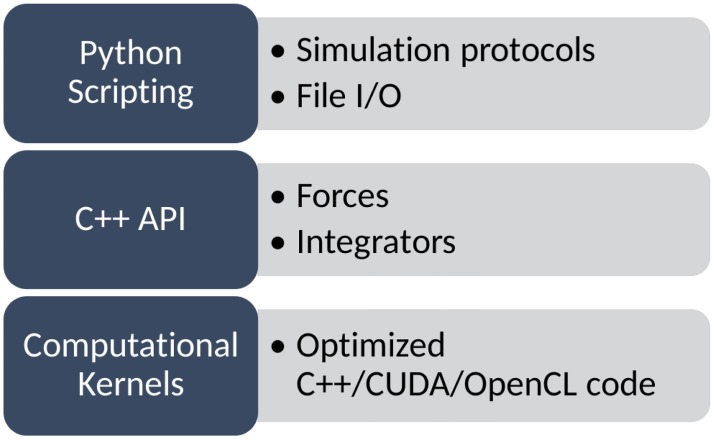
OpenMM is a molecular dynamics simulation toolkit with a unique focus on extensibility. It allows users to easily add new features, including forces with novel functional forms, new integration algorithms, and new simulation protocols. Those features automatically work on all supported hardware types (including both CPUs and GPUs) and perform well on all of them. In many cases they require minimal coding, just a mathematical description of the desired function. They also require no modification to OpenMM itself and can be distributed independently of OpenMM. This makes it an ideal tool for researchers developing new simulation methods, and also allows those new methods to be immediately available to the larger community.
Overview
The claims and statistics of this paper haven’t been checked yet.
Free: it reads the open-access text and checks the first 5 claims that cite a source we can check. Create a free account to check every claim.
Integrity signals
Registry
Cites
Statistics
Figures
Verification
Claims the paper makes
The claims and statistics of this paper haven’t been checked yet.
Free: it reads the open-access text and checks the first 5 claims that cite a source we can check. Create a free account to check every claim.
Claims other papers make about this one
Each is checked against this paper’s own text: does it say what the citing paper says it does?
The source backs part of the claim, not all of it — or backs it for a different population, condition or comparison.
In the citing paper
“Possible other software engines to consider are ddcMD (Zhang et al., 2020) and openMM (Eastman et al., 2017), both of which are supporting Martini and offer simulation speeds comparable to those of Gromacs.”
From Molecular dynamics simulation of an entire cell (2023) · cites this paper as Eastman et al., 2017
Experimental — accuracy not yet measuredThe source backs part of the claim, not all of it — or backs it for a different population, condition or comparison.
In the citing paper
“The Boresch angles and dihedrals play the same role as the Euler and polar angles used in the geometrical route, but are easier to implement in other MD software, such as OpenMM.78”
From Assessment of the Topology and Oligomerisation States of Coiled Coils Using Metadynamics with Conformational Restraints (2025) · cites this paper as [78]
Experimental — accuracy not yet measured
Self-check
Percentages, sums and reported differences re-computed from the paper’s own numbers.
The self-check needs the paper’s full text.
Citations
Cites
Comparison of simple potential functions for simulating liquid water
Jorgensen, W. L., Chandrasekhar, J., Madura, J. D., Impey, R. W., & Klein, M. L. (1983) · The Journal of Chemical Physics · doi:10.1063/1.445869 · Cited by 41,298 · cited 1×
“It loads a PDB file, models the forces with the AMBER99SB-ILDN force field [20] and TIP-3P water model [21], performs a local energy minimization to eliminate clashes, and then simulates 1 million steps of Verlet dynamics.”
MethodEquation of State Calculations by Fast Computing Machines
Metropolis, N., Rosenbluth, A. W., Rosenbluth, M. N., Teller, A. H., & Teller, E. (1953) · The Journal of Chemical Physics · doi:10.1063/1.1699114 · Cited by 37,192
Abraham, M. J., Murtola, T., Schulz, R., Páll, S., Smith, J. C., Hess, B., & Lindahl, E. (2015) · SoftwareX · doi:10.1016/j.softx.2015.06.001 · Cited by 27,190 · cited 12×
“For Gromacs and CHARMM, we compared only explicit solvent.”
MethodInfluentialCHARMM: The biomolecular simulation program
Brooks, B. R., Brooks, C. L., Mackerell, A. D., Nilsson, L., Petrella, R. J., Roux, B., Won, Y., Archontis, G., Bartels, C., Boresch, S., et al. (2009) · Journal of Computational Chemistry · doi:10.1002/jcc.21287 · Cited by 8,939 · cited 10×
“This includes the SWM4-NDP water model [34], and the CHARMM polarizable force field for proteins [4].”
MethodInfluentialSelf-citationImproved side‐chain torsion potentials for the Amber ff99SB protein force field
Lindorff‐Larsen, K., Piana, S., Palmo, K., Maragakis, P., Klepeis, J. L., Dror, R. O., & Shaw, D. E. (2010) · Proteins: Structure, Function, and Bioinformatics · doi:10.1002/prot.22711 · Cited by 6,134
Best, R. B., Zhu, X., Shim, J., Lopes, P. E. M., Mittal, J., Feig, M., & MacKerell, A. D. (2012) · Journal of Chemical Theory and Computation · doi:10.1021/ct300400x · Cited by 4,532 · cited 1×
“Some of the more important examples include the development of new force fields [1,2], sometimes involving novel functional forms for the interactions [3,4]; new integration algorithms [5–7]; new sampling methods [8–10]; and support for new types of hardware [11–13].”
BackgroundLee, J., Cheng, X., Swails, J. M., Yeom, M. S., Eastman, P. K., Lemkul, J. A., Wei, S., Buckner, J., Jeong, J. C., Qi, Y., et al. (2016) · Journal of Chemical Theory and Computation · doi:10.1021/acs.jctc.5b00935 · Cited by 4,171
Self-citationReversible multiple time scale molecular dynamics
Tuckerman, M., Berne, B. J., & Martyna, G. J. (1992) · The Journal of Chemical Physics · doi:10.1063/1.463137 · Cited by 3,592
Convergence acceleration of iterative sequences. the case of scf iteration
Pulay, P. (1980) · Chemical Physics Letters · doi:10.1016/0009-2614(80)80396-4 · Cited by 2,612 · cited 1×
“The iterative solver for induced dipoles uses the Direct Inversion in the Iterative Subspace (DIIS) algorithm [32] (added in OpenMM 6.”
MethodMolecular dynamics---Scalable algorithms for molecular dynamics simulations on commodity clusters
Bowers, K. J., Sacerdoti, F. D., Salmon, J. K., Shan, Y., Shaw, D. E., Chow, E., Xu, H., Dror, R. O., Eastwood, M. P., Gregersen, B. A., et al. (2006) · Proceedings of the 2006 ACM/IEEE conference on Supercomputing - SC '06 · doi:10.1145/1188455.1188544 · Cited by 2,580 · cited 3×
“OpenMM does include modelling tools, but it also can directly read the file formats used by Amber [16], CHARMM [17], Gromacs [18], and Desmond [19].”
MethodInfluential
Research works printed but not linked: 1
- Bekker H. Unification of box shapes in molecular simulations. J Comput Chem. 1997; 18: 1930– 1942. doi: 10.1002/(SICI)1096-987X(19971130)18:15<1930::AID-JCC8>3.0.CO;2-P · DOI
Cited by
Items 801–900 of 1,058
Modeling the native ensemble of PhuS using enhanced sampling MD and HDX-ensemble reweighting
Kihn, K. C., Wilson, T., Smith, A. K., Bradshaw, R. T., Wintrode, P. L., Forrest, L. R., Wilks, A., & Deredge, D. J. (2021) · Biophysical Journal · doi:10.1016/j.bpj.2021.11.010 · Cited by 20
Simulating the binding of key organic functional groups to aqueous calcium carbonate species
Schuitemaker, A., Aufort, J., Koziara, K. B., Demichelis, R., Raiteri, P., & Gale, J. D. (2021) · Physical Chemistry Chemical Physics · doi:10.1039/d1cp04226b · Cited by 20
Aufort, J., Schuitemaker, A., Green, R., Demichelis, R., Raiteri, P., & Gale, J. D. (2022) · Crystal Growth & Design · doi:10.1021/acs.cgd.1c01414 · Cited by 19
Efficient quantum analytic nuclear gradients with double factorization
Hohenstein, E. G., Oumarou, O., Al-Saadon, R., Anselmetti, G.-L., Scheurer, M., Gogolin, C., & Parrish, R. M. (2023) · The Journal of Chemical Physics · doi:10.1063/5.0137167 · Cited by 21
“[39] P. Eastman, J. Swails, J. D. Chodera, R. T. McGibbon, Y. Zhao, K. A. Beauchamp, L.-P. Wang, A. C. Simmonett, M. P. Harrigan, C. D. Stern, R. P. Wiewiora, B. R. Brooks, and V. S. Pande, OpenMM 7: Rapid development of high performance algorithms for molecular dynamics, PLOS Comput.”
MethodRareFold: Structure Prediction and Design of Proteins with Noncanonical Amino AcidsPreprint
Li, Q., Daumiller, D., Zuo, F., Marcotte, H., Pan-Hammarström, Q., & Bryant, P. (2025) · bioRxiv (Cold Spring Harbor Laboratory) · doi:10.1101/2025.05.19.654846 · Cited by 25
“We use OpenMM [30] with the CHARMM36 force field [31] and the Langevin middle integrator.”
Engineering rice Nramp5 modifies cadmium and manganese uptake selectivity using yeast assay system
Inoue, J., Teramoto, T., Kazama, T., & Nakamura, T. (2024) · Frontiers in Plant Science · doi:10.3389/fpls.2024.1482099 · Cited by 18
“The highest-145 ranking model was relaxed by using amber force fields (Eastman et al., 2017).”
Kang, H., Han, A.-R., Zhang, A., Jeong, H., Koh, W., Lee, J. M., Lee, H., Jo, H. Y., Maria-Solano, M. A., Bhalla, M., et al. (2024) · Nature Communications · doi:10.1038/s41467-024-49297-8 · Cited by 18
“The production trajectories were integrated with a time step of 2fs using OpenMM 91 .”
MethodThe evolution of the Amber additive protein force field: History, current status, and future
Wang, X., Xiong, D., Zhang, Y., Zhai, J., Gu, Y., & He, X. D. (2025) · The Journal of Chemical Physics · doi:10.1063/5.0227517 · Cited by 26
Cooperative and inhibitory ion transport in functionalized angstrom-scale two-dimensional channels
Wang, M., Xiong, Q., Yue, X., Yan, G., Han, Y., Lyu, Z., Li, Z., Sun, L., Hoenig, E. V., Xu, K., et al. (2025) · Nature Communications · doi:10.1038/s41467-025-61307-x · Cited by 18
“Molecular dynamics (MD) simulations were performed using the OpenMM package 53 and the settings of the K + /Pb 2+ permeation test were consistent with the experimental settings (Supplementary Table 6).”
CNS-safe flavone analogues as dual SARS-CoV-2 inhibitors: An integrated in-silico design study
Khibech, O., Ouachekradi, M., Merzouki, M., Benabbou, A., Abadi, S., Karzazi, Y., Bouammali, B., & Challioui, A. (2025) · ChemPhysMater · doi:10.1016/j.chphma.2025.10.007 · Cited by 19
Experiment-guided AlphaFold3 resolves measurement-consistent protein ensembles
Maddipatla, A., Sellam, N. B., Bojan, M., Masalitin, V., Vedula, S., Schanda, P., Marx, A., & Bronstein, A. M. (2026) · Nature Biotechnology · doi:10.1038/s41587-026-03166-5 · Cited by 28
∂PV: An end-to-end differentiable solar-cell simulator
Mann, S., Fadel, E., Schoenholz, S. S., Cubuk, E. D., Johnson, S. G., & Romano, G. (2021) · Computer Physics Communications · doi:10.1016/j.cpc.2021.108232 · Cited by 19
Guvench, O. (2022) · Molecules · doi:10.3390/molecules27217276 · Cited by 17
Yang, L., Li, J., Chen, F., & Yu, K. (2022) · The Journal of Chemical Physics · doi:10.1063/5.0128780 · Cited by 22
Krishnan, K., Tian, H., Tao, P., & Verkhivker, G. M. (2022) · The Journal of Chemical Physics · doi:10.1063/5.0133826 · Cited by 19
Xu, M., Huang, W., Xu, M., Lei, J., & Chen, H. (2022) · Molecules · doi:10.3390/molecules28010321 · Cited by 18
GPU-accelerated artificial neural network potential for molecular dynamics simulation
Zhang, M., Hibi, K., & Inoue, J. (2023) · Computer Physics Communications · doi:10.1016/j.cpc.2022.108655 · Cited by 18
AsiteDesign: a Semirational Algorithm for an Automated Enzyme Design
Rodà, S., Terholsen, H., Meyer, J. R. H., Cañellas-Solé, A., Guallar, V., Bornscheuer, U. T., & Kazemi, M. (2023) · The Journal of Physical Chemistry B · doi:10.1021/acs.jpcb.2c07091 · Cited by 18
Second-Shell Residues Contribute to Catalysis by Predominately Preorganizing the Apo State in PafA
Deng, J., & Cui, Q. (2023) · Journal of the American Chemical Society · doi:10.1021/jacs.3c02423 · Cited by 20
Natesan, R., Dykstra, A. B., Banerjee, A., & Agrawal, N. J. (2023) · Antibodies · doi:10.3390/antib12040083 · Cited by 18
“We performed all molecular dynamics simulations with OpenMM [24] using AMBER ff19SB [25] force field for proteins.”
MethodDP/MM: A Hybrid Model for Zinc–Protein Interactions in Molecular Dynamics
Ding, Y., & Huang, J. (2024) · The Journal of Physical Chemistry Letters · doi:10.1021/acs.jpclett.3c03158 · Cited by 22
The SAMPL9 host–guest blind challenge: an overview of binding free energy predictive accuracy
Amezcua, M., Setiadi, J., & Mobley, D. L. (2024) · Physical Chemistry Chemical Physics · doi:10.1039/d3cp05111k · Cited by 23
Schnee, P., Pleiss, J., & Jeltsch, A. (2024) · Critical Reviews in Biochemistry and Molecular Biology · doi:10.1080/10409238.2024.2318547 · Cited by 20
“An example, benchmark simulations with a 159-residue protein (DHFR) in explicit solvent (<24000 atoms) using OpenMM (eastman and Pande 2010; eastman et al. 2017) yielded >1 ms/day on a Nvidia Rt2080ti/A40/v100 system (https:// openmm.org/benchmarks). to simulate even longer and larger systems,…”
MethodConstant-pH Simulations with the Polarizable Atomic Multipole AMOEBA Force Field
Thiel, A. C., Speranza, M. J., Jadhav, S., Stevens, L. L., Unruh, D. K., Ren, P. Y., Ponder, J. W., Shen, J., & Schnieders, M. J. (2024) · Journal of Chemical Theory and Computation · doi:10.1021/acs.jctc.3c01180 · Cited by 18
Wei, Y., Jiang, H., Li, F., Chai, C., Xu, Y., Xing, M., Deng, W., Wang, H., Zhu, Y., Yang, S., et al. (2024) · Science Translational Medicine · doi:10.1126/scitranslmed.adh1763 · Cited by 18
Burns, D., Khatiwada, B., Singh, A., Purslow, J. A., Potoyan, D. A., & Venditti, V. (2024) · Proceedings of the National Academy of Sciences · doi:10.1073/pnas.2404457121 · Cited by 19
Sun, Z., & Procacci, P. (2024) · Physical Chemistry Chemical Physics · doi:10.1039/d4cp01804d · Cited by 20
CL-GNN: Contrastive Learning and Graph Neural Network for Protein–Ligand Binding Affinity Prediction
Zhang, Y., Huang, C., Wang, Y., Li, S., & Sun, S. (2025) · Journal of Chemical Information and Modeling · doi:10.1021/acs.jcim.4c01290 · Cited by 20
Bonneau, K., Lederer, J., Templeton, C., Rosenberger, D., Giambagli, L., Müller, K., & Clementi, C. (2025) · Nature Communications · doi:10.1038/s41467-025-65863-0 · Cited by 22
Learning data-efficient coarse-grained molecular dynamics from forces and noise
Durumeric, A. E. P., Chen, Y.-Y., Pasos-Trejo, A. S., Noé, F., & Clementi, C. (2024) · Nature Communications · doi:10.1038/s41467-026-70818-0 · Cited by 27
Whitmore, E. K., Vesenka, G., Sihler, H., & Guvench, O. (2020) · Biomolecules · doi:10.3390/biom10040537 · Cited by 18
Structural Basis for GTP versus ATP Selectivity in the NMP Kinase AK3
Rogne, P., Dulko-Smith, B., Goodman, J., Rosselin, M., Grundström, C., Hedberg, C., Nam, K., Sauer-Eriksson, A. E., & Wolf‐Watz, M. (2020) · Biochemistry · doi:10.1021/acs.biochem.0c00549 · Cited by 18
Monroe, J. I., Hatch, H. W., Mahynski, N. A., Shell, M. S., & Shen, V. K. (2020) · The Journal of Chemical Physics · doi:10.1063/5.0014282 · Cited by 18
Path probability ratios for Langevin dynamics—Exact and approximate
Kieninger, S., & Keller, B. G. (2021) · The Journal of Chemical Physics · doi:10.1063/5.0038408 · Cited by 22
Conti, S., Kaczorowski, K. J., Song, G., Porter, K., Andrabi, R., Burton, D. R., Chakraborty, A. K., & Karplus, M. (2021) · Proceedings of the National Academy of Sciences · doi:10.1073/pnas.2018338118 · Cited by 20
Biocompatible pH-Degradable Functional Capsules Based on Melamine Cyanurate Self-Assembly
Imoro, N., Shilovskikh, V. V., Nesterov, P. V., Timralieva, A. A., Gets, D. S., Nebalueva, A. S., Lavrentev, F. V., Novikov, A. S., Kondratyuk, N., Orekhov, N., et al. (2021) · ACS Omega · doi:10.1021/acsomega.1c01124 · Cited by 18
Predicting 1 H NMR relaxation in Gd 3+ -aqua using molecular dynamics simulations
Singer, P. M., Parambathu, A. V., dos Santos, T. J. P., Liu, Y., Alemany, L. B., Hirasaki, G. J., Chapman, W. G., & Asthagiri, D. N. (2021) · Physical Chemistry Chemical Physics · doi:10.1039/d1cp03356e · Cited by 18
Toward Enzyme-Responsive Polymersome Drug Delivery
Paruchuri, B. C., Gopal, V., Sarupria, S., & Larsen, J. (2021) · Nanomedicine · doi:10.2217/nnm-2021-0194 · Cited by 19
Rieder, S. R., Ries, B., Schaller, K., Champion, C., de Barros, E. P., Hünenberger, P. H., & Riniker, S. (2022) · Journal of Chemical Information and Modeling · doi:10.1021/acs.jcim.2c00383 · Cited by 18
Mauger, N., Plé, T., Lagardère, L., Huppert, S., & Piquemal, J. (2022) · The Journal of Physical Chemistry B · doi:10.1021/acs.jpcb.2c04454 · Cited by 18
Ab initio machine learning of phase space averages
Weinreich, J., Lemm, D., von Rudorff, G. F., & von Lilienfeld, O. A. (2022) · The Journal of Chemical Physics · doi:10.1063/5.0095674 · Cited by 18
Sampling rare conformational transitions with a quantum computer
Ghamari, D., Hauke, P., Covino, R., & Faccioli, P. (2022) · Scientific Reports · doi:10.1038/s41598-022-20032-x · Cited by 23
“The contour lines in the background represent the free energy surface, calculated from a frequency histogram of 1µ s of equilibrium MD at T = 300 K, generated using OpenMM54, in the AMBER99SB force field with explicit TIP3P water55.”
MethodComputer-Aided Drug Design: An Update
Yu, W., Weber, D. J., & MacKerell, A. D. (2022) · Methods in molecular biology · doi:10.1007/978-1-0716-2855-3_7 · Cited by 19
Sayed, A. M., Ibrahim, A. H., Tajuddeen, N., Seibel, J., Bodem, J., Geiger, N., Striffler, K., Bringmann, G., & Abdelmohsen, U. R. (2023) · European Journal of Medicinal Chemistry · doi:10.1016/j.ejmech.2023.115226 · Cited by 18
Strahan, J., Guo, S. C., Lorpaiboon, C., Dinner, A. R., & Weare, J. (2023) · The Journal of Chemical Physics · doi:10.1063/5.0151309 · Cited by 23
Long-Range Changes in Neurolysin Dynamics Upon Inhibitor Binding
Uyar, A., Karamyan, V. T., & Dickson, A. (2017) · Journal of Chemical Theory and Computation · doi:10.1021/acs.jctc.7b00944 · Cited by 18
Protlego: a Python package for the analysis and design of chimeric proteins
Ferruz, N., Noske, J., & Höcker, B. (2021) · Bioinformatics · doi:10.1093/bioinformatics/btab253 · Cited by 18
“The potential energy estimation uses functionality of the openMM package (Eastman et al. , 2017).”
MethodImpact of protein conformational diversity on AlphaFold predictions
Saldaño, T., Escobedo, N., Marchetti, J., Zea, D. J., Mac Donagh, J., Velez Rueda, A. J., Gonik, E., Melani, A. G., Novomisky Nechcoff, J., Salas, M. N., et al. (2021) · doi:10.1101/2021.10.27.466189 · Cited by 196
“…using ColabFold (AlphaFold2.ipynb - Colaboratory) running AlphaFold2 with MMSeq2 [6] without the use of templates and with the option to obtain relaxed models with Amber force fields [29], gathering the first five top models according to plDDT (predicted local Distance Difference Test) scores [30].”
Method(2025) · doi:10.1016/j.jmb.2025.168962 · Cited by 17
Diffusion and Viscosity in Mixed Protein Solutions
Wozniak, S., & Feig, M. (2024) · The Journal of Physical Chemistry B · doi:10.1021/acs.jpcb.4c06877 · Cited by 17
MicrobeRX: a tool for enzymatic-reaction-based metabolite prediction in the gut microbiome
Ruiz-Moreno, A. J., del Castillo-Izquierdo, Á., Tamargo-Rubio, I., & Fu, J. (2025) · Microbiome · doi:10.1186/s40168-025-02070-5 · Cited by 19
“The 3D structures were then refined by running a 1 ns relaxation simulation using the amber99sb forcefield via OpenMM [105].”
Yi, M., Li, Y., Jie, H., & Deng, S. (2025) · Thoracic Cancer · doi:10.1111/1759-7714.70134 · Cited by 20
“Modern MD tools, such as CHARMM-GUI and OpenMM, have been extensively employed to simulate the stability of nanocarriers in TMEs, focusing on critical factors like pH and enzymatic activity [35, 36].”
DRfold2 is a deep learning-based tool that enables efficient and accurate RNA structure prediction
Li, Y., Feng, C., Zhang, X., Tsukiyama, S., Feng, D., & Zhang, Y. (2026) · PLoS Biology · doi:10.1371/journal.pbio.3003659 · Cited by 20
Xu, M., Zhu, T., & Zhang, J. Z. H. (2021) · Journal of Chemical Information and Modeling · doi:10.1021/acs.jcim.1c01125 · Cited by 17
Papadopoulou, D., Drakopoulos, A., Lagarias, P. I., Melagraki, G., Kollias, G. A., & Afantitis, A. (2021) · International Journal of Molecular Sciences · doi:10.3390/ijms221910220 · Cited by 19
Penhallurick, R. W., & Ichiye, T. (2021) · Biology · doi:10.3390/biology10111211 · Cited by 17
“yayanosii DHFR at T = 279 K and P = 1, 800 bar were performed using the molecular mechanics package OpenMM [51].”
MethodJoerg, F., & Schröder, C. (2022) · Physical Chemistry Chemical Physics · doi:10.1039/d2cp01501c · Cited by 17
Conformational entropy limits the transition from nucleation to elongation in amyloid aggregation
Phan, T. M., & Schmit, J. D. (2022) · Biophysical Journal · doi:10.1016/j.bpj.2022.06.031 · Cited by 17
Kognole, A. A., Aytenfisu, A. H., & MacKerell, A. D. (2022) · The Journal of Physical Chemistry B · doi:10.1021/acs.jpcb.2c04245 · Cited by 18
Molecular Dynamics Simulations of Rhodamine B Zwitterion Diffusion in Polyelectrolyte Solutions
Walhout, P. K., He, Z., Dutagaci, B., Nawrocki, G., & Feig, M. (2022) · The Journal of Physical Chemistry B · doi:10.1021/acs.jpcb.2c06281 · Cited by 17
A Practical Introduction to Martini 3 and its Application to Protein-Ligand Binding Simulations
Alessandri, R., Thallmair, S., Herrero, C. G., Mera‐Adasme, R., Marrink, . J., & Souza, P. C. T. (2023) · A Practical Guide to Recent Advances in Multiscale Modeling and Simulation of Biomolecules · doi:10.1063/9780735425279_001 · Cited by 23
A deep learning solution for crystallographic structure determination
Pan, T., Jin, S., Miller, M. D., Kyrillidis, A., & Phillips, G. N., Jr. (2023) · IUCrJ · doi:10.1107/s2052252523004293 · Cited by 17
A transferable double exponential potential for condensed phase simulations of small molecules
Horton, J. T., Boothroyd, S., Behara, P. K., Mobley, D. L., & Cole, D. J. (2023) · Digital Discovery · doi:10.1039/d3dd00070b · Cited by 17
Belkacemi, Z., Bianciotto, M., Minoux, H., Tony Lelièvre, A., Stoltz, G., & Gkeka, P. (2023) · The Journal of Chemical Physics · doi:10.1063/5.0151053 · Cited by 17
Methods for computer-assisted PROTAC design
Rovers, E., & Schapira, M. (2023) · Methods in enzymology on CD-ROM/Methods in enzymology · doi:10.1016/bs.mie.2023.06.020 · Cited by 20
Oda, T. (2023) · Proteins: Structure, Function, and Bioinformatics · doi:10.1002/prot.26551 · Cited by 17
Systematic exploration of accessible topologies of cage molecules via minimalistic models
Tarzia, A., Wolpert, E. H., Jelfs, K. E., & Pavan, G. M. (2023) · Chemical Science · doi:10.1039/d3sc03991a · Cited by 17
“38 This approach is similar to those we have applied on all-atomistic cage models.”
Lan, P. D., Nissley, D. A., Sitarik, I. M., Vu, Q. V., Jiang, Y., To, P., Xia, Y., Fried, S. D., Li, M. S., & O’Brien, E. P. (2021) · Journal of Molecular Biology · doi:10.1016/j.jmb.2024.168487 · Cited by 17
Unarta, I. C., Cao, S., Goonetilleke, E. C., Niu, J., Gellman, S. H., & Huang, X. (2024) · The Journal of Physical Chemistry B · doi:10.1021/acs.jpcb.3c08126 · Cited by 17
Revised 4-Point Water Model for the Classical Drude Oscillator Polarizable Force Field: SWM4-HLJ
Teng, X., Yu, W., & MacKerell, A. D. (2024) · Journal of Chemical Theory and Computation · doi:10.1021/acs.jctc.4c00966 · Cited by 17
RNA sample optimization for cryo-EM analysis
Chen, X., Wang, L., Xie, J., Nowak, J. S., Luo, B., Zhang, C., Jia, G., Zou, J., Huang, D., Glatt, S., et al. (2024) · Nature Protocols · doi:10.1038/s41596-024-01072-1 · Cited by 17
“Although several methods have been developed for automated RNA modeling into cryo-EM density 25,26,30,91,170 , intensive manual interventions coupled with RNA structure predictions and subsequent refinements are still routinely required 171–174 .”
Self-citationEarly Folding Dynamics of i-Motif DNA Revealed by pH-Jump Time-Resolved X-ray Solution Scattering
Chan, A. M., Ebrahimi, S. B., Samanta, D., Leshchev, D., Nijhawan, A. K., Hsu, D. J., Ho, M. B., Ramani, N., Kosheleva, I. V., Henning, R. W., et al. (2024) · Journal of the American Chemical Society · doi:10.1021/jacs.4c11768 · Cited by 17
Takaki, R., & Thirumalai, D. (2024) · Proceedings of the National Academy of Sciences · doi:10.1073/pnas.2409973121 · Cited by 21
The molecular reach of antibodies crucially underpins their viral neutralisation capacity
Huhn, A. G., Nissley, D. A., Wilson, D. B., Kutuzov, M. A., Donat, R. F., Tan, T. K., Zhang, Y., Barton, M. I., Liu, C., Dejnirattisai, W., et al. (2025) · Nature Communications · doi:10.1038/s41467-024-54916-5 · Cited by 19
Favetta, B., Wang, H., Cubuk, J., Singh, A., Barai, M., Ramirez, C., Zheng, H., Gormley, A. J., Murthy, N. S., Dignon, G. L., et al. (2025) · Nature Communications · doi:10.1038/s41467-025-62922-4 · Cited by 21
Transfer Learning from Markov Models Leads to Efficient Sampling of Related Systems
Sultan, M. M., & Pande, V. S. (2017) · The Journal of Physical Chemistry B · doi:10.1021/acs.jpcb.7b06896 · Cited by 17
Self-citationWang, J., & Ferguson, A. L. (2018) · The Journal of Physical Chemistry B · doi:10.1021/acs.jpcb.8b08800 · Cited by 19
Park, S., Yeom, M. S., Andersen, O. S., Pastor, R. W., & Im, W. (2019) · Journal of Chemical Theory and Computation · doi:10.1021/acs.jctc.9b00815 · Cited by 17
Kit, M. C. S., Carvalho, V. V., Vilseck, J. Z., & Webb, I. (2021) · International Journal of Mass Spectrometry · doi:10.1016/j.ijms.2021.116549 · Cited by 17
Crowding affects structural dynamics and contributes to membrane association of the NS3/4A complex
Ostrowska, N., Feig, M., & Trylska, J. (2021) · Biophysical Journal · doi:10.1016/j.bpj.2021.07.008 · Cited by 16
Márquez, I., Pérez‐Mejías, G., Guerra‐Castellano, A., Olloqui‐Sariego, J. L., Andreu, R., Calvente, J. J., la Rosa, M. Á. D., & Díaz‐Moreno, I. (2021) · FEBS Open Bio · doi:10.1002/2211-5463.13284 · Cited by 19
How to strike a conformational balance in protein force fields for molecular dynamics simulations?
Kang, W., Jiang, F., & Wu, Y.-D. (2021) · WIREs Computational Molecular Science · doi:10.1002/wcms.1578 · Cited by 16
Konstantinovsky, D. M., Perets, E. A., Yan, E. C. Y., & Hammes‐Schiffer, S. (2021) · The Journal of Physical Chemistry B · doi:10.1021/acs.jpcb.1c06360 · Cited by 17
Multiple timescale molecular dynamics with very large time steps: avoidance of resonances
Abreu, C. R. A., & Tuckerman, M. E. (2021) · The European Physical Journal B · doi:10.1140/epjb/s10051-021-00226-4 · Cited by 17
GPU-accelerated approximate kernel method for quantum machine learning
Browning, N. J., Faber, F. A., & von Lilienfeld, O. A. (2022) · The Journal of Chemical Physics · doi:10.1063/5.0108967 · Cited by 19
Inverse Design of Pore Wall Chemistry To Control Solute Transport and Selectivity
Jiao, S., Katz, L. E., & Shell, M. S. (2022) · ACS Central Science · doi:10.1021/acscentsci.2c01011 · Cited by 17
Arjun, A., & Bolhuis, P. G. (2023) · The Journal of Chemical Physics · doi:10.1063/5.0124852 · Cited by 17
Directed Self-Assembly of Trimeric DNA-Bindingchiral Miniprotein Helicates
Gómez‐González, J., Peña, D. G., Barka, G., Sciortino, G., Maréchal, J., Vázquez, M. E., & Vázquez, M. E. (2018) · Frontiers in Chemistry · doi:10.3389/fchem.2018.00520 · Cited by 17
“Then, thermalization of water molecules and side chains was achieved by increasing the temperature from 100K up to 300K. MD simulations under periodic boundary conditions were carried out during 100 ns with OpenMM engine through OMMProtocol (Eastman et al., 2017; Pedregal et al., 2018).”
MethodOptimization of Protein–Ligand Electrostatic Interactions Using an Alchemical Free-Energy Method
Wade, A. D., & Huggins, D. J. (2019) · Journal of Chemical Theory and Computation · doi:10.1021/acs.jctc.9b00976 · Cited by 17
On Restraints in End‐Point Protein–Ligand Binding Free Energy Calculations
Menzer, W. M., Xie, B., & Minh, D. D. L. (2019) · Journal of Computational Chemistry · doi:10.1002/jcc.26119 · Cited by 17
Benchmarking AlphaFold3-like Methods for Protein-Peptide Complex PredictionPreprint
Zhou, F., Guo, S., Peng, X., Zhang, S., Men, C., Duan, X., Zhu, G., Wang, Z., Li, W., Mu, Y., et al. (2025) · bioRxiv (Cold Spring Harbor Laboratory) · doi:10.1101/2025.03.09.642277 · Cited by 18
Internal Safety Collapse in LLMs and Coding AgentsPreprint
Wu, Y.-T., Liu, X., Huang, H., Zheng, X., Li, Y.-G., Gao, Y.-F., Wang, C., Li, B., Ma, X.-J., & Jiang, Y.-G. (2026) · arXiv (Cornell University) · doi:10.48550/arxiv.2603.23509 · Cited by 9
Chan, M. C., Procko, E., & Shukla, D. (2022) · ACS Chemical Neuroscience · doi:10.1021/acschemneuro.1c00714 · Cited by 17
Dai, X., Henderson, M., Yoo, S., & Liu, Q. (2024) · doi:10.1101/2024.08.09.607368 · Cited by 17
Acceleration of the GROMACS Free-Energy Perturbation Calculations on GPUs
Chen, Y., & Yang, J. J. (2025) · ACS Omega · doi:10.1021/acsomega.5c00151 · Cited by 20
Tian, C., Hao, Y., Fu, H., Shao, X., & Cai, W. (2025) · Journal of Chemical Information and Modeling · doi:10.1021/acs.jcim.5c00892 · Cited by 17
Shen, Z., Peng, S., & Glover, W. J. (2021) · The Journal of Chemical Physics · doi:10.1063/5.0067861 · Cited by 16
Non-covalent Fc-Fab interactions significantly alter internal dynamics of an IgG1 antibody
Natesan, R., & Agrawal, N. J. (2022) · Scientific Reports · doi:10.1038/s41598-022-13370-3 · Cited by 16
González, D., Macaya, L., Castillo-Orellana, C., Verstraelen, T., Vogt‐Geisse, S., & Vöhringer‐Martinez, E. (2022) · Journal of Chemical Information and Modeling · doi:10.1021/acs.jcim.2c00316 · Cited by 16
Martins, L. C., de Oliveira, R. B., Lameira, J., & Ferreira, R. S. (2023) · Journal of Chemical Information and Modeling · doi:10.1021/acs.jcim.2c01566 · Cited by 16
Metadata
- Authors
- Eastman, P., Swails, J., Chodera, J. D., McGibbon, R. T., Zhao, Y., Beauchamp, K. A., Wang, L.-P., Simmonett, A. C., Harrigan, M. P., Stern, C. D., Wiewiora, R. P., Brooks, B. R., & Pande, V. S.
- Affiliations
- Stanford University (US)
- Rutgers, The State University of New Jersey (US)
- Memorial Sloan Kettering Cancer Center (US)
- University of California, Davis (US)
- National Institutes of Health (US)
- Tri-Institutional PhD Program in Chemical Biology (US)
- Corresponding author
- Eastman, Peter
- Swails, Jason
- Chodera, John D.
- McGibbon, Robert T.
- Zhao, Yutong
- Beauchamp, Kyle A.
- Wang, Lee-Ping
- Simmonett, Andrew C.
- Harrigan, Matthew P.
- Stern, Chaya D.
- Wiewiora, Rafal P.
- Brooks, Bernard R.
- Pande, Vijay S.
- ORCID
- Venue
- PLOS Computational Biology
- Publisher
- Public Library of Science (PLoS)
- Published
- 2017-07-26
- Volume
- 13
- Issue
- 7
- Pages
- e1005659
- ISSN
- 1553-734X (ISSN-L)
- 1553-7358
- PMC
- PMC5549999
- OpenAlex
- W2949223833
- Cited by
- 2,748
- References
- 37
- Citations by year
- 2026: 380 · 2025: 455 · 2024: 472 · 2023: 432 · 2022: 330 · 2021: 301 · 2020: 197 · 2019: 105 · 2018: 65 · 2017: 11
- FWCI
- 119.89
- Type
- journal article
- Language
- en
- Update notices
- new_version (2017-08-09)
- Open access
- gold
- doi.org
- Licence
- public-domain
- creativecommons.org/publicdomain/zero/1.0/ (vor)
- Locations
- PLoS Computational Biology (publishedVersion, public-domain)
- bioRxiv (Cold Spring Harbor Laboratory) (acceptedVersion, cc-by)
- PubMed Central (publishedVersion, public-domain)
- PubMed (publishedVersion)
- RePEc: Research Papers in Economics (submittedVersion)
- DOAJ (DOAJ: Directory of Open Access Journals) (submittedVersion, cc-by-sa)
- eScholarship (California Digital Library) (submittedVersion)
- eScholarship (California Digital Library) (submittedVersion, public-domain)
- Figshare (submittedVersion, cc-by)
- Funders
- National Institutes of Health (US) (U54 GM072970, R01-GM062868)
- National Institutes of Health (P30 CA008748)
- Starr Foundation (US) (I8-A8-058)
- Topics
- Physical Sciences › Computer Science › Hardware and Architecture › Parallel Computing and Optimization Techniques
- Life Sciences › Biochemistry, Genetics and Molecular Biology › Molecular Biology › Protein Structure and Dynamics
- Physical Sciences › Chemistry › Physical and Theoretical Chemistry › Advanced Physical and Chemical Molecular Interactions
- Keywords
- OpenMM, molecular dynamics simulation, extensibility, force field development, integration algorithms, simulation protocols, GPU acceleration, CPU simulation, high-performance algorithms
- MeSH terms
- Algorithms, Software, Computational Biology, Molecular Dynamics Simulation
About these checks
Registry, retraction, Cites and statistics results are computed, not judged, with one exception: a printed reference that no index lists is read once by a model before it counts as a citation error. Claims are extracted by a model and kept only when their quote appears verbatim in the text; each cited source is then checked, with a model’s help, for whether it says what the claim relies on. Those verdicts can be wrong — read the claim’s quote and the cited source before relying on one.
Statistics and arithmetic are recomputed, not judged.
Confidence bands are shown only for fields calibrated on our annotated test set. None is calibrated yet, so no band is shown.
What counts as a claim ›How we measure confidence ›How we check this ›
Are you an author, or do you see a problem with this page? Request a review
Data sources
Bibliographic data: Semantic Scholar, OpenAlex, Crossref.
Contains information from the Semantic Scholar Academic Graph Datasets, made available under the ODC Attribution License (ODC-BY 1.0).
Semantic Scholar’s data is described in: Kinney, R., et al. (2023). The Semantic Scholar Open Data Platform. arXiv:2301.10140.
