

OpenMM 7: Rapid development of high performance algorithms for molecular dynamics
Open accessPublished version of a preprint
The DOI matches its Crossref record; 37 of the 37 references it cites were found in a registry or an index.
Abstract
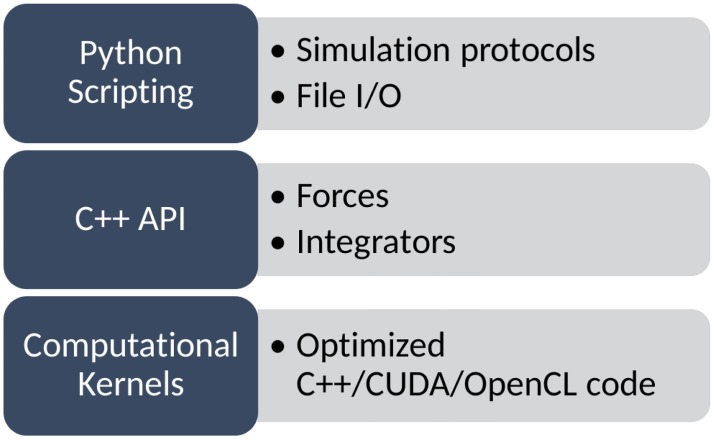
OpenMM is a molecular dynamics simulation toolkit with a unique focus on extensibility. It allows users to easily add new features, including forces with novel functional forms, new integration algorithms, and new simulation protocols. Those features automatically work on all supported hardware types (including both CPUs and GPUs) and perform well on all of them. In many cases they require minimal coding, just a mathematical description of the desired function. They also require no modification to OpenMM itself and can be distributed independently of OpenMM. This makes it an ideal tool for researchers developing new simulation methods, and also allows those new methods to be immediately available to the larger community.
Overview
The claims and statistics of this paper haven’t been checked yet.
Free: it reads the open-access text and checks the first 5 claims that cite a source we can check. Create a free account to check every claim.
Integrity signals
Registry
Cites
Statistics
Figures
Verification
Claims the paper makes
The claims and statistics of this paper haven’t been checked yet.
Free: it reads the open-access text and checks the first 5 claims that cite a source we can check. Create a free account to check every claim.
Claims other papers make about this one
Each is checked against this paper’s own text: does it say what the citing paper says it does?
The source backs part of the claim, not all of it — or backs it for a different population, condition or comparison.
In the citing paper
“Possible other software engines to consider are ddcMD (Zhang et al., 2020) and openMM (Eastman et al., 2017), both of which are supporting Martini and offer simulation speeds comparable to those of Gromacs.”
From Molecular dynamics simulation of an entire cell (2023) · cites this paper as Eastman et al., 2017
Experimental — accuracy not yet measuredThe source backs part of the claim, not all of it — or backs it for a different population, condition or comparison.
In the citing paper
“The Boresch angles and dihedrals play the same role as the Euler and polar angles used in the geometrical route, but are easier to implement in other MD software, such as OpenMM.78”
From Assessment of the Topology and Oligomerisation States of Coiled Coils Using Metadynamics with Conformational Restraints (2025) · cites this paper as [78]
Experimental — accuracy not yet measured
Self-check
Percentages, sums and reported differences re-computed from the paper’s own numbers.
The self-check needs the paper’s full text.
Citations
Cites
Comparison of simple potential functions for simulating liquid water
Jorgensen, W. L., Chandrasekhar, J., Madura, J. D., Impey, R. W., & Klein, M. L. (1983) · The Journal of Chemical Physics · doi:10.1063/1.445869 · Cited by 41,298 · cited 1×
“It loads a PDB file, models the forces with the AMBER99SB-ILDN force field [20] and TIP-3P water model [21], performs a local energy minimization to eliminate clashes, and then simulates 1 million steps of Verlet dynamics.”
MethodEquation of State Calculations by Fast Computing Machines
Metropolis, N., Rosenbluth, A. W., Rosenbluth, M. N., Teller, A. H., & Teller, E. (1953) · The Journal of Chemical Physics · doi:10.1063/1.1699114 · Cited by 37,192
Abraham, M. J., Murtola, T., Schulz, R., Páll, S., Smith, J. C., Hess, B., & Lindahl, E. (2015) · SoftwareX · doi:10.1016/j.softx.2015.06.001 · Cited by 27,190 · cited 12×
“For Gromacs and CHARMM, we compared only explicit solvent.”
MethodInfluentialCHARMM: The biomolecular simulation program
Brooks, B. R., Brooks, C. L., Mackerell, A. D., Nilsson, L., Petrella, R. J., Roux, B., Won, Y., Archontis, G., Bartels, C., Boresch, S., et al. (2009) · Journal of Computational Chemistry · doi:10.1002/jcc.21287 · Cited by 8,939 · cited 10×
“This includes the SWM4-NDP water model [34], and the CHARMM polarizable force field for proteins [4].”
MethodInfluentialSelf-citationImproved side‐chain torsion potentials for the Amber ff99SB protein force field
Lindorff‐Larsen, K., Piana, S., Palmo, K., Maragakis, P., Klepeis, J. L., Dror, R. O., & Shaw, D. E. (2010) · Proteins: Structure, Function, and Bioinformatics · doi:10.1002/prot.22711 · Cited by 6,134
Best, R. B., Zhu, X., Shim, J., Lopes, P. E. M., Mittal, J., Feig, M., & MacKerell, A. D. (2012) · Journal of Chemical Theory and Computation · doi:10.1021/ct300400x · Cited by 4,532 · cited 1×
“Some of the more important examples include the development of new force fields [1,2], sometimes involving novel functional forms for the interactions [3,4]; new integration algorithms [5–7]; new sampling methods [8–10]; and support for new types of hardware [11–13].”
BackgroundLee, J., Cheng, X., Swails, J. M., Yeom, M. S., Eastman, P. K., Lemkul, J. A., Wei, S., Buckner, J., Jeong, J. C., Qi, Y., et al. (2016) · Journal of Chemical Theory and Computation · doi:10.1021/acs.jctc.5b00935 · Cited by 4,171
Self-citationReversible multiple time scale molecular dynamics
Tuckerman, M., Berne, B. J., & Martyna, G. J. (1992) · The Journal of Chemical Physics · doi:10.1063/1.463137 · Cited by 3,592
Convergence acceleration of iterative sequences. the case of scf iteration
Pulay, P. (1980) · Chemical Physics Letters · doi:10.1016/0009-2614(80)80396-4 · Cited by 2,612 · cited 1×
“The iterative solver for induced dipoles uses the Direct Inversion in the Iterative Subspace (DIIS) algorithm [32] (added in OpenMM 6.”
MethodMolecular dynamics---Scalable algorithms for molecular dynamics simulations on commodity clusters
Bowers, K. J., Sacerdoti, F. D., Salmon, J. K., Shan, Y., Shaw, D. E., Chow, E., Xu, H., Dror, R. O., Eastwood, M. P., Gregersen, B. A., et al. (2006) · Proceedings of the 2006 ACM/IEEE conference on Supercomputing - SC '06 · doi:10.1145/1188455.1188544 · Cited by 2,580 · cited 3×
“OpenMM does include modelling tools, but it also can directly read the file formats used by Amber [16], CHARMM [17], Gromacs [18], and Desmond [19].”
MethodInfluential
Research works printed but not linked: 1
- Bekker H. Unification of box shapes in molecular simulations. J Comput Chem. 1997; 18: 1930– 1942. doi: 10.1002/(SICI)1096-987X(19971130)18:15<1930::AID-JCC8>3.0.CO;2-P · DOI
Cited by
Items 401–500 of 1,058
Enhanced Grand Canonical Sampling of Occluded Water Sites Using Nonequilibrium Candidate Monte Carlo
Melling, O. J., Samways, M. L., Ge, Y., Mobley, D. L., & Essex, J. W. (2023) · Journal of Chemical Theory and Computation · doi:10.1021/acs.jctc.2c00823 · Cited by 40
Statistically Optimal Force Aggregation for Coarse-Graining Molecular Dynamics
Krämer, A., Durumeric, A. E. P., Charron, N. E., Chen, Y., Clementi, C., & Noé, F. (2023) · The Journal of Physical Chemistry Letters · doi:10.1021/acs.jpclett.3c00444 · Cited by 47
Identifying small-molecules binding sites in RNA conformational ensembles with SHAMAN
Panei, F. P., Gkeka, P., & Bonomi, M. (2024) · Nature Communications · doi:10.1038/s41467-024-49638-7 · Cited by 44
Salsbury, A. M., & Lemkul, J. A. (2018) · The Journal of Physical Chemistry B · doi:10.1021/acs.jpcb.8b11026 · Cited by 40
Yepes, A. F., Herrera-Calderón, O., Sánchez‐Aparicio, J., Tiessler‐Sala, L., Maréchal, J., & Cardona‐Galeano, W. (2020) · Evidence-based Complementary and Alternative Medicine · doi:10.1155/2020/4932572 · Cited by 40
“, thermalization of the system was achieved by increasing the temperature from 100 K up to 300 K. MD simulations under periodic boundary conditions were carried out for 250 ns with the OpenMM engine [59] using OMMProtocol [60].”
Gervasoni, S. I., Vistoli, G., Talarico, C., Manelfi, C., Beccari, A. R., Studer, G., Tauriello, G., Waterhouse, A. M., Schwede, T. F., & Pedretti, A. (2020) · International Journal of Molecular Sciences · doi:10.3390/ijms21145152 · Cited by 40
“Model building using the identified templates and their associated target-template sequence alignments was delegated to the ProMod3 modelling engine (Swiss Institute of Bioinformatics and Biozentrum, Basel, Basel), which performs the following steps: (1) extraction of structural information from the template; (2) loop…”
Methodgrand: A Python Module for Grand Canonical Water Sampling in OpenMM
Samways, M. L., Macdonald, H. E. B., & Essex, J. W. (2020) · Journal of Chemical Information and Modeling · doi:10.1021/acs.jcim.0c00648 · Cited by 40
“This is designed to be compatible with the Python API of OpenMM, such that only a minimal amount of additional knowledge is required to run GCMC/MD simulations.”
MethodInfluentialProton exit pathways surrounding the oxygen evolving complex of photosystem II
Kaur, D., Zhang, Y., Reiss, K. M., Mandal, M., Brudvig, G. W., Batista, V. S., & Gunner, M. R. (2021) · Biochimica et Biophysica Acta (BBA) - Bioenergetics · doi:10.1016/j.bbabio.2021.148446 · Cited by 40
“OpenMM [13] is used to generate MD trajectories including periodic boundary conditions with Langevin dynamics with Nose-Hoover Langevin piston at constant pressure (1 bar) and temperature”
MethodCryo-EM structure and dynamics of the green-light absorbing proteorhodopsin
Hirschi, S., Kalbermatter, D., Ucurum, Z., Lemmin, T., & Fotiadis, D. (2021) · Nature Communications · doi:10.1038/s41467-021-24429-6 · Cited by 40
MLCV: Bridging Machine-Learning-Based Dimensionality Reduction and Free-Energy Calculation
Chen, H., Liu, H., Feng, H., Fu, H., Cai, W., Shao, X., & Chipot, C. J. (2021) · Journal of Chemical Information and Modeling · doi:10.1021/acs.jcim.1c01010 · Cited by 42
Assessment of models for calculating the hydrodynamic radius of intrinsically disordered proteins
Pesce, F., Newcombe, E. A., Seiffert, P., Tranchant, E. E., Olsen, J. G., Grace, C. R., Kragelund, B. B., & Lindorff‐Larsen, K. (2022) · Biophysical Journal · doi:10.1016/j.bpj.2022.12.013 · Cited by 43
Fajardo‐Díaz, J. L., Morelos‐Gómez, A., Cruz‐Silva, R., Ishii, K., Yasuike, T., Kawakatsu, T., Yamanaka, A., Tejima, S., Izu, K., Saito, S., et al. (2022) · SSRN Electronic Journal · doi:10.2139/ssrn.4049452 · Cited by 40
Prediction of protein assemblies by structure sampling followed by interface‐focused scoring
Olechnovič, K., Valančauskas, L., Dapkūnas, J., & Venclovas, Č. (2023) · Proteins: Structure, Function, and Bioinformatics · doi:10.1002/prot.26569 · Cited by 40
(2024) · doi:10.1038/s41467-024-47654-1 · Cited by 39
“CHARMM 26 , GROMACS 27 , OpenMM 28 , NAMD 29 , HOOMD-blue 30 , LAMMPS 31 , Cafemol 32 , and GENESIS 33 – 35 , offer a diverse set of tools and capabilities for performing CG MD simulations in various contexts.”
On Calculating Free Energy Differences Using Ensembles of Transition Paths
Hall, R., Dixon, T. J., & Dickson, A. (2020) · Frontiers in Molecular Biosciences · doi:10.3389/fmolb.2020.00106 · Cited by 43
“1 (Eastman et al., 2017) was used to run dynamics with the CUDA v9.”
MethodSMOG 2 and OpenSMOG: Extending the limits of structure‐based models
Junior, A. B. D. O., Contessoto, V. G., Hassan, A. H., Byju, S., Wang, A., Wang, Y., Dodero‐Rojas, E., Mohanty, U., Noel, J. K., Onuchic, J. N., et al. (2021) · Protein Science · doi:10.1002/pro.4209 · Cited by 48
“Open-SMOG uses the OpenMM Python API, 24 which supports a wide variety of potential energy functions, including those used in all-atom and coarse-grained variants of SMOG models.”
MethodpyCHARMM: Embedding CHARMM Functionality in a Python Framework
Buckner, J., Liu, X., Chakravorty, A., Wu, Y., Cervantes, L. F., Lai, T. T., & Brooks, C. L. (2023) · Journal of Chemical Theory and Computation · doi:10.1021/acs.jctc.3c00364 · Cited by 43
Assessing interaction recovery of predicted protein-ligand poses
Errington, D., Schneider, C., Bouysset, C., & Dreyer, F. A. (2025) · Journal of Cheminformatics · doi:10.1186/s13321-025-01011-6 · Cited by 46
“Finally, Umol then places hydrogens and uses OpenMM [Eastman et al., 2017] to optimise the protein-ligand system and it is this optimised complex that we use in our subsequent analysis.”
Driven to near‐experimental accuracy by refinement via molecular dynamics simulations
Heo, L., Arbour, C. F., & Feig, M. (2019) · Proteins: Structure, Function, and Bioinformatics · doi:10.1002/prot.25759 · Cited by 36
“48 The equilibration and production runs of MD simulations were performed by using the OpenMM 38 Python library.”
MethodKlesse, G., Tucker, S. J., & Sansom, M. S. P. (2020) · ACS Nano · doi:10.1021/acsnano.0c04387 · Cited by 42
Structure of the human sodium leak channel NALCN in complex with FAM155A
Xie, J., Ke, M., Xu, L., Lin, S., Huang, J., Zhang, J., Yang, F., Wu, J., & Zhen, Y. (2020) · Nature Communications · doi:10.1038/s41467-020-19667-z · Cited by 42
Membrane-Mediated Ligand Unbinding of the PK-11195 Ligand from TSPO
Dixon, T. J., Uyar, A., Ferguson-Miller, S. M., & Dickson, A. (2020) · Biophysical Journal · doi:10.1016/j.bpj.2020.11.015 · Cited by 41
Perets, E. A., Konstantinovsky, D. M., Fu, L., Chen, J., Wang, H., Hammes‐Schiffer, S., & Yan, E. C. Y. (2020) · Proceedings of the National Academy of Sciences · doi:10.1073/pnas.2015567117 · Cited by 40
Dunnett, A., Gowland, D., Isborn, C. M., Chin, A. W., & Zuehlsdorff, T. J. (2021) · The Journal of Chemical Physics · doi:10.1063/5.0062950 · Cited by 42
Ensuring thermodynamic consistency with invertible coarse-graining
Chennakesavalu, S., Toomer, D. J., & Rotskoff, G. M. (2023) · The Journal of Chemical Physics · doi:10.1063/5.0141888 · Cited by 39
Structural Modeling of Nanobodies: A Benchmark of State-of-the-Art Artificial Intelligence Programs
(2023) · doi:10.3390/molecules28103991 · Cited by 39
“0 [64] with the Amber99SB [65] force field as described in the AlphaFold2 study [31].”
MethodThe Role of Surface Chemistry in the Orientational Behavior of Water at an Interface
Walker-Gibbons, R., Kubincová, A., Hünenberger, P. H., & Krishnan, M. (2022) · The Journal of Physical Chemistry B · doi:10.1021/acs.jpcb.2c01752 · Cited by 43
DeMarco, K. R., Bekker, S., & Vorobyov, I. V. (2018) · The Journal of Physiology · doi:10.1113/jp277088 · Cited by 42
Thermal Stability of Peptide Nucleic Acid Complexes
Jasiński, M., Miszkiewicz, J., Feig, M., & Trylska, J. (2019) · The Journal of Physical Chemistry B · doi:10.1021/acs.jpcb.9b05168 · Cited by 38
Single-Molecule Mechanistic Study of Enzyme Hysteresis
Jiang, Y., Li, X., Morrow, B. R., Pothukuchy, A., Gollihar, J., Novak, R., Reilly, C. B., Ellington, A. D., & Walt, D. R. (2019) · ACS Central Science · doi:10.1021/acscentsci.9b00718 · Cited by 38
Structural glycobiology in the age of electron cryo-microscopy
Atanasova, M., Bagdonas, H., & Agirre, J. (2019) · Current Opinion in Structural Biology · doi:10.1016/j.sbi.2019.12.003 · Cited by 38
Update of the CHARMM36 United Atom Chain Model for Hydrocarbons and Phospholipids
Yu, Y., & Klauda, J. B. (2020) · The Journal of Physical Chemistry B · doi:10.1021/acs.jpcb.0c04795 · Cited by 37
Salsbury, A. M., & Lemkul, J. A. (2020) · Current Opinion in Structural Biology · doi:10.1016/j.sbi.2020.08.003 · Cited by 38
“The main limitation in using polarizable FFs is reduced simulation speed; however, the implementation of AMOEBA in Tinker-HP, an MPI-enabled parallel package for MD simulations [38], and in the graphical processing unit (GPU)-accelerated OpenMM software [39], has made these polarizable simulations more accessible.”
MethodLi, C., Chong, G., Zong, G., Knorr, D. A., Bournazos, S., Aytenfisu, A. H., Henry, G. K., Ravetch, J. V., MacKerell, A. D., & Wang, L. (2021) · Journal of the American Chemical Society · doi:10.1021/jacs.1c03174 · Cited by 42
Self-citationAhn, S.-H., Ojha, A. A., Amaro, R. E., & McCammon, J. A. (2021) · Journal of Chemical Theory and Computation · doi:10.1021/acs.jctc.1c00770 · Cited by 42
Enhancing Sampling of Water Rehydration on Ligand Binding: A Comparison of Techniques
Ge, Y., Wych, D. C., Samways, M. L., Wall, M. E., Essex, J. W., & Mobley, D. L. (2022) · Journal of Chemical Theory and Computation · doi:10.1021/acs.jctc.1c00590 · Cited by 38
A Guide to the Continuous Constant pH Molecular Dynamics Methods in Amber and CHARMM [Article v1.0]
Henderson, J. A., Liu, R., Harris, R. C., Huang, Y., de Oliveira, V. M., & Shen, J. (2022) · Living Journal of Computational Molecular Science · doi:10.33011/livecoms.4.1.1563 · Cited by 41
Lukauskis, D., Samways, M. L., Aureli, S., Cossins, B. P., Taylor, R. D., & Gervasio, F. L. (2022) · Journal of Chemical Information and Modeling · doi:10.1021/acs.jcim.2c01142 · Cited by 41
Molecular Dynamics with Very Large Time Steps for the Calculation of Solvation Free Energies
Abreu, C. R. A., & Tuckerman, M. E. (2020) · Journal of Chemical Theory and Computation · doi:10.1021/acs.jctc.0c00698 · Cited by 37
Superionic Bifunctional Polymer Electrolytes for Solid‐State Energy Storage and Conversion
Wang, R., Jeong, S., Ham, H., Kim, J., Lee, H., Son, C. Y., & Park, M. J. (2022) · Advanced Materials · doi:10.1002/adma.202203413 · Cited by 37
Helical coiling of metaphase chromatids
Kubalová, I., Câmara, A. S., Cápal, P., Beseda, T., Rouillard, J. M., Krause, G. M., Holušová, K., Toegelová, H., Himmelbach, A., Stein, N., et al. (2023) · Nucleic Acids Research · doi:10.1093/nar/gkad028 · Cited by 37
“Molecular Dynamics simulations (MD) were performed using the OpenMM Python application programming interface (54) and the OpenMM-lib library (https://github.”
MethodYu, Y., Venable, R. M., Thirman, J., Chatterjee, P., Kumar, A., Pastor, R. W., Roux, B., MacKerell, A. D., & Klauda, J. B. (2023) · Journal of Chemical Theory and Computation · doi:10.1021/acs.jctc.3c00203 · Cited by 39
Xiao, S., Alshahrani, M., Gupta, G., Tao, P., & Verkhivker, G. M. (2023) · Journal of Chemical Information and Modeling · doi:10.1021/acs.jcim.3c00778 · Cited by 37
Jiang, D., Du, H., Zhao, H., Deng, Y., Wu, Z., Wang, J., Zeng, Y., Zhang, H., Wang, X., Wang, E., et al. (2024) · Physical Chemistry Chemical Physics · doi:10.1039/d3cp04366e · Cited by 37
The β-subunit of tryptophan synthase is a latent tyrosine synthase
Almhjell, P. J., Johnston, K. E., Porter, N. J., Kennemur, J. L., Bhethanabotla, V. C., Ducharme, J., & Arnold, F. H. (2024) · Nature Chemical Biology · doi:10.1038/s41589-024-01619-z · Cited by 37
Do All Paths Lead to Rome? How Reliable is Umbrella Sampling Along a Single Path?
Aho, N., Groenhof, G., & Buslaev, P. (2024) · Journal of Chemical Theory and Computation · doi:10.1021/acs.jctc.4c00134 · Cited by 41
Exploration of Cryptic Pockets Using Enhanced Sampling Along Normal Modes: A Case Study of KRAS G12D
Vithani, N., Zhang, S., Thompson, J. P., Patel, L. A., Demidov, A., Xia, J., Balaeff, A., Mentes, A., Arnautova, Y. A., Kohlmann, A., et al. (2024) · Journal of Chemical Information and Modeling · doi:10.1021/acs.jcim.4c01435 · Cited by 40
Native nucleosomes intrinsically encode genome organization principles
Park, S., Merino‐Urteaga, R., Karwacki-Neisius, V., Carrizo, G., Athreya, A., Marín-González, A., Benning, N. A., Park, J., Mitchener, M. M., Bhanu, N. V., et al. (2025) · Nature · doi:10.1038/s41586-025-08971-7 · Cited by 47
Lemkul, J. A. (2019) · Nucleic Acids Research · doi:10.1093/nar/gkz1154 · Cited by 37
“1 (63), under the same NPT ensemble described above, except that temperature was regulated using the Andersen thermostat (64) with a collision frequency of 1.”
MethodSource of Rate Acceleration for Carbocation Cyclization in Biomimetic Supramolecular Cages
Nguyen, Q. N. N., Xia, K. T., Zhang, Y., Chen, N., Morimoto, M., Pei, X., Ha, Y., Guo, J., Yang, W., Wang, L., et al. (2022) · Journal of the American Chemical Society · doi:10.1021/jacs.2c04179 · Cited by 37
Self-citationMondal, A., Swapna, G. V. T., López, M. M., Klang, L., Hao, J., Ma, L.-C., Roth, M. J., Montelione, G. T., & Pérez, A. (2023) · Journal of Chemical Information and Modeling · doi:10.1021/acs.jcim.2c01595 · Cited by 39
A biophysical framework for double-drugging kinases
Kim, C., Ludewig, H., Hadzipasic, A., Kutter, S., Nguyen, V., & Kern, D. (2023) · Proceedings of the National Academy of Sciences · doi:10.1073/pnas.2304611120 · Cited by 38
DNA double-strand break end synapsis by DNA loop extrusion
Yang, J. H., Brandão, H. B., & Hansen, A. S. (2023) · Nature Communications · doi:10.1038/s41467-023-37583-w · Cited by 36
CHARMM-GUI-Based Induced Fit Docking Workflow to Generate Reliable Protein–Ligand Binding Modes
Guterres, H., & Im, W. (2023) · Journal of Chemical Information and Modeling · doi:10.1021/acs.jcim.3c00416 · Cited by 42
Mslati, H., Gentile, F., Pandey, M. K., Ban, F., & Cherkasov, A. R. (2024) · Journal of Chemical Information and Modeling · doi:10.1021/acs.jcim.3c01878 · Cited by 39
Raba, D. A., Rosas‐Lemus, M., Menzer, W. M., Li, C., Fang, X., Liang, P., Tuz, K., Minh, D. D. L., & Juárez, O. X. (2018) · Journal of Biological Chemistry · doi:10.1074/jbc.ra118.003194 · Cited by 38
Pal, R. K., & Gallicchio, E. (2019) · The Journal of Chemical Physics · doi:10.1063/1.5123154 · Cited by 37
An enamel-inspired bioactive material with multiscale structure and antibacterial adhesion property
Wong, H. M., Zhang, Y. Y., & Li, Q. L. (2021) · Bioactive Materials · doi:10.1016/j.bioactmat.2021.05.035 · Cited by 37
“Molecular dynamics simulations were run using the openMM MD package [37].”
MethodMora, D. B., Gelpí, J. L., & Orozco, M. (2023) · Nucleic Acids Research · doi:10.1093/nar/gkad991 · Cited by 37
“The workflow accepts trajectory and topology formats written by the most popular MD engines (AMBER ( 27 ), GROMACS ( 28 ), NAMD ( 29 ), OpenMM ( 30 ) and Desmond ( 31 )).”
Molecular architecture of the Gαi-bound TRPC5 ion channel
Won, J., Kim, J., Jeong, H., Kim, J., Feng, S., Jeong, B., Kwak, M., Ko, J., Im, W., So, I., et al. (2023) · Nature Communications · doi:10.1038/s41467-023-38281-3 · Cited by 39
“Further unrestrained production of 70 ns was performed in OpenMM 82 until shifting to Anton2 83 for extendedsimulationsof500ns.”
Mohanty, P., Rizuan, A., Kim, Y. C., Fawzi, N. L., & Mittal, J. (2024) · Protein Science · doi:10.1002/pro.4891 · Cited by 36
“5 (Eastman et al., 2017).”
Magnesium induced structural reorganization in the active site of adenylate kinase
Nam, K., Thodika, A. R. A., Tischlik, S., Phoeurk, C., Nagy, T. M., Schierholz, L., Ådén, J., Rogne, P., Drescher, M., Sauer-Eriksson, A. E., et al. (2024) · Science Advances · doi:10.1126/sciadv.ado5504 · Cited by 37
“All MD simulations were performed using the CHARMM/OpenMM program ( 79 , 80 ) (CHARMM version c47a1 and OpenMM version 7.3), at 1 atm and 298 K. Temperature was controlled using the Langevin thermostat ( 81 ) with a damping coefficient of 1.1 ps − 1 , and pressure was controlled using the Monte…”
MethodInfluentialStructure and mechanism of a phosphotransferase system glucose transporter
Roth, P., Jeckelmann, J.-M., Fender, I., Ucurum, Z., Lemmin, T., & Fotiadis, D. (2024) · Nature Communications · doi:10.1038/s41467-024-52100-3 · Cited by 35
“Simulations were performed with OpenMM 7.7.0 46 , employing CHARMM-GUI ’ s minimization and equilibration protocols.”
MethodInfluentialComputational Methods for Modeling Lipid-Mediated Active Pharmaceutical Ingredient Delivery
Paloncýová, M., Valério, M., dos Santos, R. N., Kührová, P., Šrejber, M., Čechová, P., Dobchev, D. A., Balsubramani, A., Banáš, P., Agarwal, V., et al. (2025) · Molecular Pharmaceutics · doi:10.1021/acs.molpharmaceut.4c00744 · Cited by 38
APE-Gen: A Fast Method for Generating Ensembles of Bound Peptide-MHC Conformations
Abella, J. R., Antunes, D. A., Clementi, C., & Kavraki, L. E. (2019) · Molecules · doi:10.3390/molecules24050881 · Cited by 39
“With the backbone conformations obtained from the previous step, sidechains are added to the peptide using PDBFixer [40].”
MethodKrämer, A., Pickard, F. C., Huang, J., Venable, R. M., Simmonett, A. C., Reith, D., Kirschner, K. N., Pastor, R. W., & Brooks, B. R. (2019) · Journal of Chemical Theory and Computation · doi:10.1021/acs.jctc.9b00016 · Cited by 35
Self-citationLocal and global perspectives on diffusion maps in the analysis of molecular systems
Trstanova, Z., Leimkuhler, B., & Lelièvre, T. (2020) · Proceedings of the Royal Society A Mathematical Physical and Engineering Sciences · doi:10.1098/rspa.2019.0036 · Cited by 38
Site-Specific Lipidation Enhances IFITM3 Membrane Interactions and Antiviral Activity
Garst, E. H., Lee, H.-Y., Das, T., Bhattacharya, S., Percher, A., Wiewiora, R., Witte, I. P., Li, Y., Goger, M., Peng, T., et al. (2021) · ACS Chemical Biology · doi:10.1021/acschembio.1c00013 · Cited by 35
Self-citationPretti, E., & Shell, M. S. (2021) · The Journal of Chemical Physics · doi:10.1063/5.0057104 · Cited by 35
Predicting genome organisation and function with mechanistic modelling
Chiang, M., Brackley, C. A., Marenduzzo, D., & Gilbert, N. (2021) · Trends in Genetics · doi:10.1016/j.tig.2021.11.001 · Cited by 36
Ayala, S., Pigazzini, M. L., Richter, Y., Özel, M., Grothaus, I. L., Protze, J., Ziege, K., Kulke, M., ElBediwi, M., Vermaas, J. V., et al. (2022) · Nature Communications · doi:10.1038/s41467-022-32370-5 · Cited by 34
Junier, I., Ghobadpour, E., Espéli, O., & Everaers, R. (2023) · Frontiers in Microbiology · doi:10.3389/fmicb.2023.1192831 · Cited by 43
Resistance mechanisms of SARS-CoV-2 3CLpro to the non-covalent inhibitor WU-04
Zhang, L., Xie, X., Luo, H., Qian, R., Yang, Y., Yu, H., Huang, J., Shi, P., & Hu, Q. (2024) · Cell Discovery · doi:10.1038/s41421-024-00673-0 · Cited by 34
“MD simulations were carried out using OpenMM 7.7.0 35 .”
InfluentialBind3P: Optimization of a Water Model Based on Host–Guest Binding Data
Yin, J., Henriksen, N. M., Muddana, H. S., & Gilson, M. K. (2018) · Journal of Chemical Theory and Computation · doi:10.1021/acs.jctc.8b00318 · Cited by 35
Shen, K., Sherck, N. J., Nguyen, M., Yoo, B., Köhler, S., Speros, J. C., Delaney, K. T., Fredrickson, G. H., & Shell, M. S. (2020) · The Journal of Chemical Physics · doi:10.1063/5.0022808 · Cited by 34
Computationally Driven Rational Design of Substrate Promiscuity on Serine Ester Hydrolases
Rodà, S., Fernández-López, L., Cañadas, R., Santiago, G., Ferrer, M., & Guallar, V. (2021) · ACS Catalysis · doi:10.1021/acscatal.0c05015 · Cited by 34
ParaMol: A Package for Automatic Parameterization of Molecular Mechanics Force Fields
Morado, J., Mortenson, P. N., Verdonk, M. L., Ward, R. A., Essex, J. W., & Skylaris, C. (2021) · Journal of Chemical Information and Modeling · doi:10.1021/acs.jcim.0c01444 · Cited by 34
Reactivities of the Front Pocket N-Terminal Cap Cysteines in Human Kinases
Liu, R., Zhan, S., Che, Y., & Shen, J. (2021) · Journal of Medicinal Chemistry · doi:10.1021/acs.jmedchem.1c01186 · Cited by 36
Kaynak, B., Krieger, J., Dudás, B., Dahmani, Z. L., Costa, M. G. S., Balog, E., Scott, A. L., Doruker, P., Pérahia, D., & Bahar, İ. (2022) · Frontiers in Molecular Biosciences · doi:10.3389/fmolb.2022.832847 · Cited by 35
“In the extended version of ClustENM, called ClustENMD (Kaynak et al., 2021), MD simulations using OpenMM (Eastman et al., 2017) are performed for conformational relaxation in Step 3 .”
MethodCoupling streaming AI and HPC ensembles to achieve 100–1000× faster biomolecular simulations
Brace, A., Yakushin, I., Ma, H., Trifan, A., Munson, T., Foster, I. T., Ramanathan, A., Lee, H., Turilli, M., & Jha, S. (2022) · IEEE International Parallel and Distributed Processing Symposium (IPDPS) · doi:10.1109/ipdps53621.2022.00083 · Cited by 44
“• Flexibility: DeepDriveMD supports the flexible construction of ML/AI-driven simulation systems that link popular simulation engines (OpenMM [13], NAMD [14], and AMBER [15]), ML training, and inference stages with diverse back ends, including TensorFlow and PyTorch (for deep learning), and scikit-learn (other ML task…”
MethodInterdisciplinary Overview of Lipopeptide and Protein-Containing Biosurfactants
Antonioli, R., Poloni, J. D. F., Pinto, É. S. M., & Dorn, M. (2022) · Genes · doi:10.3390/genes14010076 · Cited by 38
Maxson, T., Soyemi, A., Chen, B. W. J., & Szilvási, T. (2024) · The Journal of Physical Chemistry C · doi:10.1021/acs.jpcc.4c00028 · Cited by 40
EspalomaCharge: Machine Learning-Enabled Ultrafast Partial Charge Assignment
Wang, Y., Pulido, I., Takaba, K., Kaminow, B., Scheen, J., Wang, L., & Chodera, J. D. (2024) · The Journal of Physical Chemistry A · doi:10.1021/acs.jpca.4c01287 · Cited by 35
Self-citationLiu, S., Wang, C., Latham, A. P., Ding, X., & Zhang, B. (2023) · PLOS Computational Biology · doi:10.1371/journal.pcbi.1011442 · Cited by 35
“We introduce a software package termed OpenABC for “OpenMM GPU-Accelerated simulations of Biomolecular Condensates”.”
MethodInfluentialCoarse-Grained Model of Disordered RNA for Simulations of Biomolecular Condensates
Yasuda, I., von Bülow, S., Tesei, G., Yamamoto, E., Yasuoka, K., & Lindorff‐Larsen, K. (2025) · Journal of Chemical Theory and Computation · doi:10.1021/acs.jctc.4c01646 · Cited by 37
Zhu, Q., Raza, Z., Do‐Ha, D., Costa, E. D., Sasheva, P., McAlary, L., Mahmodi, H., Bowen, W. P., Ooi, L., Kabakova, I. V., et al. (2025) · Advanced Materials · doi:10.1002/adma.202510115 · Cited by 37
Mentink‐Vigier, F., Dubroca, T., van Tol, J., & Sigurdsson, S. T. (2021) · Journal of Magnetic Resonance · doi:10.1016/j.jmr.2021.107026 · Cited by 33
Rice, A. M., Haldar, S., Wang, E. J. D., Blank, P. S., Akimov, S. A., Galimzyanov, T. R., Pastor, R. W., & Zimmerberg, J. J. (2022) · Nature Communications · doi:10.1038/s41467-022-34576-z · Cited by 35
Experimental–theoretical study of laccase as a detoxifier of aflatoxins
Zaccaria, M., Dawson, W., Kish, D. R., Reverberi, M., di Patti, M. C. B., Domin, M. A., Cristiglio, V., Chan, B., Dellafiora, L., Gabel, F., et al. (2023) · Scientific Reports · doi:10.1038/s41598-023-27519-1 · Cited by 33
Using AlphaFold for Rapid and Accurate Fixed Backbone Protein Design
Moffat, L., Greener, J. G., & Jones, D. T. (2021) · doi:10.1101/2021.08.24.457549 · Cited by 33
“We also only perform relaxation (Eastman et al., 2017; Jumper et al., 2021) during evaluation consistent with the default AlphaFold pipeline.”
BackgroundMethodInfluentialKo, K.-T., Lennartz, F., Mekhaiel, D., Guloglu, B., Marini, A., Deuker, D. J., Long, C. A., Jore, M. M., Miura, K., Biswas, S., et al. (2022) · Nature Communications · doi:10.1038/s41467-022-33379-6 · Cited by 32
“7) [43] to run atomistic molecular dynamics simulations for each starting structure.”
BackgroundThe emergence of machine learning force fields in drug design
Chen, M., Jiang, X., Zhang, L., Chen, X., Wen, Y., Gu, Z., Li, X., & Zheng, M. (2024) · Medicinal Research Reviews · doi:10.1002/med.22008 · Cited by 38
“160,161 Despite the promising advances, the development and application of MLFFs are not without challenges.”
BackgroundApplications of machine learning in surfaces and interfaces
Xu, S., Wu, J., Guo, Y., Zhang, Q., Zhong, X., Li, J., & Ren, W. (2025) · Chemical Physics Reviews · doi:10.1063/5.0244175 · Cited by 35
Zuehlsdorff, T. J., Hong, H., Shi, L., & Isborn, C. M. (2020) · The Journal of Chemical Physics · doi:10.1063/5.0013739 · Cited by 33
Solvation Free Energies in Subsystem Density Functional Theory
Bensberg, M., Türtscher, P. L., Unsleber, J. P., Reiher, M., & Neugebauer, J. (2022) · Journal of Chemical Theory and Computation · doi:10.1021/acs.jctc.1c00864 · Cited by 32
DFT-based QM/MM with particle-mesh Ewald for direct, long-range electrostatic embedding
Pederson, J. P., & McDaniel, J. G. (2022) · The Journal of Chemical Physics · doi:10.1063/5.0087386 · Cited by 32
Yao, S., Van, R. S., Pan, X., Park, J. H., Mao, Y., Pu, J., Mei, Y., & Shao, Y. (2023) · RSC Advances · doi:10.1039/d2ra08180f · Cited by 34
Dixit, M. K., & Taniguchi, T. (2023) · Biomacromolecules · doi:10.1021/acs.biomac.3c00355 · Cited by 32
Bashour, H., Smorodina, E., Pariset, M., Zhong, J., Akbar, R., Chernigovskaya, M., Lê Quý, K., Snapkow, I., Rawat, P., Krawczyk, K., et al. (2024) · Communications Biology · doi:10.1038/s42003-024-06561-3 · Cited by 32
“Furthermore, certain structure prediction tools, such as IgFold 39 , re fi ne the fi nal model using short relaxation using OpenMM 126 or PyRosetta 127 .”
Hit Expansion of a Noncovalent SARS-CoV-2 Main Protease Inhibitor
Gläser, J., Sedova, A., Galanie, S. S., Kneller, D. W., Davidson, R. B., Maradzike, E., Galdo, S. D., Labbe, A. D., Hsu, D. J., Agarwal, R., et al. (2022) · ACS Pharmacology & Translational Science · doi:10.1021/acsptsci.2c00026 · Cited by 33
Metadata
- Authors
- Eastman, P., Swails, J., Chodera, J. D., McGibbon, R. T., Zhao, Y., Beauchamp, K. A., Wang, L.-P., Simmonett, A. C., Harrigan, M. P., Stern, C. D., Wiewiora, R. P., Brooks, B. R., & Pande, V. S.
- Affiliations
- Stanford University (US)
- Rutgers, The State University of New Jersey (US)
- Memorial Sloan Kettering Cancer Center (US)
- University of California, Davis (US)
- National Institutes of Health (US)
- Tri-Institutional PhD Program in Chemical Biology (US)
- Corresponding author
- Eastman, Peter
- Swails, Jason
- Chodera, John D.
- McGibbon, Robert T.
- Zhao, Yutong
- Beauchamp, Kyle A.
- Wang, Lee-Ping
- Simmonett, Andrew C.
- Harrigan, Matthew P.
- Stern, Chaya D.
- Wiewiora, Rafal P.
- Brooks, Bernard R.
- Pande, Vijay S.
- ORCID
- Venue
- PLOS Computational Biology
- Publisher
- Public Library of Science (PLoS)
- Published
- 2017-07-26
- Volume
- 13
- Issue
- 7
- Pages
- e1005659
- ISSN
- 1553-734X (ISSN-L)
- 1553-7358
- PMC
- PMC5549999
- OpenAlex
- W2949223833
- Cited by
- 2,748
- References
- 37
- Citations by year
- 2026: 380 · 2025: 455 · 2024: 472 · 2023: 432 · 2022: 330 · 2021: 301 · 2020: 197 · 2019: 105 · 2018: 65 · 2017: 11
- FWCI
- 119.89
- Type
- journal article
- Language
- en
- Update notices
- new_version (2017-08-09)
- Open access
- gold
- doi.org
- Licence
- public-domain
- creativecommons.org/publicdomain/zero/1.0/ (vor)
- Locations
- PLoS Computational Biology (publishedVersion, public-domain)
- bioRxiv (Cold Spring Harbor Laboratory) (acceptedVersion, cc-by)
- PubMed Central (publishedVersion, public-domain)
- PubMed (publishedVersion)
- RePEc: Research Papers in Economics (submittedVersion)
- DOAJ (DOAJ: Directory of Open Access Journals) (submittedVersion, cc-by-sa)
- eScholarship (California Digital Library) (submittedVersion)
- eScholarship (California Digital Library) (submittedVersion, public-domain)
- Figshare (submittedVersion, cc-by)
- Funders
- National Institutes of Health (US) (U54 GM072970, R01-GM062868)
- National Institutes of Health (P30 CA008748)
- Starr Foundation (US) (I8-A8-058)
- Topics
- Physical Sciences › Computer Science › Hardware and Architecture › Parallel Computing and Optimization Techniques
- Life Sciences › Biochemistry, Genetics and Molecular Biology › Molecular Biology › Protein Structure and Dynamics
- Physical Sciences › Chemistry › Physical and Theoretical Chemistry › Advanced Physical and Chemical Molecular Interactions
- Keywords
- OpenMM, molecular dynamics simulation, extensibility, force field development, integration algorithms, simulation protocols, GPU acceleration, CPU simulation, high-performance algorithms
- MeSH terms
- Algorithms, Software, Computational Biology, Molecular Dynamics Simulation
About these checks
Registry, retraction, Cites and statistics results are computed, not judged, with one exception: a printed reference that no index lists is read once by a model before it counts as a citation error. Claims are extracted by a model and kept only when their quote appears verbatim in the text; each cited source is then checked, with a model’s help, for whether it says what the claim relies on. Those verdicts can be wrong — read the claim’s quote and the cited source before relying on one.
Statistics and arithmetic are recomputed, not judged.
Confidence bands are shown only for fields calibrated on our annotated test set. None is calibrated yet, so no band is shown.
What counts as a claim ›How we measure confidence ›How we check this ›
Are you an author, or do you see a problem with this page? Request a review
Data sources
Bibliographic data: Semantic Scholar, OpenAlex, Crossref.
Contains information from the Semantic Scholar Academic Graph Datasets, made available under the ODC Attribution License (ODC-BY 1.0).
Semantic Scholar’s data is described in: Kinney, R., et al. (2023). The Semantic Scholar Open Data Platform. arXiv:2301.10140.
