

OpenMM 7: Rapid development of high performance algorithms for molecular dynamics
Open accessPublished version of a preprint
The DOI matches its Crossref record; 37 of the 37 references it cites were found in a registry or an index.
Abstract
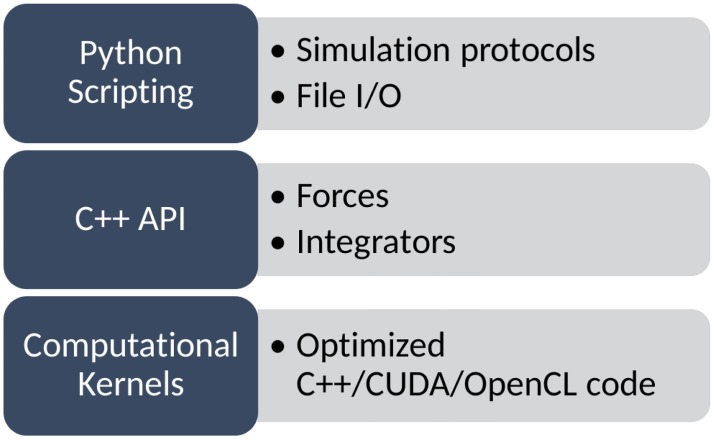
OpenMM is a molecular dynamics simulation toolkit with a unique focus on extensibility. It allows users to easily add new features, including forces with novel functional forms, new integration algorithms, and new simulation protocols. Those features automatically work on all supported hardware types (including both CPUs and GPUs) and perform well on all of them. In many cases they require minimal coding, just a mathematical description of the desired function. They also require no modification to OpenMM itself and can be distributed independently of OpenMM. This makes it an ideal tool for researchers developing new simulation methods, and also allows those new methods to be immediately available to the larger community.
Overview
The claims and statistics of this paper haven’t been checked yet.
Free: it reads the open-access text and checks the first 5 claims that cite a source we can check. Create a free account to check every claim.
Integrity signals
Registry
Cites
Statistics
Figures
Verification
Claims the paper makes
The claims and statistics of this paper haven’t been checked yet.
Free: it reads the open-access text and checks the first 5 claims that cite a source we can check. Create a free account to check every claim.
Claims other papers make about this one
Each is checked against this paper’s own text: does it say what the citing paper says it does?
The source backs part of the claim, not all of it — or backs it for a different population, condition or comparison.
In the citing paper
“Possible other software engines to consider are ddcMD (Zhang et al., 2020) and openMM (Eastman et al., 2017), both of which are supporting Martini and offer simulation speeds comparable to those of Gromacs.”
From Molecular dynamics simulation of an entire cell (2023) · cites this paper as Eastman et al., 2017
Experimental — accuracy not yet measuredThe source backs part of the claim, not all of it — or backs it for a different population, condition or comparison.
In the citing paper
“The Boresch angles and dihedrals play the same role as the Euler and polar angles used in the geometrical route, but are easier to implement in other MD software, such as OpenMM.78”
From Assessment of the Topology and Oligomerisation States of Coiled Coils Using Metadynamics with Conformational Restraints (2025) · cites this paper as [78]
Experimental — accuracy not yet measured
Self-check
Percentages, sums and reported differences re-computed from the paper’s own numbers.
The self-check needs the paper’s full text.
Citations
Cites
Comparison of simple potential functions for simulating liquid water
Jorgensen, W. L., Chandrasekhar, J., Madura, J. D., Impey, R. W., & Klein, M. L. (1983) · The Journal of Chemical Physics · doi:10.1063/1.445869 · Cited by 41,298 · cited 1×
“It loads a PDB file, models the forces with the AMBER99SB-ILDN force field [20] and TIP-3P water model [21], performs a local energy minimization to eliminate clashes, and then simulates 1 million steps of Verlet dynamics.”
MethodEquation of State Calculations by Fast Computing Machines
Metropolis, N., Rosenbluth, A. W., Rosenbluth, M. N., Teller, A. H., & Teller, E. (1953) · The Journal of Chemical Physics · doi:10.1063/1.1699114 · Cited by 37,192
Abraham, M. J., Murtola, T., Schulz, R., Páll, S., Smith, J. C., Hess, B., & Lindahl, E. (2015) · SoftwareX · doi:10.1016/j.softx.2015.06.001 · Cited by 27,190 · cited 12×
“For Gromacs and CHARMM, we compared only explicit solvent.”
MethodInfluentialCHARMM: The biomolecular simulation program
Brooks, B. R., Brooks, C. L., Mackerell, A. D., Nilsson, L., Petrella, R. J., Roux, B., Won, Y., Archontis, G., Bartels, C., Boresch, S., et al. (2009) · Journal of Computational Chemistry · doi:10.1002/jcc.21287 · Cited by 8,939 · cited 10×
“This includes the SWM4-NDP water model [34], and the CHARMM polarizable force field for proteins [4].”
MethodInfluentialSelf-citationImproved side‐chain torsion potentials for the Amber ff99SB protein force field
Lindorff‐Larsen, K., Piana, S., Palmo, K., Maragakis, P., Klepeis, J. L., Dror, R. O., & Shaw, D. E. (2010) · Proteins: Structure, Function, and Bioinformatics · doi:10.1002/prot.22711 · Cited by 6,134
Best, R. B., Zhu, X., Shim, J., Lopes, P. E. M., Mittal, J., Feig, M., & MacKerell, A. D. (2012) · Journal of Chemical Theory and Computation · doi:10.1021/ct300400x · Cited by 4,532 · cited 1×
“Some of the more important examples include the development of new force fields [1,2], sometimes involving novel functional forms for the interactions [3,4]; new integration algorithms [5–7]; new sampling methods [8–10]; and support for new types of hardware [11–13].”
BackgroundLee, J., Cheng, X., Swails, J. M., Yeom, M. S., Eastman, P. K., Lemkul, J. A., Wei, S., Buckner, J., Jeong, J. C., Qi, Y., et al. (2016) · Journal of Chemical Theory and Computation · doi:10.1021/acs.jctc.5b00935 · Cited by 4,171
Self-citationReversible multiple time scale molecular dynamics
Tuckerman, M., Berne, B. J., & Martyna, G. J. (1992) · The Journal of Chemical Physics · doi:10.1063/1.463137 · Cited by 3,592
Convergence acceleration of iterative sequences. the case of scf iteration
Pulay, P. (1980) · Chemical Physics Letters · doi:10.1016/0009-2614(80)80396-4 · Cited by 2,612 · cited 1×
“The iterative solver for induced dipoles uses the Direct Inversion in the Iterative Subspace (DIIS) algorithm [32] (added in OpenMM 6.”
MethodMolecular dynamics---Scalable algorithms for molecular dynamics simulations on commodity clusters
Bowers, K. J., Sacerdoti, F. D., Salmon, J. K., Shan, Y., Shaw, D. E., Chow, E., Xu, H., Dror, R. O., Eastwood, M. P., Gregersen, B. A., et al. (2006) · Proceedings of the 2006 ACM/IEEE conference on Supercomputing - SC '06 · doi:10.1145/1188455.1188544 · Cited by 2,580 · cited 3×
“OpenMM does include modelling tools, but it also can directly read the file formats used by Amber [16], CHARMM [17], Gromacs [18], and Desmond [19].”
MethodInfluential
Research works printed but not linked: 1
- Bekker H. Unification of box shapes in molecular simulations. J Comput Chem. 1997; 18: 1930– 1942. doi: 10.1002/(SICI)1096-987X(19971130)18:15<1930::AID-JCC8>3.0.CO;2-P · DOI
Cited by
Items 501–600 of 1,058
Carbery, A., Buttenschoen, M., Skyner, R., von Delft, F., & Deane, C. M. (2024) · Journal of Cheminformatics · doi:10.1186/s13321-024-00821-4 · Cited by 35
“We then used the Amber [68] protein forcefield (fF14sb) within OpenMM [69] to heat the proteins from 298K to 548K, with the system simulated for 20ns for each 10K interval.”
MethodMcDonogh, D. P., Gale, J. D., Raiteri, P., & Gebauer, D. (2024) · Nature Communications · doi:10.1038/s41467-024-47721-7 · Cited by 38
“Alltheclassicalmoleculardynamicssimulationspresentedinthiswork have been run with the OpenMM toolkit on GPUs using mixed precision 74 .”
Lee, S., Wang, D., Seeliger, M. A., & Tiwary, P. (2024) · Journal of Chemical Theory and Computation · doi:10.1021/acs.jctc.4c00503 · Cited by 33
StreaMD: the toolkit for high-throughput molecular dynamics simulations
Ivanová, A., Mokshyna, O., & Полищук, П. Г. (2024) · Journal of Cheminformatics · doi:10.1186/s13321-024-00918-w · Cited by 31
“Among accessible solutions, OpenMM, for instance, provides a versatile framework for constructing customized pipe-lines for MD simulations [8].”
Lemkul, J. A. (2020) · Progress in molecular biology and translational science · doi:10.1016/bs.pmbts.2019.12.009 · Cited by 31
GPU Acceleration of Four-Site Water Models in LAMMPS
Nikolskiy, V. P., & Stegailov, V. (2020) · Advances in parallel computing · doi:10.3233/apc200086 · Cited by 31
Enhancing water sampling of buried binding sites using nonequilibrium candidate Monte Carlo
Bergazin, T. D., Ben‐Shalom, I., Lim, N. M., Gill, S. C., Gilson, M. K., & Mobley, D. L. (2020) · Journal of Computer-Aided Molecular Design · doi:10.1007/s10822-020-00344-8 · Cited by 31
Vandenhaute, S., Rogge, S. M. J., & Speybroeck, V. V. (2021) · Frontiers in Chemistry · doi:10.3389/fchem.2021.718920 · Cited by 31
Structure–Capacitance Relationships of Graphene/Ionic Liquid Electrolyte Double Layers
Tu, Y., & McDaniel, J. G. (2021) · The Journal of Physical Chemistry C · doi:10.1021/acs.jpcc.1c05698 · Cited by 32
Donne, A. L., Tinti, A., Amayuelas, E., Kashyap, H. K., Camisasca, G., Remsing, R. C., Roth, R., Grosu, Y. G., & Meloni, S. (2022) · Advances in Physics X · doi:10.1080/23746149.2022.2052353 · Cited by 31
“It is also worth mentioning the OpenPathSampling [101], a python library that can be combined with MD engines, presently GROMACS [102] and OpenMM[103].”
MethodPavan, M., Bassani, D., Sturlese, M., & Moro, S. (2022) · NAR Genomics and Bioinformatics · doi:10.1093/nargab/lqac088 · Cited by 32
Design of cell-type-specific hyperstable IL-4 mimetics via modular de novo scaffolds
Yang, H., Ulge, U. Y., Quijano‐Rubio, A., Bernstein, Z. J., Maestas, D. R., Chun, J.-H., Wang, W., Lin, J., Jude, K. M., Singh, S., et al. (2023) · Nature Chemical Biology · doi:10.1038/s41589-023-01313-6 · Cited by 34
“The top five models were relaxed using Amber 55 .”
Computational approaches to delivery of anticancer drugs with multidimensional nanomaterials
Shukla, S., Jakowski, J., Kadian, S., & Narayan, R. J. (2023) · Computational and Structural Biotechnology Journal · doi:10.1016/j.csbj.2023.08.010 · Cited by 31
SCINE—Software for chemical interaction networks
Weymuth, T., Unsleber, J. P., Türtscher, P. L., Steiner, M., Sobez, J., Müller, C. H., Mörchen, M., Klasovita, V., Grimmel, S. A., Eckhoff, M., et al. (2024) · The Journal of Chemical Physics · doi:10.1063/5.0206974 · Cited by 32
Martinize2 and Vermouth: Unified Framework for Topology GenerationPreprint
Kroon, P., Grunewald, F., Barnoud, J., van Tilburg, M., Souza, P., Wassenaar, T. A., & Marrink, . J. (2024) · eLife · doi:10.7554/elife.90627.2 · Cited by 71
Cryo-EM structure and B-factor refinement with ensemble representation
Beton, J. G., Mulvaney, T., Cragnolini, T., & Topf, M. (2024) · Nature Communications · doi:10.1038/s41467-023-44593-1 · Cited by 30
“Models were randomly generated by per-turbing the positions of atoms, based on their B-factors, followed by local L-BFGS 32 minimisation (with OpenMM 33 ) to locate close-by structures that were compatible with the data 34 .”
InfluentialPapadopoulos, N., Nédélec, A., Derenne, A., Şulea, T. A., Pecquet, C., Chachoua, I., Vertenoeil, G., Tilmant, T., Petrescu, A., Mazzucchelli, G., et al. (2023) · Nature Communications · doi:10.1038/s41467-023-37277-3 · Cited by 37
Computational Design of Peptide Assemblies
Min, J., Rong, X., Zhang, J., Su, R., Wang, Y., & Qi, W. D. (2024) · Journal of Chemical Theory and Computation · doi:10.1021/acs.jctc.3c01054 · Cited by 31
Knappeová, B., Mlýnský, V., Pykal, M., Šponer, J., Banáš, P., Otyepka, M., & Krepl, M. (2024) · Journal of Chemical Theory and Computation · doi:10.1021/acs.jctc.4c00601 · Cited by 33
Kyro, G. W., Smaldone, A. M., Shee, Y., Xu, C., & Batista, V. S. (2025) · Journal of Chemical Information and Modeling · doi:10.1021/acs.jcim.4c02332 · Cited by 34
Design, Synthesis, and Mechanistic Anticancer Evaluation of New Pyrimidine-Tethered Compounds
Reymova, F., Sever, B., Topalan, E., Sevimli-Gür, C., Can, M., Tuyun, A. F., Başoğlu, F., Ece, A., Otsuka, M., Fujita, M., et al. (2025) · Pharmaceuticals · doi:10.3390/ph18020270 · Cited by 31
“0.0 [69–72] software by Cresset was used for molecular dynamics simulations, which is based on the OpenMM package [73].”
InfluentialSrivastava, A., Yáñez, O., & Cantero-López, P. (2020) · Journal of Molecular Liquids · doi:10.1016/j.molliq.2020.113341 · Cited by 31
RetractedRecent Trends in Drug Design and Discovery
Velmurugan, D., Pachaiappan, R., & Ramakrishnan, C. V. (2020) · Current Topics in Medicinal Chemistry · doi:10.2174/1568026620666200622150003 · Cited by 32
Song, C., & Martínez, T. J. (2020) · The Journal of Chemical Physics · doi:10.1063/5.0007417 · Cited by 30
Ismail, M. I., Ragab, H. M., Bekhit, A. A., & Ibrahim, T. M. (2021) · Computers in Biology and Medicine · doi:10.1016/j.compbiomed.2021.104295 · Cited by 30
ClustENMD: efficient sampling of biomolecular conformational space at atomic resolution
Kaynak, B., Zhang, S., Bahar, İ., & Doruker, P. (2021) · Bioinformatics · doi:10.1093/bioinformatics/btab496 · Cited by 33
Bassani, D., Pavan, M., Bolcato, G., Sturlese, M., & Moro, S. (2022) · Pharmaceuticals · doi:10.3390/ph15020180 · Cited by 30
“0), a licensed program based upon OpenMM [36] (version 7.”
BackgroundInfluentialAutoSolvate: A toolkit for automating quantum chemistry design and discovery of solvated molecules
Hruška, E., Gale, A., Huang, X., & Liu, F. (2022) · The Journal of Chemical Physics · doi:10.1063/5.0084833 · Cited by 30
Thermal Titration Molecular Dynamics (TTMD): Not Your Usual Post-Docking Refinement
Menin, S., Pavan, M., Salmaso, V., Sturlese, M., & Moro, S. (2023) · International Journal of Molecular Sciences · doi:10.3390/ijms24043596 · Cited by 31
“Each MD simulation presented in this work was conducted using the ACEMD [64] 3.5 engine, which is based upon OpenMM [65], an open-source Python library for molecular simulations.”
MethodInfluentialSpeybroeck, V. V. (2023) · Philosophical Transactions of the Royal Society A Mathematical Physical and Engineering Sciences · doi:10.1098/rsta.2022.0239 · Cited by 36
“simulation on a flexible MOF containing a million numbers of atoms, by exploiting the massive parallelism of state-of-the-art GPUs using the OpenMM software package [62,113].”
MethodPySAGES: flexible, advanced sampling methods accelerated with GPUs
Rico, P. F. Z., Schneider, L., Pérez-Lemus, G. R., Alessandri, R., Dasetty, S., Nguyen, T. D., Menéndez, C. A., Wu, Y., Jin, Y., Xu, Y., et al. (2024) · npj Computational Materials · doi:10.1038/s41524-023-01189-z · Cited by 31
Enhancing Side Chain Rotamer Sampling Using Nonequilibrium Candidate Monte Carlo
Burley, K. H., Gill, S. C., Lim, N. M., & Mobley, D. L. (2019) · Journal of Chemical Theory and Computation · doi:10.1021/acs.jctc.8b01018 · Cited by 31
CHARMM‐GUI Membrane Builder for Lipid Droplet Modeling and Simulation
Gee, S. E., Glover, K. J., Wittenberg, N. J., & Im, W. (2024) · ChemPlusChem · doi:10.1002/cplu.202400013 · Cited by 29
Vaccine design and development: Exploring the interface with computational biology and AI
Ananya, A., Panchariya, D. C., Karthic, A., Singh, S. P., Mani, A., Chawade, A., & Kushwaha, S. K. (2024) · International Reviews of Immunology · doi:10.1080/08830185.2024.2374546 · Cited by 31
“…tInKer [138,139] https://dasher.wustl.edu/tinker/ tinker was designed for small-scale simulations. therefore, it has limited scalability. openmm [140] https://openmm.org/ It may not be compatible with specific hardware. there may be algorithmic constraints of simulation. aCemD [141,142]…”
Davidson, D. S., Brown, A. M., & Lemkul, J. A. (2018) · Journal of Molecular Biology · doi:10.1016/j.jmb.2018.05.020 · Cited by 29
Deep Eutectic Solvents: Molecular Simulations with a First-Principles Polarizable Force Field
Jeong, K., McDaniel, J. G., & Yethiraj, A. (2021) · The Journal of Physical Chemistry B · doi:10.1021/acs.jpcb.1c01692 · Cited by 29
FEPrepare: A Web-Based Tool for Automating the Setup of Relative Binding Free Energy Calculations
Zavitsanou, S., Tsengenes, A., Papadourakis, M., Amendola, G., Chatzigoulas, A., Dellis, D., Cosconati, S., & Cournia, Z. (2021) · Journal of Chemical Information and Modeling · doi:10.1021/acs.jcim.1c00215 · Cited by 29
Helical structure motifs made searchable for functional peptide design
Tsai, C., Salawu, E. O., Li, H., Lin, G.-Y., Kuo, T., Voon, L., Sharma, A., Hu, K.-D., Cheng, Y.-Y., Sahoo, S., et al. (2022) · Nature Communications · doi:10.1038/s41467-021-27655-0 · Cited by 31
Molecular determinants of pH sensing in the proton-activated chloride channel
Osei‐Owusu, J., Kots, E. D., Ruan, Z., Mihaljević, L., Chen, K. H., Tamhaney, A., Ye, X., Lü, W., Weinstein, H., & Qiu, Z. (2022) · Proceedings of the National Academy of Sciences · doi:10.1073/pnas.2200727119 · Cited by 29
Developing Bonded Potentials for a Coarse-Grained Model of Intrinsically Disordered Proteins
Rizuan, A., Jovic, N., Phan, T. M., Kim, Y. C., & Mittal, J. (2022) · Journal of Chemical Information and Modeling · doi:10.1021/acs.jcim.2c00450 · Cited by 32
Collaborative Assessment of Molecular Geometries and Energies from the Open Force Field
D’Amore, L., Hahn, D. F., Dotson, D., Horton, J. T., Anwar, J., Craig, I., Fox, T., Gobbi, A., Lakkaraju, S. K., Lucas, X., et al. (2022) · Journal of Chemical Information and Modeling · doi:10.1021/acs.jcim.2c01185 · Cited by 29
Molecular simulations and NMR reveal how lipid fluctuations affect membrane mechanics
Doktorova, M., Khelashvili, G., Ashkar, R., & Brown, M. F. (2022) · Biophysical Journal · doi:10.1016/j.bpj.2022.12.007 · Cited by 30
Ojha, A. A., Thakur, S., Ahn, S.-H., & Amaro, R. E. (2023) · Journal of Chemical Theory and Computation · doi:10.1021/acs.jctc.2c00282 · Cited by 32
Shmilovich, K., & Ferguson, A. L. (2023) · The Journal of Physical Chemistry A · doi:10.1021/acs.jpca.3c00505 · Cited by 36
Bhati, A. P., Hoti, A., Potterton, A., Bieniek, M., & Coveney, P. V. (2023) · Journal of Chemical Theory and Computation · doi:10.1021/acs.jctc.3c00020 · Cited by 33
Chakravorty, A., Hussain, A., Cervantes, L. F., Lai, T. T., & Brooks, C. L. (2024) · Journal of Chemical Information and Modeling · doi:10.1021/acs.jcim.4c00126 · Cited by 29
Korlepara, D. B., Vasavi, C. S., Srivastava, R. K., Pal, P. K., Raza, S. H., Kumar, V., Pandit, S., Nair, A. G., Pandey, S., Sharma, S., et al. (2024) · Scientific Data · doi:10.1038/s41597-023-02872-y · Cited by 29
“MD simulations were performed using OpenMM 7.2.0 program 37 .”
MethodInfluentialPeck Justice, S. A., Barron, M. P., Qi, G. D., Wijeratne, H. R. S., Victorino, J. F., Simpson, E. R., Vilseck, J. Z., Wijeratne, A. B., & Mosley, A. L. (2020) · Journal of Biological Chemistry · doi:10.1074/jbc.ra120.014576 · Cited by 28
“Molecular dynamics—MD simulations were run with OpenMM on graphic-processing units (130).”
MethodPeck Justice, S. A., Qi, G., Wijeratne, H. R. S., Victorino, J. F., Simpson, E. R., Wijeratne, A. B., & Mosley, A. L. (2019) · doi:10.1101/2019.12.30.891267 · Cited by 28
Unprotected peptide macrocyclization and stapling via a fluorine-thiol displacement reaction
Islam, M. S., Junod, S. L., Zhang, S., Buuh, Z. Y., Guan, Y., Zhao, M., Kaneria, K. H., Kafley, P., Cohen, C., Maloney, R., et al. (2022) · Nature Communications · doi:10.1038/s41467-022-27995-5 · Cited by 28
(2024) · doi:10.1038/s42256-024-00860-4 · Cited by 28
“Energies are evaluated using the Amber ff99SB-ILDN protein forcefield 47 , with the GB-Neck2 implicit solvent model 48 using the OpenMM package 49 .”
Conev, A., Rigo, M. M., Devaurs, D., Fonseca, A. F., Kalavadwala, H., de Freitas, M. V., Clementi, C., Zanatta, G., Antunes, D. A., & Kavraki, L. E. (2023) · Briefings in Bioinformatics · doi:10.1093/bib/bbad242 · Cited by 28
“Many computational packages have since been developed, including NAMD [38], GROMACS [39, 40], AMBER [41], CHARMM [42] and OpenMM [43].”
Thandivel, S., Poovarasan, R., Tamizharasan, G., Abisek, A., Khute, S., Kareti, S. R., & Subash, P. (2024) · Heliyon · doi:10.1016/j.heliyon.2024.e27880 · Cited by 28
“The system was energy minimized through steepest decent steps for 1000 steps, with NVT and NPT steps processed for 100ps each during the equilibration phase, followed by 50ns MD simulation [38].”
MethodSubstrate interactions guide cyclase engineering and lasso peptide diversification
Barrett, S. E., Song, Y., Jordan, P., Brunson, J. K., Gordon-Nunez, J., da Cruz, G. C. M., Rosario, C. J., Okada, B. K., Anderson, K., Pires, T. A., et al. (2024) · Nature Chemical Biology · doi:10.1038/s41589-024-01727-w · Cited by 30
“All the pre-production runs, excluding minimization, were performed using OpenMM software 70 .”
Recruiting machine learning methods for molecular simulations of proteins
Mittal, S., & Shukla, D. (2018) · Molecular Simulation · doi:10.1080/08927022.2018.1448976 · Cited by 29
Validation of Free Energy Methods in AMBER
Tsai, H., Tao, Y., Lee, T., Merz, K. M., & York, D. M. (2020) · Journal of Chemical Information and Modeling · doi:10.1021/acs.jcim.0c00285 · Cited by 28
Markov state modeling reveals alternative unbinding pathways for peptide–MHC complexes
Abella, J. R., Antunes, D. A., Jackson, K. R., Lizee, G. A., Clementi, C., & Kavraki, L. E. (2020) · Proceedings of the National Academy of Sciences · doi:10.1073/pnas.2007246117 · Cited by 28
Wang, X., Xu, Y., Zheng, H., & Yu, K. (2021) · The Journal of Physical Chemistry Letters · doi:10.1021/acs.jpclett.1c02214 · Cited by 32
Ben‐Shalom, I., Lin, C. H., Radak, B. K., Sherman, W., & Gilson, M. K. (2021) · Journal of Chemical Theory and Computation · doi:10.1021/acs.jctc.1c00867 · Cited by 28
A new inactive conformation of SARS-CoV-2 main protease
Fornasier, E., Macchia, M. L., Giachin, G., Sosic, A., Pavan, M., Sturlese, M., Salata, C., Moro, S., Gatto, B., Bellanda, M., et al. (2022) · Acta Crystallographica Section D Structural Biology · doi:10.1107/s2059798322000948 · Cited by 29
Hu, Z., & Sun, X. (2022) · Journal of Chemical Theory and Computation · doi:10.1021/acs.jctc.2c00631 · Cited by 29
Pang, Y., & Björnsson, R. (2023) · Inorganic Chemistry · doi:10.1021/acs.inorgchem.2c03967 · Cited by 28
Transferable Implicit Solvation via Contrastive Learning of Graph Neural Networks
Airas, J., Ding, X., & Zhang, B. (2023) · ACS Central Science · doi:10.1021/acscentsci.3c01160 · Cited by 32
Sun, D., Sun, Y., Janezic, E. M., Zhou, T., Johnson, M. C., Azumaya, C. M., Noreng, S., Chiu, C., Seki, A., Arenzana, T. L., et al. (2023) · Nature Communications · doi:10.1038/s41467-023-43601-8 · Cited by 30
“The simulation system was independently prepared in OpenMM 81 using pdb fi xer by adding a POPC membrane totaling 476 molecules and solvated with 100mM NaCl in a 12.7nm×13.4 nm× 18 nm simulation box, resulting in a total system size of 298,653 atoms (Supplementary Table 3).”
MethodInfluentialFast free energy estimates from λ-dynamics with bias-updated Gibbs sampling
Robo, M. T., Hayes, R. L., Ding, X., Pulawski, B., & Vilseck, J. Z. (2023) · Nature Communications · doi:10.1038/s41467-023-44208-9 · Cited by 34
“LaDyBUGS has been implemented in OpenMM 51 , and all LaDyBUGS scripts areavailable fordownloadon the Vilseck LabGitHub page.”
MethodTemporally Correlated Active Forces Drive Segregation and Enhanced Dynamics in Chromosome Polymers
Brahmachari, S., Markovich, T., MacKintosh, F. C., & Onuchic, J. N. (2024) · PRX Life · doi:10.1103/prxlife.2.033003 · Cited by 30
The conformational landscape of human transthyretin revealed by cryo-EM
Basanta, B., Nugroho, K., Yan, N., Kline, G. M., Powers, E. T., Tsai, F. J., Wu, M., Hansel-Harris, A., Chen, J. S., Forli, S., et al. (2025) · Nature Structural & Molecular Biology · doi:10.1038/s41594-024-01472-7 · Cited by 29
PyRETIS 2: An improbability drive for rare events
Riccardi, E., Lervik, A., Roet, S., Aarøen, O., & van Erp, T. S. (2019) · Journal of Computational Chemistry · doi:10.1002/jcc.26112 · Cited by 31
Salsbury, A. M., Dean, T. J., & Lemkul, J. A. (2020) · Journal of Chemical Theory and Computation · doi:10.1021/acs.jctc.0c00191 · Cited by 28
Loop-extruders alter bacterial chromosome topology to direct entropic forces for segregation
Harju, J., van Teeseling, M. C. F., & Broedersz, C. P. (2024) · Nature Communications · doi:10.1038/s41467-024-49039-w · Cited by 27
Deep eutectic solvents on a tightrope: balancing the entropy and enthalpy of mixing
van den Bruinhorst, A., Corsini, C., Depraetère, G., Cam, N., Pádua, A. A. H., & Gomes, M. C. (2024) · Faraday Discussions · doi:10.1039/d4fd00048j · Cited by 27
Mancinelli, C. D., Marx, D. C., Gonzalez-Hernandez, A. J., Huynh, K. W., Mancinelli, L., Arefin, A., Khelashvili, G., Levitz, J., & Eliezer, D. (2024) · Proceedings of the National Academy of Sciences · doi:10.1073/pnas.2407744121 · Cited by 22
“…used initial poses generated using AlphaFold2 (75) and ColabFold (76) which were equilibrated using the standard CHARMM - GUI - based protocol and scripts followed by a short, 6 - ns run using OpenMM (77) and the CHARMM36m (78) forcefield and then simulated for 1,370 ns for each of six replicas.”
Proteolethargy is a pathogenic mechanism in chronic disease
Dall’Agnese, A., Zheng, M., Moreno, S., Platt, J. M., Hoang, A. T., Kannan, D., Dall’Agnese, G., Overholt, K. J., Sagi, I., Hannett, N. M., et al. (2024) · Cell · doi:10.1016/j.cell.2024.10.051 · Cited by 32
Investigating the Molybdenum Nitrogenase Mechanistic Cycle Using Spectroelectrochemistry
Sengupta, K., Joyce, J. P., Decamps, L., Kang, L., Björnsson, R., Rüdiger, O., & DeBeer, S. (2025) · Journal of the American Chemical Society · doi:10.1021/jacs.4c16047 · Cited by 29
Han, B., & Yu, K. (2025) · Nature Communications · doi:10.1038/s41467-025-56061-z · Cited by 37
“In the NVT simulation, the LangevinMiddleIntegrator in OpenMM (7.7.0) 63 was employed, using a time step of 1fs and a friction coef fi - cient of 0.1ps − 1 .”
InfluentialSciortino, G., Sanna, D., Lubinu, G., Maréchal, J., & Garribba, E. (2020) · Chemistry - A European Journal · doi:10.1002/chem.202001492 · Cited by 27
Expanding the Structural Diversity of DNA Methyltransferase Inhibitors
Juárez‐Mercado, K. E., Prieto-Martínez, F. D., Sánchez‐Cruz, N., Peña‐Castillo, A., Prada‐Gracia, D., & Medina‐Franco, J. L. (2020) · Pharmaceuticals · doi:10.3390/ph14010017 · Cited by 28
“1; [82]), beginning with an energy minimization using steepest descent algorithm, with a convergence threshold of 10 kJ/mol/nm.”
MethodEhrman, J. N., Lim, V. T., Bannan, C. C., Thi, N., Kyu, D. Y., & Mobley, D. L. (2021) · Journal of Computer-Aided Molecular Design · doi:10.1007/s10822-020-00367-1 · Cited by 27
“1 [4] using the L-BFGS algorithm [28] with an energy tolerance of 5.”
MethodRajpurkar, A. R., Mateo, L. J., Murphy, S. E., & Boettiger, A. N. (2021) · Nature Communications · doi:10.1038/s41467-021-23831-4 · Cited by 27
The prediction of protein–ligand unbinding for modern drug discovery
Zhang, Q., Zhao, N., Meng, X., Yu, F., Yao, X., & Liu, H. (2021) · Expert Opinion on Drug Discovery · doi:10.1080/17460441.2022.2002298 · Cited by 29
“The operation of SMD and RAMD simulations is simple and minimizes NAMD [173] OpenMM-CHARMM [174] WT-MetaD PCV-MetaD FM InMetaD BEMD NAMD [173] , PLUMED [175] Colvars [176] US AMBER [177] , NAMD [173] , Colvars [176] SMD AMBER [177] , NAMD [173] , GROMACS [178] , PLUMED [175] τRAMD NAMD [173] ,…”
MethodCHARMM‐GUI Enhanced Sampler for various collective variables and enhanced sampling methods
Suh, D., Feng, S., Lee, H.-Y., Zhang, H., Park, S., Kim, S., Lee, J., Choi, S., & Im, W. (2022) · Protein Science · doi:10.1002/pro.4446 · Cited by 29
Deep learning to decompose macromolecules into independent Markovian domains
Mardt, A., Hempel, T., Clementi, C., & Noé, F. (2022) · Nature Communications · doi:10.1038/s41467-022-34603-z · Cited by 33
Shmilovich, K., Stieffenhofer, M., Charron, N. E., & Hoffmann, M. (2022) · The Journal of Physical Chemistry A · doi:10.1021/acs.jpca.2c07716 · Cited by 36
Ketkaew, R., & Luber, S. (2022) · Journal of Chemical Information and Modeling · doi:10.1021/acs.jcim.2c00883 · Cited by 27
Structure and supramolecular organization of the canine distemper virus attachment glycoprotein
Kalbermatter, D., Jeckelmann, J.-M., Wyss, M., Shrestha, N., Pliatsika, D., Riedl, R., Lemmin, T., Plattet, P., & Fotiadis, D. (2023) · Proceedings of the National Academy of Sciences · doi:10.1073/pnas.2208866120 · Cited by 27
“The simulations were carried out with OPENMM molecular engine (77).”
Ojha, A. A., Srivastava, A., Votapka, L. W., & Amaro, R. E. (2023) · Journal of Chemical Information and Modeling · doi:10.1021/acs.jcim.2c01589 · Cited by 27
SYCP1 head-to-head assembly is required for chromosome synapsis in mouse meiosis
Billmyre, K. K., Kesler, E. A., Tsuchiya, D., Corbin, T. J., Weaver, K. J., Moran, A., Yu, Z., Adams, L., Delventhal, K. M., Durnin, M., et al. (2023) · Science Advances · doi:10.1126/sciadv.adi1562 · Cited by 27
“MD simulations were performed using AMBER ff19SB and OPC force fields ( 35 ) in OpenMM ( 36 ), run locally on NVIDIA GeForce RTX 3090 GPU cards through a Google Colab notebook that was modified from the “ Making-it-rain ” cloud-based MD note-book ( 37 ).”
MethodLanthanide transport in angstrom-scale MoS 2 -based two-dimensional channels
Wang, M., Xiong, Q., Wang, M., Lewis, N. H. C., Ying, D., Yan, G., Hoenig, E. V., Han, Y., Lee, O., Peng, G., et al. (2024) · Science Advances · doi:10.1126/sciadv.adh1330 · Cited by 27
Melagraki, G., Ntougkos, E., Papadopoulou, D., Rinotas, V. E., Leonis, G., Douni, E. K., Afantitis, A., & Kollias, G. A. (2018) · Frontiers in Pharmacology · doi:10.3389/fphar.2018.00800 · Cited by 29
Conti, S., & Karplus, M. (2019) · PLoS Computational Biology · doi:10.1371/journal.pcbi.1006954 · Cited by 27
Ancestral reconstruction reveals mechanisms of ERK regulatory evolution
Sang, D., Pinglay, S., Wiewiora, R., Selvan, M. E., Lou, H. J., Chodera, J. D., Turk, B. E., Gumus, Z. H., & Holt, L. J. (2019) · eLife · doi:10.7554/elife.38805 · Cited by 27
“For all simulations, we used the parameter files included in the OpenMM 7.2 distribution ( Eastman et al., 2017 ) for the Amber ff99SB-ILDN force field ( Lindorff-Larsen et al., 2010 ) and the TIP3P rigid water model ( Jorgensen et al., 1983 ).”
InfluentialSelf-citationKorlepara, D. B., Vasavi, C. S., Jeurkar, S., Pal, P. K., Roy, S., Mehta, S., Sharma, S., Kumar, V., Muvva, C., Sridharan, B., et al. (2022) · Scientific Data · doi:10.1038/s41597-022-01631-9 · Cited by 27
“Molecular dynamics simulations have been carried out using the OpenMM 7.2.0 program 57 .”
MethodInfluentialComputational Insights into Mg2+ Dehydration in the Presence of Carbonate
Aufort, J., Raiteri, P., & Gale, J. D. (2022) · ACS Earth and Space Chemistry · doi:10.1021/acsearthspacechem.1c00389 · Cited by 26
(2024) · doi:10.1021/acs.jctc.4c00255 · Cited by 26
Xu, Y. C., & Huang, J. (2021) · Communications Chemistry · doi:10.1038/s42004-021-00537-8 · Cited by 29
Secondary structure determines electron transport in peptides
Samajdar, R., Meigooni, M., Yang, H., Li, J., Liu, X., Jackson, N. E., Mosquera, M. A., Tajkhorshid, E., & Schroeder, C. M. (2024) · Proceedings of the National Academy of Sciences · doi:10.1073/pnas.2403324121 · Cited by 26
Costacurta, F., Dodaro, A., Bante, D., Schöppe, H., Peng, J.-Y., Sprenger, B., He, X. C., Moghadasi, S. A., Egger, L. M., Fleischmann, J., et al. (2024) · PLoS Pathogens · doi:10.1371/journal.ppat.1012522 · Cited by 28
“All MD simulations were conducted exploiting the ACEMD16 3.5 engine, which is based upon the open-source Python library for biomolecular simulations OpenMM [94].”
MethodInfluentialMolecular basis of neurosteroid and anticonvulsant regulation of TRPM3
Yin, Y., Park, C.-G., Feng, S., Guan, Z., Lee, H.-J., Zhang, F., Sharma, K., Borgnia, M. J., Im, W., & Lee, S. (2025) · Nature Structural & Molecular Biology · doi:10.1038/s41594-024-01463-8 · Cited by 27
“Hydrogen mass repartition was applied 77 and a 4 fs time step was used for both equilibration and production runs in OpenMM 78 .”
Talagayev, V., Chen, Y., Doering, N. P., Obendorf, L., Denzinger, K., Puls, K., Lam, K., Liu, S., Wolf, C. A., Noonan, T., et al. (2025) · Journal of Chemical Information and Modeling · doi:10.1021/acs.jcim.4c02158 · Cited by 26
PyRod: Tracing Water Molecules in Molecular Dynamics Simulations
Schaller, D., Pach, S., & Wolber, G. (2019) · Journal of Chemical Information and Modeling · doi:10.1021/acs.jcim.9b00281 · Cited by 26
Metadata
- Authors
- Eastman, P., Swails, J., Chodera, J. D., McGibbon, R. T., Zhao, Y., Beauchamp, K. A., Wang, L.-P., Simmonett, A. C., Harrigan, M. P., Stern, C. D., Wiewiora, R. P., Brooks, B. R., & Pande, V. S.
- Affiliations
- Stanford University (US)
- Rutgers, The State University of New Jersey (US)
- Memorial Sloan Kettering Cancer Center (US)
- University of California, Davis (US)
- National Institutes of Health (US)
- Tri-Institutional PhD Program in Chemical Biology (US)
- Corresponding author
- Eastman, Peter
- Swails, Jason
- Chodera, John D.
- McGibbon, Robert T.
- Zhao, Yutong
- Beauchamp, Kyle A.
- Wang, Lee-Ping
- Simmonett, Andrew C.
- Harrigan, Matthew P.
- Stern, Chaya D.
- Wiewiora, Rafal P.
- Brooks, Bernard R.
- Pande, Vijay S.
- ORCID
- Venue
- PLOS Computational Biology
- Publisher
- Public Library of Science (PLoS)
- Published
- 2017-07-26
- Volume
- 13
- Issue
- 7
- Pages
- e1005659
- ISSN
- 1553-734X (ISSN-L)
- 1553-7358
- PMC
- PMC5549999
- OpenAlex
- W2949223833
- Cited by
- 2,748
- References
- 37
- Citations by year
- 2026: 380 · 2025: 455 · 2024: 472 · 2023: 432 · 2022: 330 · 2021: 301 · 2020: 197 · 2019: 105 · 2018: 65 · 2017: 11
- FWCI
- 119.89
- Type
- journal article
- Language
- en
- Update notices
- new_version (2017-08-09)
- Open access
- gold
- doi.org
- Licence
- public-domain
- creativecommons.org/publicdomain/zero/1.0/ (vor)
- Locations
- PLoS Computational Biology (publishedVersion, public-domain)
- bioRxiv (Cold Spring Harbor Laboratory) (acceptedVersion, cc-by)
- PubMed Central (publishedVersion, public-domain)
- PubMed (publishedVersion)
- RePEc: Research Papers in Economics (submittedVersion)
- DOAJ (DOAJ: Directory of Open Access Journals) (submittedVersion, cc-by-sa)
- eScholarship (California Digital Library) (submittedVersion)
- eScholarship (California Digital Library) (submittedVersion, public-domain)
- Figshare (submittedVersion, cc-by)
- Funders
- National Institutes of Health (US) (U54 GM072970, R01-GM062868)
- National Institutes of Health (P30 CA008748)
- Starr Foundation (US) (I8-A8-058)
- Topics
- Physical Sciences › Computer Science › Hardware and Architecture › Parallel Computing and Optimization Techniques
- Life Sciences › Biochemistry, Genetics and Molecular Biology › Molecular Biology › Protein Structure and Dynamics
- Physical Sciences › Chemistry › Physical and Theoretical Chemistry › Advanced Physical and Chemical Molecular Interactions
- Keywords
- OpenMM, molecular dynamics simulation, extensibility, force field development, integration algorithms, simulation protocols, GPU acceleration, CPU simulation, high-performance algorithms
- MeSH terms
- Algorithms, Software, Computational Biology, Molecular Dynamics Simulation
About these checks
Registry, retraction, Cites and statistics results are computed, not judged, with one exception: a printed reference that no index lists is read once by a model before it counts as a citation error. Claims are extracted by a model and kept only when their quote appears verbatim in the text; each cited source is then checked, with a model’s help, for whether it says what the claim relies on. Those verdicts can be wrong — read the claim’s quote and the cited source before relying on one.
Statistics and arithmetic are recomputed, not judged.
Confidence bands are shown only for fields calibrated on our annotated test set. None is calibrated yet, so no band is shown.
What counts as a claim ›How we measure confidence ›How we check this ›
Are you an author, or do you see a problem with this page? Request a review
Data sources
Bibliographic data: Semantic Scholar, OpenAlex, Crossref.
Contains information from the Semantic Scholar Academic Graph Datasets, made available under the ODC Attribution License (ODC-BY 1.0).
Semantic Scholar’s data is described in: Kinney, R., et al. (2023). The Semantic Scholar Open Data Platform. arXiv:2301.10140.
