

Initial-state-dependent, robust, transient neural dynamics encode conscious visual perception
Open accessPublished version of a preprint
The DOI matches its Crossref record; 71 of the 71 references it cites were found in a registry or an index.
Abstract
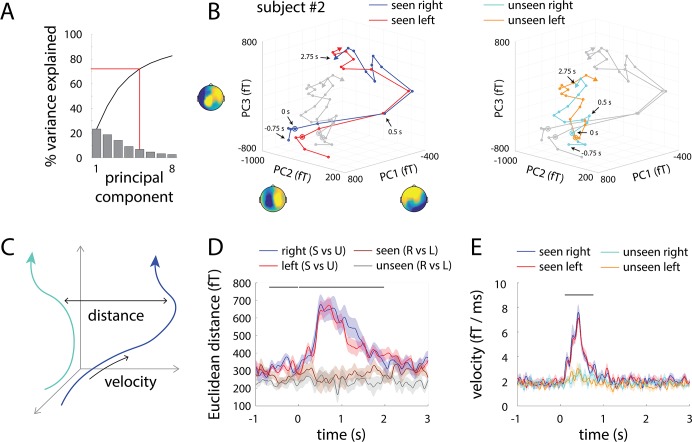
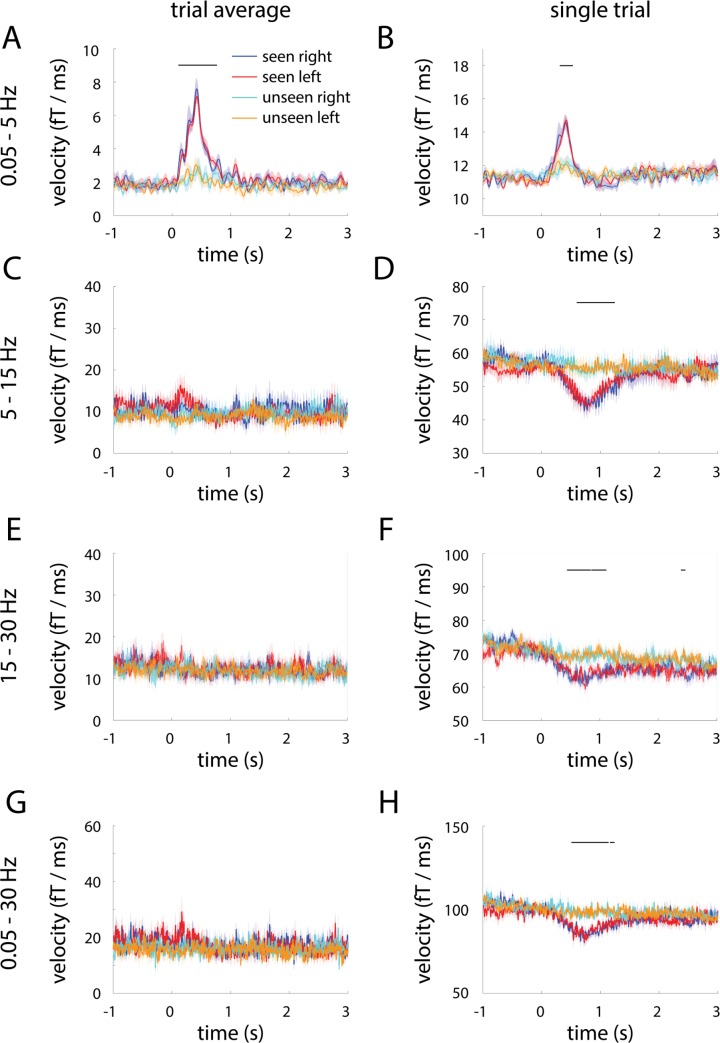
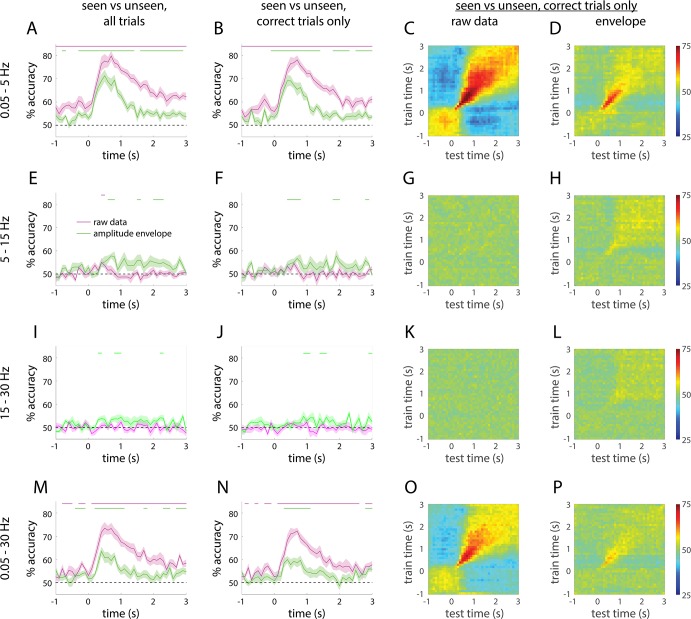
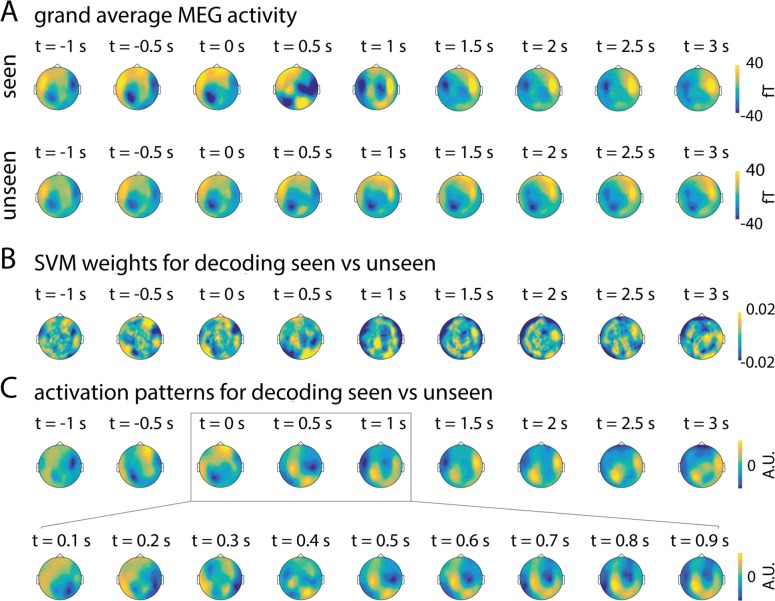
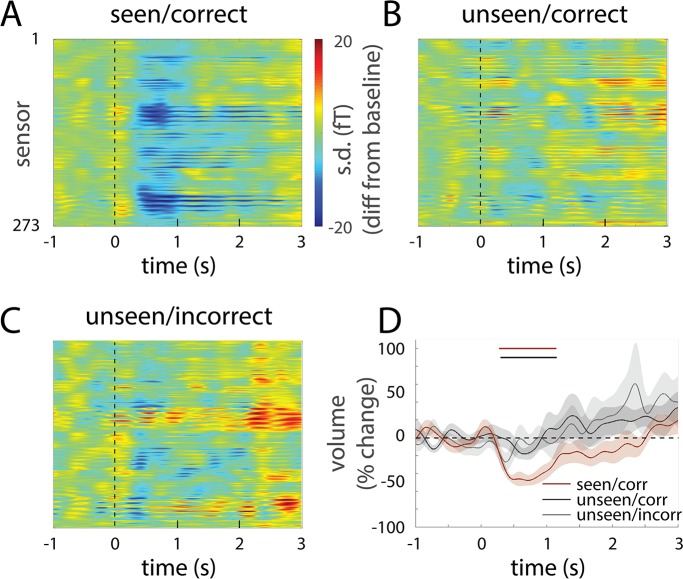
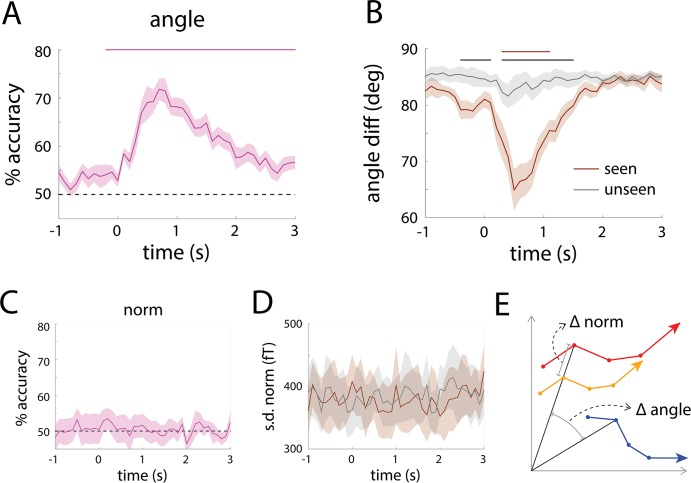
Recent research has identified late-latency, long-lasting neural activity as a robust correlate of conscious perception. Yet, the dynamical nature of this activity is poorly understood, and the mechanisms governing its presence or absence and the associated conscious perception remain elusive. We applied dynamic-pattern analysis to whole-brain slow (< 5 Hz) cortical dynamics recorded by magnetoencephalography (MEG) in human subjects performing a threshold-level visual perception task. Up to 1 second before stimulus onset, brain activity pattern across widespread cortices significantly predicted whether a threshold-level visual stimulus was later consciously perceived. This initial state of brain activity interacts nonlinearly with stimulus input to shape the evolving cortical activity trajectory, with seen and unseen trials following well separated trajectories. We observed that cortical activity trajectories during conscious perception are fast evolving and robust to small variations in the initial state. In addition, spontaneous brain activity pattern prior to stimulus onset also influences unconscious perceptual making in unseen trials. Together, these results suggest that brain dynamics underlying conscious visual perception belongs to the class of initial-state-dependent, robust, transient neural dynamics.
Overview
The claims and statistics of this paper haven’t been checked yet.
Free: it reads the open-access text and checks the first 5 claims that cite a source we can check. Create a free account to check every claim.
Integrity signals
Registry
Cites
Statistics
Figures
Verification
Claims the paper makes
The claims and statistics of this paper haven’t been checked yet.
Free: it reads the open-access text and checks the first 5 claims that cite a source we can check. Create a free account to check every claim.
Claims other papers make about this one
Each is checked against this paper’s own text: does it say what the citing paper says it does?
The source backs part of the claim, not all of it — or backs it for a different population, condition or comparison.
In the citing paper
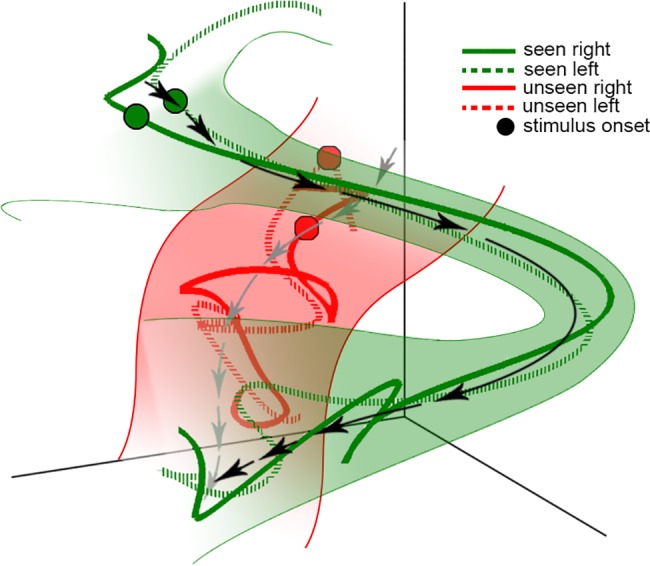
“In this framework, ignition is seen as a sudden, high-speed divergence of the trajectories on trials reported as consciously perceived, generating a series of metastable activity states”
From Conscious Processing and the Global Neuronal Workspace Hypothesis (2020) · cites this paper as Baria et al., 2017
Experimental — accuracy not yet measured
Self-check
Percentages, sums and reported differences re-computed from the paper’s own numbers.
The self-check needs the paper’s full text.
Citations
Cites
LIBSVM: A library for support vector machines
Chang, C.-C., & Lin, C.-J. (2011) · ACM Transactions on Intelligent Systems and Technology · doi:10.1145/1961189.1961199 · Cited by 40,918 · cited 1×
“Using the LIBSVM package [62], we implemented a SVM at each time point”
MethodComplex brain networks: graph theoretical analysis of structural and functional systems
Bullmore, E., & Sporns, O. (2009) · Nature Reviews Neuroscience · doi:10.1038/nrn2575 · Cited by 11,820 · cited 1×
“Our study illustrates that given the high degree of connectedness across the cerebral cortex [59, 60], analysis of distributed spatial patterns of activity complements traditional region-by-region analysis in the investigation of the neural mechanisms of conscious perception.”
Background(1966) · Medical Entomology and Zoology · Cited by 10,293
Libsvm : A library for support vector machines
Ferrari, V. (2008) · Medical Entomology and Zoology · Cited by 10,122
Nonparametric statistical testing of EEG- and MEG-data
Maris, E., & Oostenveld, R. (2007) · Journal of Neuroscience Methods · doi:10.1016/j.jneumeth.2007.03.024 · Cited by 8,496 · cited 1×
“All statistical results using a time-point-by-time-point analysis were corrected for multiple comparisons using cluster-based permutation tests [61], as described below.”
MethodSpontaneous fluctuations in brain activity observed with functional magnetic resonance imaging
Fox, M. D., & Raichle, M. E. (2007) · Nature Reviews Neuroscience · doi:10.1038/nrn2201 · Cited by 6,700 · cited 1×
“Depending on its initial state, which may reflect cognitive state (such as attention or expectation) and spontaneous activity fluctuations [54], neural activity may reach a desired state – a particular region in the state space – at different post-stimulus latencies.”
BackgroundMaass, W., Natschläger, T., & Markram, H. (2002) · Neural Computation · doi:10.1162/089976602760407955 · Cited by 4,025 · cited 1×
“transient neural dynamics (‘trajectories’), whereby computation arises from the voyage through state space rather than the arrival at a fixed location [26, 28, 49].”
BackgroundCircStat : A MATLAB Toolbox for Circular Statistics
Berens, P. (2009) · Journal of Statistical Software · doi:10.18637/jss.v031.i10 · Cited by 3,099 · cited 2×
“Separately for seen and unseen trials, we tested whether across-trial angle variability differed between each post-stimulus time point and the pre-stimulus period (from 1 sec before to stimulus onset) by using a non-parametric two-sample test for equal medians [63] as implemented in circ_cmtest function of the CircSta…”
MethodExperimental and theoretical approaches to conscious processing
Dehaene, S., & Changeux, J.-P. (2011) · Neuron · doi:10.1016/j.neuron.2011.03.018 · Cited by 2,573 · cited 2×
“4 activity across widely distributed brain regions underlies conscious processing [16, 17].”
BackgroundConscious, preconscious, and subliminal processing: a testable taxonomy
Dehaene, S., Changeux, J.-P., Naccache, L., Sackur, J., & Sergent, C. (2006) · Trends in Cognitive Sciences · doi:10.1016/j.tics.2006.03.007 · Cited by 2,067
Cited by
Conscious Processing and the Global Neuronal Workspace Hypothesis
Mashour, G. A., Roelfsema, P., Changeux, J.-P., & Dehaene, S. (2020) · Neuron · doi:10.1016/j.neuron.2020.01.026 · Cited by 1,164
“…the observed dynamic states are not just non-specific correlates of attention and perception; they demonstrably contain detailed, decodable information about the specific stimulus that was consciously seen (Baria et al., 2017; King et al., 2016; Salti et al., 2015; Tr € ubutschek et al., 2017).”
BackgroundNeuromodulation of brain state and behavior
McCormick, D. A., Nestvogel, D. B., & He, B. J. (2020) · Annual Review of Neuroscience · doi:10.1146/annurev-neuro-100219-105424 · Cited by 303
Self-citationIs it time to put rest to rest?
Finn, E. S. (2021) · Trends in Cognitive Sciences · doi:10.1016/j.tics.2021.09.005 · Cited by 243
Northoff, G., & Lamme, V. (2020) · Neuroscience & Biobehavioral Reviews · doi:10.1016/j.neubiorev.2020.07.019 · Cited by 247
Bifurcation in brain dynamics reveals a signature of conscious processing independent of report
Sergent, C., Corazzol, M., Labouret, G., Stockart, F., Wexler, M., King, J.-R., Meyniel, F., & Pressnitzer, D. (2021) · Nature Communications · doi:10.1038/s41467-021-21393-z · Cited by 200
Ito, T., Hearne, L. J., & Cole, M. W. (2020) · NeuroImage · doi:10.1016/j.neuroimage.2020.117141 · Cited by 155
“, mean task activity), consistent with previous reports in the electrophysiology literature (Baria et al., 2017; Churchland et al., 2011, 2012; Cohen and Kohn, 2011).”
Joglekar, M. R., Mejias, J. F., Yang, G. R., & Wang, X.-J. (2018) · Neuron · doi:10.1016/j.neuron.2018.02.031 · Cited by 153
Beyond Trial-Based Paradigms: Continuous Behavior, Ongoing Neural Activity, and Natural Stimuli
Huk, A., Bonnen, K., & He, B. J. (2018) · The Journal of Neuroscience · doi:10.1523/jneurosci.1920-17.2018 · Cited by 139
“Consistent with this idea, studies have demonstrated that prestimulus spontaneous fMRI and SCP activity influences perceptual outcome and motor output (Boly et al., 2007; Fox et al., 2007; Hesselmann et al., 2008; Monto et al., 2008; Li et al., 2014; Baria et al., 2017).”
ResultSelf-citationDynamic relationships between spontaneous and evoked electrophysiological activity
Wainio-Theberge, S., Wolff, A., & Northoff, G. (2021) · Communications Biology · doi:10.1038/s42003-021-02240-9 · Cited by 79
Theory of the Multiregional Neocortex: Large-Scale Neural Dynamics and Distributed Cognition
Wang, X.-J. (2022) · Annual Review of Neuroscience · doi:10.1146/annurev-neuro-110920-035434 · Cited by 83
“Human studies using such paradigms combined with recording of event-related potential using EEG or MEG lend support to the GNW theory while revealing that the initial state of the brain biases whether a given stimulus is perceived or not (Del Cul et al. 2007, Baria et al. 2017).”
MethodBourdillon, P., Hermann, B., Guénot, M., Bastuji, H., Isnard, J., King, J.-R., Sitt, J. D., & Naccache, L. (2020) · Scientific Reports · doi:10.1038/s41598-020-70447-7 · Cited by 86
Towards a pluralistic neurobiological understanding of consciousness
He, B. J. (2023) · Trends in Cognitive Sciences · doi:10.1016/j.tics.2023.02.001 · Cited by 61
“activity pattern contributing to awareness is the attractor that accounts for aperiodic population activity which is modulated by brain oscillations [42,54,99].”
BackgroundSelf-citationCortical and subcortical signatures of conscious object recognition
Levinson, M., Podvalny, E., Baete, S. H., & He, B. J. (2021) · Nature Communications · doi:10.1038/s41467-021-23266-x · Cited by 69
Self-citationA dual role of prestimulus spontaneous neural activity in visual object recognition
Podvalny, E., Flounders, M. W., King, L. E., Holroyd, T., & He, B. J. (2019) · Nature Communications · doi:10.1038/s41467-019-11877-4 · Cited by 67
Self-citationWolff, A., Yao, L., Gómez‐Pilar, J., Shoaran, M., Jiang, N., & Northoff, G. (2019) · NeuroImage · doi:10.1016/j.neuroimage.2019.02.070 · Cited by 72
“, 2017a, 2017b); stronger TTV quenching is associated with faster reaction times (He, 2013), superior perceptual abilities (Schurger et al., 2015; Arazi et al., 2017b; Baria et al., 2017), and superior memory recall (Xue et al.”
Can Computers Become Conscious and Overcome Humans?
Signorelli, C. M. (2018) · Frontiers in Robotics and AI · doi:10.3389/frobt.2018.00121 · Cited by 74
“A recent experiment has additionally demonstrated a transient neural dynamic during visual conscious perception (Baria et al., 2017), challenging sustained activity mechanisms as broadcasting and integration, and suggesting initial-state-dependent neural dynamics.”
BackgroundDisrupted neural variability during propofol‐induced sedation and unconsciousness
Huang, Z., Zhang, J., Wu, J., Liu, X., Xu, J., Zhang, J., Qin, P., Dai, R., Yang, Z., Mao, Y., et al. (2018) · Human Brain Mapping · doi:10.1002/hbm.24304 · Cited by 63
Bellet, J., Gay, M., Dwarakanath, A., Jarraya, B., van Kerkoerle, T., Dehaene, S., & Panagiotaropoulos, T. I. (2022) · Neuroscience of Consciousness · doi:10.1093/nc/niac005 · Cited by 55
“Recent MEG experiments in humans suggest that, once a stimulus has been consciously accessed, regardless of its original duration, it is internally represented by a metastable code that remains relatively fixed for a period of several hundreds of milliseconds (King et al. 2014, 2016; Schurger et al. 2015a; Baria et al…”
BackgroundResultSequential dynamics of complex networks in mind: Consciousness and creativity
Rabinovich, M. I., Zaks, M. A., & Varona, P. (2020) · Physics Reports · doi:10.1016/j.physrep.2020.08.003 · Cited by 59
Prestimulus dynamics blend with the stimulus in neural variability quenching
Wolff, A., Chen, L., Tumati, S., Golesorkhi, M., Gómez‐Pilar, J., Hu, J. Z., Jiang, S., Mao, Y. Q., Longtin, A., & Northoff, G. (2021) · NeuroImage · doi:10.1016/j.neuroimage.2021.118160 · Cited by 53
“Introduction Over the past ten years, many studies ( Baria et al., 2017 ; Galindoeon et al., 2019 ; He, 2013 ; Hirschmann et al., 2019 ; Huang et al., 2017 ; ieus et al., 2018 ; Podvalny et al., 2019 ) have demonstrated that posttimulus activity levels depend on the initial state, the level of…”
Neural dynamics of visual ambiguity resolution by perceptual prior
Flounders, M. W., González‐García, C., Hardstone, R., & He, B. J. (2019) · eLife · doi:10.7554/elife.41861 · Cited by 54
“05 – 5 Hz) that were recently shown to be involved in conscious 163 vision (Li et al., 2014; Baria et al., 2017) and the classic event-related field (ERF, DC – 35 Hz) 164 band that has been used to decode stimulus features under seen and unseen conditions (Salti 165 et al.”
BackgroundMethodResultInfluentialSelf-citationNorthoff, G., & Zilio, F. (2022) · Entropy · doi:10.3390/e24020270 · Cited by 46
“, the correlation between different regions’ time-series), impact subsequent stimulus-related activity and its association with consciousness [69,70,72,75,81].”
BackgroundNorthoff, G., Tsuchiya, N., & Saigo, H. (2019) · Entropy · doi:10.3390/e21121234 · Cited by 37
“Importantly, recent studies in MEG [72,73] and fMRI [87] demonstrate that prestimulus variance and its nonadditive impact on poststimulus amplitude and variance are related to conscious contents [70,72,73,88] and the level and state of consciousness [87].”
BackgroundConscious Perception: Time for an Update?
Salti, M., Harel, A., & Marti, S. (2019) · Journal of Cognitive Neuroscience · doi:10.1162/jocn_a_01343 · Cited by 30
Beyond task response—Pre-stimulus activity modulates contents of consciousness
Northoff, G., Zilio, F., & Zhang, J. (2024) · Physics of Life Reviews · doi:10.1016/j.plrev.2024.03.002 · Cited by 41
State-related neural influences on fMRI connectivity estimation
Martin, C. G., He, B. J., & Chang, C. (2021) · NeuroImage · doi:10.1016/j.neuroimage.2021.118590 · Cited by 35
Self-citationNetwork mechanisms of ongoing brain activity’s influence on conscious visual perception
Wu, Y., Podvalny, E., Levinson, M., & He, B. J. (2024) · Nature Communications · doi:10.1038/s41467-024-50102-9 · Cited by 44
“…magnetoencephalography (MEG) and monkey neurophysiology fi ndings showing that the initial state of the brain, as captured by the multivariate activity pattern before stimulus input, in fl uences the trajectory of cortical activity in a high-dimensional state space following sensory input 22,23 .”
Self-citationThe Neural Substrates of Conscious Perception without Performance Confounds
Morales, J., Odegaard, B., & Maniscalco, B. (2022) · Neuroscience and Philosophy · doi:10.7551/mitpress/12611.003.0015 · Cited by 25
Self-citationNo Evidence for Neural Overlap between Unconsciously Processed and Imagined Stimuli
Dijkstra, N., van Gaal, S., Geerligs, L., Bosch, S., & van Gerven, M. A. J. (2021) · eNeuro · doi:10.1523/eneuro.0228-21.2021 · Cited by 26
“During conscious perception, neural representations first change rapidly over time during early time windows, likely reflecting the feedforward sweep, after which representations stabilize later in time, presumably via recurrent processing (Cichy et al., 2014; Mostert et al., 2015; Schurger et al., 2015; Baria et al.,…”
BackgroundA measure centrality index for systematic empirical comparison of consciousness theories
Chis-Ciure, R., Melloni, L., & Northoff, G. (2024) · Neuroscience & Biobehavioral Reviews · doi:10.1016/j.neubiorev.2024.105670 · Cited by 22
“…variability, poststimulus intertrial phase coherence, and pre-poststimulus differences in all these measures (Arazi et al., 2017a, 2017b; Baria et al., 2017; Braun et al., 2022; Churchland et al., 2011, 2010; Deha-ghani et al., 2022; He, 2013; Huang et al., 2015; Northoff and Zilio,…”
BackgroundState-aware detection of sensory stimuli in the cortex of the awake mouse
Sederberg, A., Pala, A., Zheng, H. J. V., He, B. J., & Stanley, G. B. (2019) · PLoS Computational Biology · doi:10.1371/journal.pcbi.1006716 · Cited by 25
Self-citationRobust, Transient Neural Dynamics during Conscious Perception
He, B. J. (2018) · Trends in Cognitive Sciences · doi:10.1016/j.tics.2018.04.005 · Cited by 23
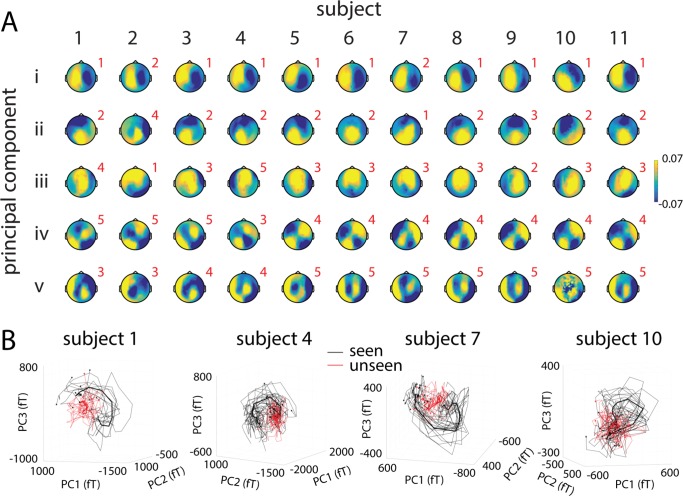
“For example, using standard principle component (PC) analysis, the top five PCs already account for >70%of variance in the whole-headMEG data [5].”
InfluentialSelf-citationA dynamic bifurcation mechanism explains cortex-wide neural correlates of conscious access
Klatzmann, U., Froudist‐Walsh, S., Bliss, D. P., Theodoni, P., Mejías, J. F., Niu, M., Rapan, L., Palomero‐Gallagher, N., Sergent, C., Dehaene, S., et al. (2025) · Cell Reports · doi:10.1016/j.celrep.2025.115372 · Cited by 23
“21,22 This widely distributed, sudden, and sustained activity has been termed ‘‘ignition.’’”
Towards new concepts for a biological neuroscience of consciousness
Signorelli, C. M., & Meling, D. (2021) · Cognitive Neurodynamics · doi:10.1007/s11571-020-09658-7 · Cited by 25
Distinct neural signatures underlying information maintenance and manipulation in working memory
Shi, D., & Yu, Q. (2024) · Cerebral Cortex · doi:10.1093/cercor/bhae063 · Cited by 19
Railo, H., Piccin, R., & Lukasik, K. M. (2021) · European Journal of Neuroscience · doi:10.1111/ejn.15354 · Cited by 19
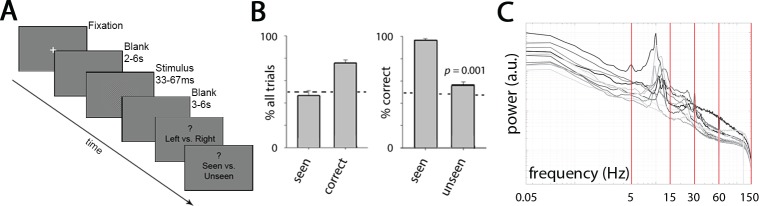
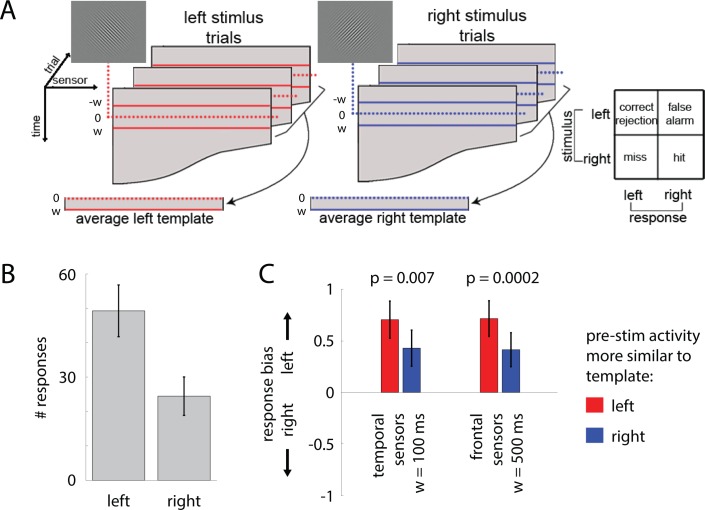
“Baria et al. (2017) showed that participants’ behavioral responses on subliminal trials could be predicted from prestimulus activity patterns: when prestimulus activity resembled left stimulus-evoked responses, the participants were more likely to respond “left.””
BackgroundThe cost of attentional reorienting on conscious visual perception: an MEG study
Spagna, A., Bayle, D. J., Romeo, Z., Malkinson, T. S., Liu, J., Yahia‐Cherif, L., Chica, A. B., & Bartolomeo, P. (2022) · Cerebral Cortex · doi:10.1093/cercor/bhac192 · Cited by 15
Dissociable Components of Information Encoding in Human Perception
Vidaurre, D., Cichy, R. M., & Woolrich, M. W. (2021) · Cerebral Cortex · doi:10.1093/cercor/bhab189 · Cited by 17
“many studies about the influence of the low frequency ranges on diverse aspects of cognition (Monto et al. 2008; He 2014; Baria et al. 2017) and the different ways that ongoing brain states”
BackgroundBrain dynamics shape cognition–Spatiotemporal Neuroscience
Northoff, G., Wolman, A., & Zhang, J. (2025) · Physics of Life Reviews · doi:10.1016/j.plrev.2025.07.009 · Cited by 16
The Interplay Between Information Flux and Temporal Dynamics in Infraslow FrequenciesPreprint
Golesorkhi, M., Tumati, S., Gómez‐Pilar, J., Stamatakis, E. A., & Northoff, G. (2020) · Research Square · doi:10.1101/2020.06.11.106476 · Cited by 13
Frequency-specific neural signatures of perceptual content and perceptual stability
Hardstone, R., Flounders, M. W., Zhu, M., & He, B. J. (2022) · eLife · doi:10.7554/elife.78108 · Cited by 12
Self-citationA mesoscale connectome-based model of conscious access in the macaque monkeyPreprint
Klatzmann, U., Froudist‐Walsh, S., Bliss, D. P., Theodoni, P., Mejías, J. F., Niu, M., Rapan, L., Margulies, D. S., Palomero‐Gallagher, N., Sergent, C., et al. (2022) · bioRxiv (Cold Spring Harbor Laboratory) · doi:10.1101/2022.02.20.481230 · Cited by 12
“…(de Lafuente and Romo 2005, 2006; Dehaene et al. 2001; Del Cul et al. 2007; King and Dehaene 2014; Rees et al. 2002; Sadaghiani et al. 2009; Sergent et al. 2005; Van Vugt et al. 2018) in stable (Schurger et al. 2015) or reliable dynamic trajectories (Baria et al. 2017; Salti et al. 2015).”
BackgroundKoenig, L., & He, B. J. (2025) · PLoS Biology · doi:10.1371/journal.pbio.3002964 · Cited by 12
“Consistent with the original publications showing successful pre-stimulus SCP decoding of perceptual outcome [10,12], the SCP d.v. timecourse averaged across trials and subjects was positive for perceived trials and negative for unperceived trials across the pre-stimulus intervals in both the…”
InfluentialSelf-citationSpatiotemporal neural dynamics of object recognition under uncertainty in humans
Wu, Y., Podvalny, E., & He, B. J. (2023) · eLife · doi:10.7554/elife.84797 · Cited by 11
Self-citationWei, J., Alamia, A., Yao, Z., Huang, G., Li, L., Liang, Z., Zhang, L., Zhou, C., Song, Z., & Zhang, Z. (2024) · Journal of Neuroscience · doi:10.1523/jneurosci.2023-23.2024 · Cited by 14
Event-related variability is modulated by task and development
Naik, S., Adibpour, P., Dubois, J., Dehaene‐Lambertz, G., & Battaglia, D. A. (2023) · NeuroImage · doi:10.1016/j.neuroimage.2023.120208 · Cited by 11
Exploring Covert States of Brain Dynamics via Fuzzy Inference Encoding
Chang, Y., Wang, Y., Pal, N. R., & Lin, C. (2021) · IEEE Transactions on Neural Systems and Rehabilitation Engineering · doi:10.1109/tnsre.2021.3126264 · Cited by 10
Spontaneous perception: a framework for task-free, self-paced perception
Baror, S., & He, B. J. (2021) · Neuroscience of Consciousness · doi:10.1093/nc/niab016 · Cited by 11
“Notably, a previous proposal that neural processes indexed by SCPs underlie conscious awareness (He and Raichle 2009) is supported by studies on conscious perception (Douglas et al. 2015; Baria et al. 2017) and states of consciousness (Bourdillon et al.”
BackgroundSelf-citationMoheimanian, L., Paraskevopoulou, S. E., Adamek, M., Schalk, G., & Brunner, P. (2021) · NeuroImage · doi:10.1016/j.neuroimage.2021.118498 · Cited by 11
How far neuroscience is from understanding brains
Roland, P. E. (2023) · Frontiers in Systems Neuroscience · doi:10.3389/fnsys.2023.1147896 · Cited by 12
Glim, S., Ries, A., Sorg, C., & Wohlschläger, A. M. (2020) · Consciousness and Cognition · doi:10.1016/j.concog.2020.102993 · Cited by 10
Towards new concepts for a biological neuroscience of consciousnessPreprint
Signorelli, C. M., & Meling, D. (2020) · PsyArXiv (OSF Preprints) · doi:10.31234/osf.io/pcmj9 · Cited by 9
Revach, D., & Salti, M. (2021) · Consciousness and Cognition · doi:10.1016/j.concog.2021.103229 · Cited by 9
Distinct dynamic connectivity profiles promote enhanced conscious perception of auditory stimuli
Türker, B., Manasova, D., Béranger, B., Naccache, L., Sergent, C., & Sitt, J. D. (2024) · Communications Biology · doi:10.1038/s42003-024-06533-7 · Cited by 8
Neural Mechanisms Determining the Duration of Task-free, Self-paced Visual Perception
Baror, S., Baumgarten, T. J., & He, B. J. (2024) · Journal of Cognitive Neuroscience · doi:10.1162/jocn_a_02131 · Cited by 7
“One possibility is the influence of prestimulus spontaneous activity (McCormick, Nestvogel, & He, 2020; Podvalny, Flounders, King, Holroyd, & He, 2019; Baria, Maniscalco, & He, 2017; Sadaghiani, Poline, Kleinschmidt, & D ’ Esposito, 2015).”
Self-citationNeural and computational mechanisms underlying one-shot perceptual learning in humans
Hachisuka, A., Shor, J. D., Liu, X. C., Friedman, D. J., Dugan, P. C., Sáez, I., Panov, F. E., Wang, Y., Doyle, W., Devinsky, O., et al. (2026) · Nature Communications · doi:10.1038/s41467-026-68711-x · Cited by 11
“Shaded error bars were calculated as the paired SEM 78,79 across electrodes at each timepoint.”
Self-citationIndividual Alpha Frequency Determines the Impact of Bottom-Up Drive on Visual Processing
Nelli, S. M., Malpani, A., Boonjindasup, M., & Serences, J. T. (2021) · Cerebral Cortex Communications · doi:10.1093/texcom/tgab032 · Cited by 7
From Neural Oscillations to Cognitive Processes
Keil, A., & Thigpen, N. (2022) · Oxford University Press eBooks · doi:10.1093/oxfordhb/9780192898340.013.3 · Cited by 5
Wolff, A., Chen, L., Tumati, S., Golesorkhi, M., Gómez‐Pilar, J., Hu, J., Jiang, S., Mao, Y. Q., Longtin, A., & Northoff, G. (2020) · bioRxiv (Cold Spring Harbor Laboratory) · doi:10.1101/2020.12.09.417774 · Cited by 4
“Consistent with this approach (Buzsáki, 2019), studies (He, 2013; Baria et al., 2017; Huang et al., 2017; Nieus et al., 2018; Galindo-Leon et al., 2019; Hirschmann et al., 2019; Podvalny et al., 2019) have demonstrated that poststimulus activity levels depend on the initial state, the level of…”
ResultLearnable Leakage and Onset-Spiking Self-Attention in SNNs with Local Error Signals
Shi, C., Wang, L., Gao, H., & Tian, M. (2023) · Sensors · doi:10.3390/s23249781 · Cited by 3
“Biological research has revealed that the brain’s initial response after receiving a stimulus is crucial in subsequent information processing and decision-making processes [46].”
BackgroundDo, J., James, O., & Kim, Y. (2024) · iScience · doi:10.1016/j.isci.2024.110173 · Cited by 3
“…of orthogonal axes that not only capture the most variance in data but also segregates response variability due to different task variables onto separate axes, 7–10 we visualized neural trajectories of four types of choices in a low-dimensional subspace that is most responsive to task conditions.”
Bryant, A. G., & Whyte, C. J. (2026) · Neuroscience of Consciousness · doi:10.1093/nc/niag029 · Cited by 1
“This assumption would need to be relaxed if one were to adapt the pipeline to typical conscious-access paradigms where pre-stimulus fluctuations are known to play an important role in explaining behavioral variability ( Baria et al. 2017).”
Theoretical models and measures of conscious brain network dynamics. An integrative approach
Signorelli, C. M. (2021) · theses.fr (ABES) · doi:10.70675/a439c1c2z3901z4052z9816z5609ea4aaa66 · Cited by 2
The role of alpha oscillations in visual information processing
Nelli, S. M. (2019) · eScholarship (California Digital Library)
Characterizing the neuro-cognitive architecture of non-conscious working memory
Trübutschek, D. (2018) · theses.fr (ABES) · doi:10.70675/c3cced32z7d74z4ce9z8f69zca11bc4fb482
Golesorkhi, M. (2021) · uO Research (University of Ottawa) · doi:10.20381/ruor-26433
Variability and conscious access : an exploration in time, content and neural signatures
Rimsky-Robert, D. (2019) · theses.fr (ABES) · doi:10.70675/bf23b590z56f7z4239zbcd2zc16b396aaabc
Türker, B. (2023) · theses.fr (ABES) · doi:10.70675/c22ae776z0629z42f6z85dez62a4ef75f267 · Cited by 1
Entrainment—How the brain synchronizes with its environment
Northoff, G. (2024) · Elsevier eBooks · doi:10.1016/b978-0-12-821935-5.00024-7
Neural variability shapes perception and cognition
Northoff, G. (2024) · Elsevier eBooks · doi:10.1016/b978-0-12-821935-5.00006-5
Order in the jungle of consciousness—convergence of theories
Northoff, G. (2024) · Elsevier eBooks · doi:10.1016/b978-0-12-821935-5.00028-4
The jungle of consciousness—current neuroscientific theories
Northoff, G. (2024) · Elsevier eBooks · doi:10.1016/b978-0-12-821935-5.00045-4
Temporo-spatial theory of consciousness (TTC) II
Northoff, G. (2024) · Elsevier eBooks · doi:10.1016/b978-0-12-821935-5.00041-7 · Cited by 1
Ketamine disrupts consciousness in healthy participants in relation with psychotic-like symptomsPreprint
Berkovitch, L., Salvador, A., Andrillon, T., Dehaene, S., & Gaillard, R. (2025) · bioRxiv (Cold Spring Harbor Laboratory) · doi:10.1101/2025.11.06.687042
Northoff, G., Çatal, Y., & Abbasi, S. (2026) · Philosophical Transactions of the Royal Society A Mathematical Physical and Engineering Sciences · doi:10.1098/rsta.2025.0005
Long-timescale dynamics shape visual conscious awarenessPreprint
Zheng, Z., Trübutschek, D., Cai, Y., & Melloni, L. (2026) · bioRxiv (Cold Spring Harbor Laboratory) · doi:10.64898/2026.09.03.748970
Porter, Q. (n.d.) · PhilPapers (PhilPapers Foundation)
Porter, Q. (n.d.) · PhilPapers (PhilPapers Foundation)
Metadata
- Authors
- Baria, A. T., Maniscalco, B., & He, B. J.
- Affiliations
- Northwestern University (US)
- National Institutes of Health (US)
- Corresponding author
- He, Biyu J.
- Venue
- PLOS Computational Biology
- Publisher
- Public Library of Science (PLoS)
- Published
- 2017-11-27
- Volume
- 13
- Issue
- 11
- Pages
- e1005806
- ISSN
- 1553-734X (ISSN-L)
- 1553-7358
- PMC
- PMC5720802
- OpenAlex
- W2951522238
- Cited by
- 70
- References
- 71
- Citations by year
- 2026: 3 · 2025: 4 · 2024: 13 · 2023: 5 · 2022: 6 · 2021: 16 · 2020: 12 · 2019: 5 · 2018: 6
- FWCI
- 3.61
- Type
- journal article
- Language
- en
- Update notices
- new_version (2017-12-07)
- Open access
- gold
- doi.org
- Licence
- public-domain
- creativecommons.org/publicdomain/zero/1.0/ (vor)
- Locations
- PLoS Computational Biology (publishedVersion, public-domain)
- bioRxiv (Cold Spring Harbor Laboratory) (acceptedVersion)
- Europe PMC (PubMed Central) (publishedVersion, public-domain)
- PubMed Central (publishedVersion, public-domain)
- PubMed (publishedVersion)
- RePEc: Research Papers in Economics (submittedVersion)
- DOAJ (DOAJ: Directory of Open Access Journals) (submittedVersion, cc-by-sa)
- Figshare (submittedVersion, cc-by)
- Funders
- National Institute of Neurological Disorders and Stroke
- Leon Levy Foundation
- Esther A. and Joseph Klingenstein Fund
- Topics
- Life Sciences › Neuroscience › Cognitive Neuroscience › Neural dynamics and brain function
- Life Sciences › Neuroscience › Cognitive Neuroscience › Visual perception and processing mechanisms
- Social Sciences › Arts and Humanities › Philosophy › Philosophy and Theoretical Science
- Keywords
- visual awareness, unconscious perception, spontaneous brain activity, nonlinear dynamics
- MeSH terms
- Adult, Brain, Female, Humans, Male, Models, Neurological, Signal Processing, Computer-Assisted, Task Performance and Analysis, Visual Perception, Magnetoencephalography, Computational Biology, Young Adult
About these checks
Registry, retraction, Cites and statistics results are computed, not judged, with one exception: a printed reference that no index lists is read once by a model before it counts as a citation error. Claims are extracted by a model and kept only when their quote appears verbatim in the text; each cited source is then checked, with a model’s help, for whether it says what the claim relies on. Those verdicts can be wrong — read the claim’s quote and the cited source before relying on one.
Statistics and arithmetic are recomputed, not judged.
Confidence bands are shown only for fields calibrated on our annotated test set. None is calibrated yet, so no band is shown.
What counts as a claim ›How we measure confidence ›How we check this ›
Are you an author, or do you see a problem with this page? Request a review
Data sources
Bibliographic data: Semantic Scholar, OpenAlex, Crossref.
Contains information from the Semantic Scholar Academic Graph Datasets, made available under the ODC Attribution License (ODC-BY 1.0).
Semantic Scholar’s data is described in: Kinney, R., et al. (2023). The Semantic Scholar Open Data Platform. arXiv:2301.10140.
