

Initial-state-dependent, robust, transient neural dynamics encode conscious visual perception
Open accessPublished version of a preprint
The DOI matches its Crossref record; 71 of the 71 references it cites were found in a registry or an index.
Abstract
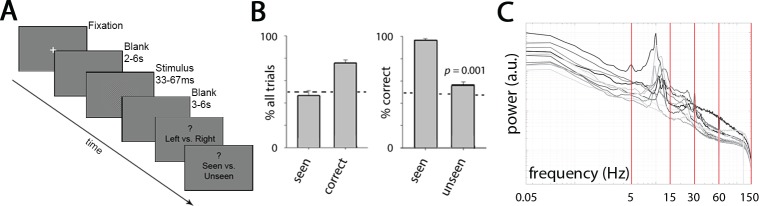
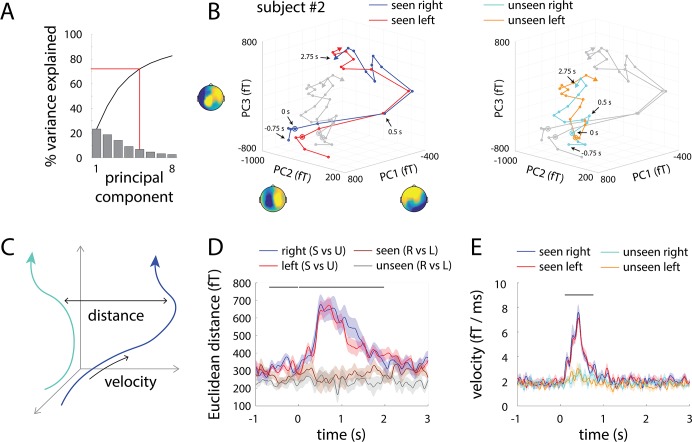
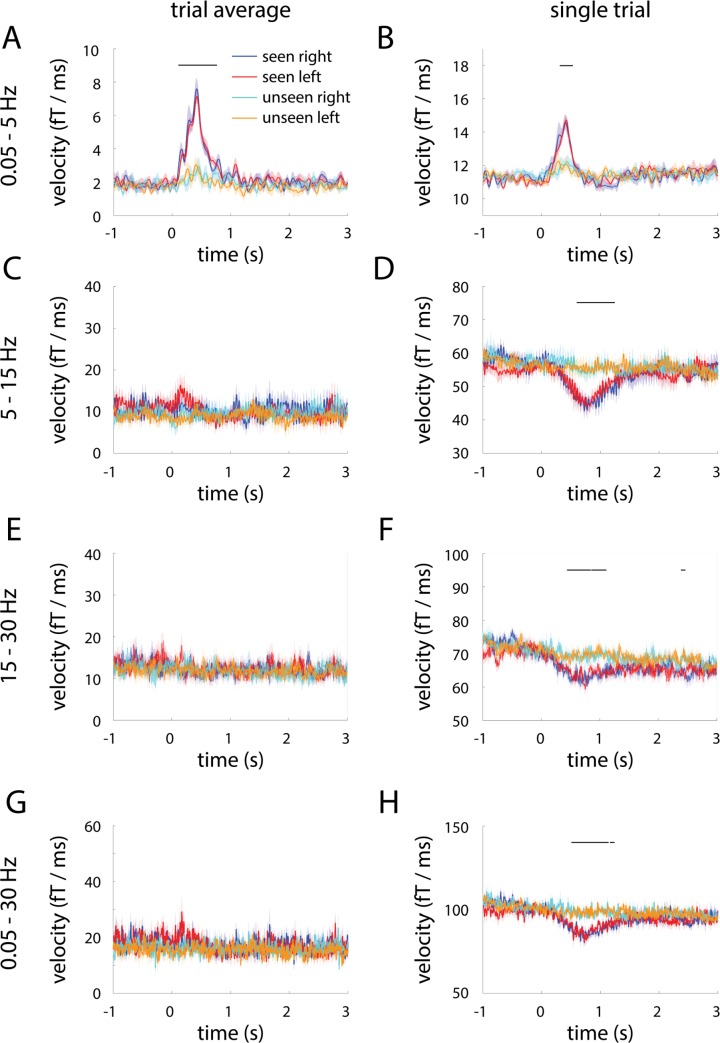
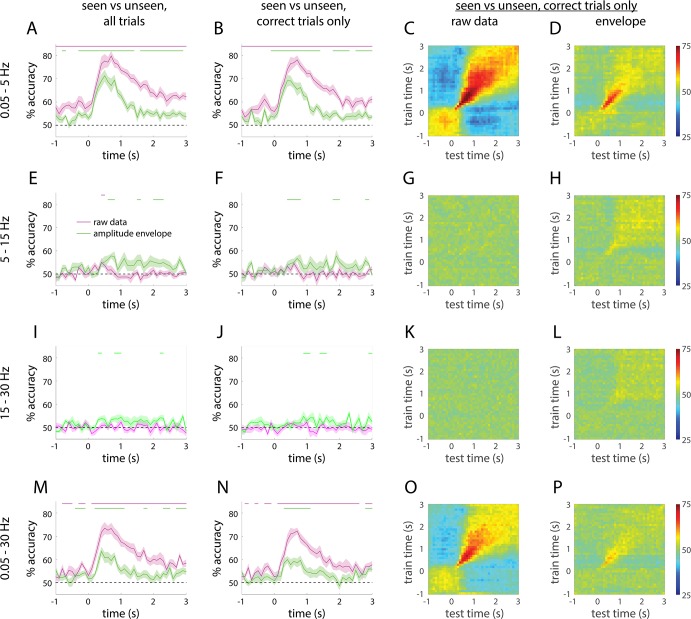
Recent research has identified late-latency, long-lasting neural activity as a robust correlate of conscious perception. Yet, the dynamical nature of this activity is poorly understood, and the mechanisms governing its presence or absence and the associated conscious perception remain elusive. We applied dynamic-pattern analysis to whole-brain slow (< 5 Hz) cortical dynamics recorded by magnetoencephalography (MEG) in human subjects performing a threshold-level visual perception task. Up to 1 second before stimulus onset, brain activity pattern across widespread cortices significantly predicted whether a threshold-level visual stimulus was later consciously perceived. This initial state of brain activity interacts nonlinearly with stimulus input to shape the evolving cortical activity trajectory, with seen and unseen trials following well separated trajectories. We observed that cortical activity trajectories during conscious perception are fast evolving and robust to small variations in the initial state. In addition, spontaneous brain activity pattern prior to stimulus onset also influences unconscious perceptual making in unseen trials. Together, these results suggest that brain dynamics underlying conscious visual perception belongs to the class of initial-state-dependent, robust, transient neural dynamics.
Overview
The claims and statistics of this paper haven’t been checked yet.
Free: it reads the open-access text and checks the first 5 claims that cite a source we can check. Create a free account to check every claim.
Integrity signals
Registry
Cites
Statistics
Figures
Verification
Claims the paper makes
The claims and statistics of this paper haven’t been checked yet.
Free: it reads the open-access text and checks the first 5 claims that cite a source we can check. Create a free account to check every claim.
Claims other papers make about this one
Each is checked against this paper’s own text: does it say what the citing paper says it does?
The source backs part of the claim, not all of it — or backs it for a different population, condition or comparison.
In the citing paper
“In this framework, ignition is seen as a sudden, high-speed divergence of the trajectories on trials reported as consciously perceived, generating a series of metastable activity states”
From Conscious Processing and the Global Neuronal Workspace Hypothesis (2020) · cites this paper as Baria et al., 2017
Experimental — accuracy not yet measured
Self-check
Percentages, sums and reported differences re-computed from the paper’s own numbers.
The self-check needs the paper’s full text.
Citations
Cites
LIBSVM: A library for support vector machines
Chang, C.-C., & Lin, C.-J. (2011) · ACM Transactions on Intelligent Systems and Technology · doi:10.1145/1961189.1961199 · Cited by 40,918 · cited 1×
“Using the LIBSVM package [62], we implemented a SVM at each time point”
MethodComplex brain networks: graph theoretical analysis of structural and functional systems
Bullmore, E., & Sporns, O. (2009) · Nature Reviews Neuroscience · doi:10.1038/nrn2575 · Cited by 11,820 · cited 1×
“Our study illustrates that given the high degree of connectedness across the cerebral cortex [59, 60], analysis of distributed spatial patterns of activity complements traditional region-by-region analysis in the investigation of the neural mechanisms of conscious perception.”
Background(1966) · Medical Entomology and Zoology · Cited by 10,293
Libsvm : A library for support vector machines
Ferrari, V. (2008) · Medical Entomology and Zoology · Cited by 10,122
Nonparametric statistical testing of EEG- and MEG-data
Maris, E., & Oostenveld, R. (2007) · Journal of Neuroscience Methods · doi:10.1016/j.jneumeth.2007.03.024 · Cited by 8,496 · cited 1×
“All statistical results using a time-point-by-time-point analysis were corrected for multiple comparisons using cluster-based permutation tests [61], as described below.”
MethodSpontaneous fluctuations in brain activity observed with functional magnetic resonance imaging
Fox, M. D., & Raichle, M. E. (2007) · Nature Reviews Neuroscience · doi:10.1038/nrn2201 · Cited by 6,700 · cited 1×
“Depending on its initial state, which may reflect cognitive state (such as attention or expectation) and spontaneous activity fluctuations [54], neural activity may reach a desired state – a particular region in the state space – at different post-stimulus latencies.”
BackgroundMaass, W., Natschläger, T., & Markram, H. (2002) · Neural Computation · doi:10.1162/089976602760407955 · Cited by 4,025 · cited 1×
“transient neural dynamics (‘trajectories’), whereby computation arises from the voyage through state space rather than the arrival at a fixed location [26, 28, 49].”
BackgroundCircStat : A MATLAB Toolbox for Circular Statistics
Berens, P. (2009) · Journal of Statistical Software · doi:10.18637/jss.v031.i10 · Cited by 3,099 · cited 2×
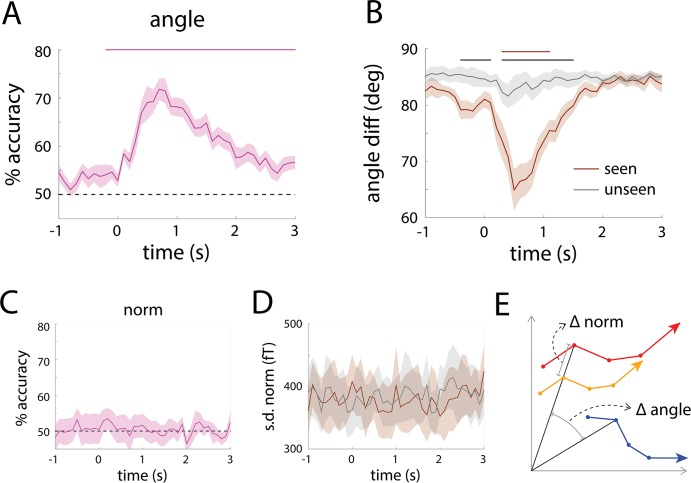
“Separately for seen and unseen trials, we tested whether across-trial angle variability differed between each post-stimulus time point and the pre-stimulus period (from 1 sec before to stimulus onset) by using a non-parametric two-sample test for equal medians [63] as implemented in circ_cmtest function of the CircSta…”
MethodExperimental and theoretical approaches to conscious processing
Dehaene, S., & Changeux, J.-P. (2011) · Neuron · doi:10.1016/j.neuron.2011.03.018 · Cited by 2,573 · cited 2×
“4 activity across widely distributed brain regions underlies conscious processing [16, 17].”
BackgroundConscious, preconscious, and subliminal processing: a testable taxonomy
Dehaene, S., Changeux, J.-P., Naccache, L., Sackur, J., & Sergent, C. (2006) · Trends in Cognitive Sciences · doi:10.1016/j.tics.2006.03.007 · Cited by 2,067
Confidence Intervals from Normalized Data: A correction to Cousineau (2005)
Morey, R. D. (2008) · Tutorials in Quantitative Methods for Psychology · doi:10.20982/tqmp.04.2.p061 · Cited by 1,997
Chaos in Neuronal Networks with Balanced Excitatory and Inhibitory Activity
van Vreeswijk, C., & Sompolinsky, H. (1996) · Science · doi:10.1126/science.274.5293.1724 · Cited by 1,811 · cited 1×
“4A-B), one might expect that as velocity increases, noise in the system could become amplified and render the dynamics unstable, as seen in recurrent neural networks exhibiting chaotic dynamics [41, 44].”
BackgroundStatistical Analysis of Circular Data
Fisher, N. I. (1993) · Cambridge University Press eBooks · doi:10.1017/cbo9780511564345 · Cited by 1,670 · cited 1×
“Separately for seen and unseen trials, we tested whether across-trial angle variability differed between each post-stimulus time point and the pre-stimulus period (from 1 sec before to stimulus onset) by using a non-parametric two-sample test for equal medians [63] as implemented in circ_cmtest function of the CircSta…”
MethodOn the interpretation of weight vectors of linear models in multivariate neuroimaging
Haufe, S., Meinecke, F., Görgen, K., Dähne, S., Haynes, J.-D., Blankertz, B., & Bießmann, F. (2014) · NeuroImage · doi:10.1016/j.neuroimage.2013.10.067 · Cited by 1,389 · cited 2×
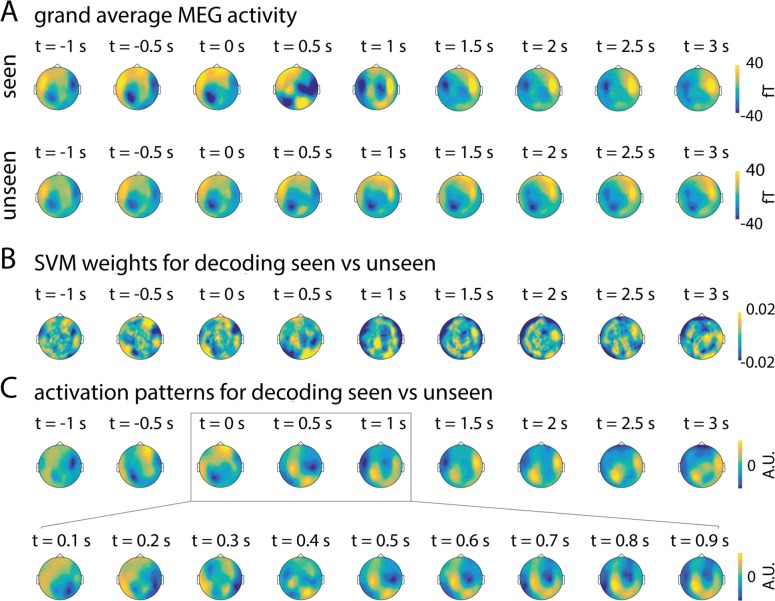
“A more sophisticated – and directly relevant to our decoder – approach is to visualize the MEG activation pattern utilized by the SVM decoder [35].”
MethodThe Phase of Ongoing EEG Oscillations Predicts Visual Perception
Busch, N. A., Dubois, J., & VanRullen, R. (2009) · Journal of Neuroscience · doi:10.1523/jneurosci.0113-09.2009 · Cited by 1,158 · cited 1×
“In the pre-stimulus period, prior studies have shown that pre-stimulus amplitude of alpha and gamma-band activity [3, 4] and pre-stimulus phase of alpha oscillations [5, 6] in posterior visual regions influence perceptual outcome during threshold visual perception, suggesting that fluctuating excitability of sensory a…”
ResultTowards a true neural stance on consciousness
Lamme, V. A. F. (2006) · Trends in Cognitive Sciences · doi:10.1016/j.tics.2006.09.001 · Cited by 1,149 · cited 1×
“20 In the spatial domain, both higher-order frontoparietal areas and ventral visual areas have been emphasized [15, 16, 55-57].”
BackgroundGenerating Coherent Patterns of Activity from Chaotic Neural Networks
Sussillo, D., & Abbott, L. F. (2009) · Neuron · doi:10.1016/j.neuron.2009.07.018 · Cited by 1,092 · cited 1×
“These results raise an important question: Are transient neural dynamics during conscious processing robust to noise? Robustness against noise is important for information transmission and computing, and theoretical studies have shown that recurrent neural networks can be trained to exhibit robust, transient dynamics…”
Stimulus onset quenches neural variability: A widespread cortical phenomenon
Churchland, M. M., Yu, B. M., Cunningham, J. P., Sugrue, L. P., Cohen, M. R., Corrado, G. S., Newsome, W. T., Clark, A. M., Hosseini, P., Scott, B. B., et al. (2010) · Nature Neuroscience · doi:10.1038/nn.2501 · Cited by 1,084 · cited 3×
“…conscious perception of a brief, threshold-level visual stimulus induces widespread and long-lasting across-trial variability reduction adds to the growing literature on stimulus-induced variability reduction (e.g., Churchland et al., 2010; He, 2013; He and Zempel, 2013; Schurger et al., 2015).”
BackgroundMethodTo See or Not to See: Prestimulus α Phase Predicts Visual Awareness
Mathewson, K. E., Gratton, G., Fabiani, M., Beck, D. M., & Ro, T. (2009) · The Journal of Neuroscience · doi:10.1523/jneurosci.3963-08.2009 · Cited by 1,007 · cited 1×
“In the pre-stimulus period, prior studies have shown that pre-stimulus amplitude of alpha and gamma-band activity [3, 4] and pre-stimulus phase of alpha oscillations [5, 6] in posterior visual regions influence perceptual outcome during threshold visual perception, suggesting that fluctuating excitability of sensory a…”
ResultChoice-specific sequences in parietal cortex during a virtual-navigation decision task
Harvey, C. D., Coen, P., & Tank, D. W. (2012) · Nature · doi:10.1038/nature10918 · Cited by 931 · cited 2×
“have been observed in local neuronal circuits in animal models [22-24, 31, 50].”
MethodState-dependent computations: spatiotemporal processing in cortical networks
Buonomano, D. V., & Maass, W. (2009) · Nature Reviews Neuroscience · doi:10.1038/nrn2558 · Cited by 926 · cited 3×
“transient neural dynamics (‘trajectories’), whereby computation arises from the voyage through state space rather than the arrival at a fixed location [26, 28, 49].”
BackgroundMethodCharacterizing the dynamics of mental representations: the temporal generalization method
King, J.-R., & Dehaene, S. (2014) · Trends in Cognitive Sciences · doi:10.1016/j.tics.2014.01.002 · Cited by 919 · cited 1×
“To shed further light on the dynamical nature of neural activity underlying conscious perception, we conducted cross-time decoding analysis, which examines how the classifier trained at one time point generalizes to other time points [24, 34].”
Timing of the brain events underlying access to consciousness during the attentional blink
Sergent, C., Baillet, S., & Dehaene, S. (2005) · Nature Neuroscience · doi:10.1038/nn1549 · Cited by 888 · cited 2×
“In the temporal domain, multiple studies have shown that lateonset (>200 ms) activity correlates strongly with conscious perception [7, 9, 12, 13], but the timing of this activity could be modulated by prior expectation [51] and very early (~100 ms) correlates of conscious perception have also been reported [52, 53].”
BackgroundMethodStatistical Analysis of Circular Data.
Sprent, P., & Fischer, N. I. (1994) · The Journal of Applied Ecology · doi:10.2307/2404554 · Cited by 780
Intrinsic Fluctuations within Cortical Systems Account for Intertrial Variability in Human Behavior
Fox, M. D., Snyder, A. Z., Vincent, J. L., & Raichle, M. E. (2007) · Neuron · doi:10.1016/j.neuron.2007.08.023 · Cited by 758 · cited 1×
“It could reflect either fluctuations in the pre-stimulus attentional state [36] or spontaneous brain activity unrelated to attention [37].”
BackgroundBrain Dynamics Underlying the Nonlinear Threshold for Access to Consciousness
Del Cul, A., Baillet, S., & Dehaene, S. (2007) · PLoS Biology · doi:10.1371/journal.pbio.0050260 · Cited by 753 · cited 1×
“(up to ~1 sec) neural activity using a variety of measures – event-related field/potential [7, 9-11], power of gamma-frequency range [11-13], and single-neuron firing [14, 15] – correlates with conscious visual perception.”
MethodBrain-wide neuronal dynamics during motor adaptation in zebrafish
Ahrens, M. B., Li, J. M., Orger, M. B., Robson, D. N., Schier, A. F., Engert, F., & Portugues, R. (2012) · Nature · doi:10.1038/nature11057 · Cited by 729 · cited 2×
“We note that such an approach has also been applied to brain-wide neuronal dynamics in the zebrafish to reveal behaviorally relevant activity trajectories [32].”
BackgroundMethodDynamic Coding for Cognitive Control in Prefrontal Cortex
Stokes, M. G., Kusunoki, M., Sigala, N., Nili, H., Gaffan, D., & Duncan, J. (2013) · Neuron · doi:10.1016/j.neuron.2013.01.039 · Cited by 711 · cited 4×
“have been observed in local neuronal circuits in animal models [22-24, 31, 50].”
BackgroundMethodInfluentialStatistically optimal perception and learning: from behavior to neural representations
Fiser, J., Berkes, P., Orbán, G., & Lengyel, M. (2010) · Trends in Cognitive Sciences · doi:10.1016/j.tics.2010.01.003 · Cited by 672 · cited 2×
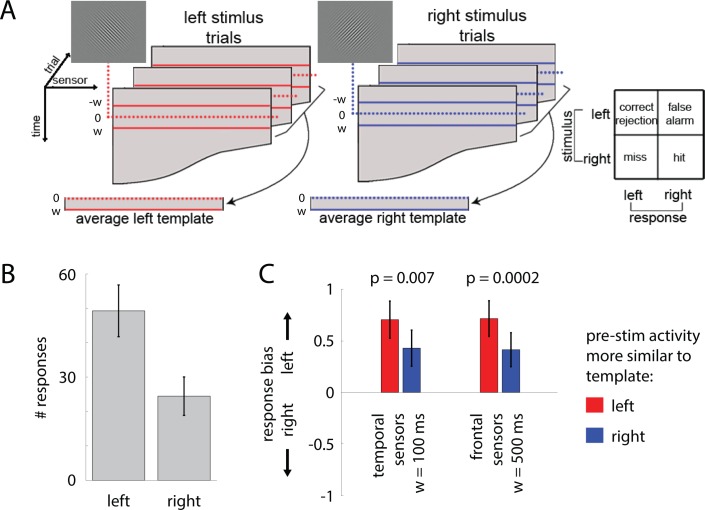
“Inspired by sampling-based Bayesian theory [45], we tested the following hypothesis: If pre-stimulus brain activity pattern is similar to that evoked by a given stimulus, the subject’s decision would be biased towards that same stimulus.”
MethodCortical high-density counterstream architectures
Markov, N. T., Ercsey-Ravasz, M., Van Essen, D. C., Knoblauch, K., Toroczkai, Z., & Kennedy, H. (2013) · Science · doi:10.1126/science.1238406 · Cited by 616 · cited 1×
“Our study illustrates that given the high degree of connectedness across the cerebral cortex [59, 60], analysis of distributed spatial patterns of activity complements traditional region-by-region analysis in the investigation of the neural mechanisms of conscious perception.”
BackgroundA Large-Scale Circuit Mechanism for Hierarchical Dynamical Processing in the Primate Cortex
Chaudhuri, R., Knoblauch, K., Gariel, M.-A., Kennedy, H., & Wang, X.-J. (2015) · Neuron · doi:10.1016/j.neuron.2015.09.008 · Cited by 604
Alpha rhythm of the EEG modulates visual detection performance in humans
Ergenoglu, T., Demiralp, T., Bayraktaroglu, Z., Ergen, M., Beydagi, H., & Uresin, Y. (2004) · Cognitive Brain Research · doi:10.1016/j.cogbrainres.2004.03.009 · Cited by 575 · cited 1×
“In the pre-stimulus period, prior studies have shown that pre-stimulus amplitude of alpha and gamma-band activity [3, 4] and pre-stimulus phase of alpha oscillations [5, 6] in posterior visual regions influence perceptual outcome during threshold visual perception, suggesting that fluctuating excitability of sensory a…”
ResultSlow cortical dynamics and the accumulation of information over long timescales
Honey, C. J., Thesen, T., Donner, T. H., Silbert, L. J., Carlson, C. E., Devinsky, O., Doyle, W. K., Rubin, N., Heeger, D. J., & Hasson, U. (2012) · Neuron · doi:10.1016/j.neuron.2012.08.011 · Cited by 532 · cited 1×
“effect to manifest in frontal than temporal sensors accords with the idea of a gradient of temporal integration windows across the cortical hierarchy [47, 48].”
BackgroundRelative blindsight in normal observers and the neural correlate of visual consciousness
Lau, H. C., & Passingham, R. E. (2006) · Proceedings of the National Academy of Sciences · doi:10.1073/pnas.0607716103 · Cited by 518 · cited 1×
“001, Wilcoxon signed rank test), indicating unconscious processing of the stimulus [29, 30].”
BackgroundSadaghiani, S., Scheeringa, R., Lehongre, K., Morillon, B., Giraud, A.-L., & Kleinschmidt, A. (2010) · The Journal of Neuroscience · doi:10.1523/jneurosci.1004-10.2010 · Cited by 504 · cited 1×
“Given that tonic alertness fluctuates at a relatively slow time scale [39], we designed the following analysis to assess its contribution to our results.”
ResultMazor, O., & Laurent, G. (2005) · Neuron · doi:10.1016/j.neuron.2005.09.032 · Cited by 492 · cited 5×
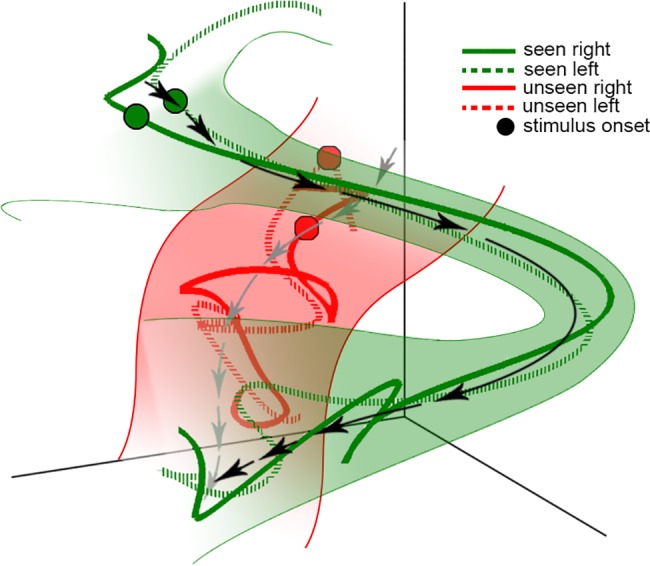
“unconscious processing, we investigated neural activity trajectory in its multi-dimensional state space [21, 23, 24, 31].”
BackgroundMethodInfluentialTransient Dynamics for Neural Processing
Rabinovich, M., Huerta, R., & Laurent, G. (2008) · Science · doi:10.1126/science.1155564 · Cited by 491
Robust timing and motor patterns by taming chaos in recurrent neural networks
Laje, R., & Buonomano, D. V. (2013) · Nature Neuroscience · doi:10.1038/nn.3405 · Cited by 454 · cited 3×
“This result suggests that neural activity during conscious processing belongs to the class of robust, transient dynamics that, while fast-changing, are resistant to small variations in the initial state [28, 41].”
BackgroundMonto, S., Palva, S., Voipio, J., & Palva, J. M. (2008) · The Journal of Neuroscience · doi:10.1523/jneurosci.1910-08.2008 · Cited by 453 · cited 1×
“Recent evidence also suggests that the phase of slow cortical potentials (SCPs, <5 Hz) in widely distributed cortical areas at stimulus onset influences conscious access of a threshold-level stimulus [7, 8].”
BackgroundConverging Intracranial Markers of Conscious Access
Gaillard, R., Dehaene, S., Adam, C., Clémenceau, S., Hasboun, D., Baulac, M., Cohen, L., & Naccache, L. (2009) · PLoS Biology · doi:10.1371/journal.pbio.1000061 · Cited by 440 · cited 1×
“(up to ~1 sec) neural activity using a variety of measures – event-related field/potential [7, 9-11], power of gamma-frequency range [11-13], and single-neuron firing [14, 15] – correlates with conscious visual perception.”
MethodToward a computational theory of conscious processing
Dehaene, S., Charles, L., King, J.-R., & Marti, S. (2014) · Current Opinion in Neurobiology · doi:10.1016/j.conb.2013.12.005 · Cited by 404 · cited 1×
“4 activity across widely distributed brain regions underlies conscious processing [16, 17].”
BackgroundNeural dissociation between visual awareness and spatial attention
Wyart, V., & Tallon-Baudry, C. (2008) · The Journal of Neuroscience · doi:10.1523/jneurosci.4748-07.2008 · Cited by 391 · cited 2×
“In the temporal domain, multiple studies have shown that lateonset (>200 ms) activity correlates strongly with conscious perception [7, 9, 12, 13], but the timing of this activity could be modulated by prior expectation [51] and very early (~100 ms) correlates of conscious perception have also been reported [52, 53].”
BackgroundMethodPosner, M. I. (2008) · Annals of the New York Academy of Sciences · doi:10.1196/annals.1417.011 · Cited by 345 · cited 1×
“An endogenous source of attentional fluctuation over the course of the experiment may be fluctuations in subjects’ tonic alertness or vigilance [38].”
BackgroundOptical Imaging of Neuronal Populations During Decision-Making
Briggman, K. L., Abarbanel, H. D. I., & Kristan, W. B. (2005) · Science · doi:10.1126/science.1103736 · Cited by 341 · cited 3×
“unconscious processing, we investigated neural activity trajectory in its multi-dimensional state space [21, 23, 24, 31].”
MethodStatistical Analysis of Circular Data.
Kumar, K., & Fisher, N. I. (1995) · The Statistician · doi:10.2307/2348456 · Cited by 310
Encoding and decoding in parietal cortex during sensorimotor decision-making
Park, I. M., Meister, M. L. R., Huk, A. C., & Pillow, J. W. (2014) · Nature Neuroscience · doi:10.1038/nn.3800 · Cited by 276 · cited 1×
“have been observed in local neuronal circuits in animal models [22-24, 31, 50].”
Fisch, L., Privman, E., Ramot, M., Harel, M., Nir, Y., Kipervasser, S., Andelman, F., Neufeld, M. Y., Kramer, U., Fried, I., et al. (2009) · Neuron · doi:10.1016/j.neuron.2009.11.001 · Cited by 275 · cited 2×
“In the temporal domain, multiple studies have shown that lateonset (>200 ms) activity correlates strongly with conscious perception [7, 9, 12, 13], but the timing of this activity could be modulated by prior expectation [51] and very early (~100 ms) correlates of conscious perception have also been reported [52, 53].”
BackgroundMethodSpontaneous and Task-Evoked Brain Activity Negatively Interact
He, B. J. (2013) · The Journal of Neuroscience · doi:10.1523/jneurosci.2922-12.2013 · Cited by 272 · cited 3×
“…conscious perception of a brief, threshold-level visual stimulus induces widespread and long-lasting across-trial variability reduction adds to the growing literature on stimulus-induced variability reduction (e.g., Churchland et al., 2010; He, 2013; He and Zempel, 2013; Schurger et al., 2015).”
BackgroundMethodSelf-citationEarly Neural Correlates of Conscious Somatosensory Perception
Palva, S., Linkenkaer-Hansen, K., Näätänen, R., & Palva, J. M. (2005) · The Journal of Neuroscience · doi:10.1523/jneurosci.0141-05.2005 · Cited by 265 · cited 1×
“In the temporal domain, multiple studies have shown that lateonset (>200 ms) activity correlates strongly with conscious perception [7, 9, 12, 13], but the timing of this activity could be modulated by prior expectation [51] and very early (~100 ms) correlates of conscious perception have also been reported [52, 53].”
BackgroundMelloni, L., Schwiedrzik, C. M., Müller, N., Rodriguez, E., & Singer, W. (2011) · The Journal of Neuroscience · doi:10.1523/jneurosci.4570-10.2011 · Cited by 231 · cited 1×
“In the temporal domain, multiple studies have shown that lateonset (>200 ms) activity correlates strongly with conscious perception [7, 9, 12, 13], but the timing of this activity could be modulated by prior expectation [51] and very early (~100 ms) correlates of conscious perception have also been reported [52, 53].”
BackgroundHuman single-neuron responses at the threshold of conscious recognition
Quiroga, R. Q., Mukamel, R., Isham, E. A., Malach, R., & Fried, I. (2008) · Proceedings of the National Academy of Sciences · doi:10.1073/pnas.0707043105 · Cited by 225 · cited 1×
“(up to ~1 sec) neural activity using a variety of measures – event-related field/potential [7, 9-11], power of gamma-frequency range [11-13], and single-neuron firing [14, 15] – correlates with conscious visual perception.”
MethodThe Neural Correlates of Conscious Vision
Pins, D. (2003) · Cerebral Cortex · doi:10.1093/cercor/13.5.461 · Cited by 218 · cited 1×
“In the temporal domain, multiple studies have shown that lateonset (>200 ms) activity correlates strongly with conscious perception [7, 9, 12, 13], but the timing of this activity could be modulated by prior expectation [51] and very early (~100 ms) correlates of conscious perception have also been reported [52, 53].”
BackgroundZaidel, D. W. (2013) · Embodied Consciousness · doi:10.1057/9781137320056.0005 · Cited by 217
Wyart, V., & Tallon-Baudry, C. (2009) · Journal of Neuroscience · doi:10.1523/jneurosci.0962-09.2009 · Cited by 207 · cited 1×
“In the pre-stimulus period, prior studies have shown that pre-stimulus amplitude of alpha and gamma-band activity [3, 4] and pre-stimulus phase of alpha oscillations [5, 6] in posterior visual regions influence perceptual outcome during threshold visual perception, suggesting that fluctuating excitability of sensory a…”
ResultLaje, R., & Buonomano, D. V. (2012) · arXiv (Cornell University) · doi:10.48550/arxiv.1210.2104 · Cited by 200 · cited 3×
“This result suggests that neural activity during conscious processing belongs to the class of robust, transient dynamics that, while fast-changing, are resistant to small variations in the initial state [28, 41].”
BackgroundPanagiotaropoulos, T. I., Deco, G., Kapoor, V., & Logothetis, N. K. (2012) · Neuron · doi:10.1016/j.neuron.2012.04.013 · Cited by 198
Encoding and Decoding of Overlapping Odor Sequences
Broome, B. M., Jayaraman, V., & Laurent, G. (2006) · Neuron · doi:10.1016/j.neuron.2006.07.018 · Cited by 192
A Neuronal Population Measure of Attention Predicts Behavioral Performance on Individual Trials
Cohen, M. R., & Maunsell, J. H. R. (2010) · The Journal of Neuroscience · doi:10.1523/jneurosci.2171-10.2010 · Cited by 174 · cited 1×
“13 cannot at present rule out the possibility that it had contributions from attentional fluctuations occurring at faster, trial-to-trial timescales [40].”
BackgroundCortical activity is more stable when sensory stimuli are consciously perceived
Schurger, A., Sarigiannidis, I., Naccache, L., Sitt, J. D., & Dehaene, S. (2015) · Proceedings of the National Academy of Sciences · doi:10.1073/pnas.1418730112 · Cited by 155
Brain mechanisms for simple perception and bistable perception
Wang, M., Arteaga, D., & He, B. J. (2013) · Proceedings of the National Academy of Sciences · doi:10.1073/pnas.1221945110 · Cited by 146 · cited 1×
“20 In the spatial domain, both higher-order frontoparietal areas and ventral visual areas have been emphasized [15, 16, 55-57].”
BackgroundSelf-citationDistinct cortical codes and temporal dynamics for conscious and unconscious percepts
Salti, M., Monto, S., Charles, L., King, J.-R., Parkkonen, L., & Dehaene, S. (2015) · eLife · doi:10.7554/elife.05652 · Cited by 121
Brain signals for spatial attention predict performance in a motion discrimination task
Sapir, A., d'Avossa, G., McAvoy, M., Shulman, G. L., & Corbetta, M. (2005) · Proceedings of the National Academy of Sciences · doi:10.1073/pnas.0504678102 · Cited by 119 · cited 1×
“It could reflect either fluctuations in the pre-stimulus attentional state [36] or spontaneous brain activity unrelated to attention [37].”
BackgroundRobust Transient Dynamics and Brain Functions
Rabinovich, M. I., & Varona, P. (2011) · Frontiers in Computational Neuroscience · doi:10.3389/fncom.2011.00024 · Cited by 109 · cited 1×
“These results raise an important question: Are transient neural dynamics during conscious processing robust to noise? Robustness against noise is important for information transmission and computing, and theoretical studies have shown that recurrent neural networks can be trained to exhibit robust, transient dynamics…”
BackgroundSpontaneous Fluctuations and Non-linear Ignitions: Two Dynamic Faces of Cortical Recurrent Loops
Moutard, C., Dehaene, S., & Malach, R. (2015) · Neuron · doi:10.1016/j.neuron.2015.09.018 · Cited by 99
Hesselmann, G., Hebart, M., & Malach, R. (2011) · The Journal of Neuroscience · doi:10.1523/jneurosci.1556-11.2011 · Cited by 97 · cited 1×
“001, Wilcoxon signed rank test), indicating unconscious processing of the stimulus [29, 30].”
BackgroundPatterson, M. A., Lagier, S., & Carleton, A. (2013) · Proceedings of the National Academy of Sciences · doi:10.1073/pnas.1303873110 · Cited by 83
Neuronal integration in visual cortex elevates face category tuning to conscious face perception
Fahrenfort, J. J., Snijders, T. M., Heinen, K., van Gaal, S., Scholte, H. S., & Lamme, V. A. F. (2012) · Proceedings of the National Academy of Sciences · doi:10.1073/pnas.1207414110 · Cited by 75 · cited 1×
“20 In the spatial domain, both higher-order frontoparietal areas and ventral visual areas have been emphasized [15, 16, 55-57].”
BackgroundLi, Q., Hill, Z., & He, B. J. (2014) · The Journal of Neuroscience · doi:10.1523/jneurosci.1820-13.2014 · Cited by 73 · cited 5×
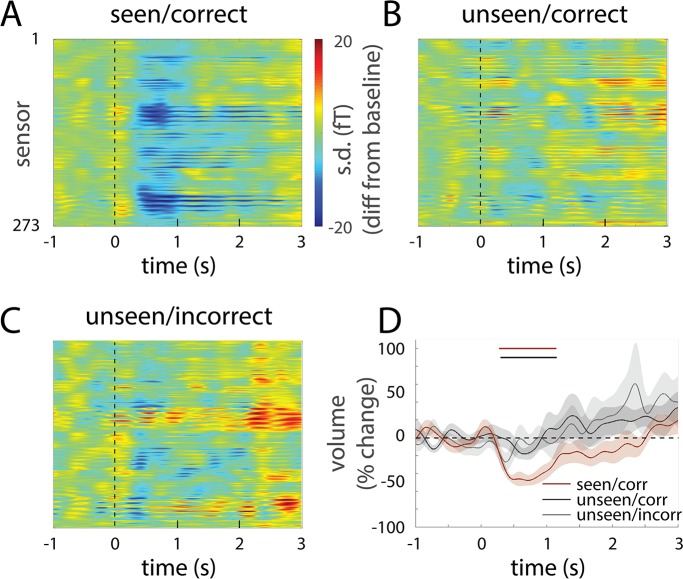
“Transient, Fast-Evolving Neural Dynamics during Conscious Perception Based on our previous findings from massive-univariate analyses [7], we first focused on the SCPs by extracting MEG activity in the 0.”
BackgroundMethodInfluentialSelf-citationHe, B. J., & Zempel, J. M. (2013) · PLoS Computational Biology · doi:10.1371/journal.pcbi.1003348 · Cited by 73 · cited 2×
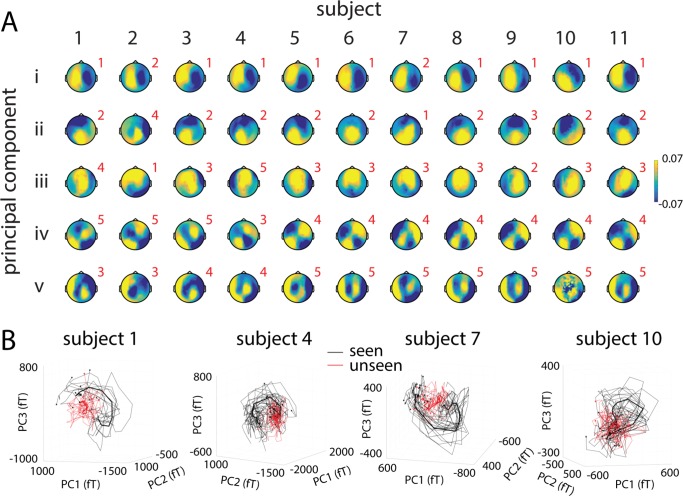
“Following earlier studies [21, 23, 25, 32], we applied PCA and defined the state space using the first few principal components (PCs).”
MethodSelf-citation(2019) · The MIT Press eBooks · doi:10.7551/mitpress/11705.003.0007 · Cited by 68 · cited 1×
“INTRODUCTION Identical sensory input can be processed by the brain consciously or unconsciously [1, 2].”
Controlling for performance capacity confounds in neuroimaging studies of conscious awareness
Morales, J., Chiang, J., & Lau, H. (2015) · Neuroscience of Consciousness · doi:10.1093/nc/niv008 · Cited by 19 · cited 1×
“7B), suggesting that the decoding results were not driven by the categorical distinction between correct and incorrect trials (but see [33]).”
Cited by
Conscious Processing and the Global Neuronal Workspace Hypothesis
Mashour, G. A., Roelfsema, P., Changeux, J.-P., & Dehaene, S. (2020) · Neuron · doi:10.1016/j.neuron.2020.01.026 · Cited by 1,164
“…the observed dynamic states are not just non-specific correlates of attention and perception; they demonstrably contain detailed, decodable information about the specific stimulus that was consciously seen (Baria et al., 2017; King et al., 2016; Salti et al., 2015; Tr € ubutschek et al., 2017).”
BackgroundNeuromodulation of brain state and behavior
McCormick, D. A., Nestvogel, D. B., & He, B. J. (2020) · Annual Review of Neuroscience · doi:10.1146/annurev-neuro-100219-105424 · Cited by 303
Self-citationIs it time to put rest to rest?
Finn, E. S. (2021) · Trends in Cognitive Sciences · doi:10.1016/j.tics.2021.09.005 · Cited by 243
Northoff, G., & Lamme, V. (2020) · Neuroscience & Biobehavioral Reviews · doi:10.1016/j.neubiorev.2020.07.019 · Cited by 247
Bifurcation in brain dynamics reveals a signature of conscious processing independent of report
Sergent, C., Corazzol, M., Labouret, G., Stockart, F., Wexler, M., King, J.-R., Meyniel, F., & Pressnitzer, D. (2021) · Nature Communications · doi:10.1038/s41467-021-21393-z · Cited by 200
Metadata
- Authors
- Baria, A. T., Maniscalco, B., & He, B. J.
- Affiliations
- Northwestern University (US)
- National Institutes of Health (US)
- Corresponding author
- He, Biyu J.
- Venue
- PLOS Computational Biology
- Publisher
- Public Library of Science (PLoS)
- Published
- 2017-11-27
- Volume
- 13
- Issue
- 11
- Pages
- e1005806
- ISSN
- 1553-734X (ISSN-L)
- 1553-7358
- PMC
- PMC5720802
- OpenAlex
- W2951522238
- Cited by
- 70
- References
- 71
- Citations by year
- 2026: 3 · 2025: 4 · 2024: 13 · 2023: 5 · 2022: 6 · 2021: 16 · 2020: 12 · 2019: 5 · 2018: 6
- FWCI
- 3.61
- Type
- journal article
- Language
- en
- Update notices
- new_version (2017-12-07)
- Open access
- gold
- doi.org
- Licence
- public-domain
- creativecommons.org/publicdomain/zero/1.0/ (vor)
- Locations
- PLoS Computational Biology (publishedVersion, public-domain)
- bioRxiv (Cold Spring Harbor Laboratory) (acceptedVersion)
- Europe PMC (PubMed Central) (publishedVersion, public-domain)
- PubMed Central (publishedVersion, public-domain)
- PubMed (publishedVersion)
- RePEc: Research Papers in Economics (submittedVersion)
- DOAJ (DOAJ: Directory of Open Access Journals) (submittedVersion, cc-by-sa)
- Figshare (submittedVersion, cc-by)
- Funders
- National Institute of Neurological Disorders and Stroke
- Leon Levy Foundation
- Esther A. and Joseph Klingenstein Fund
- Topics
- Life Sciences › Neuroscience › Cognitive Neuroscience › Neural dynamics and brain function
- Life Sciences › Neuroscience › Cognitive Neuroscience › Visual perception and processing mechanisms
- Social Sciences › Arts and Humanities › Philosophy › Philosophy and Theoretical Science
- Keywords
- visual awareness, unconscious perception, spontaneous brain activity, nonlinear dynamics
- MeSH terms
- Adult, Brain, Female, Humans, Male, Models, Neurological, Signal Processing, Computer-Assisted, Task Performance and Analysis, Visual Perception, Magnetoencephalography, Computational Biology, Young Adult
About these checks
Registry, retraction, Cites and statistics results are computed, not judged, with one exception: a printed reference that no index lists is read once by a model before it counts as a citation error. Claims are extracted by a model and kept only when their quote appears verbatim in the text; each cited source is then checked, with a model’s help, for whether it says what the claim relies on. Those verdicts can be wrong — read the claim’s quote and the cited source before relying on one.
Statistics and arithmetic are recomputed, not judged.
Confidence bands are shown only for fields calibrated on our annotated test set. None is calibrated yet, so no band is shown.
What counts as a claim ›How we measure confidence ›How we check this ›
Are you an author, or do you see a problem with this page? Request a review
Data sources
Bibliographic data: Semantic Scholar, OpenAlex, Crossref.
Contains information from the Semantic Scholar Academic Graph Datasets, made available under the ODC Attribution License (ODC-BY 1.0).
Semantic Scholar’s data is described in: Kinney, R., et al. (2023). The Semantic Scholar Open Data Platform. arXiv:2301.10140.
