

The DOI matches its Crossref record; 67 of the 67 references it cites were found in a registry or an index.
Machine learning modeling of family wide enzyme-substrate specificity screens
Open accessAbstract
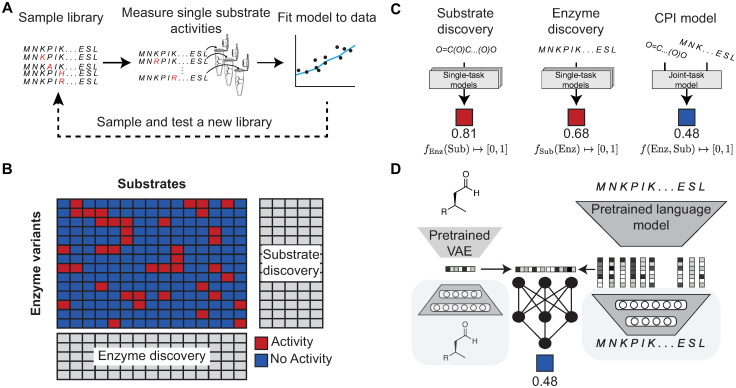
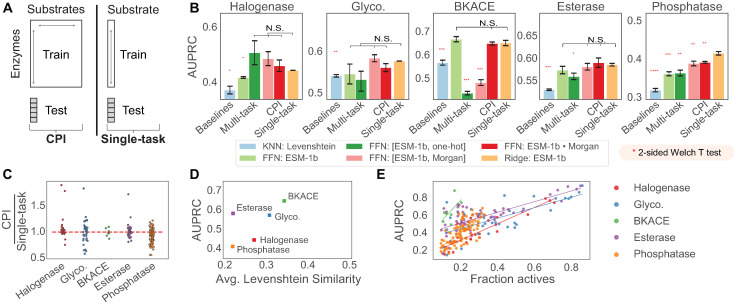
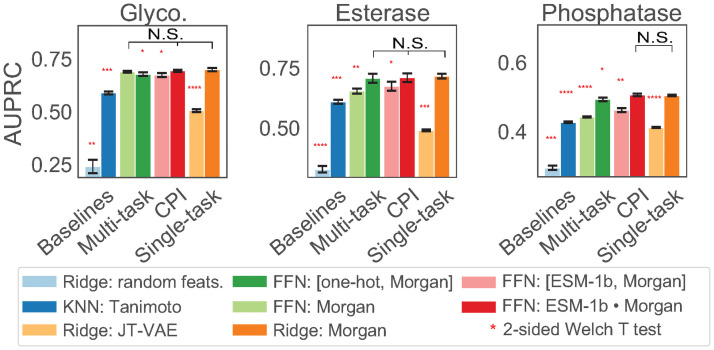
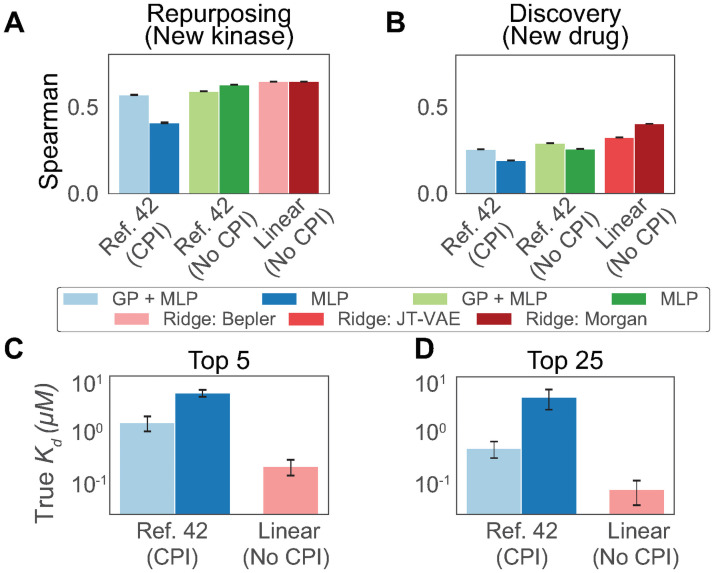
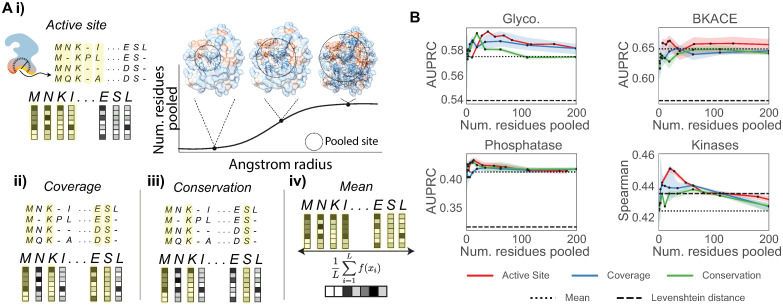
Biocatalysis is a promising approach to sustainably synthesize pharmaceuticals, complex natural products, and commodity chemicals at scale. However, the adoption of biocatalysis is limited by our ability to select enzymes that will catalyze their natural chemical transformation on non-natural substrates. While machine learning and in silico directed evolution are well-posed for this predictive modeling challenge, efforts to date have primarily aimed to increase activity against a single known substrate, rather than to identify enzymes capable of acting on new substrates of interest. To address this need, we curate 6 different high-quality enzyme family screens from the literature that each measure multiple enzymes against multiple substrates. We compare machine learning-based compound-protein interaction (CPI) modeling approaches from the literature used for predicting drug-target interactions. Surprisingly, comparing these interaction-based models against collections of independent (single task) enzyme-only or substrate-only models reveals that current CPI approaches are incapable of learning interactions between compounds and proteins in the current family level data regime. We further validate this observation by demonstrating that our no-interaction baseline can outperform CPI-based models from the literature used to guide the discovery of kinase inhibitors. Given the high performance of non-interaction based models, we introduce a new structure-based strategy for pooling residue representations across a protein sequence. Altogether, this work motivates a principled path forward in order to build and evaluate meaningful predictive models for biocatalysis and other drug discovery applications.
Overview
The claims and statistics of this paper haven’t been checked yet.
Run the check — free, no account needed. It reads the open-access text and checks the sources it cites.
Integrity signals
Registry
Cites
Statistics
Figures
Verification
Claims the paper makes
The claims and statistics of this paper haven’t been checked yet.
Run the check — free, no account needed. It reads the open-access text and checks the sources it cites.
Claims other papers make about this one
Each is checked against this paper’s own text: does it say what the citing paper says it does?
The cited source says what the claim attributes to it.
In the citing paper
“It has been shown that the resulting representations contain rich information about the structure and the function of the proteins 17 , 32 , 33 .”
From Turnover number predictions for kinetically uncharacterized enzymes using machine and deep learning (2023) · cites this paper as [33]
Self-check
Percentages, sums and reported differences re-computed from the paper’s own numbers.
The self-check needs the paper’s full text.
Citations
Cites
Scikit-learn: Machine Learning in Python
Pedregosa, F., Varoquaux, G., Gramfort, A., Michel, V., Thirion, B., Grisel, O., Blondel, M., Müller, A., Nothman, J., Louppe, G., et al. (2012) · arXiv · doi:10.48550/arxiv.1201.0490 · Cited by 71,016
BERT: Pre-training of Deep Bidirectional Transformers for Language Understanding
Devlin, J., Chang, M.-W., Lee, K., & Toutanova, K. (2019) · Proceedings of the 2019 Conference of the North American Chapter of the Association for Computational Linguistics: Human Language Technologies, Volume 1 (Long and Short Papers) · doi:10.18653/v1/n19-1423 · Cited by 54,325
UCSF Chimera—A visualization system for exploratory research and analysis
Pettersen, E. F., Goddard, T. D., Huang, C. C., Couch, G. S., Greenblatt, D. M., Meng, E. C., & Ferrin, T. E. (2004) · Journal of Computational Chemistry · doi:10.1002/jcc.20084 · Cited by 46,047
Highly accurate protein structure prediction with AlphaFold
Jumper, J., Evans, R., Pritzel, A., Green, T., Figurnov, M., Ronneberger, O., Tunyasuvunakool, K., Bates, R., Žídek, A., Potapenko, A., et al. (2021) · Nature · doi:10.1038/s41586-021-03819-2 · Cited by 43,764
Advances in neural information processing systems 7
(1996) · Computers & Mathematics with Applications · doi:10.1016/s0898-1221(96)90463-0 · Cited by 14,759
Larian Studios Dev Team (2024) · doi:10.1145/3292500.3330701 · Cited by 8,618
Biopython: freely available python tools for computational molecular biology and bioinformatics
Cock, P. J. A., Antao, T., Chang, J. T., Chapman, B. A., Cox, C. J., Dalke, A., Friedberg, I., Hamelryck, T., Kauff, F., Wilczynski, B., et al. (2009) · Bioinformatics · doi:10.1093/bioinformatics/btp163 · Cited by 6,080
Accurate prediction of protein structures and interactions using a 3-track network
Baek, M., DiMaio, F., Anishchenko, I., Dauparas, J., Ovchinnikov, S., Lee, G. R., Wang, J., Cong, Q., Kinch, L. N., Schaeffer, R. D., et al. (2021) · doi:10.1101/2021.06.14.448402 · Cited by 5,549
PubChem Substance and Compound databases
Kim, S., Thiessen, P. A., Bolton, E. E., Chen, J., Fu, G., Gindulyte, A., Han, L., He, J., He, S., Shoemaker, B. A., et al. (2016) · Nucleic Acids Research · doi:10.1093/nar/gkv951 · Cited by 5,436
Rives, A., Meier, J., Sercu, T., Goyal, S., Lin, Z., Liu, J., Guo, D., Ott, M., Zitnick, C. L., Ma, J., et al. (2021) · Proceedings of the National Academy of Sciences · doi:10.1073/pnas.2016239118 · Cited by 3,286
Research works printed but not linked: 8
- P Carbonell, 2018, Selenzyme: Enzyme selection tool for pathway design, Bioinformatics, 34, 2153, 10.1093/bioinformatics/bty065 · DOI
- BF Fisher, 2019, Site-Selective C–H Halogenation Using Flavin-Dependent Halogenases Identified via Family-Wide Activity Profiling, ACS Central Science, 5, 1844, 10.1021/acscentsci.9b00835 · DOI
- Huang K, Fu T, Gao W, Zhao Y, Roohani Y, Leskovec J, et al. Therapeutics data Commons: machine learning datasets and tasks for therapeutics. arXiv preprint arXiv:210209548. 2021.
- Shanehsazzadeh A, Belanger D, Dohan D. Is transfer learning necessary for protein landscape prediction? arXiv preprint arXiv:201103443. 2020.
- Lu T, Lu AX, Moses AM. Random Embeddings and Linear Regression can Predict Protein Function. arXiv preprint arXiv:210414661. 2021.
- Detlefsen NS, Hauberg S, Boomsma W. What is a meaningful representation of protein sequences? arXiv preprint arXiv:201202679. 2020.
- J Jumper, 2020, High accuracy protein structure prediction using deep learning, Fourteenth Critical Assessment of Techniques for Protein Structure Prediction (Abstract Book), 22, 24
- Paszke A, Gross S, Massa F, Lerer A, Bradbury J, Chanan G, et al. Pytorch: An imperative style, high-performance deep learning library. arXiv preprint arXiv:191201703. 2019.
Cited by
Sorted by citations
Opportunities and Challenges for Machine Learning-Assisted Enzyme Engineering
Yang, J., Li, F.-Z., & Arnold, F. H. (2024) · ACS Central Science · doi:10.1021/acscentsci.3c01275 · Cited by 268
Machine Learning-Guided Protein Engineering
Kouba, P., Kohout, P., Haddadi, F., Bushuiev, A., Samusevich, R., Sedlář, J., Damborský, J., Pluskal, T., Šivic, J., & Mazurenko, S. (2023) · ACS Catalysis · doi:10.1021/acscatal.3c02743 · Cited by 218
Combining chemistry and protein engineering for new-to-nature biocatalysis
Miller, D. C., Athavale, S. V., & Arnold, F. H. (2022) · Nature Synthesis · doi:10.1038/s44160-021-00008-x · Cited by 205
Singh, R., Sledzieski, S., Bryson, B. D., Cowen, L., & Berger, B. (2023) · Proceedings of the National Academy of Sciences · doi:10.1073/pnas.2220778120 · Cited by 216
A general model to predict small molecule substrates of enzymes based on machine and deep learning
Kroll, A., Ranjan, S., Engqvist, M. K. M., & Lercher, M. J. (2023) · Nature Communications · doi:10.1038/s41467-023-38347-2 · Cited by 193
Turnover number predictions for kinetically uncharacterized enzymes using machine and deep learning
Kroll, A., Rousset, Y., Hu, X.-P., Liebrand, N. A., & Lercher, M. J. (2023) · Nature Communications · doi:10.1038/s41467-023-39840-4 · Cited by 186
Machine learning-enabled retrobiosynthesis of molecules
Yu, T., Boob, A. G., Volk, M., Liu, X., Cui, H., & Zhao, H. (2023) · Nature Catalysis · doi:10.1038/s41929-022-00909-w · Cited by 127
CatPred: a comprehensive framework for deep learning in vitro enzyme kinetic parameters
Boorla, V. S., & Maranas, C. D. (2025) · Nature Communications · doi:10.1038/s41467-025-57215-9 · Cited by 122
Markus, B., Gruber Christian, C., Andreas, K., Kummer, A., Stefan, L., Oberdorfer, G., Elina, S., & Šnajdrová, R. (2023) · ACS Catalysis · doi:10.1021/acscatal.3c03417 · Cited by 121
Dataset Design for Building Models of Chemical Reactivity
Raghavan, P., Haas, B. C., Ruos, M. E., Schleinitz, J., Doyle, A. G., Reisman, S. E., Sigman, M. S., & Coley, C. W. (2023) · ACS Central Science · doi:10.1021/acscentsci.3c01163 · Cited by 105
Self-citationMerging enzymatic and synthetic chemistry with computational synthesis planning
Levin, I., Liu, M., Voigt, C. A., & Coley, C. W. (2022) · Nature Communications · doi:10.1038/s41467-022-35422-y · Cited by 83
Self-citationKim, S., Ga, S., Bae, H., Sluyter, R., Konstantinov, K., Shrestha, L. K., Kim, J. H., Kim, J. H., & Ariga, K. (2023) · EES Catalysis · doi:10.1039/d3ey00239j · Cited by 75
Enzyme specificity prediction using cross-attention graph neural networks
Cui, H., Su, Y., Dean, T. J., Yu, T., Zhang, Z., Peng, J., Shukla, D., & Zhao, H. (2025) · Nature · doi:10.1038/s41586-025-09697-2 · Cited by 73
Calibrated geometric deep learning improves kinase–drug binding predictions
Luo, Y., Liu, Y., & Peng, J. (2023) · Nature Machine Intelligence · doi:10.1038/s42256-023-00751-0 · Cited by 68
A tripartite microbial co-culture system for de novo biosynthesis of diverse plant phenylpropanoids
Brooks, S. M., Marsan, C. B., Reed, K. B., Yuan, S., Nguyen, D.-D., Trivedi, A., Altın, G., Ballinger, N. A., Nelson, A., & Alper, H. S. (2023) · Nature Communications · doi:10.1038/s41467-023-40242-9 · Cited by 60
Feature Reuse and Scaling: Understanding Transfer Learning with Protein Language Models
Li, F.-Z., Amini, A. P., Yue, Y., Yang, K. K., & Lu, A. X. (2024) · doi:10.1101/2024.02.05.578959 · Cited by 51
Self-citationEnzymeMap: curation, validation and data-driven prediction of enzymatic reactions
Heid, E., Probst, D., Green, W. H., & Madsen, G. K. H. (2023) · Chemical Science · doi:10.1039/d3sc02048g · Cited by 52
Data‐Driven Protein Engineering for Improving Catalytic Activity and Selectivity
Ao, Y., Dörr, M., Menke, M. J., Born, S., Heuson, E., & Bornscheuer, U. T. (2023) · ChemBioChem · doi:10.1002/cbic.202300754 · Cited by 44
Nuñez, L. F. S., Barrera-Ocampo, A. A., Caicedo, P. A., Cortés, N., Osorio, E. H., Villegas-Torres, M. F., & Barrios, A. F. G. (2024) · Metabolites · doi:10.3390/metabo14030154 · Cited by 47
Development of an efficient yeast platform for cannabigerolic acid biosynthesis
Zhang, Y., Guo, J., Gao, P., Wei, Y., Shen, J., Luo, X., & Keasling, J. D. (2023) · Metabolic Engineering · doi:10.1016/j.ymben.2023.10.004 · Cited by 42
Enabling pathway design by multiplex experimentation and machine learning
Boob, A. G., Chen, J., & Zhao, H. (2023) · Metabolic Engineering · doi:10.1016/j.ymben.2023.11.006 · Cited by 41
Connecting chemical and protein sequence space to predict biocatalytic reactions
Golliher, A. E., Boiko, D. A., Perkins, J. C., Cemalovic, N. I., Reschützegger, T., Gomes, G., & Narayan, A. R. H. (2025) · Nature · doi:10.1038/s41586-025-09519-5 · Cited by 39
Protein representations: Encoding biological information for machine learning in biocatalysis
Harding-Larsen, D., Funk, J., Madsen, N. G., Gharabli, H., Acevedo-Rocha, C. G., Mazurenko, S., & Welner, D. H. (2024) · Biotechnology Advances · doi:10.1016/j.biotechadv.2024.108459 · Cited by 38
Predicting plant Rubisco kinetics from RbcL sequence data using machine learning
Iqbal, W. A., Lisitsa, A., & Kapralov, M. V. (2022) · Journal of Experimental Botany · doi:10.1093/jxb/erac368 · Cited by 39
Machine Learning: A Suitable Method for Biocatalysis
Sampaio, P., & Fernandes, P. C. D. B. (2023) · Catalysts · doi:10.3390/catal13060961 · Cited by 39
Kroll, A., Ranjan, S., & Lercher, M. J. (2024) · PLoS Computational Biology · doi:10.1371/journal.pcbi.1012100 · Cited by 44
Clements, H. D., Flynn, A. R., Nicholls, B. T., Grosheva, D., Lefave, S. J., Merriman, M. T., Hyster, T. K., & Sigman, M. S. (2023) · Journal of the American Chemical Society · doi:10.1021/jacs.3c03639 · Cited by 35
Rational and mechanistic approaches for improving biocatalyst performance
Phintha, A., & Chaiyen, P. (2022) · Chem Catalysis · doi:10.1016/j.checat.2022.09.026 · Cited by 38
Exploring Scoring Function Space: Developing Computational Models for Drug Discovery
Bitencourt‐Ferreira, G., Villarreal, M. A., Quiroga, R., Biziukova, N. Y., Poroikov, V., Tarasova, O. A., & de Azevedo, W. F. (2023) · Current Medicinal Chemistry · doi:10.2174/0929867330666230321103731 · Cited by 34
Discovery of Toxin-Degrading Enzymes with Positive Unlabeled Deep Learning
Zhang, D., Xing, H., Liu, D., Han, M., Cai, P., Lin, H., Tian, Y. T., Guo, Y. J., Sun, B., Le, Y., et al. (2024) · ACS Catalysis · doi:10.1021/acscatal.3c04461 · Cited by 38
Finnigan, W., Lubberink, M., Hepworth, L. J., Citoler, J., Mattey, A. P., Ford, G. J., Sangster, J. J., Cosgrove, S. C., da Costa, B. Z., Heath, R. S., et al. (2023) · ACS Catalysis · doi:10.1021/acscatal.3c01418 · Cited by 33
Improving plastic degrading enzymes via directed evolution
Joho, Y., Vongsouthi, V., Gomez, C., Larsen, J. S., Ardèvol, A., & Jackson, C. J. (2024) · Protein Engineering Design and Selection · doi:10.1093/protein/gzae009 · Cited by 31
EITLEM-Kinetics: A deep-learning framework for kinetic parameter prediction of mutant enzymes
Shen, X., Cui, Z., Long, J., Zhang, S., Chen, B., & Tan, T. (2024) · Chem Catalysis · doi:10.1016/j.checat.2024.101094 · Cited by 37
ALDELE: All-Purpose Deep Learning Toolkits for Predicting the Biocatalytic Activities of Enzymes
Wang, X., Quinn, D. J., Moody, T. S., & Huang, M. (2024) · Journal of Chemical Information and Modeling · doi:10.1021/acs.jcim.4c00058 · Cited by 28
Upadhyay, V., Boorla, V. S., & Maranas, C. D. (2023) · Metabolic Engineering · doi:10.1016/j.ymben.2023.06.001 · Cited by 26
A mini review on the applications of artificial intelligence (AI) in surface chemistry and catalysis
Al‐Akayleh, F., Agha, A. S. A. A., Abdel‐Rahem, R. A., & Al-Remawi, M. M. (2024) · Tenside Surfactants Detergents · doi:10.1515/tsd-2024-2580 · Cited by 27
In-depth analysis of biocatalysts by microfluidics: An emerging source of data for machine learning
Vasina, M., Kovar, D. R., Damborský, J., Ding, Y., Yang, T., deMello, A. J., Mazurenko, S., Stavrakis, S., & Prokop, Z. (2023) · Biotechnology Advances · doi:10.1016/j.biotechadv.2023.108171 · Cited by 27
Ran, X., Jiang, Y., Shao, Q., & Yang, Z. J. (2023) · Chemical Science · doi:10.1039/d3sc02752j · Cited by 25
Data-driven enzyme engineering to identify function-enhancing enzymes
Jiang, Y., Ran, X., & Yang, Z. J. (2022) · Protein Engineering Design and Selection · doi:10.1093/protein/gzac009 · Cited by 27
Unified modeling of 3D molecular generation via atomic interactions with PocketXMol
Peng, X., Guo, R., Guo, F., Wang, Z., Sun, J., Guan, J., Jia, Y., Xu, Y., Huang, Y., Zhang, M., et al. (2026) · Cell · doi:10.1016/j.cell.2026.01.003 · Cited by 22
High-throughput prediction of enzyme promiscuity based on substrate–product pairs
Xing, H., Cai, P., Liu, D., Han, M., Liu, J., Le, Y., Zhang, D., & Hu, Q. (2024) · Briefings in Bioinformatics · doi:10.1093/bib/bbae089 · Cited by 20
Ouyang, X., Feng, Y. X., Cui, C., Li, Y., Zhang, L., & Wang, H. (2024) · Bioinformatics · doi:10.1093/bioinformatics/btaf002 · Cited by 20
A geometric foundation model for enzyme retrieval with evolutionary insights
Liu, Y., Hua, C., Xu, M., Zeng, T., Rao, J., Zhang, Z., Wu, R., Weng, J., Coley, C. W., & Zheng, S. (2026) · Nature Catalysis · doi:10.1038/s41929-026-01478-y · Cited by 25
Self-citationBarghout, R. A., Xu, Z.-Q. J., Betala, S., & Mahadevan, R. (2023) · Current Opinion in Biotechnology · doi:10.1016/j.copbio.2023.103007 · Cited by 16
Harding-Larsen, D., Madsen, C. D., Teze, D., Kittilä, T., Langhorn, M. R., Gharabli, H., Hobusch, M., Otalvaro, F. M., Kırtel, O., Bidart, G. N., et al. (2024) · ACS Omega · doi:10.1021/acsomega.4c01583 · Cited by 14
Advances in ligand-specific biosensing for structurally similar molecules
Xi, C., Diao, J., & Moon, T. S. (2023) · Cell Systems · doi:10.1016/j.cels.2023.10.009 · Cited by 17
Enzyme catalytic efficiency prediction: employing convolutional neural networks and XGBoost
Alazmi, M. (2024) · Frontiers in Artificial Intelligence · doi:10.3389/frai.2024.1446063 · Cited by 15
Lim, P. K., Julca, I., & Mutwil, M. (2023) · Computational and Structural Biotechnology Journal · doi:10.1016/j.csbj.2023.01.013 · Cited by 12
Kroll, A., & Rousset, Y. (2025) · Current Opinion in Structural Biology · doi:10.1016/j.sbi.2025.103070 · Cited by 12
Lu, X., Cao, M., Ma, M., Wu, Y., Qu, M., Du, F., Ji, R., Duan, M., Dong, L., Liu, K., et al. (2025) · Food Bioengineering · doi:10.1002/fbe2.70029 · Cited by 12
Deep Learning-Driven Insights into Enzyme–Substrate Interaction Discovery
Qian, W., Wang, X., Huang, Y., Kang, Y., Pan, P., Hsieh, C., & Hou, T. (2024) · Journal of Chemical Information and Modeling · doi:10.1021/acs.jcim.4c01801 · Cited by 12
Machine learning for enzyme catalytic activity: current progress and future horizons
Qiu, S., Saeed, H., Leonard, W., Li, F., & Yang, A. (2026) · Briefings in Bioinformatics · doi:10.1093/bib/bbag002 · Cited by 13
Descriptor-augmented machine learning for enzyme-chemical interaction predictions
Han, Y., Zhang, H., Zeng, Z., Liu, Z., Lu, D., & Liu, Z. (2024) · Synthetic and Systems Biotechnology · doi:10.1016/j.synbio.2024.02.006 · Cited by 11
Discovery of alkaline laccases from basidiomycete fungi through machine learning-based approach
Wan, X., Shahrear, S., Chew, S. W., Vilaplana, F., & Mäkelä, M. (2024) · Biotechnology for Biofuels and Bioproducts · doi:10.1186/s13068-024-02566-6 · Cited by 11
EP-Pred: A Machine Learning Tool for Bioprospecting Promiscuous Ester Hydrolases
Xiang, R., Fernandez-Lopez, L., Robles-Martín, A., Ferrer, M., & Guallar, V. (2022) · Biomolecules · doi:10.3390/biom12101529 · Cited by 9
Hennen, S. G., Bomble, Y. J., Urbanowicz, B. R., & Bharadwaj, V. S. (2025) · Digital Discovery · doi:10.1039/d4dd00338a · Cited by 9
A comprehensive mapping of zeolite–template chemical space
Xie, M., Schwalbe‐Koda, D., Semanate-Esquivel, Y. M., Bello‐Jurado, E., Hoffman, A. J., Santiago-Reyes, O. A., Paris, C., Moliner, M., & Gómez‐Bombarelli, R. (2025) · Nature Computational Science · doi:10.1038/s43588-025-00842-5 · Cited by 9
Long, Y., Abbasinejad, F., Li, F.-Z., Reinprecht, P., Wittmann, B. J., Kennemur, J. L., Carder, H. M., Yang, J., Lambert, T., O’Meara, R. L., et al. (2025) · Nucleic Acids Research · doi:10.1093/nar/gkaf1142 · Cited by 9
Maryam, M., Rehman, M. U., Chong, K. T., & Tayara, H. (2025) · Computational Toxicology · doi:10.1016/j.comtox.2025.100344 · Cited by 7
Recent advances in lycopene and germacrene a biosynthesis and their role as antineoplastic drugs
Fordjour, E., Liu, C., Yang, Y., & Bai, Z. (2024) · World Journal of Microbiology and Biotechnology · doi:10.1007/s11274-024-04057-0 · Cited by 5
Xu, Z.-Q. J., Wu, J., Song, Y. S., & Mahadevan, R. (2022) · PubMed · Cited by 6
Kroll, A., Ranjan, S., & Lercher, M. J. (2023) · bioRxiv (Cold Spring Harbor Laboratory) · doi:10.1101/2023.08.21.554147 · Cited by 6
EnzymeCAGE: A Geometric Foundation Model for Enzyme Retrieval with Evolutionary InsightsPreprint
Liu, Y., Hua, C., Zeng, T., Rao, J., Zhang, Z., Wu, R., Coley, C. W., & Zheng, S. (2024) · bioRxiv (Cold Spring Harbor Laboratory) · doi:10.1101/2024.12.15.628585 · Cited by 6
Self-citationComputational tools for nonnatural pathway design: Algorithms, applications, and challenges
Liu, Y., Wei, F., Liao, X., Deng, X., Yuan, Q., & Ma, H. (2025) · BioDesign Research · doi:10.1016/j.bidere.2025.100041 · Cited by 4
Deep learning methods for proteome-scale interaction prediction
Yoon, M. S., Bae, B., Kim, K. H., Park, H., & Baek, M. (2025) · Current Opinion in Structural Biology · doi:10.1016/j.sbi.2024.102981 · Cited by 6
Ludwig, C., Maughan, P. J., Jellen, E. N., & Davis, T. M. (2025) · G3 Genes Genomes Genetics · doi:10.1093/g3journal/jkaf162 · Cited by 6
EP-pred: A Machine Learning Tool for Bioprospecting Promiscuous Ester Hydrolases
Xiang, R., Fernandez-Lopez, L., Robles-Martin, A., Ferrer, M., & Guallar, V. (2022) · doi:10.20944/preprints202209.0100.v1 · Cited by 5
Deep Learning Enables Rapid Identification of Mycotoxin-Degrading EnzymesPreprint
Zhang, D., Xing, H., Liu, D., Han, M., Cai, P., Lin, H., Tian, Y. T., Guo, Y., Sun, B., Tian, Y., et al. (2023) · ChemRxiv · doi:10.26434/chemrxiv-2023-g6qb5 · Cited by 5
VIPER: A General Model for Prediction of Enzyme SubstratesPreprint
Campbell, M. J. (2024) · bioRxiv (Cold Spring Harbor Laboratory) · doi:10.1101/2024.06.21.599972 · Cited by 6
Application of machine learning for predicting G9a inhibitors
Ivanova, M. L., Russo, N., Djaid, N. T., & Nikolić, K. (2024) · Digital Discovery · doi:10.1039/d4dd00101j · Cited by 4
AI and machine learning in pharmaceutical formulation and manufacturing of personalized medicines
Gupta, A., Vaidya, K., & Boehnke, N. (2024) · Elsevier eBooks · doi:10.1016/b978-0-323-91819-0.00006-3 · Cited by 6
Boorla, V. S., & Maranas, C. D. (2024) · bioRxiv (Cold Spring Harbor Laboratory) · doi:10.1101/2024.03.10.584340 · Cited by 4
Practical examples of biocatalysis in industry
Gilio, A. K., Abdo, M. A., Martinez, C. A., Palaia, A. T., & Livada, J. (2025) · Comptes Rendus Chimie · doi:10.5802/crchim.408 · Cited by 3
Karakoltzidis, A., Karakitsios, S., & Sarigiannis, D. A. (2025) · NAM journal. · doi:10.1016/j.namjnl.2025.100012 · Cited by 3
Learning the Drug-Target Interaction LexiconPreprint
Singh, R., Sledzieski, S., Cowen, L., & Berger, B. (2022) · bioRxiv (Cold Spring Harbor Laboratory) · doi:10.1101/2022.12.06.519374 · Cited by 3
Learning a CoNCISE language for small-molecule bindingPreprint
Erden, M., Devkota, K., Varghese, L., Cowen, L., & Singh, R. (2025) · bioRxiv (Cold Spring Harbor Laboratory) · doi:10.1101/2025.01.08.632039 · Cited by 5
Sales, M. B., Aires, F. I. D. S., de Sousa, P. G., Silva, C. D. R., Rodrigues, E. L., de Souza, M. C. M., & dos Santos, J. C. S. (2026) · The Canadian Journal of Chemical Engineering · doi:10.1002/cjce.70383 · Cited by 2
Li, Y., Liu, Y., 侯江春, & Liu, X. (2024) · Neurocomputing · doi:10.1016/j.neucom.2024.129155 · Cited by 2
AI and mechanistic modeling for characterizing biosynthetic pathways of natural products
Lee, B. T., Lee, B., Kwon, J. Y., Weber, T., & Kim, H. U. (2025) · Natural Product Reports · doi:10.1039/d5np00059a · Cited by 2
Quantification of spliced and unspliced transcripts by velocyto is inaccurate for 5’-sequencing dataPreprint
Klingler, D., Schleicher, J. T., & Claassen, M. (2025) · bioRxiv (Cold Spring Harbor Laboratory) · doi:10.1101/2025.01.17.633503 · Cited by 2
Harnessing native enzyme diversity for biocatalysis
Gamonet, C., Zaparucha, A., & Vergne‐Vaxelaire, C. (2025) · Comptes Rendus Chimie · doi:10.5802/crchim.409 · Cited by 1
Singh, P., Tripathi, S., & Bihari, A. (2025) · Archives of Computational Methods in Engineering · doi:10.1007/s11831-025-10377-7 · Cited by 1
Okuno, T., Ono, N., Altaf-Ul-Amin, M., & Kanaya, S. (2025) · Computational and Structural Biotechnology Journal · doi:10.1016/j.csbj.2025.11.045 · Cited by 1
Sun, J., Lin, Y., Zou, Z., Liu, J., Chen, Z., Wen, Y., Li, S., He, M., Liu, Y., Chen, Y.-L., et al. (2026) · Biotechnology Advances · doi:10.1016/j.biotechadv.2026.108849 · Cited by 1
Deep contrastive learning method for drug-target interactions prediction
Li, J., Zhou, S., Liu, T., Liu, C., Zang, M., & Wang, Q. (2026) · Computer Methods in Biomechanics & Biomedical Engineering · doi:10.1080/10255842.2026.2635031 · Cited by 1
Fourier-Enhanced Kolmogorov–Arnold Network With Attention for Drug–Target Interaction Prediction
Li, J., Zhou, S., Liu, C., Wang, Q., Liu, T., & Zang, M. (2026) · IEEE Transactions on Computational Biology and Bioinformatics · doi:10.1109/tcbbio.2026.3681464 · Cited by 1
Zhang, Y., Feng, S., Yu, L., & Luo, J. (2026) · International Journal of Biological Macromolecules · doi:10.1016/j.ijbiomac.2026.153150 · Cited by 1
MuFAl: A Universal Drug-Target Interaction Prediction Framework
Chen, X., Husen, M. N., & Huang, X. (2025) · International Conference on Ubiquitous Information Management and Communication (IMCOM) · doi:10.1109/imcom64595.2025.10857588 · Cited by 1
Contrasting drugs from decoysPreprint
Sledzieski, S., Singh, R., Cowen, L., & Berger, B. (2022) · bioRxiv (Cold Spring Harbor Laboratory) · doi:10.1101/2022.11.03.515086 · Cited by 1
Protein Language Models in Directed EvolutionPreprint
Maguire, R. G., Bloznelyte, K., Adepoju, F., Armean-Jones, M., Dewan, S., Fozzard, S., Goddard, S. E., Gupta, A. K., Ibrahimi, E., Jones, F. P., et al. (2024) · bioRxiv (Cold Spring Harbor Laboratory) · doi:10.1101/2024.08.20.608752 · Cited by 1
A Predictive Model for Compound-Protein Interactions Based on Concatenated VectorizationPreprint
Williams, G. H., & Azim, K. (2024) · bioRxiv (Cold Spring Harbor Laboratory) · doi:10.1101/2024.10.02.616275 · Cited by 1
Xu, Z., Barghout, R. A., Wu, J., Garg, D., Song, Y. S., & Mahadevan, R. (2025) · bioRxiv (Cold Spring Harbor Laboratory) · doi:10.1101/2025.01.16.633372 · Cited by 1
Rethinking Representation Complexity in Drug–Target Prediction via Supervised Vector QuantizationPreprint
Chen, J., Zhang, Y., Lu, L., Wu, M., Chen, Z., Imoto, S., & Li, C. (2025) · bioRxiv (Cold Spring Harbor Laboratory) · doi:10.1101/2025.06.13.659523 · Cited by 1
Computer-Aided Synthesis Planning for Biocatalysis
Finnigan, W. (2023) · Elsevier eBooks · doi:10.1016/b978-0-32-390644-9.00084-6
N-gram Features and Machine Learning Models for Recognizing Human Enzyme Protein Sequences
Mehta, D. M., Prajapati, R. B., Upadhyay, K. N., Valani, N. S., Soni, N. R., & Patel, S. (2023) · International Conference on Electronics and Sustainable Communication Systems (ICESC) · doi:10.1109/icesc57686.2023.10193262
Engineering enzyme for microenvironment
Rafeeq, H., Hussain, A., Rafique, S., Naqvi, W. Z., & Ramzan, R. (2023) · Elsevier eBooks · doi:10.1016/b978-0-323-91760-5.00007-5
Karakoltzidis, A., Karakitsios, S., & Sarigiannis, D. A. (2024) · Research Square · doi:10.21203/rs.3.rs-4276245/v1
Multienzyme-catalyzed processes in asymmetric synthesis: state of the art and future trends
de Melo, E. M., Claaßen, C., Finnigan, W., de Souza, R. O. M. A., & Rother, D. (2024) · Elsevier eBooks · doi:10.1016/b978-0-443-19057-5.00012-1
Will, M., Korka, B., & Stenner, M. (2025) · bioRxiv (Cold Spring Harbor Laboratory) · doi:10.1101/2025.01.17.633560
Metadata
- Authors
- Goldman, S., Das, R., Yang, K. K., & Coley, C. W.
- Affiliations
- Massachusetts Institute of Technology (US)
- Microsoft Research New England (United States) (US)
- Corresponding author
- Coley, Connor W.
- Venue
- PLOS Computational Biology
- Publisher
- Public Library of Science (PLoS)
- Published
- 2022-02-10
- Volume
- 18
- Issue
- 2
- Pages
- e1009853
- ISSN
- 1553-734X (ISSN-L)
- 1553-7358
- PMC
- PMC8865696
- OpenAlex
- W3198646379
- Cited by
- 120
- References
- 62
- Citations by year
- 2026: 27 · 2025: 25 · 2024: 29 · 2023: 29 · 2022: 10
- FWCI
- 12.72
- Type
- journal article
- Language
- en
- Update notices
- new_version (2022-02-23)
- Open access
- gold
- doi.org
- Licence
- Locations
- PLoS Computational Biology (publishedVersion, cc-by)
- PubMed Central (publishedVersion, cc-by)
- PubMed (publishedVersion)
- arXiv (Cornell University) (submittedVersion)
- DOAJ (DOAJ: Directory of Open Access Journals) (submittedVersion, cc-by-sa)
- DSpace@MIT (Massachusetts Institute of Technology) (submittedVersion, cc-by-nc)
- arXiv (Cornell University)
- Funders
- Machine Learning for Pharmaceutical Discovery and Synthesis Consortium
- Topics
- Life Sciences › Pharmacology, Toxicology and Pharmaceutics › Drug Discovery › Computational Drug Discovery Methods
- Life Sciences › Biochemistry, Genetics and Molecular Biology › Molecular Biology › Machine Learning in Bioinformatics
- Life Sciences › Biochemistry, Genetics and Molecular Biology › Molecular Biology › Enzyme Catalysis and Immobilization
- Keywords
- enzyme substrate specificity, biocatalysis, compound-protein interaction prediction, kinase inhibitors, protein sequence representation, enzyme discovery, drug-target interactions, machine learning prediction models
- MeSH terms
- Machine Learning, Amino Acid Sequence, Proteins, Substrate Specificity, Drug Discovery
About these checks
Registry, retraction, Cites and statistics results are computed, not judged, with one exception: a printed reference that no index lists is read once by a model before it counts as a citation error. Claims are extracted by a model and kept only when their quote appears verbatim in the text; each cited source is then checked, with a model’s help, for whether it says what the claim relies on. Those verdicts can be wrong — read the claim’s quote and the cited source before relying on one.
Statistics and arithmetic are recomputed, not judged.
Confidence bands are shown only for fields calibrated on our annotated test set. None is calibrated yet, so no band is shown.
What counts as a claim ›How we measure confidence ›How we check this ›
Are you an author, or do you see a problem with this page? Request a review
