

The DOI matches its Crossref record; 58 of the 58 references it cites were found in a registry or an index.
Cell Cycle–Specified Fluctuation of Nucleosome Occupancy at Gene Promoters
Open accessAbstract
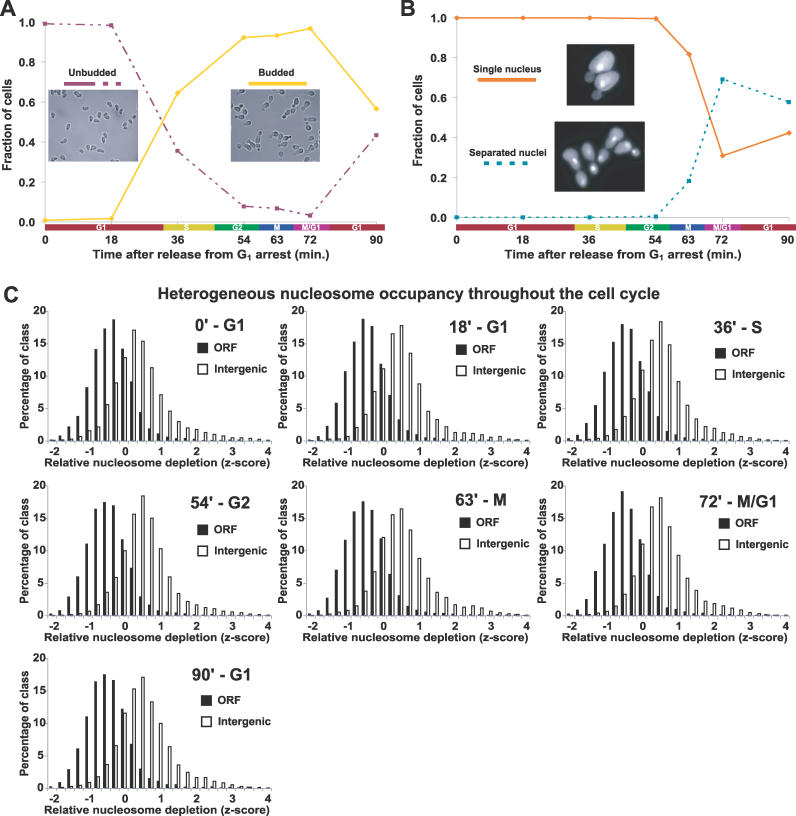
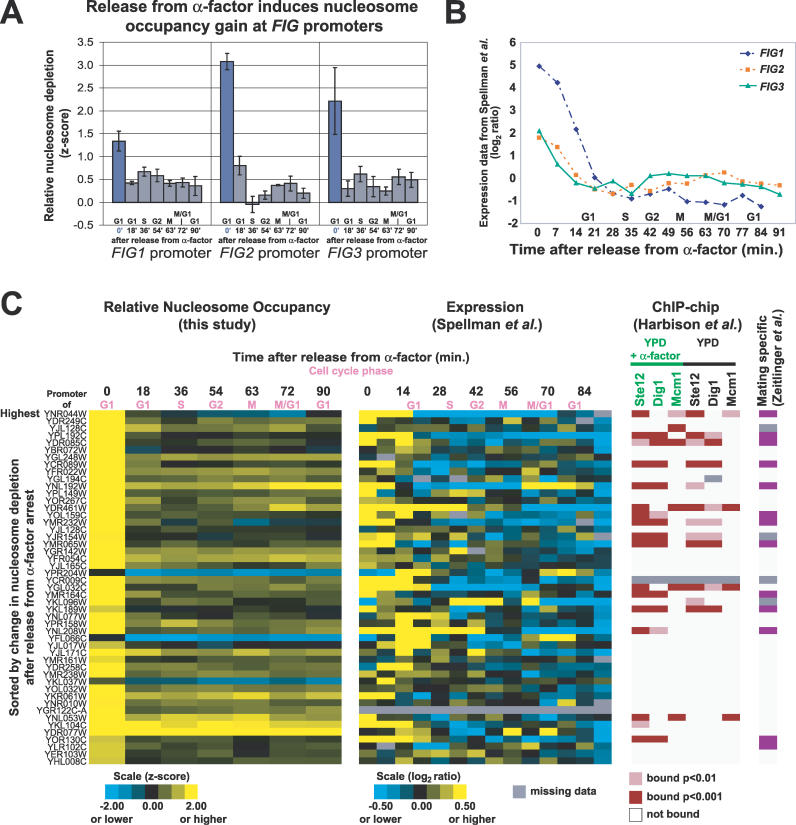
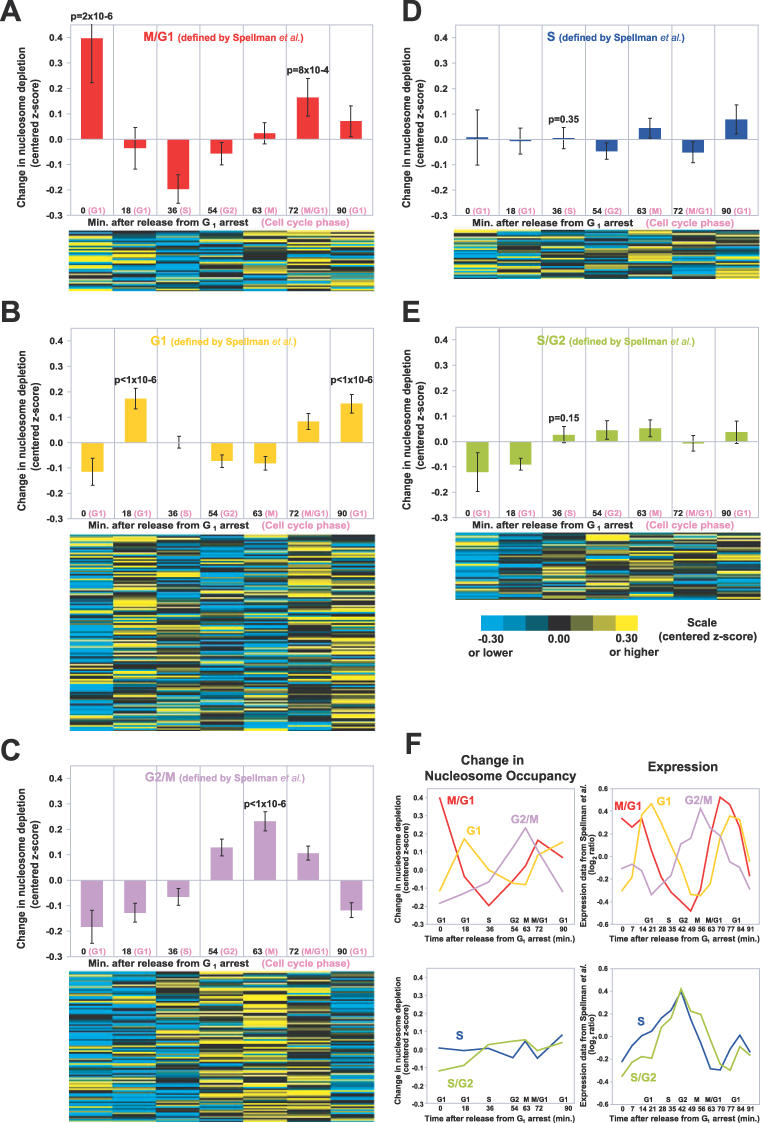
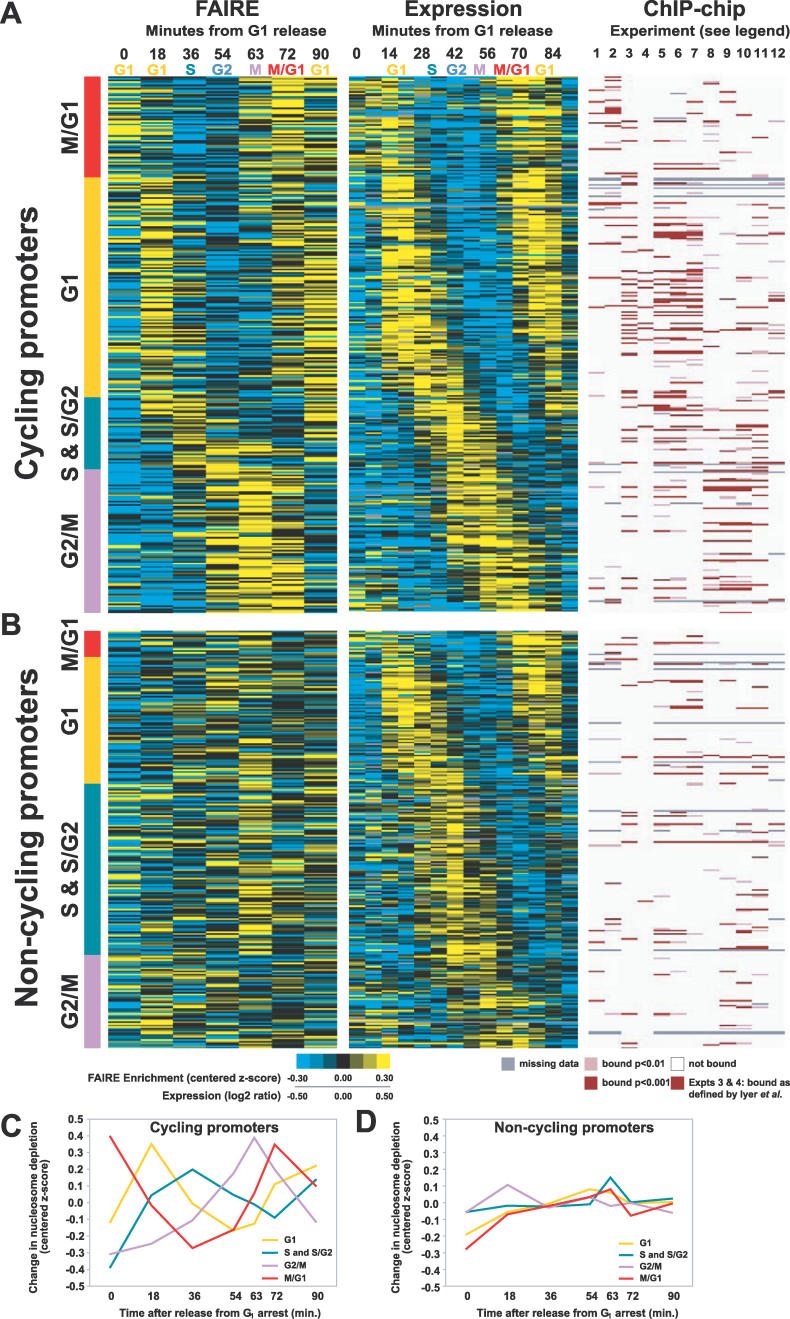
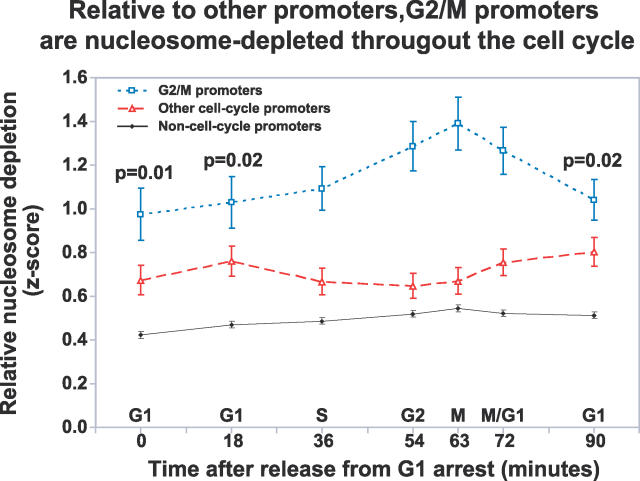
The packaging of DNA into nucleosomes influences the accessibility of underlying regulatory information. Nucleosome occupancy and positioning are best characterized in the budding yeast Saccharomyces cerevisiae, albeit in asynchronous cell populations or on individual promoters such as PHO5 and GAL1-10. Using FAIRE (formaldehyde-assisted isolation of regulatory elements) and whole-genome microarrays, we examined changes in nucleosome occupancy throughout the mitotic cell cycle in synchronized populations of S. cerevisiae. Perhaps surprisingly, nucleosome occupancy did not exhibit large, global variation between cell cycle phases. However, nucleosome occupancy at the promoters of cell cycle-regulated genes was reduced specifically at the cell cycle phase in which that gene exhibited peak expression, with the notable exception of S-phase genes. We present data that establish FAIRE as a high-throughput method for assaying nucleosome occupancy. For the first time in any system, nucleosome occupancy was mapped genome-wide throughout the cell cycle. Fluctuation of nucleosome occupancy at promoters of most cell cycle-regulated genes provides independent evidence that periodic expression of these genes is controlled mainly at the level of transcription. The promoters of G2/M genes are distinguished from other cell cycle promoters by an unusually low baseline nucleosome occupancy throughout the cell cycle. This observation, coupled with the maintenance throughout the cell cycle of the stereotypic nucleosome occupancy states between coding and non-coding loci, suggests that the largest component of variation in nucleosome occupancy is "hard wired," perhaps at the level of DNA sequence.
Overview
The claims and statistics of this paper haven’t been checked yet.
Run the check — free, no account needed. It reads the open-access text and checks the sources it cites.
Integrity signals
Registry
Cites
Statistics
Figures
Verification
Claims the paper makes
The claims and statistics of this paper haven’t been checked yet.
Run the check — free, no account needed. It reads the open-access text and checks the sources it cites.
Claims other papers make about this one
Each is checked against this paper’s own text: does it say what the citing paper says it does?
The source backs part of the claim, not all of it — or backs it for a different population, condition or comparison.
In the citing paper
“These data, taken together with our expression analyses, indicate that tissue-specific gene expression can be dictated by tissue-specific transcription factor binding and by the tissue-specific recruitment of nucleosome-remodeling complexes (e.g., SWI/SNF) (Hogan et al. 2006;Schwabish and Struhl 2007) to transcription factor occupied loci.”
From Locus co-occupancy, nucleosome positioning, and H3K4me1 regulate the functionality of FOXA2-, HNF4A-, and PDX1-bound loci in islets and liver (2010) · cites this paper as Hogan et al. 2006
Experimental — accuracy not yet measured
Self-check
Percentages, sums and reported differences re-computed from the paper’s own numbers.
The self-check needs the paper’s full text.
Citations
Cites
Cluster analysis and display of genome-wide expression patterns
Eisen, M. B., Spellman, P. T., Brown, P. O., & Botstein, D. (1998) · Proceedings of the National Academy of Sciences · doi:10.1073/pnas.95.25.14863 · Cited by 16,184
Crystal structure of the nucleosome core particle at 2.8 Å resolution
Luger, K., Mäder, A. W., Richmond, R. K., Sargent, D. F., & Richmond, T. J. (1997) · Nature · doi:10.1038/38444 · Cited by 9,466
Spellman, P. T., Sherlock, G. J., Zhang, M. Q., Iyer, V. R., Anders, K. R., Eisen, M. B., Brown, P. O., Botstein, D., & Futcher, B. (1998) · Molecular Biology of the Cell · doi:10.1091/mbc.9.12.3273 · Cited by 4,724
Hoffman, C. S., & Winston, F. (1987) · Gene · doi:10.1016/0378-1119(87)90131-4 · Cited by 2,492
Transcriptional regulatory code of a eukaryotic genome
Harbison, C. T., Gordon, D. B., Lee, T. I., Rinaldi, N. J., MacIsaac, K. D., Danford, T., Hannett, N. M., Tagne, J., Reynolds, D. B., Yoo, J. Y., et al. (2004) · Nature · doi:10.1038/nature02800 · Cited by 2,135
A Genome-Wide Transcriptional Analysis of the Mitotic Cell Cycle
Cho, R. J., Campbell, M. J., Winzeler, E. A., Steinmetz, L. M., Conway, A. R., Wodicka, L. M., Wolfsberg, T. G., Gabrielian, A. E., Landsman, D., Lockhart, D. J., et al. (1998) · Molecular Cell · doi:10.1016/s1097-2765(00)80114-8 · Cited by 2,024
A genomic code for nucleosome positioning
Segal, E., Fondufe‐Mittendorf, Y. N., Chen, L., Thåström, A., Field, Y., Moore, I. K., Wang, J.-P. Z., & Widom, J. (2006) · Nature · doi:10.1038/nature04979 · Cited by 1,492
Genome-wide Map of Nucleosome Acetylation and Methylation in Yeast
Pokholok, D., Harbison, C. T., Levine, S. S., Cole, M. F., Hannett, N. M., Lee, T. I., Bell, G. W., Walker, K., Rolfe, A., Herbolsheimer, E., et al. (2005) · Cell · doi:10.1016/j.cell.2005.06.026 · Cited by 1,477
Genome-Scale Identification of Nucleosome Positions in S. cerevisiae
Yuan, G., Liu, Y.-J., Dion, M. F., Slack, M. D., Wu, L. F., Altschuler, S. J., & Rando, O. J. (2005) · Science · doi:10.1126/science.1112178 · Cited by 1,139
Genomic binding sites of the yeast cell-cycle transcription factors SBF and MBF
Iyer, V. R., Horak, C. E., Scafe, C., Botstein, D., Snyder, M. P., & Brown, P. O. (2001) · Nature · doi:10.1038/35054095 · Cited by 1,084
Cited by
Sorted by citations
The ENCODE Project Consortium (2007) · Nature · doi:10.1038/nature05874 · Cited by 5,223
Nucleosome positioning and gene regulation: advances through genomics
Jiang, C., & Pugh, B. F. (2009) · Nature Reviews Genetics · doi:10.1038/nrg2522 · Cited by 1,059
G-quadruplex structures mark human regulatory chromatin
Hänsel-Hertsch, R., Beraldi, D., Lensing, S. V., Marsico, G., Zyner, K., Parry, A., Di Antonio, M., Pike, J., Kimura, H., Narita, M., et al. (2016) · Nature Genetics · doi:10.1038/ng.3662 · Cited by 964
Giresi, P. G., Kim, J., McDaniell, R. M., Iyer, V. R., & Lieb, J. D. (2006) · Genome Research · doi:10.17615/8cez-3e87 · Cited by 993
Self-citationA high-resolution atlas of nucleosome occupancy in yeast
Lee, W., Tillo, D., Bray, N., Morse, R. H., Davis, R. W., Hughes, T. R., & Nislow, C. (2007) · Nature Genetics · doi:10.1038/ng2117 · Cited by 829
A map of open chromatin in human pancreatic islets
Gaulton, K. J., Nammo, T., Pasquali, L., Simon, J. M., Giresi, P. G., Fogarty, M. P., Panhuis, T. M., Mieczkowski, P. A., Secchi, A., Bosco, D., et al. (2010) · Nature Genetics · doi:10.1038/ng.530 · Cited by 540
Self-citationSong, L., Zhang, Z., Grasfeder, L. L., Boyle, A. P., Giresi, P. G., Lee, B.-K., Sheffield, N. C., Gräf, S., Huss, M., Keefe, D., et al. (2011) · Genome Research · doi:10.1101/gr.121541.111 · Cited by 517
Self-citationDe Cecco, M., Criscione, S. W., Peckham, E. J., Hillenmeyer, S., Hamm, E. A., Manivannan, J., Peterson, A. L., Kreiling, J. A., Neretti, N., & Sedivy, J. M. (2013) · Aging Cell · doi:10.1111/acel.12047 · Cited by 459
Chromatin accessibility: a window into the genome
Tsompana, M., & Buck, M. J. (2014) · Epigenetics & Chromatin · doi:10.1186/1756-8935-7-33 · Cited by 473
Two strategies for gene regulation by promoter nucleosomesPreprint
Tirosh, I., & Barkai, N. (2008) · Genome Research · doi:10.1101/gr.076059.108 · Cited by 396
Genome-wide approaches to studying chromatin modifications
Schones, D. E., & Zhao, K. (2008) · Nature Reviews Genetics · doi:10.1038/nrg2270 · Cited by 379
Siersbæk, R., Nielsen, R., John, S., Sung, M., Baek, S., Loft, A., Hager, G. L., & Mandrup, S. (2011) · The EMBO Journal · doi:10.1038/emboj.2011.65 · Cited by 350
Simon, J. M., Giresi, P. G., Davis, I. J., & Lieb, J. D. (2012) · Nature Protocols · doi:10.1038/nprot.2011.444 · Cited by 324
Self-citationAn evaluation of 3C-based methods to capture DNA interactions
Simonis, M., Kooren, J. A., & de Laat, W. L. (2007) · Nature Methods · doi:10.1038/nmeth1114 · Cited by 306
Transcriptional networks and chromatin remodeling controlling adipogenesis
Siersbæk, R., Nielsen, R., & Mandrup, S. (2011) · Trends in Endocrinology and Metabolism · doi:10.1016/j.tem.2011.10.001 · Cited by 278
Madsen, M. S., Siersbæk, R., Boergesen, M., Nielsen, R., & Mandrup, S. (2014) · Molecular and Cellular Biology · doi:10.1128/mcb.01344-13 · Cited by 272
Gene regulation by nucleosome positioning
Bai, L., & Morozov, A. V. (2010) · Trends in Genetics · doi:10.1016/j.tig.2010.08.003 · Cited by 263
Mapping accessible chromatin regions using Sono-Seq
Auerbach, R. K., Euskirchen, G. M., Rozowsky, J. S., Lamarre-Vincent, N., Moqtaderi, Z., Lefrançois, P., Struhl, K., Gerstein, M., & Snyder, M. P. (2009) · Proceedings of the National Academy of Sciences · doi:10.1073/pnas.0905443106 · Cited by 205
Giresi, P. G., & Lieb, J. D. (2009) · Methods · doi:10.1016/j.ymeth.2009.03.003 · Cited by 198
Self-citationThe linker histone H1.0 generates epigenetic and functional intratumor heterogeneity
Morales, C., Biran, A., Burney, M. J., Patel, H., Henser‐Brownhill, T., Cohen, A.-H., Li, Y., Ben‐Hamo, R., Nye, E. L., Spencer‐Dene, B., et al. (2016) · Science · doi:10.1126/science.aaf1644 · Cited by 193
Taberlay, P. C., Statham, A. L., Kelly, T. K., Clark, S. J., & Jones, P. A. (2014) · Genome Research · doi:10.1101/gr.163485.113 · Cited by 186
Simon, J. M., Hacker, K. E., Singh, D., Brannon, A. R., Parker, J. S., Weiser, M., Ho, T. H., Kuan, P.-F., Jonasch, E., Furey, T. S., et al. (2013) · Genome Research · doi:10.1101/gr.158253.113 · Cited by 197
Self-citationSchulze-Hentrich, J. M., Jackson, J., Nakanishi, S., Gardner, J. M., Hentrich, T., Haug, J., Johnston, M., Jaspersen, S. L., Kobor, M. S., & Shilatifard, A. (2009) · Molecular Cell · doi:10.1016/j.molcel.2009.07.017 · Cited by 180
Nucleosome landscape and control of transcription in the human malaria parasitePreprint
Ponts, N., Harris, E. Y., Prudhomme, J. G., Wick, I., Ludka, C., Hicks, G. R., Hardiman, G., Lonardi, S., & Roch, K. G. L. (2010) · Genome Research · doi:10.1101/gr.101063.109 · Cited by 143
The Interplay between G-quadruplex and Transcription
Kim, N. (2017) · Current Medicinal Chemistry · doi:10.2174/0929867325666171229132619 · Cited by 150
Tissue- and Expression Level–Specific Chromatin Looping at Maizeb1Epialleles
Louwers, M., Bader, R., Haring, M., DRIEL, R. V., de Laat, W. L., & Stam, M. E. (2009) · The Plant Cell · doi:10.1105/tpc.108.064329 · Cited by 151
Drouin, S., Laramée, L., Jacques, P., Forest, A., Bergeron, M., & Robert, F. (2010) · PLoS Genetics · doi:10.1371/journal.pgen.1001173 · Cited by 143
Palstra, R.-J. T. S., Simonis, M., Klous, P., Brasset, É., Eijkelkamp, B. A., & de Laat, W. L. (2008) · PLoS ONE · doi:10.1371/journal.pone.0001661 · Cited by 140
Nucleosome Positioning in Saccharomyces cerevisiae
Jansen, A., & Verstrepen, K. J. (2011) · Microbiology and Molecular Biology Reviews · doi:10.1128/mmbr.00046-10 · Cited by 124
Hoffman, B. G., Robertson, G., Zavaglia, B., Beach, M., Cullum, R., Lee, S., Soukhatcheva, G., Li, L., Wederell, E. D., Thiessen, N., et al. (2010) · Genome Research · doi:10.1101/gr.104356.109 · Cited by 115
“…analyses, indicate that tissue-specific gene expression can be dictated by tissue-specific transcription factor binding and by the tissue-specific recruitment of nucleosome-remodeling complexes (e.g., SWI/SNF) (Hogan et al. 2006; Schwabish and Struhl 2007) to transcription factor occupied loci.”
BackgroundInfluentialRules and regulation in the primary structure of chromatin
Rando, O. J., & Ahmad, K. (2007) · Current Opinion in Cell Biology · doi:10.1016/j.ceb.2007.04.006 · Cited by 119
Histone H1 binding is inhibited by histone variant H3.3
Braunschweig, U., Hogan, G., Pagie, L., & van Steensel, B. (2009) · The EMBO Journal · doi:10.1038/emboj.2009.301 · Cited by 112
Self-citationCell-type selective chromatin remodeling defines the active subset of FOXA1-bound enhancers
Eeckhoute, J., Lupien, M., Meyer, C. A., Verzi, M. P., Shivdasani, R. A., Liu, X. S., & Brown, M. (2009) · Genome Research · doi:10.1101/gr.084582.108 · Cited by 106
Noncanonical DNA Motifs as Transactivation Targets by Wild Type and Mutant p53
Jordan, J. J., Menendez, D., Inga, A., Nourredine, M., Bell, D., & Resnick, M. A. (2008) · PLoS Genetics · doi:10.1371/journal.pgen.1000104 · Cited by 103
Westenberger, S. J., Cui, L., Dharia, N. V., Winzeler, E. A., & Cui, L. (2009) · BMC Genomics · doi:10.1186/1471-2164-10-610 · Cited by 99
Bai, L., Charvin, G., Siggia, E. D., & Cross, F. R. (2010) · Developmental Cell · doi:10.1016/j.devcel.2010.02.007 · Cited by 94
Functional Connection between Deimination and Deacetylation of Histones
Denis, H., Deplus, R., Putmans, P., Yamada, M., Métivier, R., & Fuks, F. (2009) · Molecular and Cellular Biology · doi:10.1128/mcb.00285-09 · Cited by 93
Stable and dynamic nucleosome states during a meiotic developmental processPreprint
Zhang, L., Mā, H., & Pugh, B. F. (2011) · Genome Research · doi:10.1101/gr.117465.110 · Cited by 82
Tirosh, I., Sigal, N., & Barkai, N. (2010) · Molecular Systems Biology · doi:10.1038/msb.2010.20 · Cited by 77
Berchowitz, L. E., Hanlon, S. L., Lieb, J. D., & Copenhaver, G. P. (2009) · Genome Research · doi:10.1101/gr.096297.109 · Cited by 72
Self-citationLickwar, C. R., Rao, B., Shabalin, A. A., Nobel, A. B., Strahl, B. D., & Lieb, J. D. (2009) · PLoS ONE · doi:10.1371/journal.pone.0004886 · Cited by 68
Self-citationWidespread remodeling of mid-coding sequence nucleosomes by Isw1
Tirosh, I., Sigal, N., & Barkai, N. (2010) · Genome biology · doi:10.1186/gb-2010-11-5-r49 · Cited by 68
Genome-wide analysis predicts DNA structural motifs as nucleosome exclusion signals
Halder, K., Halder, R., & Chowdhury, S. (2009) · Molecular BioSystems · doi:10.1039/b905132e · Cited by 63
Regulation of the PMP22 Gene through an Intronic Enhancer
Jones, E. A., Lopez‐Anido, C., Srinivasan, R., Krueger, C., Chang, L., Nagarajan, R., & Svaren, J. P. (2011) · Journal of Neuroscience · doi:10.1523/jneurosci.5893-10.2011 · Cited by 61
Huebert, D. J., Kuan, P. F., Keleş, S., & Gasch, A. P. (2012) · Molecular and Cellular Biology · doi:10.1128/mcb.06170-11 · Cited by 60
Nettore, I. C., Rocca, C., Mancino, G., Albano, L., Amelio, D., Grande, F., Puoci, F., Pasqua, T., Desiderio, S., Mazza, R., et al. (2019) · The Journal of Nutritional Biochemistry · doi:10.1016/j.jnutbio.2019.03.019 · Cited by 62
Jiang, J. (2015) · Current Opinion in Plant Biology · doi:10.1016/j.pbi.2015.01.005 · Cited by 57
Cytoplasmic Organelle DNA Preferentially Inserts into Open Chromatin
Wang, D., & Timmis, J. N. (2013) · Genome Biology and Evolution · doi:10.1093/gbe/evt070 · Cited by 55
Elfving, N., Chereji, R. V., Bharatula, V., Björklund, S., Morozov, A. V., & Broach, J. R. (2014) · Nucleic Acids Research · doi:10.1093/nar/gku176 · Cited by 54
NicE-seq: high resolution open chromatin profiling
Ponnaluri, V. K. C., Zhang, G., Estève, P., Spracklin, G., Sian, S., Xu, S.-Y., Benoukraf, T., & Pradhan, S. (2017) · Genome biology · doi:10.1186/s13059-017-1247-6 · Cited by 54
Spt6 Association with RNA Polymerase II Directs mRNA Turnover During Transcription
Dronamraju, R., Hepperla, A. J., Shibata, Y., Adams, A. T., Magnuson, T., Davis, I. J., & Strahl, B. D. (2018) · Molecular Cell · doi:10.1016/j.molcel.2018.05.020 · Cited by 49
Roch, K. G. L., Chung, D.-W. D., & Ponts, N. (2011) · Parasite Immunology · doi:10.1111/j.1365-3024.2011.01340.x · Cited by 46
Rhie, S. K., Hazelett, D. J., Coetzee, S. G., Yan, C., Noushmehr, H., & Coetzee, G. A. (2014) · BMC Genomics · doi:10.1186/1471-2164-15-331 · Cited by 47
van Bakel, H., van Werven, F. J., Radonjić, M., Brok, M. O., van Leenen, D., Holstege, F. C. P., & Timmers, H. T. M. (2008) · Nucleic Acids Research · doi:10.1093/nar/gkm1144 · Cited by 45
The Open Chromatin Landscape of Kaposi's Sarcoma-Associated Herpesvirus
Hilton, I. B., Simon, J. M., Lieb, J. D., Davis, I. J., Damania, B., & Dittmer, D. P. (2013) · Journal of Virology · doi:10.1128/jvi.01685-13 · Cited by 41
Self-citationGenetics and Genomics of Coronary Artery Disease
Pjanic, M., Miller, C. L., Wirka, R. C., Kim, J. B., DiRenzo, D. M., & Quertermous, T. (2016) · Current Cardiology Reports · doi:10.1007/s11886-016-0777-y · Cited by 40
Nucleosome architecture throughout the cell cycle
Deniz, Ö., Flores, O., Aldea, M., Soler‐López, M., & Orozco, M. (2016) · Scientific Reports · doi:10.1038/srep19729 · Cited by 39
A Detailed Protocol for Formaldehyde‐Assisted Isolation of Regulatory Elements (FAIRE)
Simon, J. M., Giresi, P. G., Davis, I. J., & Lieb, J. D. (2013) · Current Protocols in Molecular Biology · doi:10.1002/0471142727.mb2126s102 · Cited by 37
Self-citationChromatin structure in the genomics era
Rando, O. J. (2006) · Trends in Genetics · doi:10.1016/j.tig.2006.12.002 · Cited by 29
Cumbie, J. S., Filichkin, S. A., & Megraw, M. S. (2015) · Plant Methods · doi:10.1186/s13007-015-0087-1 · Cited by 27
Winck, F. V., Arvidsson, S., Riaño‐Pachón, D. M., Hempel, S., Koseska, A., Nikoloski, Z., Urbina-Gómez, D., Rupprecht, J., & Mueller‐Roeber, B. (2013) · PLoS ONE · doi:10.1371/journal.pone.0079909 · Cited by 27
Poschmann, J., Drouin, S., Jacques, P., Fadili, K. E., Newmarch, M. J., Robert, F., & Ramotar, D. (2011) · PLoS ONE · doi:10.1371/journal.pone.0023159 · Cited by 25
Gupta, M., & Ibrahim, J. G. (2009) · PubMed · Cited by 24
Functional characterization of open chromatin in bidirectional promoters of rice
Fang, Y., Wang, X., Wang, L., Pan, X., Xiao, J., Wang, X., Wu, Y., & Zhang, W. (2016) · Scientific Reports · doi:10.1038/srep32088 · Cited by 24
Human Papillomavirus Replication Regulation by Acetylation of a Conserved Lysine in the E2 Protein
Thomas, Y., & Androphy, E. J. (2017) · Journal of Virology · doi:10.1128/jvi.01912-17 · Cited by 24
Parmar, J. J., Das, D., & Padinhateeri, R. (2015) · Nucleic Acids Research · doi:10.1093/nar/gkv1153 · Cited by 23
Characterization of Chromatin Structure-associated Histone Modifications in Breast Cancer Cells
Hong, C. P., Choe, M. K., & Roh, T. (2012) · Genomics & Informatics · doi:10.5808/gi.2012.10.3.145 · Cited by 21
Oligonucleotide Sequence Motifs as Nucleosome Positioning Signals
Collings, C. K., Fernandez, A. G., Pitschka, C. G., Hawkins, T., & Anderson, J. N. (2010) · PLoS ONE · doi:10.1371/journal.pone.0010933 · Cited by 22
Transcription of Nuclear Organellar DNA in a Model Plant System
Wang, D., Qu, Z., Adelson, D. L., Zhu, J., & Timmis, J. N. (2014) · Genome Biology and Evolution · doi:10.1093/gbe/evu111 · Cited by 21
Evolution and Genetic Architecture of Chromatin Accessibility and Function in Yeast
Connelly, C. F., Wakefield, J., & Akey, J. M. (2014) · PLoS Genetics · doi:10.1371/journal.pgen.1004427 · Cited by 22
Ren, L., Wang, Y., Shi, M., Wang, X., Yang, Z., & Zhao, Z. (2012) · PLoS ONE · doi:10.1371/journal.pone.0031416 · Cited by 20
Open Chromatin in Plant Genomes
Zhang, W., Zhang, T., Wu, Y., & Jiang, J. (2014) · Cytogenetic and Genome Research · doi:10.1159/000362827 · Cited by 21
Hepatocyte nuclear factor (HNF)-4α-driven epigenetic silencing of the human PED gene
Ungaro, P., Teperino, R., Mirra, P., Longo, M., Ciccarelli, M., Raciti, G. A., Nigro, C., Miele, C., Formisano, P., & Bèguinot, F. (2010) · Diabetologia · doi:10.1007/s00125-010-1732-x · Cited by 19
Yadav, V., Thakur, R. K., Eckloff, B., Baral, A., Singh, A., Halder, R., Kumar, A., Alam, M. P., Kundu, T., Pandita, R., et al. (2014) · Nucleic Acids Research · doi:10.1093/nar/gku596 · Cited by 12
Histone modifications facilitate the coexpression of bidirectional promoters in rice
Fang, Y., Wang, L., Wang, X., You, Q., Pan, X., Xiao, J., Wang, X., Wu, Y., Su, Z., & Zhang, W. (2016) · BMC Genomics · doi:10.1186/s12864-016-3125-0 · Cited by 15
Genetic and epigenetic determinants of inter-individual variability in responses to toxicants
Lewis, L., Crawford, G. E., Furey, T. S., & Rusyn, I. (2017) · Current Opinion in Toxicology · doi:10.1016/j.cotox.2017.08.006 · Cited by 16
Formaldehyde‐assisted isolation of regulatory elements
Nagy, P. L., & Price, D. H. (2009) · WIREs Systems Biology and Medicine · doi:10.1002/wsbm.36 · Cited by 14
Histone Tail Dynamics in Partially Disassembled Nucleosomes During Chromatin Remodeling
Kameda, T., Awazu, A., & Togashi, Y. (2019) · Frontiers in Molecular Biosciences · doi:10.3389/fmolb.2019.00133 · Cited by 13
Nucleosome-coupled expression differences in closely-related species
Guan, Y., Yao, V., Tsui, K., Gebbia, M., Dunham, M. J., Nislow, C., & Troyanskaya, O. G. (2011) · BMC Genomics · doi:10.1186/1471-2164-12-466 · Cited by 9
Genome-Wide Measurement of Histone H3 Replacement Dynamics in Yeast
Rando, O. J. (2011) · Methods in molecular biology · doi:10.1007/978-1-61779-173-4_3 · Cited by 9
Jończyk, M., Sobkowiak, A., Trzcińska‐Danielewicz, J., & Sowiński, P. (2020) · Plant Molecular Biology Reporter · doi:10.1007/s11105-020-01254-7 · Cited by 7
Systematic Identification of Balanced Transposition Polymorphisms in Saccharomyces cerevisiae
Faddah, D. A., Ganko, E., McCoach, C. E., Pickrell, J. K., Hanlon, S. E., Mann, F. G., Mieczkowska, J. O., Jones, C. D., Lieb, J. D., & Vision, T. (2009) · PLoS Genetics · doi:10.1371/journal.pgen.1000502 · Cited by 7
Self-citationMarr, L. T., Jaya, P., Mishra, L. N., & Hayes, J. J. (2022) · Biochemical Society Transactions · doi:10.1042/bst20210959 · Cited by 5
Chromatin Dynamics in Digestive System Cancer: Commander and Regulator
Li, Z., Zhao, B., Qin, C., Wang, Y., Li, T., & Wang, W. (2022) · Frontiers in Oncology · doi:10.3389/fonc.2022.935877 · Cited by 5
Giresi, P. G., & Lieb, J. D. (2011) · doi:10.1002/9783527644582.ch14 · Cited by 5
Self-citationDavis, I. J., & Pattenden, S. G. (2018) · Elsevier eBooks · doi:10.1016/b978-0-12-812433-8.00003-4 · Cited by 4
Seuter, S., Neme, A., & Carlberg, C. (2020) · Elsevier eBooks · doi:10.1016/b978-0-12-819414-0.00017-3 · Cited by 4
Simon, J. M., Giresi, P. G., Davis, I. J., & Lieb, J. D. (2014) · Nature Protocols · doi:10.1038/nprot.2014.062 · Cited by 4
Self-citationMarrakchi, R., Chouchani, C., Poschmann, J., Andreev, E., Chérif, M., & Ramotar, D. (2012) · Biochemistry and Cell Biology · doi:10.1139/bcb-2012-0084 · Cited by 4
An optimized FAIRE procedure for low cell numbers in yeast
Segorbe, D., Wilkinson, D., Mizeranschi, A. E., Hughes, T., Aaløkken, R., Váchová, L., Palková, Z., & Gilfillan, G. D. (2018) · Yeast · doi:10.1002/yea.3316 · Cited by 4
Transcriptional interaction-assisted identification of dynamic nucleosome positioning
Dai, Z., Dai, X., Xiang, Q., Feng, J., Deng, Y., Wang, J., & He, C. (2009) · BMC Bioinformatics · doi:10.1186/1471-2105-10-s1-s31 · Cited by 3
Cell cycle-dependent nucleosome occupancy at cohesin binding sites in yeast chromosomes
Liu, J., Czajkowsky, D. M., Liang, S., & Shao, Z. (2008) · Genomics · doi:10.1016/j.ygeno.2007.11.006 · Cited by 3
Analysis of Individual Signaling Complexes by mMAPS, a Flow‐Proteometric System
Chou, C., Tsou, P.-H., Hsu, J. L., Lee, H., Wang, Y., Kameoka, J., & Hung, M. (2016) · Current Protocols in Molecular Biology · doi:10.1002/0471142727.mb2011s114 · Cited by 3
Mitra, R., & Gupta, M. (2010) · Biostatistics · doi:10.1093/biostatistics/kxq077 · Cited by 2
Yamanaka, S., Kishi, Y., & Siomi, H. (2020) · Elsevier eBooks · doi:10.1016/b978-0-12-819414-0.00018-5 · Cited by 2
Winck, F. V., Arvidsson, S., Riaño‐Pachón, D. M., Hempel, S., Koseska, A., Nikoloski, Z., Urbina-Gómez, D., Rupprecht, J., & Mueller‐Roeber, B. (2014) · PLoS ONE · doi:10.1371/annotation/63d1c5f9-82c8-406b-b60e-b7d9ecba9408 · Cited by 2
Comprehensive profiling of chromatin occupancy dynamics through the cell cycle
Li, Y., MacAlpine, D. M., & Hartemink, A. J. (2025) · Nucleic Acids Research · doi:10.1093/nar/gkaf1385 · Cited by 1
Defining flexible vs. inherent promoter architectures
Huebert, D. J., & Gasch, A. P. (2012) · Nucleus · doi:10.4161/nucl.21172 · Cited by 1
Transcriptional Regulation Functions of Nucleosome Positioning: a Survey*
Liu, H., Zhuang, Z., Guan, J., & Zhou, S. (2012) · PROGRESS IN BIOCHEMISTRY AND BIOPHYSICS · doi:10.3724/sp.j.1206.2011.00252 · Cited by 1
Waddell, P. J., & Herston, T. (2009) · arXiv (Cornell University) · doi:10.48550/arxiv.0912.5315
Metadata
- Authors
- Hogan, G. J., Lee, C.-K., & Lieb, J. D.
- Affiliations
- University of North Carolina at Chapel Hill (US)
- Corresponding author
- Lieb, Jason D
- ORCID
- Lee, Cheol-Koo
- Venue
- PLoS Genetics
- Publisher
- Public Library of Science (PLoS)
- Published
- 2006-09-22
- Volume
- 2
- Issue
- 9
- Pages
- e158
- ISSN
- 1553-7390 (ISSN-L)
- 1553-7404
- PMC
- PMC1570381
- OpenAlex
- W1983386103
- Cited by
- 109
- References
- 58
- Citations by year
- 2025: 2 · 2022: 2 · 2020: 3 · 2019: 3 · 2018: 4 · 2017: 4 · 2016: 8 · 2015: 3 · 2014: 10 · 2013: 7 · 2012: 7
- FWCI
- 4.08
- Type
- journal article
- Language
- en
- Open access
- gold
- doi.org
- Locations
- PLoS Genetics (publishedVersion, cc-by)
- Europe PMC (PubMed Central) (publishedVersion, cc-by)
- PubMed (publishedVersion)
- DOAJ (DOAJ: Directory of Open Access Journals) (submittedVersion)
- Figshare (submittedVersion, cc-by)
- Funders
- Frances C. and William P. Smallwood Foundation
- National Institutes of Health
- National Institute of General Medical Sciences (GM 072518, R01GM072518)
- Topics
- Life Sciences › Biochemistry, Genetics and Molecular Biology › Molecular Biology › Genomics and Chromatin Dynamics
- Life Sciences › Biochemistry, Genetics and Molecular Biology › Molecular Biology › Fungal and yeast genetics research
- Life Sciences › Biochemistry, Genetics and Molecular Biology › Molecular Biology › Nuclear Structure and Function
- Keywords
- nucleosome occupancy, cell cycle, promoter, Saccharomyces cerevisiae, FAIRE, mitotic cycle, cell cycle-regulated genes, transcriptional regulation, DNA accessibility, nucleosome positioning, genome-wide mapping
- MeSH terms
- Cell Cycle, Genes, Fungal, Histones, Lipoproteins, Mitosis, Molecular Sequence Data, Mutation, Nucleosomes, Pheromones, Promoter Regions, Genetic, Saccharomyces cerevisiae, Cell Adhesion Molecules, G1 Phase, G2 Phase, S Phase, Cyclins, Cyclin B, Saccharomyces cerevisiae Proteins, Microarray Analysis
About these checks
Registry, retraction, Cites and statistics results are computed, not judged, with one exception: a printed reference that no index lists is read once by a model before it counts as a citation error. Claims are extracted by a model and kept only when their quote appears verbatim in the text; each cited source is then checked, with a model’s help, for whether it says what the claim relies on. Those verdicts can be wrong — read the claim’s quote and the cited source before relying on one.
Statistics and arithmetic are recomputed, not judged.
Confidence bands are shown only for fields calibrated on our annotated test set. None is calibrated yet, so no band is shown.
What counts as a claim ›How we measure confidence ›How we check this ›
Are you an author, or do you see a problem with this page? Request a review
