

Genomic Islands in the Pathogenic Filamentous Fungus Aspergillus fumigatus
Open accessThe DOI matches its Crossref record; 75 of the 75 references it cites were found in a registry or an index.
Abstract
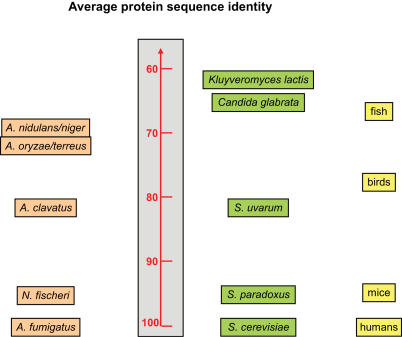
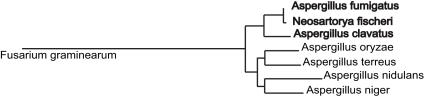
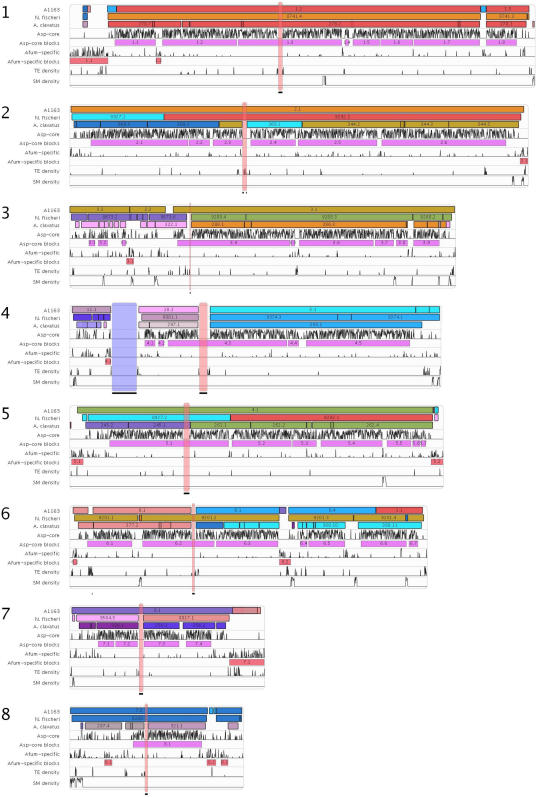
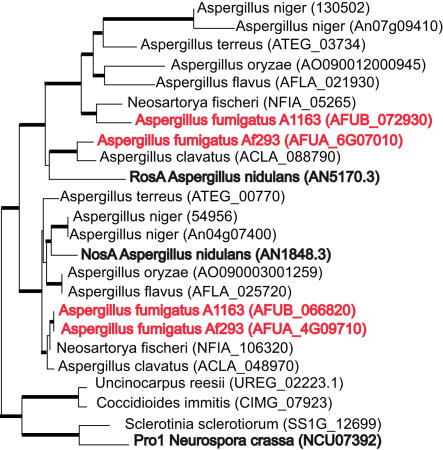
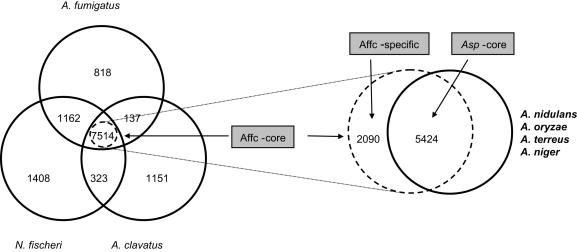
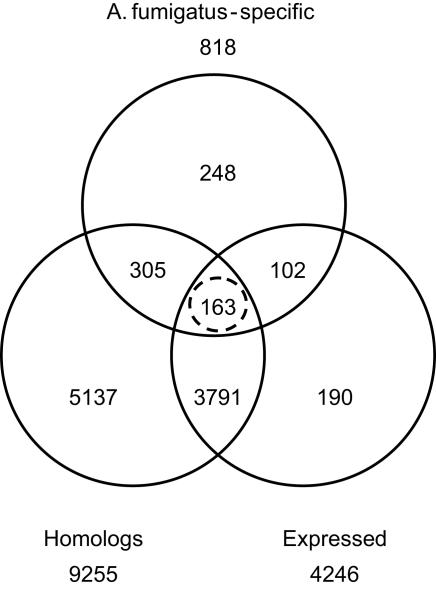
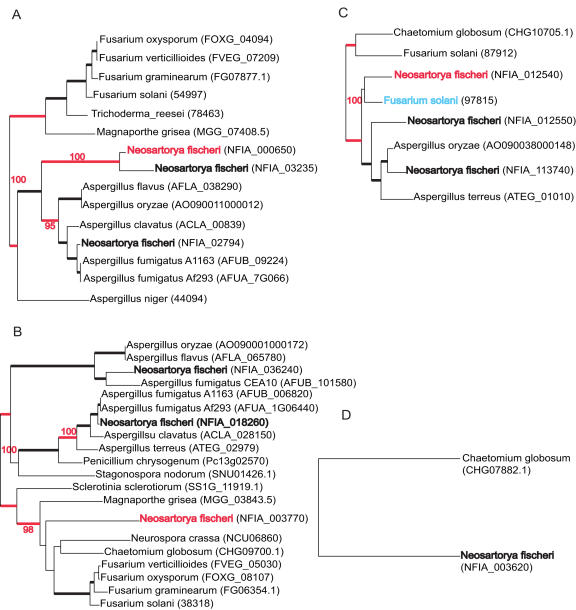
We present the genome sequences of a new clinical isolate of the important human pathogen, Aspergillus fumigatus, A1163, and two closely related but rarely pathogenic species, Neosartorya fischeri NRRL181 and Aspergillus clavatus NRRL1. Comparative genomic analysis of A1163 with the recently sequenced A. fumigatus isolate Af293 has identified core, variable and up to 2% unique genes in each genome. While the core genes are 99.8% identical at the nucleotide level, identity for variable genes can be as low 40%. The most divergent loci appear to contain heterokaryon incompatibility (het) genes associated with fungal programmed cell death such as developmental regulator rosA. Cross-species comparison has revealed that 8.5%, 13.5% and 12.6%, respectively, of A. fumigatus, N. fischeri and A. clavatus genes are species-specific. These genes are significantly smaller in size than core genes, contain fewer exons and exhibit a subtelomeric bias. Most of them cluster together in 13 chromosomal islands, which are enriched for pseudogenes, transposons and other repetitive elements. At least 20% of A. fumigatus-specific genes appear to be functional and involved in carbohydrate and chitin catabolism, transport, detoxification, secondary metabolism and other functions that may facilitate the adaptation to heterogeneous environments such as soil or a mammalian host. Contrary to what was suggested previously, their origin cannot be attributed to horizontal gene transfer (HGT), but instead is likely to involve duplication, diversification and differential gene loss (DDL). The role of duplication in the origin of lineage-specific genes is further underlined by the discovery of genomic islands that seem to function as designated "gene dumps" and, perhaps, simultaneously, as "gene factories".
Overview
The claims and statistics of this paper haven’t been checked yet.
Free: it reads the open-access text and checks the first 5 claims that cite a source we can check. Create a free account to check every claim.
Integrity signals
Registry
Cites
Statistics
Figures
Verification
Claims the paper makes
The claims and statistics of this paper haven’t been checked yet.
Free: it reads the open-access text and checks the first 5 claims that cite a source we can check. Create a free account to check every claim.
Claims other papers make about this one
Each is checked against this paper’s own text: does it say what the citing paper says it does?
The source backs part of the claim, not all of it — or backs it for a different population, condition or comparison.
In the citing paper
“Most of the studies have been performed with Neosartorya fischeri, a species very closely related taxonomically to A. fumigatus, which produced ascospores abundantly, in contrast to A. fumigatus (506).”
From Aspergillus fumigatus and Aspergillosis in 2019 (2019) · cites this paper as [506]
Experimental — accuracy not yet measured
Self-check
Percentages, sums and reported differences re-computed from the paper’s own numbers.
The self-check needs the paper’s full text.
Citations
Cites
Thompson, J. D., Higgins, D. G., & Gibson, T. J. (1994) · Nucleic Acids Research · doi:10.1093/nar/22.22.4673 · Cited by 64,617 · cited 1×
“Sequences were aligned using ClustalW [71].”
MUSCLE: multiple sequence alignment with high accuracy and high throughput
Edgar, R. C. (2004) · Nucleic Acids Research · doi:10.1093/nar/gkh340 · Cited by 44,662
Gene Ontology: tool for the unification of biology
Ashburner, M., Ball, C. A., Blake, J. A., Botstein, D., Butler, H., Cherry, J. M., Davis, A. P., Dolinski, K., Dwight, S. S., Eppig, J. T., et al. (2000) · Nature Genetics · doi:10.1038/75556 · Cited by 43,206
A Simple, Fast, and Accurate Algorithm to Estimate Large Phylogenies by Maximum Likelihood
Guindon, S., & Gascuel, O. (2003) · Systematic Biology · doi:10.1080/10635150390235520 · Cited by 16,806
Selection of Conserved Blocks from Multiple Alignments for Their Use in Phylogenetic Analysis
Castresana, J. (2000) · Molecular Biology and Evolution · doi:10.1093/oxfordjournals.molbev.a026334 · Cited by 10,508
Ohno, S. (1970) · doi:10.1007/978-3-642-86659-3 · Cited by 7,833
Whole-Genome Random Sequencing and Assembly of Haemophilus influenzae Rd
Fleischmann, R. D., Adams, M. D., White, O., Clayton, R. A., Kirkness, E. F., Kerlavage, A. R., Bult, C. J., Tomb, J.-F., Dougherty, B. A., Merrick, J. M., et al. (1995) · Science · doi:10.1126/science.7542800 · Cited by 5,654
Self-citationPAML: a program package for phylogenetic analysis by maximum likelihood
Yang, Z. (1997) · Bioinformatics · doi:10.1093/bioinformatics/13.5.555 · Cited by 5,373
Haas, B. J., Salzberg, S. L., Zhu, W., Pertea, M., Allen, J. E., Orvis, J., White, O., Buell, C. R., & Wortman, J. R. (2008) · Genome Biology · doi:10.1186/gb-2008-9-1-r7 · Cited by 4,079
Self-citationAspergillus fumigatus and Aspergillosis
Latgé, J.-P. (1999) · Clinical Microbiology Reviews · doi:10.1128/cmr.12.2.310 · Cited by 2,307 · cited 1×
“Aspergillus fumigatus is exceptional amongst the aspergilli in being both a primary and opportunistic pathogen as well as a major allergen associated with severe asthma and sinusitis [1–3].”
BackgroundImproving the Arabidopsis genome annotation using maximal transcript alignment assemblies
Haas, B. J. (2003) · Nucleic Acids Research · doi:10.1093/nar/gkg770 · Cited by 2,296
Self-citation[9] TM4 Microarray Software Suite
Saeed, A. I., Bhagabati, N. K., Braisted, J. C., Liang, W., Sharov, V., Howe, E. A., Li, J., Thiagarajan, M., White, J. A., & Quackenbush, J. (2006) · Methods in Enzymology · doi:10.1016/s0076-6879(06)11009-5 · Cited by 1,983
Identifying biological themes within lists of genes with EASE
Hosack, D. A., Dennis, G., Sherman, B. T., Lane, H. C., & Lempicki, R. A. (2003) · Genome Biology · doi:10.1186/gb-2003-4-10-r70 · Cited by 1,950
Sequencing and comparison of yeast species to identify genes and regulatory elements
Kellis, M., Patterson, N., Endrizzi, M., Birren, B., & Lander, E. S. (2003) · Nature · doi:10.1038/nature01644 · Cited by 1,753
Denning, D. W. (1998) · Clinical Infectious Diseases · doi:10.1086/513943 · Cited by 1,492
Self-citationGenomic sequence of the pathogenic and allergenic filamentous fungus Aspergillus fumigatus
Nierman, W. C., Pain, A., Anderson, M. J., Wortman, J. R., Kim, H. S., Arroyo, J., Berriman, M., Abe, K., Archer, D. B., Bermejo, C., et al. (2005) · Nature · doi:10.1038/nature04332 · Cited by 1,391 · cited 10×
“fumigatus isolates Af294 and Af71, according to the array-based comparative genome hybridization (aCGH) data [7].”
BackgroundResultSelf-citationSequencing of Aspergillus nidulans and comparative analysis with A. fumigatus and A. oryzae
Galagan, J. E., Calvo, S. E., Cuomo, C., Ma, L.-J., Wortman, J. R., Batzoglou, S., Lee, S.-I., Baştürkmen, M., Spevak, C. C., Clutterbuck, J., et al. (2005) · Nature · doi:10.1038/nature04341 · Cited by 1,365
Self-citationGenome sequencing and analysis of Aspergillus oryzae
Machida, M., Asai, K., Sano, M., Tanaka, T., Kumagai, T., Terai, G., Kusumoto, K.-I., Arima, T., Akita, O., Kashiwagi, Y., et al. (2005) · Nature · doi:10.1038/nature04300 · Cited by 1,245
Self-citationInsights from the genome of the biotrophic fungal plant pathogen Ustilago maydis
Kämper, J., Kahmann, R., Bölker, M., Ma, L.-J., Brefort, T., Saville, B. J., Banuett, F., Kronstad, J. W., Gold, S. E., Müller, O., et al. (2006) · Nature · doi:10.1038/nature05248 · Cited by 1,208
Genome sequencing and analysis of the versatile cell factory Aspergillus niger CBS 513.88
Pel, H. J., de Winde, J. H., Archer, D. B., Dyer, P. S., Hofmann, G., Schaap, P. J., Turner, G., de Vries, R. P., Albang, R., Albermann, K., et al. (2007) · Nature Biotechnology · doi:10.1038/nbt1282 · Cited by 1,173
Self-citationDelcher, A. L., Kasif, S., Fleischmann, R. D., Peterson, J., White, O., & Salzberg, S. L. (1999) · Nucleic Acids Research · doi:10.1093/nar/27.11.2369 · Cited by 893 · cited 1×
“net/) [64].”
Self-citationGenomic analysis reveals that Pseudomonas aeruginosa virulence is combinatorial
Lee, D. G., Urbach, J. M., Wu, G., Liberati, N. T., Feinbaum, R. L., Miyata, S., Diggins, L. T., He, J., Saucier, M., Déziel, E., et al. (2006) · Genome Biology · doi:10.1186/gb-2006-7-10-r90 · Cited by 603
On Some Principles Governing Molecular Evolution
Kimura, M., & Ohta, T. (1974) · Proceedings of the National Academy of Sciences · doi:10.1073/pnas.71.7.2848 · Cited by 503
Genome sequence of the lignocellulose-bioconverting and xylose-fermenting yeast Pichia stipitis
Jeffries, T. W., Grigoriev, I. V., Grimwood, J., Laplaza, J. M., Aerts, A., Salamov, A., Schmutz, J., Lindquist, E., Dehal, P., Shapiro, H., et al. (2007) · Nature Biotechnology · doi:10.1038/nbt1290 · Cited by 494
Leipe, D. D., Koonin, E. V., & Aravind, L. (2004) · Journal of Molecular Biology · doi:10.1016/j.jmb.2004.08.023 · Cited by 478
Dating divergences in the Fungal Tree of Life: review and new analyses
Taylor, J. W., & Berbee, M. L. (2006) · Mycologia · doi:10.1080/15572536.2006.11832614 · Cited by 424
Horizontal gene transfer: A critical view
Kurland, C. G., Canback, B., & Berg, O. G. (2003) · Proceedings of the National Academy of Sciences · doi:10.1073/pnas.1632870100 · Cited by 408
Transcriptional Regulation of Chemical Diversity in Aspergillus fumigatus by LaeA
Perrin, R. M., Fedorova, N. D., Bok, J. W., Cramer, R. A., Wortman, J. R., Kim, H. S., Nierman, W. C., & Keller, N. P. (2007) · PLoS Pathogens · doi:10.1371/journal.ppat.0030050 · Cited by 352 · cited 1×
“fumigaclavine and another unknown secondary metabolite [36].”
Self-citationThe complex structure and dynamic evolution of human subtelomeres
Mefford, H. C., & Trask, B. J. (2002) · Nature Reviews Genetics · doi:10.1038/nrg727 · Cited by 346
Evidence for Sexuality in the Opportunistic Fungal Pathogen Aspergillus fumigatus
Paoletti, M., Rydholm, C., Schwier, E. U., Anderson, M. J., Szakacs, G., Lutzoni, F., Debeaupuis, J.-P., Latgé, J.-P., Denning, D. W., & Dyer, P. S. (2005) · Current Biology · doi:10.1016/j.cub.2005.05.045 · Cited by 308
Self-citationLangfelder, K., Jahn, B., Gehringer, H., Schmidt, A., Wanner, G., & Brakhage, A. A. (1998) · Medical Microbiology and Immunology · doi:10.1007/s004300050077 · Cited by 290
Whole genome comparison of Aspergillus flavus and A. oryzae
Payne, G. A., Nierman, W. C., Wortman, J. R., Pritchard, B. L., Brown, D., Dean, R. A., Bhatnagar, D., Cleveland, T. E., Machida, M., & Yu, J. (2006) · Medical Mycology · doi:10.1080/13693780600835716 · Cited by 268
Self-citationCRYPTIC SPECIATION IN THE COSMOPOLITAN AND CLONAL HUMAN PATHOGENIC FUNGUS ASPERGILLUS FUMIGATUS
Pringle, A., Baker, D. M., Platt, J. L., Wares, J. P., Latgé, J. P., & Taylor, J. W. (2005) · Evolution · doi:10.1111/j.0014-3820.2005.tb01059.x · Cited by 267 · cited 1×
“fumigatus clade and persist as a single, global phylogenetic population, presumably due to its small spore size [18].”
BackgroundNon-self recognition and programmed cell death in filamentous fungi
Glass, N. L., & Dementhon, K. (2006) · Current Opinion in Microbiology · doi:10.1016/j.mib.2006.09.001 · Cited by 234
Casadevall, A., Steenbergen, J. N., & Nosanchuk, J. D. (2003) · Current Opinion in Microbiology · doi:10.1016/s1369-5274(03)00082-1 · Cited by 232
Weidner, G., d'Enfert, C., Koch, A., Mol, P. C., & Brakhage, A. A. (1998) · Current Genetics · doi:10.1007/s002940050350 · Cited by 212
STRUCTURE, FUNCTION, AND REPLICATION OF SACCHAROMYCES CEREVISIAE TELOMERES
Zakian, V. A. (1996) · Annual Review of Genetics · doi:10.1146/annurev.genet.30.1.141 · Cited by 193
Pasqualotto, A. C., & Denning, D. W. (2006) · Clinical Microbiology and Infection · doi:10.1111/j.1469-0691.2006.01512.x · Cited by 190
Self-citationChromosome ends: all the same under their caps
Pryde, F. E., Gorham, H. C., & Louis, E. J. (1997) · Current Opinion in Genetics & Development · doi:10.1016/s0959-437x(97)80046-9 · Cited by 187
The origin and maintenance of virulence for the human pathogenic fungus Cryptococcus neoformans
Steenbergen, J. N., & Casadevall, A. (2003) · Microbes and Infection · doi:10.1016/s1286-4579(03)00092-3 · Cited by 183
d'Enfert, C. (1996) · Current Genetics · doi:10.1007/s002940050103 · Cited by 178
Rice, D. W., & Palmer, J. D. (2006) · BMC Biology · doi:10.1186/1741-7007-4-31 · Cited by 170
Brown, J. S., Aufauvre‐Brown, A., Brown, J., Jennings, J. M., Arst, H., & Holden, D. W. (2000) · Molecular Microbiology · doi:10.1046/j.1365-2958.2000.01953.x · Cited by 145
Global extent of horizontal gene transfer
Choi, I.-G., & Kim, S.-H. (2007) · Proceedings of the National Academy of Sciences · doi:10.1073/pnas.0611557104 · Cited by 138
Organization of chromosome ends in the rice blast fungus, Magnaporthe oryzae
Rehmeyer, C. J., Li, W., Kusaba, M., Kim, Y.-S., Brown, D., Stäben, C., Dean, R. A., & FARMAN, M. L. (2006) · Nucleic Acids Research · doi:10.1093/nar/gkl588 · Cited by 129
Disseminated Aspergillosis and Moniliasis Associated with Agranulocytosis and Antibiotic Therapy
Rankin, N. E. (1953) · BMJ · doi:10.1136/bmj.1.4816.918 · Cited by 127
Vienken, K., & Fischer, R. (2006) · Molecular Microbiology · doi:10.1111/j.1365-2958.2006.05257.x · Cited by 112
Comparative analysis of programmed cell death pathways in filamentous fungi
Fedorova, N. D., Badger, J. H., Robson, G. D., Wortman, J. R., & Nierman, W. C. (2005) · BMC Genomics · doi:10.1186/1471-2164-6-177 · Cited by 112
Self-citationThe architecture of variant surface glycoprotein gene expression sites in Trypanosoma brucei
Berriman, M., Hall, N., Sheader, K., Bringaud, F., Tiwari, B., Isobe, T., Bowman, S., Corton, C. H., Clark, L., Cross, G., et al. (2002) · Molecular and Biochemical Parasitology · doi:10.1016/s0166-6851(02)00092-0 · Cited by 107
Genesis of a Fungal Non-Self Recognition Repertoire
Paoletti, M., Saupe, S. J., & Clavé, C. (2007) · PLoS ONE · doi:10.1371/journal.pone.0000283 · Cited by 102
Thon, M. R., Pan, H., Diener, S., Papalas, J., Taro, A., Mitchell, T. K., & Dean, R. A. (2006) · Genome Biology · doi:10.1186/gb-2006-7-2-r16 · Cited by 102
Rydholm, C., Szakacs, G., & Lutzoni, F. (2006) · Eukaryotic Cell · doi:10.1128/ec.5.4.650-657.2006 · Cited by 98
Vienken, K., Scherer, M., & Fischer, R. (2005) · Genetics · doi:10.1534/genetics.104.030767 · Cited by 94
Ecology and taxonomy of pathogenic aspergilli
Gugnani, H. C. (2003) · Frontiers in Bioscience · doi:10.2741/1002 · Cited by 92
Coding Tandem Repeats Generate Diversity in Aspergillus fumigatus Genes
Levdansky, E., Romano, J., Shadkchan, Y., Sharon, H., Verstrepen, K. J., Fink, G. R., & Osherov, N. (2007) · Eukaryotic Cell · doi:10.1128/ec.00229-06 · Cited by 92
Reproduction in Aspergillus fumigatus: sexuality in a supposedly asexual species?
Dyer, P. S., & Paoletti, M. (2005) · Medical Mycology · doi:10.1080/13693780400029015 · Cited by 89
Self-citationfos-1, a putative histidine kinase as a virulence factor for systemic aspergillosis
Clemons, K. V., Miller, T. K., Selitrennikoff, C. P., & Stevens, D. A. (2002) · Medical Mycology · doi:10.1080/mmy.40.3.259.262 · Cited by 75
Cai, J. J., Woo, P. C. Y., Lau, S. K. P., Smith, D. K., & Yuen, K. (2006) · Journal of Molecular Evolution · doi:10.1007/s00239-004-0372-5 · Cited by 73
Pain, A., Woodward, J., Quail, M. A., Anderson, M. J., Clark, R. C., Collins, M. D., Fosker, N., Fraser, A., Harris, D., Larke, N. L., et al. (2004) · Fungal Genetics and Biology · doi:10.1016/j.fgb.2003.12.003 · Cited by 73
Self-citationReeves, E. P., Reiber, K., Neville, C., Scheibner, O., Kavanagh, K., & Doyle, S. (2006) · The FEBS Journal · doi:10.1111/j.1742-4658.2006.05315.x · Cited by 70 · cited 1×
“fumigatus virulence [50,51].”
Balajee, S. A., Tay, S. T., Lasker, B. A., Hurst, S. F., & Rooney, A. P. (2007) · Eukaryotic Cell · doi:10.1128/ec.00164-07 · Cited by 62
Genomic analysis of allergen genes inAspergillusspp.: the relevance of genomics to everyday research
Bowyer, P., & Denning, D. W. (2006) · Medical Mycology · doi:10.1080/13693780600972907 · Cited by 56
Self-citationHeterochromatin‐mediated control of virulence gene expression
Merrick, C. J., & Duraisingh, M. T. (2006) · Molecular Microbiology · doi:10.1111/j.1365-2958.2006.05397.x · Cited by 56
Fungal antigens as a source of sensitization and respiratory disease in Scottish maltworkers
Blyth, W., Grant, I. W. B., Blackadder, E. S., & Greenberg, M. (1977) · Clinical & Experimental Allergy · doi:10.1111/j.1365-2222.1977.tb01485.x · Cited by 49
Schwienbacher, M., Israel, L., Heesemann, J., & Ebel, F. (2005) · Allergy · doi:10.1111/j.1398-9995.2005.00904.x · Cited by 44
Neosartorya fischeri: an invasive fungal pathogen in an allogeneic bone marrow transplant patient
Lonial, S., Williams, L., Carrum, G., Ostrowski, M., & McCarthy, P. L. (1997) · Bone Marrow Transplantation · doi:10.1038/sj.bmt.1700715 · Cited by 44
fos-1, a putative histidine kinase as a virulence factor systemic aspergillosis
Clemons, K. V., Miller, T. K., Selitrennikoff, C. P., & Stevens, D. A. (2002) · Medical Mycology · doi:10.1080/714031112 · Cited by 34
Graft-related endocarditis caused by Neosartorya fischeri var. spinosa
Summerbell, R. C., de Repentigny, L., Chartrand, C., & St-GERMAIN, G. (1992) · Journal of Clinical Microbiology · doi:10.1128/jcm.30.6.1580-1582.1992 · Cited by 33
Fungal survelliance of an open haematology ward
Richardson, M. D., Rennie, S., Marshall, I., Morgan, M., Murphy, J. A., Shankland, G. S., Watson, W., & Soutar, R. L. (2000) · Journal of Hospital Infection · doi:10.1053/jhin.2000.0780 · Cited by 30
Anwar, M. M., Croft, J. H., & Dales, R. B. G. (1993) · Journal of General Microbiology · doi:10.1099/00221287-139-7-1599 · Cited by 29
Aspergillus clavatus Endocarditis Involving a Normal Aortic Valve Following Coronary Artery Surgery
Opal, S. M., Reller, L. B., Harrington, G., & Cannady, P. B. (1986) · Clinical Infectious Diseases · doi:10.1093/clinids/8.5.781 · Cited by 27
A highly fatal tremorgenic mycotoxicosis of cattle caused by Aspergillus clavatus.
Kellerman, T. S., Pienaar, J. G., der Westhuizen, G. C. A. V., ANDERSON, G. C., & Naudé, T. W. (1976) · PubMed · Cited by 27
Goffeau, A. (2005) · Nature · doi:10.1038/4381092b · Cited by 21
Simultaneous Aspergillus fischeri and Herpes simplex Pneumonia in a Patient with Multiple Myeloma
Chim, C. S. (1998) · Scandinavian Journal of Infectious Diseases · doi:10.1080/003655498750003627 · Cited by 16
Robson, G. D., Wiebe, M. G., Cunliffe, B., & Trinci, A. P. J. (1995) · Microbiology · doi:10.1099/13500872-141-6-1309 · Cited by 11
Cited by
Aspergillus fumigatus and Aspergillosis in 2019
Latgé, J.-P., & Chamilos, G. (2019) · Clinical Microbiology Reviews · doi:10.1128/cmr.00140-18 · Cited by 1,400
Genomic Analysis of the Necrotrophic Fungal Pathogens Sclerotinia sclerotiorum and Botrytis cinerea
Amselem, J., Cuomo, C. A., van Kan, J. A. L., Viaud, M., Benito, E. P., Couloux, A., Coutinho, P. M., de Vries, R. P., Dyer, P. S., Fillinger, S., et al. (2011) · PLoS Genetics · doi:10.1371/journal.pgen.1002230 · Cited by 1,040
“Novel genes have also been reported in MAT loci of other ascomycete fungi [57–60].”
BackgroundSelf-citationSMURF: Genomic mapping of fungal secondary metabolite clusters
Khaldi, N., Seifuddin, F. T., Turner, G., Haft, D., Nierman, W. C., Wolfe, K. H., & Fedorova, N. D. (2010) · Fungal Genetics and Biology · doi:10.1016/j.fgb.2010.06.003 · Cited by 771
“To answer this question, we further analyzed the genomes of the three closely related species A. fumigatus Af293, A. clavatus , and Neosartorya fischeri (Fedorova et al., 2008; Nierman et al., 2005).”
Self-citationKubicek, C. P., Herrera-Estrella, A., Seidl-Seiboth, V., Martinez, D. A., Druzhinina, I. S., Thon, M., Zeilinger, S., Casas-Flores, S., Horwitz, B. A., Mukherjee, P. K., et al. (2011) · Genome Biology · doi:10.1186/gb-2011-12-4-r40 · Cited by 754
“The numbers of the synteny blocks increased with their decreased size, compatible with the random breakage model [14] as in aspergilli [15,17].”
BackgroundResultInfluentialFungal secondary metabolites – Strategies to activate silent gene clusters
Brakhage, A. A., & Schroeckh, V. (2011) · Fungal Genetics and Biology · doi:10.1016/j.fgb.2010.04.004 · Cited by 729
Metadata
- Authors
- Fedorova, N. D., Khaldi, N., Joardar, V. S., Maiti, R., Amedeo, P., Anderson, M. J., Crabtree, J., Silva, J. C., Badger, J. H., Albarraq, A., Angiuoli, S., Bussey, H., Bowyer, P., Cotty, P. J., Dyer, P. S., Egan, A., Galens, K., Fraser-Liggett, C. M., Haas, B. J., Inman, J. M., Kent, R., Lemieux, S., Malavazi, I., Orvis, J., Roemer, T., Ronning, C. M., Sundaram, J. P., Sutton, G., Turner, G., Venter, J. C., White, O. R., Whitty, B. R., Youngman, P., Wolfe, K. H., Goldman, G. H., Wortman, J. R., Jiang, B., Denning, D. W., & Nierman, W. C.
- Affiliations
- J. Craig Venter Institute (US)
- Trinity College Dublin (IE)
- University of Manchester (GB)
- McGill University (CA)
- Agricultural Research Service (US)
- University of Nottingham (GB)
- Universidade de São Paulo (BR)
- Merck & Co., Inc., Rahway, NJ, USA (United States) (US)
- University of Sheffield (GB)
- Corresponding author
- Nierman, William C.
- ORCID
- Joardar, Vinita S.
- Amedeo, Paolo
- Anderson, Michael J.
- Crabtree, Jonathan
- Silva, Joana C.
- Badger, Jonathan H.
- Albarraq, Ahmed
- Bowyer, Paul
- Cotty, Peter J.
- Dyer, Paul S.
- Haas, Brian J.
- Inman, Jason M.
- Malavazi, Iran
- Orvis, Joshua
- Venter, J. Craig
- White, Owen R.
- Whitty, Brett R.
- Wolfe, Kenneth H.
- Goldman, Gustavo H.
- Wortman, Jennifer R.
- Jiang, Bo
- Denning, David W.
- Nierman, William C.
- Venue
- PLoS Genetics
- Publisher
- Public Library of Science (PLoS)
- Published
- 2008-04-11
- Volume
- 4
- Issue
- 4
- Pages
- e1000046
- ISSN
- 1553-7390 (ISSN-L)
- 1553-7404
- PMC
- PMC2289846
- OpenAlex
- W2104863787
- Cited by
- 508
- References
- 75
- Citations by year
- 2026: 11 · 2025: 14 · 2024: 20 · 2023: 13 · 2022: 25 · 2021: 27 · 2020: 25 · 2019: 23 · 2018: 28 · 2017: 30 · 2016: 19 · 2015: 34 · 2014: 41 · 2013: 33 · 2012: 32
- FWCI
- 18.26
- Type
- journal article
- Language
- en
- Open access
- gold
- doi.org
- Locations
- PLoS Genetics (publishedVersion, cc-by)
- PubMed Central (publishedVersion, cc-by)
- PubMed (publishedVersion)
- Portuguese National Funding Agency for Science, Research and Technology (RCAAP Project by FCT) (publishedVersion)
- Arrow@dit (Dublin Institute of Technology) (submittedVersion)
- DOAJ (DOAJ: Directory of Open Access Journals) (submittedVersion, cc-by-sa)
- White Rose Research Online (University of Leeds, The University of Sheffield, University of York) (submittedVersion, cc-by)
- Figshare (submittedVersion, cc-by)
- Research Explorer (The University of Manchester) (submittedVersion)
- Funders
- Merck
- Fundação de Amparo à Pesquisa do Estado de São Paulo
- National Institutes of Health (n01ai30071-19-0-3)
- National Institute of Allergy and Infectious Diseases (U01 AI48830, AI30071, R21AI052236, AI052236, N01 AI030071, U01AI048830, N01 AI30071)
- Topics
- Life Sciences › Biochemistry, Genetics and Molecular Biology › Molecular Biology › Fungal and yeast genetics research
- Life Sciences › Agricultural and Biological Sciences › Plant Science › Plant Pathogens and Fungal Diseases
- Health Sciences › Medicine › Infectious Diseases › Antifungal resistance and susceptibility
- Keywords
- Aspergillus fumigatus, genomic islands, Neosartorya fischeri, Aspergillus clavatus, Rosa, species-specific genes, pseudogenes, transposable elements, repetitive elements, gene duplication, horizontal gene transfer, comparative genomics
- MeSH terms
- Allergens, Aspergillus, Aspergillus fumigatus, Fungal Proteins, Humans, Phylogeny, Species Specificity, Virulence, Chromosomes, Fungal, Genome, Fungal, Evolution, Molecular, Eurotiales, Genomic Islands
About these checks
Registry, retraction, Cites and statistics results are computed, not judged, with one exception: a printed reference that no index lists is read once by a model before it counts as a citation error. Claims are extracted by a model and kept only when their quote appears verbatim in the text; each cited source is then checked, with a model’s help, for whether it says what the claim relies on. Those verdicts can be wrong — read the claim’s quote and the cited source before relying on one.
Statistics and arithmetic are recomputed, not judged.
Confidence bands are shown only for fields calibrated on our annotated test set. None is calibrated yet, so no band is shown.
What counts as a claim ›How we measure confidence ›How we check this ›
Are you an author, or do you see a problem with this page? Request a review
Data sources
Bibliographic data: Semantic Scholar, OpenAlex, Crossref.
Contains information from the Semantic Scholar Academic Graph Datasets, made available under the ODC Attribution License (ODC-BY 1.0).
Semantic Scholar’s data is described in: Kinney, R., et al. (2023). The Semantic Scholar Open Data Platform. arXiv:2301.10140.
