

Genomic Islands in the Pathogenic Filamentous Fungus Aspergillus fumigatus
Open accessThe DOI matches its Crossref record; 75 of the 75 references it cites were found in a registry or an index.
Abstract
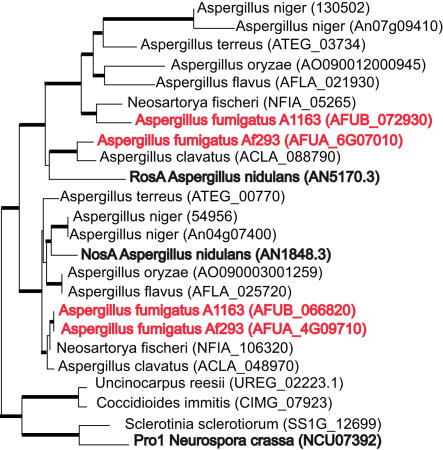
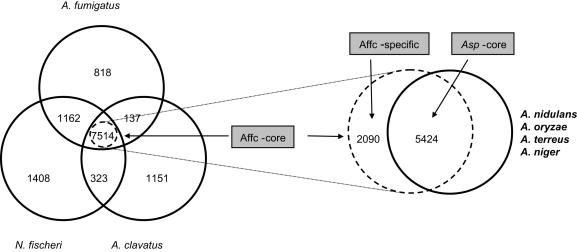
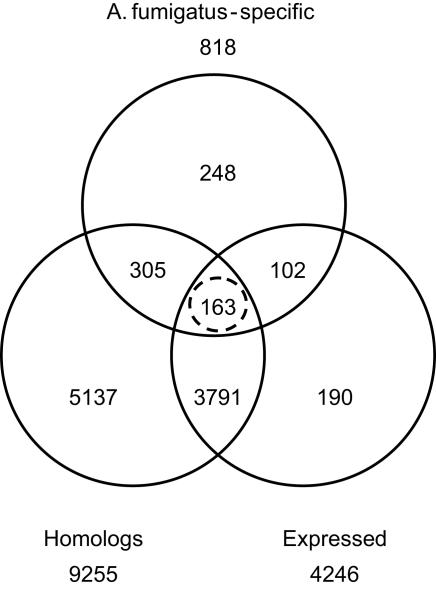
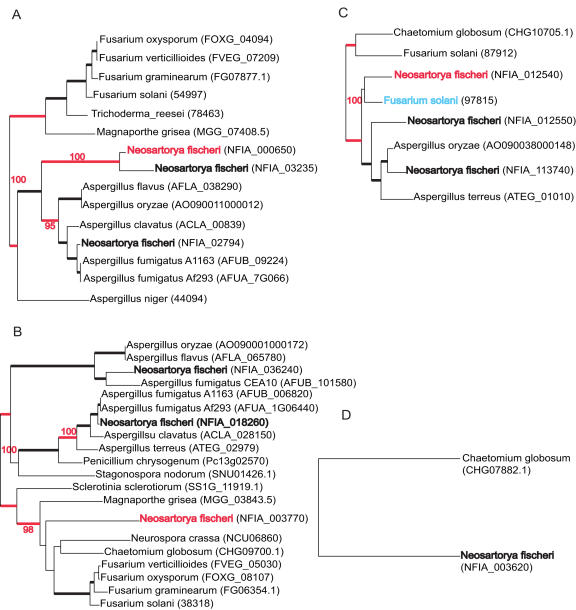
We present the genome sequences of a new clinical isolate of the important human pathogen, Aspergillus fumigatus, A1163, and two closely related but rarely pathogenic species, Neosartorya fischeri NRRL181 and Aspergillus clavatus NRRL1. Comparative genomic analysis of A1163 with the recently sequenced A. fumigatus isolate Af293 has identified core, variable and up to 2% unique genes in each genome. While the core genes are 99.8% identical at the nucleotide level, identity for variable genes can be as low 40%. The most divergent loci appear to contain heterokaryon incompatibility (het) genes associated with fungal programmed cell death such as developmental regulator rosA. Cross-species comparison has revealed that 8.5%, 13.5% and 12.6%, respectively, of A. fumigatus, N. fischeri and A. clavatus genes are species-specific. These genes are significantly smaller in size than core genes, contain fewer exons and exhibit a subtelomeric bias. Most of them cluster together in 13 chromosomal islands, which are enriched for pseudogenes, transposons and other repetitive elements. At least 20% of A. fumigatus-specific genes appear to be functional and involved in carbohydrate and chitin catabolism, transport, detoxification, secondary metabolism and other functions that may facilitate the adaptation to heterogeneous environments such as soil or a mammalian host. Contrary to what was suggested previously, their origin cannot be attributed to horizontal gene transfer (HGT), but instead is likely to involve duplication, diversification and differential gene loss (DDL). The role of duplication in the origin of lineage-specific genes is further underlined by the discovery of genomic islands that seem to function as designated "gene dumps" and, perhaps, simultaneously, as "gene factories".
Overview
The claims and statistics of this paper haven’t been checked yet.
Free: it reads the open-access text and checks the first 5 claims that cite a source we can check. Create a free account to check every claim.
Integrity signals
Registry
Cites
Statistics
Figures
Verification
Claims the paper makes
The claims and statistics of this paper haven’t been checked yet.
Free: it reads the open-access text and checks the first 5 claims that cite a source we can check. Create a free account to check every claim.
Claims other papers make about this one
Each is checked against this paper’s own text: does it say what the citing paper says it does?
The source backs part of the claim, not all of it — or backs it for a different population, condition or comparison.
In the citing paper
“Most of the studies have been performed with Neosartorya fischeri, a species very closely related taxonomically to A. fumigatus, which produced ascospores abundantly, in contrast to A. fumigatus (506).”
From Aspergillus fumigatus and Aspergillosis in 2019 (2019) · cites this paper as [506]
Experimental — accuracy not yet measured
Self-check
Percentages, sums and reported differences re-computed from the paper’s own numbers.
The self-check needs the paper’s full text.
Citations
Cites
Thompson, J. D., Higgins, D. G., & Gibson, T. J. (1994) · Nucleic Acids Research · doi:10.1093/nar/22.22.4673 · Cited by 64,617 · cited 1×
“Sequences were aligned using ClustalW [71].”
MUSCLE: multiple sequence alignment with high accuracy and high throughput
Edgar, R. C. (2004) · Nucleic Acids Research · doi:10.1093/nar/gkh340 · Cited by 44,662
Gene Ontology: tool for the unification of biology
Ashburner, M., Ball, C. A., Blake, J. A., Botstein, D., Butler, H., Cherry, J. M., Davis, A. P., Dolinski, K., Dwight, S. S., Eppig, J. T., et al. (2000) · Nature Genetics · doi:10.1038/75556 · Cited by 43,206
A Simple, Fast, and Accurate Algorithm to Estimate Large Phylogenies by Maximum Likelihood
Guindon, S., & Gascuel, O. (2003) · Systematic Biology · doi:10.1080/10635150390235520 · Cited by 16,806
Selection of Conserved Blocks from Multiple Alignments for Their Use in Phylogenetic Analysis
Castresana, J. (2000) · Molecular Biology and Evolution · doi:10.1093/oxfordjournals.molbev.a026334 · Cited by 10,508
Ohno, S. (1970) · doi:10.1007/978-3-642-86659-3 · Cited by 7,833
Whole-Genome Random Sequencing and Assembly of Haemophilus influenzae Rd
Fleischmann, R. D., Adams, M. D., White, O., Clayton, R. A., Kirkness, E. F., Kerlavage, A. R., Bult, C. J., Tomb, J.-F., Dougherty, B. A., Merrick, J. M., et al. (1995) · Science · doi:10.1126/science.7542800 · Cited by 5,654
Self-citationPAML: a program package for phylogenetic analysis by maximum likelihood
Yang, Z. (1997) · Bioinformatics · doi:10.1093/bioinformatics/13.5.555 · Cited by 5,373
Haas, B. J., Salzberg, S. L., Zhu, W., Pertea, M., Allen, J. E., Orvis, J., White, O., Buell, C. R., & Wortman, J. R. (2008) · Genome Biology · doi:10.1186/gb-2008-9-1-r7 · Cited by 4,079
Self-citationAspergillus fumigatus and Aspergillosis
Latgé, J.-P. (1999) · Clinical Microbiology Reviews · doi:10.1128/cmr.12.2.310 · Cited by 2,307 · cited 1×
“Aspergillus fumigatus is exceptional amongst the aspergilli in being both a primary and opportunistic pathogen as well as a major allergen associated with severe asthma and sinusitis [1–3].”
Background
Cited by
Aspergillus fumigatus and Aspergillosis in 2019
Latgé, J.-P., & Chamilos, G. (2019) · Clinical Microbiology Reviews · doi:10.1128/cmr.00140-18 · Cited by 1,400
Genomic Analysis of the Necrotrophic Fungal Pathogens Sclerotinia sclerotiorum and Botrytis cinerea
Amselem, J., Cuomo, C. A., van Kan, J. A. L., Viaud, M., Benito, E. P., Couloux, A., Coutinho, P. M., de Vries, R. P., Dyer, P. S., Fillinger, S., et al. (2011) · PLoS Genetics · doi:10.1371/journal.pgen.1002230 · Cited by 1,040
“Novel genes have also been reported in MAT loci of other ascomycete fungi [57–60].”
BackgroundSelf-citationSMURF: Genomic mapping of fungal secondary metabolite clusters
Khaldi, N., Seifuddin, F. T., Turner, G., Haft, D., Nierman, W. C., Wolfe, K. H., & Fedorova, N. D. (2010) · Fungal Genetics and Biology · doi:10.1016/j.fgb.2010.06.003 · Cited by 771
“To answer this question, we further analyzed the genomes of the three closely related species A. fumigatus Af293, A. clavatus , and Neosartorya fischeri (Fedorova et al., 2008; Nierman et al., 2005).”
Self-citationKubicek, C. P., Herrera-Estrella, A., Seidl-Seiboth, V., Martinez, D. A., Druzhinina, I. S., Thon, M., Zeilinger, S., Casas-Flores, S., Horwitz, B. A., Mukherjee, P. K., et al. (2011) · Genome Biology · doi:10.1186/gb-2011-12-4-r40 · Cited by 754
“The numbers of the synteny blocks increased with their decreased size, compatible with the random breakage model [14] as in aspergilli [15,17].”
BackgroundResultInfluentialFungal secondary metabolites – Strategies to activate silent gene clusters
Brakhage, A. A., & Schroeckh, V. (2011) · Fungal Genetics and Biology · doi:10.1016/j.fgb.2010.04.004 · Cited by 729
Genomic perspectives on the evolution of fungal entomopathogenicity in Beauveria bassiana
Xiao, G., Ying, S.-H., Zheng, P., Wang, Z.-L., Zhang, S., Xie, X.-Q., Shang, Y., St. Leger, R. J., Zhao, G.-P., Wang, C., et al. (2012) · Scientific Reports · doi:10.1038/srep00483 · Cited by 693
Amaike, S., & Keller, N. P. (2011) · Annual Review of Phytopathology · doi:10.1146/annurev-phyto-072910-095221 · Cited by 668
Gao, Q., Jin, K., Ying, S.-H., Zhang, Y., Xiao, G., Shang, Y., Duan, Z., Hu, X., Xie, X.-Q., Zhou, G., et al. (2011) · PLoS Genetics · doi:10.1371/journal.pgen.1001264 · Cited by 671
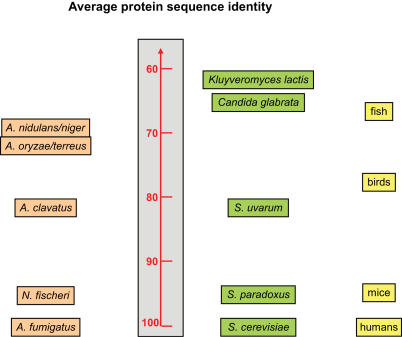
“oryzae which share only 68% average sequence identity [29].”
BackgroundSegal, B. H. (2009) · New England Journal of Medicine · doi:10.1056/nejmra0808853 · Cited by 661
Goodwin, S. B., Ben M'Barek, S., Dhillon, B., Wittenberg, A. H. J., Crane, C. F., Hane, J. K., Foster, A. J., Van der Lee, T. A. J., Grimwood, J., Aerts, A., et al. (2011) · PLoS Genetics · doi:10.1371/journal.pgen.1002070 · Cited by 607
“Macrosyntenic relationships are used commonly to assist the assembly and finishing of fragmented genome sequences [20–23], particularly in prokaryotes.”
BackgroundFrisvad, J. C., Hubka, V., Ezekiel, C. N., Hong, S.-B., Nováková, A., Chen, A. J., Arzanlou, M., Larsen, T. O., Sklenář, F., Mahakarnchanakul, W., et al. (2019) · Studies in Mycology · doi:10.1016/j.simyco.2018.06.001 · Cited by 566
Discovery of a sexual cycle in the opportunistic fungal pathogen Aspergillus fumigatus
O’Gorman, C. M., Fuller, H. T., & Dyer, P. S. (2009) · Nature · doi:10.1038/nature07528 · Cited by 555
Self-citationComparative Genomics Yields Insights into Niche Adaptation of Plant Vascular Wilt Pathogens
Klosterman, S. J., Subbarao, K. V., Kang, S., Veronese, P., Gold, S. E., Thomma, B. P. H. J., Chen, Z., Henrissat, B., Lee, Y.-H., Park, J., et al. (2011) · PLoS Pathogens · doi:10.1371/journal.ppat.1002137 · Cited by 543
“duplication, diversification and differential gene loss were also reported in Aspergillus fumigatus [50].”
BackgroundPhylogeny of Penicillium and the segregation of Trichocomaceae into three families
Houbraken, J., & Samson, R. A. (2011) · Studies in Mycology · doi:10.3114/sim.2011.70.01 · Cited by 538
“…Queensland, Australia JN121686 JN121521 JN121827 JN121918 Aspergillus clavatus1* NRRL 1 (= ATCC 1007 = CBS 513.65 = IMI 15949) Unknown source Fedorova et al. (2008) CBS 476.65NT Aspergillus conjunctus* ATCC 16796 = IMI 135421 Forest soil, Palmar, Province of Puntarenas, Costa Rica JN121688…”
Influentialde Vries, R. P., Riley, R., Wiebenga, A., Aguilar-Osorio, G., Amillis, S., Uchima, C. A., Anderluh, G., Asadollahi, M., Askin, M., Barry, K., et al. (2017) · Genome Biology · doi:10.1186/s13059-017-1151-0 · Cited by 489
Self-citationThe Genome of Nectria haematococca: Contribution of Supernumerary Chromosomes to Gene Expansion
Coleman, J. J., Rounsley, S. D., Rodriguez-Carres, M., Kuo, A., Wasmann, C. C., Grimwood, J., Schmutz, J., Taga, M., White, G. J., Zhou, S., et al. (2009) · PLoS Genetics · doi:10.1371/journal.pgen.1000618 · Cited by 469
“Nevertheless, the ability of N. haematococca MPVI to acquire genes by HGT or a similar mechanism would bypass the evolutionary restraint that an active RIP system places on a fungus by hindering the utility of gene duplications as a means to create new genes functions [50].”
BackgroundInfluentialZheng, P., Xia, Y., Xiao, G., Xiong, C., Hu, X., Zhang, S., Zheng, H., Huang, Y., Zhou, Y., Wang, S., et al. (2011) · Genome Biology · doi:10.1186/gb-2011-12-11-r116 · Cited by 454
“As in aspergilli [17], many C.”
Genome sequencing and analysis of the filamentous fungus Penicillium chrysogenum
van den Berg, M. A., Albang, R., Albermann, K., Badger, J. H., Daran, J.-M., M Driessen, A. J., Garcia-Estrada, C., Fedorova, N. D., Harris, D. M., Heijne, W. H. M., et al. (2008) · Nature Biotechnology · doi:10.1038/nbt.1498 · Cited by 473
“Similar genomic islands have been found in other fungal genome”
BackgroundSelf-citationGenomics of Aspergillus oryzae: Learning from the History of Koji Mold and Exploration of Its Future
Machida, M., Yamada, O., & Gomi, K. (2008) · DNA Research · doi:10.1093/dnares/dsn020 · Cited by 429
Fungal evolution: major ecological adaptations and evolutionary transitions
Naranjo‐Ortiz, M. A., & Gabaldón, T. (2019) · Biological Reviews · doi:10.1111/brv.12510 · Cited by 390
“Pulmonary aspergillosis is the most common of these diseases, causing a wide range of respiratory problems (Tekaia & Latgé, 2005; Fedorova et al., 2008; Kousha, Tadi & Soubani, 2011; Kosmidis & Denning, 2015; Hayes & Novak-Frazer, 2016).”
BackgroundAndersen, M. R., Salazar, M. P., Schaap, P. J., van de Vondervoort, P. J. I., Culley, D., Thykaer, J., Frisvad, J. C., Nielsen, K. F., Albang, R., Albermann, K., et al. (2011) · Genome Research · doi:10.1101/gr.112169.110 · Cited by 362
FungiDB: an integrated functional genomics database for fungi
Stajich, J. E., Harris, T., Brunk, B. P., Brestelli, J., Fischer, S., Harb, O. S., Kissinger, J. C., Li, W., Nayak, V., Pinney, D. F., et al. (2012) · Nucleic Acids Research · doi:10.1093/nar/gkr918 · Cited by 343
“86 9413 (9) Aspergillus flavus NRRL3357 36.”
Faino, L., Seidl, M. F., Shi-Kunne, X., Pauper, M., van den Berg, G. C. M., Wittenberg, A. H. J., & Thomma, B. P. H. J. (2016) · Genome Research · doi:10.1101/gr.204974.116 · Cited by 319
“embedded within the core chromosomes or reside on conditionally dispensable chromosomes (Thon et al. 2006; Fedorova et al. 2008; Haas et al. 2009; Ma et al. 2010; Goodwin et al. 2011; Klosterman et al. 2011; Rouxel et al. 2011; de Jonge et al. 2013).”
BackgroundConnolly, L. R., Smith, K. M., & Freitag, M. (2013) · PLoS Genetics · doi:10.1371/journal.pgen.1003916 · Cited by 318
“example secondary metabolite gene clusters, as well as genes for secreted pathogenicity factors and detoxifying enzymes [29,30].”
BackgroundComparative genomic analyses of the human fungal pathogens Coccidioides and their relatives
Sharpton, T. J., Stajich, J. E., Rounsley, S. D., Gardner, M. J., Wortman, J. R., Jordar, V. S., Maiti, R., Kodira, C. D., Neafsey, D. E., Zeng, Q., et al. (2009) · Genome Research · doi:10.1101/gr.087551.108 · Cited by 317
“Identifying genes subject to positive natural selection since two closely related pathogens diverged may identify antigenic compounds ( Esteves et al. 2008 ).”
BackgroundSelf-citationDenning, D. W., Park, S., Lass-Florl, C., Fraczek, M. G., Kirwan, M., Gore, R., Smith, J., Bueid, A., Moore, C. B., Bowyer, P., et al. (2011) · Clinical Infectious Diseases · doi:10.1093/cid/cir179 · Cited by 313
“Conidia shift from being anergic to the human immune system [4] to producing the largest number of documented allergens of any other living organism on germination [5].”
BackgroundSelf-citationIn honor of John Bissett: authoritative guidelines on molecular identification of Trichoderma
Cai, F., & Druzhinina, I. S. (2021) · Fungal Diversity · doi:10.1007/s13225-020-00464-4 · Cited by 295
Telomeric Expression Sites Are Highly Conserved in Trypanosoma brucei
Hertz-Fowler, C., Figueiredo, L. M., Quail, M. A., Becker, M., Jackson, A., Bason, N., Brooks, K., Churcher, C., Fahkro, S., Goodhead, I., et al. (2008) · PLoS ONE · doi:10.1371/journal.pone.0003527 · Cited by 289
“genomes owing to their remarkable plasticity [1–3].”
Modern Taxonomy of Biotechnologically Important Aspergillus and Penicillium Species
Houbraken, J., de Vries, R. P., & Samson, R. A. (2014) · Advances in Applied Microbiology · doi:10.1016/b978-0-12-800262-9.00004-4 · Cited by 280
“rubrum (Fleming, 1929). Later, Thom (1945) reidentified this strain as P.”
BackgroundGladieux, P., Ropars, J., Badouin, H., Branca, A., Aguileta, G., de Vienne, D. M., Rodríguez de la Vega, R. C., Branco, S., & Giraud, T. (2014) · Molecular Ecology · doi:10.1111/mec.12631 · Cited by 272
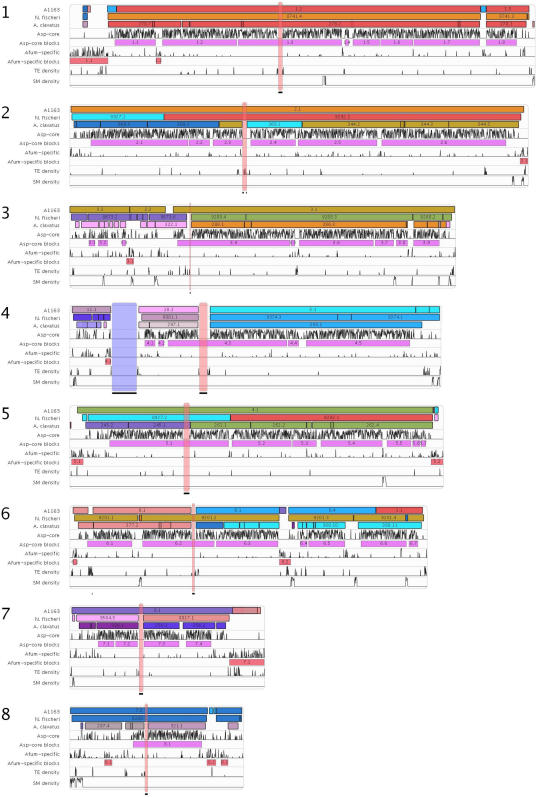
“Similarly, genomic islands in the human pathogen Aspergillus fumigatus, which may be as large as 400 kb, contain mostly repetitive DNA and species-specific genes involved in metabolic processes conferring adaptation to specific ecological niches (Fedorova et al. 2008).”
BackgroundHow filamentous pathogens co-opt plants: the ins and outs of fungal effectors
de Jonge, R., Bolton, M. D., & Thomma, B. P. (2011) · Current Opinion in Plant Biology · doi:10.1016/j.pbi.2011.03.005 · Cited by 261
Advances in Aspergillus secondary metabolite research in the post-genomic era
Sanchez, J. F., Somoza, A. D., Keller, N. P., & Wang, C. C. C. (2012) · Natural Product Reports · doi:10.1039/c2np00084a · Cited by 257
Sexual development and cryptic sexuality in fungi: insights from Aspergillus species
Dyer, P. S., & O'Gorman, C. M. (2012) · FEMS Microbiology Reviews · doi:10.1111/j.1574-6976.2011.00308.x · Cited by 237
“fumigatus isolate (A1163) was sequenced, providing further evidence for a species-wide sexual potential (Fedorova et al., 2008).”
BackgroundSelf-citationSub-Telomere Directed Gene Expression during Initiation of Invasive Aspergillosis
McDonagh, A., Fedorova, N. D., Crabtree, J., Yu, Y., Kim, S., Chen, D., Loss, O., Cairns, T., Goldman, G., Armstrong-James, D., et al. (2008) · PLoS Pathogens · doi:10.1371/journal.ppat.1000154 · Cited by 235
“clavatus distinguishes several subtelomeric ‘genomic islands’ upon which phenotypic variation between species, including differing pathogenicity, might depend[28].”
BackgroundSelf-citationThe birth, evolution and death of metabolic gene clusters in fungi
Rokas, A., Wisecaver, J. H., & Lind, A. L. (2018) · Nature Reviews Microbiology · doi:10.1038/s41579-018-0075-3 · Cited by 220
Drivers of genetic diversity in secondary metabolic gene clusters within a fungal species
Lind, A. L., Wisecaver, J. H., Lameiras, C., Wiemann, P., Palmer, J. M., Keller, N. P., Rodrigues, F., Goldman, G. H., & Rokas, A. (2017) · PLOS Biology · doi:10.1371/journal.pbio.2003583 · Cited by 218
Self-citationGrahl, N., Puttikamonkul, S., Macdonald, J. M., Gamcsik, M. P., Ngo, L. Y., Hohl, T. M., & Cramer, R. A. (2011) · PLoS Pathogens · doi:10.1371/journal.ppat.1002145 · Cited by 217
“fumigatus genome sequence for genes encoding enzymes known to be involved in ethanol fermentation [46,47].”
BackgroundBushley, K. E., & Turgeon, B. G. (2010) · BMC Evolutionary Biology · doi:10.1186/1471-2148-10-26 · Cited by 212
“It has been suggested that genes involved in secondary metabolite (small molecule) biosynthesis tend to be located in subtelomeric regions, a factor which may contribute to their rapid evolution by the aforementioned mechanisms [35,36].”
Camps, S. M. T., Dutilh, B. E., Arendrup, M. C., Rijs, A. J. M. M., Snelders, E., Huynen, M. A., Verweij, P. E., & Melchers, W. J. G. (2012) · PLoS ONE · doi:10.1371/journal.pone.0050034 · Cited by 212
“Sixty-nine potential mutations were identified in resistant isolate 3 that were non-synonymous relative to both the susceptible isolate 2 and both reference isolates Af293/A1163 (Table S1).”
MethodInfluentialA comparative genomics study of 23 Aspergillus species from section Flavi
Kjærbølling, I., Vesth, T., Frisvad, J. C., Nybo, J. L., Theobald, S., Kildgaard, S., Petersen, T. I., Kuo, A., Sato, A., Lyhne, E. K., et al. (2020) · Nature Communications · doi:10.1038/s41467-019-14051-y · Cited by 202
Prototype of an intertwined secondary-metabolite supercluster
Wiemann, P., Guo, C.-J., Palmer, J. M., Sekonyela, R., Wang, C. C. C., & Keller, N. P. (2013) · Proceedings of the National Academy of Sciences · doi:10.1073/pnas.1313258110 · Cited by 195
“The genome sequence is publicly available (29, 31, 32), and several metabolites have been linked to their key enzyme-encoding gene clusters (reviewed in ref.”
BackgroundFungal Secretome Database: Integrated platform for annotation of fungal secretomes
Choi, J., Park, J., Kim, D., Jung, K., Kang, S., & Lee, Y.-H. (2010) · BMC Genomics · doi:10.1186/1471-2164-11-105 · Cited by 195
“6 10,403 959 818 84 1,861 [54]”
Al Abdallah, Q., Ge, W., & Fortwendel, J. R. (2017) · mSphere · doi:10.1128/msphere.00446-17 · Cited by 192
Houbraken, J., Spierenburg, H., & Frisvad, J. C. (2012) · Antonie van Leeuwenhoek · doi:10.1007/s10482-011-9647-1 · Cited by 192
Nowrousian, M., Stajich, J. E., Chu, M., Engh, I., Espagne, E., Halliday, K., Kamerewerd, J., Kempken, F., Knab, B., Kuo, H.-C., et al. (2010) · PLoS Genetics · doi:10.1371/journal.pgen.1000891 · Cited by 193
“Even though in many cases ‘‘non-canonic’’ phylogenetic tree topologies can be explained by a combination of duplication, diversification, and differential gene loss [138,142], that still leaves a number of cases where a HGT model best fits the observed data [140,141,143,144].”
ResultFungal cytochrome P450 database
Park, J., Lee, S., Choi, J., Ahn, K., Park, B., Park, J., Kang, S., & Lee, Y.-H. (2008) · BMC Genomics · doi:10.1186/1471-2164-9-402 · Cited by 175
“77 TIGR [16] Aspergillus fumigatus Af293 9,887 80 0.”
Genome Characterization of the Oleaginous Fungus Mortierella alpina
Wang, L., Chen, W., Feng, Y., Ren, Y., Gu, Z., Chen, H., Wang, H., Thomas, M. J., Zhang, B., Berquin, I. M., et al. (2011) · PLoS ONE · doi:10.1371/journal.pone.0028319 · Cited by 173
“Genome sequences of Candida albicans SC5314 [60], Rhizopus oryzae 99–880 [34], Aspergillus fumigatus Af293 [61] and A1163 [62], Aspergillus clavatus NRRL 1 [62], Ashbya gossypii ATCC10895 (Eremothecium gossypii) [63], Aspergillus nidulans FGSC A4 [64], Aspergillus niger CBS 513.”
BackgroundInfluentialSchotanus, K., Soyer, J. L., Connolly, L. R., Grandaubert, J., Happel, P., Smith, K. M., Freitag, M., & Stukenbrock, E. H. (2015) · Epigenetics & Chromatin · doi:10.1186/s13072-015-0033-5 · Cited by 173
“In the absence of more detailed studies on telomere length from a larger collection of wild-type strains, we deem the small differences in average telomere tract length not significant, even though the difference in repeat length is similar to the decrease in repeat length observed between Aspergillus wild-type and ku…”
BackgroundArnaud, M. B., Cerqueira, G. C., Inglis, D. O., Skrzypek, M. S., Binkley, J., Chibucos, M. C., Crabtree, J., Howarth, C., Orvis, J., Shah, P., et al. (2012) · Nucleic Acids Research · doi:10.1093/nar/gkr875 · Cited by 173
“The next species chosen was Aspergillus fumigatus, the main cause of aspergillosis, an invasive fungal infection affecting immunecompromised patients, due to its clinical relevance (2,3).”
BackgroundSelf-citationFungal model systems and the elucidation of pathogenicity determinants
Perez-Nadales, E., Almeida Nogueira, M. F., Baldin, C., Castanheira, S., El Ghalid, M., Grund, E., Lengeler, K., Marchegiani, E., Mehrotra, P. V., Moretti, M., et al. (2014) · Fungal Genetics and Biology · doi:10.1016/j.fgb.2014.06.011 · Cited by 172
“Three years later, the genome sequence of a second A. fumigatus isolate, A1163, was released (Fedorova et al., 2008).”
BackgroundInfluentialThe genomic organization of plant pathogenicity in Fusarium species
Rep, M., & Kistler, H. C. (2010) · Current Opinion in Plant Biology · doi:10.1016/j.pbi.2010.04.004 · Cited by 170
“Comparative genomics with closely related Aspergillus species also has revealed large species-specific gene sets, which are concentrated in subgenomic regions called chromosomal islands [5 ].”
BackgroundDiversity, Application, and Synthetic Biology of Industrially Important Aspergillus Fungi
(2017) · Advances in Applied Microbiology · doi:10.1016/bs.aambs.2017.03.001 · Cited by 166
Metabolomics of Aspergillus fumigatus
Frisvad, J. C., Rank, C., Nielsen, K. F., & Larsen, T. O. (2009) · Medical Mycology · doi:10.1080/13693780802307720 · Cited by 160
Histone Methylation by SET Domain Proteins in Fungi
Freitag, M. (2017) · Annual Review of Microbiology · doi:10.1146/annurev-micro-102215-095757 · Cited by 160
Pasqualotto, A. C. (2009) · Medical Mycology · doi:10.1080/13693780802247702 · Cited by 159
Gao, X., Chooi, Y., Ames, B. D., Wang, P., Walsh, C. T., & Tang, Y. (2011) · Journal of the American Chemical Society · doi:10.1021/ja1101085 · Cited by 159
Plant biomass degradation by fungi
Mäkelä, M., Donofrio, N. M., & de Vries, R. P. (2014) · Fungal Genetics and Biology · doi:10.1016/j.fgb.2014.08.010 · Cited by 182
Chemodiversity in the genus Aspergillus
Frisvad, J. C., & Larsen, T. O. (2015) · Applied Microbiology and Biotechnology · doi:10.1007/s00253-015-6839-z · Cited by 145
Identification and engineering of the cytochalasin gene cluster from Aspergillus clavatus NRRL 1
Qiao, K., Chooi, Y., & Tang, Y. (2011) · Metabolic Engineering · doi:10.1016/j.ymben.2011.09.008 · Cited by 150
“Analyses of genome sequence of A. clavatus NRRL1 The genome sequence of A. clavatus NRRL1 was obtained from NCBI database (Fedorova et al., 2008).”
BackgroundMethodInfluentialPrevalence of transcription factors in ascomycete and basidiomycete fungi
Todd, R. B., Zhou, M., Ohm, R. A., Leeggangers, H. A. C. F., Visser, L., & de Vries, R. P. (2014) · BMC Genomics · doi:10.1186/1471-2164-15-214 · Cited by 164
“Species, genome sequence file name, phylogenetic division, source of genome sequence data, and reference [54-104].”
BackgroundMuszewska, A., Hoffman‐Sommer, M., & Grynberg, M. (2011) · PLoS ONE · doi:10.1371/journal.pone.0029425 · Cited by 150
“Includes citations to references [54–88].”
Joardar, V., Abrams, N. F., Hostetler, J. B., Paukstelis, P. J., Pakala, S. M., Pakala, S., Zafar, N., Abolude, O. O., Payne, G. A., Andrianopoulos, A., et al. (2012) · BMC Genomics · doi:10.1186/1471-2164-13-698 · Cited by 145
Self-citationMolecular Mechanisms of Conidial Germination in Aspergillus spp
Baltussen, T. J. H., Zoll, J., Verweij, P. E., & Melchers, W. J. G. (2019) · Microbiology and Molecular Biology Reviews · doi:10.1128/mmbr.00049-19 · Cited by 155
The 2008 update of the Aspergillus nidulans genome annotation: A community effort
Wortman, J. R., Gilsenan, J. M., Joardar, V., Deegan, J., Clutterbuck, J., Andersen, M. R., Archer, D., Bencina, M., Braus, G., & Coutinho, P. (2009) · Fungal Genetics and Biology · doi:10.1016/j.fgb.2008.12.003 · Cited by 127
“An updated annotation for A. fumigatus , based on comparative genome data and involving targeted manual annotation, was released to GenBank in March, 2007 (Fedorova et al., 2008).”
MethodInfluentialSelf-citationBarber, A. E., Sae-Ong, T., Kang, K., Seelbinder, B., Li, J., Walther, G., Panagiotou, G., & Kurzai, O. (2021) · Nature Microbiology · doi:10.1038/s41564-021-00993-x · Cited by 129
Molecular basis and regulation of pathogenicity and patulin biosynthesis in Penicillium expansum
Li, B., Chen, Y., Zhang, Z., Qin, G., Chen, T., & Tian, S. (2020) · Comprehensive Reviews in Food Science and Food Safety · doi:10.1111/1541-4337.12612 · Cited by 143
Heterochromatin Is Required for Normal Distribution of Neurospora crassa CenH3
Smith, K., Phatale, P. A., Sullivan, C. M., Pomraning, K., & Freitag, M. (2011) · Molecular and Cellular Biology · doi:10.1128/mcb.01285-10 · Cited by 139
“The centromeres of filamentous fungi have been difficult to assemble and are absent or not easily recognizable by bioinformatic tools in the almost completely sequenced and assembled genomes of Fusarium graminearum (teleomorph: Gibberella zeae) (20), Aspergillus fumigatus (26), Nectria haematococca (18), and even the…”
BackgroundKowalski, C. H., Beattie, S. R., Fuller, K. K., McGurk, E. A., Tang, Y.-W., Hohl, T. M., Obar, J. J., & Cramer, R. A. (2016) · mBio · doi:10.1128/mbio.01515-16 · Cited by 123
“Furthermore, 41 orthologous gene pairs between the two strains do not share 100% identity, and alignment of some of these genes shows identities as low as 37% (51).”
BackgroundNierman, W. C., Yu, J., Abrams, N., Losada, L. C., Cleveland, T. E., Bhatnagar, D., Bennett, J. W., Dean, R. A., & Payne, G. A. (2015) · Genome Announcements · doi:10.1128/genomea.00168-15 · Cited by 120
Self-citationPan-genome analyses of model fungal species
McCarthy, C. G. P., & Fitzpatrick, D. A. (2019) · Microbial Genomics · doi:10.1099/mgen.0.000243 · Cited by 146
“These BGCs are involved in a range of infection and survival processes in the aspergilli, and subterminal regions themselves are believed to mediate the infection process of Aspergillus fumigatus in the human host [91, 92, 99, 108].”
Gibbons, J. G., Beauvais, A., Beau, R., McGary, K. L., Latgé, J.-P., & Rokas, A. (2012) · Eukaryotic Cell · doi:10.1128/ec.05102-11 · Cited by 118
“fumigatus transcripts (17, 52), 9,525 were expressed in one or both conditions, and 362 genes were not expressed in either condition.”
BackgroundPotential of Aspergillus flavus genomics for applications in biotechnology
Cleveland, T. E., Yu, J., Fedorova, N. D., Bhatnagar, D., Payne, G. A., Nierman, W. C., & Bennett, J. W. (2009) · Trends in biotechnology · doi:10.1016/j.tibtech.2008.11.008 · Cited by 119
Self-citationDiversity and Variability of NOD-Like Receptors in Fungi
Dyrka, W., Lamacchia, M., Durrens, P., Kobe, B., Daskalov, A., Paoletti, M., Sherman, D. J., & Saupe, S. J. (2014) · Genome Biology and Evolution · doi:10.1093/gbe/evu251 · Cited by 115
“…STAND proteins are polymorphic and rapidly evolving and subject to extensive expansion in paralogous gene families in a variety of fungal species (Fedorova et al. 2008; Martin et al. 2008; Burmester et al. 2011; Kubicek et al. 2011; Zuccaro et al. 2011; Iotti et al. 2012; van der Nest et al.…”
Giant Starship Elements Mobilize Accessory Genes in Fungal Genomes
Gluck‐Thaler, E., Ralston, T. I., Konkel, Z. M., Ocampos, C. J. G., Ganeshan, V. D., Dorrance, A. E., Niblack, T. L., Wood, C. W., Slot, J. C., Lopez-Nicora, H. D., et al. (2022) · Molecular Biology and Evolution · doi:10.1093/molbev/msac109 · Cited by 122
“In the greenhouse, soybean plants were grown to the second stage of vegetative growth (Fehr et al. 1971).”
BackgroundHagiwara, D., Takahashi, H., Watanabe, A., Takahashi-Nakaguchi, A., Kawamoto, S., Kamei, K., & Gonoi, T. (2014) · Journal of Clinical Microbiology · doi:10.1128/jcm.01105-14 · Cited by 111
“fumigatus strain, A1163, has up to 2% unique genes in its genome (38), which might explain the phenotypic differences.”
BackgroundCADRE: the Central Aspergillus Data REpository 2012
Mabey Gilsenan, J., Cooley, J., & Bowyer, P. (2012) · Nucleic Acids Research · doi:10.1093/nar/gkr971 · Cited by 111
Self-citationComparative Genomics and the Evolution of Pathogenicity in Human Pathogenic Fungi
Moran, G. P., Coleman, D. C., & Sullivan, D. J. (2011) · Eukaryotic Cell · doi:10.1128/ec.00242-10 · Cited by 111
“fumigatus also revealed the presence of species-specific genes involved in the catabolism of carbohydrates, polysaccharides, and amino-sugars and in amine transport (18).”
BackgroundInfluentialLiu, G., Zhang, L., Qin, Y., Zou, G., Li, Z., Yan, X., Wei, X., Chen, M., Chen, L., Zheng, K., et al. (2013) · Scientific Reports · doi:10.1038/srep01569 · Cited by 115
Houser, J., Komarek, J., Kostlanova, N., Cioci, G., Varrot, A., Kerr, S. C., Lahmann, M., Balloy, V., Fahy, J. V., Chignard, M., et al. (2013) · PLoS ONE · doi:10.1371/journal.pone.0083077 · Cited by 108
“fumigatus genome [14,15] opened the way to study adhesion”
Pulmonary aspergillosis: clinical presentation, diagnostic tests, management and complications
Sherif, R., & Segal, B. H. (2010) · Current Opinion in Pulmonary Medicine · doi:10.1097/mcp.0b013e328337d6de · Cited by 106
Amich, J., Vicentefranqueira, R., Leal, F., & Calera, J. A. (2010) · Eukaryotic Cell · doi:10.1128/ec.00348-09 · Cited by 105
Fungal biofilm morphology impacts hypoxia fitness and disease progression
Kowalski, C. H., Kerkaert, J. D., Liu, K.-W., Bond, M. C., Hartmann, R., Nadell, C. D., Stajich, J., & Cramer, R. A. (2019) · Nature Microbiology · doi:10.1038/s41564-019-0558-7 · Cited by 101
The function and evolution of the Aspergillus genome
Gibbons, J. G., & Rokas, A. (2012) · Trends in Microbiology · doi:10.1016/j.tim.2012.09.005 · Cited by 123
Kellner, R., Bhattacharyya, A., Poppe, S., Hsu, T. Y., Brem, R. B., & Stukenbrock, E. H. (2014) · Genome Biology and Evolution · doi:10.1093/gbe/evu101 · Cited by 119
Artigot, M. P., Loiseau, N., Laffitte, J., Mas-Reguieg, L., Tadrist, S., Oswald, I. P., & Puel, O. (2009) · Microbiology · doi:10.1099/mic.0.024836-0 · Cited by 100
“Preliminary sequence data were obtained from The Institute for Genomic Research website; http://www.tigr.org.”
BackgroundMethodInfluentialPontes, M. V. A., Brandl, J., McDonnell, E., Strasser, K., Nguyen, T. T. M., Riley, R. W., Mondo, S. J., Salamov, A., Nybo, J. L., Vesth, T., et al. (2018) · Studies in Mycology · doi:10.1016/j.simyco.2018.10.001 · Cited by 105
“…11 277 28 (de Vries et al. 2017) A. wentii CBS 141173 Cremei Aspwe1 12 442 31 (de Vries et al. 2017) A. clavatus NRRL 1 Clavati Aspcl1 9 121 28 (Fedorova et al. 2008) A. novofumigatus CBS 117520 Fumigati 11 549 32 (Kjaerbolling et al. 2018) A. fumigatus Af293 Fumigati Aspfu1 9 781 29 (Nierman…”
Vitikainen, M., Arvas, M., Pakula, T., Oja, M., Penttilä, M. E., & Saloheimo, M. (2010) · BMC Genomics · doi:10.1186/1471-2164-11-441 · Cited by 102
“reesei and Aspergillus fumigatus NSBs show enrichment of particular protein families [37,38].”
BackgroundThe rise and fall of genes: origins and functions of plant pathogen pangenomes
Badet, T., & Croll, D. (2020) · Current Opinion in Plant Biology · doi:10.1016/j.pbi.2020.04.009 · Cited by 100
Aspergillus bronchitis without significant immunocompromise
Chrdle, A., Mustakim, S., Bright‐Thomas, R. J., Baxter, C. G., Felton, T., & Denning, D. W. (2012) · Annals of the New York Academy of Sciences · doi:10.1111/j.1749-6632.2012.06816.x · Cited by 98
Self-citationAnnotation of stress–response proteins in the aspergilli
Miskei, M., Karányi, Z., & Pócsi, I. (2008) · Fungal Genetics and Biology · doi:10.1016/j.fgb.2008.07.013 · Cited by 107
Wang, Q., & Coleman, J. J. (2019) · Computational and Structural Biotechnology Journal · doi:10.1016/j.csbj.2019.06.007 · Cited by 108
Souza, J. A. M., Baltazar, L. D. M., Carregal, V. M., Gouveia‐Eufrásio, L., de Oliveira, A. G., Dias, W. G., Rocha, M. C., de Miranda, K. R., Malavazi, I., Santos, D. A., et al. (2019) · Frontiers in Microbiology · doi:10.3389/fmicb.2019.02008 · Cited by 96
Self-citationAlbarrag, A. M., Anderson, M. J., Howard, S. J., Robson, G. D., Warn, P. A., Sanglard, D., & Denning, D. W. (2011) · Antimicrobial Agents and Chemotherapy · doi:10.1128/aac.00517-11 · Cited by 96
“In addition, the sequence strain A1163 (12) was used as the control strain for heterologous transformation experiments, and the other sequence strain, AF293 (28), was used as an additional control for the cyp51A copy number determination.”
MethodSelf-citationBruns, S., Seidler, M., Albrecht, D., Salvenmoser, S., Remme, N., Hertweck, C., Brakhage, A. A., Kniemeyer, O., & Müller, F. C. (2010) · PROTEOMICS · doi:10.1002/pmic.201000129 · Cited by 95
“Proteome and transcriptome analysis revealed that enzymes or genes, which are part of the fumitremorgin supercluster, showed a biofilm-dependent change in expression [33]: a phytanoyl-CoA dioxygenase family protein (AFUA_8G00230) and the genes AFUA_8G00180, AFUA_8G00430, AFUA_8G00490 and AFUA_8G00500.”
BackgroundOxalate decarboxylase: biotechnological update and prevalence of the enzyme in filamentous fungi
Mäkelä, M., Hildén, K., & Lundell, T. (2010) · Applied Microbiology and Biotechnology · doi:10.1007/s00253-010-2650-z · Cited by 95
Pathogenomics of fungal plant parasites: what have we learnt about pathogenesis?
Schmidt, S. M., & Panstruga, R. (2011) · Current Opinion in Plant Biology · doi:10.1016/j.pbi.2011.03.006 · Cited by 94
Evolution of aromatic prenyltransferases in the biosynthesis of indole derivatives
Li, S. (2009) · Phytochemistry · doi:10.1016/j.phytochem.2009.03.019 · Cited by 93
Extrolites of Aspergillus fumigatus and Other Pathogenic Species in Aspergillus Section Fumigati
Frisvad, J. C., & Larsen, T. O. (2016) · Frontiers in Microbiology · doi:10.3389/fmicb.2015.01485 · Cited by 106
“…siderophores are also considered to be important pathogenicity factors, and given the general importance for fungi they can be expected to be produced by all pathogenic species of Aspergillus (Fedorova et al., 2008; Abad et al., 2010; Haas, 2014), but probably also by non-pathogenic species.”
BackgroundAmes, B. D., Liu, X., & Walsh, C. T. (2010) · Biochemistry · doi:10.1021/bi1012029 · Cited by 95
“fumigatus have been sequenced: strain Af293 (FGSC A110) (25) and strain CEA10 (FGSC A1163) (26).”
BackgroundA survey of nonribosomal peptide synthetase (NRPS) genes in Aspergillus nidulans
von Döhren, H. (2008) · Fungal Genetics and Biology · doi:10.1016/j.fgb.2008.08.008 · Cited by 92
Metadata
- Authors
- Fedorova, N. D., Khaldi, N., Joardar, V. S., Maiti, R., Amedeo, P., Anderson, M. J., Crabtree, J., Silva, J. C., Badger, J. H., Albarraq, A., Angiuoli, S., Bussey, H., Bowyer, P., Cotty, P. J., Dyer, P. S., Egan, A., Galens, K., Fraser-Liggett, C. M., Haas, B. J., Inman, J. M., Kent, R., Lemieux, S., Malavazi, I., Orvis, J., Roemer, T., Ronning, C. M., Sundaram, J. P., Sutton, G., Turner, G., Venter, J. C., White, O. R., Whitty, B. R., Youngman, P., Wolfe, K. H., Goldman, G. H., Wortman, J. R., Jiang, B., Denning, D. W., & Nierman, W. C.
- Affiliations
- J. Craig Venter Institute (US)
- Trinity College Dublin (IE)
- University of Manchester (GB)
- McGill University (CA)
- Agricultural Research Service (US)
- University of Nottingham (GB)
- Universidade de São Paulo (BR)
- Merck & Co., Inc., Rahway, NJ, USA (United States) (US)
- University of Sheffield (GB)
- Corresponding author
- Nierman, William C.
- ORCID
- Joardar, Vinita S.
- Amedeo, Paolo
- Anderson, Michael J.
- Crabtree, Jonathan
- Silva, Joana C.
- Badger, Jonathan H.
- Albarraq, Ahmed
- Bowyer, Paul
- Cotty, Peter J.
- Dyer, Paul S.
- Haas, Brian J.
- Inman, Jason M.
- Malavazi, Iran
- Orvis, Joshua
- Venter, J. Craig
- White, Owen R.
- Whitty, Brett R.
- Wolfe, Kenneth H.
- Goldman, Gustavo H.
- Wortman, Jennifer R.
- Jiang, Bo
- Denning, David W.
- Nierman, William C.
- Venue
- PLoS Genetics
- Publisher
- Public Library of Science (PLoS)
- Published
- 2008-04-11
- Volume
- 4
- Issue
- 4
- Pages
- e1000046
- ISSN
- 1553-7390 (ISSN-L)
- 1553-7404
- PMC
- PMC2289846
- OpenAlex
- W2104863787
- Cited by
- 508
- References
- 75
- Citations by year
- 2026: 11 · 2025: 14 · 2024: 20 · 2023: 13 · 2022: 25 · 2021: 27 · 2020: 25 · 2019: 23 · 2018: 28 · 2017: 30 · 2016: 19 · 2015: 34 · 2014: 41 · 2013: 33 · 2012: 32
- FWCI
- 18.26
- Type
- journal article
- Language
- en
- Open access
- gold
- doi.org
- Locations
- PLoS Genetics (publishedVersion, cc-by)
- PubMed Central (publishedVersion, cc-by)
- PubMed (publishedVersion)
- Portuguese National Funding Agency for Science, Research and Technology (RCAAP Project by FCT) (publishedVersion)
- Arrow@dit (Dublin Institute of Technology) (submittedVersion)
- DOAJ (DOAJ: Directory of Open Access Journals) (submittedVersion, cc-by-sa)
- White Rose Research Online (University of Leeds, The University of Sheffield, University of York) (submittedVersion, cc-by)
- Figshare (submittedVersion, cc-by)
- Research Explorer (The University of Manchester) (submittedVersion)
- Funders
- Merck
- Fundação de Amparo à Pesquisa do Estado de São Paulo
- National Institutes of Health (n01ai30071-19-0-3)
- National Institute of Allergy and Infectious Diseases (U01 AI48830, AI30071, R21AI052236, AI052236, N01 AI030071, U01AI048830, N01 AI30071)
- Topics
- Life Sciences › Biochemistry, Genetics and Molecular Biology › Molecular Biology › Fungal and yeast genetics research
- Life Sciences › Agricultural and Biological Sciences › Plant Science › Plant Pathogens and Fungal Diseases
- Health Sciences › Medicine › Infectious Diseases › Antifungal resistance and susceptibility
- Keywords
- Aspergillus fumigatus, genomic islands, Neosartorya fischeri, Aspergillus clavatus, Rosa, species-specific genes, pseudogenes, transposable elements, repetitive elements, gene duplication, horizontal gene transfer, comparative genomics
- MeSH terms
- Allergens, Aspergillus, Aspergillus fumigatus, Fungal Proteins, Humans, Phylogeny, Species Specificity, Virulence, Chromosomes, Fungal, Genome, Fungal, Evolution, Molecular, Eurotiales, Genomic Islands
About these checks
Registry, retraction, Cites and statistics results are computed, not judged, with one exception: a printed reference that no index lists is read once by a model before it counts as a citation error. Claims are extracted by a model and kept only when their quote appears verbatim in the text; each cited source is then checked, with a model’s help, for whether it says what the claim relies on. Those verdicts can be wrong — read the claim’s quote and the cited source before relying on one.
Statistics and arithmetic are recomputed, not judged.
Confidence bands are shown only for fields calibrated on our annotated test set. None is calibrated yet, so no band is shown.
What counts as a claim ›How we measure confidence ›How we check this ›
Are you an author, or do you see a problem with this page? Request a review
Data sources
Bibliographic data: Semantic Scholar, OpenAlex, Crossref.
Contains information from the Semantic Scholar Academic Graph Datasets, made available under the ODC Attribution License (ODC-BY 1.0).
Semantic Scholar’s data is described in: Kinney, R., et al. (2023). The Semantic Scholar Open Data Platform. arXiv:2301.10140.
