

The DOI matches its Crossref record; 83 of the 83 references it cites were found in a registry or an index.
HIF-1 Modulates Dietary Restriction-Mediated Lifespan Extension via IRE-1 in Caenorhabditis elegans
Open accessAbstract
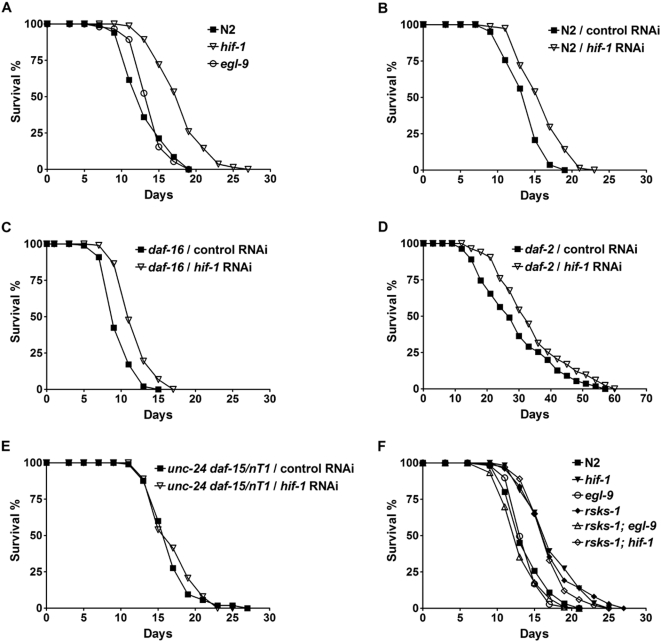
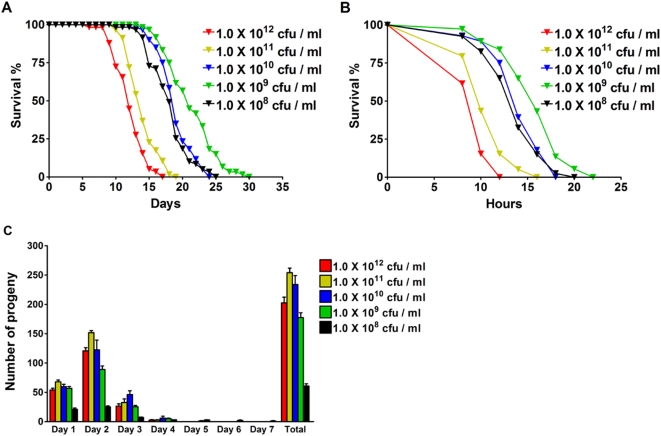
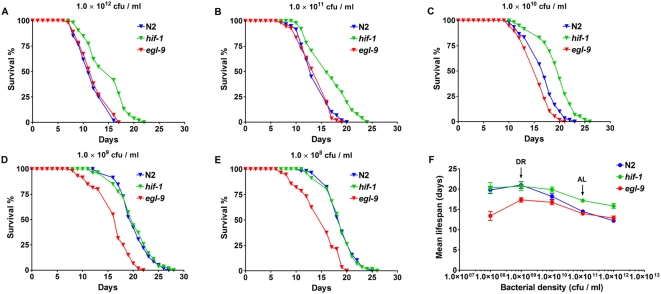
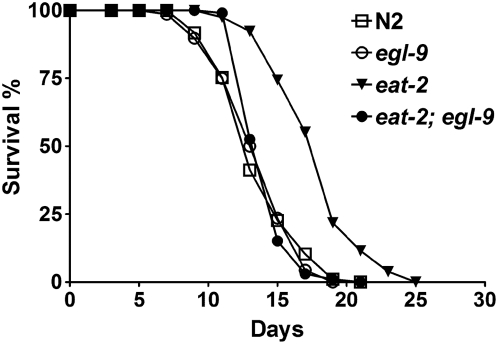
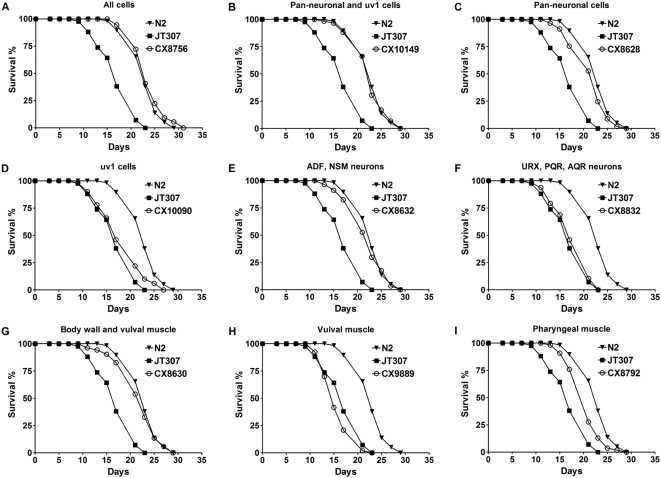
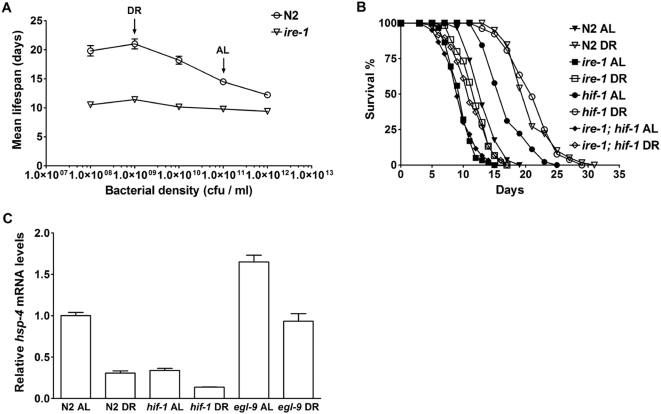
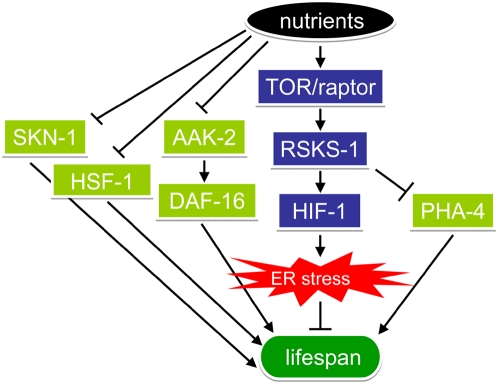
Dietary restriction (DR) extends lifespan in various species and also slows the onset of age-related diseases. Previous studies from flies and yeast have demonstrated that the target of rapamycin (TOR) pathway is essential for longevity phenotypes resulting from DR. TOR is a conserved protein kinase that regulates growth and metabolism in response to nutrients and growth factors. While some of the downstream targets of TOR have been implicated in regulating lifespan, it is still unclear whether additional targets of this pathway also modulate lifespan. It has been shown that the hypoxia inducible factor-1 (HIF-1) is one of the targets of the TOR pathway in mammalian cells. HIF-1 is a transcription factor complex that plays key roles in oxygen homeostasis, tumor formation, glucose metabolism, cell survival, and inflammatory response. Here, we describe a novel role for HIF-1 in modulating lifespan extension by DR in Caenorhabditis elegans. We find that HIF-1 deficiency results in extended lifespan, which overlaps with that by inhibition of the RSKS-1/S6 kinase, a key component of the TOR pathway. Using a modified DR method based on variation of bacterial food concentrations on solid agar plates, we find that HIF-1 modulates longevity in a nutrient-dependent manner. The hif-1 loss-of-function mutant extends lifespan under rich nutrient conditions but fails to show lifespan extension under DR. Conversely, a mutation in egl-9, which increases HIF-1 activity, diminishes the lifespan extension under DR. This deficiency is rescued by tissue-specific expression of egl-9 in specific neurons and muscles. Increased lifespan by hif-1 or DR is dependent on the endoplasmic reticulum (ER) stress regulator inositol-requiring protein-1 (IRE-1) and is associated with lower levels of ER stress. Therefore, our results demonstrate a tissue-specific role for HIF-1 in the lifespan extension by DR involving the IRE-1 ER stress pathway.
Overview
The claims and statistics of this paper haven’t been checked yet.
Run the check — free, no account needed. It reads the open-access text and checks the sources it cites.
Integrity signals
Registry
Cites
Statistics
Figures
Verification
Claims the paper makes
The claims and statistics of this paper haven’t been checked yet.
Run the check — free, no account needed. It reads the open-access text and checks the sources it cites.
Claims other papers make about this one
Each is checked against this paper’s own text: does it say what the citing paper says it does?
In the citing paper
“Numerous reports have indicated that the HIF pathway has a role in life span of C. elegans (Chen et al., 2009; Zhang et al., 2009).”
From SirT3 suppresses hypoxia inducible factor 1α and tumor growth by inhibiting mitochondrial ROS production (2011) · cites this paper as Chen et al., 2009
Self-check
Percentages, sums and reported differences re-computed from the paper’s own numbers.
The self-check needs the paper’s full text.
Citations
Cites
Analysis of Relative Gene Expression Data Using Real-Time Quantitative PCR and the 2−ΔΔCT Method
Livak, K. J., & Schmittgen, T. D. (2001) · Methods · doi:10.1006/meth.2001.1262 · Cited by 180,860
Longitudinal data analysis using generalized linear models
LIANG, K.-Y., & ZEGER, S. L. (1986) · Biometrika · doi:10.1093/biomet/73.1.13 · Cited by 18,550
THE GENETICS OF CAENORHABDITIS ELEGANS
Brenner, S. (1974) · Genetics · doi:10.1093/genetics/77.1.71 · Cited by 15,220
Random-Effects Models for Longitudinal Data
Laird, N. M., & Ware, J. H. (1982) · Biometrics · doi:10.2307/2529876 · Cited by 8,923
Targeting HIF-1 for cancer therapy
Semenza, G. L. (2003) · Nature Reviews Cancer · doi:10.1038/nrc1187 · Cited by 6,717
Signal integration in the endoplasmic reticulum unfolded protein response
Ron, D., & Walter, P. (2007) · Nature Reviews Molecular Cell Biology · doi:10.1038/nrm2199 · Cited by 6,431
TOR signaling in growth and metabolism
Wullschleger, S., Loewith, R., & Hall, M. N. (2006) · Cell · doi:10.1016/j.cell.2006.01.016 · Cited by 5,787
Endoplasmic Reticulum Stress Links Obesity, Insulin Action, and Type 2 Diabetes
Özcan, U., Cao, Q., Yilmaz, E., Lee, A.-H., Iwakoshi, N. N., Özdelen, E., Tuncman, G., Görgün, C., Glimcher, L. H., & Hotamisligil, G. S. (2004) · Science · doi:10.1126/science.1103160 · Cited by 3,844
A C. elegans mutant that lives twice as long as wild type
Kenyon, C., Chang, J., Gensch, E., Rudner, A., & Tabtiang, R. (1993) · Nature · doi:10.1038/366461a0 · Cited by 3,387
Epstein, A. C. R., Gleadle, J. M., McNeill, L. A., Hewitson, K. S., O'Rourke, J., Mole, D. R., Mukherji, M., Metzen, E., Wilson, M. I., Dhanda, A., et al. (2001) · Cell · doi:10.1016/s0092-8674(01)00507-4 · Cited by 3,333
Cited by
Sorted by citations
Extending Healthy Life Span—From Yeast to Humans
Fontana, L., Partridge, L., & Longo, V. D. (2010) · Science · doi:10.1126/science.1172539 · Cited by 3,023
mTOR is a key modulator of ageing and age-related disease
Johnson, S. C., Rabinovitch, P. S., & Kaeberlein, M. (2013) · Nature · doi:10.1038/nature11861 · Cited by 1,676
The Histone Deacetylase Sirt6 Regulates Glucose Homeostasis via Hif1α
Zhong, L., D'Urso, A., Toiber, D., Sebastian, C., Henry, R. E., Vadysirisack, D. D., Guimaraes, A., Marinelli, B., Wikstrom, J. D., Nir, T., et al. (2010) · Cell · doi:10.1016/j.cell.2009.12.041 · Cited by 1,001
Kaushik, S., & Cuervo, A. M. (2015) · Nature Medicine · doi:10.1038/nm.4001 · Cited by 899
Sirtuin 1 Modulates Cellular Responses to Hypoxia by Deacetylating Hypoxia-Inducible Factor 1α
Lim, J.-H., Lee, Y.-M., Chun, Y.-S., Chen, J., Kim, J.-E., & Park, J.-W. (2010) · Molecular Cell · doi:10.1016/j.molcel.2010.05.023 · Cited by 758
Metadata
- Authors
- Chen, D., Thomas, E. L., & Kapahi, P.
- Affiliations
- Buck Institute for Research on Aging (US)
- Corresponding author
- Kapahi, Pankaj
- Venue
- PLoS Genetics
- Publisher
- Public Library of Science (PLoS)
- Published
- 2009-05-22
- Volume
- 5
- Issue
- 5
- Pages
- e1000486
- ISSN
- 1553-7390 (ISSN-L)
- 1553-7404
- PMC
- PMC2676694
- OpenAlex
- W2091316238
- Cited by
- 250
- References
- 83
- Citations by year
- 2026: 5 · 2025: 3 · 2024: 7 · 2023: 12 · 2022: 11 · 2021: 15 · 2020: 13 · 2019: 7 · 2018: 6 · 2017: 6 · 2016: 20 · 2015: 13 · 2014: 21 · 2013: 18 · 2012: 17
- FWCI
- 9.38
- Type
- journal article
- Language
- en
- Open access
- gold
- doi.org
- Locations
- PLoS Genetics (publishedVersion, cc-by)
- PubMed Central (publishedVersion, cc-by)
- PubMed (publishedVersion)
- DOAJ (DOAJ: Directory of Open Access Journals) (submittedVersion, cc-by-sa)
- Figshare (submittedVersion, cc-by)
- Funders
- Ellison Medical Foundation
- Larry L. Hillblom Foundation
- American Foundation for Aging Research
- National Institutes of Health
- U.S. Public Health Service (RL1 AAG032113)
- National Institute on Aging (RL1AG032113)
- National Center for Research Resources
- Topics
- Life Sciences › Biochemistry, Genetics and Molecular Biology › Aging › Genetics, Aging, and Longevity in Model Organisms
- Life Sciences › Biochemistry, Genetics and Molecular Biology › Cell Biology › Autophagy in Disease and Therapy
- Health Sciences › Medicine › Physiology (medical) › Dietary Effects on Health
- Keywords
- HIF-1, dietary restriction, lifespan extension, IRE1, endoplasmic reticulum stress, TOR signaling, egl-9, Caenorhabditis elegans, tissue-specific gene expression
- MeSH terms
- Animals, Base Sequence, Endoplasmic Reticulum, Inositol, Longevity, Models, Genetic, Muscles, Mutation, Neurons, Stress, Physiological, Caenorhabditis elegans, Genes, Helminth, DNA Primers, Ribosomal Protein S6 Kinases, Caenorhabditis elegans Proteins, Caloric Restriction, RNA Interference, Hypoxia-Inducible Factor 1
About these checks
Registry, retraction, Cites and statistics results are computed, not judged, with one exception: a printed reference that no index lists is read once by a model before it counts as a citation error. Claims are extracted by a model and kept only when their quote appears verbatim in the text; each cited source is then checked, with a model’s help, for whether it says what the claim relies on. Those verdicts can be wrong — read the claim’s quote and the cited source before relying on one.
Statistics and arithmetic are recomputed, not judged.
Confidence bands are shown only for fields calibrated on our annotated test set. None is calibrated yet, so no band is shown.
What counts as a claim ›How we measure confidence ›How we check this ›
Are you an author, or do you see a problem with this page? Request a review
