

A Phenotypic Profile of the Candida albicans Regulatory Network
Open accessThe DOI matches its Crossref record; 66 of the 66 references it cites were found in a registry or an index.
Abstract
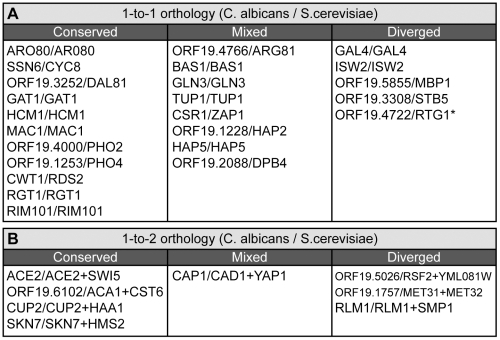
Candida albicans is a normal resident of the gastrointestinal tract and also the most prevalent fungal pathogen of humans. It last shared a common ancestor with the model yeast Saccharomyces cerevisiae over 300 million years ago. We describe a collection of 143 genetically matched strains of C. albicans, each of which has been deleted for a specific transcriptional regulator. This collection represents a large fraction of the non-essential transcription circuitry. A phenotypic profile for each mutant was developed using a screen of 55 growth conditions. The results identify the biological roles of many individual transcriptional regulators; for many, this work represents the first description of their functions. For example, a quarter of the strains showed altered colony formation, a phenotype reflecting transitions among yeast, pseudohyphal, and hyphal cell forms. These transitions, which have been closely linked to pathogenesis, have been extensively studied, yet our work nearly doubles the number of transcriptional regulators known to influence them. As a second example, nearly a quarter of the knockout strains affected sensitivity to commonly used antifungal drugs; although a few transcriptional regulators have previously been implicated in susceptibility to these drugs, our work indicates many additional mechanisms of sensitivity and resistance. Finally, our results inform how transcriptional networks evolve. Comparison with the existing S. cerevisiae data (supplemented by additional S. cerevisiae experiments reported here) allows the first systematic analysis of phenotypic conservation by orthologous transcriptional regulators over a large evolutionary distance. We find that, despite the many specific wiring changes documented between these species, the general phenotypes of orthologous transcriptional regulator knockouts are largely conserved. These observations support the idea that many wiring changes affect the detailed architecture of the circuit, but not its overall output.
Overview
The claims and statistics of this paper haven’t been checked yet.
Free: it reads the open-access text and checks the first 5 claims that cite a source we can check. Create a free account to check every claim.
Integrity signals
Registry
Cites
Statistics
Figures
Verification
Claims the paper makes
The claims and statistics of this paper haven’t been checked yet.
Free: it reads the open-access text and checks the first 5 claims that cite a source we can check. Create a free account to check every claim.
Claims other papers make about this one
Each is checked against this paper’s own text: does it say what the citing paper says it does?
The cited source says what the claim attributes to it.
In the citing paper
“Amongst the 165 TFs represented in the library31, rtg1- and rtg3-deletion strains showed the greatest growth defect (Fig. 3a).”
From Multifactor transcriptional control of alternative oxidase induction integrates diverse environmental inputs to enable fungal virulence (2023) · cites this paper as [31]
Self-check
Percentages, sums and reported differences re-computed from the paper’s own numbers.
The self-check needs the paper’s full text.
Citations
Cites
Functional profiling of the Saccharomyces cerevisiae genome
Giaever, G., Chu, A. M., Ni, L., Connelly, C., Riles, L., Véronneau, S., Dow, S., Lucau-Danila, A., Anderson, K., André, B., et al. (2002) · Nature · doi:10.1038/nature00935 · Cited by 4,316 · cited 1×
“deletion strains were obtained from the Saccharomyces Genome Deletion Project collection”
MethodTranscriptional Regulatory Networks in Saccharomyces cerevisiae
Lee, T. I., Rinaldi, N. J., Robert, F., Odom, D. T., Bar-Joseph, Z., Gerber, G. K., Hannett, N. M., Harbison, C. T., Thompson, C. M., Simon, I., et al. (2002) · Science · doi:10.1126/science.1075090 · Cited by 2,956
InterProScan – an integration platform for the signature-recognition methods in InterPro
Zdobnov, E. M., & Apweiler, R. (2001) · Bioinformatics · doi:10.1093/bioinformatics/17.9.847 · Cited by 2,939 · cited 1×
“The list of candidate genes for inclusion in our transcriptional regulator knockout (TRKO) library was compiled from multiple sources (Dataset S1; [7,15–22]).”
MethodDujon, B., Sherman, D., Fischer, G., Durrens, P., Casaregola, S., Lafontaine, I., de Montigny, J., Marck, C., Neuvéglise, C., Talla, E., et al. (2004) · Nature · doi:10.1038/nature02579 · Cited by 1,623 · cited 1×
“those of fish and humans [3].”
Pfam: A comprehensive database of protein domain families based on seed alignments
Sonnhammer, E. L. L., Eddy, S. R., & Durbin, R. (1997) · Proteins: Structure, Function, and Genetics · doi:10.1002/(sici)1097-0134(199707)28:3<405::aid-prot10>3.0.co;2-l · Cited by 1,221
Automatic clustering of orthologs and in-paralogs from pairwise species comparisons
Remm, M., Storm, C. E. V., & Sonnhammer, E. L. L. (2001) · Journal of Molecular Biology · doi:10.1006/jmbi.2000.5197 · Cited by 1,174 · cited 2×
“algorithms, SYNERGY [59] and INPARANOID [60] supple-”
SGD: Saccharomyces Genome Database
Cherry, J. (1998) · Nucleic Acids Research · doi:10.1093/nar/26.1.73 · Cited by 1,159
The Chemical Genomic Portrait of Yeast: Uncovering a Phenotype for All Genes
Hillenmeyer, M. E., Fung, E., Wildenhain, J., Pierce, S. E., Hoon, S., Lee, W., Proctor, M., St.Onge, R. P., Tyers, M., Koller, D., et al. (2008) · Science · doi:10.1126/science.1150021 · Cited by 1,003 · cited 2×
“[8,9,12,14]), the extent of concordance between these studies is sufficiently low that these data are not suitable for inter-species comparison.”
BackgroundThe distinct morphogenic states of Candida albicans
Sudbery, P., Gow, N., & Berman, J. (2004) · Trends in Microbiology · doi:10.1016/j.tim.2004.05.008 · Cited by 876 · cited 1×
“reflect the transitions among these three cell forms [54].”
BackgroundThe origin and evolution of model organisms
Hedges, S. B. (2002) · Nature Reviews Genetics · doi:10.1038/nrg929 · Cited by 806 · cited 1×
“ancestor some 300–900 million years ago [1,2], and, in terms of coding sequences, their genomes are approximately as divergent as”
BackgroundByrne, K. P., & Wolfe, K. H. (2005) · Genome Research · doi:10.1101/gr.3672305 · Cited by 720 · cited 1×
“have been carefully curated [62], it is also possible to identify with”
BackgroundNoble, S. M., & Johnson, A. D. (2005) · Eukaryotic Cell · doi:10.1128/ec.4.2.298-309.2005 · Cited by 592 · cited 2×
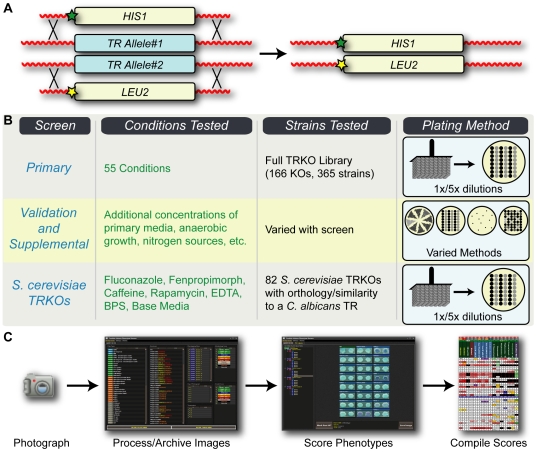
“To create the TRKO strains, we utilized a fusion-PCR based approach [23] that employs long stretches of flanking homology to maximize recombination (Figure 1A; see Materials and Methods).”
MethodSelf-citationBiswas, S., Van Dijck, P., & Datta, A. (2007) · Microbiology and Molecular Biology Reviews · doi:10.1128/mmbr.00009-06 · Cited by 516 · cited 1×
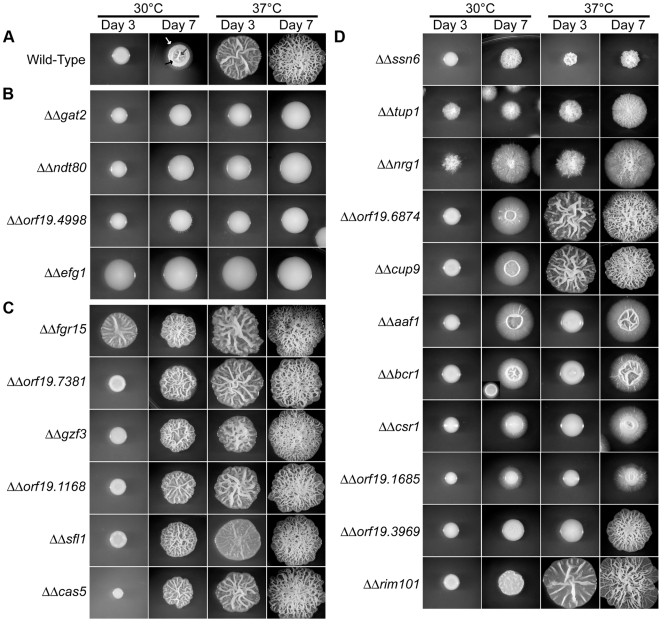
“The likely explanation, supported by a number of studies in the literature (see reviews [25,26]), is that these morphological transitions are under both negative and positive transcriptional control.”
BackgroundTeixeira, M. C. (2006) · Nucleic Acids Research · doi:10.1093/nar/gkj013 · Cited by 490 · cited 1×
“The list of candidate genes for inclusion in our transcriptional regulator knockout (TRKO) library was compiled from multiple sources (Dataset S1; [7,15–22]).”
MethodLum, P. Y., Armour, C. D., Stepaniants, S. B., Cavet, G., Wolf, M. K., Butler, J. S., Hinshaw, J. C., Garnier, P., Prestwich, G. D., Leonardson, A., et al. (2004) · Cell · doi:10.1016/s0092-8674(03)01035-3 · Cited by 481 · cited 3×
“Heterozygote Phenotyping[11]: A liquid medium phenotyping assay that included the following conditions: caffeine, menadione, fenpropimorph, and 5-fluorocytosine.”
BackgroundInfluentialRegulation of Cell-Surface Genes and Biofilm Formation by the C. albicans Transcription Factor Bcr1p
Nobile, C. J., & Mitchell, A. P. (2005) · Current Biology · doi:10.1016/j.cub.2005.05.047 · Cited by 464 · cited 2×
“albicans [7], extensive phenotyping has not been reported, as the library was designed primarily for preliminary genetic screens.”
BackgroundMethodCoste, A. T., Karababa, M., Ischer, F., Bille, J., & Sanglard, D. (2004) · Eukaryotic Cell · doi:10.1128/ec.3.6.1639-1652.2004 · Cited by 407 · cited 1×
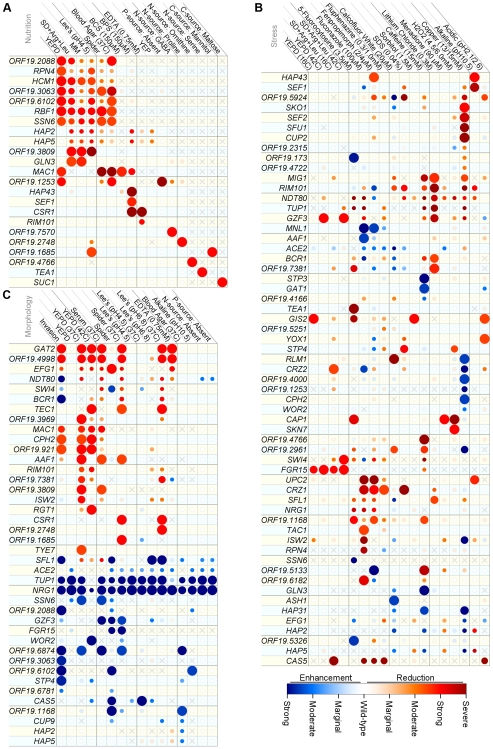
“We identified 34 TRKO strains with enhanced or reduced sensitivities to these drugs, only five of which (Upc2 [46], Ndt80 [47], Crz1 [48], Tac1 [49], and Rim101 [50]) had been previously described (Figure 2B).”
BackgroundMorphogenesis in Candida albicans
Whiteway, M., & Bachewich, C. (2007) · Annual Review of Microbiology · doi:10.1146/annurev.micro.61.080706.093341 · Cited by 388 · cited 4×
“(reviewed by Whiteway and Bachewich [26]).”
BackgroundInfluentialElucidating TOR Signaling and Rapamycin Action: Lessons from Saccharomyces cerevisiae
Crespo, J. L., & Hall, M. N. (2002) · Microbiology and Molecular Biology Reviews · doi:10.1128/mmbr.66.4.579-591.2002 · Cited by 365 · cited 1×
“The drugs rapamycin and caffeine both inhibit function of the Tor1 kinase [28–31], resulting in an artificial signal of cell starvation.”
BackgroundA Human-Curated Annotation of the Candida albicans Genome
Braun, B. R., van het Hoog, M., d'Enfert, C., Martchenko, M., Dungan, J., Kuo, A., Inglis, D. O., Uhl, M. A., Hogues, H., Berriman, M., et al. (2005) · PLoS Genetics · doi:10.1371/journal.pgen.0010001 · Cited by 342 · cited 1×
“The list of candidate genes for inclusion in our transcriptional regulator knockout (TRKO) library was compiled from multiple sources (Dataset S1; [7,15–22]).”
MethodSelf-citationA global view of pleiotropy and phenotypically derived gene function in yeast
Dudley, A. M., Janse, D. M., Tanay, A., Shamir, R., & Church, G. M. (2005) · Molecular Systems Biology · doi:10.1038/msb4100004 · Cited by 342
Bennett, R. J. (2003) · The EMBO Journal · doi:10.1093/emboj/cdg235 · Cited by 341 · cited 1×
“albicans [24] (and thereby ensure that a given phenotype segregates with a gene disruption), we created two fully independent knockout strains for each TR.”
BackgroundSelf-citationDivergence of Transcription Factor Binding Sites Across Related Yeast Species
Borneman, A. R., Gianoulis, T. A., Zhang, Z. D., Yu, H., Rozowsky, J., Seringhaus, M. R., Wang, L. Y., Gerstein, M., & Snyder, M. (2007) · Science · doi:10.1126/science.1140748 · Cited by 335 · cited 1×
“Given the significant rewiring of transcriptional networks documented in the fungal lineages [4,5,35,63,64], the high degree of phenotypic conservation we observed between S.”
Liu, T. T., Lee, R. E. B., Barker, K. S., Lee, R. E., Wei, L., Homayouni, R., & Rogers, P. D. (2005) · Antimicrobial Agents and Chemotherapy · doi:10.1128/aac.49.6.2226-2236.2005 · Cited by 313 · cited 1×
“caspofungin [51], suggesting that this TR may serve a general role in antifungal response.”
BackgroundRutherford, J. C., & Bird, A. J. (2004) · Eukaryotic Cell · doi:10.1128/ec.3.1.1-13.2004 · Cited by 293 · cited 1×
“cerevisiae (reviewed by [38,39] and also [9]) and C.”
BackgroundKadosh, D., & Johnson, A. D. (2005) · Molecular Biology of the Cell · doi:10.1091/mbc.e05-01-0073 · Cited by 289 · cited 1×
“cerevisiae transcriptional regulators that have different biological roles in the two species [35,36].”
BackgroundSelf-citationConservation and evolvability in regulatory networks: The evolution of ribosomal regulation in yeast
Tanay, A., Regev, A., & Shamir, R. (2005) · Proceedings of the National Academy of Sciences · doi:10.1073/pnas.0502521102 · Cited by 262 · cited 1×
“In some cases it has been possible to trace plausible evolutionary pathways for these changes [4–6].”
BackgroundEvolution of alternative transcriptional circuits with identical logic
Tsong, A. E., Tuch, B. B., Li, H., & Johnson, A. D. (2006) · Nature · doi:10.1038/nature05099 · Cited by 260 · cited 2×
“cerevisiae has undergone extensive evolutionary rewiring [5], but the same (orthologous) regulators still govern mating in both species.”
BackgroundSelf-citationRegulatory networks affected by iron availability in Candida albicans
Lan, C., Rodarte, G., Murillo, L. A., Jones, T., Davis, R. W., Dungan, J., Newport, G., & Agabian, N. (2004) · Molecular Microbiology · doi:10.1111/j.1365-2958.2004.04214.x · Cited by 249 · cited 1×
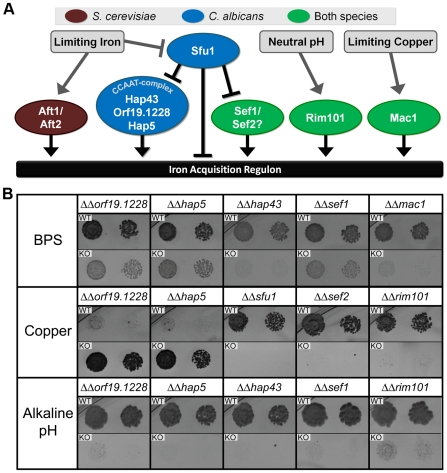
“albicans [40–42] to highlight differences in the regulation of iron acquisition and homeostasis between these two species.”
BackgroundResponse to Iron Deprivation in Saccharomyces cerevisiae
Philpott, C. C., & Protchenko, O. (2008) · Eukaryotic Cell · doi:10.1128/ec.00354-07 · Cited by 246 · cited 2×
“The second phenotype, sensitivity to elevated copper levels, is linked to iron homeostasis by virtue of the strong inter-connection between copper and iron homeostasis networks: copper is a critical cofactor for high affinity iron uptake [39].”
BackgroundDBD: a transcription factor prediction database
Kummerfeld, S. K. (2006) · Nucleic Acids Research · doi:10.1093/nar/gkj131 · Cited by 239 · cited 1×
“The list of candidate genes for inclusion in our transcriptional regulator knockout (TRKO) library was compiled from multiple sources (Dataset S1; [7,15–22]).”
MethodTripartite Regulation of Gln3p by TOR, Ure2p, and Phosphatases
Bertram, P. G., Choi, J. H., Carvalho, J., Ai, W., Zeng, C., Chan, T.-F., & Zheng, X. F. S. (2000) · Journal of Biological Chemistry · doi:10.1074/jbc.m004235200 · Cited by 231 · cited 1×
“cerevisiae [32] have strong caffeine and rapamycin phenotypes in C.”
BackgroundThe evolution of combinatorial gene regulation in fungi
Tuch, B. B., Galgoczy, D. J., Hernday, A. D., Li, H., & Johnson, A. D. (2008) · PLoS Biology · doi:10.1371/journal.pbio.0060038 · Cited by 228 · cited 1×
“Given the significant rewiring of transcriptional networks documented in the fungal lineages [4,5,35,63,64], the high degree of phenotypic conservation we observed between S.”
BackgroundSelf-citationConservation and Evolution of Cis-Regulatory Systems in Ascomycete Fungi
Gasch, A. P., Moses, A. M., Chiang, D. Y., Fraser, H. B., Berardini, M., & Eisen, M. B. (2004) · PLoS Biology · doi:10.1371/journal.pbio.0020398 · Cited by 227 · cited 1×
“Given the significant rewiring of transcriptional networks documented in the fungal lineages [4,5,35,63,64], the high degree of phenotypic conservation we observed between S.”
BackgroundRole of Candida albicans Transcription Factor Upc2p in Drug Resistance and Sterol Metabolism
Silver, P. M., Oliver, B. G., & White, T. C. (2004) · Eukaryotic Cell · doi:10.1128/ec.3.6.1391-1397.2004 · Cited by 216 · cited 1×
“We identified 34 TRKO strains with enhanced or reduced sensitivities to these drugs, only five of which (Upc2 [46], Ndt80 [47], Crz1 [48], Tac1 [49], and Rim101 [50]) had been previously described (Figure 2B).”
BackgroundKuranda, K., Leberre, V., Sokol, S., Palamarczyk, G., & François, J. (2006) · Molecular Microbiology · doi:10.1111/j.1365-2958.2006.05300.x · Cited by 210 · cited 1×
“The drugs rapamycin and caffeine both inhibit function of the Tor1 kinase [28–31], resulting in an artificial signal of cell starvation.”
BackgroundCaffeine extends yeast lifespan by targeting TORC1
Wanke, V., Cameroni, E., Uotila, A., Piccolis, M., Urban, J., Loewith, R., & De Virgilio, C. (2008) · Molecular Microbiology · doi:10.1111/j.1365-2958.2008.06292.x · Cited by 201 · cited 1×
“We subsequently tested caffeinesensitive and -resistant mutants with rapamycin and found a nearperfect correspondence (Dataset S2, and see below), providing additional support for a growing consensus that the primary mechanism of action of caffeine is interference with TOR function rather than disruption of cAMP signa…”
BackgroundUhl, M. A., Biery, M., Craig, N., & Johnson, A. D. (2003) · The EMBO Journal · doi:10.1093/emboj/cdg256 · Cited by 191 · cited 1×
“has been previously identified as a positive regulator of colony morphology”
BackgroundSelf-citationReinke, A., Chen, J. C.-Y., Aronova, S., & Powers, T. (2006) · Journal of Biological Chemistry · doi:10.1016/s0021-9258(19)84075-9 · Cited by 184 · cited 1×
“The drugs rapamycin and caffeine both inhibit function of the Tor1 kinase [28–31], resulting in an artificial signal of cell starvation.”
BackgroundResistance of human fungal pathogens to antifungal drugs
Sanglard, D. (2002) · Current Opinion in Microbiology · doi:10.1016/s1369-5274(02)00344-2 · Cited by 179 · cited 1×
“The primary screen included resistance and sensitivity to two antifungal agents, fluconazole and fenpropimorph, which block different steps of the ergosterol biosynthetic pathway [44,45].”
BackgroundTranscriptional Rewiring of Fungal Galactose-Metabolism Circuitry
Martchenko, M., Levitin, A., Hogues, H., Nantel, A., & Whiteway, M. (2007) · Current Biology · doi:10.1016/j.cub.2007.05.017 · Cited by 172 · cited 3×
“Given the significant rewiring of transcriptional networks documented in the fungal lineages [4,5,35,63,64], the high degree of phenotypic conservation we observed between S.”
BackgroundCrusade for iron: iron uptake in unicellular eukaryotes and its significance for virulence
Šuťák, R., Lesuisse, E., Tachezy, J., & Richardson, D. R. (2008) · Trends in Microbiology · doi:10.1016/j.tim.2008.03.005 · Cited by 167 · cited 1×
“that compete for iron in a mammalian host (reviewed by Sutak et al.”
BackgroundNutritional control via Tor signaling in Saccharomyces cerevisiae
Rohde, J. R., Bastidas, R. J., Puria, R., & Cardenas, M. E. (2008) · Current Opinion in Microbiology · doi:10.1016/j.mib.2008.02.013 · Cited by 165 · cited 1×
“albicans mutants that affected the TOR pathway, a critical regulator of cell growth (reviewed in [27]).”
BackgroundThe TOR Signal Transduction Cascade Controls Cellular Differentiation in Response to Nutrients
Cutler, N. S., Pan, X., Heitman, J., & Cardenas, M. E. (2001) · Molecular Biology of the Cell · doi:10.1091/mbc.12.12.4103 · Cited by 163 · cited 1×
“It has been previously reported that rapamycin can both inhibit hyphal formation on solid medium [33,34] and promote flocculation and aggregation in liquid medium [33] in C.”
BackgroundThe Protein Kinase Tor1 Regulates Adhesin Gene Expression in Candida albicans
Bastidas, R. J., Heitman, J., & Cardenas, M. E. (2009) · PLoS Pathogens · doi:10.1371/journal.ppat.1000294 · Cited by 154 · cited 1×
“It has been previously reported that rapamycin can both inhibit hyphal formation on solid medium [33,34] and promote flocculation and aggregation in liquid medium [33] in C.”
BackgroundXie, M. W., Jin, F., Hwang, H., Hwang, S., Anand, V., Duncan, M. C., & Huang, J. (2005) · Proceedings of the National Academy of Sciences · doi:10.1073/pnas.0500297102 · Cited by 150 · cited 1×
“TOR Phenotypes On Cell Array[10]: These data included rapamycin phenotyping.”
MethodA conserved mitogen‐activated protein kinase pathway is required for mating in Candida albicans
Chen, J., Chen, J., Lane, S., & Liu, H. (2002) · Molecular Microbiology · doi:10.1046/j.1365-2958.2002.03249.x · Cited by 145 · cited 1×
“albicans, yet the direct target genes of STE12, as well as the pheromone response itself, differs significantly between the two yeasts [64–66].”
BackgroundKuthan, M., Devaux, F., Janderová, B., Slaninová, I., Jacq, C., & Palková, Z. (2003) · Molecular Microbiology · doi:10.1046/j.1365-2958.2003.03332.x · Cited by 137 · cited 1×
“cerevisiae [56,57].”
Automatic genome-wide reconstruction of phylogenetic gene trees
Wapinski, I., Pfeffer, A., Friedman, N., & Regev, A. (2007) · Bioinformatics · doi:10.1093/bioinformatics/btm193 · Cited by 137 · cited 2×
“algorithms, SYNERGY [59] and INPARANOID [60] supple-”
Serrano, R., Bernal, D., Simón, E., & Ariño, J. (2004) · Journal of Biological Chemistry · doi:10.1074/jbc.m313746200 · Cited by 136 · cited 1×
“cerevisiae have established that copper and iron become limiting nutrients in an alkaline growth environment [43].”
BackgroundMamnun, Y. M., Pandjaitan, R., Mahé, Y., Delahodde, A., & Kuchler, K. (2002) · Molecular Microbiology · doi:10.1046/j.1365-2958.2002.03262.x · Cited by 125 · cited 1×
“cerevisiae PDR1, a known master regulator of drug resistance [53].”
BackgroundMarcireau, C., Guilloton, M., & Karst, F. (1990) · Antimicrobial Agents and Chemotherapy · doi:10.1128/aac.34.6.989 · Cited by 122 · cited 1×
“The primary screen included resistance and sensitivity to two antifungal agents, fluconazole and fenpropimorph, which block different steps of the ergosterol biosynthetic pathway [44,45].”
BackgroundOnyewu, C., Wormley, F. L., Perfect, J. R., & Heitman, J. (2004) · Infection and Immunity · doi:10.1128/iai.72.12.7330-7333.2004 · Cited by 121 · cited 1×
“We identified 34 TRKO strains with enhanced or reduced sensitivities to these drugs, only five of which (Upc2 [46], Ndt80 [47], Crz1 [48], Tac1 [49], and Rim101 [50]) had been previously described (Figure 2B).”
BackgroundMagee, B. B., Legrand, M., Alarco, A., Raymond, M., & Magee, P. T. (2002) · Molecular Microbiology · doi:10.1046/j.1365-2958.2002.03263.x · Cited by 115 · cited 1×
“albicans, yet the direct target genes of STE12, as well as the pheromone response itself, differs significantly between the two yeasts [64–66].”
BackgroundPhenotypic analysis of genes encoding yeast zinc cluster proteins
Akache, B. (2001) · Nucleic Acids Research · doi:10.1093/nar/29.10.2181 · Cited by 110 · cited 1×
“[8,9,12,14]), the extent of concordance between these studies is sufficiently low that these data are not suitable for inter-species comparison.”
BackgroundBaek, Y.-U., Li, M., & Davis, D. A. (2008) · Eukaryotic Cell · doi:10.1128/ec.00108-08 · Cited by 109 · cited 1×
“albicans [40–42] to highlight differences in the regulation of iron acquisition and homeostasis between these two species.”
BackgroundCaNdt80 Is Involved in Drug Resistance in Candida albicans by Regulating CDR1
Chen, C.-G., Yang, Y.-L., Shih, H.-I., Su, C.-L., & Lo, H.-J. (2004) · Antimicrobial Agents and Chemotherapy · doi:10.1128/aac.48.12.4505-4512.2004 · Cited by 94 · cited 1×
“We identified 34 TRKO strains with enhanced or reduced sensitivities to these drugs, only five of which (Upc2 [46], Ndt80 [47], Crz1 [48], Tac1 [49], and Rim101 [50]) had been previously described (Figure 2B).”
BackgroundMNL1 Regulates Weak Acid–induced Stress Responses of the Fungal Pathogen Candida albicans
Ramsdale, M., Selway, L., Stead, D., Walker, J., Yin, Z., Nicholls, S. M., Crowe, J., Sheils, E. M., & Brown, A. J. P. (2008) · Molecular Biology of the Cell · doi:10.1091/mbc.e07-09-0946 · Cited by 79 · cited 1×
“MNL1 has been shown to activate stress response genes [52].”
BackgroundJo, W. J., Loguinov, A., Chang, M., Wintz, H., Nislow, C., Arkin, A. P., Giaever, G., & Vulpe, C. D. (2008) · Toxicological Sciences · doi:10.1093/toxsci/kfm226 · Cited by 76 · cited 1×
“Metal Phenotypes[12]: This study assayed copper and iron sensitivity in liquid media.”
BackgroundPesole, G., Lotti, M., Alberghina, L., & Saccone, C. (1995) · Genetics · doi:10.1093/genetics/141.3.903 · Cited by 63
Marvin, M. E., Mason, R. P., & Cashmore, A. M. (2004) · Microbiology · doi:10.1099/mic.0.27004-0 · Cited by 60
Vopálenská, I., Hůlková, M., Janderová, B., & Palková, Z. (2005) · Research in Microbiology · doi:10.1016/j.resmic.2005.05.012 · Cited by 58 · cited 1×
“cerevisiae [56,57].”
Enzymic and metabolic studies on retrograde regulation mutants of yeast
Small, W. C., Brodeur, R. D., Sandor, A., Fedorova, N., Li, G., Butow, R. A., & Srere, P. A. (1995) · Biochemistry · doi:10.1021/bi00016a031 · Cited by 54 · cited 1×
“in glutamate and aspartate auxotrophies [61], yet deletion of the C.”
BackgroundCornet, M., Gaillardin, C., & Richard, M. L. (2006) · Antimicrobial Agents and Chemotherapy · doi:10.1128/aac.00391-06 · Cited by 30 · cited 1×
“We identified 34 TRKO strains with enhanced or reduced sensitivities to these drugs, only five of which (Upc2 [46], Ndt80 [47], Crz1 [48], Tac1 [49], and Rim101 [50]) had been previously described (Figure 2B).”
BackgroundTheCandidaGenome Database: Facilitating research onCandida albicansmolecular biology
Costanzo, M. C., Arnaud, M. B., Skrzypek, M. S., Binkley, G., Lane, C. D., Miyasato, S. R., & Sherlock, G. (2006) · FEMS Yeast Research · doi:10.1111/j.1567-1364.2006.00074.x · Cited by 27 · cited 1×
“All images generated in this study will be made available via a Java application hosted by the Candida Genome Database (CGD) [16].”
MethodIntercellular matrix in colonies of Candida
Joshi, K. R., Gavin, J. B., & Armiger, L. C. (1975) · Journal of Bacteriology · doi:10.1128/jb.123.3.1139-1143.1975 · Cited by 10 · cited 1×
“albicans [55] and S.”
Cited by
A Recently Evolved Transcriptional Network Controls Biofilm Development in Candida albicans
Nobile, C. J., Fox, E. P., Nett, J. E., Sorrells, T. R., Mitrovich, Q. M., Hernday, A. D., Tuch, B. B., Andes, D. R., & Johnson, A. D. (2012) · Cell · doi:10.1016/j.cell.2011.10.048 · Cited by 711
“albicans library of 165 fully vetted transcription regulator (TR) deletion mutants consisting of two independently constructed mutants for each strain (Homann et al., 2009).”
BackgroundMethodSelf-citationRegulatory circuitry governing fungal development, drug resistance, and disease.
Shapiro, R. S., Robbins, N., & Cowen, L. E. (2011) · Microbiology and Molecular Biology Reviews · doi:10.1128/mmbr.00045-10 · Cited by 576
“At present, high-throughput analyses of known and uncharacterized transcriptional regulators are facilitating the discovery of many novel pathways and factors regulating morphogenetic transitions (228).”
BackgroundAntifungal Resistance and New Strategies to Control Fungal Infections
Vandeputte, P., Ferrari, S., & Coste, A. T. (2012) · International Journal of Microbiology · doi:10.1155/2012/713687 · Cited by 505
“First of all, treating strains with already known antifungal drugs and analyzing for example, growth modification and later transcriptional rewiring, some authors try to better understand drugs mechanisms of action and/or to find synergistic effect between them [272, 274].”
BackgroundLaFayette, S. L., Collins, C., Zaas, A. K., Schell, W. A., Betancourt-Quiroz, M., Gunatilaka, A. A. L., Perfect, J. R., & Cowen, L. E. (2010) · PLoS Pathogens · doi:10.1371/journal.ppat.1001069 · Cited by 329
“cerevisiae, deletion of RLM1 on its own had no impact on tolerance to the ergosterol biosynthesis inhibitors (Figure 5), consistent with recent findings [58].”
ResultChen, C., Pande, K., French, S. D., Tuch, B. B., & Noble, S. M. (2011) · Cell Host & Microbe · doi:10.1016/j.chom.2011.07.005 · Cited by 314
“Transcriptional Rewiring in a Commensal Pathogen”
InfluentialSelf-citation
Metadata
- Authors
- Homann, O. R., Dea, J., Noble, S. M., & Johnson, A. D.
- Affiliations
- University of California, San Francisco (US)
- Corresponding author
- Homann, Oliver R.
- Venue
- PLoS Genetics
- Publisher
- Public Library of Science (PLoS)
- Published
- 2009-12-24
- Volume
- 5
- Issue
- 12
- Pages
- e1000783
- ISSN
- 1553-7390 (ISSN-L)
- 1553-7404
- PMC
- PMC2790342
- OpenAlex
- W2041611856
- Cited by
- 444
- References
- 66
- Citations by year
- 2026: 16 · 2025: 18 · 2024: 30 · 2023: 30 · 2022: 30 · 2021: 30 · 2020: 28 · 2019: 29 · 2018: 26 · 2017: 29 · 2016: 28 · 2015: 28 · 2014: 26 · 2013: 32 · 2012: 33
- FWCI
- 8.60
- Type
- journal article
- Language
- en
- Open access
- gold
- doi.org
- Locations
- PLoS Genetics (publishedVersion, cc-by)
- PubMed Central (publishedVersion, cc-by)
- PubMed (publishedVersion)
- DOAJ (DOAJ: Directory of Open Access Journals) (submittedVersion, cc-by-sa)
- eScholarship (California Digital Library) (submittedVersion)
- eScholarship (California Digital Library) (submittedVersion, cc-by)
- Figshare (submittedVersion, cc-by)
- Funders
- National Institutes of Health
- National Institute of General Medical Sciences (R01GM037049, 5R01GM37049-22)
- National Institute of Allergy and Infectious Diseases (K08AI062800)
- Topics
- Life Sciences › Biochemistry, Genetics and Molecular Biology › Molecular Biology › Fungal and yeast genetics research
- Health Sciences › Medicine › Infectious Diseases › Antifungal resistance and susceptibility
- Life Sciences › Biochemistry, Genetics and Molecular Biology › Molecular Biology › Gene Regulatory Network Analysis
- Keywords
- Candida albicans, transcription factors, transcriptional regulatory networks, deletion mutants, phenotypic profiling, colony morphology, antifungal susceptibility, antifungal resistance, Saccharomyces cerevisiae, fungal pathogenesis
- MeSH terms
- Candida albicans, Homeostasis, Models, Biological, Phenotype, Saccharomyces cerevisiae, Transcription, Genetic, Colony Count, Microbial, Gene Library, Databases, Genetic, Gene Regulatory Networks, Gene Knockout Techniques
About these checks
Registry, retraction, Cites and statistics results are computed, not judged, with one exception: a printed reference that no index lists is read once by a model before it counts as a citation error. Claims are extracted by a model and kept only when their quote appears verbatim in the text; each cited source is then checked, with a model’s help, for whether it says what the claim relies on. Those verdicts can be wrong — read the claim’s quote and the cited source before relying on one.
Statistics and arithmetic are recomputed, not judged.
Confidence bands are shown only for fields calibrated on our annotated test set. None is calibrated yet, so no band is shown.
What counts as a claim ›How we measure confidence ›How we check this ›
Are you an author, or do you see a problem with this page? Request a review
Data sources
Bibliographic data: Semantic Scholar, OpenAlex, Crossref.
Contains information from the Semantic Scholar Academic Graph Datasets, made available under the ODC Attribution License (ODC-BY 1.0).
Semantic Scholar’s data is described in: Kinney, R., et al. (2023). The Semantic Scholar Open Data Platform. arXiv:2301.10140.
