

Critical Evaluation of Imprinted Gene Expression by RNA–Seq: A New Perspective
Open accessThe DOI matches its Crossref record; 52 of the 52 references it cites were found in a registry or an index.
Abstract
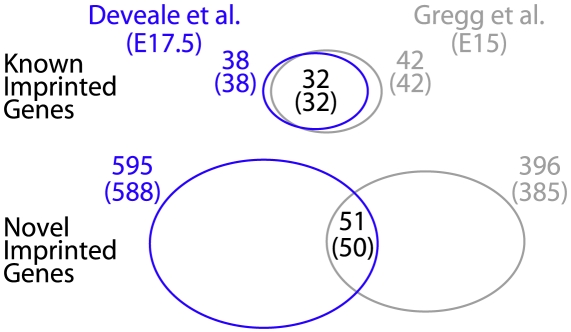
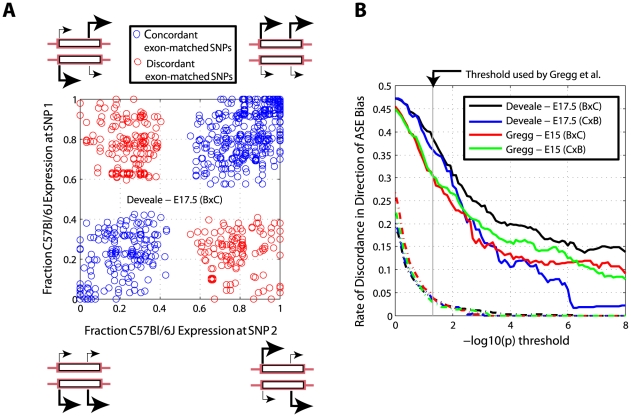
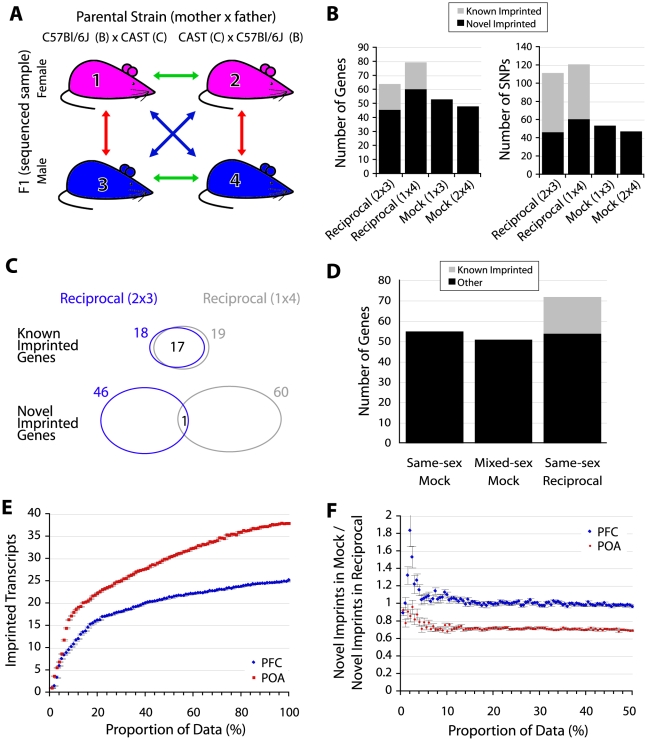
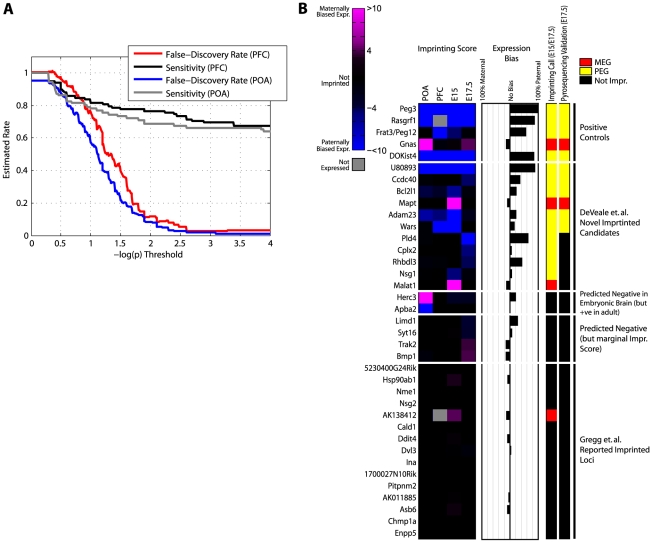
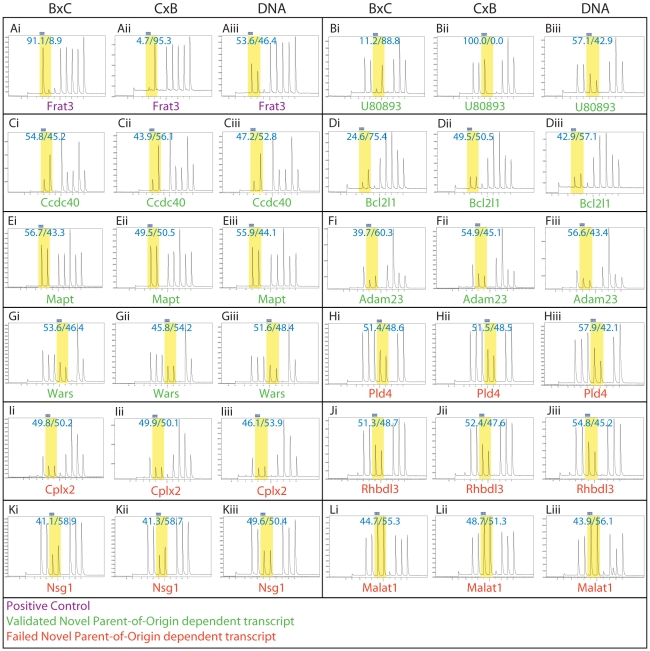
In contrast to existing estimates of approximately 200 murine imprinted genes, recent work based on transcriptome sequencing uncovered parent-of-origin allelic effects at more than 1,300 loci in the developing brain and two adult brain regions, including hundreds present in only males or females. Our independent replication of the embryonic brain stage, where the majority of novel imprinted genes were discovered and the majority of previously known imprinted genes confirmed, resulted in only 12.9% concordance among the novel imprinted loci. Further analysis and pyrosequencing-based validation revealed that the vast majority of the novel reported imprinted loci are false-positives explained by technical and biological variation of the experimental approach. We show that allele-specific expression (ASE) measured with RNA-Seq is not accurately modeled with statistical methods that assume random independent sampling and that systematic error must be accounted for to enable accurate identification of imprinted expression. Application of a robust approach that accounts for these effects revealed 50 candidate genes where allelic bias was predicted to be parent-of-origin-dependent. However, 11 independent validation attempts through a range of allelic expression biases confirmed only 6 of these novel cases. The results emphasize the importance of independent validation and suggest that the number of imprinted genes is much closer to the initial estimates.
Overview
The claims and statistics of this paper haven’t been checked yet.
Free: it reads the open-access text and checks the first 5 claims that cite a source we can check. Create a free account to check every claim.
Integrity signals
Registry
Cites
Statistics
Figures
Verification
Claims the paper makes
The claims and statistics of this paper haven’t been checked yet.
Free: it reads the open-access text and checks the first 5 claims that cite a source we can check. Create a free account to check every claim.
Claims other papers make about this one
Each is checked against this paper’s own text: does it say what the citing paper says it does?
The cited source says what the claim attributes to it.
In the citing paper
“Measures of allele-specific expression (ASE) are particularly important for studying the regulation of gene expression because they can be used to distinguish cis- and trans-regulatory changes [6,7] and to detect genomic imprinting [8,9].”
From Sources of bias in measures of allele-specific expression derived from RNA-seq data aligned to a single reference genome (2013) · cites this paper as [9]
The cited source says what the claim attributes to it.
In the citing paper
“Mapping reads to specific genes is relatively straightforward with the bioinformatics tools available today [10-13], but using these tools to distinguish between reads derived from alternative alleles of the same gene remains challenging [9].”
From Sources of bias in measures of allele-specific expression derived from RNA-seq data aligned to a single reference genome (2013) · cites this paper as [9]
Self-check
Percentages, sums and reported differences re-computed from the paper’s own numbers.
The self-check needs the paper’s full text.
Citations
Cites
Gene Expression Omnibus: NCBI gene expression and hybridization array data repository
Edgar, R. (2002) · Nucleic Acids Research · doi:10.1093/nar/30.1.207 · Cited by 13,288 · cited 4×
“Raw data and alignments are available at GEO under accession GSE27016.”
BackgroundInfluentialA scaling normalization method for differential expression analysis of RNA-seq data
Robinson, M. D., & Oshlack, A. (2010) · Genome Biology · doi:10.1186/gb-2010-11-3-r25 · Cited by 7,876
Targeted capture and massively parallel sequencing of 12 human exomes
Ng, S. B., Turner, E. H., Robertson, P. D., Flygare, S. D., Bigham, A. W., Lee, C., Shaffer, T., Wong, M., Bhattacharjee, A., Eichler, E. E., et al. (2009) · Nature · doi:10.1038/nature08250 · Cited by 2,030 · cited 1×
“Furthermore, premature termination codons are relatively infrequent [39] and those introduced by alternative splicing lead to immediate degradation by nonsense-mediated decay [40].”
BackgroundThe UCSC Genome Browser database: update 2011
Fujita, P. A., Rhead, B., Zweig, A. S., Hinrichs, A. S., Karolchik, D., Cline, M. S., Goldman, M., Barber, G. P., Clawson, H., Coelho, A., et al. (2011) · Nucleic Acids Research · doi:10.1093/nar/gkq963 · Cited by 1,811
Parental imprinting of the mouse insulin-like growth factor II gene
DeChiara, T. M., Robertson, E. J., & Efstratiadis, A. (1991) · Cell · doi:10.1016/0092-8674(91)90513-x · Cited by 1,783
Mouse genomic variation and its effect on phenotypes and gene regulation.
Keane, T. M., Goodstadt, L., Danecek, P., White, M. A., Wong, K., Yalcin, B., Heger, A., Agam, A., Slater, G., Goodson, M., et al. (2011) · Nature · doi:10.1038/nature10413 · Cited by 1,580 · cited 6×
“We also took advantage of all publicly available SNPs [17,26,27] and expanded our alignment reference to include the whole genome (see Materials and Methods).”
BackgroundMethodInfluentialDevelopment of reconstituted mouse eggs suggests imprinting of the genome during gametogenesis
Surani, M. A. H., Barton, S. C., & Norris, M. L. (1984) · Nature · doi:10.1038/308548a0 · Cited by 1,430
Parental imprinting of the mouse H19 gene
Bartolomei, M. S., Zemel, S., & Tilghman, S. M. (1991) · Nature · doi:10.1038/351153a0 · Cited by 1,224
Massive Cell Death of Immature Hematopoietic Cells and Neurons in Bcl-x-Deficient Mice
Motoyama, N., Wang, F., Roth, K. A., Sawa, H., Nakayama, K.-I., Nakayama, K., Negishi, I., Senju, S., Zhang, Q., Fujii, S., et al. (1995) · Science · doi:10.1126/science.7878471 · Cited by 1,163
Dynamic repertoire of a eukaryotic transcriptome surveyed at single-nucleotide resolution
Wilhelm, B. T., Marguerat, S., Watt, S., Schubert, F., Wood, V., Goodhead, I., Penkett, C. J., Rogers, J., & Bähler, J. (2008) · Nature · doi:10.1038/nature07002 · Cited by 974
Transcriptome analysis by strand-specific sequencing of complementary DNA
Parkhomchuk, D., Borodina, T., Amstislavskiy, V., Banaru, M., Hallen, L., Krobitsch, S., Lehrach, H., & Soldatov, A. (2009) · Nucleic Acids Research · doi:10.1093/nar/gkp596 · Cited by 938
Barlow, D. P., Stöger, R., Herrmann, B. G., Saito, K., & Schweifer, N. (1991) · Nature · doi:10.1038/349084a0 · Cited by 924
A census of mammalian imprinting
Morison, I. M., Ramsay, J. P., & Spencer, H. G. (2005) · Trends in Genetics · doi:10.1016/j.tig.2005.06.008 · Cited by 645
AceView: a comprehensive cDNA-supported gene and transcripts annotation
Thierry-Mieg, D., & Thierry-Mieg, J. (2006) · Genome Biology · doi:10.1186/gb-2006-7-s1-s12 · Cited by 629
High-Resolution Analysis of Parent-of-Origin Allelic Expression in the Mouse Brain
Gregg, C., Zhang, J., Weissbourd, B., Luo, S., Schroth, G. P., Haig, D., & Dulac, C. (2010) · Science · doi:10.1126/science.1190830 · Cited by 591
Kozarewa, I., Ning, Z., Quail, M. A., Sanders, M. J., Berriman, M., & Turner, D. J. (2009) · Nature Methods · doi:10.1038/nmeth.1311 · Cited by 564
Effect of read-mapping biases on detecting allele-specific expression from RNA-sequencing data.
Degner, J. F., Marioni, J. C., Pai, A. A., Pickrell, J. K., Nkadori, E., Gilad, Y., & Pritchard, J. K. (2009) · Bioinformatics · doi:10.1093/bioinformatics/btp579 · Cited by 502
Barlow, D. P. (1995) · Science · doi:10.1126/science.270.5242.1610 · Cited by 435
A sequence-based variation map of 8.27 million SNPs in inbred mouse strains
Frazer, K. A., Eskin, E., Kang, H. M., Bogue, M. A., Hinds, D. A., Beilharz, E. J., Gupta, R. V., Montgomery, J., Morenzoni, M. M., Nilsen, G. B., et al. (2007) · Nature · doi:10.1038/nature06067 · Cited by 429
Functional analysis of secreted and transmembrane proteins critical to mouse development.
Mitchell, K. J., Pinson, K. I., Kelly, O. G., Brennan, J., Zupicich, J., Scherz, P., Leighton, P. A., Goodrich, L. V., Lu, X., Avery, B. J., et al. (2001) · Nature Genetics · doi:10.1038/90074 · Cited by 400 · cited 1×
“Adam23 mutants are smaller than wild type littermates and exhibit tremors and ataxia [48] and Wars is uncharacterized.”
BackgroundSex-Specific Parent-of-Origin Allelic Expression in the Mouse Brain
Gregg, C., Zhang, J., Butler, J. E., Haig, D., & Dulac, C. (2010) · Science · doi:10.1126/science.1190831 · Cited by 347
One of the Antigenic Determinants of Paired Helical Filaments Is Related to Tau Protein1
NUKINA, N., & IHARA, Y. (1986) · The Journal of Biochemistry · doi:10.1093/oxfordjournals.jbchem.a135625 · Cited by 338
Becker-Heck, A., Zohn, I. E., Okabe, N., Pollock, A., Lenhart, K. B., Sullivan-Brown, J., McSheene, J., Loges, N. T., Olbrich, H., Haeffner, K., et al. (2011) · Nature Genetics · doi:10.1038/ng.727 · Cited by 334
Embryological and molecular investigations of parental imprinting on mouse chromosome 7
Ferguson-Smith, A. C., Cattanach, B. M., Barton, S. C., Beechey, C. V., & Surani, M. A. (1991) · Nature · doi:10.1038/351667a0 · Cited by 316
Methylation and Imprinting: from Host Defense to Gene Regulation?
Barlow, D. P. P. (1993) · Science · doi:10.1126/science.8469984 · Cited by 306
Haplotype and isoform specific expression estimation using multi-mapping RNA-seq reads
Turro, E., Su, S.-Y., Gonçalves, Â., Coin, L. J., Richardson, S., & Lewin, A. (2011) · Genome Biology · doi:10.1186/gb-2011-12-2-r13 · Cited by 264 · cited 1×
“Unfortunately these assumptions are often violated [30–34], and systematic error in quantifying allele-specific expression by RNA-Seq is just now becoming apparent [29,35–37].”
BackgroundNon‐coding RNAs in imprinted gene clusters
Royo, H., & Cavaillé, J. (2008) · Biology of the Cell · doi:10.1042/bc20070126 · Cited by 191
Transcriptome-Wide Identification of Novel Imprinted Genes in Neonatal Mouse Brain
Wang, X., Sun, Q., McGrath, S. D., Mardis, E. R., Soloway, P. D., & Clark, A. G. (2008) · PLoS ONE · doi:10.1371/journal.pone.0003839 · Cited by 183
Evolution of Genomic Imprinting: Insights from Marsupials and Monotremes
Renfree, M. B., Hore, T. A., Shaw, G., Marshall Graves, J. A., & Pask, A. J. (2009) · Annual Review of Genomics and Human Genetics · doi:10.1146/annurev-genom-082908-150026 · Cited by 176
Heap, G. A., Yang, J. H. M., Downes, K., Healy, B. C., Hunt, K. A., Bockett, N., Franke, L., Dubois, P. C., Mein, C. A., Dobson, R. J., et al. (2010) · Human Molecular Genetics · doi:10.1093/hmg/ddp473 · Cited by 175
Global Survey of Genomic Imprinting by Transcriptome Sequencing
Babak, T., DeVeale, B., Armour, C., Raymond, C., Cleary, M. A., van der Kooy, D., Johnson, J. M., & Lim, L. P. (2008) · Current Biology · doi:10.1016/j.cub.2008.09.044 · Cited by 163
Self-citationfRNAdb: a platform for mining/annotating functional RNA candidates from non-coding RNA sequences
Kin, T., Yamada, K., Terai, G., Okida, H., Yoshinari, Y., Ono, Y., Kojima, A., Kimura, Y., Komori, T., & Asai, K. (2007) · Nucleic Acids Research · doi:10.1093/nar/gkl837 · Cited by 148
Royo, J. L., Hidalgo, M. M., & Ruiz, A. (2007) · Nature Protocols · doi:10.1038/nprot.2007.244 · Cited by 139
The Functional RNA Database 3.0: databases to support mining and annotation of functional RNAs
Mituyama, T., Yamada, K., Hattori, E., Okida, H., Ono, Y., Terai, G., Yoshizawa, A., Komori, T., & Asai, K. (2009) · Nucleic Acids Research · doi:10.1093/nar/gkn805 · Cited by 138
FRT-seq: amplification-free, strand-specific transcriptome sequencing
Mamanova, L., Andrews, R. M., James, K. D., Sheridan, E. M., Ellis, P. D., Langford, C. F., Ost, T. W. B., Collins, J. E., & Turner, D. J. (2010) · Nature Methods · doi:10.1038/nmeth.1417 · Cited by 134
Yamashita, R., Sathira, N. P., Kanai, A., Tanimoto, K., Arauchi, T., Tanaka, Y., Hashimoto, S.-I., Sugano, S., Nakai, K., & Suzuki, Y. (2011) · Genome Research · doi:10.1101/gr.110254.110 · Cited by 134
Complementation studies with mouse translocations
Searle, A. G., & Beechey, C. V. (1978) · Cytogenetic and Genome Research · doi:10.1159/000130859 · Cited by 114
Parker-Katiraee, L., Carson, A. R., Yamada, T., Arnaud, P., Feil, R., Abu-Amero, S. N., Moore, G. E., Kaneda, M., Perry, G. H., Stone, A. C., et al. (2007) · PLoS Genetics · doi:10.1371/journal.pgen.0030065 · Cited by 101
Ding, F., Prints, Y., Dhar, M. S., Johnson, D. K., Garnacho, C., Nicholls, R. D., & Francke, U. (2005) · Mammalian Genome · doi:10.1007/s00335-005-2460-2 · Cited by 91
Monk, D., Wagschal, A., Arnaud, P., Müller, P.-S., Parker-Katiraee, L., Bourc’his, D., Scherer, S. W., Feil, R., Stanier, P., & Moore, G. E. (2008) · Genome Research · doi:10.1101/gr.077115.108 · Cited by 87
FONTANILLAS, P., LANDRY, C. R., WITTKOPP, P. J., RUSS, C., GRUBER, J. D., NUSBAUM, C., & HARTL, D. L. (2010) · Molecular Ecology · doi:10.1111/j.1365-294x.2010.04472.x · Cited by 76
Failsafe nonsense-mediated mRNA decay does not detectably target eIF4E-bound mRNA
Matsuda, D., Hosoda, N., Kim, Y. K., & Maquat, L. E. (2007) · Nature Structural & Molecular Biology · doi:10.1038/nsmb1297 · Cited by 68
Chromosome-wide identification of novel imprinted genes using microarrays and uniparental disomies
Schulz, R. (2006) · Nucleic Acids Research · doi:10.1093/nar/gkl461 · Cited by 65
WAMIDEX: A web atlas of murine genomic imprinting and differential expression
Schulz, R., Woodfine, K., Menheniott, T. R., Bourc'his, D., Bestor, T., & Oakey, R. J. (2008) · Epigenetics · doi:10.4161/epi.3.2.5900 · Cited by 56
Menheniott, T. R., Woodfine, K., Schulz, R., Wood, A. J., Monk, D., Giraud, A. S., Baldwin, H. S., Moore, G. E., & Oakey, R. J. (2008) · Molecular and Cellular Biology · doi:10.1128/mcb.00862-07 · Cited by 53
Allele-specific expression assays using Solexa
Main, B. J., Bickel, R. D., McIntyre, L. M., Graze, R. M., Calabrese, P. P., & Nuzhdin, S. V. (2009) · BMC Genomics · doi:10.1186/1471-2164-10-422 · Cited by 50
Detection of Allelic Imbalance in Gene Expression Using Pyrosequencing®
Wang, H., & Elbein, S. C. (2007) · Humana Press eBooks · doi:10.1385/1-59745-377-3:157 · Cited by 38
Babak, T., Garrett-Engele, P., Armour, C. D., Raymond, C. K., Keller, M. P., Chen, R., Rohl, C. A., Johnson, J. M., Attie, A. D., Fraser, H. B., et al. (2010) · BMC Genomics · doi:10.1186/1471-2164-11-473 · Cited by 32
Self-citationRetrotransposition and genomic imprinting
Cowley, M., & Oakey, R. J. (2010) · Briefings in Functional Genomics · doi:10.1093/bfgp/elq015 · Cited by 29
Allele-specific demethylation at an imprinted mammalian promoter
Wood, A. J., Bourc’his, D., Bestor, T. H., & Oakey, R. J. (2007) · Nucleic Acids Research · doi:10.1093/nar/gkm742 · Cited by 23
Statistical inference of allelic imbalance from transcriptome data
Nothnagel, M., Wolf, A., Herrmann, A., Szafranski, K., Vater, I., Brosch, M., Huse, K., Siebert, R., Platzer, M., Hampe, J., et al. (2010) · Human Mutation · doi:10.1002/humu.21396 · Cited by 22
Cloning of Novel Trinucleotide-Repeat (CAG) Containing Genes in Mouse Brain
Kim, S. J., Shon, B. H., Kang, J. H., Hahm, K., Yoo, O. J., Park, Y. S., & Lee, K.-K. (1997) · Biochemical and Biophysical Research Communications · doi:10.1006/bbrc.1997.7643 · Cited by 14
Research works printed but not linked: 1
- Beechey CVaC B.M. 1993 Mouse' Genome 102
Cited by
Single-Cell RNA-Seq Reveals Dynamic, Random Monoallelic Gene Expression in Mammalian Cells
Deng, Q., Ramsköld, D., Reinius, B., & Sandberg, R. (2014) · Science · doi:10.1126/science.1245316 · Cited by 1,345
Barlow, D. P., & Bartolomei, M. S. (2014) · Cold Spring Harbor Perspectives in Biology · doi:10.1101/cshperspect.a018382 · Cited by 703
X-Inactivation, Imprinting, and Long Noncoding RNAs in Health and Disease
Lee, J. T., & Bartolomei, M. S. (2013) · Cell · doi:10.1016/j.cell.2013.02.016 · Cited by 676
Genomic Imprinting and Physiological Processes in Mammals
Tucci, V., Isles, A. R., Kelsey, G., Ferguson-Smith, A. C., Tucci, V., Bartolomei, M. S., Benvenisty, N., Bourc’his, D., Charalambous, M., Dulac, C., et al. (2019) · Cell · doi:10.1016/j.cell.2019.01.043 · Cited by 544
The role of genomic imprinting in biology and disease: an expanding view
Peters, J. (2014) · Nature Reviews Genetics · doi:10.1038/nrg3766 · Cited by 432
Metadata
- Authors
- DeVeale, B., van der Kooy, D., & Babak, T.
- Affiliations
- University of Toronto (CA)
- Stanford University (US)
- Corresponding author
- Babak, Tomas
- Venue
- PLoS Genetics
- Publisher
- Public Library of Science (PLoS)
- Published
- 2012-03-29
- Volume
- 8
- Issue
- 3
- Pages
- e1002600
- ISSN
- 1553-7390 (ISSN-L)
- 1553-7404
- PMC
- PMC3315459
- OpenAlex
- W1990626904
- Cited by
- 223
- References
- 52
- Citations by year
- 2026: 1 · 2025: 5 · 2024: 2 · 2023: 6 · 2022: 7 · 2021: 9 · 2020: 5 · 2019: 16 · 2018: 12 · 2017: 18 · 2016: 13 · 2015: 31 · 2014: 36 · 2013: 38 · 2012: 24
- FWCI
- 24.86
- Type
- journal article
- Language
- en
- Open access
- gold
- doi.org
- Locations
- PLoS Genetics (publishedVersion, cc-by)
- Europe PMC (PubMed Central) (publishedVersion, cc-by)
- PubMed Central (publishedVersion, cc-by)
- PubMed (publishedVersion)
- DOAJ (DOAJ: Directory of Open Access Journals) (submittedVersion)
- Figshare (submittedVersion, cc-by)
- Funders
- Canadian Institutes of Health Research
- Topics
- Life Sciences › Biochemistry, Genetics and Molecular Biology › Genetics › Genetic Syndromes and Imprinting
- Life Sciences › Biochemistry, Genetics and Molecular Biology › Molecular Biology › Genomics and Phylogenetic Studies
- Life Sciences › Biochemistry, Genetics and Molecular Biology › Genetics › Chromosomal and Genetic Variations
- Keywords
- genomic imprinting, imprinted genes, allele-specific expression, parent-of-origin effects, brain development, embryonic brain
- MeSH terms
- Alleles, Animals, Base Sequence, Brain, Female, Male, Mice, Inbred C57BL, Gene Expression, Genomic Imprinting, Polymorphism, Single Nucleotide, Embryonic Development, Mice, Transcriptome
About these checks
Registry, retraction, Cites and statistics results are computed, not judged, with one exception: a printed reference that no index lists is read once by a model before it counts as a citation error. Claims are extracted by a model and kept only when their quote appears verbatim in the text; each cited source is then checked, with a model’s help, for whether it says what the claim relies on. Those verdicts can be wrong — read the claim’s quote and the cited source before relying on one.
Statistics and arithmetic are recomputed, not judged.
Confidence bands are shown only for fields calibrated on our annotated test set. None is calibrated yet, so no band is shown.
What counts as a claim ›How we measure confidence ›How we check this ›
Are you an author, or do you see a problem with this page? Request a review
Data sources
Bibliographic data: Semantic Scholar, OpenAlex, Crossref.
Contains information from the Semantic Scholar Academic Graph Datasets, made available under the ODC Attribution License (ODC-BY 1.0).
Semantic Scholar’s data is described in: Kinney, R., et al. (2023). The Semantic Scholar Open Data Platform. arXiv:2301.10140.
