

The DOI matches its Crossref record; 105 of the 106 references it cites were found in a registry or an index.
Genome-Wide Association Study of CSF Levels of 59 Alzheimer's Disease Candidate Proteins: Significant Associations with Proteins Involved in Amyloid Processing and Inflammation
Open accessAbstract
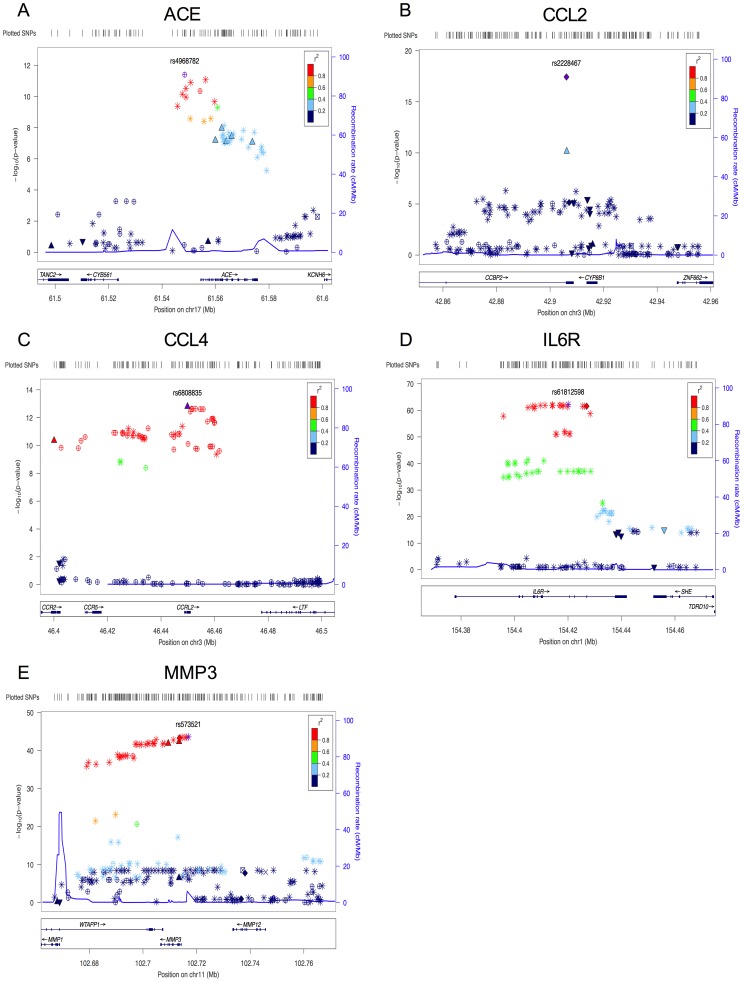
Cerebrospinal fluid (CSF) 42 amino acid species of amyloid beta (Aβ42) and tau levels are strongly correlated with the presence of Alzheimer's disease (AD) neuropathology including amyloid plaques and neurodegeneration and have been successfully used as endophenotypes for genetic studies of AD. Additional CSF analytes may also serve as useful endophenotypes that capture other aspects of AD pathophysiology. Here we have conducted a genome-wide association study of CSF levels of 59 AD-related analytes. All analytes were measured using the Rules Based Medicine Human DiscoveryMAP Panel, which includes analytes relevant to several disease-related processes. Data from two independently collected and measured datasets, the Knight Alzheimer's Disease Research Center (ADRC) and Alzheimer's Disease Neuroimaging Initiative (ADNI), were analyzed separately, and combined results were obtained using meta-analysis. We identified genetic associations with CSF levels of 5 proteins (Angiotensin-converting enzyme (ACE), Chemokine (C-C motif) ligand 2 (CCL2), Chemokine (C-C motif) ligand 4 (CCL4), Interleukin 6 receptor (IL6R) and Matrix metalloproteinase-3 (MMP3)) with study-wide significant p-values (p<1.46×10⁻¹⁰) and significant, consistent evidence for association in both the Knight ADRC and the ADNI samples. These proteins are involved in amyloid processing and pro-inflammatory signaling. SNPs associated with ACE, IL6R and MMP3 protein levels are located within the coding regions of the corresponding structural gene. The SNPs associated with CSF levels of CCL4 and CCL2 are located in known chemokine binding proteins. The genetic associations reported here are novel and suggest mechanisms for genetic control of CSF and plasma levels of these disease-related proteins. Significant SNPs in ACE and MMP3 also showed association with AD risk. Our findings suggest that these proteins/pathways may be valuable therapeutic targets for AD. Robust associations in cognitively normal individuals suggest that these SNPs also influence regulation of these proteins more generally and may therefore be relevant to other diseases.
Overview
The claims and statistics of this paper haven’t been checked yet.
Run the check — free, no account needed. It reads the open-access text and checks the sources it cites.
Integrity signals
Registry
Cites
Statistics
Figures
Verification
Claims the paper makes
The claims and statistics of this paper haven’t been checked yet.
Run the check — free, no account needed. It reads the open-access text and checks the sources it cites.
Claims other papers make about this one
Each is checked against this paper’s own text: does it say what the citing paper says it does?
The cited source says what the claim attributes to it.
In the citing paper
“This dataset represents an expansion of previous CSF pQTL work10,16–19 in both sample size (n=3,506) and number of proteins (n=6,361).”
From Proteogenomic analysis of human cerebrospinal fluid identifies neurologically relevant regulation and implicates causal proteins for Alzheimer’s disease (2024) · cites this paper as [19]
In the citing paper
“cerebrospinal fluid (CSF) levels of the angiotensin-converting enzyme (ACE) are associated with Aβ levels81 and LOAD risk82, and studies show ACE can inhibit Aβ toxicity and aggregation83.”
From Genetic meta-analysis of diagnosed Alzheimer’s disease identifies new risk loci and implicates Aβ, tau, immunity and lipid processing (2019) · cites this paper as [82]
In the citing paper
“In a previous GWAS we looked for genetic loci associated with CSF levels of CLU in an overall smaller dataset (n=574) by analyzing each study and performing a meta-analysis, and we found no genome-wide significant associations (Kauwe, et al., 2014)”
From A potential endophenotype for Alzheimer's disease: cerebrospinal fluid clusterin (2016) · cites this paper as Kauwe, et al., 2014
Self-check
Percentages, sums and reported differences re-computed from the paper’s own numbers.
The self-check needs the paper’s full text.
Citations
Cites
PLINK: a tool set for whole-genome association and population-based linkage analyses.
Purcell, S., Neale, B., Todd-Brown, K., Thomas, L., Ferreira, M. A. R., Bender, D., Maller, J., Sklar, P., de Bakker, P. I. W., Daly, M. J., et al. (2007) · The American Journal of Human Genetics · doi:10.1086/519795 · Cited by 34,089
ANNOVAR: functional annotation of genetic variants from high-throughput sequencing data
Wang, K., Li, M., & Hakonarson, H. H. (2010) · Nucleic Acids Research · doi:10.1093/nar/gkq603 · Cited by 14,724
A method and server for predicting damaging missense mutations.
Adzhubei, I. A., Schmidt, S., Peshkin, L., Ramensky, V. E., Gerasimova, A., Bork, P., Kondrashov, A. S., & Sunyaev, S. R. (2010) · Nature Methods · doi:10.1038/nmeth0410-248 · Cited by 13,194
Principal components analysis corrects for stratification in genome-wide association studies
Price, A. L., Patterson, N. J., Plenge, R. M., Weinblatt, M. E., Shadick, N. A., & Reich, D. (2006) · Nature Genetics · doi:10.1038/ng1847 · Cited by 10,248
SIFT: predicting amino acid changes that affect protein function
Ng, P. C. (2003) · Nucleic Acids Research · doi:10.1093/nar/gkg509 · Cited by 6,601
Inflammation and Alzheimer’s disease
Akiyama, H. (2000) · Neurobiology of Aging · doi:10.1016/s0197-4580(00)00124-x · Cited by 4,514
Meta-Analysis of 74,046 Individuals Identifies 11 New Susceptibility Loci for Alzheimer’s Disease
(EADI), E. A. D. I., Lambert, J.-C., (GERAD), G. A. E. R. I. A. D., Alzheimer's Disease Genetic Consortium (ADGC), (CHARGE), C. F. H. A. A. R. I. G. E., Ibrahim-Verbaas, C. A., Harold, D., Naj, A. C., Sims, R., Bellenguez, C., et al. (2013) · Nature Genetics · doi:10.1038/ng.2802 · Cited by 4,336
Self-citationAnnotation of functional variation in personal genomes using RegulomeDB
Boyle, A. P., Hong, E. L., Hariharan, M., Cheng, Y., Schaub, M. A., Kasowski, M., Karczewski, K. J., Park, J., Hitz, B. C., Weng, S., et al. (2012) · Genome Research · doi:10.1101/gr.137323.112 · Cited by 2,722
Cytokines in the pathogenesis of rheumatoid arthritis
McInnes, I. B., & Schett, G. A. (2007) · Nature reviews. Immunology · doi:10.1038/nri2094 · Cited by 2,576
GenABEL: an R library for genome-wide association analysis
Aulchenko, Y. S., Ripke, S., Isaacs, A., & van Duijn, C. M. (2007) · Bioinformatics · doi:10.1093/bioinformatics/btm108 · Cited by 1,836
Research works printed but not linked: 2
- D Peterson, 2013, Variants in PPP3R1 and MAPT are associated with more rapid functional decline in Alzheimer's disease: The Cache County Dementia Progression Study, Alzheimers Dement, 10, 366, 10.1016/j.jalz.2013.02.010 · DOI · Paper page
- G Abecasis, 2007, Metal—Meta Analysis Helper, Center for Statistical Genetics
Cited by
Sorted by citations
Alzheimer Disease Genetics Consortium (ADGC), Kunkle, B. W., The European Alzheimer’s Disease Initiative (EADI), Cohorts for Heart and Aging Research in Genomic Epidemiology Consortium (CHARGE), Genetic and Environmental Risk in AD/Defining Genetic, P. A. E. R. F. A. D. C. (., Grenier-Boley, B., Sims, R., Bis, J. C., Damotte, V., Naj, A. C., et al. (2019) · Nature Genetics · doi:10.1038/s41588-019-0358-2 · Cited by 2,946
Cattaneo, A., Cattane, N., Galluzzi, S., Provasi, S., Lopizzo, N., Festari, C., Ferrari, C., Guerra, U. P., Paghera, B., Muscio, C., et al. (2017) · Neurobiology of Aging · doi:10.1016/j.neurobiolaging.2016.08.019 · Cited by 1,382
GWAS on family history of Alzheimer’s disease
Marioni, R. E., Harris, S. E., Zhang, Q., McRae, A. F., Hagenaars, S. P., Hill, W. D., Davies, G., Ritchie, C. W., Gale, C. R., Starr, J. M., et al. (2018) · Translational Psychiatry · doi:10.1038/s41398-018-0150-6 · Cited by 564
Self-citationGenetics meets proteomics: perspectives for large population-based studies
Suhre, K., McCarthy, M. I., & Schwenk, J. M. (2021) · Nature Reviews Genetics · doi:10.1038/s41576-020-0268-2 · Cited by 478
Cerebrospinal fluid soluble TREM2 is higher in Alzheimer disease and associated with mutation status
Piccio, L., Deming, Y., Del-Águila, J. L., Ghezzi, L., Holtzman, D. M., Fagan, A. M., Fenoglio, C., Galimberti, D., Borroni, B., & Cruchaga, C. (2016) · Acta Neuropathologica · doi:10.1007/s00401-016-1533-5 · Cited by 337
Self-citationWeiner, M. W., Veitch, D. P., Aisen, P. S. S., Beckett, L. A., Cairns, N. J., Green, R. C., Harvey, D. J., Jack, C. R., Jagust, W. J., Morris, J. C., et al. (2017) · Alzheimer s & Dementia · doi:10.1016/j.jalz.2016.11.007 · Cited by 325
Self-citationGenetic studies of quantitative MCI and AD phenotypes in ADNI: Progress, opportunities, and plans
Saykin, A. J., Shen, L., Yao, X., Kim, S., Nho, K. T., Risacher, S. L., Ramanan, V. K., Foroud, T., Faber, K. M., Sarwar, N., et al. (2015) · Alzheimer s & Dementia · doi:10.1016/j.jalz.2015.05.009 · Cited by 307
Self-citationYang, C., Farias, F. H. G., Ibanez, L., Suhy, A., Sadler, B., Fernandez, M. V., Wang, F., Bradley, J. L., Eiffert, B., Bahena, J. A., et al. (2021) · Nature Neuroscience · doi:10.1038/s41593-021-00886-6 · Cited by 290
Self-citationClearance of cerebral Aβ in Alzheimer’s disease: reassessing the role of microglia and monocytes
Zuroff, L. R., Daley, D. A., Black, K. L., & Koronyo‐Hamaoui, M. (2017) · Cellular and Molecular Life Sciences · doi:10.1007/s00018-017-2463-7 · Cited by 292
Amyloid β Oligomers Disrupt Blood–CSF Barrier Integrity by Activating Matrix Metalloproteinases
Brkić, M., Balusu, S., Wonterghem, E. V., Gorlé, N., Benilova, I., Kremer, A., Hove, I. V., Moons, L., Strooper, B. D., Kanazir, S., et al. (2015) · Journal of Neuroscience · doi:10.1523/jneurosci.0006-15.2015 · Cited by 192
Association of Antihypertensive Drug Target Genes With Psychiatric Disorders
Chauquet, S., Zhu, Z., O’Donovan, M. C., Walters, J., Wray, N. R., & Shah, S. H. (2021) · JAMA Psychiatry · doi:10.1001/jamapsychiatry.2021.0005 · Cited by 177
Chen, C., Zhou, Y., Wang, H., Alam, A. M., Kang, S. S., Ahn, E. H., Liu, X., Jia, J., & Ye, K. (2021) · The EMBO Journal · doi:10.15252/embj.2020106320 · Cited by 138
Depression and Interleukin-6 Signaling: A Mendelian Randomization Study
Kelly, K. M., Smith, J. A., & Mezuk, B. (2021) · Brain, Behavior, and Immunity · doi:10.1016/j.bbi.2021.02.019 · Cited by 117
Brosseron, F., Traschütz, A., Widmann, C. N., Kummer, M. P., Tacik, P., Santarelli, F., Jessen, F., & Heneka, M. T. (2018) · Alzheimer's Research & Therapy · doi:10.1186/s13195-018-0353-3 · Cited by 113
Multivariate simulation framework reveals performance of multi-trait GWAS methods
Porter, H. F., & O’Reilly, P. F. (2017) · Scientific Reports · doi:10.1038/srep38837 · Cited by 123
Unger, M. S., Schernthaner, P., Marschallinger, J., Mrowetz, H., & Aigner, L. (2018) · Journal of Neuroinflammation · doi:10.1186/s12974-018-1304-4 · Cited by 115
Western, D., Timsina, J., Wang, L., Wang, C., Yang, C., Phillips, B., Wang, Y., Liu, M., Ali, M., Beric, A., et al. (2024) · Nature Genetics · doi:10.1038/s41588-024-01972-8 · Cited by 111
Self-citationMietelska‐Porowska, A., & Wojda, U. (2017) · Journal of Immunology Research · doi:10.1155/2017/4626540 · Cited by 111
A decade in psychiatric GWAS research
Horwitz, T. B., Lam, K., Chen, Y., Xia, Y., & Liu, C. (2018) · Molecular Psychiatry · doi:10.1038/s41380-018-0055-z · Cited by 108
Li, Z., Farias, F. H. G., Dube, U., Del-Aguila, J. L., Mihindukulasuriya, K. A., Fernandez, M. V., Ibanez, L., Budde, J. P., Wang, F., Lake, A. M., et al. (2020) · Acta Neuropathologica · doi:10.1007/s00401-019-02066-0 · Cited by 85
Self-citationThe Alzheimer's Disease Neuroimaging Initiative 2 Biomarker Core: A review of progress and plans
Kang, J., Korecka, M., Figurski, M., Toledo, J. B., Blennow, K., Zetterberg, H., Waligórska, T., Brylska, M., Fields, L., Shah, N., et al. (2015) · Alzheimer s & Dementia · doi:10.1016/j.jalz.2015.05.003 · Cited by 100
Microglia responses to interleukin‐6 and type I interferons in neuroinflammatory disease
West, P. K., Viengkhou, B., Campbell, I. L., & Hofer, M. J. (2019) · Glia · doi:10.1002/glia.23634 · Cited by 101
Altered gut microbiota in adults with subjective cognitive decline: the SILCODE study
Sheng, C., Lin, L., Lin, H., Wang, X., Han, Y., & Liu, S.-L. (2021) · Journal of Alzheimer s Disease · doi:10.3233/jad-210259 · Cited by 78
Hillary, R. F., McCartney, D. L., Harris, S. E., Stevenson, A. J., Seeboth, A., Zhang, Q., Liewald, D. C., Evans, K. L., Ritchie, C. W., Tucker-Drob, E. M., et al. (2019) · Nature Communications · doi:10.1038/s41467-019-11177-x · Cited by 78
Kim, H., Su-Min, K., Park, S.-J., Park, G., Shin, H., Park, M. S., & Kim, J. (2021) · Frontiers in Aging Neuroscience · doi:10.3389/fnagi.2021.709091 · Cited by 79
A potential endophenotype for Alzheimer's disease: cerebrospinal fluid clusterin
Deming, Y., Xia, J., Cai, Y., Lord, J., Holmans, P., Bertelsen, S., Holtzman, D., Morris, J. C., Bales, K., Pickering, E. H., et al. (2016) · Neurobiology of Aging · doi:10.1016/j.neurobiolaging.2015.09.009 · Cited by 66
“In a previous GWAS, we looked for genetic loci associated with CSF levels of CLU in an overall smaller data set (n 1⁄4 574) by analyzing each study and performing a meta-analysis, and we found no genome-wide significant associations (Kauwe et al., 2014).”
MethodSelf-citationAl‐kuraishy, H. M., Jabir, M. S., Albuhadily, A. K., Al-Gareeb, A. I., & Rafeeq, M. F. (2023) · Ageing Research Reviews · doi:10.1016/j.arr.2023.102084 · Cited by 75
Mohammadi, G., Dargahi, L., Peymani, A., Mirzanejad, Y., Alizadeh, S. A., Naserpour, T., & Nassiri‐Asl, M. (2018) · Journal of the American College of Nutrition · doi:10.1080/07315724.2018.1487346 · Cited by 76
Brain Renin–Angiotensin System as Novel and Potential Therapeutic Target for Alzheimer’s Disease
Loera‐Valencia, R., Eroli, F., Ptacek, S. G., & Maioli, S. (2021) · International Journal of Molecular Sciences · doi:10.3390/ijms221810139 · Cited by 67
Common Factors in Neurodegeneration: A Meta-Study Revealing Shared Patterns on a Multi-Omics Scale
Ruffini, N., Klingenberg, S., Schweiger, S., & Gerber, S. (2020) · Cells · doi:10.3390/cells9122642 · Cited by 67
A Multi-Omics Perspective of Quantitative Trait Loci in Precision Medicine
Ye, Y., Zhang, Z., Liu, Y., Diao, L., & Han, L. (2020) · Trends in Genetics · doi:10.1016/j.tig.2020.01.009 · Cited by 68
Chen, L., Xu, X., Wu, X., Cao, H., Li, X., Hou, Z., Wang, B., Liu, J., Ji, X., Zhang, P., et al. (2022) · Frontiers in Cellular and Infection Microbiology · doi:10.3389/fcimb.2022.942460 · Cited by 67
RAB10: an Alzheimer’s disease resilience locus and potential drug target
Tavana, J., Rosene, M., Jensen, N., Ridge, P. G., Kauwe, J. S. K., & Karch, C. M. (2018) · Clinical Interventions in Aging · doi:10.2147/cia.s159148 · Cited by 62
Self-citationPromises and Challenges of populational Proteomics in Health and Disease
Sun, B. B., Suhre, K., & Gibson, B. W. (2024) · Molecular & Cellular Proteomics · doi:10.1016/j.mcpro.2024.100786 · Cited by 60
Etchegaray, J. I., Elguero, E. J., Tran, J. A., Sinatra, V., Feany, M. B., & McCall, K. (2016) · The Journal of Neuroscience · doi:10.1523/jneurosci.1912-15.2016 · Cited by 55
Haddick, P. C. G., Alzheimer’s Disease Genetic Consortium (ADGC), A. D. N. I. (., Larson, J. L., Rathore, N., Bhangale, T. R., Phung, Q. T., Srinivasan, K., Hansen, D. V., Lill, J. R., Pericak-Vance, M. A., et al. (2017) · Journal of Alzheimer's Disease · doi:10.3233/jad-160524 · Cited by 55
Self-citationRibeiro, V. T., de Souza, L. C., & Silva, A. C. S. E. (2019) · Protein and Peptide Letters · doi:10.2174/0929866527666191230103739 · Cited by 50
CCL23: A Chemokine Associated with Progression from Mild Cognitive Impairment to Alzheimer’s Disease
Faura, J., Bustamante, A., Peñalba, A., Giralt, D., Simats, A., Martínez-Sáez, E. A., Alcolea, D. A., Fortea, J., Lleó, A., Teunissen, C. E., et al. (2020) · Journal of Alzheimer s Disease · doi:10.3233/jad-190753 · Cited by 49
Self-citationCuddy, L. K., Prokopenko, D., Cunningham, E. P., Brimberry, R., Song, P., Kirchner, R., Chapman, B., Hofmann, O., Hide, W., Procissi, D., et al. (2020) · Science Translational Medicine · doi:10.1126/scitranslmed.aaz2541 · Cited by 45
How Does SARS-CoV-2 Affect the Central Nervous System? A Working Hypothesis
Panariello, F., Cellini, L., Speciani, M., Ronchi, D. D., & Atti, A. R. (2020) · Frontiers in Psychiatry · doi:10.3389/fpsyt.2020.582345 · Cited by 49
DNA methylation variability in Alzheimer's disease
Huo, Z., Zhu, Y., Yu, L., Yang, J., Jager, P. L. D., Bennett, D. A., & Zhao, J. (2018) · Neurobiology of Aging · doi:10.1016/j.neurobiolaging.2018.12.003 · Cited by 45
Genome-wide quantitative trait loci mapping of the human cerebrospinal fluid proteome
Sasayama, D., Hattori, K., Ogawa, S., Yokota, Y., Matsumura, R., Teraishi, T., Hori, H., Ota, M., Yoshida, S., & Kunugi, H. (2016) · Human Molecular Genetics · doi:10.1093/hmg/ddw366 · Cited by 43
Ahmed, M. M., Johnson, N. R., Boyd, T. D., Coughlan, C. M., Chial, H. J., & Potter, H. (2021) · Frontiers in Aging Neuroscience · doi:10.3389/fnagi.2021.718426 · Cited by 42
Le, D. D., Brown, L., Malik, K., & Murakami, S. (2021) · International Journal of Molecular Sciences · doi:10.3390/ijms222413178 · Cited by 40
Réveret, L., Leclerc, M., Émond, V., Loiselle, A., Bourassa, P., Tremblay, C., Bennett, D. A., Hébert, S. S., & Calon, F. (2023) · Acta Neuropathologica Communications · doi:10.1186/s40478-023-01647-1 · Cited by 39
Glutaminyl Cyclase, Diseases, and Development of Glutaminyl Cyclase Inhibitors
Xu, C., Wang, Y., & Wu, H. (2021) · Journal of Medicinal Chemistry · doi:10.1021/acs.jmedchem.1c00325 · Cited by 36
Additional mechanisms conferring genetic susceptibility to Alzheimer’s disease
Calero, M., Gómez‐Ramos, A., Calero, O., Soriano, E., Ávila, J., & Medina, M. (2015) · Frontiers in Cellular Neuroscience · doi:10.3389/fncel.2015.00138 · Cited by 38
Vogrinc, D., Kramberger, M. G., Emeršič, A., Čučnik, S., Goričar, K., & Dolžan, V. (2023) · Antioxidants · doi:10.3390/antiox12020316 · Cited by 38
Dual impact of neuroinflammation on cognitive and motor impairments in Alzheimer's disease
Fakorede, S., Lateef, O. M., Garuba, W. A., Akosile, P. O., Okon, D. A., & Aborode, A. T. (2025) · Journal of Alzheimer s Disease Reports · doi:10.1177/25424823251341870 · Cited by 40
Genetic Variability in Molecular Pathways Implicated in Alzheimer's Disease: A Comprehensive Review
Vogrinc, D., Goričar, K., & Dolžan, V. (2021) · Frontiers in Aging Neuroscience · doi:10.3389/fnagi.2021.646901 · Cited by 32
Kwiatkowski, D., Czarny, P. L., Toma, M. M., Jurkowska, N., Śliwińska, A., Drzewoski, J., Bachurska, A., Szemraj, J., Maes, M. H. J., Berk, M., et al. (2016) · Dementia and Geriatric Cognitive Disorders · doi:10.1159/000443953 · Cited by 32
Renin–angiotensin system gene expression and neurodegenerative diseases
Goldstein, B. I., Speth, R. C., & Trivedi, M. S. (2016) · Journal of the Renin-Angiotensin-Aldosterone System · doi:10.1177/1470320316666750 · Cited by 31
Lee, S. H., Gomes, S. M., Ghalayini, J., Iliadi, K. G., & Boulianne, G. L. (2020) · eNeuro · doi:10.1523/eneuro.0235-20.2020 · Cited by 30
Yang, C., Farias, F. G., Ibáñez, L., Sadler, B. E., Fernández, M. V., Wang, F., Bradley, J. L., Eiffert, B., Bahena, J. A., Budde, J., et al. (2020) · medRxiv · doi:10.1101/2020.06.25.20140277 · Cited by 29
Self-citationGenetic studies of plasma analytes identify novel potential biomarkers for several complex traits
Deming, Y., Xia, J., Cai, Y., Lord, J., Del-Aguila, J. L., Fernandez, M. V., Carrell, D., Black, K., Budde, J., Ma, S., et al. (2016) · Scientific Reports · doi:10.1038/srep18092 · Cited by 28
Self-citationMultiplexing Biomarker Methods, Proteomics and Considerations for Alzheimer’s Disease
Robinson, R. A. S., Amin, B., & Guest, P. C. (2017) · Advances in experimental medicine and biology · doi:10.1007/978-3-319-52479-5_2 · Cited by 29
The Role of Atypical Chemokine Receptors in Neuroinflammation and Neurodegenerative Disorders
Lindsay, H. G., Hendrix, C. J., Murcia, J. D. G., Haynie, C., & Weber, K. S. (2023) · International Journal of Molecular Sciences · doi:10.3390/ijms242216493 · Cited by 29
Li, X., Zhang, D., Bi, R., Tan, L., Chen, X., Xu, M., & Yao, Y. (2023) · Alzheimer s Research & Therapy · doi:10.1186/s13195-022-01159-5 · Cited by 26
Bridel, C., Hoffmann, T., Meyer, A., Durieux‐Lu, S., Simmelink, M. J. A., Orth, M., Scheltens, P., Lues, I., & Teunissen, C. E. (2017) · Alzheimer s Research & Therapy · doi:10.1186/s13195-017-0266-6 · Cited by 27
Pini, L., Salvalaggio, A., Wennberg, A. M. V., Dimakou, A., Matteoli, M., & Corbetta, M. (2023) · Ageing Research Reviews · doi:10.1016/j.arr.2023.101867 · Cited by 26
Yan, J., Risacher, S. L., Nho, K. T., Saykin, A. J., Shen, L., & Initiative, A. D. N. (2016) · Pacific Symposium on Biocomputing (PSB) · doi:10.1142/9789813207813_0010 · Cited by 25
Alzheimer’s Disease Variant Portal: A Catalog of Genetic Findings for Alzheimer’s Disease
Kuksa, P. P., Liu, C., Fu, W., Qu, L., Zhao, Y., Katanić, Ž., Clark, K., Kuzma, A. B., Ho, P., Tzeng, K., et al. (2022) · Journal of Alzheimer s Disease · doi:10.3233/jad-215055 · Cited by 22
Liu, Y., Brossard, M., Sarnowski, C., Vaysse, A., Moffatt, M., Margaritte‐Jeannin, P., Llinares-López, F., Dizier, M., Lathrop, M. G., Cookson, W., et al. (2017) · Scientific Reports · doi:10.1038/s41598-017-01058-y · Cited by 24
A Systems View of the Differences between APOE ε4 Carriers and Non-carriers in Alzheimer’s Disease
Jiang, S., Tang, L. Y., Zhao, N., Yang, W., Qiu, Y. L., & Chen, H. (2016) · Frontiers in Aging Neuroscience · doi:10.3389/fnagi.2016.00171 · Cited by 22
Metalloproteinases and neurodegenerative diseases: pathophysiological and therapeutic perspectives
Rosenberg, G. A. (2015) · Metalloproteinases In Medicine · doi:10.2147/mnm.s68849 · Cited by 21
Sheng, C., Yang, K. Y., He, B., Li, T., Wang, X., Du, W., Hu, X., Jiang, J., Jiang, X., Jessen, F., et al. (2022) · Journal of Alzheimer s Disease · doi:10.3233/jad-215452 · Cited by 19
Pikwer, A., Castegren, M., Namdar, S., Blennow, K., Zetterberg, H., & Mattsson, N. (2017) · Journal of Neuroinflammation · doi:10.1186/s12974-017-0950-2 · Cited by 20
ABCA7 Genotypes Confer Alzheimer’s Disease Risk by Modulating Amyloid-β Pathology
Zhao, Q., Initiative, A. D. N., Wan, Y., Wang, H.-F., Sun, F.-R., Hao, X., Tan, M., Tan, C., Zhang, D., Tan, L., et al. (2016) · Journal of Alzheimer s Disease · doi:10.3233/jad-151005 · Cited by 19
Genome-wide network-based pathway analysis of CSF t-tau/Aβ1-42 ratio in the ADNI cohort
Initiative, A. D. N., Wang, C., Meng, X., Li, J., Zhang, Q., Chen, F., Liu, W., Wang, Y., Cheng, S., Yao, X., et al. (2017) · BMC Genomics · doi:10.1186/s12864-017-3798-z · Cited by 20
Shared genetic architecture of COVID-19 and Alzheimer’s disease
Matveeva, N. A., Сергеевич, К. И., Baulina, N., Semina, E. V., Kakotkin, V. V., Агапов, М. А., Кулакова, О. Г., & Favorova, O. O. (2023) · Frontiers in Aging Neuroscience · doi:10.3389/fnagi.2023.1287322 · Cited by 20
Gawrieh, S., Guo, X., Tan, J., Lauzon, M., Taylor, K. D., Loomba, R. S., Cummings, O. W., Pillai, S. G., Bhatnagar, P., Kowdley, K. V., et al. (2019) · Hepatology Communications · doi:10.1002/hep4.1439 · Cited by 19
Zettergren, A., Kern, S., Gustafson, D., Gudmundsson, P., Sigström, R., Östling, S., Eriksson, E., Zetterberg, H., Blennow, K., & Skoog, I. G. (2016) · American Journal of Geriatric Psychiatry · doi:10.1016/j.jagp.2016.06.009 · Cited by 19
Kunkle, B., Grenier-Boley, B., Sims, R., Bis, J., Naj, A., Boland, A., Vronskaya, M., van der Lee, S., Amlie-Wolf, A., Bellenguez, C., et al. (2018) · doi:10.1101/294629 · Cited by 35
Evaluating the association between genetically proxied ACE inhibition and dementias
Nassan, M. M., Daghlas, I., Piras, I. S., Rogalski, E. J., Reus, L. M., Pijnenburg, Y. A. L., Cuddy, L. K., Saxena, R., Mesulam, M. M., & Huentelman, M. J. (2023) · Alzheimer s & Dementia · doi:10.1002/alz.13062 · Cited by 17
Expanding the Repertoire of Biomarkers for Alzheimer’s Disease: Targeted and Non-targeted Approaches
Galasko, D. R. (2015) · Frontiers in Neurology · doi:10.3389/fneur.2015.00256 · Cited by 19
Zhang, R., Song, J., Isgren, A., Jakobsson, J., Blennow, K., Sellgren, C. M., Zetterberg, H., Bergen, S. E., & Landén, M. (2020) · Translational Psychiatry · doi:10.1038/s41398-020-0737-6 · Cited by 18
Vistnes, M., Tapia, G., Mårild, K., Midttun, Ø., Ueland, P. M., Viken, M. K., Magnus, P. M., Berg, J. P., Gillespie, K. M., Skrivarhaug, T., et al. (2017) · American Journal of Reproductive Immunology · doi:10.1111/aji.12802 · Cited by 17
Murcia, J. D. G., Weinert, A., Freitas, C. M. T., Arens, D. K., Ferrel, M., Grose, J. H., Ridge, P. G., Wilson, E., Kauwe, J. S. K., & Weber, K. S. (2020) · Scientific Reports · doi:10.1038/s41598-020-64755-1 · Cited by 17
Self-citationZhou, F., Chen, D., Chen, G., Liao, P., Li, R., Nong, Q., Meng, Y., Zou, D., & Li, X. (2021) · Clinical Interventions in Aging · doi:10.2147/cia.s297483 · Cited by 16
Ruffini, N., Klingenberg, S., Heese, R., Schweiger, S., & Gerber, S. (2022) · Frontiers in Aging Neuroscience · doi:10.3389/fnagi.2022.866886 · Cited by 16
Hong, M. J., Yoo, S. S., Choi, J. E., Kang, H., Do, S. K., Lee, J. H., Lee, W. K., Lee, J., Lee, S. Y., Ick, S., et al. (2018) · Cancer Science · doi:10.1111/cas.13814 · Cited by 13
Dacks, P. A., Armstrong, J. J., Brannan, S. K., Carman, A. J., Green, A. M., Kirkman, M. S., Krakoff, L. R., Kuller, L. H., Launer, L. J., Lovestone, S., et al. (2016) · Alzheimer s Research & Therapy · doi:10.1186/s13195-016-0200-3 · Cited by 12
Charting the Next Road Map for CSF Biomarkers in Alzheimer's Disease and Related Dementias
Hu, W. T., Nayyar, A., & Kaluzová, M. (2023) · Neurotherapeutics · doi:10.1007/s13311-023-01370-8 · Cited by 11
Reus, L. M., Stringer, S., Posthuma, D., Teunissen, C. E., Scheltens, P., Pijnenburg, Y. A. L., Visser, P. J., & Tijms, B. M. (2020) · Neurobiology of Aging · doi:10.1016/j.neurobiolaging.2020.03.012 · Cited by 11
Vogrinc, D., Goričar, K., Kunej, T., & Dolžan, V. (2021) · Journal of Personalized Medicine · doi:10.3390/jpm11100946 · Cited by 11
Role of Chrononutrition in the Antihypertensive Effects of Natural Bioactive Compounds
Ibarz-Blanch, N., Morales, D., Calvo, E., Ros-Medina, L., Muguerza, B., Bravo, F. I., & Suárez, M. (2022) · Nutrients · doi:10.3390/nu14091920 · Cited by 13
Neurovascular Dysfunction in Alzheimer Disease
Cipollini, V., Sette, G., Bossù, P., Ciaramella, A., Salani, F., Carolis, A. D., Troili, F., Orzi, F., & Giubilei, F. (2019) · Alzheimer Disease & Associated Disorders · doi:10.1097/wad.0000000000000331 · Cited by 10
Tracing the evolutionary history of the CCR5delta32 deletion via ancient and modern genomes
Ravn, K., Cobuccio, L., Muktupavela, R., Meisner, J., Danielsen, L. S., Benros, M. E., Korneliussen, T. S., Sikora, M., Willerslev, E., Allentoft, M. E., et al. (2025) · Cell · doi:10.1016/j.cell.2025.04.015 · Cited by 12
Hillary, R. F., Gadd, D. A., McCartney, D. L., Shi, L., Campbell, A., Walker, R. M., Ritchie, C. W., Deary, I. J., Evans, K. L., Nevado‐Holgado, A. J., et al. (2022) · Alzheimer s & Dementia Diagnosis Assessment & Disease Monitoring · doi:10.1002/dad2.12280 · Cited by 10
Detecting fitness epistasis in recently admixed populations with genome-wide data
Ni, X., Zhou, M., Wang, H., He, K., Broeckel, U., Hanis, C. L., Kardia, S. L. R., Redline, S. S., Cooper, R., Tang, H., et al. (2020) · BMC Genomics · doi:10.1186/s12864-020-06874-7 · Cited by 7
InTACT: An adaptive and powerful framework for joint‐tissue transcriptome‐wide association studies
Bae, Y. E., Wu, L., & Wu, C. (2021) · Genetic Epidemiology · doi:10.1002/gepi.22425 · Cited by 6
Delvitto, A., & Lavagnino, N. (2023) · Principia an international journal of epistemology · doi:10.5007/1808-1711.2023.e85523 · Cited by 10
Shen, J., Lai, W., Li, Z., Zhu, W., Bai, X., Yang, Z., Wang, Q., & Ji, J. (2024) · Inflammation Research · doi:10.1007/s00011-024-01913-5 · Cited by 7
Abe, Y., Kimura, N., Takahashi, R., Gotou, M., Mizukami, K., Uchida, H., & Matsubara, E. (2017) · Geriatrics and gerontology international/Geriatrics & gerontology international · doi:10.1111/ggi.12991 · Cited by 5
Genetic Variants and Related Biomarkers in Sporadic Alzheimer’s Disease
Guerreiro, R. J., Brás, J., Toombs, J., Heslegrave, A., Hardy, J., & Zetterberg, H. (2014) · Current Genetic Medicine Reports · doi:10.1007/s40142-014-0062-6 · Cited by 6
Gholami, M., Zoughi, M., Hasanzad, M., Larijani, B. A., & Amoli, M. M. (2022) · Journal of Medical Virology · doi:10.1002/jmv.28355 · Cited by 4
Testing the Neuroprotective Properties of PCSO-524® Using a Neuronal Cell Cycle Suppression Assay
Zhu, B., Zhang, Y., & Herrup, K. (2019) · Marine Drugs · doi:10.3390/md17020079 · Cited by 5
Commentary: Using human genetics to guide the repurposing of medicines
Bovijn, J., Censin, J. C., Lindgren, C. M., & Holmes, M. V. (2020) · International Journal of Epidemiology · doi:10.1093/ije/dyaa015 · Cited by 4
Connecting dementia risk loci to the CSF proteome identifies pathophysiological leads for dementia
Reus, L. M., Jansen, I. E., Tijms, B. M., Visser, P. J., Tesi, N., van der Lee, S. J., Vermunt, L., Peeters, C. F. W., Groot, L. A. D., Hok‐A‐Hin, Y. S., et al. (2024) · Brain · doi:10.1093/brain/awae090 · Cited by 6
Wang, L.-Y., Hu, H., Sheng, Z.-H., Ou, Y., Ou, Y., Guo, F., Zhu, Y.-K., Tan, L., & Initiative, A. D. N. (2025) · Neurotoxicity Research · doi:10.1007/s12640-025-00740-8 · Cited by 5
Metadata
- Authors
- Kauwe, J. S. K., Bailey, M. H., Ridge, P. G., Perry, R., Wadsworth, M. E., Hoyt, K. L., Staley, L. A., Karch, C. M., Harari, O., Cruchaga, C., Ainscough, B. J., Bales, K., Pickering, E. H., Bertelsen, S., Initiative, T. A. D. N., Fagan, A. M., Holtzman, D. M., Morris, J. C., & Goate, A. M.
- Affiliations
- Brigham Young University (US)
- Washington University in St. Louis (US)
- Pfizer (United States) (US)
- Corresponding author
- Goate, Alison M.
- ORCID
- Venue
- PLoS Genetics
- Publisher
- Public Library of Science (PLoS)
- Published
- 2014-10-23
- Volume
- 10
- Issue
- 10
- Pages
- e1004758
- ISSN
- 1553-7390 (ISSN-L)
- 1553-7404
- PMC
- PMC4207667
- OpenAlex
- W2028156288
- Cited by
- 125
- References
- 106
- Citations by year
- 2026: 3 · 2025: 7 · 2024: 8 · 2023: 13 · 2022: 8 · 2021: 16 · 2020: 13 · 2019: 11 · 2018: 9 · 2017: 14 · 2016: 15 · 2015: 7 · 2014: 1
- FWCI
- 8.20
- Type
- journal article
- Language
- en
- Open access
- gold
- doi.org
- Locations
- PLoS Genetics (publishedVersion, cc-by)
- Europe PMC (PubMed Central) (publishedVersion, cc-by)
- PubMed Central (publishedVersion, cc-by)
- PubMed (publishedVersion)
- Digital Commons@Becker (Washington University School of Medicine) (submittedVersion)
- DOAJ (DOAJ: Directory of Open Access Journals) (submittedVersion, cc-by-sa)
- Figshare (submittedVersion, cc-by)
- Funders
- U.S. Department of Defense (U01 AG024904, W81XWH, W81XWH-12-2-, W81XWH1220012, AG024904)
- Foundation for the National Institutes of Health (W81XWH-12-2-0012, U01AG024904, Grant U01 AG024904, UL1TR000448, U24 AG021886, AG024904, U01 AG016976, N01-AG-12100)
- Alzheimer's Association (U01 AG016976, U01 AG032984, AG05681, U01 AG024904, ADGC-10–196728, U24AG021886, AG033193, MNIRG-11-205368, W81XWH-12-2-0012)
- Bristol-Myers Squibb (U01 AG024904, AG024904, W81XWH-12-2-0012)
- Eli Lilly and Company (U01 AG024904, AG024904, W81XWH-12-2-0012)
- Pfizer (AG024904, W81XWH-12-2-0012, U01 AG024904)
- Biogen (W81XWH-12-2-0012, U01 AG024904, AG024904)
- University of Southern California (W81XWH-12-2-0012, U01 AG024904)
- BrightFocus Foundation (A2013359S)
- Brigham Young University
- F. Hoffmann-La Roche (W81XWH-12-2-0012, AG024904, U01 AG024904)
- Medpace (U01 AG024904)
- Meso Scale Diagnostics (U01 AG024904, AG024904, W81XWH-12-2-0012)
- Synarc (U01 AG024904)
- Alzheimer's Disease Neuroimaging Initiative (W81XWH-12-2–0012, U01 AG032984, U01AG024904, AG024904, W81XWH-12-2-, Department of Defense award number W81XWH-12-2-0012)
- BioClinica (U01 AG024904, W81XWH-12-2-0012, AG024904)
- Institute of Clinical and Translational Sciences (UL1TR000448)
- Novartis Pharmaceuticals Corporation (W81XWH-12-2-0012, U01 AG024904, AG024904)
- Northern California Institute for Research and Education (U01 AG024904, W81XWH-12-2-0012)
- Wellcome Trust (082604/2/07/Z, 082604, GR082604MA)
- Development of Innovative Strategies for a Transdisciplinary approach to ALZheimer's disease
- Institut National de la Santé et de la Recherche Médicale
- Bundesministerium für Bildung und Forschung (01GI0102, 01GI0711, 01GI0420)
- Erasmus Medisch Centrum
- Eisai (W81XWH-12-2-0012, U01 AG024904, AG024904)
- Servier (AG024904, W81XWH-12-2-0012, U01 AG024904)
- Hjartavernd (N01-AG-1-2100)
- Centre hospitalier régional universitaire de Lille
- IXICO (AG024904, W81XWH-12-2-0012, U01 AG024904)
- National Institutes of Health (n01ag12100-57-0-2, 3u01ag024904-10s2, MNIRG-11-205368, N01-AG-1-2100, W81XWH, UL1TR000448, W81XWH-12-2-0012, NIA AG081220, AG016976, U01-AG024904, AG05681, Grant U01 AG024904, TR000448, AG024904, AG 03991)
- Genentech (W81XWH-12-2-0012, AG024904, U01 AG024904)
- University of California, San Diego
- Canadian Institutes of Health Research (U01 AG024904, W81XWH-12-2-0012)
- Medical Research Council (MR/L501517/1, 503480, U01 AG024904, MR/L010305/1, MR/K013041/1, G0300429)
- National Institute on Aging (U01-AG-024904, AG 016976, R01AG042611, AG03991, W81XWH-12-2–0012, N01-AG12100, R01 AG035053, AG 024904, AG081220, U01AG016976, NIA AG081220, AG 05681, U01AG032984, AG033193, P 50 AG05681, AG026276, AG032984, P50AG005681, P01 AG0 3991, P01AG003991, R01AG033193, AG021886, P01AG026276, U24AG021886)
- National Heart, Lung, and Blood Institute (HL-105756, TR000448, R01HL105756, AG033193)
- National Cancer Institute (T32CA113275)
- National Institute of Biomedical Imaging and Bioengineering (W81XWH-12-2-0012, U01 AG024904, AG024904)
- National Center for Advancing Translational Sciences (TR000448)
- Topics
- Life Sciences › Neuroscience › Cellular and Molecular Neuroscience › Alzheimer's disease research and treatments
- Health Sciences › Medicine › Psychiatry and Mental health › Dementia and Cognitive Impairment Research
- Life Sciences › Biochemistry, Genetics and Molecular Biology › Genetics › Genetic Associations and Epidemiology
- Keywords
- Alzheimer's disease, cerebrospinal fluid biomarkers, amyloid processing, inflammation, angiotensin-converting enzyme, IL-6 receptor, matrix metalloproteinase-3, MCP-1, carbon tetrachloride, chemokines, single nucleotide polymorphisms, genetic association, endophenotypes, therapeutic target
- MeSH terms
- Alzheimer Disease, Blood Proteins, Female, Humans, Male, Renin, Amyloid beta-Peptides, tau Proteins, Receptors, Lipoprotein, Chemokine CCL2, Matrix Metalloproteinase 3, Receptors, Interleukin-6, Polymorphism, Single Nucleotide, Nerve Growth Factor, Chemokine CCL4, Genome-Wide Association Study
About these checks
Registry, retraction, Cites and statistics results are computed, not judged, with one exception: a printed reference that no index lists is read once by a model before it counts as a citation error. Claims are extracted by a model and kept only when their quote appears verbatim in the text; each cited source is then checked, with a model’s help, for whether it says what the claim relies on. Those verdicts can be wrong — read the claim’s quote and the cited source before relying on one.
Statistics and arithmetic are recomputed, not judged.
Confidence bands are shown only for fields calibrated on our annotated test set. None is calibrated yet, so no band is shown.
What counts as a claim ›How we measure confidence ›How we check this ›
Are you an author, or do you see a problem with this page? Request a review
