

Mouse protein coding diversity: What’s left to discover?
Open accessThe DOI matches its Crossref record; 98 of the 98 references it cites were found in a registry or an index.
Abstract
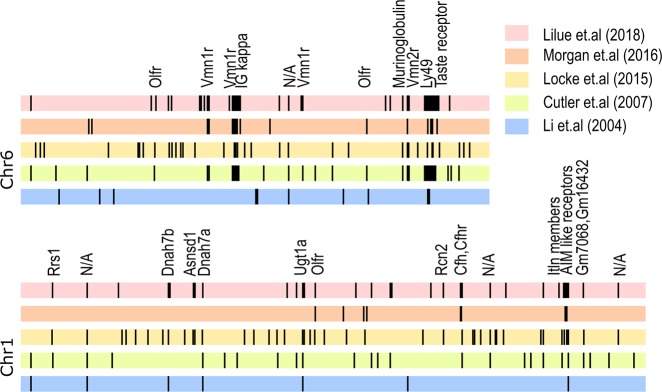
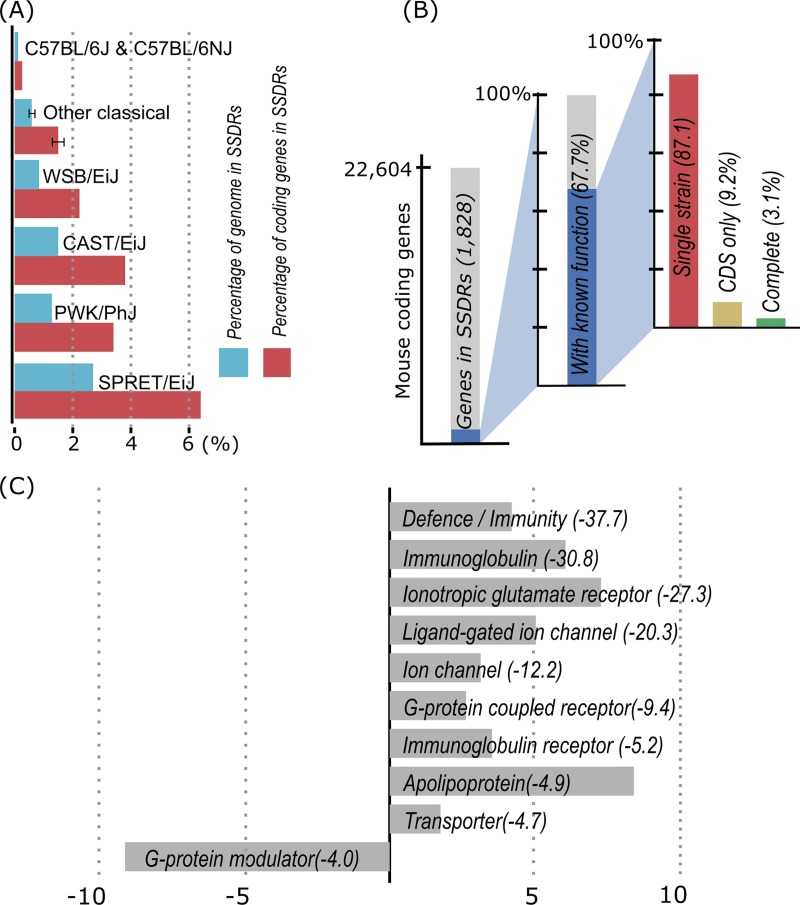
For over a century, mice have been used to model human disease, leading to many fundamental discoveries about mammalian biology and the development of new therapies.Mouse genetics research has been further catalysed by a plethora of genomic resources developed in the last 20 years, including the genome sequence of C57BL/6J and more recently the first draft reference genomes for 16 additional laboratory strains.Collectively, the comparison of these genomes highlights the extreme diversity that exists at loci associated with the immune system, pathogen response, and key sensory functions, which form the foundation for dissecting phenotypic traits in vivo.We review the current status of the mouse genome across the diversity of the mouse lineage and discuss the value of mice to understanding human disease. Author summaryFor decades, the laboratory mouse has been widely used to make fundamental discoveries about human biology, model human disease, and develop new treatments.The mouse reference genome is based on the C57BL/6J; however, researchers use a variety of strains to model human disease.Recent genome analysis has identified that the most highly variable regions of the mouse genome are enriched with genes relevant to disease and infection response.In this review, we discuss what is currently known about these regions, why they are important for human disease modelling, and what is known about their ancestral origins.
Overview
The claims and statistics of this paper haven’t been checked yet.
Free: it reads the open-access text and checks the first 5 claims that cite a source we can check. Create a free account to check every claim.
Integrity signals
Registry
Cites
Statistics
Figures
Verification
Claims the paper makes
The claims and statistics of this paper haven’t been checked yet.
Free: it reads the open-access text and checks the first 5 claims that cite a source we can check. Create a free account to check every claim.
Claims other papers make about this one
Each is checked against this paper’s own text: does it say what the citing paper says it does?
The source backs part of the claim, not all of it — or backs it for a different population, condition or comparison.
In the citing paper
“In 2019, we determined the most genetically diverse regions of the mouse genome, where genetic variation can exceed interspecies variation.18,19”
From High-quality mouse reference genomes reveal the structural complexity of the murine protein-coding landscape (2026) · cites this paper as [19]
Experimental — accuracy not yet measuredThe cited source says what the claim attributes to it.
In the citing paper
“These regions are enriched for infection immunity and sensory gene families and transposons and thus are challenging for genome assembly.”
From High-quality mouse reference genomes reveal the structural complexity of the murine protein-coding landscape (2026) · cites this paper as [19]
Self-check
Percentages, sums and reported differences re-computed from the paper’s own numbers.
The self-check needs the paper’s full text.
Citations
Cites
Initial sequencing and comparative analysis of the mouse genome
Mouse Genome Sequencing Consortium (2002) · Nature · doi:10.1038/nature01262 · Cited by 7,187 · cited 1×
“mammalian genome to be sequenced after the human genome [3].”
BackgroundMouse genomic variation and its effect on phenotypes and gene regulation.
Keane, T. M., Goodstadt, L., Danecek, P., White, M. A., Wong, K., Yalcin, B., Heger, A., Agam, A., Slater, G., Goodson, M., et al. (2011) · Nature · doi:10.1038/nature10413 · Cited by 1,580 · cited 12×
“The mouse reference genome is based on the C57BL/6J; however, researchers use a variety of strains to model human disease.”
BackgroundInfluentialSelf-citationThe olfactory receptor gene superfamily of the mouse
Zhang, X., & Firestein, S. (2002) · Nature Neuroscience · doi:10.1038/nn800 · Cited by 902 · cited 3×
“There are 1,296 OR genes distributed in 27 clusters on the Celera mouse genome except chromosome 12 and Y [51].”
BackgroundMethodGenealogies of mouse inbred strains
Beck, J. A., Lloyd, S., Hafezparast, M., Lennon-Pierce, M., Eppig, J. T., Festing, M. F. W., & Fisher, E. M. C. (2000) · Nature Genetics · doi:10.1038/71641 · Cited by 823 · cited 1×
“Although mice and humans have coexisted for many millennia, modern mouse genetics was initiated in the early 20th century [1].”
BackgroundAceView: a comprehensive cDNA-supported gene and transcripts annotation
Thierry-Mieg, D., & Thierry-Mieg, J. (2006) · Genome Biology · doi:10.1186/gb-2006-7-s1-s12 · Cited by 629 · cited 1×
“They are highly expressed in lymph nodes and whole blood in humans [41] and are inducible by both type I and type II interferons (IFNs) in mice [42].”
BackgroundKRAB zinc-finger proteins contribute to the evolution of gene regulatory networks
Imbeault, M., Helleboid, P.-Y., & Trono, D. (2017) · Nature · doi:10.1038/nature21683 · Cited by 623 · cited 1×
“Variation of zinc finger proteins (Zfp) are thought to repress transposable elements in an evolutionary arms race [91].”
BackgroundIdentification of protein pheromones that promote aggressive behaviour
Chamero, P., Marton, T. F., Logan, D. W., Flanagan, K., Cruz, J. R., Saghatelian, A., Cravatt, B. F., & Stowers, L. (2007) · Nature · doi:10.1038/nature05997 · Cited by 529 · cited 1×
“Mups may either directly behave as pheromones or bind small molecule pheromones to stabilize them by a slow-release pattern [66,67].”
BackgroundNeuronal calcium sensor proteins: generating diversity in neuronal Ca2+ signalling
Burgoyne, R. D. (2007) · Nature Reviews Neuroscience · doi:10.1038/nrn2093 · Cited by 527 · cited 1×
“Humans have only single copy of HPCAL1, which is mainly expressed in retinal photoreceptors, neurons, and neuroendocrine cells [80].”
BackgroundApolipoprotein L-I is the trypanosome lytic factor of human serum
Vanhamme, L., Paturiaux-Hanocq, F., Poelvoorde, P., Nolan, D. P., Lins, L., Van Den Abbeele, J., Pays, A., Tebabi, P., Van Xong, H., Jacquet, A., et al. (2003) · Nature · doi:10.1038/nature01461 · Cited by 500 · cited 2×
“Some alleles confer resistance to Trypanosoma brucei brucei in humans but at the same time lead to chronic kidney disease [33].”
BackgroundSubspecific origin and haplotype diversity in the laboratory mouse
Yang, H., Wang, J. R., Didion, J. P., Buus, R. J., Bell, T. A., Welsh, C. E., Bonhomme, F., Yu, A. H.-T., Nachman, M. W., Pialek, J., et al. (2011) · Nature Genetics · doi:10.1038/ng.847 · Cited by 468 · cited 1×
“A genome-wide haplotype map of 100 classical mouse strains showed that over 97% of their genome is a mosaic of less than 10 haplotypes [8].”
Background
Cited by
Spatial multi-omics reveals cell-type-specific nuclear compartments
Takei, Y., Yang, Y., White, J. A., Goronzy, I. N., Yun, J., Prasad, M., Ombelets, L. J., Schindler, S., Bhat, P., Guttman, M., et al. (2025) · Nature · doi:10.1038/s41586-025-08838-x · Cited by 118
The Dichotomous Responses Driven by β-Defensins
Shelley, J. R., Davidson, D. J., & Dorin, J. R. (2020) · Frontiers in Immunology · doi:10.3389/fimmu.2020.01176 · Cited by 74
Chebib, J., Jackson, B., López‐Cortegano, E., Tautz, D., & Keightley, P. D. (2020) · Heredity · doi:10.1038/s41437-020-00361-1 · Cited by 46
“This issue may also be alleviated as more complete genome references become available for strains other than C57BL/6J (Lilue et al. 2019).”
BackgroundInfluentialProgress in Vocal Fold Regenerative Biomaterials: An Immunological Perspective
Coburn, P. T., Li, X., Li, J., Kishimoto, Y., & Li‐Jessen, N. Y. K. (2021) · Advanced NanoBiomed Research · doi:10.1002/anbr.202100119 · Cited by 31
Inferring the Allelic Series at QTL in Multiparental Populations
Crouse, W. L., Kelada, S. N. P., & Valdar, W. S. J. (2020) · Genetics · doi:10.1534/genetics.120.303393 · Cited by 12
Metadata
- Authors
- Lilue, J., Shivalikanjli, A., Adams, D. J., & Keane, T. M.
- Affiliations
- European Bioinformatics Institute (GB)
- Wellcome Sanger Institute (GB)
- Corresponding author
- Keane, Thomas M.
- Venue
- PLOS Genetics
- Publisher
- Public Library of Science (PLoS)
- Published
- 2019-11-14
- Volume
- 15
- Issue
- 11
- Pages
- e1008446
- ISSN
- 1553-7390 (ISSN-L)
- 1553-7404
- PMC
- PMC6855407
- OpenAlex
- W2983713509
- Cited by
- 19
- References
- 98
- Citations by year
- 2025: 6 · 2024: 4 · 2023: 1 · 2021: 3 · 2020: 5
- FWCI
- 0.18
- Type
- journal article
- Language
- en
- Open access
- gold
- doi.org
- Licence
- Locations
- PLoS Genetics (publishedVersion, cc-by)
- Europe PMC (PubMed Central) (publishedVersion, cc-by)
- PubMed Central (publishedVersion, cc-by)
- PubMed (publishedVersion)
- DOAJ (DOAJ: Directory of Open Access Journals) (submittedVersion, cc-by-sa)
- Figshare (submittedVersion, cc-by)
- Funders
- Wellcome Trust (100956, 100956/Z/13/Z)
- Cancer Research UK (21717, 14356)
- Medical Research Council (MR/R017565/1, MR/L007428/1)
- Biotechnology and Biological Sciences Research Council (BB/M000281/1)
- Topics
- Life Sciences › Biochemistry, Genetics and Molecular Biology › Molecular Biology › Genomics and Phylogenetic Studies
- Life Sciences › Biochemistry, Genetics and Molecular Biology › Genetics › Genetic Mapping and Diversity in Plants and Animals
- Life Sciences › Biochemistry, Genetics and Molecular Biology › Genetics › Genetic and phenotypic traits in livestock
- Keywords
- mouse strains, C57BL/6J mice, reference genome, immune system genes, pathogen response, disease modeling, ancestral origins
- MeSH terms
- Animals, Chromosome Mapping, Haplotypes, Humans, Inbreeding, Phenotype, Genome, Animals, Inbred Strains, Genomics, Mice
About these checks
Registry, retraction, Cites and statistics results are computed, not judged, with one exception: a printed reference that no index lists is read once by a model before it counts as a citation error. Claims are extracted by a model and kept only when their quote appears verbatim in the text; each cited source is then checked, with a model’s help, for whether it says what the claim relies on. Those verdicts can be wrong — read the claim’s quote and the cited source before relying on one.
Statistics and arithmetic are recomputed, not judged.
Confidence bands are shown only for fields calibrated on our annotated test set. None is calibrated yet, so no band is shown.
What counts as a claim ›How we measure confidence ›How we check this ›
Are you an author, or do you see a problem with this page? Request a review
How to cite
Cite CoChat for the checks on this page, and the paper for its own findings.
- This page
- CoChat. (2026). Citation check: Mouse protein coding diversity: What’s left to discover? https://app.cochat.ai/papers/10.1371/journal.pgen.1008446
- The paper
- Lilue, J., Shivalikanjli, A., Adams, D. J., & Keane, T. M. (2019). Mouse protein coding diversity: What’s left to discover? PLOS Genetics. https://doi.org/10.1371/journal.pgen.1008446
Data sources
Bibliographic data: Semantic Scholar, OpenAlex, Crossref.
Contains information from the Semantic Scholar Academic Graph Datasets, made available under the ODC Attribution License (ODC-BY 1.0).
Semantic Scholar’s data is described in: Kinney, R., et al. (2023). The Semantic Scholar Open Data Platform. arXiv:2301.10140.
