

Mouse protein coding diversity: What’s left to discover?
Open accessThe DOI matches its Crossref record; 98 of the 98 references it cites were found in a registry or an index.
Abstract
For over a century, mice have been used to model human disease, leading to many fundamental discoveries about mammalian biology and the development of new therapies.Mouse genetics research has been further catalysed by a plethora of genomic resources developed in the last 20 years, including the genome sequence of C57BL/6J and more recently the first draft reference genomes for 16 additional laboratory strains.Collectively, the comparison of these genomes highlights the extreme diversity that exists at loci associated with the immune system, pathogen response, and key sensory functions, which form the foundation for dissecting phenotypic traits in vivo.We review the current status of the mouse genome across the diversity of the mouse lineage and discuss the value of mice to understanding human disease. Author summaryFor decades, the laboratory mouse has been widely used to make fundamental discoveries about human biology, model human disease, and develop new treatments.The mouse reference genome is based on the C57BL/6J; however, researchers use a variety of strains to model human disease.Recent genome analysis has identified that the most highly variable regions of the mouse genome are enriched with genes relevant to disease and infection response.In this review, we discuss what is currently known about these regions, why they are important for human disease modelling, and what is known about their ancestral origins.
Overview
The claims and statistics of this paper haven’t been checked yet.
Free: it reads the open-access text and checks the first 5 claims that cite a source we can check. Create a free account to check every claim.
Integrity signals
Registry
Cites
Statistics
Figures
Verification
Claims the paper makes
The claims and statistics of this paper haven’t been checked yet.
Free: it reads the open-access text and checks the first 5 claims that cite a source we can check. Create a free account to check every claim.
Claims other papers make about this one
Each is checked against this paper’s own text: does it say what the citing paper says it does?
The source backs part of the claim, not all of it — or backs it for a different population, condition or comparison.
In the citing paper
“In 2019, we determined the most genetically diverse regions of the mouse genome, where genetic variation can exceed interspecies variation.18,19”
From High-quality mouse reference genomes reveal the structural complexity of the murine protein-coding landscape (2026) · cites this paper as [19]
Experimental — accuracy not yet measuredThe cited source says what the claim attributes to it.
In the citing paper
“These regions are enriched for infection immunity and sensory gene families and transposons and thus are challenging for genome assembly.”
From High-quality mouse reference genomes reveal the structural complexity of the murine protein-coding landscape (2026) · cites this paper as [19]
Self-check
Percentages, sums and reported differences re-computed from the paper’s own numbers.
The self-check needs the paper’s full text.
Citations
Cites
Initial sequencing and comparative analysis of the mouse genome
Mouse Genome Sequencing Consortium (2002) · Nature · doi:10.1038/nature01262 · Cited by 7,187 · cited 1×
“mammalian genome to be sequenced after the human genome [3].”
BackgroundMouse genomic variation and its effect on phenotypes and gene regulation.
Keane, T. M., Goodstadt, L., Danecek, P., White, M. A., Wong, K., Yalcin, B., Heger, A., Agam, A., Slater, G., Goodson, M., et al. (2011) · Nature · doi:10.1038/nature10413 · Cited by 1,580 · cited 12×
“The mouse reference genome is based on the C57BL/6J; however, researchers use a variety of strains to model human disease.”
BackgroundInfluentialSelf-citationThe olfactory receptor gene superfamily of the mouse
Zhang, X., & Firestein, S. (2002) · Nature Neuroscience · doi:10.1038/nn800 · Cited by 902 · cited 3×
“There are 1,296 OR genes distributed in 27 clusters on the Celera mouse genome except chromosome 12 and Y [51].”
BackgroundMethodGenealogies of mouse inbred strains
Beck, J. A., Lloyd, S., Hafezparast, M., Lennon-Pierce, M., Eppig, J. T., Festing, M. F. W., & Fisher, E. M. C. (2000) · Nature Genetics · doi:10.1038/71641 · Cited by 823 · cited 1×
“Although mice and humans have coexisted for many millennia, modern mouse genetics was initiated in the early 20th century [1].”
BackgroundAceView: a comprehensive cDNA-supported gene and transcripts annotation
Thierry-Mieg, D., & Thierry-Mieg, J. (2006) · Genome Biology · doi:10.1186/gb-2006-7-s1-s12 · Cited by 629 · cited 1×
“They are highly expressed in lymph nodes and whole blood in humans [41] and are inducible by both type I and type II interferons (IFNs) in mice [42].”
BackgroundKRAB zinc-finger proteins contribute to the evolution of gene regulatory networks
Imbeault, M., Helleboid, P.-Y., & Trono, D. (2017) · Nature · doi:10.1038/nature21683 · Cited by 623 · cited 1×
“Variation of zinc finger proteins (Zfp) are thought to repress transposable elements in an evolutionary arms race [91].”
BackgroundIdentification of protein pheromones that promote aggressive behaviour
Chamero, P., Marton, T. F., Logan, D. W., Flanagan, K., Cruz, J. R., Saghatelian, A., Cravatt, B. F., & Stowers, L. (2007) · Nature · doi:10.1038/nature05997 · Cited by 529 · cited 1×
“Mups may either directly behave as pheromones or bind small molecule pheromones to stabilize them by a slow-release pattern [66,67].”
BackgroundNeuronal calcium sensor proteins: generating diversity in neuronal Ca2+ signalling
Burgoyne, R. D. (2007) · Nature Reviews Neuroscience · doi:10.1038/nrn2093 · Cited by 527 · cited 1×
“Humans have only single copy of HPCAL1, which is mainly expressed in retinal photoreceptors, neurons, and neuroendocrine cells [80].”
BackgroundApolipoprotein L-I is the trypanosome lytic factor of human serum
Vanhamme, L., Paturiaux-Hanocq, F., Poelvoorde, P., Nolan, D. P., Lins, L., Van Den Abbeele, J., Pays, A., Tebabi, P., Van Xong, H., Jacquet, A., et al. (2003) · Nature · doi:10.1038/nature01461 · Cited by 500 · cited 2×
“Some alleles confer resistance to Trypanosoma brucei brucei in humans but at the same time lead to chronic kidney disease [33].”
BackgroundSubspecific origin and haplotype diversity in the laboratory mouse
Yang, H., Wang, J. R., Didion, J. P., Buus, R. J., Bell, T. A., Welsh, C. E., Bonhomme, F., Yu, A. H.-T., Nachman, M. W., Pialek, J., et al. (2011) · Nature Genetics · doi:10.1038/ng.847 · Cited by 468 · cited 1×
“A genome-wide haplotype map of 100 classical mouse strains showed that over 97% of their genome is a mosaic of less than 10 haplotypes [8].”
BackgroundRunning with the Red Queen: Host-Parasite Coevolution Selects for Biparental Sex
Morran, L. T., Schmidt, O. G., Gelarden, I. A., Parrish, R. C., & Lively, C. M. (2011) · Science · doi:10.1126/science.1206360 · Cited by 432 · cited 1×
“, red queen hypothesis) [92], kin selection [93], mating preference [94], and even selective sweeps due to strong positive selection [95,96].”
BackgroundPostmating Female Control: 20 Years of Cryptic Female Choice
Firman, R. C., Gasparini, C., Manier, M. K., & Pizzari, T. (2017) · Trends in Ecology & Evolution · doi:10.1016/j.tree.2017.02.010 · Cited by 403 · cited 1×
“Many genes related to sperm-egg interaction show positive selection and polymorphism, which may reflect the evolutionary pressure from species recognition or inbreeding avoidance [85].”
BackgroundSex-specific peptides from exocrine glands stimulate mouse vomeronasal sensory neurons
Kimoto, H., Haga, S., Sato, K., & Touhara, K. (2005) · Nature · doi:10.1038/nature04033 · Cited by 379 · cited 1×
“In the GRCm38 reference genome, 38 Esp members are annotated, in which 14 appear to be pseudogenes [72,73].”
BackgroundSong, Y., Endepols, S., Klemann, N., Richter, D., Matuschka, F.-R., Shih, C.-H., Nachman, M. W., & Kohn, M. H. (2011) · Current Biology · doi:10.1016/j.cub.2011.06.043 · Cited by 353 · cited 1×
“Wild-derived strains are increasingly employed as mouse models to study phenotypes—such as resistance against Orthomyxovirus [11], virulent Toxoplasma gondii strains (CIM, CAST/EiJ, and PWK/PhJ) [12,13], resistance to anticoagulant rodenticides (SPRET/EiJ) [14], and resistance to cerebral Plasmodium berghei (WLA/Pas)…”
BackgroundLong-read sequence assembly of the gorilla genome
Gordon, D., Huddleston, J., Chaisson, M. J. P., Hill, C. M., Kronenberg, Z. N., Munson, K. M., Malig, M., Raja, A., Fiddes, I., Hillier, L. W., et al. (2016) · Science · doi:10.1126/science.aae0344 · Cited by 333 · cited 1×
“Recent advances in third generation sequencing platforms, such as Pacific Biosciences and Oxford Nanopore, can produce mammalian genomes that are an order of magnitude more contiguous[97].”
BackgroundWild mice: an ever-increasing contribution to a popular mammalian model
Guénet, J.-L., & Bonhomme, F. (2003) · Trends in Genetics · doi:10.1016/s0168-9525(02)00007-0 · Cited by 321 · cited 1×
“Wild-derived strains are increasingly employed as mouse models to study phenotypes—such as resistance against Orthomyxovirus [11], virulent Toxoplasma gondii strains (CIM, CAST/EiJ, and PWK/PhJ) [12,13], resistance to anticoagulant rodenticides (SPRET/EiJ) [14], and resistance to cerebral Plasmodium berghei (WLA/Pas)…”
BackgroundDifferent evolutionary processes shaped the mouse and human olfactory receptor gene families
Young, J. M. (2002) · Human Molecular Genetics · doi:10.1093/hmg/11.5.535 · Cited by 312 · cited 1×
“Multiple OR members from strains 129S1/SvI, 129X1/SvI, 129S6/SvEvTac, A/J, AKR/J, BALB/c, C57BL/6, and DBA/ 2J were amplified from genomic DNA [51,52] and sequences available [53].”
MethodSequence-based characterization of structural variation in the mouse genome
Yalcin, B., Wong, K., Agam, A., Goodson, M., Keane, T. M., Gan, X., Nellåker, C., Goodstadt, L., Nicod, J., Bhomra, A., et al. (2011) · Nature · doi:10.1038/nature10432 · Cited by 301 · cited 12×
“The mouse reference genome is based on the C57BL/6J; however, researchers use a variety of strains to model human disease.”
BackgroundInfluentialSelf-citationOn the subspecific origin of the laboratory mouse
Yang, H., Bell, T. A., Churchill, G. A., & Pardo-Manuel de Villena, F. (2007) · Nature Genetics · doi:10.1038/ng2087 · Cited by 299 · cited 1×
“musculus castaneus—contribute approximately 4%–14% to the classical strains [7].”
BackgroundBoyden, L. M., Lewis, J. M., Barbee, S. D., Bas, A., Girardi, M., Hayday, A. C., Tigelaar, R. E., & Lifton, R. P. (2008) · Nature Genetics · doi:10.1038/ng.108 · Cited by 294 · cited 2×
“A single SNP was reported in mouse strain FVBTac, which causes selective deficiency for epidermal Vγ5Vδ1 T cells [35].”
BackgroundZechner, U., Wilda, M., Kehrer-Sawatzki, H., Vogel, W., Fundele, R., & Hameister, H. (2001) · Trends in Genetics · doi:10.1016/s0168-9525(01)02446-5 · Cited by 272 · cited 1×
“In humans, male and female specific brain function dimorphisms causing mental impairment have been linked to the X chromosome [78].”
BackgroundLilue, J., Doran, A. G., Fiddes, I. T., Abrudan, M., Armstrong, J., Bennett, R., Chow, W., Collins, J., Collins, S., Czechanski, A., et al. (2018) · Nature Genetics · doi:10.1038/s41588-018-0223-8 · Cited by 267 · cited 10×
“Similarly, the adjacent gene Natural Killer Cell Receptor 2B4 (Cd244) shows similar patterns of CNVs in recent de novo assemblies [16].”
BackgroundMethodInfluentialSelf-citationLossow, K., Hübner, S., Roudnitzky, N., Slack, J. P., Pollastro, F., Behrens, M., & Meyerhof, W. (2016) · Journal of Biological Chemistry · doi:10.1074/jbc.m116.718544 · Cited by 247 · cited 1×
“The majority of bitter-taste receptors encoded on mouse chromosome 6 are lineage-specific [47].”
BackgroundProteins in urine scent marks of male house mice extend the longevity of olfactory signals
HURST, J. L., ROBERTSON, D. H. L., TOLLADAY, U., & BEYNON, R. J. (1998) · Animal Behaviour · doi:10.1006/anbe.1997.0650 · Cited by 238
Positive Selection on a High-Sensitivity Allele of the Human Bitter-Taste Receptor TAS2R16
Soranzo, N., Bufe, B., Sabeti, P. C., Wilson, J. F., Weale, M. E., Marguerie, R., Meyerhof, W., & Goldstein, D. B. (2005) · Current Biology · doi:10.1016/j.cub.2005.06.042 · Cited by 237 · cited 1×
“Signatures of positive selection have been detected for the human bitter-taste receptor TAS2R16 [46].”
BackgroundBachmanov, A., Bosak, N., Lin, C., Matsumoto, I., Ohmoto, M., Reed, D., & Nelson, T. (2014) · Current Pharmaceutical Design · doi:10.2174/13816128113199990566 · Cited by 215 · cited 1×
“Both phenotypes were mapped to mouse Tas2r loci on chromosome 6 [50].”
BackgroundHereditary alpha-1-antitrypsin deficiency and its clinical consequences
Fregonese, L., & Stolk, J. (2008) · Orphanet Journal of Rare Diseases · doi:10.1186/1750-1172-3-16 · Cited by 212
Extreme variability among mammalian V1R gene families
Young, J. M., Massa, H. F., Hsu, L., & Trask, B. J. (2010) · Genome Research · doi:10.1101/gr.098913.109 · Cited by 211 · cited 1×
“In the human genome, Mups and ESPs are not present, and all except five V1R genes are disrupted by deleterious mutations [74].”
BackgroundThe sense of smell: genomics of vertebrate odorant receptors
Young, J. M. (2002) · Human Molecular Genetics · doi:10.1093/hmg/11.10.1153 · Cited by 208 · cited 1×
“The human genome encodes 950 OR genes with high diversity, comparable to the mouse genome [55].”
BackgroundDavies, W., Isles, A., Smith, R., Karunadasa, D., Burrmann, D., Humby, T., Ojarikre, O., Biggin, C., Skuse, D., Burgoyne, P., et al. (2005) · Nature Genetics · doi:10.1038/ng1577 · Cited by 192 · cited 2×
“Xlr3b and 4b are paternally imprinted in the cortex and other brain regions, which regulate the expression of other genes[79].”
BackgroundALTRUISM VIA KIN-SELECTION STRATEGIES THAT RELY ON ARBITRARY TAGS WITH WHICH THEY COEVOLVE
Axelrod, R., Hammond, R. A., & Grafen, A. (2004) · Evolution · doi:10.1111/j.0014-3820.2004.tb00465.x · Cited by 185 · cited 1×
“, red queen hypothesis) [92], kin selection [93], mating preference [94], and even selective sweeps due to strong positive selection [95,96].”
BackgroundG Protein-Coupled Receptors: Dynamic Machines for Signaling Pain and Itch
Geppetti, P., Veldhuis, N. A., Lieu, T., & Bunnett, N. W. (2015) · Neuron · doi:10.1016/j.neuron.2015.11.001 · Cited by 177
A juvenile mouse pheromone inhibits sexual behaviour through the vomeronasal system
Ferrero, D. M., Moeller, L. M., Osakada, T., Horio, N., Li, Q., Roy, D. S., Cichy, A., Spehr, M., Touhara, K., & Liberles, S. D. (2013) · Nature · doi:10.1038/nature12579 · Cited by 175 · cited 1×
“Esp1 is reported to mediate Bruce effect in mice [70], and Esp22 secreted by juvenile mice may inhibit adult male mating behaviour[71].”
BackgroundThe Genetic Basis of Inbreeding Avoidance in House Mice
Sherborne, A. L., Thom, M. D., Paterson, S., Jury, F., Ollier, W. E. R., Stockley, P., Beynon, R. J., & Hurst, J. L. (2007) · Current Biology · doi:10.1016/j.cub.2007.10.041 · Cited by 175
Tools for targeted manipulation of the mouse genome
van der Weyden, L., Adams, D. J., & Bradley, A. (2002) · Physiological Genomics · doi:10.1152/physiolgenomics.00074.2002 · Cited by 168 · cited 1×
“The C57BL/6J reference genome has enabled the creation of detailed molecular maps of mouse diversity [4,5], generation of null alleles, and phenotyping across thousands of genes; and enabled genetic screens at an unprecedented rate [6].”
BackgroundSelf-citationTAFT, R., DAVISSON, M., & WILES, M. (2006) · Trends in Genetics · doi:10.1016/j.tig.2006.09.010 · Cited by 164 · cited 3×
“At least three haplotypes can be found in classical inbred mouse strains (haplotype1: C57BL/6J, C57BL/6NJ, 129S1, AKR/J, BALB/cJ, A/J, CBA/J, DBA/2J, C3H/HeJ; haplotype2: NZO/HILtJ,LP/J; haplotype3: FVB/NJ, NOD/ShiLtJ), and four wild-derived strains all carry divergent sequences [16].”
BackgroundThe Schlafen Family of Proteins and Their Regulation by Interferons
Mavrommatis, E., Fish, E. N., & Platanias, L. C. (2013) · Journal of Interferon & Cytokine Research · doi:10.1089/jir.2012.0133 · Cited by 164
Sex- and Strain-Specific Expression and Vomeronasal Activity of Mouse ESP Family Peptides
Kimoto, H., Sato, K., Nodari, F., Haga‐Yamanaka, S., Holy, T. E., & Touhara, K. (2007) · Current Biology · doi:10.1016/j.cub.2007.09.042 · Cited by 162 · cited 1×
“In the GRCm38 reference genome, 38 Esp members are annotated, in which 14 appear to be pseudogenes [72,73].”
BackgroundSkint-1 is a highly specific, unique selecting component for epidermal T cells
Barbee, S. D., Woodward, M. J., Turchinovich, G., Mention, J.-J., Lewis, J. M., Boyden, L. M., Lifton, R. P., Tigelaar, R., & Hayday, A. C. (2011) · Proceedings of the National Academy of Sciences · doi:10.1073/pnas.1010890108 · Cited by 162 · cited 2×
“thickness’ because they regulate epidermal γδ T cells, are associated with chronic wound healing deficiencies in humans [34,35].”
BackgroundVomeronasal Receptors in Vertebrates and the Evolution of Pheromone Detection
Silva, L., & Antunes, A. (2016) · Annual Review of Animal Biosciences · doi:10.1146/annurev-animal-022516-022801 · Cited by 161 · cited 1×
“Many of these genes are associated with reproduction, possibly caused by mating competition and kin selection [56].”
BackgroundKrieger, J., Schmitt, A., Löbel, D., Gudermann, T., Schultz, G., Breer, H., & Boekhoff, I. (1999) · Journal of Biological Chemistry · doi:10.1074/jbc.274.8.4655 · Cited by 150 · cited 8×
“The dynamic evolution of VRs and the driving force behind it have been largely discussed in the last decades [58–62].”
BackgroundInfluentialLimited variation in the major urinary proteins of laboratory mice
Cheetham, S. A., Smith, A. L., Armstrong, S. D., Beynon, R. J., & Hurst, J. L. (2008) · Physiology & Behavior · doi:10.1016/j.physbeh.2008.10.005 · Cited by 146 · cited 1×
“However, wild type individual variation on Mup locus is thought to have been lost during derivation of the classical laboratory strains [68].”
BackgroundPregnancy-specific glycoproteins: complex gene families regulating maternal-fetal interactions
Moore, T., & Dveksler, G. S. (2014) · The International Journal of Developmental Biology · doi:10.1387/ijdb.130329gd · Cited by 143 · cited 1×
“In humans, PSGs may be the most abundant trophoblastic proteins in maternal blood during pregnancy [88].”
BackgroundAlpha-1 Antitrypsin: A Potent Anti-Inflammatory and Potential Novel Therapeutic Agent
Bergin, D. A., Hurley, K., McElvaney, N. G., & Reeves, E. P. (2012) · Archivum Immunologiae et Therapiae Experimentalis · doi:10.1007/s00005-012-0162-5 · Cited by 142 · cited 1×
“It inhibits neutrophil elastase and regulates serine proteases during acute inflammatory responses, especially in the lungs where it protects the fragile alveolar tissues from proteolytic degradation [43].”
BackgroundSubramanian, V., Crabtree, B., & Acharya, K. R. (2007) · Human Molecular Genetics · doi:10.1093/hmg/ddm290 · Cited by 137
Pemberton, A. D., Knight, P. A., Gamble, J. A., Colledge, W. H., Lee, J., Pierce, M., & Miller, H. R. P. (2004) · The Journal of Immunology · doi:10.4049/jimmunol.173.3.1894 · Cited by 125 · cited 1×
“In the C57BL/6J reference genome, only one Itln allele can be found; however, BALB/cJ has two (Itln1 and Itlnb) [31], and strain 129S7 has up to 6 Itln alleles (Itln1 to Itln6) [32].”
BackgroundWu, D.-D., Irwin, D. M., & Zhang, Y.-P. (2008) · BMC Evolutionary Biology · doi:10.1186/1471-2148-8-241 · Cited by 121 · cited 1×
“Variations in keratins and keratin associated proteins (Krtap) may affect the hair content characteristics of mouse individuals [90].”
BackgroundActivated mouse eosinophils protect against lethal respiratory virus infection
Percopo, C. M., Dyer, K. D., Ochkur, S. I., Luo, J. L., Fischer, E. R., Lee, J. J., Lee, N. A., Domachowske, J. B., & Rosenberg, H. F. (2014) · Blood · doi:10.1182/blood-2013-05-502443 · Cited by 119 · cited 1×
“Mouse Ears can promote virus clearance [36] and play a role in the Schistosoma resistance [37].”
BackgroundEvolution and Comparative Genomics of Odorant- and Pheromone-Associated Genes in Rodents
Emes, R. D., Beatson, S. A., Ponting, C. P., & Goodstadt, L. (2004) · Genome Research · doi:10.1101/gr.1940604 · Cited by 110
Lilue, J., Müller, U. B., Steinfeldt, T., & Howard, J. C. (2013) · eLife · doi:10.7554/elife.01298 · Cited by 109 · cited 5×
“Wild-derived strains are increasingly employed as mouse models to study phenotypes—such as resistance against Orthomyxovirus [11], virulent Toxoplasma gondii strains (CIM, CAST/EiJ, and PWK/PhJ) [12,13], resistance to anticoagulant rodenticides (SPRET/EiJ) [14], and resistance to cerebral Plasmodium berghei (WLA/Pas)…”
BackgroundInfluentialSelf-citationFunctional Significance of Isoform Diversification in the Protocadherin Gamma Gene Cluster
Chen, W. V., Alvarez, F. J., Lefebvre, J. L., Friedman, B., Nwakeze, C., Geiman, E., Smith, C., Thu, C. A., Tapia, J. C., Tasic, B., et al. (2012) · Neuron · doi:10.1016/j.neuron.2012.06.039 · Cited by 108
Significant gene content variation characterizes the genomes of inbred mouse strains
Cutler, G., Marshall, L. A., Chin, N., Baribault, H., & Kassner, P. D. (2007) · Genome Research · doi:10.1101/gr.6754607 · Cited by 107 · cited 2×
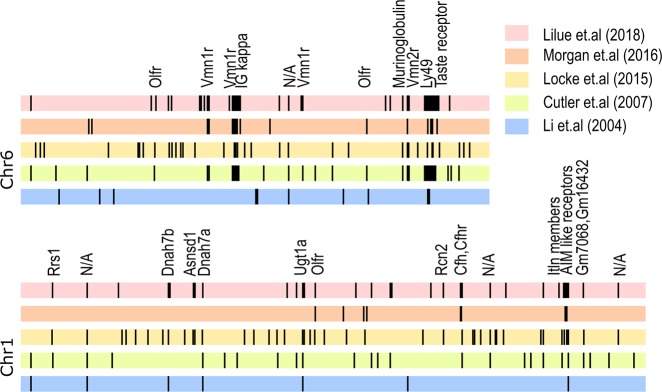
“Cutler and colleagues [19] cataloged copy number variations in 41 inbred strains (green).”
BackgroundGenomic segmental polymorphisms in inbred mouse strains
Li, J., Jiang, T., Mao, J., Balmain, A., Peterson, L. E., Harris, C. P., Rao, P. H., Havlak, P., Gibbs, R. A., & Cai, W. (2004) · Nature Genetics · doi:10.1038/ng1417 · Cited by 105 · cited 2×
“In 2004, a high resolution whole genome Bacterial Artificial Chromosome (BAC) array analysis reported ‘segmental polymorphisms’ between mouse strains C57BL/6J and 129/ Sv [18].”
BackgroundEvolution of the Ly49 and Nkrp1 recognition systems
Carlyle, J. R., Mesci, A., Fine, J. H., Chen, P., Bélanger, S., Tai, L., & Makrigiannis, A. P. (2008) · Seminars in Immunology · doi:10.1016/j.smim.2008.05.004 · Cited by 105 · cited 1×
“Examples include MHC, natural killer gene complex [22,23], T-cell receptors [24], and immunoglobulin variable regions [25], which play central roles in non-self-recognition and adaptive immunity.”
BackgroundShahan, K., Denaro, M., Gilmartin, M., Shi, Y., & Derman, E. (1987) · Molecular and Cellular Biology · doi:10.1128/mcb.7.5.1947 · Cited by 103
Doran, A. G., Wong, K., Flint, J., Adams, D. J., Hunter, K. W., & Keane, T. M. (2016) · Genome Biology · doi:10.1186/s13059-016-1024-y · Cited by 101 · cited 1×
“Paired-end reads are aligned to the C57BL/6J reference genome to identify SNPs, indels, and structure variations (SVs) [16,17].”
MethodSelf-citationA Giant GTPase, Very Large Inducible GTPase-1, Is Inducible by IFNs
Klamp, T., Boehm, U., Schenk, D., Pfeffer, K., & Howard, J. C. (2003) · The Journal of Immunology · doi:10.4049/jimmunol.171.3.1255 · Cited by 99 · cited 2×
“They are highly expressed in lymph nodes and whole blood in humans [41] and are inducible by both type I and type II interferons (IFNs) in mice [42].”
BackgroundCrasto, C. J., Marenco, L., Miller, P., & Shepherd, G. (2002) · Nucleic Acids Research · doi:10.1093/nar/30.1.354 · Cited by 91 · cited 1×
“Multiple OR members from strains 129S1/SvI, 129X1/SvI, 129S6/SvEvTac, A/J, AKR/J, BALB/c, C57BL/6, and DBA/ 2J were amplified from genomic DNA [51,52] and sequences available [53].”
MethodImmunogenetics of the Q and TL regions of the mouse.
Flaherty, L., Elliott, E. A., Tine, J. A., Walsh, A. C., & Waters, J. (1990) · PubMed · Cited by 91
Rapid turnover and species-specificity of vomeronasal pheromone receptor genes in mice and rats
Grus, W. E., & Zhang, J. (2004) · Gene · doi:10.1016/j.gene.2004.07.037 · Cited by 90
Ferrero, D. M., Wacker, D., Roque, M. A., Baldwin, M. W., Stevens, R. C., & Liberles, S. D. (2012) · ACS Chemical Biology · doi:10.1021/cb300111e · Cited by 89 · cited 1×
“These members are reported as ORs to recognise ethological odors [54].”
BackgroundThe genomic basis of vomeronasal-mediated behaviour
Ibarra-Soria, X., Levitin, M. O., & Logan, D. W. (2013) · Mammalian Genome · doi:10.1007/s00335-013-9463-1 · Cited by 87 · cited 4×
“These members are reported as ORs to recognise ethological odors [54].”
BackgroundInfluentialDidion, J. P., Morgan, A. P., Clayshulte, A. M.-F., Mcmullan, R. C., Yadgary, L., Petkov, P. M., Bell, T. A., Gatti, D. M., Crowley, J. J., Hua, K., et al. (2015) · PLOS Genetics · doi:10.1371/journal.pgen.1004850 · Cited by 85 · cited 1×
“, red queen hypothesis) [92], kin selection [93], mating preference [94], and even selective sweeps due to strong positive selection [95,96].”
BackgroundTranscriptional analysis of the three Nlrp1 paralogs in mice
Sastalla, I., Crown, D., Masters, S. L., McKenzie, A., Leppla, S. H., & Moayeri, M. (2013) · BMC Genomics · doi:10.1186/1471-2164-14-188 · Cited by 78 · cited 1×
“Other loci include oligoadenylate-synthetase 1 (Oas1) complex [26], AIM2-like receptors [27], and Schlafen gene family [28] for virus innate immune response; NOD-like receptors—Nlrp1—for anthrax lethal toxin resistance [29]; immunity-related GTPases (IRGs) for intracellular pathogen resistance [13]; and α and β defens…”
BackgroundNakaya, Y., Lilue, J., Stavrou, S., Moran, E. A., & Ross, S. R. (2017) · mBio · doi:10.1128/mbio.00944-17 · Cited by 74 · cited 1×
“Other loci include oligoadenylate-synthetase 1 (Oas1) complex [26], AIM2-like receptors [27], and Schlafen gene family [28] for virus innate immune response; NOD-like receptors—Nlrp1—for anthrax lethal toxin resistance [29]; immunity-related GTPases (IRGs) for intracellular pathogen resistance [13]; and α and β defens…”
BackgroundSelf-citationGotz, R. (2000) · Human Molecular Genetics · doi:10.1093/hmg/9.17.2479 · Cited by 64
Genomic copy number variation in Mus musculus
Locke, M. E. O., Milojevic, M., Eitutis, S. T., Patel, N., Wishart, A. E., Daley, M., & Hill, K. A. (2015) · BMC Genomics · doi:10.1186/s12864-015-1713-z · Cited by 61 · cited 1×
“Locke and colleagues [20] identified genome regions with high copy number variation calls in 351 different mouse strains and wild-caught mice (yellow).”
BackgroundShanahan, M. T., Tanabe, H., & Ouellette, A. J. (2011) · Infection and Immunity · doi:10.1128/iai.00996-10 · Cited by 61 · cited 1×
“Other loci include oligoadenylate-synthetase 1 (Oas1) complex [26], AIM2-like receptors [27], and Schlafen gene family [28] for virus innate immune response; NOD-like receptors—Nlrp1—for anthrax lethal toxin resistance [29]; immunity-related GTPases (IRGs) for intracellular pathogen resistance [13]; and α and β defens…”
BackgroundInbred mouse strains C57BL/6J and DBA/2J vary in sensitivity to a subset of bitter stimuli
Boughter, J. D., Raghow, S., Nelson, T. M., & Munger, S. D. (2005) · BMC Genetics · doi:10.1186/1471-2156-6-36 · Cited by 60 · cited 1×
“Indeed, variations in aversion to chemical substances were observed in BXD mice [48] and between mouse strains C3HeB/FeJ and SWR/J [49].”
BackgroundMotrán, C. C., Díaz, F. L., Gruppi, A., Slavin, D. A., Chatton, B., & Bocco, J. L. (2002) · Journal of Leukocyte Biology · doi:10.1189/jlb.72.3.512 · Cited by 59 · cited 1×
“Human PSGs play an essential role in the regulation of maternal immunity, by protecting a fetus from immune responses in case of infection, inflammation, and trauma [89].”
BackgroundGubits, R. M., Lynch, K. R., Kulkarni, A. B., Dolan, K. P., Gresik, E. W., Hollander, P. A., & Feigelson, P. (1984) · Journal of Biological Chemistry · doi:10.1016/s0021-9258(18)90817-3 · Cited by 59 · cited 1×
“As ligands for VRs [63], the major urinary proteins (Mups) are a set of 18–19 kDa communication proteins abundant in mouse urine and other secretions, including lacrimal, parotid, submaxillary, sublingual, preputial, and mammary glands [64,65].”
BackgroundIdentification of two cerebral malaria resistance loci using an inbred wild-derived mouse strain
Bagot, S., Campino, S., Penha-Gonçalves, C., Pied, S., Cazenave, P.-A., & Holmberg, D. (2002) · Proceedings of the National Academy of Sciences · doi:10.1073/pnas.152215199 · Cited by 58 · cited 1×
“Wild-derived strains are increasingly employed as mouse models to study phenotypes—such as resistance against Orthomyxovirus [11], virulent Toxoplasma gondii strains (CIM, CAST/EiJ, and PWK/PhJ) [12,13], resistance to anticoagulant rodenticides (SPRET/EiJ) [14], and resistance to cerebral Plasmodium berghei (WLA/Pas)…”
BackgroundOlfactory Deficits Cause Anxiety-Like Behaviors in Mice
Glinka, M. E., Samuels, B. A., Diodato, A., Teillon, J., Feng Mei, D., Shykind, B. M., Hen, R., & Fleischmann, A. (2012) · The Journal of Neuroscience · doi:10.1523/jneurosci.4287-11.2012 · Cited by 56 · cited 4×
“These members are reported as ORs to recognise ethological odors [54].”
BackgroundInfluentialR2d2 Drives Selfish Sweeps in the House Mouse
Didion, J. P., Morgan, A. P., Yadgary, L., Bell, T. A., McMullan, R. C., Ortiz de Solorzano, L., Britton-Davidian, J., Bult, C. J., Campbell, K. J., Castiglia, R., et al. (2016) · Molecular Biology and Evolution · doi:10.1093/molbev/msw036 · Cited by 54 · cited 1×
“, red queen hypothesis) [92], kin selection [93], mating preference [94], and even selective sweeps due to strong positive selection [95,96].”
BackgroundLiu, Y., Soto, I., Tong, Q., Chin, A., Bühring, H.-J., Wu, T., Zen, K., & Parkos, C. A. (2005) · Journal of Biological Chemistry · doi:10.1074/jbc.m506419200 · Cited by 54 · cited 1×
“Signal-regulatory protein beta 1 members (SIRPB1) are cell surface glycoproteins expressed in leukocytes, which positively regulate neutrophil transepithelial migration [38].”
BackgroundMouse Immunoglobulin Heavy Chains Are Coded by Multiple Germ Line Variable Region Genes
Barstad, P. A., Farnsworth, V., WEIGERT, M. G., Cohn, M., & Hood, L. (1974) · Proceedings of the National Academy of Sciences · doi:10.1073/pnas.71.10.4096 · Cited by 53 · cited 1×
“Examples include MHC, natural killer gene complex [22,23], T-cell receptors [24], and immunoglobulin variable regions [25], which play central roles in non-self-recognition and adaptive immunity.”
BackgroundSpecies Specificity in Rodent Pheromone Receptor Repertoires
Lane, R. P., Young, J., Newman, T., & Trask, B. J. (2004) · Genome Research · doi:10.1101/gr.2117004 · Cited by 52
Taste Sensitivities to PROP and PTC Vary Independently in Mice
Nelson, T. M., Munger, S. D., & Boughter, J. D. (2003) · Chemical Senses · doi:10.1093/chemse/bjg062 · Cited by 52 · cited 1×
“Indeed, variations in aversion to chemical substances were observed in BXD mice [48] and between mouse strains C3HeB/FeJ and SWR/J [49].”
BackgroundGreen, R. R., Wilkins, C. R., Thomas, S., Sekine, A., Hendrick, D., Voss, K., Ireton, R. C., Mooney, M. A., Tisoncik-Go, J., Choonoo, G., et al. (2017) · G3 Genes Genomes Genetics · doi:10.1534/g3.117.041624 · Cited by 50 · cited 1×
“Other loci include oligoadenylate-synthetase 1 (Oas1) complex [26], AIM2-like receptors [27], and Schlafen gene family [28] for virus innate immune response; NOD-like receptors—Nlrp1—for anthrax lethal toxin resistance [29]; immunity-related GTPases (IRGs) for intracellular pathogen resistance [13]; and α and β defens…”
BackgroundActivation and pathogenic manipulation of the sensors of the innate immune system
Odendall, C., & Kagan, J. C. (2017) · Microbes and Infection · doi:10.1016/j.micinf.2017.01.003 · Cited by 47 · cited 1×
“The trade-off of these adverse alleles is still unclear; however, pathogens are reported to manipulate immunity regulation of host as evasion strategies, and SERPINA is a potential target [45].”
BackgroundCivetta, A. (2003) · Molecular Biology and Evolution · doi:10.1093/molbev/msg002 · Cited by 47 · cited 1×
“Rapid evolution can be found within their sperm-egg adhesion domains [86].”
BackgroundOn naming H2 haplotypes: functional significance of MHC class Ib alleles
Lindahl, K. F. (1997) · Immunogenetics · doi:10.1007/s002510050242 · Cited by 45 · cited 1×
“Nevertheless, there are many loci in classical mouse strains, like the major histocompatibility complex (MHC), which have extensive haplotypic diversity [9,10].”
BackgroundGenomic variation in the vomeronasal receptor gene repertoires of inbred mice
Wynn, E. H., Sánchez-Andrade, G., Carss, K., & Logan, D. W. (2012) · BMC Genomics · doi:10.1186/1471-2164-13-415 · Cited by 40 · cited 3×
“These results suggest that VRs may contribute to reproductive isolation between closely related subspecies [57].”
BackgroundClonal and atypical Toxoplasma strain differences in virulence vary with mouse sub-species
Hassan, M. A., Olijnik, A.-A., Frickel, E., & Saeij, J. P. J. (2018) · International Journal for Parasitology · doi:10.1016/j.ijpara.2018.08.007 · Cited by 40 · cited 1×
“Wild-derived strains are increasingly employed as mouse models to study phenotypes—such as resistance against Orthomyxovirus [11], virulent Toxoplasma gondii strains (CIM, CAST/EiJ, and PWK/PhJ) [12,13], resistance to anticoagulant rodenticides (SPRET/EiJ) [14], and resistance to cerebral Plasmodium berghei (WLA/Pas)…”
BackgroundSPEER—A New Family of Testis-Specific Genes from the Mouse1
Spiess, A., Walther, N., Müller, N., Balvers, M., Hansis, C., & Ivell, R. (2003) · Biology of Reproduction · doi:10.1095/biolreprod.102.011593 · Cited by 38 · cited 1×
“Speer homologs are not present in most other mammal species including humans [87], and their function remains unclear.”
BackgroundThe Microevolution of V1r Vomeronasal Receptor Genes in Mice
Park, S. H., Podlaha, O., Grus, W. E., & Zhang, J. (2011) · Genome Biology and Evolution · doi:10.1093/gbe/evr039 · Cited by 36
Hattori, T., Osakada, T., Masaoka, T., Ooyama, R., Horio, N., Mogi, K., Nagasawa, M., Haga‐Yamanaka, S., Touhara, K., & Kikusui, T. (2017) · Current Biology · doi:10.1016/j.cub.2017.09.013 · Cited by 34 · cited 1×
“Esp1 is reported to mediate Bruce effect in mice [70], and Esp22 secreted by juvenile mice may inhibit adult male mating behaviour[71].”
BackgroundWang, W., Zhong, Q., Teng, L., Bhatnagar, N., Sharma, B., Zhang, X., Luther, W., Haynes, L. P., Burgoyne, R. D., Vidal, M., et al. (2013) · Oncogene · doi:10.1038/onc.2013.290 · Cited by 33 · cited 1×
“Knockdown of HPCAL1 in neuroblastoma cells led to impaired neurite outgrowth and inhibited sympathetic neuronal differentiation [81].”
BackgroundDiversity of major urinary proteins (MUPs) in wild house mice
Thoß, M., Enk, V. M., Yu, H., Miller, I., Luzynski, K. C., Bálint, B., Smith, S., Razzazi‐Fazeli, E., & Penn, D. J. (2016) · Scientific Reports · doi:10.1038/srep38378 · Cited by 30 · cited 1×
“It was proposed Mup alleles are also highly conserved between individual wild mice [69].”
BackgroundNK gene complex dynamics and selection for NK cell receptors
Brown, M. G., & Scalzo, A. A. (2008) · Seminars in Immunology · doi:10.1016/j.smim.2008.06.004 · Cited by 30 · cited 1×
“Examples include MHC, natural killer gene complex [22,23], T-cell receptors [24], and immunoglobulin variable regions [25], which play central roles in non-self-recognition and adaptive immunity.”
BackgroundStrain-specific copy number variation in the intelectin locus on the 129 mouse chromosome 1
Lu, Z. H., Domenico, A. I. D., Wright, S. H., Knight, P. A., Whitelaw, B., & Pemberton, A. D. (2011) · BMC Genomics · doi:10.1186/1471-2164-12-110 · Cited by 28 · cited 1×
“In the C57BL/6J reference genome, only one Itln allele can be found; however, BALB/cJ has two (Itln1 and Itlnb) [31], and strain 129S7 has up to 6 Itln alleles (Itln1 to Itln6) [32].”
BackgroundYoder, A. D., & Larsen, P. A. (2014) · Frontiers in Neuroanatomy · doi:10.3389/fnana.2014.00153 · Cited by 26
The Evolutionary Fates of a Large Segmental Duplication in Mouse
Morgan, A. P., Holt, J., McMullan, R., Bell, T. A., Clayshulte, A. M.-F., Didion, J. P., Yadgary, L., Thybert, D., Odom, D. T., Flicek, P., et al. (2016) · Genetics · doi:10.1534/genetics.116.191007 · Cited by 24 · cited 2×
“Morgan and colleagues [21] used a combination of wild and inbred mouse strains to define copy number variable regions (orange).”
BackgroundFine Haplotype Structure of a Chromosome 17 Region in the Laboratory and Wild Mouse
Trachtulec, Z., Vlček, Č., Mihola, O., Gregorová, S., Fotopulosová, V., & Forejt, J. (2008) · Genetics · doi:10.1534/genetics.107.082404 · Cited by 22
Jin, X. Y., Guan, Y., Shen, H., Pang, Y., Liu, L., Jia, Q., Meng, F., & Zhang, X. (2018) · International Journal of Endocrinology · doi:10.1155/2018/1705478 · Cited by 20 · cited 1×
“A CNV in SIRPB1 has been reported in humans to be associated with autoimmune thyroid diseases [39] Fig 2.”
BackgroundNobuhara, H., Kuida, K., Furutani, M., Shiroishi, T., Moriwaki, K., Yanagi, Y., & Tada, T. (1989) · Immunogenetics · doi:10.1007/bf02421171 · Cited by 20 · cited 1×
“Examples include MHC, natural killer gene complex [22,23], T-cell receptors [24], and immunoglobulin variable regions [25], which play central roles in non-self-recognition and adaptive immunity.”
BackgroundKajimoto, N., Kirpekar, S. M., & Wakade, A. R. (1972) · The Journal of Physiology · doi:10.1113/jphysiol.1972.sp009883 · Cited by 16 · cited 1×
“and impulsive-disinhibited personality [40].”
Nitto, T., Dyer, K. D., Mejía, R., Byström, J., Wynn, T. A., & Rosenberg, H. F. (2004) · Genes and Immunity · doi:10.1038/sj.gene.6364143 · Cited by 13 · cited 1×
“Mouse Ears can promote virus clearance [36] and play a role in the Schistosoma resistance [37].”
Background
Cited by
Spatial multi-omics reveals cell-type-specific nuclear compartments
Takei, Y., Yang, Y., White, J. A., Goronzy, I. N., Yun, J., Prasad, M., Ombelets, L. J., Schindler, S., Bhat, P., Guttman, M., et al. (2025) · Nature · doi:10.1038/s41586-025-08838-x · Cited by 118
The Dichotomous Responses Driven by β-Defensins
Shelley, J. R., Davidson, D. J., & Dorin, J. R. (2020) · Frontiers in Immunology · doi:10.3389/fimmu.2020.01176 · Cited by 74
Chebib, J., Jackson, B., López‐Cortegano, E., Tautz, D., & Keightley, P. D. (2020) · Heredity · doi:10.1038/s41437-020-00361-1 · Cited by 46
“This issue may also be alleviated as more complete genome references become available for strains other than C57BL/6J (Lilue et al. 2019).”
BackgroundInfluentialProgress in Vocal Fold Regenerative Biomaterials: An Immunological Perspective
Coburn, P. T., Li, X., Li, J., Kishimoto, Y., & Li‐Jessen, N. Y. K. (2021) · Advanced NanoBiomed Research · doi:10.1002/anbr.202100119 · Cited by 31
Inferring the Allelic Series at QTL in Multiparental Populations
Crouse, W. L., Kelada, S. N. P., & Valdar, W. S. J. (2020) · Genetics · doi:10.1534/genetics.120.303393 · Cited by 12
Metadata
- Authors
- Lilue, J., Shivalikanjli, A., Adams, D. J., & Keane, T. M.
- Affiliations
- European Bioinformatics Institute (GB)
- Wellcome Sanger Institute (GB)
- Corresponding author
- Keane, Thomas M.
- Venue
- PLOS Genetics
- Publisher
- Public Library of Science (PLoS)
- Published
- 2019-11-14
- Volume
- 15
- Issue
- 11
- Pages
- e1008446
- ISSN
- 1553-7390 (ISSN-L)
- 1553-7404
- PMC
- PMC6855407
- OpenAlex
- W2983713509
- Cited by
- 19
- References
- 98
- Citations by year
- 2025: 6 · 2024: 4 · 2023: 1 · 2021: 3 · 2020: 5
- FWCI
- 0.18
- Type
- journal article
- Language
- en
- Open access
- gold
- doi.org
- Licence
- Locations
- PLoS Genetics (publishedVersion, cc-by)
- Europe PMC (PubMed Central) (publishedVersion, cc-by)
- PubMed Central (publishedVersion, cc-by)
- PubMed (publishedVersion)
- DOAJ (DOAJ: Directory of Open Access Journals) (submittedVersion, cc-by-sa)
- Figshare (submittedVersion, cc-by)
- Funders
- Wellcome Trust (100956, 100956/Z/13/Z)
- Cancer Research UK (21717, 14356)
- Medical Research Council (MR/R017565/1, MR/L007428/1)
- Biotechnology and Biological Sciences Research Council (BB/M000281/1)
- Topics
- Life Sciences › Biochemistry, Genetics and Molecular Biology › Molecular Biology › Genomics and Phylogenetic Studies
- Life Sciences › Biochemistry, Genetics and Molecular Biology › Genetics › Genetic Mapping and Diversity in Plants and Animals
- Life Sciences › Biochemistry, Genetics and Molecular Biology › Genetics › Genetic and phenotypic traits in livestock
- Keywords
- mouse strains, C57BL/6J mice, reference genome, immune system genes, pathogen response, disease modeling, ancestral origins
- MeSH terms
- Animals, Chromosome Mapping, Haplotypes, Humans, Inbreeding, Phenotype, Genome, Animals, Inbred Strains, Genomics, Mice
About these checks
Registry, retraction, Cites and statistics results are computed, not judged, with one exception: a printed reference that no index lists is read once by a model before it counts as a citation error. Claims are extracted by a model and kept only when their quote appears verbatim in the text; each cited source is then checked, with a model’s help, for whether it says what the claim relies on. Those verdicts can be wrong — read the claim’s quote and the cited source before relying on one.
Statistics and arithmetic are recomputed, not judged.
Confidence bands are shown only for fields calibrated on our annotated test set. None is calibrated yet, so no band is shown.
What counts as a claim ›How we measure confidence ›How we check this ›
Are you an author, or do you see a problem with this page? Request a review
Data sources
Bibliographic data: Semantic Scholar, OpenAlex, Crossref.
Contains information from the Semantic Scholar Academic Graph Datasets, made available under the ODC Attribution License (ODC-BY 1.0).
Semantic Scholar’s data is described in: Kinney, R., et al. (2023). The Semantic Scholar Open Data Platform. arXiv:2301.10140.
