

The DOI matches its Crossref record; 7 of the 7 references it cites were found in a registry or an index.
Fine-mapping from summary data with the “Sum of Single Effects” model
Open accessPublished version of a preprint
Abstract
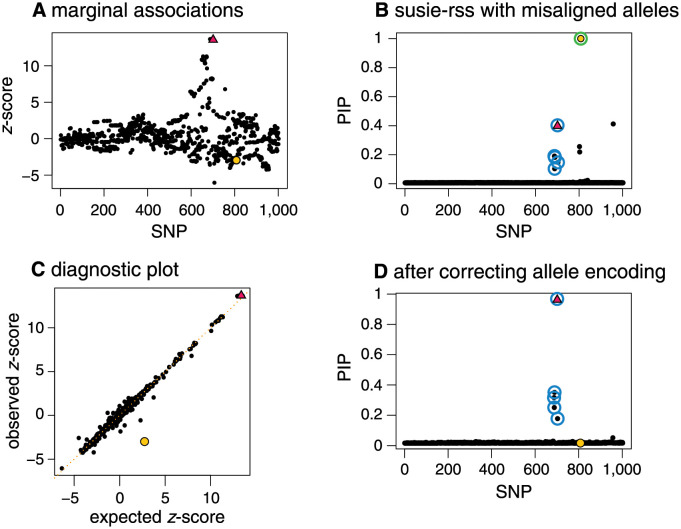
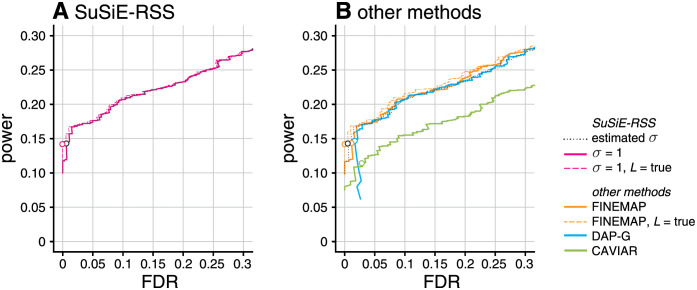
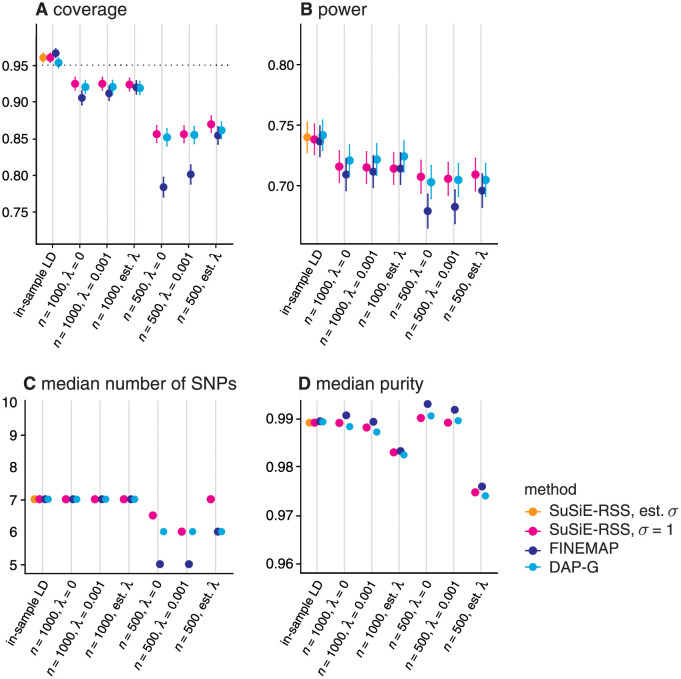
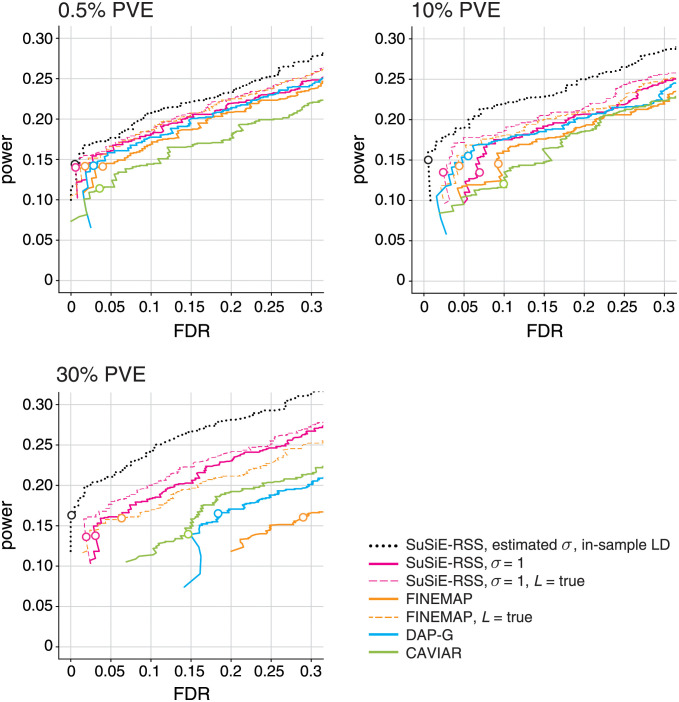
In recent work, Wang et al introduced the “Sum of Single Effects” ( SuSiE ) model, and showed that it provides a simple and efficient approach to fine-mapping genetic variants from individual-level data. Here we present new methods for fitting the SuSiE model to summary data, for example to single-SNP z -scores from an association study and linkage disequilibrium (LD) values estimated from a suitable reference panel. To develop these new methods, we first describe a simple, generic strategy for extending any individual-level data method to deal with summary data. The key idea is to replace the usual regression likelihood with an analogous likelihood based on summary data. We show that existing fine-mapping methods such as FINEMAP and CAVIAR also (implicitly) use this strategy, but in different ways, and so this provides a common framework for understanding different methods for fine-mapping. We investigate other common practical issues in fine-mapping with summary data, including problems caused by inconsistencies between the z -scores and LD estimates, and we develop diagnostics to identify these inconsistencies. We also present a new refinement procedure that improves model fits in some data sets, and hence improves overall reliability of the SuSiE fine-mapping results. Detailed evaluations of fine-mapping methods in a range of simulated data sets show that SuSiE applied to summary data is competitive, in both speed and accuracy, with the best available fine-mapping methods for summary data.
Overview
The claims and statistics of this paper haven’t been checked yet.
Run the check — free, no account needed. It reads the open-access text and checks the sources it cites.
Integrity signals
Registry
Cites
Statistics
Figures


Verification
Claims the paper makes
The claims and statistics of this paper haven’t been checked yet.
Run the check — free, no account needed. It reads the open-access text and checks the sources it cites.
Claims other papers make about this one
Each is checked against this paper’s own text: does it say what the citing paper says it does?
The source backs part of the claim, not all of it — or backs it for a different population, condition or comparison.
In the citing paper
“The s values from SuSiE-RSS ranged from 0.007 to 0.027 across fine-mapped loci, and the diagnostic plots demonstrated high consistency of LD between the summary statistics and reference panel (Supplementary Fig. 19a–g).”
From Shared genetic architectures of educational attainment in East Asian and European populations (2024) · cites this paper as [34]
Experimental — accuracy not yet measured
Self-check
Percentages, sums and reported differences re-computed from the paper’s own numbers.
The self-check needs the paper’s full text.
Citations
Cites
Second-generation PLINK: rising to the challenge of larger and richer datasets
Chang, C. C., Chow, C. C., Tellier, L. C., Vattikuti, S., Purcell, S. M., & Lee, J. J. (2015) · Gigascience · doi:10.1186/s13742-015-0047-8 · Cited by 12,709
METAL: fast and efficient meta-analysis of genomewide association scans
Willer, C. J., Li, Y., & Abecasis, G. R. (2010) · Bioinformatics · doi:10.1093/bioinformatics/btq340 · Cited by 5,205
The Genotype-Tissue Expression (GTEx) pilot analysis: Multitissue gene regulation in humans
The GTEx Consortium, Ardlie, K. G., Deluca, D. S., Segrè, A. V., Sullivan, T. J., Young, T. R., Gelfand, E. T., Trowbridge, C. A., Maller, J. B., Tukiainen, T., et al. (2015) · Science · doi:10.1126/science.1262110 · Cited by 5,062
Self-citationGiambartolomei, C., Vukcevic, D., Schadt, E. E., Franke, L., Hingorani, A. D., Wallace, C., & Plagnol, V. (2014) · PLoS Genetics · doi:10.1371/journal.pgen.1004383 · Cited by 4,261
A well-conditioned estimator for large-dimensional covariance matrices
Ledoit, O., & Wolf, M. (2004) · Journal of Multivariate Analysis · doi:10.1016/s0047-259x(03)00096-4 · Cited by 3,046 · cited 1×
“A common way to improve estimation of covariance matrices is to use regularization [38], replacing R̂ with R̂l, R̂l ≔ ð1 lÞR̂0 þ lI; ð23Þ”
Genetic Investigation of ANthropometric Traits (GIANT) Consortium, Yang, J., DIAbetes Genetics Replication And Meta-analysis (DIAGRAM) Consortium, Ferreira, T., Morris, A. P., Medland, S. E., Madden, P. A. F., Heath, A. C., Martin, N. G., Montgomery, G. W., et al. (2012) · Nature Genetics · doi:10.1038/ng.2213 · Cited by 1,712
High-Resolution Mapping of Expression-QTLs Yields Insight into Human Gene Regulation
Veyrieras, J.-B., Kudaravalli, S., Kim, S. Y., Dermitzakis, E. T., Gilad, Y., Stephens, M., & Pritchard, J. K. (2008) · PLoS Genetics · doi:10.1371/journal.pgen.1000214 · Cited by 536
Self-citation
Research works printed but not linked: 45
- A Hutchinson, 2020, Fine-mapping genetic associations, Human Molecular Genetics, 29, R81, 10.1093/hmg/ddaa148 · DOI
- JB Maller, 2012, Bayesian refinement of association signals for 14 loci in 3 common diseases, Nature Genetics, 44, 1294, 10.1038/ng.2435 · DOI
- Z Kote-Jarai, 2013, Fine-mapping identifies multiple prostate cancer risk loci at 5p15, one of which associates with TERT expression, Human Molecular Genetics, 22, 2520, 10.1093/hmg/ddt086 · DOI
- DJ Schaid, 2018, From genome-wide associations to candidate causal variants by statistical fine-mapping, Nature Reviews Genetics, 19, 491, 10.1038/s41576-018-0016-z · DOI
- SL Spain, 2015, Strategies for fine-mapping complex traits, Human Molecular Genetics, 24, R111, 10.1093/hmg/ddv260 · DOI
- PM Visscher, 2017, 10 years of GWAS discovery: biology, function, and translation, American Journal of Human Genetics, 101, 5, 10.1016/j.ajhg.2017.06.005 · DOI · Paper page
- F Hormozdiari, 2014, Identifying causal variants at loci with multiple signals of association, Genetics, 198, 497, 10.1534/genetics.114.167908 · DOI · Paper page
- G Kichaev, 2014, Integrating functional data to prioritize causal variants in statistical fine-mapping studies, PLoS Genetics, 10, e1004722, 10.1371/journal.pgen.1004722 · DOI
- B Servin, 2007, Imputation-based analysis of association studies: candidate regions and quantitative traits, PLoS Genetics, 3, e114, 10.1371/journal.pgen.0030114 · DOI
- W Chen, 2015, Fine mapping causal variants with an approximate Bayesian method using marginal test statistics, Genetics, 200, 719, 10.1534/genetics.115.176107 · DOI
- C Benner, 2016, FINEMAP: efficient variable selection using summary data from genome-wide association studies, Bioinformatics, 32, 1493, 10.1093/bioinformatics/btw018 · DOI · Paper page
- Y Li, 2016, Joint Bayesian inference of risk variants and tissue-specific epigenomic enrichments across multiple complex human diseases, Nucleic Acids Research, 44, e144, 10.1093/nar/gkw627 · DOI
- X Wen, 2016, Efficient integrative multi-SNP association analysis via deterministic approximation of posteriors, American Journal of Human Genetics, 98, 1114, 10.1016/j.ajhg.2016.03.029 · DOI
- PJ Newcombe, 2016, JAM: a scalable Bayesian framework for joint analysis of marginal SNP effects, Genetic Epidemiology, 40, 188, 10.1002/gepi.21953 · DOI
- Y Lee, 2018, Bayesian multi-SNP genetic association analysis: control of FDR and use of summary statistics, bioRxiv
- G Wang, 2020, A simple new approach to variable selection in regression, with application to genetic fine mapping, Journal of the Royal Statistical Society, Series B, 82, 1273, 10.1111/rssb.12388 · DOI · Paper page
- M Sesia, 2020, Multi-resolution localization of causal variants across the genome, Nature Communications, 11, 1093, 10.1038/s41467-020-14791-2 · DOI
- C Wallace, 2015, Dissection of a complex disease susceptibility region using a Bayesian stochastic search approach to fine mapping, PLoS Genetics, 11, e1005272, 10.1371/journal.pgen.1005272 · DOI
- A Hutchinson, 2020, Improving the coverage of credible sets in Bayesian genetic fine-mapping, PLoS Computational Biology, 16, e1007829, 10.1371/journal.pcbi.1007829 · DOI
- C Benner, 2018, Refining fine-mapping: effect sizes and regional heritability, bioRxiv
- B Pasaniuc, 2017, Dissecting the genetics of complex traits using summary association statistics, Nature Reviews Genetics, 18, 117, 10.1038/nrg.2016.142 · DOI
- X Zhu, 2017, Bayesian large-scale multiple regression with summary statistics from genome-wide association studies, Annals of Applied Statistics, 11, 1561
- analysis Initiative GBM, 2022, Meta-analysis fine-mapping is often miscalibrated at single-variant resolution, medRxiv
- Chipman H, George EI, McCulloch RE. The practical implementation of Bayesian model selection. In: Model Selection. vol. 38 of IMS Lecture Notes. Institute of Mathematical Statistics; 2001. p. 65–116. · DOI · Paper page
- JK Pickrell, 2014, Joint analysis of functional genomic data and genome-wide association studies of 18 human traits, American Journal of Human Genetics, 94, 559, 10.1016/j.ajhg.2014.03.004 · DOI
- C Benner, 2017, Prospects of fine-mapping trait-associated genomic regions by using summary statistics from genome-wide association studies, American Journal of Human Genetics, 101, 539, 10.1016/j.ajhg.2017.08.012 · DOI
- M Stephens, 2009, Bayesian statistical methods for genetic association studies, Nature Reviews Genetics, 10, 681, 10.1038/nrg2615 · DOI
- J Wakefield, 2009, Bayes factors for genome-wide association studies: comparison with P-values, Genetic Epidemiology, 33, 79, 10.1002/gepi.20359 · DOI
- Y Zou, 2021, Fine-mapping from summary data with the “Sum of Single Effects” model, bioRxiv
- JA Lozano, 2017, The multivariate normal distribution framework for analyzing association studies, bioRxiv
- Y Park, 2017, A Bayesian approach to mediation analysis predicts 206 causal target genes in Alzheimer’s disease, bioRxiv
- TSH Mak, 2017, Polygenic scores via penalized regression on summary statistics, Genetic Epidemiology, 41, 469, 10.1002/gepi.22050 · DOI
- B Pasaniuc, 2014, Fast and accurate imputation of summary statistics enhances evidence of functional enrichment, Bioinformatics, 30, 2906, 10.1093/bioinformatics/btu416 · DOI
- W Chen, 2021, Improved analyses of GWAS summary statistics by reducing data heterogeneity and errors, Nature Communications, 12, 7117, 10.1038/s41467-021-27438-7 · DOI
- D Lee, 2013, DIST: direct imputation of summary statistics for unmeasured SNPs, Bioinformatics, 29, 2925, 10.1093/bioinformatics/btt500 · DOI
- N LaPierre, 2020, Identifying causal variants by fine mapping across multiple studies, bioRxiv
- C Bycroft, 2018, The UK Biobank resource with deep phenotyping and genomic data, Nature, 562, 203, 10.1038/s41586-018-0579-z · DOI · Paper page
- Y Guan, 2011, Bayesian variable selection regression for genome-wide association studies and other large-scale problems, Annals of Applied Statistics, 5, 1780, 10.1214/11-AOAS455 · DOI
- W Bodmer, 2008, Common and rare variants in multifactorial susceptibility to common diseases, Nature Genetics, 40, 695, 10.1038/ng.f.136 · DOI · Paper page
- JPA Ioannidis, 2006, Implications of small effect sizes of individual genetic variants on the design and interpretation of genetic association studies of complex diseases, American Journal of Epidemiology, 164, 609, 10.1093/aje/kwj259 · DOI
- AN Barbeira, 2021, Exploiting the GTEx resources to decipher the mechanisms at GWAS loci, Genome Biology, 22, 49, 10.1186/s13059-020-02252-4 · DOI
- X Wen, 2015, Cross-population joint analysis of eQTLs: fine mapping and functional annotation, PLoS Genetics, 11, e1005176, 10.1371/journal.pgen.1005176 · DOI
- Z Zhu, 2016, Integration of summary data from GWAS and eQTL studies predicts complex trait gene targets, Nature Genetics, 48, 481, 10.1038/ng.3538 · DOI · Paper page
- B Han, 2009, Rapid and accurate multiple testing correction and power estimation for millions of correlated markers, PLoS Genetics, 5, e1000456, 10.1371/journal.pgen.1000456 · DOI
- M Pirinen, 2013, Efficient computation with a linear mixed model on large-scale data sets with applications to genetic studies, Annals of Applied Statistics, 7, 369, 10.1214/12-AOAS586 · DOI
Cited by
Sorted by citations
Items 301–357 of 357
Denault, W. R. P., Carbonetto, P. S., Li, R., Wang, G., & Stephens, M. (2025) · bioRxiv (Cold Spring Harbor Laboratory) · doi:10.1101/2025.05.16.654543 · Cited by 3
“Our method retains the computational advantages of SuSiE and can be applied to summary statistics [17], making it practical for a wide range of fine-mapping studies.”
Self-citationGenome-wide association study of paediatric bacteraemia and sepsis
Lawless, D., Hodel, F., Thorball, C., Xu, Z.-M., Borghesi, A., Giannoni, E., Trück, J., Stocker, M., Posfay-Barbe, K., Heininger, U., et al. (2026) · EBioMedicine · doi:10.1016/j.ebiom.2026.106320
Yao, D., Yang, C.-X., Deng, B., Wang, P., He, S., Du, Z.-Q., & Liu, Z. (2026) · Animals · doi:10.3390/ani16121855
“Compared to traditional significance-based ranking, Bayesian fine-mapping methods, such as SuSiE [10], estimate posterior inclusion probabilities (PIPs) that quantify the likelihood of each variant being causal, thereby providing a probabilistic framework for SNP prioritization [11,12].”
InfluentialZhou, Y., Huang, J., Chen, X., Xu, L., Zhang, F., 白春晓, Yang, J., Fan, F., Wang, Y., Fan, Y., et al. (2026) · Cardiovascular Diabetology · doi:10.1186/s12933-026-03220-1
“To identify the most probable causal variants associated with ‘F’ factor, we used SuSIE (Sum of Single Effects) [88, 89] and FINEMAP [90, 91], both implemented within the R package echolocatoR(v.2.0.3).”
InfluentialGenetic‐Proteomic Integration Identifies Predictive Plasma Proteins for Multiple Sclerosis
Ding, Y., Hamitouche, D., Thebault, S., Kearns, P., Abdelhak, A., & Harroud, A. (2026) · Annals of Neurology · doi:10.1002/ana.78256
Genetic determinants of drug-induced gingival overgrowth
Kiattiubolwong, T., Nakhonsri, V., Katanyuwong, K., Jaihan, T., Klinhom, C., Ngamphiw, C., Wasitthankasem, R., Herzberg, M. C., Tongsima, S., & Kantaputra, P. N. (2026) · Scientific Reports · doi:10.1038/s41598-026-52779-y
“Genes with gene-level associations passing this threshold were subsequently fine-mapped using SuSiE 14 , which estimates the probability that each SNP is truly causal (posterior inclusion probability, PIP) and identifies credible SNP sets.”
InfluentialAn Accurate Genetic Colocalisation Method for the HLA Locus
Butler‐Laporte, G., Lu, T., Morris, S., Zhang, W., Band, G., Hamilton, F., Chong, A. Y.-Y., Lin, K., Nanjala, R., Richards, J. B., et al. (2026) · HLA · doi:10.1111/tan.70759 · Cited by 7
Yu, L., Deary, L. T., Liu, Q., Zhang, Q., & Zhao, S. (2026) · bioRxiv (Cold Spring Harbor Laboratory) · doi:10.64898/2026.04.27.721080
Piga, N.-N., Portelli, M. A., Shrine, N., Chen, J., Packer, R., Coley, K., Williams, A. T., Batini, C., John, C., Lutz, S. M., et al. (2026) · ERJ Open Research · doi:10.1183/23120541.00327-2026
“We used the Sum of Single Effects regression with summary statistics (SuSiE-RSS) [27] method to perform statistical fine-mapping on the replicated loci, as implemented in the R package susieR (v0.”
O'Mahony, D. G., Beasley, J., Zanti, M., Dennis, J., Dutta, D., Kraft, P., Kristensen, V. N., Chenevix‐Trench, G., Easton, D. F., & Michailidou, K. K. (2026) · medRxiv · doi:10.64898/2026.04.21.26351364
“Due to the lack of ground truth, these methods are often evaluated on simulated data [7,9 – 12] , which while convenient, it may not capture the complexity of real-world genetic architecture, particularly for heterogeneous traits such as cancer.”
InfluentialGenetic determinants of fatigue up to 2 years after radiotherapy in prostate cancer patients
Heumann, P., Aguado-Barrera, M. E., Jandu, H., Azria, D., Briers, E., Bultijnck, R., Chang-Claude, J., Choudhury, A., Dunning, A., Fachal, L., et al. (2026) · Nature Communications · doi:10.1038/s41467-026-72041-3
“Additional independent signals were examined in conditional analyses adjusted for genome-wide statistically signi fi cant SNPs. Fine-mapping was con-ductedusingtheSumofSingleEffectsmodelandthepackagesusieR 53 .”
Kaprio, L., Kiukkonen, A., Juuri, E., Rice, D. P. C., Ollila, H. M., & Strausz, S. J. (2026) · Human Molecular Genetics · doi:10.1093/hmg/ddag020
“To explore the causality of genomic variations in the ROBO1 locus related to CFM, a fine-mapping approach was employed using the SuSiE ‘Sum of Single Effects’ model [21].”
Huo, L., Tan, L., Wang, F., Sun, J., Niu, Y., Jiang, Y., Wu, M., Shi, J., Hao, Y., Wang, J., et al. (2026) · Journal of Pain Research · doi:10.2147/jpr.s581757
“Fine-mapping was conducted using the Sum of Single Effects (SuSiE) statistical framework, 10 which models the effects of multiple causal variants within a locus using summary-level association statistics.”
Genome-wide fine-mapping improves identification of causal variants
Wu, Y., Zheng, Z., Thibaut, L., Lin, T., Feng, Q., Cheng, H., Yengo, L., Goddard, M. E., Wray, N. R., Visscher, P. M., et al. (2026) · Nature Genetics · doi:10.1038/s41588-026-02549-3 · Cited by 23
Kahlani, M., Mesner, L. D., Madhu, V., Wagner, L., Kupkova, K., Pitas, H. J., Mello, A. C., Ghatan, S., Lappalainen, T., Sanjana, N. E., et al. (2026) · bioRxiv (Cold Spring Harbor Laboratory) · doi:10.64898/2026.02.11.705362 · Cited by 1
“We performed statistical fine-mapping of BMD GWAS loci to identify 95% credible sets containing likely causal variants using the Sum of Single Effects (SuSiE) model 13 .”
Genome-wide analysis implicates inner ear development in Ménière’s disease
Shi, Z.-Z., Mandla, R., Li, J.-J., Li, X.-Z., Zhang, Z., Chen, S., Lapinska, S., Flynn-Carroll, A., Pasaniuc, B., Epstein, D. J., et al. (2026) · medRxiv · doi:10.64898/2026.02.09.26345758
“To localize putative causal variants within genome-wide significant regions, we performed statistical fine-mapping using the Sum of Single Effects (SuSiE) 41 .”
Yang, C., Timsina, J., Liu, M., Budde, J., Kohlfeld, P., Brock, W., Morris, J. C., Holtzman, D. M., Sung, Y. J., & Cruchaga, C. (2026) · Alzheimer s & Dementia · doi:10.1002/alz.71164 · Cited by 1
Shetty, N. S., Pampana, A., Gaonkar, M. P., Nayak, A., Bal, H. S., Patel, N., Vekariya, N., Smith, J. G., Morrison, A. C., Yu, B., et al. (2026) · Circulation Genomic and Precision Medicine · doi:10.1161/circgen.124.005130
An Empirical Bayes Algorithm for Variable Selection With Applications in Genetic Fine‐Mapping
Dong, Q., Wang, X., Guan, X., Liang, L., Ke, X., & Peng, H. (2026) · Stat · doi:10.1002/sta4.70142
“Following previous studies (Wang et al. 2020; LaPierre et al. 2021; Zou et al. 2022), we applied a gene with 1001 SNPs for the upcoming simulation studies.”
Finding the genetic basis of adaptation: reducing complexity to improve trait mapping.
Yarkhunova-Kreye, Y., & Hancock, A. M. (2026) · Current Opinion in Genetics and Development · doi:10.1016/j.gde.2025.102432
Improve Power of Knockoffs with Annotation Information of Covariates
Zhang, X., Wang, L.-J., Li, C.-J., Lin, C., & Zhao, H. (2026) · doi:10.48550/arxiv.2601.02583
“…for settings where both the response and covariates are fully observed, which limits its practical applicability because only summary statistics of marginal associations between each response-covariate pair are available in many real-world settings rather than individual-level data [26, 27].”
Genome-Wide Association Study for Glucocorticoid-Induced Ocular Hypertension
Lama, J., Liu, R., Huerta‐Chagoya, A., Li, A., Huynh, K., Stanwyck, L. K., Han, S., Zhao, Y., Chan, W., Chen, L., et al. (2026) · Ophthalmology Science · doi:10.1016/j.xops.2026.101248
“We performed statistical fine-mapping of the GWAS summary statistics of genome-wide significant loci using SuSiE 27,28 from the susieR package (v0.”
Meng, T., Ma, L., Zhang, X. M., Han, J., Li, F., Wu, W., Liu, S., & Liu, A. (2026) · Human Mutation · doi:10.1155/humu/3061956
“Fine-mapping addresses this by refining each locus into a smaller set of plausible variants and, importantly, quantifying the remaining uncertainty (e.g., through posterior probabilities) [28].”
Hu, C., Yang, G., Xiong, H., Xie, Y., Yuan, Z., Liu, J., Wang, P., Li, M., Xu, J., Li, Q., et al. (2026) · Human Mutation · doi:10.1155/humu/5617762
“The cTWAS approach employs SuSiE for Bayesian fine-mapping, yielding posterior inclusion probabilities (PIPs) for each gene and SNP in each region [21, 22].”
Cao, X., Zhu, L., Liang, X., Zhang, S., & Sha, Q. (2025) · BMC Genomics · doi:10.1186/s12864-025-12239-9 · Cited by 1
“However, several powerful fine-mapping and colocalization approaches have been developed to leverage information on LD to identify the putative causal variants in a specific genomic region [51–53], which provides a great opportunity to construct a more informative GPN for future studies.”
Rabuzin, L., Heep, K., Sigfstead, S., & Boeva, V. (2025) · bioRxiv (Cold Spring Harbor Laboratory) · doi:10.1101/2025.11.27.690924
“Furthermore, integrating DeepCAST with fine-mapping [28], burden testing [9], or polygenic prioritization frameworks [24] may broaden its utility across varied study designs.”
Neuroimaging-derived brain endophenotypes link molecular mechanisms to Alzheimer’s disease and agingPreprint
Li, R., Feng, R., Liu, A., Cao, X., Jager, P. L. D., Bennett, D. A., Davatzikos, C. A., Wen, J., & Wang, G. (2025) · medRxiv · doi:10.1101/2025.11.25.25340884 · Cited by 1
Self-citationImputed transcriptional patterns in ancient genomes reveal molecular targets of selectionPreprint
André, M., Montinaro, F., Zapparoli, E., Provero, P., & Marnetto, D. (2025) · bioRxiv (Cold Spring Harbor Laboratory) · doi:10.1101/2025.11.21.689732
“For the fine-mapping we used summary-based SuSiE 30 , with the associations with time of each GRe* as summary statistics.”
InfluentialSun, X.-Y., Mews, M. A., Wheeler, N. R., Benchek, P. H., Gu, T.-J., Gomez, L., Ray, N., Reitz, C., Naj, A., Below, J., et al. (2025) · bioRxiv · doi:10.1101/2025.11.03.686160
“Recent methodological advances in Bayesian fine mapping 23,24 have also led to approaches that use fine-mapped cis-eQTLs as variables for gene expression prediction 21,25 .”
Prioritizing context-specific genetic risk mechanisms in 11 solid cancers
Wu, X.-Y., Kim, A., Breeze, C., O'Mara, T., Ramachandran, D., Dörk, T., Koutros, S., Rothman, N., Prokunina-Olsson, L., Mancuso, N., et al. (2025) · medRxiv · doi:10.1101/2025.10.30.25339145
“36,37 This process generates (i) annotation-160 specific posterior inclusion probabilities (PIPs), reflecting the probability of an annotation being a primary driver of heritability enrichment, and (ii) credible sets, where each set represents an independent signal consisting of the smallest group…”
Zhou, J., Qian, X., Qiu, Z., Xu, L., Liu, Q., Yin, Y.-Z., Ma, J.-F., Yu, J.-H., Casey, D. S., Zhong, L., et al. (2025) · Journal of Animal Science · doi:10.1093/jas/skaf286
“One of the major challenges in identifying potential causal SNPs is the presence of LD, which can lead to highly correlated association results and multiple significant SNPs at a given locus of interest (Hutchinson et al., 2020; Zou et al., 2022).”
Chouhan, N. S., Tamo, J. B., Patil, O. R., Shi, W.-Q., Nnamdi, M. C., Hwang, S. R., Shazand, K., & Wang, M. D. (2025) · ACM International Conference on Bioinformatics, Computational Biology and Biomedicine · doi:10.1145/3765612.3767244
Zhang, M., Brown, M. R., Bentley, A. R., Winkler, T. W., Noordam, R., Nagarajan, P., Guo, B., Lee, S., Schwander, K., Wang, W., et al. (2025) · medRxiv · doi:10.1101/2025.10.06.25337440
Self-citationUHRF2 as a genetic correlate of hospitalization in sickle cell disease
Ozahata, M. C., Oliveira, M., Gomes, I., Máximo, C., Ferraz, A., Belisário, A., Souza, D., Braga, N. A., Sabino, E., Custer, B., et al. (2025) · British Journal of Haematology · doi:10.1111/bjh.70172
“To identify putative causal variants within the UHRF2 gene region, variant-level statistical fine-mapping using Sum of single effects (SuSIE) regression (SuSiE-R) 23 with summary statistics was performed.”
Hecker, J., Prokopenko, D., Lee, S., Lutz, S., Tanzi, R., & Lange, C. (2025) · Bioinformatics Advances · doi:10.1093/bioadv/vbaf233
“CAVIAR performs more exhaustive Bayesian computations (maximum number of causal variants set to 2 in our investigations) and imposes a significantly higher computational burden (Zou et al. 2022).”
InfluentialKuksa, P. P., Ionita, M., Carter, L., Cifello, J., Gangadharan, P., Clark, K., Valladares, O., Leung, Y. Y., & Wang, L.-S. (2025) · Bioinformatics · doi:10.1093/bioinformatics/btaf509
“…these methods include conditional analysis (Galarneau et al. 2010, Knight et al. 2012, Yang et al. 2012, Uffelmann et al. 2021), CAVIAR/ CAVIARBF (Hormozdiari et al. 2014, Chen et al. 2015, 2016), DAP-G (Wen et al. 2016), FINEMAP (Benner et al. 2016), and SuSiE (Wang et al. 2020, Zou et al. 2022).”
Fast probabilistic whitening transformation for ultra-high dimensional genetic data
Hoffman, G. E., Dillard, C. P., Girdhar, K., & Roussos, P. (2026) · PLOS Genetics · doi:10.1371/journal.pgen.1012320
“This approach has become standard in the field for phenotype prediction [11, 12], statistical fine-mapping [13–15], imputing z-statistics [16], detecting anomalous z-statistics [17], multiple testing correction [18], identifying genome annotations enriched for risk variants [19], and simulating…”
Zhang, X., Wang, L., Zhao, J., & Zhao, H. (2025) · The American Journal of Human Genetics · doi:10.1016/j.ajhg.2025.08.007
Broberg, M. E., Gen, F., Kalso, E., & Ollila, H. M. (2025) · Human Molecular Genetics · doi:10.1093/hmg/ddaf200
“For fine-mapping the meta-analysis results we used the SuSiE [65] v0.”
Strausz, S. J., Broberg, M. E., Jones, S. E., Koskela, J. T., Kiiskinen, T., FinnGen, Palotie, A. V., Palotie, T., Bachour, A., Saxena, R., et al. (2025) · European Respiratory Journal · doi:10.1183/13993003.01778-2024 · Cited by 2
“To explore the causality of genomic variations in the serotonin receptor 1F ( HTR1F ) locus related to sleep apnoea, a fine-mapping approach was employed using the SuSiE “ Sum of Single Effects ” model [18].”
Doherty, E., Laighneach, A., Casburn, M., Quilligan, F., Donohoe, G., Cannon, D. M., & Morris, D. (2025) · medRxiv · doi:10.1101/2025.05.15.25327674
“64 The strongest association signal for SP was at ZNF536 where the lead SNP was identified by SuSiE fine-mapping 43 as a credible causal variant.”
Liu, X.-R., Crawford, L., & Ramachandran, S. (2025) · bioRxiv · doi:10.1101/2025.02.11.637655
“We benchmark our NN methods against elastic net [14] and the fine-mapping method SuSiE-RSS [56,64] for shrinkage, both computationally expensive when applied on a large number of variants.”
InfluentialKuksa, P. P., Ionita, M., Carter, L., Cifello, J., Clark, K., Valladares, O., Leung, Y. Y., & Wang, L. (2024) · bioRxiv (Cold Spring Harbor Laboratory) · doi:10.1101/2024.10.30.621077
“…conditional analysis (Galarneau et al., 2010; Knight et al., 2012; Uffelmann et al., 2021; Yang et al., 2012), CAVIAR/CAVIARBF (Chen et al., 2015; Chen et al., 2016; Hormozdiari et al., 2014), DAP-G (Wen et al., 2016), FINEMAP (Benner et al., 2016), and SuSiE (Wang et al., 2020; Zou et al., 2022).”
Yang, Y.-H., Lorincz-Comi, N., & Zhu, X.-F. (2024) · medRxiv · doi:10.1101/2024.11.13.24317250
“TGVIS utilizes a profile-likelihood approach to estimate the causal effects of gene-tissue pairs and directly causal variant effects with SuSiE 16,18 and model the infinitesimal effects via REML 22 .”
BEATRICE: Bayesian fine-mapping from summary data using deep variational inference
Ghosal, S., Schatz, M. C., & Venkataraman, A. (2024) · Bioinformatics · doi:10.1093/bioinformatics/btae590 · Cited by 5
“• SuSiE: [40, 34] introduced an iterative Bayesian selection approach for fine-mapping that represents the causal vector as a sum of “single-effect” vectors.”
InfluentialZhang, Y.-F., Wang, J., Yi, C., Su, Y., Yin, Z., Zhang, S., Wang, K., Huang, H., Li, J., & Fan, S. (2024) · bioRxiv · doi:10.1101/2024.06.23.600148
“To run SuSiE, we used a custom pipeline from a prior study 48 , which infers the causal SNP within each locus by using the susie_rss function.”
BackgroundMethodInfluentialJiang, L., Shen, J., Darst, B. F., Haiman, C. A., Mancuso, N., & Conti, D. V. (2024) · Genetic Epidemiology · doi:10.1002/gepi.22577
“…is developed for individual level data, an implementation of SuSiE with summary ‐ level data is also available in the susieR package, provided by Zou et al. (2022) This implementation uses sufficient statistics, including G G ′ , G x ′ , and x x ′ , to fit the single effect regression and…”
Gorman, B., Ji, S.-G., Francis, M., Sendamarai, A., Shi, Y., Devineni, P., Saxena, U., Partan, E., DeVito, A. K., Byun, J., et al. (2024) · medRxiv · doi:10.1101/2024.04.25.24306313
“We performed Bayesian fine-mapping the genome-wide significant loci from EA meta-analysis and AA using the FinnGen fine-mapping pipeline 73 (https://github.com/FINNGEN/finemapping-pipeline ) and SuSiE 25,26 .”
MethodRasooly, D., Giambartolomei, C., Peloso, G. M., Dashti, H., Ferolito, B. R., Golden, D. J., Horimoto, A. R. V. R., Pietzner, M., Farber‐Eger, E. H., Wells, Q. S., et al. (2024) · medRxiv · doi:10.1101/2024.03.22.24304728
“SuSiE 75,76 (“Sum of Single Effects”) is a fine-mapping method based on a new model for sparse multiple regression, and entails a Bayesian modification of simple forward selection.”
MethodFast and flexible joint fine-mapping of multiple traits via the Sum of Single Effects model
Zou, Y.-X., Carbonetto, P., Xie, D.-Y., Wang, G., & Stephens, M. (2023) · bioRxiv · doi:10.1101/2023.04.14.536893
“Many statistical fine-mapping methods have been developed to prioritize putative causal SNPs for a single trait [9, 20, 35, 42, 46, 51, 52, 54, 56, 59, 67, 75, 78, 79, 95, 96, 99, 101, 106].”
InfluentialSelf-citationGilchrist, L., Spargo, T. P., Green, R., Coleman, J. R. I., Howard, D. M., Thorp, J. G., Adey, B. N., Lord, J., Davies, H. L., Mundy, J., et al. (2023) · medRxiv · doi:10.1101/2023.06.05.23290588
Accurate and Efficient Estimation of Local Heritability using Summary Statistics and LD MatrixPreprint
Li, H., Mazumder, R., & Lin, X. (2023) · bioRxiv (Cold Spring Harbor Laboratory) · doi:10.1101/2023.02.08.527759
“Finally, we note that a parallel work – SuSiE-RSS – also exploits the sufficient statistics of the likelihood function to enable "dual" algorithms that are applicable to both individual-level data and summary-level statistics 23 .”
BackgroundMethodHutchinson, A., Chen, W., Önengüt-Gümüşcü, S., Benitez‐Aguirre, P., Cameron, F. J., Chiesa, S. T., Couper, J., Craig, M. E., Dalton, N. R., Daneman, D., et al. (2022) · medRxiv · doi:10.1101/2022.12.19.22283443
“In practice, the relevant studies on T1DKP were for the SUMMIT consortium (30, 31).”
BackgroundClifford, R., Munro, D., Dochterman, D., Devineni, P., Pyarajan, S., Telese, F., Mohammadi, P., Palmer, A., & Friedman, R. (2022) · medRxiv · doi:10.1101/2022.12.14.22283471
Karhunen, V., Launonen, I., Järvelin, M., Sebert, S., & Sillanpää, M. (2022) · bioRxiv · doi:10.1101/2022.12.02.518898
“[16] give a toy example of such scenario of two variants, with ẑ = (6 7) and R̂ = ( 1 1 1 1 ) .”
InfluentialA frequent ancestral NFKB1 variant predicts risk of infection or allergyPreprint
Chong, A., Brenner, N., Jiménez-Kaufmann, A., Cortes, A., Hill, M., Littlejohns, T., Gilchrist, J., Fairfax, B., Knight, J., Hodel, F., et al. (2022) · medRxiv · doi:10.1101/2022.11.24.22282707
Genetic and peripheral visual system changes underlie evolving butterfly mate preference
VanKuren, N. W., Buerkle, N., Westerman, E., Im, A. K., Massardo, D., Southcott, L. M., Lu, W., Palmer, S., & Kronforst, M. R. (2022) · bioRxiv · doi:10.1101/2022.04.25.489404
“F, Posterior inclusion probability for each variant in the K locus, calculated using SuSiE-RSS (20).”
Method
Metadata
- Authors
- Zou, Y., Carbonetto, P., Wang, G., & Stephens, M.
- Affiliations
- University of Chicago (US)
- Columbia University (US)
- Corresponding author
- Stephens, Matthew
- Venue
- PLOS Genetics
- Publisher
- Public Library of Science (PLoS)
- Published
- 2022-07-19
- Volume
- 18
- Issue
- 7
- Pages
- e1010299
- ISSN
- 1553-7390 (ISSN-L)
- 1553-7404
- PMC
- PMC9337707
- OpenAlex
- W4286218496
- Semantic Scholar
- 9397075def54e53ddb3d934e9e45679c4cdb0422
- Cited by
- 429
- References
- 52
- Citations by year
- 2026: 134 · 2025: 123 · 2024: 103 · 2023: 50 · 2022: 18
- FWCI
- 45.68
- Type
- journal article
- Language
- en
- Update notices
- new_version (2022-07-29)
- Open access
- gold
- doi.org
- Licence
- Locations
- PLoS Genetics (publishedVersion, cc-by)
- bioRxiv (Cold Spring Harbor Laboratory) (acceptedVersion, cc-by)
- PubMed Central (publishedVersion, cc-by)
- PubMed (publishedVersion)
- Knowledge@UChicago (University of Chicago) (submittedVersion, cc-by-nc-nd)
- RePEc: Research Papers in Economics (submittedVersion)
- DOAJ (DOAJ: Directory of Open Access Journals) (submittedVersion, cc-by-sa)
- University of Chicago (cc-by)
- Funders
- National Human Genome Research Institute (R01HG002585)
- Gordon and Betty Moore Foundation
- National Institute on Aging (U01AG072572)
- Thompson Family Foundation Initative (TAME-AD)
- Topics
- Life Sciences › Biochemistry, Genetics and Molecular Biology › Genetics › Genetic Associations and Epidemiology
- Life Sciences › Biochemistry, Genetics and Molecular Biology › Genetics › Genetic Mapping and Diversity in Plants and Animals
- Life Sciences › Biochemistry, Genetics and Molecular Biology › Genetics › Genetic and phenotypic traits in livestock
- Keywords
- fine mapping, summary data, linkage disequilibrium, caviar, model fitting, model refinement, genetic association studies
- MeSH terms
- Models, Genetic, Reproducibility of Results, Linkage Disequilibrium, Likelihood Functions, Polymorphism, Single Nucleotide
About these checks
Registry, retraction, Cites and statistics results are computed, not judged, with one exception: a printed reference that no index lists is read once by a model before it counts as a citation error. Claims are extracted by a model and kept only when their quote appears verbatim in the text; each cited source is then checked, with a model’s help, for whether it says what the claim relies on. Those verdicts can be wrong — read the claim’s quote and the cited source before relying on one.
Statistics and arithmetic are recomputed, not judged.
Confidence bands are shown only for fields calibrated on our annotated test set. None is calibrated yet, so no band is shown.
What counts as a claim ›How we measure confidence ›How we check this ›
Are you an author, or do you see a problem with this page? Request a review
