

The DOI matches its Crossref record; 56 of the 59 references it cites were found in a registry or an index.
An Immune Basis for Lung Parenchymal Destruction in Chronic Obstructive Pulmonary Disease and Emphysema
Open accessAbstract
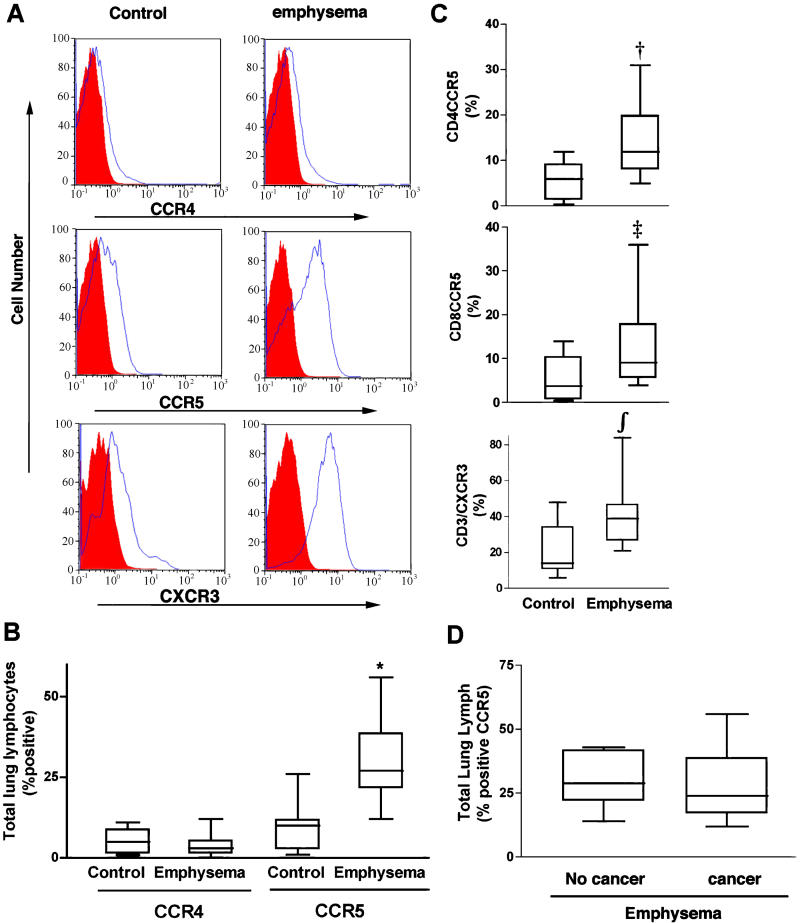
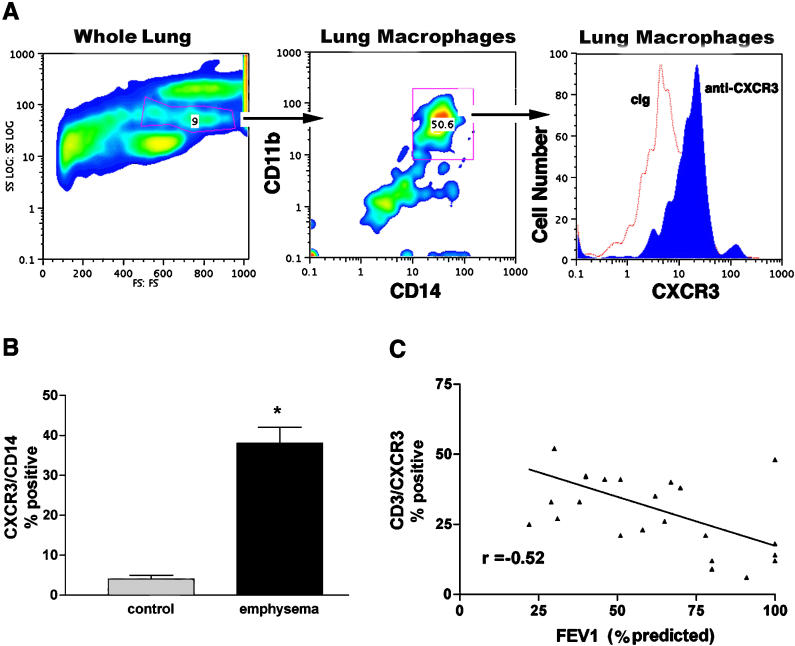
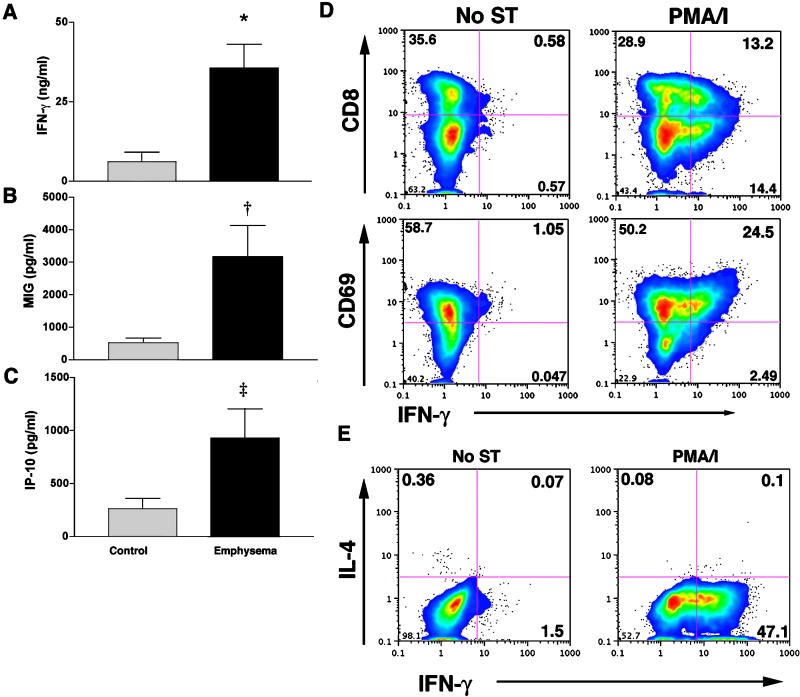
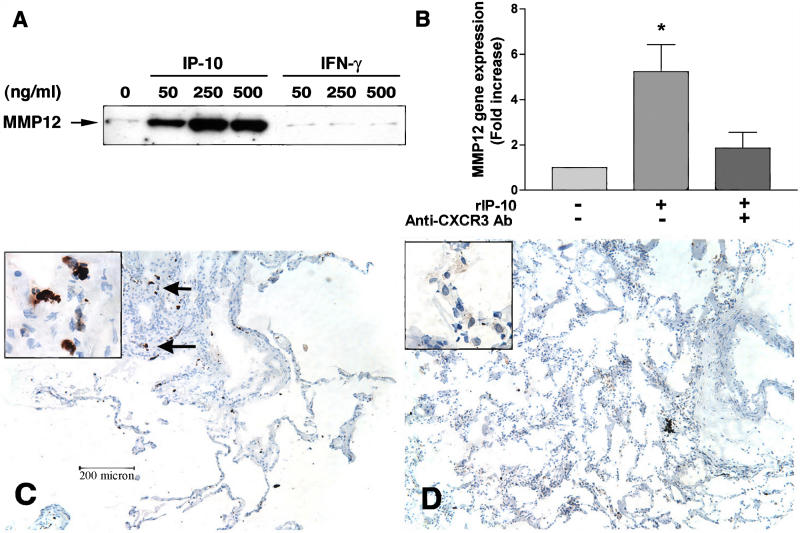
BACKGROUND: Chronic obstructive pulmonary disease and emphysema are a frequent result of long-term smoking, but the exact mechanisms, specifically which types of cells are associated with the lung destruction, are unclear. METHODS AND FINDINGS: We studied different subsets of lymphocytes taken from portions of human lungs removed surgically to find out which lymphocytes were the most frequent, which cell-surface markers these lymphocytes expressed, and whether the lymphocytes secreted any specific factors that could be associated with disease. We found that loss of lung function in patients with chronic obstructive pulmonary disease and emphysema was associated with a high percentage of CD4+ and CD8+ T lymphocytes that expressed chemokine receptors CCR5 and CXCR3 (both markers of T helper 1 cells), but not CCR3 or CCR4 (markers of T helper 2 cells). Lung lymphocytes in patients with chronic obstructive pulmonary disease and emphysema secrete more interferon gamma--often associated with T helper 1 cells--and interferon-inducible protein 10 and monokine induced by interferon, both of which bind to CXCR3 and are involved in attracting T helper 1 cells. In response to interferon-inducible protein 10 and monokine induced by interferon, but not interferon gamma, lung macrophages secreted macrophage metalloelastase (matrix metalloproteinase-12), a potent elastin-degrading enzyme that causes tissue destruction and which has been linked to emphysema. CONCLUSIONS: These data suggest that Th1 lymphoctytes in the lungs of people with smoking-related damage drive progression of emphysema through CXCR3 ligands, interferon-inducible protein 10, and monokine induced by interferon.
Overview
The claims and statistics of this paper haven’t been checked yet.
Run the check — free, no account needed. It reads the open-access text and checks the sources it cites.
Integrity signals
Registry
Cites
Statistics
Figures
Verification
Claims the paper makes
The claims and statistics of this paper haven’t been checked yet.
Run the check — free, no account needed. It reads the open-access text and checks the sources it cites.
Claims other papers make about this one
Each is checked against this paper’s own text: does it say what the citing paper says it does?
In the citing paper
“Specifically, macrophages, which can produce multiple proinflammatory cytokines and secrete MMPs, are the most abundant cell type in the BAL fluid of COPD patients, and increased numbers correlate with disease severity (85, 86, 104).”
From Aging and Lung Disease (2020) · cites this paper as [85]
In the citing paper
“Impaired phagocytosis and clearance of cellular debris by airway macrophages in COPD result in persistent inflammation (85, 104).”
From Aging and Lung Disease (2020) · cites this paper as [85]
Self-check
Percentages, sums and reported differences re-computed from the paper’s own numbers.
The self-check needs the paper’s full text.
Citations
Cites
Vestbo, J., Hurd, S. S., Agustí, A. G., Jones, P. W., Vogelmeier, C., Anzueto, A., Barnes, P. J., Fabbri, L. M., Martinez, F. J., Nishimura, M., et al. (2013) · American Journal of Respiratory and Critical Care Medicine · doi:10.1164/rccm.201204-0596pp · Cited by 15,983
PAUWELS, R. A., Buist, A. S., CALVERLEY, P. M. A., Jenkins, C. R., & Hurd, S. S. (2001) · American Journal of Respiratory and Critical Care Medicine · doi:10.1164/ajrccm.163.5.2101039 · Cited by 6,578 · cited 1×
“COPD was diagnosed according to the criteria recommended by the National Institutes of Health/World Health Organization workshop summary [31].”
MethodHow Matrix Metalloproteinases Regulate Cell Behavior
Sternlicht, M. D., & Werb, Z. (2001) · Annual Review of Cell and Developmental Biology · doi:10.1146/annurev.cellbio.17.1.463 · Cited by 3,959 · cited 1×
“Cytokines and chemokines are substrates for MMPs, but they also regulate expression of MMPs under pathological conditions [47,48].”
BackgroundZlotnik, A., & Yoshie, O. (2000) · Immunity · doi:10.1016/s1074-7613(00)80165-x · Cited by 3,923 · cited 1×
“Interferon-inducible protein 10 (IP10), monokine induced by interferon gamma (MIG), and interferon-inducible T cell alpha chemoattractant (I-TAC) are three known ligands for CXCR3 produced by normal and injured epithelial cells and T cells that are required for homing of Th1 cells [27,28,29].”
BackgroundChronic Obstructive Pulmonary Disease
Flavin, K., Morkane, C. M., & Marsh, S. (2018) · Cambridge University Press eBooks · doi:10.1017/9781108233712.025 · Cited by 2,687
Anthonisen, N. R. (1994) · JAMA · doi:10.1001/jama.272.19.1497 · Cited by 1,960
Requirement for IL-13 Independently of IL-4 in Experimental Asthma
Grünig, G., Warnock, M. L., Wakil, A. E., Venkayya, R., Brombacher, F., Rennick, D. M., Sheppard, D., Mohrs, M., Donaldson, D. D., Locksley, R. M., et al. (1998) · Science · doi:10.1126/science.282.5397.2261 · Cited by 1,845
Self-citationRequirement for Macrophage Elastase for Cigarette Smoke-Induced Emphysema in Mice
Hautamaki, R. D., Kobayashi, D. K., Senior, R. M., & Shapiro, S. D. (1997) · Science · doi:10.1126/science.277.5334.2002 · Cited by 1,470 · cited 1×
“MMP12 deficiency has been shown to protect mice against emphysema after chronic exposure to cigarette smoke, implying that MMP12 may be the key proteinase in the development of emphysema in this species [49,50].”
BackgroundChronic Obstructive Pulmonary Disease
Barnes, P. J. (2000) · New England Journal of Medicine · doi:10.1056/nejm200007273430407 · Cited by 1,078
Cole, K. E., Strick, C. A., Paradis, T. J., Ogborne, K. T., Loetscher, M., Gladue, R. P., Lin, W., Boyd, J. G., Moser, B., Wood, D. E., et al. (1998) · The Journal of Experimental Medicine · doi:10.1084/jem.187.12.2009 · Cited by 870 · cited 1×
“]. In addition to T cells, a wide variety of other inflammatory cells have been shown to express distinct chemokine receptors that are critical for their homing, suggesting a universal mechanism for regulating immune responses. Interferon-inducible protein 10 (IP-10), monokine induced by interferon gamma (MIG), and in…”
BackgroundCCR5 is characteristic of Th1 lymphocytes
Loetscher, P., Uguccioni, M., Bordoli, L., Baggiolini, M., Moser, B., Chizzolini, C., & Dayer, J.-M. (1998) · Nature · doi:10.1038/34814 · Cited by 866 · cited 5×
“These findings were in sharp contrast to the enhanced expression of both CCR5 and CXCR3, as shown in representative histograms (Figure 1A).”
BackgroundInfluentialCD8+ T-Lymphocytes in Peripheral Airways of Smokers with Chronic Obstructive Pulmonary Disease
Saetta, M. P., Stefano, A. D., Turato, G., Facchini, F., CORBINO, L., Mapp, C. E., Maestrelli, P., Ciaccia, A., & Fabbri, L. M. (1998) · American Journal of Respiratory and Critical Care Medicine · doi:10.1164/ajrccm.157.3.9709027 · Cited by 791
Chemokines as regulators of T cell differentiation
Luther, S. A., & Cyster, J. G. (2001) · Nature Immunology · doi:10.1038/84205 · Cited by 736 · cited 6×
“These findings were in sharp contrast to the enhanced expression of both CCR5 and CXCR3, as shown in representative histograms (Figure 1A).”
BackgroundInfluentialChemokines in pathology and medicine
Baggiolini, M. (2001) · Journal of Internal Medicine · doi:10.1046/j.1365-2796.2001.00867.x · Cited by 708 · cited 1×
“Emphysema Inflammatory chemokines, cytokines, and their receptors are upregulated at sites of inflammation and play a key role in the recruitment of leukocytes to peripheral tissues in response to injury [17,39].”
BackgroundZheng, T., Zhu, Z., Wang, Z., Homer, R., Ma, B., Riese, R. J., Chapman, H. A., Shapiro, S. D., & Elias, J. A. (2000) · Journal of Clinical Investigation · doi:10.1172/jci10458 · Cited by 646 · cited 1×
“]. T cells cause tissue injury through their secreted products such as cytokines; in mice, overexpression of interleukin (IL)-13, a T cell cytokine that is strongly implicated in the pathogenesis of experimental asthma, resulted in increased production of proteases and enlargement of airspaces reminiscent of emphysema…”
BackgroundSallusto, F., & Lanzavecchia, A. (2000) · Immunological Reviews · doi:10.1034/j.1600-065x.2000.17717.x · Cited by 526
The role of chemokines in linking innate and adaptive immunity
Luster, A. D. (2002) · Current Opinion in Immunology · doi:10.1016/s0952-7915(01)00308-9 · Cited by 475 · cited 2×
“Emphysema Inflammatory chemokines, cytokines, and their receptors are upregulated at sites of inflammation and play a key role in the recruitment of leukocytes to peripheral tissues in response to injury [17,39].”
BackgroundRules of chemokine receptor association with T cell polarization in vivo
Kim, C. H., Rott, L. S., Kunkel, E. J., Genovese, M. C., Andrew, D. P., Wu, L., & Butcher, E. C. (2001) · Journal of Clinical Investigation · doi:10.1172/jci13543 · Cited by 474 · cited 5×
“These findings were in sharp contrast to the enhanced expression of both CCR5 and CXCR3, as shown in representative histograms (Figure 1A).”
BackgroundInfluentialPanina‐Bordignon, P., Papi, A. A., Mariani, M., Lucia, P. D., Casoni, G. L., Bellettato, C. M., Buonsanti, C., Miotto, D., Mapp, C. E., Villa, A., et al. (2001) · Journal of Clinical Investigation · doi:10.1172/jci12655 · Cited by 442 · cited 2×
“Analysis by immunohistochemistry of airway mucosa of people with atopic asthma after antigen challenge revealed that large numbers of CCR4þ and CCR8þ T cells express IL-4, and CCR4 expression was prominent in people with severe atopic dermatitis, which decreased upon abatement of disease activity [26,43].”
BackgroundThe Serpin α1-Proteinase Inhibitor Is a Critical Substrate for Gelatinase B/MMP-9 In Vivo
Liu, Z., Zhou, X., Shapiro, S. D., Shipley, J. M., Twining, S. S., Diaz, L. A., Senior, R. M., & Werb, Z. (2000) · Cell · doi:10.1016/s0092-8674(00)00087-8 · Cited by 386
New insights into the role of cytokines in asthma
Renauld, J. (2001) · Journal of Clinical Pathology · doi:10.1136/jcp.54.8.577 · Cited by 384 · cited 1×
“We screened for the presence of Th2 cells by assessing T cell expression of CCR4—a receptor for eotaxin/CCL11, macrophage chemoattractant protein 3 (CCL7), and thymus- and activation-regulated chemokine (CCL17) [40,41]—and CCR3, a receptor for eotaxin and related chemokines.”
BackgroundSaetta, M. P., Mariani, M., Panina‐Bordignon, P., Turato, G., Buonsanti, C., Baraldo, S., Bellettato, C. M., Papi, A. A., Corbetta, L., Zuin, R., et al. (2002) · American Journal of Respiratory and Critical Care Medicine · doi:10.1164/rccm.2107139 · Cited by 372 · cited 1×
“Furthermore, previous studies of smoker individuals with COPD and normal lung function showed the presence of CD8þ/CXCR3þ T cells in the airway epithelium and submucosa [44].”
BackgroundHydrolysis of a Broad Spectrum of Extracellular Matrix Proteins by Human Macrophage Elastase
Gronski, T. J., Martin, R. L., Kobayashi, D. K., Walsh, B. C., Holman, M. C., Huber, M., Wart, H. E. V., & Shapiro, S. D. (1997) · Journal of Biological Chemistry · doi:10.1074/jbc.272.18.12189 · Cited by 325 · cited 1×
“physiological inhibitor of human leukocyte elastase [51,52].”
The Ligands of CXC Chemokine Receptor 3, I-TAC, Mig, and IP10, Are Natural Antagonists for CCR3
Loetscher, P., Pellegrino, A., Gong, J.-H., Mattioli, I., Loetscher, M., Bardi, G., Baggiolini, M., & Clark‐Lewis, I. (2001) · Journal of Biological Chemistry · doi:10.1074/jbc.m005652200 · Cited by 316 · cited 1×
“Interferon-inducible protein 10 (IP10), monokine induced by interferon gamma (MIG), and interferon-inducible T cell alpha chemoattractant (I-TAC) are three known ligands for CXCR3 produced by normal and injured epithelial cells and T cells that are required for homing of Th1 cells [27,28,29].”
BackgroundHuman Th1 and Th2 lymphocytes: their role in the pathophysiology of atopy
Prete, G. D. (1992) · Allergy · doi:10.1111/j.1398-9995.1992.tb00662.x · Cited by 287
Quantification of Pulmonary Emphysema from Lung Computed Tomography Images
Uppaluri, R., Mitsa, T., Milan Sonka, A., Hoffman, E. A., & McLennan, G. (1997) · American Journal of Respiratory and Critical Care Medicine · doi:10.1164/ajrccm.156.1.9606093 · Cited by 276 · cited 1×
“CT-Based Evaluation for Emphysema High-resolution CT (two in emphysema group and two in control group) or conventional CT analysis was used to detect emphysema, characterized by the presence of areas of low attenuation contrasted with surrounding normal lung parenchyma [32,33].”
MethodCorry, D. B., Rishi, K., Kanellis, J., Kiss, A., Song, L., Xu, J., Feng, L., Werb, Z., & Kheradmand, F. (2002) · Nature Immunology · doi:10.1038/ni773 · Cited by 263 · cited 1×
“Two-step real-time reverse transcription PCR was used to determine the relative expression of mRNA using the ABI Perkin Elmer Prism 5700 Sequence Detection System (Applied Biosystems, Foster City, California, United States) as described previously [38].”
MethodSelf-citationKamogawa, Y., Minasi, L. A. E., Carding, S. R., Bottomly, K., & Flavell, R. A. (1993) · Cell · doi:10.1016/0092-8674(93)90542-x · Cited by 257
Requirements for Allergen-Induced Airway Hyperreactivity in T and B Cell-Deficient Mice
Corry, D. B., Grünig, G., Hadeiba, H., Kurup, V. P., Warnock, M. L., Sheppard, D., Rennick, D. M., Locksley, R. M., & Locksley, R. M. (1998) · Molecular Medicine · doi:10.1007/bf03401741 · Cited by 241
Self-citationChurg, A., Zay, K., Shay, S., Xie, C., Shapiro, S. D., Hendricks, R. T., & Wright, J. L. (2002) · American Journal of Respiratory Cell and Molecular Biology · doi:10.1165/rcmb.4791 · Cited by 225 · cited 1×
“MMP12 deficiency has been shown to protect mice against emphysema after chronic exposure to cigarette smoke, implying that MMP12 may be the key proteinase in the development of emphysema in this species [49,50].”
BackgroundChemokines in inflammation and immunity
Baggiolini, M., & Loetscher, P. (2000) · Immunology Today · doi:10.1016/s0167-5699(00)01672-8 · Cited by 219 · cited 1×
“Chemokines, their receptors, and cell adhesion molecules regulate migration of immune cells into inflamed tissue [15,16,17,18].”
BackgroundGuidebook to the extracellular matrix and adhesion proteins
(1994) · General Pharmacology The Vascular System · doi:10.1016/0306-3623(94)90275-5 · Cited by 213
Airway inflammation and remodeling in asthma
Fahy, J. V., Corry, D. B., & Boushey, H. A. (2000) · Current Opinion in Pulmonary Medicine · doi:10.1097/00063198-200001000-00004 · Cited by 196 · cited 1×
“A role for T helper cells in the pathogenesis of obstructive lung disease has been established with asthma, where T helper 2 (Th2) cells are strongly linked to both human and experimental disease [4,5,6,7].”
BackgroundSelf-citationKang, T., Yi, J., Guo, A., Wang, X., Overall, C. M., Jiang, W., Elde, R. P., Borregaard, N., & Pei, D. (2001) · Journal of Biological Chemistry · doi:10.1074/jbc.m007997200 · Cited by 155
Chronic Obstructive Pulmonary Disease: Inflammation of Small Airways and Lung Parenchyma
Cosío, M. G., & Guerassimov, A. (1999) · American Journal of Respiratory and Critical Care Medicine · doi:10.1164/ajrccm.160.supplement_1.7 · Cited by 154
Chemokines and Their Receptors Guiding T Lymphocyte Recruitment in Lung Inflammation
D’Ambrosio, D., Mariani, M., Panina‐Bordignon, P., & Sinigaglia, F. (2001) · American Journal of Respiratory and Critical Care Medicine · doi:10.1164/ajrccm.164.7.2103011 · Cited by 151
Quantitative computed tomography assessment of lung structure and function in pulmonary emphysema
Madani, A., Keyzer, C., & Gevenois, P. A. (2001) · European Respiratory Journal · doi:10.1183/09031936.01.00255701 · Cited by 150 · cited 1×
“CT scans were used by a radiologist to separate participants on the basis of the presence or the absence of any objective evidence for centrilobular, panacinar, or paraseptal emphysema with a detection limit of greater than 3-mm low attenuation density [34].”
MethodAcquisition of Selectin Binding and Peripheral Homing Properties by CD4+ and CD8+ T Cells
Xie, H., Lim, Y.-C., Luscinskas, F. W., & Lichtman, A. H. (1999) · The Journal of Experimental Medicine · doi:10.1084/jem.189.11.1765 · Cited by 138
Th2 cells mediate IL-4-dependent local tissue inflammation
Müller, K. M., Jaunin, F., Masouyé, I., Saurat, J. ‐., & Hauser, C. J. (1993) · The Journal of Immunology · doi:10.4049/jimmunol.150.12.5576 · Cited by 134 · cited 8×
“We found that loss of lung function in patients with chronic obstructive pulmonary disease and emphysema was associated with a high percentage of CD4þ and CD8þ T lymphocytes that expressed chemokine receptors CCR5 and CXCR3 (both markers of T helper 1 cells), but not CCR3 or CCR4 (markers of T helper 2 cells).”
BackgroundInfluentialGuidebook to the extracellular matrix and adhesion proteins
Pollard, T. D. (1994) · Trends in Biochemical Sciences · doi:10.1016/0968-0004(94)90044-2 · Cited by 125
PDB2MultiGIF: A Web Tool to Create Animated Images of Molecules
Bohne, A. (1998) · Journal of Molecular Modeling · doi:10.1007/s008940050092 · Cited by 122
Pathogenesis and Pathology of COPD
Turato, G., Zuin, R., & Saetta, M. P. (2001) · Respiration · doi:10.1159/000050478 · Cited by 109 · cited 1×
“A potential role for T cells in COPD has also been suggested in several recent studies that show CD8þ T cells are increased in the lungs of people who smoke [8,9,10,11].”
ResultWakugawa, M., Nakamura, K., Kakinuma, T., Tamaki, K., Onai, N., & Matsushima, K. (2001) · Journal of Investigative Dermatology · doi:10.1046/j.0022-202x.2001.01430.x · Cited by 97
Stefano, A. D., Capelli, A., Lusuardi, M., Caramori, G., Balbo, P. E., Ioli, F., Sacco, S., Gnemmi, I., Brun, P., Adcock, I. M., et al. (2001) · Clinical & Experimental Allergy · doi:10.1046/j.1365-2222.2001.01098.x · Cited by 89 · cited 1×
“A potential role for T cells in COPD has also been suggested in several recent studies that show CD8þ T cells are increased in the lungs of people who smoke [8,9,10,11].”
ResultGoodacre, R. L., Davidson, R. G., Singal, D. P., & Bienenstock, J. (1979) · Gastroenterology · doi:10.1016/0016-5085(79)90337-8 · Cited by 74 · cited 1×
“Isolation of Lung Lymphocytes Lung lymphocytes were isolated by modifying established protocols, using a combination of mechanical fragmentation, enzyme digestion, and centrifugation procedures described previously [35,36,37].”
MethodCT Assessment of Subtypes of Pulmonary Emphysema in Smokers
Satoh, K., Kobayashi, T., Misao, T., Hitani, Y., Yamamoto, Y., Nishiyama, Y., & Ohkawa, M. (2001) · CHEST Journal · doi:10.1378/chest.120.3.725 · Cited by 65 · cited 1×
“CT-Based Evaluation for Emphysema High-resolution CT (two in emphysema group and two in control group) or conventional CT analysis was used to detect emphysema, characterized by the presence of areas of low attenuation contrasted with surrounding normal lung parenchyma [32,33].”
MethodChemokine-Induced Secretion of Gelatinase B in Primary Human Monocytes
Klier, C. M., Nelson, E. L., Cohen, C. D., Horuk, R., Schlöndorff, D., & Nelson, P. J. (2001) · Biological Chemistry · doi:10.1515/bc.2001.173 · Cited by 49 · cited 1×
“In addition to regulation of chemotaxis and homing, other functions have been ascribed to chemokines, including modulation of T cell fate by direct effects on differentiating T cells, and regulation of proteolysis in blood monocytes [19,30].”
BackgroundT cells as orchestrators of the asthmatic response.
Kay, A. B. (1997) · PubMed · Cited by 44
Chronic Obstructive Pulmonary Disease: An Overview of Pathology and Pathogenesis
Hogg, J. C. (2000) · Novartis Foundation symposium · doi:10.1002/0470868678.ch2 · Cited by 42 · cited 1×
“Chronic inhalation of tobacco smoke causes progressive lung destruction in susceptible individuals, resulting in chronic obstructive pulmonary disease (COPD) and emphysema, two well-described clinical syndromes with poorly understood pathogenesis [1,2,3].”
BackgroundCawston, T. E., Carrère‐Kremer, S., Catterall, J. B., Duggleby, R. C., Elliott, S., Shingleton, B., & Rowan, A. D. (2000) · Novartis Foundation symposium · doi:10.1002/0470868678.ch13 · Cited by 42 · cited 1×
“Destruction of lung parenchyma in emphysema is thought to occur through excessive proteolysis mediated by the elastin-degrading enzymes MMP2, MMP9, and MMP12 from the MMP family, and by neutrophil elastase from the serine proteinase family [45,46].”
BackgroundCyclosporine A Inhibits Airway Reactivity and Remodeling After Chronic Antigen Challenge in Cats
Padrid, P. A., Cozzi, P., & Leff, A. R. (1996) · American Journal of Respiratory and Critical Care Medicine · doi:10.1164/ajrccm.154.6.8970375 · Cited by 38 · cited 1×
“We screened for the presence of Th2 cells by assessing T cell expression of CCR4—a receptor for eotaxin/CCL11, macrophage chemoattractant protein 3 (CCL7), and thymus- and activation-regulated chemokine (CCL17) [40,41]—and CCR3, a receptor for eotaxin and related chemokines.”
BackgroundHe, J., Connett, J. E., Anthonisen, N. R., & Sandford, A. J. (2003) · American Journal of Respiratory Cell and Molecular Biology · doi:10.1165/rcmb.4885 · Cited by 37 · cited 1×
“It has been suggested, therefore, that asthma and COPD may involve the same type of recruited inflammatory cells, differing only in their location within the lung [14].”
BackgroundPotential Novel Therapies for Chronic Obstructive Pulmonary Disease
Barnes, P. J. (2000) · Novartis Foundation symposium · doi:10.1002/0470868678.ch16 · Cited by 26 · cited 1×
“Chronic inhalation of tobacco smoke causes progressive lung destruction in susceptible individuals, resulting in chronic obstructive pulmonary disease (COPD) and emphysema, two well-described clinical syndromes with poorly understood pathogenesis [1,2,3].”
BackgroundSenior, R. M. (2000) · CHEST Journal · doi:10.1378/chest.117.5_suppl_1.320s-a · Cited by 17
Functional Analysis of Human Bronchial Mucosal T Cells Extracted with Interleukin-2
Upham, J. W., McMenamin, C., Schon-Hegrad, M. A., Robinson, B. W. S., & Holt, P. G. (1994) · American Journal of Respiratory and Critical Care Medicine · doi:10.1164/ajrccm.149.6.7911708 · Cited by 17 · cited 1×
“Isolation of Lung Lymphocytes Lung lymphocytes were isolated by modifying established protocols, using a combination of mechanical fragmentation, enzyme digestion, and centrifugation procedures described previously [35,36,37].”
MethodLymphoid cells of the gastrointestinal tract. Isolation procedures.
Fiocchi, C. (1985) · PubMed · Cited by 6
Research works printed but not linked: 3
- Kay, 1997, Ciba Found Symp, 206, 56
- Anthonisen, 1994, JAMA, 272, 1497, 10.1001/jama.1994.03520190043033 · DOI
- Fiocchi, 1985, Acta Chir Scand Suppl, 525, 11
Cited by
Sorted by citations
Inflammatory mechanisms in patients with chronic obstructive pulmonary disease
Barnes, P. J. (2016) · Journal of Allergy and Clinical Immunology · doi:10.1016/j.jaci.2016.05.011 · Cited by 1,808
Immunology of asthma and chronic obstructive pulmonary disease
Barnes, P. J. (2008) · Nature reviews. Immunology · doi:10.1038/nri2254 · Cited by 1,444
“T H 1 cells express the chemokine receptor CXCR3 (Ref”
BackgroundThe cytokine network in asthma and chronic obstructive pulmonary disease
Barnes, P. J. (2008) · Journal of Clinical Investigation · doi:10.1172/jci36130 · Cited by 982
“increased expression of CXCR3 (24), which is activated by CXCL9,”
BackgroundInfluentialOutcomes for COPD pharmacological trials: from lung function to biomarkers
Cazzola, M., MacNee, W., Martínez, F. J., Rabe, K. F., Franciosi, L. G., Barnes, P. J., Brusasco, V., Burge, P. S., Calverley, P. M., Celli, B. R., et al. (2008) · European Respiratory Journal · doi:10.1183/09031936.00099306 · Cited by 850
Immunologic Aspects of Chronic Obstructive Pulmonary Disease
Cosío, M. G., Saetta, M. P., & Agustí, A. G. N. (2009) · New England Journal of Medicine · doi:10.1056/nejmra0804752 · Cited by 823
Metadata
- Authors
- Grumelli, S., Corry, D. B., Song, L.-Z., Song, L., Green, L., Huh, J., Hacken, J., Espada, R., Bag, R., Lewis, D. E., & Kheradmand, F.
- Affiliations
- Baylor College of Medicine (US)
- Michael E. DeBakey VA Medical Center (US)
- Corresponding author
- Kheradmand, Farrah
- Venue
- PLoS Medicine
- Publisher
- Public Library of Science (PLoS)
- Published
- 2004-10-19
- Volume
- 1
- Issue
- 1
- Pages
- e8
- ISSN
- 1549-1277 (ISSN-L)
- 1549-1676
- PMC
- PMC523885
- OpenAlex
- W2108679807
- Cited by
- 484
- References
- 59
- Citations by year
- 2026: 6 · 2025: 12 · 2024: 21 · 2023: 12 · 2022: 11 · 2021: 21 · 2020: 14 · 2019: 22 · 2018: 16 · 2017: 25 · 2016: 21 · 2015: 28 · 2014: 15 · 2013: 29 · 2012: 31
- FWCI
- 19.11
- Type
- journal article
- Language
- en
- Open access
- gold
- doi.org
- Locations
- PLoS Medicine (publishedVersion, cc-by)
- PubMed Central (publishedVersion, cc-by)
- PubMed (publishedVersion)
- DOAJ (DOAJ: Directory of Open Access Journals) (submittedVersion, cc-by-sa)
- Funders
- U.S. Public Health Service (69585, 64061, 72419)
- National Institute of Allergy and Infectious Diseases (P30AI036211, AI 36211)
- Topics
- Health Sciences › Medicine › Pulmonary and Respiratory Medicine › Chronic Obstructive Pulmonary Disease (COPD) Research
- Health Sciences › Medicine › Pulmonary and Respiratory Medicine › Asthma and respiratory diseases
- Health Sciences › Medicine › Surgery › Transplantation: Methods and Outcomes
- Keywords
- chronic obstructive pulmonary disease, emphysema, Th1 cells, CXCR3, CCR5, interferon-gamma, CXCL10, macrophage metalloelastase, matrix metalloproteinase-12, elastin degradation, smoking, lung lymphocytes, chemokine receptors
- MeSH terms
- Aged, Female, Humans, Male, Middle Aged, Pulmonary Emphysema, Smoking, Tomography, X-Ray Computed, Lymphocyte Subsets, Cytokines, Macrophages, Alveolar, Th1 Cells, Disease Progression, Receptors, Chemokine, Chemokines, CXC, Pulmonary Disease, Chronic Obstructive, Chemokine CXCL10, Receptors, CXCR3
About these checks
Registry, retraction, Cites and statistics results are computed, not judged, with one exception: a printed reference that no index lists is read once by a model before it counts as a citation error. Claims are extracted by a model and kept only when their quote appears verbatim in the text; each cited source is then checked, with a model’s help, for whether it says what the claim relies on. Those verdicts can be wrong — read the claim’s quote and the cited source before relying on one.
Statistics and arithmetic are recomputed, not judged.
Confidence bands are shown only for fields calibrated on our annotated test set. None is calibrated yet, so no band is shown.
What counts as a claim ›How we measure confidence ›How we check this ›
Are you an author, or do you see a problem with this page? Request a review
