

The DOI matches its Crossref record; 56 of the 59 references it cites were found in a registry or an index.
An Immune Basis for Lung Parenchymal Destruction in Chronic Obstructive Pulmonary Disease and Emphysema
Open accessAbstract
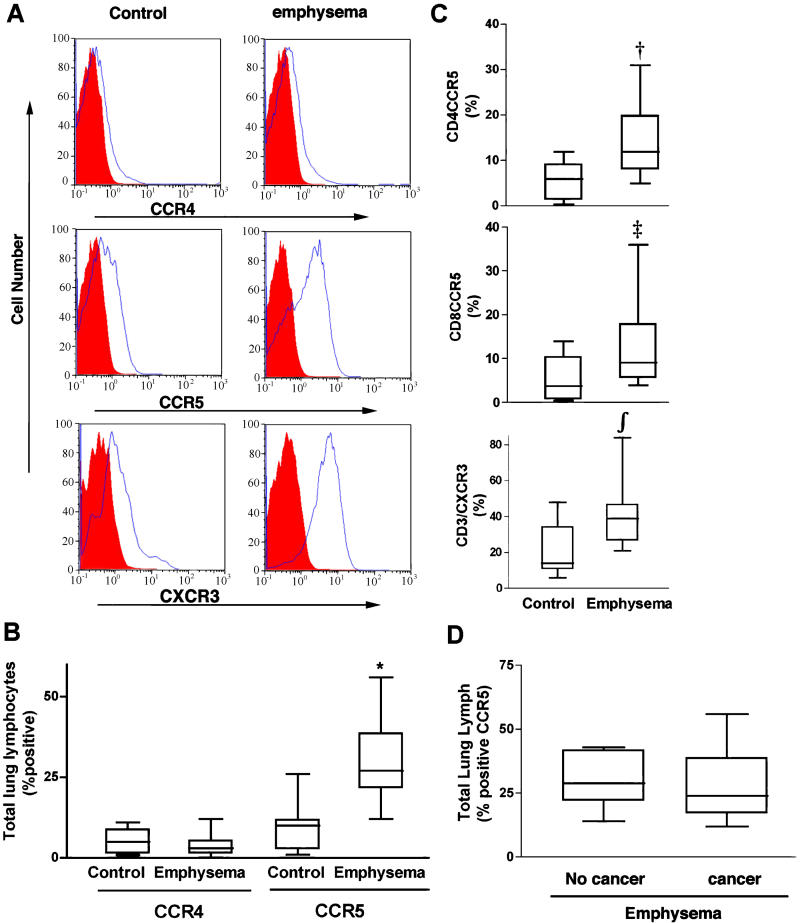
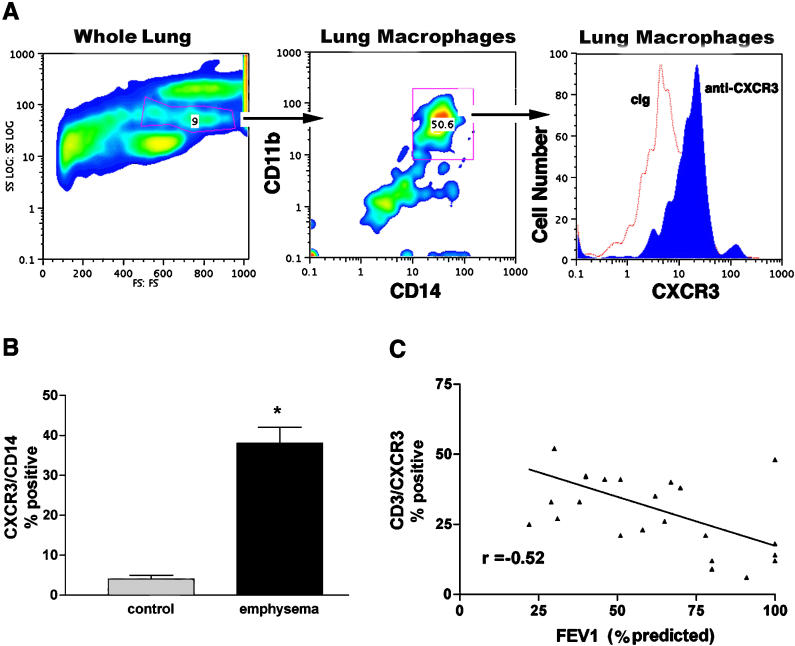
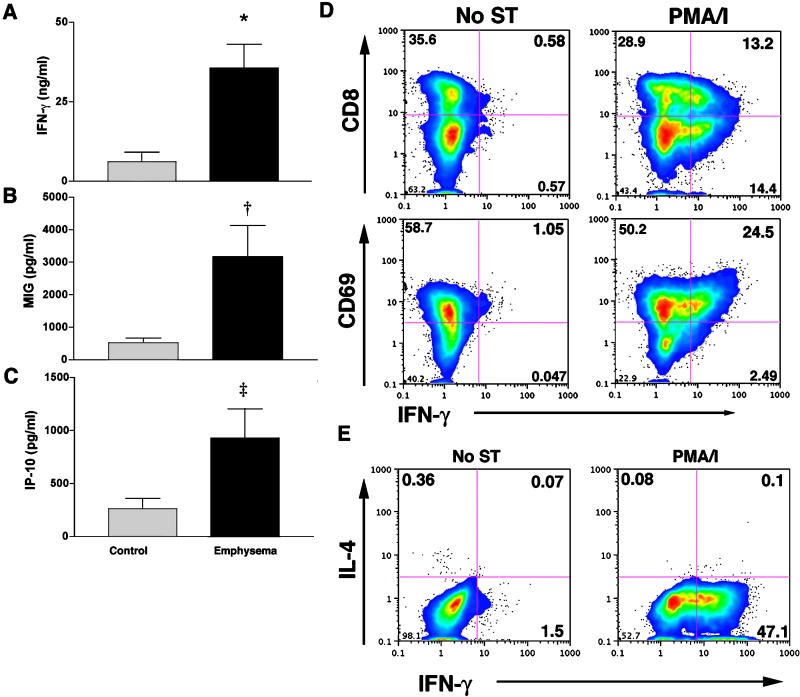
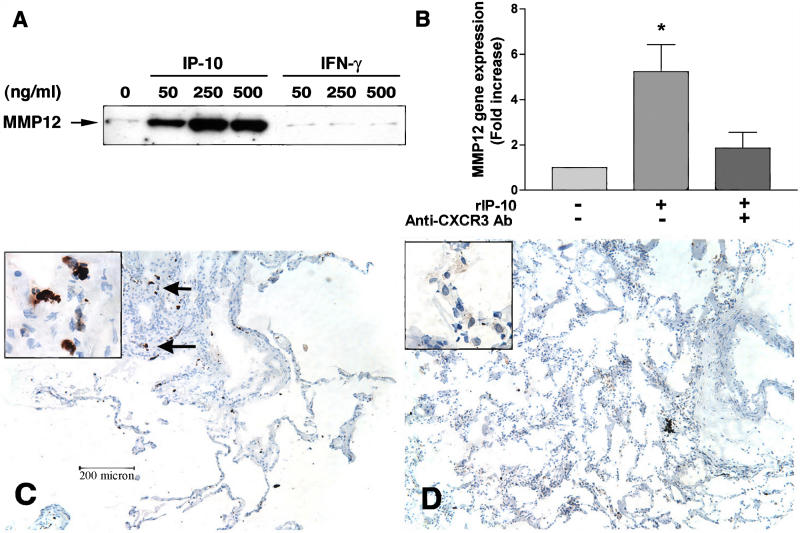
BACKGROUND: Chronic obstructive pulmonary disease and emphysema are a frequent result of long-term smoking, but the exact mechanisms, specifically which types of cells are associated with the lung destruction, are unclear. METHODS AND FINDINGS: We studied different subsets of lymphocytes taken from portions of human lungs removed surgically to find out which lymphocytes were the most frequent, which cell-surface markers these lymphocytes expressed, and whether the lymphocytes secreted any specific factors that could be associated with disease. We found that loss of lung function in patients with chronic obstructive pulmonary disease and emphysema was associated with a high percentage of CD4+ and CD8+ T lymphocytes that expressed chemokine receptors CCR5 and CXCR3 (both markers of T helper 1 cells), but not CCR3 or CCR4 (markers of T helper 2 cells). Lung lymphocytes in patients with chronic obstructive pulmonary disease and emphysema secrete more interferon gamma--often associated with T helper 1 cells--and interferon-inducible protein 10 and monokine induced by interferon, both of which bind to CXCR3 and are involved in attracting T helper 1 cells. In response to interferon-inducible protein 10 and monokine induced by interferon, but not interferon gamma, lung macrophages secreted macrophage metalloelastase (matrix metalloproteinase-12), a potent elastin-degrading enzyme that causes tissue destruction and which has been linked to emphysema. CONCLUSIONS: These data suggest that Th1 lymphoctytes in the lungs of people with smoking-related damage drive progression of emphysema through CXCR3 ligands, interferon-inducible protein 10, and monokine induced by interferon.
Overview
The claims and statistics of this paper haven’t been checked yet.
Run the check — free, no account needed. It reads the open-access text and checks the sources it cites.
Integrity signals
Registry
Cites
Statistics
Figures
Verification
Claims the paper makes
The claims and statistics of this paper haven’t been checked yet.
Run the check — free, no account needed. It reads the open-access text and checks the sources it cites.
Claims other papers make about this one
Each is checked against this paper’s own text: does it say what the citing paper says it does?
In the citing paper
“Specifically, macrophages, which can produce multiple proinflammatory cytokines and secrete MMPs, are the most abundant cell type in the BAL fluid of COPD patients, and increased numbers correlate with disease severity (85, 86, 104).”
From Aging and Lung Disease (2020) · cites this paper as [85]
In the citing paper
“Impaired phagocytosis and clearance of cellular debris by airway macrophages in COPD result in persistent inflammation (85, 104).”
From Aging and Lung Disease (2020) · cites this paper as [85]
Self-check
Percentages, sums and reported differences re-computed from the paper’s own numbers.
The self-check needs the paper’s full text.
Citations
Cites
Vestbo, J., Hurd, S. S., Agustí, A. G., Jones, P. W., Vogelmeier, C., Anzueto, A., Barnes, P. J., Fabbri, L. M., Martinez, F. J., Nishimura, M., et al. (2013) · American Journal of Respiratory and Critical Care Medicine · doi:10.1164/rccm.201204-0596pp · Cited by 15,983
PAUWELS, R. A., Buist, A. S., CALVERLEY, P. M. A., Jenkins, C. R., & Hurd, S. S. (2001) · American Journal of Respiratory and Critical Care Medicine · doi:10.1164/ajrccm.163.5.2101039 · Cited by 6,578 · cited 1×
“COPD was diagnosed according to the criteria recommended by the National Institutes of Health/World Health Organization workshop summary [31].”
MethodHow Matrix Metalloproteinases Regulate Cell Behavior
Sternlicht, M. D., & Werb, Z. (2001) · Annual Review of Cell and Developmental Biology · doi:10.1146/annurev.cellbio.17.1.463 · Cited by 3,959 · cited 1×
“Cytokines and chemokines are substrates for MMPs, but they also regulate expression of MMPs under pathological conditions [47,48].”
BackgroundZlotnik, A., & Yoshie, O. (2000) · Immunity · doi:10.1016/s1074-7613(00)80165-x · Cited by 3,923 · cited 1×
“Interferon-inducible protein 10 (IP10), monokine induced by interferon gamma (MIG), and interferon-inducible T cell alpha chemoattractant (I-TAC) are three known ligands for CXCR3 produced by normal and injured epithelial cells and T cells that are required for homing of Th1 cells [27,28,29].”
BackgroundChronic Obstructive Pulmonary Disease
Flavin, K., Morkane, C. M., & Marsh, S. (2018) · Cambridge University Press eBooks · doi:10.1017/9781108233712.025 · Cited by 2,687
Anthonisen, N. R. (1994) · JAMA · doi:10.1001/jama.272.19.1497 · Cited by 1,960
Requirement for IL-13 Independently of IL-4 in Experimental Asthma
Grünig, G., Warnock, M. L., Wakil, A. E., Venkayya, R., Brombacher, F., Rennick, D. M., Sheppard, D., Mohrs, M., Donaldson, D. D., Locksley, R. M., et al. (1998) · Science · doi:10.1126/science.282.5397.2261 · Cited by 1,845
Self-citationRequirement for Macrophage Elastase for Cigarette Smoke-Induced Emphysema in Mice
Hautamaki, R. D., Kobayashi, D. K., Senior, R. M., & Shapiro, S. D. (1997) · Science · doi:10.1126/science.277.5334.2002 · Cited by 1,470 · cited 1×
“MMP12 deficiency has been shown to protect mice against emphysema after chronic exposure to cigarette smoke, implying that MMP12 may be the key proteinase in the development of emphysema in this species [49,50].”
BackgroundChronic Obstructive Pulmonary Disease
Barnes, P. J. (2000) · New England Journal of Medicine · doi:10.1056/nejm200007273430407 · Cited by 1,078
Cole, K. E., Strick, C. A., Paradis, T. J., Ogborne, K. T., Loetscher, M., Gladue, R. P., Lin, W., Boyd, J. G., Moser, B., Wood, D. E., et al. (1998) · The Journal of Experimental Medicine · doi:10.1084/jem.187.12.2009 · Cited by 870 · cited 1×
“]. In addition to T cells, a wide variety of other inflammatory cells have been shown to express distinct chemokine receptors that are critical for their homing, suggesting a universal mechanism for regulating immune responses. Interferon-inducible protein 10 (IP-10), monokine induced by interferon gamma (MIG), and in…”
Background
Research works printed but not linked: 3
- Kay, 1997, Ciba Found Symp, 206, 56
- Anthonisen, 1994, JAMA, 272, 1497, 10.1001/jama.1994.03520190043033 · DOI
- Fiocchi, 1985, Acta Chir Scand Suppl, 525, 11
Cited by
Sorted by citations
Inflammatory mechanisms in patients with chronic obstructive pulmonary disease
Barnes, P. J. (2016) · Journal of Allergy and Clinical Immunology · doi:10.1016/j.jaci.2016.05.011 · Cited by 1,808
Immunology of asthma and chronic obstructive pulmonary disease
Barnes, P. J. (2008) · Nature reviews. Immunology · doi:10.1038/nri2254 · Cited by 1,444
“T H 1 cells express the chemokine receptor CXCR3 (Ref”
BackgroundThe cytokine network in asthma and chronic obstructive pulmonary disease
Barnes, P. J. (2008) · Journal of Clinical Investigation · doi:10.1172/jci36130 · Cited by 982
“increased expression of CXCR3 (24), which is activated by CXCL9,”
BackgroundInfluentialOutcomes for COPD pharmacological trials: from lung function to biomarkers
Cazzola, M., MacNee, W., Martínez, F. J., Rabe, K. F., Franciosi, L. G., Barnes, P. J., Brusasco, V., Burge, P. S., Calverley, P. M., Celli, B. R., et al. (2008) · European Respiratory Journal · doi:10.1183/09031936.00099306 · Cited by 850
Immunologic Aspects of Chronic Obstructive Pulmonary Disease
Cosío, M. G., Saetta, M. P., & Agustí, A. G. N. (2009) · New England Journal of Medicine · doi:10.1056/nejmra0804752 · Cited by 823
New insights into the immunology of chronic obstructive pulmonary disease
Brusselle, G., Joos, G., & Bracke, K. R. (2011) · The Lancet · doi:10.1016/s0140-6736(11)60988-4 · Cited by 817
How cigarette smoke skews immune responses to promote infection, lung disease and cancer
Stämpfli, M. R., & Anderson, G. P. (2009) · Nature reviews. Immunology · doi:10.1038/nri2530 · Cited by 684
“The retention of CD8 + T cells in the lungs of chronic smokers warrants particular attention as it is a hallmark of COPD and it is known that these cells can activate alveolar macrophages to produce matrix metalloproteinase 12 ( MMP12”
BackgroundAntielastin autoimmunity in tobacco smoking–induced emphysema
Lee, S., Goswami, S., Grudo, A., Song, L., Bandi, V., Goodnight-White, S., Green, L., Hacken, J. B., Huh, J., Bakaeen, F. G., et al. (2007) · Nature Medicine · doi:10.1038/nm1583 · Cited by 595
Self-citationPathobiology of Cigarette Smoke-Induced Chronic Obstructive Pulmonary Disease
Yoshida, T., & Tuder, R. M. (2007) · Physiological Reviews · doi:10.1152/physrev.00048.2006 · Cited by 517
“When treated with IP10 or MIG, cultured alveolar macrophages expressed MMP-12 protein, which could also be detected in alveolar macrophages in emphysematous lungs.”
BackgroundCellular and molecular mechanisms of asthma and COPD
Barnes, P. J. (2017) · Clinical Science · doi:10.1042/cs20160487 · Cited by 525
Cellular and Molecular Mechanisms of Chronic Obstructive Pulmonary Disease
Barnes, P. J. (2013) · Clinics in Chest Medicine · doi:10.1016/j.ccm.2013.10.004 · Cited by 508
“Macrophages also release CXCL9, CXCL10, and CXCL11, which are chemotactic for CD8(1) Tc1 and CD4(1) Th1 cells, via interaction with the chemokine receptor CXCR3 expressed on these cells.(23) Macrophages from patients with COPD release more inflammatory proteins than macrophages from normal smokers and nonsmokers, indi…”
BackgroundPulmonary macrophages: key players in the innate defence of the airways
Byrne, A. J., Mathie, S. A., Gregory, L. G., & Lloyd, C. M. (2015) · Thorax · doi:10.1136/thoraxjnl-2015-207020 · Cited by 499
“43 AMs derived from COPD-smokers display characteristics of M1 and M2 phenotypes, 44 45 perhaps indicating that COPD-AMs, although activated in the disease, do not universally conform to the M1/M2 paradigm.”
BackgroundMatrix Metalloproteinases in Lung: Multiple, Multifarious, and Multifaceted
Greenlee, K. J., Werb, Z., & Kheradmand, F. (2007) · Physiological Reviews · doi:10.1152/physrev.00022.2006 · Cited by 480
“In addition, human lung tissue from COPD patients shows a larger number of macrophages expressing MMP12 than control subjects (87, 177).”
BackgroundResultInfluentialSelf-citationCho, S. J., & Stout-Delgado, H. W. (2020) · Annual Review of Physiology · doi:10.1146/annurev-physiol-021119-034610 · Cited by 458
“Specifically, macrophages, which can produce multiple proinflammatory cytokines and secrete MMPs, are the most abundant cell type in the BAL fluid of COPD patients, and increased numbers correlate with disease severity (85, 86, 104).”
BackgroundInfluentialInflammatory mechanisms in the lung
Yu, J. (2008) · Journal of Inflammation Research · doi:10.2147/jir.s4385 · Cited by 462
Animal models of chronic obstructive pulmonary disease
Wright, J. L., Cosío, M. G., & Churg, A. (2008) · American Journal of Physiology-Lung Cellular and Molecular Physiology · doi:10.1152/ajplung.90200.2008 · Cited by 464
Mechanistic links between COPD and lung cancer
Houghton, A. M. (2013) · Nature reviews. Cancer · doi:10.1038/nrc3477 · Cited by 428
Shaykhiev, R., Krause, A., Salit, J., Strulovici-Barel, Y., Harvey, B.-G., O'Connor, T. P., & Crystal, R. G. (2009) · The Journal of Immunology · doi:10.4049/jimmunol.0900473 · Cited by 359
“Among these genes are those encoding type 1 chemokines CXCL11, CXCL9, CCL4, CCL5, inflammasome-related cytokines IL-1 and IL-18, costimulatory molecule CD80, complement-related proteins, a number of proteins involved in IFN- signaling.”
BackgroundInfluentialMatrix metalloproteinases in destructive pulmonary pathology
Elkington, P. T. (2005) · Thorax · doi:10.1136/thx.2005.051979 · Cited by 333
Mechanisms of cigarette smoke-induced COPD: insights from animal models
Churg, A., Cosío, M. G., & Wright, J. L. (2008) · American Journal of Physiology-Lung Cellular and Molecular Physiology · doi:10.1152/ajplung.00390.2007 · Cited by 324
“This has stemmed in part from the recognition that a number of metalloproteases, including MMP-9 and MMP-12 (124), can degrade elastin; in part from reports of increased levels of MMPs including MMP-1, -2, -9, -14 (50, 72, 120, 150), and in some studies, MMP-12 (42, 60, 72, 111, 182), in BAL fluid, alveolar macrophage…”
Pulmonary Biomarkers in Chronic Obstructive Pulmonary Disease
Barnes, P. J., Chowdhury, B. A., Kharitonov, S. A., MAGNUSSEN, H., Page, C. P., Postma, D. S., & Saetta, M. P. (2006) · American Journal of Respiratory and Critical Care Medicine · doi:10.1164/rccm.200510-1659pp · Cited by 297
Maeno, T., Houghton, A. M., Quintero, P. A., Grumelli, S., Owen, C. A., & Shapiro, S. D. (2007) · The Journal of Immunology · doi:10.4049/jimmunol.178.12.8090 · Cited by 284
“Recently, it was shown that alveolar macrophages also express CXCR3 and that IP-10 signals through macrophage CXCR3 to produce MMP-12 (16).”
BackgroundInfluentialSelf-citationAutoantibodies in Patients with Chronic Obstructive Pulmonary Disease
Feghali‐Bostwick, C. A., Gadgil, A. S., Otterbein, L. E., Pilewski, J. M., Stoner, M. W., Csizmadia, E., Zhang, Y., Sciurba, F. C., & Duncan, S. R. (2007) · American Journal of Respiratory and Critical Care Medicine · doi:10.1164/rccm.200701-014oc · Cited by 268
Molecular pathogenesis of emphysema
Taraseviciene‐Stewart, L., & Voelkel, N. F. (2008) · Journal of Clinical Investigation · doi:10.1172/jci31811 · Cited by 266
COPD: current therapeutic interventions and future approaches
Barnes, P. J., & Stockley, R. A. (2005) · European Respiratory Journal · doi:10.1183/09031936.05.00139104 · Cited by 262
Increased activation of p38 MAPK in COPD
Renda, T., Baraldo, S., Pelaia, G., Bazzan, E., Turato, G., Papi, A. A., Maestrelli, P., Maselli, R., Vatrella, A., Fabbri, L. M., et al. (2007) · European Respiratory Journal · doi:10.1183/09031936.00036707 · Cited by 257
“In this regard, T-cells are important players in the immune response in COPD and a shift towards a type 1 profile with increased chemokine receptor CXCR3 expression and release of TNF-a and interferon-c has been described in this disease [ 22 , 23].”
BackgroundYao, H., & Rahman, I. (2011) · Toxicology and Applied Pharmacology · doi:10.1016/j.taap.2009.10.022 · Cited by 254
“N IH -PA Author M anuscript N IH -PA Author M anuscript N IH -PA Author M anuscript (Grumelli et al., 2004;Lee et al., 2007).”
BackgroundThe Pathogenesis of Chronic Obstructive Pulmonary Disease
Shapiro, S. D., & Ingenito, E. P. (2005) · American Journal of Respiratory Cell and Molecular Biology · doi:10.1165/rcmb.f296 · Cited by 249
“For example, to directly determine the contribution of macrophage elastase (MMP-12) to pulmonary emphysema, macrophage elastase–deficient mice (MMP-12 / ) mice were generated, as was a murine model of cigarette smoke– induced emphysema based upon previous experience in other species.”
BackgroundInfluentialZuo, L., He, F., Sergakis, G. G., Koozehchian, M., Stimpfl, J. N., Rong, Y., Diaz, P. T., & Best, T. M. (2014) · American Journal of Physiology-Lung Cellular and Molecular Physiology · doi:10.1152/ajplung.00330.2013 · Cited by 255
Effect of an MMP-9/MMP-12 inhibitor on smoke-induced emphysema and airway remodelling in guinea pigs
Churg, A., Wang, R., Wang, X., Önnervik, P., Thim, K., & Wright, J. R. (2007) · Thorax · doi:10.1136/thx.2006.068353 · Cited by 245
Elevated MMP-12 protein levels in induced sputum from patients with COPD
Demedts, I. (2005) · Thorax · doi:10.1136/thx.2005.042432 · Cited by 233
Clinical aspects and cytokine response in severe H1N1 influenza A virus infection
Hagău, N., Slavcovici, A., Gonganau, D. N., Oltean, S., Dîrzu, D. S., Brezoszki, E. S., Maxim, M., Ciuce, C., Mleșnițe, M., Gavrus, R. L., et al. (2010) · Critical Care · doi:10.1186/cc9324 · Cited by 227
“IP-10 released by lung CD41 and CD81 T cells stimulates alveolar macrophage production of matrix metalloproteinase-12, which digests lung elastin [28,29].”
BackgroundInflammation and Immune Response in COPD: Where Do We Stand?
Rovina, N., Koutsoukou, A., & Koulouris, N. G. (2013) · Mediators of Inflammation · doi:10.1155/2013/413735 · Cited by 240
“Mice that have been genetically altered so that the TLR4 is not functional fail to develop the inflammation after cigarette smoke challenge that is observed in wild-type mice.”
BackgroundKaczmarek, J. C., Kauffman, K. J., Fenton, O. S., Sadtler, K., Patel, A. K., Heartlein, M. W., DeRosa, F., & Anderson, D. G. (2018) · Nano Letters · doi:10.1021/acs.nanolett.8b02917 · Cited by 218
Cheng, Y., Liu, Z., Yao, F., Zeng, W., Zheng, D., Dong, Y., & Wu, S. (2013) · PLoS Medicine · doi:10.1371/journal.pmed.1001515 · Cited by 217
“It is also possible that chronic inhalation of tobacco smoke, causing progressive lung destruction, chronic obstructive pulmonary disease, and emphysema [72], may also result in a hypercoagulable state and thus contribute to an increased risk of VTE [73].”
BackgroundFrom Seminars in Respiratory and Critical Care Medicine
Spurzem, J. R., & Rennard, S. I. (2011) · Cited by 215
Essential role for autophagy in the maintenance of immunological memory against influenza infection
Chen, M., Hong, M. J., Sun, H., Wang, L., Shi, X., Gilbert, B. E., Corry, D. B., Kheradmand, F., & Wang, J. (2014) · Nature Medicine · doi:10.1038/nm.3521 · Cited by 220
Self-citationBein, K., & Leikauf, G. D. (2011) · Molecular Nutrition & Food Research · doi:10.1002/mnfr.201100279 · Cited by 214
“interferon-g (IFNG)) [169] that have been implicated in the recruitment and activation of macrophages.”
BackgroundProfiling serum biomarkers in patients with COPD: associations with clinical parameters
Pinto-Plata, V., Toso, J. F., Lee, K. S., Park, D., Bilello, J. A., Müllerová, H., Souza, M. M. D., Vessey, R., & Celli, B. R. (2007) · Thorax · doi:10.1136/thx.2006.064428 · Cited by 205
A Distinctive Alveolar Macrophage Activation State Induced by Cigarette Smoking
Woodruff, P. G., Koth, L. L., Yang, J. Y. H., Rodriguez, M. W., Favoreto, S., Dolganov, G., Paquet, A. C., & Erle, D. J. (2005) · American Journal of Respiratory and Critical Care Medicine · doi:10.1164/rccm.200505-686oc · Cited by 204
“Although MMP-12 is the proteinase that is most strongly implicated in mouse models of emphysema, studies of MMP-12 expression in humans with COPD have produced inconsistent results (10, 13, 23, 24).”
BackgroundResultInflammation mechanism and research progress of COPD
Xu, J., Zeng, Q., Li, S., Su, Q., & Fan, H. X. (2024) · Frontiers in Immunology · doi:10.3389/fimmu.2024.1404615 · Cited by 236
Martín, B. B., Pons, J., Ferrer, J. M. E., Sauleda, J., Fuster, A., & Agustí, A. G. N. (2007) · European Respiratory Journal · doi:10.1183/09031936.00010407 · Cited by 202
The Immunopathogenesis of Chronic Obstructive Pulmonary Disease: Insights from Recent Research
Curtis, J. L., Freeman, C. M., & Hogg, J. C. (2007) · Proceedings of the American Thoracic Society · doi:10.1513/pats.200701-002fm · Cited by 190
“, Tc1 cells) (49, 71, 79, 124) that may be identical to the persistently activated murine memory T cells.”
BackgroundShan, M., Yuan, X., Song, L., Roberts, L., Zarinkamar, N., Seryshev, A. B., Zhang, Y., Hilsenbeck, S. G., Chang, S., Dong, C., et al. (2012) · Science Translational Medicine · doi:10.1126/scitranslmed.3003041 · Cited by 190
Self-citationGreenlee, K. J., Corry, D. B., Engler, D. A., Matsunami, R. K., Tessier, P. A., Cook, R. G., Werb, Z., & Kheradmand, F. (2006) · The Journal of Immunology · doi:10.4049/jimmunol.177.10.7312 · Cited by 182
Self-citationPrognostic Immune Markers in Non–Small Cell Lung Cancer
Suzuki, K., Kachala, S. S., Kadota, K., Shen, R., Mo, Q., Beer, D. G., Rusch, V. W., Travis, W. D., & Adusumilli, P. S. (2011) · Clinical Cancer Research · doi:10.1158/1078-0432.ccr-10-2805 · Cited by 177
“and it is thought to drive the progression of emphysema (12).”
BackgroundTuder, R. M., Yoshida, T., Arap, W., Pasqualini, R., & Petrache, I. (2006) · Proceedings of the American Thoracic Society · doi:10.1513/pats.200603-054ms · Cited by 176
“The recent evidence of association of airway and alveolar inflammation with more advanced COPD suggests that inflammation may represent a response to a damaged organ, leading to selection of subpopulations of T lymphocytes (4, 5).”
BackgroundMatrix metalloproteinases in destructive lung disease
McGarry Houghton, A. (2015) · Matrix Biology · doi:10.1016/j.matbio.2015.02.002 · Cited by 172
Strategies targeting the IL-4/IL-13 axes in disease
May, R. D., & Fung, M. (2015) · Cytokine · doi:10.1016/j.cyto.2015.05.018 · Cited by 166
IL-32, a Novel Proinflammatory Cytokine in Chronic Obstructive Pulmonary Disease
Calabrese, F., Baraldo, S., Bazzan, E., Lunardi, F., Rea, F., Maestrelli, P., Turato, G., Lokar-Oliani, K., Papi, A. A., Zuin, R., et al. (2008) · American Journal of Respiratory and Critical Care Medicine · doi:10.1164/rccm.200804-646oc · Cited by 166
“The inflammatory response in the lung is characterized by infiltration of CD81 T lymphocytes, which are polarized toward a type 1 profile with production of IFN-g, among other cytokines (7, 8).”
BackgroundChen, K., Pociask, D. A., McAleer, J. P., Chan, Y. R., Alcorn, J. F., Kreindler, J. L., Keyser, M. R., Shapiro, S. D., Houghton, A. M., Kolls, J. K., et al. (2011) · PLoS ONE · doi:10.1371/journal.pone.0020333 · Cited by 177
“We also observed a significant reduction of the CCR3 ligand CCL5 in IL-17RA KO mice and CXCR3 ligands like CXCL10 have also been shown to induce MMP12 expression in macrophages [29,33].”
BackgroundCXCR3 and CCR5 Chemokines in Induced Sputum From Patients With COPD
da Costa, C. H., Rufino, R., Traves, S. L., Silva, J. R. L. E., Barnes, P. J., & Donnelly, L. (2007) · CHEST Journal · doi:10.1378/chest.07-0393 · Cited by 165
Roles for proteinases in the pathogenesis of chronic obstructive pulmonary disease
Owen, C. A. (2008) · International Journal of COPD · doi:10.2147/copd.s2089 · Cited by 164
“This process may also contribute to COPD pathogenesis in human subjects, since lung tissue from human COPD patients contains increased numbers of Th1 cells associated with increased levels of IP-10 and MMP-12 (Grumelli et al 2004).”
Increase of Th17 cells in peripheral blood of patients with chronic obstructive pulmonary disease
Vargas-Rojas, M. I., Ramírez‐Venegas, A., Limón-Camacho, L., Ochoa, L., Hernández-Zenteno, R. D. J., & Sansores, R. H. (2011) · Respiratory Medicine · doi:10.1016/j.rmed.2011.05.017 · Cited by 169
Lung Myeloid Dendritic Cells Coordinately Induce T H 1 and T H 17 Responses in Human Emphysema
Shan, M., Cheng, H.-F., Song, L., Roberts, L., Green, L., Hacken, J. B., Huh, J., Bakaeen, F. G., Coxson, H. O., Storness-Bliss, C., et al. (2009) · Science Translational Medicine · doi:10.1126/scitranlsmed.3000154 · Cited by 161
Self-citationAirway macrophages as the guardians of tissue repair in the lung
Puttur, F. K., Gregory, L. G., & Lloyd, C. M. (2019) · Immunology and Cell Biology · doi:10.1111/imcb.12235 · Cited by 167
“In COPD, AM directly drive lung parenchymal damage by secreting matrix metalloproteinase-12, which is capable of promoting elastin degradation and tissue destruction.(53) AM derived from COPD smokers display a high degree of plasticity exhibiting characteristics of proinflammatory and prohealing phenotypes(54); howeve…”
BackgroundKang, M., Homer, R., Gallo, A. E., Lee, C. G., Crothers, K. A., Cho, S. J., Rochester, C. L., Cain, H. C., Chupp, G. L., Yoon, H. J., et al. (2007) · The Journal of Immunology · doi:10.4049/jimmunol.178.3.1948 · Cited by 155
“In contrast, the emphysema in COPD is characterized by Th1 inflammation, macrophage, and neutrophil tissue infiltration, partially reversible or irreversible airflow obstruction and alveolar destruction (7, 12, 13, 34, 35).”
BackgroundOligoclonal CD4+ T Cells in the Lungs of Patients with Severe Emphysema
Sullivan, A. K., Simonian, P. L., Falta, M. T., Mitchell, J. D., Cosgrove, G. P., Brown, K. K., Kotzin, B. L., Voelkel, N. F., & Fontenot, A. P. (2005) · American Journal of Respiratory and Critical Care Medicine · doi:10.1164/rccm.200410-1332oc · Cited by 154
“Grumelli and colleagues (27) also demonstrated that T cells from the lungs of subjects with emphysema secrete increased amounts of Th1-associated cytokines.”
BackgroundZheng, T., Kang, M., Crothers, K. A., Zhu, Z., Liu, W. Q., Lee, C. G., Rabach, L. A., Chapman, H. A., Homer, R., Aldous, D., et al. (2005) · The Journal of Immunology · doi:10.4049/jimmunol.174.12.8106 · Cited by 152
“Surprisingly, the relationships between the inflammatory, protease-antiprotease and apoptosis alterations in COPD tissues are poorly understood.”
ResultInfluentialCigarette smoke worsens lung inflammation and impairs resolution of influenza infection in mice
Gualano, R. C., Hansen, M. J., Vlahos, R., Jones, J. E. C., Park-Jones, R. A., Deliyannis, G., Turner, S. J., Duca, K., & Anderson, G. P. (2008) · Respiratory Research · doi:10.1186/1465-9921-9-53 · Cited by 154
“Lung mRNAs encoding the gelatinases MMP-2 and MMP9, as well as MMP-7 (matrilysin) and MMP-12 (macrophage metalloelastase) were quantitated by real time PCR (Figure 4i).”
BackgroundInfluentialClarke, D. L., Clifford, R. L., Jindarat, S., Proud, D., Pang, L., Belvisi, M. G., & Knox, A. J. (2010) · Journal of Biological Chemistry · doi:10.1074/jbc.m109.0999952 · Cited by 149
Imaging of pulmonary emphysema: A pictorial review
Takahashi, M. (2008) · International Journal of COPD · doi:10.2147/copd.s2639 · Cited by 142
“The link between the infl ammation and infl ammation-related genes was also highlighted (Grumelli et al 2004).”
TRP channels: Emerging targets for respiratory disease
Banner, K. H., Igney, F. H., & Poll, C. T. (2011) · Pharmacology & Therapeutics · doi:10.1016/j.pharmthera.2011.03.005 · Cited by 138
“…(Groα), CXCL8 (IL-8), the CCR2 ligand CCL2 (MCP-1), the CXCR3 ligands CXCL9 (MIG), CXCL10 (IP-10), CXCL11 (ITAC) and leukotriene B4 (LTB4) which attract neutrophils, monocytes and CD8+ T-lymphocytes into the lung (Saetta et al., 2002; Grumelli et al., 2004; Traves et al., 2004; Costa et al., 2008).”
BackgroundXue, L., Hamilton, A. G., Zhao, G., Xiao, Z., El-Mayta, R. D., Han, X., Gong, N., Xiong, X., Xu, J., Figueroa‐Espada, C. G., et al. (2024) · Nature Communications · doi:10.1038/s41467-024-45422-9 · Cited by 158
“Notably, 4 LNPs had enriched accumulation in the lungs with depleted or not notably enriched delivery in the liver and spleen.”
Pathogenesis of Chronic Obstructive Pulmonary Disease
MacNee, W. (2007) · Clinics in Chest Medicine · doi:10.1016/j.ccm.2007.06.008 · Cited by 136
Chemokine receptors as therapeutic targets in chronic obstructive pulmonary disease
Donnelly, L., & Barnes, P. J. (2006) · Trends in Pharmacological Sciences · doi:10.1016/j.tips.2006.08.001 · Cited by 137
Freeman, C. M., Han, M. K., Martínez, F. J., Murray, S., Liu, L. X., Chensue, S. W., Polak, T., Sonstein, J., Todt, J. C., Ames, T. M., et al. (2010) · The Journal of Immunology · doi:10.4049/jimmunol.1000006 · Cited by 131
“Together with previously published findings (3, 6, 8, 9, 42, 43), these data”
ResultMark, N. M., Kargl, J., Busch, S., Yang, G. H. Y., Metz, H. E., Zhang, H., Hubbard, J. J., Pipavath, S. N. J., Madtes, D. K., & Houghton, A. M. (2017) · American Journal of Respiratory and Critical Care Medicine · doi:10.1164/rccm.201704-0795oc · Cited by 140
“Further interrogation of lymphocyte populations has yielded more insights, suggesting that differentiation of CD4(1) T cells into T-helper cell type 1 (Th1) (15) and Th17 (16–18) lineages, production of IFN-g by CD8(1) T cells (19), increased lymphocyte expression of immune checkpoints (PD-1 [programmed cell death pro…”
BackgroundChemokines in COPD: From Implication to Therapeutic Use
Henrot, P., Prevel, R., Berger, P., & Dupin, I. (2019) · International Journal of Molecular Sciences · doi:10.3390/ijms20112785 · Cited by 131
“In particular, we systematically reviewed chemokines modifications associated with COPD (Table 1), and based on the number of preclinical and clinical evidences as well as recent findings, we focus on the CXCL8-CXCR1/2, CXCL9/10/11-CXCR3, CCL2-CCR2, and CXCL12/CXCR4 axes that seem to be clearly associated with COPD pa…”
BackgroundInfluentialEltom, S. M., Stevenson, C. S., Rastrick, J. M. D., Dale, N., Raemdonck, K., Wong, S., Catley, M. C., Belvisi, M. G., & Birrell, M. A. (2011) · PLoS ONE · doi:10.1371/journal.pone.0024097 · Cited by 124
“Studies examining the lungs of COPD patients have demonstrated the infiltration of immune cells including CD8 T-cells, neutrophils and macrophages and as such inflammatory cells have been implicated in the pathogenesis of COPD [4].”
BackgroundRole of macrolide therapy in chronic obstructive pulmonary disease
Martínez, F. J. (2008) · International Journal of COPD · doi:10.2147/copd.s681 · Cited by 122
“Many of the lung lymphocytes are type 1 cytokine-producing CD8 T cells (Saetta et al 1998, 1999, 2002; Majo et al 2001; Grumelli et al 2004).”
Serum IP-10 as a Biomarker of Human Rhinovirus Infection at Exacerbation of COPD
Quint, J. K., Donaldson, G. C., Goldring, J. J. P., Baghai-Ravary, R., Hurst, J. R., & Wedzicha, J. A. (2009) · CHEST Journal · doi:10.1378/chest.09-1541 · Cited by 121
The Role of Matrix Metalloproteinases in Development, Repair, and Destruction of the Lungs
Hendrix, A. Y., & Kheradmand, F. (2017) · Progress in molecular biology and translational science · doi:10.1016/bs.pmbts.2017.04.004 · Cited by 119
Self-citationMacrophage metabolic reprogramming during chronic lung disease
Ogger, P. P., & Byrne, A. J. (2020) · Mucosal Immunology · doi:10.1038/s41385-020-00356-5 · Cited by 123
Cytokine production by bronchoalveolar lavage T lymphocytes in chronic obstructive pulmonary disease
Barczyk, A., Pierzchała, W., Kon, O. M., Cosío, B. G., Adcock, I. M., & Barnes, P. J. (2006) · Journal of Allergy and Clinical Immunology · doi:10.1016/j.jaci.2006.02.013 · Cited by 114
Cigarette smoke-induced pulmonary emphysema in scid-mice. Is the acquired immune system required?
D'hulst, A. I., Maes, T., Bracke, K. R., Demedts, I., Tournoy, K. G., Joos, G., & Brusselle, G. (2005) · Respiratory Research · doi:10.1186/1465-9921-6-147 · Cited by 113
“A potential role for T-lymphocytes in the development of pulmonary emphysema in human smokers has been suggested, since cytotoxic CD8+ T-cells are increased in the lungs of smokers and have the capacity to cause (perforinor granzym B-mediated) cytolysis and apoptosis (by FasFas ligand interaction or by caspase activat…”
BackgroundMartín, B. B., Pons, J., Fuster, A., Sauleda, J., Noguera, A., Ferrer, J. M. E., & Agustí, A. G. N. (2006) · Clinical & Experimental Immunology · doi:10.1111/j.1365-2249.2006.03167.x · Cited by 112
Freeman, C. M., Curtis, J. L., & Chensue, S. W. (2007) · American Journal Of Pathology · doi:10.2353/ajpath.2007.061177 · Cited by 111
The microRNA miR-22 inhibits the histone deacetylase HDAC4 to promote TH17 cell–dependent emphysema
Lu, W., You, R., Yuan, X., Yang, T., Samuel, E. L. G., Marcano, D. C., Sikkema, W. K. A., Tour, J. M., Rodríguez, A., Kheradmand, F., et al. (2015) · Nature Immunology · doi:10.1038/ni.3292 · Cited by 112
Self-citationNeutrophil extracellular traps induced by cigarette smoke activate plasmacytoid dendritic cells
Qiu, S., Zhang, H., Tang, Q., Bai, J., He, Z., Zhang, J., Li, M., Deng, J., Liu, G., & Zhong, X. (2017) · Thorax · doi:10.1136/thoraxjnl-2016-209887 · Cited by 113
Goswami, S., Angkasekwinai, P., Shan, M., Greenlee, K. J., Barranco, W. T., Polikepahad, S., Seryshev, A. B., Song, L., Redding, D., Singh, B., et al. (2009) · Nature Immunology · doi:10.1038/ni.1719 · Cited by 109
“A standard published protocol was used for immunohistochemistr”
MethodSelf-citationSharma, G., Hanania, N. A., & Shim, Y. M. (2009) · Proceedings of the American Thoracic Society · doi:10.1513/pats.200904-022rm · Cited by 105
“Moreover, airway epithelial and endothelial cells express the ligands for CXCR3 and correlate with COPD disease severity (85).”
BackgroundInnate Immune Processes Are Sufficient for Driving Cigarette Smoke–Induced Inflammation in Mice
Botelho, F. M., Gaschler, G. J., Kianpour, S., Zavitz, C. C. J., Trimble, N. J., Nikota, J. K., Bauer, C. M. T., & Stämpfli, M. R. (2009) · American Journal of Respiratory Cell and Molecular Biology · doi:10.1165/rcmb.2008-0301oc · Cited by 104
IL-18 Induces Emphysema and Airway and Vascular Remodeling via IFN-γ, IL-17A, and IL-13
Kang, M., Choi, J., Kim, B. H., Lee, C.-M., Cho, W., Choe, G., Kim, D., Lee, C. G., & Elias, J. A. (2012) · American Journal of Respiratory and Critical Care Medicine · doi:10.1164/rccm.201108-1545oc · Cited by 105
“A variety of lines of evidence have suggested that exaggerated type 1 inflammation plays an important role in the pathogenesis of emphysema (17, 18).”
BackgroundElastase- and LPS-exposed mice display altered responses to rhinovirus infection
Sajjan, U. S., Ganesan, S., Comstock, A. T., Shim, J., Wang, Q., Nagarkar, D. R., Zhao, Y., Goldsmith, A. M., Sonstein, J., Linn, M. J., et al. (2009) · American Journal of Physiology-Lung Cellular and Molecular Physiology · doi:10.1152/ajplung.00150.2009 · Cited by 101
“In general, Th1-dominated tissue inflammation, including the increased production of IL-10 and IFN by activated T cells, is believed to play a central role in COPD pathogenesis, particularly in development of emphysema (10, 13, 15, 30).”
BackgroundAutoimmunity in chronic obstructive pulmonary disease: clinical and experimental evidence
Kheradmand, F., Shan, M., Xu, C., & Corry, D. B. (2012) · Expert Review of Clinical Immunology · doi:10.1586/eci.12.7 · Cited by 101
Self-citationHarrison, O. J., Foley, J., Bolognese, B. J., Long, E., Podolin, P. L., & Walsh, P. T. (2008) · Immunology Letters · doi:10.1016/j.imlet.2008.07.011 · Cited by 98
Characterization of T Lymphocytes in Chronic Obstructive Pulmonary Disease
Barnes, P. J., & Cosío, M. G. (2004) · PLoS Medicine · doi:10.1371/journal.pmed.0010020 · Cited by 97
“The study by Grumelli et al. (2004) published in this issue of PLoS Medicine takes the story forward [6].”
HIV associated pulmonary emphysema: a review of the literature and inquiry into its mechanism
Petrache, I., Diab, K. J., Knox, K. S., Twigg, H. L., Stephens, R. S., Flores, S., & Tuder, R. M. (2008) · Thorax · doi:10.1136/thx.2007.079111 · Cited by 99
“8 In the context of the HIV infection associated emphysema, cytotoxic T lymphocytes may be a marker of specific lung damage or may directly be involved in the pathogenesis of emphysematous lung destruction.”
BackgroundMotz, G. T., Eppert, B. L., Sun, G., Wesselkamper, S. C., Linke, M. J., Deka, R., & Borchers, M. T. (2008) · The Journal of Immunology · doi:10.4049/jimmunol.181.11.8036 · Cited by 98
Moghaddam, S. J., Clement, C. G., la Garza, M. M. D., Zou, X., Travis, E. L., Young, H. W. J., Evans, C. M., Tuvim, M. J., & Dickey, B. F. (2007) · American Journal of Respiratory Cell and Molecular Biology · doi:10.1165/rcmb.2007-0366oc · Cited by 99
“Several possibilities have been proposed to explain the persistent inflammation: self-perpetuation of the immune response by autoantigens resulting from inflammatory and oxidative lung injury, persistent or recurrent infection of damaged airways as a co-stimulator, or antigenic mimicry or as a polyclonal activator, wh…”
BackgroundWeen, M. P., Whittall, J. J., Hamon, R., Reynolds, P. N., & Hodge, S. J. (2017) · Physiological Reports · doi:10.14814/phy2.13370 · Cited by 93
“IL-8 secretion increased with flavor and nicotine, while TNFa, IL-1b, IL-6, MIP-1a, MIP-1b, and MCP-1 decreased after exposure to most flavors and nicotine.”
BackgroundResultInfluentialKurimoto, E., Miyahara, N., Kanehiro, A., Waseda, K., Taniguchi, A., Ikeda, G., 古賀, 光., Nishimori, H., Tanimoto, Y., Kataoka, M., et al. (2013) · Respiratory Research · doi:10.1186/1465-9921-14-5 · Cited by 91
“Previous studies have shown that Th1 cells contribute largely to the inflammatory cascade of events related to the pathogenesi s of COPD [34, 35].”
BackgroundLung tissue microbial profile in lung cancer is distinct from emphysema.
Liu, Y., O’Brien, J. L., Ajami, N. J., Scheurer, M. E., Amirian, E. S., Armstrong, G., Tsavachidis, S., Thrift, A. P., Jiao, L., Wong, M. C., et al. (2018) · Europe PMC (PubMed Central) · Cited by 92
Self-citationProfibrotic Activities for Matrix Metalloproteinase-8 during Bleomycin-Mediated Lung Injury
Craig, V. J., Quintero, P. A., Fyfe, S. E., Patel, A. S., Knolle, M. D., Kobzik, L., & Owen, C. A. (2013) · The Journal of Immunology · doi:10.4049/jimmunol.1201043 · Cited by 91
Role of CCR5 in IFN- -induced and cigarette smoke-induced emphysema
Ma, B. (2005) · Journal of Clinical Investigation · doi:10.1172/jci24858 · Cited by 91
“In keeping with recent studies highlighting the Th1/Tc1 inflammation in lungs from patients with COPD (13, 14, 16, 18, 22, 23) and our studies demonstrating that IFN-g causes protease-antiprotease abnormalities and emphysema in the murine lung (19), it has been assumed that the Th1/Tc1 inflammatory response is the cau…”
ResultInfluentialT-Cell Biology in Aging, With a Focus on Lung Disease
Lee, N., Shin, M. S., & Kang, I. (2012) · The Journals of Gerontology Series A · doi:10.1093/gerona/glr237 · Cited by 89
“Numbers of CD4+ T cells, in particular IFN-g– producing Th1 cells, were increased in the airways and parenchymal tissues of patients with COPD (134).”
BackgroundPeripheral T Cell Functions Correlate with the Severity of Chronic Obstructive Pulmonary Disease
Zhu, X., Gadgil, A. S., Givelber, R. J., George, M. P., Stoner, M. W., Sciurba, F. C., & Duncan, S. R. (2009) · The Journal of Immunology · doi:10.4049/jimmunol.0802622 · Cited by 90
“The present findings of increased IFN- production by circulating COPD CD8 T cells, although distinctly contrary to results of an analysis limited to GOLD 2 subjects (16), is consistent with most in situ observations (2, 5, 7).”
BackgroundResultInfluentialDendritic Cells in Chronic Obstructive Pulmonary Disease
Tsoumakidou, M., Demedts, I., Brusselle, G., & Jeffery, P. K. (2008) · American Journal of Respiratory and Critical Care Medicine · doi:10.1164/rccm.200711-1727pp · Cited by 87
Contribution of adaptive immunity to human COPD and experimental models of emphysema
Kheradmand, F., Zhang, Y., & Corry, D. B. (2022) · Physiological Reviews · doi:10.1152/physrev.00036.2021 · Cited by 87
Self-citation
Metadata
- Authors
- Grumelli, S., Corry, D. B., Song, L.-Z., Song, L., Green, L., Huh, J., Hacken, J., Espada, R., Bag, R., Lewis, D. E., & Kheradmand, F.
- Affiliations
- Baylor College of Medicine (US)
- Michael E. DeBakey VA Medical Center (US)
- Corresponding author
- Kheradmand, Farrah
- Venue
- PLoS Medicine
- Publisher
- Public Library of Science (PLoS)
- Published
- 2004-10-19
- Volume
- 1
- Issue
- 1
- Pages
- e8
- ISSN
- 1549-1277 (ISSN-L)
- 1549-1676
- PMC
- PMC523885
- OpenAlex
- W2108679807
- Cited by
- 484
- References
- 59
- Citations by year
- 2026: 6 · 2025: 12 · 2024: 21 · 2023: 12 · 2022: 11 · 2021: 21 · 2020: 14 · 2019: 22 · 2018: 16 · 2017: 25 · 2016: 21 · 2015: 28 · 2014: 15 · 2013: 29 · 2012: 31
- FWCI
- 19.11
- Type
- journal article
- Language
- en
- Open access
- gold
- doi.org
- Locations
- PLoS Medicine (publishedVersion, cc-by)
- PubMed Central (publishedVersion, cc-by)
- PubMed (publishedVersion)
- DOAJ (DOAJ: Directory of Open Access Journals) (submittedVersion, cc-by-sa)
- Funders
- U.S. Public Health Service (69585, 64061, 72419)
- National Institute of Allergy and Infectious Diseases (P30AI036211, AI 36211)
- Topics
- Health Sciences › Medicine › Pulmonary and Respiratory Medicine › Chronic Obstructive Pulmonary Disease (COPD) Research
- Health Sciences › Medicine › Pulmonary and Respiratory Medicine › Asthma and respiratory diseases
- Health Sciences › Medicine › Surgery › Transplantation: Methods and Outcomes
- Keywords
- chronic obstructive pulmonary disease, emphysema, Th1 cells, CXCR3, CCR5, interferon-gamma, CXCL10, macrophage metalloelastase, matrix metalloproteinase-12, elastin degradation, smoking, lung lymphocytes, chemokine receptors
- MeSH terms
- Aged, Female, Humans, Male, Middle Aged, Pulmonary Emphysema, Smoking, Tomography, X-Ray Computed, Lymphocyte Subsets, Cytokines, Macrophages, Alveolar, Th1 Cells, Disease Progression, Receptors, Chemokine, Chemokines, CXC, Pulmonary Disease, Chronic Obstructive, Chemokine CXCL10, Receptors, CXCR3
About these checks
Registry, retraction, Cites and statistics results are computed, not judged, with one exception: a printed reference that no index lists is read once by a model before it counts as a citation error. Claims are extracted by a model and kept only when their quote appears verbatim in the text; each cited source is then checked, with a model’s help, for whether it says what the claim relies on. Those verdicts can be wrong — read the claim’s quote and the cited source before relying on one.
Statistics and arithmetic are recomputed, not judged.
Confidence bands are shown only for fields calibrated on our annotated test set. None is calibrated yet, so no band is shown.
What counts as a claim ›How we measure confidence ›How we check this ›
Are you an author, or do you see a problem with this page? Request a review
