

The DOI matches its Crossref record; 56 of the 59 references it cites were found in a registry or an index.
An Immune Basis for Lung Parenchymal Destruction in Chronic Obstructive Pulmonary Disease and Emphysema
Open accessAbstract
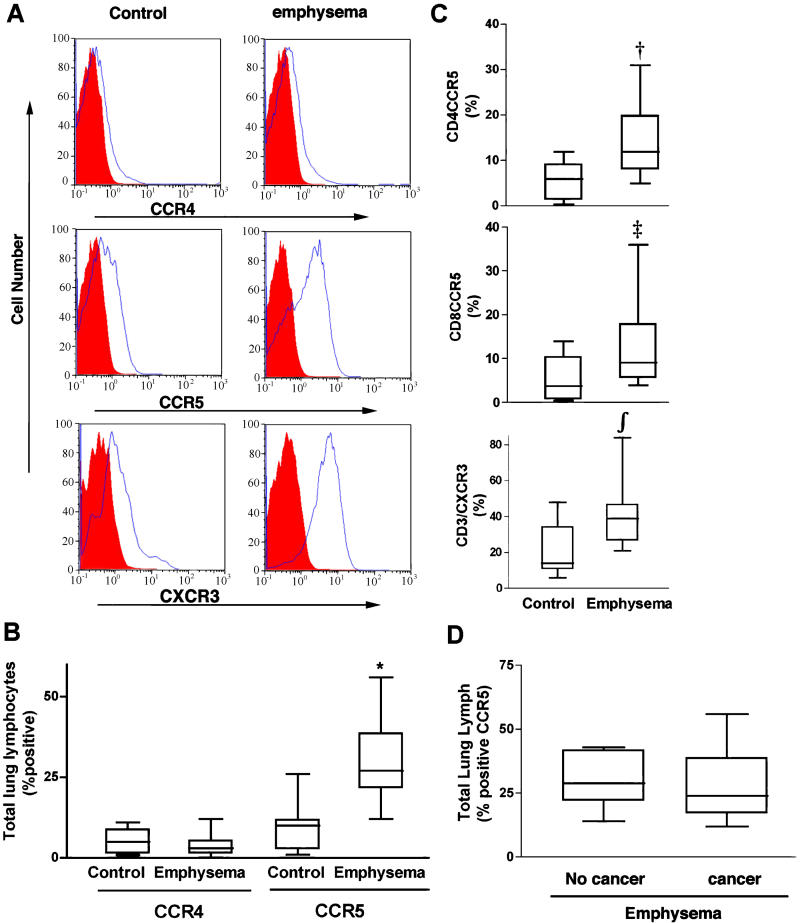
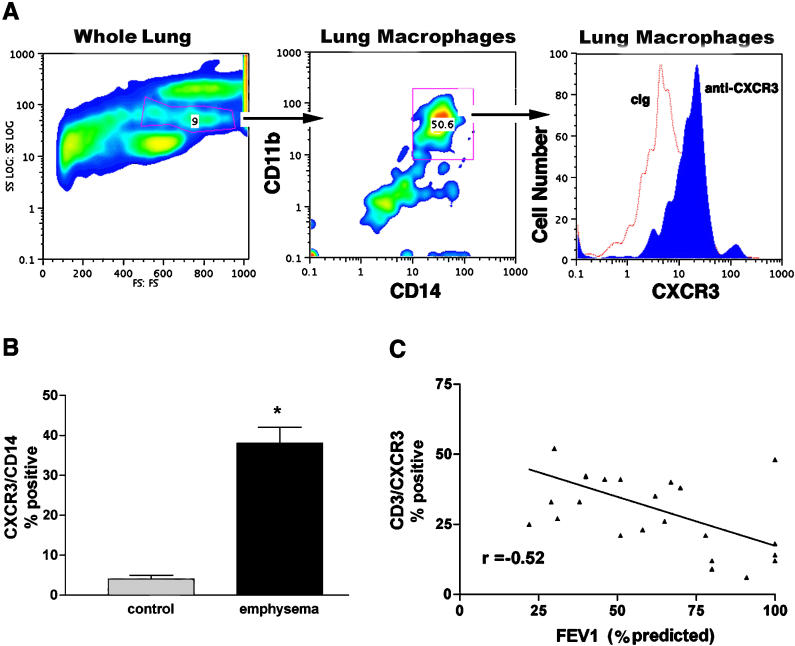
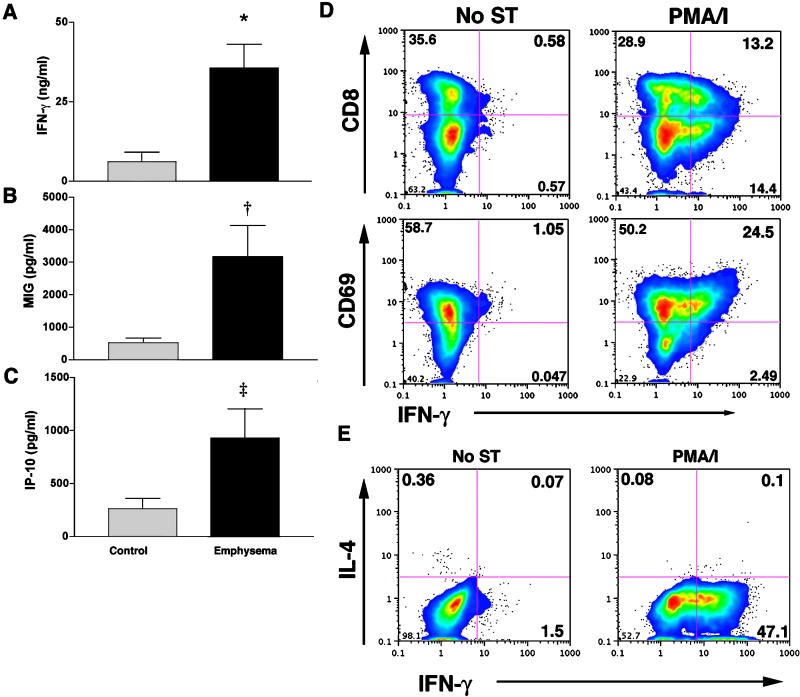
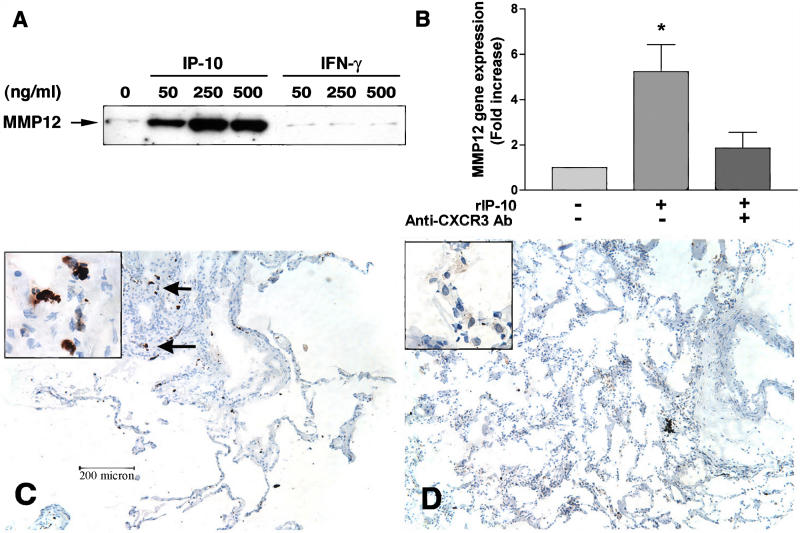
BACKGROUND: Chronic obstructive pulmonary disease and emphysema are a frequent result of long-term smoking, but the exact mechanisms, specifically which types of cells are associated with the lung destruction, are unclear. METHODS AND FINDINGS: We studied different subsets of lymphocytes taken from portions of human lungs removed surgically to find out which lymphocytes were the most frequent, which cell-surface markers these lymphocytes expressed, and whether the lymphocytes secreted any specific factors that could be associated with disease. We found that loss of lung function in patients with chronic obstructive pulmonary disease and emphysema was associated with a high percentage of CD4+ and CD8+ T lymphocytes that expressed chemokine receptors CCR5 and CXCR3 (both markers of T helper 1 cells), but not CCR3 or CCR4 (markers of T helper 2 cells). Lung lymphocytes in patients with chronic obstructive pulmonary disease and emphysema secrete more interferon gamma--often associated with T helper 1 cells--and interferon-inducible protein 10 and monokine induced by interferon, both of which bind to CXCR3 and are involved in attracting T helper 1 cells. In response to interferon-inducible protein 10 and monokine induced by interferon, but not interferon gamma, lung macrophages secreted macrophage metalloelastase (matrix metalloproteinase-12), a potent elastin-degrading enzyme that causes tissue destruction and which has been linked to emphysema. CONCLUSIONS: These data suggest that Th1 lymphoctytes in the lungs of people with smoking-related damage drive progression of emphysema through CXCR3 ligands, interferon-inducible protein 10, and monokine induced by interferon.
Overview
The claims and statistics of this paper haven’t been checked yet.
Run the check — free, no account needed. It reads the open-access text and checks the sources it cites.
Integrity signals
Registry
Cites
Statistics
Figures
Verification
Claims the paper makes
The claims and statistics of this paper haven’t been checked yet.
Run the check — free, no account needed. It reads the open-access text and checks the sources it cites.
Claims other papers make about this one
Each is checked against this paper’s own text: does it say what the citing paper says it does?
In the citing paper
“Specifically, macrophages, which can produce multiple proinflammatory cytokines and secrete MMPs, are the most abundant cell type in the BAL fluid of COPD patients, and increased numbers correlate with disease severity (85, 86, 104).”
From Aging and Lung Disease (2020) · cites this paper as [85]
In the citing paper
“Impaired phagocytosis and clearance of cellular debris by airway macrophages in COPD result in persistent inflammation (85, 104).”
From Aging and Lung Disease (2020) · cites this paper as [85]
Self-check
Percentages, sums and reported differences re-computed from the paper’s own numbers.
The self-check needs the paper’s full text.
Citations
Cites
Vestbo, J., Hurd, S. S., Agustí, A. G., Jones, P. W., Vogelmeier, C., Anzueto, A., Barnes, P. J., Fabbri, L. M., Martinez, F. J., Nishimura, M., et al. (2013) · American Journal of Respiratory and Critical Care Medicine · doi:10.1164/rccm.201204-0596pp · Cited by 15,983
PAUWELS, R. A., Buist, A. S., CALVERLEY, P. M. A., Jenkins, C. R., & Hurd, S. S. (2001) · American Journal of Respiratory and Critical Care Medicine · doi:10.1164/ajrccm.163.5.2101039 · Cited by 6,578 · cited 1×
“COPD was diagnosed according to the criteria recommended by the National Institutes of Health/World Health Organization workshop summary [31].”
MethodHow Matrix Metalloproteinases Regulate Cell Behavior
Sternlicht, M. D., & Werb, Z. (2001) · Annual Review of Cell and Developmental Biology · doi:10.1146/annurev.cellbio.17.1.463 · Cited by 3,959 · cited 1×
“Cytokines and chemokines are substrates for MMPs, but they also regulate expression of MMPs under pathological conditions [47,48].”
BackgroundZlotnik, A., & Yoshie, O. (2000) · Immunity · doi:10.1016/s1074-7613(00)80165-x · Cited by 3,923 · cited 1×
“Interferon-inducible protein 10 (IP10), monokine induced by interferon gamma (MIG), and interferon-inducible T cell alpha chemoattractant (I-TAC) are three known ligands for CXCR3 produced by normal and injured epithelial cells and T cells that are required for homing of Th1 cells [27,28,29].”
BackgroundChronic Obstructive Pulmonary Disease
Flavin, K., Morkane, C. M., & Marsh, S. (2018) · Cambridge University Press eBooks · doi:10.1017/9781108233712.025 · Cited by 2,687
Anthonisen, N. R. (1994) · JAMA · doi:10.1001/jama.272.19.1497 · Cited by 1,960
Requirement for IL-13 Independently of IL-4 in Experimental Asthma
Grünig, G., Warnock, M. L., Wakil, A. E., Venkayya, R., Brombacher, F., Rennick, D. M., Sheppard, D., Mohrs, M., Donaldson, D. D., Locksley, R. M., et al. (1998) · Science · doi:10.1126/science.282.5397.2261 · Cited by 1,845
Self-citationRequirement for Macrophage Elastase for Cigarette Smoke-Induced Emphysema in Mice
Hautamaki, R. D., Kobayashi, D. K., Senior, R. M., & Shapiro, S. D. (1997) · Science · doi:10.1126/science.277.5334.2002 · Cited by 1,470 · cited 1×
“MMP12 deficiency has been shown to protect mice against emphysema after chronic exposure to cigarette smoke, implying that MMP12 may be the key proteinase in the development of emphysema in this species [49,50].”
BackgroundChronic Obstructive Pulmonary Disease
Barnes, P. J. (2000) · New England Journal of Medicine · doi:10.1056/nejm200007273430407 · Cited by 1,078
Cole, K. E., Strick, C. A., Paradis, T. J., Ogborne, K. T., Loetscher, M., Gladue, R. P., Lin, W., Boyd, J. G., Moser, B., Wood, D. E., et al. (1998) · The Journal of Experimental Medicine · doi:10.1084/jem.187.12.2009 · Cited by 870 · cited 1×
“]. In addition to T cells, a wide variety of other inflammatory cells have been shown to express distinct chemokine receptors that are critical for their homing, suggesting a universal mechanism for regulating immune responses. Interferon-inducible protein 10 (IP-10), monokine induced by interferon gamma (MIG), and in…”
Background
Research works printed but not linked: 3
- Kay, 1997, Ciba Found Symp, 206, 56
- Anthonisen, 1994, JAMA, 272, 1497, 10.1001/jama.1994.03520190043033 · DOI
- Fiocchi, 1985, Acta Chir Scand Suppl, 525, 11
Cited by
Sorted by citations
Inflammatory mechanisms in patients with chronic obstructive pulmonary disease
Barnes, P. J. (2016) · Journal of Allergy and Clinical Immunology · doi:10.1016/j.jaci.2016.05.011 · Cited by 1,808
Immunology of asthma and chronic obstructive pulmonary disease
Barnes, P. J. (2008) · Nature reviews. Immunology · doi:10.1038/nri2254 · Cited by 1,444
“T H 1 cells express the chemokine receptor CXCR3 (Ref”
BackgroundThe cytokine network in asthma and chronic obstructive pulmonary disease
Barnes, P. J. (2008) · Journal of Clinical Investigation · doi:10.1172/jci36130 · Cited by 982
“increased expression of CXCR3 (24), which is activated by CXCL9,”
BackgroundInfluentialOutcomes for COPD pharmacological trials: from lung function to biomarkers
Cazzola, M., MacNee, W., Martínez, F. J., Rabe, K. F., Franciosi, L. G., Barnes, P. J., Brusasco, V., Burge, P. S., Calverley, P. M., Celli, B. R., et al. (2008) · European Respiratory Journal · doi:10.1183/09031936.00099306 · Cited by 850
Immunologic Aspects of Chronic Obstructive Pulmonary Disease
Cosío, M. G., Saetta, M. P., & Agustí, A. G. N. (2009) · New England Journal of Medicine · doi:10.1056/nejmra0804752 · Cited by 823
Metadata
- Authors
- Grumelli, S., Corry, D. B., Song, L.-Z., Song, L., Green, L., Huh, J., Hacken, J., Espada, R., Bag, R., Lewis, D. E., & Kheradmand, F.
- Affiliations
- Baylor College of Medicine (US)
- Michael E. DeBakey VA Medical Center (US)
- Corresponding author
- Kheradmand, Farrah
- Venue
- PLoS Medicine
- Publisher
- Public Library of Science (PLoS)
- Published
- 2004-10-19
- Volume
- 1
- Issue
- 1
- Pages
- e8
- ISSN
- 1549-1277 (ISSN-L)
- 1549-1676
- PMC
- PMC523885
- OpenAlex
- W2108679807
- Cited by
- 484
- References
- 59
- Citations by year
- 2026: 6 · 2025: 12 · 2024: 21 · 2023: 12 · 2022: 11 · 2021: 21 · 2020: 14 · 2019: 22 · 2018: 16 · 2017: 25 · 2016: 21 · 2015: 28 · 2014: 15 · 2013: 29 · 2012: 31
- FWCI
- 19.11
- Type
- journal article
- Language
- en
- Open access
- gold
- doi.org
- Locations
- PLoS Medicine (publishedVersion, cc-by)
- PubMed Central (publishedVersion, cc-by)
- PubMed (publishedVersion)
- DOAJ (DOAJ: Directory of Open Access Journals) (submittedVersion, cc-by-sa)
- Funders
- U.S. Public Health Service (69585, 64061, 72419)
- National Institute of Allergy and Infectious Diseases (P30AI036211, AI 36211)
- Topics
- Health Sciences › Medicine › Pulmonary and Respiratory Medicine › Chronic Obstructive Pulmonary Disease (COPD) Research
- Health Sciences › Medicine › Pulmonary and Respiratory Medicine › Asthma and respiratory diseases
- Health Sciences › Medicine › Surgery › Transplantation: Methods and Outcomes
- Keywords
- chronic obstructive pulmonary disease, emphysema, Th1 cells, CXCR3, CCR5, interferon-gamma, CXCL10, macrophage metalloelastase, matrix metalloproteinase-12, elastin degradation, smoking, lung lymphocytes, chemokine receptors
- MeSH terms
- Aged, Female, Humans, Male, Middle Aged, Pulmonary Emphysema, Smoking, Tomography, X-Ray Computed, Lymphocyte Subsets, Cytokines, Macrophages, Alveolar, Th1 Cells, Disease Progression, Receptors, Chemokine, Chemokines, CXC, Pulmonary Disease, Chronic Obstructive, Chemokine CXCL10, Receptors, CXCR3
About these checks
Registry, retraction, Cites and statistics results are computed, not judged, with one exception: a printed reference that no index lists is read once by a model before it counts as a citation error. Claims are extracted by a model and kept only when their quote appears verbatim in the text; each cited source is then checked, with a model’s help, for whether it says what the claim relies on. Those verdicts can be wrong — read the claim’s quote and the cited source before relying on one.
Statistics and arithmetic are recomputed, not judged.
Confidence bands are shown only for fields calibrated on our annotated test set. None is calibrated yet, so no band is shown.
What counts as a claim ›How we measure confidence ›How we check this ›
Are you an author, or do you see a problem with this page? Request a review
