

Factors Associated with Findings of Published Trials of Drug–Drug Comparisons: Why Some Statins Appear More Efficacious than Others
Open accessThe DOI matches its Crossref record; 59 of the 59 references it cites were found in a registry or an index.
Abstract
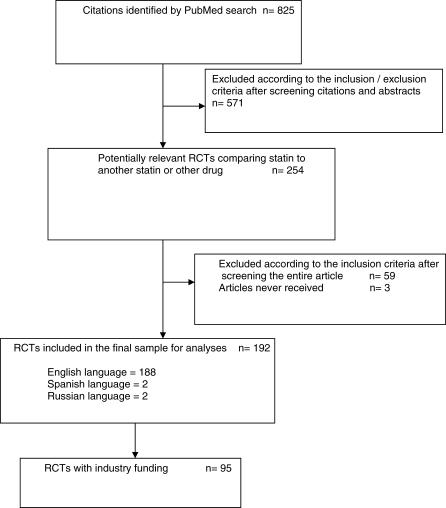
BACKGROUND: Published pharmaceutical industry-sponsored trials are more likely than non-industry-sponsored trials to report results and conclusions that favor drug over placebo. Little is known about potential biases in drug-drug comparisons. This study examined associations between research funding source, study design characteristics aimed at reducing bias, and other factors that potentially influence results and conclusions in randomized controlled trials (RCTs) of statin-drug comparisons. METHODS AND FINDINGS: This is a cross-sectional study of 192 published RCTs comparing a statin drug to another statin drug or non-statin drug. Data on concealment of allocation, selection bias, blinding, sample size, disclosed funding source, financial ties of authors, results for primary outcomes, and author conclusions were extracted by two coders (weighted kappa 0.80 to 0.97). Univariate and multivariate logistic regression identified associations between independent variables and favorable results and conclusions. Of the RCTs, 50% (95/192) were funded by industry, and 37% (70/192) did not disclose any funding source. Looking at the totality of available evidence, we found that almost all studies (98%, 189/192) used only surrogate outcome measures. Moreover, study design weaknesses common to published statin-drug comparisons included inadequate blinding, lack of concealment of allocation, poor follow-up, and lack of intention-to-treat analyses. In multivariate analysis of the full sample, trials with adequate blinding were less likely to report results favoring the test drug, and sample size was associated with favorable conclusions when controlling for other factors. In multivariate analysis of industry-funded RCTs, funding from the test drug company was associated with results (odds ratio = 20.16 [95% confidence interval 4.37-92.98], p < 0.001) and conclusions (odds ratio = 34.55 [95% confidence interval 7.09-168.4], p < 0.001) that favor the test drug when controlling for other factors. Studies with adequate blinding were less likely to report statistically significant results favoring the test drug. CONCLUSIONS: RCTs of head-to-head comparisons of statins with other drugs are more likely to report results and conclusions favoring the sponsor's product compared to the comparator drug. This bias in drug-drug comparison trials should be considered when making decisions regarding drug choice.
Overview
The claims and statistics of this paper haven’t been checked yet.
Free: it reads the open-access text and checks the first 5 claims that cite a source we can check. Create a free account to check every claim.
Integrity signals
Registry
Cites
Statistics
Figures
Verification
Claims the paper makes
The claims and statistics of this paper haven’t been checked yet.
Free: it reads the open-access text and checks the first 5 claims that cite a source we can check. Create a free account to check every claim.
Claims other papers make about this one
Each is checked against this paper’s own text: does it say what the citing paper says it does?
In the citing paper
“For example, among industry-sponsored head-to-head comparisons of statin drugs, the results favor the statin made by the company that sponsored the study [37].”
Self-check
Percentages, sums and reported differences re-computed from the paper’s own numbers.
The self-check needs the paper’s full text.
Citations
Cites
Why Most Published Research Findings Are False
Ioannidis, J. P. A. (2005) · PLoS Medicine · doi:10.1371/journal.pmed.0020124 · Cited by 10,505
Grundy, S. M., Cleeman, J. I., Merz, C. N. B., Brewer, H. B., Clark, L. T., Hunninghake, D. B., Pasternak, R. C., Smith, S. C., & Stone, N. J. (2004) · Circulation · doi:10.1161/01.cir.0000133317.49796.0e · Cited by 6,902
Schulz (1995) · doi:10.1001/jama.1995.03520290060030 · Cited by 5,634 · cited 4×
“For example, Schulz and colleagues found that estimates of treatment effects were exaggerated by 41% for inadequately concealed trials and by 17% for trials with inadequate double blinding [10].”
BackgroundInfluentialWhy Most Published Research Findings Are False
Ioannidis, J. P. A. (2005) · CHANCE · doi:10.1080/09332480.2005.10722754 · Cited by 4,702 · cited 1×
“Bias is the combination of various study design, data analysis, and presentation factors that make the results differ systematically from the truth [1].”
BackgroundPharmaceutical industry sponsorship and research outcome and quality: systematic review
Lexchin, J., Bero, L. A., Djulbegovic, B., & Clark, O. (2003) · BMJ · doi:10.1136/bmj.326.7400.1167 · Cited by 2,147 · cited 1×
“Although the association of pharmaceutical industry sponsorship with results and conclusions that favor the sponsor’s product over placebo is clear [22,23], the potential influence of funding source when the funder manufactures one of two competing drugs undergoing comparison has not been well described.”
BackgroundSelf-citationThe Hazards of Scoring the Quality of Clinical Trials for Meta-analysis
Jüni, P. (1999) · JAMA · doi:10.1001/jama.282.11.1054 · Cited by 1,981 · cited 1×
“], the unreliability of quality scores has led to the recommendation that trial quality be assessed for individual features that are aimed to reduce bias, such as concealment of allocation or blinding [”
BackgroundChan, A.-W., Hróbjartsson, A., Haahr, M. T., Gøtzsche, P. C., & Altman, D. G. (2004) · JAMA · doi:10.1001/jama.291.20.2457 · Cited by 1,845 · cited 2×
“Selective reporting of outcomes can also contribute to biased results and conclusions [4–6].”
ResultScope and Impact of Financial Conflicts of Interest in Biomedical Research: A Systematic Review
Bekelman, J. E., Li, Y., & Gross, C. P. (2003) · JAMA · doi:10.1001/jama.289.4.454 · Cited by 1,816 · cited 1×
“Although the association of pharmaceutical industry sponsorship with results and conclusions that favor the sponsor’s product over placebo is clear [22,23], the potential influence of funding source when the funder manufactures one of two competing drugs undergoing comparison has not been well described.”
BackgroundLaw, M. R., Wald, N. J., & Rudnicka, A. R. (2003) · BMJ · doi:10.1136/bmj.326.7404.1423 · Cited by 1,720 · cited 1×
“As strong evidence suggests that statins are more effective than placebo in reducing lipids [31], drug– drug comparison trials involving statins are the most relevant for making policy decisions about choosing a statin.”
BackgroundThe Existence of Publication Bias and Risk Factors for Its Occurrence
Dickersin, K. (1990) · JAMA: The Journal of the American Medical Association · doi:10.1001/jama.1990.03440100097014 · Cited by 1,417 · cited 1×
“Whether the results are reported in full, or whether there is selective reporting of outcomes can also contribute to biased results and conclusions [4–7].”
Result
Research works printed but not linked: 2
- Institute for Scientific Information (2005) Science citation index: Journal citation reports. Philadelphia (Pennsylvania): Institute for Scientific Information. Available at: http://portal.isiknowledge.com/portal. cgi?DestApp¼JCR&Func¼Frame. Accessed 4 May 2007.
- Dickersin K, Min Y-I, Meinert C (1992) Factors influencing publication of research results. JAMA 267: 374-378.
Cited by
Items 101–200 of 258
Conduct and reporting of formula milk trials: systematic review
Helfer, B., Leonardi‐Bee, J., Mundell, A., Parr, C., Ierodiakonou, D., García-Larsen, V., Kroeger, C. M., Dai, Z., de Man, A. L., Jobson, J., et al. (2021) · BMJ · doi:10.1136/bmj.n2202 · Cited by 30
Self-citationBridoux, V., Moutel, G., Schwarz, L., Michot, F., Hervé, C., & Tuech, J. (2014) · World Journal of Surgery · doi:10.1007/s00268-014-2580-5 · Cited by 25
Li, X.-Q., Yang, G.-L., Tao, K.-M., Zhang, H.-Q., Zhou, Q.-H., & Ling, C.-Q. (2013) · Scandinavian Journal of Gastroenterology · doi:10.3109/00365521.2013.845909 · Cited by 25
“Several factors contributed to the change of PO; however, authors seldom mentioned the reasons in their report and it left the general public to suspect that their motivation was related to the benefit of their sponsors, especially those for-profit pharmaceutical companies [27,28].”
BackgroundAlkhafaji, A., Trinquart, L., Baron, G., Desvarieux, M., & Ravaud, P. (2012) · BMC Medicine · doi:10.1186/1741-7015-10-142 · Cited by 33
“However, such trials may favor the sponsored treatment [33,34] or the newest treatment [35-37].”
BackgroundBekkering, G., Soares-Weiser, K., Reid, K., Kessels, A., Dahan, A., Treede, R., & Kleijnen, J. (2011) · Current Medical Research and Opinion · doi:10.1185/03007995.2011.586332 · Cited by 26
Open Access: Concepts, findings, and recommendations for stakeholders in dentistry
Hua, F., Shen, C., Walsh, T., Glenny, A., & Worthington, H. V. (2017) · Journal of Dentistry · doi:10.1016/j.jdent.2017.06.012 · Cited by 27
Most meta-analyses of drug interventions have narrow scopes and many focus on specific agents
Haidich, A., Pilalas, D., Contopoulos‐Ioannidis, D. G., & Ioannidis, J. P. A. (2013) · Journal of Clinical Epidemiology · doi:10.1016/j.jclinepi.2012.10.014 · Cited by 25
Factors Associated with Results and Conclusions of Trials of Thiazolidinediones
Rattinger, G., & Bero, L. (2009) · PLoS ONE · doi:10.1371/journal.pone.0005826 · Cited by 24
“Our study adds more support to the body of literature demonstrating that pharmaceutical industry sponsored studies comparing drug and placebo are more likely to favor the drug [5–8] and that the sponsor’s drug in a drug-drug comparison is more likely to be favored [2,13].”
ResultSelf-citationIndustry-funded versus non-profit-funded critical care research: a meta-epidemiological overview
Janiaud, P., Cristea, I. A., & Ioannidis, J. P. A. (2018) · Intensive Care Medicine · doi:10.1007/s00134-018-5325-3 · Cited by 28
Future directions for The Spine Journal: managing and reporting conflict of interest issues
Carragee, E. J., Hurwitz, E. L., Weiner, B. K., Bono, C. M., & Rothman, D. J. (2011) · The Spine Journal · doi:10.1016/j.spinee.2011.08.418 · Cited by 26
Evaluation of Oncology Trial Results Reporting Over a 10-Year Period
Liu, X., Zhang, Y., Li, W., Vokes, E. E., Sun, Y. H., Le, Q., & Ma, J. (2021) · JAMA Network Open · doi:10.1001/jamanetworkopen.2021.10438 · Cited by 24
Assessment of Web-Based Consumer Reviews as a Resource for Drug Performance
Adusumalli, S., Lee, H., Hoi, Q., Koo, S., Tan, I. B., & Ng, P. C. (2015) · Journal of Medical Internet Research · doi:10.2196/jmir.4396 · Cited by 25
“If one assumes FDA black box warnings are accurate and authoritative compared to scientific publications (which can be biased [2,3]), then the seven discordant comparisons may be considered correct for the deduced online trends.”
Effect of Industry Sponsorship on Dental Restorative Trials
Schwendicke, F., Tu, Y.-K., Blunck, U., Paris, S., & Göstemeyer, G. (2016) · Journal of Dental Research · doi:10.1177/0022034515609270 · Cited by 22
“…trials often being more rigorously designed, leading to higher internal validity, but yielding more positive outcomes (in favor of the sponsor’s drug, material, or device) as compared with nonsponsored trials (Bero et al. 2007; Rattinger and Bero 2009; Lundh et al. 2012; Flacco et al. 2015).”
BackgroundResultLiu, P., Qiu, Y., Qian, Y., Chen, X., Wang, Y., Cui, J., & Zhai, X. (2017) · Journal of Gastroenterology and Hepatology · doi:10.1111/jgh.13591 · Cited by 20
Mansuri, Z., Reddy, A., Vadukapuram, R., Trivedi, C. G., & Amara, A. W. (2022) · PubMed · Cited by 31
Veroniki, A. A., Wong, E. K. C., Lunny, C., Molina, J. C. M., Flórez, I. D., Tricco, A. C., & Straus, S. E. (2023) · Systematic Reviews · doi:10.1186/s13643-023-02235-z · Cited by 20
Conflicts of interest in research on electronic cigarettes
Martínez, C., Fu, M., Galán, I., Pérez‐Ríos, M., Martínez-Sánchez, J. M., López, M. J., Sureda, X., Montes, A., & Fernández, E. (2018) · Tobacco Induced Diseases · doi:10.18332/tid/90668 · Cited by 26
Cao, L., Yao, L., Xu, H., Li, J., Zhang, X., Li, M., Feng, Z., Ren, M., Xian, K., Sun, Y., et al. (2021) · Journal of Clinical Epidemiology · doi:10.1016/j.jclinepi.2021.08.014 · Cited by 22
Odierna, D. H., White, J., Forsyth, S. R., & Bero, L. A. (2012) · Health Expectations · doi:10.1111/hex.12030 · Cited by 20
Self-citationDiplomats' Mystery Illness and Pulsed Radiofrequency/Microwave Radiation
Golomb, B. A. (2018) · Neural Computation · doi:10.1162/neco_a_01133 · Cited by 18
Endpoint Selection and Relative (Versus Absolute) Risk Reporting in Published Medication Trials
Hochman, M. E., & McCormick, D. (2011) · Journal of General Internal Medicine · doi:10.1007/s11606-011-1813-7 · Cited by 19
“Consistent with our results, however, trials using surrogate endpoints were more likely to generate positive results than those using clinical endpoints Bero et al.(3) An analysis of statin trials identified in Pubmed between 1999–2005 found that 98% used surrogate endpoints la Cour et al.”
ResultThe Bias Dynamics Model: Correcting for Meta-biases in Therapeutic Prediction
Erasmus, A. (2023) · Philosophy of Science · doi:10.1017/psa.2023.66 · Cited by 16
“Bero et al. (2007) found that the odds of statistically significant results in favor of statin therapy in drug-drug comparisons were sixteen times greater for industry-funded trials than for nonindustry-funded trials.”
ResultAbdel‐Sattar, M., Krauth, D., Anglemyer, A., & Bero, L. (2014) · Evidence-based Preclinical Medicine · doi:10.1002/ebm2.5 · Cited by 14
Graham, S. S., Majdik, Z. P., Barbour, J. B., & Rousseau, J. F. (2022) · Studies in health technology and informatics · doi:10.3233/shti220106 · Cited by 15
The Sequential Combination of Pharmacotherapy and Psychotherapy in Mood Disorders
Tomba, E., & Fava, G. A. (2008) · Journal of Contemporary Psychotherapy · doi:10.1007/s10879-008-9108-y · Cited by 15
“In psychopharmacology it has been repeatedly reported that studies sponsored by pharmaceutical companies were more likely to have outcomes favourable to the sponsor (Bero et al. 2007).”
BackgroundInfluentialRegistered Randomized Trials Comparing Generic and Brand-Name Drugs: A Survey
Flacco, M. E., Manzoli, L., Boccia, S., Puggina, A., Rosso, A., Marzuillo, C., Scaioli, G., Gualano, M. R., Ricciardi, W., Villari, P., et al. (2016) · Mayo Clinic Proceedings · doi:10.1016/j.mayocp.2016.04.032 · Cited by 17
Industry sponsorship in trials on fluoride varnish or gels for caries prevention
Reda, S., Elhennawy, K., Meyer‐Lückel, H., Paris, S., & Schwendicke, F. (2017) · Community Dentistry and Oral Epidemiology · doi:10.1111/cdoe.12287 · Cited by 14
THIERS, B. H. (2008) · Yearbook of Dermatology and Dermatologic Surgery · doi:10.1016/s0093-3619(08)70884-0 · Cited by 14
Better Regulation of Industry-Sponsored Clinical Trials is Long Overdue
Wynia, M. K., & Boren, D. (2009) · The Journal of Law Medicine & Ethics · doi:10.1111/j.1748-720x.2009.00402.x · Cited by 18
Randomized controlled trials and neuro-oncology: should alternative designs be considered?
Mansouri, A., Shin, S. M., Cooper, B. T., Srivastava, A., Bhandari, M., & Kondziolka, D. S. (2015) · Journal of Neuro-Oncology · doi:10.1007/s11060-015-1870-6 · Cited by 13
Rituximabe para o tratamento da artrite reumatoide: Revisão sistemática
de Lemos, L. L. P., Costa, J. D. O., Machado, M. A. D. Á., Almeida, A. M., Barbosa, M. M., Kakehasi, A. M., de Araújo, V. E., Guerra, A. A., & Acúrcio, F. D. A. (2014) · Revista Brasileira de Reumatologia · doi:10.1016/j.rbr.2013.08.001 · Cited by 11
Misinterpretation of trial evidence on statin adverse effects may harm patients
Golomb, B. A. (2014) · European Journal of Preventive Cardiology · doi:10.1177/2047487314533085 · Cited by 14
“Selective inclusion of favorable findings in industry funded trials has been amply documented,10 and consistent findings favor the funder’s drug in head-to-head statin RCTs.11 Meta-analysis simply adds false precision to biased estimates.”
BackgroundOf mugs, meals and more: the intricate relations between physicians and the medical industry
Sahm, S. W. (2012) · Medicine Health Care and Philosophy · doi:10.1007/s11019-012-9391-y · Cited by 10
“They cover a wide range, from cancer treatment to psychiatry: even the field of nutritional medicine is affected (Peppercorn et al. 2007; Bero et al. 2007; Kelly et al. 2006; Lesser et al. 2007).”
BackgroundSTATIN ADVERSE EFFECTS: MECHANISMS, DIAGNOSIS, PREVENTION AND MANAGEMENT
Diadyk, A. I., Евгеньевна, К. Т., Suliman, Y. V., Zborovskyy, S. R., & Zdykhovskaya, I. I. (2018) · The Russian Archives of Internal Medicine · doi:10.20514/2226-6704-2018-8-4-266-276 · Cited by 12
“Далеко не все специалисты однозначно оценивают безопасность применения статинов, подвергаются критике структура и статистическая оценка результатов рандомизированных контролируемых исследований (РКИ), а также тесная финансовая связь исследователей с фармацевтическими компаниями, производящими гиполипидемические препар…”
Bührer, J., Giovane, C. D., Gencer, B., Adam, L., Lyko, C., Feller, M., da Costa, B. R., Aujesky, D., Bauer, D. C., Rodondi, N., et al. (2023) · Mayo Clinic Proceedings Innovations Quality & Outcomes · doi:10.1016/j.mayocpiqo.2023.04.010 · Cited by 10
“Lack of blinding is usually considered a source of bias, although results from metaepidemiological studies are contradictory.(1,3,6,25,28) Previous studies have shown that estimated bias in intervention effects caused by inadequate blinding varied across RCTs by the type of outcome.”
ResultInocêncio, G. S. G., Santos, D. M., Costa, M. D. M. D. A., Vieira, W. D. A., de Almeida, V. L., Rodrigues, R. P. C. B., Rode, S. D. M., & Paranhos, L. R. (2023) · Clinics · doi:10.1016/j.clinsp.2023.100220 · Cited by 12
“Authors advocate those studies sponsored by the pharmaceutical industry are more prone to report results and conclusions that favor the drug instead of the placebo.(11,39) Although 29% to 69% of clinical trials in various medical fields declare conflicts of interest,(40) some types of study funding seem to induce posi…”
BackgroundStop Fooling Yourself! (Diagnosing and Treating Confirmation Bias)
Born, R. T. (2024) · eNeuro · doi:10.1523/eneuro.0415-24.2024 · Cited by 18
“Similar results have been reported by other investigative teams (Moher et al., 1998; Jüni et al., 2001; Bero et al., 2007; Savovic ́ et al., 2012).”
ResultXie, L., Qin, W., Gu, Y., Pathak, J., Zeng, S., & Du, M. (2020) · Medicina oral, patología oral y cirugía bucal · doi:10.4317/medoral.23647 · Cited by 9
“Another study also proved that the results and conclusions might more favorable for the sponsor’s drugs than the comparator ones in drug-drug comparison trials (23).”
ResultA new method for scoring financial conflicts of interest
Maharaj, S. V. M. (2015) · International Journal of Occupational and Environmental Health · doi:10.1179/2049396714y.0000000097 · Cited by 10
Bias related to funding source in statin trials
Bero, L. A. (2014) · BMJ · doi:10.1136/bmj.g5949 · Cited by 9
Self-citationRoig, F., & Borrego, A. (2015) · Revista española de Documentación Científica · doi:10.3989/redc.2015.3.1231 · Cited by 5
Interessekonflikter – en kunnskapsbasert tilnærming
Slørdal, L., Eggen, A. E., & Rygnestad, T. (2012) · Tidsskrift for Den norske legeforening · doi:10.4045/tidsskr.12.0380 · Cited by 7
Sass, J. B., Heine, L. G., & Hwang, N. (2016) · Environmental Health · doi:10.1186/s12940-016-0188-y · Cited by 9
Nejstgaard, C. H., Bero, L. A., Hróbjartsson, A., Jørgensen, A. W., Jørgensen, K. J., Le, M., & Lundh, A. (2019) · Cochrane Database of Systematic Reviews · doi:10.1002/14651858.mr000040.pub2 · Cited by 7
“This association has been attributed to various factors, including the sponsor's influence on framing the question, study design, and reporting of results (Bero 2007; Bero 1996).”
BackgroundSelf-citationJournalists and conflicts of interest in science: beliefs and practices
Cook, D. M., Boyd, E. A., Grossmann, C., & Bero, L. A. (2009) · Ethics in Science and Environmental Politics · doi:10.3354/esep00100 · Cited by 7
“Financial ties of investigators with companies that make the products they are testing are associated with the reporting of favorable research results and conclusions for the sponsor (Bekelman et al. 2003, Lexchin et al. 2003, Bero et al. 2007, Lesser et al. 2007).”
BackgroundSelf-citationCatalá-López, F., & Ridao-López, M. (2017) · Atención Primaria · doi:10.1016/j.aprim.2016.08.001 · Cited by 9
Hamza, T., Schwarzer, G., & Salanti, G. (2024) · BMC Medical Research Methodology · doi:10.1186/s12874-023-02130-0 · Cited by 10
“…features: RCTs include patients not necessarily representative of those encountered at the point of care, they are more likely to use placebo or other legacy treatments which are not an option in practice [10–12], and they often do not provide data on long-term benefit and safety of interventions.”
BackgroundCharacteristics of antimicrobial studies registered in the USA through ClinicalTrials.Gov
Stockmann, C. R., Sherwin, C. M. T., Ampofo, K., Hersh, A. L., Pavia, A. T., Byington, C. L., Ward, R. M., & Spigarelli, M. G. (2013) · International Journal of Antimicrobial Agents · doi:10.1016/j.ijantimicag.2013.04.019 · Cited by 6
Seidler, A. L., Hunter, K. E., Chartres, N., & Askie, L. M. (2019) · PLoS ONE · doi:10.1371/journal.pone.0222117 · Cited by 6
“[2] For instance, in head-to-head comparisons of industry funded trials examining statins, results were more likely to favour the funder’s drug compared to the competitor drug.[16] Mechanisms beyond the traditional risk of bias tool have been proposed that may explain this funding bias, including systematic difference…”
Coleman, B. G., Johnson, T. M., Erley, K. J., Topolski, R. L., Rethman, M. P., & Lancaster, D. D. (2016) · Journal of Dental Education · doi:10.1002/j.0022-0337.2016.80.10.tb06198.x · Cited by 8
Rituximab for rheumatoid arthrits treatment: a systematic review
de Lemos, L. L. P., Costa, J. D. O., Machado, M. A. D. Á., Almeida, A. M., Barbosa, M. M., Kakehasi, A. M., de Araújo, V. E., Guerra, A. A., & Acúrcio, F. D. A. (2014) · Revista Brasileira de Reumatologia (English Edition) · doi:10.1016/j.rbre.2013.08.003 · Cited by 6
ALDAIRY, Y., Nguyen, P. L., & Jatoi, A. (2010) · European Journal of Cancer Care · doi:10.1111/j.1365-2354.2009.01136.x · Cited by 7
“Bero and others recently assessed 192 published, randomised controlled trials on statin drugs and observed that those studies funded by pharmaceutical companies were more likely to report favourable results (Bero et al. 2007).”
BackgroundIn Support of EHP ’s Proposal to Adopt the ARRIVE Guidelines
Vesterinen, H. M., Johnson, P. I., Koustas, E., Lam, J., Sutton, P., & Woodruff, T. J. (2013) · Environmental Health Perspectives · doi:10.1289/ehp.1307775 · Cited by 5
“…is based on empirical data from studies of the health effects of tobacco (Barnes and Bero 1997, 1998), the safety and efficacy of pharma ceuticals (Bero et al. 2007; Lexchin et al. 2003; Lundh et al. 2012), and medical procedures (Popelut et al. 2010; Shah et al. 2005) that have shown that source…”
BackgroundMethodKakazu, V. A., Assis, M., Bacelar, A., Bezerra, A. G., Ciutti, G. L. R., Conway, S. G., Galduróz, J. C. F., Drager, L. F., Khoury, M. P., Leite, I. P. A., et al. (2025) · Frontiers in Neurology · doi:10.3389/fneur.2025.1600767 · Cited by 5
“When several statin manufacturers were putting their products on the market, Bero et al. reviewed the relevant literature to understand whether statins were being favored when compared to other drugs (14).”
Electronic health records may threaten blinding in trials of statins
Nguyen, P. (2014) · BMJ · doi:10.1136/bmj.g5239 · Cited by 5
Association between personal conflicts of interest and recommendations on medical interventions
Lundh, A., Jørgensen, A. W., & Bero, L. A. (2013) · Cochrane Database of Systematic Reviews · doi:10.1002/14651858.mr000040 · Cited by 5
Self-citationMoney makes the world go round: the pervasiveness of pharmacoeconomics
Ritter, J. (2008) · British Journal of Clinical Pharmacology · doi:10.1111/j.1365-2125.2008.03335.x · Cited by 5
Sutton, P., Woodruff, T. J., Vogel, S. A., & Bero, L. A. (2011) · Environmental Health Perspectives · doi:10.1289/ehp.1104385 · Cited by 5
Self-citationThe need for “gentle medicine” in a post Covid-19 world
Andrade, G. E., & Campo-Redondo, M. (2021) · Medicine Health Care and Philosophy · doi:10.1007/s11019-021-10046-z · Cited by 4
It's time to rebuild the evidence base
Moynihan, R. N. (2011) · BMJ · doi:10.1136/bmj.d3004 · Cited by 4
“In 2007 a review of almost 200 trials comparing cholesterol lowering drugs found that company funding greatly influenced a study’s outcome.”
BackgroundSystematic reviews and metaanalyses of air pollution epidemiological studies
Lam, J., Vesterinen, H. M., & Woodruff, T. J. (2020) · Elsevier eBooks · doi:10.1016/b978-0-12-818122-5.00008-9 · Cited by 7
Baram, L., Dai, Z., McDonald, S., & Bero, L. A. (2022) · Public Health Nutrition · doi:10.1017/s1368980022000246 · Cited by 5
“Low levels of disclosure have been encountered(5,8,34,35) and demonstrated(21,36) in other studies and point to a broader concern regarding adherence to journal COI disclosure policies.”
ResultSelf-citationUnbalanced reporting of benefits and harms in abstracts on rofecoxib
Jørgensen, A. W., Jørgensen, K. J., & Gøtzsche, P. C. (2010) · European Journal of Clinical Pharmacology · doi:10.1007/s00228-010-0791-8 · Cited by 5
Conflicts of Interest in Psychopharmacology Textbooks
Cosgrove, L., Herrawi, F., & Shaughnessy, A. F. (2021) · Community Mental Health Journal · doi:10.1007/s10597-021-00906-6 · Cited by 5
“Researchers who have examined industry influence on clinical trials, meta-analyses, diagnostic and clinical care guidelines, prescribing practices, and continuing medical education have found that financial conflicts of interest (FCOI) are a pernicious problem (Bero et al., 2007; Fugh-Berman & Batt, 2006; Norris et al…”
BackgroundJatoi, A., & Nguyen, P. L. (2008) · Expert Opinion on Investigational Drugs · doi:10.1517/13543780802513874 · Cited by 4
El papel de las revisiones sistemáticas en anestesiología basada en la evidencia
Vasiliadis, H. S., Martí-Carvajal, A. J., & Salanti, G. (2011) · Colombian Journal of Anesthesiology · doi:10.5554/rca.v39i2.210 · Cited by 4
Finanzierung von Arzneimittelstudien durch pharmazeutische Unternehmen und die Folgen
Schott, G., Pachl, H., Limbach, U., Gundert‐Remy, U., Ludwig, W., & Lieb, K. (2010) · Cited by 8
Statins for primary prevention: what is the regulator’s role?
Jefferson, T., Demasi, M., & Doshi, P. (2020) · BMJ Evidence-Based Medicine · doi:10.1136/bmjebm-2019-111321 · Cited by 5
de Lorgeril, M., Salen, P., Corcos, T., Defaye, P., Juneau, M., Pavy, B., & Saoudi, N. C. (2007) · European Heart Journal · doi:10.1093/eurheartj/ehm571 · Cited by 4
Gabriel Rada, G., Schünemann, H. J., Labedi, N., El-Hachem, P., Kairouz, V., & Akl, E. A. (2013) · BMC Cancer · doi:10.1186/1471-2407-13-76 · Cited by 3
“It is well known that industry sponsored trials favor products made by the company funding the research, but one of the more likely explanations is not because a higher risk of bias but through the selection of an inappropriate comparator to the product being investigated [30,31].”
BackgroundPieper, D., Li, L., & Büchter, R. B. (2016) · Springer eBooks · doi:10.1007/978-3-319-25655-9_22 · Cited by 3
Pang, C. L., Pilkington, N., Wei, Y., Peters, J., Roobottom, C. A., & Hyde, C. (2018) · BMC Cardiovascular Disorders · doi:10.1186/s12872-018-0777-5 · Cited by 3
“As eluded to in [15], this phenomenon is similar to when a new drug is only effective when compared to an ineffective comparator drug [77].”
BackgroundGolomb, B. A. (2009) · The American Journal of Bioethics · doi:10.1080/15265160903098424 · Cited by 3
“Similarly in head-to-head statin trials, odds of the funder's statin reigning supreme were, for results, ∼ 20:1; and for conclusions, ∼ 35:1 ( Bero et al. 2007 ).”
BackgroundClinical trials and public trust: the geographical shift to the Asia‐Pacific region
Torralba, K. D., Khan, N. A., & Quismorio, F. P. (2009) · International Journal of Rheumatic Diseases · doi:10.1111/j.1756-185x.2009.01409.x · Cited by 3
Nakkash, R. T., Ali, A., Alaouié, H., Asmar, K. E., Hirschhorn, N., Mugharbil, S., Nuwayhid, I. A., London, L., Saban, A., Rashid, S. F., et al. (2020) · International Journal of Public Health · doi:10.1007/s00038-020-01416-0 · Cited by 3
Prevalence of pharmaceutical industry conspiracy theories among the polish population
Makowska, M., Ozaki, A., & Boguszewski, R. (2025) · Scientific Reports · doi:10.1038/s41598-025-95626-2 · Cited by 2
“These include its influence on testing and clinical trials for new medications, control over scientific processes 46,47 , pressure on regulatory bodies 48–51 , inadequate investment in R&D 48 , expansion of disease diagnostic boundaries, and disease-mongering 47,49,52 .”
Philip Morris involvement in the development of an air quality laboratory in El Salvador
Kummerfeldt, C. E., Barnoya, J., & Bero, L. A. (2009) · Tobacco Control · doi:10.1136/tc.2008.026989 · Cited by 3
Self-citationvan de Klippe, C. J., & Knottnerus, J. A. (2010) · Huisarts en Wetenschap · doi:10.1007/s12445-010-0311-1 · Cited by 2
Bias related to funding source in statin trials The biases are clear if you know where to look
Bero, L. A. (2014) · Cited by 2
Self-citationBarnes, R. M. (2019) · Journal of Clinical Epidemiology · doi:10.1016/j.jclinepi.2019.03.013 · Cited by 3
Wynne, M. E., & Brown, R. T. (2008) · Wiley eBooks · doi:10.1002/9780470373699.speced0691 · Cited by 2
Pharmacoepidemiology and the Law
Kesselheim, A. S. (2012) · Pharmacoepidemiology · doi:10.1002/9781119959946.ch9 · Cited by 2
Artificial intelligence as a new commercial determinant of health
Bavli, I., Lexchin, J., Galea, S., King, N., & Davidovitch, N. (2026) · BMJ · doi:10.1136/bmj-2026-100272 · Cited by 1
“5 6 These tactics include normalising conflicts of interest that shape scientific evidence in their favour, 7 the manufacture of doubt to obscure the harmful effects of their products, 8-10 andsophisticatedmarketingstrategies toinfluencepreferencesanddemand.”
Financial Conflicts in the Medical Profession: An Ongoing, Unresolved Problem
Kassirer, J. P. (2007) · Open medicine · Cited by 1
Babor, T. F., & Robaina, K. (2012) · Cambridge University Press eBooks · doi:10.1017/cbo9781139058971.011 · Cited by 1
Mejia, R. (2008) · Nature · doi:10.1038/nj7198-1138a · Cited by 1
Sahm, S. W. (2012) · Medicine Health Care and Philosophy · doi:10.1007/s11019-012-9390-z · Cited by 1
“Overwhelming empirical evidence shows the ways in which the well-directed influence exerted by the pharmaceutical industry impacts decisions taken by physicians (Baker et al. 2003; Bero et al. 2007; Eckardt 2000; Schott G et al. 2010b).”
BackgroundLa injerencia de la industria farmacéutica en las actividades científicas
Gonorazky, S. E. (2013) · Neurología Argentina · doi:10.1016/j.neuarg.2013.06.002 · Cited by 1
Advancing evidence in preterm neonatal medicine
Donahue, P. K., & Robinson, K. A. (2010) · Developmental Disabilities Research Reviews · doi:10.1002/ddrr.125 · Cited by 1
Nasser, M., van Binsbergen, J., Barfourooshi, H. J., & Yassiny, K. (2008) · Family Practice · doi:10.1093/fampra/cmn072 · Cited by 1
Procedural Sedation: Is Two Better Than One?
Menchine, M. D., Arora, S., & Schriger, D. L. (2011) · Annals of Emergency Medicine · doi:10.1016/j.annemergmed.2011.06.022 · Cited by 1
Brunette, D. M. (2016) · Endodontic Topics · doi:10.1111/etp.12097 · Cited by 1
Al‐Abedalla, K., Gunsolley, J. C., Shaqman, M., & Ioannidou, E. (2021) · JDR Clinical & Translational Research · doi:10.1177/23800844211034831 · Cited by 2
“Although RCT funding by industry has increased within the last 10 y (Patsopoulos et al. 2006), trials funded by pharmaceutical companies reported results more favorable to the trial sponsor, while this phenomenon was less frequent in nonindustry-funded trials (Bero et al. 2007; Janiaud et al. 2018).”
BackgroundCharacteristics, level of evidence, and impact of clinical studies on peri‐implantitis: 2017 to 2021
Zhao, Y., Yan, Q., Wu, X., Hua, F., & Shi, B. (2023) · Journal of Periodontology · doi:10.1002/jper.23-0093 · Cited by 1
Shnier, A. (2020) · Accounting, finance, sustainability, governance & fraud · doi:10.1007/978-981-15-1424-1_9 · Cited by 1
Hořavová, L., Nebeská, K., Součková, L., Demlová, R., & Babula, P. (2020) · Therapeutic Innovation & Regulatory Science · doi:10.1007/s43441-020-00173-9 · Cited by 1
MRI findings in blinded trials should be available to treating physicians – No
Simmons, S. B., & Cohen, J. A. (2021) · Multiple Sclerosis Journal · doi:10.1177/1352458520986959 · Cited by 1
Vaganay, A. (2014) · London School of Economics and Political Science Theses Online (London School of Economics and Political Science) · Cited by 5
Banzi, R., Moja, L., Moschetti, I., Liberati, A., Gensini, G. F., Gusinu, R., & Conti, A. A. (2008) · Internal and Emergency Medicine · doi:10.1007/s11739-008-0139-x · Cited by 1
Freemantle, N., Stella, P., Munro, V., Currie, C. J., & Poole, C. (2007) · Current Medical Research and Opinion · doi:10.1185/030079907x210813 · Cited by 1
Metadata
- Authors
- Bero, L., Oostvogel, F., Bacchetti, P., & Lee, K.
- Affiliations
- University of California, San Francisco (US)
- Leiden University (NL)
- Corresponding author
- Bero, Lisa
- Venue
- PLoS Medicine
- Publisher
- Public Library of Science (PLoS)
- Published
- 2007-06-05
- Volume
- 4
- Issue
- 6
- Pages
- e184
- ISSN
- 1549-1277 (ISSN-L)
- 1549-1676
- PMC
- PMC1885451
- OpenAlex
- W2152340675
- Cited by
- 249
- References
- 58
- Citations by year
- 2026: 3 · 2025: 3 · 2024: 7 · 2023: 9 · 2022: 6 · 2021: 7 · 2020: 9 · 2019: 10 · 2018: 15 · 2017: 9 · 2016: 10 · 2015: 16 · 2014: 20 · 2013: 19 · 2012: 17
- FWCI
- 20.19
- Type
- journal article
- Language
- en
- Open access
- gold
- doi.org
- Locations
- PLoS Medicine (publishedVersion, cc-by)
- PubMed Central (publishedVersion, cc-by)
- PubMed (publishedVersion)
- RePEc: Research Papers in Economics (submittedVersion)
- DOAJ (DOAJ: Directory of Open Access Journals) (submittedVersion, cc-by-sa)
- eScholarship (California Digital Library) (submittedVersion)
- eScholarship (California Digital Library) (submittedVersion, cc-by)
- Figshare (submittedVersion, cc-by)
- DigitalGeorgetown (Georgetown University Library) (submittedVersion)
- Funders
- Tobacco-Related Disease Research Program
- University of California, San Francisco
- Topics
- Health Sciences › Nursing › Issues, ethics and legal aspects › Pharmaceutical industry and healthcare
- Physical Sciences › Mathematics › Statistics and Probability › Statistical Methods in Clinical Trials
- Social Sciences › Decision Sciences › Statistics, Probability and Uncertainty › Meta-analysis and systematic reviews
- Keywords
- statins, pharmaceutical industry sponsorship, publication bias, trial bias, blinding, allocation concealment, surrogate endpoints, sample size, financial conflicts of interest, randomized controlled trials, intention-to-treat analysis, primary outcome reporting
- MeSH terms
- Drug Industry, Humans, Research Support as Topic, Randomized Controlled Trials as Topic, Conflict of Interest, Treatment Outcome, Publication Bias, Hydroxymethylglutaryl-CoA Reductase Inhibitors
About these checks
Registry, retraction, Cites and statistics results are computed, not judged, with one exception: a printed reference that no index lists is read once by a model before it counts as a citation error. Claims are extracted by a model and kept only when their quote appears verbatim in the text; each cited source is then checked, with a model’s help, for whether it says what the claim relies on. Those verdicts can be wrong — read the claim’s quote and the cited source before relying on one.
Statistics and arithmetic are recomputed, not judged.
Confidence bands are shown only for fields calibrated on our annotated test set. None is calibrated yet, so no band is shown.
What counts as a claim ›How we measure confidence ›How we check this ›
Are you an author, or do you see a problem with this page? Request a review
Data sources
Bibliographic data: Semantic Scholar, OpenAlex, Crossref.
Contains information from the Semantic Scholar Academic Graph Datasets, made available under the ODC Attribution License (ODC-BY 1.0).
Semantic Scholar’s data is described in: Kinney, R., et al. (2023). The Semantic Scholar Open Data Platform. arXiv:2301.10140.
